In this article
You’re three miles in, the rain has been steady for an hour, and your jacket is doing its job while your legs are soaked from mid-thigh down. The story that keeps coming up in r/Ultralight threads is the hiker with close to 20,000 miles who skipped rain pants on a “probably won’t rain” forecast and went hypothermic in the Wind River Range, so this is not a rookie problem. The best rain pants for hiking keep you dry from the outside without turning into a sauna inside, and that second half is where almost every pair gets judged unfairly. Below are the picks worth buying, plus the part nobody explains: why a pair that isn’t leaking can still leave you wet.
What Actually Makes Rain Pants Worth Wearing
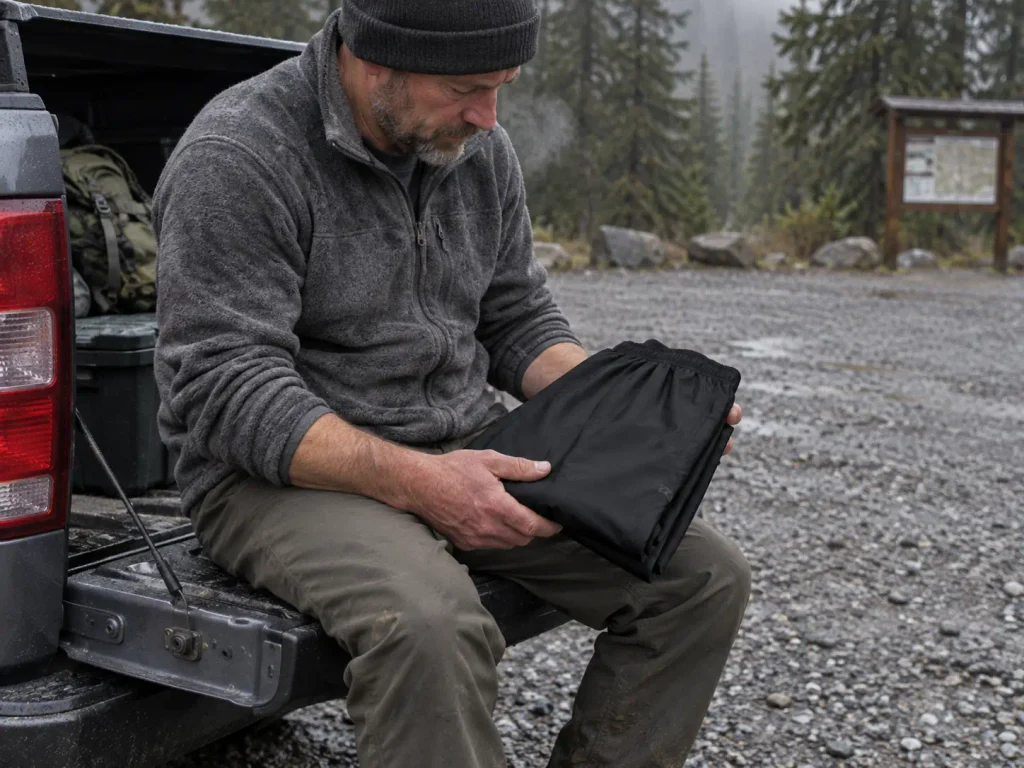
Most hikers own one cheap pair, wear it once, sweat through it, and decide rain pants are all the same plastic nonsense. Nearly every pair on the shelf will stop rain. What separates them is what happens to the heat and vapor your legs produce while the rain is stopping.
Wet Legs Are a Temperature Problem, Not a Comfort Problem
Hypothermia lives in the 30 to 60°F band, especially with wind and rain, which surprises people who assume it only happens near freezing. A 40°F day in steady rain pulls your core temperature down faster than a dry night below zero, and the CDC’s guidance on preventing hypothermia in wet, cold conditions puts wet clothing at the top of what accelerates it. That band covers most three-season hiking.
Wet clothing against skin is the single biggest lever on heat loss out there. Water pulls heat away far faster than air at the same temperature, and your legs are a lot of surface area. Soak them and you’re running a radiator in the rain.
The r/Ultralight version is blunter: you think you don’t need rain pants until you need them, and then you really need them. Above five or six thousand feet, where the wind rarely quits, the math gets worse.
The anecdote that sticks is a group in the San Juan Mountains who took three straight days of freezing rain and bailed fifty miles short of resupply. Not because they stopped moving. Because they were going hypothermic while still walking.
Moving generates heat. If moving isn’t enough, the clothing is the problem.
Check the forecast low, not the forecast high, and then subtract for elevation. A trailhead at 55°F and a ridge at 9,000 feet are two different days. If the answer lands anywhere in the 30s, 40s or 50s with rain in it, the pants go in the pack whether or not you expect to wear them.
The Waterproof-Versus-Breathable Trade-Off in Plain English
The whole engineering problem in one sentence: a fabric that blocks liquid water from getting in also blocks water vapor from getting out. A trash bag is perfectly waterproof and perfectly useless.
Waterproof/breathable membranes split the difference with pores too small for liquid droplets but big enough for vapor to pass. The limits are lower than the marketing implies: the membrane needs a vapor pressure difference to push moisture out, so it works best when the air is dry and cool and you aren’t working hard. A steep climb in humid rain is the exact opposite.
So you pick a spot on the scale. No pair wins both. What a good pair gets you is a better position on the curve plus zips to move along it while you hike.
Rain pants are also one piece of a larger kit, which is how people end up with a great pair and wet socks. If you’re building from scratch, the full rain gear system for hiking covers how jacket, pants, gaiters and base layer work together.
Why Your Rain Pants Feel Wet Inside When Nothing Is Leaking
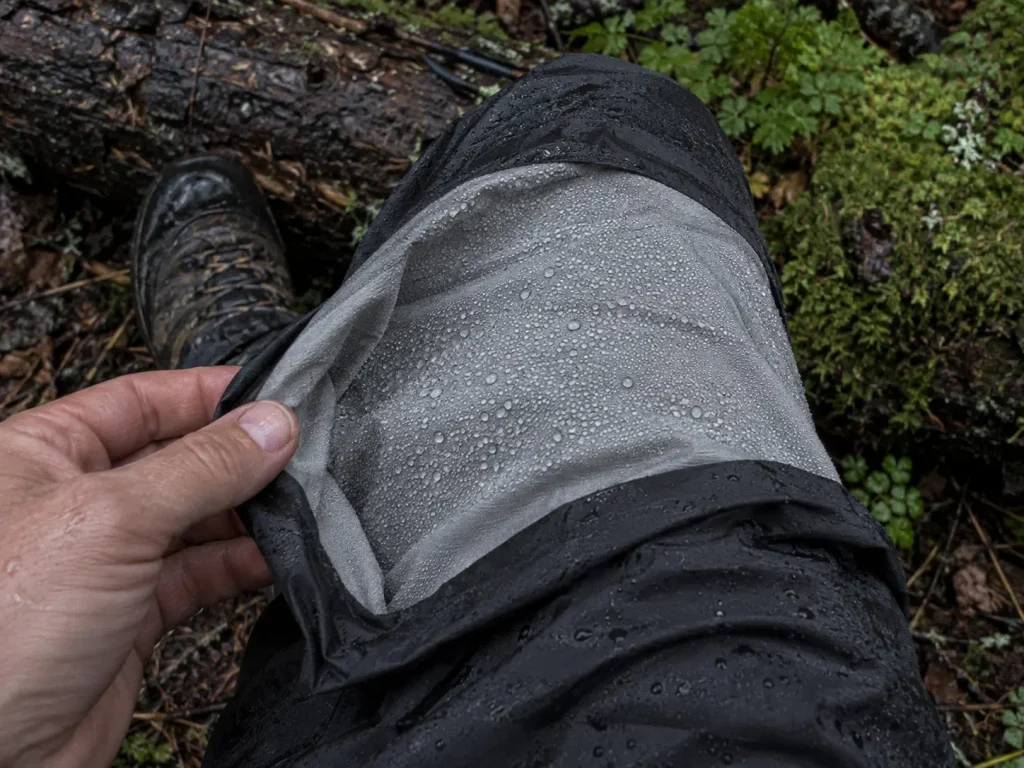
This is the complaint everybody has and almost nobody diagnoses correctly. You buy waterproof pants, hike in them, and after an hour you’re damp from knee to hip. The natural conclusion is a defective pair. Usually it’s your own sweat, condensed.
Condensation Versus a Real Leak, and How to Tell Them Apart
Your legs produce heat and vapor. That warm, damp air hits the inner face of the shell, which is cooler because there’s 45°F rain on the other side, and turns back into liquid. In a jacket it shows on your shoulders and back. In pants it shows on the knees and the fronts of your thighs, the coldest panels because they face the wind and take the direct rain.
Hard uphill hiking outproduces any membrane ever made, budget pair or premium three-layer shell alike. Outdoor Research’s own breakdown of how membrane layers differ is honest about this: construction tier changes feel and durability and moves the ceiling a little, but it won’t let you outrun your own output on a climb.
The test takes ten seconds. Look at the outer face of the fabric. Water still beading means the pants are working and what you feel inside is condensation. Gone dark and soaked means a different problem, the one covered below.
Venting Before You Need It
The fix is timing, not money. Open the side zips before the climb, not after you’re already damp, because once condensation forms inside the shell you’re hiking in a wet garment and venting only slows it. Proactive venting dumps the heat while it’s still vapor, the only state it can leave in.
That means reading the trail ahead the way you’d read weather. Switchbacks coming up, a long sustained grade, the point where the trail leaves the trees: all cues to unzip early. On a rolling trail you’ll work the zips a dozen times in an afternoon, which sounds fussy until you notice you’re arriving at camp dry.
Your base layer matters more here than people expect. A synthetic or merino layer moves moisture off your skin. Cotton holds it against you and stays cold for hours.
Vent the uphill, close the downhill. Climbing is when you produce the most heat and when rain hits you the least, since you’re leaning into the slope. Descending is the reverse: output drops, wind hits your front, and open zips let spray straight in. Getting that rhythm right does more for comfort than any fabric upgrade.
What Hikers Mean by “Wetting Out”
The other failure mode has a community name and a different fix. Wetting out is when the DWR finish on the outer face fabric gives up and the fabric saturates. The membrane underneath is usually still intact, but a soaked face fabric stops breathability entirely, because vapor can’t cross standing water. It feels exactly like a leak from the inside.
Two clues separate it from condensation: dark patches on the outside where the hip belt rides, at the knees and the seat, plus a heavy cold feel, because you’re now carrying the water.
Soaking through in patches while the membrane holds is a laundry problem, and restoring the DWR finish usually brings the beading back for another season. Soaking through everywhere with reproofing doing nothing means the membrane is done, and telling a worn-out shell from one that just needs reproofing applies to pants too.
The Spec That Decides Everything: 2L, 2.5L and 3L
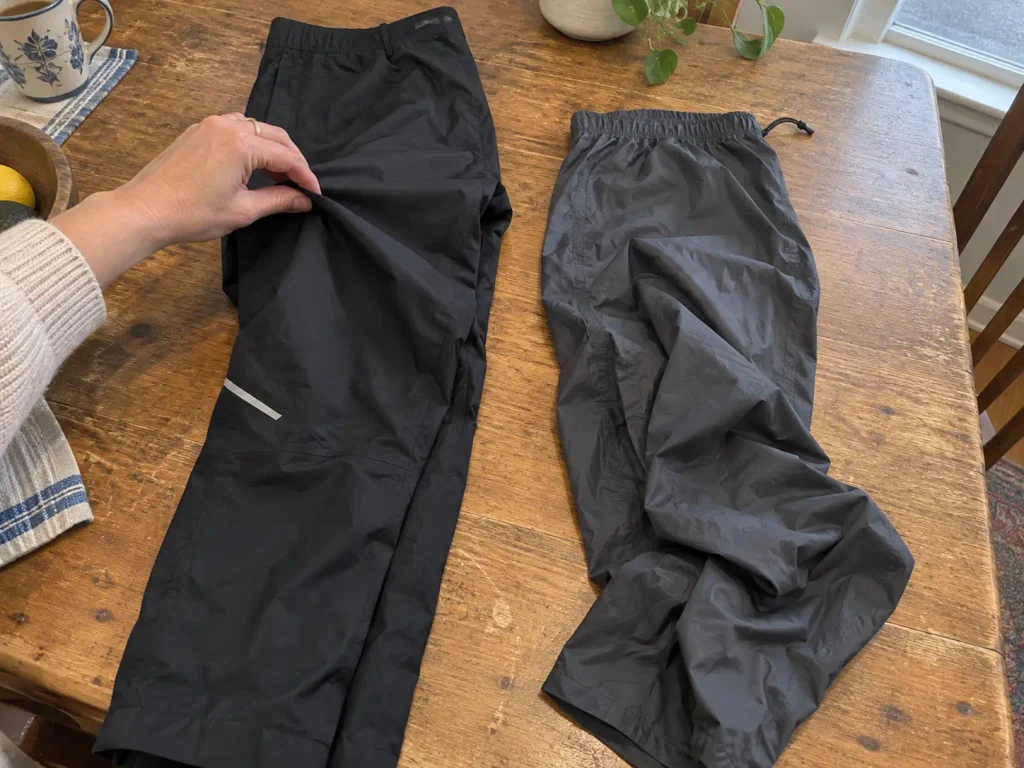
Every product page throws “2.5-layer” at you as if you’re supposed to know what that means, then charges more for the next number up. Here’s what those numbers do to the pants on your legs, and where the extra money stops buying anything you’ll notice. eVent’s breakdown of how the three constructions are built has the manufacturing detail; this is the hiker-facing version.
2L, the Cheapest and Heaviest-Feeling Option
2L fabric is a face fabric with a membrane or polyurethane coating bonded inside, plus a loose mesh lining to keep that coating off your skin. Reliable in moderate rain, least breathable of the three, least durable. That hanging lining is why 2L pants feel bulkier and clammier: it traps air that goes humid fast. Right call for occasional summer showers, poor one for sustained storms.
2.5L, Where Most Hikers Should Land
2.5L fabric replaces that hanging liner with a printed or sprayed layer applied directly onto the membrane, which is the “half layer.” Nothing hangs loose, so it packs smaller and weighs less than an equivalent 2L pair. The downside is feel: that printed surface can go tacky against bare skin when you’re working hard, and it’s less durable than a bonded woven liner. For a day hiker, a weekend backpacker, or a thru-hiker counting ounces, 2.5L is the sweet spot and it isn’t close.
3L, and What the Extra Money Actually Buys
3L fabric bonds a real woven liner to the membrane, so the whole sandwich moves as one piece. It feels like thin cloth against your skin rather than plastic, and it’s the most durable and breathable tier. It’s also the heaviest and priciest, and the breathability gain is smaller than the price difference suggests: a 3L pair on a hard climb still condenses. That makes it a shoulder-season and alpine purchase, and buying 3L for three-hour summer day hikes is the most common way hikers overspend here.
One more thing about spec sheets. The waterproof rating on the tag, printed in mm H2O, measures resistance to static water pressure in a lab, not what your pants experience under a loaded hip belt or kneeling on wet rock. Once DWR is gone, local pressure defeats even a high number in exactly those spots.
The breathability rating beside it, usually in g/m2/24hr, is measured in equally still lab air, which is why two pairs with identical numbers can feel nothing alike on a climb. What those waterproof ratings actually measure is worth ten minutes before paying for a bigger number, and how the membranes themselves compare sorts out which ones earn their reputation.
Side Zips, Fit and the Mistakes First-Time Buyers Make
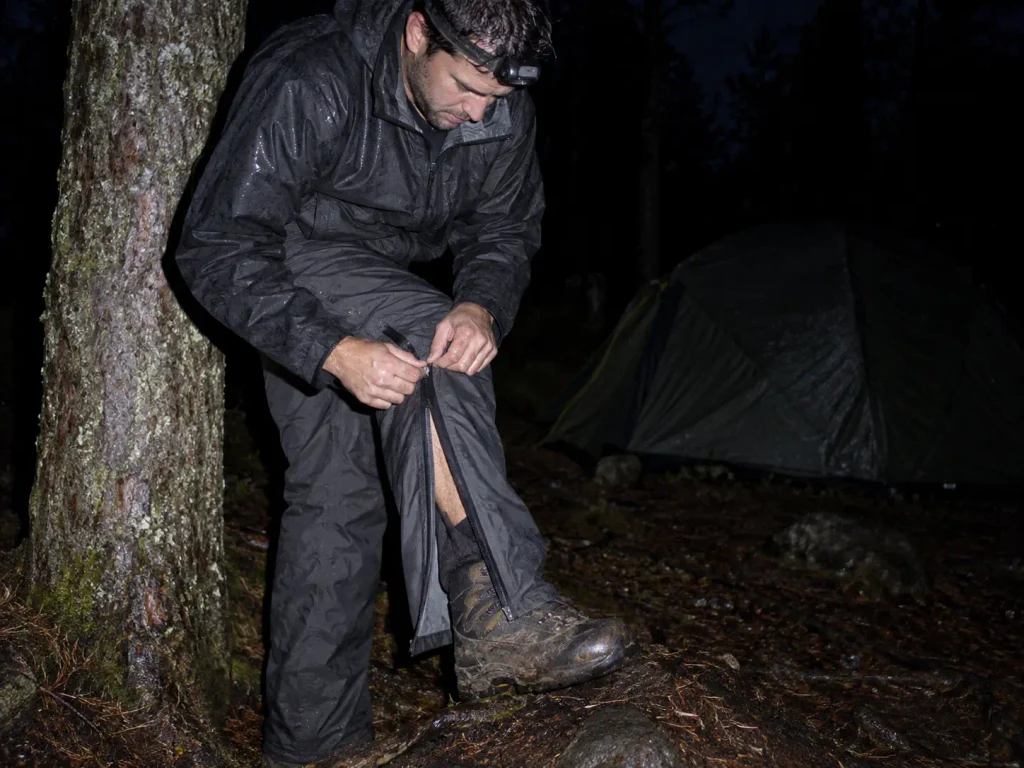
Two purchases go wrong here more than all others: pants you can’t get on over your boots, and pants that fit in the store and bind at the knee once you’re layered for October. Both are avoidable in four minutes. Almost nobody checks.
Why Side-Zip Length Is the Spec to Check First
Side-zip length is the most practical spec on the tag and the one buried furthest down the product page. Full-length or knee-length side zips let you put pants on over boots without removing your footwear, and a storm flap over that zip is what keeps the seam from becoming the leak. Ankle zips do not, which means standing on one leg in the rain threading a wet boot through a narrow cuff.
Zips do double duty as ventilation, and that’s the half people forget. A full-length zip opened from the thigh down is the only real way to dump leg heat on a climb, and knee-length zips or dedicated thigh zips get you most of the way there. Ankle zips vent almost nothing, because a ventilation zipper only works where the heat actually collects.
The trade-off is weight, which is why ultralight pairs use short zips or none. Fine for someone in trail runners. Bad for anyone in mid-height boots.
In the store, run the zip all the way open and then try to close it one-handed while holding something in the other hand. That’s the real-world test, because on trail your other hand has a trekking pole in it and your fingers are cold. Zips that snag when you rush them will snag every single time it matters.
The Sizing Mistake Almost Every First-Timer Makes
Here’s the trap. You try rain pants on over whatever you wore to the store, they fit, you buy them. Six months later you’re layered for a 38°F morning with hiking pants and long underwear underneath, and the same pair binds at the knee on every step up.
Rain pants are a shell. They fit over the system, not over your legs. Reviews call “roomy fit” a pro or con, as if it were taste. Roomy is the requirement, because the alternative is restricted range of motion.
The test takes thirty seconds and hiking forums have repeated it for years: put on the hiking pants you actually hike in, pull the rain pants over them, then do a full squat and a knee raise to your chest. If anything binds or rides down at the waist, size up. Not a waist measurement. The movement.
The same problem exists one layer up, where the same sizing problem on the jacket side plays out with shoulders instead of knees, and how the layers underneath change by season tells you what you’re sizing around.
Two details that never make the marketing copy. Waist adjustment has to work under a pack, because a plain elastic waistband bunches under a hip belt into a pressure point that hurts by mile eight and abrades DWR where the belt rides. Hip belt compatibility is the term for it, and a drawcord beats elastic every time here. And adjustable ankle cuffs decide whether water sheets off your boot or funnels into it, which is where pairing them with gaiters comes in.
Getting Them On Over Wet Boots
Nobody writes this down and everybody learns it badly the first time. It’s raining, you need the pants, and the ground is mud. The instinct is to sit on a rock and thread each leg through, which soaks your seat and makes the next two hours worse.
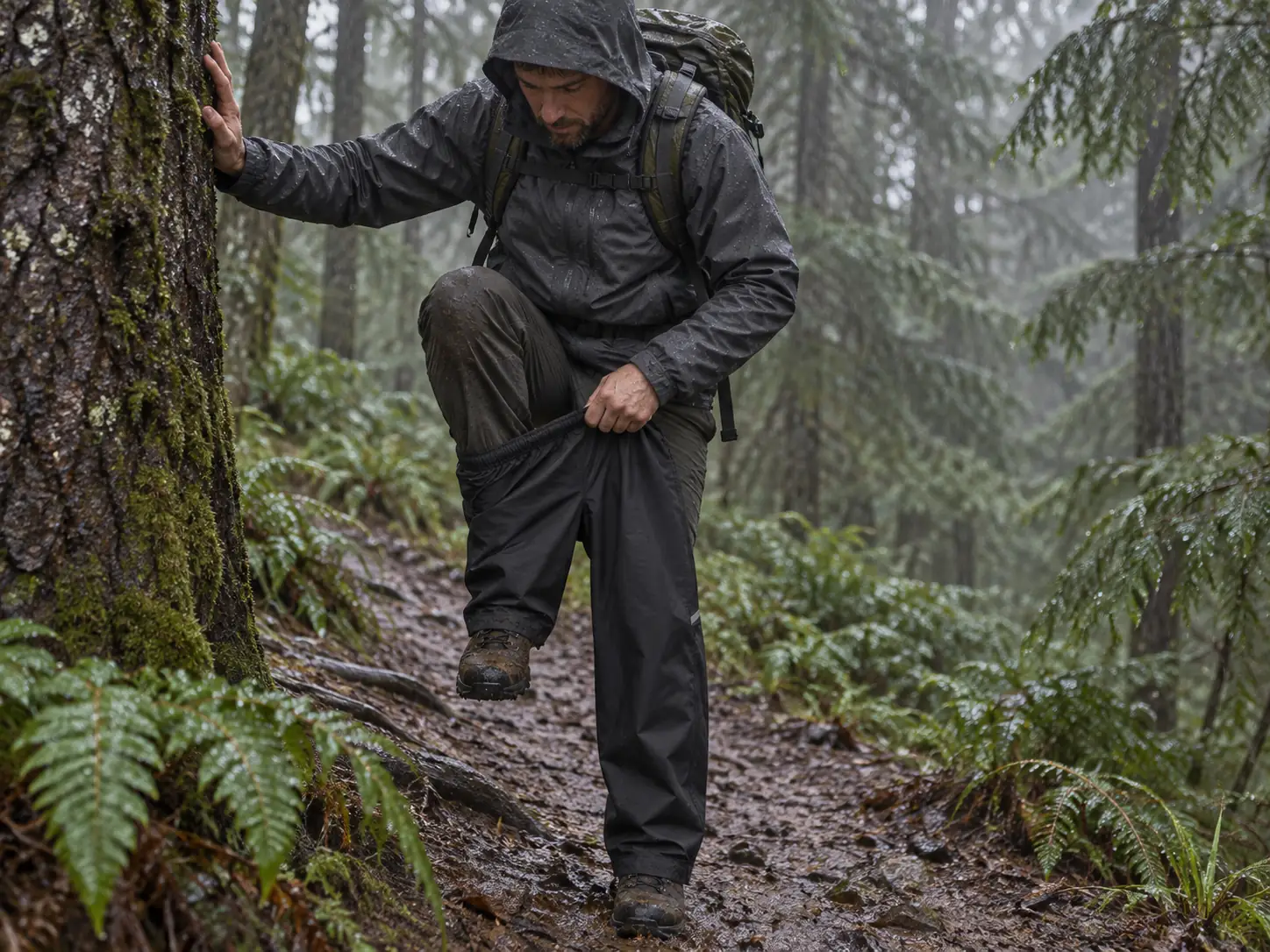
The way it works: brace a shoulder against a tree, not a hand, because your hands are busy. Open both zips their entire length first, so each leg becomes a flap rather than a tube. Step one boot in, close that zip to the knee, switch legs. Trekking poles planted wide work as a substitute tripod.
The detail that saves the most grief is doing it early. Stopping at the first drops takes ninety seconds with dry hands; twenty minutes later means wet fabric, numb fingers, and a zip that fights you. The rule most veterans land on: pants go on the moment the sky commits, not the moment the rain does.
Do You Even Need Rain Pants? Pants, Kilt or Neither
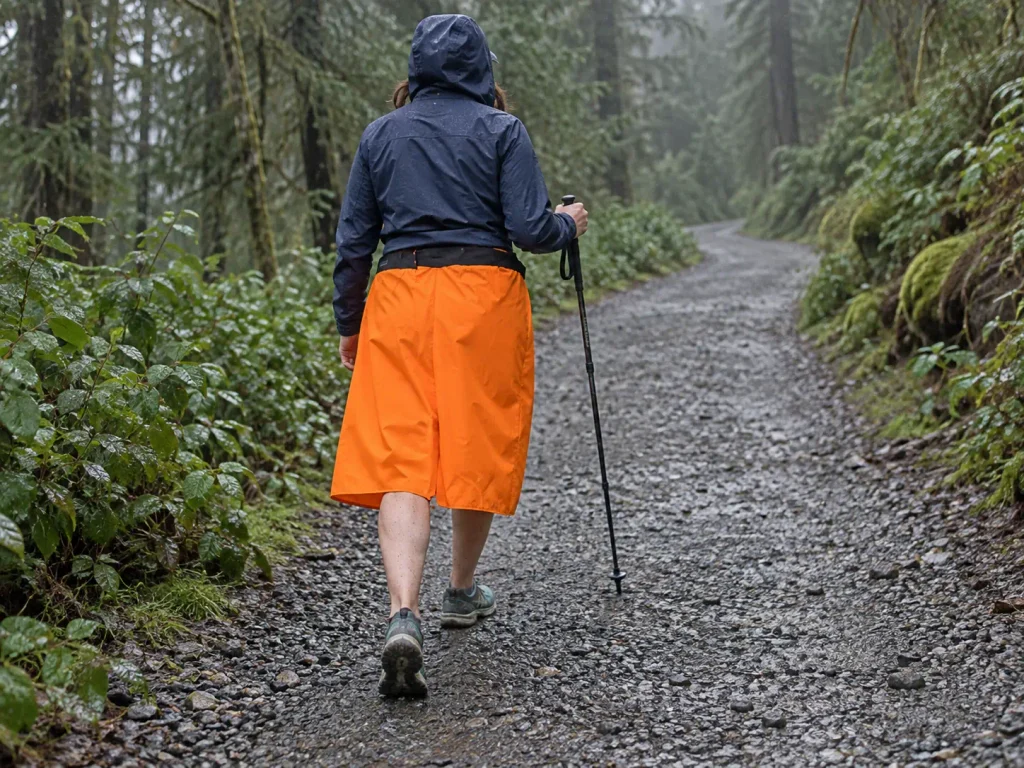
Plenty of readers don’t need rain pants, and saying so is the only honest way to introduce the picks below. The question isn’t which pants are best, it’s whether pants are the right tool for the hiking you actually do. That’s a trip-type question, not a gear-preference one.
When Pants Are the Only Right Answer
Bushwhacking through wet brush, and anything in mud season, is the clearest case. Every branch you push through dumps its water onto your legs, and a kilt leaves exactly those surfaces exposed while snagging in a way that eventually tears. Snag resistance is the quiet reason full pants win off-trail.
Cold and shoulder-season conditions are the second case. Once you’re in that 30 to 60°F band with rain, full coverage outranks ventilation. You can vent pants with zips. You cannot add coverage to a kilt.
The third is a loaded multi-day trip with no way to dry anything, where damp compounds by night three.
When a Kilt Beats Them Outright
For on-trail hiking in moderate rain and mild temperatures, a rain kilt wins on almost every axis. It weighs a fraction of any pair of pants, vents in a way no pant can match because the bottom is open, and goes on over boots in four seconds with no zips to fight. Backpacking Light consensus has landed here for years, and the community says kilt rather than rain skirt, a small tell for whether the writer has been in the conversation.
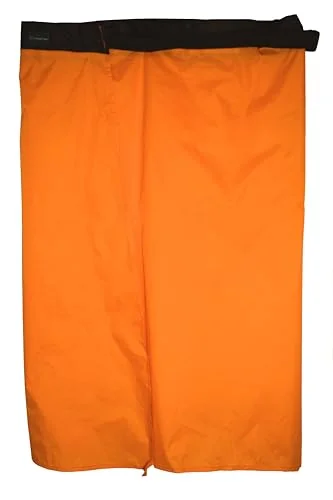
What a kilt gives up is everything below the hem and everything in wind. Your calves get wet, fine at 60°F and miserable at 40°F. Plenty of hikers carry both on longer trips, kilt for the daily drizzle, pants for the cold morning. If you’re weighing them for a specific trip, the full pants-versus-kilt comparison works through the scenarios.
When You Can Skip Both
Warm summer showers on a short day hike are where rain pants are the dead weight you suspected. At 70°F and moving, your legs dry within twenty minutes, and a shell over them just means sweating instead of getting rained on.
The honest test is two questions: will I be cold if my legs get wet, and will I be somewhere I can’t warm up? Both no, leave them home. Either yes, bring them.
One thing to clear up before you skip: your regular hiking pants are not a substitute, even with a water-resistant finish. Water-resistant sheds a passing drizzle and then soaks through, and water-resistant pants are a different product entirely covers why that finish fails exactly when you need it.
Best Overall: Marmot PreCip Eco Rain Pant
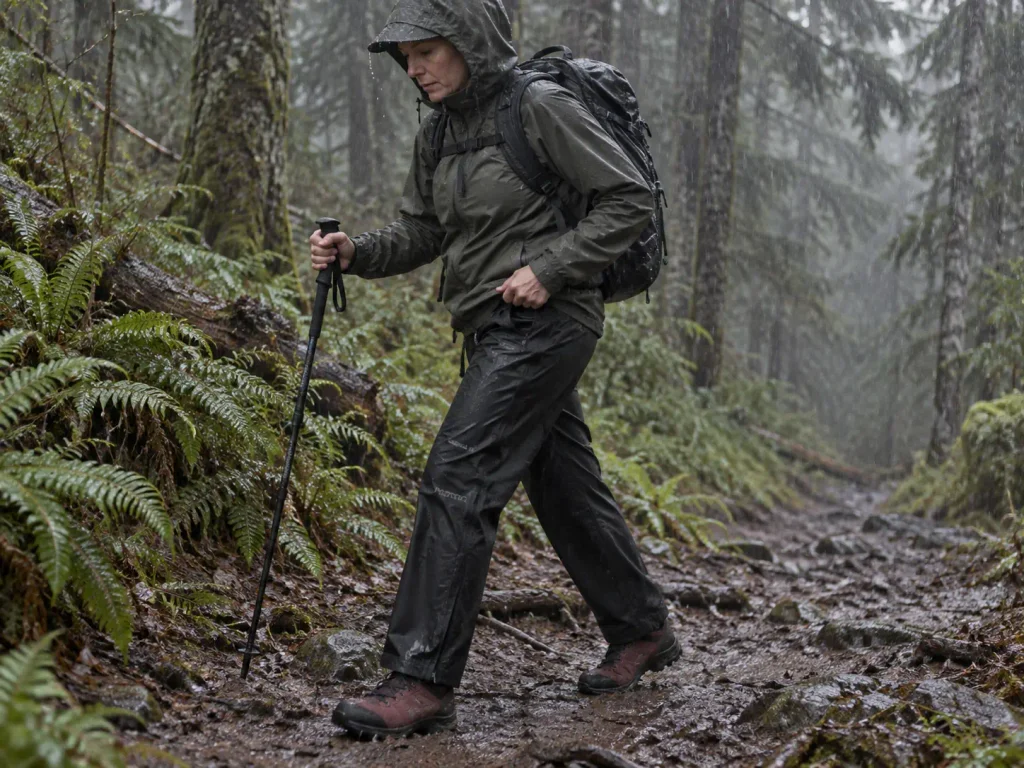
The right pick here isn’t the exciting one. The Marmot PreCip Eco Rain Pant has been in this category long enough that reviewers stopped calling it interesting, and it keeps winning because it has the fewest compromises for the hiking most people actually do.
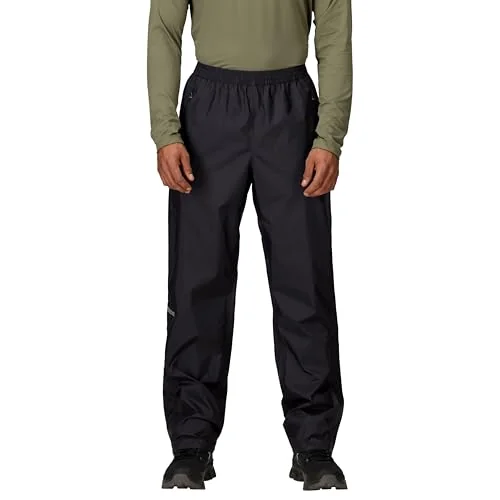
NanoPro is Marmot’s own 2.5L membrane, which puts these in the tier the last section said most hikers should buy. They pack small enough to live in a daypack lid, and the seam sealing holds up over seasons. Nothing here will excite a gear forum. That’s the point.
The zip difference is worth stating plainly because product pages bury it: the women’s pair has full-length side zips, the men’s pair has ankle zips. After three paragraphs on why zip length is the spec to check first, it would be dishonest not to flag that the men’s version is weaker on exactly that axis.
The PFC-free DWR is a genuine environmental improvement carrying a real maintenance cost, the kind of trade-off usually sold as pure upside. These need reproofing more often than a ten-year-old pair would have, and the reproofing cadence a PFC-free finish needs lays out how often that lands.
Who these are wrong for: anyone shaving pack weight for a thru-hike against a strict weight ceiling, and anyone needing 3L toughness for sustained alpine rain. Not the lightest pair here, not the toughest. The one with the shortest list of things you’ll wish were different.
The Picks by Tier: Ultralight, Budget and Most Durable
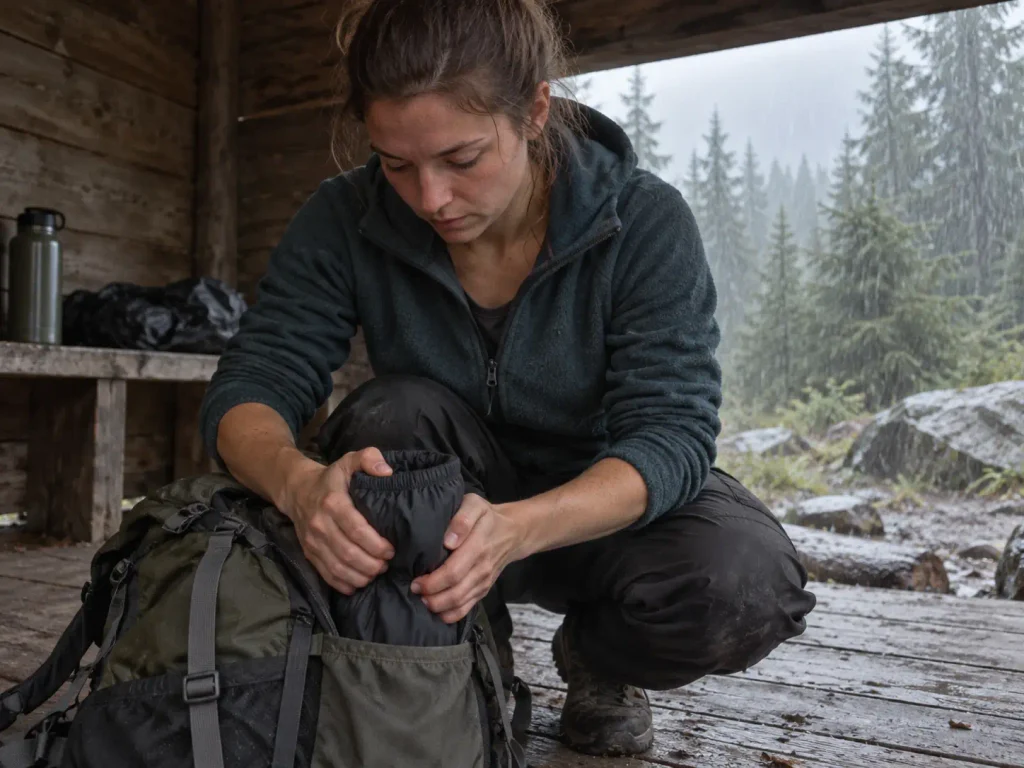
Three ends of the same decision: what you give up to save weight, to save money, and for a brand you can find on a Saturday. None of these answers is “buy the expensive one,” which is worth saying in a category where it usually wins the roundup.
Best Ultralight: Outdoor Research Helium
UL, the community shorthand for ultralight, means roughly sub-10 ounces here. The Outdoor Research Helium Rain Pants sit well under it at around six ounces, where weight stops being a decision you think about.
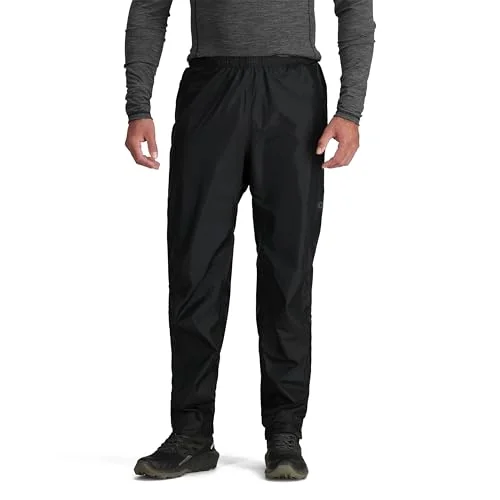
Pertex Shield over a 30D/15D ripstop nylon face is the construction, and DiamondFuse is what separates these from other pants this light: it alters the yarn surface to improve tear strength, moving them from fragile to just thin.
The ankle zips are a real trade-off against everything the fit section said. Six ounces buys a pair that’s harder to get on over mid boots and vents poorly on a climb. For a thru-hiker in trail runners, neither costs much. For a weekend hiker in leather boots, both bite, which is why these are the wrong first pair.
The same packable-versus-ultralight trade-off on jackets is worth reading before committing to one philosophy across your kit.
Best Budget: 33,000ft, and Why That’s Not a Downgrade
Budget picks usually get a paragraph of faint praise and an implied apology. That framing is wrong for a real segment of hikers, and it pushes people toward spending money they didn’t need to spend.
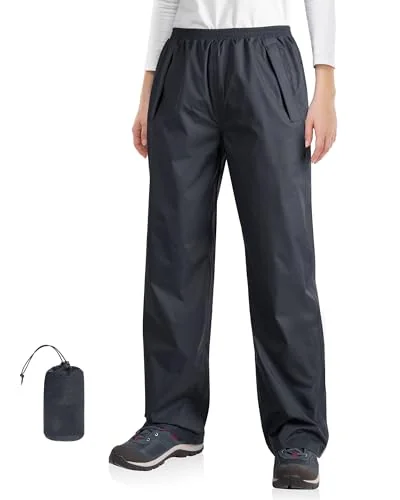
What makes 33,000ft worth recommending rather than tolerating is the TPU membrane in the 5,000 to 10,000mm range with genuinely sealed seams. That’s the line separating functional budget rain gear from the emergency poncho aisle, and a side zip at this price is close to unheard of.
Here’s the honest framing. If you hike in wet weather eight times a year, mostly on trail in mild conditions, these keep you dry all eight times. You’ll feel warmer on climbs than in a 2.5L pair, because the mesh lining traps air the way the 2L section described. That’s the entire difference, and for eight outings a year it isn’t worth a hundred dollars.
Where they stop being right: sustained multi-day rain, off-trail travel, and cold shoulder-season work. One note, the women’s pair is the one listed and linked here; the men’s side of the model line comes and goes on Amazon.
No honest budget discussion skips Frogg Toggs Ultra-Lite2, the community’s ultralight-budget benchmark for over a decade. The recurring r/Ultralight line is some version of “nothing has beat frogg toggs,” and it’s earned: nonwoven polypropylene, absurdly light and cheap, and it tears if you look at it wrong. The catch is availability.
Most Durable: Columbia Omni-Tech
The mainstream option exists for a reason. Omni-Tech is Columbia’s two-layer waterproof-breathable system, around long enough to have a track record, and stocked in almost any sporting goods store if something fails two days before a trip.
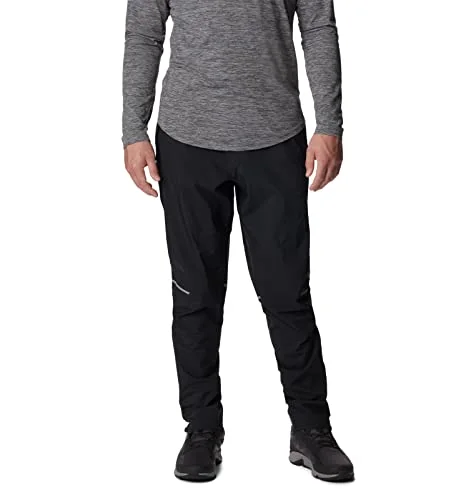
By this article’s own framework, two-layer is the 2L trade-off: more durable, less breathable, heavier feeling. What you get for accepting it is a pair that shrugs off the abrasion that finishes lighter pants. If your main complaint is feeling clammy on climbs, these are the opposite of your fix and you want the 2.5L tier. If it’s that your last pair wore through at the seat after two seasons, these are your answer.
A naming note that will confuse you on Amazon: the versions carry different model names, Hazy Trail for men and Storm Surge II for women, because the older unified line went out of stock. Same tier, different labels. Since most people shopping pants are also sorting the top half, the jacket side of the same decision applies the same logic to shells.
Making Them Last: DWR, Washing and When to Stop Reproofing
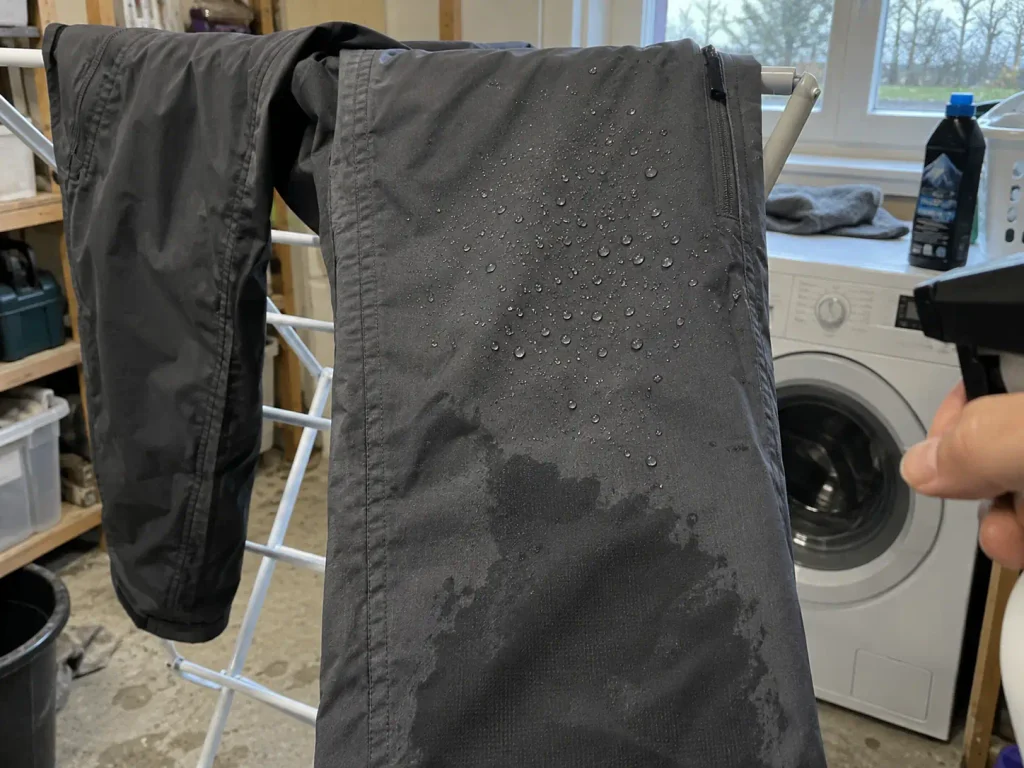
Most rain pants that “stopped being waterproof” didn’t. Their DWR died, which is a laundry problem with a laundry fix, and knowing the difference saves you a purchase every few years.
What DWR Is and Why It Dies First
DWR, durable water repellent, is a treatment on the outside face of the fabric, not the membrane. It makes water bead and roll off before it soaks in, and as a surface coating it’s the first thing to wear out. When it fails, the face fabric saturates, which is the wetting out from earlier, and that stops vapor transfer cold.
PFAS-free DWR is the 2026 standard, and it comes with a trade-off nobody puts on the hangtag: these finishes lose beading faster and need reproofing roughly every 10 to 15 wears rather than once a season. The shift away from PFAS in outdoor waterproofing covers why the industry switched anyway. Better chemistry for everyone downstream of your laundry. Also more work.
Washing and Reproofing Without Wrecking Them
The intuitive move is to never wash technical gear, on the theory that detergent ruins the coating. It’s backwards. Skin oils, sunscreen and trail dirt contaminate DWR and stop it beading, so the fix for most pants that stopped beading is a wash, not a replacement. The full care routine for technical hiking clothing covers the whole wardrobe at once.
The procedure has two halves and the second gets skipped constantly. Wash with a technical cleaner, since standard detergents leave residue that attracts water. Then apply heat, a warm tumble dry or a low iron with a cloth between, which reactivates the DWR still on the fabric. Skipping the heat is why half the people who wash their shells conclude washing doesn’t help.
The washing technique that reactivates a DWR finish is identical for pants. Reproof only if a clean, heat-treated shell still wets out; spray-on beats wash-in for anything with a mesh lining.
When Reproofing Stops Working
Pants fail in patches before they fail overall, and the patches are predictable: the hip-belt band, the knees, the seat. DWR goes there first while the calves still bead fine.
The test takes one cycle. Wash with a technical cleaner, heat-treat, apply fresh reproofing, then run water over them in a sink. Still beading, they have another season. Soaking in immediately on clean, freshly treated fabric means the fabric or membrane has degraded past what a surface treatment can rescue.
The other sign is easier to spot and harder to fix: visible delamination, where the inner coating flakes, bubbles or peels away. That’s structural, no treatment touches it, and pants doing it at the knees are done. At that point you’re buying, not reproofing, and at least you’ll know which tier you want.
Conclusion
Buy 2.5L with the longest side zips you can find. That combination solves more real problems than any other spec upgrade, and it’s why the Marmot sits at the top of this article instead of something more interesting.
If the inside feels wet and the outside still beads water, that’s condensation, not a failure. Venting earlier fixes it for free.
In the 30 to 60°F band with rain in the forecast, rain pants stop being a comfort item. Decide that before you’re standing at a trailhead squinting at clouds.
Before the next wet forecast, find whatever rain pants are already in your closet, pull them on over the hiking pants you actually hike in, and do a full squat and a knee raise. Most people discover they’ve been carrying the wrong size for years. Better to learn that on the bedroom floor than three miles in.
Frequently Asked Questions
01Do you need rain pants for hiking?
You need rain pants any time temperatures sit in the 30 to 60°F band with rain or wind, and for off-trail travel through wet brush. On warm short day hikes where your legs dry fast, they are often dead weight you carry and never wear.
02What are the best waterproof trousers for hiking?
The Marmot PreCip Eco is the best pick for most hikers because its 2.5L NanoPro construction balances weight against protection better than any other tier. Go 3L only for cold or sustained alpine rain, and 2L if durability matters more than breathability.
03What are the best rain pants for backpacking?
For backpacking, weight decides it, and the Outdoor Research Helium at around six ounces is the standard answer. The honest trade-off is ankle zips instead of full side zips, which makes them harder to pull on over boots and weaker at venting.
04What is the best gear for hiking in wet weather?
Wet weather hiking works as a system: a waterproof jacket, rain pants or a kilt, gaiters to keep water out of your boots, and a synthetic or wool base layer underneath. Cotton anywhere in that stack undoes the rest of it.
05Why do my rain pants feel wet inside even when it is not raining hard?
That is almost always condensation from your own sweat, not a leak. The test takes ten seconds: check the outer fabric, and if water is still beading and rolling off, the pants are fine and you need to vent earlier on climbs.
Risk Disclaimer: Hiking, trekking, backpacking, and all related outdoor activities involve inherent
risks which may result in serious injury, illness, or death. The information provided on The Hiking Tribe is for
educational and informational purposes only. While we strive for accuracy, information on trails, gear, techniques,
and safety is not a substitute for your own best judgment and thorough preparation. Trail conditions, weather, and
other environmental factors change rapidly and may differ from what is described on this site. Always check with
official sources like park services for the most current alerts and conditions. Never undertake a hike beyond your
abilities and always be prepared for the unexpected. By using this website, you agree that you are solely
responsible for your own safety. Any reliance you place on our content is strictly at your own risk, and you assume
all liability for your actions and decisions in the outdoors. The Hiking Tribe and its authors will not be held
liable for any injury, damage, or loss sustained in connection with the use of the information herein.
Affiliate Disclosure: We are a participant in the Amazon Services LLC Associates Program, an
affiliate advertising program designed to provide a means for us to earn advertising fees by advertising and linking
to Amazon.com. As an Amazon Associate, we earn from qualifying purchases. We are also an official affiliate partner
of Black Diamond Equipment via the AvantLink network. If you click on a Black Diamond affiliate link and make a
purchase, we may earn a commission at no additional cost to you. We also participate in other affiliate programs and
may receive a commission on products purchased through our links. Additional terms are found in the terms of
service.