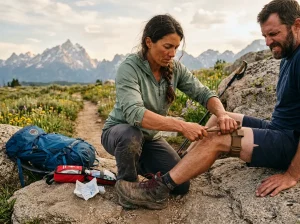
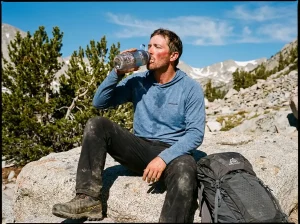
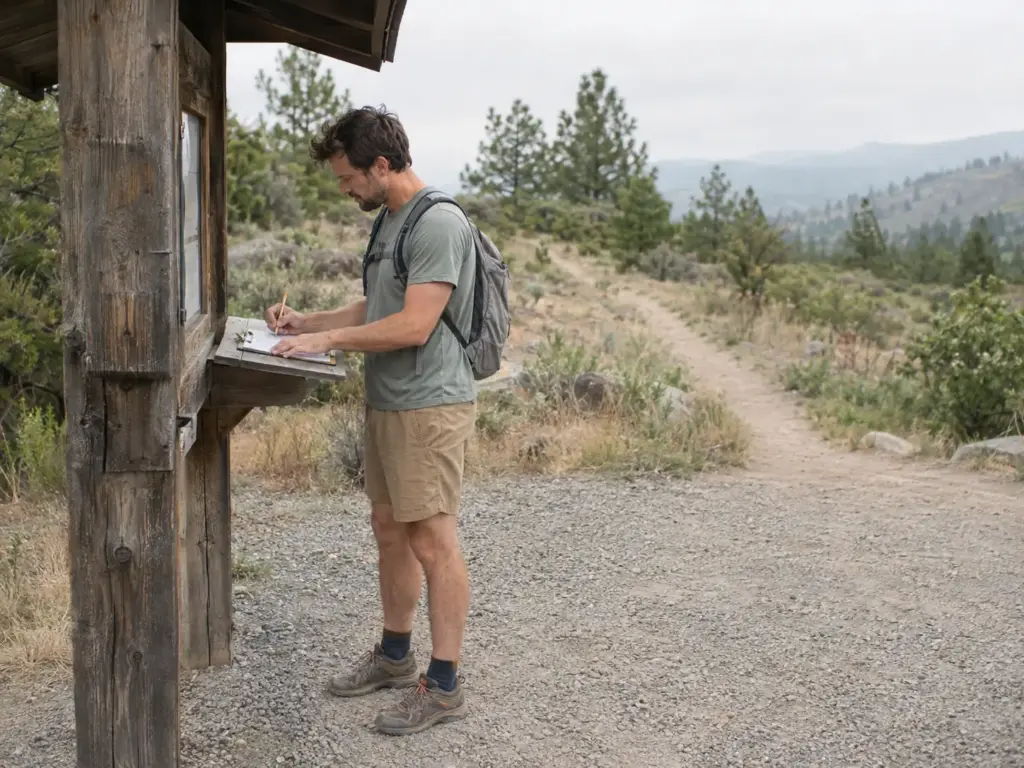
Two hours into a warm climb with a loaded pack on, the inside of your thigh starts to burn right where one seam crosses it. The shorts looked fine on the rack and the tag said your size, but men’s hiking shorts fail in the middle of the day, in one seam or one waistband, never in the store. Four decisions settle almost every pair (inseam, fabric, pockets and waistband), and the pair that wins on paper is not always the one that survives a long, hot day under a pack. Below are seven pairs sorted by what each does best, then the fit test, the chafing fixes, the waistband check and the trails where shorts stay home, and the table puts the whole decision in one place.
| Your hike | Shorts to look at | What decides it |
|---|---|---|
| Hot days under a pack belt | The North Face Wander Short 2.0 | A flat waistband that sits flat under a hip belt |
| Comfort on everyday day hikes | Chubbies Everywear 6-inch | Stretch polyester blend and a mid-length inseam |
| Quick drying and pockets for the day | Columbia Silver Ridge Cargo | Cargo pockets and a quick-drying cut |
| Lowest price in the set | Wrangler Authentics Performance Comfort Flex Cargo | Stretch cargo fabric without paying for a technical label |
| Best value with stretch | prAna Stretch Zion Shorts II | Stretch fabric for the money |
| More leg cover and a belt | Outdoor Research Ferrosi 7-inch | Seven-inch inseam with a belt included |
| Brush, rough ground, hard wear | Fjällräven Abisko | Stretch panels and reinforced zones |
How to Choose Men’s Hiking Shorts for Day Hikes and Backpacking
The kind of hike you do decides the shorts, and a brand name decides nothing. The same pair that is perfect on a two-hour loop can become a problem on the third afternoon of a trip, because a loop forgives almost anything and a trip does not. The pair you stop noticing by the first rest stop is the right one.
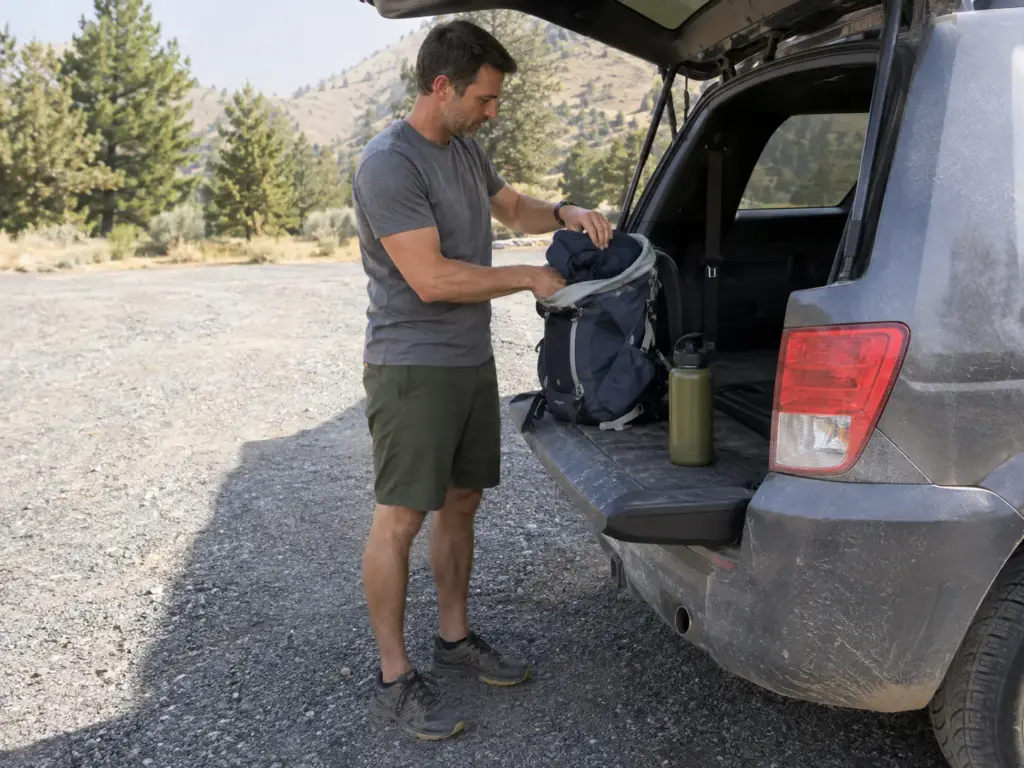
The rest of this guide follows the order a buyer should: inseam, fabric, drying, weight, pockets, waistband, durability and price, then fit, chafing and the cases where shorts are the wrong call.
Day Hikes: What You Can Skip and What You Can’t
On a day hike you can skip most of the technical features. What you can’t skip is a place for a phone and a snack, and a waistband that doesn’t irritate you after two hours of walking. If your pack has a hip belt, even a small one, the waistband question changes completely, and a test later in this guide shows you how to settle it before the shorts leave the house.
Overnight and Multi-Day Trips: Why Small Flaws Grow
A seam that is fine for three hours starts to rub by hour six, and a pair that dries slowly is still damp when you pull it on the next morning. Multi-day trips turn small flaws into the main event, so fabric, seams and drying speed carry more weight here than any feature on the swing tag. If you are still deciding between shorts and pants for a trip, matching your leg wear to the hike you actually do lays out the whole choice, with shorts as one answer among several.
Trail-to-Town Shorts: When They Work and When They Don’t
Trail-to-town shorts are cut to look right at a trailhead café as well as on the trail, and they let one pair go from trail to town without a change. They work for a day hike with a coffee stop. They are the weakest choice for hot, steep or brushy days, where looks do nothing for your thighs. Everything here is about men’s cuts; the women’s cut, with its own fit points, has a guide of its own.
Inseam Length: Short for Airflow or Long for Cover
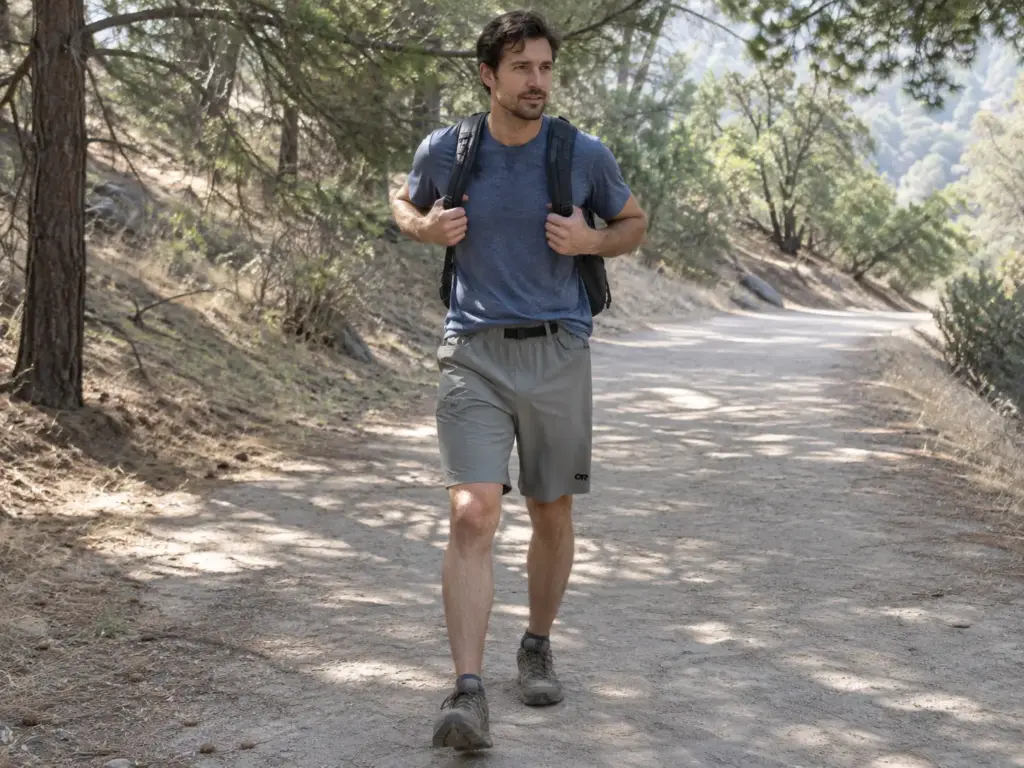
Inseam is the length of the seam on the inside of the leg, from the crotch to the hem, and it decides how much skin the shorts cover. The same pair of knees wants different things on a hot, open trail and on a trail where the brush leans into the path.
Short, Middle or Long: The Trade-Off in Plain Terms
A short inseam, a 5 inch inseam being the classic example, vents best and dries fastest. A middle length is the usual compromise: enough fabric to protect the thigh without feeling like pants. A long inseam covers more skin against sun and brush, runs warmer, and can bunch at the knee on a high step.
None of this is a measurement, it is a trade, and you are choosing where to stand on it. Open and hot trails favor shorter, brushy or exposed trails favor longer. The length that looks right standing in front of the mirror is not the one that survives a long climb in the heat.
When a Short Inseam Backfires
The thigh is where the rubbing happens. A short inseam leaves little fabric between one thigh and the other, so a stride that rides the hem up, or a leg wet with sweat, puts skin on skin with nothing to protect it. The stripe of raw skin high on the inner thigh at the end of a hot hike is often the hem’s work. Pants follow the same logic, and a deeper look at matching length to terrain covers every leg length, not just shorts.
The Seven-Inch Compromise: Outdoor Research Ferrosi
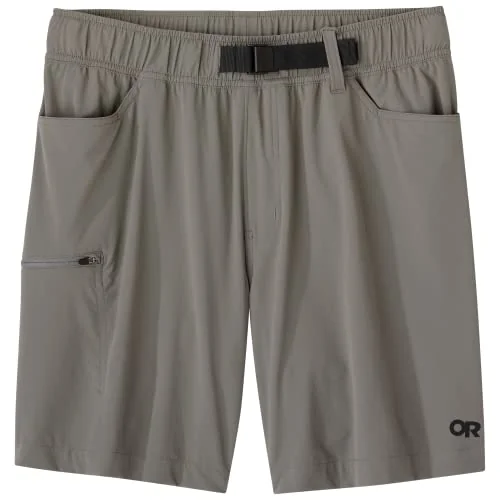
A 7 inch inseam sits toward the longer end of the middle ground, and the Outdoor Research Ferrosi 7-inch is the pair in this set built around that length. It covers enough thigh to keep the hem from becoming the rub point and enough knee-side fabric to take the edge off sun and light brush, and the included belt is the second reason it earns its place. Expect a warmer pair than a five-inch short on a hot, open climb. Stock on this listing is limited.
Fabric and Stretch: What the Tag Should Say
The first rest stop on a humid day shows you the fabric. One pair clings to the leg, while another has already stopped feeling like fabric at all. The tag tells you which one you are holding, if you know what to read.
Why Synthetic Beats Cotton on the Trail
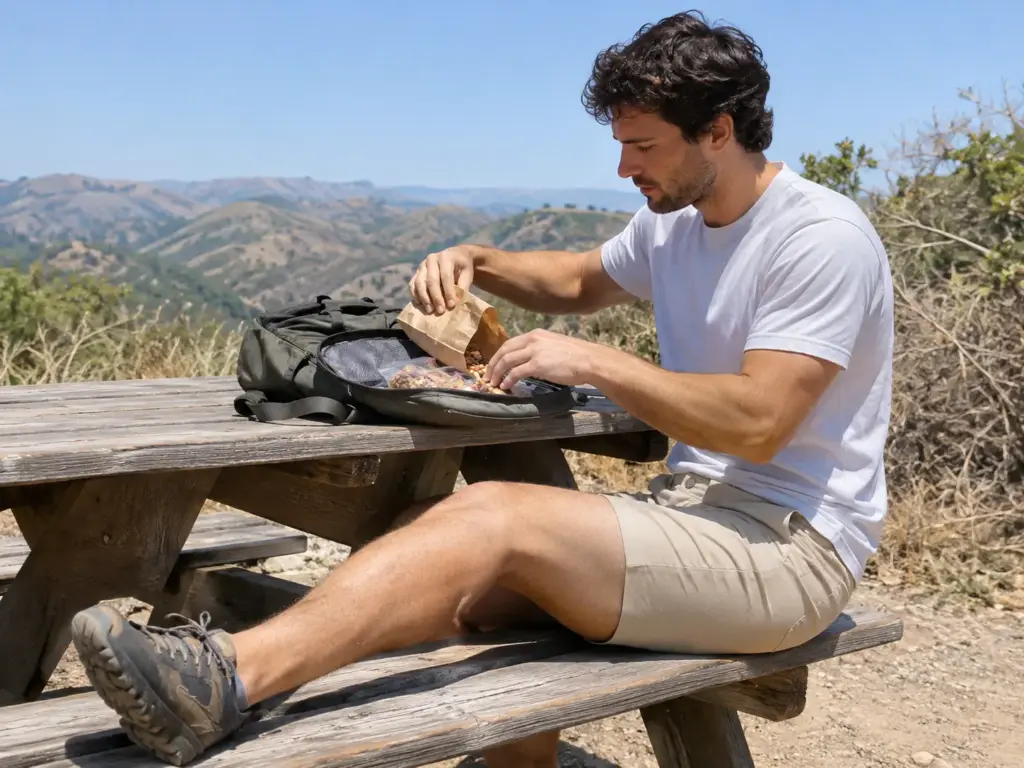
Synthetic fabric, nylon or polyester usually with a little spandex (also sold as elastane), dries fast and doesn’t hold sweat. Cotton absorbs, stays wet and rubs. I’d skip cotton on any trail where you will sweat, and no other feature on the tag makes up for it.
Two other labels deserve a precise reading. A water-repellent finish (DWR) sheds a splash and fades with washing; it does not make shorts waterproof. And UPF 50+ is a real sun-protection rating, worth having on open trails where the sun is on your legs all day. Bare thighs burn like anything else, and sunburn under a pack belt is a miserable way to finish a hike, so sun protection on the fabric earns its place.
The fabric tells you in the first mile, and you can hear it earlier. Wear a new pair around the house on a warm day and climb a few flights of stairs until you sweat. If it feels clammy by minute twenty, it will rub by mile ten.
Two-Way or Four-Way Stretch: What You Give Up
Two-way stretch moves along the width of the fabric. Four-way stretch moves with the leg in both directions, which is what you want on a high step or a boulder. The price is some toughness, because stretch weaves give up a little abrasion resistance for freedom of movement. A longer look at how four-way stretch trades mobility for wear covers that trade in detail.
Comfort First: Chubbies Everywear
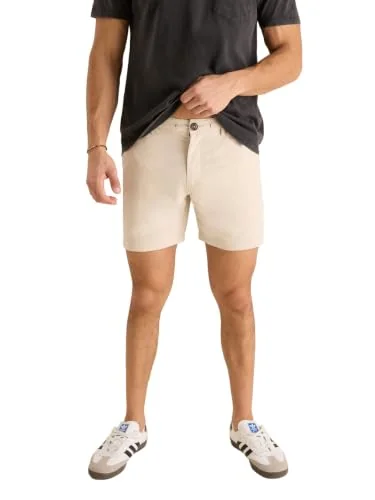
The Chubbies Everywear is 89% polyester and 11% spandex, which is the synthetic-with-stretch recipe this section argues for. It has a six-inch inseam, two mesh-lined side pockets, two back pockets and a hidden side zip, so a phone and keys have a place to go. It is the pair for easy to moderate day hikes where comfort matters most. On a long, loaded day, check the seams and the waistband with the tests further down.
Dry Time and Breathability
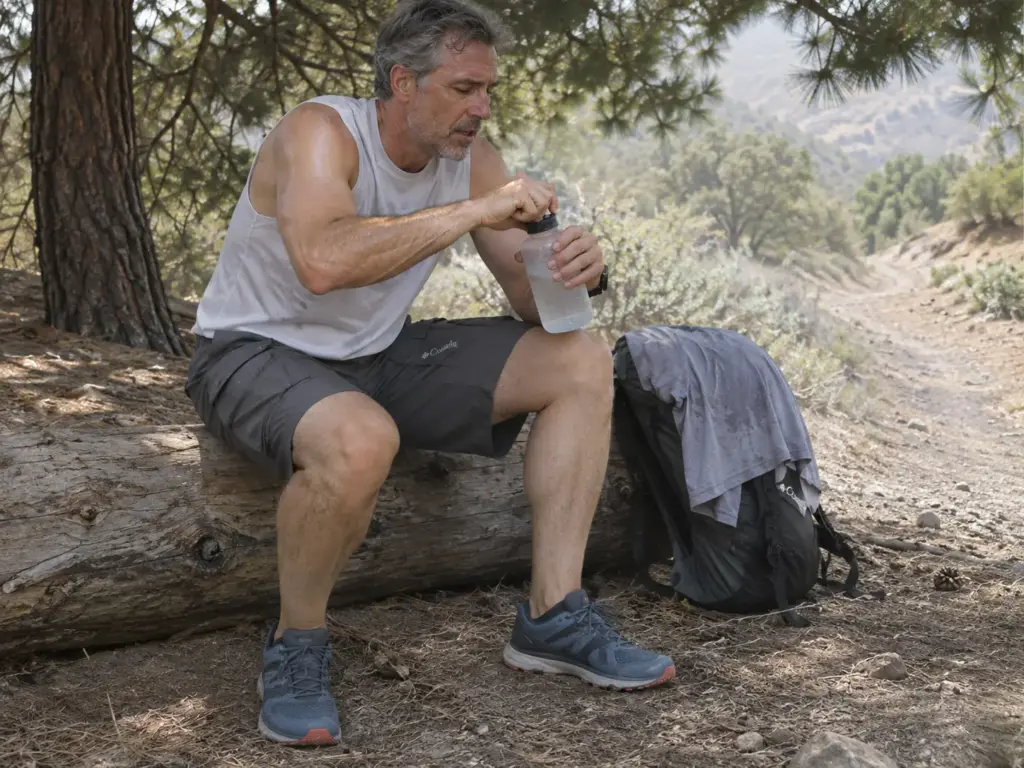
A sweat-soaked climb followed by a long rest in the shade splits shorts into two groups: the pair that dries during the rest and the pair that is still damp at the next ridge.
Why Wet Shorts Rub
Wet fabric rubs and takes longer to warm up. That makes drying speed a comfort issue and a skin issue, not only a convenience: damp cloth against thigh skin is exactly the friction-and-moisture mix that causes chafing, and the chafing section below goes deeper on it. Drying speed shows at the first rest after a hard climb, not on the rack.
What Slows Drying: Liners, Layers and Loaded Pockets
Lighter weaves and fewer layers dry faster. A liner or a double layer slows the whole pair. Pockets and cargo bulk hold moisture longest, and shorts dry from the outside in, so a soaked sock or bandana stuffed in a thigh pocket keeps that patch of cloth damp for the rest of the hike. Keep wet items in a mesh pocket on the pack and let the shorts do their own drying.
Fast Drying With Pockets: Columbia Silver Ridge Cargo
A quick-drying cargo cut is the compromise for day hikes where pockets matter more than the fastest possible drying, and the Columbia Silver Ridge Cargo is the pair this list leans on for that case. Cargo pockets hold the snack and the phone, and the quick-drying cut keeps a creek splash or a sweaty climb from lingering. Keep the cargo pockets light, since a loaded pocket is the slowest part of any cargo short to dry.
Weight and Packability
For a day hike, the shorts you are wearing barely register on weight. The number starts to matter for the spare pair, and a spare that folds small and dries by morning is worth more than a lighter pair you never pack. A second pair stuffed into the lid pocket for the evening earns its place on the day the first one gets soaked: a creek crossing, a rain cell, a slip off a wet log.
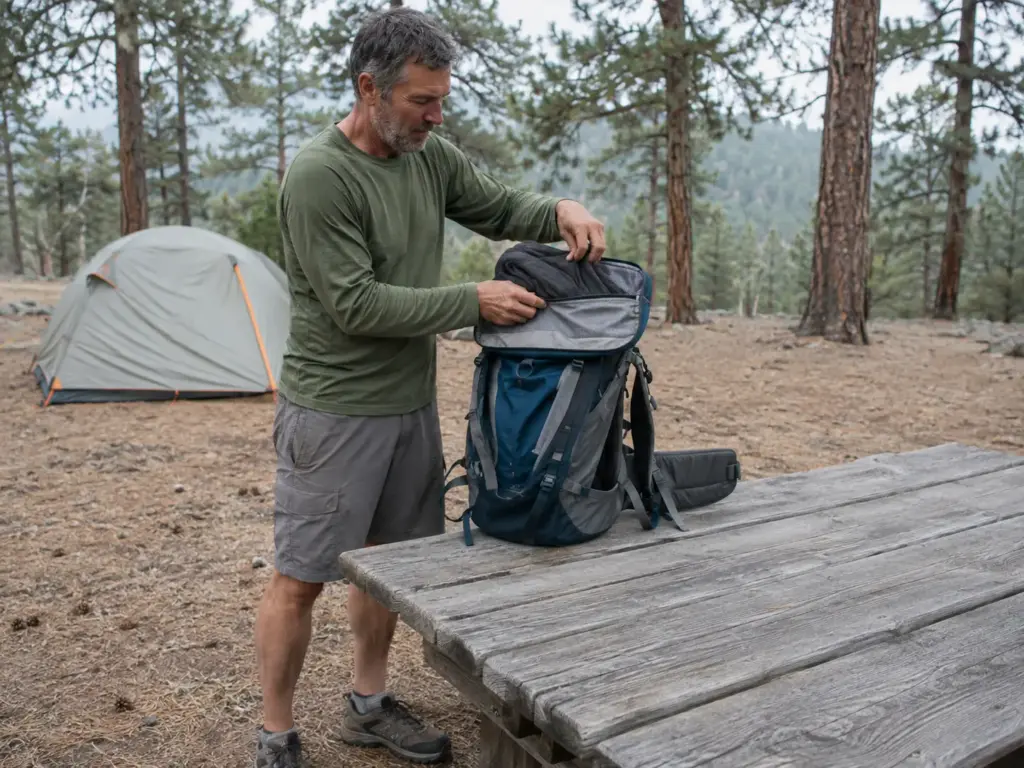
Weight and durability pull in opposite directions. Lighter fabrics wear thin faster, a point that comes back in the durability section, so a feather-light pair is a trade, not a free gain. The practical test is simple: if a pair is light enough to forget in the pack, it gets packed; if it is a brick, it stays home and you end up wearing it wet.
Pockets and Storage That Work on Trail
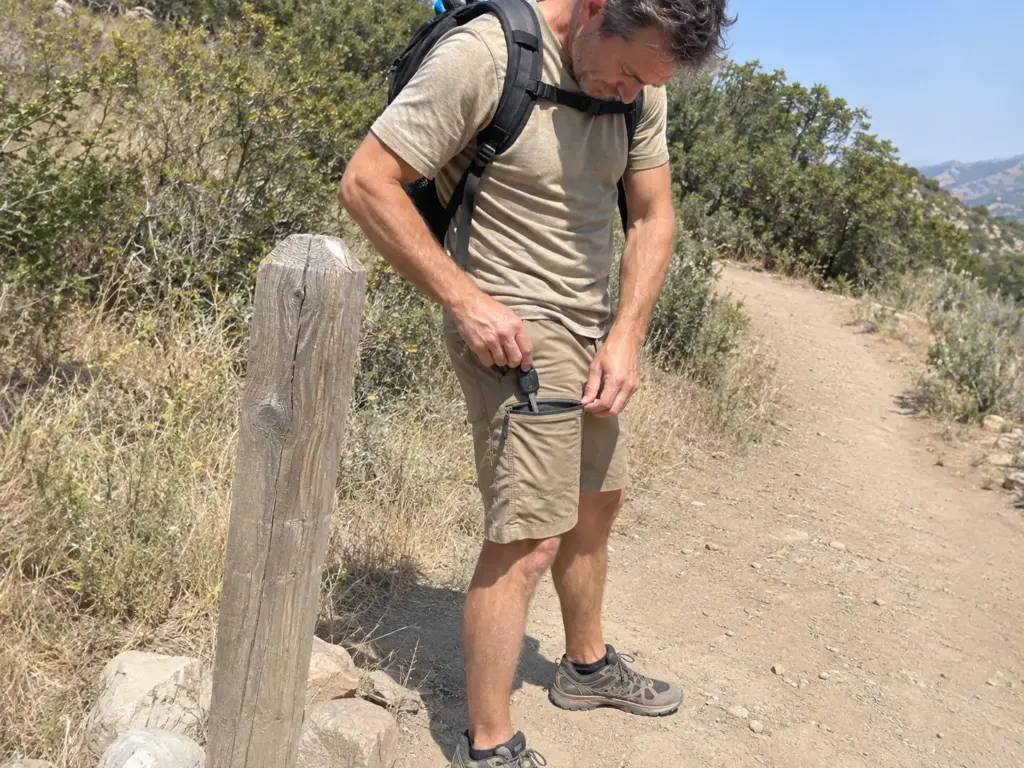
Reaching for the phone while walking with a pack on, and feeling it swing against your thigh, tells you what a pocket is worth.
Zip, Open and Cargo: What Each One Holds
A zip pocket is the safe place for keys and a phone, because an open pocket loses things on a scramble or a sit. Zippered hand pockets keep small items secure but fill fast. Cargo pockets hold more and sag and swing when loaded; deep hand pockets sit closer to the leg but hold less. A rear pocket with a zip carries a key, a phone pocket on the thigh carries the phone, and anything else rides in the pack.
The Patagonia Quandary is a useful yardstick for a full pocket layout: four pockets, including a zippered back pocket and a thigh pocket, on a 10 inch inseam made from recycled nylon with a little spandex and a DWR finish. Measure other pairs against that layout and you will see quickly which ones ask you to carry things in the pack.
Pockets Under a Hip Belt
A backpack hip belt can sit right over a pocket opening and make it hard to reach. Side pockets that clear the belt are the ones that get used, while a pocket that works in the shop can become a sealed drawer under a buckled belt. Try the pockets with the belt fastened, the way you will actually hike. The pocket that works is the one you can reach with a pack on and a hand free, and a separate guide shows which pocket layouts work on a long trail day for every kind of hiking bottom.
Waistbands, Liners and Belts
A waistband that is fine standing still can become the loudest part of the pair once a pack belt sits on it. Treat it as a pressure point: the question is whether the waistband shares that pressure with the pack belt or competes with it.
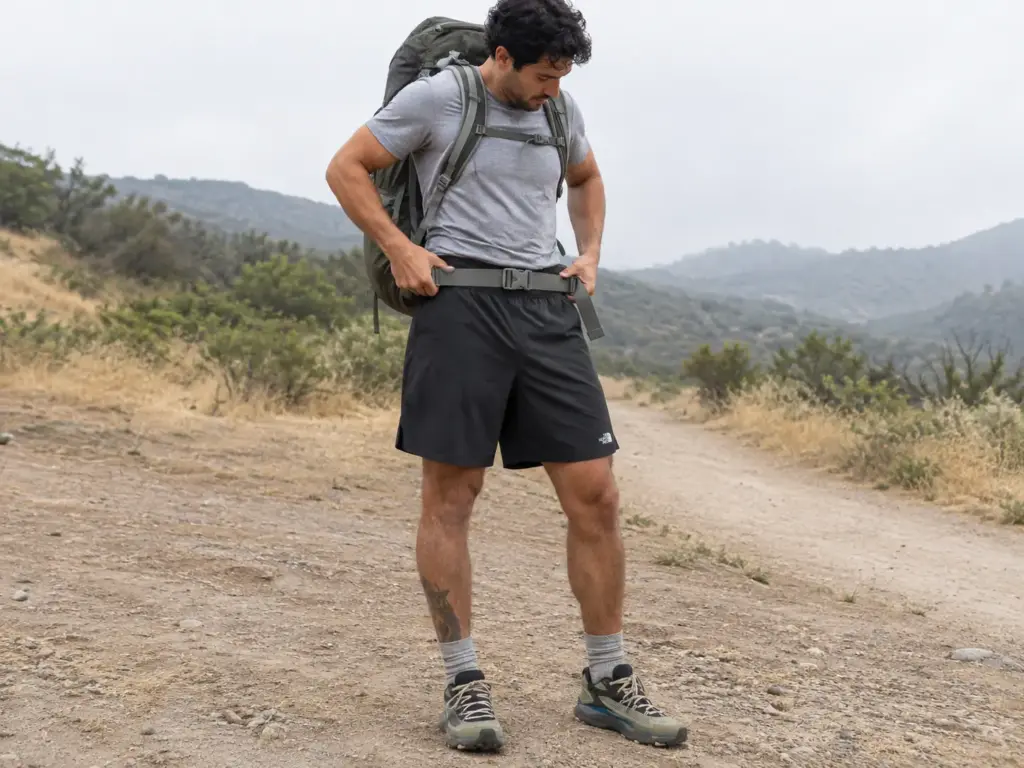
Drawcord, Belt Loops or Built-In Belt
Each system trades ease of adjustment against bulk at the waist. A drawcord, the drawstring waistband on most lightweight shorts, adjusts in seconds, but the knot can press on the belly. Belt loops let you choose a belt but add a lump under a pack belt. A belt included with the shorts, as on the Outdoor Research Ferrosi, helps when your waist changes through the day or the trip.
Whatever the system, a flat, narrow waistband sits better under a pack belt than a tall one.
Liner or No Liner
A liner adds coverage and a chance of ride-up or bunching: a brief liner gives the least coverage, a boxer brief liner covers more thigh, and a liner that can ride up is the reason many shorts feel wrong by mile five. Even an anti-chafe liner bunches if the cut is wrong.
Liner-free shorts depend on your own underwear, which matters in the chafing section below. Neither choice is automatically better, but a liner that rides up is worse than no liner at all. A comparison of where waistbands fail on leggings and on pants shows the same pressure points turning up in other bottoms.
The Flat Waistband Pick: The North Face Wander Short 2.0
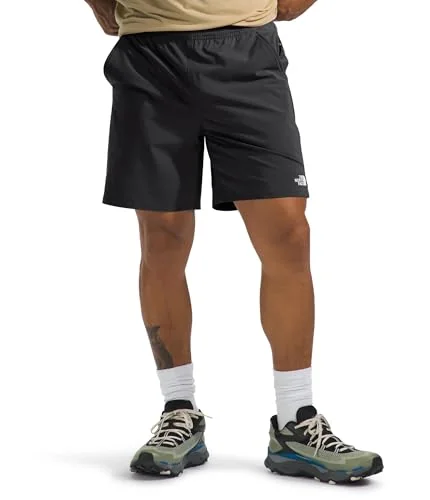
The flat waistband on The North Face Wander Short 2.0 is the one spec this pick rests on, and for hot days under a pack belt it is the right one to rest on. It is budget-friendly, which makes it an easy pair to try. A flat waistband is a starting point, not a pass, so run the pack-on test below on any pair before trusting it for a long day.
Durability: Where Shorts Wear Out First
Shorts wear out where you sit and where the pack presses, not where you expect.
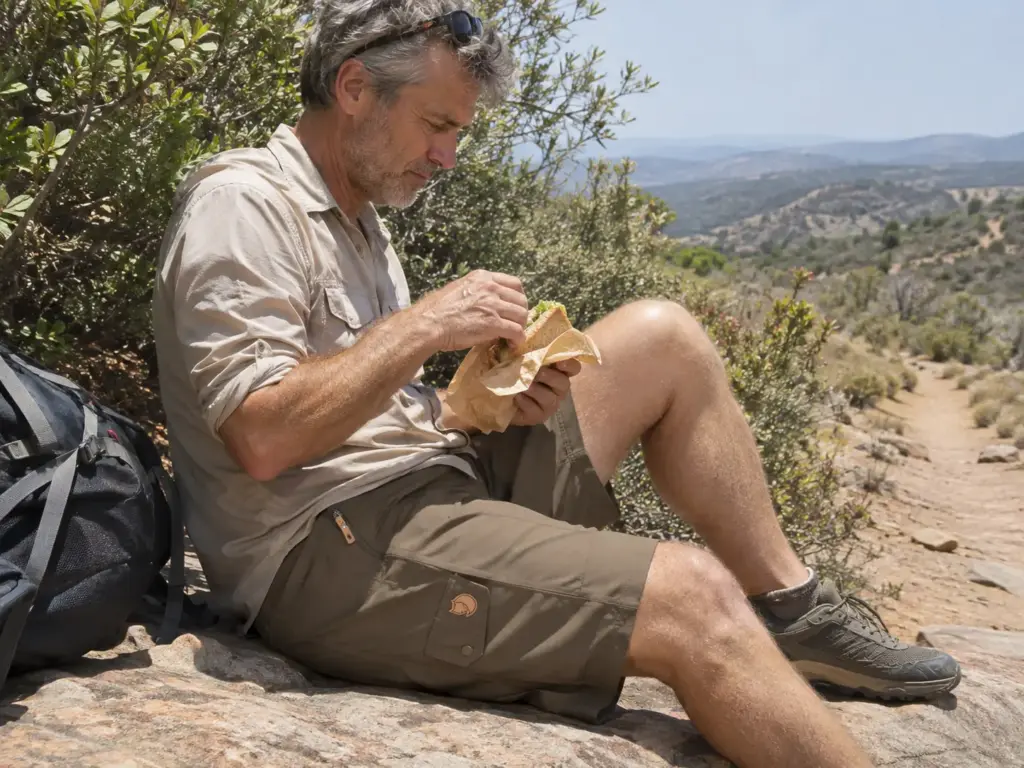
Seat, Hips and Hardware: The First Places to Fail
The pack hip-belt zone and the seat go first. Thin fabric pills there long before a pocket gives out, and hardware, meaning zips and buttons, usually fails before the fabric does. When you look at a pair, press your thumb on the seat and the hip band and check the zipper and the button, because those are the spots that will tell the story by next season.
Fabric Weight and Weave: What Lasts
Reinforced panels and a tighter weave resist brush and rock; the price is airflow. Lighter fabrics wear faster, so the ultralight pair that felt so good in June may be thin by August. For other hiking bottoms, a durability comparison shows what wears out first on zip-off and roll-up designs, and the same logic applies.
The Durable Premium Pick: Fjällräven Abisko
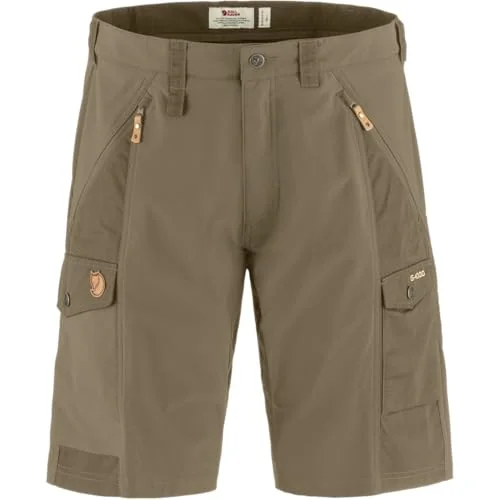
A stretch panel with reinforcement is the right idea for a pair that has to take abuse, and the Fjällräven Abisko is the premium durable pick in this set. The panels give freedom on high steps, and the reinforced zones sit where brush, rock and a pack belt do their work. You are paying for that construction, which is the kind of premium that earns its cost on long, hard use. Stock on this listing is limited.
Price Tiers: Where Paying More Actually Helps
The cheapest pair in this set holding up on a day hike next to a technical pair you don’t need that day is the whole argument for this section. Budget hiking shorts are enough for day hikes. What a higher price buys is stretch, reinforced zones and better seams, so the extra money goes to the seams and the stretch, not the logo. The tiers here run budget, mid-range and premium.
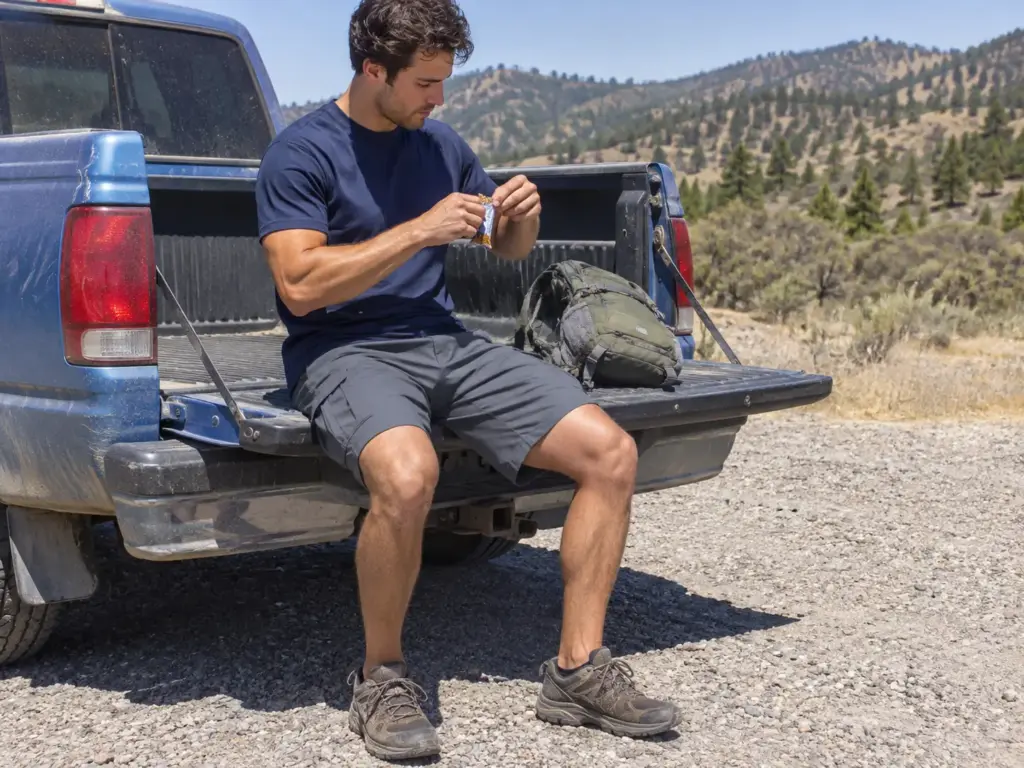
The Budget Floor: Wrangler Authentics Performance Comfort Flex Cargo
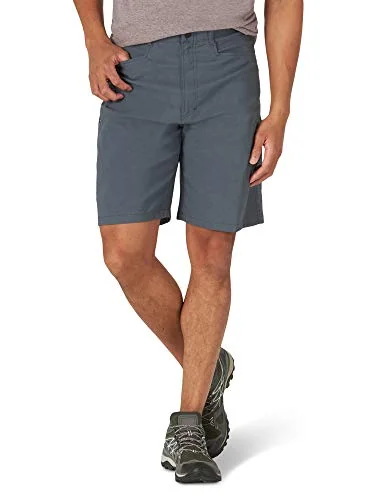
The Wrangler Authentics Performance Comfort Flex Cargo is the lowest-priced pair in the set and a fair pick for casual day hikes. It gives you stretch cargo fabric without the technical label, and for a three-hour loop that is usually all the shorts need to do. Step up from it when the hikes get longer, hotter or more loaded.
The Value Pick: prAna Stretch Zion Shorts II
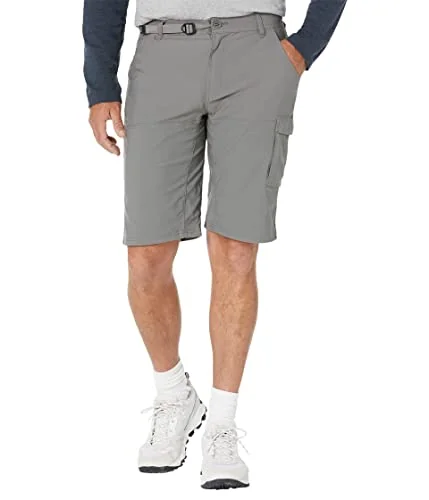
The prAna Stretch Zion Shorts II is stretch fabric for the money, which is the sweet spot between the budget floor and the premium durable pick. It is where the extra spending first buys something you can feel on a step or a scramble. Stock on this listing is limited.
Fit Across Brands: Test Inseam and Thigh Room Before You Commit
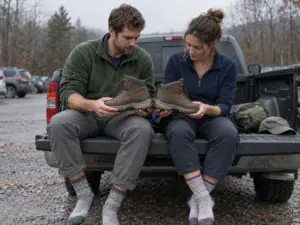
The same size tag means different things across brands. A waist number can sit looser at the thigh, shorter at the inseam or lower on the hip in one cut than in another, and no brand-by-brand size chart can keep up with that. A method works on any pair: a few minutes at home that tell you whether the tag is telling the truth.
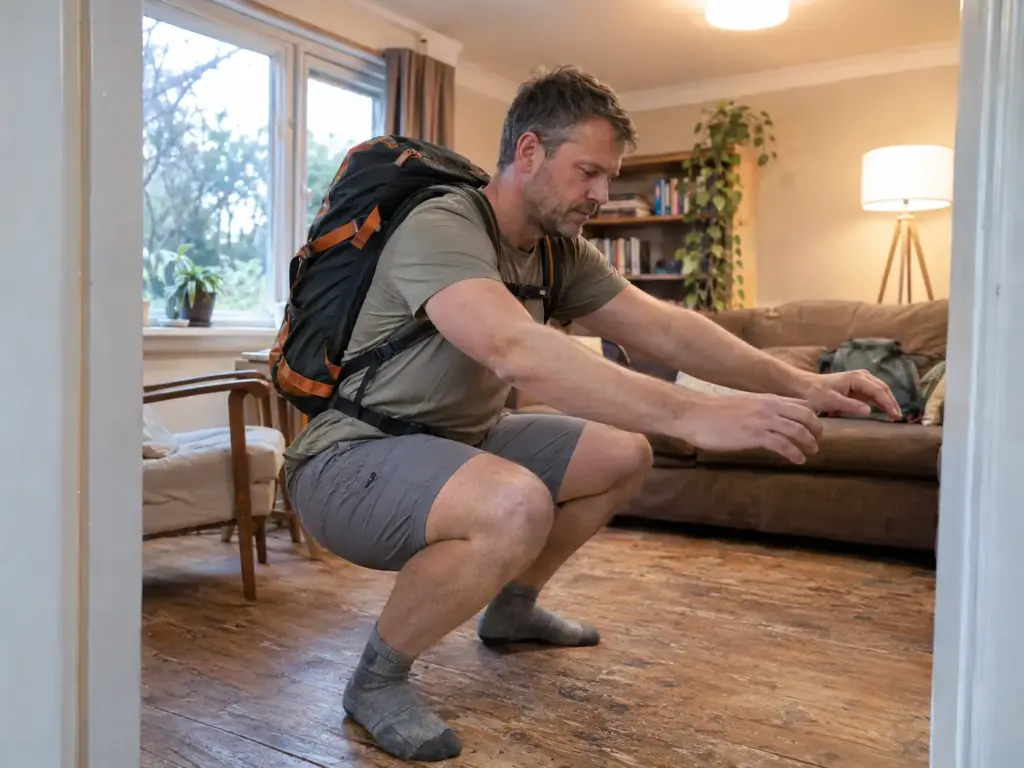
Four Moves to Run at Home
Put the shorts on and run four moves: a deep squat, a high step onto a chair, a sit with your legs crossed, and a long stride across the room. The fabric should move with you without riding up, pulling at the seat or tugging at the waist. If a pair fails any one of the four, send it back instead of waiting for the trail to tell you the same thing at mile three. The pair that passes the squat in the hallway passes the high step on the trail.
The same test, worked out for pants, is laid out in the sit, squat and climb method in full.
Run the squat with your phone and keys in the pockets. A pocket that looks fine empty swings and drags the hem when loaded, and you will see it at once in the hallway mirror.
Thigh Room and the Crotch
Check the thigh first. The leg should swing freely, and the inner-thigh seam should not sit on skin where it will rub. At the crotch, look for a seam that grabs on the high step, because a pair that pulls there will rub there.
Too tight grabs at the groin; too baggy shifts and drags. Notice where the hem lands when you sit: if it climbs over the thigh, the inseam is too short for how you move.
Sizing is where the tag misleads most. One cut runs small through the thigh while another runs big at the waist, so the waist number alone tells you almost nothing.
If you have big thighs, buy for the thigh and let a belt or drawcord handle the waist, because a waist that is too loose can be fixed and a thigh that is too tight cannot. Size down only when the waist is the loose part and the thigh and seat already fit. When returns are free, order the pair you want in two sizes and run all four moves on both, since the second pair often settles the question in a minute.
Dress the Test the Way You Hike
Test with what you will hike in: the underwear, the socks and, if you will carry one, the loaded pack. Shorts that pass over the underwear you wear to the office can fail over the underwear you hike in. A related check on the knee, the knee test that works the same way, takes about ten seconds and tells you whether the cut will fight you on a long climb.
Why Hiking Shorts Chafe and What Fixes It
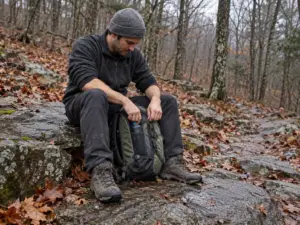
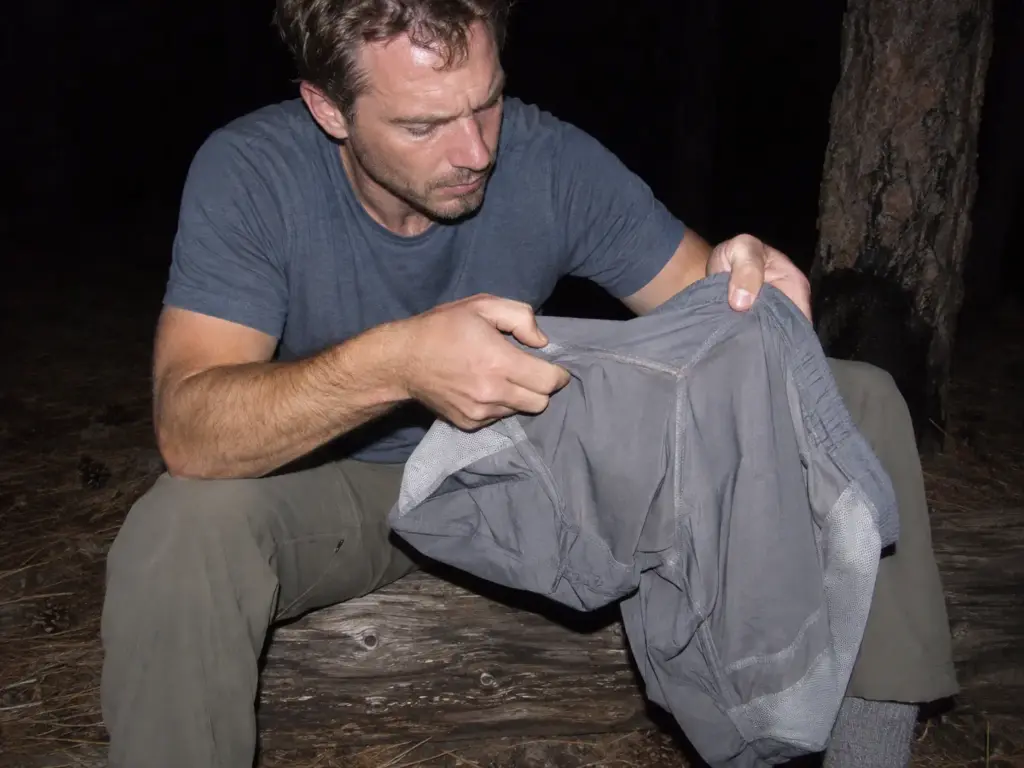
The burn that starts at the inner thigh around hour three and doesn’t stop until the shorts come off has a cause, and swapping pairs doesn’t always fix it. Chafing is friction plus sweat and salt, skin on skin or cloth on skin, and it gets worse with heat and wet. Solving it means solving the cause, not changing the label.
What Actually Causes the Rub
Four things in the shorts do the damage: an inner-thigh seam that sits on skin, fabric that doesn’t dry, a baggy cut that shifts with every stride, and a cut so tight that it grabs the groin. Cotton underwear holds sweat and rubs, while synthetic underwear or a liner dries. Inner thigh chafing almost always starts at one of those four points, and the first warning is a hot spot, a patch of warmth you can feel before there is anything to see. A hot spot caught in the first mile costs a minute; one ignored until the third mile can cost the hike.
A seam sitting on the inner thigh is the usual culprit, and you can check for it at the rack: run a finger along the inside of the leg and take a stride. If the seam lands on the thigh, it will rub. Where the legs meet matters too, and what a gusseted crotch changes in a high step shows how a pair can stop pulling at the thigh.
The Order of Fixes
The order matters, because fixes at the wrong stage waste a hike.
- Change what touches the skin: the underwear and the seam position.
- Apply a lubricant, an anti-chafe balm or stick, before the hike, not after the first hot spot.
- Add a snug synthetic layer or compression shorts if the problem persists.
The first warm patch is the warning, so fix it then, not after the third mile. Snug beats baggy here, because a baggy cut moves against the skin with every stride and rubs it raw, and a seam that is only irritating at mile two becomes the whole problem at mile ten. Step three is the last resort and the least glamorous: compression shorts under the pair you already own solve more rubbing than a new pair of shorts does. The reasons why a snug layer beats a loose one for rubbing show up on the base layer side of the closet as well.
Put the lubricant on at the trailhead, on clean, dry skin, before the shorts go on. On a hot day, reapply it at the lunch stop. Skin that is already raw only gets soothed by a salve; skin that was protected from the start never gets there.
Salt, Sweat and Water
Salt in sweat irritates skin and adds friction, and dehydration concentrates the salt. Drinking on schedule is a chafing lever, not only a comfort one. A wet, salty thigh is the worst combination for a seam, so drying speed and the order of fixes belong in the same conversation. Another shorts guide has more shorts picks for chafe-free miles.
The Waistband Test Under a Pack Belt
The waistband that disappears under a pack belt for a mile and then starts to press on one spot is the failure this test catches. A tall or stiff waistband can press on the lower back or fold under the belt, while a flat, narrow one sits better. The test needs a loaded pack and a stair, and you can run it in the living room.
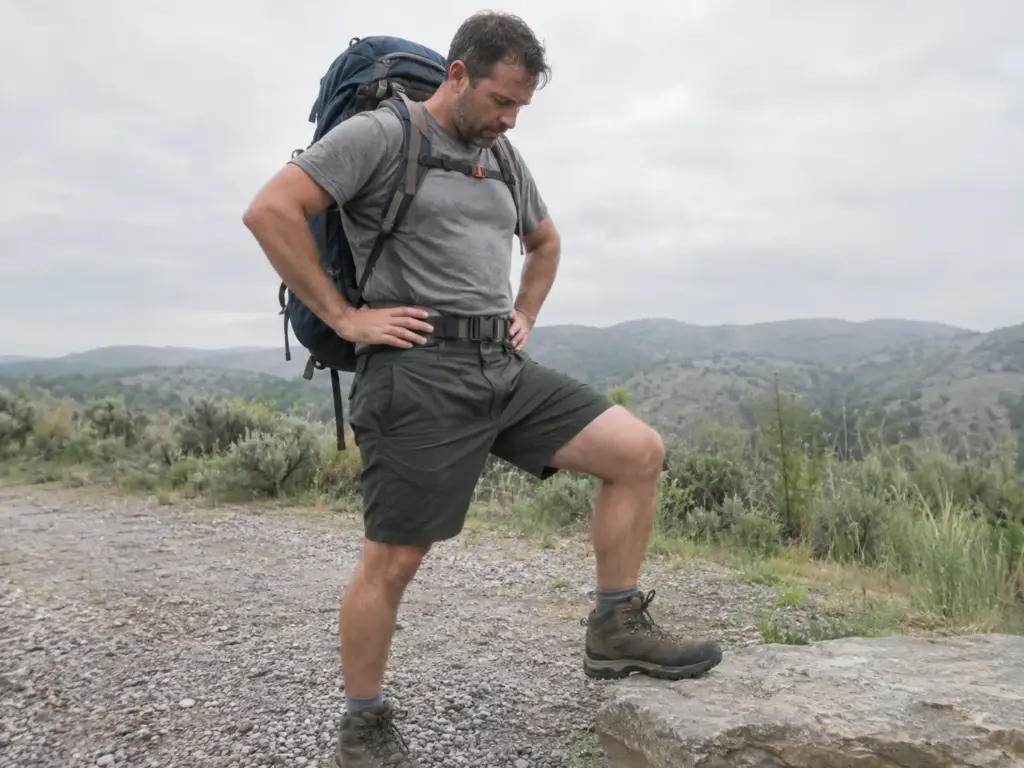
The Pack-On Test: Squat, Step, Sit
- Put on the shorts you plan to hike in.
- Load the pack with something close to a real day and put it on over the shorts.
- Buckle the hip belt.
- Squat, step up onto a stair, then sit.
Check for a fold in the waistband, a pinch at the hip or lower back, and a belt riding up onto the waistband instead of the hip bone. You feel a waistband problem at the first stair, not the first mile.
Two small habits make the test honest. Loosen the shorts a notch before you buckle the pack, because the belt tightens everything underneath it, and judge the waistband at the tension you will actually hike at. And hold each position for a few breaths instead of passing through it: a pinch that shows up while you sit is the one that will find you at the lunch stop.
Why Tall and Stiff Waistbands Fail
A hip belt wants to sit on the hips. A tall, stiff waistband sits in the same place, so one of the two has to give, and it is usually the waistband that folds or pinches. A flat, narrow waistband slides under the belt and keeps the pressure spread.
A waistband built to look sharp at the trailhead is often built tall, and a stiff one resists the curve of the hip, so the belt rides over it instead of settling past it. That is the pressure point a flat waistband is built to avoid.
Drawcord Knots, Belt Loops and Pressure Points
Belt loops under a pack belt add a lump, and a drawcord knot can press on the belly when the belt cinches down. If a pair fails the test, a belt or a different cut fixes more than a size change does, because the problem is the shape at the waist rather than the number on the tag. For the belt side of that decision, a guide on how a built-in belt compares with belt loops under a pack goes deeper.
When Shorts Are the Wrong Call
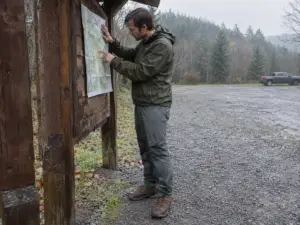
The trail that started sunny and warm and ended in thorn bushes, ticks, or wind on an exposed summit is the reason to decide shorts by the whole day, not the trailhead.
Brush, Thorns and Poison Plants
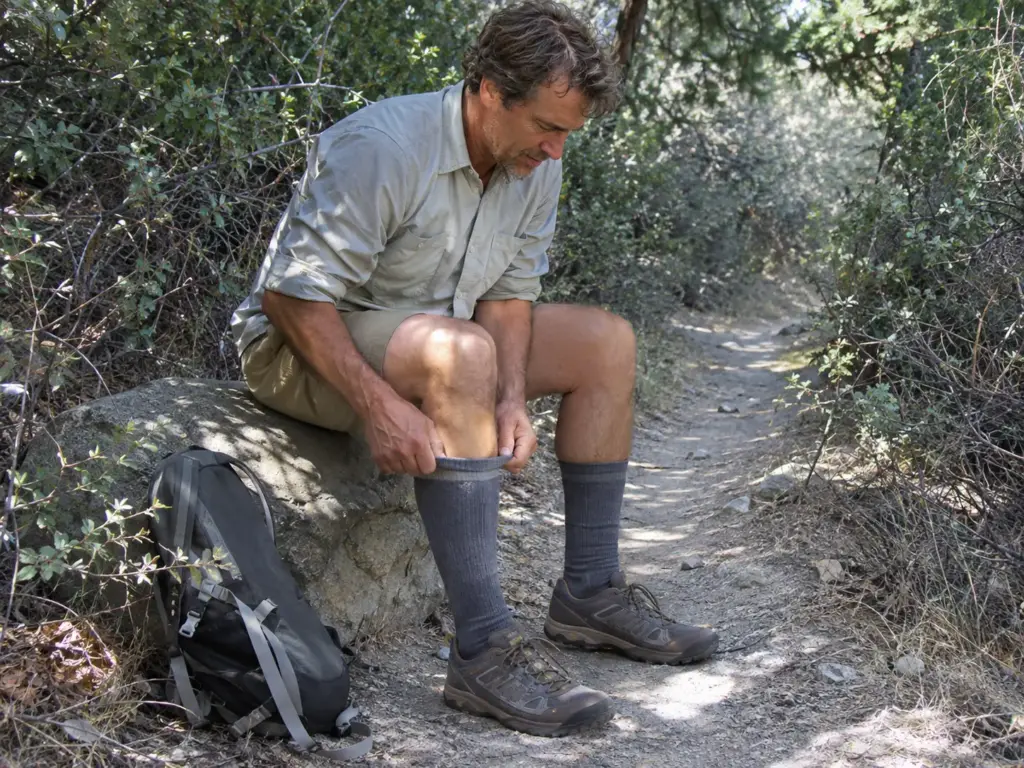
Hiking shorts vs pants is mostly a question of what the trail puts at the height of your legs. Pants protect your legs from rocks, roots, vegetation, sun, ticks, mosquitoes and the plants that irritate skin, such as poison ivy, oak and sumac. Knee-high socks cover part of that ground for shorts-wearers, though not all of it.
Thick brush is the first trigger to leave shorts at home, and desert scrub such as catclaw and cholla is the extreme case: brush that leans into the path scrapes shins and leaves old scars behind, and a trail you have to push through for a mile is a trail for pants. Vented mesh panels catch on thorny brush, so vented pants are not the answer there; a tight weave is. For hot days with a clear trail, though, when roll-up pants beat shorts on a summer day is worth a read before you pick.
Ticks and Bare Legs
Tick country is the second trigger, and bare legs give ticks the easiest route. A 2018 CDC study in the Journal of Medical Entomology found that ticks on permethrin-treated clothing lost normal movement within a minute of contact, and the CDC recommends treating clothing and gear with products containing 0.5% permethrin. Treatment goes on the fabric, not on skin, so shorts leave the skin exposed. A bug repellent registered with the EPA covers bare skin against mosquitoes and ticks, but it does a different job than treated fabric.
For the full picture, see how permethrin-treated pants repel ticks. A three-stage defense for ticks on the trail covers what to do around the clothing.
Cold Summits and Shoulder Season
Temperature falls about 3.5 °F for every 1,000 feet of climb, so a warm trailhead can hide a cold, windy summit. Shoulder-season days and high-elevation routes call for a decision based on the coldest point of the day, not the trailhead. If the forecast gives you shorts at the bottom and a jacket at the top, carry something for your legs.
Wet trails are the same problem from the other side. A morning of dew-soaked grass or an afternoon of rain leaves bare legs wet and cooling fast, and wet shorts in cold wind rub and chill at once. A light pair of long pants in the pack turns a bad turn in the weather into a layer change instead of a retreat.
What to Wear Instead
Roll-up pants, convertible pants, tall socks with shorts, or a light pair of long pants kept in the pack to layer over shorts when the brush gets bad. Shorts are a decision about the whole day, and the best answer on a mixed route is often the one that changes with the trail: convertible pants for trips that change by the hour.
Check Your Closet Pair First, Then Decide
Match the shorts to the hike, because the loop forgives what the long day punishes. Check inseam and fabric first, and wear synthetic, not cotton. Run the squat, step and sit test with the pack on, and settle waistband trouble before it finds you on the trail. Fix chafing at the cause, starting with what touches the skin, and pack long pants whenever the brush, the ticks or the summit say so.
Run that pack-on test with the shorts you already own ahead of any new order. If a pair fails it, take it out of rotation for the long days and use the table up top to pick a replacement that fits the hike you do.
Frequently Asked Questions
01Should men wear hiking shorts or hiking pants?
Wear shorts on warm, open, clear trails and pants when the trail brings brush, ticks, or a cold or exposed day. Decide by the harshest part of the route, not the trailhead, and carry a light pair of long pants to layer over shorts if the day might turn.
02What is the best fabric for men’s hiking shorts?
A synthetic blend, nylon or polyester with a little spandex, is the best fabric for men’s hiking shorts because it dries fast and doesn’t hold sweat. Cotton stays wet and rubs. Stretch helps on high steps, and a DWR finish only sheds a light splash.
03What inseam is best for men’s hiking shorts?
The best inseam depends on the trail: shorter lengths give more airflow, a middle length is the usual compromise, and longer lengths cover more skin against sun and brush. Match it to the trail you hike, not to a style.
04How do I stop thigh chafing in hiking shorts?
Change what touches the skin first, meaning underwear and the inner-thigh seam, then apply a lubricant before the hike, and add a snug synthetic layer if the rub continues. Drink on schedule too, since dehydration concentrates the salt in sweat.
05How should hiking shorts fit under a pack’s hip belt?
The waistband should be flat and narrow, and it should pass a squat, a step-up and a sit with the loaded pack on without folding or pinching. A belt or a different cut usually fixes a failing pair faster than a bigger size.
I've spent more than a decade researching hiking gear and trail technique. I read the specs, the forum threads and the long-term reviews, and every pick here comes with what it gets wrong.
End of the trail
You read every mile of this one. Here's where the trail goes next.