













You finish a two-hour walk in steady rain wearing a shell rated for far worse weather than anything the forecast threw at you, peel it off in the car, and find your base layer soaked in two patches shaped exactly like your shoulder straps. Everywhere else is bone dry.
That pattern shows up in gear threads across every membrane on the market, eVent and Gore-Tex and Neoshell alike, which tells you it is not one defective jacket. The hydrostatic head rating measured something real in a lab, then your pack measured something else entirely on the trail. Here is what the mm number actually tests, what it structurally cannot see, and how to pick a waterproof rating for the hiking you really do.
Use this as the short version, matching each band of mmH2O to what it genuinely handles:
| Rating | What It Genuinely Handles | Who It Is For |
|---|---|---|
| Under 5,000mm | Drizzle and brief showers; call it water-resistant, not waterproof | Dry-season day hikers, wind shells, emergency stash layers |
| 5,000–10,000mm | Light rain for an hour or two before the fabric starts giving up | Fair-weather hikers who can turn around and go home |
| 10,000–15,000mm | Sustained moderate rain; the practical floor for real rain gear | Three-season hikers, shoulder-season trips, most backpackers |
| 15,000–20,000mm | Heavy rain, wet snow and all-day exposure with margin left over | Pacific Northwest hikers, wet-season regulars, multi-day trips |
| 20,000mm and up | Prolonged storm exposure; the expedition tier with headroom to spare | Alpine and expedition use, or anyone who cannot bail out |
What Hydrostatic Head Ratings Actually Measure
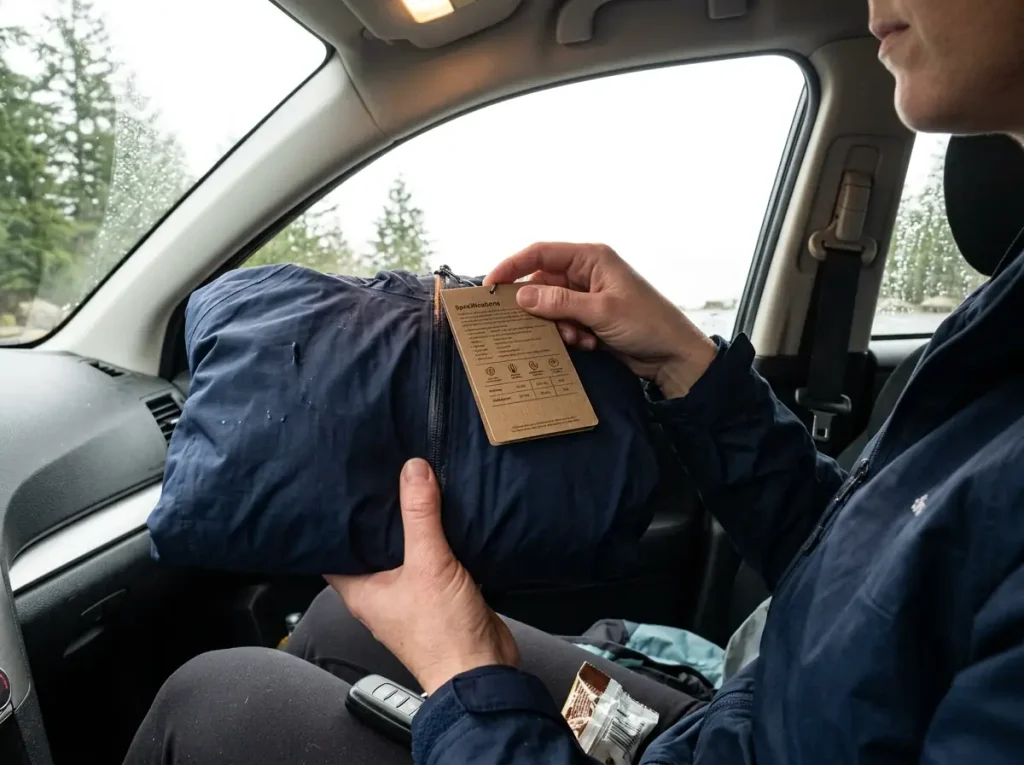
The tag on your shell says 20,000mm and nobody stops to tell you what that means physically. It means a column of water twenty meters tall, roughly a five-story building, sitting on one spot of that fabric before the third drop pushes through. Once you see that the mm number is a pressure test wearing a length disguise, every strange thing about waterproof ratings starts making sense.
The Water Column Test in Plain English
The rig is almost comically simple. A lab clamps a fabric sample under a sealed tube, fills the tube with water, and watches the underside. When three drops appear on the far side, the height of the water column at that moment is the rating. That is the whole of the ISO 811 hydrostatic pressure test, a defined international procedure rather than a number a marketing department picked.
The catch is what it assumes. The test applies smooth, even pressure to a flat sample held perfectly still, and nothing rubs it or digs into it.
Nothing in that tube has been washed forty times or stuffed wet into the bottom of a pack for two days, either. ISO 811 measures the fabric on the best day of its life.
Why 1 psi Equals 700mm
Here is the conversion that reframes the entire spec sheet. One psi is roughly 700mmH2O, a figure SlingFin’s Tim Hunt uses to translate lab numbers into forces you can picture. That single equivalence turns an abstract four-digit number into something you can reason about with your hands.
Run it forward and the results get strange fast. A tent fly rated 1,200mm would need wind-driven rain of over 300 mph to fail by pressure alone. The strongest gust ever recorded on the planet was 253 mph. Your fly is never leaking because the wind pushed too hard on it.
So when a fly leaks, and flies do leak, the cause is somewhere else: failing seams, a DWR finish that quit, a pinhole, water pooling where it should be shedding. People blame the mm number because it is the only number printed on the tag.
Before you blame the rating on a leaky tent, run your fingers along the inside of every seam after a wet night. If the damp traces a stitch line, that is a sealing problem, and sealing is a two-hour fix on your kitchen floor. No amount of extra mm on the next tent would have prevented it.
What the Number Is Not Measuring
The rating has nothing to say about abrasion resistance, and abrasion is what ends most shells. It says nothing about how the fabric behaves once the finish on its outer face wears off, nothing about the pressure spike from concentrated point load, and nothing at all about whether you will be dry inside. Sweat does not care how many millimeters the tube held.
It also will not tell you the difference between waterproof vs water-resistant on a hangtag. That distinction is a threshold someone chose, not a property the test reports, which is why the same fabric can be marketed either way depending on who is writing the copy.
Worth knowing too: nobody at a trailhead says hydrostatic head out loud. In gear threads people say mm rating or water column, and they mean the same thing. The rating is one spec among several, which is why it pays to understand how the whole rain gear system fits together before spending money on a single number.
Pack Straps Beat the Number Every Time
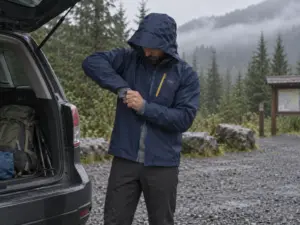
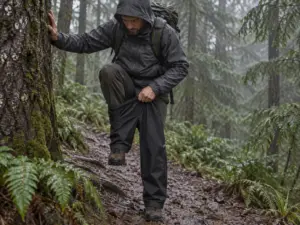
Take the shell off after a wet hike with a loaded pack and look at your base layer. If there are damp patches, they will not be random. They will be two bands across the tops of your shoulders, sometimes a third at your lumbar or hip belt, and the shape will be a recognizable diagram of your own harness. Hikers call it the wetness map, and it is the single most common expensive-jacket-failed story in gear forums.
The Wetness Map Under Your Shoulder Straps
The mechanism is basic physics: pressure equals force divided by area. Rain falling on a flat panel spreads its force across the entire panel, which is why that static pressure stays almost nothing at any one point. Backpack straps do the opposite. They take twenty or thirty pounds of load and funnel it through a contact band a couple of inches wide, then hold it there for eight hours while you walk.
Torso length decides where that band lands. A pack sized wrong rides the load onto your collarbone instead of the meat of your shoulder, and clavicle pressure concentrates the same force into a smaller, bonier contact patch.
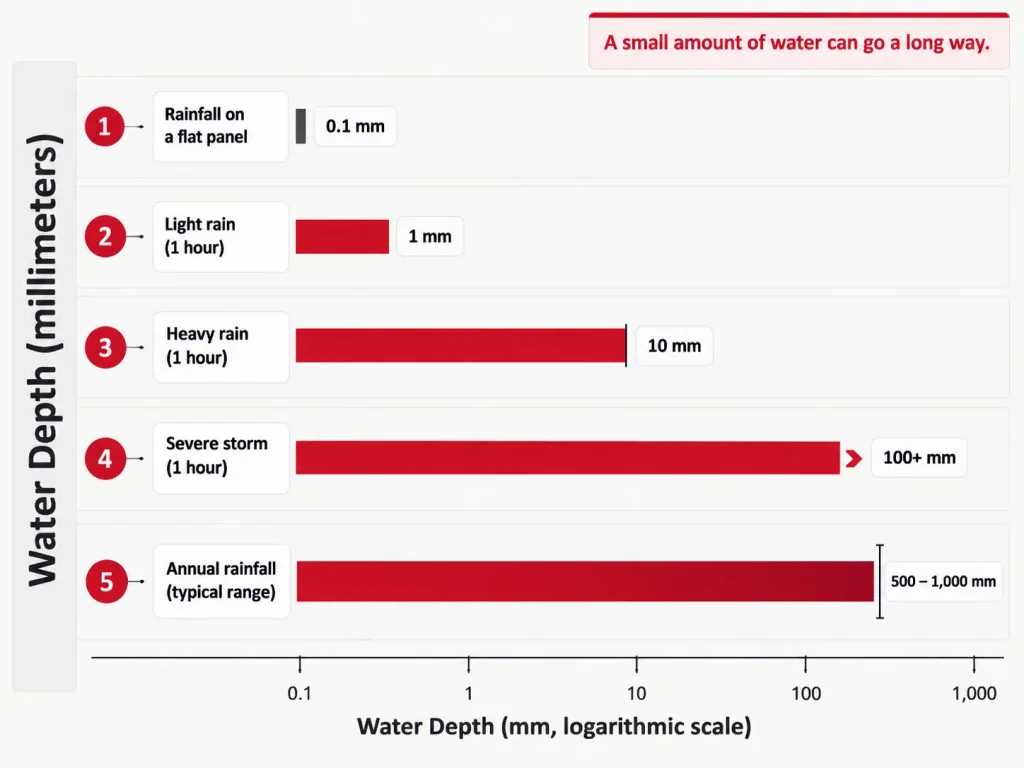
That localized pressure sits far above anything distributed rainfall produces, and it arrives with a second insult attached. The strap does not just press. It moves, micro-abrading the outer face of the fabric with every stride, for every mile of every trip.
Fit changes how hard this bites, which is one reason how a shell is cut to sit over your layers matters more than most people assume. A shell pulled tight over a bulky midlayer puts the harness in harder contact than one with room to move.
Why Wetting Out Is Not a Leak
What dies first at that contact band is the DWR, short for durable water repellent, the thin factory finish that makes water bead and roll off the face fabric. Strip it away and the face fabric starts to wet out: it soaks through, stops beading, and goes dark and heavy. The membrane underneath is still perfectly intact. Not a single molecule of liquid water has crossed it.
You are wet anyway, and here is why. A membrane moves your sweat outward by riding a vapor gradient, dry air on one side pulling moisture from humid air on the other. Saturate the face fabric and that gradient collapses.
Your sweat then has nowhere to go. It condenses against the inside of the shell and soaks the shirt underneath in exactly the pattern of the straps that caused the problem. It feels like a leak, which is why chasing a higher mm rating on your next jacket fixes nothing.
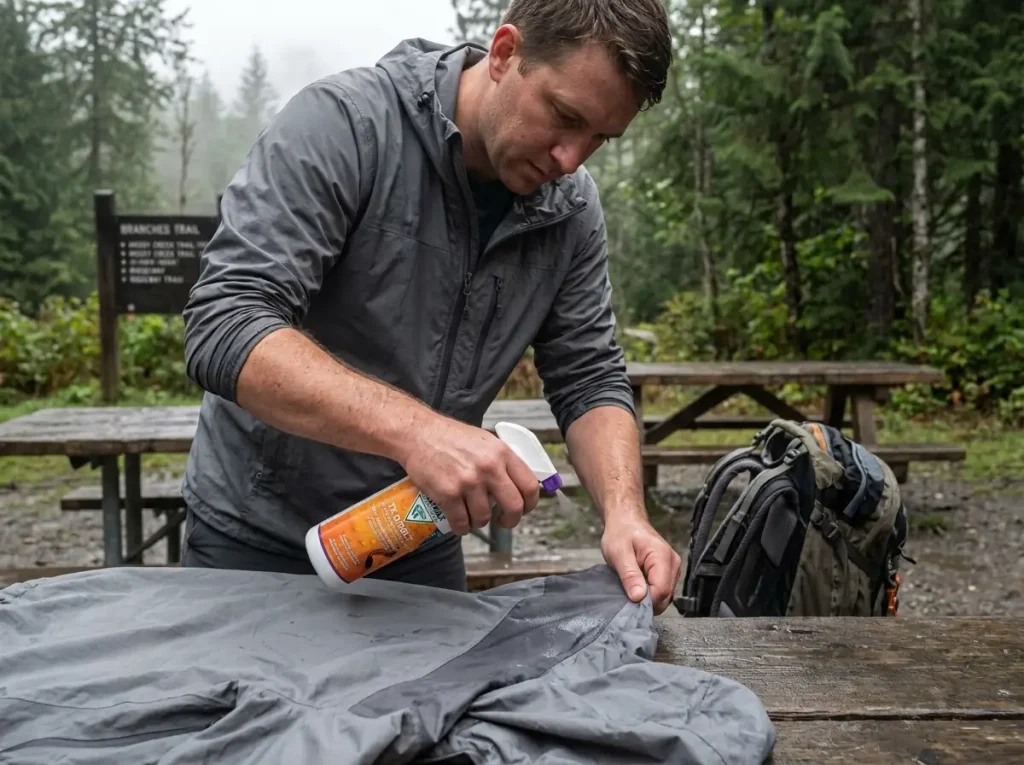
The fix is restoring the finish rather than replacing the garment, and bringing the DWR back with heat works on more shells than most hikers expect. A reproofing treatment like Nikwax TX Direct Spray-On (check it on Amazon) handles the spot work well, because you can target the shoulders and hip-belt band specifically instead of treating the whole garment. Hit those two zones on a schedule and the rest of the jacket usually stays ahead of the curve on its own.
Reproof the shoulder and hip-belt bands before the fabric visibly wets out, not after. By the time you can see a dark patch spreading on the trail, the finish in that zone has been gone for weeks and you have been hiking wet without knowing why. Two zones, five minutes, once or twice a season.
Why Every Membrane Has This Problem
The pattern that keeps this honest is how widely it is reported. One account that circulates in these discussions is a coastal Alaska hiker who walked the same two-hour loop daily in a well-worn 3L eVent shell, never washed and never abused, carrying a Hyperlite Mountain Gear Windrider with about a twenty-pound load.
After one heavy-rain walk he found a near-perfect wetness map of his own straps printed on his shirt. Nothing exotic happened. He just did the ordinary thing often enough to see the pattern clearly.
Forum threads report the identical failure on Gore-Tex and on Neoshell, and that consistency is the point. This is contact mechanics, not a brand defect, and no membrane chemistry exempts a face fabric from being rubbed by a loaded strap for a thousand miles. Spending more buys better fabric, construction and breathability. It does not buy an exemption from friction.
How Much Hydrostatic Head You Actually Need
Nobody buys a shell in the abstract. You buy it for the hiking you actually do, and most people miss in one of two directions: overbuying an expedition-tier rating for a life of dry-season day hikes, or underbuying and getting caught out by the first real shoulder-season storm.
The 10,000mm Floor
Ten thousand millimeters is where a shell earns the word rainproof for sustained moderate rain. Below that, treat the garment as a windbreaker with a head start: fine for a passing shower, not fine for four hours of steady rain on an exposed ridge. This threshold lines up with the EN 343 waterproofness and breathability classes, the published European standard that grades rainwear rather than leaving it to retailer convention.
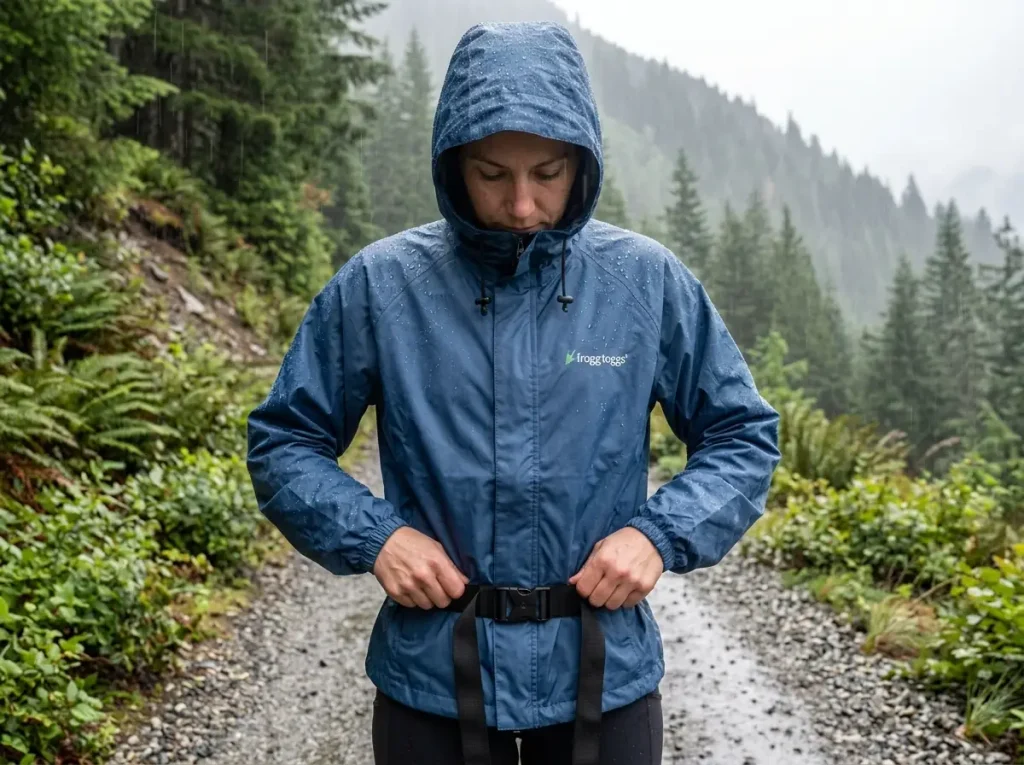
Clearing that floor does not require premium pricing, which is the part almost nobody writes down. The FROGG TOGGS Ultra-Lite2 (men’s · women’s) sits in the roughly 10,000mm class with fully sealed seams, which is the honest budget answer. One caveat keeps it straight: it is PU-coated, and PU is hydrophilic, so it needs a more aggressive reproofing schedule than a premium shell, and it is not built for years of hard abrasion.
Matching the Rating to Your Season
Activity labels are a lazy way to pick a rating. Hiking covers everything from a July afternoon on dry singletrack to a November traverse in horizontal sleet. Season and climate are the honest variables.
- Dry-season day hiking where storms are brief and you can bail: 5,000 to 10,000mm is enough, and the weight you save beats the margin you skip.
- Shoulder-season hiking with unsettled weather and cold rain: 10,000 to 15,000mm, because cold rain plus wind is where wetting out stops being a comfort issue.
- Sustained wet climates, the Pacific Northwest pattern of rain that does not stop: 15,000 to 20,000mm, watching the breathability class as closely as the waterproof one.
- Wet snow and near-freezing precipitation: 20,000mm and up. Wet snow sits on the fabric and melts under your heat, a longer and heavier load than rain that runs off.
- Alpine environment travel and backcountry skiing: 20,000mm and up, where a mountaineering jacket is carrying sustained exposure you cannot walk away from.
- Multi-day trips where you cannot dry anything: go one band above the forecast, because day three is decided by how well day one recovered.
A trail running jacket is the honest exception to all of this. It trades rain jacket rating for breathability on purpose, because the output is high and the exposure is short.
The jump from 10K to 20K is not marketing padding. It buys hours of margin before the coating fatigues under sustained pressure, and on a trip where you cannot get dry, that margin is the whole game.
When Buying More Rating Is Wasted Money
Now the honest counterpoint. Most hikers are not limited by their mm number. They are limited by a DWR they have not reproofed in two years, on a jacket that was rated adequately when they bought it.
If you hike three-season trails in a temperate climate and your shell already clears 10,000mm, upgrading to 20,000mm will change nothing you can feel. Twenty minutes with a wash and a reproofing treatment will change quite a lot. Spend there first. When you do want to shop, it helps to see which shells actually hold up on trail instead of ranking tags by their largest printed number.
Why Coating Type Beats the Printed Number
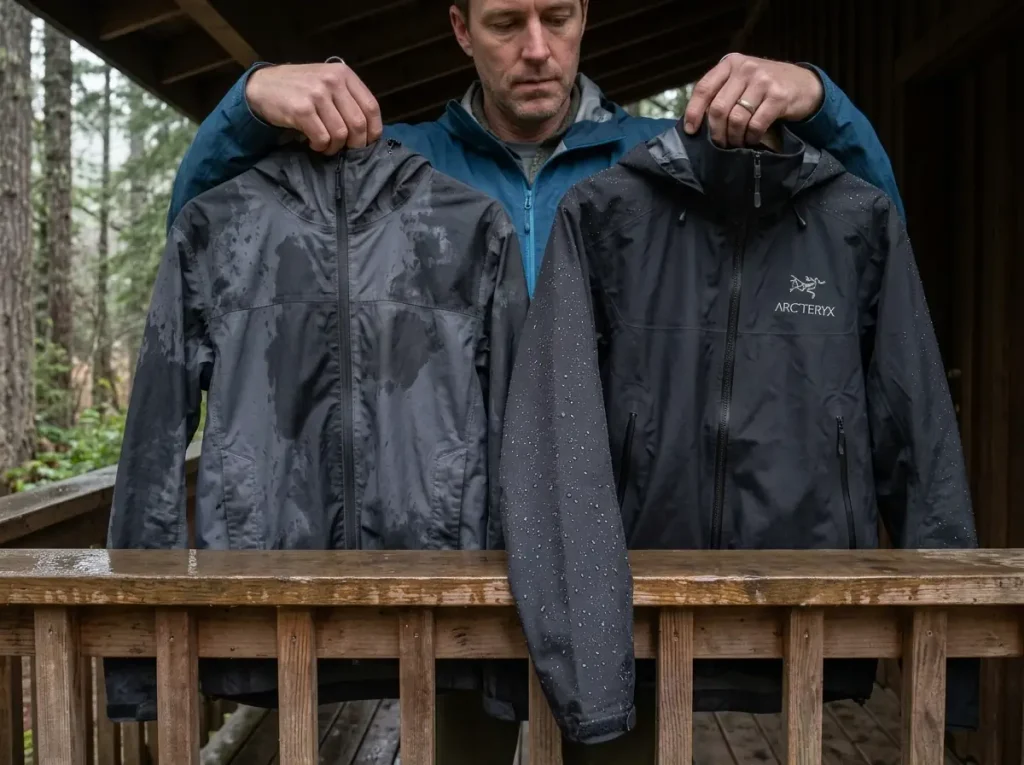
Two tents on the same shelf. One says 3,000mm PU, the other says 1,200mm silicone. The number says the first one wins by a mile. In the field the cheaper-sounding number is often the one that stays dry longer, and nothing on either tag tells you that.
PU Absorbs Water, Silicone Does Not
Polyurethane coatings are hydrophilic. They attract and absorb water over time, which means a PU fabric slowly gives ground under sustained wetting. Silicone coating and PE coatings are hydrophobic. They repel water and simply keep repelling it.
So these numbers are not comparable across coating types. A PU fabric needs a much higher rating to deliver the same real dryness as silicone at a lower one, which is how a 3,000mm PU fly and a 1,200mm silicone fly end up performing the same on a wet night. Compare ratings within a coating type and the spec is useful; compare across and you are using two different scales that happen to share a unit.
The same logic runs through shell membranes with different chemistry. ePTFE covers Gore-Tex and eVent, Sympatex and other hydrophilic membrane designs work by a different mechanism, and a microporous membrane vents through physical pores rather than chemistry. Each family trades breathability, durability and cost differently, and how the two big membranes differ mechanically is a more useful question than which one prints a bigger number.
Construction stacks on top of chemistry. A 3-layer fabric bonds the membrane between face and backer for durability, a 2.5-layer fabric prints a protective coating instead of a liner to save weight, and a 2-layer fabric hangs a loose liner inside. Same membrane, three different lifespans under a pack strap.
Reading SIL/SIL and the Coating Labels
Check the coating before you compare anything. The labels are slipperier than they look: silnylon and even silpoly sometimes mean silicone on one face only, over a PU base on the other. That is a different fabric behaving differently from what most buyers assume.
True two-side silicone is SIL/SIL. It costs more, performs better, and brands that have it say so explicitly because it is a selling point. If a product page is vague about which sides are coated, treat that vagueness as the answer.
When two products list wildly different mm numbers, find the coating line before you find the price. If one is silicone and the other is PU, the numbers are not answering the same question and the comparison you were about to make is meaningless.
Why Your Rating Drops While the Gear Sits in a Closet
PU degrades two separate ways, and only one of them involves you using the gear. UV degradation strips significant waterproofness out of a PU coating in a single season of real sun. That part at least feels fair: you used it, it wore out.
The other way is hydrolysis, a slow reaction between the coating and ambient moisture that proceeds whether or not the gear ever leaves the closet. A tent stored damp in a warm garage is losing its rating while you sleep. Which reframes what a high PU number actually buys: it is partly pre-paying for waterproofness the coating has not lost yet. Budget it as a depreciating spec, not a fixed one.
This bites hardest on the thinnest, lightest constructions, where there is less coating to lose in the first place. It is a real part of what you give up going ultralight, and worth knowing before you optimize your pack weight down to the gram.
At the far end of the range sits the reference point for what the ceiling buys. The Arc’teryx Beta AR (men’s · women’s) is three-layer Gore-Tex Pro in the roughly 28,000mm class, and what the premium tier really delivers is not the day-one number. It is coating and laminate longevity, breathability headroom, and a face fabric that resists exactly the strap abrasion that ends cheaper shells early. You are buying the fourth season of performance, not the first.
The Breathability Number Nobody Checks

You can win the waterproof argument outright and still finish the climb soaked. The second number on the spec sheet decides whether you can actually work in the jacket, and most people never look at it.
What MVTR Actually Tells You
MVTR, the moisture vapour transmission rate, is the breathability rating that matters, measuring how much water vapor a fabric passes in a day as g/m²/24hr. Above 20,000 is strong. Below roughly 10,000, the fabric struggles to vent sweat during real aerobic effort, which means any uphill with a pack on.
Pair a huge waterproof rating with a low MVTR and the outcome is predictable. Your sweat cannot get out, condenses inside the shell, and leaves you wetter than the rain would have. It feels identical to a leak, which is why people come home and blame the mm rating for a problem it had nothing to do with.
The Two Numbers of EN 343
The European rainwear standard is built around this split. BS EN 343:2019 grades a garment on two independent 1 to 4 scales: waterproofness, tested through the same water column method described in the standardized hydrostatic head test procedure, and breathability, measured as RET. Separate scores for separate properties.
A jacket can take a top mark on one and a poor one on the other, a combination common in inexpensive shells because raising waterproofness is cheap and raising breathability is not. If a product publishes only one number, assume the missing one is the unflattering one.
And wetting out compounds it. Once the face fabric saturates at your strap bands, the vapor gradient collapses and the breathability you paid for stops working precisely when your output is highest. The first failure disables the defense against the second.
Venting Beats Any Spec Sheet
The most breathable shell ever made cannot outrun a hiker going too hard uphill. Pit zips open before the climb, not partway up it. Hood back, front zip to the sternum, pace down ten percent on the steep section. It costs a few minutes and saves a wet base layer for the rest of the day.
Weight matters here too, because the shell you take off and stow is the shell you use correctly. The Outdoor Research Helium (men’s · women’s) makes that case well: Pertex Shield with fully taped seams, light and packable enough that pulling it on and off is not a decision you dread. A shell you actually vent beats a heavier one you leave zipped because deploying it is a chore. And the same tradeoff plays out in footwear with a twist: a shoe has drainage options a jacket does not.
Tent Floors Play by Different Rules
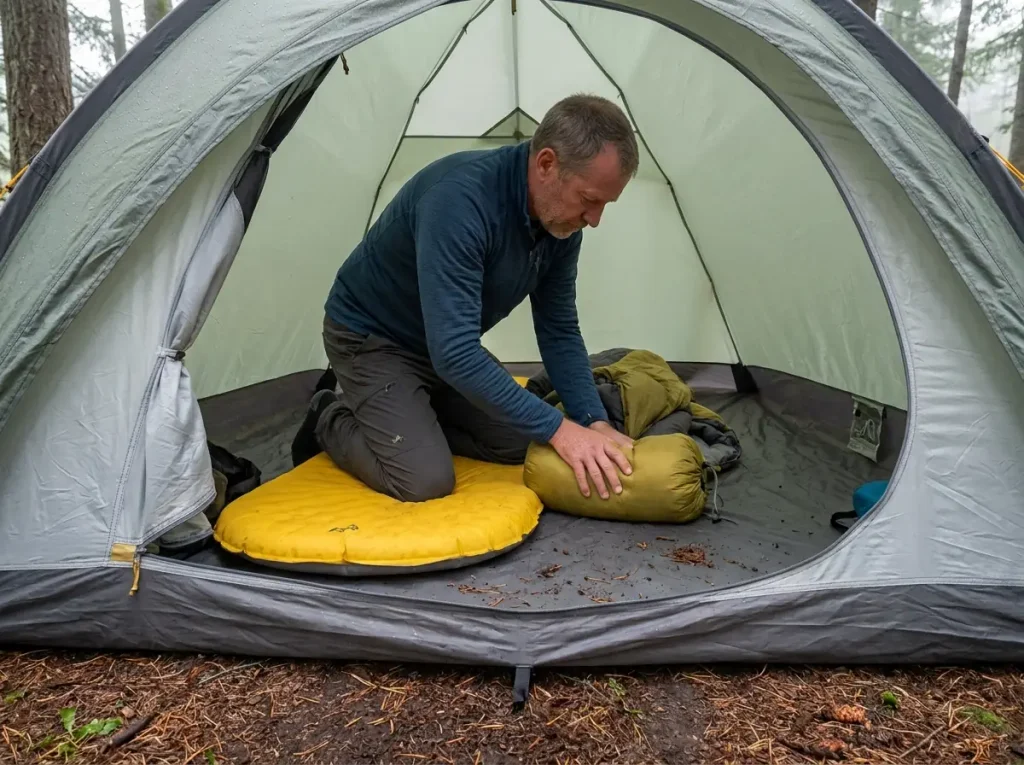
Your jacket says 20,000mm and your tent floor says 3,000mm, and it looks like the tent maker cut a corner. They did not. The two numbers answer completely different questions, and the thing that actually pushes water through your floor is not the ground. It is you, kneeling on it.
Why Floor Numbers Look So Low
Run the pressure math on normal use and the numbers are almost funny. A two-hundred-pound person lying on a standard sleeping pad exerts roughly 100mmH2O on the floor beneath them. One hundred. Against a floor rated in the thousands, that is nothing.
Which is why floor ratings above 1,500mm are plenty for normal use, and why manufacturers building genuinely light tents run floors in the 1,800mm range without apology. SlingFin’s own lightest floor fabrics sit right there, and those tents go on real trips.
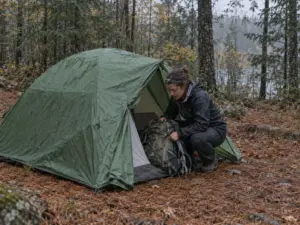
So if your floor gets wet, the rating is rarely the cause. Check the seams, whether you pitched on a low spot collecting runoff, and whether the groundsheet is catching water and holding it against the fabric. Seam sealing fixes far more wet nights than a higher-rated tent ever would, and sealing the seams that actually leak is a kitchen-floor job rather than a purchase.
This applies the same way to a 3-season tent and a 4-season tent. The floor spec scales with fabric weight and intended abuse, not with how waterproof the maker thinks the ground is.
Kneeling Is the Real Floor Test
Now do the same math on a position everybody adopts every morning. Kneeling pressure on bare floor fabric can exceed 10,000mmH2O, your full weight funneled through two kneecaps into a few square inches of ripstop nylon sitting on wet ground. That is dynamic pressure doing what distributed weight never does.
That is the pack-strap mechanism showing up in a second place, and it is the through-line of the whole subject: the force that beats a waterproof rating almost never comes from the weather. It comes from you concentrating load onto a small patch of fabric. Rain is distributed and gentle. You are neither.
Pack up on your knees on the sleeping pad, never on the bare floor. Spreading the load drops the pressure from a floor-piercing spike back down to roughly what lying down produces. It costs nothing, changes nothing about your morning routine, and fixes the actual failure mode.
Ground choice does the other half of the work. A floor that is not sitting in standing water has far less to resist in the first place, so picking ground that is not already saturated reduces the pressure problem before it starts.
Fly Ratings Versus Floor Ratings
The two ratings defend against different threats, and conflating them is where the confusion begins. A fly faces wind-driven rain, which, per the 300 mph math from earlier, is almost never a real pressure event. Its job is to shed water, and its failure modes are seams, pinholes and a dead DWR letting water sit and soak rather than run.
A floor faces ground water under concentrated point load. That is a genuine pressure problem, and the one place the rating does real work. Judge a fly on its coating and construction, and a floor on its rating and how you treat it.
Keeping the Rating You Paid For
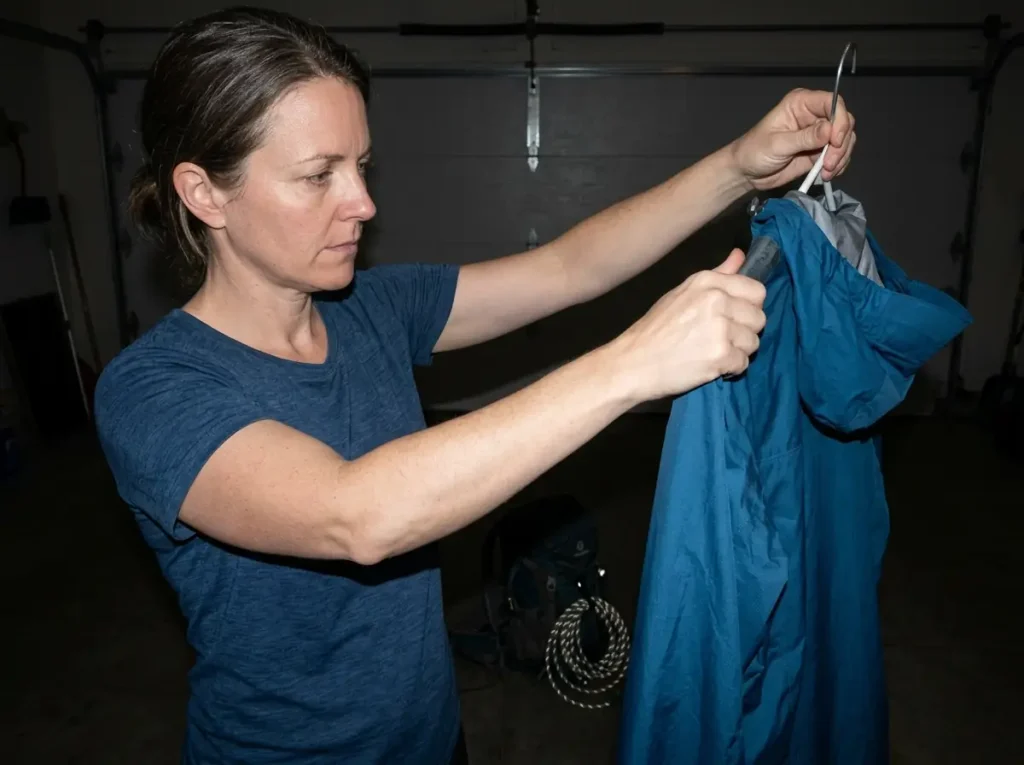
The rating is an opening balance, not a fixed asset. How you wash, dry, store and carry the shell decides how fast you spend it, and most people spend it much faster than they need to.
Reproof Before It Wets Out
DWR goes first, and it goes first at the pack contact bands. Shoulders, then hip belt. So reproof those zones before the fabric visibly wets out.
Waiting for the dark patch means hiking wet through every trip in between, and a finish that is fully gone takes more work to rebuild than one topped up early. Two zones, twice a season, is a realistic rhythm for anyone hiking with a loaded pack.
Wash It So the Treatment Sticks
A dirty shell will not hold a reproofing treatment. Skin oils, sunscreen and trail grime coat the face fabric and suppress beading, which is why a jacket can wet out badly and then recover most of its performance from a wash alone, before any treatment goes on.
Heat is the other half. A tumble dry or a warm iron with a cloth barrier reactivates DWR that is present but lying flat, and for a lot of shells that is the entire repair. Getting the sequence right matters more than the product you buy, and a washing and reproofing schedule that fits PFAS-free shells covers the newer chemistry, which is less forgiving of neglect. For the most common membrane, washing a Gore-Tex shell without wrecking it is worth reading before your first cycle rather than after.
Storage is the quiet one. Hydrolysis works on PU the entire time the gear sits, so store it dry and loose rather than stuffed, and keep it out of hot cars. A shell crammed damp into a stuff sack all winter comes out measurably worse than one hung in a closet.
Knowing When the Shell Is Finished
Maintenance has a ceiling. Delamination, where the membrane separates from the face fabric and the inside goes cloudy and sticky, is not a reproofing problem. Neither is a membrane that has genuinely failed.
At that point you are replacing the garment, and no amount of spray changes the arithmetic. There are three tests that tell you the shell is done, and running them saves wasted treatment and a wet trip built on false confidence.
The counterpoint that keeps this honest: a SlingFin SplitWing tarp in 10D silicone with more than 6,000 trail miles on it still tested around 800mmH2O, under the 1,000mm mark where the word waterproof gets applied, and it still sheds rain. Gear treated decently outlasts the panic the spec sheet creates. The number is a floor for a marketing claim, not a cliff your gear falls off.
Conclusion
The mm number measures pressure in a lab rig under ideal conditions, and the pressure that actually gets you wet comes from your pack straps and your knees. Rain is distributed and gentle. Your harness is neither, and no rating on any tag was ever built to predict it.
Clear the 10,000mm floor, step up to 15,000 or 20,000mm if you hike wet seasons or wet snow, and stop paying for numbers past what your climate asks for. Past that threshold, coating type and DWR upkeep decide how long the rating survives contact with reality. A reproofed budget shell outperforms a neglected premium one, every trip, without exception.
Before your next wet trip, put the shell on with the pack loaded the way you actually carry it and look at where the straps sit. Those two bands are what to reproof first, and it takes about ten minutes.
Frequently Asked Questions
01What hydrostatic head is considered waterproof?
10,000mm is the practical floor for a shell to count as genuinely rainproof in sustained moderate rain. Below that, treat the garment as water-resistant. Tents work on a different scale, where a floor above 1,500mm is fine for normal use.
02Is a 20,000 hydrostatic head good?
Yes. 20,000mm covers heavy rain, wet snow and prolonged exposure with real margin. It is more rating than a fair-weather day hiker needs, and the extra buys hours before the coating fatigues under sustained pressure.
03Is a 3000 hydrostatic head good?
For a rain shell, 3,000mm sits below the rainproof floor and handles a passing shower rather than a day of rain. For a tent fly or floor it is perfectly adequate, because a fly almost never sees real pressure.
04Is 28000 hydrostatic head good?
28,000mm sits in the expedition tier, the ceiling you find on three-layer Gore-Tex Pro shells. At that level the number matters less than the breathability class and how durable the coating proves over several seasons.
05Why do I get wet inside a jacket with a high hydrostatic head rating?
Almost always one of two things the mm rating cannot measure: your pack straps abraded the DWR and the face fabric wet out, or the shell could not vent your sweat. Both leave you wet with an intact membrane.

I've spent more than a decade researching hiking gear and trail technique. I read the specs, the forum threads and the long-term reviews, and every pick here comes with what it gets wrong.
End of the trail
You read every mile of this one. Here's where the trail goes next.