

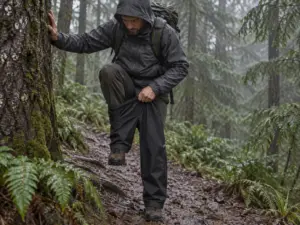









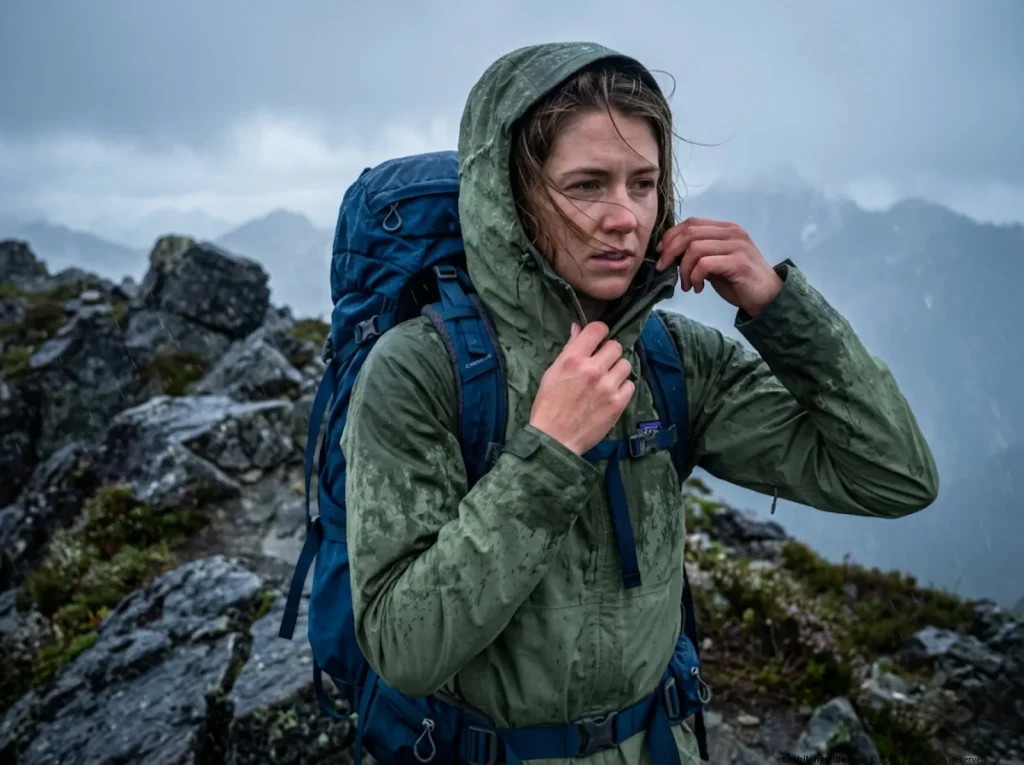
The freezing rain started at 10,000 feet, and within twenty minutes, your $500 Gore-Tex shell is plastered to your skin, sapping your core temperature with every gust of wind. It is not a membrane leak—it is wetting out. The uncomfortable truth is that the vast majority of performance failures in high-altitude technical apparel aren’t due to manufacturing defects; they are the direct result of improper stewardship. This thru-hiker maintenance guide breaks down the unforgiving physics of trail dirt, skin oils, and household detergents. I will provide a professional-grade protocol to restore your gear’s DWR, maximize technical fabric longevity, and keep you safe beyond the tree line.
⚡ Quick Answer: To maintain your technical gear effectively, you must wash hiking clothes with specialized, pH-neutral tech wash instead of household laundry detergents that leave hydrophilic residues. Wash your shells after 10-12 days of heavy use to remove skin oils and dirt, then tumble dry on low-to-medium heat for 20 minutes for proper heat activation of the DWR coating. Store gear in a 30-50% humidity environment to prevent dry rot and mold, and use simple solutions like silica gel packets and vinegar soaks to maintain insulation and bacterial resistance.
| Technical Care Cheat Sheet | |||
|---|---|---|---|
| Material | Washing Method | Detergent Type | Drying Rule |
| Hardshells (Gore-Tex/eVent) | Warm wash (105°F), double rinse | Specialized Tech Wash | Tumble dry medium (20 mins) |
| Down Insulation | Warm wash, gentle cycle | Down-specific Wash | Tumble dry low with tennis balls (2-4 hrs) |
| Merino Wool | Cold wash, delicate cycle | Mild liquid detergent (pH neutral) | Air dry flat (no heat) |
| Synthetics (Fleece) | Warm wash inside Guppyfriend bag | Standard or tech wash | Air dry or tumble dry low |
The Molecular Physics of “Wetting Out”

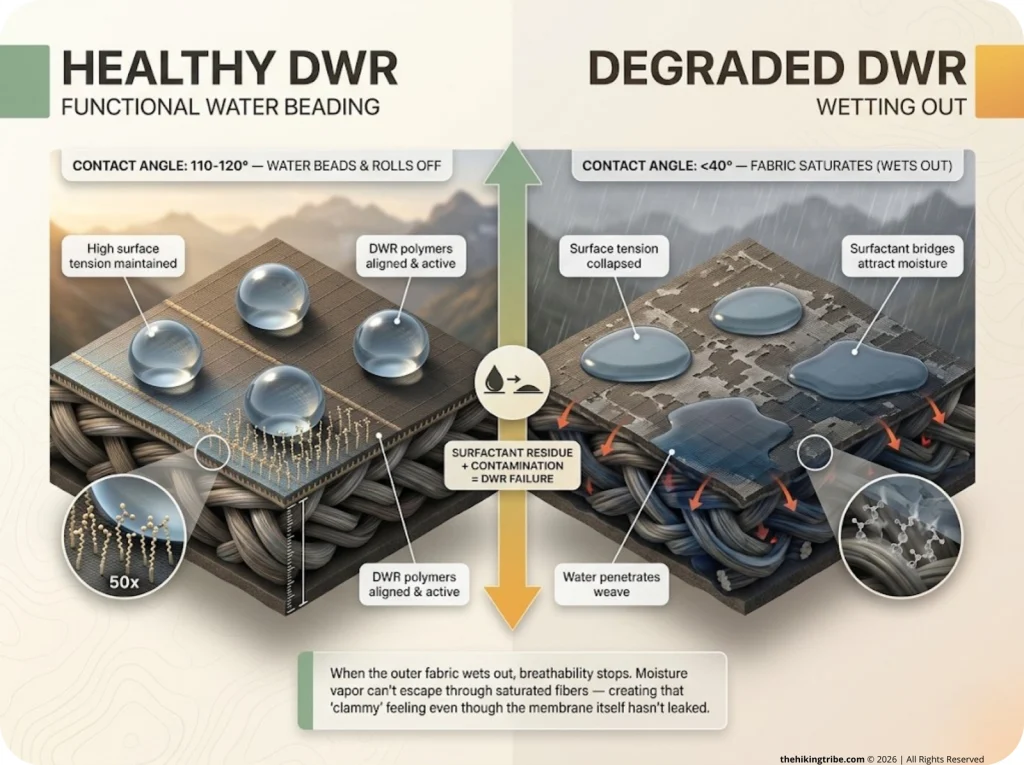
Water beads only when the DWR lowers the fabric’s surface energy, forcing water droplets to stay round instead of flattening out. When water penetrates the face fabric, it forces moisture inward under hydrostatic pressure, a mechanism closely tied to hydrostatic head waterproof ratings. The degradation of this water-beading surface occurs when contaminates reduce the fabric’s ability to repel liquids. As water spreads across the fibers, capillary action pulls the moisture straight into the weave.
The Chemical Conflict: Sebum vs. Surfactants
The primary mechanism of cleaning involves the use of surfactants, but not all are created equal. These molecules contain a water-loving head and an oil-loving tail that traps human sebum—the skin oils that physically break down the barrier of high-end laminates. When sebum accumulates on your jacket, it causes premature delamination if left unwashed. However, the cleansing agents required to remove this sebum must maintain pH-neutrality to avoid ruining the seam-taping adhesives holding your gear together.
The Surfactant Paradox: How Detergents Mask DWR
Technical fabrics like eVent and Gore-Tex are engineered to be inherently hydrophobic. The surfactant paradox occurs when you use regular detergent on gore-tex gear. Standard household detergents contain water-attracting builders and optical brighteners that act as chemical bridges, pulling water into the microscopic pores. This masks the DWR coating completely. Products like Dr. Bronner’s can be gentle, but specialized treatments from Nikwax or Grangers are necessary because they leave zero water-attracting residue.
Pro-Tip: Don’t trust the ‘gentle’ cycle with regular house detergent; the invisible residue it leaves behind will magnetically attract rain directly into your jacket.
The Transition from C8 to C0 DWR Chemistries
The industry shift from older, harsher fluorocarbons to eco-friendly PFC-free treatments demands a change in how we view maintenance. To properly understand the environmental context and the regulatory phase-out of legacy chemicals, you have to look at how PFAS explained by federal panels changes gear care. Modern PFC-free reproofers carry a smaller environmental footprint, but they lack the heavy oil resistance of older jackets. This means your modern gear demands far more frequent maintenance to prevent wetting out.
The Technical Wash Cycle: Standard Operating Protocols
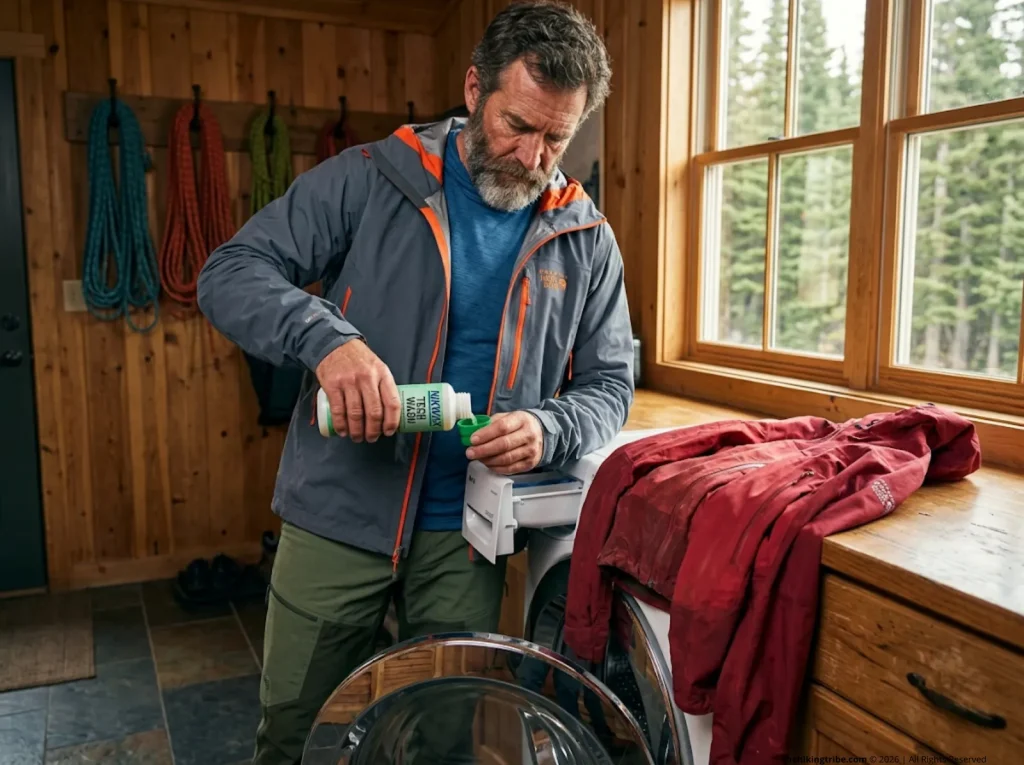
Mechanical abrasion and improper laundering will destroy 20-denier fabrics faster than the trail itself. The technical wash cycle must balance heat-based oil removal with mechanical gentleness to retain full breathability.
Pre-Wash Mechanical Integrity and Fastener Lockdown
Before putting anything in the drum, close all zippers, secure the hook-and-loop tabs, and loosen elastic drawcords. Leaving a Velcro strap loose turns it into a cheese grater against your favorite Arc’teryx shell during the spin cycle. Check the machine drum for sand from your last trip; grit causes invisible micro-punctures. Also, evaluate a fabric sensitivity table to separate your synthetics properly. Do not wash your rain shell with heavy cotton towels that produce lint, which clogs the microscopic pores responsible for moisture-wicking capabilities.
Mobilizing Skin Oils: Temperature and Agitation
You need enough heat to melt trail grime without destroying polymer laminates. Wash at 40°C/105°F to lift skin oils safely. When it comes to the machine itself, use agitator-free washing machines whenever possible. Top-loading machines with central agitators cause twice the microfiber shedding and structural stress. A double rinse is strictly non-negotiable—you must purge 100% of surfactant residue before moving your gear to the dryer.
The Thermal Reactivation Phase
Cleaning is just the removal of contaminants. Knowing how to restore DWR means understanding how heat resets the outer layer. Tumble dry your shell on low or medium heat (60°C/140°F) for 20 minutes. This process physically re-orients the fluorocarbon chains, pointing the hydrophobic tails outward to restore surface tension. You can verify this using Gore-Tex professional garment care instructions that outline the specific heat thresholds required to reactivate the barrier.
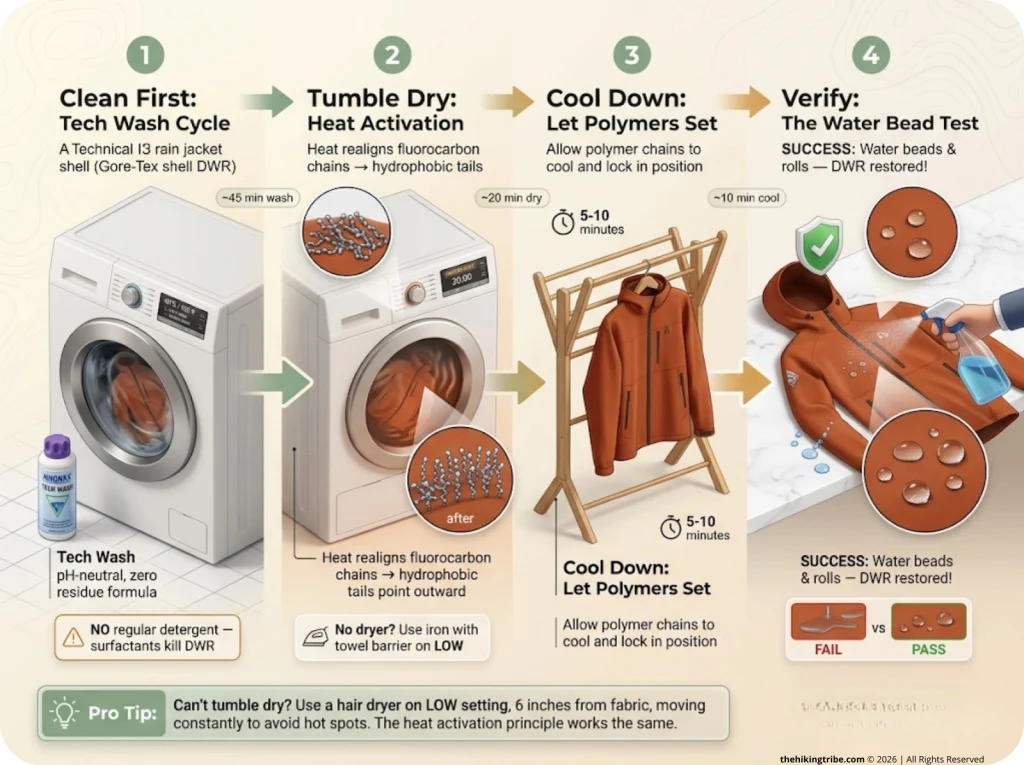
Pro-Tip: Your dryer isn’t just removing moisture; it’s a mechanical tool realigning the microscopic barrier of your jacket. Perform a simple water bead test after drying to confirm success.
Advanced Material Care: Insulation and Technical Base Layers

Your core warmth depends on keeping specific microscopic structures—like down clusters and wool scales—intact and free from foul-smelling buildup.
The Down Cluster: Defending Against Sebum and Humidity
Down degrades when human sebum physically binds the soft inner feathers together. This strips away their natural loft and destroys their insulating power, ruining your down loft in cold climates. Use a specialized down wash because traditional detergents strip the natural organic oils from the feathers, rendering them brittle. Drying takes heavy mechanical agitation. Clean tennis balls in the dryer are essential to break up wet clumps during the 2-4 hour drying marathon.
Merino Wool Protocols: Maintaining Anti-Microbial Properties
High-quality merino wool relies on its natural lanolin content to delay odor. However, high heat irreversibly shrinks the protein fibers. Wash these layers on a cold delicate cycle and always air dry them flat. The care tactics required for heavily taxed trail footwear begin with knowing how to handle washing and drying merino wool socks without destroying their natural stretch.
Synthetic Stink: Vinegar Solutions for Odor Control
Technical polyester base layers suffer from a buildup of bacteria deep within their porous structure. Standard tech wash gets the dirt but often glosses over the bacteria. Use an overnight 1:4 white vinegar and water soak to disintegrate these stubborn odor-causing bacteria. This simple kitchen intervention resets the garment, drastically improving the cost-per-wear of high-output trail shirts.
Pro-Tip: Don’t throw away a synthetic base layer just because it reeks; a simple acidic overnight soak resets the fabric back to zero.
Ecological and Biohazard Management on the Trail
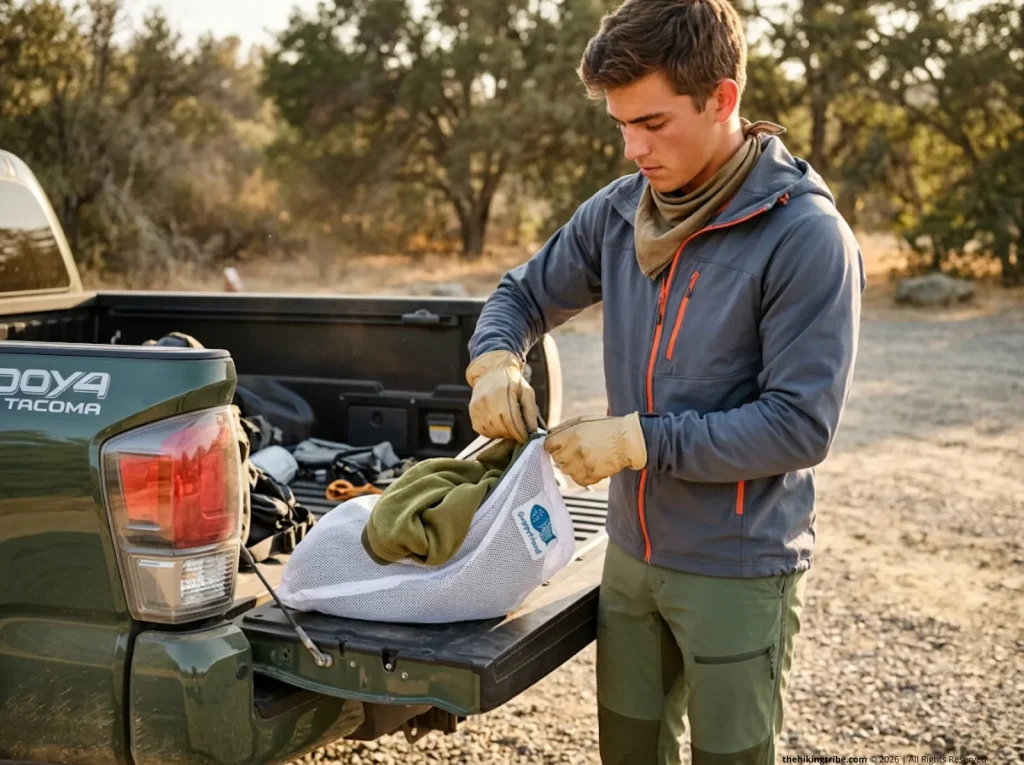
What you wash out of your gear ends up in local watersheds. Managing severe cross-contamination correctly protects you and the environment simultaneously.
Urushiol Neutralization: Salvaging Contaminated Gear
The oily resin from poison ivy remains active on unwashed clothing for months. If you bushwhack through a patch, you need isolated, hot-water decontamination using specialized washes like Tecnu. Deciding to wear hiking pants versus shorts severely impacts your risk of urushiol oil exposure on the trail. Never mix an exposed pant with your main shell; the resin will transfer blindly in the machine, causing a severe reaction on your next trip.
The Microplastic Crisis and Ecosystem Contamination
A single fleece jacket sheds up to 250,000 fragmented fibers into the water table per wash cycle. Field data confirms that high-traffic alpine lakes contain 23 times the microplastic level of undisturbed waters. Synthetic hikers’ gear sheds rapidly, making the modern hiker a direct vector for introducing foreign plastics into pristine drinking sources.
Mitigation via the Guppyfriend Protocol
Using a Guppyfriend 50-micron mesh bag captures shedding and reduces total fiber breakage by up to 86%. Implementing this micro-waste filtration strategy is non-negotiable for anyone who claims to follow Leave No Trace. The Guppyfriend washing bag efficacy proves that this simple mesh barrier significantly cuts down on the mechanical forces that snap synthetic fibers in your washing machine.
Storage Engineering: Climate-Specific Preservation
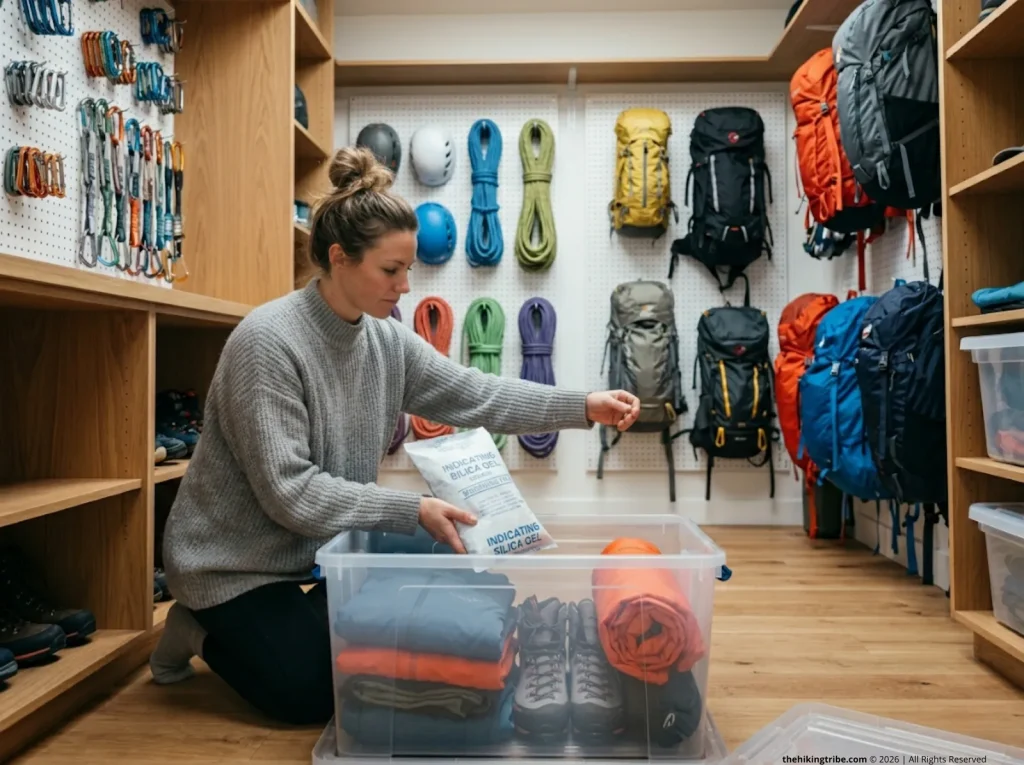
Your expensive equipment degrades fastest when crammed into a dark, unventilated box. You have to treat off-season storage like its own technical discipline to maximize performance restoration for next spring. Incorporate a basic product care matrix into your end-of-season checklist to extend gear life.
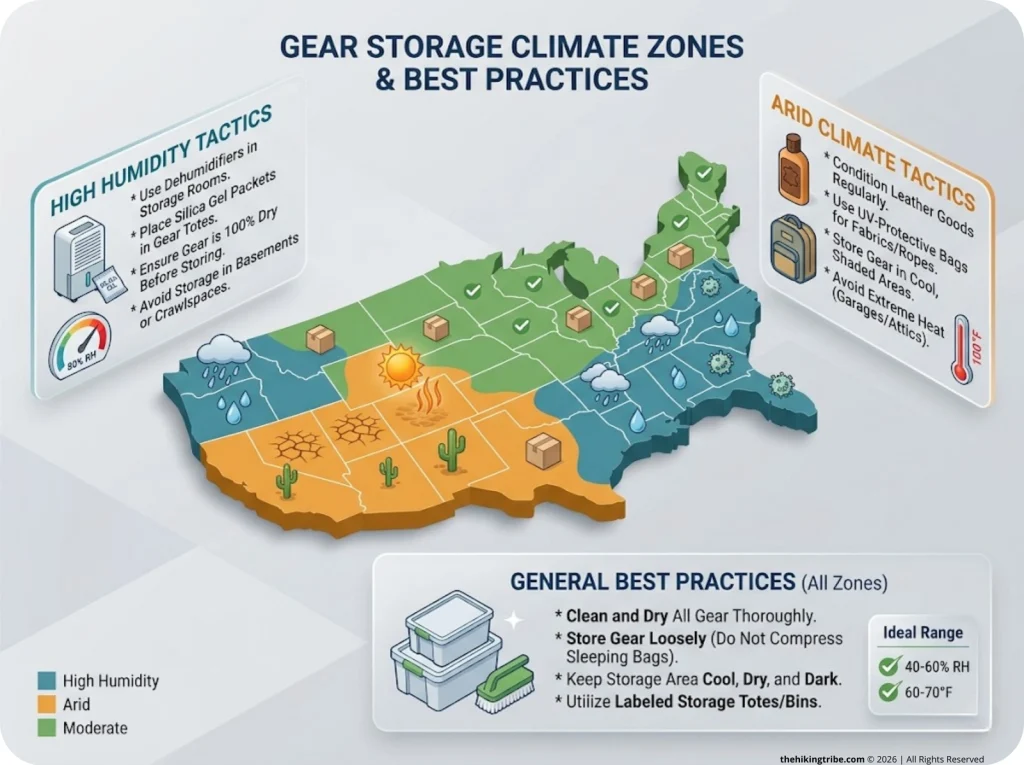
Humidity Management: The 30-50% RH Threshold
The optimal environment for technical membranes stays strictly between 30% and 50% relative humidity. Above 60%, mold and mildew take hold; below 30%, rubbers dry out prematurely. When figuring out how to stop mold and delamination, monitoring your storage closet’s ambient condition is the first line of defense against the physical separation of waterproof laminates.
High-Humidity Tactics: Mitigating Mold and Mildew
In tropical or coastal zones, the summer heat destroys stored gear. You need tight climate-controlled storage using indicating silica gel packets placed inside sealed plastic totes. These silica gel storage hacks adsorb up to 40% of their weight in moisture, establishing a low-humidity micro-environment.
Arid Climate Protocols: Preventing Polyurethane Dry Rot
If you live in a desert climate, heat becomes your primary enemy. Storing your gear in a 120-degree garage accelerates UV degradation on loose straps and causes catastrophic polyurethane dry rot in your boot soles. Store your heavy leather and Vibram hiking boots in a cool interior closet with cedar inserts to maintain their shape. If you ever need to store hiking boots long term, avoid extreme heat completely.
Pro-Tip: Treat your expensive hiking boots like a camera lens. An attic bake session over the summer will systematically dissolve your midsole glue.
The Stewardship Imperative
Your gear’s lifespan isn’t determined by its original price tag, but by the rigor of your post-trip stewardship. By transitioning to dedicated tech washes, embracing thermal reactivation, and engineering your climate storage, you effectively reset the clock on your technical apparel. Take twenty minutes this weekend to audit your gear closet, toss out your softeners, and run your shells through a warm, double-rinse cycle.
FAQ
Can I use regular laundry detergent on my Gore-Tex jacket if I run an extra rinse?
No, standard detergents leave behind microscopic hydrophilic (water-attracting) residues that actively cause your membrane to wet out. Even with an extra rinse, chemical builders and optical brighteners bond to the face fabric, requiring specialized tech washes to properly strip them away.
How often should I wash my DWR-treated rain shell?
Counterintuitively, you should wash it more frequently than you think—typically after every 10 to 12 days of heavy use. Allowing human sebum (skin oils) and trail dirt to sit on the fabric degrades the polymer adhesives over time, leading to permanent membrane delamination.
Why did my hiking jacket lose its waterproofing after just one season?
It likely didn’t lose its waterproofing; the DWR coating simply collapsed under the weight of oil and dirt, causing the outer fabric to saturate and stop breathing. A thorough tech wash followed by 20 minutes in a dryer on medium-low heat will mechanically realign the DWR polymers and help the rain jacket to bead water again.
Do I really need to use a special down wash for my sleeping bag?
Yes, traditional detergents strip the natural organic oils from down plumules, rendering them brittle and prone to structural failure. A dedicated down wash cleans the feathers without stripping these oils, preserving their natural integrity and ability to trap heat.

I've spent more than a decade researching hiking gear and trail technique. I read the specs, the forum threads and the long-term reviews, and every pick here comes with what it gets wrong.
End of the trail
You read every mile of this one. Here's where the trail goes next.