You have four tabs open, four tour pages, and each one shows a starting price and a green button that says book now. None of them tells you what you’ll have spent by the time you reach the Sun Gate, or what to do when the date you want has been sold out for months. Forty-four kilometers sounds like a long weekend, but the distance is the least of it: the Inca Trail to Machu Picchu is decided by one climb on day 2, by a daily permit quota, and by how well you take the altitude. This Inca Trail to Machu Picchu guide walks the route day by day, then settles 4 days versus 5, adds up the extras, and gives you the questions that show how an operator treats its crew.
Inca Trail to Machu Picchu Route, Day by Day
The classic route starts at KM 82, a spot called Piscacucho in the Sacred Valley, and covers about 44 km (27 mi) over 4 days and 3 nights. It ends at the Sun Gate (Inti Punku) at dawn on day 4, with Machu Picchu spread out below you. On paper the distance looks modest. What the number hides is the shape of it: one gentle day, one brutal day, then two days of stone staircases and ruins.
Day 1: KM 82 and a Gentle Start
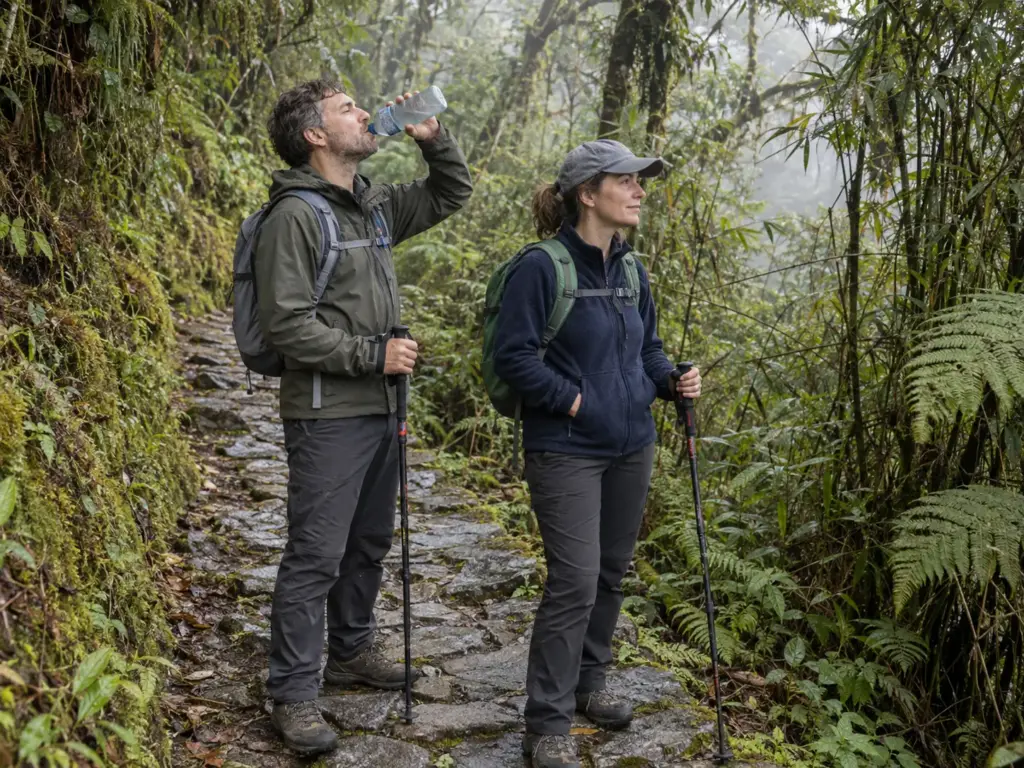
The first day eases you in. The path is friendly, the group is still sorting out who walks at what speed, and your legs feel fine, which is exactly the trap. Day 1 is a warm-up, and it is easy to treat it like a stroll.
Walk it slowly anyway. The pace you settle into here is the one your lungs will remember tomorrow, and the easy hours are the cheapest place to learn when you actually need water and food.
Eat and drink on a clock on day 1, not when you feel like it. A habit you build while the trail is flat and friendly is one you’ll still follow near 4,000 m, when hunger switches off and a snack feels like a chore.
Day 2: Dead Woman’s Pass, the Day That Counts
Nothing on day 1 prepares you for Dead Woman’s Pass (Warmiwañusca Pass). It sits at about 4,215 m (13,829 ft), the highest point of the entire trek, and the climb to it takes the whole morning. Arriving with cold legs and a day-1 mindset makes it harder than it has to be.
Elevation numbers never tell you what a day costs. Judge a climb by the effort it takes, the way Patagonia’s best hikes rated by the climb, not by the label does it. Day 2 is a long, steady grind up thin air, followed by a steep descent that your knees will notice later.
Days 3 and 4: Stone Stairs, Ruins and the Sun Gate
Once you’re over the pass, the route turns into a chain of Inca sites linked by original stone steps. Runkurakay, Sayacmarca, Chaquiqocha, Phuyupatamarca, Wiñay Wayna and Intipata come one after another, and the scenery changes from high grass to dripping cloud forest. The stairs are the work now. Going down them, with a pack, is what finds out your knees.
Day 4 starts in the dark. You wake before dawn, walk the last stretch to the Sun Gate, and if the clouds cooperate you watch the sun come up over Machu Picchu. If they don’t, you watch the clouds do something slow and impressive. Either way, you’ve earned the view.
A Short Inca Trail version starts from KM 104 at Chachabamba. This guide stays with the classic 4-day Inca Trail.
Inca Trail Permits and the Licensed Operator Rule
Most people discover the permit quota after they’ve bought a flight. The classic Inca Trail has a hard daily cap, and that cap is smaller than it sounds because the crew takes up most of it.
Why You Cannot Go Without a Licensed Operator
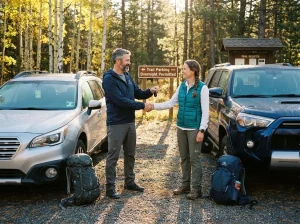
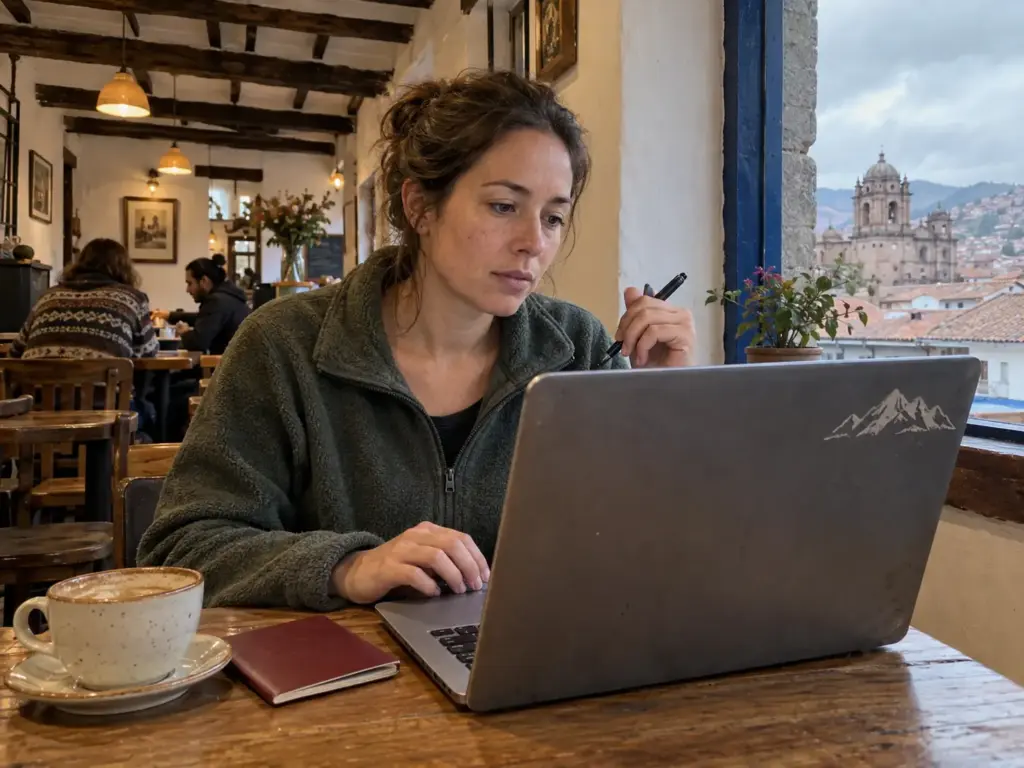
Independent hiking is not allowed on the classic route. You walk with a licensed tour operator, full stop, and the operator is part of the permit. Picking a company is therefore picking your permit: the company that has space on your date is the company you will walk with, whatever its reviews say.
That changes how you shop. Instead of comparing tour pages and then hoping for a date, check which operators have permits open for your month first, then compare what they charge and how they run the trek.
How Many Spots There Really Are
The trail allows about 500 permits per day. That figure includes guides and porters, so only about 200 spots go to the people actually hiking. Nothing else about the trip explains the sell-outs better.
Book four to six months ahead, and expect to go earlier for the dry season. Release dates change from year to year, so ask your operator what is open for your month rather than waiting for a date to be announced.
What to Do When Your Dates Are Full
You still have options when a permit is sold out. A different day in the same month, a different month entirely, or the 5-day version can all open when your first choice has closed. Routes that finish at Machu Picchu by another road, such as the Salkantay trek and the Lares trek, are the next step down, and Choquequirao is a different trek altogether.
Any multi-day trek with a capped permit needs an alternate plan written down before the cap is hit, and a guide to building a fallback plan before the permits sell out walks through the logic for a different destination that works the same way. One question is worth putting to every operator you contact: how many of the 500 daily permits does your own crew take on my date?
Altitude and Acclimatization Before Dead Woman’s Pass
Arriving at night, sleeping badly and starting the trail the next morning is the combination that goes wrong. The first symptom is usually a headache over breakfast, and the rest of the day gets harder from there.
Two Nights in Cusco Before You Start
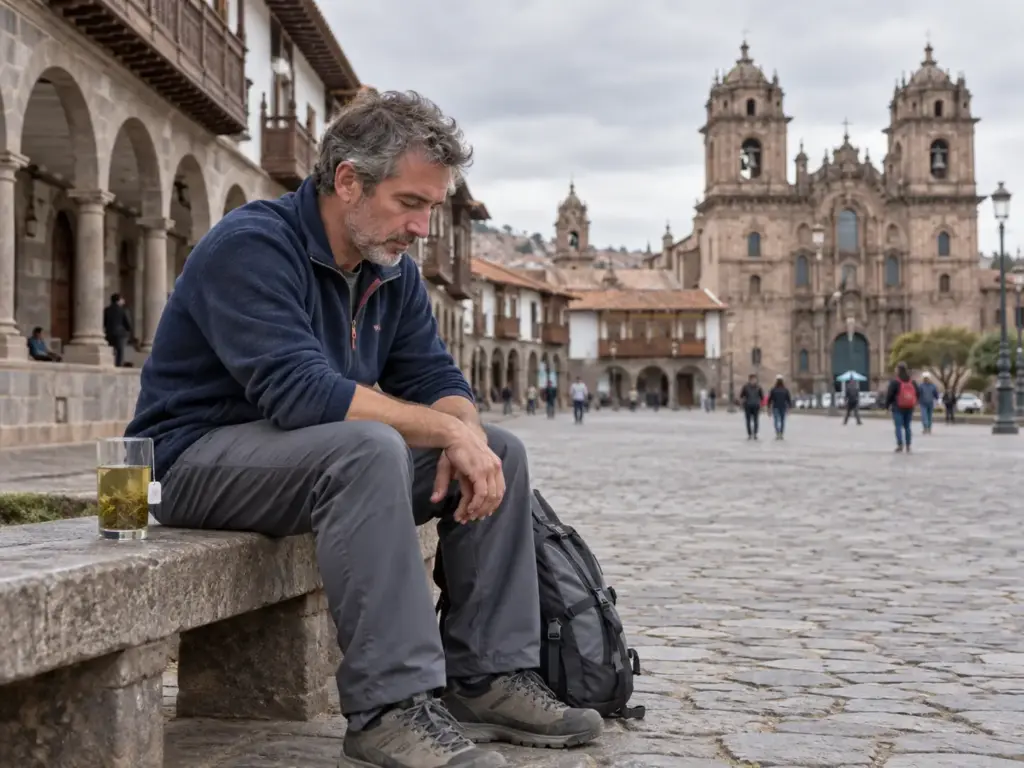
Plan at least two nights in Cusco before the trek begins. Symptoms take 24 to 48 hours to ease, so the time you spend there is time spent adjusting, and it comes straight off the price you pay on day 2. Walk around town, drink water, go easy on alcohol, and don’t schedule anything demanding.
Climbing in stages beats rushing up on day one, and the logic is laid out in a piece on why a staged ascent beats rushing up on day one that applies directly to the days before your start date.
Symptoms That Mean Slow Down
Altitude symptoms show up as a headache, unusual tiredness, loss of appetite and dizziness. Any one of them is a signal to ease off. A few together mean you should stop adding effort and tell your guide.
Coca tea is the traditional remedy in the Andes, and you’ll be offered plenty of it. Altitude medication such as acetazolamide and dexamethasone exists, but it is a conversation to have with a doctor before you travel, never something to start on a guess. The rule when symptoms get worse is simple: go down and tell the guide. For the full picture of what altitude sickness feels like and when it turns serious, read that guide before you fly.
Pacing the Climb on Day 2
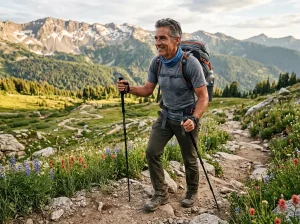
Walk at a pace where you can still hold a conversation. Take short breaks rather than long ones, drink on every stop, and let the faster people go ahead. Nobody gets a medal for reaching Dead Woman’s Pass first, and the descent on the far side goes better with something left in the tank.
People who trained only on flat ground and came straight from sea level are the ones the climb surprises. The altitude does not care how strong you feel on the plane.
Best Time to Hike the Inca Trail, Month by Month
“Dry season” does not mean no rain, and “rainy season” does not mean impossible. Calendars shift from year to year, October still gets showers, and April is a hinge month. A single table is more useful than a one-line split between wet and dry, so here is the year laid out, with the February closure placed where it belongs.
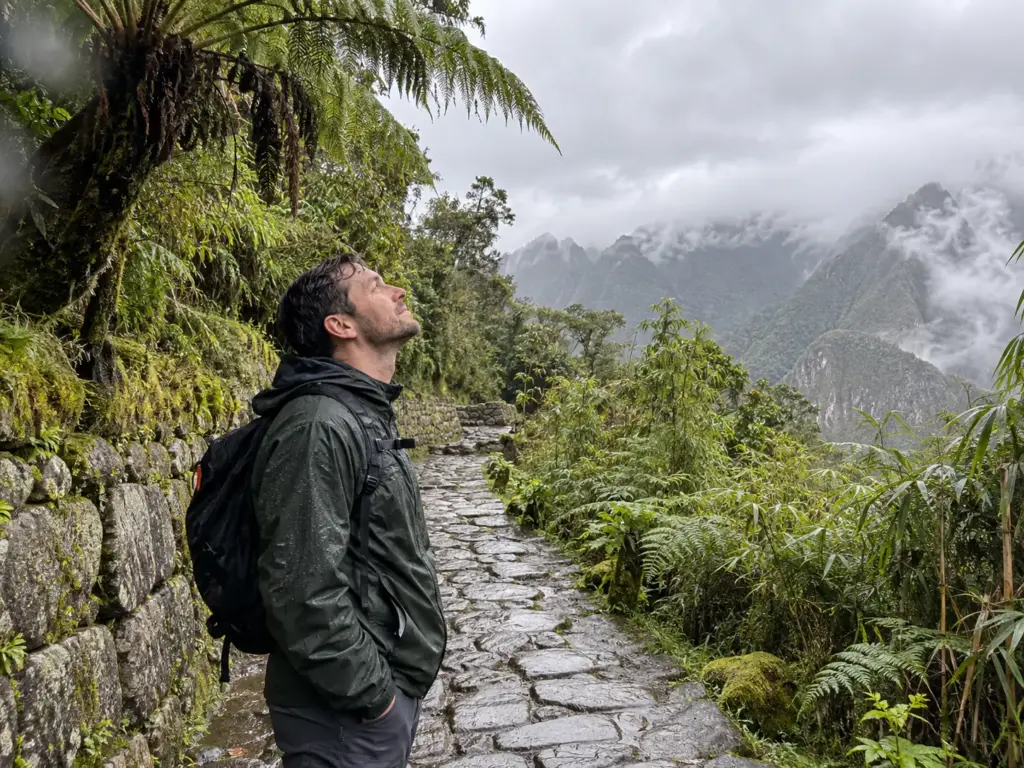
Daytime highs sit around 19 °C (66 °F) all year, according to one operator’s weather table. The nights are where the months differ.
| Month | Rain | Plan around |
|---|---|---|
| December to March | Rainy, with January and February the wettest | Full rain gear every day; February is the closure month |
| April | Some rain, easing | Transition month; fewer people than in the dry season |
| May | Dry | Nights around 4 °C (39 °F) |
| June | Dry | Nights around 1 °C (34 °F) |
| July | Dry | Coldest nights, around 0 °C (32 °F) |
| August | Dry | Nights around 3 °C (37 °F) |
| September | Dry | Nights around 5 °C (41 °F) |
| October | Dry, with occasional showers | Nights around 6 °C (43 °F) |
| November | Some rain, mostly late in the month | Shoulder month; pack the rain shell near the top |
The Dry Season and the Shoulder Months
May to October is the dry season, and it is when most people go. That means the heaviest demand, the earliest sell-outs and the coldest nights: between 0 and 6 °C (32 to 43 °F), with July the coldest. A sleeping bag rated to about -10 °C is not overkill in June or July, and many operators rent one.
April and October are the shoulder months. April still carries some rain but is improving, so it can feel either dry or wet depending on the year. October is dry on paper and gets occasional showers. If you’re flexible, both months trade a little weather luck for fewer people on the trail and more chance of finding a permit.
The Rainy Months and the February Closure
The rain season runs from December to March, with January and February the wettest. November is a softer entry: some rain, mostly in the last weeks. None of these months make the hike impossible, but they make it wetter, muddier and slower, and you’ll want a proper rain jacket and a dry set of clothes for sleeping in.
February is different because the trail network closes for maintenance. Peru’s protected-areas service, Sernanp, confirmed in January 2026 that five routes of the Inca Trail network would be closed to tourists until 28 February 2026, reopening on 1 March, as reported by the state news agency Andina. In 2025 the closure stretched to the end of March after heavy rain.
The announcement refers to numbered routes, so whether your exact itinerary falls under it depends on the operator. The safe reading is that February is not a date you can book, and a wet year can push the reopening later. Confirm with your operator when your route opens.
Fitness, Packing and the Toilet Question
The thing people overpack is clothing, and the thing they forget is paper. By day 4 nobody misses the third shirt, but plenty of people wish they’d brought a zip bag.
Train for Stairs and Thin Air
The trail is stairs, up and down, at altitude. Train on stairs with a loaded pack, and add long descents, because the stone steps on the way down are what punish knees. If you’ve only trained on flat ground and you’re flying in from sea level, expect the first big climb to humble you. A quick test to see if your legs are ready is a fair way to find out whether you need more weeks of stairs.
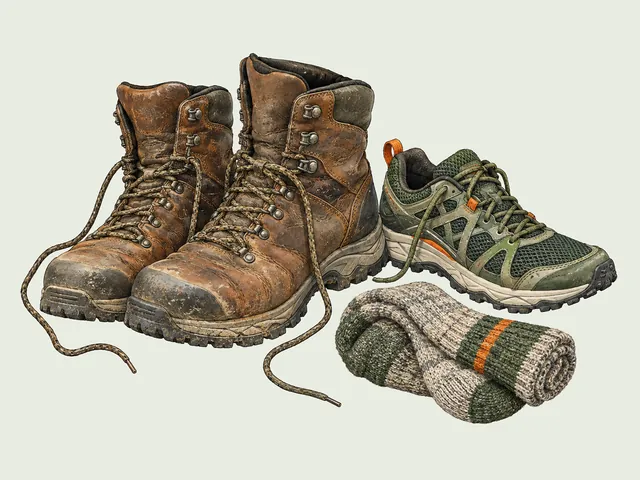
Arrive with boots already broken in. A pair that has not done a few long walks will blister long before day 4.
What to Carry (and What to Leave)
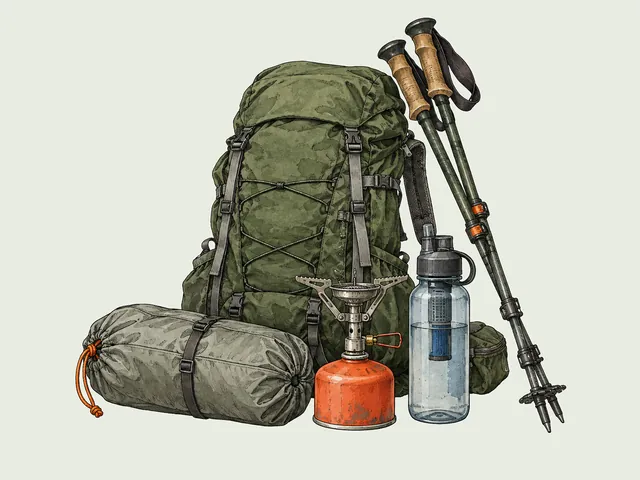
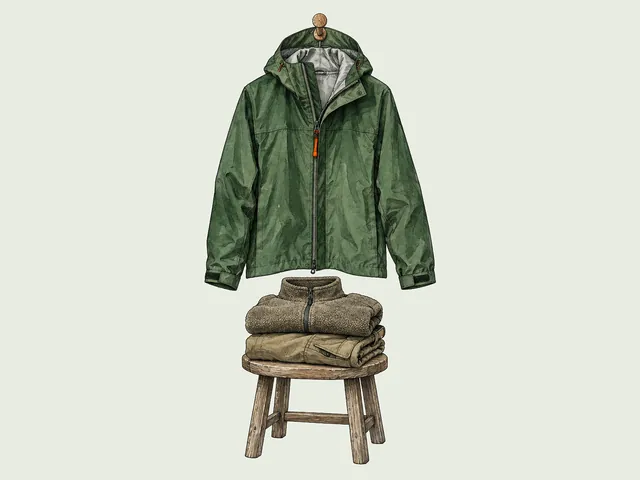
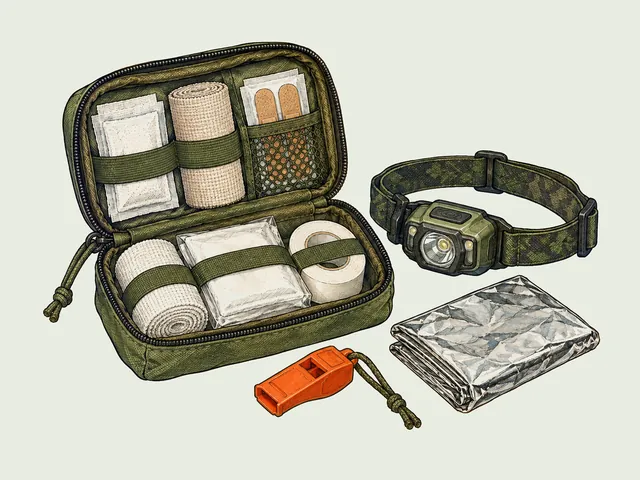
Think in layers, not one thick coat. A base layer, a fleece or light insulation and a rain shell cover the whole range from midday sun to a July night. The rest of the kit is short:
- Broken-in hiking boots
- A waterproof rain jacket or a rain poncho, plus waterproof gloves for the wet months
- A down jacket for the evenings in camp
- A headlamp (not a phone flashlight)
- Trekking poles with rubber tips, which are mandatory on the trail
- A down sleeping bag rated to about -10 °C, which is usually rented
- Water bottles, plus purification tablets or a filter, because you refill from streams
- Sunscreen and a sun hat
Leave the change of clothes for each day, and keep one dry set for sleeping in. By day 2 the dirt stops bothering you, and the weight you save is weight your knees don’t carry down the stairs.
Toilets on the Trail: What to Expect and What to Bring
Toilets on the trail are squat toilets: no seat, no running water, and no light at night. The community toilets on the first day are the cleanest and cost 1 sol. Quality drops after that. Some operators set up toilet tents at lunch stops and camps, which is one of the things worth asking about when you compare them.
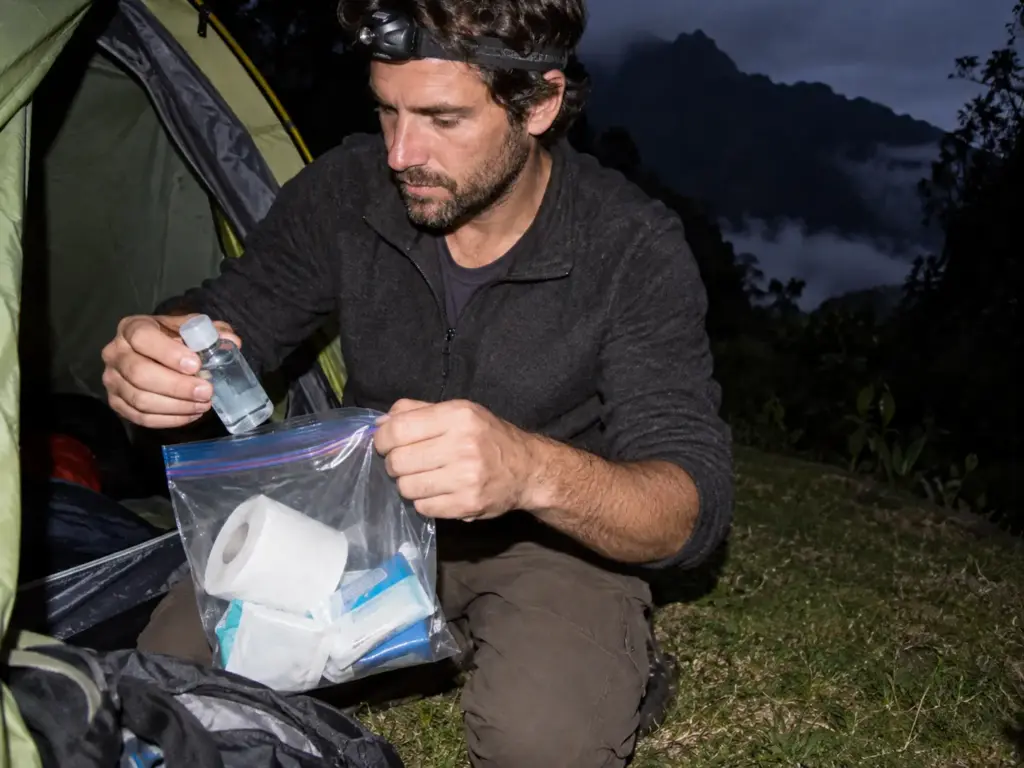
Bring your own toilet paper, wipes and hand sanitizer. The paper does not go into the hole. A bin sits next to it, and anything you can’t leave behind goes in a zip bag you carry out yourself. The habits in how to carry out what you cannot leave on the trail apply to every wipe on this route.
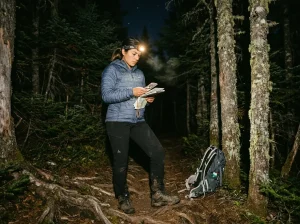
Keep the paper, wipes and a spare zip bag in one pocket of your daypack that you can reach without unpacking. In the dark, with a headlamp strapped over a hat, you want to find all three by feel.
Arriving at Machu Picchu: Sun Gate, Circuits and the Ride Home
The Sun Gate is the moment the route has been building toward, and right after it a different set of rules takes over. The citadel has its own timetable, and it has nothing to do with the trek.
Reaching the Sun Gate on Day 4
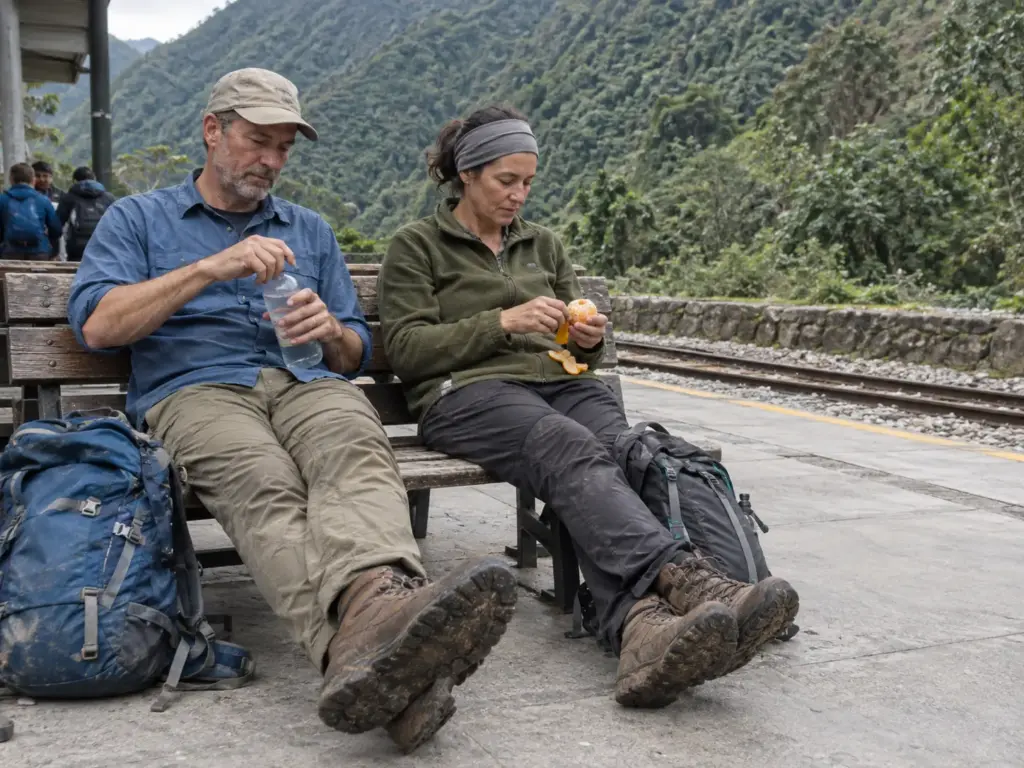
The final push on day 4 ends at Inti Punku, the Sun Gate, where the first view of Machu Picchu opens up below. Being there around sunrise is the reward for the early start, and it’s the reason the 4-day itinerary sells itself on a dawn arrival.
Inside Machu Picchu: Circuits and Time Slots
Machu Picchu entry works on hourly time slots from 6:00 to 15:00, with a tolerance of 30 minutes, and re-entry is generally not allowed. One traveler guide puts the standard visit at around four hours, which is a guideline, not a law. There are set circuits, among them Circuit 1B and Circuit 3B, and each has a route you follow.
Huayna Picchu is an extra, and it has to be booked even earlier than the citadel itself. Keep these rules separate in your head: nothing here applies to the trek.
Getting Back to Cusco
After the visit, a bus takes you down to Aguas Calientes, and the train to Ollantaytambo leaves from there, with onward transport to Cusco. The Vistadome train is an upgrade some operators sell as an extra. Allow for a long day, since you’ve been up since before dawn.
The 4-Day or 5-Day Inca Trail: A Plain Decision Rule
Whoever sells the 4-day calls the dawn arrival the prize. Whoever sells the 5-day calls the 4-day rushed. Both have a point, and both have something to sell. The honest decision is built from three things you already know about yourself: how much time you have, how your legs and lungs will cope, and what the two routes cost for your dates.
What You Gain and Lose With Each
The 4-day route puts you on the Sun Gate at sunrise and in the citadel the same day. Operator figures put the long days at up to about 10 miles. It’s efficient, and it’s the version with the most pressure on day 2.
The 5-day route spreads that distance over an extra day. The first two days are gentler, you reach Machu Picchu after lunch, and you visit the citadel the next morning. You give up the dawn arrival and gain legs that are less wrecked when you get there.
Money does not give a reliable answer. One operator charges more for five days, while another prices a private five-day trip below its private four-day. The direction depends on the company, so ask each operator for both prices, for your dates, with the same inclusions.
A Rule Based on Time, Legs and Money
My rule is simple. I’d pick the 5-day if you’ve never slept above 3,000 m or you don’t train on stairs, full stop. Altitude and stairs are what this route punishes first, long before gear does. Pick the 4-day if time is tight and your legs are good, and you’ve done a few multi-day walks before.
Remember that dates are the third factor. If the 4-day is sold out, the 5-day may be the day that is open. The Patagonia overview sorts treks the same way, showing how trip length changes which trek fits a first-timer, and the logic holds here: buy the pace you can finish, not the one that looks best on a booking page.
What the Inca Trail Really Costs Once Extras Count
The price on the booking page is a base. The one you pay comes from the list of extras below it, and tipping sits outside both. This section uses one operator’s published list from late 2026. Ask for yours before you pay, because lists and prices differ between companies.
The Base Price and What It Covers
One licensed operator lists a base of $835 per person, with $35 off for students. The operator arranges the permit, so ask whether it is already inside that figure. The O Circuit in Patagonia gets the same treatment in what a fully booked multi-day trek costs once every add-on is in.
Ask what the base includes, in writing: who carries the camp, which meals are covered, whether the citadel ticket and the bus down to Aguas Calientes are part of it, and what the return train costs. A base price that looks low and leaves those out is not lower, only less finished.
The Extras That Add Up
That same operator’s list of extras reads like this: Huayna Picchu at $75, an upgrade to the Vistadome train at $75, an extra duffel bag at $120, a single tent at $100, a sleeping bag rental at $30, an air mattress at $25, walking poles at $25 a pair, and a satellite phone at $5 a minute.
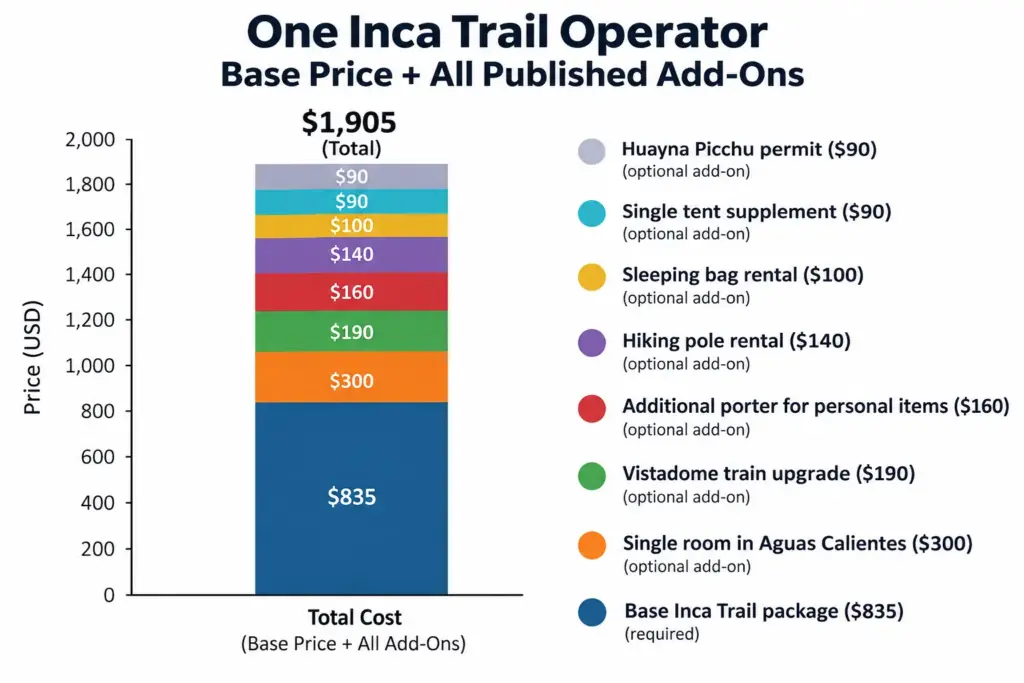
Here is how quickly a sum moves. Take the base of $835 and add three items many walkers rent: a sleeping bag, an air mattress and poles. That’s $915 before anything else.
Add the Vistadome train and Huayna Picchu and you reach $1,065. Choose an extra duffel and a single tent as well and the total is $1,285, which is more than 50 percent above the number on the booking page. Your own total depends entirely on what you choose, so build it from your operator’s list, not from this one.
Tipping and Other Costs Outside the Price
Tipping is customary and sits outside the price. It usually happens on the last day and the pattern varies by operator, so ask your company how it works and what the crew expects. The amounts are not set here because they differ from one company to the next.
Other costs also sit outside the base: community toilets on day 1 (1 sol), flights to Cusco, the nights you spend there acclimatizing, the train back and the bus to Aguas Calientes if they aren’t included. Make a list before you compare quotes, because each of these shifts a cheap-looking trip back toward an expensive one.
Send every operator the same message: your dates, 4-day and 5-day, and the extras you expect to want. Ask for one total per option in writing. Quotes that arrive in different shapes can’t be compared, and the shape you give them is the one they’ll answer in.
How to Check an Operator’s Porter Welfare Without Taking Their Word
Fair wages is a promise anyone can type. The crew carries the camp, the food and part of everyone’s luggage, so weight and treatment are part of what you’re paying for. This list is made of questions you can put to any company and judge by the answers, without trusting a slogan.
Questions About Weight and Load
- What is the legal porter weight limit, and what is your own limit? Ask for both, in writing, with the source. The legal figure is quoted differently depending on who you ask and which year, so don’t accept a number from memory.
- How much does my personal bag weigh, and how much of that weight is mine? One operator sets the personal duffel at about 5 kg, another at 7 kg. If yours won’t state a number, get it in writing before you pay.
- How many of the 500 daily permits does your crew take on my date? This one is checkable, and it tells you how much of the cap the crew uses that day, so how many spots are left for walkers.
Questions About Pay, Food and Gear
- What does the crew eat, where do they sleep, and what rain gear and sleeping bag do they get? The answer should be specific. “We look after our team” is not an answer.
- How are porters paid, and when? Ask who pays them, how often, and whether tips are shared.
This list doesn’t deliver a verdict, and it doesn’t name a good company. What it does is show you how an operator reacts when asked. If a company dodges two questions in a row, that’s information, and you can use it before any money moves.
Write to Two Operators This Week
The route is decided by day 2, so train and acclimatize with Dead Woman’s Pass in mind. The permit quota beats the calendar: the date you want is the date a licensed operator has space for. The altitude gets sorted out in Cusco, not on the trail. The real price is the one on the extras list, and the way an operator treats its crew shows in how it answers plain questions.
This week, write to two licensed operators. Ask each for a written price for the 4-day and the 5-day with the extras you’d choose, and for its load policy for the crew. Their written answers will tell you more than any tour page.
Frequently Asked Questions
01How many days to hike the Inca Trail to Machu Picchu?
The classic Inca Trail takes 4 days and 3 nights, and a 5-day version spreads the same distance over one extra day with gentler early stages. Pick the 5-day if you have never slept above 3,000 m.
02How difficult is the Inca Trail to Machu Picchu?
It is demanding because of altitude and stone stairs, not technical skill, and day 2, with the climb to Dead Woman’s Pass at about 4,215 m, is the hard one. Train on stairs and spend two nights in Cusco first.
03Where do you go to the bathroom on the Inca Trail?
You use squat toilets along the trail and in camps, with no seat, no running water and no light at night, and some operators set up toilet tents. Bring paper, wipes, sanitizer, a zip bag and a headlamp.
04Can a beginner hike the Inca Trail?
Yes, if you train on stairs with a loaded pack, arrive acclimatized, and choose the 5-day route when in doubt. It is not a trail to arrive at unprepared, but it is a fair first multi-day trek.
05Can you hike the Inca Trail without a guide or tour operator?
No. A licensed operator is mandatory on the classic Inca Trail, and permits are sold through operators, so independent hiking is not possible. Choosing your operator is effectively choosing your permit.
I've spent more than a decade researching hiking gear and trail technique. I read the specs, the forum threads and the long-term reviews, and every pick here comes with what it gets wrong.
End of the trail
You read every mile of this one. Here's where the trail goes next.