



It’s the last mile of a rocky day and your boots have started to feel like ankle weights. Or it’s the opposite: the lightweight hiking boots felt springy in the shop, and by the end of the season the tread is gone. Both stories are real, and both land in the same forum threads, including an r/hikinggear thread that asks why anyone bothers with lightweight boots at all.
This guide answers with per-boot weights from a lab, field reports from hikers who wore these boots down, and a plain flag on the popular boots that aren’t actually light. It covers who each pick suits, what you give up for the ounces (grip life, cushioning, ankle structure, dry feet), how to size one so it doesn’t go back, and when to pick something else, while the full boot decision lives in how to choose a hiking boot by terrain, height and fit.
Here is the short version, boot by boot, with the one caveat each pick carries.
| If you want | Pick | Watch for |
|---|---|---|
| The lightest mid boot | Merrell Moab Speed 2 Mid GTX (14.1 oz per boot, men’s version only) | Stock on this one runs thin, and there is no buyable women’s version |
| A balanced all-rounder | Salomon X Ultra 5 Mid GTX (15.4 oz per boot) | Mid-weight, not the lightest of the group |
| The most cushion in a light boot | Altra Olympus 6 Hike Mid GTX (16.2 oz per boot) | Zero drop needs a gentle transition |
| A leather upper | La Sportiva Prodigio Hike LT GTX (nubuck upper) | No verified weight or cuff height, so check the listing |
| A lower-cost boot | Merrell Moab 3 Mid Waterproof, NORTIV 8 Waterproof Ankle High, Columbia Crestwood Mid Waterproof (women’s) | Grip life and cushioning are what the savings come out of |
Best Lightweight Hiking Boots Start With Ounces per Boot
Open any spec sheet and the first problem with hiking boot weight shows up before the boots do. One brand quotes weight per pair, the next per boot, a third for a size nobody wears. A veteran puts every number on the same scale before comparing anything, and that scale is ounces per boot.
Weight per Boot, Not Per Pair
Per boot is the number your foot actually feels, because you lift one boot at a time. RunRepeat’s lab weights, measured per boot in a men’s size, line up like this: the Merrell Moab Speed 2 Mid GTX at 14.1 oz (400 g), the Salomon X Ultra 5 Mid GTX at 15.4 oz (437 g), the Altra Olympus 6 Hike Mid GTX at 16.2 oz (468 g), and the HOKA Anacapa 2 Mid GTX at 17.4 oz (494 g). That is a spread of 3.3 oz per boot, which works out to 6.6 oz per pair between the lightest and the heaviest of the four.
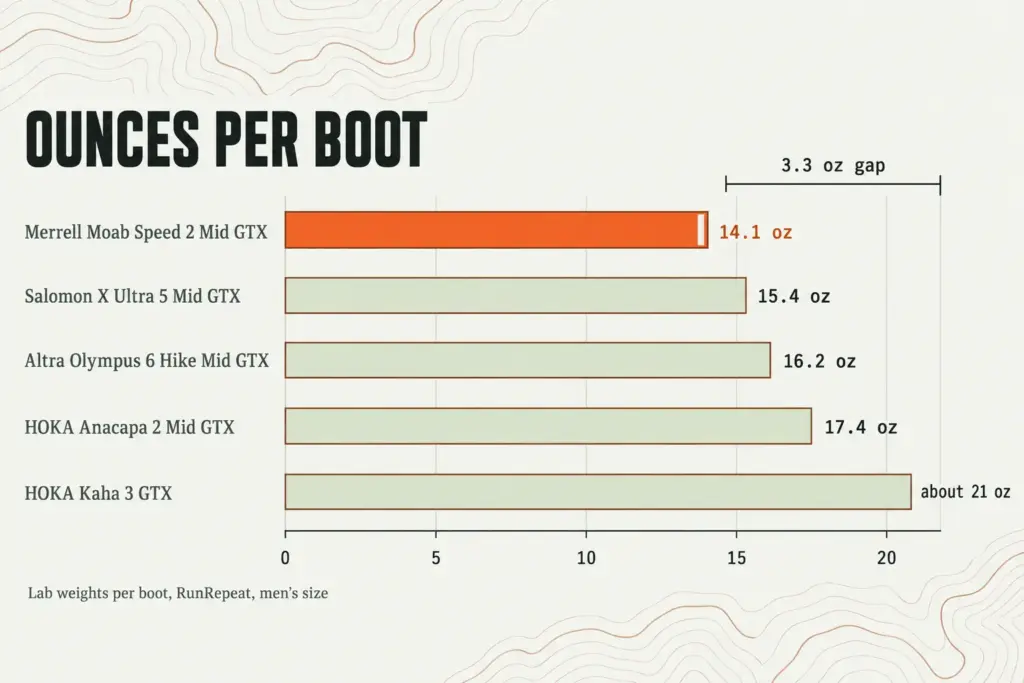
These are men’s-size figures, so treat them as a ranking, not as what your own boot will read. Your size and your version of the boot will land on a different exact number.
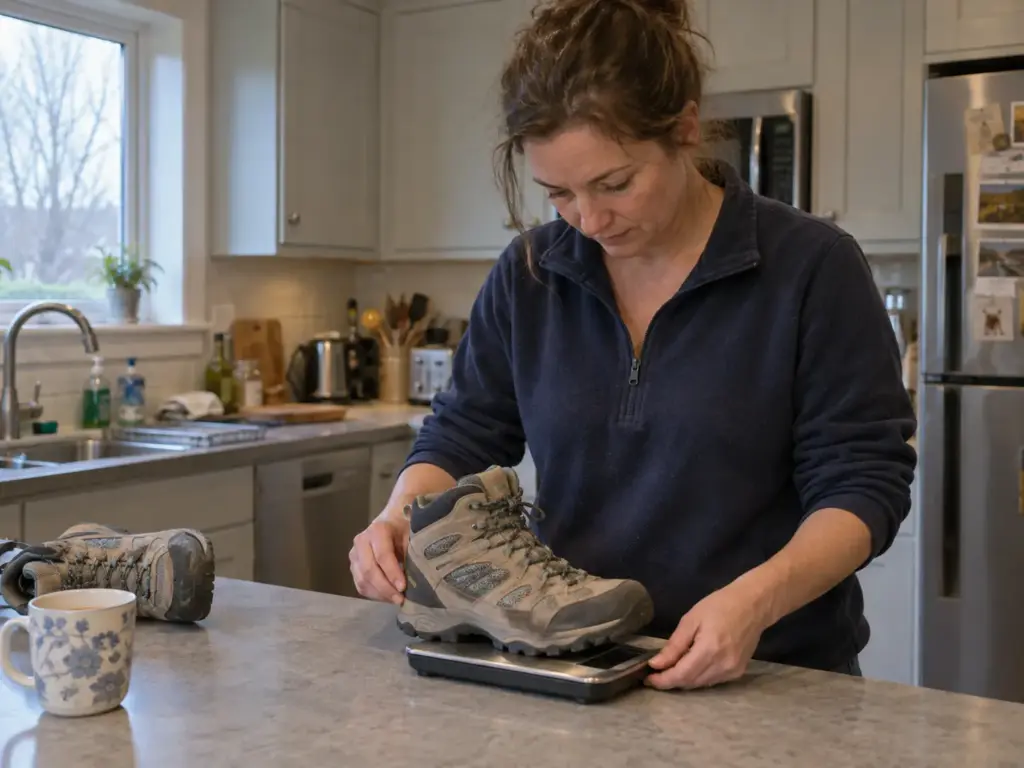
Spec sheets weigh one sample size. Before you commit, put the boot you own and the boot you want on a kitchen scale, laces tied, in your size, and write both numbers down. The gap you see is the gap you will carry.
What Extra Ounces Cost on a Long Day
Weight on your feet costs energy on every step, because each boot swings forward with your leg instead of just riding along. That is the whole case for a lighter boot, and it holds up. What it does not say is that light is free. One commenter in that r/hikinggear thread put the counter-argument in a single line: anything built to be light is going to have durability issues over something built for durability.
Both statements are true, which is why the rest of this guide spends its time on what you trade for those ounces. A lighter boot is also not the only way to cut weight on your feet, and for low-pack days on dry trails, trail runners versus hiking boots and what your pack weight decides is the other half of the decision.
Popular Boots That Aren’t Actually Light
The HOKA Kaha 3 GTX is a popular boot and a perfectly reasonable one, but it weighs roughly 21 oz per boot according to Mountaineer Journey. That is close to 7 oz more per boot than the Moab Speed 2 Mid. It is a midweight boot with a soft ride, not a light one, so it gets no link here.
The Anacapa 2 Mid GTX at 17.4 oz sits in a similar gray zone: lighter than a classic leather boot, heavier than the boots in the next section. Neither one gets a card. If a boot costs you 17 oz or more per foot, the question becomes whether you wanted a light boot or a cushioned one, and those are different shopping lists.
Lightest Mid Boots That Still Grip on Rocky Trails
Most readers want one boot that stays light across a 10-mile rocky day without feeling like a running shoe with a collar. These three mid-height boots are the ones worth a look, starting with the lightest and stepping up in structure. “Mid-height” here means a cuff that covers the ankle bone, and where that height counts is its own conversation: mid-cut versus ankle-high boots and where cuff height counts. One practical note before the cards: stock on a couple of these runs thin, so check availability before you plan around a size.
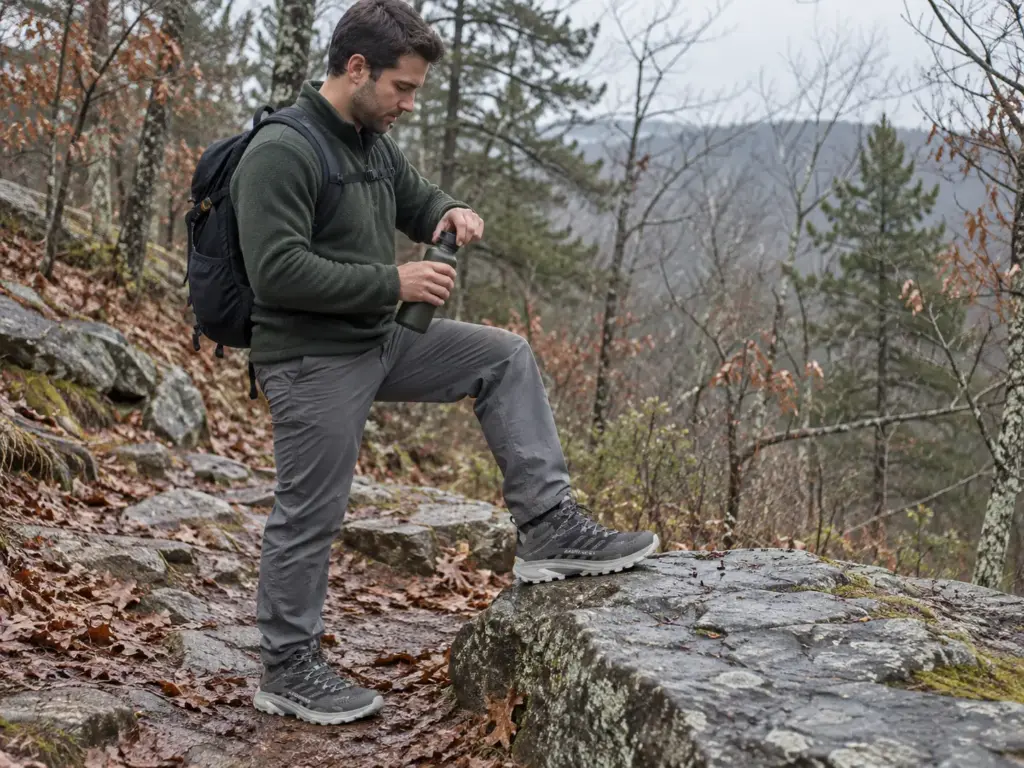
Merrell Moab Speed 2 Mid GTX, the Lightest on This List
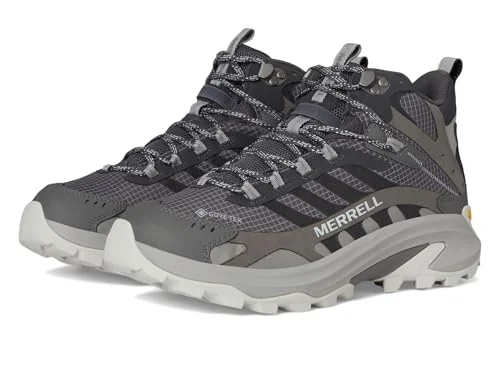
At 14.1 oz per boot, the Moab Speed 2 Mid GTX is the boot to start from if your priority is the lightest thing on your foot that still has a collar and a membrane. It is a mid boot built for fast hiking, not a heavy-pack boot, and that is exactly the right job for it. The honest limit is availability and fit: only the men’s version has a buyable listing, so if you are shopping for women’s hiking boots, the next two boots are your starting point, and the men’s hiking boots on this list all have a women’s twin except this one.
Salomon X Ultra 5 Mid GTX, the Balanced Pick
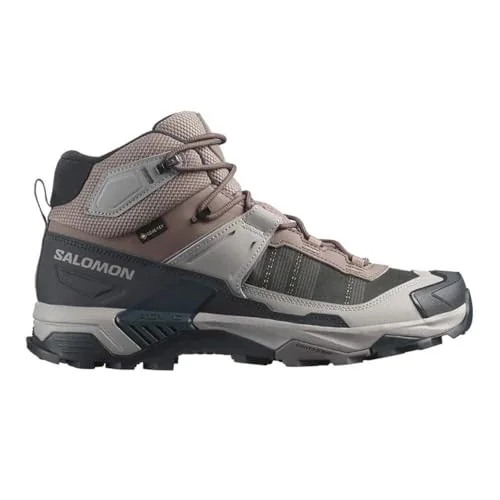
The Salomon X Ultra 5 Mid GTX (men’s · women’s) is the safe middle of this group. At 15.4 oz per boot it carries about an ounce more than the Moab Speed 2 and gets you a more traditional boot feel in return. The trade is plain: it is not the lightest, and it makes no promises about plush cushioning. It is the boot you buy when you want a mid-height, membrane-lined, traction-focused boot in both men’s and women’s lasts.
Field voice backs the mid-height idea. One commenter on a Backpacking Light thread said their light GTX mid stayed waterproof for months and gave their ankle some support. A different forum user said switching from a leather boot to a light mid felt like a huge relief once age caught up with them. Both are anecdotes, not measurements, but they point the same direction.
La Sportiva Prodigio Hike LT GTX, the Leather-Upper Option
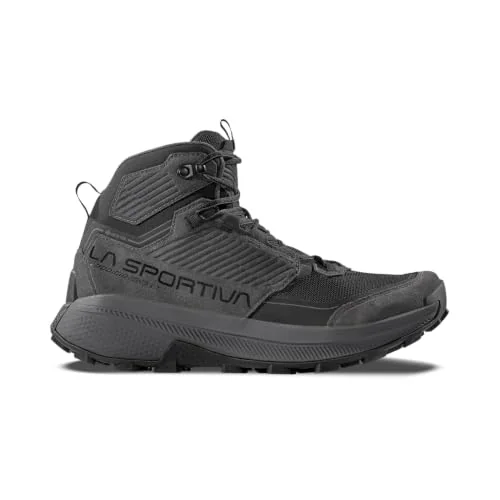
The La Sportiva Prodigio Hike LT GTX (men’s · women’s) is the odd one out in this section, and deliberately so. Its upper is nubuck leather with 3D mesh, which wears differently from a pure synthetic upper and takes a different kind of care.
Two honest gaps: there is no weight confirmed for it here, and no cuff height either, so read both off the listing before you decide whether it is the kind of boot you want. Make sure the listing says LT. The Prodigio Hike GTX without the LT is a different, textile boot, and it is not the one on this card.
How Much Cushion a Light Boot Can Carry
Thick midsoles feel like a gift at mile eight and like a puzzle at mile one. The real trade is stack height for steadiness on the way up and shock absorption for tired feet on the way down, and a soft EVA midsole gives back less energy return the more it compresses over a long day. Drop (the height difference between heel and forefoot) decides how your calves feel on day two.
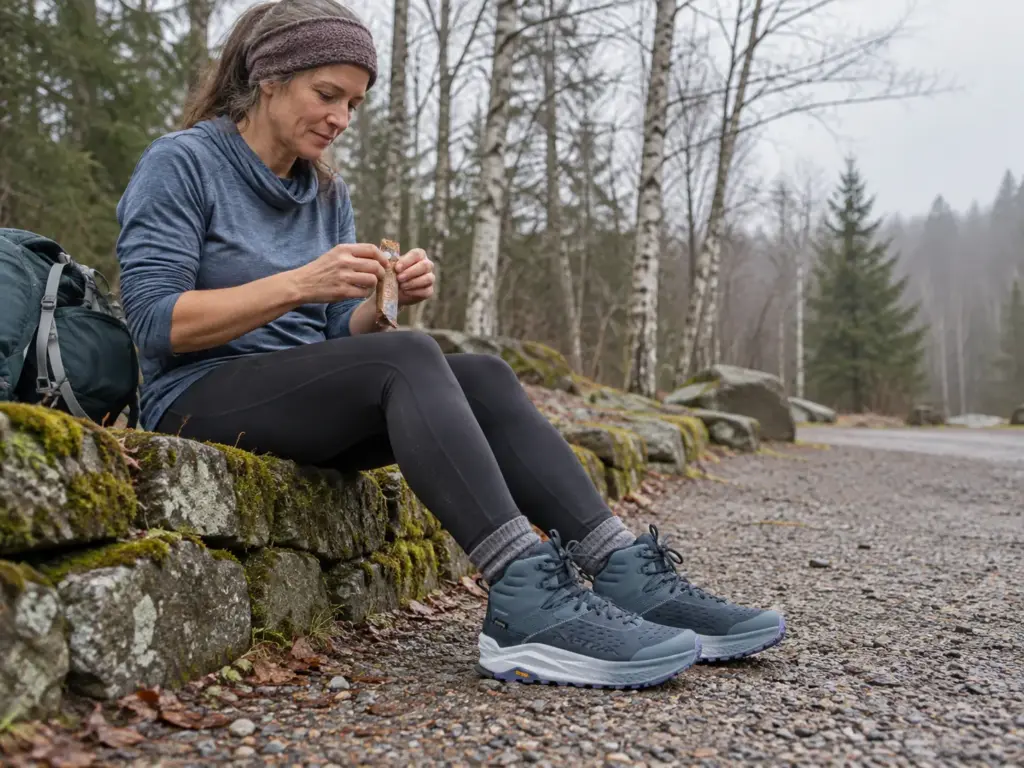
Altra Olympus 6 Hike Mid GTX, Max Cushion With Zero Drop
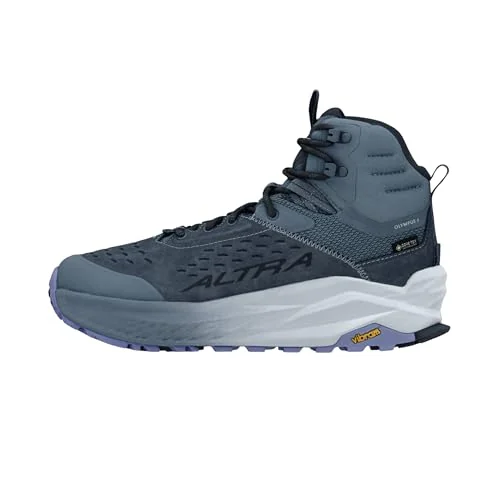
The Altra Olympus 6 Hike Mid GTX (men’s · women’s) weighs 16.2 oz per boot in RunRepeat’s men’s size, about 2 oz more than the lightest pick, and spends that extra weight on cushioning. The women’s size weight is not quoted here because the listings contradict each other. What the platform gives you is a flat heel (zero drop means the heel and forefoot sit at the same height) and a thick midsole under it. What it takes from you is a few weeks of patience if your current boots have a raised heel.
One r/hikinggear commenter wears Altra Lone Peaks for lighter hikes and picked up a newer Olympus 6 Hike Mid GTX as well, then wished for a boot with a wider toe box that could also be resoled. Read that as a community wish, not a review, and as a hint at what this boot is: a comfort-first light mid, not a durable lifetime boot. The HOKA Anacapa 2 Mid GTX at 17.4 oz per boot is the heavier cushioned alternative in the same lane, named here without a link.
Zero Drop Is a Transition, Not a Free Upgrade
Moving from a regular-drop boot to a zero-drop one loads your calves and Achilles differently, because your heel now sits lower relative to your toes. The safe zero drop transition is to ease in on short days and let your lower legs adapt, rather than switching for a big mileage day. Nobody can hand you an honest mileage number for it, because it depends on your calves.
Break in the flat heel on errands and short, easy walks, not on the first big climb of the season. If your calves are tight and your Achilles is sore the next morning, you went too far too fast. Back off a day and try again.
Waterproof or Breathable? Pick Before You Buy
A membrane keeps rain out and sweat in, and a light boot that soaks through stops being light. The waterproof vs breathable call comes first, and the boot second.
When a Membrane Earns Its Place
On cool, wet or snowy days, waterproof hiking boots with a GORE-TEX liner are worth their weight, because wet feet in cold weather get miserable fast. The honest rule is simple: membrane for cold weather and wet ground; breathable hiking boots or a trail runner for hot weather, since a membrane that cannot vent sweat makes your feet damp from the inside anyway. The HOKA Anacapa line has a Breeze version that isn’t waterproof, named here without a recommendation or a link.
A Teton Gravity Research commenter added a caution that applies to any membrane boot: the GORE-TEX liner wears out over time, and feet sweat inside. That is field voice, not a lab result, but it matches what the membrane does and what it cannot do.
When Water Weight Cancels the Savings
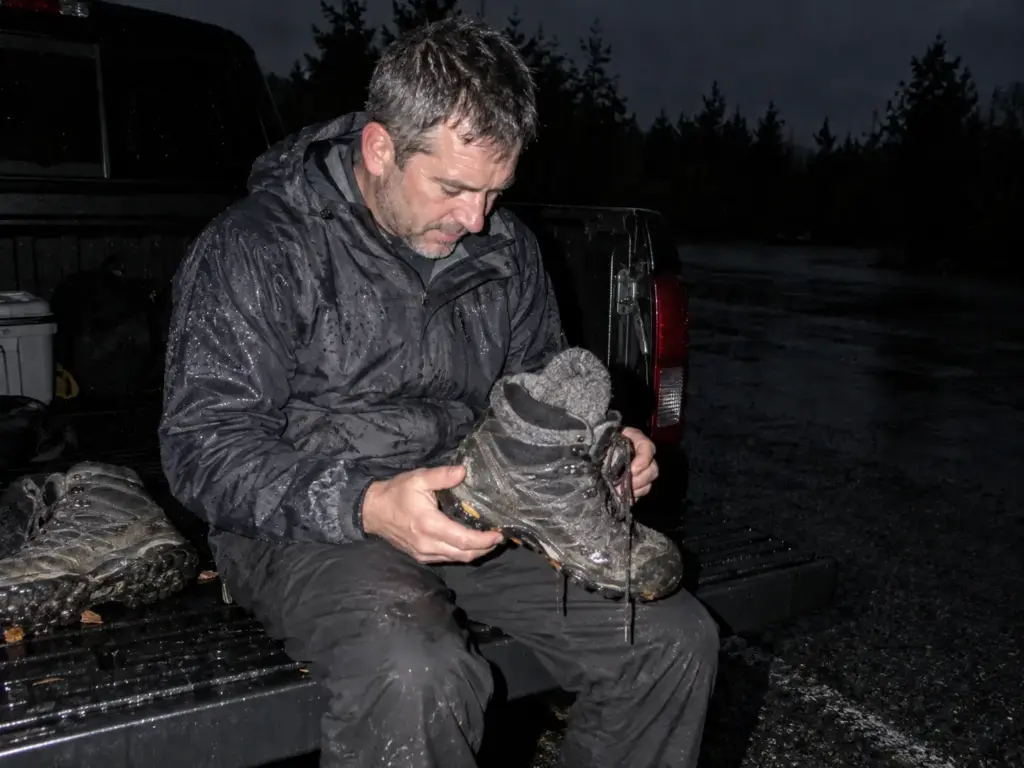
A forum user on Backpacking Light reported that after a long hike through snow, their waterproof boots had each gained about half a pound of water. Treat it as an anecdote, not a measurement, but the logic holds: a boot that saved you 3 oz at the shop gives all of it back once it is soaked. Wet boots also dry slowly, so day two starts heavy.
Water also gets in over the cuff and down into the sock, which is why waterproof boots and what rain still gets in goes through the other routes water takes. Before you pay for a membrane, ask whether your hikes involve stream crossings and wet brush at ankle height. If they do, the membrane will not save you, and you may be better off with a boot that dries fast.
Outsoles That Grip Wet Rock and Still Last
The loudest warning in the r/hikinggear thread is not about the upper, the fit or the membrane. It is the tread.
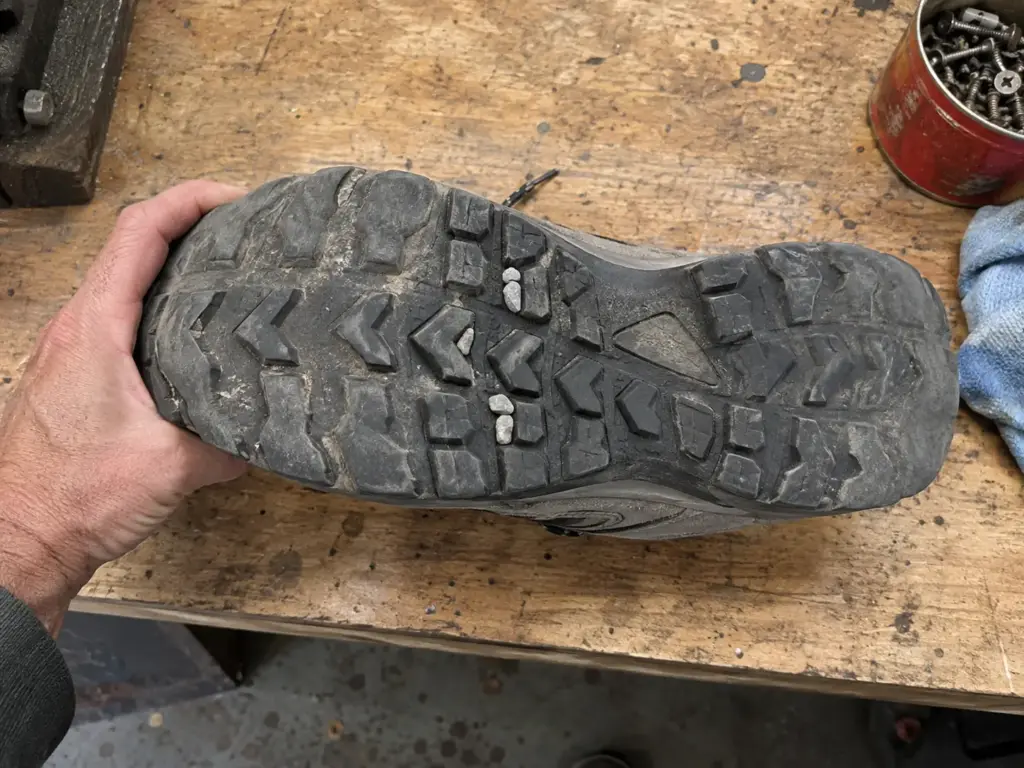
The thread’s author bought a light GTX boot for trips through Scandinavia, on rock, alpine tundra, glacial sediment and scree, with no climbing. The boot served for the first two weeks and went quite gripless in the second half of the trips. This section covers why that happens, and how to judge a sole before you buy.
Not All Vibram Is the Same Rubber
Vibram is a brand, not a recipe. The thread’s author said a cobbler told them there are many Vibram soles with different durability, and that the ones on their boots were not worth resoling. Another commenter said the quality depends on the manufacturer and the rubber mix, passing along the same cobbler’s explanation. A third said their Vibram soles split before they wore out.
Think about how tire makers do it. Different compounds exist for different jobs, and a manufacturer can choose a soft, grippy mix or a hard, long-lasting one under the same logo. The author noticed it themselves: their newer pair, also with a Vibram outsole, had much stiffer rubber and felt more abrasion-resistant.
So a Vibram logo on the heel tells you who made the sole and nothing about how long it lasts. For a deeper look at how outsole rubber changes grip, see which outsole rubber grips wet rock. Even a leather Hoka with Vibram got a poor verdict from the thread’s author for anything resembling off-trail work, so the logo does not rescue a soft design.
Soft Soles Trade Grip for Miles
A soft compound grips wet rock and roots better and wears out faster. That is the whole trade, and the thread is full of examples.
One commenter said the soles on their Hokas wore out so fast that they stopped wearing them for hiking. Another said the soles barely lasted three months and the waterproofing went in about a month. A third said their Hoka boots, super comfortable and waterproof, did not last, and the disappointment matched the cost.
Hard, man-made surfaces are where soles lose the fastest. Several commenters pointed at asphalt and paving slabs as the reason their soles wore through.
One said their Vibram-soled boots wore out quickly because half of every dog walk was tarmac, while the uppers stayed waterproof and sound. Another said deep lugs do not suit asphalt either, so lug depth is part of the same trade. Same boot, different surface, different lifespan.
And who gets away with a soft sole? Day hikers on mostly soft ground. One commenter said their Altra Lone Peaks have hundreds of miles on them and are just now looking worn, but their trails are loamy pine needles and beach sand.
The same person added that rock and sand act like sandpaper on soft rubber. A third voice in the thread summed up the choice in three schools of thought: if you wear out the soles, you earned it; if they wear out fast, they are too soft for your terrain; or buy resolable boots and keep trying compounds until one lasts.
The Flex Test Before You Buy
The sole’s stiffness gives you a quick read on what you’re holding. A Backpacking Light user offered a simple field test: if the sole folds in the middle of the foot, it is a running shoe; if it bends in the top third near the toes, it is boot-like.
That resistance to twisting and folding is torsional rigidity, and a stiffer sole also protects the arch and the ball of your foot under a pack, according to another forum voice there. Fold the boot in your hands in the shop. It takes five seconds.
How much stiffness you want depends on the terrain and the load you carry, which is why boot stiffness by terrain and pack load is worth a read before you choose. A light boot with a soft, flexible sole is fine on a dry, forgiving trail with a day pack. Put it under a heavy pack on rock and you are asking it to do a job it was not built for.
Ankle Support in a Light Boot
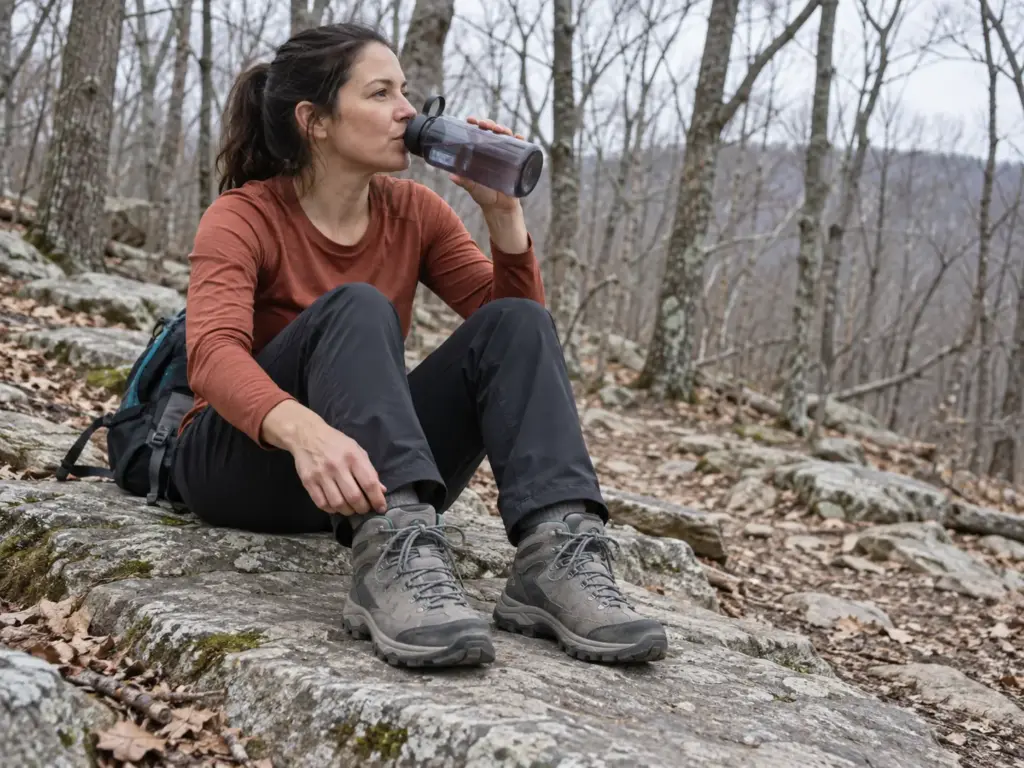
“Is mid-height enough?” is the question under every light-boot thread, and under it sits the fear of a sprained ankle on a rocky descent. The answer is more modest than the marketing and more useful than the myth.
What the Research Says About High-Top Boots
A 1998 systematic review of five trials found that external ankle supports cut sprains roughly in half. That review, by Pope, Herbert and Maher at Macquarie University, pooled 3,954 participants and reported an odds ratio of 0.49 (95% CI 0.36 to 0.66) for supports such as a semi-rigid orthosis or an air-cast brace. The effect of a high-top shoe alone was unclear. The trials covered high-risk sport, not hiking, but the takeaway is plain: a taller shaft is not proof of protection.
A small biomechanics study on hiking-boot suspension points the same way, with a caveat. The 2007 paper from the University of Konstanz found that the boot’s suspension improved heel steadiness after landing, and the authors suggest it may help reduce fatigue and sprains on uneven ground. It tested eight people. Treat it as a pointer, not proof.
Mid-Cut vs Low-Cut on Uneven Ground
Hikers split on this one, and the split is honest. One forum user with weak ankles prefers a mid boot because the ankle rolls less. Another found trail runners worked better for them. Neither is wrong, and the research above says neither can claim the high ground.
What you can act on is that the stiffness of the sole and the fit around your heel decide more than the height of the shaft. A boot that holds your heel down and does not twist under load gives your ankle less to correct. If this question is the one that is driving your decision, do you need ankle support when hiking takes it apart in detail.
Lightweight Hiking Boots on a Budget
If you are a first-time buyer, start with the best hiking boots for beginners picked by fit, then come back here for the lower-cost options. The lesson from the r/hikinggear thread is that a few commenters keep a cheap light boot as a deliberate, short-lifespan choice. One said they paid very little for theirs “so I can live with whatever happens”.
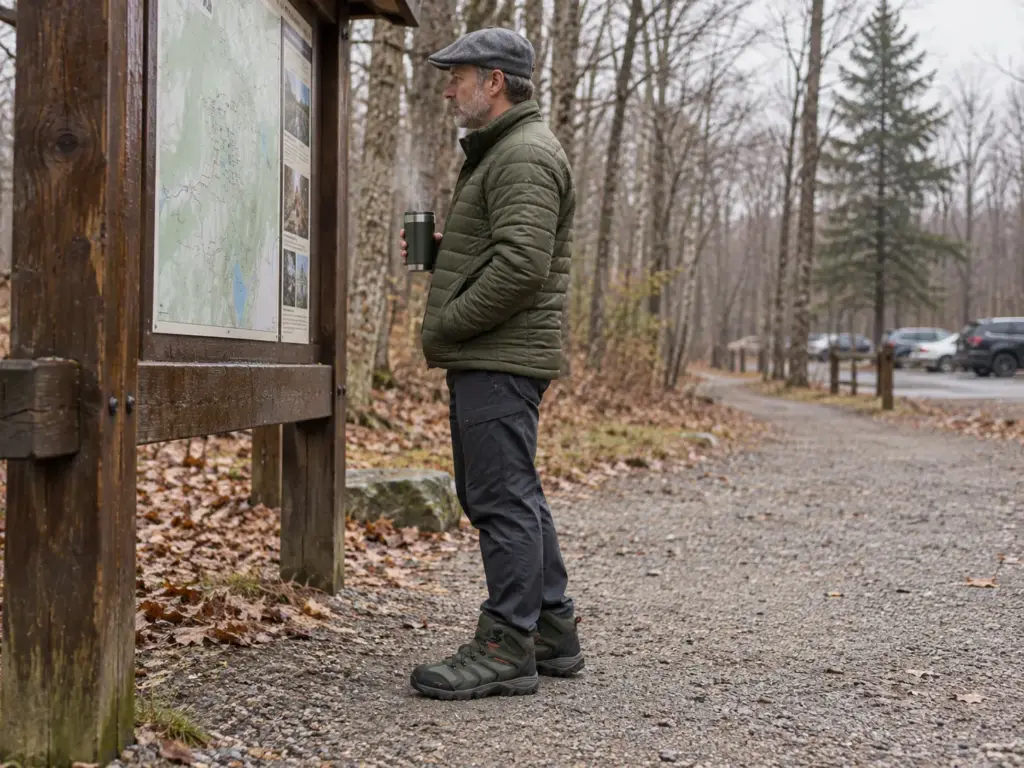
The budget pick is a decision, not a downgrade, as long as you know what the lower tier skips. Grip life and cushioning go first, which sends you back to the outsole section.
Merrell Moab 3 Mid Waterproof, the Familiar Lower-Cost Pick
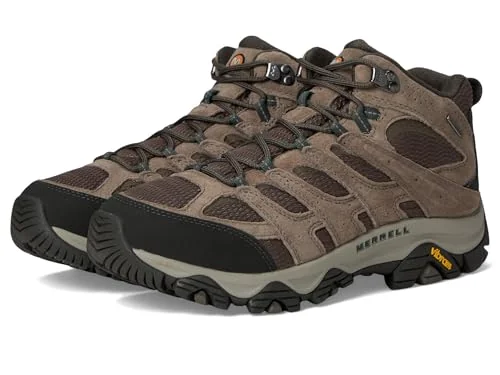
The Merrell Moab 3 Mid Waterproof (men’s · women’s) is the lower-cost mid boot that most hikers recognize by name, with men’s and women’s listings. It carries a waterproof membrane rather than GORE-TEX. A commenter in the r/hikinggear thread said they use Merrell Moabs for much shorter hikes and that the boots haven’t failed them yet.
That is the right frame: a good fit for short, forgiving days, not the boot for a long route with a loaded pack.
NORTIV 8 Waterproof Ankle High, the Budget Alternative
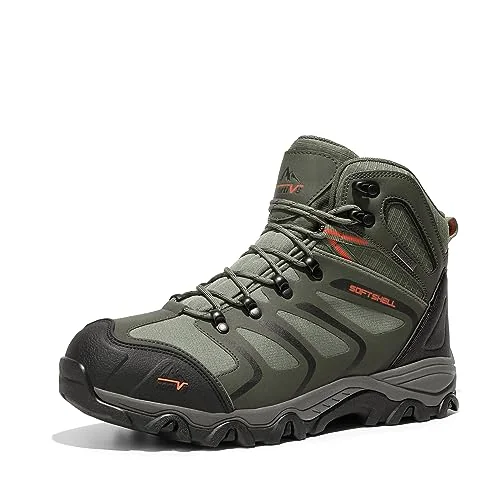
The NORTIV 8 Waterproof Ankle High (men’s · women’s) is the budget alternative, and it is listed as an ankle-high boot rather than a mid-cut. It is a waterproof boot for readers who want to spend as little as possible.
The honest limit is the one the thread gives you: at the low end, expect to give up grip life and cushioning first, so buy it knowing that, and check the tread before you take it anywhere rocky.
Columbia Crestwood Mid Waterproof for Women
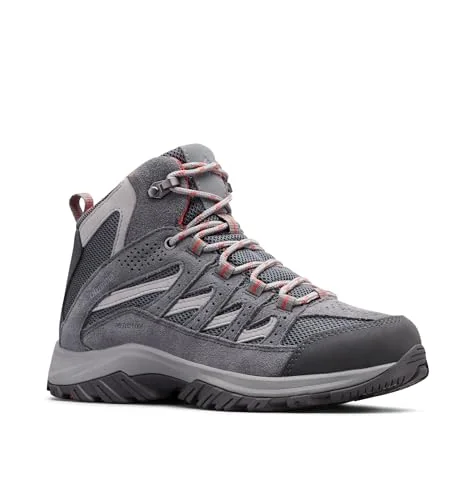
The Columbia Crestwood Mid Waterproof is the budget option for women, and the listing is women’s only: the men’s version could not be linked. It follows the same rule as the other two in this section. Waterproof and mid-height at a lower cost is a fair deal for short, easy days, and the reason it costs less is the same reason to read the outsole section again before you buy.
Sizing a Lightweight Boot and Finding Toe Room
The wrong size is the most common reason a good boot goes back. A thumb and a pair of real socks fix most of it, and this section gives you the whole method in one place, so you don’t depend on a claim that one model runs small or narrow. Sizing differs by model, so the method matters more than any single boot’s reputation.
Half a Size Up and One Thumb of Toe Room
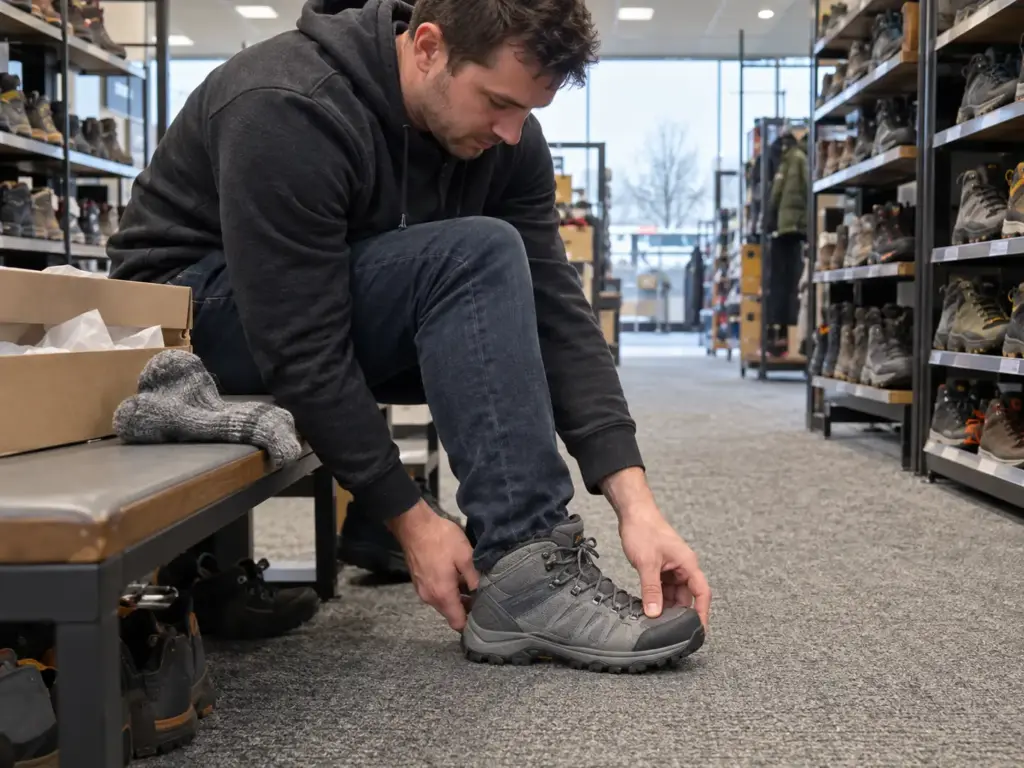
The usual starting point is a half size up from your street size. Leave about a thumb’s width between your longest toe and the front of the boot, and about a finger’s width of room behind your heel. Measure with your larger foot, with the socks you will actually hike in, and in the afternoon, when your feet have swelled a little. Going a full size up tends to cause heel slip and instability, and that undoes the whole point of a precise fit.
One poster in a Walkhighlands forum thread, from a discussion of a different brand of boot in 2020, explained the thumb rule the way a lot of hikers learn it: leave at least a thumb’s width of space between toes and the front of the boot, so no toe bang on descents. The same poster said sizing up correctly buys a little more flexibility in width, and warned that too much room in front of the toes, without a stiff enough sole, causes its own problems on technical ground. Extra room is a trade, not a free upgrade. For more on the sizing-up call itself, see when to size up hiking footwear.
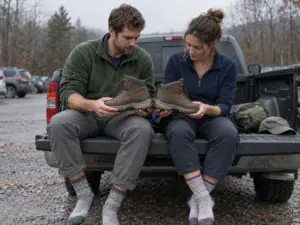
Shop in the late afternoon, with your hiking socks and your own insoles, and kick the toe of the boot against the floor while it is laced. If your toes touch the front on that kick, the size is wrong for downhill, no matter how good it felt standing still.
Wide Feet and Toe Box Shape
Width is the other half of fit, and it is where half a size up helps a little. A Walkhighlands user with wide mid-feet found the boot too narrow in their usual size and right at half a size up, with a bit of extra space in front of the toes that they could manage with lacing. That is a field report, not a rule, but it shows the logic: half a size up can buy a little width as well as length.
If your feet are truly wide, though, size alone will not solve it, because a boot’s toe box has a shape as well as a length. There is also a real community wish out there for a wide toe box boot that is durable and resolable, which the light category still mostly does not deliver.
If that sounds like you, start with the hot spot, not the number on the box. Best hiking boots for wide feet start with your hot spot walks through how to find it.
Reading a Brand’s Size Chart Before You Order
Brand charts differ, and the number on the box is not enough. One r/hikinggear user ordered a 43 EU expecting a UK 9 and got a UK 8.5. The next size up, the 44, was marked UK 10, and there was no UK 9 in that brand at all.
The 44 ended up fitting like a 43 UK 9 from a different maker. The fix they recommended was to read the size chart in centimeters instead of the size label.
So measure your foot length in centimeters, afternoon, in your hiking socks, and then read the maker’s chart against that number. Check recent buyer reviews for the specific model too, because sizing differs from model to model and the maker’s own chart is the starting point. Once the length is right, heel slip is the other half of fit, and the lacing fix for downhill heel slippage is usually a lacing problem before it is a size problem, and a good heel lock fixes more returns than a bigger box does.
Where Light Boots Fall Short and When to Pick Something Else
The mirror of the opening hook: the community is split, and both sides are right for their own hiking. This section is about who is right in which case.
How Light Boots Actually Wear Out
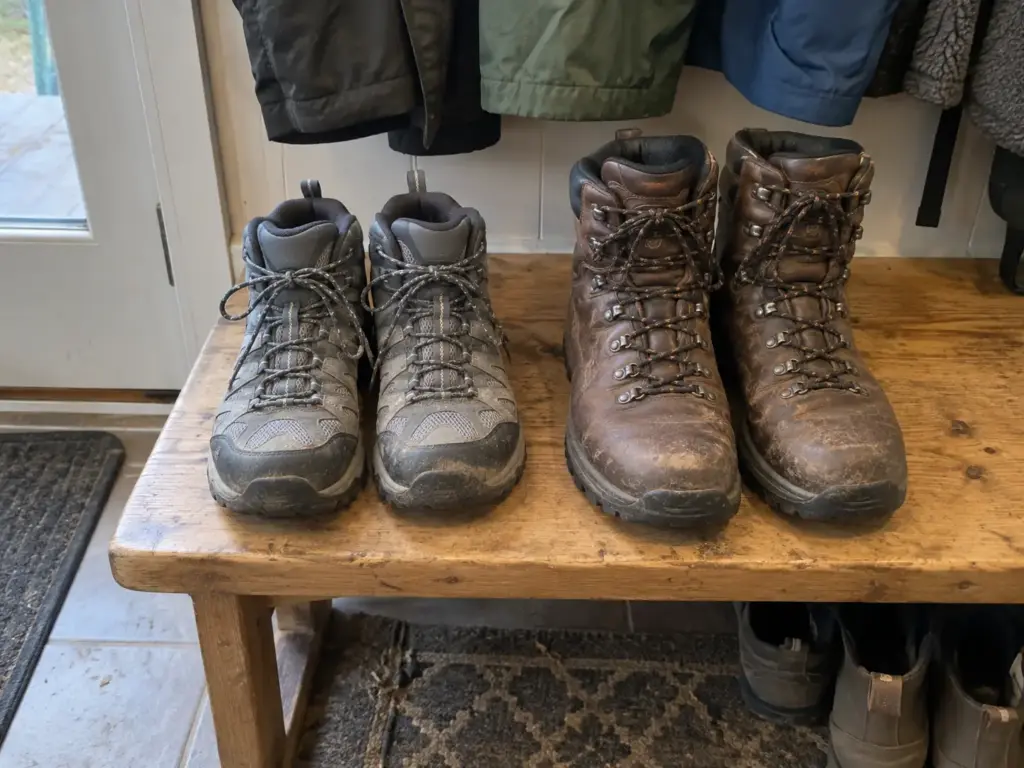
From the r/hikinggear thread, the order is consistent: tread first, then waterproofing, and in some cases the membrane itself. One user said the membrane in a pair of day-hike shoes started to rip after two seasons. Another said the waterproofing went in about a month, while the soles barely lasted three months. Another now wears their Hokas for everything except hiking because the soles wore out so fast.
No two reports agree on a number, which is itself the point: the lifespan depends on the terrain, the load and the person.
The counterpoint is real. One user with plantar fasciitis said their cushioned Hokas last a full season or more on day hikes, and another said comfort pretty much trumps anything else. A third, who hikes volcanoes in summer, said their light boots wear out sooner than their others, but that the comfort is what matters. For a day hiker on forgiving terrain, that math can be fine.
For someone who walks off-trail on rock for weeks, the same boots are a short-lived bet. One hiker bought a pair for a single 50-mile push, knowing they would not last season after season, and said they did exactly the job needed. Pick the trade that matches your trail, whether that is a backpacking boot built to be resoled or a light one built to be replaced.
Break-In Is Shorter, Not Zero
Lightweight boots generally need a shorter break-in period than leather ones, and a few feel comfortable out of the box, but less is not none. The method is simple: wear them in short stretches and stop at the first hot spot. Don’t try to speed things up by soaking or heating the boots, and don’t ignore a hot spot because the box said no break-in needed.
For the full method, including when a boot has earned a return, see how to break in hiking boots and know when to return them.
Wear new boots around the house first, then on a short walk, and check your heels and the sides of your feet after each outing. A hot spot found on the couch costs you nothing. The same hot spot found at mile six is a bad afternoon.
When a Heavier Boot Is the Better Call
The other camp in the thread is hikers on long, high-elevation routes with heavy packs, and they choose stiffer or leather boots that can be resoled.
One of them weighed their leather boots at 1.5 kg per boot (roughly 53 oz) and called that too heavy for long days with elevation gain and a loaded pack. In the same thread, another commenter suggested heavier Asolo boots for longer, bigger hikes. Neither camp is wrong. They carry different loads over different ground.
So the decision rule is practical. A heavy pack on rough ground calls for a stiffer boot, and leather versus synthetic and where each one gets wet is the place to start when you are weighing resoling against weight. A light pack on a dry trail may not need a boot at all, and a trail runner will do the job at a lower weight than anything here.
Put Your Boots on a Kitchen Scale Before You Buy
Three things to carry out of this guide. Compare weight per boot, and remember a wet boot isn’t light. A light boot trades grip life and ankle structure for comfort and speed, so pick the trade that matches your trail. And size with your real socks, then read the maker’s chart instead of trusting the number on the box.
Before your next hike, put your current boots on a kitchen scale and write the number down next to the one you are considering. Then walk around your house in the new pair with your hiking socks on. If the weight gap is small and your toes have room, you have your answer. If the gap is big and the toes are crowded, keep shopping.
Frequently Asked Questions
01Who makes the best lightweight hiking boots?
No single maker wins every category, so the best lightweight hiking boots depend on whether you value low weight, balance or cushion. Here, Merrell’s Moab Speed 2 Mid is lightest, Salomon’s X Ultra 5 Mid is the balanced pick, and Altra’s Olympus 6 Hike Mid is the cushioned zero-drop option.
02Is Salomon or Merrell better?
Neither brand wins outright, because the better pick depends on the job: Merrell is lighter at the top and lower in cost at the entry level, while Salomon sits in the balanced middle. By RunRepeat’s lab weights, the Moab Speed 2 Mid is 14.1 oz per boot against 15.4 oz for the X Ultra 5 Mid.
03What are the best lightweight trail boots?
The best lightweight trail boots are the light mid-height options in this guide: the Moab Speed 2 Mid GTX, X Ultra 5 Mid GTX and Olympus 6 Hike Mid GTX. A trail boot is usually a light mid boot with a trail-runner-style midsole. The difference from a trail runner is the cuff and the sole stiffness.
04What is the lightest boot on the market?
Among the boots in this guide, the Merrell Moab Speed 2 Mid GTX is the lightest at 14.1 oz per boot by RunRepeat’s lab weights. Lighter trail shoes exist, but they are shoes, not boots. This guide does not claim it is the lightest boot on the whole market.
05Do lightweight hiking boots wear out faster?
Usually yes, and the tread goes first, because light boots use softer outsole compounds. On forgiving ground, users report a season or more of use. On rock, asphalt or scree, the same boots can wear out much sooner.

I've spent more than a decade researching hiking gear and trail technique. I read the specs, the forum threads and the long-term reviews, and every pick here comes with what it gets wrong.
End of the trail
You read every mile of this one. Here's where the trail goes next.