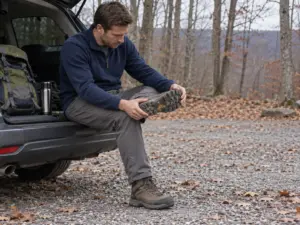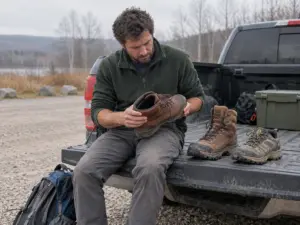

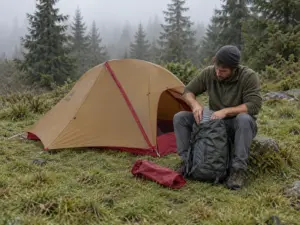
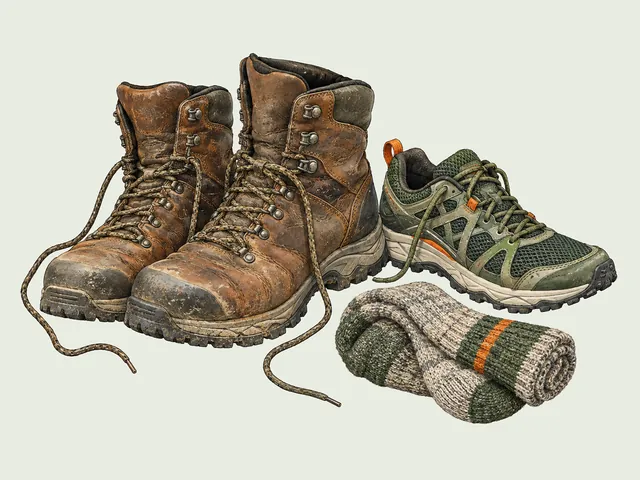
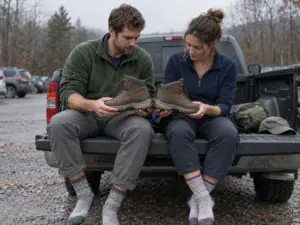








The women’s pair in your size is out of stock, the men’s pair is sitting right there on the shelf, and you’re standing in the aisle wondering whether the label on the box matters. One hiker in an old Outdoors Stack Exchange thread was handed the men’s pair in exactly that spot and kept hiking in them for years. That’s the short version of men’s vs women’s hiking boots: the label tells you where the factory aimed, and your foot tells you what fits.
Three checks settle it (width and heel, the size crossover, and a downhill try-on), and gender is only one question inside the bigger one of choosing a hiking boot by terrain, height and fit. Here is what usually differs, and what to do about each difference.
| What to check | Men’s boots usually | Women’s boots usually | What to do |
|---|---|---|---|
| Heel and forefoot width | Wider at the heel and the ball | Narrower heel, slimmer last | Try the heel first |
| Instep height | Lower at the same length | Higher over the instep | Check whether the laces pinch across the top of the foot |
| Width letter | D is the retail standard | B is the retail standard | Read the brand’s own key (on Merrell’s, B is narrow and D is medium) |
| Size number | A lower number at the same EU size | A higher number at the same EU size | Use the brand’s chart (Merrell: men’s US 7 = women’s US 9) |
| Ankle cuff | Varies by model, not by label | Varies by model, not by label | Judge the cuff on your own ankle |
| Weight, midsole and lugs | Differ on some models, identical on others | Differ on some models, identical on others | Compare weight per boot and flex the boot in your hands |
Men’s vs Women’s Hiking Boots Start With Foot Shape
The first hot spot a wrong-gender boot gives you tends to show up at the heel, not the toes. The heel cup either clamps down or lets your foot ride up on every step, and by then you’re blaming the socks. So check the heel first, and know why it’s the heel.
Heel and Forefoot Width
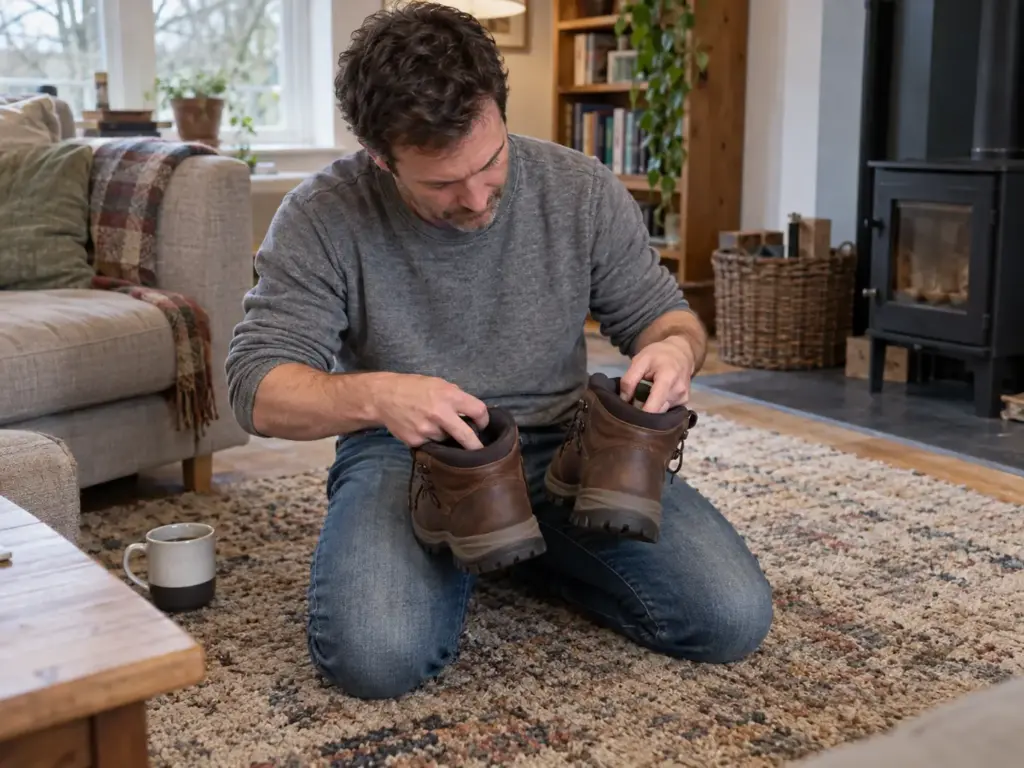
A women’s hiking boot isn’t a shrunk men’s boot. It’s built on a women’s specific last, a different last shape from the men’s one (the last is the foot-shaped form a boot is built around), and the biggest differences sit at the back.
Dansko, a shoe seller that has written up the gap, describes women’s lasts as narrower with slimmer heels and men’s as wider through the heel and forefoot. On the trail that means the heel is the first place a women’s boot on a man’s foot gets tight, and the first place a men’s boot on a woman’s foot lifts. If your own heel is the narrow part of your foot, read up on narrow feet by heel, midfoot or toe before deciding the gender label is the problem, because the three cases fit differently.
Instep Height and Length
The research on this is old but clear: a 2009 comparison of male and female foot shape found that women’s feet are narrower but higher than men’s at the same length. The researchers scanned and cast the feet of 51 women and 39 men. Once the numbers were scaled to ball length, men’s ball, instep and heel widths came out significantly larger, while women’s instep and ankle-bone heights came out larger. Average heel-to-ball length was 181.5 mm for the men and 165.0 mm for the women, so part of the gap is plain size before shape even comes into it.
In boot terms, men’s feet volume sits in the width of the heel and ball, while a woman’s sits higher over the instep, so laces can pinch across the top of the foot even when the length is right, especially in a low-volume men’s boot. If the pressure sits across the top and your toes have room, the problem isn’t length. Moving up a size won’t fix a volume problem; it just moves the pinch.
Colour Is the Least Useful Difference
An old Outdoors Stack Exchange thread boils the whole question of gendered gear down to three reasons: fit, appearance and marketing. Only the first changes how your feet feel at mile ten. Men’s pairs tend to come in earth tone colours and women’s in brighter ones, and that is appearance and marketing, not fit. If you like the grey pair better than the teal one, buy the grey pair.
Width Letters Belong to the Brand, Not the Gender
You see a B on one box and a D on another and assume it’s a gender code. It isn’t. It’s a brand key, and the same letter can mean two different things depending on whose key you’re reading.
Reading a Merrell Width Key
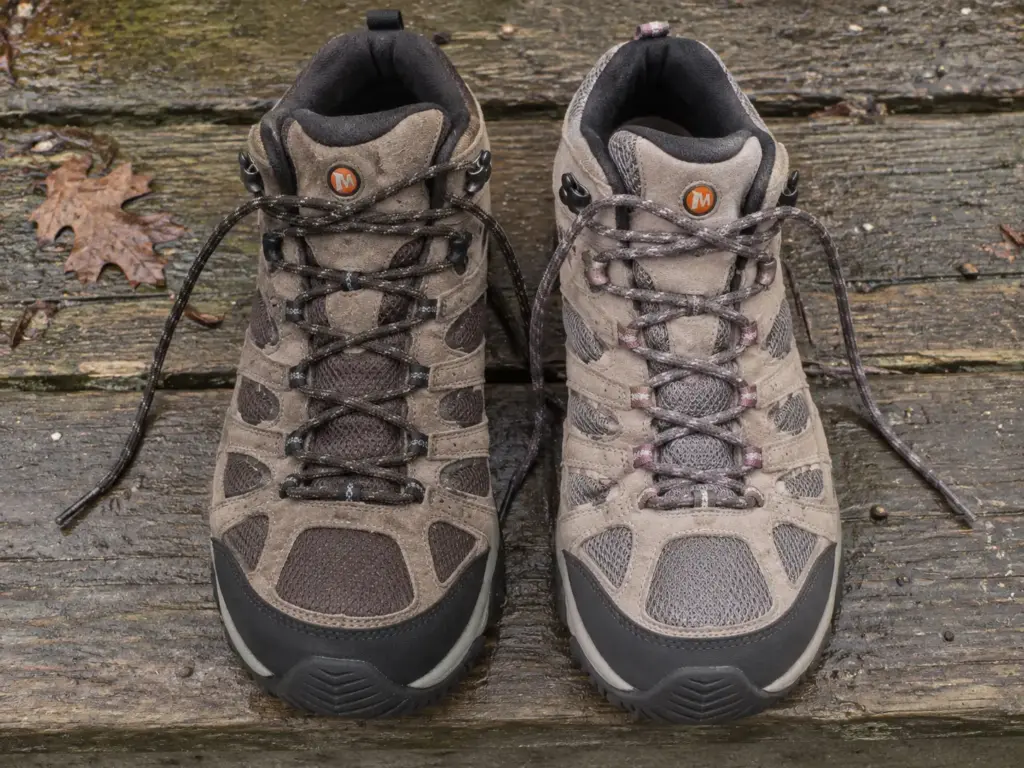
Merrell prints one width key on both its men’s and its women’s size charts: N is narrowest, B is narrow, D is medium, E is wide, EW (also written 2E) is extra wide, 3E is extra-extra wide, and 4E is the widest. There’s no gender split in that key.
Dansko, a seller, states the retail convention differently: D is the “standard” width for men and B is the “standard” for women. Put the two side by side and the problem shows. On Merrell’s key, B reads narrow; on the convention, B reads women’s standard.
A B width and a D width are the two you’ll meet most, and both describe the foot’s width. How much room the front of the boot leaves is a separate question, the toe box width, and a brand can get one right and the other wrong.
So the letter only means something inside one brand’s key. Pull up a pair like the Merrell Moab 3 Mid Waterproof (men’s · women’s) and the width letter you choose depends on Merrell’s key, not on which gender’s page you landed on. Do the same for any other brand: find its own key first, then compare your foot to the key instead of to the label.
Even the word “wide” doesn’t travel well. An r/hikinggear commenter who tried Salomon boots marketed as light said even their wide fit was “still narrower than a lot of other brands’ standard sizing.” One user, one brand, but it’s enough to treat a wide label as a claim you test, not a spec you trust.
Before you shop, find the width key on the brand’s own size chart and note which letter it calls medium. Then ignore “men’s” and “women’s” on the listing until you know whether that brand’s chart agrees with the retail convention. Two minutes with the chart saves a return label.
Why a Narrow Man or a Wide Woman Can Cross Over
Width is the reason crossovers work in both directions. A Bushwalk forum commenter put the wide-woman case plainly: if the women’s boots aren’t wide enough, try the equivalent size in the men’s version, “they will generally be wider.” Treat that as one hiker’s pattern, not a law. But it follows from the width letters: a woman with a wide forefoot is fighting a women’s last built for the narrower side of the range (women’s wide sizes exist, but each brand decides what “wide” means), while a man with a narrow, low-volume foot may sit comfortably in a women’s last.
The ball of the foot is where most of this gets decided. If your hot spot is there, the logic in wide feet start with your hot spot applies whichever gender is on the box.
Why a Men’s Size Is Not a Women’s Size
Now the number problem, the sizing conversion from a men’s size to women’s size. The shop’s men’s run starts at a size that doesn’t exist in the women’s scale, so you end up between two sets of numbers with no obvious bridge.
What Merrell’s Chart Says
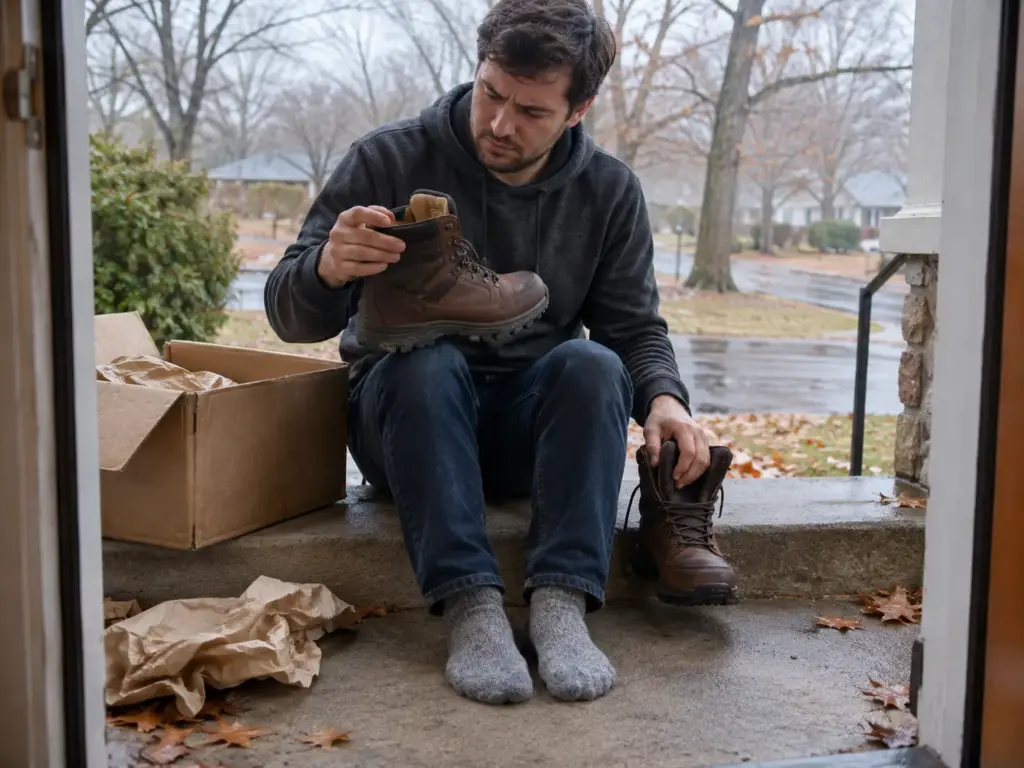
Merrell’s own universal chart answers it for Merrell: at EU 40, a men’s US 7 and a women’s US 9 are the same boot size. At EU 42.5, a men’s US 9 matches a women’s US 11. At the same EU size, the women’s number is two US sizes higher.
That’s a Merrell fact, and it should stay one. Read it as “Merrell’s chart,” never as “the rule.”
Where the Charts Disagree
Other sizing material doesn’t agree with it. Some retailer charts pair a men’s size with a women’s size one step up. One sizing comparison puts the average gap at about a step and a half.
A forum commenter on a hiking blog says two and a half. None of those were checked against a brand’s own chart for a specific boot, so none of them should become a rule in your head.
Even Merrell’s pages disagree with each other by half a UK size: the men’s page lists US 7 as UK 6.5, while the universal chart lists it as UK 6. That’s a good reason to trust the chart for your exact model, not a conversion you half remember.
Here’s the practical step. Look up the same EU size on the brand’s chart for both genders, then decide whether to go up half a size only after checking toe room. Dansko puts a good fit at about half to three-quarters of an inch of toe room, and says to try boots on late in the day, when your feet have swelled. For the longer version of that decision, see when to size up hiking footwear.
Cuff Height and Instep Volume Decide Ankle Fit
A taller cuff means more support, right? The forum threads say it’s more complicated than that, and the fit of the cuff has little to do with the tag.
What a Taller Cuff Does and Doesn’t Do
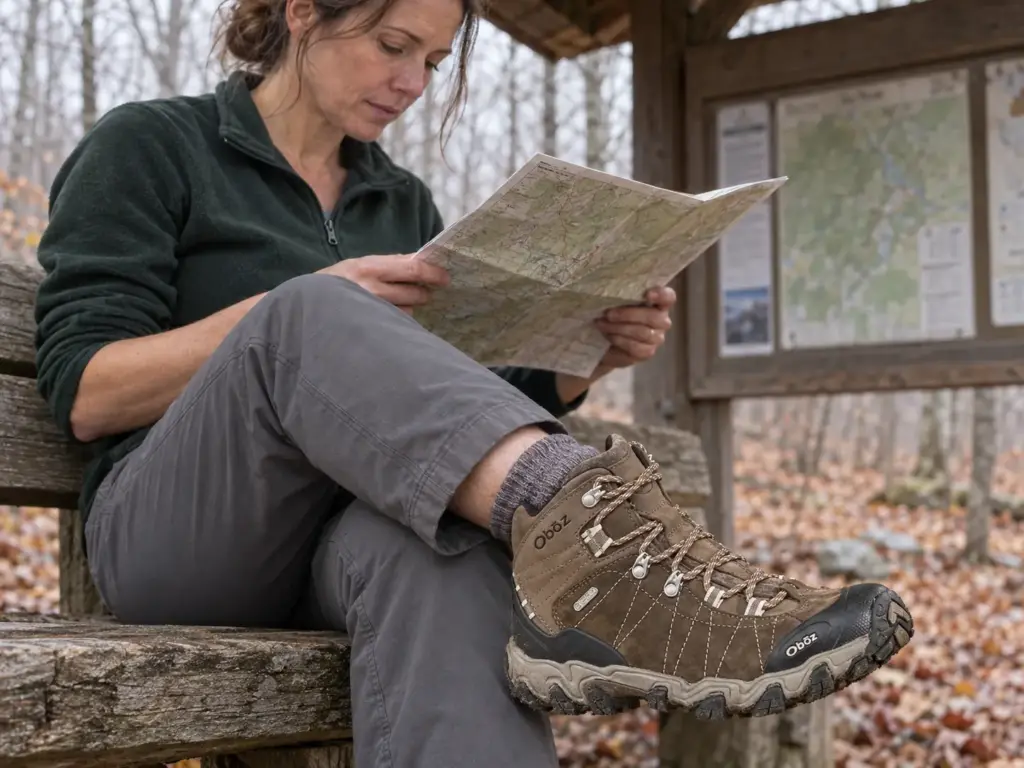
An r/UKhiking commenter wrote that a boot has to be very tall to add real ankle support, and that the clear gains of a boot are protection from rocks, warmth, waterproofing and durability. Another commenter, who has hypermobile ankles, said boots reduced sprains only when they covered the ankle fully with support in that area; regular mid-height boots didn’t help. That’s one hiker’s experience, but it matches the general point: cuff height alone is a weak promise.
For the full comparison of low, mid and high cuffs, see where cuff height counts.
For this article, the point is narrower.
The cuff and instep are where a low-volume men’s boot meets a higher women’s instep. A mid-cut like the Oboz Bridger Mid B-DRY (men’s · women’s) comes in both genders (it’s one of the waterproof hiking boots in this article that you can compare that way), so it’s a handy example of a boot whose collar you should judge on your own ankle: how it sits, and whether it rubs the back of the calf. One r/UKhiking commenter reports that ankle-height boots hurt the back of his calf. No readable source quantified a men’s-versus-women’s ankle shaft height difference, so this article doesn’t claim one.
When “Unisex” Means a Men’s Last
A Mountain Project thread about a unisex La Sportiva boot has the cleanest version of this. One commenter claimed that any boot sold as unisex is modelled for a men’s foot, with a wider heel, and that the result is “horrible heel lift and probably blistering.” The original poster had worn the unisex version for six years and described the volume, especially in the heel, as “a bit too much, causing more chafing and heel lift.” They switched to the women’s version.
That’s a different brand from anything in this article, so treat it as a pattern, not a product claim. The pattern is worth carrying into any shop: a unisex boot that’s too big in the heel causes chafing and heel lift even when the toe fits. If the toe fits and the heel doesn’t, the answer may be a different last, not a different size.
Midsole, Weight and Lugs Change by Model, Not by Label
A common claim is that women’s boots get a lighter midsole and deeper lugs, while men’s boots get a stiffer midsole and shallower outsole lugs, because women weigh less on average. It sounds reasonable, but nothing I can point to puts a number on it. The honest answer is that it depends on the model, and the boot in your hands tells you more than the tag.
Stiffness Is a Spectrum
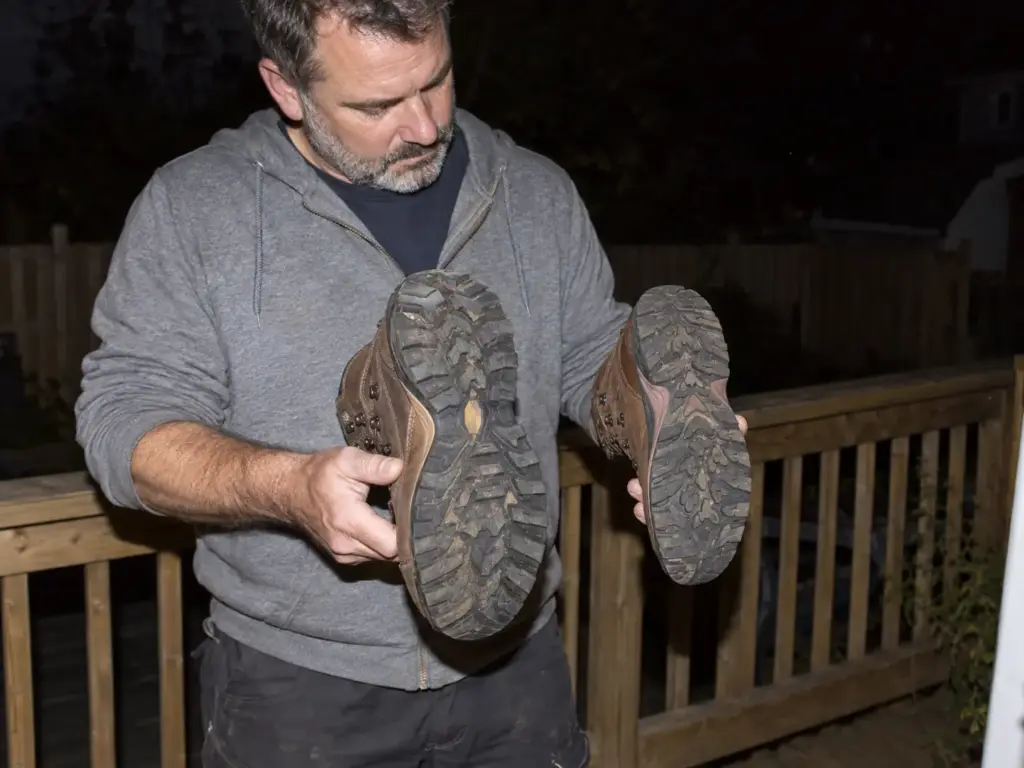
Dansko says some models share a mold across genders, while others differ in heel width, footpad alignment and weight. It gives no figures, which is exactly why you shouldn’t assume the women’s version is softer. An r/UKhiking commenter put midsole stiffness on a spectrum with no clear line between a trail shoe and a mountain boot. An r/hikinggear commenter who describes himself as a former boot seller (unverified) explained the shank as the plate that spreads a heavy load, and said most modern hikers don’t need that stiffening.
You can check stiffness in about ten seconds.
Hold the boot by the heel and the toe, and flex it. Then twist it. A boot that folds in half easily and wrings like a dishcloth will feel very different on a rocky descent from one that fights you. The tag won’t tell you which one you’re holding, and neither will the gender.
Weight Adds Up in Every Step
Weight per boot is the number to read, not weight per pair. An r/hikinggear commenter weighed his Merrell Moab 3 Waterproof at about 18 oz per boot against about 10 oz for his trail runners. On a 12-mile day with a 45 lb pack he said the 8 oz difference per foot wouldn’t change fatigue, but wet feet and rolled ankles would. A second commenter’s line is the other half of it: weight on the feet adds up in every step.
Both can be true. Weight matters, and it matters less than a fit that doesn’t blister you. If a men’s and a women’s version of the same model list different weights per boot, that’s a real difference in the build, not just in the size.
Pick up the men’s and the women’s versions of the same model, one in each hand. If one clearly feels heavier or stiffer, that’s the difference the spec sheet is hiding. If they feel the same, the label is mostly a size and a colour.
Same Model, Two Genders and What the Spec Sheet Shows
You love a model, you find out it comes in a women’s version, and you wonder if it’s the same boot in a smaller size. Sometimes it is. Sometimes it isn’t, and the product page usually tells you which, if you know where to look.
Fields to Read Before You Buy
Dansko notes that “same model, two genders” isn’t guaranteed to differ: some pairs share a mold and differ only in size or colour. Others differ in heel width, footpad alignment and weight. So the label tells you nothing, and the spec sheet tells you a lot. These are the fields to compare on any pair:
- Weight per boot, for each gender
- The brand’s own width key, and which letter that model comes in
- The last, when the brand names it
- Cuff height
- The size chart for that gender, not the other one
Read them as clues, not proof. Matching weights per boot hint at a shared mold, but only the try-on settles it. The old Outdoors Stack Exchange thread gives the cleanest test: have both versions in the same size and compare them over comparable walks.
How to Read a Match and a Mismatch
Once you have both spec sheets open, three outcomes cover most cases. If the spec sheet weight per boot, the width key and the cuff height all match, the pair probably shares a mold, and the men’s and women’s versions are the same boot on a different size scale. Compare gram weight per boot, not the pair’s total: a few grams apart is rounding, a clear gap is a different build.
If the weights differ but the width key matches, the build has changed somewhere between the sole and the upper, and that is worth a try-on before you commit. If the width key or the last differs, you are looking at a different last shape, which means that for this pair, same model different gender really does mean two fits.
One trap sits underneath all of this: matching the number is not matching the foot. On Merrell’s chart a men’s US 7 and a women’s US 9 are the same EU 40, so two boots of one model in “the same size” are not the same length. Compare by EU size and foot length, and use the women’s chart for the women’s boot and the men’s chart for the men’s.
A Pair You Can Compare Side by Side
The Salomon X Ultra 5 Mid GTX (men’s · women’s) is a clean example of one mid-cut Gore-Tex model sold in both genders. Open both product pages in adjacent tabs and run through the fields above. Where the weights, the sizing charts and the listed features match, you’re likely looking at the same boot with a different size scale; where they don’t, you’ve found a real difference before spending anything.
That’s the whole technique, and it works on any model you’re considering. For the women’s side of that shopping, women’s hiking boots compared by fit and lifespan lines up the models side by side.
A Try-On Test That Tells You What Is Wrong
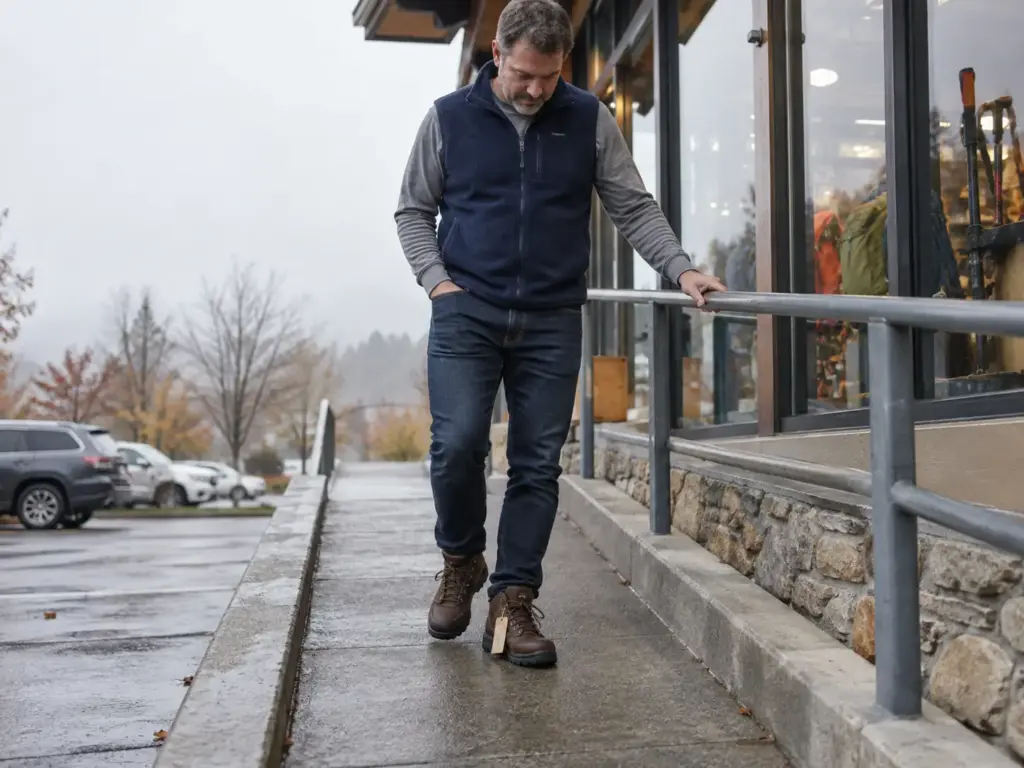
“Walk around the shop” is advice that tells you to notice something without telling you what to notice. When you try on hiking boots, check boot fit on stairs or a ramp and ask a better question than “does it feel OK?”: what moves when I step down? Each symptom points to a different cause.
Heel Lift vs Heel Slide
Dansko’s heel check, done on a ramp or stairs, is the simplest one. The heel should lift slightly but not slide freely. A little lift is normal in a stiff boot. If the heel slides, that is real boot heel slip: the heel box is too big for your foot, and no amount of tightening will fully fix that.
Bushwalk commenters add the setup: try the boots on with the socks you’ll actually hike in, stamp your feet in them vigorously, and find a ramp to test a downhill slope. Stamping sounds silly in a shop. It also tells you in five seconds what ten minutes of strolling won’t.
Toes Hitting the Front on the Descent
If your toes are hitting the toe cap on descent, the problem is usually length. A Backpacking Light poster described exactly this: their toes touched the end of the toe box in an old boot, which sent them shopping. A deleted comment in an r/hikinggear thread adds that boots with a heel lock keep the toes off the front on descents, because the foot stays put. Both are forum-level reports, not measurements.
This is the check to take most seriously on a taller backpacking-style boot like the Salomon Quest 4 GTX (men’s · women’s), because a long descent under a pack is where toe contact turns into a black toenail. Step down a ramp with the boot laced the way you’d lace it on the trail, and if the toes hit, that’s your answer.
Pick the Fix
Match the symptom to the fix. The mapping below comes from forum reports, so treat it as a starting point, not a diagnosis.
- Heel lifts a little on the descent: normal, but try a heel-locking lace pattern or a different lacing system, or a lower-volume last if it keeps happening.
- Heel slides freely: the heel box is too big, so try a lower-volume last, not a smaller size. Too much heel volume causes chafing and heel lift even when the toes fit.
- Toes hit the front on the descent: go half a size up or look at a longer last.
- Hot spots after a short walk: start a break-in plan before a long hike, because blister prevention starts there.
For the first one, the lacing fix for downhill heel slippage walks through the lacing change step by step.
For the last one, read how to break in hiking boots and know when to return them, which also covers the return-or-keep decision.
Bring the exact boot socks you’ll hike in and try boots on late in the day, when your feet have swelled. A fit that works on rested feet in thin socks is a fit for the couch.
Crossing Over When the Other Gender’s Boot Fits
The shop had one pair left and it wasn’t “yours.” Both directions of crossover are real, and both have a catch.
Women in Men’s Boots
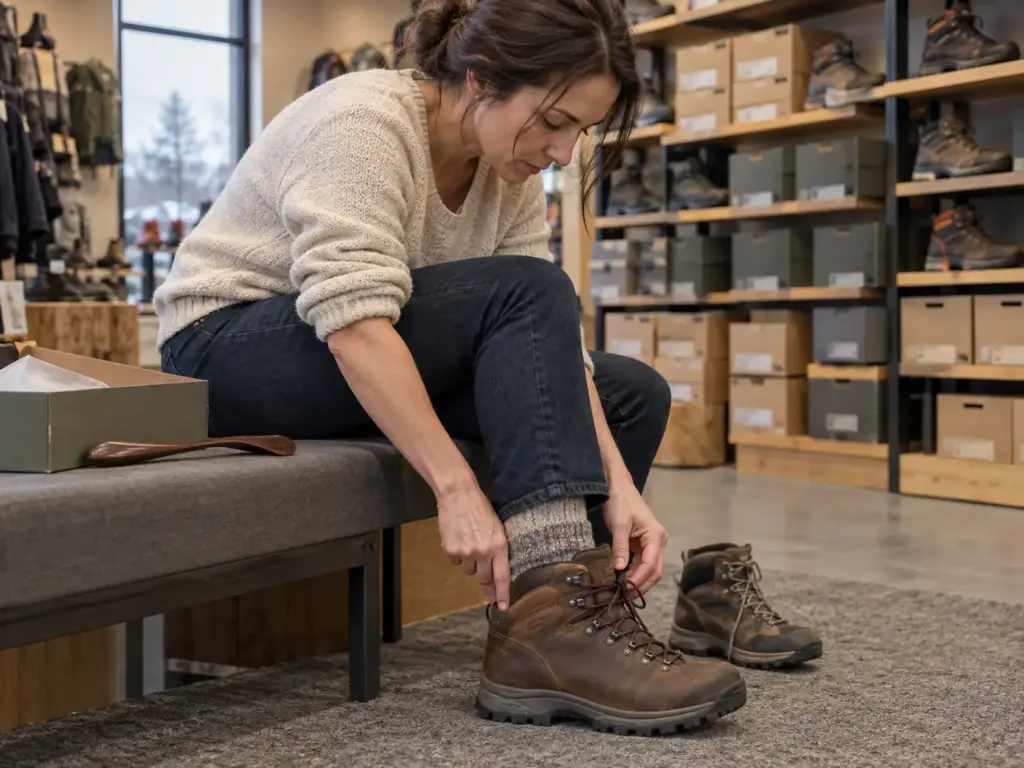
The Bushwalk forum and the old Outdoors Stack Exchange thread both report that men’s boots can suit a woman with a wide or high-volume foot. The Stack Exchange thread’s blunt version: if you’re happy with the man’s boots you have, there’s nothing to be gained by the women’s model. The asker in that thread had been handed the men’s pair when the women’s was out of stock, and used them for hiking ever since.
A Backpacking Light poster whose toes were hitting the end of an old boot tried men’s Asolo Drifters at a shop and found they “seem to fit ok,” then wondered whether the men’s boots were just wider in the toes. That case involved a medical condition, so don’t generalise from it. It shows the question is real, though.
Men in Women’s Boots
Going the other way, there’s less to go on, and it’s a hedge. From the foot-shape data, a man with a wide heel or ball will likely find a women’s last tight. A man with a narrow, low-volume foot may fit fine. No source tested this directly, so the try-on is the only evidence that counts, and the width letters in the section above are the first thing to check.
When Only One Gender Exists
Some models only come in one version, and then none of the crossover logic applies. The Vasque Sundowner GTX is sold as a women’s model, with no men’s version available to compare it against. If you’re a woman looking for a leather boot sold as a women’s model from the start, it’s a straightforward one to try on. A Bushwalk commenter included Vasque in a short list of brands that do wide boots, which is a reason to try it, not a promise that it fits.
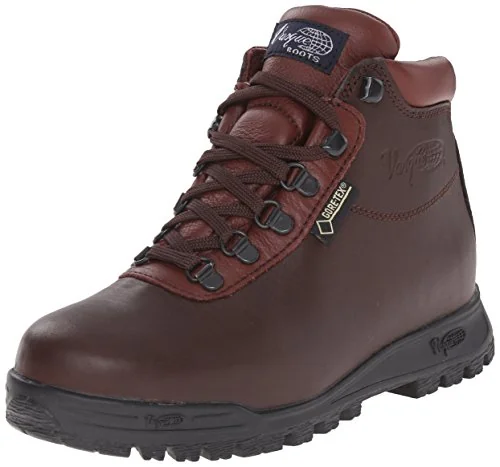
The card is the summary; the useful part is what to do with it. Because there’s no men’s pair to measure against, you can’t use the same-size comparison from earlier. Run the heel and descent checks from the try-on section instead, and judge the boot only on how it sits on your foot, with your socks, on a ramp.
Ordering Online Without Getting Stuck
Crossing over by mail is where people get stuck, because the first try-on happens at home. Do it indoors on a clean floor, in the socks you’ll hike in, and keep the packaging until you’ve walked a few flights of stairs. Dansko’s advice to try on late in the day holds for home deliveries too. The return policy is your safety net, so check it before you order, not after the box arrives.
If you’re ordering both the men’s and the women’s version of the same model to compare, pick the same size on the brand’s chart for each, not the same number. Then keep one, return the other, and let the ramp decide.
Frequently Asked Questions
01Can women wear men’s hiking boots?
Yes, women can wear men’s hiking boots if they fit, and hikers with wide or high-volume feet often find the men’s version roomier. Check the heel for lift and the instep for pressure. Try them with your hiking socks and walk a ramp before cutting the tags.
02Is there a difference between men’s and women’s hiking boots?
Yes, there is usually a difference in fit: men’s boots tend to run wider at the heel and ball, and women’s boots tend to be narrower with a higher instep. Colour is the smallest difference. Weight, midsole and lugs depend on the model, so check the spec sheet.
03Can a man wear a woman’s hiking boot?
Sometimes: a man with a narrow, low-volume foot may fit a women’s boot, but a man with a wide heel or ball will likely find the last tight. No study tested this directly, so the try-on decides. Check the size chart first, since the numbers differ by gender.
04What is a men’s size 7 in women’s boots?
On Merrell’s chart, a men’s US 7 matches a women’s US 9 at EU size 40, so the women’s number runs two sizes higher. Other brands and retailers use different offsets, so use the brand’s own chart for your model, not a rule of thumb.
05Are unisex hiking boots built on a men’s last?
Many hikers say so, and one Mountain Project commenter claims any unisex boot is modelled on a men’s foot, but no manufacturer chart confirms it for every model. If a unisex boot lifts at the heel while the toes fit, try the women’s version of the same model.
Walk a Ramp in Both Pairs Before You Cut the Tags
Three things carry the whole article. The shape differs, and the heel is where you’ll feel it first. The width letter and the size number belong to the brand, not to the gender, so read the brand’s own key and chart. And fit over label wins every time: a boot that holds your heel, clears your toes on the descent and doesn’t pinch across the instep is your boot, whatever the box says.
Next time you’re shopping, take both versions of one model to the bench, or to a clean floor at home. Wear the socks you’ll hike in, stamp your feet, and walk a ramp or a flight of stairs in each. Keep the packaging until the ramp has had its say.

I've spent more than a decade researching hiking gear and trail technique. I read the specs, the forum threads and the long-term reviews, and every pick here comes with what it gets wrong.
End of the trail
You read every mile of this one. Here's where the trail goes next.