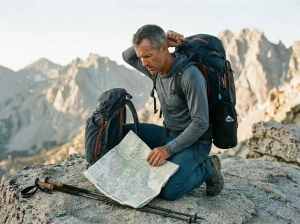
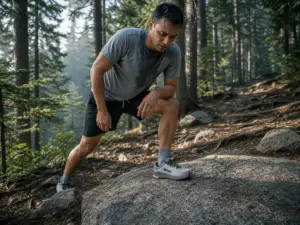

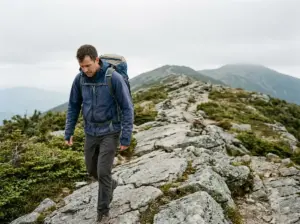
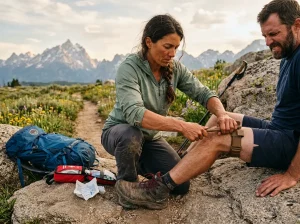
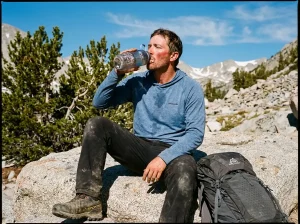
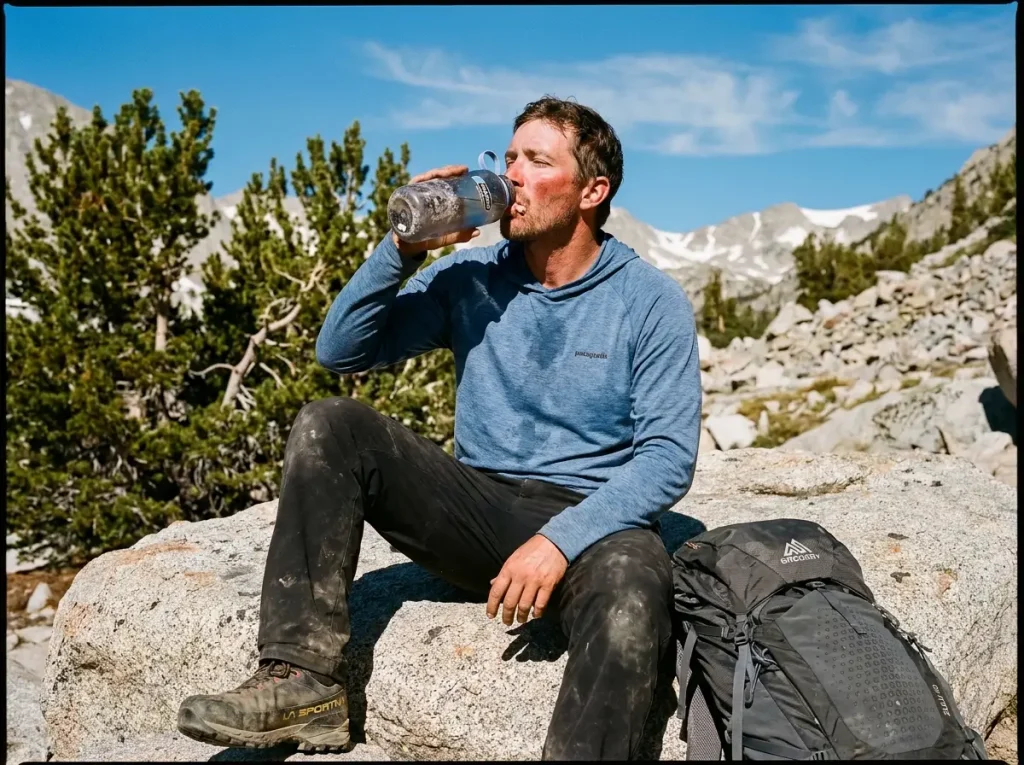
Three miles into a 14er attempt, my buddy sat down on a rock and said he felt fine — just a little headache, maybe from the sun. Two hours later he was vomiting on the side of the trail. He’d been drinking water all morning.
The problem wasn’t that he drank too little. It was how he drank, what he drank, and when he started. After spending enough time above 10,000 feet to learn these lessons the hard way, I can tell you that almost everything you think you know about staying hydrated at altitude has a catch.
Here’s where most hikers go wrong with hydration at high altitude, and what to do instead.
Quick Answer: The most common hydration mistakes at high altitude include:
- Waiting until you feel thirsty — altitude suppresses your thirst response
- Drinking only plain water without electrolytes, risking sodium imbalance
- Overhydrating to the point of hyponatremia, which mimics dehydration symptoms
- Skipping pre-hydration in the days before your high-altitude hike
- Using caffeine and alcohol as normal without adjusting for altitude’s diuretic effect
- Assuming clear urine always means you’re properly hydrated
Why Altitude Changes Everything About Hydration
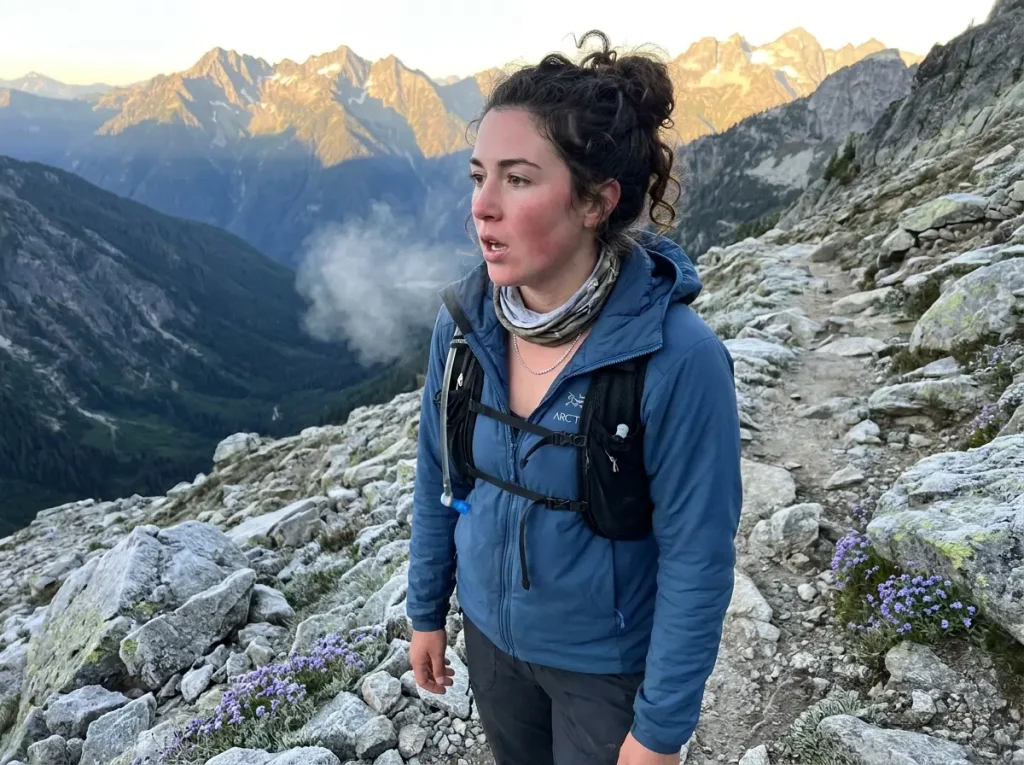
Your body doesn’t process water the same way at 11,000 feet as it does at sea level. Understanding why changes everything about how you plan.
The Respiratory Water Loss You Can’t See
Every breath you take at altitude costs you water. According to the Wilderness Medical Society, your body loses water through respiration at high altitude twice as fast as it does at sea level. The air is drier, your breathing rate increases to compensate for lower oxygen, and every exhale carries moisture you’ll never feel leaving.
At moderate altitudes up to 13,000 feet, respiratory water loss can reach 1,900 mL per day in men — almost two liters lost just by breathing. Add the low humidity typical of mountain environments, and sweat evaporates so fast you might never feel wet. You’re losing water from every surface, and your body gives you almost no signal that it’s happening.
Why Your Thirst Response Shuts Down
Here’s the part that catches experienced hikers off guard. High altitude actually suppresses your thirst response. The same physiological stress that makes you breathe faster also disrupts the hormonal signals that make you feel thirsty. You can be significantly dehydrated and not feel like drinking at all.
This is why “drink when you’re thirsty” — solid advice at sea level — falls apart above 8,000 feet. By the time you feel thirsty at altitude, you’re already in a deficit that takes hours to recover from. The solution is simple but requires discipline: drink on a schedule, not on demand.
Pro tip: Set a timer on your watch for every 20 minutes. Take 3-4 sips each time, whether you feel like it or not. It feels robotic at first, but after a couple of high-altitude days, it becomes automatic. Your body will thank you around mile six when everyone else is slowing down.
The Thirst Trap — Why Your Body Lies at Elevation
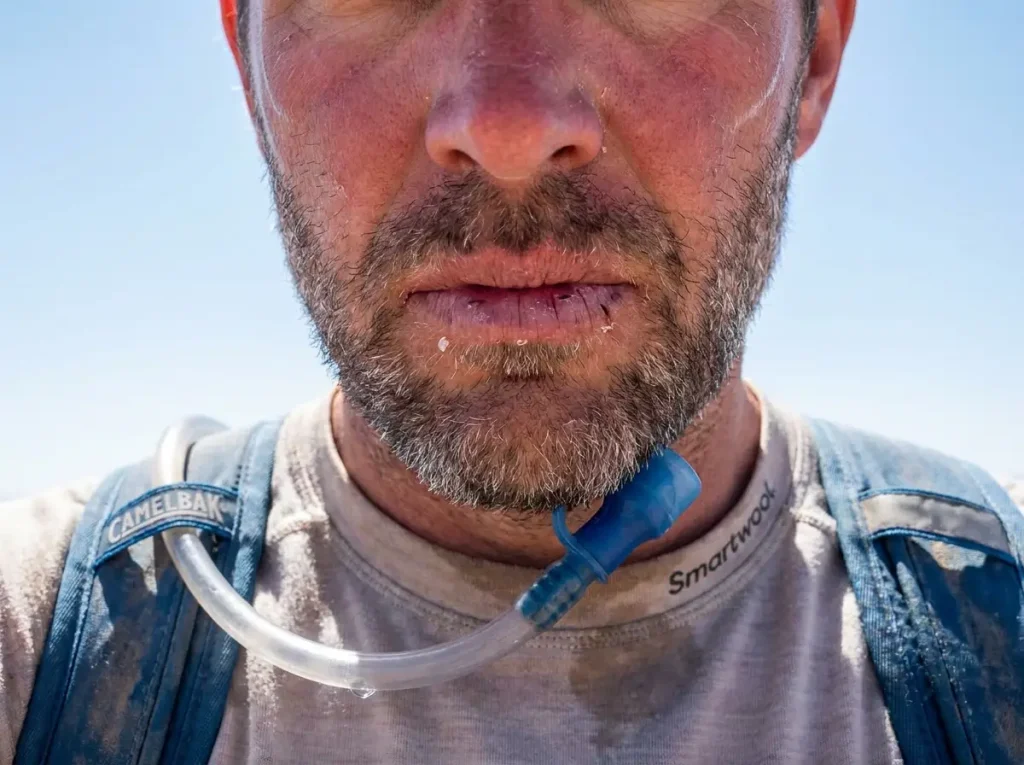
Most hydration advice for altitude boils down to “drink more water.” That’s not wrong, but it’s dangerously incomplete.
The Sweat You Don’t See
At sea level, sweat soaks your shirt and reminds you to drink. At 10,000 feet, sweat evaporates almost instantly in the dry mountain air. You finish a hard climb feeling relatively dry and assume you haven’t lost much fluid. Meanwhile, you’ve sweated just as much as you would at lower elevations — it just disappeared before you noticed.
This invisible sweat loss tricks hikers into underestimating their water needs. The fix: treat every hour of hiking above 8,000 feet as if you’re hiking in summer heat, regardless of how cool the air feels or how dry your shirt stays.
The Altitude Headache Confusion
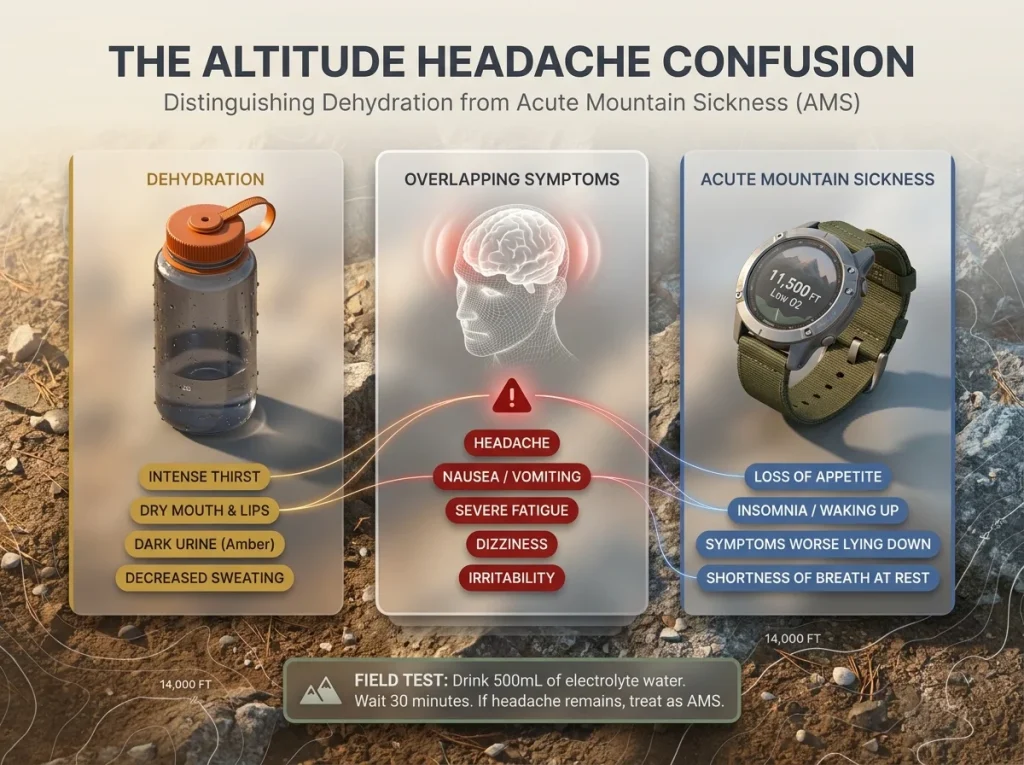
Headaches at altitude get blamed on altitude sickness almost reflexively. And sometimes that’s accurate. But a headache at 10,000 feet is just as likely to be plain dehydration. The two conditions share so many symptoms — headache, nausea, fatigue, dizziness — that even experienced hikers mix them up.
Before reaching for altitude medication, try drinking 500 mL of water with electrolytes and waiting 30 minutes. If the headache fades, it was probably dehydration. If it doesn’t, then you’re looking at altitude-related issues that need a different response.
Knowing the difference matters because the next steps diverge sharply — and treating one like the other can make things worse. If you want to understand the full acclimatization picture, our guide on why most hikers get high altitude acclimatization wrong covers the physiological side in depth.
Electrolytes Are Not Optional Above 8,000 Feet
This is the mistake I see most often on popular fourteener trails. Hikers carrying three liters of plain water, drinking steadily, doing everything right — except they’re flushing sodium, potassium, and magnesium out of their system with every sip.
What Happens When You Drink Only Water
Plain water dilutes your blood sodium concentration. At sea level with moderate activity, your body manages this fine. At altitude, where you’re losing more water through breathing and sweating while your kidneys increase urine output, the dilution effect accelerates.
The result: your electrolyte balance tips, and symptoms show up that feel exactly like dehydration — headache, nausea, fatigue, weakness. So you drink more water. Which makes it worse. This cycle is how people end up severely hyponatremic while carrying full water bottles.
How Much and What Kind
The Institute for Altitude Medicine recommends drinking an extra 1 to 1.5 liters of water daily when at high altitudes, for a total of 3 to 4 liters. But here’s the part most sources skip: those liters should contain 200 to 300 grams of carbohydrates spread across the day, and your electrolyte intake needs to increase proportionally.
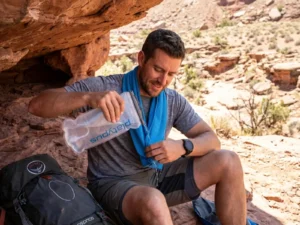
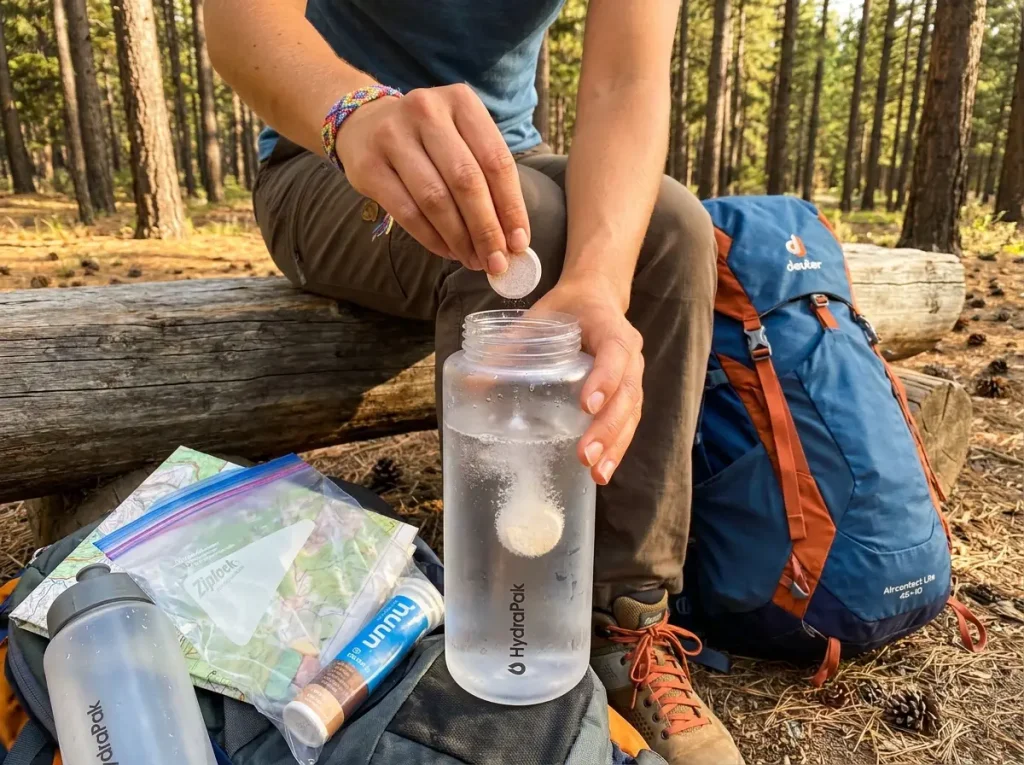
Practical options that work on trail: dissolving an electrolyte tablet every other bottle, mixing a sports drink powder into your hydration bladder, or eating salty snacks between sips. Products like Nuun, LMNT, or Liquid IV all work — the brand matters less than consistency. Don’t save your electrolytes for when you feel bad. Start them with your first sip of the day.
Pro tip: Pre-mix your electrolytes the night before in camp. Morning routines at altitude are slow and clumsy — cold fingers, headlamp fumbling, foggy brain. Having your bottles ready means you start drinking properly from the first step. Pack a clean hydration bladder so the mix doesn’t taste like last week’s Gatorade.
The Overhydration Mistake Nobody Warns You About
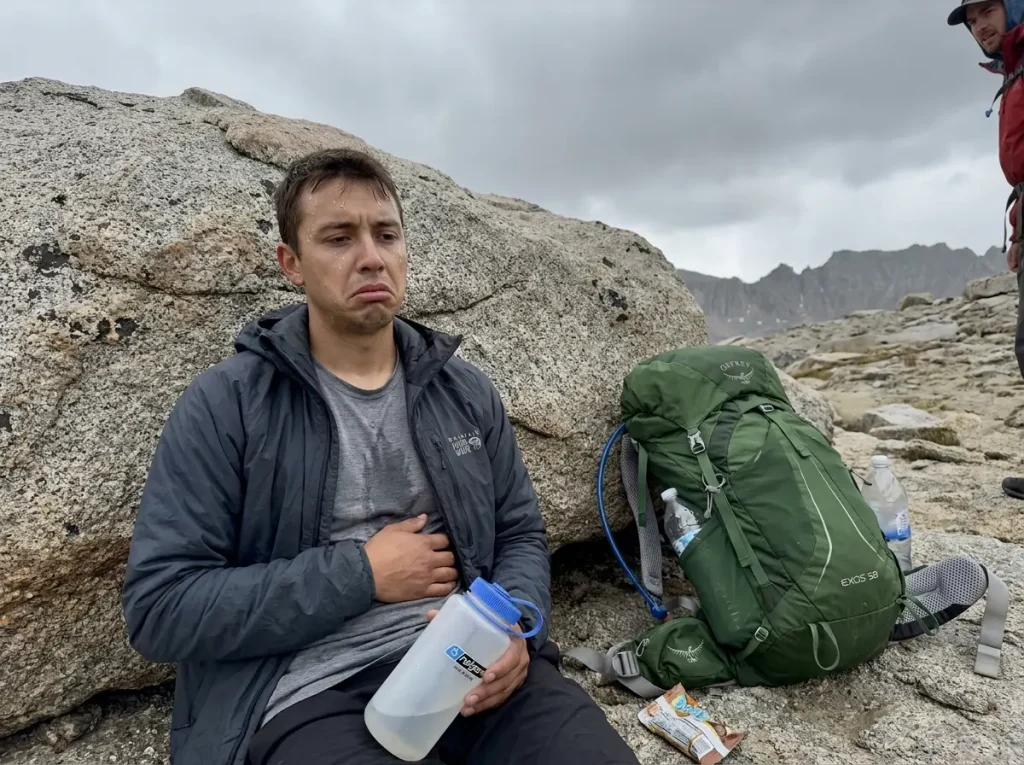
Every altitude article tells you to drink more. Almost none of them tell you that drinking too much can be just as harmful — and that the symptoms look identical to the thing you’re trying to prevent.
Hyponatremia — When Water Becomes the Problem
Exercise-associated hyponatremia happens when you drink so much water that your blood sodium drops to a level where your cells start swelling. At altitude, where your kidneys are already excreting more water and your hormonal balance is disrupted, the threshold for overhydration is lower than at sea level.
A hiker lost their life on the South Kaibab Trail in Grand Canyon from hyponatremia — not from heat, not from dehydration, but from drinking too much water without replacing sodium. The early symptoms — nausea, headache, confusion, vomiting — look exactly like dehydration or heat exhaustion.
And here’s what makes this so hazardous: the treatment for hyponatremia is essentially the opposite of the treatment for dehydration. If a hyponatremic hiker drinks more water because they think they’re dehydrated, the condition gets worse. If first responders push fluids, the condition gets worse.
This is the information gap that competitors barely touch, and it’s the most consequential one on this list. Know the difference. If someone has been drinking heavily all day and develops confusion or altered mental status, stop giving them water and get help.
The Clear Urine Myth
Most hydration guides tell you to drink until your urine is clear. At altitude, that advice needs a qualifier. Clear urine can indicate overhydration — your kidneys dumping excess water because your blood volume is too diluted.
The target at altitude is pale yellow, not clear. Think light lemonade, not water. If your urine has no color at all and you’ve been drinking aggressively, ease back. If it’s dark amber, you’re behind and need to catch up with electrolyte-enhanced water, not plain water.
Pro tip: Check your urine color at every stop, but don’t obsess over a single sample. The trend across a day matters more than any one data point. Two consecutive dark readings mean you need to increase intake. Two consecutive clear readings after heavy drinking mean you’re likely overdoing it. Your hydration calculator can give you a baseline for how much to carry, but altitude adjustments are always manual.
Your Altitude Hydration Plan — Before, During, and After
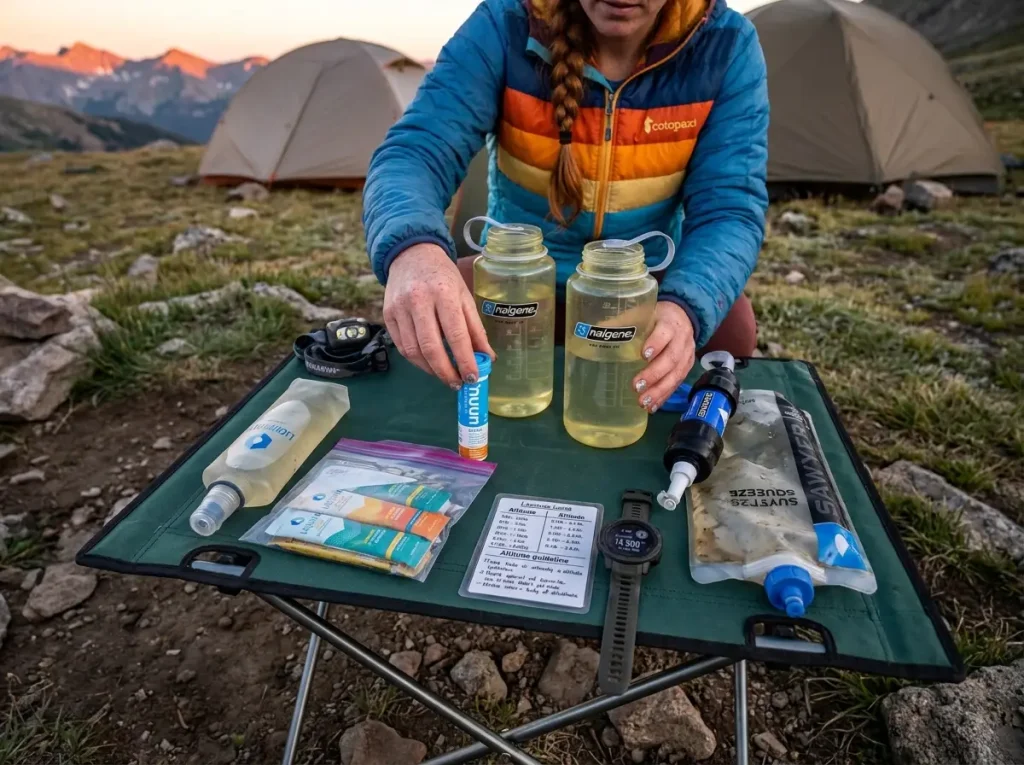
The best hydration strategy at altitude starts days before you hit the trailhead. Here’s the timeline that works.
48 Hours Before — Pre-Loading
You’re only as hydrated as you’ve been for the last two to three days. Driving to a trailhead from sea level and chugging water in the parking lot does almost nothing. Start increasing your water intake by about half a liter per day, two days before your altitude hike. Include electrolytes in at least half of those extra fluids.
Avoid alcohol for 48 hours before your altitude day. It’s a diuretic that compounds the dehydration you’ll face once you start climbing. Caffeine is less clear-cut — moderate caffeine is fine if you’re a regular coffee drinker and your body is adapted, but if you’re not used to it, skip it. More on how caffeine interacts with altitude performance in our trail coffee guide.
On Trail — The Sip-and-Pace Method
Forget chugging at rest stops. The most effective approach at altitude is small, frequent sips — 3 to 4 sips every 15 to 20 minutes. This keeps absorption steady and prevents the stomach discomfort that comes from dumping a half-liter into an altitude-stressed gut.
Carry enough for the full day plus a safety margin. Above 10,000 feet, plan for 1 liter per 2 hours of hiking as a baseline, adjusted upward for heat, exposure, and effort.
A hydration bladder with a shoulder-mounted bite valve makes consistent sipping automatic — you don’t have to stop, unsling your pack, and dig for a bottle. If you prefer bottles, keep one in an accessible front pocket or chest strap holder. If it’s inconvenient to reach, you won’t drink enough. We’ve tested collapsible bottles that fit these front pockets well.
After the Hike — Recovery Hydration
The hydration effort doesn’t stop at the trailhead. Your body continues losing fluids for hours after you stop hiking. Drink another liter in the first hour post-hike, with electrolytes. Pair it with carbohydrate-rich food to help your body absorb the fluids and begin post-hike recovery.
Skip the celebratory beer until you’ve rehydrated. A cold one at the trailhead parking lot after a big altitude day feels earned, but alcohol hits harder at elevation when you’re already running a fluid deficit. Rehydrate first, celebrate second.
When Dehydration Looks Like Altitude Sickness
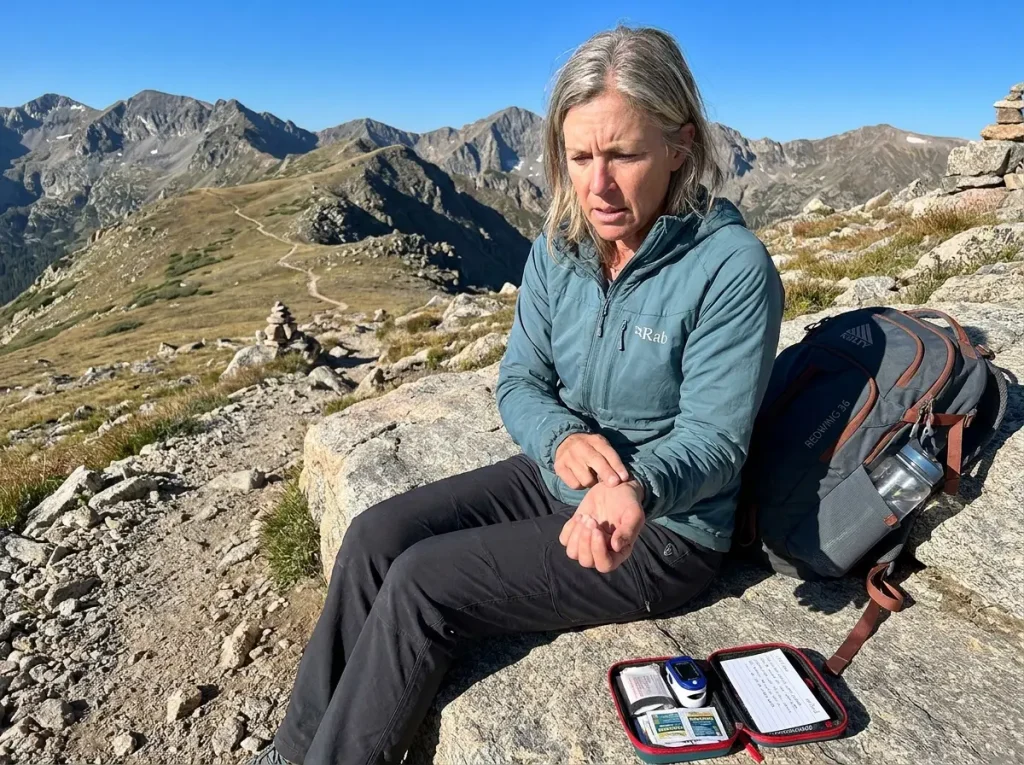
The overlap between dehydration and acute mountain sickness is so large that even wilderness first aid instructors struggle to distinguish them in the field without lab work.
Symptoms That Overlap
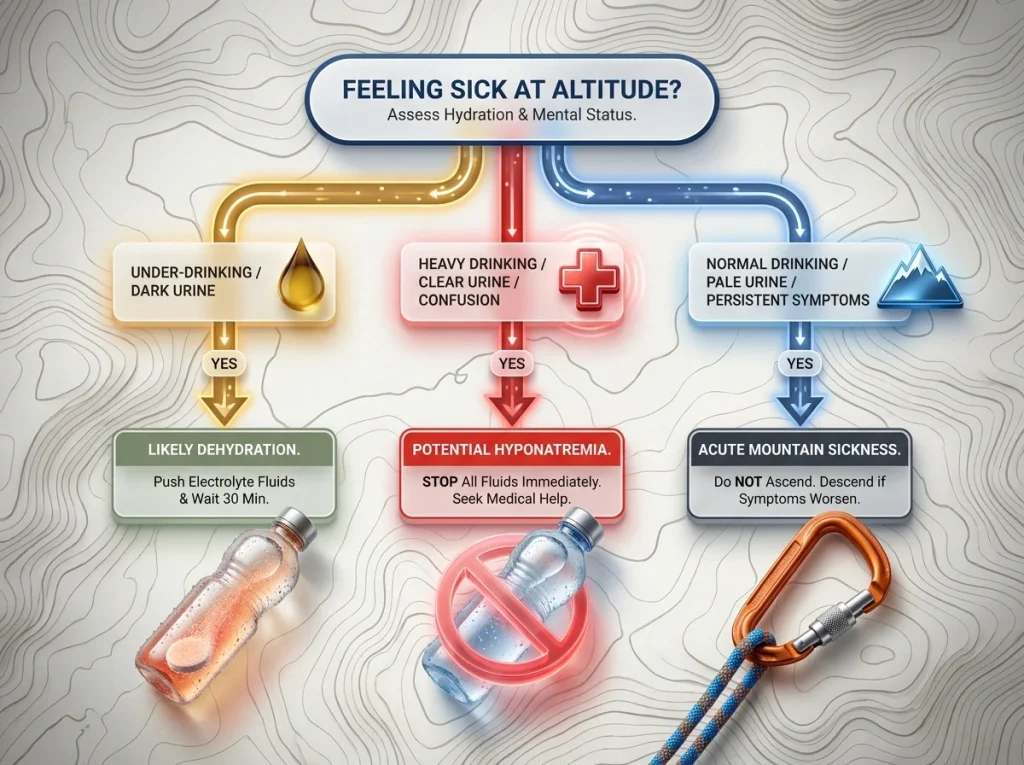
Headache, nausea, fatigue, dizziness, irritability, decreased appetite — these symptoms belong to both dehydration and AMS. They also belong to hyponatremia. Three different conditions with nearly identical early presentations and very different treatment protocols.
The practical field test: if someone feels sick at altitude, first check how much they’ve been drinking. If they’ve been under-drinking, push electrolyte fluids and wait 30 minutes. If they’ve been drinking aggressively all day, consider hyponatremia and stop fluid intake. If symptoms persist after 30 minutes regardless of hydration status, treat as AMS — descend if possible.
The Urine and Heart Rate Field Test
Two quick checks you can do without any medical training. First, urine color — pale yellow is the target. Dark means dehydrated. Clear after heavy drinking means potential overhydration.
Second, resting heart rate — if it’s 20+ beats above your normal baseline after 10 minutes of rest, your body is stressed and needs intervention, whether from dehydration or altitude.
Neither test is definitive. But together they give you more information than guessing, and they take 60 seconds. Carry a pulse oximeter if you’re going above 12,000 feet — oxygen saturation below 80% points toward altitude rather than hydration issues.
Pro tip: Teach your hiking partners the basic difference between dehydration, hyponatremia, and AMS before you leave the trailhead. A 90-second conversation while putting on boots could matter if someone goes down three hours later and you need to make a fast call.
Conclusion
Three things to lock in before your next high-altitude hike. First, your thirst response lies at elevation — drink on a schedule, not on feel, starting with 3-4 sips every 20 minutes. Second, plain water alone isn’t enough above 8,000 feet — electrolytes turn good intentions into actual hydration. Third, overhydrating is a real risk that looks exactly like the dehydration you’re trying to avoid — pale yellow urine is the target, not clear.
Start pre-hydrating two days before your next altitude day and see how different you feel at mile eight.
Q1 How much water should you drink at high altitude?
The Institute for Altitude Medicine recommends 3 to 4 liters daily at high altitude — about 1 to 1.5 liters more than your sea-level intake. Include electrolytes in at least half of that total, and sip frequently rather than chugging at rest stops.
Q2 Does altitude make you more dehydrated?
Yes. Your body loses water through breathing at twice the sea-level rate at altitude. Low humidity, increased urination, and a suppressed thirst response all compound the effect, making dehydration faster and harder to detect above 8,000 feet.
Q3 What are signs of dehydration at high altitude?
Headache, fatigue, nausea, dizziness, dark urine, and irritability are the most common signs. These overlap with altitude sickness symptoms, so check urine color and drinking history before assuming the cause. Dark urine after light drinking points to dehydration.
Q4 Can you drink too much water at altitude?
Yes. Overhydration causes hyponatremia — a sodium imbalance with symptoms identical to dehydration. A hiker died from hyponatremia in Grand Canyon after drinking too much plain water. Balance water with electrolytes and target pale yellow urine, not clear.
Q5 Should you drink electrolytes at high altitude?
Absolutely. Plain water flushes sodium, potassium, and magnesium at altitude where losses are already elevated. Add an electrolyte tablet or mix to every other bottle. Start with your first sip of the day, not after symptoms appear.

I've spent more than a decade researching hiking gear and trail technique. I read the specs, the forum threads and the long-term reviews, and every pick here comes with what it gets wrong.
End of the trail
You read every mile of this one. Here's where the trail goes next.