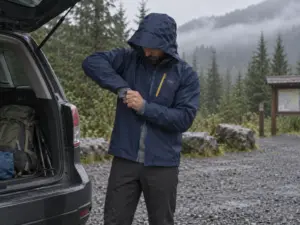
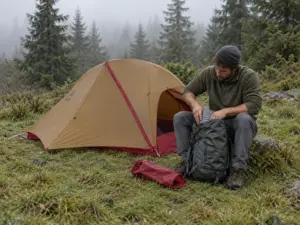


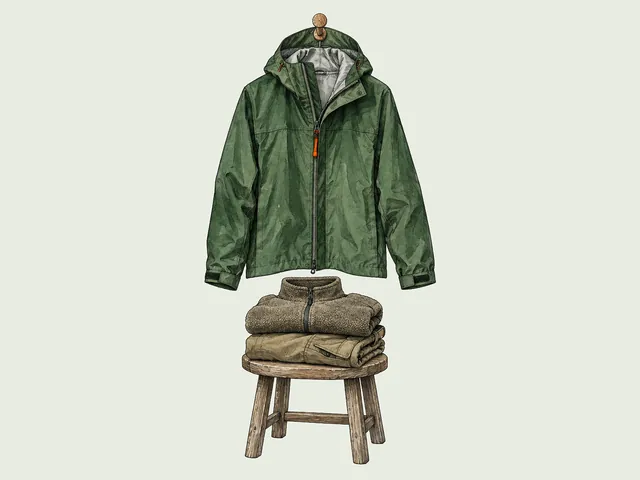

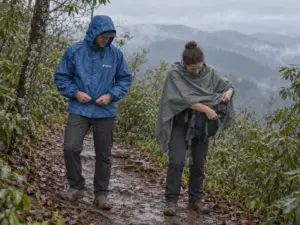
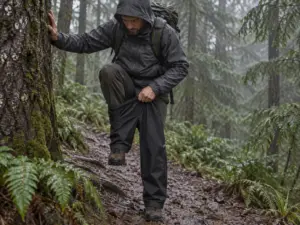






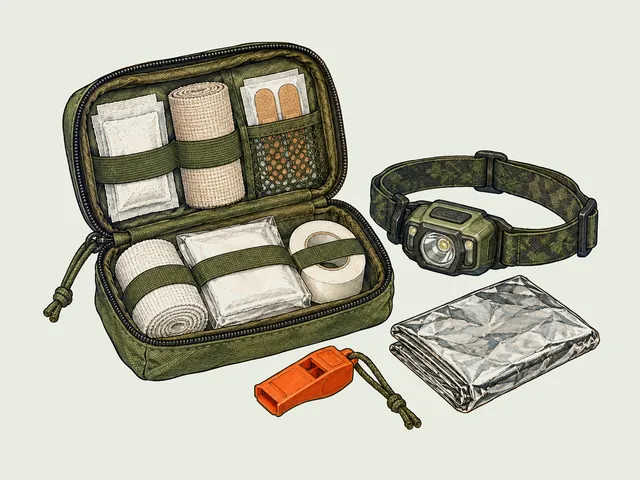



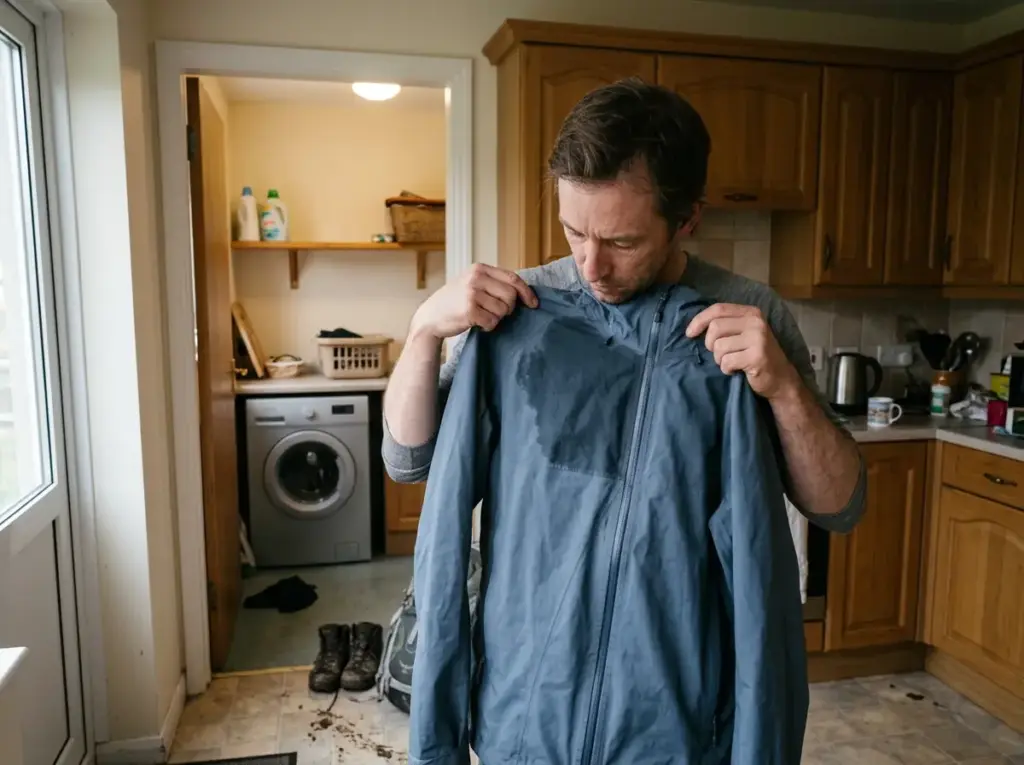
Three miles from the trailhead, the rain stops beading. It quits rolling off your shoulders and starts sinking in, the shell goes dark across the pack straps, and the jacket turns heavy and clammy. Most hikers read that as failure and start pricing replacements.
Here’s the truth that changes what you do next: a shell that wets out is almost never leaking, because the membrane is still working and the coating on top of it is the part that quit. Learning how to wash a Gore-Tex jacket properly is what brings that coating back, and this covers the sequence, the numbers that matter, the mistakes that cause real harm, and the separate protocol for a down-insulated shell.
Why Your Gore-Tex Jacket Stopped Beading Water
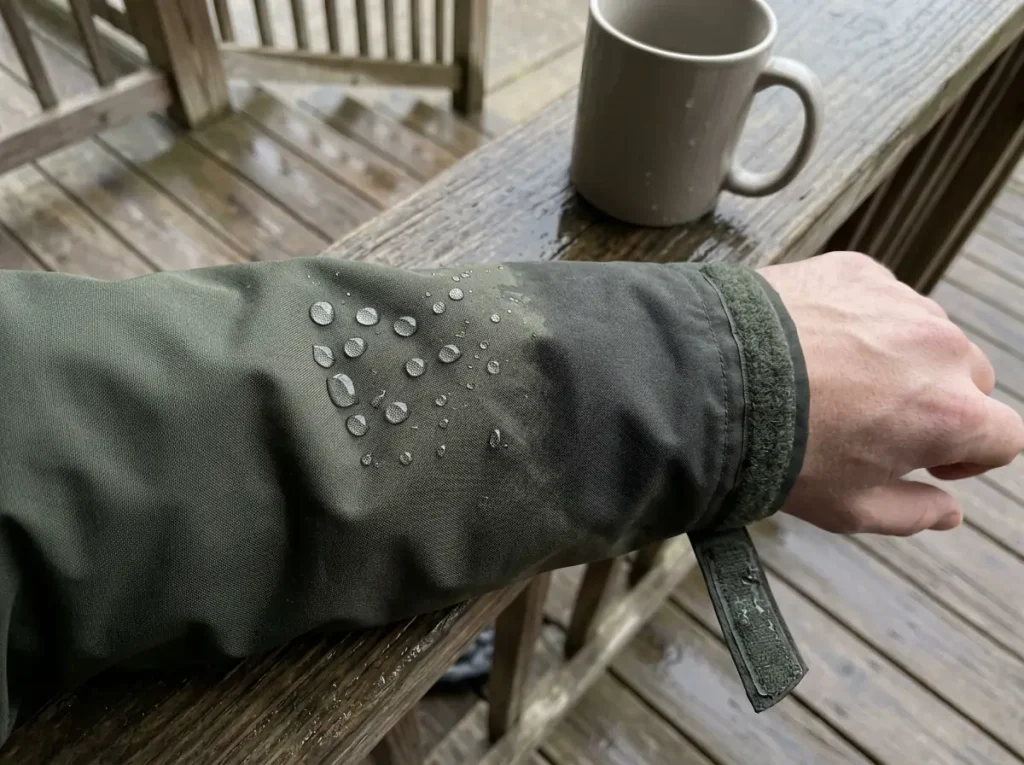
You’re holding a jacket that cost real money, half-convinced it’s ruined. It almost certainly isn’t. What failed is a coating, and coatings are consumable.
The Membrane Is Not the DWR (And Only One of Them Failed)
Your shell is two technologies stacked together. The Gore-Tex membrane is the laminated layer buried in the middle of the fabric sandwich, and it’s what makes the jacket waterproof: billions of microscopic pores small enough to block liquid rain while still passing water vapor from your sweat. That pore structure is the whole waterproofing story, according to Gore-Tex’s own materials science on the ePE membrane. Nothing you do in a washing machine at reasonable temperatures touches it.
The DWR (durable water repellent) is something else: a treatment on the outer face fabric, the layer you can see and touch. Its only job is keeping that outer fabric from soaking up water. It has nothing to do with whether rain reaches your skin.
So when beading stops, one system quit and the other didn’t. Long-running gear-forum threads still show experienced hikers describing the membrane itself as having water-resistant qualities that fade. It doesn’t work that way. Two systems, two failure modes, two different fixes.
What “Wetting Out” Actually Does to You on the Trail
Wetting out is the community term for what happened at mile three: the face fabric absorbing water instead of shedding it. The shell darkens, gains real weight, and starts feeling cold through your midlayer.
Here’s why it feels like leaking. A saturated face fabric can’t pass water vapor, so your sweat has nowhere to go and condenses on the inside instead.
Same wet feeling, opposite direction. Wet fabric also pulls heat off you faster than dry fabric, which is why a wetted-out shell on a windy ridge feels far worse than the thermometer says. The condensation on the inside is the part people mistake for a leak.
Check where the shell goes dark first. Shoulders and hipbelt line mean pack-strap abrasion took the coating off there. Cuffs and hood brim mean skin contact and sunscreen. All-over darkening usually means accumulated grime, not wear, and that one washes out completely.
The Bead Test That Tells You Which Problem You Have
The diagnostic is a cup of tap water and thirty seconds, and it doubles as your decision tree. Lay the jacket flat and pour water across the chest and shoulders. Some people run it with a spray bottle instead and call it the spray test, which works the same way.
Tight beads that roll off mean the DWR is alive and there’s no reason to wash it at all. What you’re reading is the contact angle, the steepness of the drop where it meets the fabric: a working hydrophobic coating holds that angle high and the bead sits up on its tips. Water that flattens and darkens the fabric means the coating is spent and you need a wash plus a heat cycle. Water that still soaks in after both is the only result pointing at reproofing.
That third outcome is also where a few jackets are genuinely finished: delaminated laminate, cracked seam tape, face fabric worn thin at the shoulders. If yours keeps failing after a clean wash and a full heat cycle, there are three tests that tell you whether the jacket is actually done before you spend money either way.
What to Do Before the Jacket Goes Anywhere Near the Washer
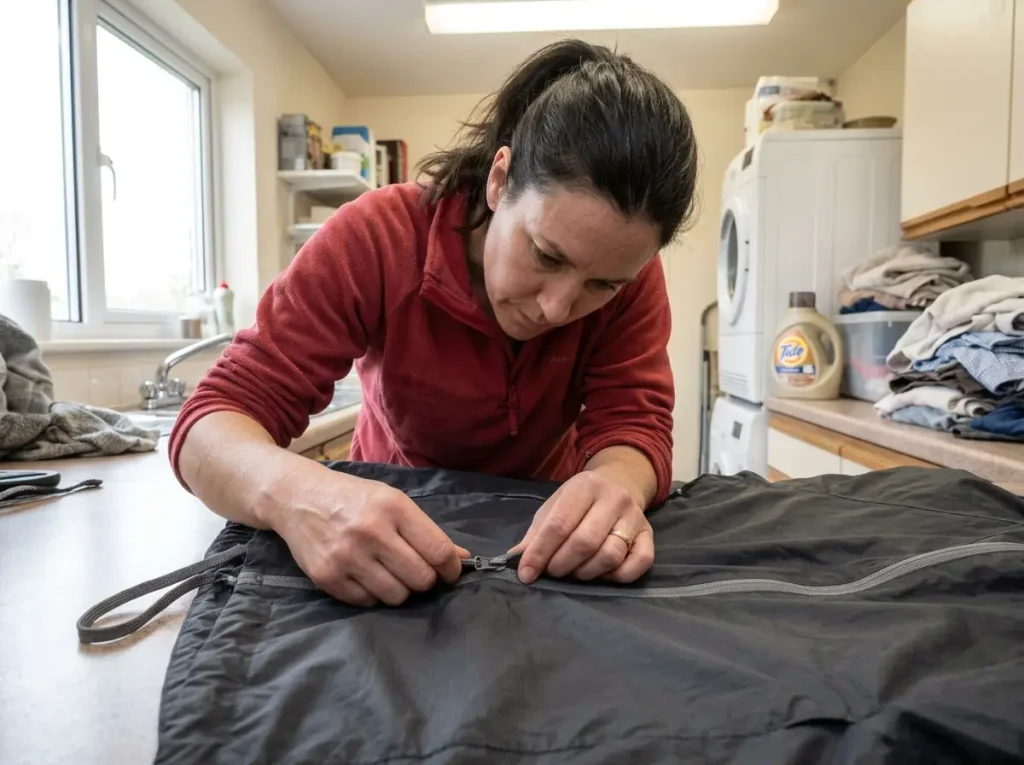
Everybody wants to skip straight to the machine. The stuff that genuinely wrecks jackets happens before the cycle starts. An open pit zip chewing on face fabric for forty minutes does more harm than the detergent ever will.
Zip It All Shut, Then Loosen the Cords
Close the main zip, both pit zips, and every pocket zip. Press the storm flaps down and fasten the Velcro at cuffs and hem tabs so no hook-and-loop patch spends the cycle sanding across the shell. Then do the opposite with the drawcords: loosen hood, hem, and waist all the way out, because cinched cords keep cleaner from reaching the channels where grit and sunscreen collect.
Empty every pocket. A forgotten tissue comes out of the drum as confetti woven into every seam. The same habits carry past this jacket, since the same prep logic applies across the rest of your technical clothing hanging next to it.
Spot-Clean the Collar and Cuffs First
Collar and cuffs do most of the dirty work, because that’s where skin touches fabric constantly, and oils and sweat salt build into a film there that one wash cycle struggles to lift. Rub technical cleaner into those spots with your fingers before the jacket goes in and give it two minutes.
The real soil load on a hiking shell isn’t what people assume. Rarely mud. It’s sunscreen at altitude, DEET-heavy bug spray on the forearms, campfire smoke in the weave, and salt from days of sweat, all of it oil-based and exactly what a cold wash cannot dissolve.
What the Care Tag Tells You (And What It Doesn’t)
Read the tag first. It’s the garment maker’s instruction, not Gore-Tex’s, and the maker knows things a general care page doesn’t: a proprietary lining, an insulation layer, a coating that changes the rules. Where the two disagree, the tag wins. What it never tells you is the reasoning behind any of it.
The Wash Cycle That Actually Works
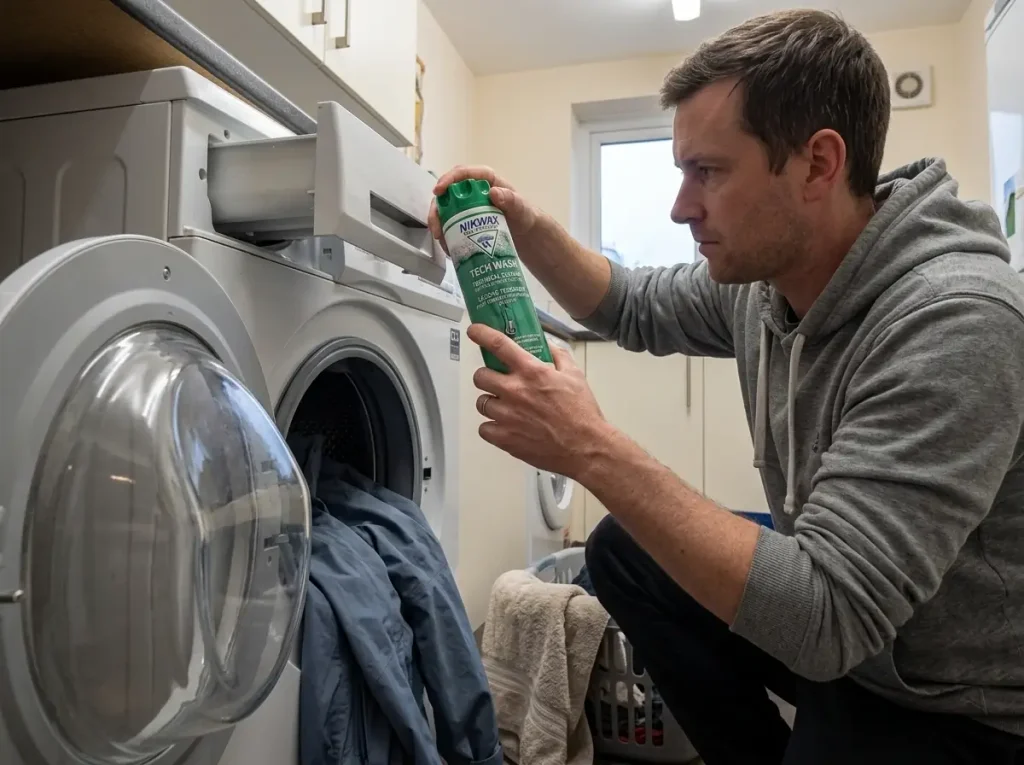
Every brand page gives the same numbers. None explain where they came from, so people round 105°F to “warm-ish” and wonder why the jacket came out no cleaner than it went in.
Set the Water to 105°F and Nothing Else
105°F / 40°C. Not “warm,” not whatever the warm setting does on your machine. There’s a real window with a hard edge on both sides, and Gore-Tex’s own care instructions confirm the 105°F threshold.
Below it, cold water can’t dissolve the waxy skin oils and sunscreen residue that make up most of what’s on the fabric. You rinse off loose dust and leave the film defeating your DWR untouched. Above it, past roughly 60°C, heat works on the adhesive holding your seam tape down, and tape lifting off the inside of a shell is a replacement, not a home repair.
Use a Technical Cleaner, Not Detergent
A small amount of liquid technical cleaner. Not powder, not fabric softener, not bleach, not stain remover.
Regular liquid detergent isn’t a weaker version of the right product: its surfactants and fragrance additives are engineered to stay behind in fabric, and on a laminate they coat the membrane’s pores and can permanently reduce breathability. That’s a different category of harm from “didn’t clean well.” You can rinse dirt out. You can’t rinse out a coating bonded into a pore structure.
The default is Nikwax Tech Wash, a water-based, PFAS-free cleaner built to lift soil without stripping whatever DWR is left. Nikwax Tech Wash is budget-friendly and one bottle covers a couple of seasons, which raises the next question of how often this whole routine actually needs to happen. One piece of housekeeping: run an empty rinse cycle first if the last load used fabric softener, because residue in the drum will find your shell.
Rinse Twice — This Is the Step People Skip
Run the rinse twice, then keep the spin low.
This is the least glamorous instruction here and the one that quietly causes the most disappointment. Cleaner residue left in the fabric is a leading reason a jacket stops beading right after a wash, which reads to the owner as the wash making things worse.
It didn’t. It just didn’t finish. If a shell came out beading worse than it went in, run two more rinse cycles with nothing added and test again. That fixes it more often than people expect.
If You Have a Top-Loading Machine
Every manufacturer care page silently assumes a front-loader, and most never mention washer type at all.
A top-loading washer with a center agitator is rough on a taped-seam shell: that column twists and drags fabric against itself for the whole cycle, and taped seams and laminated panels mind it most. If that’s your machine, wash the jacket alone in an empty drum on the gentlest cycle or permanent press, with the spin turned down. If there’s a laundromat nearby with front-loaders, this is the one load worth walking over for.
Wash the shell by itself, always. Cotton in the same load sheds lint that embeds in the face fabric and holds moisture right where you want water rolling off. A jacket that comes out of a mixed load looking slightly fuzzy will wet out faster than it should.
Drying Is Where the DWR Comes Back
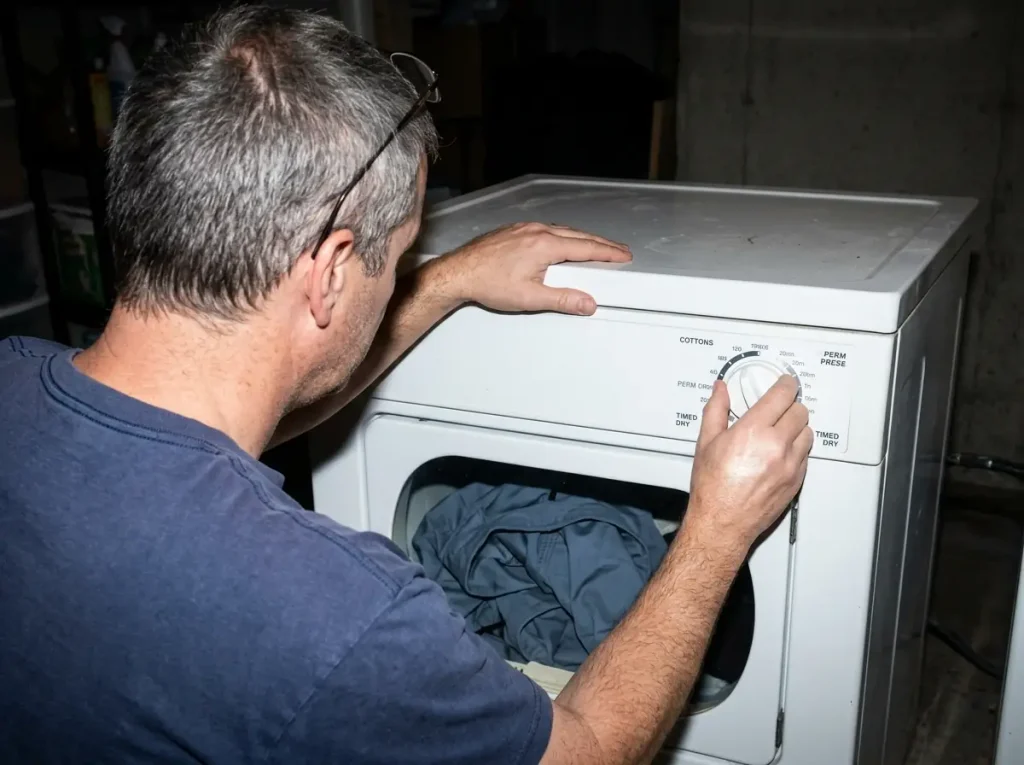
This step separates a jacket that beads again from one that doesn’t. It’s also the step that looks most like it’s already over.
The jacket feels dry. It is dry. You’re not done.
Dry It First, Then Add Twenty Minutes
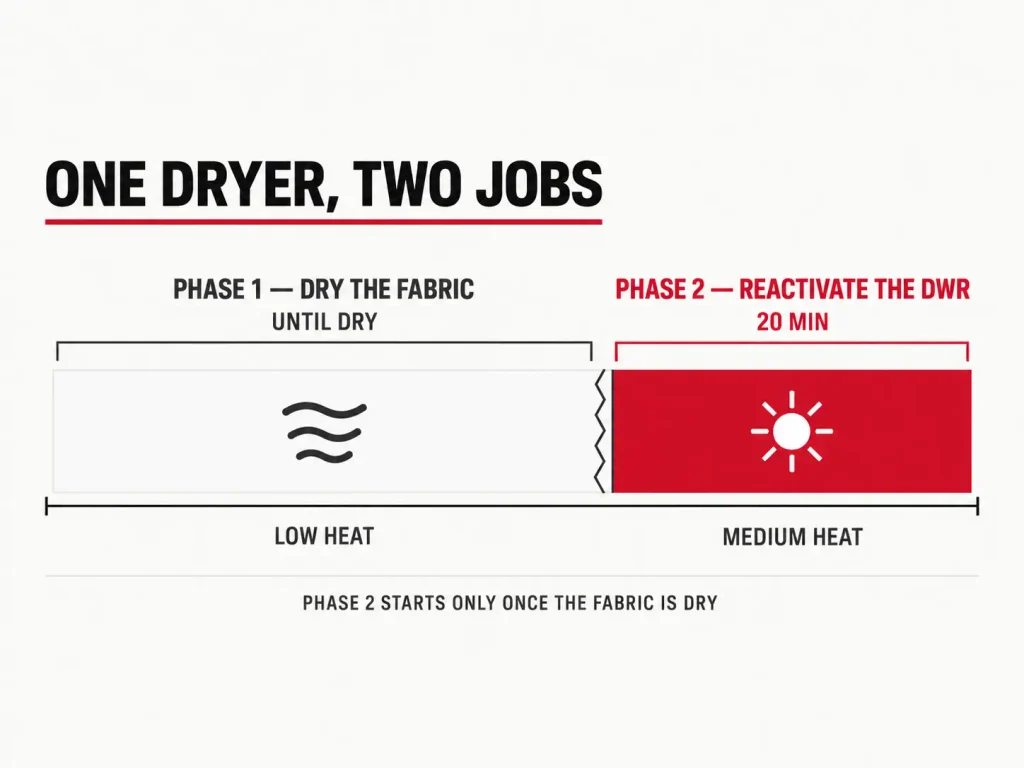
Two jobs happen in the dryer, one after the other. Job one: dry the fabric, low heat, however long it takes. Job two: another 20 minutes on medium heat whose entire purpose is reactivating the DWR, starting only once the shell is dry to the touch.
Stopping the dryer when the jacket feels dry is the most common reason a careful wash doesn’t restore beading. The owner did everything right, quit one cycle early, and concluded the DWR was dead. It wasn’t. It never got the heat.
Why Heat Makes Water Bead Again
DWR isn’t a film or a wax. It’s a forest of microscopic polymer chains bonded to the face fabric, standing upright off the surface. Water hitting the tips of those chains barely touches the fabric, so surface tension pulls each drop into a bead and it rolls away. That upright orientation is the entire effect.
Wear flattens the chains. Pack straps press them down, abrasion bends them over, washing knocks them sideways.
Flattened chains give water a broad surface to spread across instead of a bed of tips to sit on, so the drop wets out. Nothing was removed. It was laid down.
Heat gives the chains enough energy to stand back up, which is why the fix is thermal reactivation and not reapplication.
It’s also why sequence beats temperature: heat applied to a wet garment gets consumed evaporating water, since water absorbs an enormous amount of energy turning to vapor, and the chains get none of it. Cranking the dryer hotter only speeds up evaporation while still leaving nothing for the chains until the fabric is dry. Dry first, then heat. That order is the whole trick, and the heat-first protocol in more detail covers the full version.
The Iron Method If You Don’t Own a Dryer
No dryer isn’t a dead end. An iron does the same job, slower. Hang the jacket until it’s completely dry first, since the sequence rule doesn’t change.
Set the iron to its lowest synthetic setting, turn steam off entirely, and lay a thin towel between the iron and the shell. Work in slow, steady passes and keep it moving. Never park it in one spot, never let it touch the shell directly, and give the shoulders and hood brim extra attention since that’s where the coating is most worn.
When Washing Isn’t Enough and You Need to Reproof
There’s a point where heat has nothing left to stand back up. DWR is consumable, wearing off first at the shoulders where pack straps ride, at the cuffs, at the hood brim. When the bead test still fails after a clean wash and a full reactivation, you’re past what reactivation can do.
Reactivate First, Reproof Second
The rule, flatly: wash and heat first, every time. Reproof only if water still soaks in after that. The reason isn’t ceremony.
New DWR applied over a dirty jacket bonds to the grime instead of the fabric, so it sits on a layer of sunscreen and skin oil and comes off with the next wash. People who skip the wash and go straight to re-waterproofing get two rainy days out of a treatment and conclude the product is junk. The product was fine. The surface wasn’t.
Wash-In or Spray-On — Pick by Where It’s Failing
Wash-in versus spray-on is a question of application method, not quality. Both restore repellency. They reach different places.
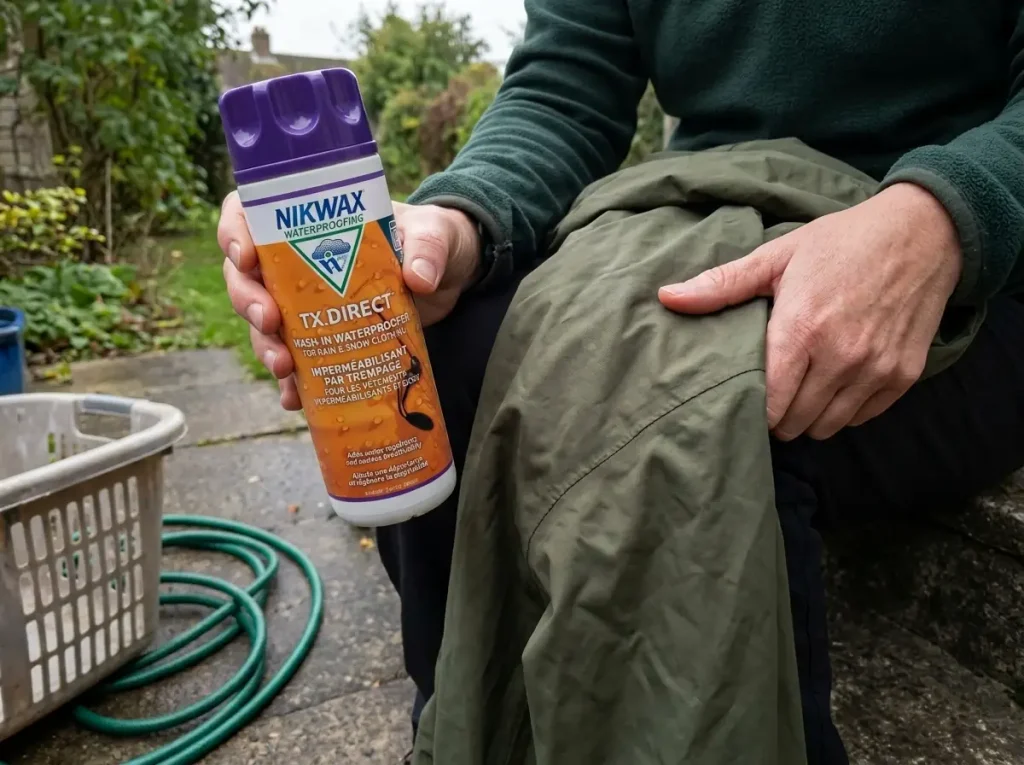
Wash-in goes through the machine with the garment, so it reaches everything: face fabric, seams, taped edges, drawcord channels, the underside of the storm flap. Nothing gets missed because nothing has to be aimed at. Nikwax TX.Direct Wash-In is the standard here, treating the garment evenly in one cycle whether all of it needed treating or not.
Spray-on is targeted, faster, and skips the wash cycle. Hang the jacket, spray the failing panels, wipe the excess, done. Nikwax TX.Direct Spray-On is the better call when only shoulders and cuffs are giving out. If you’d rather not run everything through one brand, GEAR AID Revivex DWR Spray + Wash-In does both jobs from one bottle, is PFAS-free, and works on eVent and NeoShell shells too.
Pick by failure pattern: wetting out at the seams or all over means wash-in, dark patches only at shoulders and cuffs means spray-on. Either way the heat cycle still applies afterward, since most treatments need heat to cure. Reproofing doesn’t replace the heat step. It adds a step in front of it.
If you spray-on, do it on a wet jacket straight out of the rinse, not a dry one. Damp fabric spreads the treatment evenly instead of letting it dry in visible patches, and you use noticeably less of the bottle getting full coverage.
Why PFAS-Free Shells Need This More Often
If a jacket you bought recently seems to wet out faster than one you owned years ago, it isn’t defective. The chemistry changed.
Older DWR was built on PFC compounds, and those coatings were oleophobic: they repelled oils as well as water. That matters, because most of what lands on a hiking jacket is oil-based. Sunscreen, bug spray, skin oil, smoke residue. An oil-repelling coating shrugged all of it off and kept beading long past the point where it had any right to.
The PFAS-free and ePE-era treatments that replaced them repel water just as well but no longer repel oils. Oils settle onto the surface, lie the polymer chains down, and the shell wets out sooner.
The waterproofing hasn’t changed. The maintenance interval has, moving the wash-and-heat cycle from a once-a-season chore to something you do a few times a season on a jacket you actually use. Plan for it instead of reading it as a fault, and if you’re comparing shells on this, it helps to understand how different membranes handle wet-out before buying the next one.
Down-Insulated Gore-Tex Is a Different Job Entirely
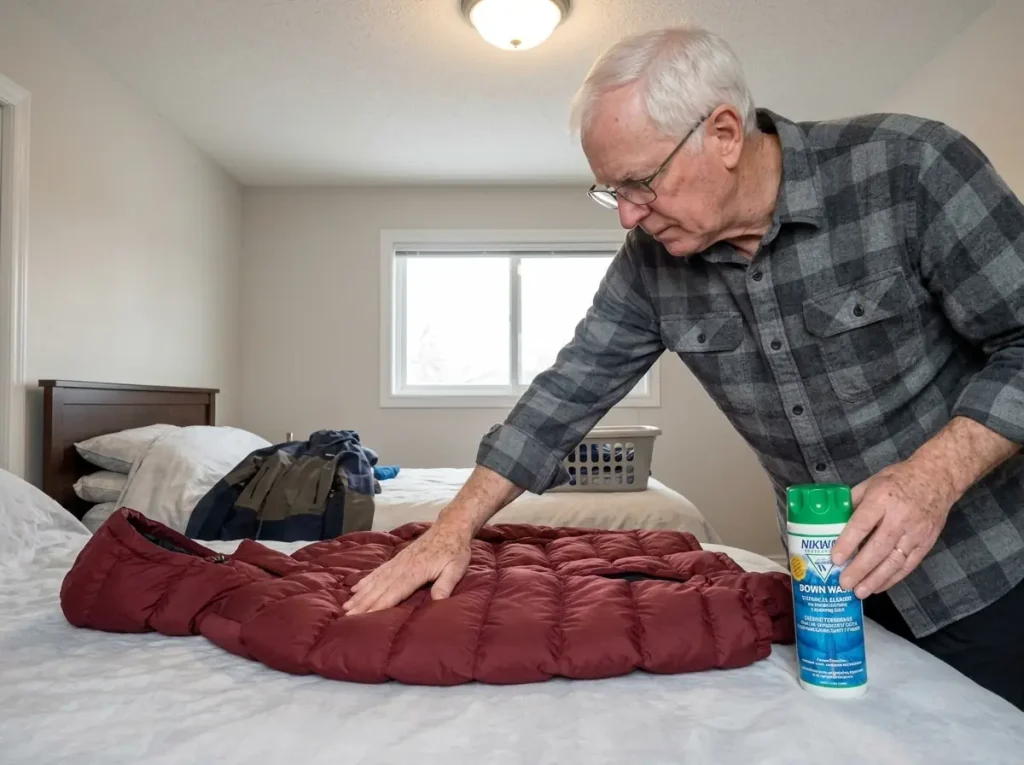
Someone reads a hardshell care guide, applies every word to an insulated jacket with a Gore-Tex outer and down inside, and flattens several hundred dollars of loft in one cycle. The shell fabric is identical. Everything behind it is not. If your jacket has down in it, use this protocol instead of the one above.
Cold Water and a Down-Specific Cleaner
Cold water, not 105°F. Warm water is fine for a bare laminate and rough on down clusters, which lose structure and clump when they get hot and heavy at once. Use a mild powder detergent or, better, a cleaner built for down. REI’s gear-care guidance recommends a front-loading washer for down-insulated shells for the same reason a top-loader is rough on taped seams, only worse: a center agitator can tear internal baffles and drive soaked down into wads that never recover.
Down has to be cleaned without losing the natural oils in the plumules that let each cluster spring back open, which is the whole difference between a down wash and a regular technical cleaner. Nikwax Down Wash lifts soil while leaving those oils alone, so loft comes back instead of staying flat. Tech Wash on a down jacket won’t ruin it, but it isn’t built for this job.
Never Dry-Clean a Down Shell
Dry cleaning is off the table for anything with down in it, full stop. The solvents strip the natural oils out of down plumules, and once those are gone the clusters never fully open again. You lose loft and warmth, and no amount of washing brings it back.
The trap is the care tag: one written for the shell fabric can look permissive about dry cleaning, and a dry cleaner will happily take the garment based on it. Neither is thinking about the fill. You have to be the one who says no.
Tennis Balls and the Loft Problem
Down comes out of the washer as a heavy, matted mess that looks like the jacket died. It’s waterlogged and clumped, and the dryer is where it comes back.
Low heat, long time. Much longer than a hardshell, because water hides deep in the clusters and a down jacket dry on the outside is usually still damp in the middle. Putting a partially dry one away is a mildew problem waiting to happen.
Toss two or three tennis balls in the drum. They tumble against the jacket and mechanically break up the clumped clusters as it dries, which is the only thing that restores loft properly. Pull it every 20 minutes, feel the baffles for dense spots, and break them up with your fingers. It’s fussy, and it’s the difference between a warm jacket and a flat one.
The Mistakes That Actually Ruin a Gore-Tex Jacket
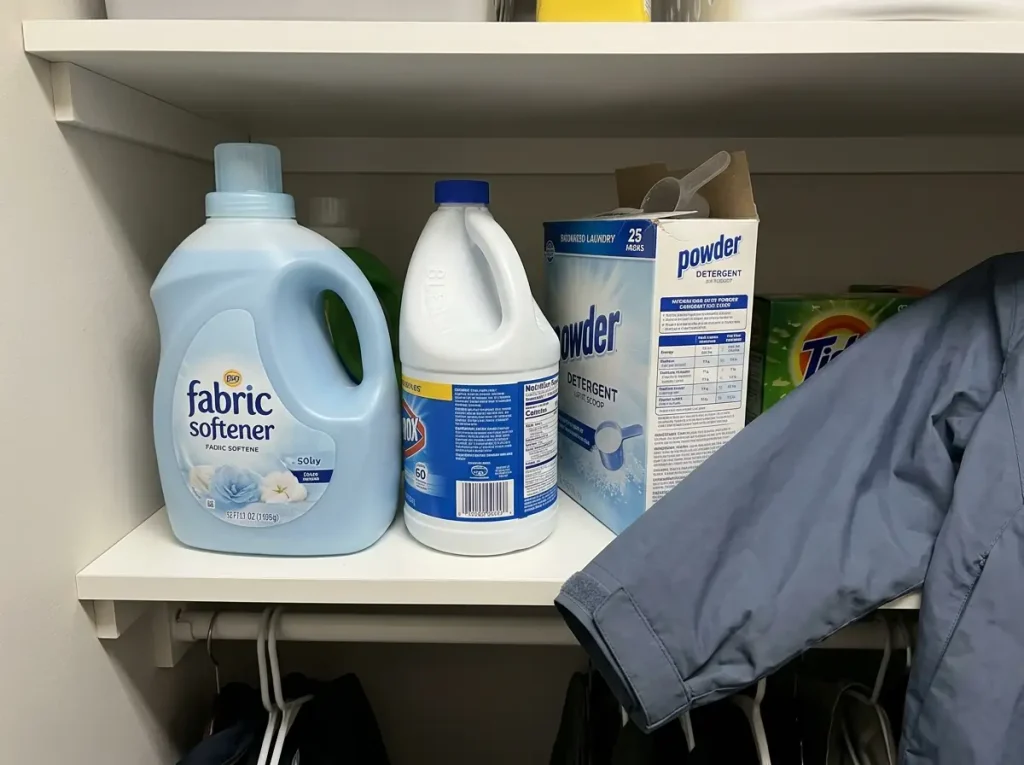
Most of what people are afraid of doing is fine. A short list of things is not, and it isn’t the list people expect.
Fabric Softener, Bleach and Powder Detergent
Fabric softener is the worst of the three. It deposits a waxy conditioning layer onto fibers, which is fine for a bath towel and terrible for a breathable laminate: that layer coats the membrane’s pores and degrades breathability close to permanently, and no rinse takes it out.
Bleach and stain remover attack the DWR and face fabric directly. Both are aggressive oxidizers built to break down organic material, and your shell’s outer treatment is organic material. Skip them, including the pre-treat sprays people reach for on a mud stain.
Powder detergent is the mild one and still a no: it doesn’t fully dissolve, so the grains lodge in the weave and resist rinsing, leaving abrasive particles working against the face fabric every time the jacket flexes.
Why Dish Soap Isn’t a Shortcut
Dish soap comes up constantly as an improvised substitute, usually late at night when nobody has tech wash in the cabinet. It’s a degreasing surfactant engineered to cut oil and stay sudsy doing it, and both properties are wrong here: the degreasing strips whatever DWR is left, and the high-sudsing formulation is built to persist rather than rinse clean, so residue stays in the fabric and blocks beading. If you don’t have the right bottle tonight, wait until you do.
Heat, Seam Tape and the Damage You Can’t Undo
Heat is the genuinely unrecoverable one. A hot wash or a high dryer setting works on the adhesive holding your seam tape in place, and unlike a worn coating, lifting tape isn’t something you fix at home. Keep the wash at 105°F and the dryer at low-to-medium and this never becomes your problem.
The other permanent one has nothing to do with washing. Storing a shell damp or tightly compressed invites mildew and, over time, delamination as the laminate layers separate. Hang it with room around it, skip the compression sack for the off-season, and never put it away damp, because how you store it after the wash matters just as much as the wash itself.
What isn’t on this list is machine washing. The tag says machine washable and it means it. The anxiety about washing a shell is the actual mistake.
How Often to Wash Your Gore-Tex Jacket
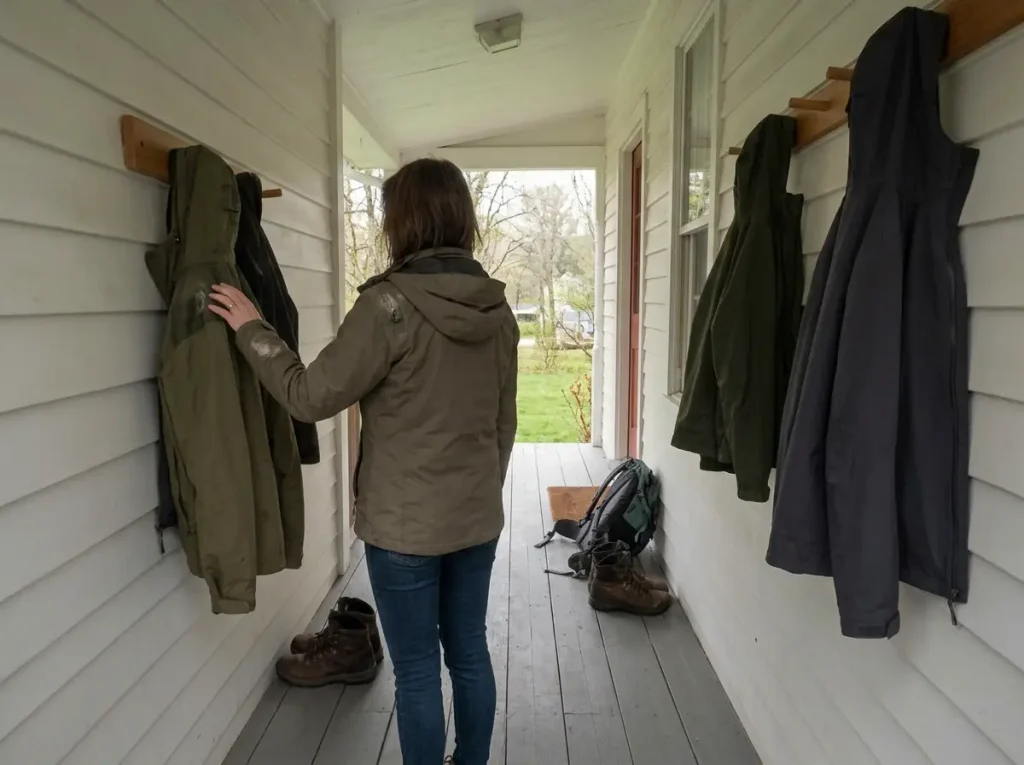
Every page gives a different interval for a waterproof jacket. Gore-Tex says “as needed.” Other brands name a number of wearing days, or a count of hours on the trail, and none of them say where the figure came from.
The honest answer is that the jacket tells you, the same way every time.
Let the Bead Test Set the Schedule
Wash when it stops beading, not on a calendar. Calendar intervals fail because no two jackets accumulate soil at the same rate: a shell that comes out twice a season for dry day hikes and one that spent three weeks on a coastal thru-hike aren’t on the same schedule.
Pour water on it before a trip. Beads and rolls: go hike. Soaks in and darkens: you have a wash night ahead of you.
What Actually Dirties a Hiking Shell
Hikers load a rain jacket differently than a commuter does, which is why generic outerwear advice underestimates how often this needs doing.
Sunscreen is the biggest offender, built to stay put on skin and transferring straight onto collars and cuffs. Bug spray follows, especially DEET-heavy formulas that soak into sleeve fabric. Then salt, which stays in the weave after the sweat evaporates, campfire smoke leaving an oily film on long trips, and pack straps grinding grit into the shoulders every mile you walk.
Run the bead test the week before a trip, not the night before. If it fails you need a wash cycle, a full dry, and a reactivation cycle, and that’s an evening you don’t have when you’re packing at 11pm before an early start.
Washing Too Little Is the More Common Mistake
Almost nobody over-washes a shell. Plenty under-wash one, for a reason that sounds sensible and is backwards: washing is hard on gear, so washing less should make the jacket last longer. What actually wears the DWR out is accumulated soil lying the polymer chains flat, so leaving that film on the fabric shortens the coating’s life. The wash removes the cause.
PFAS-free shells reach the trigger faster, so a recent jacket needs this more often than an older one did. Gear forums call the whole routine done as one event, wash plus reproof plus heat cycle, re-Gore-Texing. Worth knowing, because it’s the term people search. Get the rhythm right and this piece of hiking gear maintenance buys real gear longevity: the shell outlives two or three of the jackets owned by people afraid to wash theirs, and it’s one piece of how a rain shell fits into the rest of your rain system along with pants, pack cover, and layering underneath.
Conclusion
A jacket that wets out is not leaking. The membrane is intact and the coating on top of it is what quit. Wash it, heat it, and it comes back.
The dryer does two jobs, not one. Drying the fabric is the first, reactivating the DWR with 20 more minutes of medium heat is the second, and stopping after the first is why most careful washes don’t restore beading.
Reproof only after a clean wash and a full heat cycle have failed the bead test. And if there’s down inside the shell, none of the hardshell rules apply: cold water, down-specific cleaner, front-loader, long slow tumble with tennis balls.
Go pull the shell out of the closet and pour a cup of water on it. Thirty seconds tells you whether you have a wash night coming or nothing to do at all, and either answer beats finding out three miles up the trail.
Frequently Asked Questions
01Can you wash a GORE-TEX jacket in the washing machine?
Yes. Machine washing is the manufacturer-recommended method, not a risk you are taking. Use warm water at 105°F/40°C, a small amount of liquid technical cleaner, a gentle cycle and a double rinse. A tag reading machine washable means exactly that.
02Can you use Dawn dish soap on GORE-TEX?
No. Dish soap is a degreasing surfactant built to strip oils and stay sudsy, which is the opposite of what a technical shell needs. It removes whatever DWR is left and leaves residue that resists rinsing out. Wait for real tech wash instead.
03How do I make my GORE-TEX jacket waterproof again?
In most cases it never stopped being waterproof, since the membrane keeps working after the DWR fails. Wash it with a technical cleaner, then run 20 extra minutes of medium dryer heat to reactivate the coating. Apply new DWR only if water still soaks in.
04What ruins GORE-TEX?
Fabric softener, bleach, stain remover and powder detergent all do real harm, and softener coats the membrane pores close to permanently. Excessive heat works on seam-tape adhesive over time, and damp or compressed storage invites mildew and delamination. Machine washing is not on that list.

I've spent more than a decade researching hiking gear and trail technique. I read the specs, the forum threads and the long-term reviews, and every pick here comes with what it gets wrong.
End of the trail
You read every mile of this one. Here's where the trail goes next.