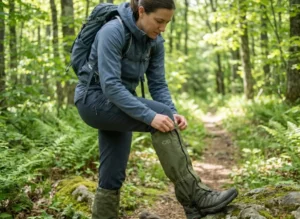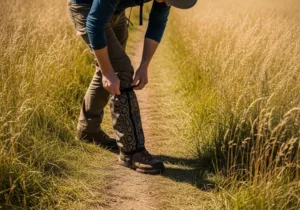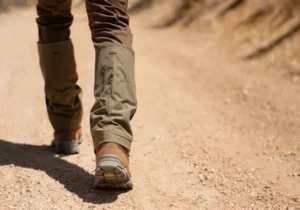
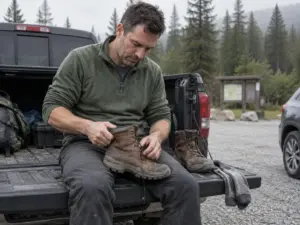










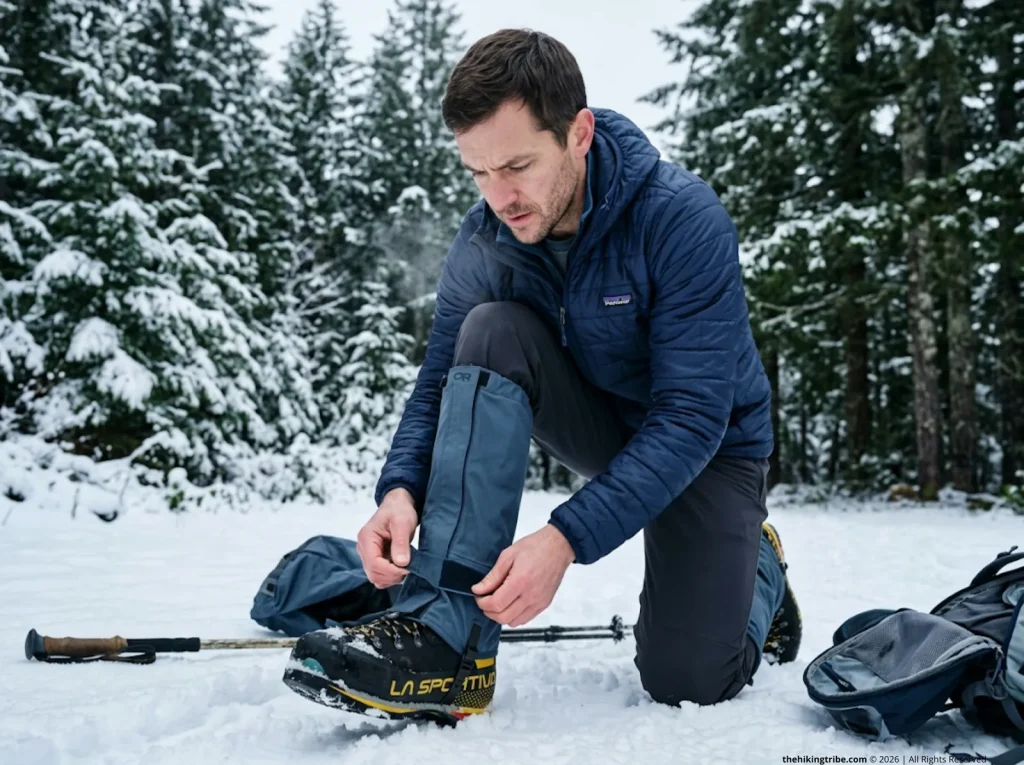
The gaiter was brand new—a $90 Outdoor Research Crocodile—and the Velcro wouldn’t close over the boot. Not even close. I was standing at the trailhead in the Cascades, double boots laced tight for a summit push, staring at a two-inch gap of exposed fabric that no amount of pulling would bridge. The sizing chart said “Large fits US 9-11.” My boots were a 10.5. What the chart didn’t say: a size 10.5 La Sportiva Nepal has roughly 40% more outer bulk than a size 10.5 Altra Lone Peak. I’d sized for my foot. I should have sized for the boot.
This guide breaks down exactly how to match your gaiter size to your specific footwear category—factoring in boot bulk, sole shape, and the hidden wear-and-tear that standard sizing charts ignore. We’ll show you how to stop wasting money on gear that blows out in the field.
| Boot Fitting Guide | |
|---|---|
| Boot Category | Adjustment Rule |
| Trail Runner (e.g. Altra Lone Peak) | Size Down 1 |
| Mid-Weight Hiker (e.g. Lowa Renegade) | Follow Chart |
| Single Alpine Boot (e.g. Scarpa Mont Blanc) | Size Up 1 |
| Double Boot (e.g. La Sportiva Spantik) | Size Up 2 |
⚡ Quick Answer: Standard sizing charts fail because they measure foot length instead of boot volume. To get a debris-proof seal without cutting off your circulation, a trail runner requires you to size down, while a plastic mountaineering boot means you need to size up at least two levels. Match your sole shape with your strap style, use the one-finger rule to check tension, and always run your rain pants over the gaiter to keep water shedding outward.
Why Boot Volume Matters More Than Shoe Size
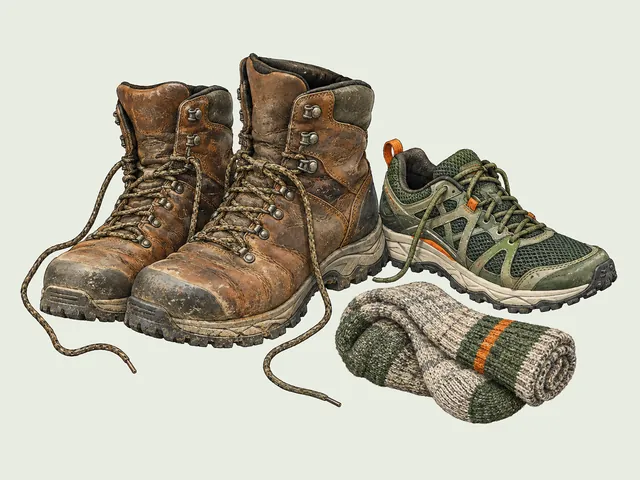
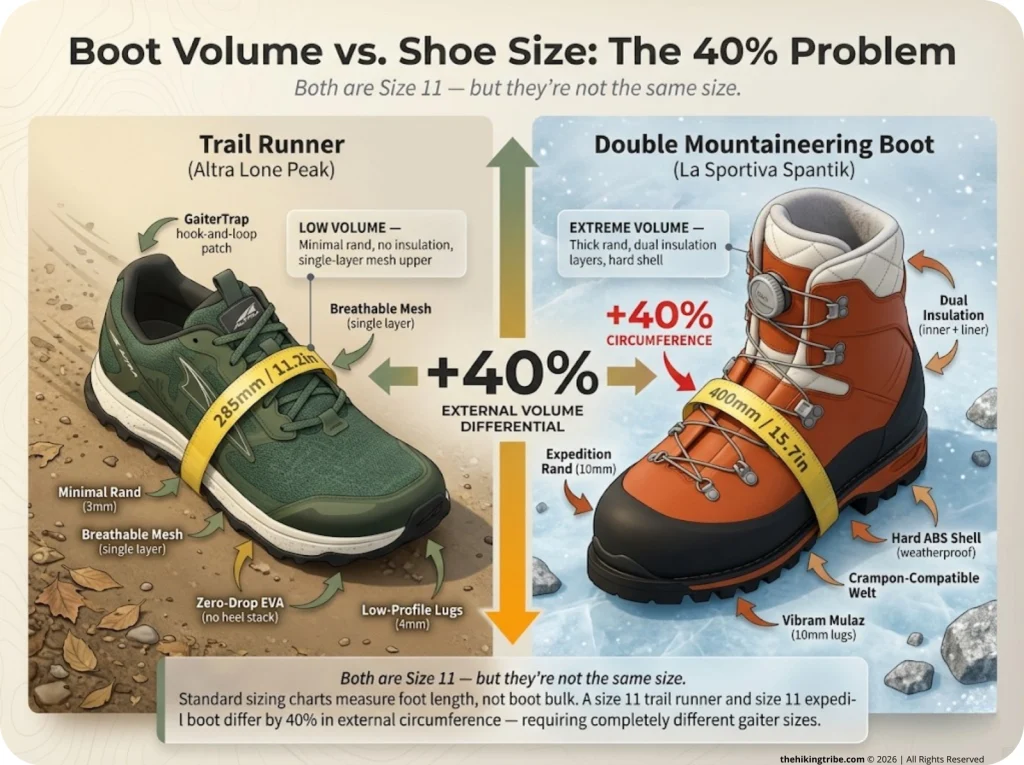
Shoe size only tells you the space needed for your foot. It tells you absolutely nothing about the heavy armor bolted to the outside of that footwear. The real measurement you need is the External Volume Differential—a technical way of describing the total space taken up by the boot’s outer shell, its insulation layers, rubber rands, and thick protective overlays.
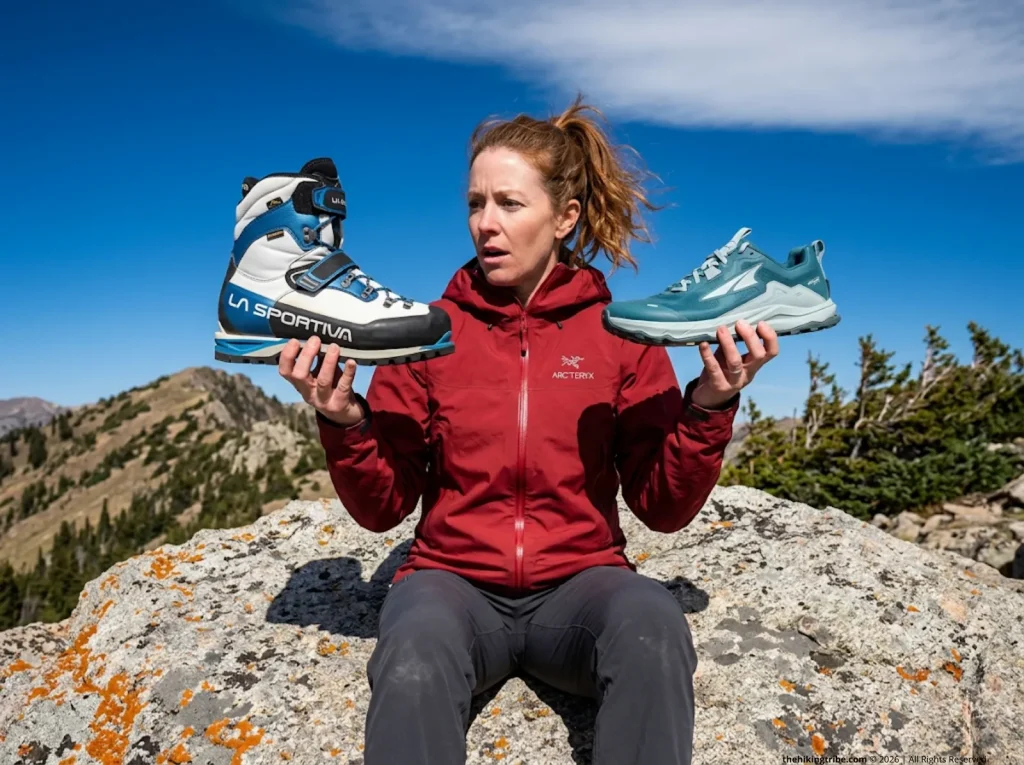
This explains why a heavy backpacking boot takes up significantly more space than a lightweight trail runner of the exact same size. Because of this massive difference in outer bulk, the heavy boot demands a large ankle gaiter, while the trail shoe functions perfectly with a small or medium.
The difference in bulk becomes a harsh reality check when you deal with cold weather gear. The rubber rand on a plastic mountaineering boot—that protective bumper wrapping around the lower section above the sole—can add 25 to 35 percent more circumference compared to a trail shoe with a minimal toe cap. Running shoes are built on curved, slim lasts to encourage speed. Expedition footwear relies on wide, thick lasts built for comfort and warmth. They sit at opposite ends of the spectrum, yet sizing charts treat them as identical.
Because mountaineering professionals already buy their boots up to a full size larger than their street footwear to allow for thick thermal socks and foot expansion, this compounds the bulk factor. It makes adhering to National Park Service mountaineering gear standards a matter of complex sizing math. Expedition-class gaiters have extra room built strictly to accommodate single alpine boot models and thick insulated pants. Your gaiter must fit the boot at its absolute widest point, not the size printed on your insole.
To solve this, use our Gaiter Bulk Compensation Matrix above. If you run in an Altra Lone Peak, process the low volume factor and size down one step from the chart. For a mid-weight hiker like the Lowa Renegade, you have standard volume—follow the regular sizing guide. But step into a single leather alpine boot like a Scarpa, and you must step up one size. A high-altitude double boot like the La Sportiva Spantik displays extreme volume and demands two steps up. This reality aligns perfectly with the principles we teach in our boot-crampon compatibility pairings, since the B0-B3 ratings that dictate crampon bindings follow the exact same sizing logic. Standard sizing charts are accurate in fewer than 40 percent of technical applications.
Pro tip: If you find yourself stranded firmly between sizes, choose the larger gaiter. You can always cinch the top strap tighter to grip your calf, but you cannot mysteriously add fabric to the bottom when the Velcro refuses to close over a wide mountain boot.
Sole Geometry: The Strap Killer Nobody Warns You About
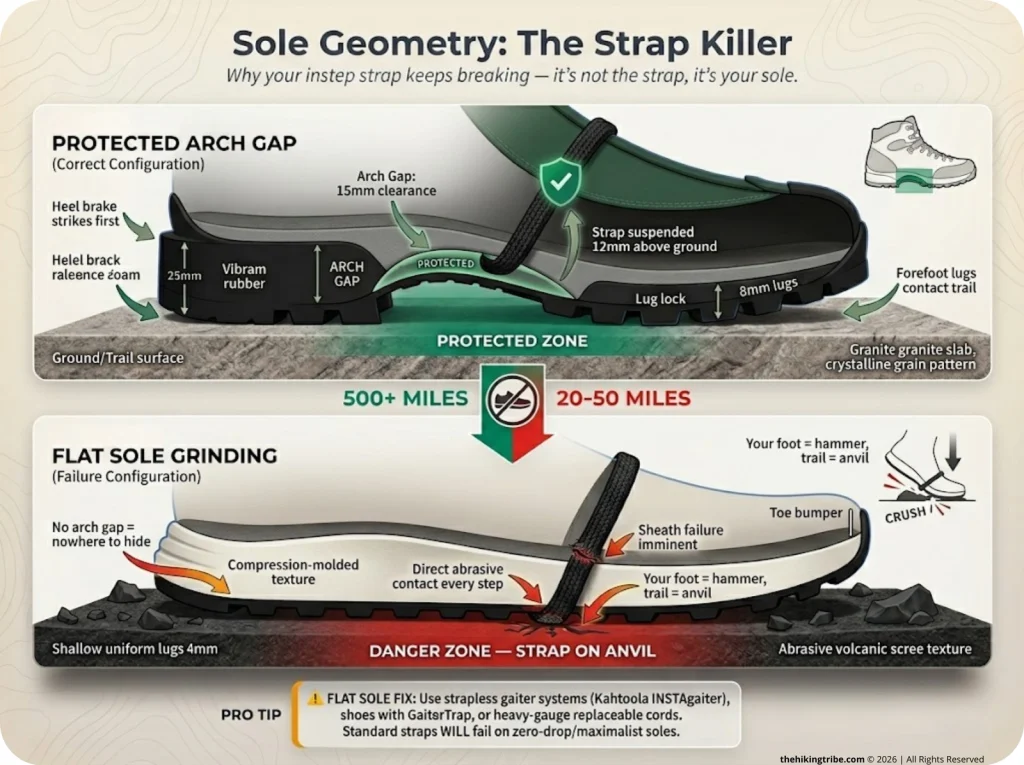
Most people blame cheap materials when an underfoot cord snaps mid-hike. In reality, the culprit is usually unmatched sole geometry. Traditional closure systems rely entirely on a defined arch gap. By design, they expect your footwear to feature a recessed cavern sitting neatly between the heel brake and the forefoot lugs. When you secure a front lace hook and route an instep strap through a legitimate arch gap, you shield that hardware from striking the ground. On heavy footwear like the Scarpa Mont Blanc, well-designed straps survive 500 grinding miles without issue.
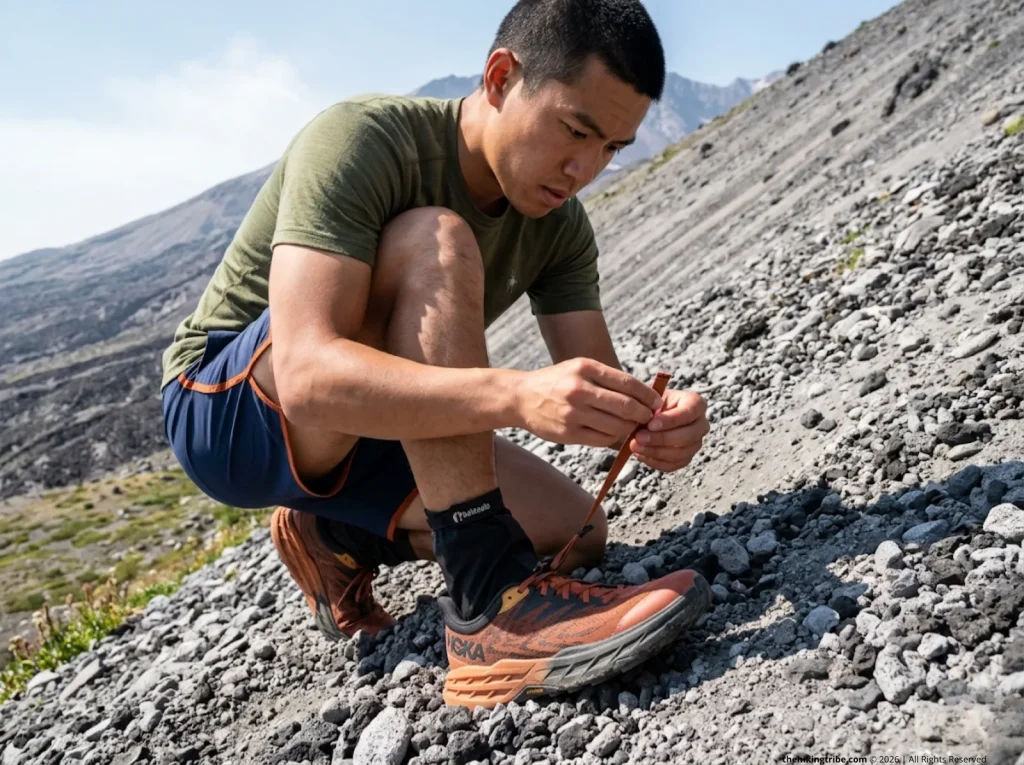
Modern flat-soled shoes, especially zero-drop trail runners and maximalist options like Hoka, completely disregard this requirement. They utilize a continuous flat sole across the entire bottom. Every time you plant your foot carrying a load on volcanic scree or a granite slab, you essentially place your strap on an anvil and smash it with a hammer. Under these conditions, the mechanical wear happens incredibly fast—often causing complete strap failure within 20 to 50 miles of aggressive hiking. You either need a heavy-gauge replaceable cord or you need to ditch the strap entirely.
Experts hate watching hikers destroy expensive gear because of mismatched profiles. Philip Werner over at SectionHiker spells it out clearly: “Most high gaiters are only made for boots that have an arch, not flat-soled boots. If you have flat-soled hiking boots, you need to find high gaiters that have replaceable cords.” In addition, maximalist shoe platforms are often so incredibly wide that a standard strap length literally falls short of bridging the distance between the two side buckles.
If you insist on running flats, pivot to strapless solutions. Altra’s GaiterTrap operates effectively as a hook-and-loop heel-attachment system. For standard running shoes, you can bond adhesive-backed Velcro patches directly to the heel using serious industrial adhesives like Barge Cement—factory adhesive peels away the moment you hit deep mud. Alternatively, shift to specialized strap-free designs. You can see this clearly outlined in our 500-mile trail-running gaiter test, where Kahtoola INSTAgaiter and LEVAgaiter series eliminate the flat-sole failure issue securely with an inverted zipper system.
Measuring for Fit: Calf, Not Just Chart
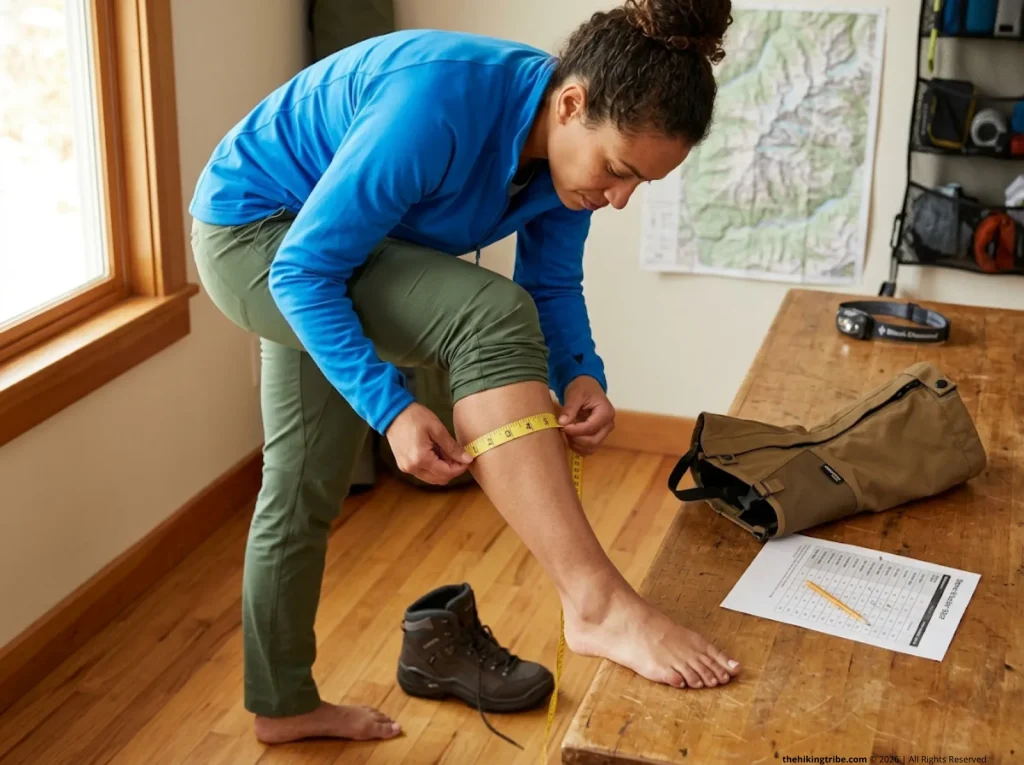
Stop guessing your leg circumference. Actually measure your calf using a flexible fabric tape measure—not a stiff metal construction tape. You must take this measurement standing up. When you bear weight, the dense belly of your calf muscle expands rapidly, adding a full 10 to 15 percent more width than when you’re seated. Write those numbers down in both inches and centimeters, as international brands employ a mix of metric and imperial sizing charts.
Consider how pants manipulate these digits. If you plan to hike winter routes clad in thick, insulated softshell pants, that hefty fabric forces your true measurement out another one to two inches. Springtime measurements wearing running shorts mean nothing when December rolls across the mountain. Many female hikers also experience the “Soleus Flare” issue, where calf muscles attach anatomically lower on the leg. Standard 16-inch knee gaiter heights tend to stand too tall here, digging violently into the sensitive back of the knee during steep ascents.
The top closure system holds massive responsibility. A top cinch mechanism must ride cleanly above the expanding calf muscle, never directly across it. As you grind uphill, a strap positioned over the throbbing muscle belly will steadily slide downward. We call this tension creep. Camlocks prevent downward sliding by mechanically biting the strap fabric in place, whereas basic bungy drawcords lack genuine holding power and steadily loosen with every stride. Crank a top strap tight directly over the muscle rather than above it, and you restrict vital blood flow. This tourniquet effect directly increases your probability of sustaining frostbite in sub-zero alpine conditions by cutting off the heat to your toes.
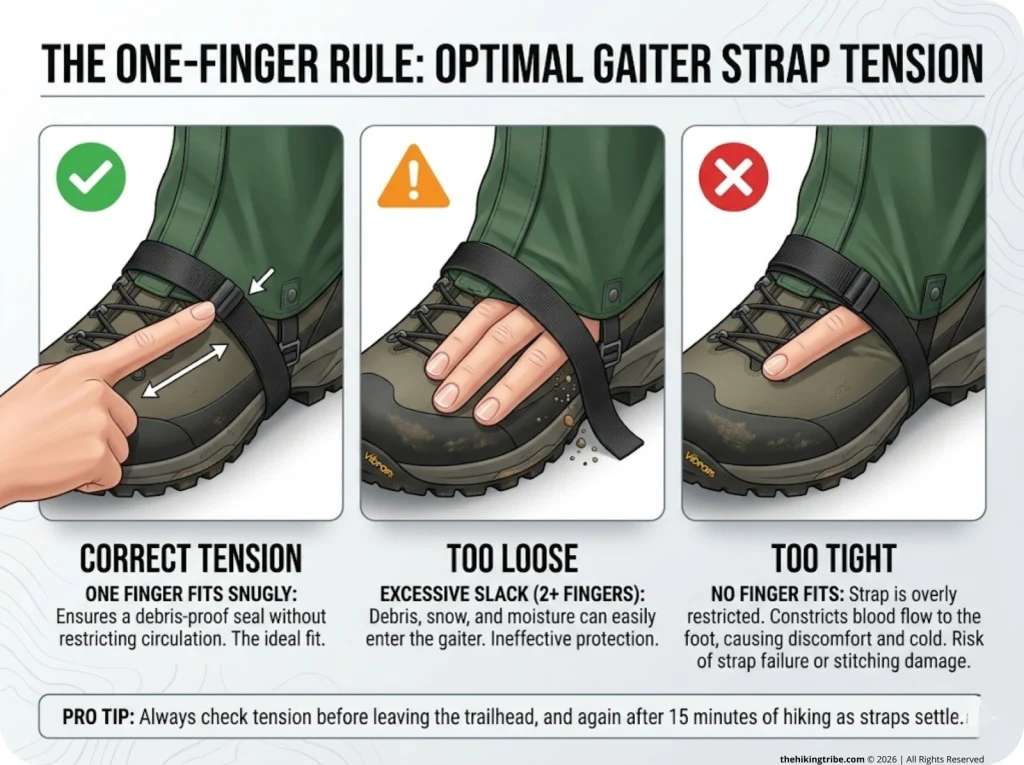
Instead of fighting it, use the one-finger rule to master your instep tension. Anchor the front lace hook firmly, lock the top buckle, and slide exactly one index finger solidly between your boot sole and the instep strap below. If you can slide two fingers in, you have a loose seal that will inhale powder during an aggressive plunge-step. If you cannot wedge one finger in at all, the massive tension will pull the strap apart or tear the stitching out of the sidewall. Remember to test this while wearing thick gloves to replicate real conditions—a critical step we highlight in our broader piece covering how to choose and use gaiters effectively.
The Shingling Effect: Why Layering Order Decides Everything
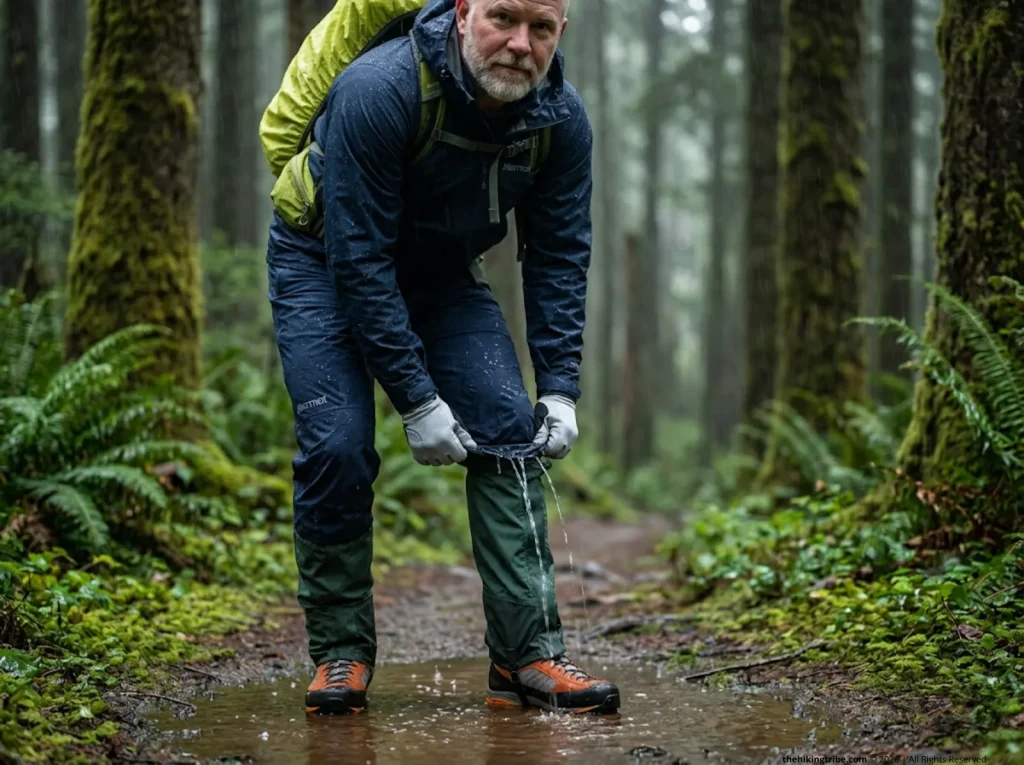
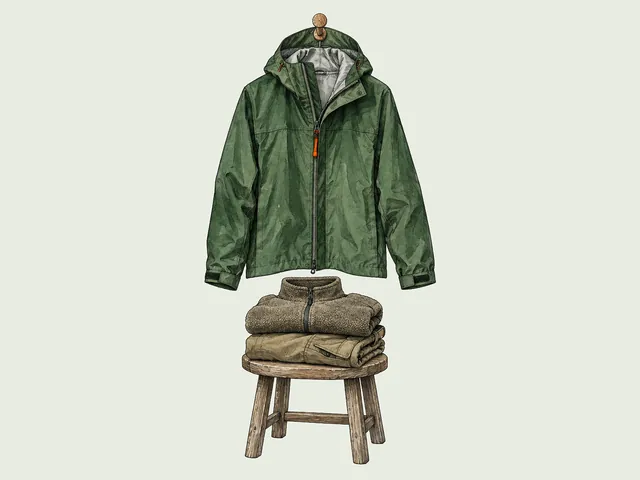
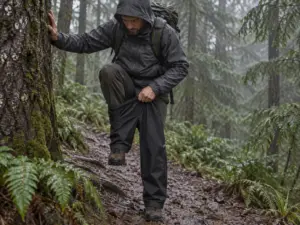
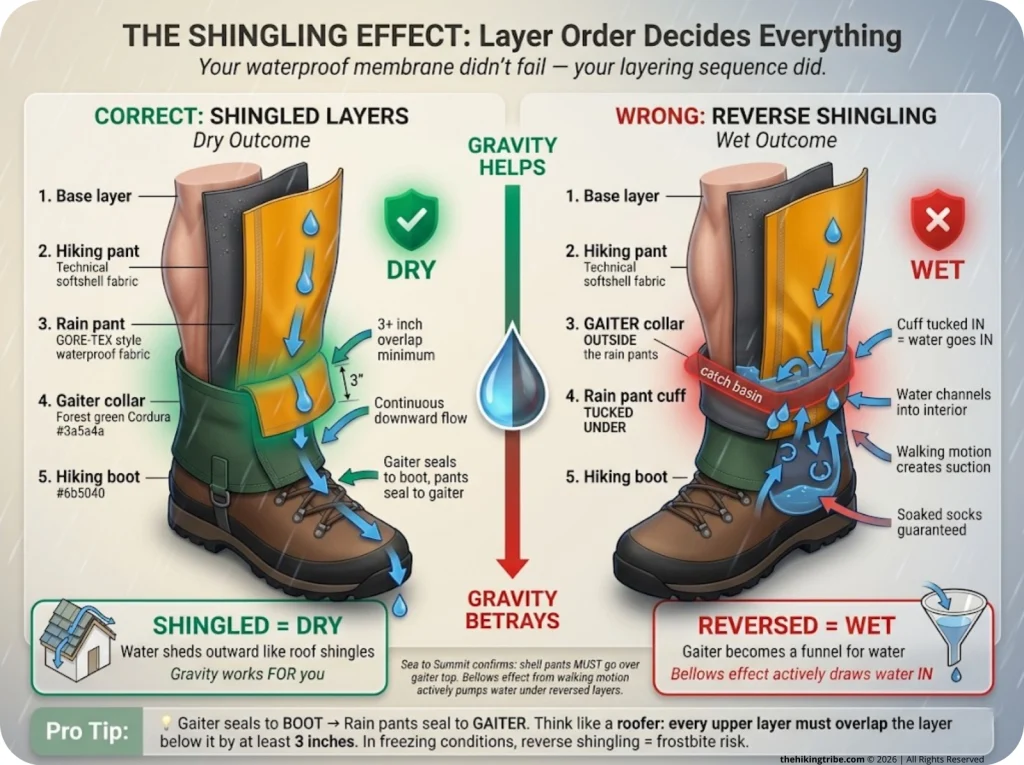
If your feet flood with water while wearing waterproof gaiters, nine times out of ten the membrane did not fail. You failed the layering sequence. You must construct your barriers to mimic architectural shingling. Here is the non-negotiable protocol: secure the gaiter directly against the exterior of your hiking boot. Next, pull your rain pants down boldly over the outside of the upper gaiter collar. Gravity then feeds the rainwater sheeting off the slick pants directly onto the gaiter sleeve, and finally down over the heavily protected rubber boot shell.
When you tuck rain pants underneath a tall hiking gaiter, your top closure functions like a funnel. No matter how savagely you lock that top camlock, your striding motion creates an internal bellows effect. The churning fabric actively draws the water running down your trouser leg directly down into the interior shaft. Sea to Summit’s technical team confirms exactly this behavior, stressing the absolute need to run shell pants over the top. The wicking action of wet fabric drawing moisture upward from the hem will ruin a humid trail trip.
This isn’t a minor annoyance. In freezing weather, this specific moisture failure guarantees rapid heat loss and opens the door for localized frostbite. To achieve a strong shingle, your gaiter must lay incredibly flat against your leg. If you employ a sloppy, massively oversized width, the bunched fabric acts as a dam, generating ridges where stormwater pools rather than sheds.
Your rain layer also requires a long enough inseam to throw at least three deliberate inches of fabric overhang securely past the top edge of the collar. Mix cropped athletic rain trousers with a mid gaiter, and you create an exposed gap perfect for catching sleet. The strict wilderness tracking norms developed for high-altitude survival expressly mandate this configuration in professional wilderness activity standards documentation. Nailing the overlap mechanics remains just as critical as understanding waterproof vs. water-resistant pants when fighting a proper downpour.
Metabolic Moisture: When Gaiters Work Against You
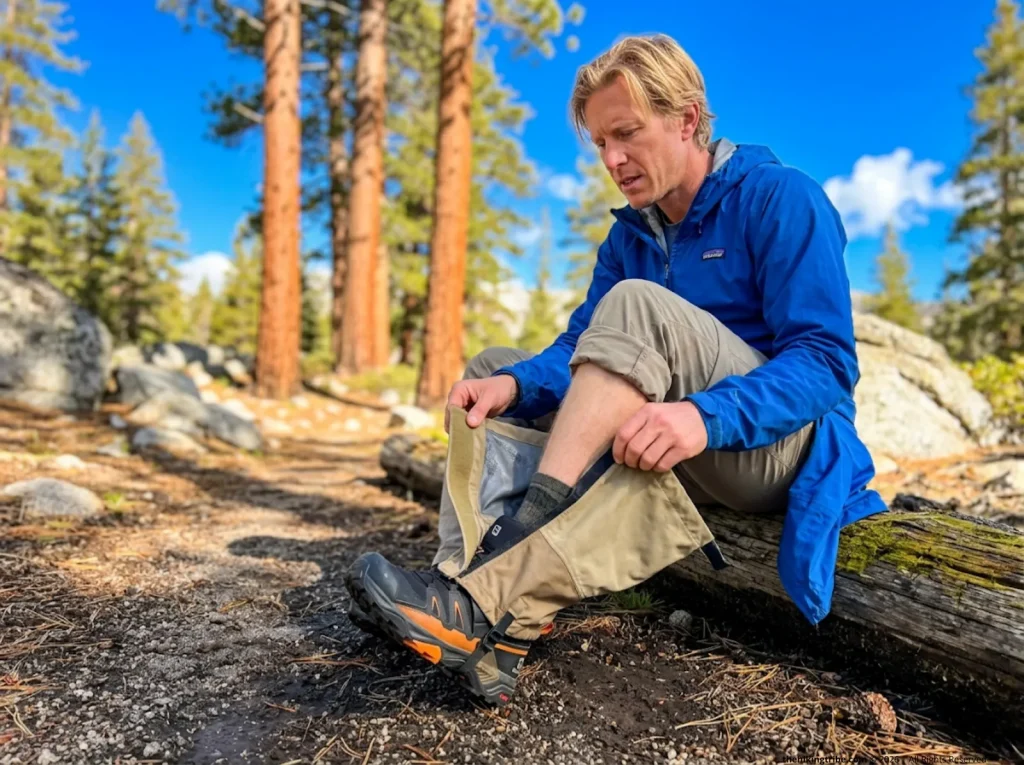
We tell hikers to armor up, but wearing massive knee-high fortresses during the wrong environmental windows just traps sweat. By completely sealing the lower leg inside GORE-TEX or heavy eVent fabrics, you drastically cut the surface area you need to let sweat evaporate. Your body blasts sweat vapor out of your skin during an intense climb. The material cannot dump the steam fast enough, causing heavy condensation that runs back down onto your expensive socks.
This presents a brutal breathability versus protection tradeoff. This is exactly why the legendary Quagmire gaiter relies on heavy 8oz Corespun canvas for its upper instead of a full synthetic membrane—it acts as a release valve for heat. When sunny, clear conditions arrive after a storm and temperatures climb north of 50 degrees, you suffer for your armor. Your soaked skin wrinkles, turns violently white, and blisters tear open. The gear protects you from the environment, but you soak yourself from the inside out.
You beat this by matching your gear height strictly to the terrain. Knee-high designs exist primarily for brutal, deep powder post-holing, dense abrasive scrub rushing your shins, or extremely wet swamp slogging. For technical scree hiking in the late summer heat, a short ankle gaiter handles all the nasty pebbles just fine. A simple mid gaiter strikes the ultimate balance on highly unpredictable shoulder-season trips. The physical crush of wet, heavy snow pressing relentlessly against the boot collar serves as the singular best justification for a tall, fully waterproof gaiter. We cover those specific extreme parameters extensively in our breakdown of gaiters for deep powder snowshoeing.
Pro tip: Do not treat your leg armor as permanent fixtures. Unbuckle and remove them entirely the moment your boot cuffs rise consistently above the snowpack depth or mud line. Treat them as situational tools, not fashion accessories.
Brand-by-Brand Sizing: The Cross-Reference Guide
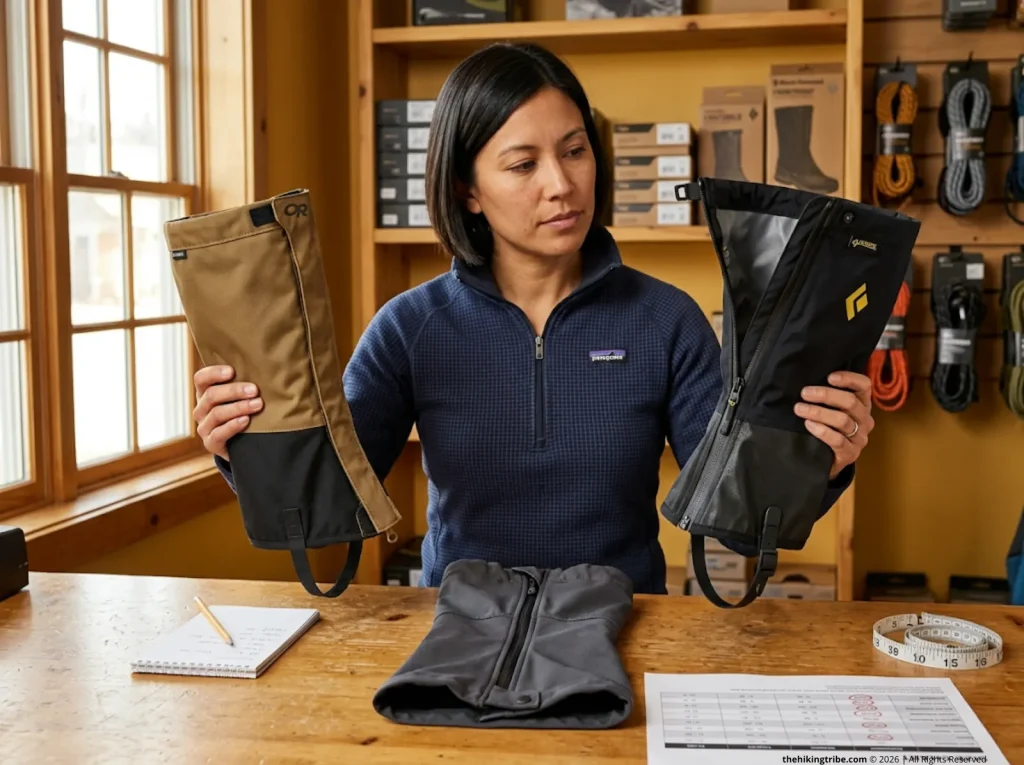
No universal sizing matrix exists in the outdoor industry. A large in one brand will literally strangle your calf, while a large in another will slip past your knees like a loose sock. The top-tier equipment makers push specific shapes that cater heavily to their core demographics. Taking the time to cross-reference their sizing quirks saves you the brutal headache of returning dirt-stained gear.
Outdoor Research maintains the baseline standard for expedition work. The legendary OR Crocodile relies upon indestructible 1000D Cordura on the inner foot panel to aggressively combat crampon spikes. If you drop these onto lightweight trail shoes, OR directly instructs you to size down a full step to maintain the debris-proof seal. Their dedicated Expedition model adds serious girth strictly to swallow insulated plastic shells.
Kahtoola targets the fast-moving crowd. They explicitly state, “If the size of your footwear is near the top of the range, you may want to consider sizing up.” The brand holds the benchmark for bottom durability, attaching a 1,000-mile warranty directly to their DuraLink instep straps. As mentioned, their zipper models eliminate the flat-sole failure issue securely, but require an exact sequence for success: slide the zipper down to lock the exact position, and only then yank the top cinch tight to eliminate slip.
Sea to Summit builds the Alpine eVent and Quagmire lines around extreme atmospheric moisture barrier mechanics. By maximizing breathability in the tall panels, these serve best where sweat buildup severely threatens foot health.
Black Diamond hammers the technical alpine requirements with models like the Frontpoint gaiter, engineered distinctly with heavy scuff guards meant for icy glacier punishment.
Understanding how these specific patterns diverge connects cleanly to classic historical gear performance reports. Every manufacturer addresses a distinct aspect of the survival puzzle. For a foundational review of fabric variations and zipper types before you choose a model, you should comb through our complete guide to choosing hiking gaiters.
Common Sizing Mistakes and Field Fixes
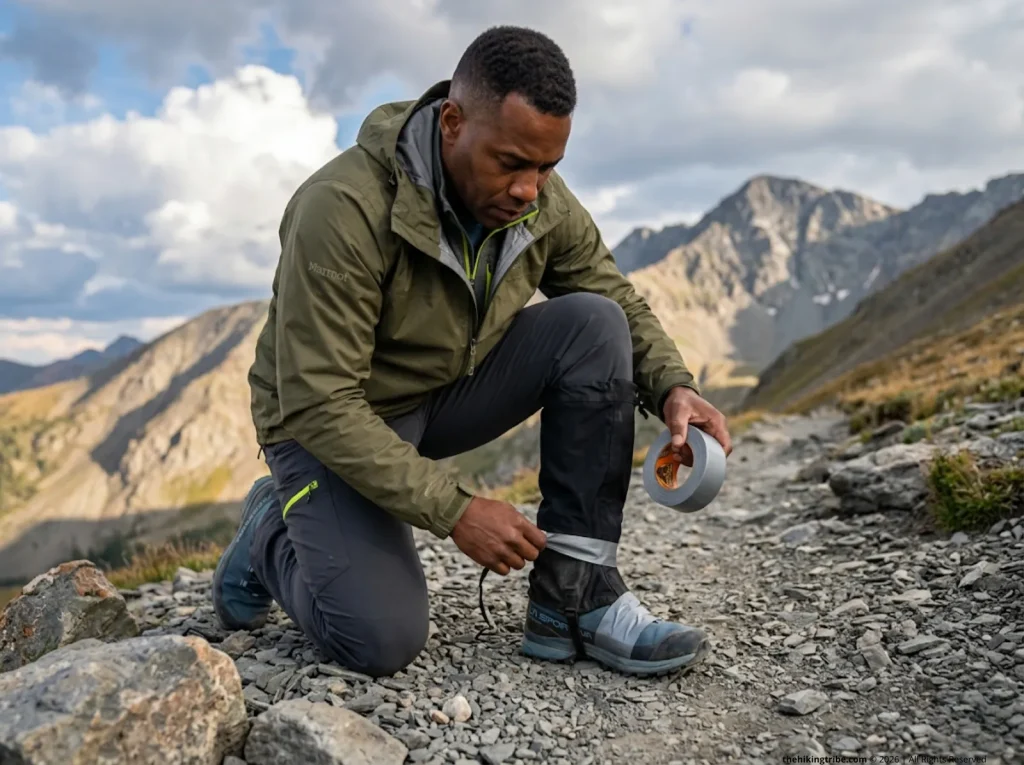
When sizing goes wrong out in the wild, the results escalate quickly from an annoyance to a genuine hazard. You need to know the failure points before you step away from your truck, and how to MacGyver a structural repair when the mountain destroys your loadout.
Mistake #1: Ignoring the Rand
Buying based exclusively on an arbitrary men’s or women’s shoe number fails when you mount it onto alpine gear. The thick rubber bumper rand wrapping the toebox of a La Sportiva Nepal adds up to 30 millimeters of hidden circumference. When you ignore the rand, you buy a medium that refuses to stretch across the shell.
The Fix: Take a flexible measuring tape directly to your booted foot at its absolute widest point. Reference that raw number against the manufacturer’s lower-hem measurement spec, bypassing the broad shoe-size recommendations entirely.
Mistake #2: The Inward Buckle
Positioning the metal or plastic instep buckle on the inside face of your heel is a rookie error. During clumsy exhaustion strides, your opposite boot will inevitably strike that buckle, affectionately known as buckle-clash. On steep ascents, this violently shatters the plastic hardware or rips the buckle loose, potentially causing you to trip over your own shredded straps.
The Fix: The buckle always rides safely out on the outer edge of your foot.
Mistake #3: The Tourniquet Top Strap
If your top bungy rests tightly against the mid-belly of your calf muscle, you have built a tourniquet. As that muscle pumps and thickens during climbing, your strap chokes the circulation moving down the leg.
The Fix: Pull the lock mechanism cleanly above the widest protrusion of the calf, resting exactly in the thinner recess slightly below the knee joint. If the fabric physically sags down over the calf to establish tension, the shaft is too long for your leg geometry.
Pro-Tip: When your strap inevitably blows apart on jagged rocks, execute the emergency duct tape splint. Wrap three thick layers of heavy-duty tape completely around the arch of the boot and over the loose gaiter panels to temporarily lock the seal. Keep three feet of duct tape wrapped tightly around your trekking pole shafts at all times just for this moment.
For cord-based systems, keeping spare 3mm accessory cord handy allows you to tie a quick double fisherman’s knot—the gold standard professional field fix. These structural repairs are just as vital as dialing in your layers for gaiters as part of a tick defense system, because a loose collar invites massive, unwanted trail ingress.
Conclusion
Your gaiter acts as the absolute final line of defense against the mountain, but throwing the wrong cut of fabric over a highly technical boot spells ruin. Sizing them requires solving a three-variable equation: your boot’s external volume differential, the shape of your outsole geometry, and the true expanding circumference of your calf. Discard the concept of simple foot size.
Next time you stand at a gear counter staring at a wall of high-priced nylon, ignore the simple size guide printed on the box. Pull an actual tape measure across the absolute thickest rand on your booted foot, verify your strap clears the arch gap, and let the raw geometry drive your purchase. Your hardware will thank you on the descent.
FAQ
Should gaiters be tight or loose?
They require a snug tension against the hiking boot without compressing the heavy material into a pinch point. Use the one-finger rule directly at the instep strap to confirm clearance. Plunging into deep powder with excessively tight tension restricts critical blood flow, while loose fabric freely admits ice chips and debris right over the collar.
Do gaiters work with trail running shoes?
Standard strapped assemblies suffer catastrophic mechanical failure on flat-soled trail runners within extremely short distances over abrasive rock. Ditch the straps and deploy specialized strapless systems like the Kahtoola INSTAgaiter, or rely on shoes with built-in heel traps. Alternatively, use serious waterproof industrial glue to permanently weld reinforced Velcro patches to your heel counters.
How do I measure my calf for gaiters?
Always pull your fabric tape around the widest flare of the calf muscle while actively standing and bearing full body weight, never seated. Record the max width in both inches and centimeters to cross-reference the various global brand charts. Remember to execute this measurement while wearing the exact insulated pants you plan to hike in, factoring in the extra inches of bulky material.
Can I use the same gaiters for mountaineering boots and hiking shoes?
Only if you don’t mind ruining your gear. The external volume difference between a fast-and-light trail shoe and a heavy double plastic mountain boot hovers around 40 percent. The massive gaiter sized appropriately for your expedition boots will furiously bunch up and flap over your trail shoes, giving your sharp crampons the perfect snag target to cause a massive fall.
Why do my gaiter straps keep breaking?
You likely suffer from sole geometry incompatibility due to wearing flat-bottom shoes entirely lacking a standard arch gap. Your weight forcibly grinds the underfoot strap against abrasive trail debris thousands of times an hour. Fix this by upgrading to systems that offer heavy-gauge replaceable cords, utilizing strapless platforms, or tying on highly abrasion-resistant replacements using a proper double fisherman’s knot.

I've spent more than a decade researching hiking gear and trail technique. I read the specs, the forum threads and the long-term reviews, and every pick here comes with what it gets wrong.
End of the trail
You read every mile of this one. Here's where the trail goes next.