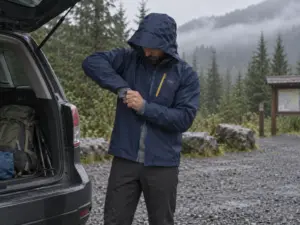

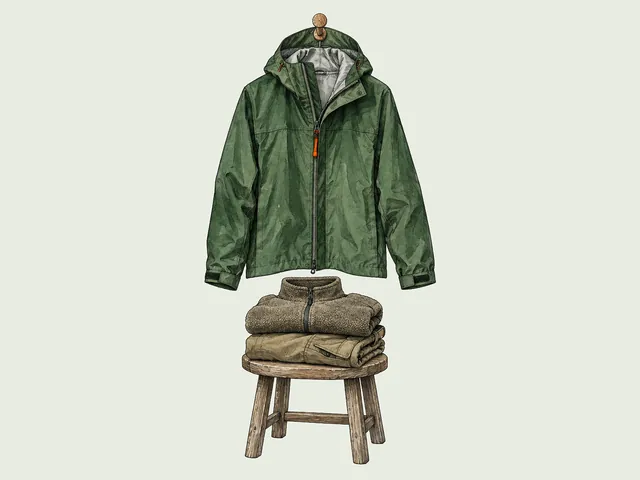

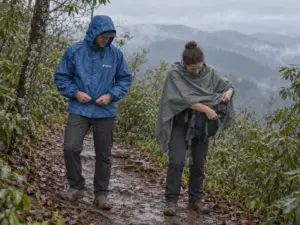








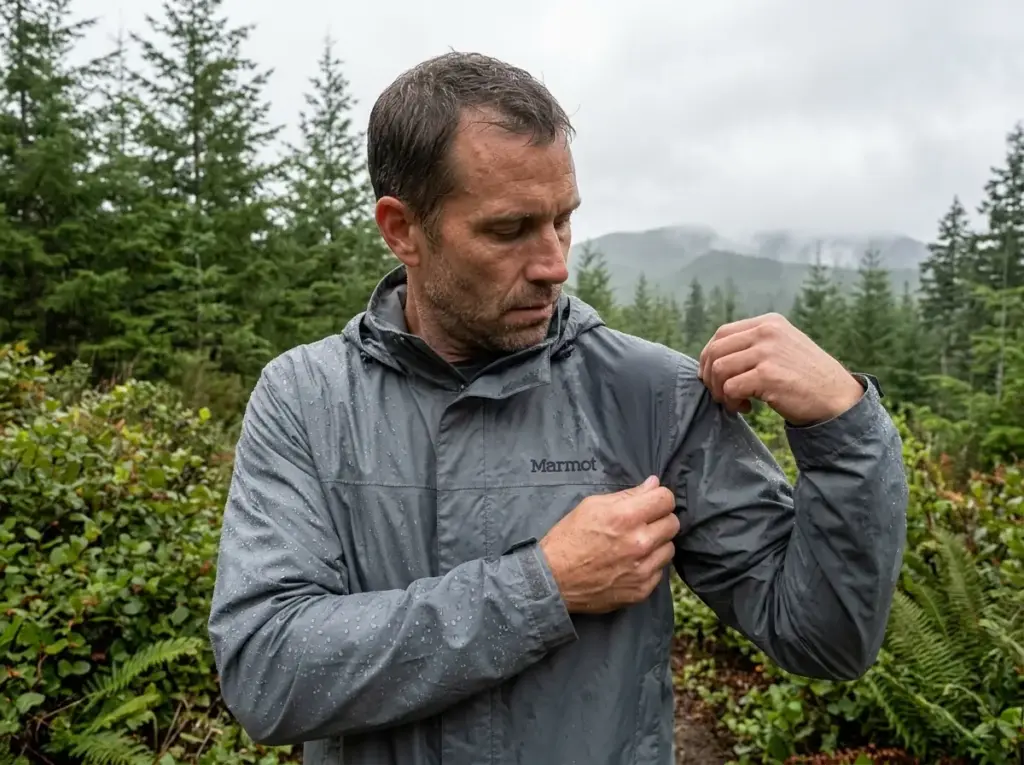
You’re two miles up a wet ridge and the shoulders of your shell have gone dark and heavy while the sleeves still flick water off like nothing happened. Everybody reads that moment the same way: the jacket is finished.
It usually isn’t. The useful question is not “is it dead?” but “which of the three failures is this?”, because two of them cost about as much as a sandwich to fix and one of them ends the jacket. Knowing when to replace a rain jacket comes down to a ten-minute test you can run in your driveway, three failure modes with three very different price tags, and the point where another bottle of spray is money thrown at a shell that’s already done.
Wetting Out Is Not a Leak, and the Difference Decides Everything
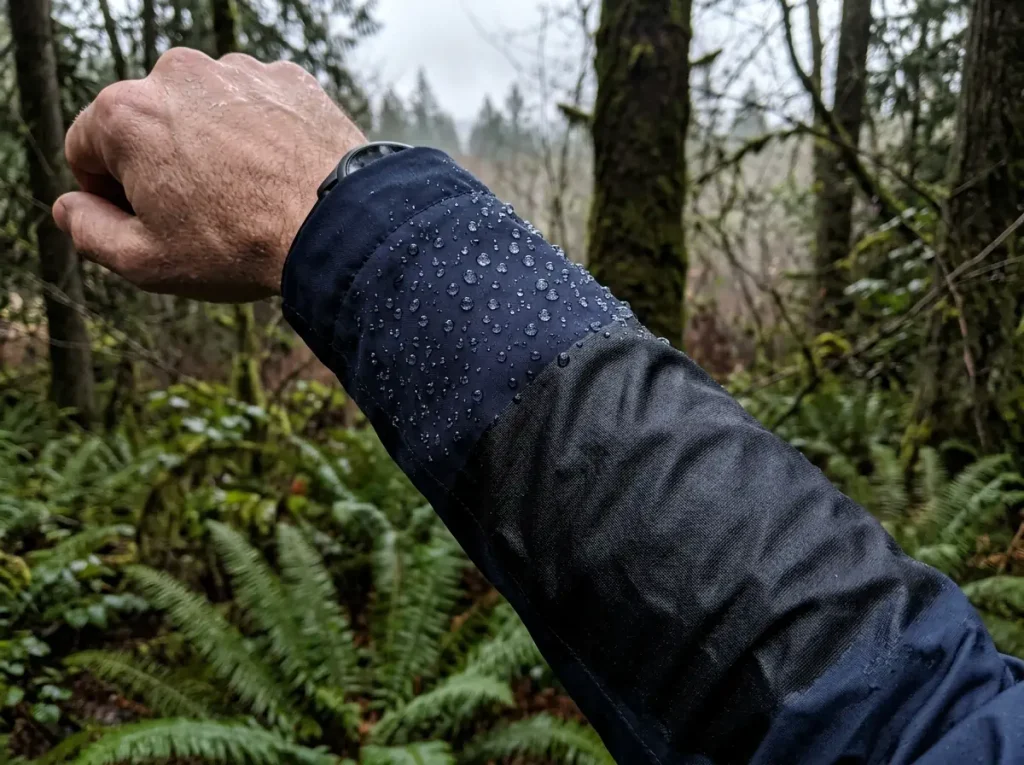
Here’s where the money gets wasted. A hiker feels that cold, clammy shoulder patch, decides the shell failed, and starts shopping, when the membrane underneath may not have let a single drop through. The other half of the trailhead crowd shrugs at the dark patch for two more seasons, right up until the adhesive lets go and the decision gets made for them.
Wetting out means the durable water repellent finish, the DWR, has quit and the face fabric is drinking water instead of beading it. That’s a surface problem, and it says nothing about the waterproof membrane underneath. A real leak is water arriving on your base layer, through a seam, a pinhole, or a membrane that’s given up. Two different failures on the same waterproof jacket, two different bills. For the full picture of how the pieces of a rain system work together, the rain gear complete guide covers the whole setup, and the same membrane-versus-finish distinction decides which hiking pants suit which activity further down the layering system.
So why does a wetted-out jacket feel exactly like a leaking one? A saturated face fabric can’t breathe, so your sweat has nowhere to go: condensation forms on the inside and puts cold damp fabric against your arms. It feels like rain. It isn’t.
The membrane can be working perfectly while the outside looks soaked, which is the point of what a waterproof rating actually measures: the hydrostatic head numbers describe resistance to water pressure, not whether the outer fabric looks wet.
The forum consensus runs opposite to the folk wisdom: not washing your shell is the more common mistake, not over-washing it. Skin oils, sunscreen residue, and that slow dirt and oils buildup strip DWR faster than the wash cycle ever will, which is why a technical wash belongs in the cupboard next to the jacket.
The 10-Minute Hose Test That Settles It
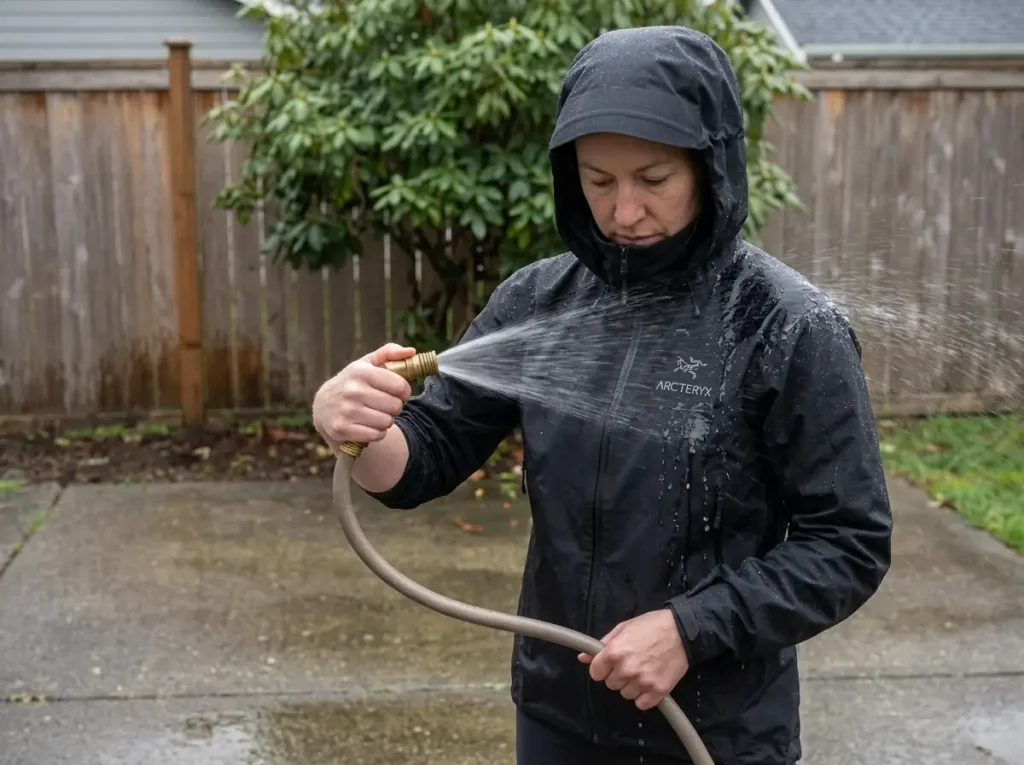
Every guide on the first page tells you to check for signs. Not one hands you a procedure. Here’s one you can run before spending a dollar.
Put on a dry, dark-colored shirt under the jacket. Dark fabric shows a wet spot the instant it appears, and starting dry means anything you find came from outside, not from the sweat you built up walking to the hose. Zip it all the way, hood up.
Then work the hose at moderate pressure. Not a jet, not a pressure nozzle. You’re simulating steady rain, and a high-pressure stream will push water through a perfectly good jacket and hand you a false verdict.
Move across the shoulders, the upper back, the hood, both sleeves, every seam, and the cuffs. Five to ten minutes. Coverage is the goal, not force.
Start at the shoulders and the hood-to-back transition, not the cuffs and hem where everyone looks first. That’s the documented earliest failure zone. Those are the panels your pack straps grind on every single hike, and if a shell gives up somewhere, it gives up there.
You’re taking two readings at once, and they answer different questions. Watch the face fabric while the water hits it: beading means the DWR is alive, soaking in means it’s gone. That’s your DWR verdict, readable in the first thirty seconds.
Then take the jacket off and check the shirt. Dry shirt means the membrane is holding, whatever the outside looked like. Wet spots mean water got through, and where those spots sit tells you whether you’re dealing with a seam, a panel, or something worse.
No hose, or no outdoor tap? Stand in a running shower with the jacket on for about fifteen minutes. Same two readings, same verdict.
Two things will skew the result. Test a jacket that’s genuinely dirty and you’re reading the grime rather than the finish, since trail dirt and sunscreen suppress beading on their own. And don’t run this straight off a hot machine wash: heat temporarily revives a tired DWR, and a jacket can bead convincingly for a day or two before going right back to soaking.
One reading trips people up: a jacket can pass the shirt check and still feel awful to wear. That’s the wetted-out-and-clammy result, and it means reproofing, not replacement. The same logic works on the rest of your kit, and the when to replace hiking gear checklist applies that test-then-decide sequence to packs, boots, and tents.
Reading Your Results — The Three Failure Modes
Same wet shoulder, three completely different verdicts. The price gap between the cheapest and the most expensive runs roughly fifty to one, which is why diagnosis matters more than any product in this article.
DWR failure (fixable, cheapest)
The face fabric soaked in, the shirt underneath stayed dry. Good news: the membrane is fine and you have the outcome everyone hopes for. Wash it and reproof it, in that order, and the jacket goes back to work.
Start with Nikwax Tech Wash, a non-detergent cleaner built specifically not to strip the DWR or attack the membrane, then follow with a reproofing treatment. Skipping the wash and going straight to the spray is the most common way people waste a bottle.
Delamination (usually terminal)
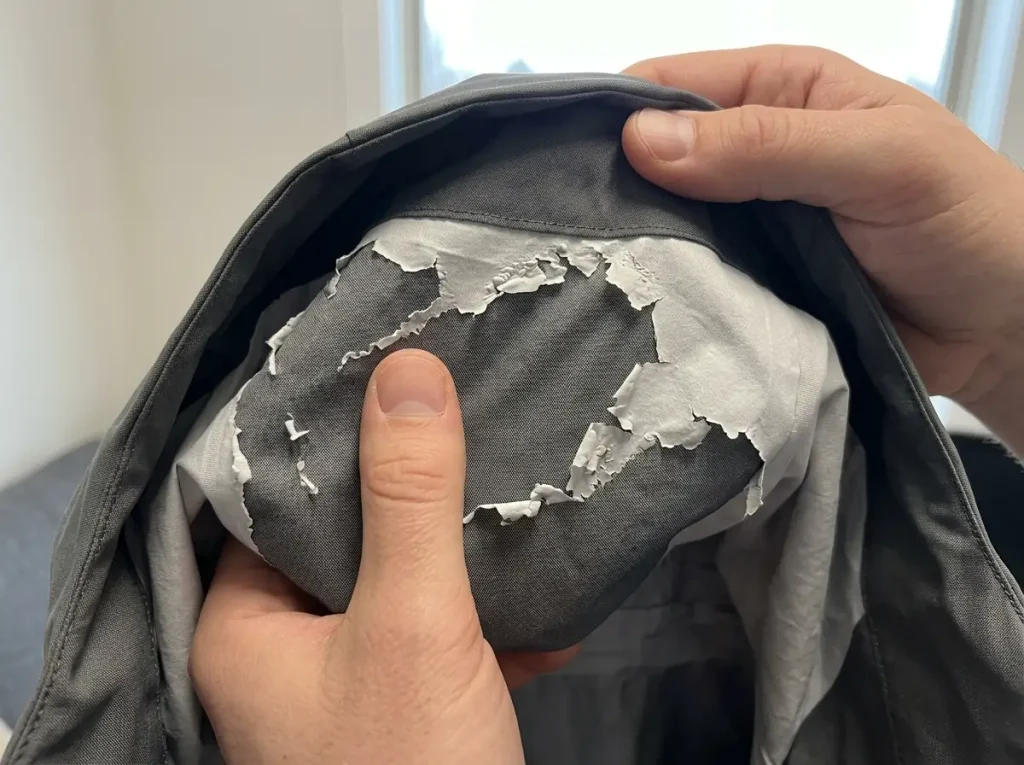
Turn the jacket inside out and look. Bubbling, peeling, or a white or clear film flaking off the inner surface means the membrane is physically separating from the face fabric. Delamination is a structural failure, not a finish failure.
No spray fixes this. Reproofing a delaminating shell puts money into a jacket that’s already finished, and the treatment sits on a face fabric no longer bonded to anything. On a Backpackers’ Basecamp thread, a poster going by hikingtiger found the white laminate peeling inside the hood of a three-year-old Marmot PreCip that had seen far more commuting than trail miles. Light use is not a guarantee.
Physical breaches (sometimes fixable)
Pinholes, small tears, seam tape failure at an edge, a zipper failure where the slider stops sealing. These are localized, and localized damage is patchable, which puts this failure mode in a completely different category from the one above. Watch for fraying at the cuffs and hem too, since a hard shell that’s coming apart at the edges is telling you how many seasons it has left.
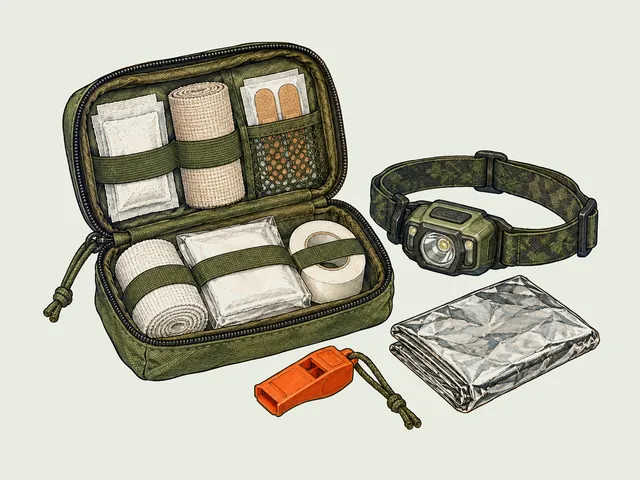
A roll of GEAR AID Tenacious Tape applied from the inside handles small tears and pinholes without a sewing kit. Worth knowing what belongs in a repair kit you actually carry: the hiking gear repair kits guide covers what earns its weight in a pack versus what stays home.
For a small delam spot, a pocket corner or the edge of a seam, the fix named independently on two separate forums is Aquaseal or Seam Grip glued straight over the separated laminate. Cheaper and faster than shipping the jacket off for a professional patch at that size, and it holds. A whole delaminating panel is a different story.
Why Rain Jackets Die — The Mechanical Story
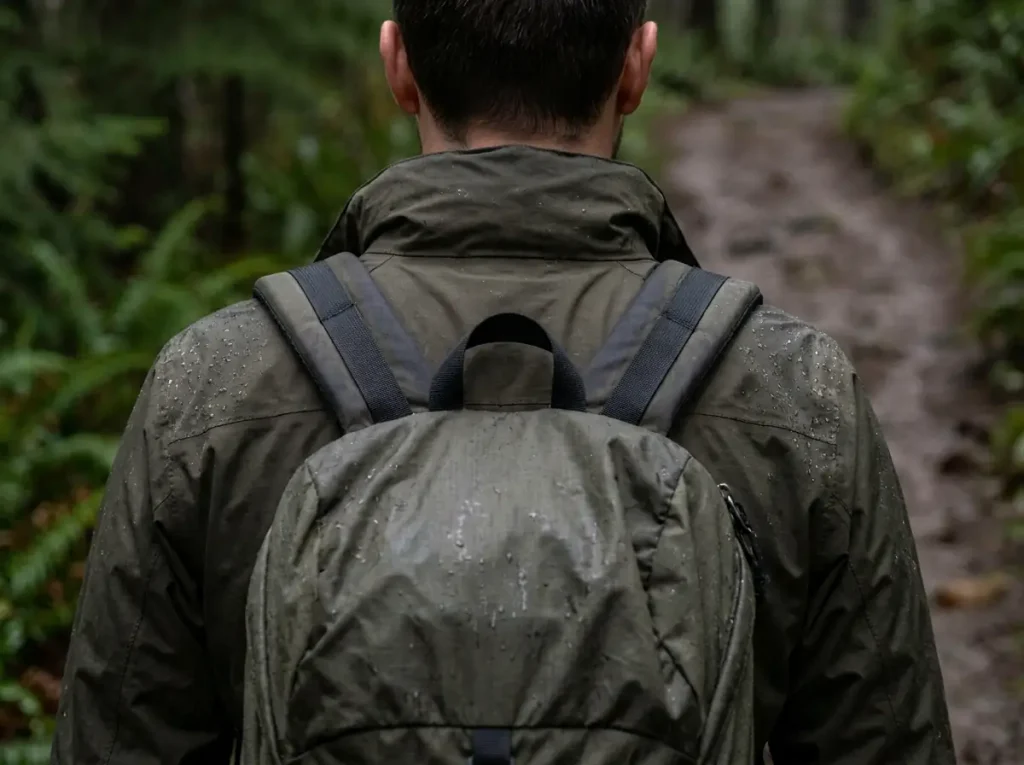
Most guides treat a jacket’s end of life as weather plus time, as if the shell wears out from being rained on. It’s mostly chemistry and pack straps, and almost all of it sits under the owner’s control.
What breaks the bond
Heat, skin oils, sunscreen, and DEET-based repellent all attack the adhesive bonding the membrane to the face fabric. That adhesive layer is the part nobody thinks about and the part that actually fails.
DEET is the one worth taking seriously. It breaks down the polyurethane coating on contact, a documented cause rather than trail folklore, and it shows up by name in community delamination threads repeatedly. The microporous membrane in most shells sits directly against that PU coating, so damage to one is damage to both.
Never spray repellent while wearing the shell, and don’t store the shell stuffed next to DEET-soaked gear in the same bin. The vapor and the transfer do the same work as a direct hit, just slower.
UV degradation runs on a separate track, breaking down both the DWR and the adhesive whether the jacket gets used or not, and it works on the nylon or polyester face fabric at the same time. A shell living clipped to the outside of a pack in full summer sun is aging on days it never sees rain. Storing a shell compressed for months does the same thing from the other direction, and the gear storage habits that stop mold and delamination matter more than most hikers expect for anything with a membrane in it.
Why the shoulders go first
Backpack straps apply repeated mechanical stress to exactly two panels, hike after hike, under load. Nothing else on the jacket takes that kind of abuse, which is why shoulder wear is the pattern every repair shop sees first.
Then there’s the cascade, and this part is worth committing to memory. DWR fails, the face fabric saturates, the saturated fabric stresses the adhesive bond underneath, and the adhesive eventually lets go. Wetting out isn’t a separate failure from delamination. It’s usually step one of it, which is why ignoring the “water stopped beading” stage turns a cheap fix into a replacement.
It isn’t only a strap problem. A Rokslide thread from December 2021 documents a First Lite Stormtight delaminating at the pocket, a zone with zero strap contact, and the community there pointed at DEET exposure and washing-machine damage rather than abrasion. The same membrane trade-off shows up in footwear for identical reasons, and the Gore-Tex hiking shoe breathability question runs on the same physics.
None of this is a comfort issue once you’re in the backcountry on exposed ground. The National Park Service’s own guidance is blunt: if your layers get soaked through, replace them rather than pushing on. A shell that fails at mile eight of a twelve-mile ridge is a different problem than one that fails in a parking lot.
Wash, Reproof, Repair, Replace — In That Order
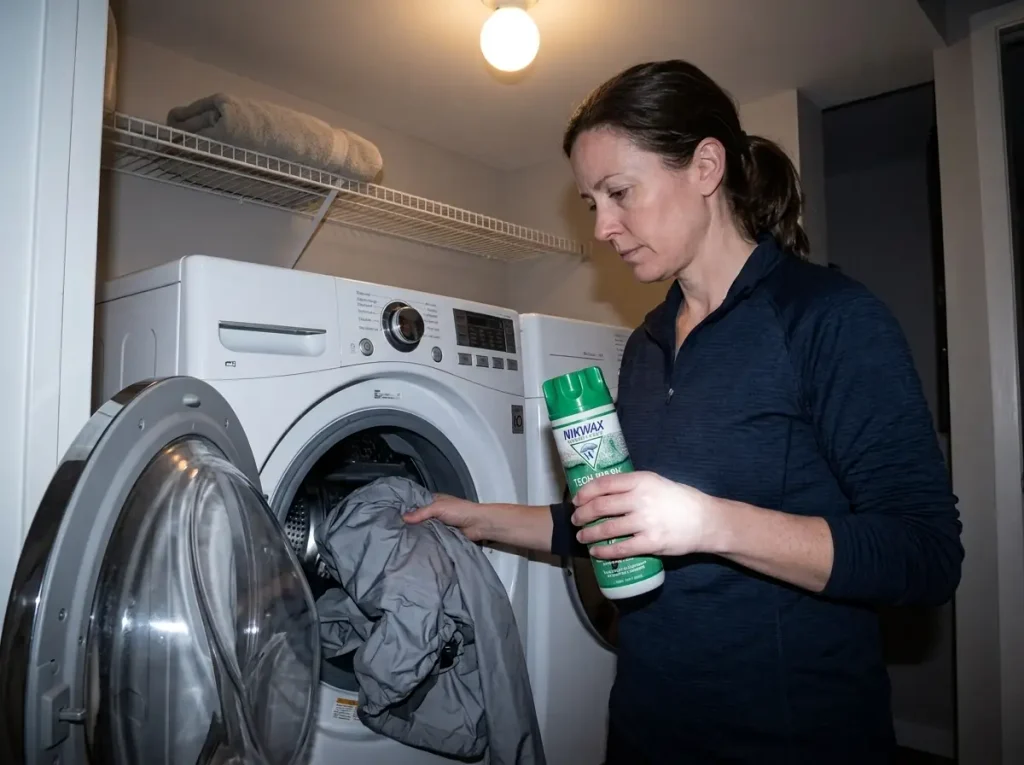
People skip straight to the expensive end. The sequence exists because each step costs less than the next and rules out the one after it.
Step 1, wash it properly
Regular detergent residue is itself a documented cause of DWR failure, which makes a technical cleaner sound like an upsell right up until you understand it. That residue attracts water. It’s the opposite of the job.
Use Nikwax Tech Wash in a clean machine with no fabric softener near it. If you’ve been washing your shell with whatever’s under the sink, this step alone may be your whole fix. Plenty of jackets written off as dead come back after one honest wash, and washing a Gore-Tex shell without wrecking it is covered step by step in the Gore-Tex washing guide.
Step 2, reproof what the wash didn’t fix
If the jacket still soaks in after a clean wash, the DWR needs replacing rather than reviving. Two options, and the hose test already told you which.
Whole-garment failure calls for a wash-in treatment: Nikwax TX.Direct Wash-In goes in during the wash cycle and coats every panel evenly. If the test flagged specific zones, usually shoulders and hood, a spray-on treatment like Nikwax TX Direct Spray-On lets you hit just those panels without another full cycle. Either way you’re replacing the DWR treatment itself, not reviving the old one. That’s the reproofing step most hikers skip, and the DWR restoration walkthrough covers the heat-activation part that decides whether the treatment actually bonds.
Step 3, repair what’s local
Tape and seam sealant handle pinholes, small tears, lifting seam tape, and small delamination spots that haven’t spread past a pocket corner. If the damage has an edge you can point at, it’s probably repairable. Beyond a DIY glue fix, shops like Rainy Pass Repair handle work past what you can do on a kitchen table.
Step 4, when replacement is the honest answer
Delamination across a full panel. Multiple failure zones at once. A jacket that still puts water on your shirt after a proper wash and reproof. Any one of those and you’re done diagnosing.
The Rokslide pair is instructive: two Stormtight jackets, the same pocket delamination, both bought secondhand, so no warranty, no paid repair, both binned. Before accepting an out-of-pocket hit, it’s worth checking whether the failure is a warranty claim, and the hiking gear warranty claims guide walks through what brands actually cover. Check those terms before buying a shell used, because a delam on a secondhand jacket is entirely your problem.
What the Math Actually Says
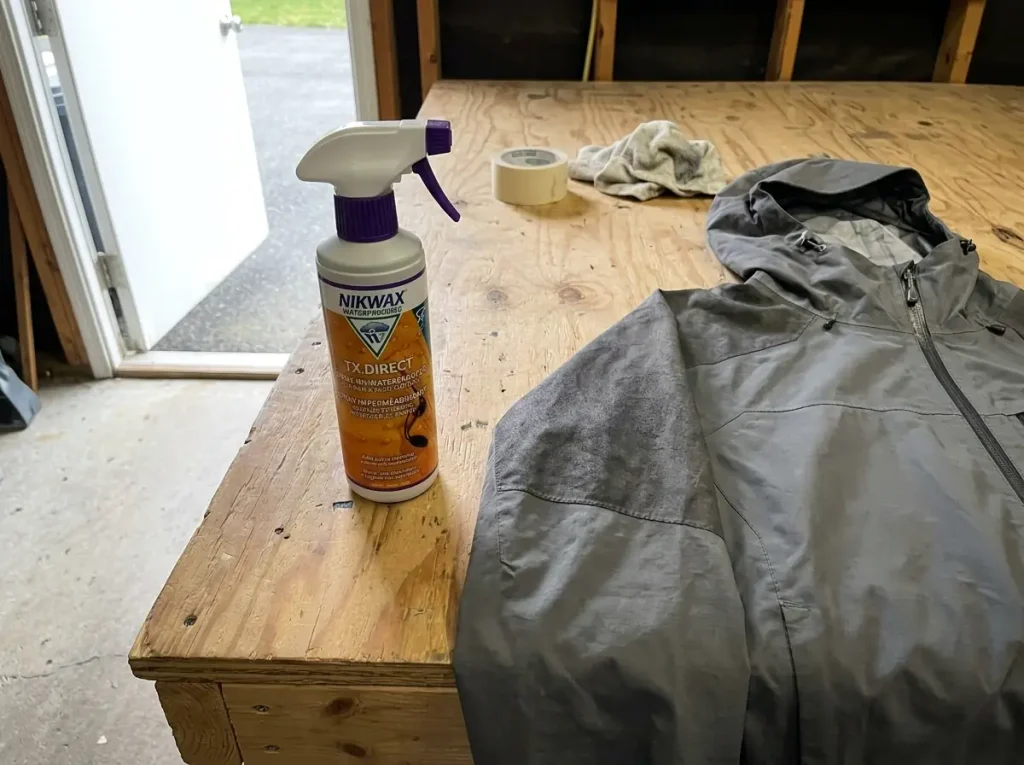
One bottle of DWR spray covers several jackets, which puts a single treatment around the price of a trailhead coffee. A replacement shell is two to three orders of magnitude more. Framed that way, reproofing wins every time.
That framing is a trap.
Reproofing only ever fixes one of the three failures. It does nothing for delamination and nothing for a punctured membrane. The best treatment on the market, applied to a shell whose laminate is peeling off inside the hood, produces a jacket that beads water beautifully on the outside and still soaks you through.
So the real breakeven has nothing to do with dollars per treatment. It’s diagnosis. Twenty dollars spent on a third reproofing attempt on a jacket delaminating at the shoulders isn’t twenty dollars saved, it’s twenty dollars that should have gone into the replacement fund. The rule that holds: reproof freely while the test says DWR-only, and stop the moment it says delam.
There’s a budget-tier wrinkle that flips the usual advice. On an entry-level 2.5-layer shell, three or four reproofing bottles over its life are a real fraction of what the jacket cost new; on a premium 3-layer shell they’re a rounding error. So the expensive jacket is the one that rewards religious maintenance, and the cheap one rewards buying spray sparingly and banking the savings toward the replacement you already know is coming.
The expensive mistake is waiting for full soak-through before doing anything. By then the saturation stage has been working on the adhesive for weeks, and a fifteen-dollar problem quietly became a replacement while you were deciding whether it was bad enough to bother with.
How Long a Rain Jacket Should Last
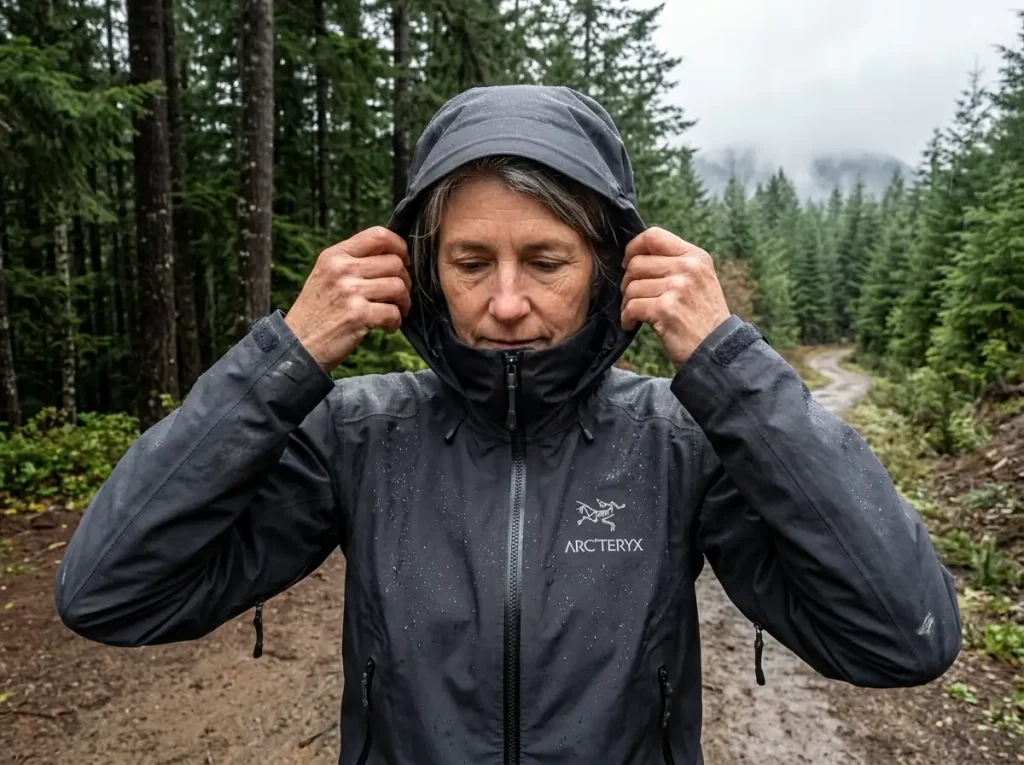
The real question here is usually “did I get cheated?” Most of the time, no. You bought a 2.5-layer shell and used it like a 3-layer one.
What construction buys you
A well-maintained Gore-Tex shell typically runs three to five years under regular use, and light use can stretch the same jacket well past a decade. There’s no calendar date on the tag, because it’s a function of hours, load, and care.
Construction tier moves that range hard. A 2-layer shell hangs its membrane behind a separate liner; a 2.5-layer trades that liner for a thin printed coating, which is why budget shells fail earlier and predictably at the shoulders and hood, with less material standing between your straps and the membrane. A 3-layer Gore-Tex Pro build with reinforced shoulders is documented at eight to ten-plus years with proper care, and one reviewer’s original 2005 Beta AR is still in rotation as a summer hiking shell twenty years on.
How the membranes themselves differ matters too. The Gore-Tex vs eVent comparison gets into why two shells with similar ratings feel nothing alike in steady rain, and which shells fail first on the trail is tracked in the packable versus ultralight trade-off breakdown.
Which tier is right for you
At the premium end, the Arc’teryx Beta AR (men’s · women’s) is the reference point: 3-layer Gore-Tex Pro, 80-denier reinforced shoulders in exactly the zone that fails first, PFAS-free DWR. It’s the build that produces those twenty-year stories, and it’s priced like it.
At the other end, the Marmot PreCip Eco (men’s · women’s) is a 2.5-layer shell with honest expectations attached: two to three years under regular use, less if it lives under a loaded pack every weekend.
A budget shell isn’t a mistake, it’s a different deal. Buy it knowing the replacement cycle and it’s rational. Buy it expecting a decade and you’ll feel cheated at year three by a jacket that did exactly what it was built to do.
Keeping the Next One Alive Longer
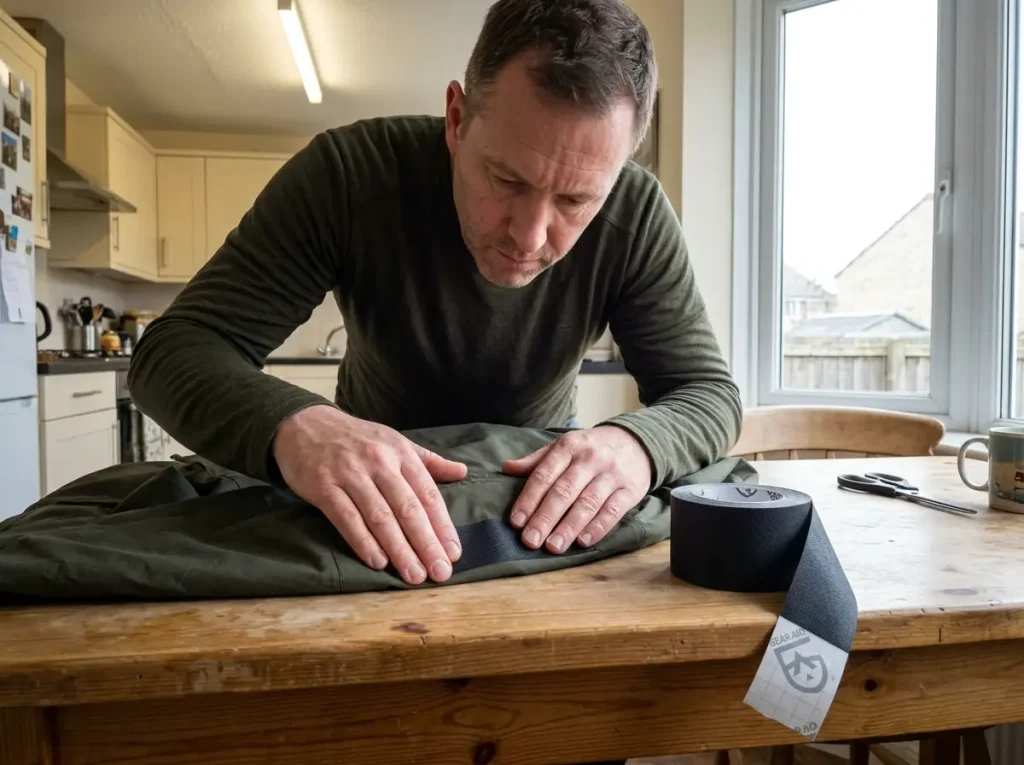
Everything in that failure story runs in reverse, which makes this the section that pays you back for reading the mechanical one. The stakes aren’t only financial either, since wet clothing dramatically raises your hypothermia risk, even in temperatures well above freezing.
Wash it more often than feels necessary, with a technical cleaner. The oils and dirt are the enemy, not the washing, and the habits that quietly ruin a DWR finish are laid out in the hiking clothing care guide.
Reproof on a schedule tied to use, not to failure. By the time the jacket wets out, the clock on the adhesive has already started and you’re maintaining reactively. That’s the argument for a care schedule built for PFAS-free shells, since the rain jacket care and reproofing schedule accounts for how newer finishes behave differently from the old chemistry.
Keep DEET off it, and keep it out of the same bin as gear soaked in it. Store it hanging and loose rather than crammed into a stuff sack for four months between seasons. And keep it out of direct sun when you’re not wearing it, because a shell clipped to the outside of your pack all summer is on a slow burn even on blue-sky days.
Run Tenacious Tape inside the shoulder panels before anything fails. It sounds paranoid on a new jacket, and it’s the cheapest insurance there is on the two panels your straps are guaranteed to grind for the next three years.
Buying the Replacement Without Repeating the Mistake
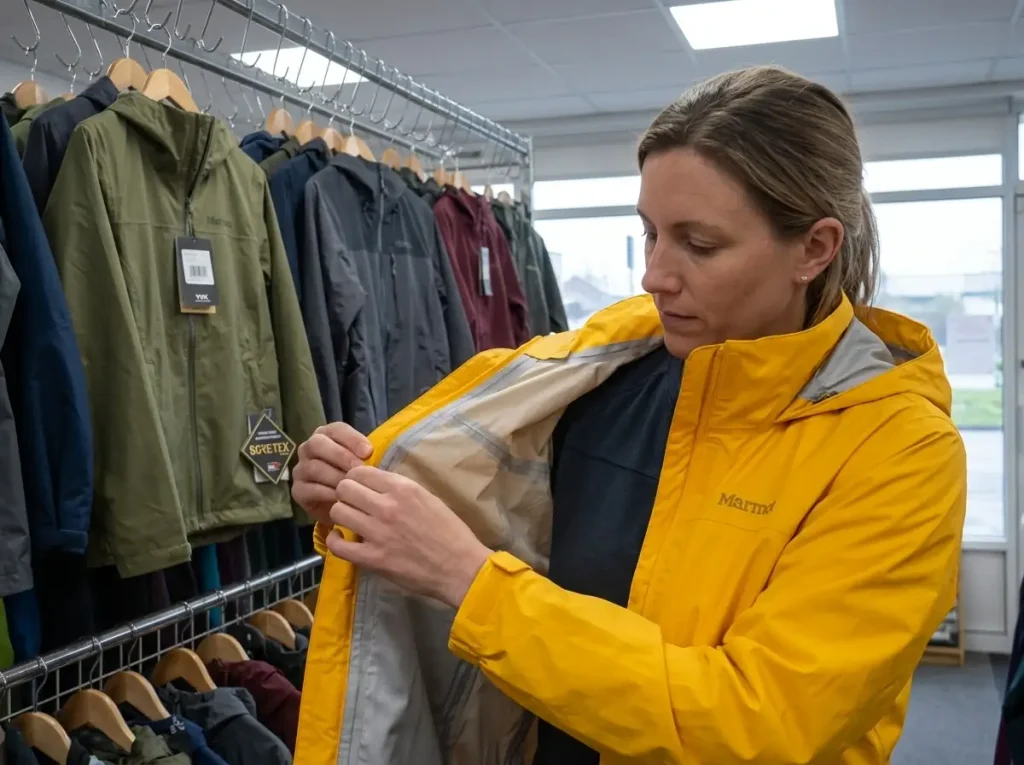
Two or three things determine how long the next hiking rain jacket lasts, and none are on the hang tag in big letters. If you’re ready to shop, which rain jackets hold up without wetting out is the rundown in the best rain jacket for hiking guide.
Match construction tier to how hard you use the thing. Under a loaded pack every weekend is a 3-layer case, full stop. Three trips a year is not, and you’d be paying for durability you’ll never consume. Sorted by price and build, there’s men’s waterproof shells by budget in the men’s rain jacket guide and women’s waterproof shells by build in the women’s rain jacket guide.
Reinforced shoulder panels are the one spec that maps directly onto the failure zone you just diagnosed. A heavier denier across the shoulders and upper back isn’t marketing. It’s the manufacturer acknowledging where their shells come back from.
Fit matters for a mechanical reason, not a comfort one. A shell stretched tight over a fleece puts constant tension on exactly the panels that fail first, so it ages faster than the same jacket worn with room to spare. Sizing it for the layers you actually wear is covered in the rain jacket sizing guide.
Buy secondhand with your eyes open, because warranty coverage usually doesn’t transfer and a delam on a used shell is fully yours. And notice what the community does after a failure: the Rokslide poster who binned two jackets didn’t buy the same shell a third time. He changed tiers.
Conclusion
Run the hose test before you spend anything. Ten minutes and a dark shirt separate a fifteen-dollar problem from a six-hundred-dollar one, and no version of this decision gets easier by guessing.
Wetting out is fixable. Delamination is not. Everything in between is a repair call, and the test tells you which one you’re holding.
Your jacket’s lifespan was mostly decided by how it got washed, how it got stored, and whether it ever met DEET. Not by what it cost.
Pull the shell out of the closet this week and run the test. Find out what you’re dealing with before the next storm makes the decision for you at mile eight.
Frequently Asked Questions
01How do I know if my rain jacket is wetting out or actually leaking?
Wetting out is the face fabric soaking instead of beading while you stay dry underneath. A leak puts water on your base layer. The hose test with a dry dark shirt separates the two in ten minutes.
02Can a delaminated rain jacket be repaired?
Small localized spots, yes. Aquaseal or Seam Grip over the separated laminate, or a repair shop for anything bigger. A whole delaminating panel, no. At that point replacement is the honest answer.
03How often should I reproof a rain jacket?
Tie it to use, not to a calendar. Reproof when water stops beading on the shoulders, and wash the jacket considerably more often than you reproof it. Most jackets need the wash, not the treatment.
04How long should a Gore-Tex jacket last?
Three to five years under regular use, and well past a decade under light use. A 3-layer Gore-Tex Pro shell with reinforced shoulders is documented at eight to ten-plus years with proper care. There is no fixed replacement date.
05Does DEET really ruin a rain jacket?
Yes. It breaks down polyurethane membranes on contact, and it is a named cause in community delamination threads rather than folklore. Never spray it while wearing the shell or store the two together.

I've spent more than a decade researching hiking gear and trail technique. I read the specs, the forum threads and the long-term reviews, and every pick here comes with what it gets wrong.
End of the trail
You read every mile of this one. Here's where the trail goes next.