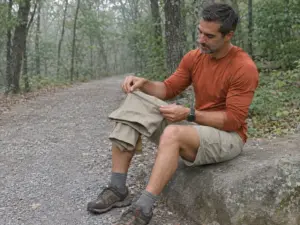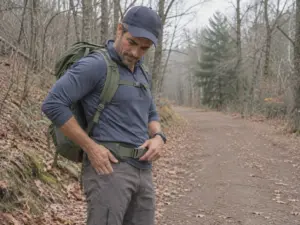
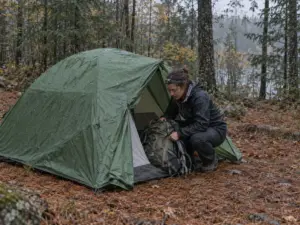
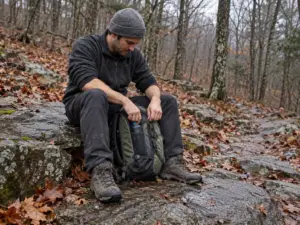
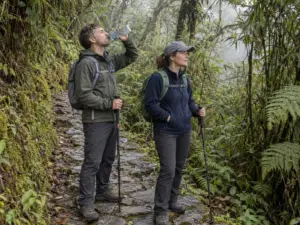
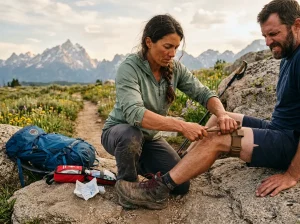
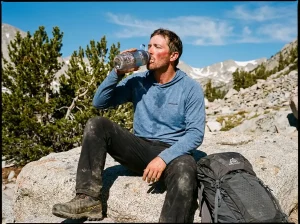
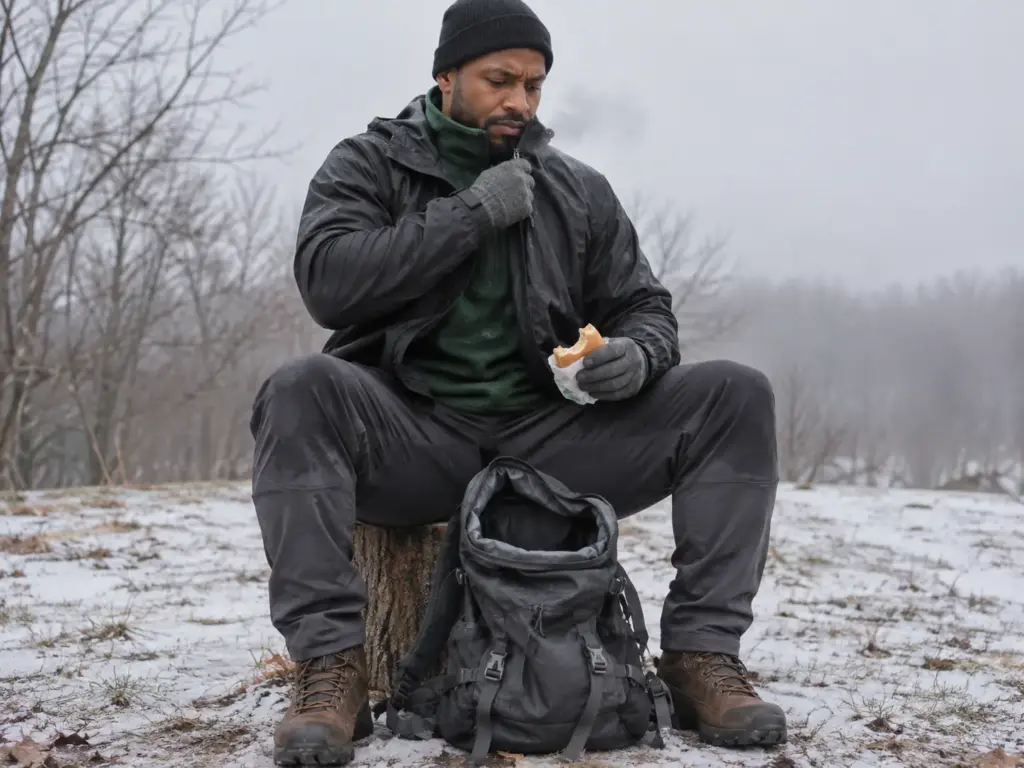
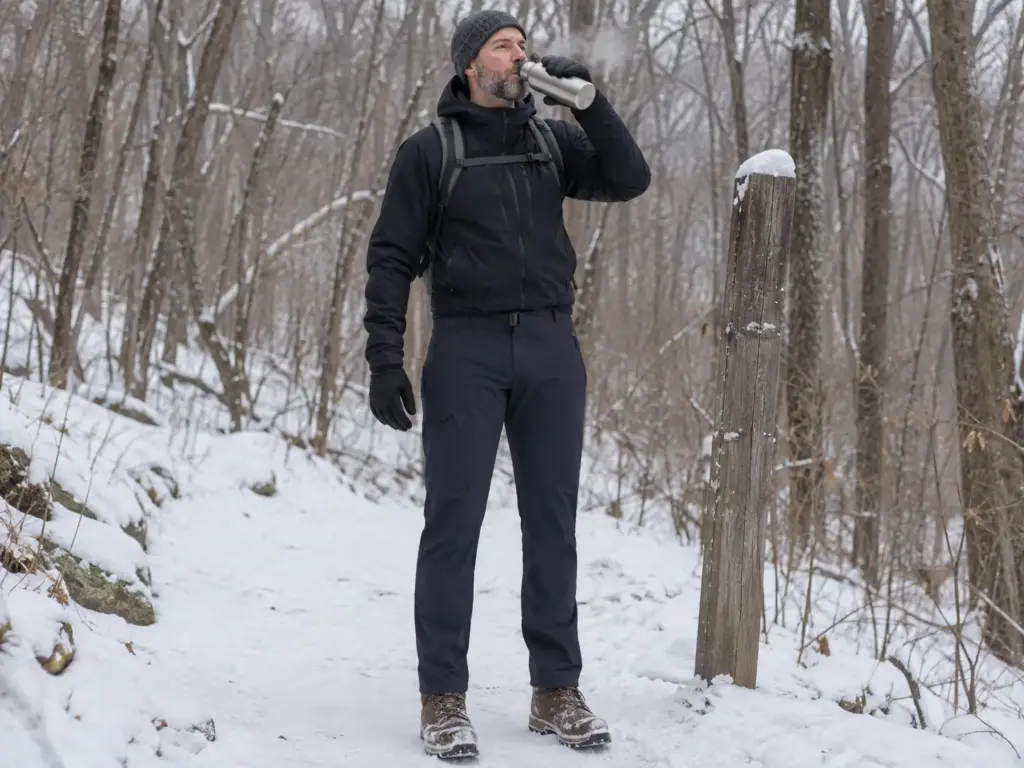
You top out on the last switchback with your legs warm and your pants damp, sit down for ten minutes to eat, and feel the fabric go cold against your skin before the sandwich bag is open. The pants did not fail; the temperature swing from moving to sitting did. The pair that works best on the climb is almost never the pair that works best at the break, so choosing cold weather hiking pants for men means choosing a system, not the thickest garment in the closet.
Below: what the pants have to do, what goes under them, which fabric to pick, how they should fit over a layer, what to wear at 45, 30, 15 and 0 degrees, and nine pairs worth knowing. The thermometer decides less than the gap between how much you sweat climbing and how fast you cool standing still.
| Your day on the trail | Wear on your legs | Carry in the pack |
|---|---|---|
| 30 to 45 °F, long steady climb | Thin wind-blocking softshell over a light base layer | A warm layer for the legs, only if you plan to stop for long |
| 15 to 30 °F, medium pace with breaks | Dense softshell (or a thin-lined one) over medium-weight merino or synthetic | A thin insulated pant or fleece tights for the stops |
| 0 to 15 °F, or a windy ridge | Winter softshell with vents, over a heavy base layer | A real warm layer and gaiters |
| Short, slow, cold day (snowshoes, camp, a snowy stroll) | Fleece-lined pants | Nothing more; a layer is extra weight if you sweat |
Cold Weather Hiking Pants Fail at the Break, Not on the Climb
Every pair of pants feels right for the first twenty minutes. The real test comes at the top, when the effort stops and the sweat you made on the way up starts working against you. Before any pair earns a name, the job has to be clear.
Why the Climb Is Not the Problem
The cold you feel is three things stacked: temperature, moisture and wind. Your clothing has to hold in more heat than those three pull out, and your legs have to keep making heat to cover the difference. Three knobs, not one.
Uphill, the second half takes care of itself. Big leg muscles at work make heat faster than almost any pant can hold it, so the risk is not being cold, it is soaking the fabric from the inside. A heavy pair built for a ten-degree night turns a 30 °F climb into a steam room.
What Happens the Moment You Sit Down
Stop moving and the heat factory shuts off, which is the whole moving vs stationary problem in one sentence. The sweat in your base layer and the inside of your pants stays where it is and goes to work as a cooling system. Water pulls heat from skin about 25 times faster than air does, and wet clothing multiplies conductive heat loss roughly fivefold, so one damp pant leg undoes the warmth of every dry layer around it.
That is why a mild day is not the easy day. The CDC warns that hypothermia can set in above 40 °F when you are wet. A damp 45 °F lunch on a ridge with a breeze is a real cold-weather situation, only without the snow to remind you.
The Rule of Starting a Little Cold
Leave the car slightly underdressed. If you feel comfortable in the parking lot, you will be wet in an hour; the first twenty minutes should feel a touch chilly. Open the vents early, before you sweat, not after. That is dumping heat, and it only works if you do it ahead of the problem.
It is the mistake behind most cases of getting shoulder-season layering wrong: dressing for the stop and wearing that outfit on the climb. Fix the order and half the cold-weather gear questions go away.
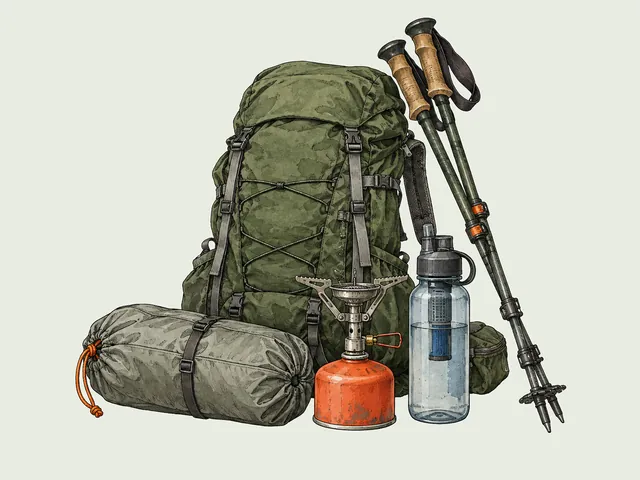
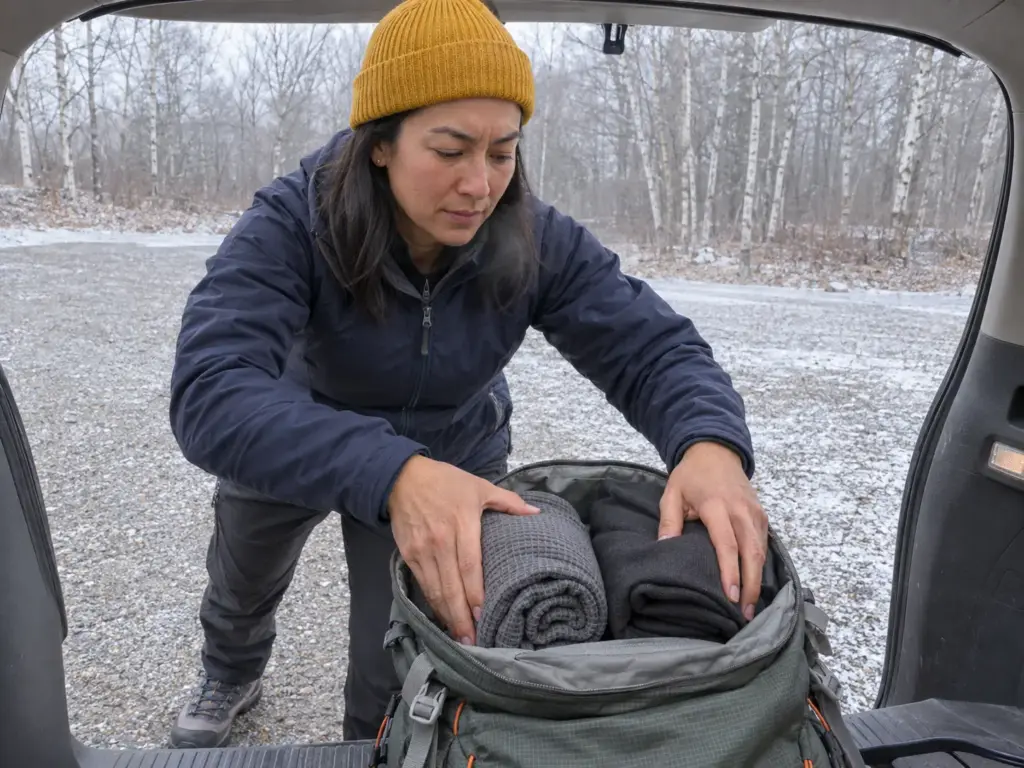
Pack the warm layer at the top of the pack, not buried under the stove. At the break your fingers are slow, and the garment you need first should not be the one you have to dig for.
What Goes Under the Pants: Base Layers and the Warm Layer in the Pack
The pants are the outer layer of your legs, not the insulation. The warmth lives under them or folded in the pack, and getting that split right matters more than which pant brand is on your hips.
The Layer Against Your Skin
Merino wool or a synthetic knit, never cotton. Its job is moisture management: it moves sweat off the skin so the layers above stay dry. Pick the weight by the number on the thermometer, not by the calendar: a light merino covers roughly 25 to 45 °F, and a heavy one takes over below about 25 °F.
The pants then only have to block wind and shed light snow, which is exactly what a thin softshell does well. If you are still choosing the knit itself, the base layers worth wearing under cold-weather pants are sorted out in their own guide.
The Warm Layer That Stays in the Pack
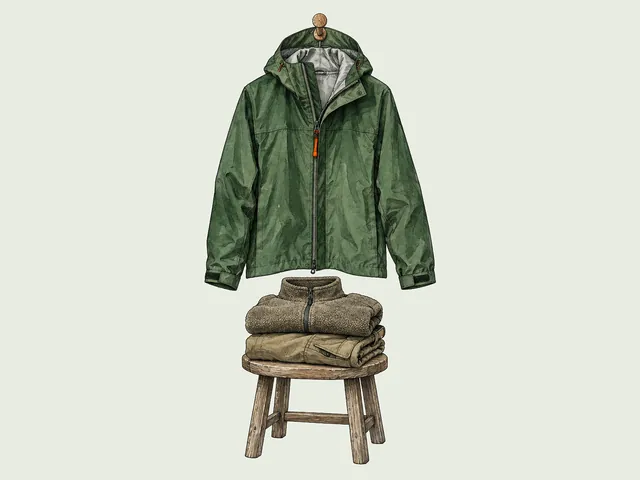
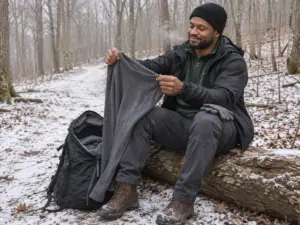
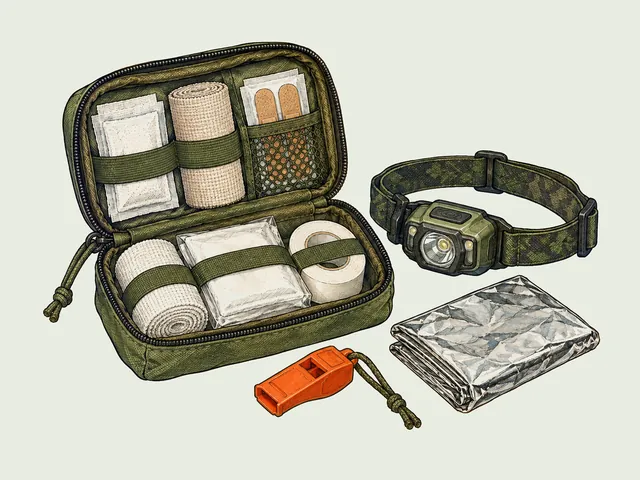
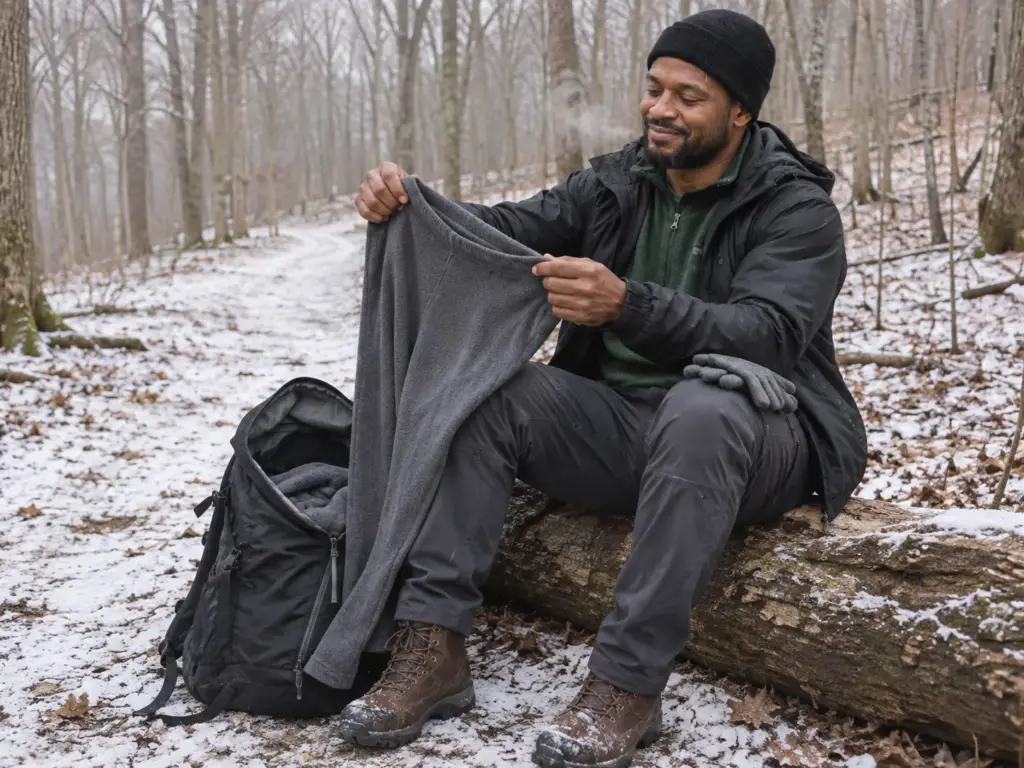
This is the piece that turns a good pant into a working system. A thin insulated pant, plain fleece pants, a pair of grid-fleece tights or synthetic leg warmers all fold down small, and you pull them over everything the moment you stop. Packability is the whole point: this is the midlayer for your legs, and it only earns its place if it disappears into the lid pocket. Grid fleece is a good choice because the channels carry moisture away instead of holding it, and how grid fleece moves sweat away from your skin explains the mechanism.
The cheapest layer in the system costs almost nothing: a pair of thin nylon tights under the base layer. They weigh next to nothing, pack into a tiny ball, dry in minutes and keep some warmth even when damp.
Never put the warm layer on over a sweaty base layer if you can help it. Pull the base layer’s moisture out first by opening the vents for a minute, then add the warm layer, and the pair keeps working for the next two hours.
Why Cotton Is the Costliest Cheap Choice
Cotton dries slowly and clings once it is wet, so jeans or cotton long johns turn your own sweat into the thing that chills you. They cost nothing because you already own them, and they cost the most because a cold, wet pair of legs ends the day early. If the plan is anything more strenuous than a walk to the car, cotton stays at home.
Softshell, Fleece-Lined or Hardshell: What Each Fabric Does in the Cold
Pick a fabric by what it does when you are moving and when you are not. The same pair can be the right answer on a windy climb and the wrong one on a wet, windless afternoon.
Softshell Is the Pair You Wear
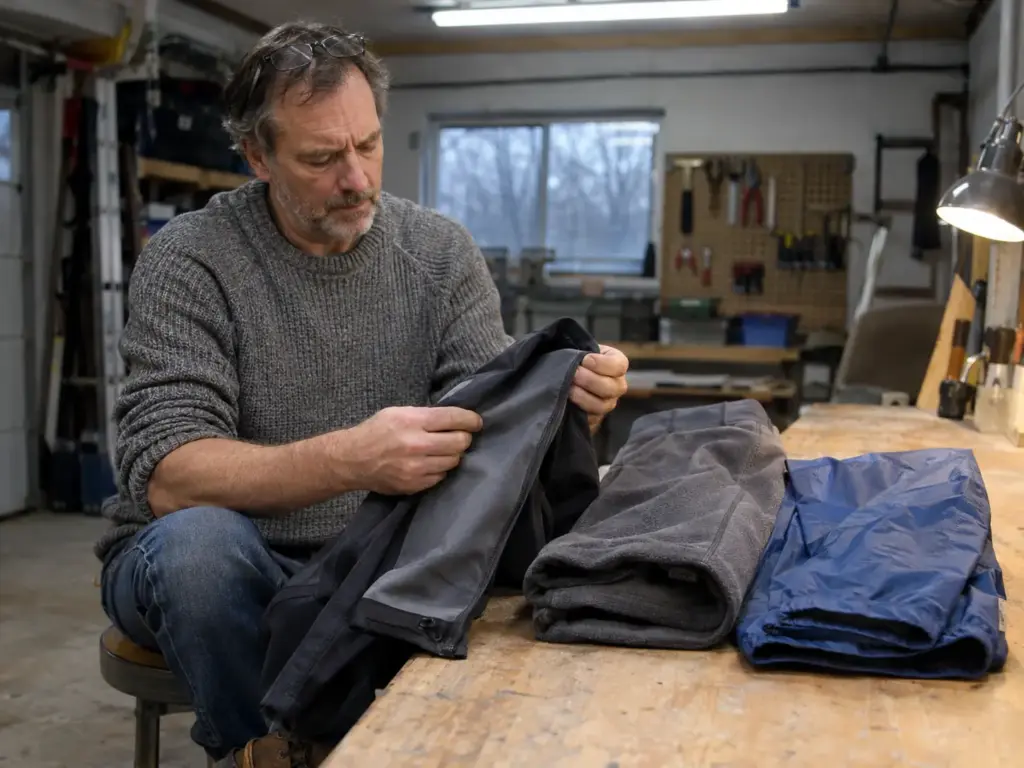
A softshell is a tightly woven, stretchy nylon spandex fabric, usually finished with DWR, that blocks wind, sheds dry snow and brief showers, and still breathes, which is the breathability that lets you wear it all day. It is the pant you put on at the trailhead and forget about. In unlined pants the woven face does most of the work against wind, which is what drives the cold on an exposed ridge.
DWR wears off with dirt and abrasion, and the point where it quits is worth knowing: where water-resistant pants start letting water in comes earlier than most people expect. Washing the pair and reviving the finish once a season belongs in maintenance, not in the extras column.
Fleece-Lined: Warm Now, Hot Later
A fleece lining gives you heat from the first step, which is lovely at the car and a problem forty minutes later. The heat cannot be removed, so the fabric keeps producing a warm, humid layer against your skin whether you want it or not. That suits slow, short days, and it is explained more fully in its own section below.
Princeton Outdoor Action’s cold-weather injury guide is blunt about what wet clothing does to your heat. It also lists the early signs of hypothermia as the umbles: stumbles, mumbles, fumbles and grumbles. If a partner starts tripping or slurring at a break in a sweaty pair of pants, the problem is a cooling core, not his boots.
Hardshell and Rain Pants as the Backup
Hardshell pants keep wet snow and rain out, but they breathe little, so you sweat inside them. They belong in the pack as an over-pant for wet snow, freezing rain or a long exposed stretch, not on your legs all day. Which of the two wins depends on the snow itself, and how snow type decides between softshell and hardshell walks through the call.
Vents, Zips and Cuffs That Earn Their Weight
The features that matter more than a model name: thigh vents to dump heat before you sweat, ankle zips and gussets so the hem opens over a boot, a cuff you can cinch against snow, and zippered pockets that stay shut under a hip belt. A pair with all four will usually beat a fancier fabric with none.
How Cold Weather Hiking Pants Should Fit Over a Layer
Fit in men’s hiking pants is a different question in cold weather than in July. You are sizing for the pants and the layer under them together, and a pair that closes comfortably over summer shorts can bind the moment heavy merino goes in. Your usual waist size deserves a second look, because a heavy base layer eats the ease at the hips.
Try It On With the Layers You Will Wear
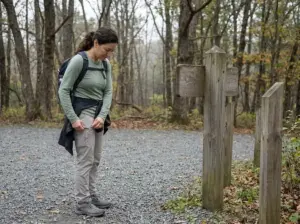
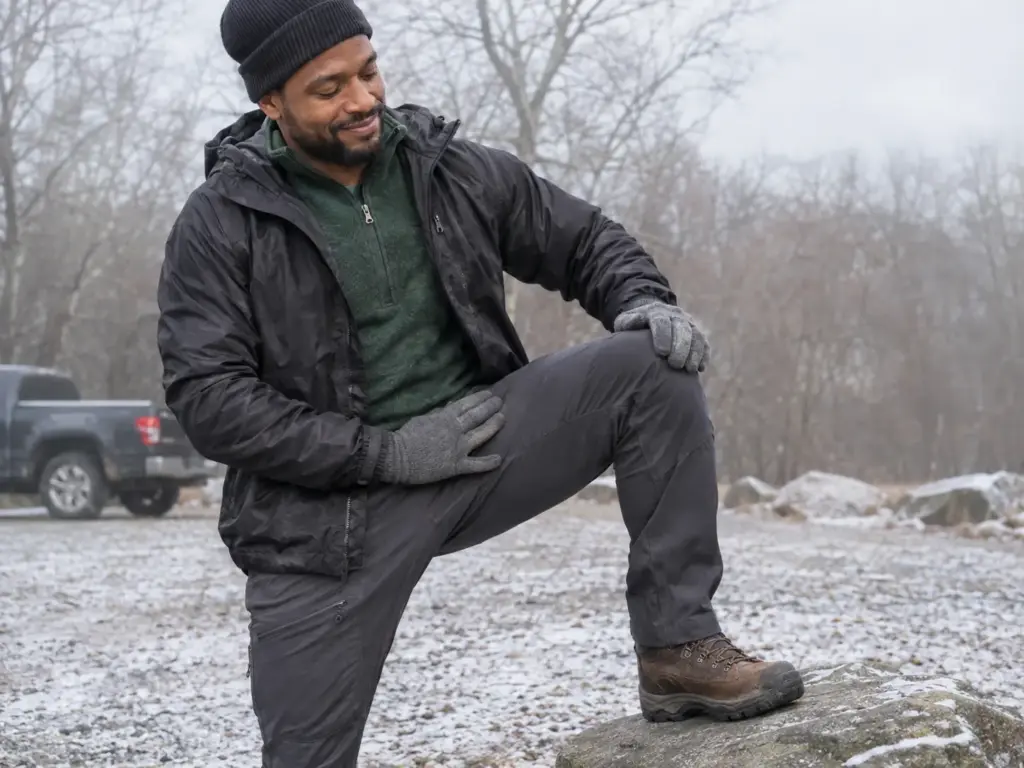
Wear the base layer you will actually hike in when you try the pants, not the thin underwear you walked into the shop in. The blanket advice to size up every time is wrong; use the model’s own size chart, then check that you can bend your knee fully and step up onto something high without the fabric pulling across your hips. A regular fit or relaxed fit usually leaves room for the layer; a slim fit rarely does.
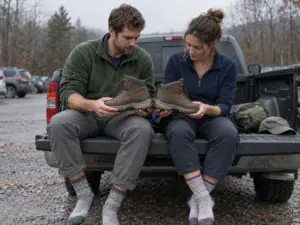
Do the fit check in the fitting room, with the layers on, with your boots on if you can. A pant that feels fine standing still often drags at the crotch the first time you lift a boot onto a high rock.
Crotch, Knees and the High Step
The seam under you takes the strain. Fleece-lined pairs sometimes have a lining sewn into a pattern that was never recut, and the result is a tight crotch that you only notice when you raise a foot. Articulated knees and a gusseted crotch matter more with a layer underneath, because the pant has less spare room to give. A sit, squat and climb routine like a sit, squat and climb test before you commit catches most fit problems in the first two minutes.
Waist, Hip Belt and Pocket Zips
With a thick base layer and a loaded hip belt, a rigid belt presses in exactly where the pack already rubs. A built-in belt or an adjustable waist is kinder, and the question of keeping pants up under a loaded pack turns on that choice. Length matters too: long enough that the hem covers the top of the boot when you sit, short enough that it does not drag under a gaiter. How inseam length changes with your height and terrain covers how to pick it.
What to Wear at 45, 30, 15 and 0 Degrees
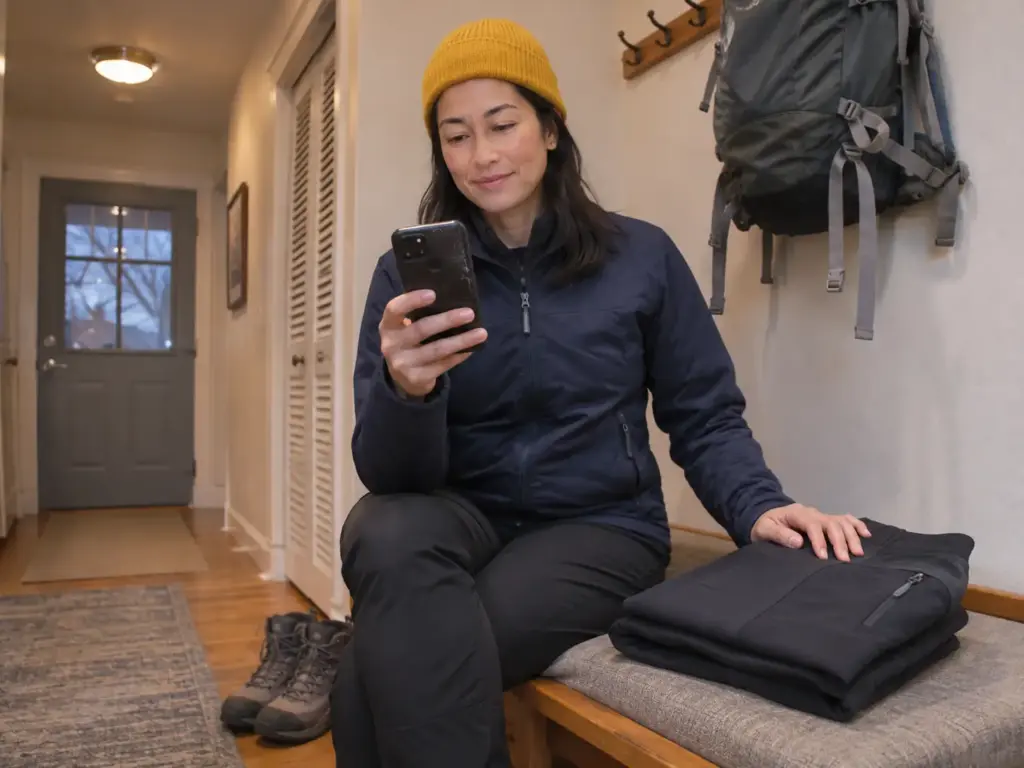
It is six in the morning and you are standing in front of the closet with your phone in your hand, trying to turn a number into an outfit. The table below does that conversion. Treat the numbers as starting points: your pace and your own furnace move them a few degrees either way.
| Air temperature | Under the pants | The pants | In the pack |
|---|---|---|---|
| 45 °F | Light base layer, or nothing | Thin softshell or a woven nylon pant | A light warm layer, more important if wind or rain is forecast |
| 30 °F | Light merino (around 150 weight) | Softshell, or a thin-lined softshell | A thin insulated pant for the break |
| 15 °F | Heavy merino (around 250 weight) | Dense winter softshell with vents | A real warm layer, plus gaiters |
| 0 °F | Heavy base layer | Winter softshell, or fleece-lined if the pace is slow | Another layer added before any long stop |
Reading the Table Without Overthinking It
Start on the row for the morning temperature, then move one row warmer if the day is sunny and calm, one row colder if it is windy or you are heading above treeline. The 45 °F row is not the easy one: wet is wet, and a drizzle at that temperature does the same damage as a dry, colder day. For everything above the waist, the full winter layering system from head to toe completes the picture.
Wind Chill Moves the Row
At 0 °F with a 15 mph wind, the wind chill drops to about −19 °F, and exposed skin can freeze in around 30 minutes, according to the National Weather Service wind-chill chart. A calm, sunny 0 °F and a windy 0 °F are two different days and two different purchases, so look at the wind forecast before the temperature.
That gap is also why the dense, wind-blocking softshell earns its keep on exposed ground. A thin pant is lovely in the lee of the trees and surprisingly cold the moment you step onto a ridge, where the wind goes straight through a loose weave.
Where Insulated Pants Start to Make Sense
Once the air is below freezing and you drop toward 5 to 10 °F, an insulated or fleece-lined pair starts to be worth wearing for a slow pace. Above that range it usually sweats you out more than it warms you. Even then, the rule from the start of this guide holds: if you are going to be on a long climb, the warm layer belongs in the pack, and the pant on your legs should still be able to shed heat.
The Best Cold Weather Hiking Pants for Men: Premium Picks
The four softshells below are the high end of winter hiking pants. Each one gets its job and its weak spot said plainly, because a pair that costs this much should earn the spot in your closet. None of them is the pant for sitting still at 20 °F; that job belongs to the layer in the pack.
Best Overall: Arc’teryx Gamma
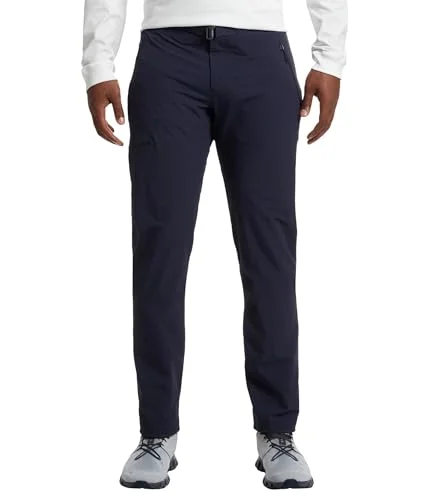
The Arc’teryx Gamma is the pant for cold, exposed terrain where wind and brush, not rain, are the enemy. Its dense stretch-woven face resists wind very well and holds up to light precipitation, and the cinchable ankle hems close against snow. It is not cheap, and in July it is more pant than you need. Beginners usually do better with a cheaper softshell and a better base layer; this one rewards someone who already knows how to manage their layers.
Choosing between it and a heavier, warmer option is a question of climate and trip type, and how to match weatherproof pants to your trip and climate helps narrow it.
Best Dedicated Winter Softshell: Outdoor Research Cirque III
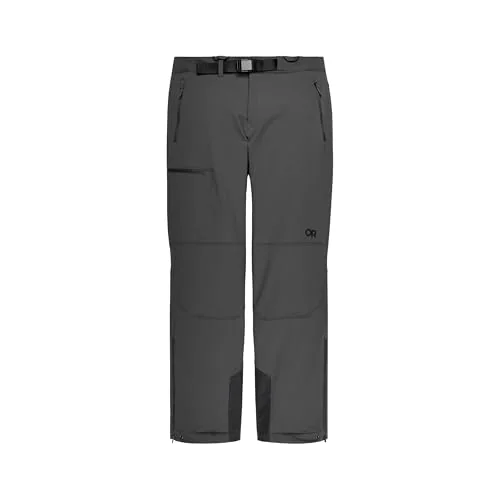
The Outdoor Research Cirque III was designed around the winter hiker with snowshoes or mountaineering-style boots. The ankle zips have gussets so the hem opens easily over a boot, a lace hook keeps the hem from riding up, and the cut leaves room for a heavy base layer. It also has a pocket sized for an avalanche beacon.
The honest downside is weight, and in mild weather the ActiveTemp lining is more than you need. It works for beginners precisely because it is made for the conditions rather than adapted to them.
Most Durable: Mountain Hardwear Chockstone Alpine
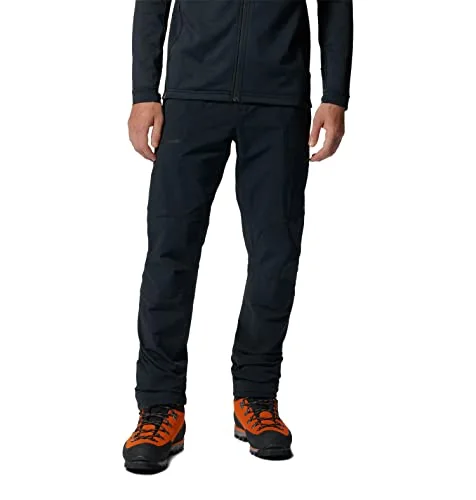
The Mountain Hardwear Chockstone Alpine is the one to buy if your trails involve rock, brush or scrambling in the cold. Its double-weave stretch fabric has the durability to take a beating, the knees are articulated and the integrated belt sits flat under a hip belt. With no ventilation, a long June climb in it would be miserable, so keep it for crisp, dry cold at a steady pace. It is also a reminder that more flex is not always better, and why more four-way stretch can hurt a pair of hiking pants shows when stretch works against you.
Best for Shoulder Season: Fjallraven Keb Agile
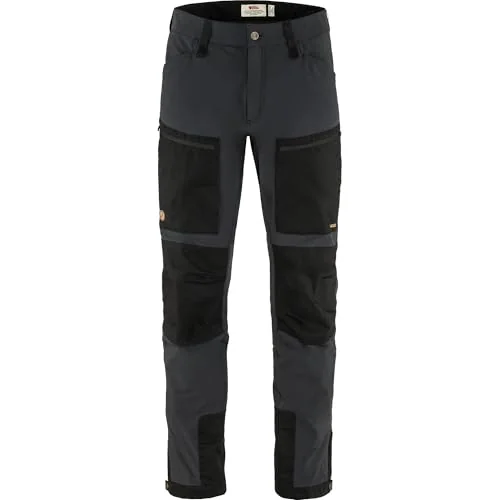
The Fjallraven Keb Agile uses a dense G-1000 weave in the knees and cuffs, the places that wear out first, and a stretch fabric elsewhere. The zippered side vents are what rescue it on a warm climb. The fabric can be waxed to boost its water resistance, which suits a long-term pair and annoys anyone who wants no maintenance at all. On a smooth, flat trail it is overbuilt, and it is the least forgiving of the group if your size is borderline.
Value Picks and the Pants You Already Own
Open the closet before you open the wallet. The three pairs in this section cost less than the premium group and, for a lot of cold days, do the same work.
Best Value Softshell: Rab Incline Light
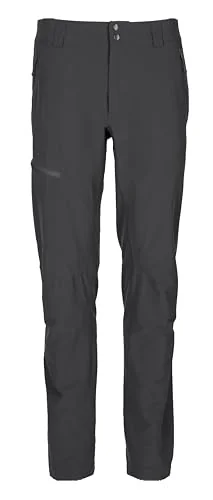
The Rab Incline Light is a single-weave softshell with four zippered pockets and articulated knees, and it does most of what the Gamma does at a noticeably lower cost. The single weave is a little less dense, so on a bitterly windy ridge you will feel it before you would in the premium pair. For most shoulder-season and mid-winter days below treeline, that trade is a good one.
Best for the Climb: Outdoor Research Ferrosi
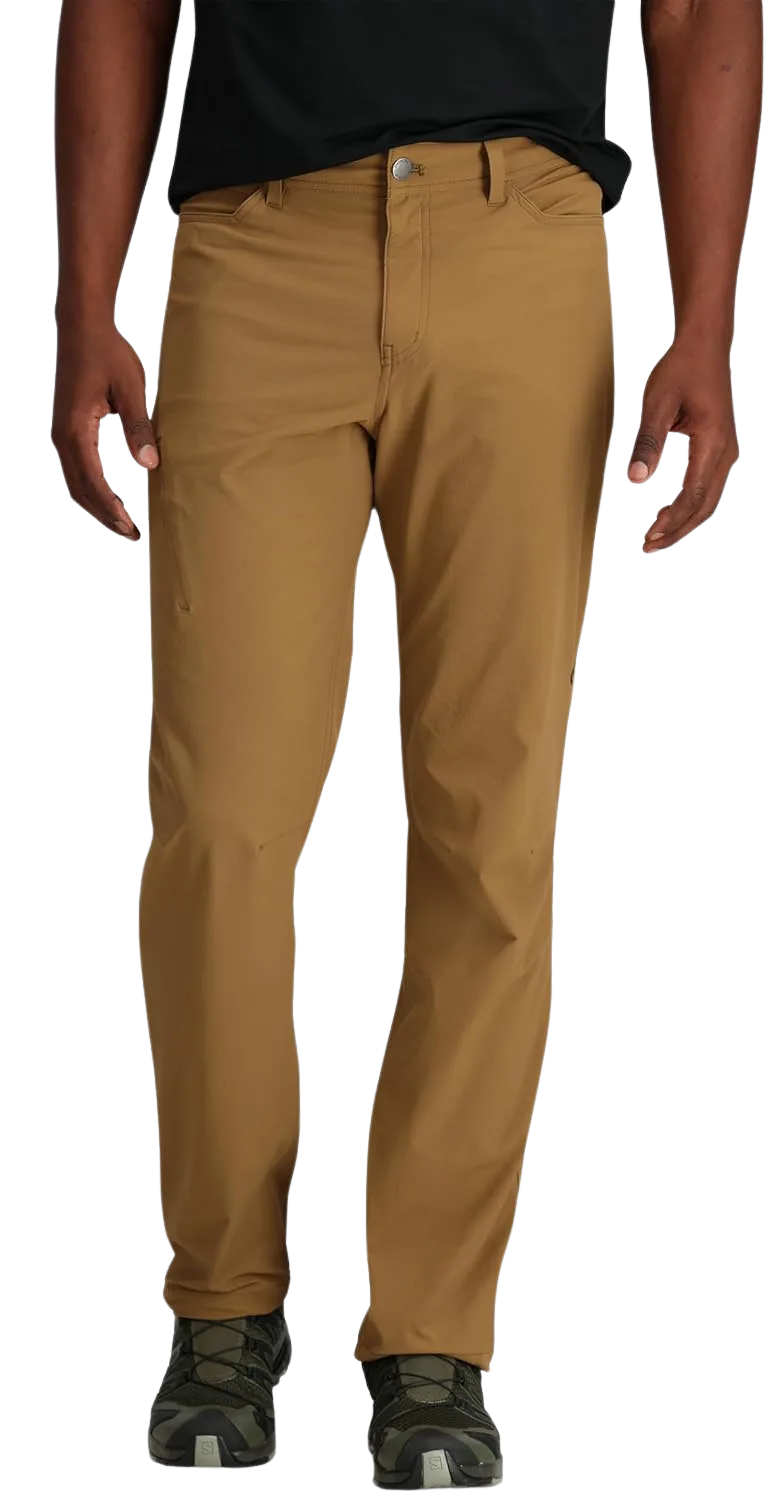
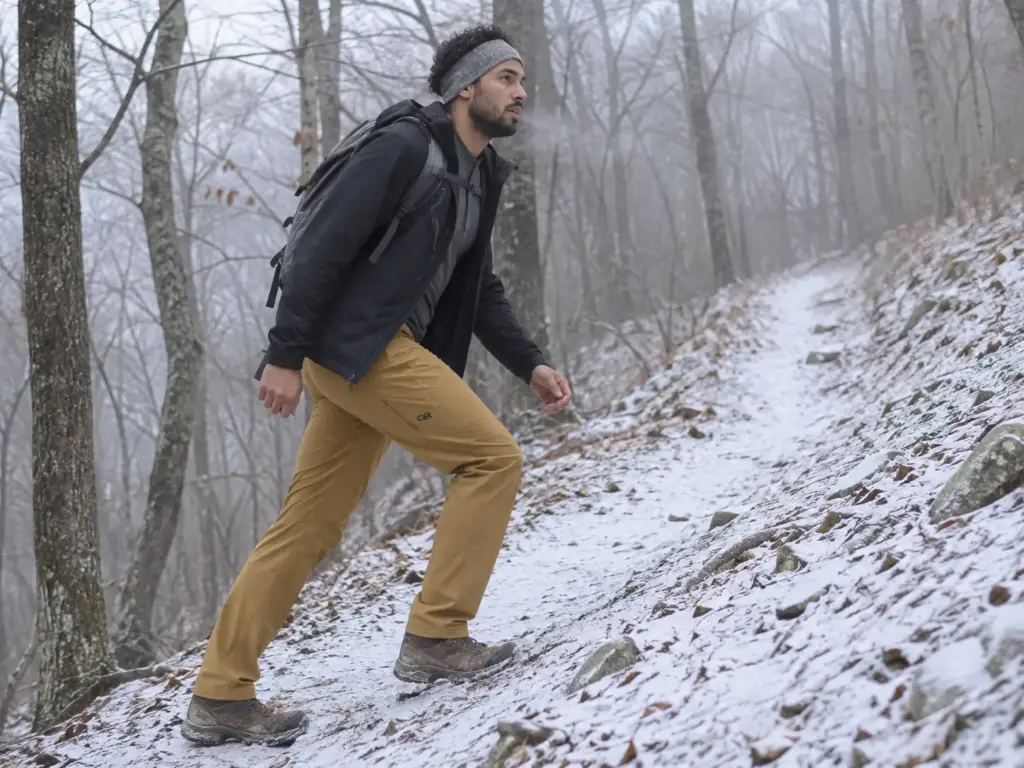
The Outdoor Research Ferrosi is a 90-denier stretch-woven ripstop nylon at 10.7 oz that resists wind and light water. It is the pant that matches the section’s whole argument: thin enough to hike hard in at 30 °F, with the real warmth packed rather than worn. It will not keep you comfortable sitting still in the cold, and that is by design. Pair it with an insulated layer for the stops and it covers a surprising range.
The Pair Already in Your Closet: prAna Stretch Zion
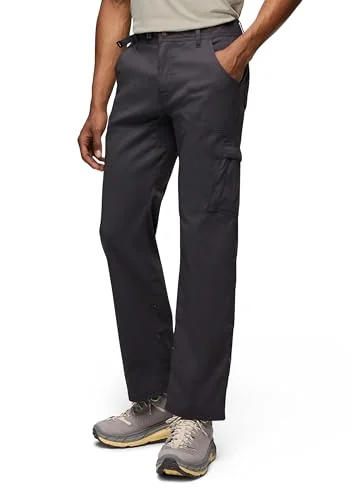
If you already own a good three-season pant, the prAna Stretch Zion is the model to measure it against. At 14.2 oz with a built-in belt, roll-up snaps and a thigh vent, it layers well over merino and handles most cold days on a dry trail. Try that setup first. If the day then proves too cold or windy, the money is better spent on a better base layer and a warm layer for the pack than on a second pair of pants.
When you want to compare more models, five men’s hiking trousers compared by where they fail lays out the differences.
When Fleece-Lined Pants Are Right and When They Turn Into a Sweat Trap
The fleece-lined pant is the one most people reach for first, and the one most likely to be the wrong choice. It has a real job, but a narrower one than its popularity suggests.
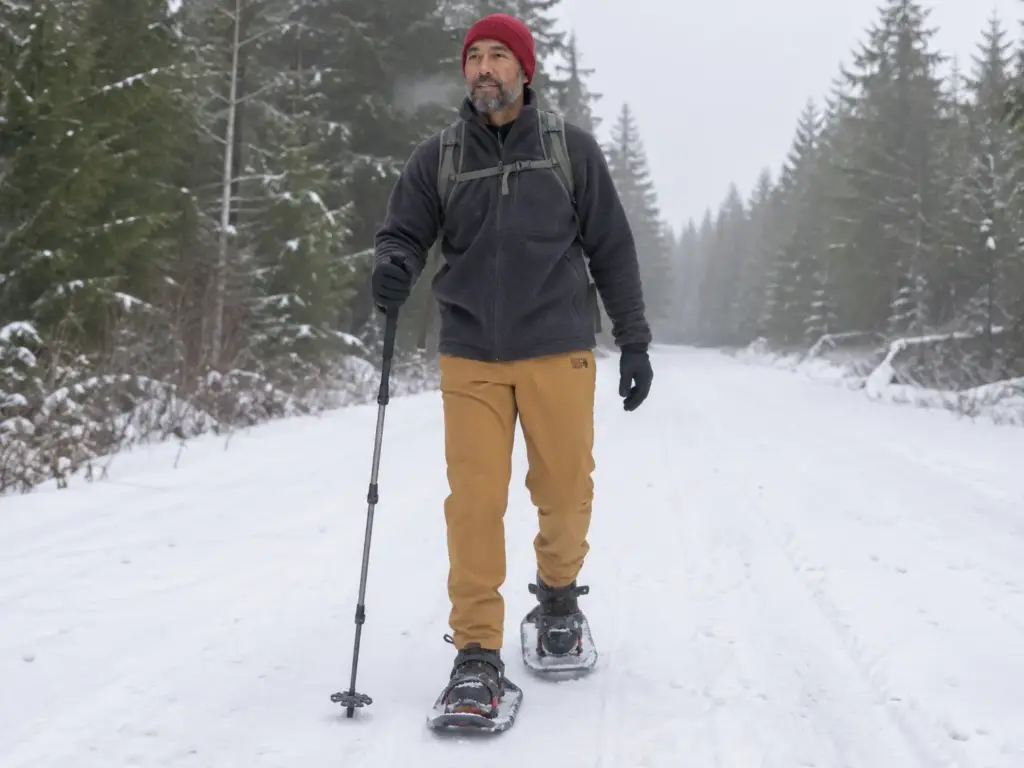
The Short, Slow Cold Day
A fleece-lined pair is the right call when you will spend more time standing than moving: snowshoeing at an easy pace, a cold camp, a winter walk where the heat arrives the second you leave the car. The lining works from the first minute, and dry snow brushes off the shell. Low effort means little sweat, and little sweat means the lining stays dry and keeps doing its job. The same goes for winter cycling and cross-country cold-weather chores, anything slow enough that you never outrun the insulation.
Why a Long Climb Turns Fleece Against You
The failure starts well into a sustained climb. The lining traps the heat you generate, you cannot take it off, and you sweat into it. At the top the sweat cools and the same pair that felt perfect at the car now holds a cold, damp layer against your legs. With wet snow, neither the fleece nor the DWR holds up for long.
A ski-resort snow pant makes the same mistake in a bigger way. It is built for sitting on chairlifts and standing in lift lines, and it is too hot for hiking when you are actually hiking. The rule of thumb is simple: if the climb will last more than an hour, wear a softshell and carry a warm layer; if you will spend more time stopped than moving, wear the lining. The same stop-and-go logic applies to your torso, and active insulation that suits stop-and-go hiking is the upper-half version of the same answer.
Mountain Hardwear Yumalino Active Lined
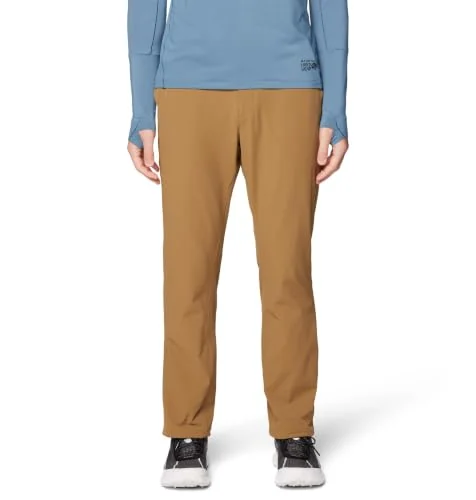
The Mountain Hardwear Yumalino Active Lined pairs a four-way stretch shell with a micro-fleece lining and a PFC-free DWR, so the snow slides off and the lining keeps its warmth. It is the pair for a short, slow, cold day. Take it up a long ascent and it will cook you, and you will not be able to turn it down.
The Budget Pair to Try First: Baleaf Fleece-Lined
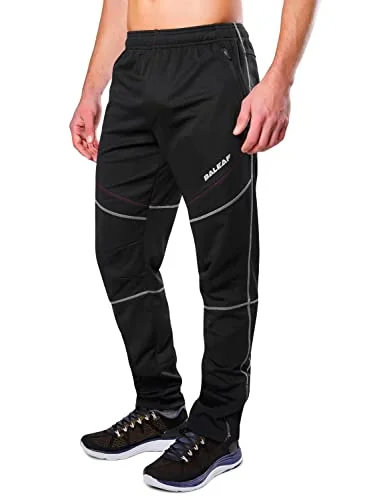
The Baleaf Fleece-Lined Winter Pants have a grid-fleece lining, a polyester shell and zippered ankles, and they cost a fraction of the pairs above. That makes them a sensible experiment: wear them on a snowshoe loop or a cold campsite and see whether the lining suits how you move. If you find yourself overheating on a steady climb, you have learned the lesson cheaply and the softshell-plus-pack-layer setup is your next step.
Snow, Boots and Gaiters: What Changes When the Trail Is White
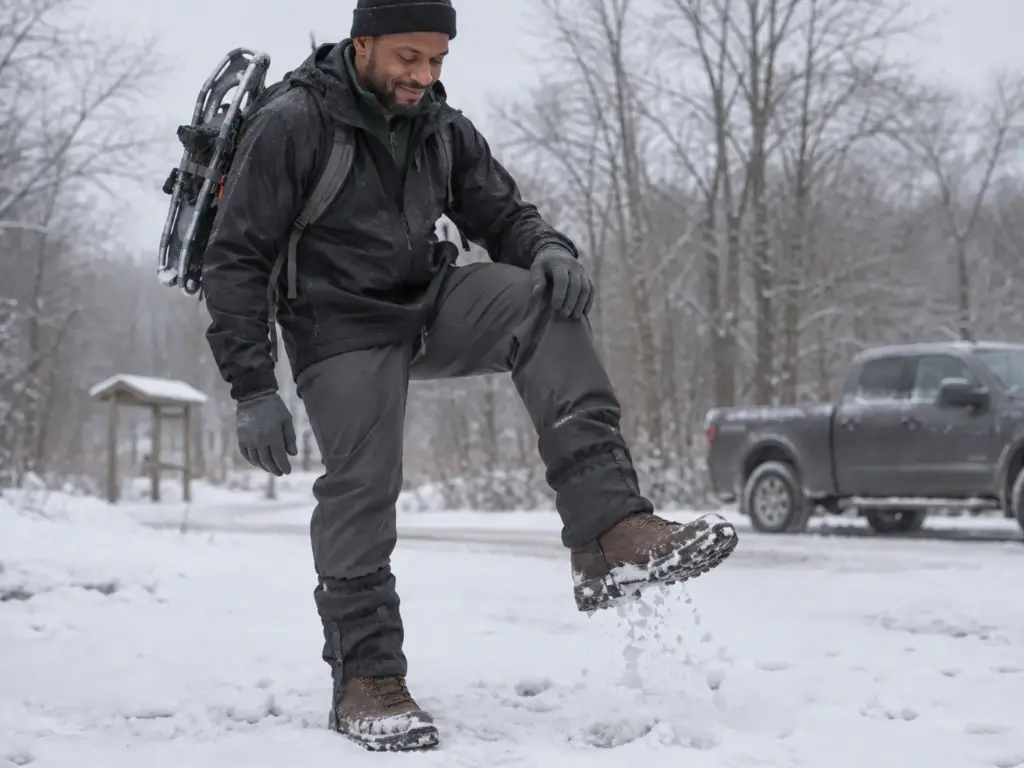
Snow adds three problems the pants alone do not solve: it gets into the boot, it soaks the cuff from below, and it grabs at the hem with every strap and spike you wear. Fix those and most of the rest of the pant question gets easier.
Ankle Zips and Boot Hooks
A pair with ankle zips opens wide enough to slip the hem over a boot, then closes snug on top of it. A lace hook, sometimes called a boot hook or cuff grommet, clips the hem to your laces so it stays down when you step up. Together they keep the pant outside the boot instead of letting it ride up and let snow in. The boot decides how well the hem seals, and insulated winter boots that pair with a gaiter are worth choosing alongside the pants, not afterwards.
Gaiters Do More Than the Pants
When snow gets into your boot, the pants usually get the blame. Gaiters, insulated boots and good traction do more for a snowy day than any pant model, because the gaiter closes the one gap pants cannot. A cinched hem over a gaiter, or tucked inside it, stops the funnel that carries snow into the boot top. For deep, loose powder, gaiters that hold up in deep powder cover which designs actually stay put.
Postholing and Wet Cuffs
Postholing, when you punch through the crust to your knee with every few steps, soaks the lower leg from underneath, which no DWR finish can stop. The way to limit it is to cinch the hem over the boot or inside the gaiter, so the snow cannot pack against the fabric and melt into it. It also costs time and energy, and what post-holing does to your legs and your schedule shows how fast a short day can slow down.
Snowshoe Straps and Hems
Snowshoe straps chafe and tug at loose hems, and a hem that wanders catches a crampon point or a binding. An adjustable hem that cinches close to the boot avoids both. If a pair has no hem adjustment and you plan to use snowshoes, plan on gaiters to hold it in place.
Close the hem and the gaiter at the car, not at the first drift. Cold, wet fingers fumble a cuff cinch, and the first snow that gets in is the snow that stays in for the rest of the day.
Pack the Warm Layer, Cinch the Cuff, Then Read the Wind
Pick the thin, wind-blocking pant for the climb and keep the heat for the stop in the pack. Try the pants on with the layers you will actually wear, let the temperature table pick the row, and close the hem over the boot whenever there is snow. Most cold-weather pant problems are layering problems, so fix those first and the model matters less. If you are still deciding which kind of pants fits the hikes you actually do, start with how to pick hiking pants for the hikes you actually do.
Before your next cold outing, look up the morning’s temperature and wind, find the row that fits, and put the warm layer in the pack. For everything beyond the legs, winter hiking gear, skills and safety is the next place to go.
Frequently Asked Questions
01What are the best pants for hiking in cold weather?
A thin, stretchy softshell with a DWR finish, wind resistance and vents, worn over a merino or synthetic base layer. No single pair is the warmest. The heat for the stops goes in the pack, so the pant on your legs can stay light.
02What do you wear under hiking pants in winter?
A merino or synthetic base layer, matched to the temperature: light between roughly 25 and 45 °F, heavy below that. Never cotton, which dries slowly and chills you once it is wet.
03Are fleece-lined hiking pants worth it?
Only for short, slow outings, snowshoeing or a cold camp. On a long climb they hold in too much heat, and the sweat then chills you when you stop.
04Are snow pants good for hiking?
Almost never. They are built for skiing and standing in snow, and while you walk they run too hot and do not breathe enough. A softshell plus a warm layer in the pack works better.
05Should you size up cold weather hiking pants for layers?
Not automatically. Try the pants on with the layer you will really wear, then check that you can bend your knee fully and step up high without the fabric pulling at the crotch.
I've spent more than a decade researching hiking gear and trail technique. I read the specs, the forum threads and the long-term reviews, and every pick here comes with what it gets wrong.
End of the trail
You read every mile of this one. Here's where the trail goes next.