


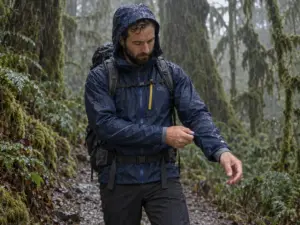
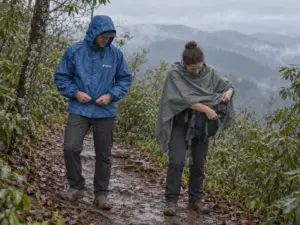
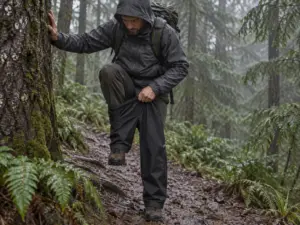


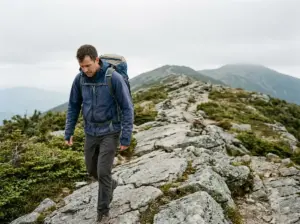







The wind on the divide screams at 40mph. It strips the heat right out of your layers. Suddenly, the perspiration on your back turns freezing cold, acting like an ice pack aimed directly at your core.
This “flash-off” chill isn’t because you didn’t try hard enough. It’s a failure of your clothing system.
I have spent decades leading groups through dangerous terrain, from the Sierra Nevada to the Appalachian Trail. I have seen strong hikers reduced to shivering messes, not because they lacked warm clothing, but because they didn’t understand how to move moisture.
To stay warm and safe during high-output hiking, you need to stop treating your clothes as just insulation. You need to start seeing them as a machine that pumps water away from your skin. Let’s look at how this sweat management protocol works and how to keep that machine running.
What Makes Grid Fleece Different from Standard Insulation?
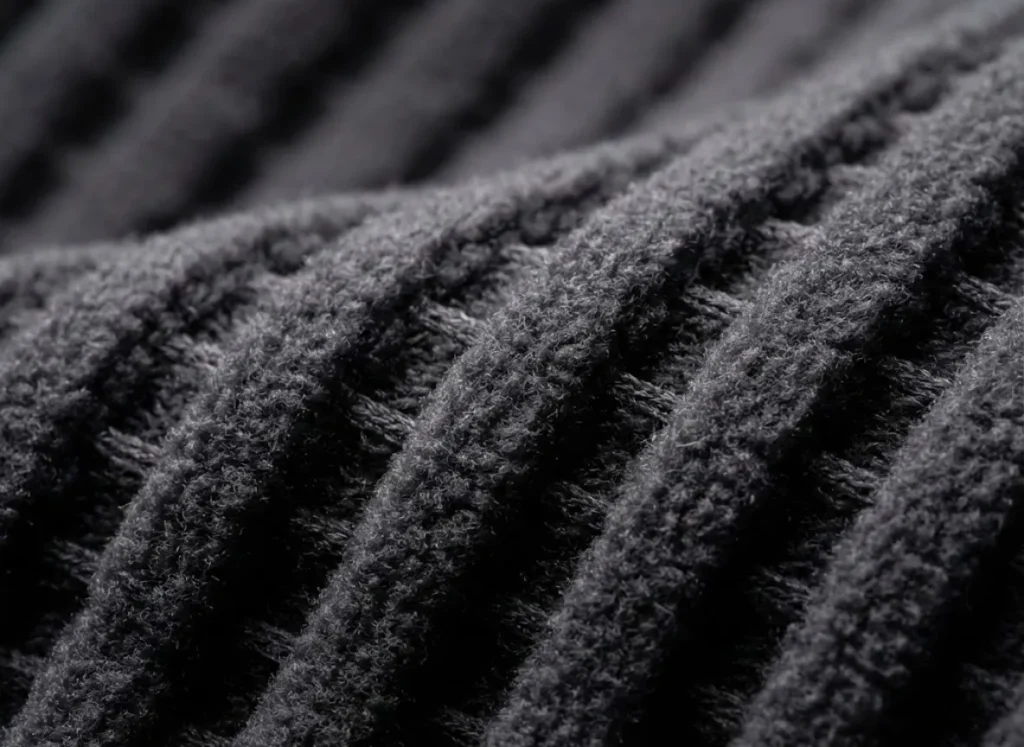
Grid fleece is different from a standard fleece or traditional fleece because of its shape. It uses a specific construction to physically push moisture away from you, rather than just soaking it up like a sponge.
How does the structure actually move moisture?
To understand why your gear works, you have to look closely at the fabric. High-end activewear, like those using Polartec Power Grid, uses a Bi-Component Knit construction. This is just a fancy way of saying it fuses two different types of yarn together.
The hydrophilic yarn touching your skin loves water and grabs it instantly. The hydrophobic yarn on the outside hates water and spreads it out. This creates a “Push-Pull” effect. The inner layer pulls sweat off your skin, and the outer layer pushes it to the surface so it can evaporate.
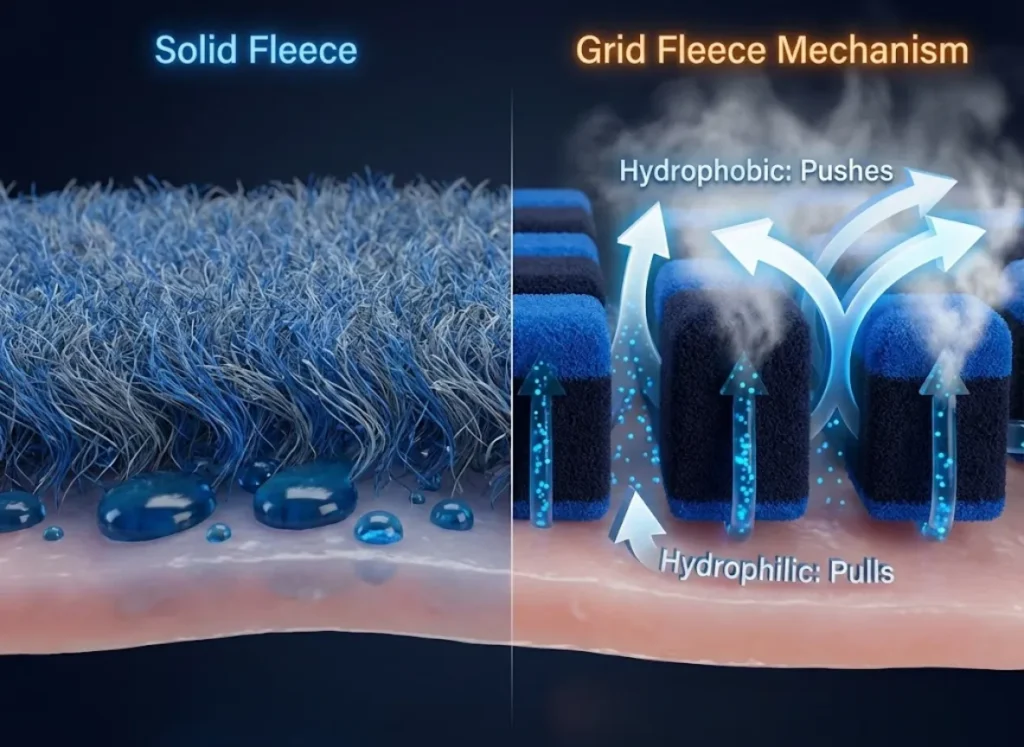
The grid pattern is the engine here. The raised microgrid squares are the contact points that touch your skin and pull the sweat off. Between those squares, there are open channels of negative space. These empty spaces mean the wet fabric touches your skin 40% to 60% less than a solid fleece. This prevents that gross feeling of a wet plastic bag sticking to your back, often referred to as wet clammy skin.
This process works like a straw. The tiny spaces between the fleece fibers create suction that moves liquid against gravity. This is a mechanical wicking action. It is much better than the chemical treatments used on cheaper polyester fleece shirts, which wash out after a few months.
Pro-Tip: If you are unsure if your old fleece uses this mechanical structure or just a chemical coating, look at the tag. If it feels smooth and uniform like cotton but claims to be “wicking,” it’s likely just a coating. True grid fleece has visible depth and texture.
You need this mechanical pumping action. If it fails, you get cold fast. This is unlike the rapid heat loss seen in the thermal conductivity of wet cotton, which just holds the water against your body without moving it anywhere.
A study on liquid transport in knitted fabrics confirms that this specific shape moves moisture in one direction much better than standard fabrics.
Which Grid Architecture Fits Your Output Level?
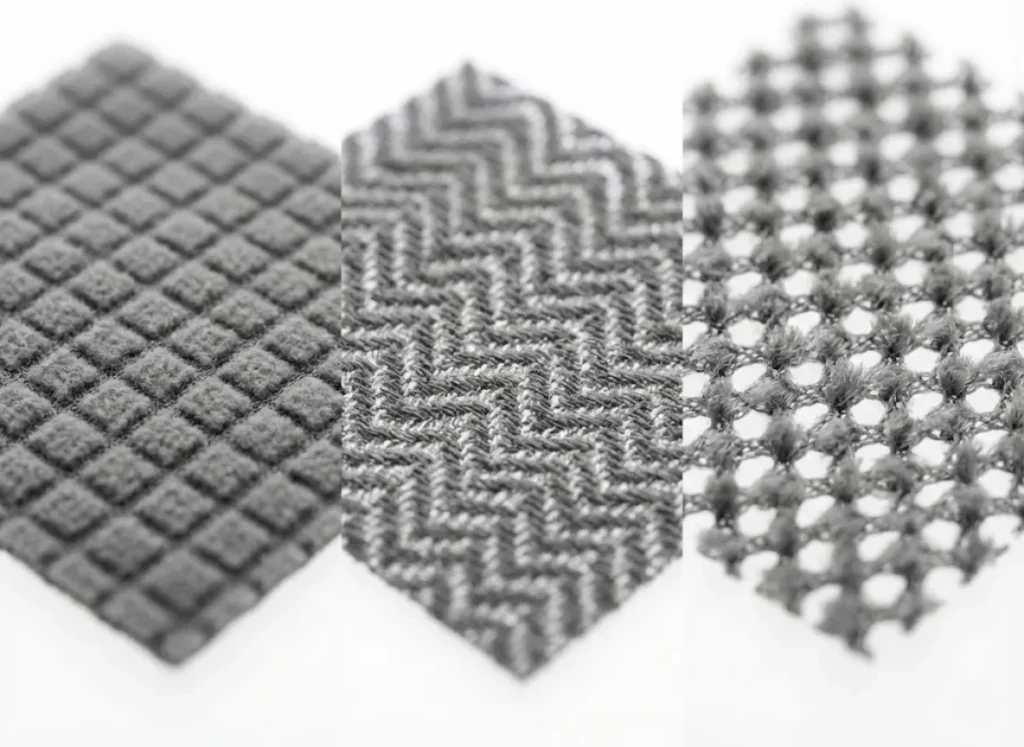
Not all grid fleece garments are the same. You need to pick the right one based on how much you sweat. We look at how much air can blow through the fabric—its air permeability—to decide what works best.
How do Classic Grid, High-Airflow Grid, and Active Mesh compare?
We can group these mid layer fleece options into three main types based on how they are knit.
- Classic Grid: This is the “Box Grid” pattern found in famous layers like the Patagonia Capilene Thermal Weight or the legendary Polartec Power Grid (often seen in the military’s Extended Cold Weather Clothing System). Other examples include the Melanzana Micro Grid or Black Diamond Coefficient LT. It lets a moderate amount of air through but has a smooth outer face. It balances warmth-to-weight ratio with toughness. This is great for climbing where you might scrape against rocks.
- High-Airflow Grid: This uses a “Zig-Zag” or chaotic pattern, like the Patagonia R1 Air, Mountain Hardwear Summit Grid, or The North Face FutureFleece. The messy texture lets way more air pass through. This dries much faster when you are sweating hard, but the wind cuts right through it. The Outdoor Research Trail Mix and Kuiu Peloton 97 also fit this niche of highly breathable midweight warmth.
- Active Mesh (Naked): This is the “Open Knit” style seen in fabrics like Polartec Alpha Direct. Brands like Senchi Designs have made this famous in ultralight backpacking. It has no outer face fabric at all. It is basically just fluff on a net. The wind blows through it as if you weren’t wearing anything, which creates a ventilation king scenario.
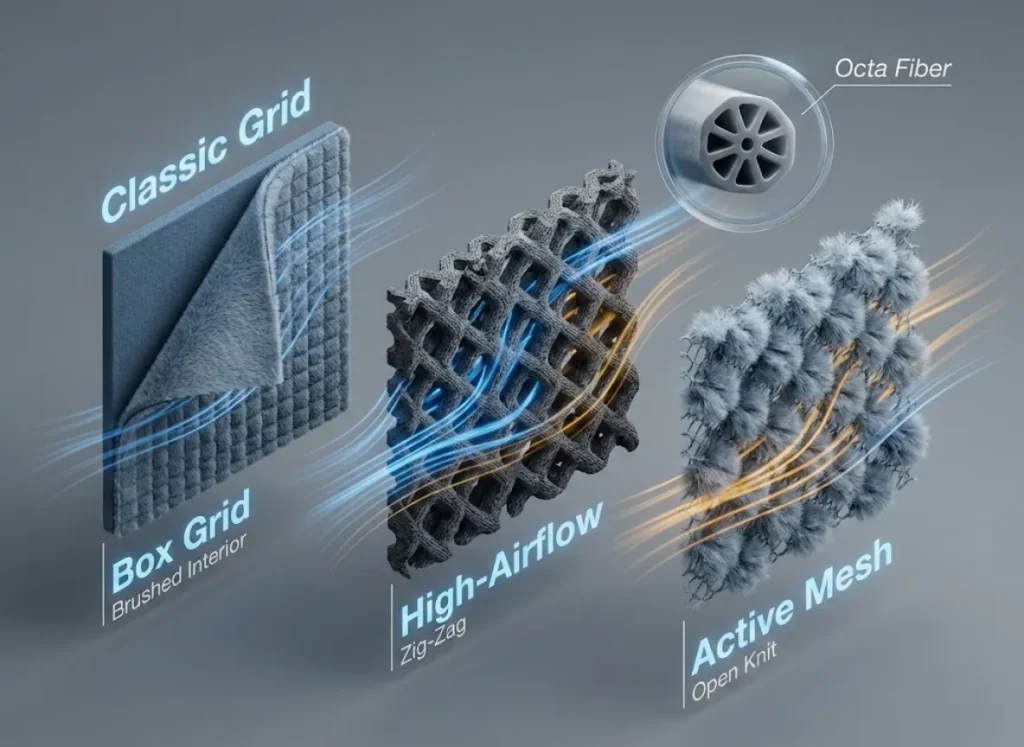
The newest innovation in that third category often uses hollow core fibers, sometimes called Octa. Imagine a fiber shaped like a wagon wheel with eight spokes and a hollow center. This hollow shape cuts the weight in half but doubles the surface area for moving sweat.
Research into capillary effects of non-circular fibers shows that these weird shapes move water much faster than round fibers.
When looking at thermal efficiency, the “Naked” mesh is incredibly efficient. However, because the wind goes right through it, you must carry a windshirt or shell. If you stop moving and don’t put a shell on, you will freeze. This makes these layers distinct from the static insulation mechanics found in fleece vs down jacket systems, where the jacket keeps you warm all by itself.
How Should You Layer Grid Fleece for Maximum Efficiency?
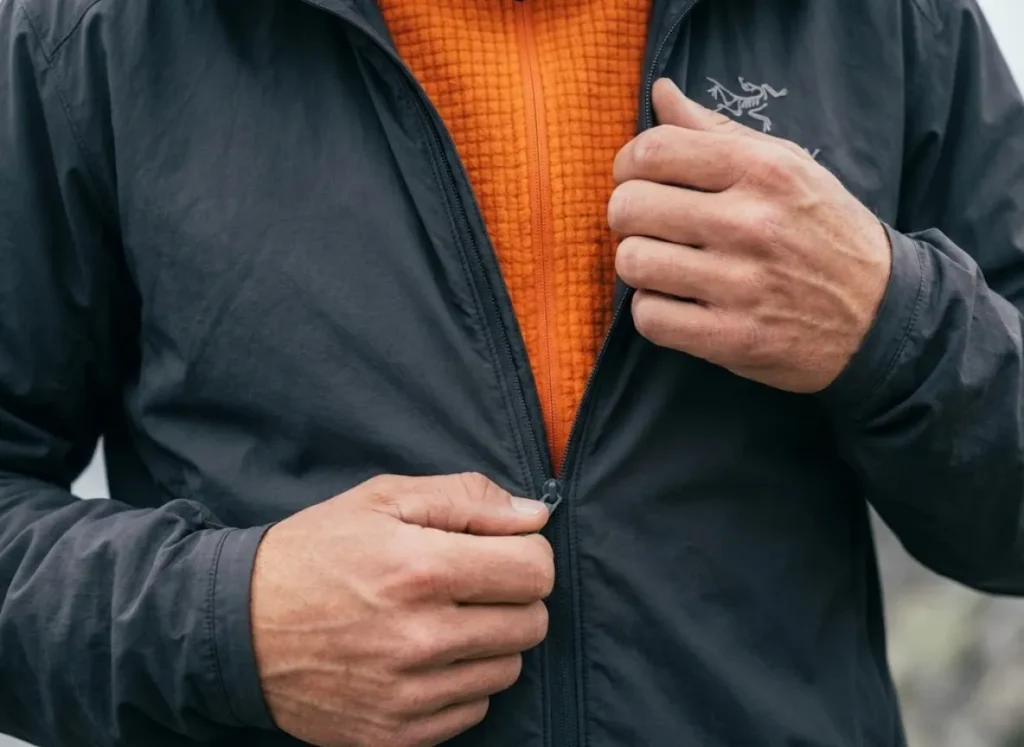
Buying the gear—whether it’s an Ortovox fleece or a thrift store find—is only step one. You have to know how to use it. You should change your layering systems based on how hard your heart is pumping.
How do you match your layers to your heart rate?
First, realize that you sweat a lot. When hiking hard, you can lose over a liter of water per hour. In humid weather, no fabric can evaporate that much water instantly. Studies on sweat rates during high-altitude trekking confirm that you create way more fluid than most clothes can handle.
When you are hiking steadily in Zone 2 (breathing hard but can still talk), use the “Active” setup. Wear your breathable grid fleece hoodie without a shell. You want the breeze to cut through the fleece and dry the sweat as it happens. You need high airflow here. Do not confuse this with “breathable” rain jackets. Rain jackets trap too much heat. You want air to actually pass through the fabric.
When you are pushing really hard (climbing a steep hill, can’t talk), wicking isn’t enough. You need to mechanically vent. Unzip your half-zip or full-zip to create a chimney effect, or strip down to just your base layer.
Pro-Tip: The “Stop-and-Go” danger is real. When you stop for a break, put your windshirt on immediately. You have about 60 seconds before the warm air trapped in your fleece blows away. Trapping that heat right away is a vital component of mastering winter layers.
Why Does Your Fleece Stop Wicking, and How Do You Fix It?

Even the best active mid-layer stops working if you don’t take care of it. The most common reason your technical fleece stops moving sweat is salt buildup.
How does mineral accumulation kill the system?
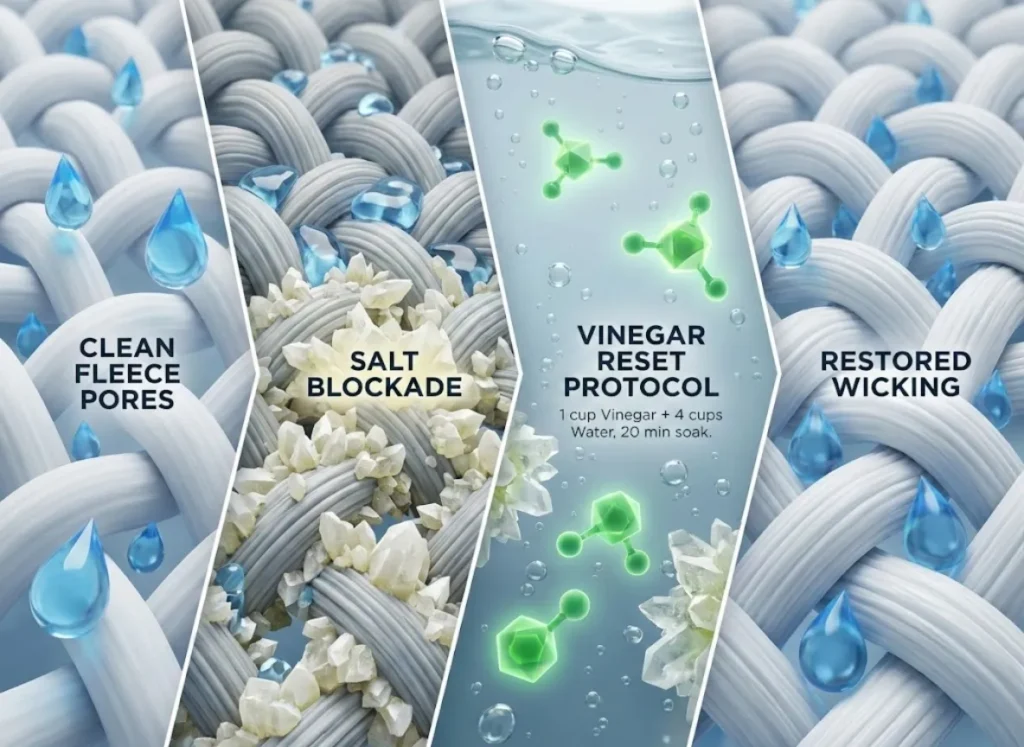
As your sweat dries, the water leaves, but the salt stays. It leaves behind tiny crystals of salt, calcium, and body oils deep inside the fabric. These crystals physically clog the tiny tubes that are supposed to suck up the water.
Even worse, salt loves water. If your fibers are covered in salt, they will hold onto the water instead of moving it to the surface. This creates a fabric that stays wet, heavy, and cold against your skin. Medical reviews of sweat composition confirm that these salts and oils stick to the textile science of the fabric and stop it from working.
Regular laundry detergent often fails to fix this. Modern eco-friendly detergents are usually too gentle to dissolve hardened mineral deposits.
The Vinegar Reset Protocol
To fix this, you need a little chemistry. Perform a Vinegar Reset:
- Mix 1 cup of white vinegar with 4 cups of water.
- Soak your fleece in it for 20 minutes.
- The mild acid eats away the mineral buildup.
- Wash the fleece as normal.
If you are on a long thru-hike like the Pacific Crest Trail, you can do this field maintenance in town. Use your dry bag as a bucket. Add a splash of vinegar and shake it around to flush the salts before you use a washing machine. This mindset of maintaining your gear is similar to the heat protocols used on how to restore DWR on rain shells, ensuring your systems work when you need them.
Conclusion
Being good at hiking isn’t just about being fit. It is about understanding the moisture management matrix that keeps you safe.
- Structure Matters: Grid fleece works because of its shape, creating a pump that moves water.
- Airflow is Key: When moving fast, pick gear that lets air through.
- Clean Your Gear: Minerals from sweat will clog your fleece.
- Use Vinegar: A simple vinegar soak restores the wicking power.
Before your next trip, check your layers. If water beads up or soaks in slowly, do the Vinegar Reset. You will feel the difference on the trail.
FAQ – Frequently Asked Questions
Is grid fleece warmer than regular solid fleece?
Usually, no. Grid fleece offers less static insulation and is designed to be cooler and breathe better while you are moving. However, if you put a windshirt over it, the air trapped in the open channels creates a surprising amount of warmth for how light it is.
Can I wear grid fleece directly against my skin as a base layer?
Yes. Many ultralight backpacking enthusiasts wear items like the Patagonia R1 or Polartec Alpha Direct right next to their skin. This lets the grid pull moisture directly from your pores, which is very efficient.
How often should I wash my grid fleece?
For heavy use, wash it every 3 to 5 wears. You should do a Vinegar Reset once a season or after a long hike. Frequent washing stops body oils and salts from building up and clogging the fabric.
What is the difference between Polartec Alpha Direct and standard Grid Fleece?
Alpha Direct is naked—it has no solid fabric on the outside. It breathes twice as well but stops zero wind. Standard Grid Fleece has a smooth outer face that blocks a little bit of wind and protects the fleece from snagging.

I've spent more than a decade researching hiking gear and trail technique. I read the specs, the forum threads and the long-term reviews, and every pick here comes with what it gets wrong.
End of the trail
You read every mile of this one. Here's where the trail goes next.