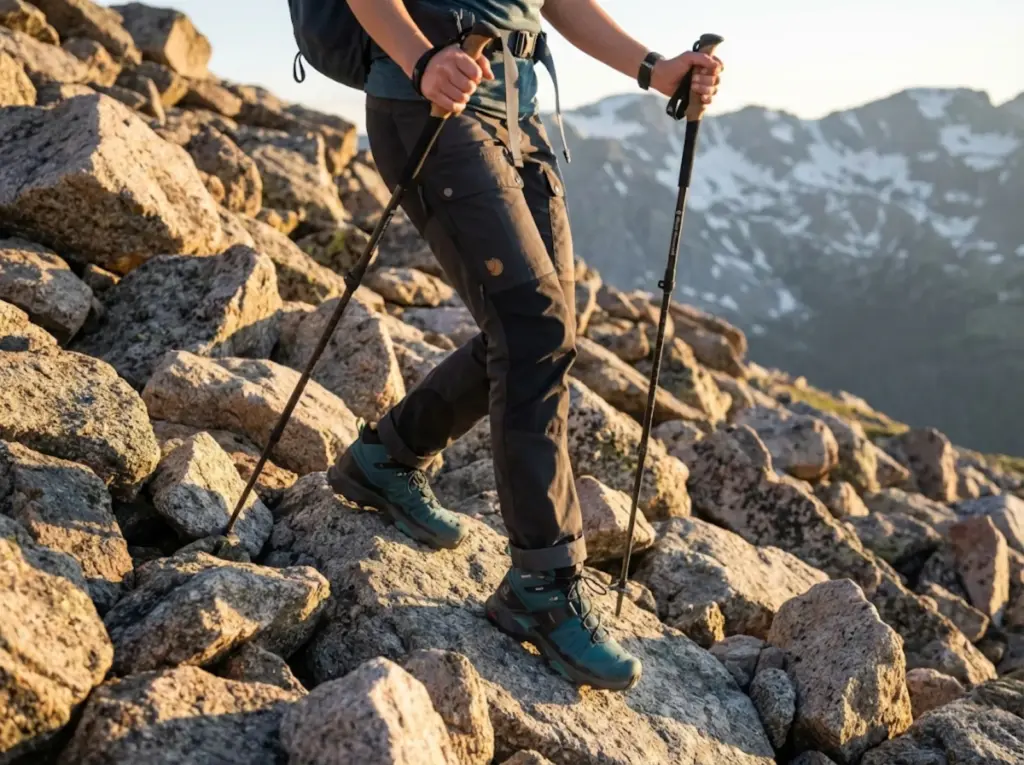
You’re scrambling up a talus field when your boot catches the hem of your pants. For a stomach-dropping second, you pitch forward—hands scraping rock, heart rate spiking—before you catch yourself. I know exactly how that feels because it happened to me. I’d borrowed a friend’s pants for a quick alpine scramble without checking the inseam. Never again.
The length printed on a tag isn’t just a number. It determines whether your pant leg clears your boot cuff on steep terrain, whether you snag fabric on crampon points, and whether you spend your descent fighting loose hem that blocks your footwork. After decades on trails from desert canyons to alpine ridgelines, I’ve learned that most sizing guides miss the critical relationship between terrain type and pant length.
This guide maps that relationship—a connection most sizing guides ignore. You’ll learn how to measure your functional inseam, match length to specific activities like scrambling or bushwhacking, and avoid the fit mistakes that create real hazards in the backcountry.
⚡ Quick Answer: The right hiking pant length depends on your terrain. For scrambling and bouldering, aim for 28-30″ inseam (or cinchable cuffs) to see your feet clearly. For trail hiking, 30-32″ works for most hikers. For bushwhacking or tick-prone areas, go longer (32-34″) so you can tuck pants into socks. For winter with gaiters, you need 34″+ to maintain a sealed system. Always measure wearing your actual hiking boots, not barefoot.
Understanding Inseam and Why Terrain Changes Everything
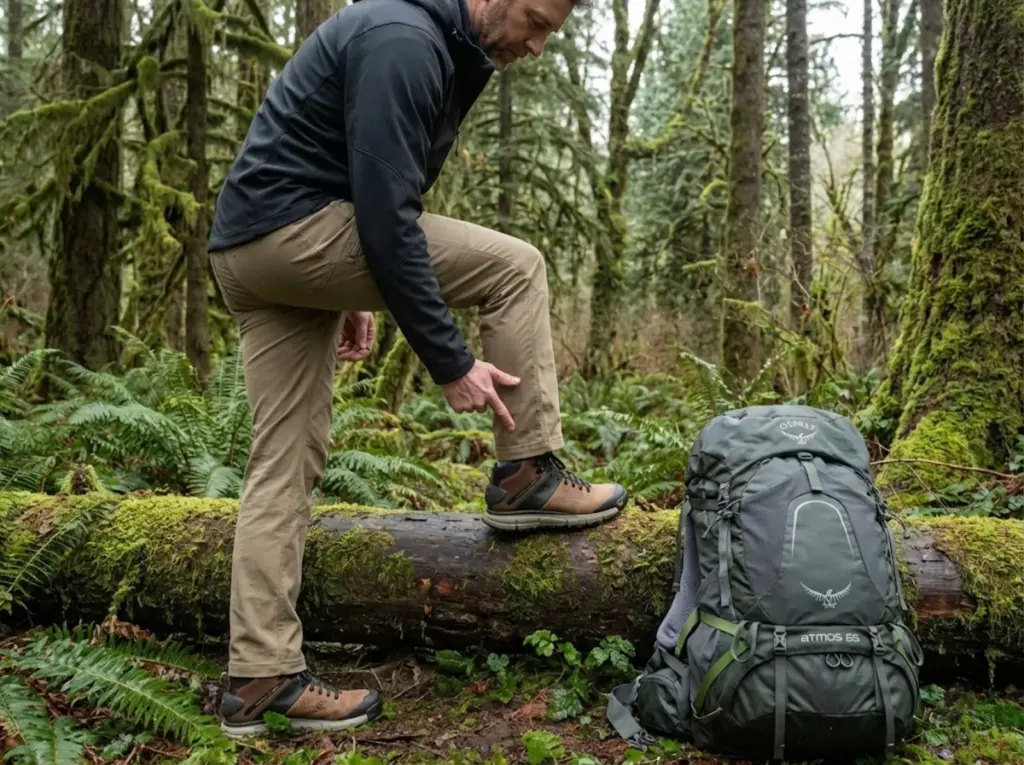
What Inseam Actually Measures (And What It Doesn’t)
Inseam is the vertical distance from the crotch seam intersection down to the hem edge. That’s garment inseam—not body inseam. Most people confuse the two, which leads to poor fit decisions.
Your body inseam runs from groin to ankle bone. But what matters for hiking is your functional inseam: where the hem actually sits relative to your boot. Standard sizing charts assume you want pants at ankle height. Hikers need to make a different calculation—do you want fabric above the boot, at the boot cuff, or overlapping the boot?
The rise (crotch to waistband) complicates things further. High-rise pants sit at your natural waist and push hemlines lower. Low-rise pants sit at your hips, often riding up when you squat or climb. Most retailers measure inseam with pants flat-laid on a table, but your actual wearing length shifts when you walk, climb, or crouch under a heavy pack.
Pro tip: Measure your inseam while wearing your hiking boots, not barefoot. Boot heel height adds 0.5-1″ to your functional length needs.
Why Terrain—Not Just Height—Dictates Length
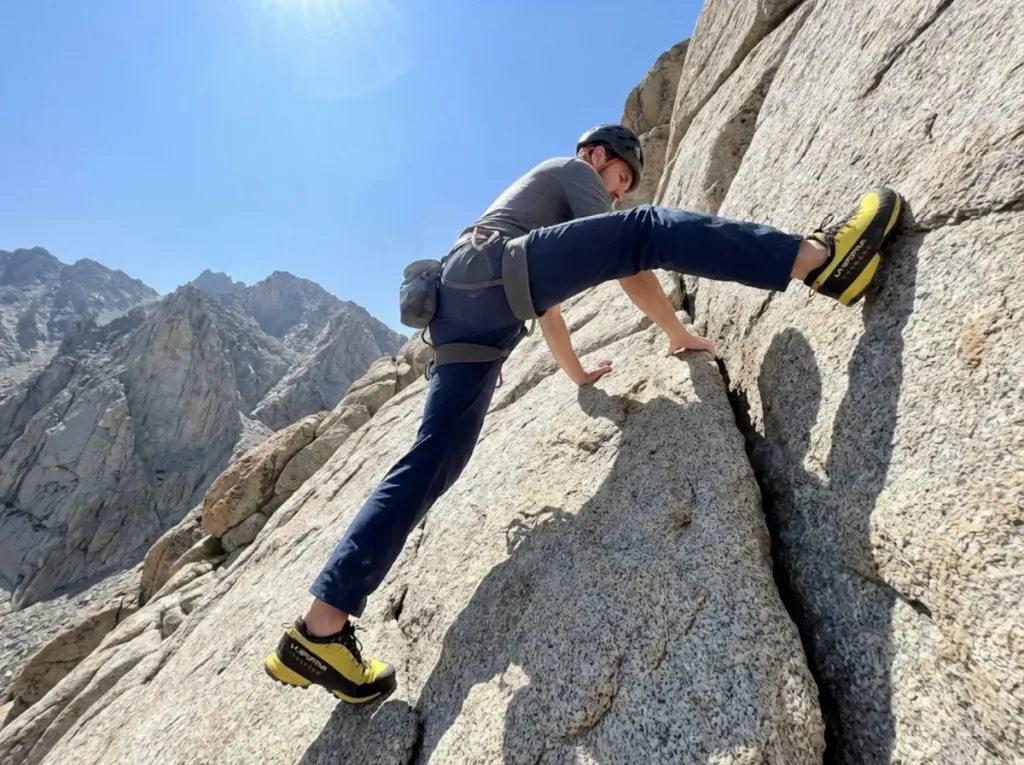
On technical scrambling terrain, a shorter inseam provides clear line-of-sight to your feet. You need to see exactly where you’re placing each step on Class 3 rock. Loose fabric pooling at the ankle is a snag hazard waiting to happen.
On brushy trails filled with thorns and brush, a longer inseam protects against scratches, poison ivy, and tick access points. Ticks crawl up from boot level—if there’s a gap between your hem and sock, that’s their entry point.
Winter conditions add another variable. If you’re using gaiters, your pants need enough length to stay tucked under the gaiter seal during post-holing. A gap means snow down your boot.
Pack weight matters too. A heavy hip belt presses down on waistbands and lifts pants 0.5-1″ higher on your legs. What fit perfectly unloaded now leaves your ankles exposed. Understanding how articulated knees affect your range of motion helps you grasp why pant construction and length work together.
Nobody addresses this terrain-to-length correlation directly. Competitors focus only on body height, missing the functional relationship entirely.
How to Measure Your Hiking-Specific Inseam
The Flat-Lay Method (Replicating Existing Fit)
If you already own hiking pants that fit perfectly, use them as your reference. Lay them on a hard, flat surface and smooth out all wrinkles—bunched fabric under-measures by 0.5-1″.
Measure from the center of the crotch seam intersection straight down to the hem edge. This gives you your garment inseam—the number to match when shopping for new pants. Keep in mind that natural fiber pants can shrink 1-2% after washing, affecting this measurement over time.
The Boot-On Body Method (Finding Your Baseline)
When you’re buying your first pair of technical hiking pants or your body has changed, you need to measure fresh. Stand straight on a hard floor wearing your actual hiking boots—trail runners, mid-boots, or mountaineering boots depending on your primary use.
Have someone measure from where your thigh meets your crotch (groin) down to your boot cuff top—not the floor. This gives you functional inseam: the length where fabric meets footwear for your specific setup.
Solo alternative: place a book spine-up against your crotch while standing against a wall, then measure from the book’s top edge down to your boot cuff. Record three measurements: to boot cuff, to ankle bone, and to floor. Each serves different terrain needs.
Accounting for Rise and Dynamic Fit
High-rise pants sit at your natural waist; low-rise pants sit at your hips. Same inseam measurement results in different hem positions depending on rise. When you squat to step over a log, low-rise pants ride up more, potentially exposing ankles.
Heavy backpack hip belts press down on waistbands, effectively lengthening the pant leg by 0.5-1″ as the belt compresses the fabric downward. Test your pant fit with your pack loaded to actual trail weight, not empty.
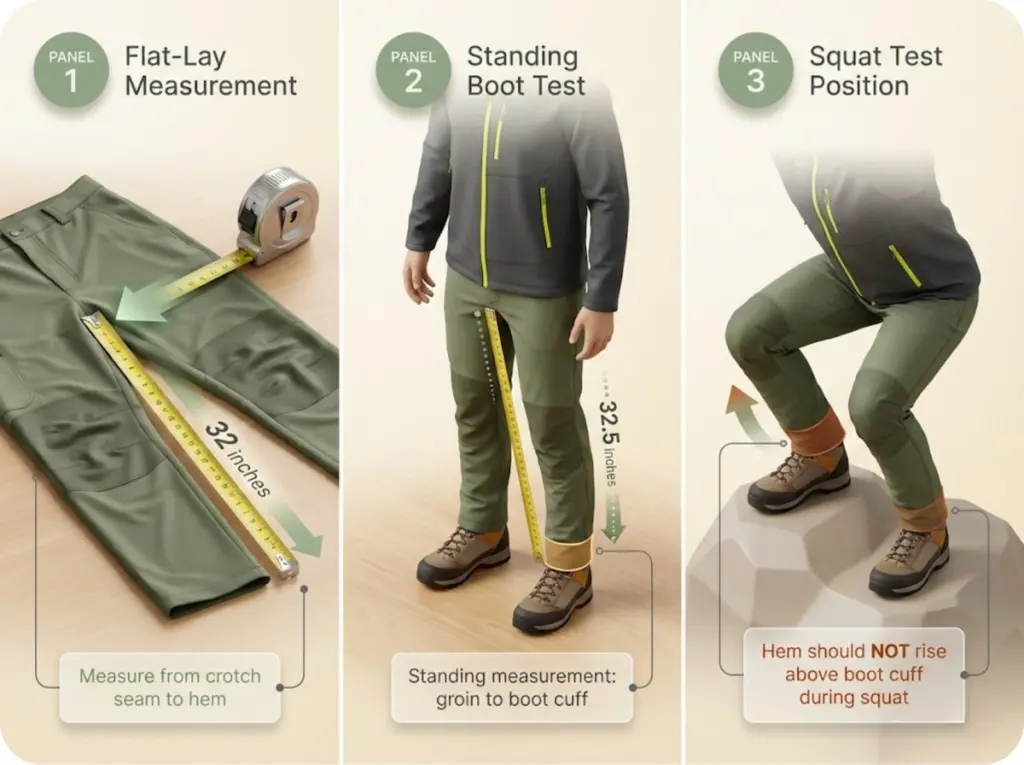
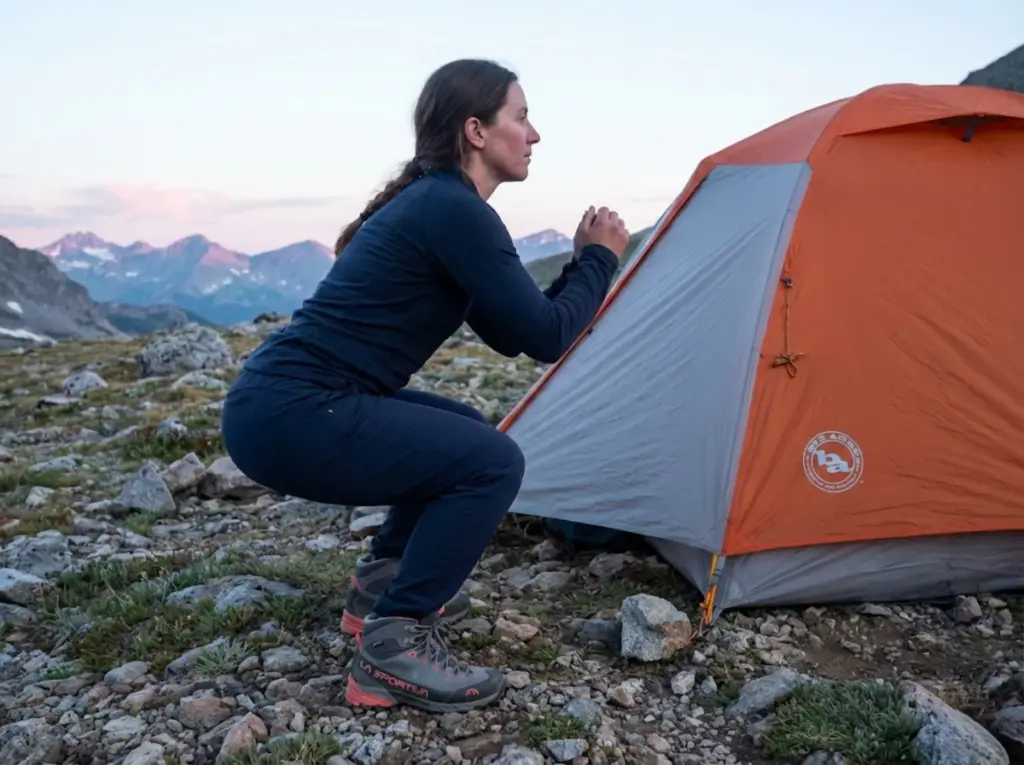
The squat test separates good fits from marginal ones: try on pants, squat deeply as if stepping onto a high boulder. If the hem rises above your boot cuff, you need a longer inseam for trail use.
Fabric stretch percentage matters too—4-way stretch pants feel about 0.5″ longer than rigid fabric with the same measured inseam. A properly fitted backpack prevents the hip belt from bunching your pants into uncomfortable positions.
The Terrain-Inseam Matrix: Matching Length to Activity
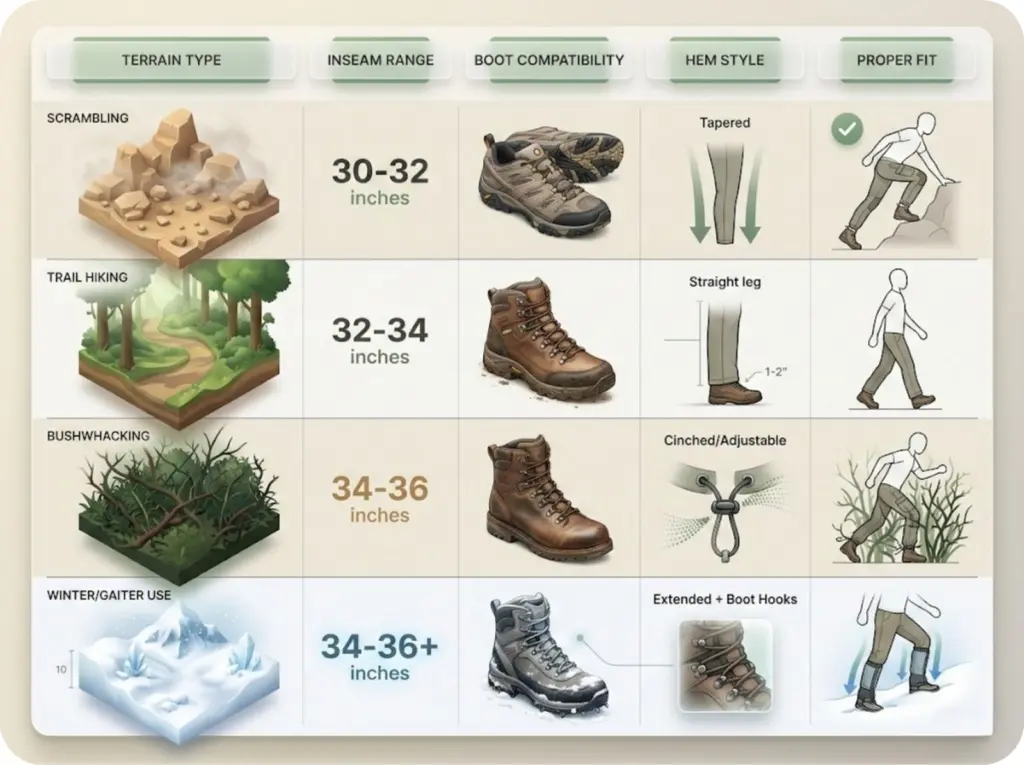
This is the core information that sets this guide apart. Every other sizing guide talks about body height. None of them map inseam length to actual terrain demands.
Scrambling and Bouldering (28-30″ Inseam)
In Class 3 terrain or when bouldering, you need unobstructed views of your feet. Precise foot placement on small holds keeps you on the rock instead of sliding off. Loose fabric pooling at the ankle catches on rock edges, creating trip hazards that can send you tumbling.
Shorter hems or cuff cinch systems eliminate the “swish” of excess fabric interfering with footwork. If you’re using crampons, extra fabric wrapping over crampon straps creates snag risk—not a theoretical concern but something I’ve watched cause real falls.
Mountain guides often hem their pants 1-2″ shorter than flat-trail hikers specifically for this reason. Here’s a simple test: if you can’t see the toe of your boot when you look straight down while walking, your pants are too long for scrambling.
Standard Trail Hiking (30-32″ Inseam)
Moderate terrain with maintained trails allows for standard inseam that sits at or just above the boot cuff. This range accommodates the slight rise during normal walking gait without exposing the ankle.
For most day hikes on established paths—think National Park trails or well-maintained backcountry routes—this length provides baseline coverage against light brush, sun exposure, and minor off-trail diversions. For hikers between 5’4″ and 5’10”, this is the typical “Regular” inseam in most US brands like KÜHL or Prana.
Bushwhacking and Overgrown Terrain (32-34″ Inseam)
Off-trail travel through dense vegetation exposes ankles to thorns, scratches, and tick access. A longer inseam creates a continuous fabric barrier from boot cuff to thigh.
The “tuck and blouse” method—long pants tucked into socks—creates mechanical tick exclusion. According to the CDC’s tick prevention guidelines, tucking pants into socks is one of the most effective mechanical barriers against tick attachment. Ticks quest on low vegetation and climb upward on their hosts; a sealed pant-sock interface blocks that highway. Desert bushwhacking through catclaw acacia or similar brush demands full ankle coverage.
Allow your pants to “stack” slightly on top of your boot. This cushion ensures coverage during high-stepping over logs or pushing through thick vegetation. The USDA’s outdoor recreation safety guidance recommends treating clothing with 0.5% permethrin for additional protection. Understanding the 3-stage tick defense system adds another layer to this protection strategy.
Winter Conditions and Gaiter Integration (34″+ Inseam)
Gaiters require pants that extend fully over boot cuffs to create a sealed system. Post-holing in deep snow causes pants to ride up; extra length prevents gaps where snow can enter your boots.
Boot hooks—hem clips that attach to laces—only work with sufficient hem length to reach those laces. Built-in boot hooks on technical pants prevent riding up, but need fabric to grab onto.
If you’re layering base layer tights underneath, account for the effective shortening of your pants—the underlayer takes up some of the inseam. Ski mountaineering pants often feature 34-36″ inseams specifically for gaiter compatibility using matched gaiter systems for deep powder conditions.
The Boot-Pant Interface: Getting the Cuff Right
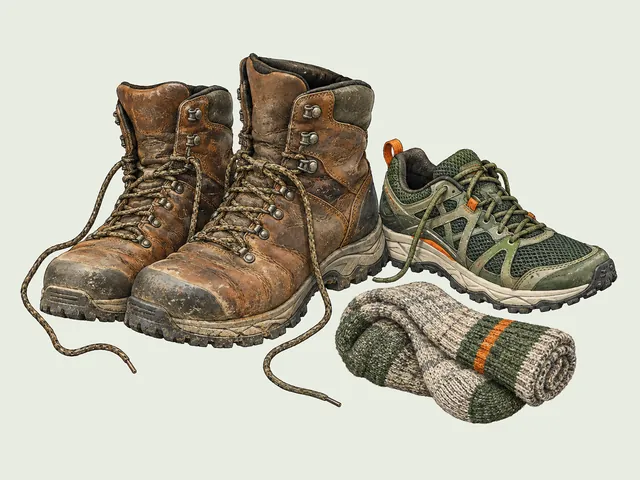
Trail Runners and Low-Cut Hikers
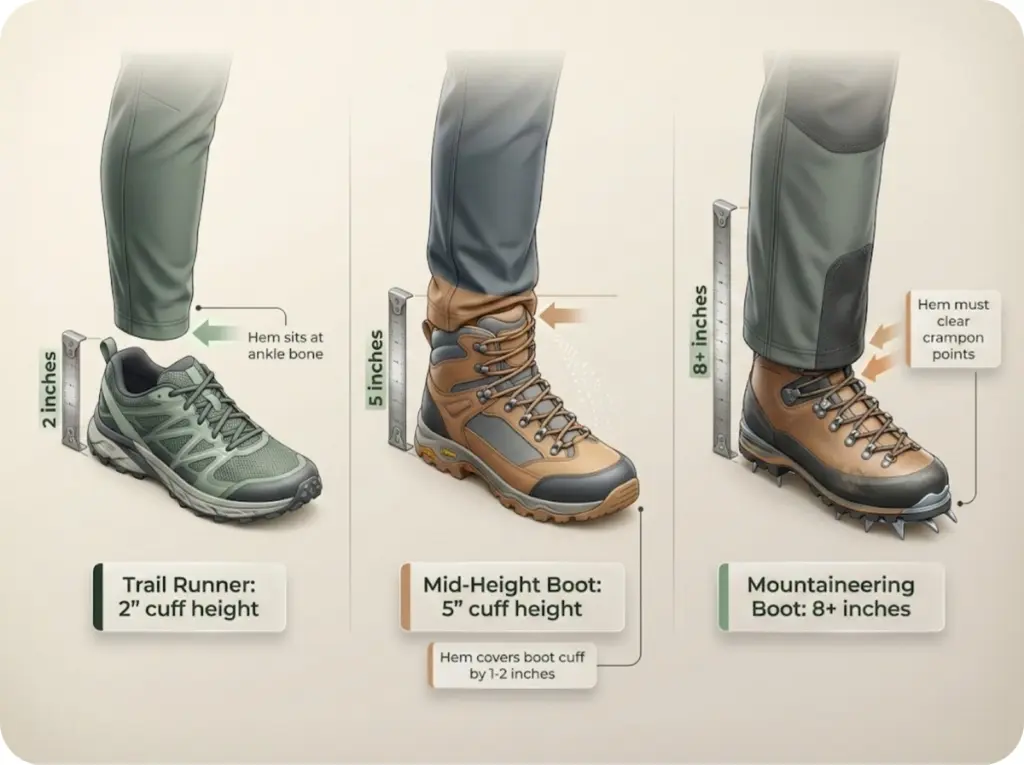
Low-profile trail running shoes have minimal cuff height below the ankle bone. Pants that work perfectly with mid-boots may leave your ankle exposed with trail runners.
Look for pants with adjustable hem cinches—tighten for trail runners, loosen for boots. The drainage-shoe strategy (mesh trail runners with no waterproofing) means your hem often gets wet from dew or stream crossings; quick-dry fabric matters more here than with waterproof boots.
Shorter hikers often find that “Short” inseam (28-30″) pairs best with trail runners. The lower cuff height of trail-running footwear means standard lengths stack awkwardly.
Mid-Height Hiking Boots
Standard hiking boots with ankle collars provide 4-5″ of cuff above the sole. This is the default boot height most sizing charts assume.
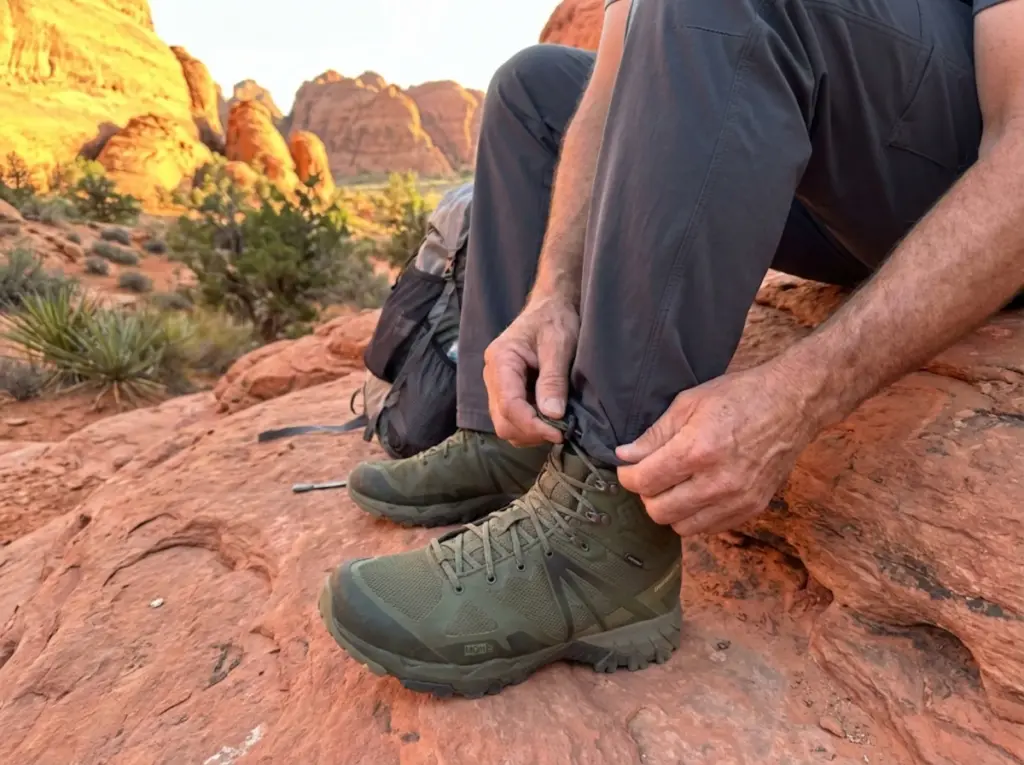
Pants should sit at or just above the boot collar with slight contact. The “brush test” tells you if the fit works: drag your pants through tall grass—the hem shouldn’t collect debris or get caught in your laces.
Hem drawcords let you snug the opening around boot collars on muddy days, keeping your socks and boot interiors clean. Understanding boot anatomy helps you match pant style to your footwear.
Pro tip: If your hem consistently collects seed heads, burrs, or mud, your pants are dragging—shorten the effective length with cinches or consider a shorter inseam next time.
Mountaineering and Full-Height Boots
Mountaineering boots extend 6-8″ above the sole, sometimes higher with integrated gaiters. These require the longest inseam options so fabric drapes fully over the tall boot cuff.
Crampon attachment points at the toe and heel sit exactly where loose hems catch. You need clear space between the fabric edge and those metal spikes. Stiff leather or plastic boots have less give than trail footwear—the pant-boot interface must accommodate rigid shapes.
Scuff guards (reinforced inner ankles) protect fabric from crampon slash. If you’re in mountaineering terrain, this feature moves from “nice to have” to necessary.
Brand Sizing Systems: Navigating Short, Regular, and Long
The US Independent Inseam Model (KÜHL, Prana)
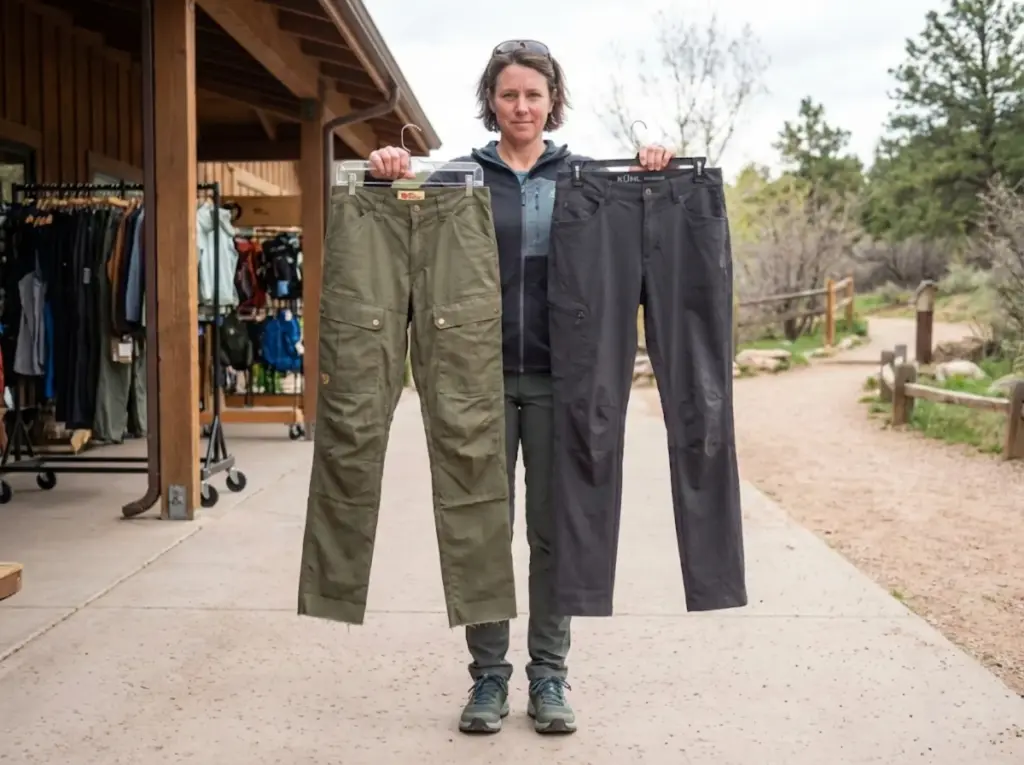
American brands typically separate waist size from inseam: 32W x 30L, 32W x 32L, etc. The inseam stays constant regardless of waist—a size 30 waist with 32″ inseam has the same leg length as a size 36 waist with 32″ inseam.
KÜHL standardizes their system: Short = 30″, Regular = 32″, Long = 34″. Prana uses a similar model, with some models offering 28.5″ “Cropped” options for those wanting hem above the boot.
This system makes sense for US consumers familiar with jeans sizing. You know your inseam, you select it directly, and it stays the same across different waist sizes.
The European Graded Length Model (Fjällräven, Maier Sports)
European brands often “grade” leg length with waist size—bigger waist automatically means longer leg. Same “Regular” designation has different actual inseam at size 48 versus size 52.
Maier Sports offers up to 61 unique sizes, using algebraic sizing where Short sizes are Regular divided by 2 (Size 25 = Short version of Size 50) and Long sizes are Regular multiplied by 2 (Size 98 = Long version of Size 49).
Fjällräven grades their sizing too. You cannot simply order your usual EU size and assume inseam matches. Check the brand-specific charts. This system works well for bodies where proportions scale predictably but fails anyone with unusual leg-to-torso ratios.
Understanding convertible hiking pants sizing becomes especially important when dealing with European brands—the zip-off point placement depends on getting the base length right.
Raw Length: The Custom Tailoring Option
Fjällräven heritage models—Vidda Pro, Barents Pro, Karl Pro—offer Raw Length: unfinished hem extending up to 40″. You hem to your exact specification after purchase.
Best option for extreme outlier body types: very tall hikers, unusual leg-to-torso ratios, or anyone who’s never found a standard sizing option that actually works. The trade-off is you lose finished hem features—cinches, boot hooks, snap tabs—unless your tailor reconstructs them.
Worth the effort if neither Short, Regular, nor Long ever fits you properly.
Common Inseam Mistakes and How to Avoid Them
The “Borrowed Pants” Problem
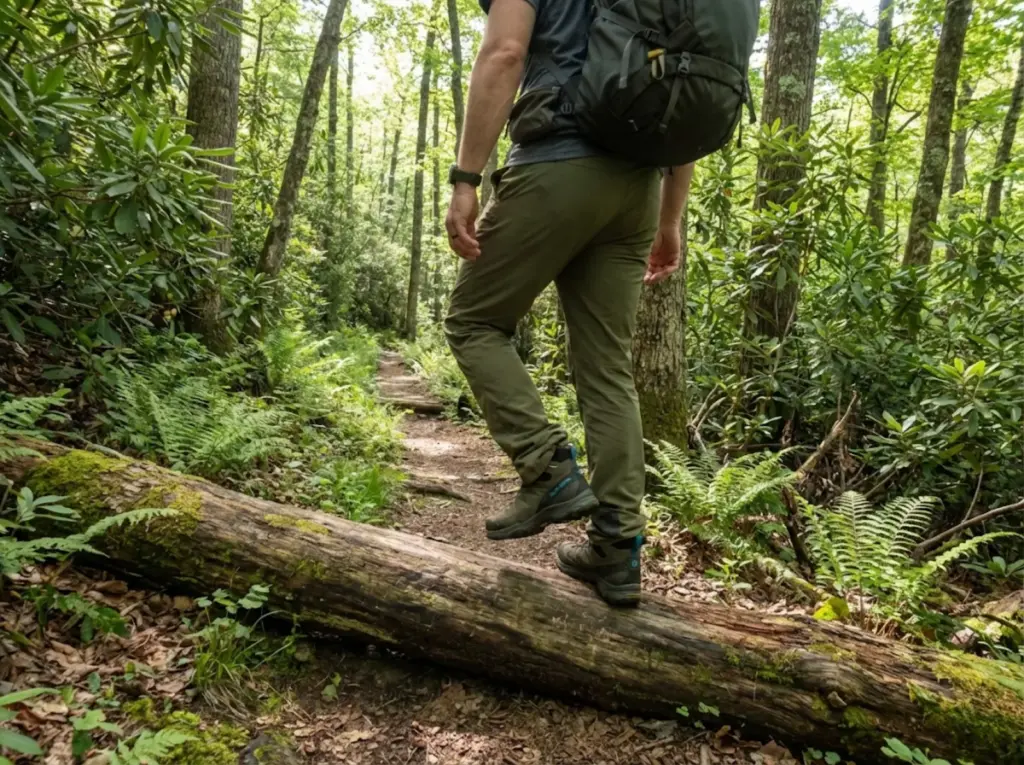
Wearing someone else’s pants without checking inseam accounts for many near-misses on technical terrain—like my talus-field stumble. Different body proportions mean same height can need very different inseam lengths.
Your sitting height ratio (legs versus torso) varies significantly between individuals. Someone 5’10” might need a 30″ inseam while another person at 5’10” needs 34″. Before borrowing or lending pants for a trip, measure the garment inseam.
Exception: convertible pants that zip off at the knee eliminate most length mismatches for the lower leg portion.
Pro tip: Keep a small luggage tag on your favorite hiking pants with your measured inseam written on it. Quick reference when shopping.
Ignoring Pack Weight Effects on Fit
A loaded backpack with properly cinched hip belt presses down on the waistband, shortening rise and making pants ride higher on your legs by 0.5-1″. Pants that fit perfectly when unloaded now expose your ankles under trail conditions.
Test pant fit with your actual pack loaded to trail weight. High-rise pants minimize this problem by sitting above the hip belt contact zone entirely.
When the hip belt pinches the waistband, you also get chafing and fabric bunching around your hips. Understanding how to mold your hip belt for a pressure-free fit helps address both pack comfort and pant interface.
Buying “Internet Length” Without Testing Movement
Sizing charts give static measurements. They don’t account for your walking gait, squat depth, or climbing reach. Different fabric stretch percentages mean the same inseam measurement behaves differently in the field.
REI and specialty stores let you squat, lunge, and high-step in pants before purchase. The “high-step test” answers whether you can step onto a chair without the hem catching your instep.
Online purchases should build in time for the return-and-exchange cycle. Budget an extra week before your trip for potential swaps—better to find problems at home than on the approach.
Conclusion
Three things matter more than the number printed on the tag: what you’re doing in those pants, what boots you’re wearing them with, and whether you’ve actually moved around in them before hitting the trail.
Scrambling and climbing demand shorter inseams or cinched cuffs for unobstructed foot visibility. Bushwhacking and tick-prone trails need extra-long hem you can tuck into socks. Winter demands pant length that integrates with gaiters without gaps.
Measure yourself wearing your boots. Try the squat and high-step tests before buying. If you’re between sizes, go longer for off-trail and shorter for scrambling. And if standard Short/Regular/Long never quite works, consider brands with Raw Length options or graded sizing.
The goal isn’t finding the “right” universal inseam—it’s matching your pant length to where you actually hike.
FAQ
What’s the difference between inseam and leg length?
Inseam measures from the crotch seam to the hem—it’s a garment measurement. Leg length typically refers to the full leg from hip to floor. Inseam is the practical number for shopping; use it when comparing pants across brands.
Should hiking pants touch the top of your boots?
Depends on terrain. For scrambling, pants should clear your boot cuff so you can see your feet. For bushwhacking or winter, pants should rest on or overlap the boot cuff for protection and gaiter integration. There’s no universal should.
Do all brands measure inseam the same way?
No. US brands typically measure crotch seam to hem with inseam independent of waist. European brands often grade inseam with waist size—a larger waist automatically means longer legs. Always check brand-specific charts.
What inseam should I choose if I’m between sizes?
Default to the longer option if you hike in brush, off-trail, or winter conditions. Default to shorter if you primarily scramble, boulder, or use low-cut trail runners. Adjustable hem cinches can compensate for modest length differences.
Can I hem hiking pants without ruining technical features?
Most hem-specific features—boot hooks, snap tabs, drawcord cinches—require skilled tailoring to preserve. Hemming typically destroys or complicates these. Consider Raw Length models designed for custom tailoring, or buy the correct length upfront.
I've spent more than a decade researching hiking gear and trail technique. I read the specs, the forum threads and the long-term reviews, and every pick here comes with what it gets wrong.
End of the trail
You read every mile of this one. Here's where the trail goes next.