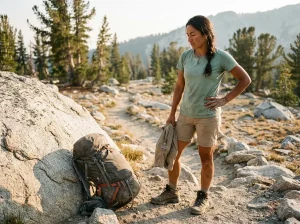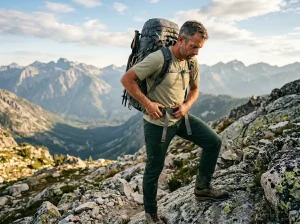
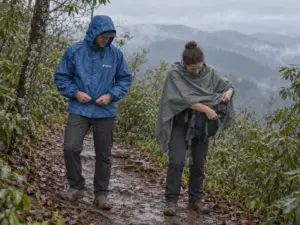
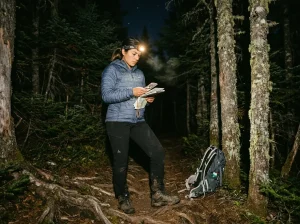
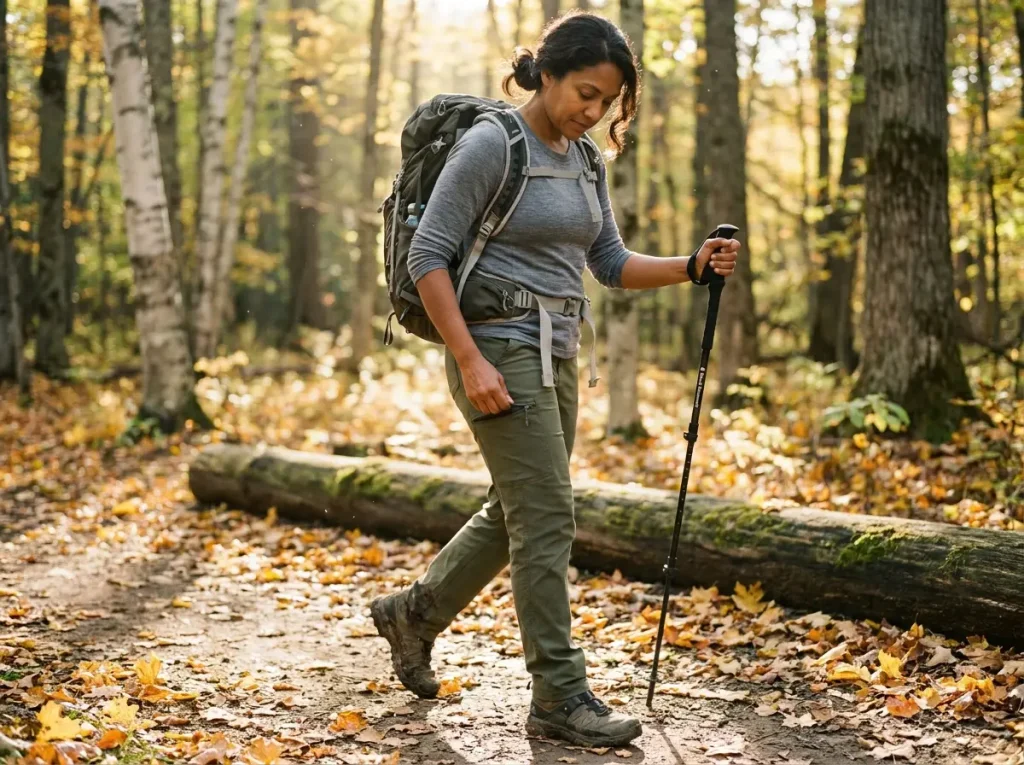
You’re three miles in, pack cinched, and you want your phone. Except your hip belt is sitting directly on top of your hand pocket. So you fumble with the belt, loosen a strap, dig two fingers into a gap that barely exists, and by the time you pull the phone out, you’ve stopped walking and the group is 50 yards ahead.
That pocket worked fine in the parking lot. On trail with a loaded pack, it’s useless.
I spent years buying hiking pants based on fabric, stretch, and fit — and ignoring pockets entirely. After enough trail miles to know better, I can tell you that pocket layout determines how smoothly your day goes more than almost any other feature on your pants. Here’s what I’ve learned about which pockets actually work and where each one earns its place.
Quick Answer: The best hiking pants pocket layout depends on what you carry and how your pack sits. Key principles:
- Hand pockets work for quick-grab items only if your hip belt doesn’t cover them
- Upper thigh pockets (zippered) are the best phone position — high enough to avoid bounce
- Lower cargo pockets bounce with every stride and slow you down when loaded
- Rear pockets become dead storage the moment you put a pack on
- Hip-level zippered pockets offer the most reliable all-conditions access
The Six Pocket Positions That Matter
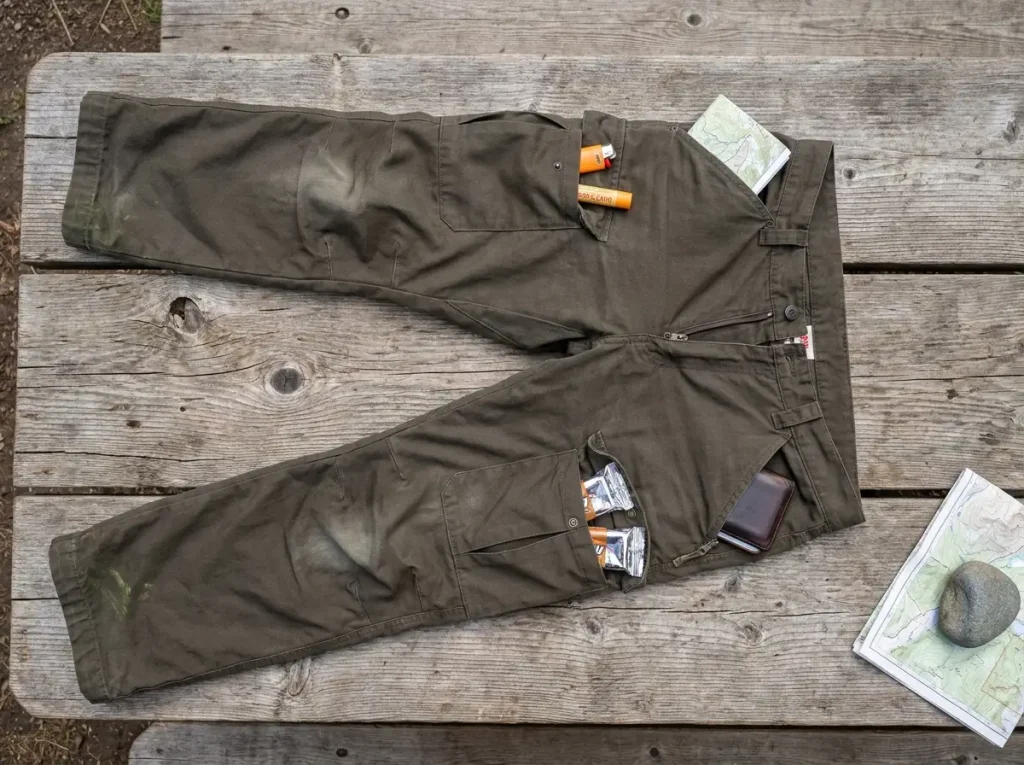
Not all pockets are created equal, and most hiking pants mix three or four of these into their design. Understanding what each position does well — and where it fails — saves you from discovering the problem on trail.
Hand Pockets (Front Slash Pockets)
These sit at your natural hand-drop position, angled diagonally from waist to upper thigh. On paper, they’re the most intuitive pockets on any pair of pants. You reach in without looking, which is exactly why most people default to stuffing everything here.
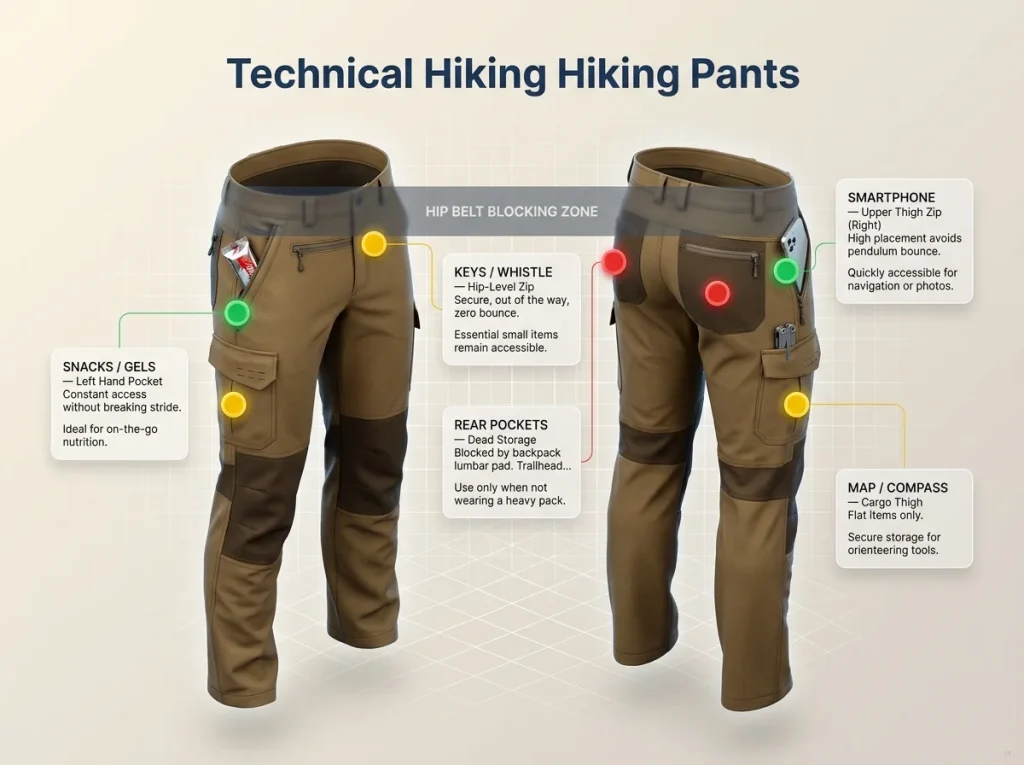
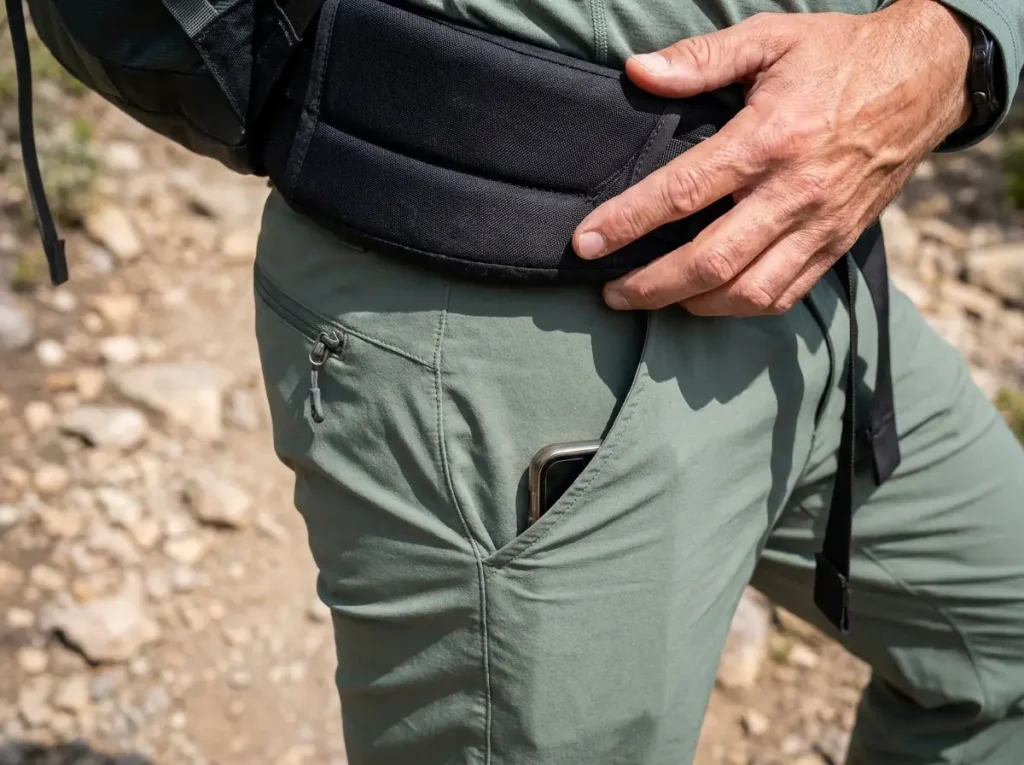
The problem is the hip belt. A loaded backpack’s hip belt sits directly across the opening of most hand pockets, especially on pants where the pocket opening starts at or below the waistband. Some brands like Outdoor Research on the Ferrosi place a separate zippered hip pocket just above the belt line — that one stays accessible. But the hand pocket below it? Buried.
Upper Thigh Pockets (Zippered)
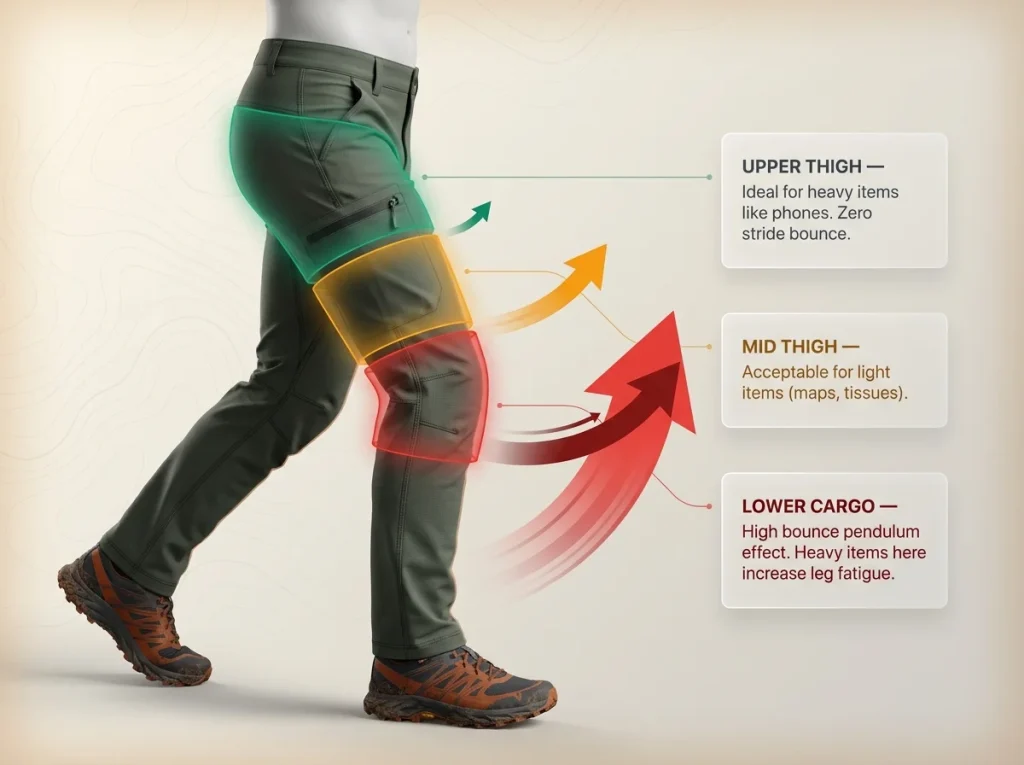
These sit on the outer thigh between hip and mid-quad, secured with a zipper. This is the sweet spot for phones, and the reason is physics: high enough on the leg that the weight doesn’t swing with your stride, low enough that your hip belt doesn’t block access.
The prAna Stretch Zion’s double-entry zippered thigh pocket and the Arc’teryx Gamma’s updated thigh map pocket both nail this position. When GearJunkie tested the Black Diamond Alpine Light, the single complaint that nearly cost it their top rating was that the thigh pocket sat too low — closer to the knee than the hip. Position matters more than pocket count.
Lower Cargo Pockets
The classic cargo pocket sits at mid-thigh or below, usually with a button or Velcro flap. These are the pockets that hikers either love or hate, and the physics explains why.
A loaded cargo pocket at knee level acts like a pendulum. With every forward stride, the weight swings outward and forward, then slaps back against your quad on the backswing. Load a phone and two energy bars into a cargo pocket that low, and you feel it in the first mile. By mile five, it’s maddening.
The hiking pants stretch test doesn’t catch this because you’re standing still — the bounce only shows up at trail pace.
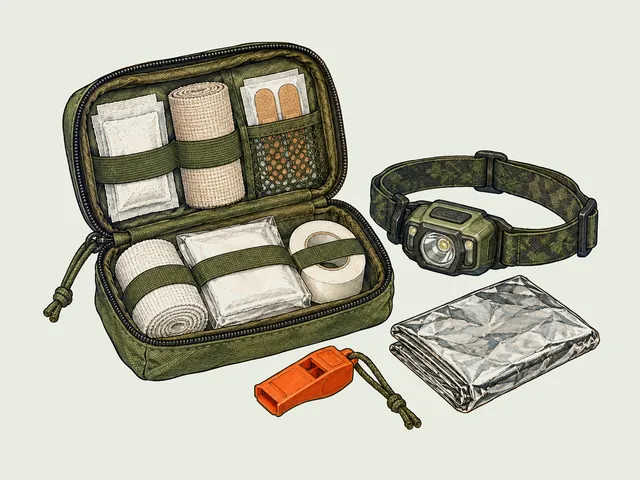
Pro tip: If your pants have low cargo pockets, use them for flat, lightweight items only — a folded map section, a bandana, or a thin emergency mylar blanket. Save the heavy stuff for upper thigh pockets or your pack.
Rear Pockets
Rear pockets on hiking pants are a holdover from everyday clothing. They work when you’re walking around town, and they stop working the moment you strap on a pack.
A pack’s lumbar pad or frame sheet presses directly against your rear pockets, compressing anything inside against your lower back. Sit down on a rock for lunch and you’re sitting on your wallet, your knife, whatever you stashed there. The pockets themselves take abrasion from every pack adjustment, every lean against a tree, every time you drop your pack on rocky ground.
The exception: zippered rear pockets that hold a slim wallet or a single car key. Items that are flat, that you won’t need until you’re back at the trailhead, and that you’d rather not lose in a creek crossing. That’s the only use case where rear pockets earn their place on trail.
Hip-Level Zippered Pockets
Some hiking pants place a small zippered pocket at or just above the waistband — typically on the right hip, between the hand pocket and the rear pocket. This is the most underrated position on any pair of hiking pants.
It sits above the hip belt line on most pack fits. It’s flat against your hip, so it doesn’t bounce. The zipper keeps items secure through stream crossings, scrambles, and high-wind ridgelines. The LIVSN Ecotrek Trail places a horizontal zip pocket here for a wallet or small gadgets, and the Patagonia Quandary has a similar small zippered pocket on the thigh-hip boundary.
This pocket is too small for a phone on most pants. But for a lighter, an emergency whistle, a few cash bills, or a small tube of sunscreen — it’s the most reliable pocket position on trail because nothing blocks it and nothing bounces.
Interior / Hidden Pockets
A few pants include a hidden zippered pocket inside one of the hand pockets — the LIVSN Ecotrek has one inside the left hand pocket sized for a phone. Interior pockets add security (pickpocket-proof for travel, fall-out-proof for scrambles) but sacrifice access speed. You’re unzipping twice to reach anything.
These work best for items you store once and don’t touch until the hike ends: a credit card, a hotel key, a small emergency cash stash. Using a hidden pocket for your phone means fumbling through two layers every time you want to check a map — which, on a navigation-heavy trail, kills your pace.
What Goes Where (The Trail-Tested Assignment)
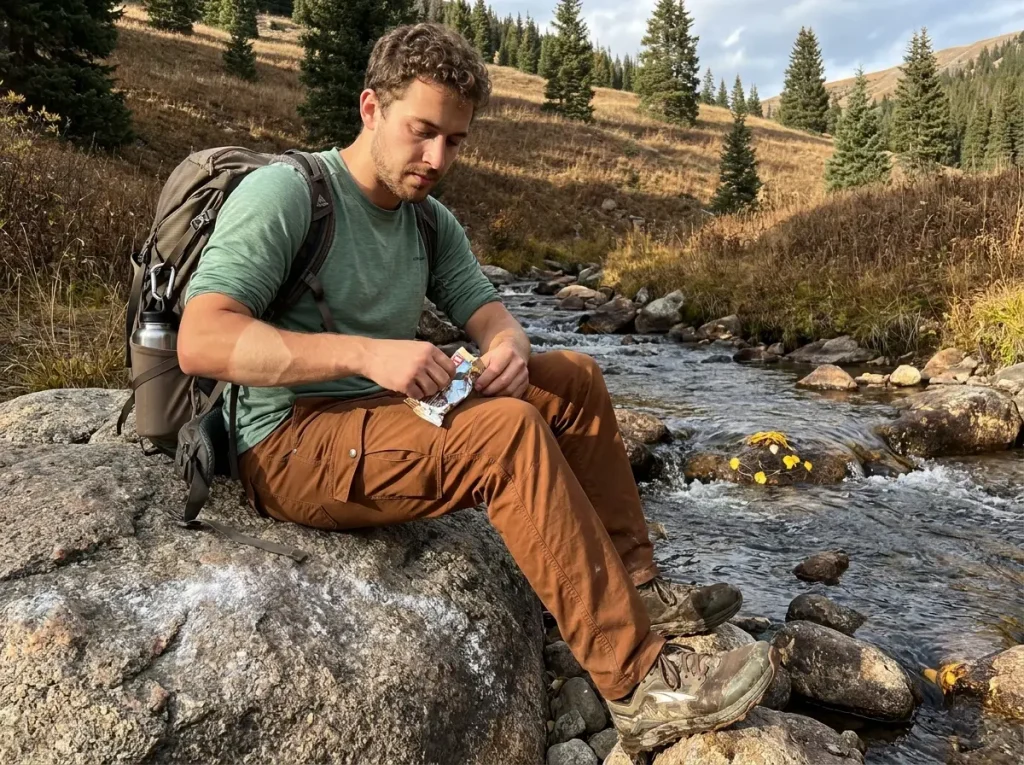
Here’s the system that works after enough miles of getting it wrong. Your exact loadout depends on the hike, but the logic is the same: frequent-access items go where your hands naturally fall, infrequent items go where they won’t bounce, and nothing goes where your pack blocks it.
Phone
Upper thigh zippered pocket — right side if you’re right-handed. High enough to avoid stride bounce, zippered against falls and stream crossings, accessible without loosening your hip belt. If your pants don’t have an upper thigh pocket, a dedicated hip belt pocket on your pack is the next best option.
Using your phone for trail photography or GPS navigation means pulling it out dozens of times per hike. The pocket it lives in needs to allow one-handed extraction without breaking stride.
Snacks
Left hand pocket or an accessible cargo pocket — whichever your hip belt doesn’t cover. Snack access needs to be almost unconscious: reach in, grab a bar or gel, keep walking. If your hand pocket is buried under the belt, move snacks to a thigh pocket that stays clear.
The wrong move is rear pockets. You’ll sit on your snacks at every rest stop, and reaching behind you while wearing a pack requires a shoulder flexibility most hikers don’t have after mile six.
Navigation Tools
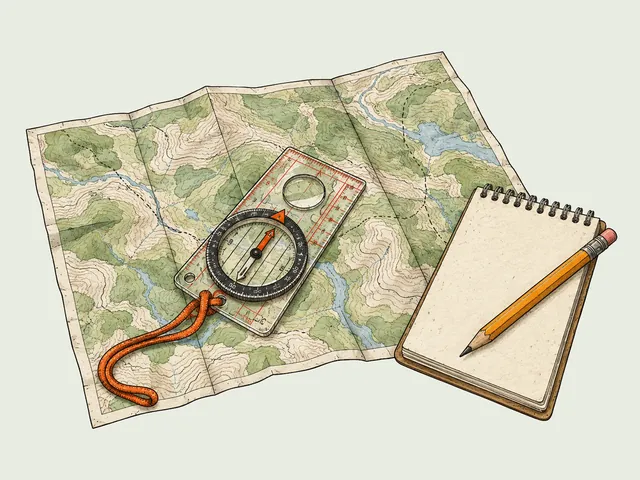
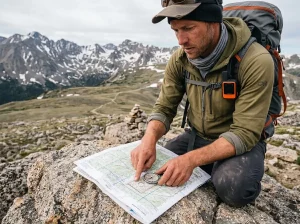
Compass and folded map section go in a cargo pocket or upper thigh pocket — someplace flat where they won’t get crushed. A full-size map lives in a pack pocket or map sleeve, but a folded section of the relevant quadrant fits in any thigh pocket without adding bounce weight.
Essentials That Stay Put
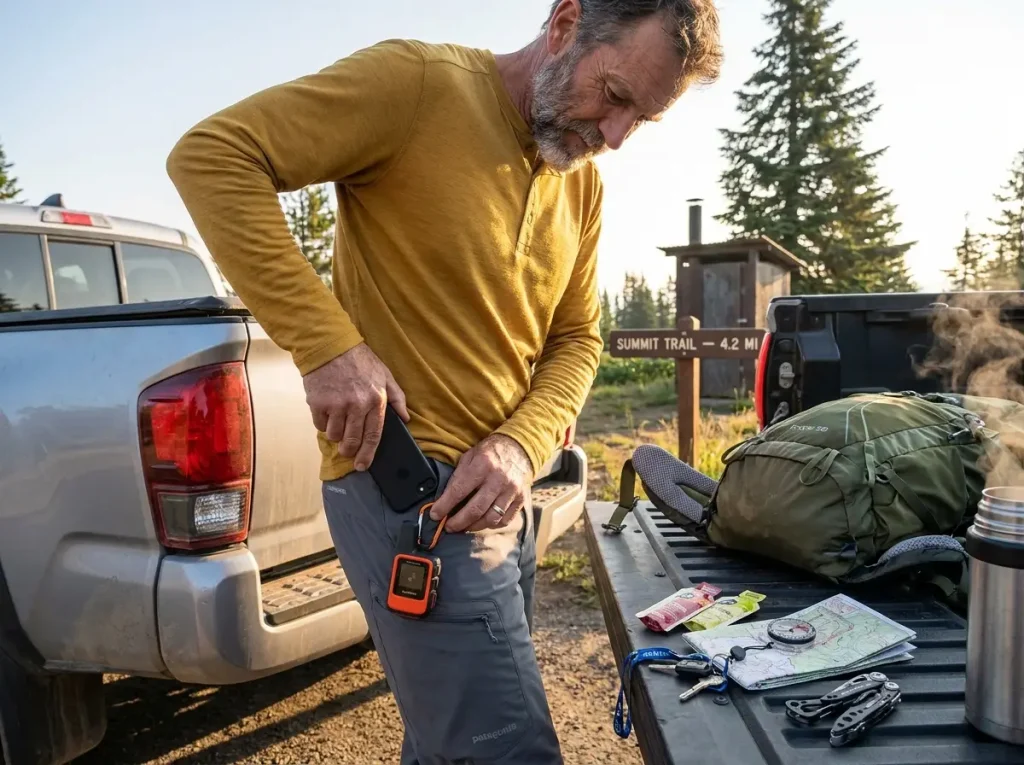
Car keys, emergency whistle, lighter, small knife — these go in a zippered pocket you won’t open until you need them. Hip-level zippered pocket is ideal. Rear zippered pocket works for car keys specifically because you don’t need them until the trailhead. If you’re carrying a multitool, a reinforced thigh pocket with a clip point keeps it stable without bouncing.
Pro tip: Before your first hike in new pants, load every pocket with what you plan to carry. Walk around your block for 10 minutes at trail pace. If anything bounces, shifts, or can’t be reached while your pack is on, reassign it before the trail does it for you.
The Hip Belt Problem Nobody Warns You About
This deserves its own section because it’s the single biggest pocket layout failure on trail, and almost no one tests for it before buying.
How Your Pack Changes Everything
Your pack’s hip belt is designed to transfer 60–80% of your pack weight to your pelvis. That means the padded wings wrap your hips firmly and sit directly over the zone where most pants place their hand pockets. The thicker the belt padding — and heavier packs have thicker padding — the more completely it blocks access.
This isn’t a design flaw in the pants or the pack. It’s a system conflict that only shows up when you wear both together. You can stop your hiking pants from falling down under a pack and still have pocket access problems because the issue isn’t slippage — it’s coverage.
The Test Most People Skip
Try your pants on with your loaded pack. Cinch the hip belt to trail tightness. Then try to access every pocket without loosening anything.
If a pocket requires you to slide your fingers under the hip belt to reach the opening, that pocket is functionally dead during your hike. Mark it as storage-only and move your grab-and-go items elsewhere.
Some pants solve this with pocket openings that start above the typical hip belt line. The Outdoor Research Ferrosi’s zippered hip pocket sits just high enough to clear most belt widths. The Fjällräven Vidda Pro places its thigh pockets with enough vertical separation from the waistband that hip belts don’t interfere.
Pro tip: Your pack’s hip belt width matters as much as your pants’ pocket placement. A 4-inch padded belt covers twice the real estate of a 2-inch ultralight belt. If you switch packs between trips, re-check which pockets are accessible — the answer changes with every pack.
Pocket Bounce and Stride
Why Lower Pockets Slow You Down
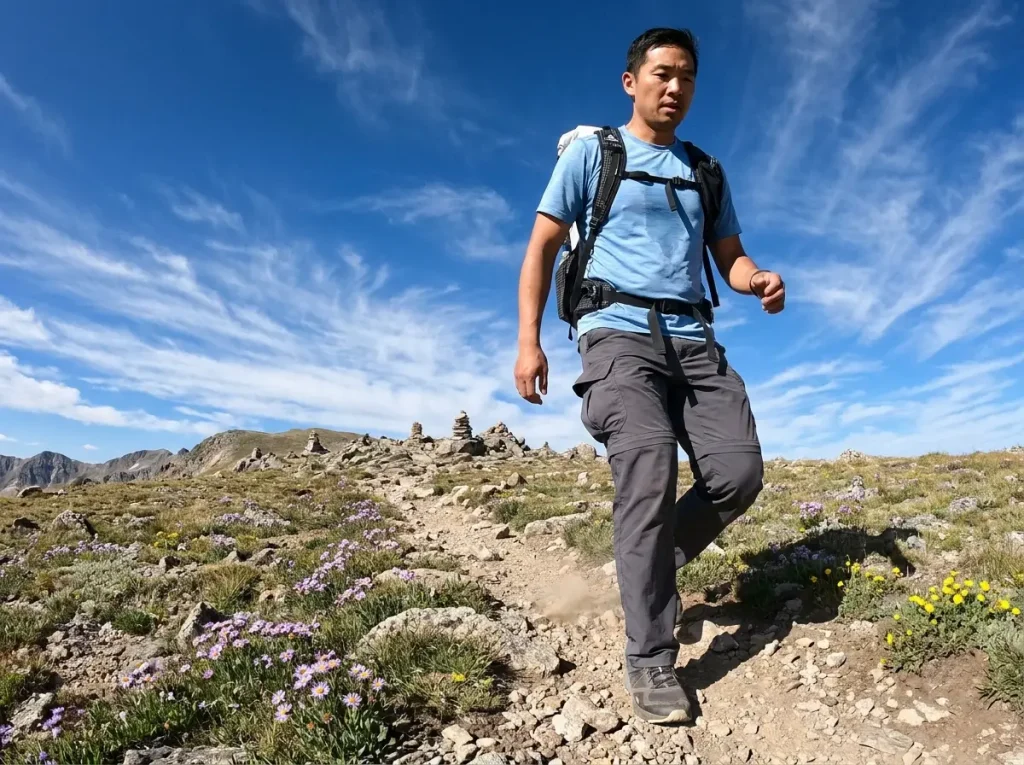
Weight below your hip joint swings with your leg like a pendulum. The farther from the pivot point, the more momentum the weight builds. Research on load carriage biomechanics confirms that even small additions of weight to the lower extremities increase the mechanical work your muscles perform with every stride. A phone in a knee-level cargo pocket doesn’t just feel annoying — it subtly changes your stride.
Your leg has to work slightly harder on every swing phase to compensate for the off-axis weight. Over thousands of steps, that adds up.
This is the same reason articulated knees on hiking pants improve efficiency — they reduce the energy your leg muscles spend fighting the fabric. Pocket weight at the wrong position does the opposite: it adds resistance to a motion you repeat 2,000 times per mile.
The Weight Limit Rule
Keep individual pocket loads under 6 ounces for any pocket below your hip. A phone alone hits 7–8 ounces on most modern smartphones, which means phones belong in upper thigh pockets or hand pockets — never in low cargo pockets. Anything heavier than a phone — water bottles, heavy snack loads, a compact camera — goes in your pack, not your pants.
The exception is a phone in a hand pocket on a day hike with no pack. Without a hip belt blocking access and without a pack adding bounce, hand pockets handle phone weight fine. The rules change when the pack goes on.
Zippered vs. Open Pockets
When Zippers Earn Their Weight
Every zipper adds cost, weight, and a potential failure point. So why do experienced hikers obsess over zippered pockets?
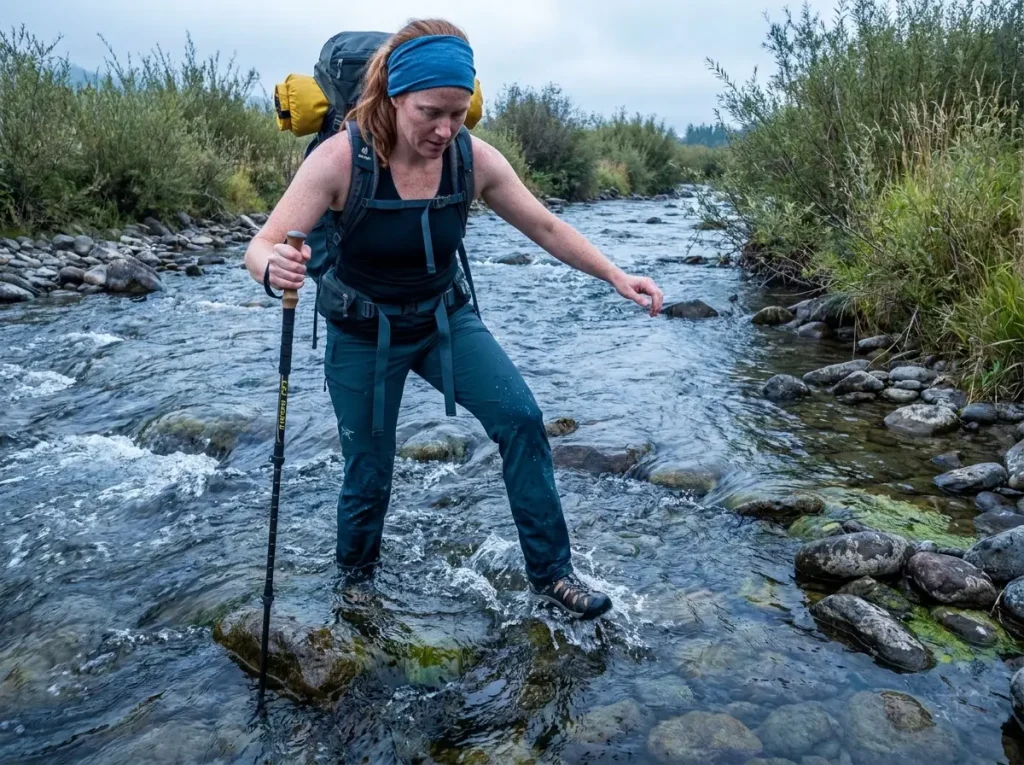
Because items fall out. Not while walking on flat trail — while scrambling over talus, while squatting to filter water, while leaning over a stream crossing, while choosing between boots and sandals at a ford. Any time your thigh angle changes past 45 degrees, an open pocket becomes a chute. Phones, keys, and multitools don’t float.
A zippered pocket adds one second to access time. An open pocket at the wrong angle subtracts your phone permanently. The math is clear.
Where Open Pockets Still Work
Open hand pockets are fine for items you’re cycling constantly: snack wrappers in, energy gels out, tissues, lip balm. Items that are light enough that losing them wouldn’t ruin the hike. The access speed of an open pocket matters when you’re pulling things in and out every few minutes.
Open cargo flap pockets work for the same category if the flap has a secure snap or Velcro — not if it relies on gravity alone. A Velcro cargo flap is faster than a zipper and more secure than nothing.
Pro tip: Apply a thin bead of gear lubricant (silicone wax or zipper wax) to your pant zippers at the start of each season. Cold, gritty, or corroded zippers are the reason people stop using zippered pockets — the zipper gets hard to pull with one hand, so they leave it open, and then they lose something. Maintenance is cheaper than a new phone.
Building Your Ideal Pocket Setup
Match Pockets to Your Hiking Style
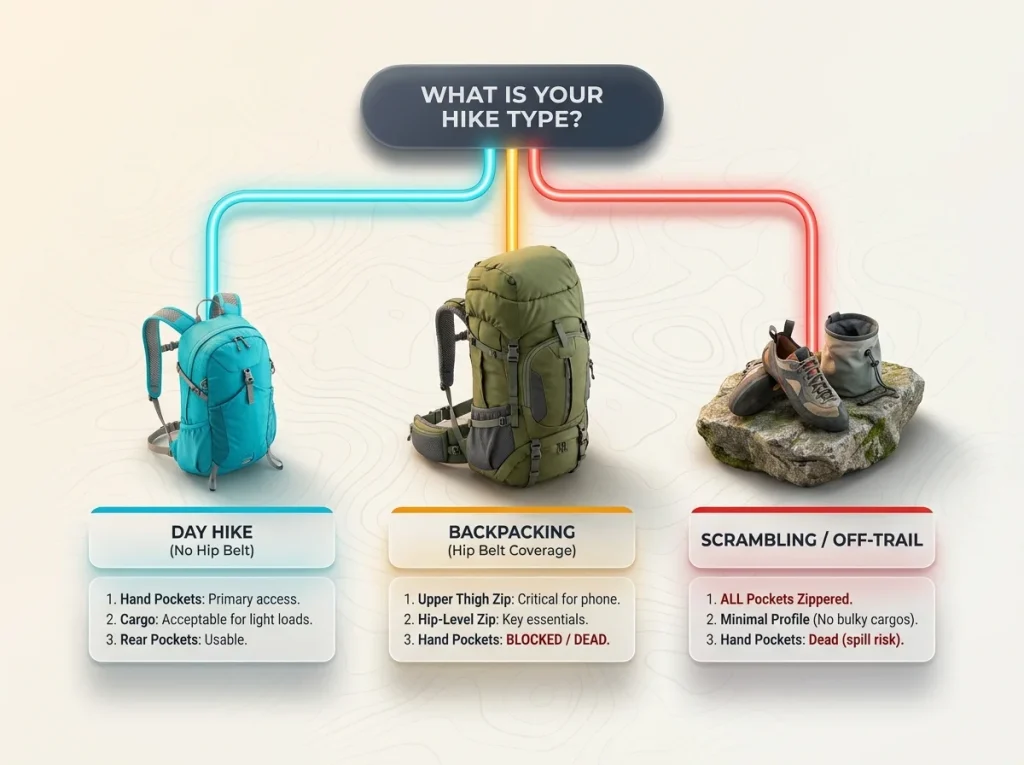
The right pocket layout depends on how you hike. A day hiker with no pack wants maximum hand pocket access — phone, keys, snacks all within reach at natural hand drop. A backpacker with a 50L pack needs everything above the hip belt line or in the pack’s own pockets.
Here’s how to choose hiking pants by activity type with pockets in mind:
Day hikes (no pack or small daypack): Hand pockets handle most items. One zippered thigh pocket for the phone. Low cargo pockets work if you keep them light. Rear pockets are usable because nothing presses against them.
Backpacking (framed pack with hip belt): Upper thigh zippered pockets become primary. Hand pockets become dead or limited depending on belt width. Rear pockets are storage-only. Hip-level zippered pocket becomes the most useful real estate on your pants.
Scrambling and off-trail: Everything zippered. Open pockets at any angle beyond 30 degrees become launch ramps. Slim profile matters — bulging cargo pockets catch on rock and brush.
The Pre-Hike Pocket Audit
Before every trip, run a 30-second check:
Load each pocket with what you plan to carry. Put your pack on and cinch the hip belt. Walk 20 steps at trail pace.
Can you reach everything that needs quick access? Does anything bounce? Is anything blocked?
If the answer to any of those is wrong, move items before you leave the trailhead. The trail is not the place to redesign your pocket system with cold hands and wet gear.
This is the same logic behind a hiking pants stretch test — you test before the trail tests you.
Conclusion
Three things to remember:
Pocket position matters more than pocket count. Six pockets mean nothing if your hip belt covers three of them. Know which positions stay accessible with your specific pack.
Match items to pocket physics. Phones go in upper thigh zippered pockets where they don’t bounce. Snacks go where your hands fall naturally. Keys go in a zippered pocket you won’t touch until the trailhead. Heavy items go in the pack, not your legs.
Test the full system before the trail. Load your pockets, strap on your pack, walk around the block. Ten minutes of testing catches every access and bounce problem that twenty miles of hiking would teach you the hard way.
Next time you try on hiking pants, bring your phone, a couple of snack bars, and your car keys. Load the pockets, walk around the store, and reach for each item like you would on trail. The staff might look at you funny. Your knees at mile fifteen won’t.
Q1 What is the best pocket layout for hiking pants?
The most trail-efficient layout combines upper thigh zippered pockets for phones and valuables, hand pockets for quick-grab snacks, and a hip-level zippered pocket for items that stay put. Avoid pants that rely only on low cargo pockets — they bounce with every stride.
Q2 Should hiking pants have zippered pockets?
Yes for anything you can’t afford to lose — phones, keys, multitools. Open pockets work for lightweight cycling items like snacks and tissues. Any time your thigh angle exceeds 45 degrees, an open pocket becomes a chute for heavier items.
Q3 Where should you carry your phone while hiking?
An upper thigh zippered pocket on your dominant side is the best position. It avoids stride bounce, stays clear of your hip belt, and the zipper prevents fallout during scrambles or stream crossings. Avoid low cargo pockets — they swing with every step.
Q4 Do cargo pockets affect hiking performance?
Low-mounted cargo pockets add pendulum weight to your leg swing. A loaded cargo pocket below mid-thigh increases the energy cost of each stride. Keep cargo pocket loads under 6 ounces, or move heavy items to upper thigh pockets or your pack.
Q5 What should I carry in my hiking pants pockets?
Phone, snacks, car keys, emergency whistle, and a small navigation tool (compass or folded map section). Everything else goes in the pack. Your pants pockets handle grab-and-go items — anything heavy or bulky belongs in your backpack where it rides on your frame, not your legs.

I've spent more than a decade researching hiking gear and trail technique. I read the specs, the forum threads and the long-term reviews, and every pick here comes with what it gets wrong.
End of the trail
You read every mile of this one. Here's where the trail goes next.