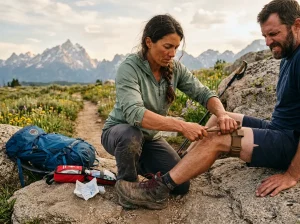
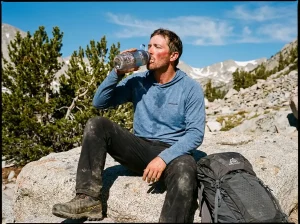
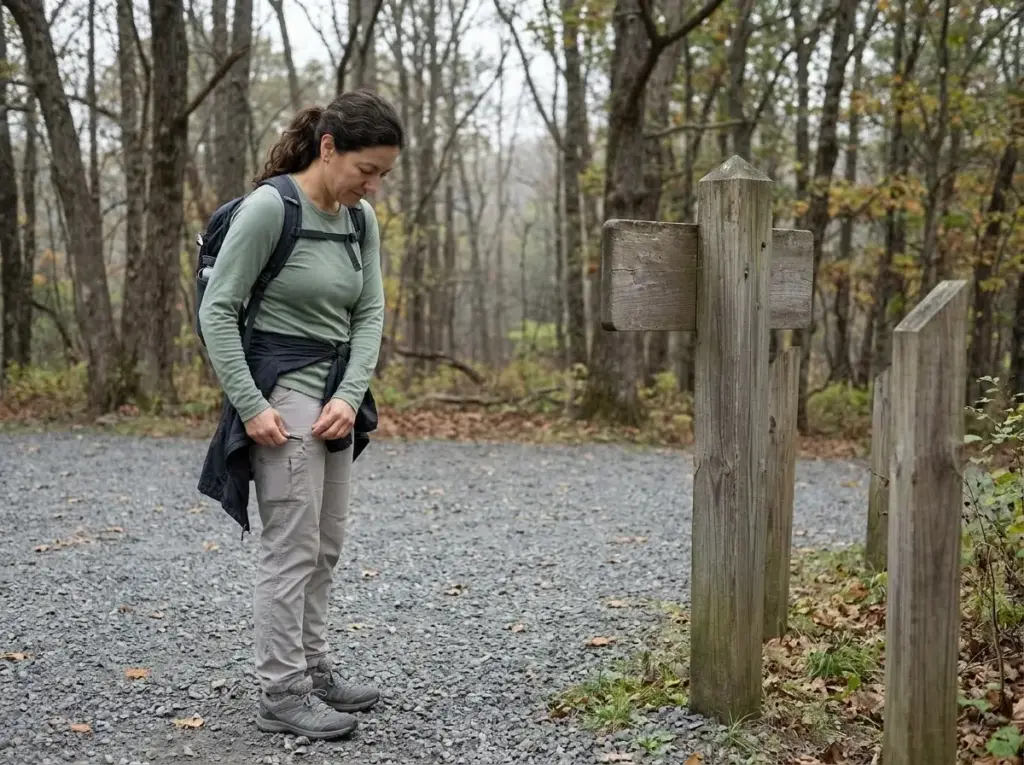
The pants that felt perfect at 70°F are the ones you regret at 38°F with a 15 mph wind pulling heat off your thighs, and the warm pair you bought for January turns into a sauna by July. This guide sorts the best hiking pants by season by temperature and wind instead of by product superlative, and it names which pair fails first in each band. You get one honest pick per season, what winter really needs, where water-resistant stops, and whether one pair or two makes sense for your climate. The table puts the answer in ten seconds, and every row gets its proof in the sections after it.
| Season and temperature | What to wear | Example picks |
|---|---|---|
| Hot, 75-80°F and up | Thin nylon, UPF 50, vents or roll-up legs | Ferrosi, Silver Ridge Convertible, Dynama |
| Mild, 55-75°F | One thin stretch pant with cuffs that roll up | Ferrosi, Stretch Zion |
| Cool shoulder season, 40-60°F, wind and light rain | Light softshell, with a base layer in the pack for stops | Rab Incline Light, Arc’teryx Gamma |
| Cold, 20-40°F | Softshell over a wool or synthetic base layer, shell on top for wind or snow | Gamma, Vidda Pro, Keb Curved |
| Below 20°F | A system: base layer, softshell or fleece, shell, and insulated camp pants for stops | Vidda Pro or Keb Curved as the outer layer |
Best Hiking Pants by Season Come Down to Four Temperature Bands
Two hikers stand at the same trailhead at 40°F. One wears a thin summer pant and shivers every time the group stops, and the other wears a softshell and is soaked inside by the end of the first climb. The thermometer was never the problem, because a temperature reading says nothing about wind, sun or how fast you are moving.
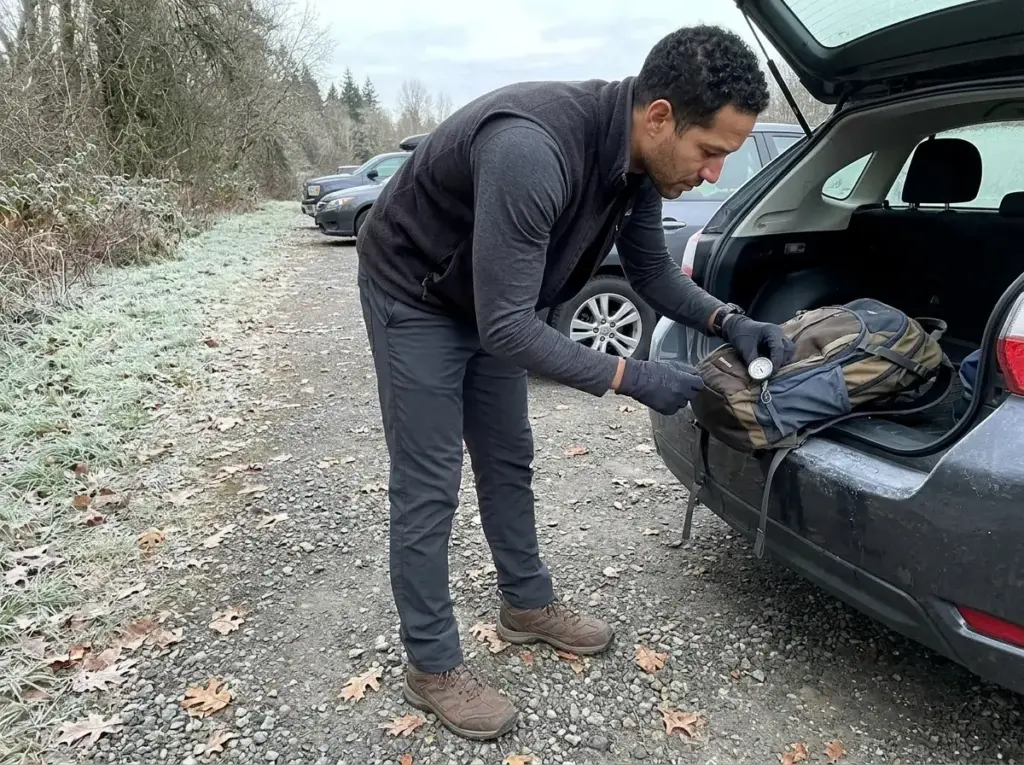
Two questions sort the whole season problem: how cold does the air feel on your legs, and are you walking or standing? The first gives you the band. The second tells you what goes in the pack.
The Four Bands in One Table-Free Rule
Think in four working bands. At about 80°F and up you want a thin, vented, sun-rated pant, or shorts if there is no brush to fear. From 60 to 75°F, one thin stretch pant covers the day, with cuffs that roll up when the climb heats you. From 40 to 60°F, a light softshell takes over, and a thin base layer rides in the pack for every stop.
Below 40°F and down through 20°F, the softshell goes over a wool or synthetic base layer and a shell joins for wind or snow. Under 20°F, the question stops being about a pair of pants and turns into a system, which the winter section lays out. The bands overlap on purpose, because their edges move with wind, sun and how hard you push.
Pick the band you hike in on most days, then adjust with layers. If you are still sorting which kind of pant fits your trips before the season question, start with choosing hiking pants for the hikes you actually do and come back here for the temperature.
Why Wind Beats the Thermometer Below 50°F
The National Weather Service defines wind chill only when the air is 50°F or colder and the wind is above 3 mph, and that cutoff is a good map of where pants stop being simple. Above 50°F, fabric weight decides how you feel. Below it, moving air strips warmth from your thighs faster than any number on a thermometer admits. At 0°F with a 15 mph wind, the National Weather Service’s wind chill chart puts the felt temperature at -19°F, with exposed skin able to freeze in 30 minutes.
Sun works the other way. That same chart notes that bright sunshine can add 10 to 18°F of felt warmth, so a 40°F morning on a sunny ridge is a different day from 40°F under cloud on the same ridge. A pant that is right in the sun is wrong in the shade, and that is why a windproof outer layer buys more warmth than extra thickness.
Read the wind forecast for the ridge, not the town. A calm 38°F at the trailhead can turn into a different day at the pass, so the softshell goes in the pack even when the parking lot feels mild.
Moving vs Standing Still
The second axis is easier to feel than to plan. At 40°F a thin pant is fine while you climb, because your legs are the heater. Stop for a snack at a viewpoint and within ten minutes the sweat in the fabric turns cold against your skin.
That is why a base layer in the pack does more work than a thicker pant. You can add it in thirty seconds at a break, and you cannot un-thicken a pant halfway up a switchback. Breathability and weather protection pull in opposite directions, no single pant wins both, and that tension sets up the one-pair-or-two question near the end of this guide.
Spring Hiking Pants for Cool Starts, Mud and Wind
A 42°F trailhead at 7 a.m. and a 63°F switchback in full sun at 11 are the same hike. A spring pant has to survive both, plus mud, wet brush and a wind that shows up on the ridge without warning.
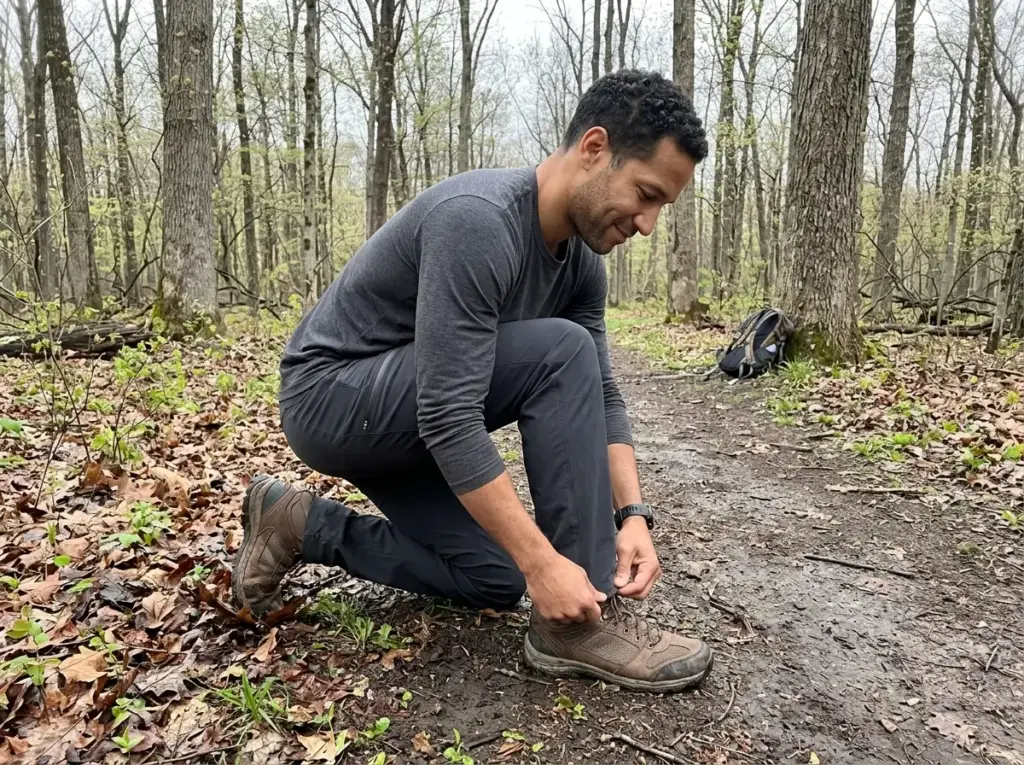
Why a Light Softshell Beats a Thin Summer Pant in April
Light softshell pants block wind and shed drizzle, and a thin summer pant does neither. For shoulder season pants, that trade is the whole point. Add a thin base layer in the pack and the same pair covers the cold start, the noon sweat and the stop at a saddle, with no second pair to carry. Summer-weight nylon feels great at 11 and miserable at 7, and April asks you to hike both.
Rab Incline Light for Cool Starts and Wind
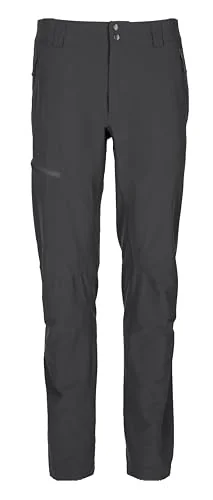
Rab sells this pant as the Incline Light for men and the Incline for women, at 12 oz and 10.3 oz. The Matrix softshell blocks wind and sheds light rain, and the articulated knees keep a high step from fighting the fabric. It is the pant for a 40 to 60°F start that warms by noon.
The trade-off is heat. Once the afternoon passes roughly 70°F a softshell holds warmth you no longer want, so treat it as a spring and fall pant and leave it home for July.
Mud and Wet Brush: What Soaks First
Hems soak first. Dew, wet leaves and tall grass wick up a thin pant to the knee by the first mile, and a softshell shrugs it off longer. A snug ankle, whether a cinch or a snap, keeps the cuff out of the mud, while a wide hem drags and collects it.
For a wider look at which pants hold up to wind and weather by trip and climate, that guide sorts the weather tiers by trip type. Spring is also the season when one pair is most often too much and too little in the same day, and vents plus a base layer in the pack do the work a second pair would.
Summer Hiking Pants That Breathe When It Hits 80°F
An exposed afternoon climb at 85°F burns bare legs and cooks anyone in a heavy pant. The answer most people do not expect is a thin, loose pant, lighter than the shorts it replaces.
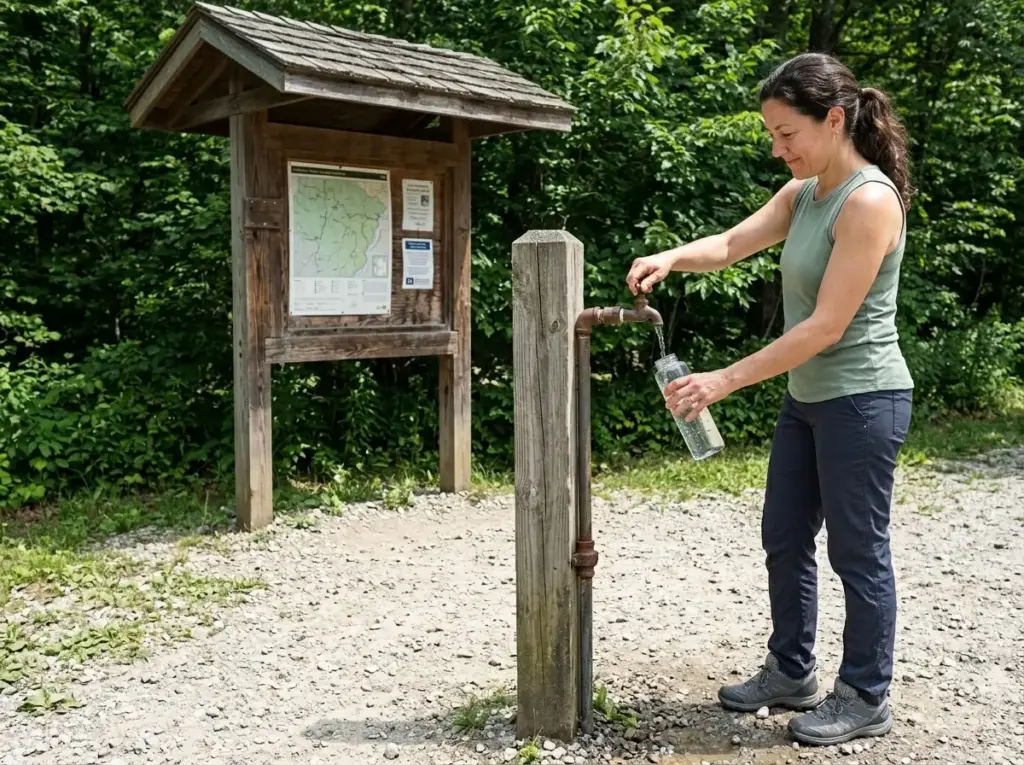
Why Thin and Loose Beats Bare Legs in Direct Sun
A thin, loose nylon pant with UPF 50 (UPF 40 at a minimum) can feel cooler than shorts in direct sun, because it shades the skin and lets air move between fabric and leg. The National Park Service’s Ten Essentials lists sun-protection clothing, including pants and long sleeves, as part of how you minimize UV exposure, so sun protection is a pants job as much as a sunscreen job. A hiker with burned thighs is a hiker who stops enjoying mile nine.
Color counts too. Light colors reflect heat, and a black pant on an open ridge in July cooks you. Breathable hiking pants in a pale tone stay noticeably cooler, while leggings snag on brush and shade almost nothing. Above roughly 70°F breathability is the spec that decides, not durability, and below that the same thin pant needs a layer.
Outdoor Research Ferrosi, the Summer Reference
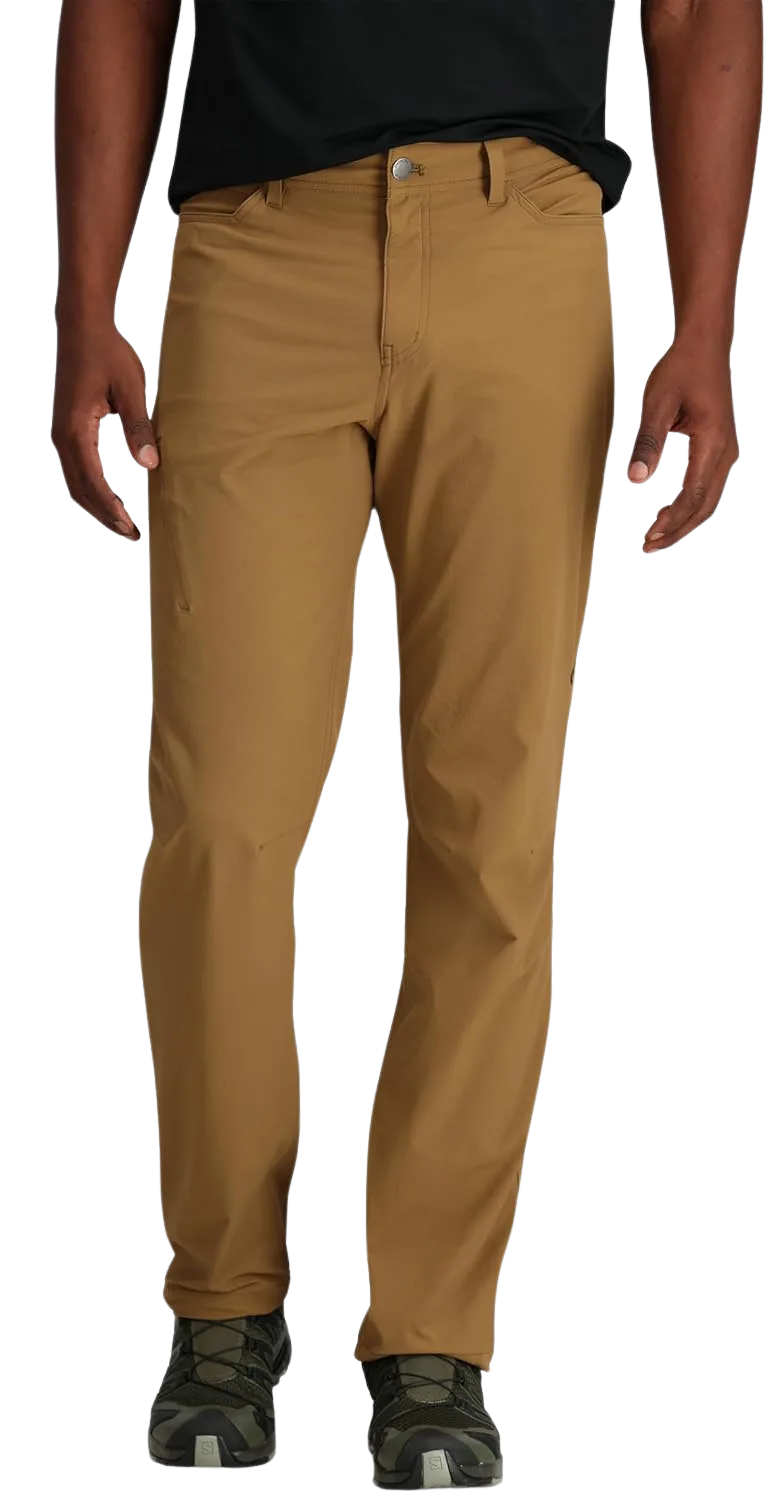
The Ferrosi is thin, stretchy and rated for sun, not for winter. It dries fast, which turns a wet stream crossing into a non-event, and the pattern with this pant is that the fabric outlasts the stitching: the rear pocket seams are the part that gives first. A white pair keeps every campsite stain, so pick a mid-tone if you care.
Above about 70°F it is the pant to beat. Below 50°F it needs a base layer under it.
Columbia Silver Ridge Convertible, the Budget Hot-Trip Pick
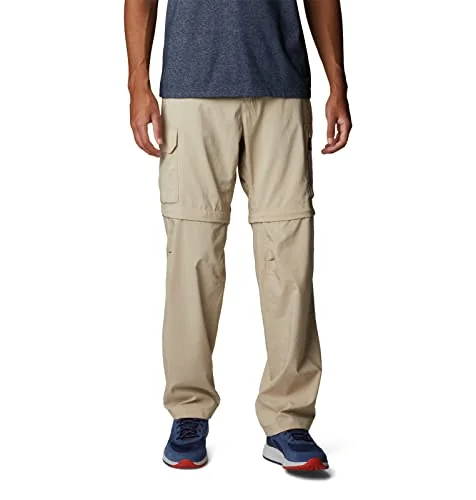
This is the budget pick for a hot trip with a swim stop or a big temperature swing: one of the few zip-off pants worth carrying, since it becomes shorts when the afternoon heats up. The recycled polyester is light, and the removable belt means one fewer thing to pack. The cost is the zipper track around each thigh, which can pinch and chafe and gives rain a way in.
If convertible pants sound right for your trip, convertible hiking pants for the trip you actually have compares the options in full.
Hot and Humid Days Break the Pants That Work in Dry Heat
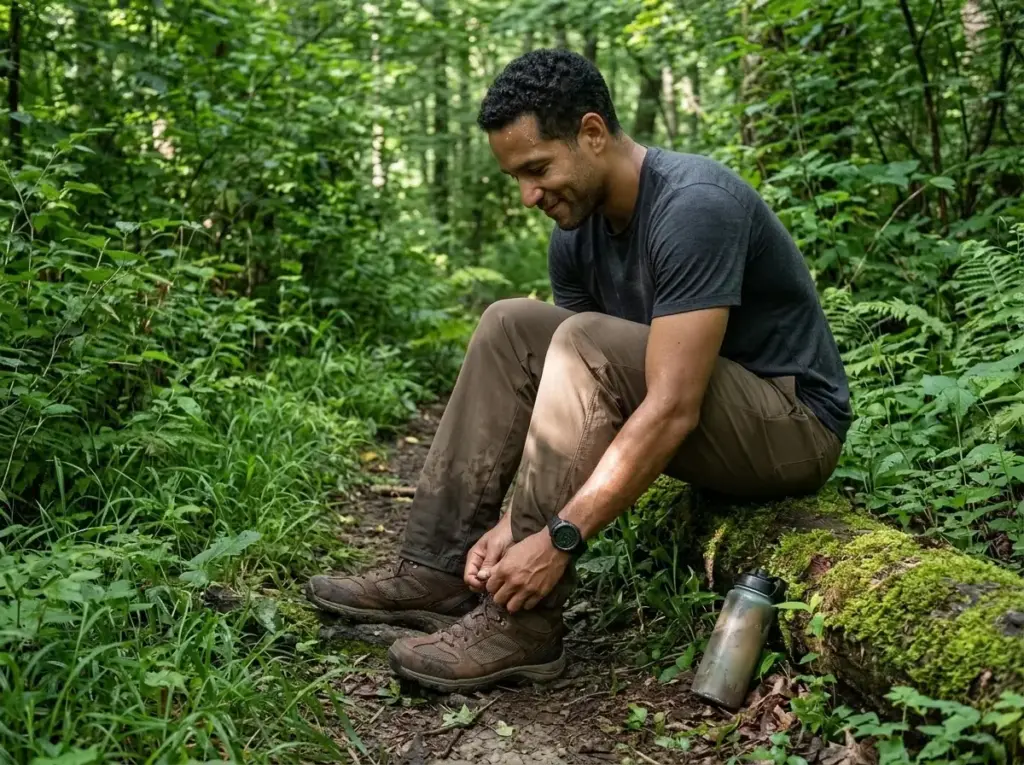
Dew-soaked ankles by the first mile, a damp thigh that never dries, and ticks waiting in the grass at knee height. Humid heat breaks pants that are perfect in a desert.
Why the Dry-Heat Favorite Cooks You in Humidity
The pants that win on granite and in dry canyons are usually durable, fairly thick and a bit stretchy. In a forest at 85°F and heavy humidity, sweat has nowhere to evaporate to, and that fabric stays wet and warm. A tough pant like the Stretch Zion reads as an excellent cool-weather pant and runs warm in sticky summers, so the pant that wins in dry heat is not automatically the one that wins in humid heat.
High-spandex fabrics add a second problem: they cling when wet and hold odor. Loose and light beats tight and stretchy, and an anti-odor finish helps without replacing airflow. Thin fabric also lets some sun through, so on a bare ridge the UPF rating matters more than color alone.
If shorts look like the obvious answer in this weather, roll-up pants against shorts when bugs, brush and humidity decide works through where each one earns its place.
Mountain Hardwear Dynama for Sticky Summers
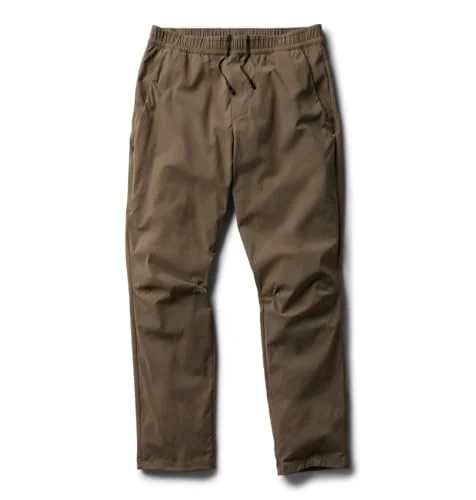
The pull-on elastic waist sits flat under a hipbelt, which makes these backpacking pants you can forget about, with no button to dig into your hip after four hours of pack. The women’s version weighs 7.1 oz against the men’s 8.9 oz, a real gap, so do not assume the two feel alike. It is the pick when a Ferrosi runs too warm.
It is a hot-weather pant, not a shoulder-season one. Below 55°F you want the softshell from the spring section.
Bugs and Ticks: Treated Fabric and a Tapered Leg
Ticks climb, and a tapered leg that tucks into your socks closes the gap they use. Permethrin treatment turns the fabric itself into insect repellent, which keeps ticks and mosquitoes from biting through it. You can treat a pair yourself or buy factory-treated pants, but factory treatment is finite at about 70 washes, and then you re-treat. Wide hems flap open at the ankle and defeat the whole idea, so tuck or choose a taper.
For the failures that let ticks through even on treated fabric, permethrin-treated pants and the mistakes that let ticks through covers them one by one.
Treat clothing outdoors, never skin, and let the fabric dry fully before you put it on. Do it the weekend before the trip so the treatment is cured and you are not spraying at the trailhead.
Fall Hiking Pants for 35°F Mornings and 65°F Afternoons
A frosty parking lot, a sweaty climb in the sun, a windy ridge at the top and cold shade on the way down. Fall packs a 30-degree swing into a single day, and one pant has to handle all of it.
The Pant That Handles a 30-Degree Swing in One Day
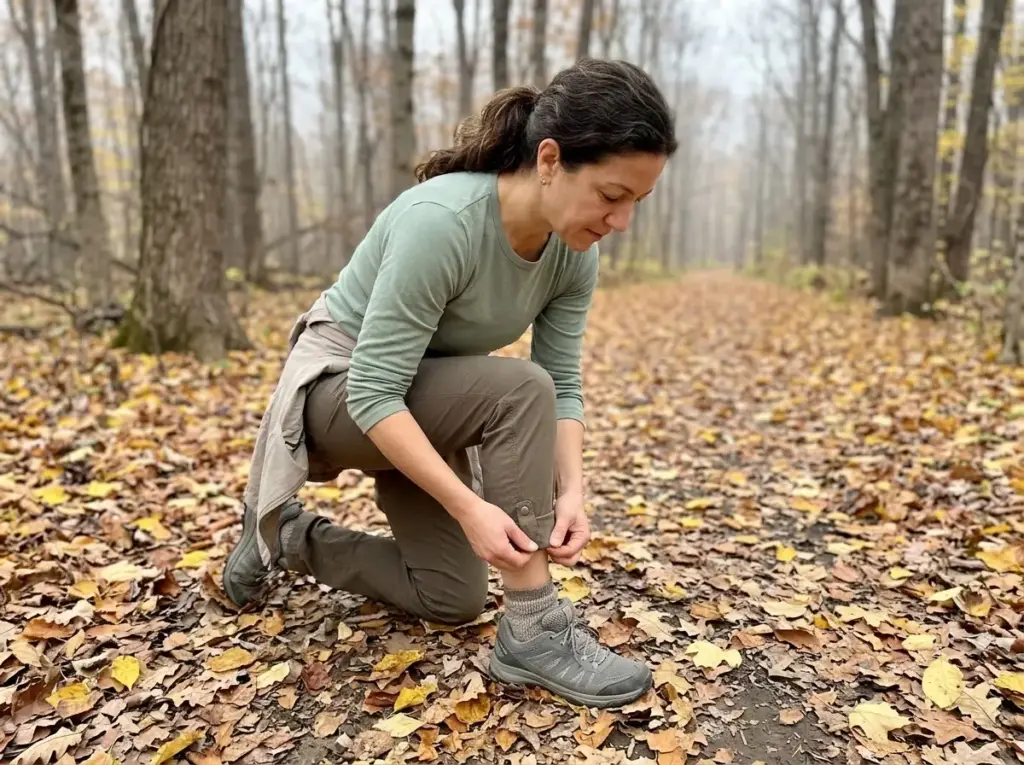
Fall wants a tougher, slightly thicker fabric than summer, with legs you can roll up when the afternoon warms. Thin summer nylon snags on dry brush and gives you nothing at the cold start. A mid-weight stretch pant with a gusseted crotch and roll-up snaps is the classic 3-season pants setup and covers 35°F at dawn and 65°F at 2 p.m. with one change: the cuffs.
prAna Stretch Zion and Halle for Three-Season Wear
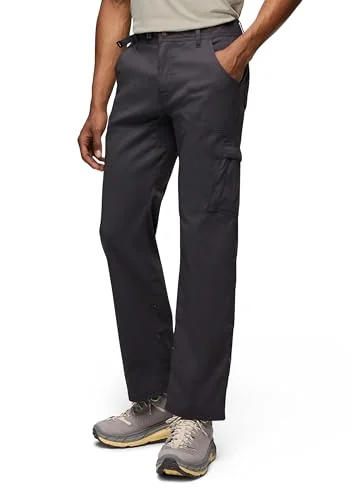
The men’s pant is the Stretch Zion and the women’s is the Halle. At only 3% elastane the stretch is modest, so it bags out less than a high-spandex pant, and the snaps hold the roll without a drawcord. That is the pattern that makes it a three-season pair: tougher than summer nylon and light enough for spring.
The same thickness is why it feels warm on humid summer days, so it is not the answer to the previous section’s conditions.
Roll-Up Legs and What to Pack for the Dusk Drop
Shorter days mean you finish in the cold. Roll the legs up at noon, drop them at the viewpoint, and keep a base layer and a windproof layer in the pack for dusk. Swing days reward the pant that vents and the extra layer you carry for stops, not a heavier pant that sweats all afternoon.
Winter Hiking Pants Are a Three-Layer System, Not One Pair
You are moving at 20°F in a heavy pant and overheating, then you sit ten minutes at a viewpoint and you are cold. One thick pair solves neither problem. Winter legs need a system, and the system has three pieces.
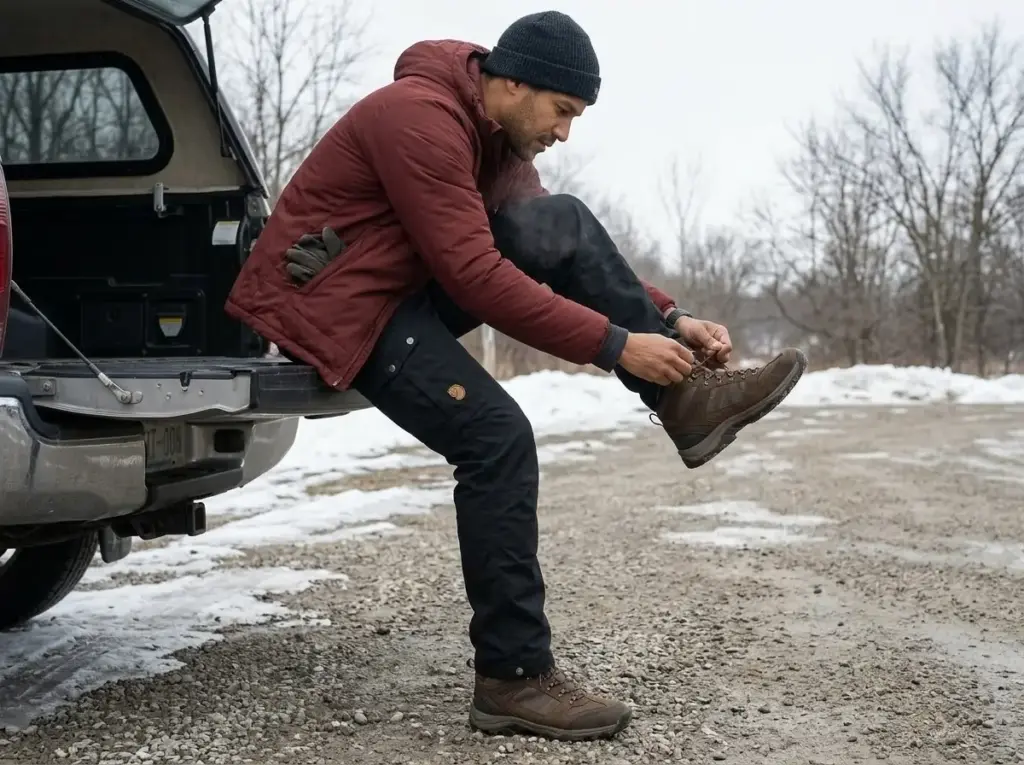
The Three-Piece Winter Kit
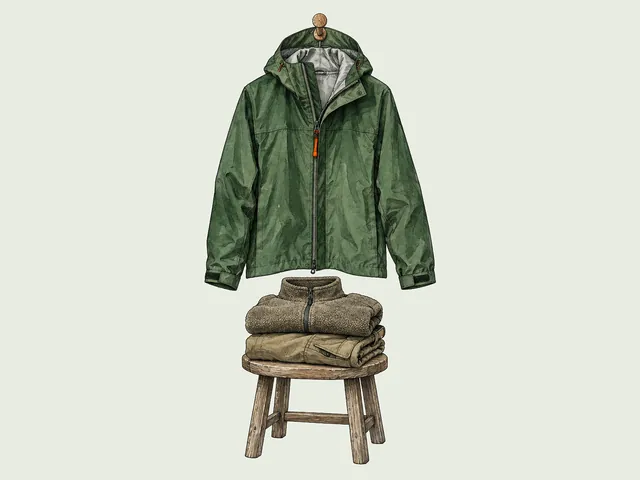
The kit is a layering system built from a wool or synthetic base layer, a softshell or fleece pant over it, and a shell for wind and wet snow. Wind is the enemy, and a windproof outer layer buys more than thickness does. Isle Royale’s packing guide notes that wool keeps insulating when it is wet, synthetics dry fast, and cotton absorbs moisture and quits.
That makes the base layer the first piece to get right, and base layers for cold weather hiking covers it. The outer layer is the second decision: softshell against hardshell pants when the snow type decides walks through wet snow versus dry. In cold-climate guiding, the practical kit at -20°F is wool long underwear, fleece pants and a heavy outer shell, with insulated pants saved for stops.
Arc’teryx Gamma, the Softshell Layer
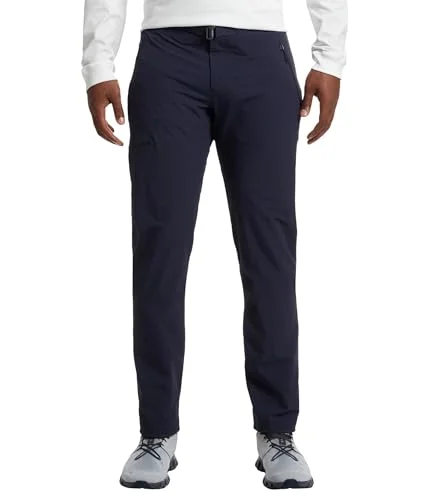
The Gamma covers roughly 45°F and raining up to 70°F and sunny, and it layers over a base layer when the day turns cold. That range makes it the softshell piece of the system, not the whole system. It is a premium pant with a technical fit, so it earns its place for hikers who cover shoulder season and winter in the same pair, and for alpine hiking where the weather turns fast.
Below 20°F it needs the shell on top. In summer it is more pant than you need.
Fjallraven Vidda Pro for Wind and Snow
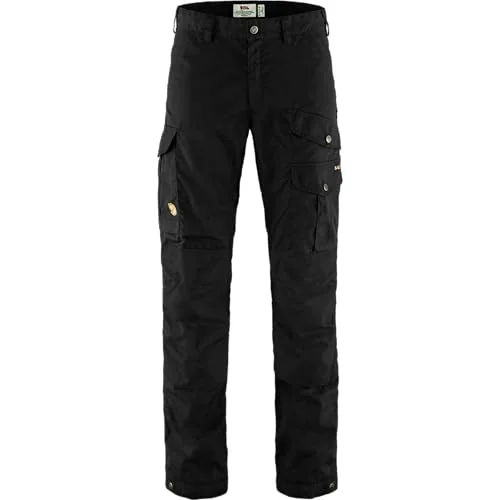
The Vidda Pro is the wind-and-snow workhorse. G-1000 is a dense, tightly woven blend that sheds wind and light wet snow, the seat and knees are reinforced, and there is room under it for a base layer. It is stiff out of the bag and softens with wear.
For more men’s picks sorted by temperature, cold weather hiking pants for men by temperature goes band by band.
Fjallraven Keb Curved, the Women’s Winter Shell
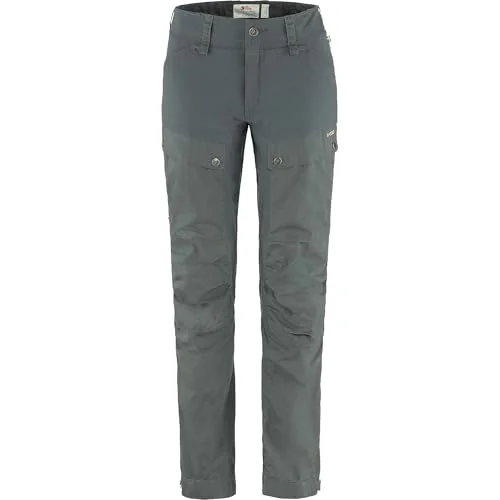
The Keb Curved is built as a women’s winter shell worn over a fleece and a wool base layer. The curved cut follows the hip and knee, and the hip-to-knee vents let you dump heat on a climb without stopping to strip layers. A G-1000 shell like this on the outside of wool and fleece is the working kit for cold-climate guiding at -20°F.
Static Cold Needs Different Pants
Standing in the cold is a separate problem from moving through it. Denali mountaineering rangers’ clothing guidance separates a waterproof, breathable, durable hardshell pant with full-length side zips from insulated puffy pants for camp. The side zips let you pull the shell over boots without removing them.
The camp pants are insulation, not a hiking pant, and they live in the pack until you stop. Denali rangers also warn that climbers overlook intense heat on the lower glacier in summer, which is the same lesson from the hot end: one winter pair is the wrong kit for the approach.
Water-Resistant Pants Are Not Rain Pants
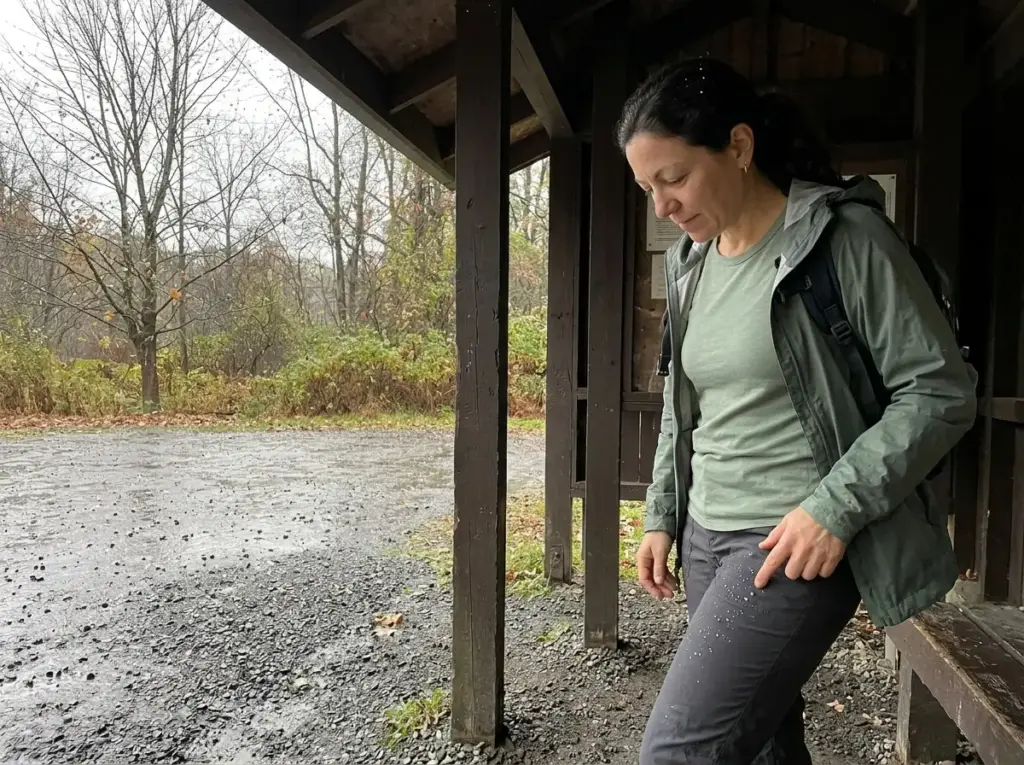
Water beads on your thigh for the first hour of drizzle. Then the fabric darkens, clings, and the bead is gone. “Water-resistant” is the tag every season’s pants carry, and it means less than it sounds like.
What DWR Does and Where It Quits
DWR (durable water repellent) is a coating on the outside of the fabric, not a membrane. It sheds mist and light rain for a limited time. Waterproof means a shell with taped seams and a layer that blocks water, and a pant with DWR is not that.
Once the coating wets out, the fabric soaks through and clings, and a soaked pant loses most of its insulation. Cold rain plus wind is where pants stop being enough. Where water-resistant and waterproof pants each soak you goes deeper on the difference.
Convertibles add a second leak path: the zipper track at the thigh can let water in and pinch skin once it is wet.
Restoring the Coating
The coating wears off with dirt, abrasion and washing. A pair that sheds nothing is usually a dirty pair first and a worn-out coating second. Wash it with a technical cleaner, then apply a wash-in or spray-on treatment such as Nikwax. Many makers also say a short tumble on low heat revives the finish, so read the care label before you try it.
Wash before you re-treat. DWR sprayed over skin oils and trail grime fails within a few outings, and the pair looks treated while it soaks through.
Rain Kilt or Rain Pants When Pants Are Not Enough
The step above DWR is a rain kilt or rain pants in the pack. A kilt works for warm drizzle below treeline: it keeps your thighs dry, lets air through, and goes on without sitting down. Rain pants belong to cold rain and wind, where a kilt flaps open and the legs get cold.
When a rain skirt beats rain pants gives the rule for choosing between the two.
Fabric and Fit Details That Matter More in Some Seasons
A pair can look perfect on paper and still dump your phone out of a pocket on a squat, or bag out at the knee by afternoon. These details decide how a pant behaves on a real day, and each one earns its weight in a different season.
Nylon, Polyester and How Much Stretch Is Too Much
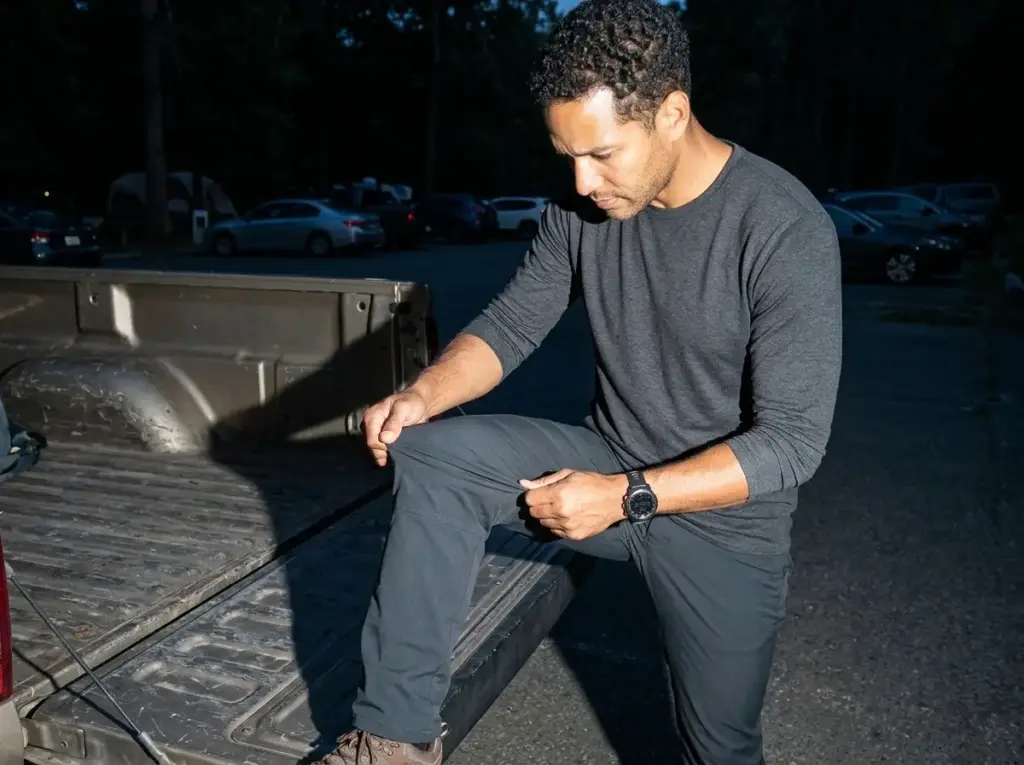
Nylon is quick drying and offers strong abrasion resistance, while polyester holds color and UPF and is the usual recycled choice, and either can be moisture wicking when the weave is open. Spandex or elastane gives you movement but holds odor and heat in summer. A ripstop weave resists tears on brush, and thicker denier belongs to fall and winter.
More stretch is not better stretch, because a very stretchy pant clings, sags and runs hot. When more stretch starts to hurt hiking pants explains the elastane trade-off.
Waistbands and Pockets That Work Under a Pack
Under a hipbelt, a drawcord or flat elastic waist beats a button that digs in. Softshells that sit over layers do better with an integrated belt that adjusts around a base layer. Pockets need a zipper if you want your phone to survive a high step or a squat.
Features That Earn Their Weight, Season by Season
In summer, thigh vents and roll-up legs earn their ounces. In shoulder season, articulated knees and a gusseted crotch matter for high steps, and an ankle cinch keeps the cuff out of mud. Zippered pockets matter in every season, and cargo pockets are fine only if they stay flat under a pack.
Cut matters as well: an athletic fit moves best on steep climbs, a relaxed fit vents better in heat, and a slim fit clears boots and gaiters cleanly. Inseam length matters too, for tucking into socks in tick country and for clearing boots in winter. For the right inseam by height and terrain, that guide works the numbers out.
One Pair or Two? Decide From the Climate You Hike In
A hiker in Georgia has four hot months. A hiker in Colorado has five cold ones. A hiker in the Pacific Northwest lives in the middle, in drizzle, for most of the year. Each of them needs a different number of pairs.
When One Pair Is Enough
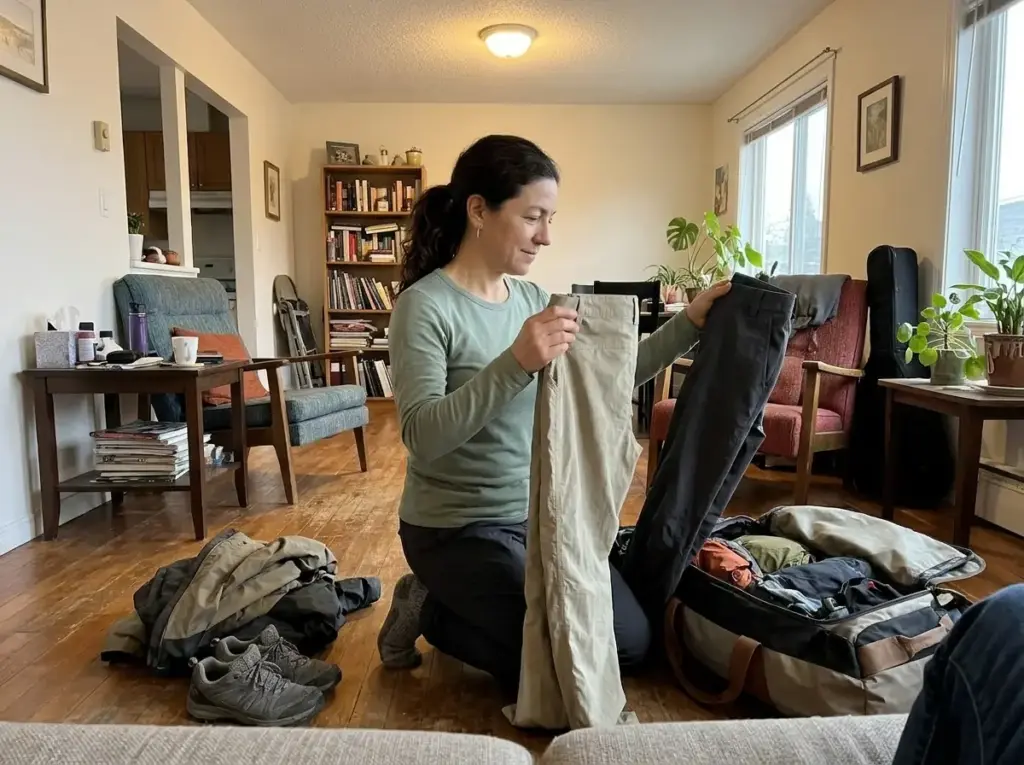
One pair works if your climate stays inside one or two bands, like a mild 50 to 75°F year-round. A mid-weight stretch pant plus a base layer and a shell handles that, and the second pair would be a spare, not a need. Breathability and weather resistance pull in opposite directions, and a mild climate is the one place the middle of that tug-of-war is a good place to live.
When Two Pairs Beat One
Two pairs make sense when your range runs wide. A thin hot-weather pant and a softshell for cold are opposite tools, and one pant cannot be both. The crossover sits near 70°F: a Ferrosi is comfortable up to there and a softshell like the Gamma is comfortable down from there.
The cost logic works without numbers. Two budget or mid-range pairs often cost less than one premium softshell, and they cover more days. A third piece, a shell pant or the full winter kit, comes in only for real snow.
A Simple Way to Decide
Buy for the 70% of days you actually hike, then borrow the other 30% with layers. Count the days on your calendar in each band, and the answer usually shows up in one pass. If most of them are between 40 and 75°F, a single mid-weight pant plus a base layer is enough. If a third of them are under 40°F and a third over 75°F, you are buying two.
Hiking pants picks by build, climate and terrain is the next narrowing step once you know the number.
Budget, Mid-Range and Premium Hiking Pants Without the Hype
The premium softshell looks like the answer until you notice it only wins in the cold half of the year. Price tiers matter less than the band the pant was built for.
What You Get for Extra Money
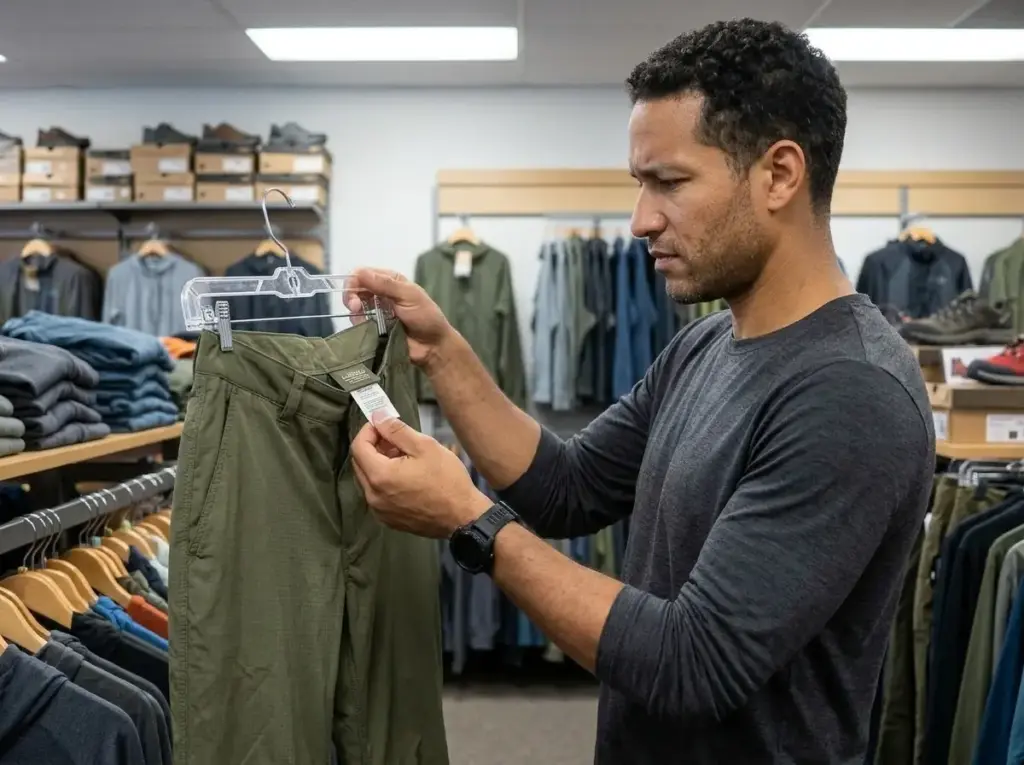
Among budget hiking pants, the Columbia Silver Ridge convertible is the pick, and it does hot trips well. The Ferrosi, Dynama, Rab Incline Light and Stretch Zion sit in the mid-range and cover most days of most hikers. The Gamma, Vidda Pro and Keb Curved are premium, and they earn that tier only if you hike in cold, wind and snow often.
What the extra money buys is mostly durability at the seams. Thin budget nylon wears first at the seat seams, and a premium pant with reinforced stitching lasts longer where it takes the load. A premium pant outside its band is just an expensive way to be uncomfortable.
Men’s and Women’s Versions Are Not Identical
Men’s hiking pants and women’s hiking pants differ in rise and hip curve, and sometimes in fabric weight or features. The Dynama is a clear case: 8.9 oz for the men’s and 7.1 oz for the women’s. Always check the specific version you are ordering instead of assuming the two match.
For women’s options sorted by chafe and fit, women’s hiking bottoms that don’t chafe by hour three covers it. For the men’s side, men’s hiking trousers compared by where they fail does the same.
Read the Wind and the Low, Then Pack the Base Layer
Pick by temperature and wind first, and the product follows. Spring wants a light softshell, and summer wants thin and loose. Humid heat breaks the pants that work in dry heat, fall wants a tough pair with legs that roll up, and winter is a system of three pieces. Water-resistant is not rain gear, and one pair covers a narrow climate while two cover a wide one.
Check the forecast for the wind and the overnight low, not only the afternoon high. Then pack the base layer you hope not to use.
Frequently Asked Questions
01What are the best pants for hiking in the winter?
The best winter hiking pants are a three-piece system: a wool or synthetic base layer, a windproof softshell or fleece pant, and a shell for wind and wet snow. The Fjallraven Vidda Pro and Keb Curved work as outer layers, and the Arc’teryx Gamma works as the softshell piece.
02What brand has the best hiking pants?
No single brand wins every season, because heat, wind and snow pull a pant in opposite directions and each brand builds for one end of that range. Outdoor Research leads for heat, Rab and Arc’teryx for cool shoulder seasons, and Fjallraven for cold and wind.
03What are the best pants for hot and humid weather?
For hot and humid weather, choose a light, loose pant with UPF 50 and anti-odor treatment, like the Mountain Hardwear Dynama, instead of thick stretch fabric. Add permethrin treatment and a tapered leg you can tuck into your socks for ticks.
04Can you wear one pair of hiking pants all year?
You can wear one pair all year only if your climate stays inside one or two temperature bands, like a mild 50 to 75°F. In a wider climate, buy for the 70% of days you hike and borrow the other 30% with a base layer and a shell.
05Are water-resistant hiking pants enough for rain?
No, water-resistant hiking pants shed mist and light drizzle for a limited time, but the coating wears off and steady rain soaks through. Carry a rain kilt for warm drizzle or rain pants for cold rain and wind, and restore the coating after washing.
I've spent more than a decade researching hiking gear and trail technique. I read the specs, the forum threads and the long-term reviews, and every pick here comes with what it gets wrong.
End of the trail
You read every mile of this one. Here's where the trail goes next.