













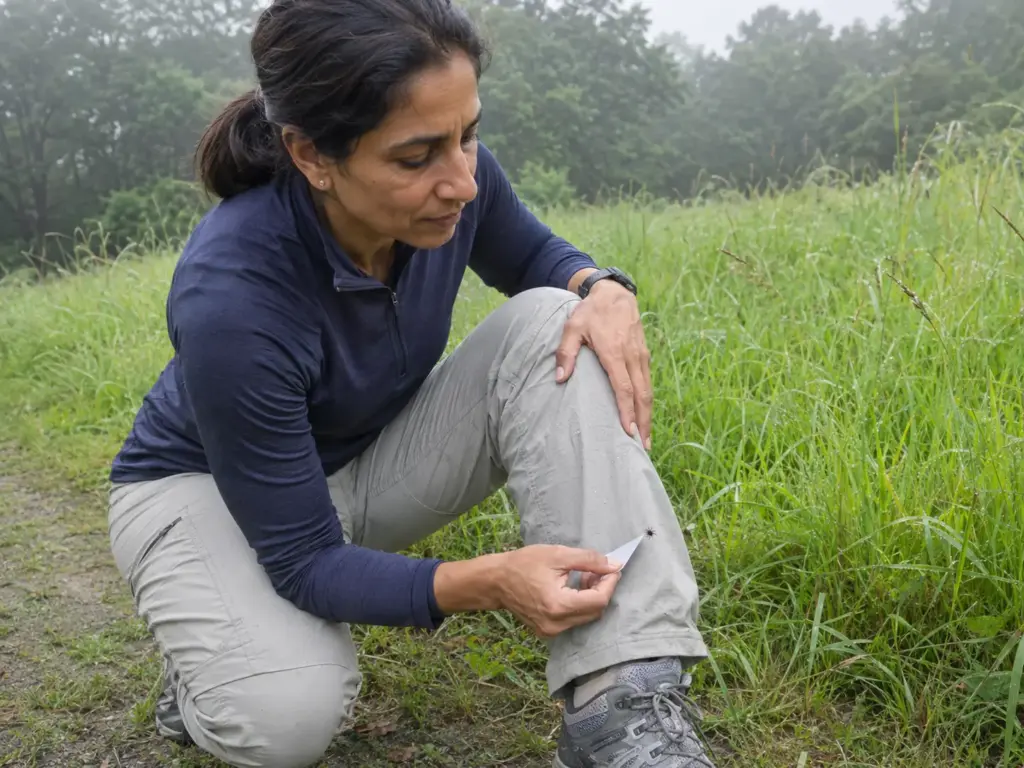
It is nine in the morning and you are crossing grass that reaches your knees in a pair of permethrin treated pants. Five hours later, in the shower, you find a tick fastened behind your knee. The pants did their job and you still got bitten, because permethrin stops ticks on contact but four ordinary mistakes strip most of that away without a sign: spraying wrong, treating fabric that refuses the treatment, forgetting the ankle and counting washes instead of tick seasons. This guide covers what the treatment really does, how to choose between factory, spray and mail-in, and those four mistakes one at a time, down to what no treated pair will ever stop.
What Permethrin Treated Pants Actually Do to a Tick
A tick climbing your pant leg is not repelled by anything. It walks onto the fabric, keeps climbing, and somewhere along the way the treatment gets to it.
Contact Insecticide, Not a Repellent
Permethrin is a contact insecticide, not a repellent. Shelves label the product insect repellent pants or bug repellent pants, and the word repellent is the first thing to unlearn. Treated cloth gives off nothing that says keep out, which is why a questing tick will still step onto it.
What changes is the next few seconds. Permethrin is a synthetic pyrethroid, a copy of pyrethrin, the natural insecticide in chrysanthemum flowers, and for insects it works as a neurotoxin: it keeps the sodium channels in their nerve cells open until the bug loses coordination. Watch a nymph on a treated leg and you see the hot-foot effect. It flips onto its back and paddles at the air a few inches below the skin it was aiming for.
People buy these pants expecting a force field and get a trap instead. A trap is still worth wearing, and it is the core of tick protection on a hike. A tick that never reaches skin cannot bite, and one that does latch on has usually been poisoned on the way up.
The tick that matters most in the eastern states is the blacklegged tick, also called the deer tick, which carries Lyme disease. Its nymph tick stage is the one that catches hikers, small enough to pass for a poppy seed on a pant leg, which is why tick bite prevention here is a fabric problem before it is a skin problem.
The Numbers, and Who They Come From
Treated summer outfits produced 3.36 times fewer nymph bites (the study’s measure of tick bite reduction) than untreated clothes in a controlled study on treated summer clothing, and of the nymphs that still got a grip, 22.6 percent were alive on treated fabric against 97.6 percent on ordinary cloth. A tick you pull off a treated pant is far more likely to be sluggish or finished than one from plain cotton, which keeps right on walking.
Bigger numbers circulate. Outdoor workers in uniforms treated at the factory saw bites fall by more than 80 percent in the first year.
A randomized double-blind trial with workers landed lower, at 65 percent protection in year one and 50 percent in year two. Those are people who spend every working day in tick country, so a weekend hiker should plan around the lower figures, not the headline ones. Effectiveness in the field is a range, and the honest reading is that treated clothing cuts the bites you would have taken by about half to two-thirds.
Why Mosquitoes Are a Different Story
Ticks are slow and they walk on cloth. Mosquitoes land, probe and bite, and they can do it through thin fabric.
In a field study published in Parasites & Vectors, 78 percent of pant samples and 88 percent of sock samples were still taking out at least 85 percent of the ticks exposed to them after three months of real wear, while mosquito mortality stayed low. If mosquitoes are your main problem, treated pants play a supporting role, even in peak mosquito season. Skin repellent does that job, and the last section gets to it.
Factory, Spray or Mail-In: How Long Each Treatment Lasts
There are three ways to end up with treated fabric. They differ in how long the protection lasts, how much effort it takes and what each one refuses to treat.
Factory Treatment
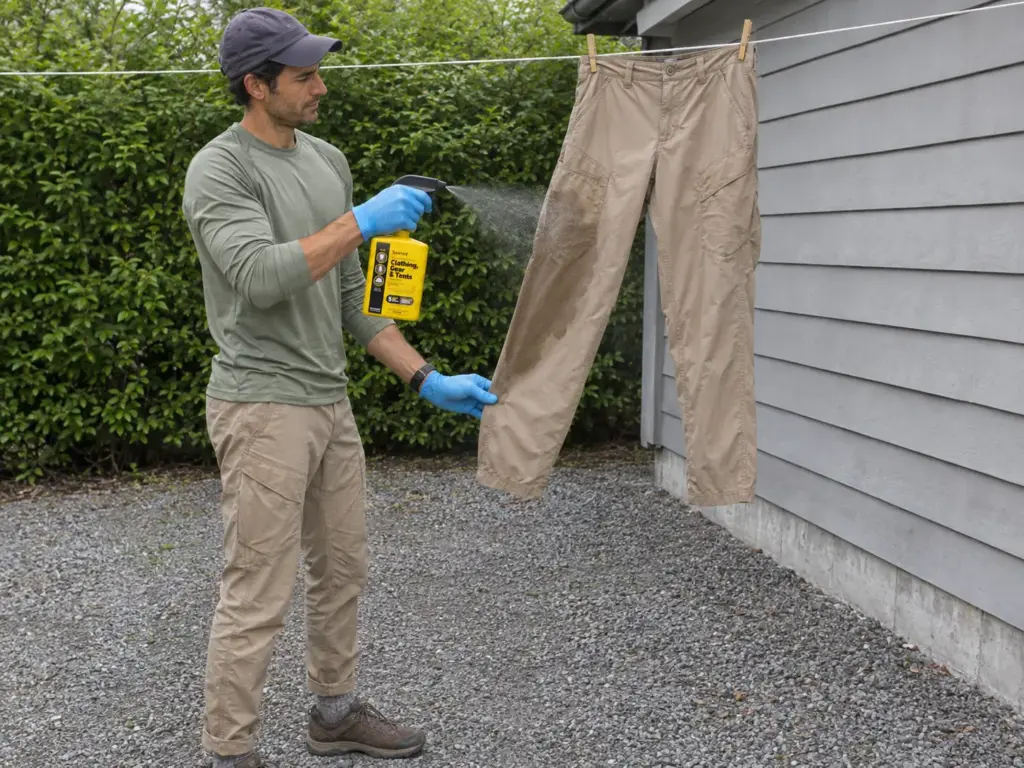
Permethrin treated clothing from a factory is bonded into the fibers before the pants reach a shelf, and the maker’s figure for Insect Shield clothing is about 70 washes. It is the right route if you are starting from zero and want to think about it as little as possible. The pairs worth owning are in the buying section below, and the label or hang tag will show an EPA registration number. If the pair you want also has to zip off into shorts, the guide to convertible hiking pants that earn their zippers sorts out which ones are worth carrying.
Home Spray
A spray is the way to treat the pair you already love. A DIY permethrin spray at 0.5% permethrin is rated for 6 weeks or 6 washes, whichever arrives first, and what ends it is UV degradation from sunlight plus the churning of the washing machine, not sweat or rain. The Sawyer Products SP657 Premium Permethrin Trigger Spray is the reference Sawyer permethrin product, and it comes as a pump spray, which is the form you want. Aerosol cans drift into the air you breathe and waste product on the grass.
The Ranger Ready Permethrin Spray uses the same idea with no scent, and its label life runs a touch shorter. Either one costs a fraction of a factory-treated pair, but it is a recurring cost: a long season with regular laundry means two or three coats.
Judge cost per wash and cost per hiking day, not the sticker. A factory pair spreads its price across about 70 washes, while a spray is cheap per bottle and gets spent every few weeks. For budget hiking pants that you treat yourself, the spray route is cheaper at first and costs more the longer you keep renewing.
Mail-In Service
Mail-in handles the whole closet. You ship a batch of garments, a treatment facility applies the permethrin for you, and everything comes back in about a week or two. The Insect Shield Easy Pack is built for a good-sized pile, roughly ten to fifteen pieces, so it only pays off if you really send that many at once. It will not touch waterproof or water-resistant garments, and the mail-in service’s own list of what it will not treat is worth reading before you pack the box, because the pants you love most are probably on it.
Choosing between the three is short work. A new pair: factory. A pair you already own and love: spray, or the soak method covered further down. A full closet for a long season: mail-in.
The Spraying Mistakes That Put Permethrin Where It Doesn’t Belong
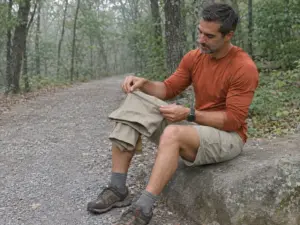
The first mistake happens in a bathroom. Someone sprays the pants while standing in them, or indoors because it is raining, then tosses the pair in with the family laundry. Every step puts permethrin somewhere it was never meant to go.
Where and How to Spray
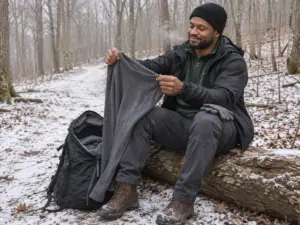
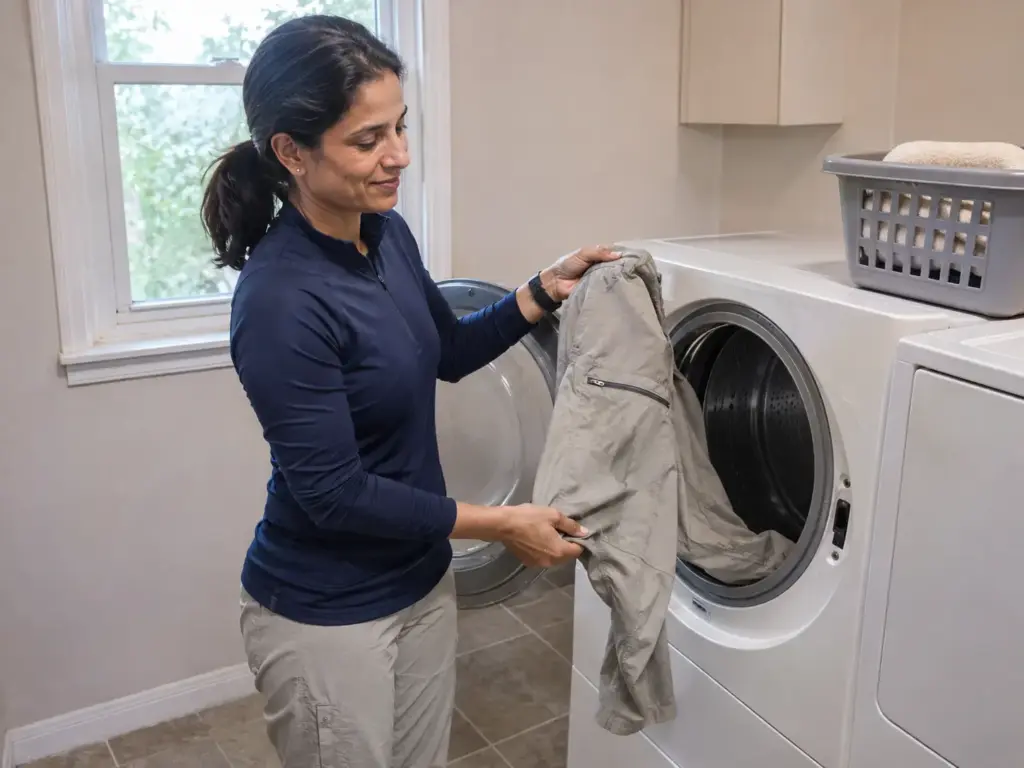
Spray outside, with the pants hanging, at the distance printed on the pesticide label. Wet the fabric until it is damp, not dripping. Never spray clothes while you are wearing them, never spray skin and never treat underwear.
All that fuss is about the liquid and the mist, not the pants. The EPA’s own page on repellent-treated clothing concludes that factory-treated clothing is unlikely to pose a significant immediate or long-term risk, and permethrin is poorly absorbed through skin, so skin absorption from a dry garment is minimal. A dry treated garment is safe to wear. Liquid on skin or a lungful of mist is where the trouble starts.
Keep the work away from streams, ponds and storm drains, because permethrin is very toxic to aquatic life. Leftover solution does not go down the drain either.
Pick a calm, dry morning and hang the pants on a line well away from the house. By evening they are dry, you have not breathed anything, and there is no wind to carry mist onto the car or the dog bed.
Drying, Wearing and Washing
Let the pants dry completely before they touch skin. Half a day is a fair allowance, and drying time stretches in humid air.
Wash separately: small amounts of permethrin come out in the water, so a shared load spreads it through the family laundry and wears your own treatment down faster. Use a cold wash with a mild detergent, skip fabric softener, and hang dry or use low heat, and check the hang tag, since the product label has the final word. A wash cycle ages every technical garment, and how a wash cycle ages technical clothing applies to a treated pair as much as to any other.
Cats, Kids and Pregnancy
Cats are the concrete warning, and cat toxicity is the hazard printed on every label. Liquid permethrin is highly toxic to them, so keep them out of the room until the pants are completely dry. For children and during pregnancy, official guidance treats dry, treated clothing as acceptable, while the liquid and the application stay with an adult. The National Pesticide Information Center’s guidance on treated clothing covers the details, and any doubt is a question for a doctor.
The Treated Pants You Can Actually Buy
The hiking pants shelf is full of labels that say bug-resistant, and only a handful carry real factory permethrin on a pair you would wear for miles. These three do. Two are cut for men and one for women, and none of them has a water-repellent finish blocking the treatment.
For Men Who Want Zero Setup
The simplest answer is a pair that arrives treated and stays that way for about 70 washes.
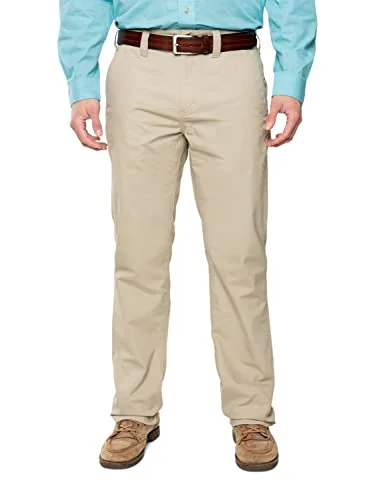
The Insect Shield Men’s Performance Utility Pants are plain on purpose: a ripstop cotton-polyester blend with eight pockets and a factory treatment that has nothing in the way. Cotton blends dry slowly after a creek crossing and run warm in July, so they suit shoulder-season walks through brush better than a summer ridge. The lack of any finish on the cloth is exactly what lets the permethrin take.
For Women Who Want a Trail Cut
For a women’s pair, the factory-treated options are narrower, and one stands out.
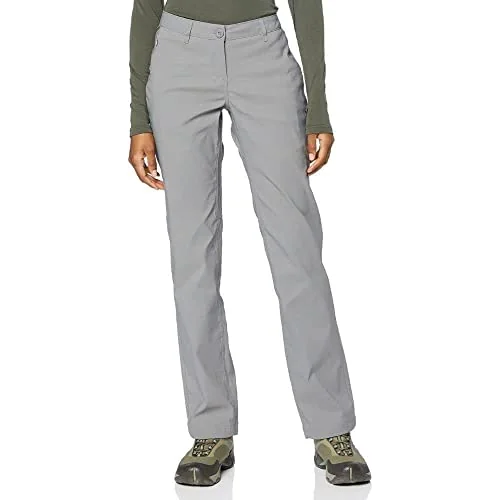
The Craghoppers Women’s Kiwi Pro II Pants pair Insect Shield with stretch nylon and a UPF 40+ rating, which gives a trail pattern that breathes better than any cotton blend. It sits at the premium end of the range, and the premium buys real fit and stretch. If the cut or size is wrong for you, the buying guide with 8 hiking pants picked for build, climate and terrain is the place to find a pair to treat yourself.
For Warm, Buggy Days
When the weather swings from cool mornings to sticky afternoons, adjustability beats everything else.
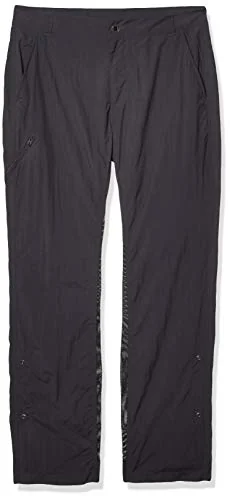
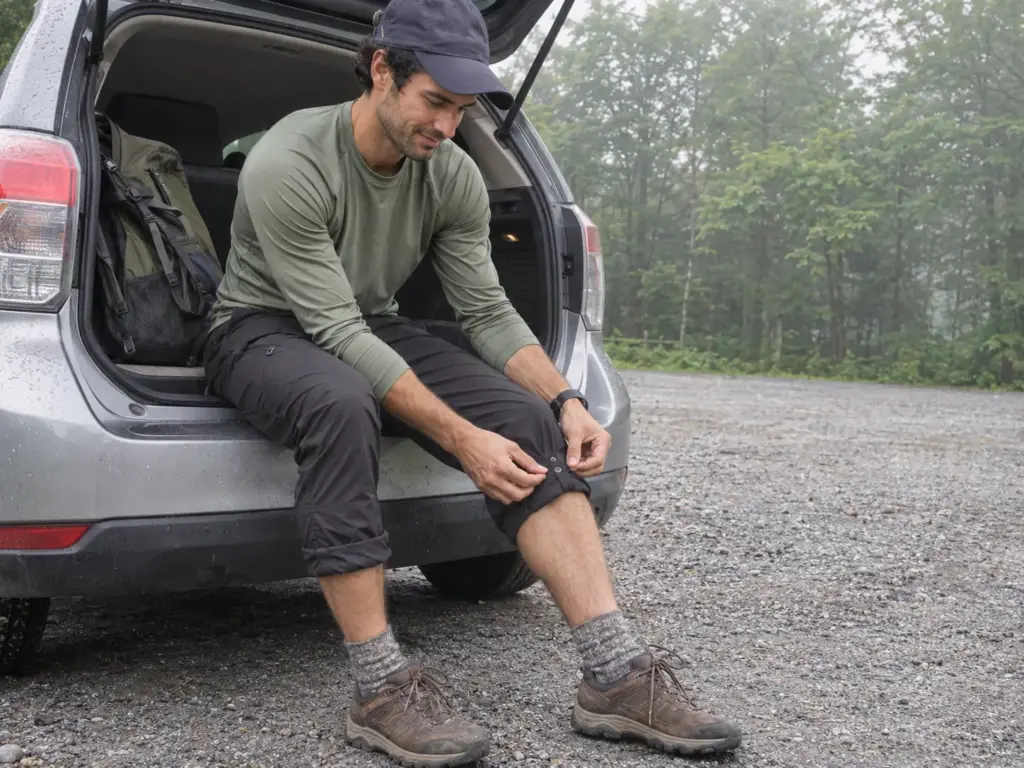
The ExOfficio BugsAway line is the best known, and the ExOfficio Men’s BugsAway Sandfly Pant has a full gusset, so high steps do not bind, and the roll-up leg turns these convertible pants into a capri when the humidity climbs. Rolling the leg up trades ankle cover for airflow, so save it for short grass and roll it back down the moment the trail narrows into brush.
To choose among the three, start with the cloth. Cotton-poly is tougher and runs warm, nylon breathes and dries faster, and stretch is a matter of how much you scramble. The budget route, a plain pair you treat yourself, gets its own section two parts down.
Treating DWR Pants and Assuming It Worked
The second mistake costs the most money. You pick the pants every trail guide recommends, a nylon pair with a water-repellent finish, spray them, watch the liquid dry and assume the job is done.
Why Spray Beads Up and Slides Off
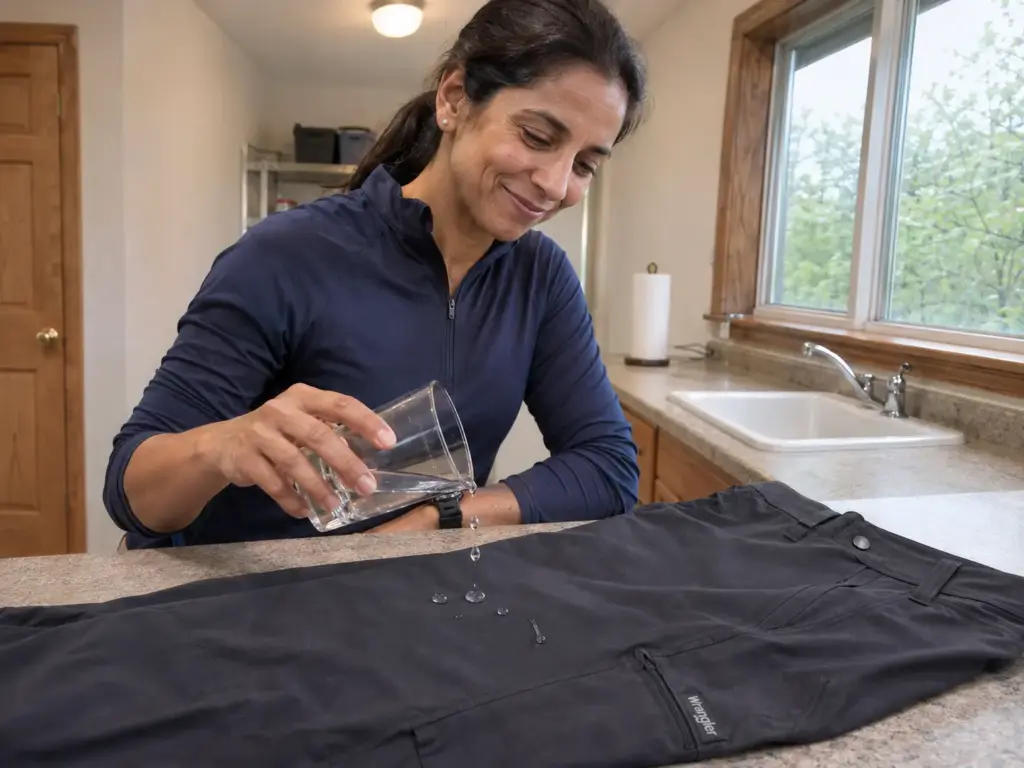
A DWR finish (durable water repellent) is a coating built to make water bead and roll off, and it is what makes water resistant pants resist. A permethrin spray is mostly water, so it behaves the same way: it beads, it slides, and the little that dries on the surface leaves a greasy feel on the cloth.
That film still works for a short while, then it wears away fast. You get a feeling of protection and not much of the real thing. The mail-in facility refuses these garments for the same reason, since its treatment cannot get through the DWR coating. And the coating sits on most popular nylon trail pants, the OR Ferrosi and Prana Zion style pairs included.
The pants guide on where water-resistant and waterproof pants each let the water in explains the finish itself. What matters here is its side effect: a finish that sheds rain sheds permethrin.
Drip a few drops of water on the leg before you treat and again after it dries. If the drops still bead up, the permethrin did not get in, and no amount of staring at a dry-looking pair will tell you otherwise.
Soak, Damp-Treat or Retire a Pair
There are three ways out, ranked by how well they work.
The best is the bag soak. Fold the pants into a gallon zip-top bag, add a soak-grade permethrin solution mixed to the label on that product, seal it and squeeze until the fabric is fully wet, then leave it for the time the label gives. Even through a DWR finish, a garment that sits in the liquid takes the permethrin up.
Wear gloves, work outside, and keep the bag away from pets and running water. Wring the pants out and hang dry them as you would after a spray.
The second is damp-treating. Treat the pants straight out of the washer, after the maximum spin, while the fibers are still damp. Dry DWR repels the spray; damp fibers let it in.
The third is to retire a pair: choose an old one whose finish has mostly worn off and make it your tick pair. A tired DWR, usually a nuisance, is a gift here. A pair you want to keep water-resistant is the wrong candidate. The DWR restore step most hikers skip shows how that finish comes back, which is exactly what you do not want on the pair that carries permethrin, so keep the two jobs on separate pants.
The Cheap Plain-Nylon Route
The budget route skips the fight. Buy a plain nylon pair with nothing to block the treatment, then treat it yourself.
The Wrangler Men’s Outdoor Performance Comfort Flex Cargo Pant is the example: all nylon, no membrane, a comfort-flex waistband and a cargo pocket with a side zip. It carries a light water-repellent finish, so use the damp or soak method on it anyway. Budget hiking pants like this are wearable and easy to replace, which makes them the pair you can ruin with a bad spray job without mourning it.
Treating the Pants and Forgetting the Ankle
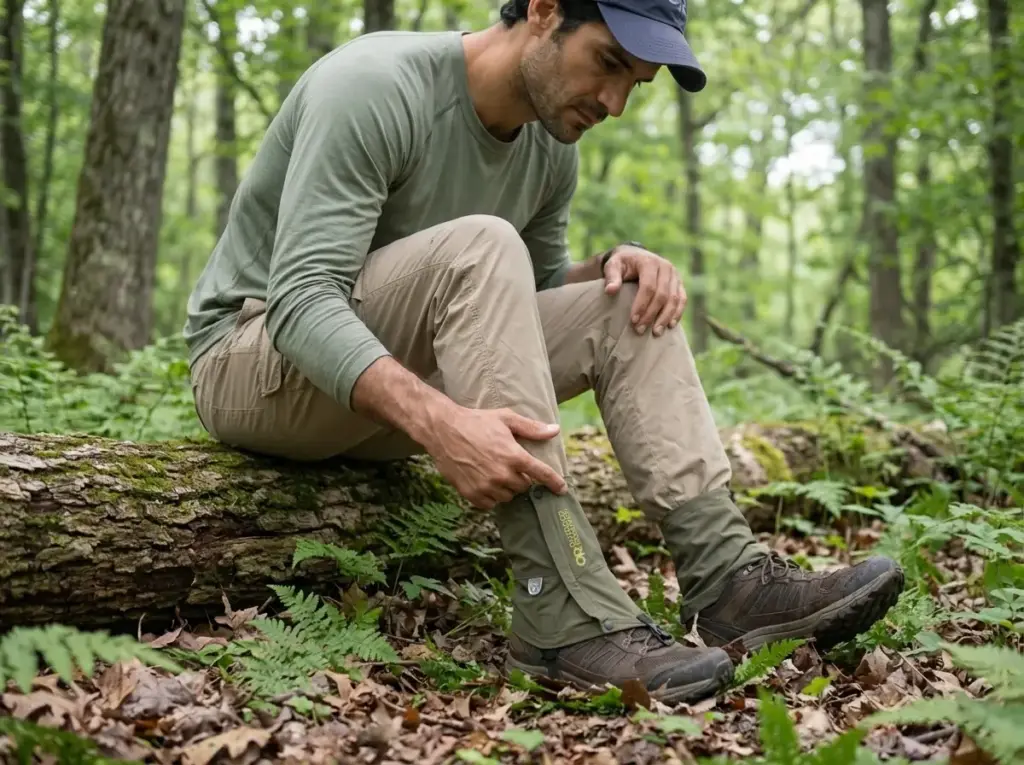
The third mistake is a geography problem. A nymph waits low in the grass, at ankle height, and climbs from there. You can own the best treated pair on the market and lose to two inches of bare sock.
Why the Ankle Decides More Than the Fabric
In the same controlled study, treated socks and shoes produced 73.6 times fewer bites. Treated shorts managed 4.74 times, and a treated shirt 2.17 times. That spread is the whole story: the foot is where the tick comes aboard, and it is where treatment pays off most. A pair of pants with a loose cuff over an untreated sock leaves that entry point open, however good the cloth above it.
Cuffs, Socks and Light-Colored Gaiters
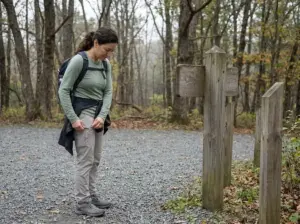
The cheapest fix costs nothing. Tuck pants into socks, as the EPA product label tells you to, and a tick has to cross two treated layers before it sees skin. That is ankle protection at zero cost.
If tucking looks ridiculous or gets in your way, a gaiter closes the same gap. The Outdoor Research Insect Shield Ferrosi Trail Gaiters put the treatment exactly where the study says it counts, in a stretchy nylon blend with a UPF 50+ rating. Size and overlap with the pant cuff do more work than the logo: a gaiter that rides up leaves the same gap you were trying to close.
Pick a light color. Ticks are small and dark, and on pale cloth they show up before they find skin. In heavy tick country light colored gaiters can carry a dozen of them in one stretch of trail, and on a black pair you would not see a single one.
The full routine of gaiters, checks and cuffs is laid out in a three-stage defense of gaiters, checks and cuffs, and treated fabric makes every stage stronger. For a low profile, ankle gaiters compared for trail running and hiking lines up the options.
Do the first sweep at the first rest stop, not at the car. A tick heading up the leg is easy to flick off at the ankle with a finger while it is still on cloth, and much harder to deal with once it reaches the knee.
Where Shorts Fit In
Shorts leave the knees bare, so the protection of someone in shorts comes entirely from treated socks, gaiters and a careful check. The treated shorts themselves gave only 4.74 times fewer bites in the study, a long way behind the foot result. If the bugs are heavy, when roll-up pants beat shorts in bug season lays out that call.
Counting Washes Instead of Tick Seasons
The fourth mistake is a bookkeeping one. Nobody remembers how many times a pair of pants has been through the machine, and two months in the honest answer is no idea.
What Actually Wears the Treatment Out
The headline figures are lab ceilings: about 70 washes for factory treatment, six weeks or six washes for a spray. Out on trails the protection falls faster.
In a randomized double-blind trial of factory-treated clothing, protection dropped from 65 percent in the first year to 50 percent in the second. Washing is only part of that slide. UV degradation from sunlight and the thrashing of the washing machine do much of the damage, while sweat and rain do almost none.
A Re-Treat Calendar Tied to Bug Season
So tie re-treatment to the bugs, not to a wash number. Retreat the week before your first outing of the season, and refresh again before heading into a known tick zone if the pants are more than a season old.
Nymph season ramps up in spring, with the peak around May, earlier than most people expect, and any winter stretch above freezing keeps ticks moving. Mosquito season runs later and hotter. A factory pair in its second year does not go in the bin. A spray on the legs the evening before the hot zone brings it back into line.
The Two-Minute Log That Keeps You Honest
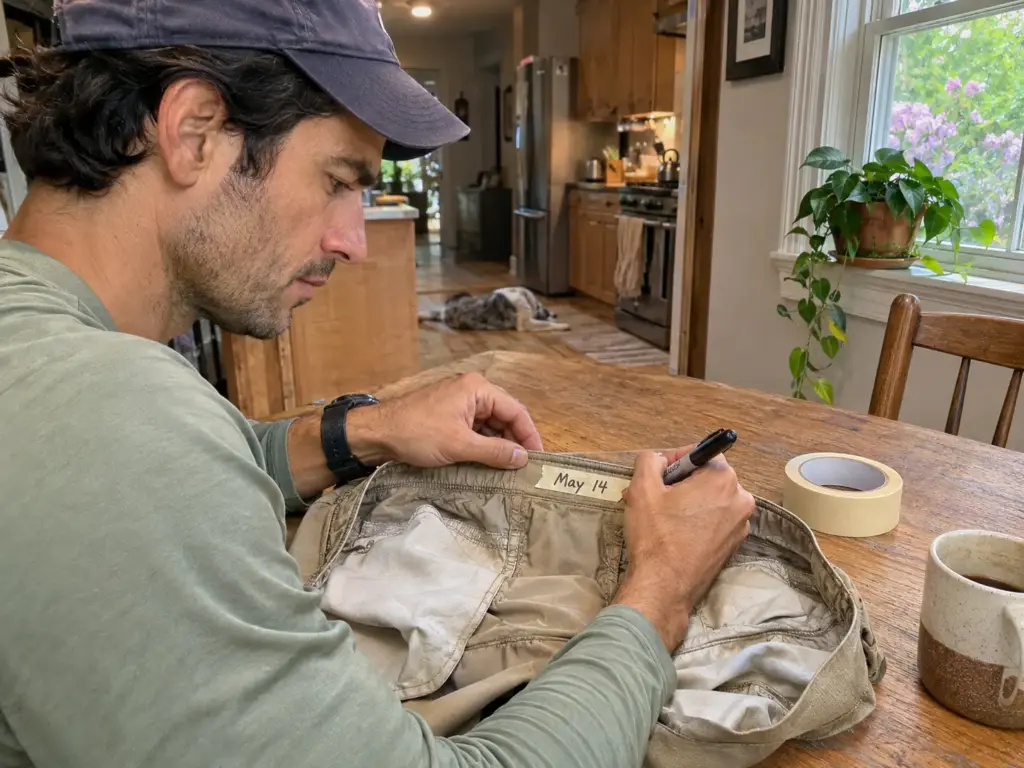
Write the treatment date in permanent marker on the care label inside the waistband, or take a photo of the pants with the date and keep it in a phone album called gear. Two minutes now, and next spring you know. Leg length belongs in the same check: treated fabric that rides above the sock when you step up protects nothing at the ankle, and choosing an inseam by height and terrain shows how to pick one that keeps covering it.
Treat the pants the same weekend you pull the camping gear out of storage. A date tied to a ritual you already do is the only kind that survives from one year to the next.
What Treated Pants Still Won’t Stop
Treated pants shrink the odds of a bite. They do not bring them to zero, and the buyer who stops checking after spending real money is the one who gets surprised.

What Bare Skin Still Needs
Treated cloth protects what it covers and nothing else. Neck, wrists, hands and any gap between sock and cuff stay open.
Mosquitoes bite through thin fabric, and a treated thin shirt is not a barrier. A skin repellent with DEET, picaridin or oil of lemon eucalyptus goes on whatever is exposed, and a treated sun hoodie covers the arms the pants cannot. A separate comparison of bug spray and plug-in style repellents shows what a spray on skin can do that treated cloth cannot.
The Dryer, the Shower and the Tick Check
The CDC’s tick-prevention checklist is short and worth following to the letter: ten minutes in the dryer on high heat for dry clothes, a shower after hike, within two hours of coming indoors, and a full-skin tick check.
Look at the places a tick picks on purpose, behind the knees, around the waistband, in the hairline and in skin folds. The percentages quoted earlier came from people who work outside all day, and a Saturday hiker has less exposure and less routine. That makes the check more important, not less.
Who Can Skip It
Wide, sunny, well-mown trails in deep winter, with no tall grass or leaf litter to brush against, do not need the treatment. It earns its keep in tall grass, brush, leaf litter and known tick country, and that is where to spend the effort.
Find Out When You Last Treated Those Pants
A treated pair works when the treatment can bond to the fabric, the ankle is covered, the date is on record and the tick check happens when you get home. Factory treatment or a pair treated by the right method will do the job. If you are still deciding what kind of pants to start from, how to pick hiking pants for the hikes you actually do sorts the types by trail and season.
Before your next walk through tall grass, pull the pants out, find the date you last treated them and, if you cannot find one, renew them today.
Frequently Asked Questions
01Is it safe to wear clothes treated with permethrin?
Yes, dry clothing treated with permethrin is safe to wear, because the EPA’s risk review found no significant risk and permethrin absorbs poorly through skin. The hazard sits in spraying liquid onto skin or breathing the mist, so treat outdoors and let everything dry first.
02Can I send my clothes to be treated with permethrin?
Yes, a mail-in treatment service handles a batch of garments at once and returns them in roughly one to two weeks. It refuses waterproof and water-resistant pieces, including anything with a DWR finish, so check the tags first.
03How long do you have to let permethrin sit on clothes?
Let treated clothes hang until they are completely dry, which usually takes about half a day, and never wear them damp. Dry them outdoors or in a ventilated spot, away from cats and children.
04Who sells permethrin-treated clothing?
Brands such as Insect Shield, ExOfficio, Craghoppers, Columbia and Outdoor Research sell permethrin-treated clothing straight from the factory, in men’s and women’s cuts. If you already own the pants you want, a home spray or a mail-in service does the same job.

I've spent more than a decade researching hiking gear and trail technique. I read the specs, the forum threads and the long-term reviews, and every pick here comes with what it gets wrong.
End of the trail
You read every mile of this one. Here's where the trail goes next.