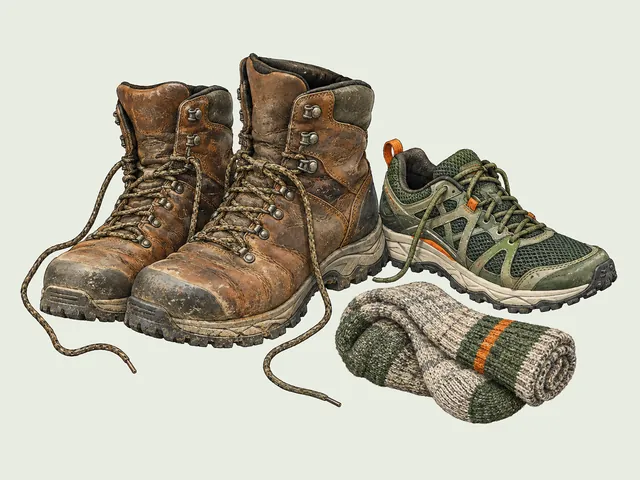

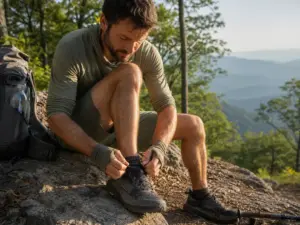









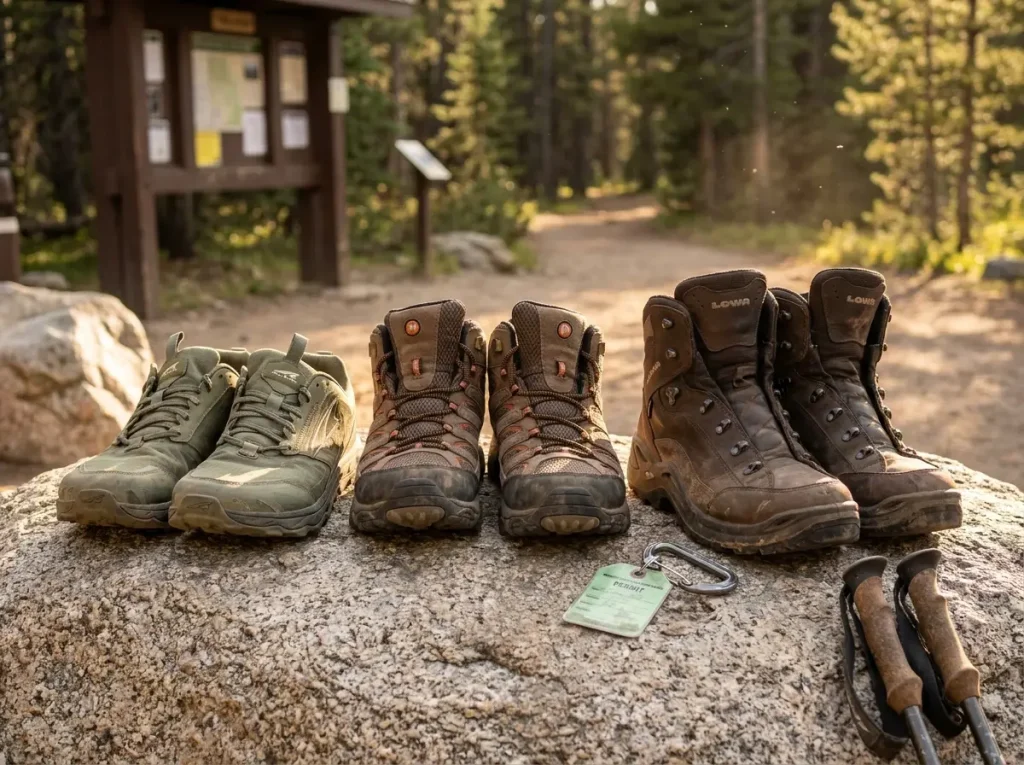
I’ve watched hikers agonize over boot height at the gear store like it’s a life-or-death decision. Mid-cut or ankle-high? More support or more freedom? The sales guy says you need the taller boot for “ankle support,” but the thru-hiker behind you in line is wearing trail runners with holes in them and just finished 2,000 miles without a single ankle injury.
After wearing through multiple pairs of both on everything from groomed valley trails to loose alpine scrambles, here’s what actually matters when you’re choosing between ankle-high and mid-cut hiking boots — and it’s not what most gear guides tell you.
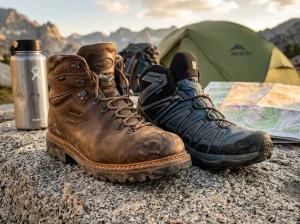
Here’s how the two boot heights compare across the factors that matter on trail:
| Hiking Footwear: Ankle-High vs. Mid-Cut | ||
|---|---|---|
| Factor | Ankle-High (Low-Cut) | Mid-Cut |
| Weight per pair | 1.2–2.0 lbs | 2.0–3.5 lbs |
| Ankle mobility | Full range of motion | Restricted 15–20% |
| Break-in time | 0–5 hours | 10–50 hours |
| Debris protection | Low (open collar) | High (sealed collar) |
| Waterproof depth | Splash only | 2–3 inches above sole |
| Best pack weight | Under 20 lbs | 20–45 lbs |
| Best terrain | Groomed trails, scrambles | Rocky trails, mud, scree |
The Ankle Support Question — What the Research Actually Shows
The Myth That Won’t Go Away
Every boot manufacturer wants you to believe that a taller collar around your ankle prevents sprains. It sounds logical — more material around the joint means more support, right? Except the research doesn’t back it up.
A meta-analysis published in the Journal of Athletic Training reviewed over a dozen field and lab studies comparing ankle injury rates between hikers wearing boots versus low-cut shoes. The conclusion: no statistically significant difference in ankle sprain incidence between the two groups on similar terrain. We’ve covered this in depth in our piece on the ankle support myth, and the evidence keeps stacking up the same way.
The military tested this too. A large longitudinal study found that physical training in both boots and shoes resulted in similar levels of foot and ankle-based injury. The Appalachian Mountain Club’s footwear analysis echoes this — the ankle protection afforded by a high collar isn’t as significant as decades of marketing have led us to believe.
What Actually Prevents Ankle Injuries
If boot height doesn’t prevent sprains, what does? Three things: proprioception, muscle strength, and foot placement technique.
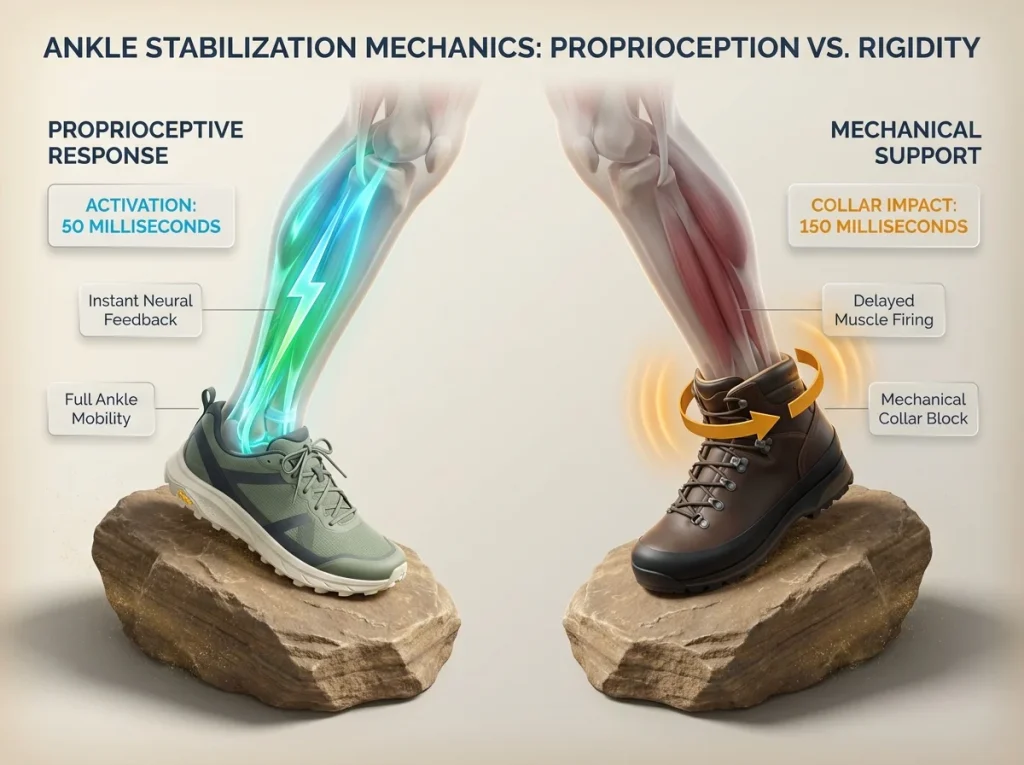
Proprioception is your body’s ability to sense joint position without looking at it. When your foot lands on an uneven rock, your ankle muscles fire in milliseconds to stabilize the joint — before any boot collar could possibly react. Overly rigid boots can actually weaken this response by reducing the sensory feedback your foot receives from the ground.
Strong ankles come from using them. Hikers who regularly walk on uneven terrain develop better ankle stability than those who rely on stiff boots to do the work for them. That’s why transitioning to minimalist hiking shoes requires a gradual buildup — your ankles need time to strengthen.
Pro tip: Stand on one foot for 30 seconds each morning while brushing your teeth. Do it on a folded towel once that gets easy. That single exercise builds more ankle stability than any boot collar ever will.
Weight and Fatigue — The Numbers That Matter on Long Days
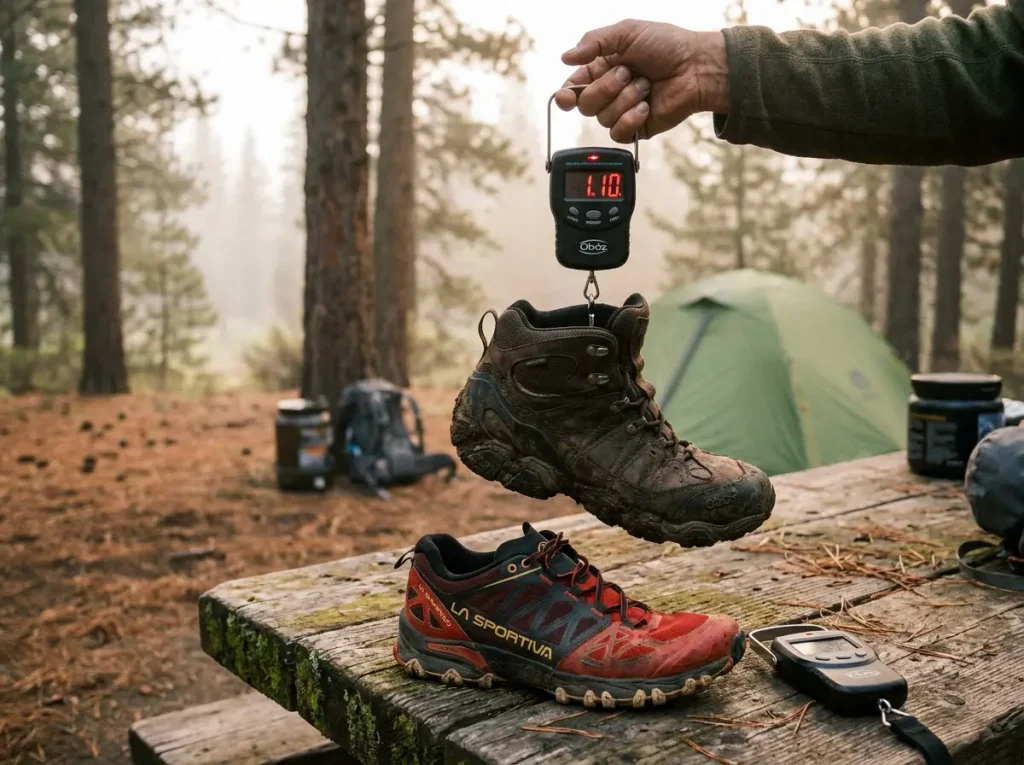
Every Ounce on Your Feet Counts Five Times More
The old backpacking rule of thumb holds up: one pound on your feet equals roughly five pounds on your back in terms of energy expenditure. That’s not folklore — studies on metabolic cost of locomotion have confirmed that distal weight (feet and legs) costs more energy to move than proximal weight (torso).
A typical low-cut hiking shoe weighs 1.2–2.0 pounds per pair. A mid-cut boot runs 2.0–3.5 pounds. That 1–1.5 pound difference on your feet equals 5–7.5 pounds of equivalent effort on your back over the course of a full day. On a 15-mile day, that gap adds up.
When the Weight Penalty Is Worth It
The weight penalty from mid-cut boots becomes worth paying when you need what they offer: debris protection in scree fields, waterproofing through mud and shallow stream crossings, and structural support for heavy loads. If you’re carrying under 20 pounds on groomed trails, the extra boot weight is energy you’re spending for nothing.
But if you’re hauling 35 pounds on rocky terrain with stream crossings, mid-cut boots earn their weight back in ankle protection from rocks, dry feet through puddles, and less foot fatigue from the stiffer midsole distributing pressure across a larger surface area.
Pro tip: Weigh your current boots on a luggage scale. Then weigh whatever lighter alternative you’re considering. Multiply the difference by five. That number is how many extra pounds of perceived effort you’re carrying on your feet per pair — decide if what the heavier boot offers is worth that cost.
Break-In Period and Comfort Out of the Box
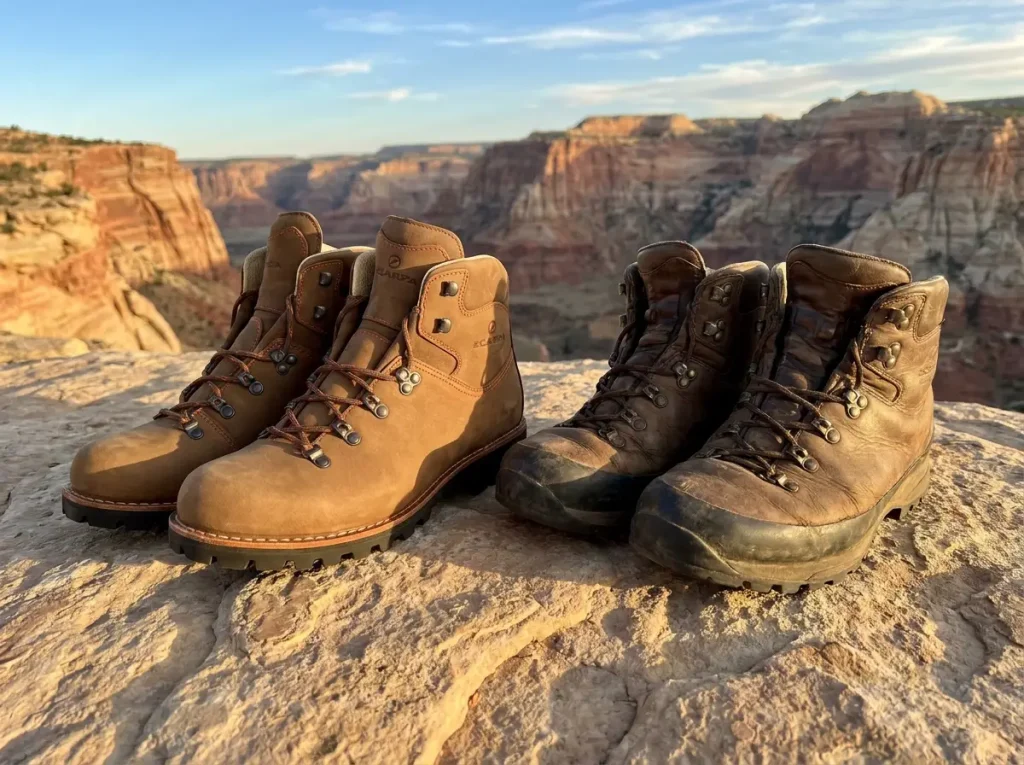
Low-Cut Shoes Are Trail-Ready Immediately
Most ankle-high hiking shoes and trail runners require zero break-in. You can lace them up and hike 15 miles the same day you buy them without blisters, hot spots, or stiffness. The synthetic materials and flexible construction conform to your foot immediately.
This matters if you buy gear on the way to the trailhead, if you replace worn shoes mid-trip, or if you just don’t want to spend weeks walking around your neighborhood before your first real hike.
Mid-Cut Boots Need Time — Sometimes a Lot of It
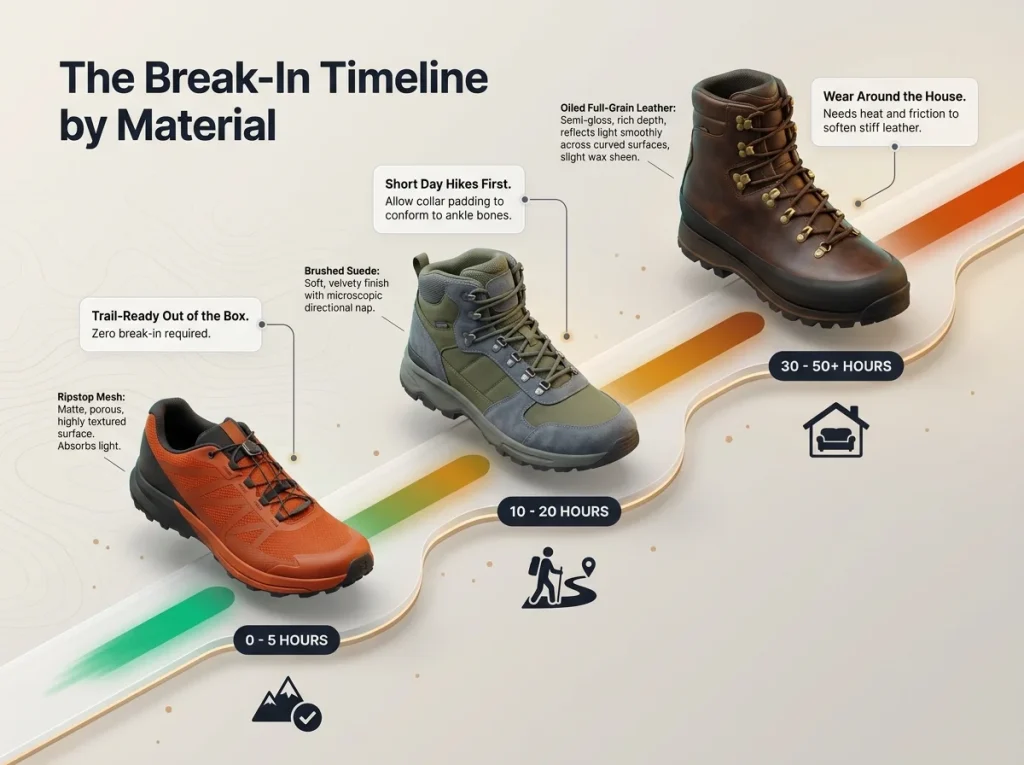
Mid-cut boots with full-grain leather uppers can take 20 to 50 miles of walking before the leather softens enough to stop creating pressure points. Synthetic mid-cuts break in faster — usually 10–20 miles — but still need time for the ankle collar to soften and the midsole to conform. Our 80-hour break-in timeline breaks this down by material type.
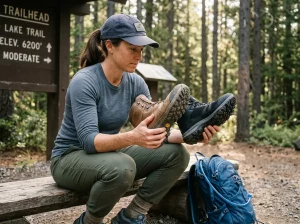
The ankle collar is the biggest offender. New mid-cut boots have stiff collars that press against the ankle bones (malleoli) with every step. That pressure creates blisters in the exact spot that should feel secure. You can speed up the process by flexing the collar with your hands and wearing the boots around the house with hiking socks, but there’s no shortcut that eliminates break-in entirely for leather boots.
Pro tip: If your new mid-cut boots bite at the ankle, try heat-molding the collar. Wear thick socks, lace the boots loosely, and walk on carpet for 30 minutes. The warmth from your body softens the padding enough to start conforming. Still not enough? A cobbler can punch the collar leather at the pressure point for immediate relief.
Waterproofing and Debris Protection — Where Collar Height Earns Its Keep
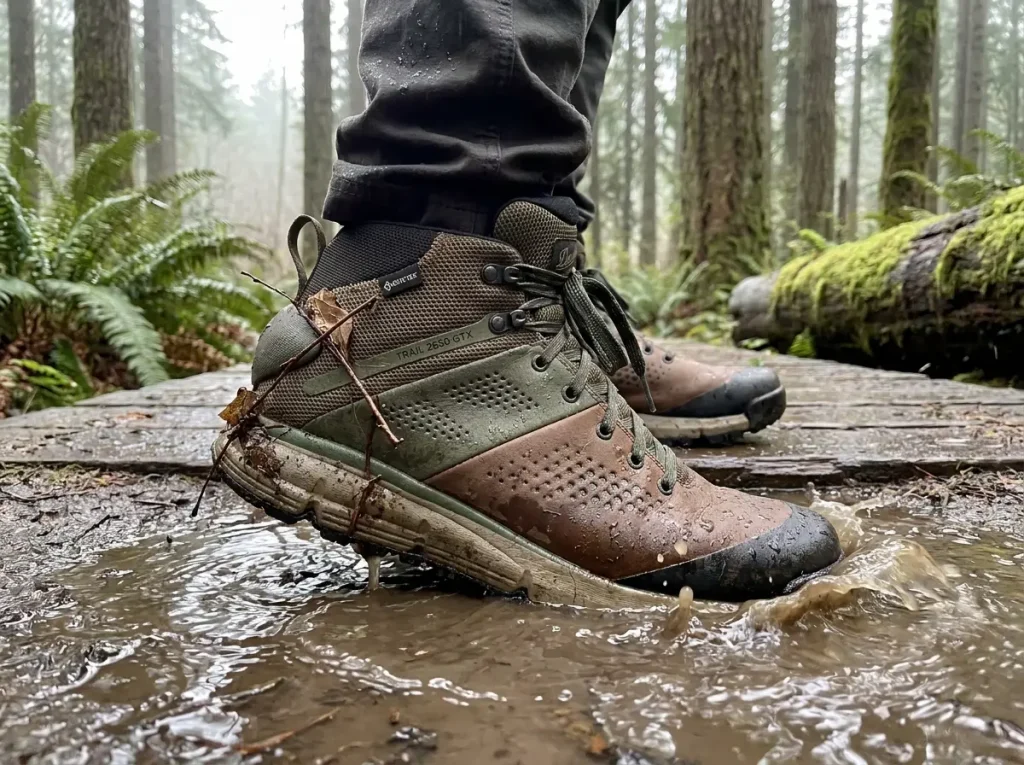
The Real Advantage of a Taller Collar
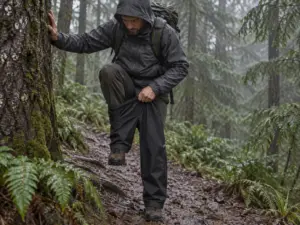
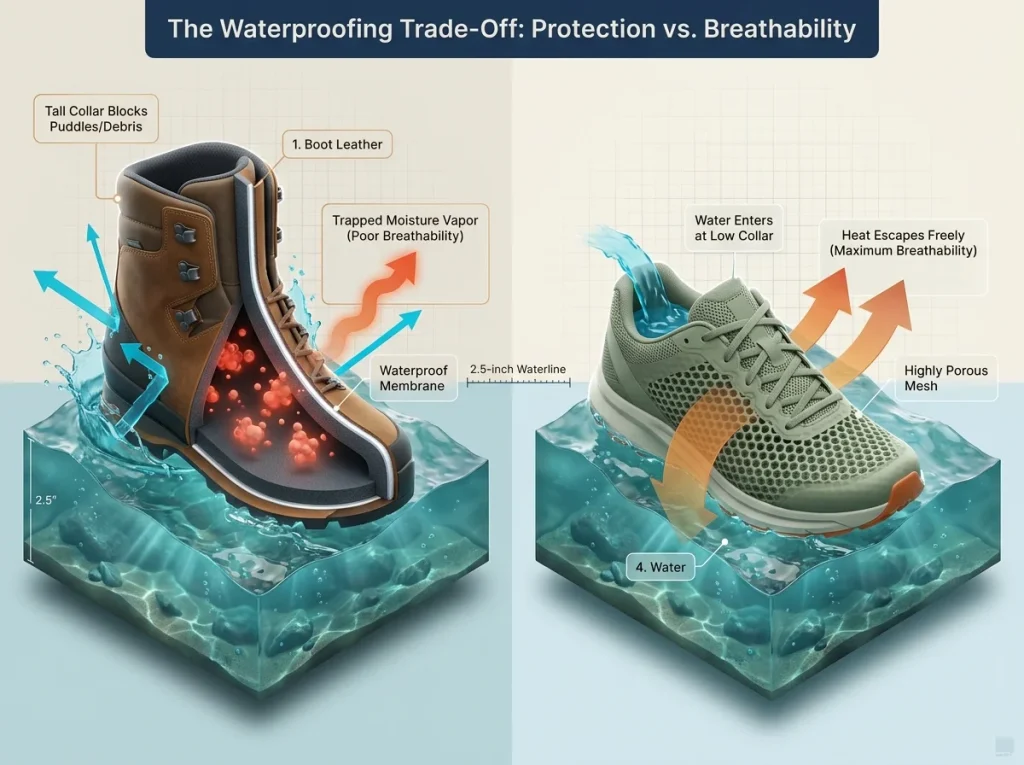
Forget ankle support — the actual reason mid-cut boots exist is to keep stuff out. A collar that rises 2–3 inches above the ankle bone blocks trail debris (gravel, sand, pine needles, snow) from entering the boot. It also raises the waterproof barrier so you can step through shallow puddles and muddy sections without getting wet feet.
On a groomed trail in dry weather, this advantage is worth nothing. On a muddy spring trail with snowmelt crossings and loose scree on the switchbacks, it’s the difference between comfortable feet and a miserable day spent shaking rocks out of your shoes every half mile.
Waterproofing Comes With a Breathability Cost
Most mid-cut boots use a Gore-Tex or similar waterproof membrane. That membrane keeps water out, but it also keeps moisture in. Your feet sweat, and that moisture has fewer paths to escape through a waterproof membrane than through a breathable mesh upper.
The result: in hot weather, waterproof mid-cut boots can feel like walking in plastic bags. Your Gore-Tex shoes feeling wet inside isn’t a defect — it’s the physics of waterproof membranes working against breathability.
Low-cut mesh shoes breathe freely. They get wet instantly at a stream crossing, but they also dry in 30–45 minutes of hiking. Mid-cut waterproof boots stay dry through the crossing but trap internal moisture all day. Pick your tradeoff based on your climate and trail conditions.
If you opt for mid-cut boots, knowing how to maintain their waterproofing properly makes a real difference in how long the protection lasts.
When Pack Weight Should Change Your Boot Choice
The Center-of-Gravity Factor
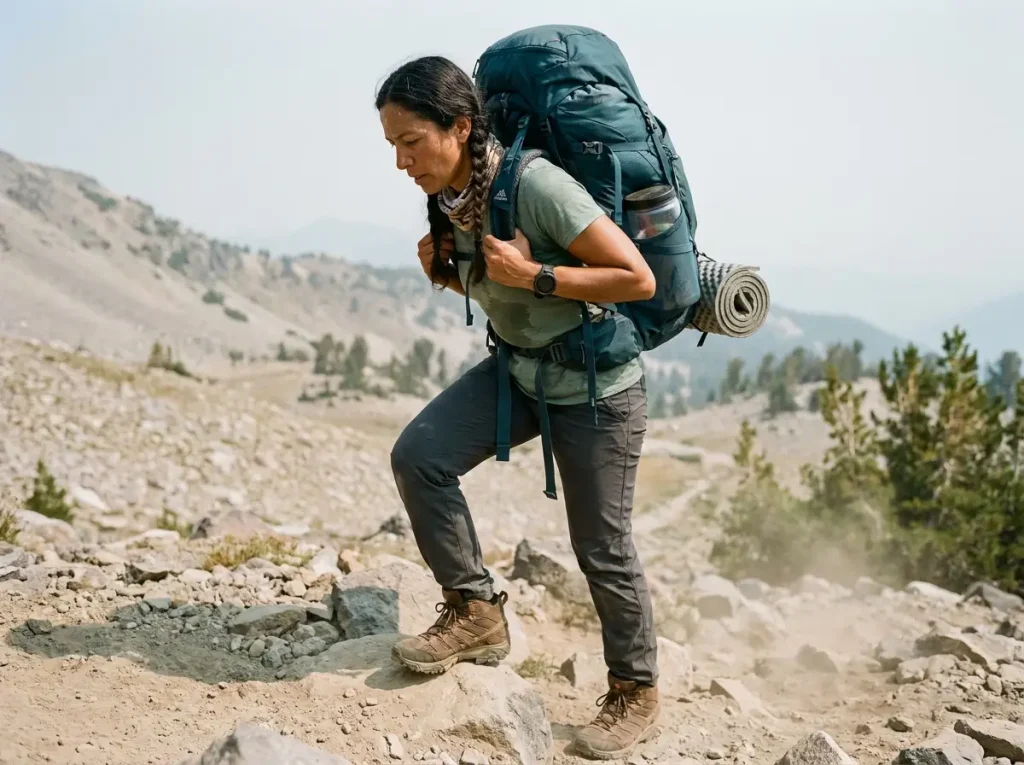
Here’s the connection most gear guides miss: your pack weight directly affects which boot height you need. A heavy pack raises your center of gravity, making you more likely to lose balance on uneven ground. The heavier the pack, the more force travels through your ankles with each step — and the more a stiffer, taller boot helps distribute that force.
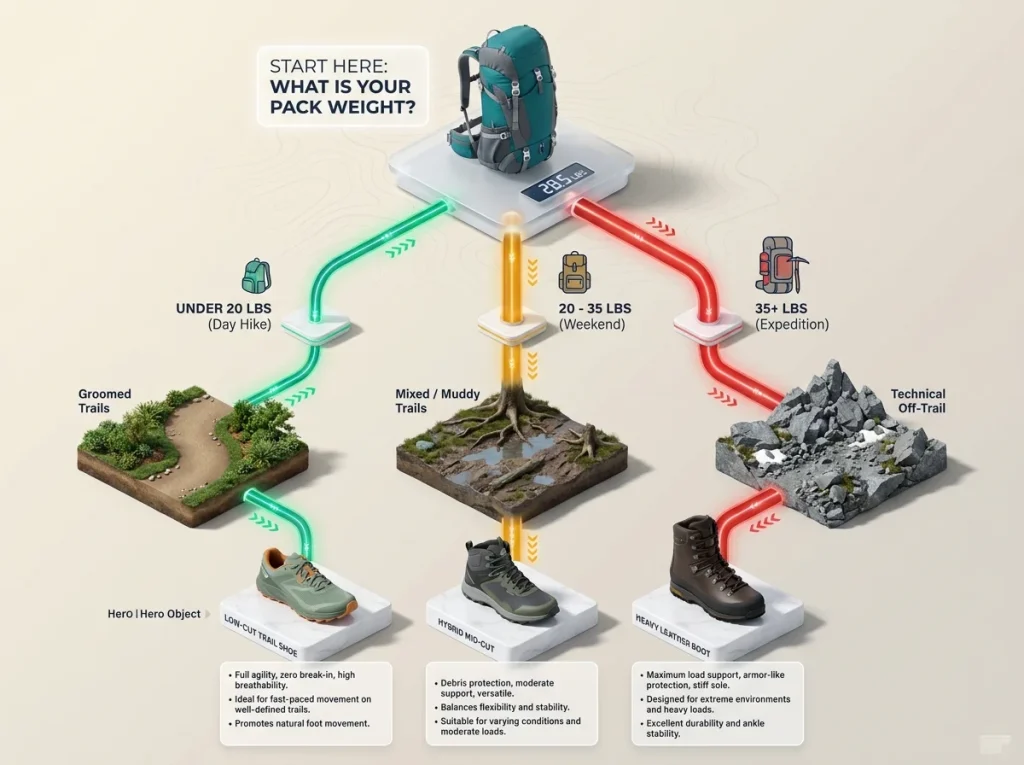
Under 20 pounds (typical day hike load), your center of gravity stays close to normal. Low-cut shoes handle this fine because the forces on your ankle are manageable with normal proprioceptive response. Understanding your base weight vs pack weight helps you figure out which category you fall into.
The Load Thresholds
Between 20 and 35 pounds (loaded backpacking), you’re entering mid-cut territory. The extra collar height helps stabilize your ankle when your raised center of gravity causes unexpected weight shifts — stepping off a rock, catching a root, or adjusting your balance on a sidehill traverse.
Above 35 pounds (heavy backpacking, winter loads), the stiffer midsole and taller collar of a mid-cut boot become genuinely protective. At this load, your ankle muscles fatigue faster, your reaction time slows, and the mechanical support from a boot collar starts doing real work. If you’re heading into serious terrain with heavy loads, understanding boot stiffness ratings and terrain matching helps you pick the right level of structure.
Pro tip: If you’re switching between day hikes and backpacking trips, consider owning both. Low-cut shoes for the day hikes when you’re carrying 10 pounds, mid-cut boots for the overnights when you’re carrying 30. Trying to find one boot that does everything well usually means it does nothing great.
Flexibility and Range of Motion on Technical Ground
Where Low-Cut Shoes Win on Scrambles
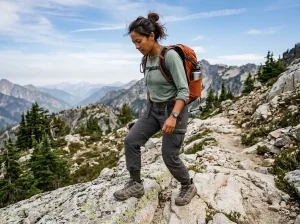
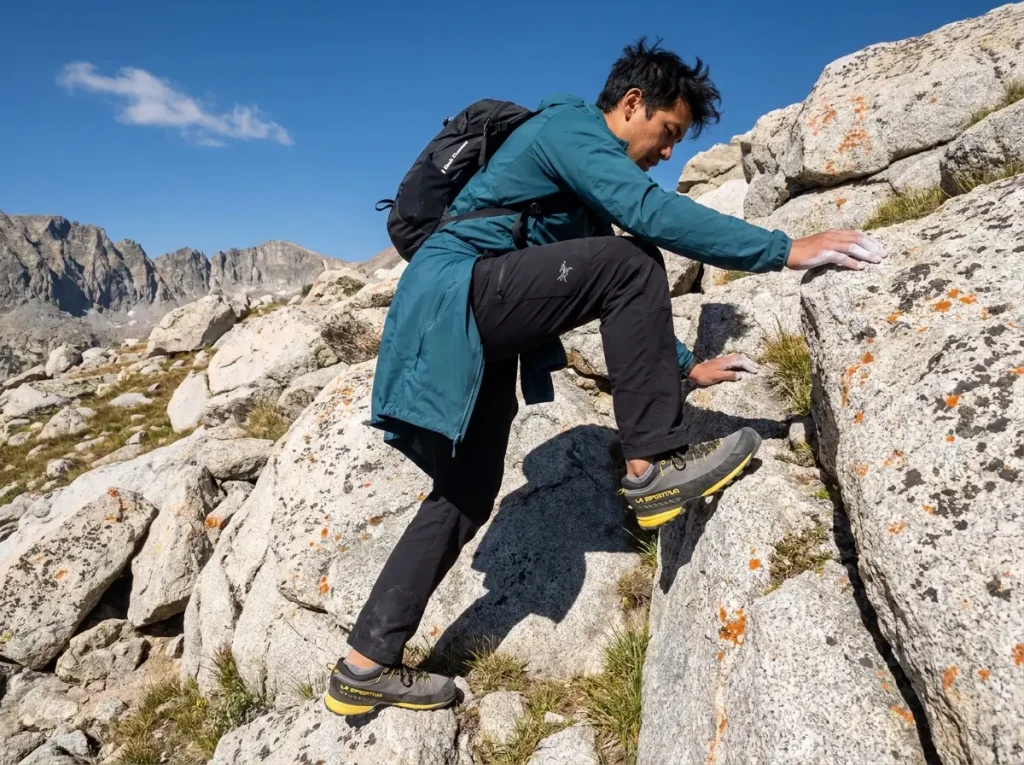
On technical terrain — boulder fields, Class 2–3 scrambles, steep slab approaches — ankle mobility matters more than ankle coverage. Your foot needs to flex, rotate, and adjust in real time to find the best placement on irregular surfaces.
Low-cut shoes allow full dorsiflexion (pointing your toe up) and plantarflexion (pointing down), which gives you better precision when placing your foot on small holds or angled rocks. The direct ground feel through a thinner, more flexible sole also improves your proprioceptive feedback — you can feel what’s under your foot and adjust before you commit your weight.
Building the ankle strength for this kind of terrain takes work. If you’re transitioning from boots to lower footwear on technical ground, scrambling-specific exercises help prepare your ankles and feet for the demands.
Where Mid-Cut Boots Protect on Rough Trail
On non-technical but rough trails — think rocky descents, root-covered paths, loose gravel switchbacks — the mid-cut collar acts more like a shield than a support. It protects the ankle bones from direct impacts with rocks and roots. It blocks debris that would otherwise enter at the collar gap. And the stiffer sole prevents sharp rocks from bruising the ball of your foot through the midsole.
The trade is reduced agility. Mid-cut boots restrict lateral ankle movement by 15–20%, which makes quick direction changes slightly slower. On a scramble where you need to pivot your foot on a dime, that restriction works against you. On a 15-mile trail with mixed terrain and a 30-pound pack, that same restriction acts as a stabilizer.
The Decision Matrix — Matching Boot Height to Your Hiking Style

Choose Low-Cut (Ankle-High) When
You’re day hiking with under 20 pounds on established trails. You’re scrambling or doing technical terrain where ankle mobility matters. You hike in hot, dry conditions where breathability beats waterproofing. You prefer zero break-in time and lighter weight. You have strong ankles from regular trail time. You want the option to move fast — these are the shoes that work if you’re also a boots-shoes-sandals decision maker who values versatility.
Choose Mid-Cut When
You’re backpacking with 20–45 pounds on mixed terrain. You hike in wet conditions — mud, snow, stream crossings — where debris protection and waterproofing earn their weight. You’re on trails with loose scree, sharp rocks, or heavy root systems where ankle bone protection matters. You’re newer to hiking and haven’t built trail-specific ankle strength yet. You want one boot that handles most three-season conditions.
The Hybrid Option Nobody Talks About
Mid-cut trail runners — like the Hoka Anacapa Mid or Salomon X Ultra Mid — split the difference. They have a collar that rises just above the ankle bone for debris blocking, but the flexible construction and lighter weight of a trail shoe. No stiff shank, no heavy leather, no break-in period.
For hikers who want the debris protection and slight stability bump of a mid-cut without the weight penalty and stiffness of a traditional boot, this category is worth testing. It’s where the footwear industry is heading, and for good reason.
If you find the right pair but the fit isn’t perfect, sizing up correctly and considering an aftermarket insole can dial in comfort without changing boot height.
Conclusion
Boot height is a tool, not a religion. Low-cut shoes win on weight, comfort, and agility when your load is light and the trail is established. Mid-cut boots earn their place when pack weight climbs above 20 pounds, when terrain turns muddy and rocky, and when debris protection saves you from a day of shaking gravel out of your shoes.
The ankle support myth has held on for decades, but the research is clear — strong ankles and good foot placement protect you more than any collar height. Match your boot to your load and your terrain, not to what the sales guy recommends or what your hiking buddy swears by.
Try both on a familiar trail with your typical load. Your feet will tell you which one fits your hiking style better than any comparison chart.
Q1 Do mid-cut boots provide ankle support?
Mid-cut boots restrict ankle range of motion by about 15–20%, which provides some mechanical stability. But research shows this doesn’t reduce ankle sprain rates compared to low-cut shoes. The real benefit of mid-cut boots is debris protection and load distribution, not injury prevention.
Q2 Are high-cut boots better for hiking?
High-cut boots offer maximum protection for heavy loads over 35 pounds, winter conditions, and sustained off-trail travel. For most day hikes and light backpacking, they’re heavier than necessary and restrict movement more than the terrain demands.
Q3 What is the difference between mid and high hiking boots?
Mid-cut boots rise 1–2 inches above the ankle bone with moderate stiffness. High-cut boots rise 3–4 inches with rigid shanks, stiffer soles, and often full-grain leather. High-cuts are built for mountaineering-grade terrain and heavy loads.
Q4 Do you really need ankle support for hiking?
Not from boot height alone. Ankle stability comes primarily from proprioception and muscle strength, not from a taller collar. Regular hiking on varied terrain builds ankle strength naturally. Boot height matters more for debris protection and waterproofing than for injury prevention.
Q5 Are mid-cut boots good for backpacking?
Mid-cut boots are ideal for backpacking with loads between 20 and 45 pounds on mixed terrain. The stiffer midsole distributes pressure under heavy loads, and the taller collar blocks debris on rough trails. For ultralight backpacking under 20 pounds, low-cut shoes work just as well.

I've spent more than a decade researching hiking gear and trail technique. I read the specs, the forum threads and the long-term reviews, and every pick here comes with what it gets wrong.
End of the trail
You read every mile of this one. Here's where the trail goes next.