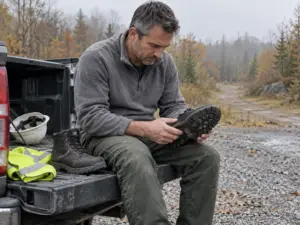
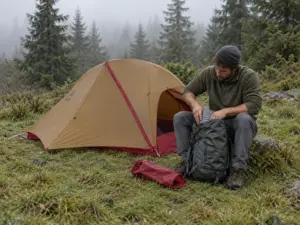
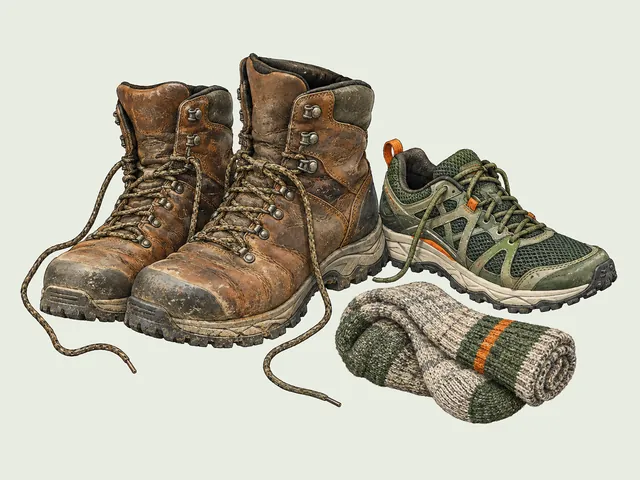
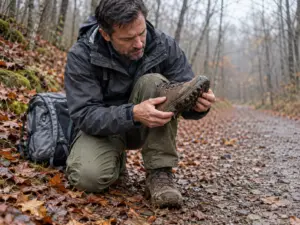
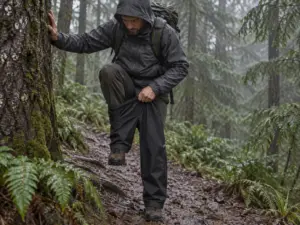
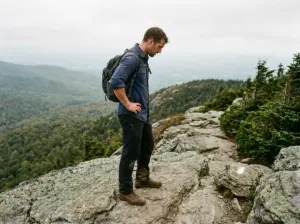
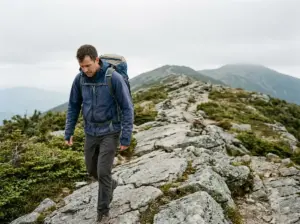
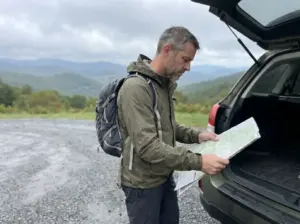
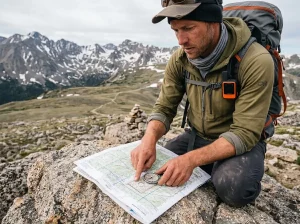
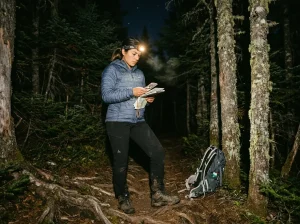


The boulder looked stable until I committed my weight. As my right foot punched through loose shale on a 35-degree sidehill in Colorado’s Weminuche Wilderness, I felt my ankle twist inside my too-flexible boot—the same boot that had felt perfect on the approach trail. Three hours of hobbling back to the trailhead taught me what no gear review ever had: boot stiffness isn’t about comfort preference—it’s a terrain-specific survival decision.
After fifteen years of backcountry travel and more boot failures than I care to count, I’ve learned that matching boot stiffness to terrain is the single most overlooked skill in hiking. Here’s exactly how to get it right—so your footwear works with the mountain, not against it.
⚡ Quick Answer: Boot stiffness should match your most technical terrain and total carried weight. Use Flex 1-2 for groomed trails, Flex 3-4 for technical backcountry, and Flex 5 for alpine terrain. Calculate your stiffness floor by adding body weight plus pack weight—above 35 lbs combined, you need minimum Flex 3 for adequate support.
The Science of Boot Stiffness: Why Flex Ratings Actually Matter
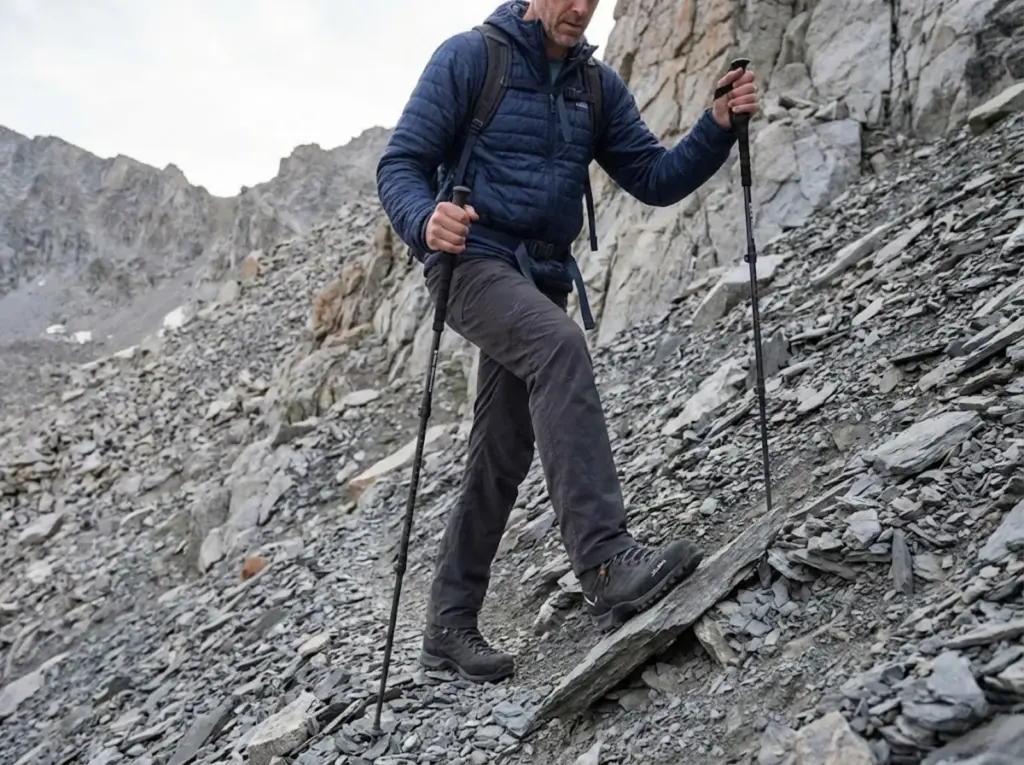
Most hikers think of flex ratings as a comfort preference. They’re not. A boot’s stiffness determines how your foot transfers energy to the ground, how your muscles fatigue over miles, and whether your ankle stays upright on sketchy terrain.
How Stiffness Affects Your Gait and Energy Expenditure
Your foot naturally functions as a dynamic lever. When you push off during each step, the joints at the ball of your foot flex and your arch stiffens to create a rigid platform for toe-off. A hiking boot modifies this mechanic by adding its own layer of rigidity—and that change has consequences.
On flat, groomed trails, wearing a boot that’s too stiff wastes energy. Testing has shown that overly rigid footwear can increase energy expenditure by around 5% compared to flexible options. That’s because your body has to compensate for restricted natural foot movement, recruiting larger muscle groups to do work your smaller foot muscles normally handle.
But flip that scenario to steep technical terrain, and stiff boots become essential. On rocky inclines, a rigid sole prevents the boot from wrapping around narrow ledges. You push down through the entire chassis rather than relying on toe strength alone. This shifts the workload away from your calves and delays fatigue on long ascents. Understanding how shanks provide structural reinforcement helps explain why this works.
Pro tip: If your calves are cramping on climbs, your boots might be too flexible. Your lower leg is compensating for a chassis that can’t support the load.
Torsional Stiffness: The Hidden Factor in Side-Hilling
Torsional stiffness—resistance to twisting between heel and forefoot—is the unsung hero of technical terrain. Most hikers never think about it until they’re traversing a steep lateral slope and their boot collapses under their weight.
When you move across a pitched sidehill, intense twisting forces attack your boot’s chassis. Low torsional rigidity allows the foot to roll inside the boot, dramatically increasing your risk of ankle inversion. A torsionally stiff boot, reinforced with a proper shank, maintains lateral integrity so the entire outsole engages the terrain.
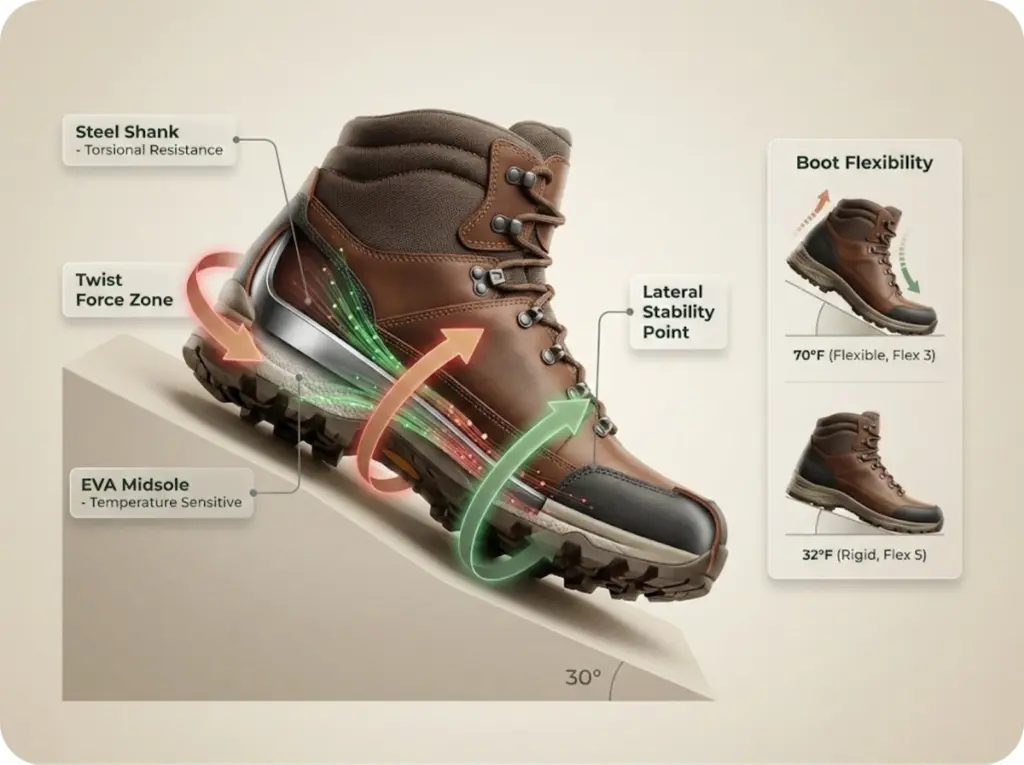
Here’s what surprised me: temperature changes can radically alter boot stiffness. EVA midsole foam can harden by over 90% at freezing temperatures, turning a flexible boot into a rigid platform. That means a boot rated as Flex 3 in the store might feel like Flex 4 or 5 on a frozen ridgeline. For hikers dealing with ankle taping protocols for those with chronic instability, this temperature effect can compound existing vulnerabilities.
Understanding Boot Construction: What Creates Stiffness
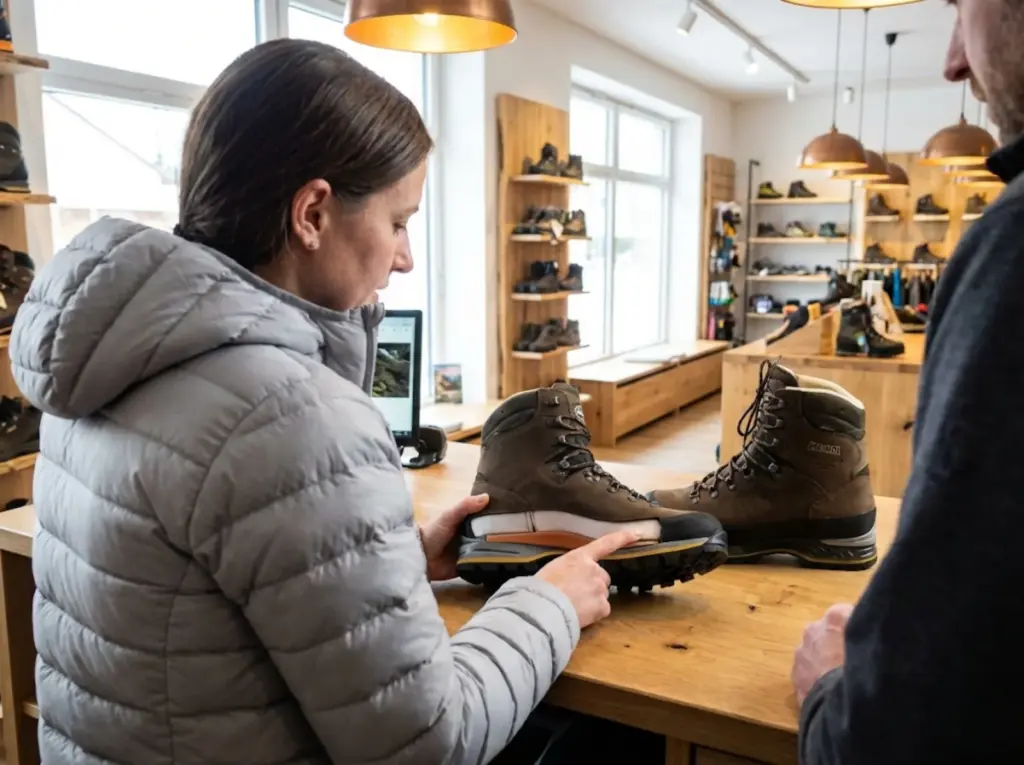
Walk into any gear shop and you’ll see boots labeled with flex ratings. But what actually creates that stiffness? Two components dominate: the shank and the midsole.
Shank Materials: Steel, Carbon Fiber, and Everything Between
The shank is the spine of your boot—a structural insert between midsole and outsole that determines where the boot flexes and how much rigidity it provides. Material choice reflects the boot’s intended use.
Steel shanks deliver maximum rigidity but come with weight penalties and high thermal conductivity. That steel spine conducts cold directly to your foot in winter conditions—I learned this the hard way during a January trip when my feet went numb despite quality socks.
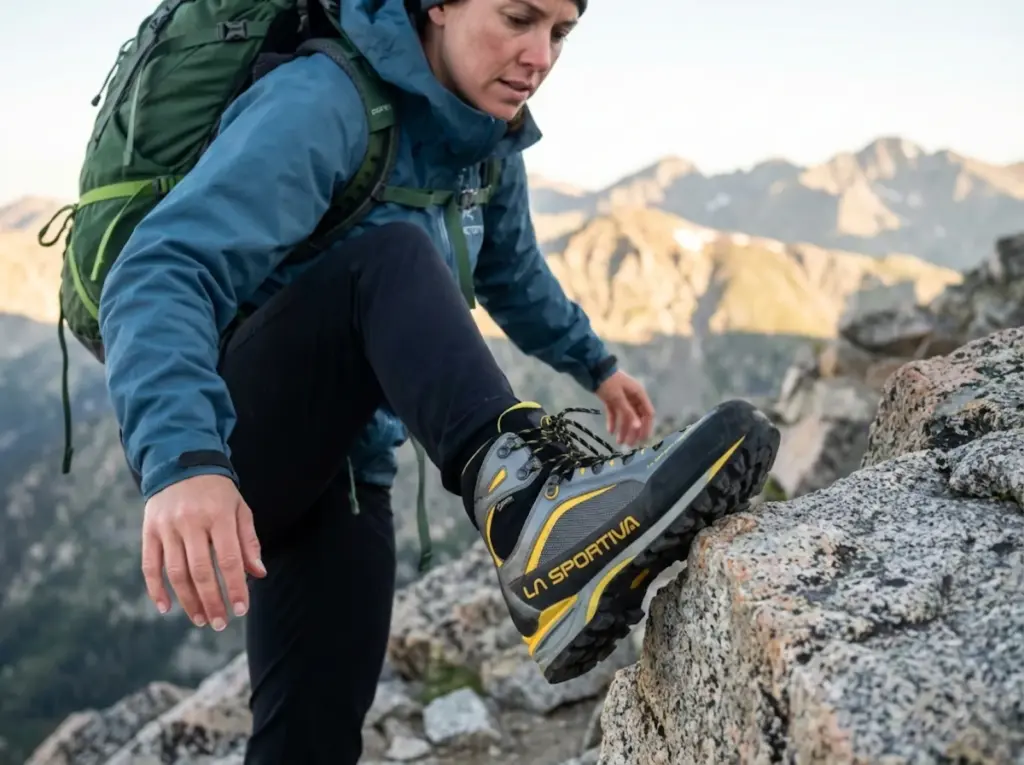
Carbon fiber shanks offer exceptional strength for their weight with high energy rebound. You’ll find these in premium alpine boots from brands like La Sportiva and Scarpa. The downside is cost and the potential for brittle failure under extreme impact.
Fiberglass shanks hit the sweet spot for most trekking boots—strong at moderate weight. Brands like Hanwag and Salewa use fiberglass in their B-rated trekking line.
Nylon and polycarbonate shanks are lightweight with good thermal stability, common in trail runners and fast-packing shoes. But they can lose structural memory over time under heavy pack loads—not ideal if you’re carrying 50+ lbs. For full context on boot construction, see this complete hiking boot anatomy breakdown.
Midsole Materials: EVA vs. Polyurethane Performance Over Time
While the shank provides structure, the midsole determines cushioning and long-term support. Two materials dominate: EVA and polyurethane (PU).
EVA foam is lightweight with excellent initial shock absorption—the standard for most day hiking boots. But EVA suffers from “compression set” over time. Those air bubbles permanently collapse after thousands of cycles, making the boot feel flat and dead. Heavy pack loads accelerate this breakdown.
Polyurethane midsoles maintain their shape far longer. You’ll find PU in technical trekking and alpine boots—Crispi Colorado GTX, Hanwag Makra Combi GTX, Salewa Rapace GTX. The trade-off is hydrolysis: moisture breaks down PU over time, eventually causing the midsole to crumble. This happens most often in boots stored for years in humid conditions without use.
Pro tip: Use your PU-soled boots regularly, even during off-season. Mechanical compression expels moisture and prevents breakdown. Store them in a cool, dry place. For more on preventing damage, check out proper gear storage to prevent hydrolysis.
Decoding Rating Systems: GOHUNT, Meindl, Mammut, and Beyond
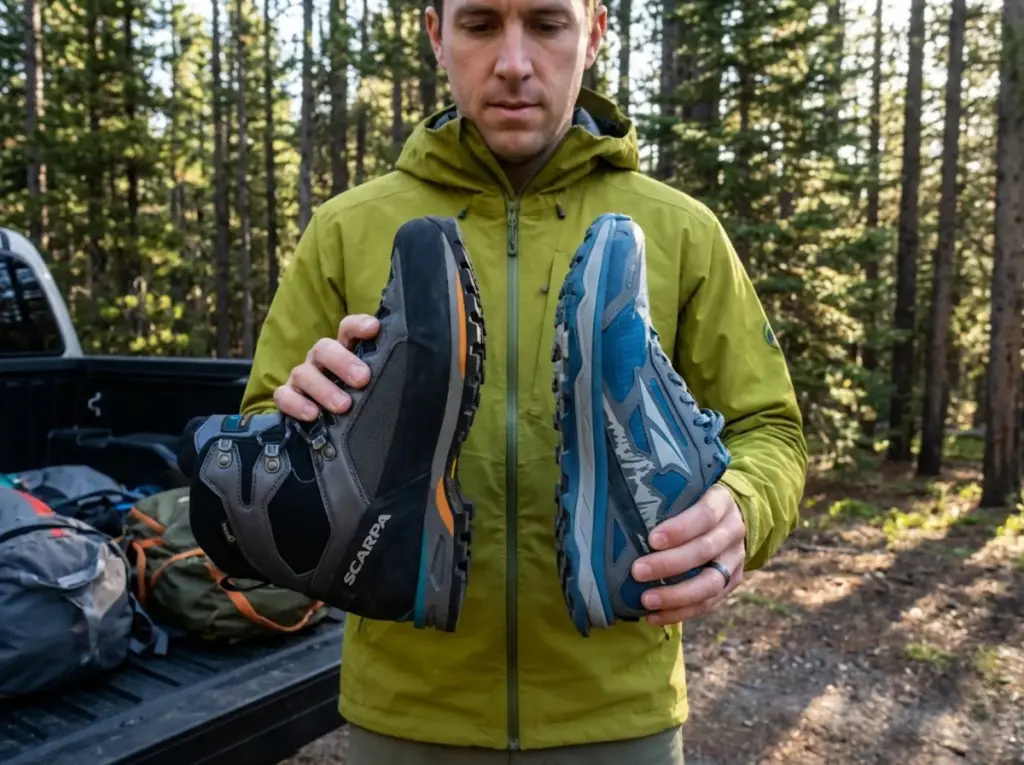
One of the biggest frustrations in boot shopping is that flex ratings aren’t standardized. GOHUNT’s Flex 1-5 scale means something different than Schnee’s Flex 0-4 or Hanwag’s A-D categories. Until now, no one has created a unified translation.
The A-D European System (Meindl/Hanwag)
Meindl originated this system in 1975, and most European manufacturers have adopted compatible frameworks:
Grade A covers light walking shoes for urban use and groomed trails. Grade A/B handles low-level hill walking. Grade B is the classic trekking boot for demanding terrain—your Lowa Renegade GTX, Meindl territory. Grade B/C covers heavy trekking with occasional crampon use. Grade C is mountaineering-specific, and Grade D is for technical ice climbing.
North American Flex Ratings: GOHUNT and Schnee’s
The hunting and backpacking community uses numerical systems. GOHUNT Flex 1 roughly equals Schnee’s Flex 0—flat country boots for groomed trails. Flex 3 on both scales represents the versatile “do-it-all” mountain boot. Flex 5 (GOHUNT) or Flex 4 (Schnee’s) covers extreme alpine and crampon terrain.
Mammut’s AB Flex Index provides finer gradation: A4-A6 for casual hiking, A7-A9 for hilly terrain, B1-B3 for technical alpine applications with crampon compatibility.
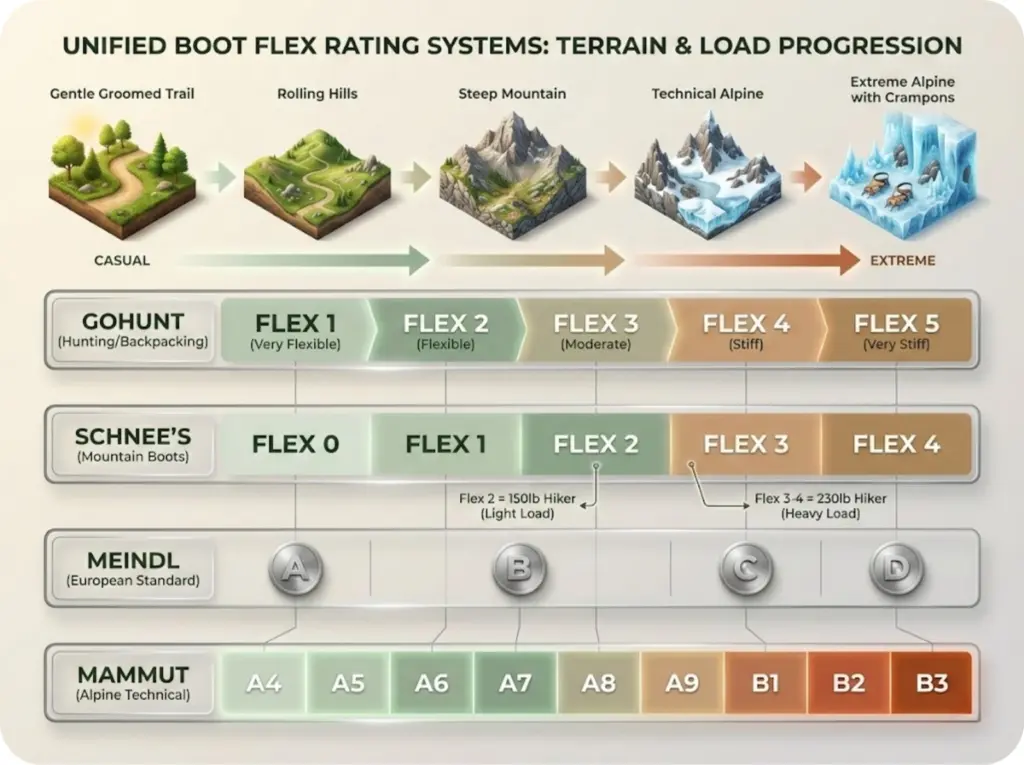
The critical insight: body weight correlates directly with stiffness needs. Schnee’s notes that a 150-lb hiker might find Flex 2 adequate for mountain terrain, while a 230-lb hiker needs Flex 3-4 for identical conditions.
Matching Stiffness to Your Terrain and Load
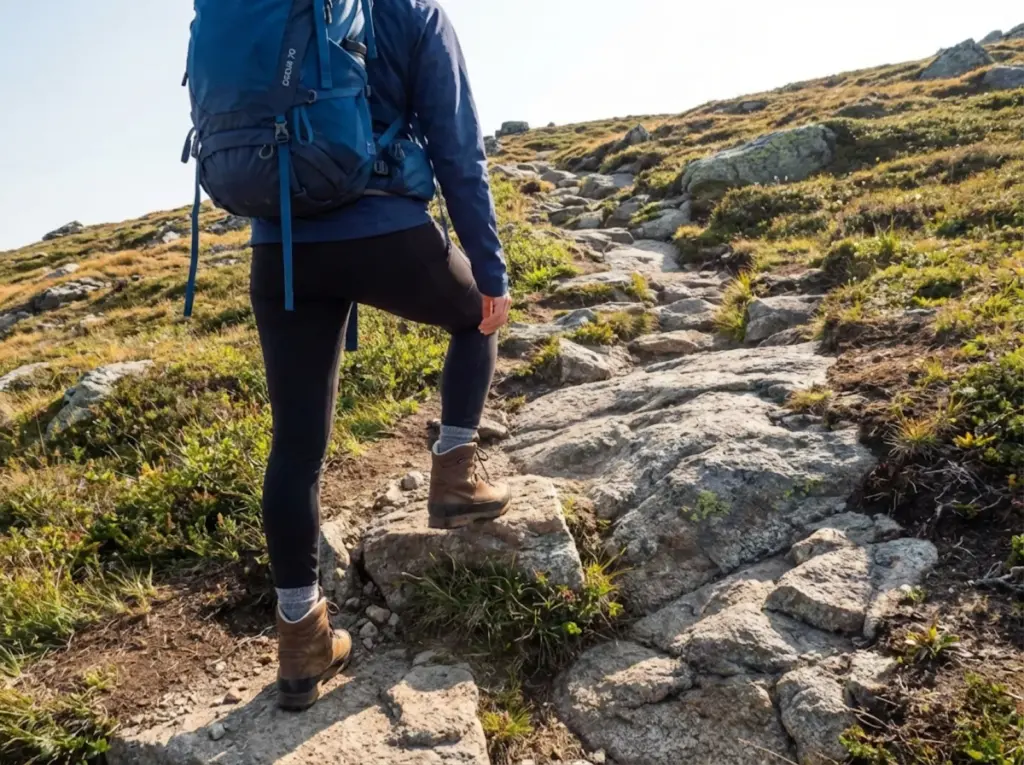
Now for the practical application. How do you translate all this into the right boot for your next trip?
Maintained Trails and Low-Elevation Terrain (Flex 1-2)
On flat or rolling trails, your priority is natural foot movement and energy conservation. Flex 1-2 boots (Grade A/A-B) allow fluid heel-to-toe transition with minimal break-in. Higher flexibility also reduces blister risk by letting the heel stay seated during natural gait.
Pack weight threshold: under 20 lbs. Above that, these boots start losing structural integrity under load. Best for: day hikes, trail running crossover, fast-packing on established trails. Brands like Altra and lightweight Salewa options work well here, and understanding trail running shoe technology crossing into hiking footwear helps explain the crossover.
Technical Backcountry and Off-Trail Navigation (Flex 3-4)
When the trail disappears into loose rock, scree, and steep sidehills, torsional rigidity becomes paramount. Flex 3-4 boots (Grade B/B-C) prevent ankle roll under heavy pack weight and protect against stone bruising on sharp terrain.
Pack weight threshold: 35-60 lbs. This is the structural support range for multi-day loads. The Flex 3 sweet spot—Crispi Colorado GTX, La Sportiva Trango Tech GTX, Hanwag Makra Combi—handles 90% of serious backcountry travel.
For heavy carries, understanding proper weight distribution for heavy packs is just as important as boot selection.
High-Alpine and Vertical Terrain (Flex 5)
In the alpine zone—sheep country, glaciers, near-vertical pitches—the boot must function as a rigid platform. Flex 5 (Grade C/D) boots are engineered for toeing into shale, kicking steps into frozen snow, edging on rock.
These boots are generally too stiff for approach walks. Wearing a Flex 5 boot on a 10-mile flat approach causes excessive foot fatigue, shin splints, and heel blisters. Crampon compatibility is non-negotiable at this level. Boots like the Scarpa Charmoz or Salewa Vultur Evo GTX are designed for this work—and for ice axe technique for steep snow travel.
Pro tip: For 90% of backcountry travel, a well-fitted Flex 3 handles everything. Save the Flex 5s for actual mountaineering—your feet will thank you on every approach.
The Human Variables: Body Weight, Gender, and Foot Conditions
Terrain is the primary driver, but individual physiology modifies stiffness requirements.
Body Weight and Pack Load Calculations
Stiffness requirements are proportional to total supported mass. A heavier hiker puts more force on the boot chassis with every step. Calculate your total load (body weight + pack weight) and reference manufacturer ratings.
For loads exceeding 35 lbs combined, minimum Flex 3 (Grade B) is recommended to maintain arch support. “Overpowering” a boot—exceeding its load capacity—causes the arch to collapse and accelerates foot fatigue. Consider framed packs for heavy load transfer if you’re regularly carrying 50+ lbs.
Women’s Boots: Anatomical Differences That Matter
Women typically have narrower heels and higher arches than men. Quality manufacturers use women-specific lasts (the form around which boots are built) to ensure a snug heel fit. In a stiff boot, heel lockdown is critical—even millimeters of slippage cause severe blistering.
Brands like Lowa remove the 2-degree forward ankle slant found in men’s boots from their women’s models, accommodating a more upright stance. Hormonal fluctuations can also affect ligament looseness, making consistent rigid support more important for some female hikers.
When Medical Conditions Dictate Stiffness
Those suffering from plantar fasciitis often require rigid Grade B/C boots to restrict excessive arch flex. Hikers with chronic ankle instability benefit from the mechanical stabilization of stiff, high-top boots. According to research on footwear effects on ankle stability, proper boot rigidity reduces both the rate and degree of ankle inversion.
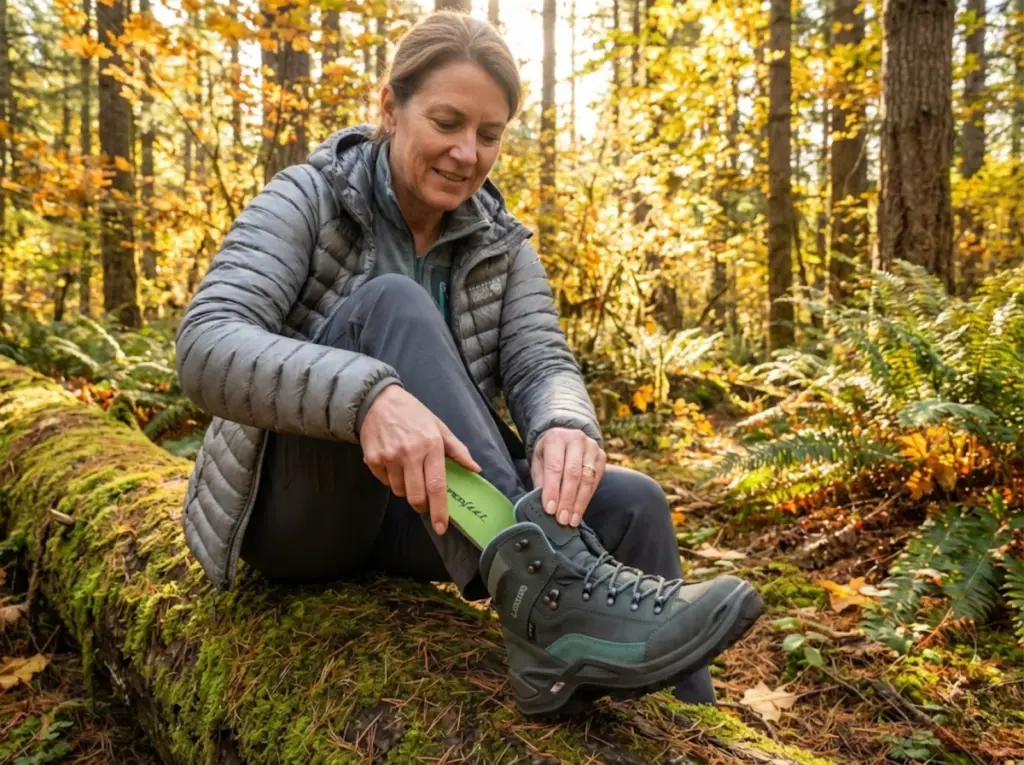
Custom orthotics can modify stiffness requirements—ensure your boots have sufficient volume for aftermarket insoles. For more on this, see choosing insoles for hiking boot support.
Breaking In Stiff Boots Without Breaking Your Feet
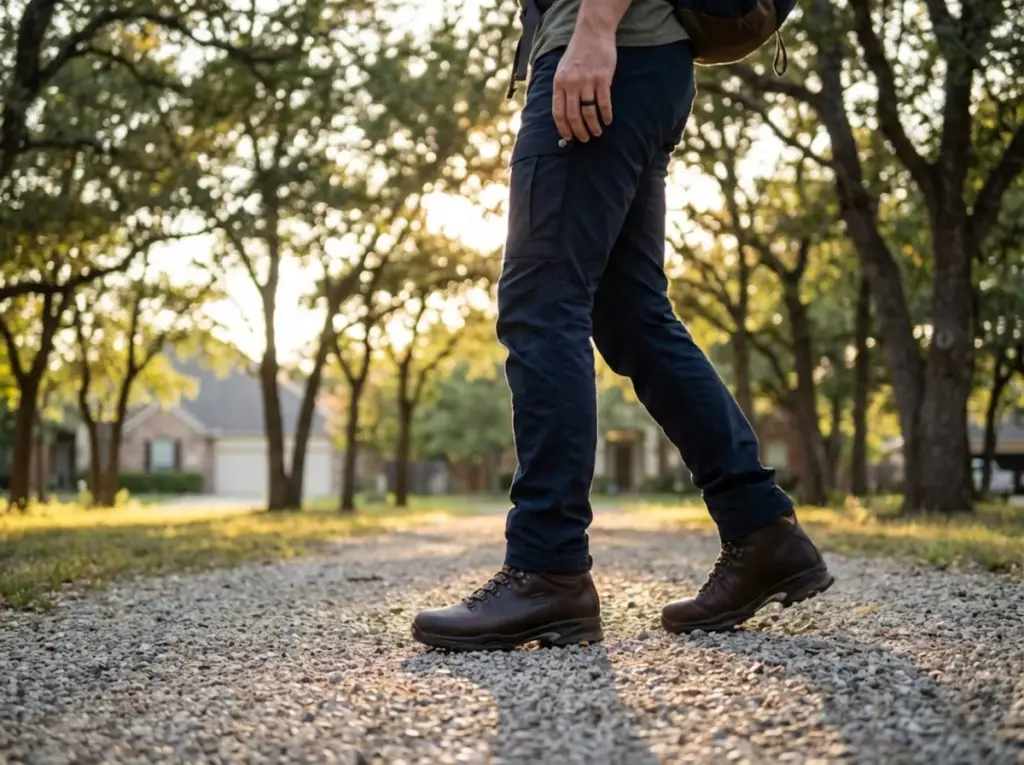
The most common boot failure isn’t the wrong flex rating—it’s inadequate break-in.
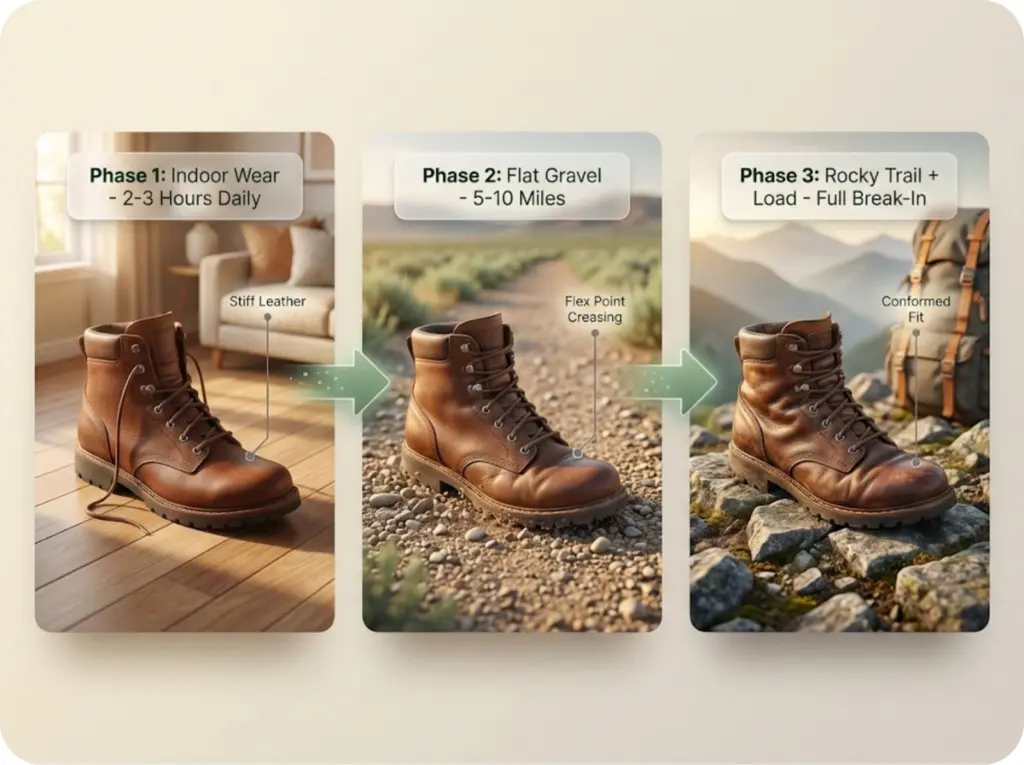
The Three-Phase Conditioning Protocol
Phase 1 (Indoor): Wear your new boots 1-2 hours daily inside the home. This allows leather to warm to body temperature and identifies pressure points before trail commitment.
Phase 2 (Short Trails): Begin with 2-3 mile hikes on flat terrain without a pack. The sole starts conforming to your gait pattern.
Phase 3 (Weighted Conditioning): Gradually introduce pack weight and steeper terrain. High-performance boots may require 20+ miles before reaching optimal comfort. For the complete approach, see this blister-free break-in protocol.
Flex 1-2 boots are often comfortable out of the box. Grade B/C boots need progressively longer conditioning. Full-grain leather mountaineering boots (Flex 5) may require 30+ miles before optimal fit.
Recognizing Break-In Problems vs. Fit Problems
Hot spots that persist after 10+ miles indicate fit problems, not break-in issues—no amount of conditioning fixes the wrong size. Heel slippage on uphills suggests the heel pocket is too wide. Toe jamming on downhills means you need a half-size larger.
If it hurts in the store, it’ll hurt on the mountain. Break-in softens leather; it doesn’t reshape bone structure.
Conclusion
Boot stiffness is a terrain-matching decision, not a comfort preference. The wrong flexibility on technical ground creates injury conditions no skill level can overcome.
Three takeaways:
First, match flex to terrain. Groomed trails need Flex 1-2. Technical backcountry demands Flex 3-4. Alpine terrain requires Flex 5. Never wear the wrong category.
Second, calculate your total load. Body weight plus pack weight determines your minimum stiffness floor. A 230-lb hiker with a 45-lb pack needs stiffer boots than marketing suggests.
Third, commit to break-in. Stiff boots require conditioning. Trust the three-phase protocol before major trips—your feet will thank you at mile 15.
The next time you’re standing at a boot wall, wondering which flex rating fits your plans, start with the terrain. The mountain will tell you what stiffness you need.
FAQ
Is stiffer always better for hiking boots?
No. Overly stiff boots waste energy on flat terrain, cause shin splints on approaches, and create heel blisters. Match stiffness to terrain—use the minimum flex rating required for your route’s most technical section.
How do I know if my boots are too flexible for my pack weight?
If your arch aches after 2-3 hours with a loaded pack, your boots are being overpowered. The arch should feel supported, not collapsed. Calculate body weight plus pack weight and reference the Flex 3 threshold at 35+ lbs combined.
Can I use one boot for everything from day hikes to mountaineering?
No single boot optimally handles the full spectrum. A well-fitted Flex 3 covers 80% of backcountry travel, but you need Flex 5 for crampon terrain and Flex 1 for fast-packing. Consider a boot quiver for different applications.
Do flex ratings mean the same thing across different brands?
No. GOHUNT Flex 3 roughly equals Schnee’s Flex 2, Meindl Grade B, and Mammut A7-A9—but direct translation requires checking specific boot models. Use the unified comparison approach above.
How much break-in time do stiff boots really need?
Flex 1-2 boots often work out of the box. Flex 3-4 (Grade B or C) boots need 10-20+ miles of progressively loaded hikes. Full-grain leather mountaineering boots (Flex 5) may require 30+ miles before optimal fit.

I've spent more than a decade researching hiking gear and trail technique. I read the specs, the forum threads and the long-term reviews, and every pick here comes with what it gets wrong.
End of the trail
You read every mile of this one. Here's where the trail goes next.