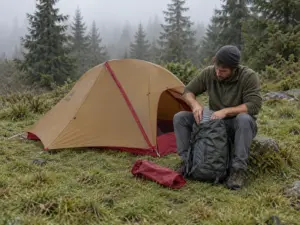
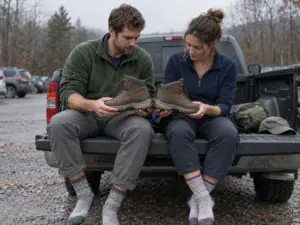
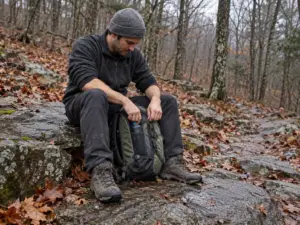
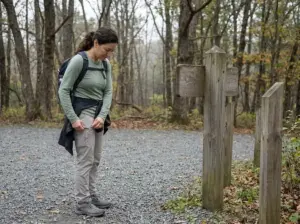
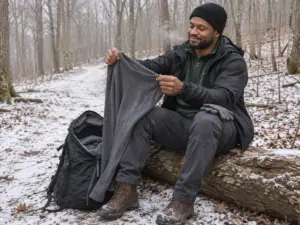

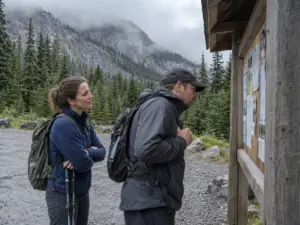
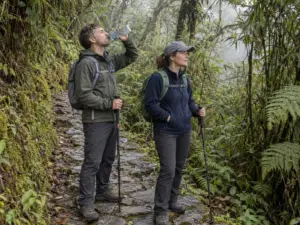
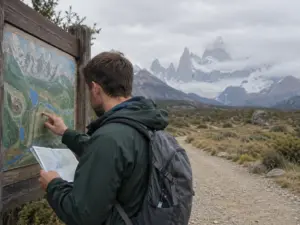
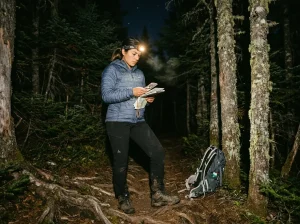
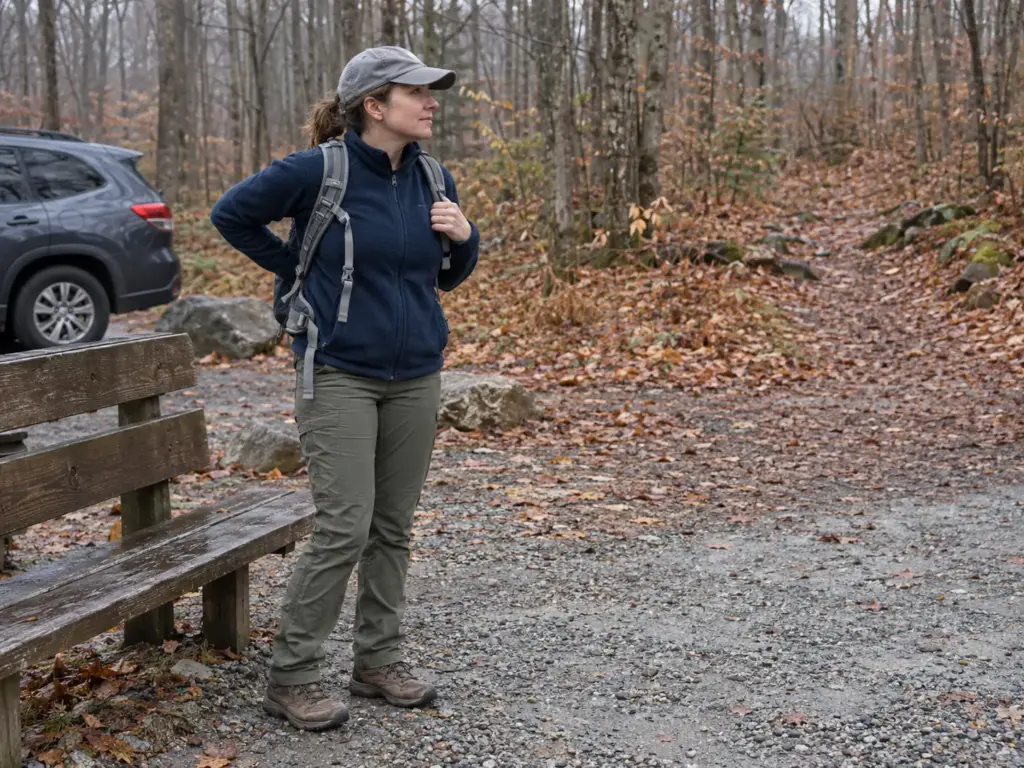
Hour three, the trail still climbing, and the inside of your thigh has started to burn right where the seam meets the skin. The pants felt fine in the parking lot, and nobody can read that on a label. Women’s hiking bottoms rarely fail because of the brand: chafe is a cut, a seam and a damp-skin problem, and all three can be checked before you buy. The pair you keep reaching for is the one you have forgotten you’re wearing by mile six.
Below you’ll find the main types, fabric and weather, rise and inseam, three pairs sorted by hike plus two rain pants, and then how to stop the rub, test the fit with a pack on and keep the water repellent working. Here is the quick map of which bottoms suit which kind of day.
| If you hike… | Reach for | What to look for |
|---|---|---|
| Everyday day hikes | Rab Women’s Incline Pants | Lightweight stretch fabric, a rise that stays put |
| Steady rain | Marmot PreCip Eco or 33,000ft rain pants | A real rain pant worn over your hiking pair |
| Thigh rub is the problem | A gusseted cut plus a snug base layer | Flat inside seams, no bunching at the crotch |
Women’s Hiking Bottoms: Pants, Convertibles, Joggers or Leggings?
Picture the trailhead lineup on a cool Saturday: one person in leggings, one in zip-offs, one in baggy joggers, and every one of them has a reason. By lunch, a few of them are regretting it. Hiking pants for women come in more cuts than most racks admit, and the pair that earns its place is the one still comfortable in the last hour, not the one that looked right in the fitting room. The right type depends almost entirely on the day you have planned, and matching a pair to the hikes you actually do shows how that plays out activity by activity.
Pants stay cooler and cover more skin than most people expect, which matters for sun, brush and ticks. A good stretch pant moves like a legging, so the old trade of freedom against protection mostly disappeared.
Pants, Roll-Ups and Convertibles
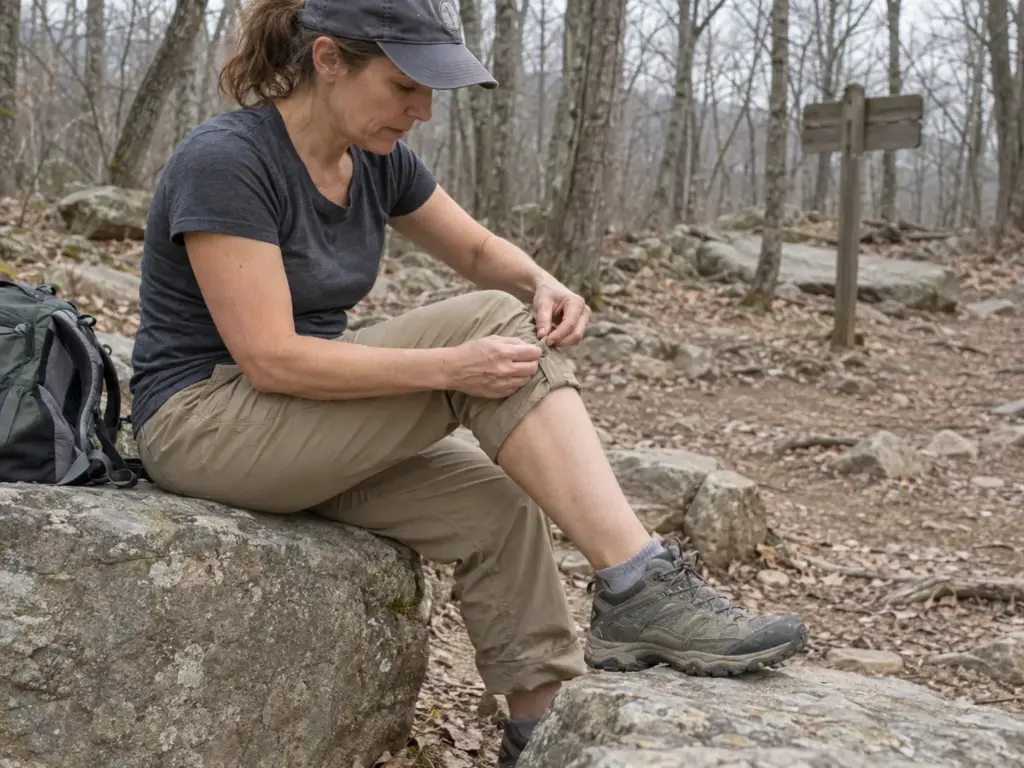
A straight leg or relaxed fit is the plain default: no hardware below the waist, nothing to fail. Wide leg and baggy hiking pants move the most air but catch on brush, while a tapered cut keeps the hem off the boot. Roll-up pants add a tab at the knee that lets you cinch the leg up when it warms or when a creek crossing comes. Convertible hiking pants go one step further, and zip-off pants let the lower leg come away entirely.
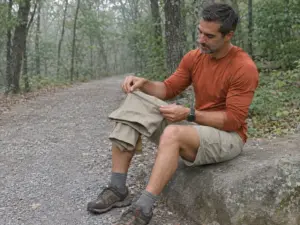
That zip is the trade. A convertible gives you two garments in one pack, but you carry a zipper seam across the thigh, right at the knee where it can rub or catch. Roll-up pants have fewer parts that can break, which is why they suit hikers who just want the pant to disappear.
Joggers, Cargo and Shorts
Jogger pants are soft and easy to move in, with a cuffed ankle that keeps the hem out of the dirt. Cargo pants add side cargo pockets, handy for a phone, a map and snacks, though a loaded thigh pocket can swing against your leg on a descent. Hiking shorts are the hot-day alternative, and they lose to pants once brush, sun or ticks enter the picture.
Pick the style by what the trail does to your legs, not by what looks outdoorsy. Overgrown singletrack wants cloth. A paved lakeshore loop doesn’t.
Leggings on the Trail: When They Work
Hiking leggings are light, and they carry no button or drawstring under a hip belt, which counts for a lot with a loaded pack. They’re also thin against brush and rough rock, and they tend to stick to damp skin once you sweat or splash through a creek. That makes them a good fit for easy trails and cool mornings, and rarely the pair for scrub or scrambling. For leggings vs pants in sun, cold, brush and wet, a longer look at pants against leggings in every condition goes day by day.
Fabric and Weather: Stretch, Sun Protection and Hot or Cold Days
The cotton legging that stays cold and wet after a creek splash is the cautionary tale. The nylon pant that is dry by the next switchback is the answer. Fabric decides how a pair behaves when the weather turns, and moisture-wicking on a label rarely tells you how fast the cloth really dries.
Nylon, Polyester and Cotton: What Dries
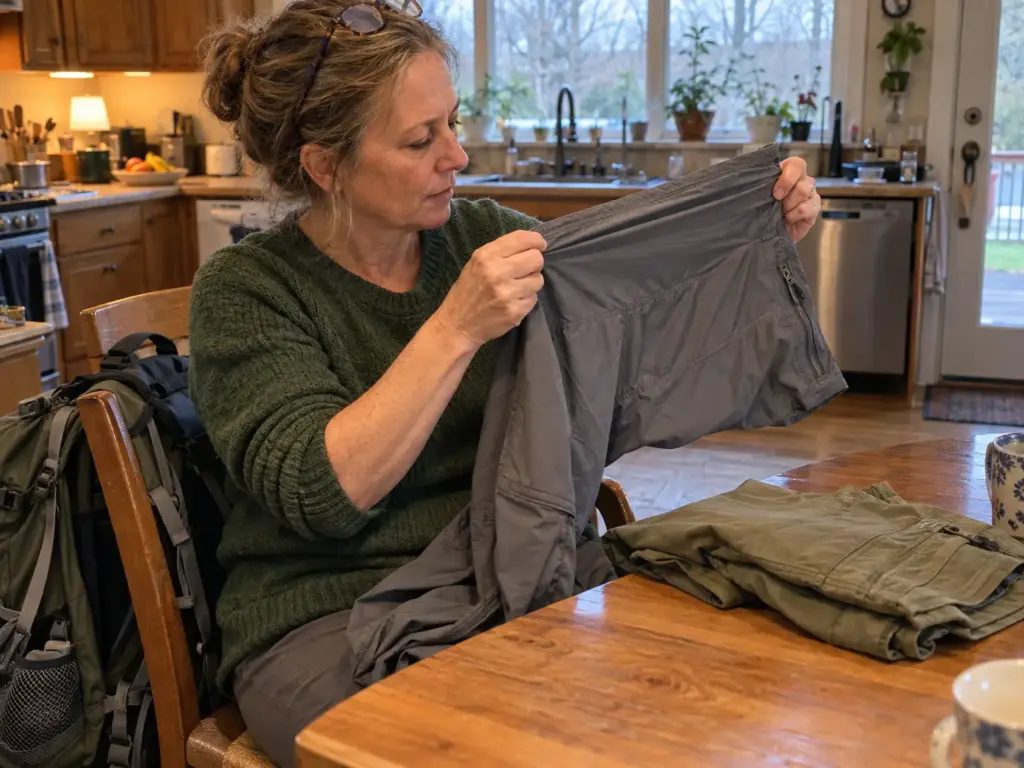
Nylon and polyester dry fast, weigh little and take abuse, with nylon usually the tougher against abrasion. Cotton and cotton blends feel pleasant in the store and heavy on the trail. They hold water, take forever to dry, and a wet cotton pant on a cold, windy ridge pulls heat out of your legs. Keep cotton for the walk to the car and the drive home.
Stretch and Sun Protection (UPF)
Four-way stretch, from woven mechanics or added elastane, lets the pant follow a high step-up instead of pulling across the seat. More stretch can mean less abrasion resistance, though, so a very stretchy pair may wear faster against granite. The full trade between mobility and wear is laid out in what four-way stretch buys and what it costs in durability.
Sun protection works through the weave and the dye. Brown University Health explains that a UPF 50 rating lets about 2 percent of UV through the fabric, while an ordinary white cotton tee rates somewhere around 5 to 8 and lets roughly 20 percent through. A tight weave, a heavier synthetic like nylon or polyester and a darker dye all raise the number, and the rating fades after roughly 30 to 40 washes, about a year of regular use. Pants don’t replace sunscreen on the skin they leave bare, so the face and neck still need it.
Hot, Humid, Cold and Wet: Choosing by Weather
Women’s hiking pants for hot weather should be light, fast-drying and vented, and humidity matters more than the temperature number. In damp heat sweat has nowhere to go, and the rub starts under the cloth long before the cloth itself is the problem. The pant gets blamed, but the synthetic under-layer and a loose cut are often where it begins.
Women’s hiking pants for cold weather work the other way: layer long underwear or a base layer under the pant, and reach for fleece pants when the temperature drops further. In a light shower, water-resistant hiking pants buy you minutes. The finish is a surface treatment that sheds a little rain, not a membrane, so true waterproof hiking pants only come into it when the forecast turns wet, and the last section of this guide covers what to do when the finish stops working.
Rise, Waist and Inseam: Getting the Fit Right on a Woman’s Frame
Women’s pants often run low-rise, roomy at the waist and snug through the leg, and that mismatch is why the men’s department ends up solving the waist problem for a lot of women. Put a hip belt on top and the low rise slides under it while a button or drawstring digs in. Three measurements decide whether a pair works under a pack: rise, waist and inseam.
Rise and Waistband Under a Pack Belt
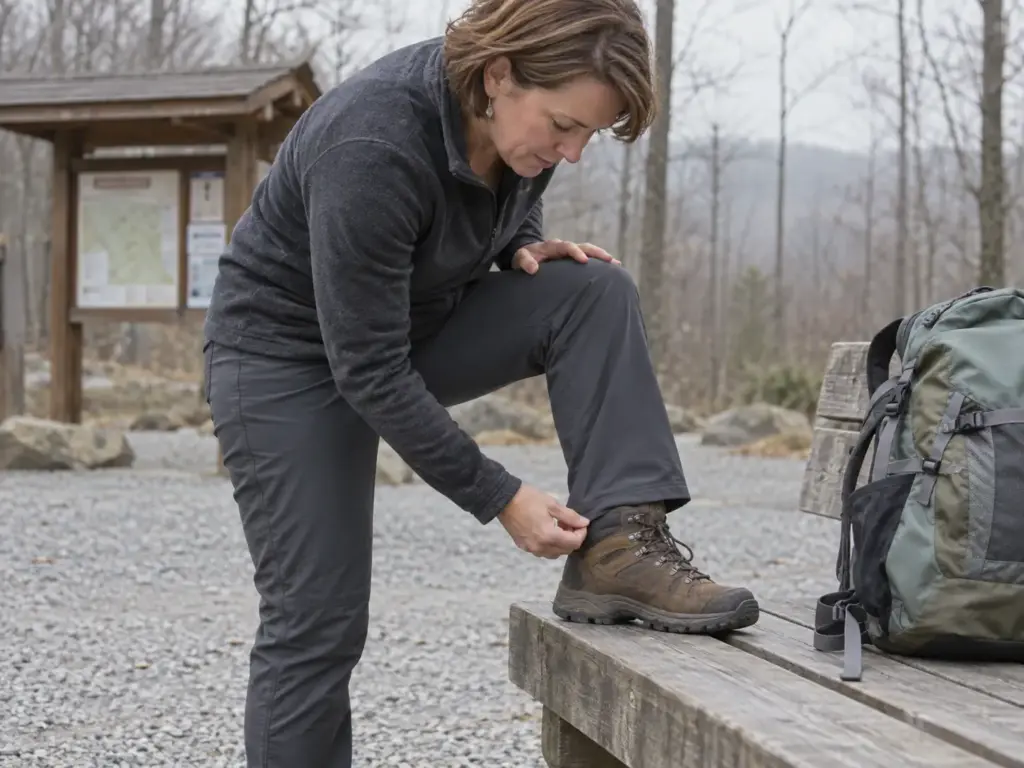
Low rise sits on the hip bone and creeps down as you walk. A mid-rise or high-rise waist stays where you put it, and under a pack belt that is the whole point. The hip belt of a pack buckles over the waistband, so every button, snap and drawstring ends up pressed into your stomach or hips. Less hardware is better here, and an elastic or low-profile waistband beats a button every time.
If you size up for the thighs, the waist gapes. That is the usual story with women’s cuts, and it’s why a pair with an inner cinch or a stretchy band often works better than the “right” size on paper.
Buckle your pack’s hip belt over the waistband in the store and look at where the buckle lands. If it sits right on a button or a drawstring knot, that spot will be sore by the second hour.
Inseam and Hem Against the Boot
The market usually splits inseams into short, regular and long, roughly 29, 31 and 33 inches. The hem should clear your boot without dragging and without riding up to the ankle bone on a step-up. A short inseam suits a petite frame and a long inseam suits a tall one, so size by inseam instead of guessing and hemming at home. Matching length to brush, scree and snow is covered in how inseam changes with the terrain you hike.
A hem that drags soaks up every puddle and wears through at the heel in a season. Shorter legs have options built for them too, and pairs cut for shorter legs skip the rolled cuffs entirely.
Pockets and Adjustments
Count the pockets, then check where they sit and whether the phone pocket keeps the phone put on a step-up. A zippered pocket keeps keys and a card safe when you crouch for a photo or scramble over a log. Adjustable hems, an ankle cinch or a roll-up tab let one pair handle both a hot climb and a muddy descent.
A Women’s Hiking Pant Worth Looking At for Day Hikes
A pair earns its place in the last hour of a long day, not the first minute in the lot. The pick below gets judged on the same things as the rest of this guide: the rise under a pack belt, the seat and inner thigh, the seams, how fast the cloth dries and how it behaves once it is damp. None of them removes the fit checks later in the article, since a good pair on paper still needs to pass the step-up test on your hips.
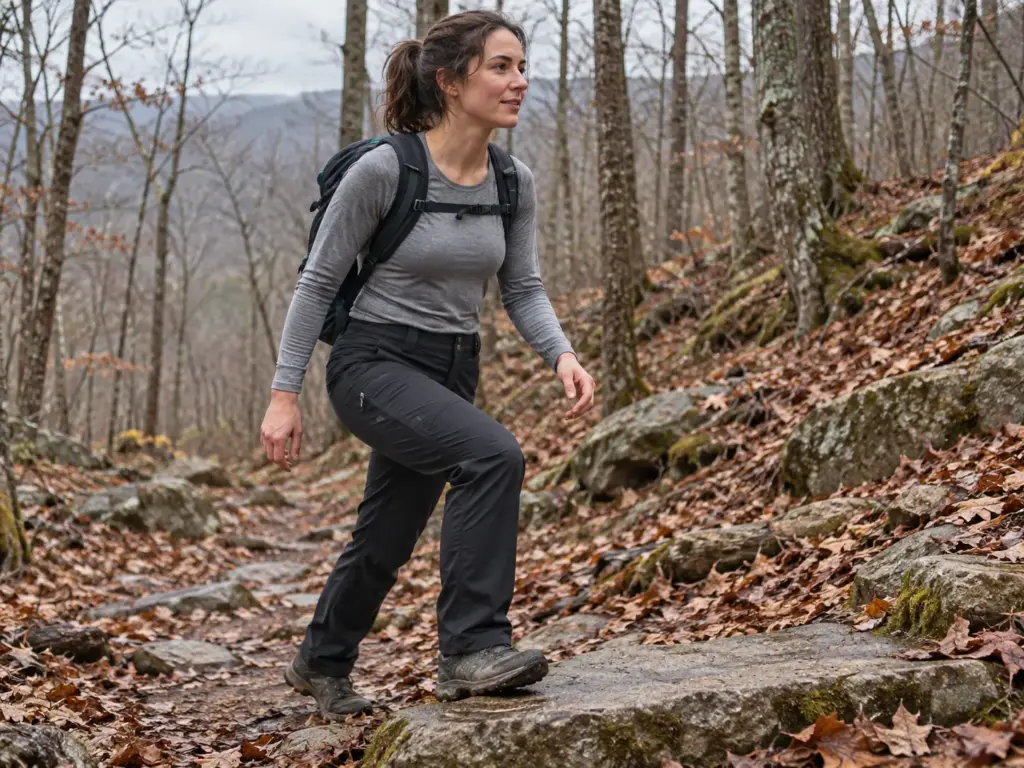
Everyday Day Hikes
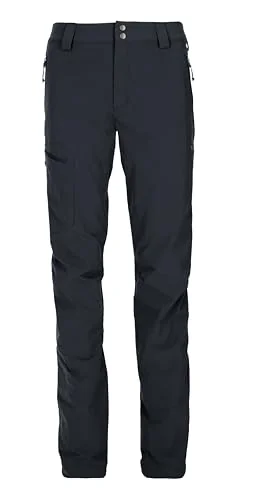
The Rab Women’s Incline Pants are a lightweight stretch pant, which suits the hikes most of us do most often: a short loop, a pack that barely counts as a pack, and a car waiting at the end. A light stretch pant is forgiving on a step-up and dries without fuss after a short shower.
Be clear about what it isn’t. This is a day-hike pant, not a rain pant, and it won’t protect you in a steady downpour. Treat it as your first pair and run the squat-and-step-up check from later in this guide before the first long day.
What to Spend and Where to Save on Women’s Hiking Bottoms
The first pair gets bought on looks, and the second on the damage the first one took. Spend on the parts that fail you on the trail, and save on the parts that only look good in the photo.
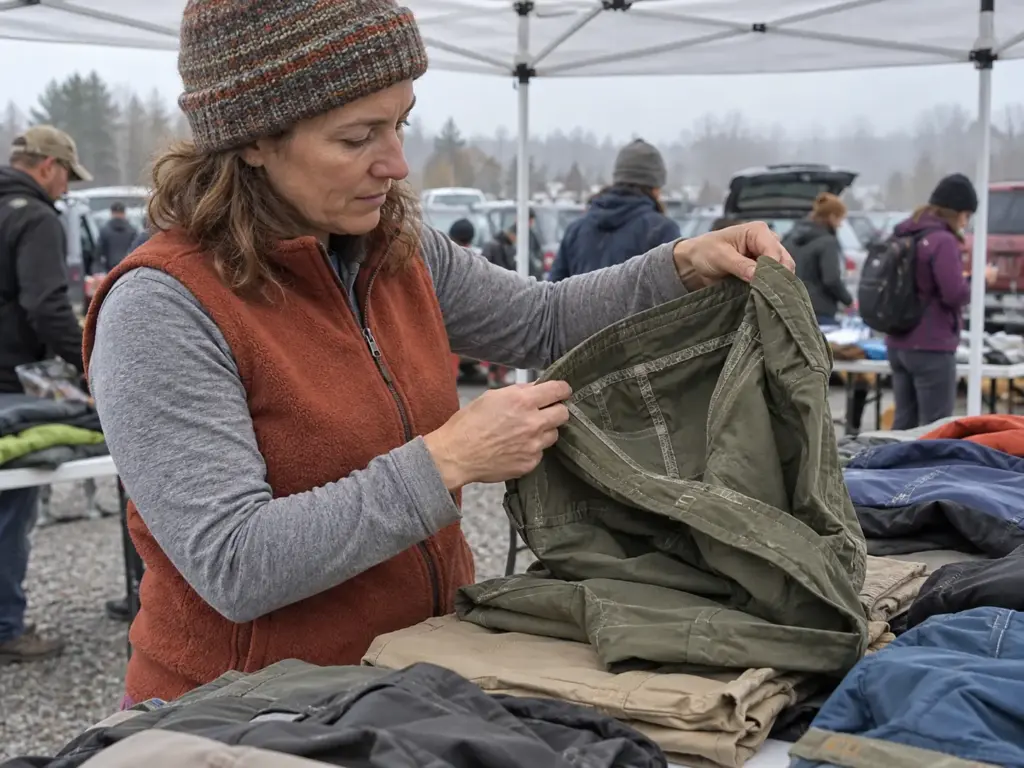
The money belongs in the cut, the seat and gusset, the fabric and the waistband. Logos, extra pockets and a famous name rarely add anything you’ll feel at mile eight. A budget pair can be a perfectly good first pair if you check the seams and waistband before the first long day, but say it plainly: the cheaper the pair, the more likely the stitching and the buttons are where it gives out.
Shop the seasons. End-of-season sales, last year’s colors, outlet and member events all trim the bill, and a try-on in person pays off if the return policy is easy. Consignment shops and swap tables turn up barely worn pairs. Think in cost per hike instead of sticker price: a pair that lasts three seasons beats a cheaper pair that lasts one.
Give any new pair a three-month trial. Wear it on short local outings first and keep the tags until the first long day proves it out. A button that pops, or a crotch seam that splits, is the usual way a cheap pair ends, and it is far better to find out on a two-mile loop than on a ridge.
Why Hiking Pants Chafe and What to Do About It
Chafing is friction, either skin against skin or skin against cloth, and sweat, moisture and a fit that’s too tight or too loose all make it worse. Humid hiking is the worst case, and it hits the inner thigh first, especially once that skin is wet. Hour three of a humid climb is when you start asking whether it’s the pants, the underwear or the cut, and the answer is often all three working together.
What Actually Rubs: Friction, Damp Skin and Seams
Think of a rub as three ingredients: motion, moisture and a surface that doesn’t give. A thigh swings with every step, all day. Add damp skin and a seam or a fold that stays in one place while the leg moves, and you get a hot spot that turns into raw skin by mid-afternoon.
The pattern repeats on humid days, not hot ones. A dry heat leaves you dry; a muggy day soaks the fabric against your skin. Because the pants are the obvious suspect, they take the blame, even when the rub is coming from what’s underneath.
The Under-Layer Under Your Pants
Synthetic underwear in humid heat can rub front and back, and plain loose boxers ride up and bunch. A snug moisture-wicking base layer or a pair of fitted shorts under the pants holds to the thigh and stays where you put it, so the friction happens between layers that glide instead of against your skin.
For the skin itself, an anti-chafe cream stays on better than a stick, which melts in a hot pocket and smears. Apply a balm before the rub starts, not after, and at lunch change into dry under-layers and let the damp ones dry on your pack. Those two small habits are the fastest field fix.
Pack one dry pair of snug shorts or a spare base layer in a zip bag. If a crotch seam splits far from the car, those shorts turn a ruined afternoon into an awkward one.
Seams, Gussets and What to Check in the Store
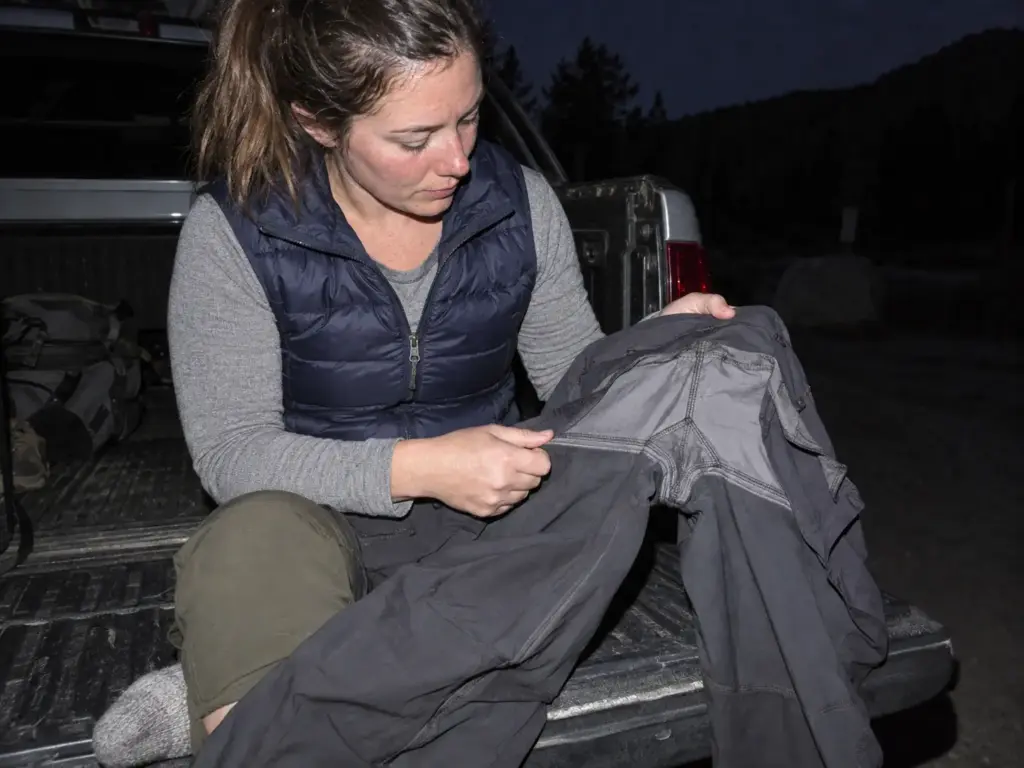
Turn the pair inside out in the fitting room. Run a finger along the inseam and the crotch: a seam that sits flat is a good sign, and a thick ridge or a bunched stitch line is exactly what will sit against your thigh at hour three. Makers offer reinforced seams and a crotch gusset as a way to reduce friction, but treat a gusset as a design feature to check on the pair in your hands, not as a guarantee. A closer look at the gusset in the crotch shows where the panel sits on a gusseted crotch and what to check on it.
Fit matters too. Too loose and the cloth bunches and rubs; too tight and it grabs. The middle ground is a pant that moves with the leg without twisting or gathering at the crotch. Seam failure at the crotch is a stitching problem, and it’s a real way cheap pairs end, so give the stitch line a firm tug before you buy.
The Trail Fit Check: Squat, Step Up and Bend With a Pack On
The fitting room tells you nothing about the twentieth step-up. Standing in front of a mirror, almost every pair looks fine. A five-minute test with the moves a trail actually asks for tells you far more, and you can run it in the store or at home with the tags still on.
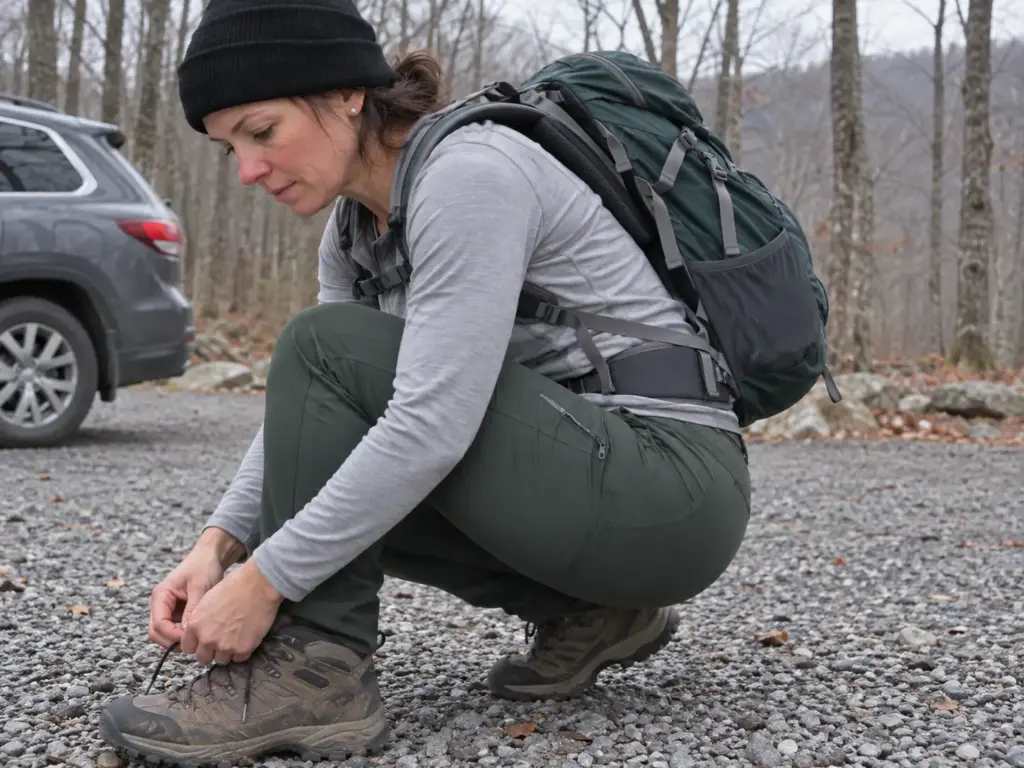
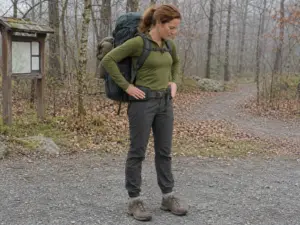
Do it with a loaded daypack, the hip belt buckled, in the shoes you hike in. Without the pack, you’ll never see where the belt lands; without the shoes, the hem tells you nothing.
The Four Moves: Squat, Step Up, Bend and Sit
Squat all the way down. The waistband should stay put, and nothing should pull across the seat or the thigh. Step up onto a stair or a bench with each leg: the knee needs room, and the hem shouldn’t catch on the boot.
Bend forward and reach for your shoe, and check that no gap opens at the back of the waist. Then sit on the floor or a low bench, and notice whether the seat binds or the waistband cuts in. The full sit, squat and climb routine lays out each move in more detail.
Pants that feel fine standing still often announce themselves on the first big step. A drag across the back of the thigh, a pinch at the knee or a waistband that slips an inch are all signs that this pair will annoy you by lunch. Whichever move bothers you in the store will bother you ten times as much on the trail.
With the Pack On: the Hip Belt Test
Buckle the belt and look at where it lands. It should sit on the pant’s waistband or just above it, never on a button, a drawstring knot or a hem line, because those turn into pressure points as soon as the pack settles. Walk around for a few minutes and notice whether the waistband stays up or the belt drags it down.
If the belt pushes a button into your stomach, the pair has too much hardware for pack-wearing days, however good it looks. This is where a low-profile elastic waistband earns its place. A pack belt and a low-rise cut are a bad combination, so try them together.
Do the fit check twice: once in the store with the tags on, and once at home on a staircase with a loaded pack. Cut the tags off only after the second test passes.
Between Sizes and Across Seasons
Your size can shift across the year. A cold season brings layers and sometimes a bit more, and a hot one brings less, so the pair that fits in July can feel tight in January. When you’re between sizes, the second size is often the better choice if you plan to wear a base layer under the pant, and a snug waist you can cinch beats a loose waist you cannot fix.
Check the pair in the size you’ll actually wear most of the year, with the layers you’ll actually have on. A tight pair that works only in the best-case season is a pair you’ll stop wearing.
When the Water Repellent Fades: DWR, Wet-Out and Rain Pants
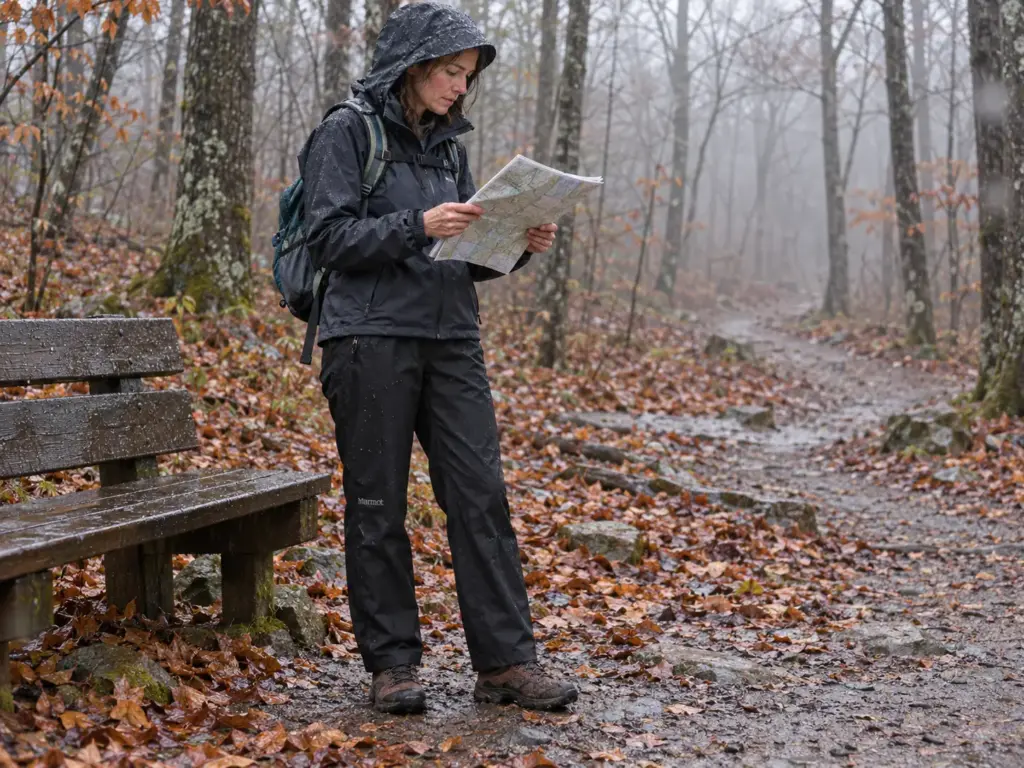
Last spring the pants beaded every drop. This spring the same pair soaks through in a drizzle, and the natural thought is that they’re ruined. They usually aren’t.
Why Beading Stops: What DWR Is
DWR, durable water repellent, is a surface treatment on the outer fabric, not a waterproof layer. Waterproof ratings are set without it, so a waterproof pair stays waterproof when the DWR wears off. What changes is the surface: instead of beading, water spreads and saturates the face fabric, which then feels clammy and clings. That is called “wet out”, and it doesn’t mean the pair is leaking.
The finish wears away with use and washing. Rubbing against a pack, a rock face or your own hip belt scuffs it first at the thigh and seat, and each wash takes a little more. This is normal wear, not a defect.
Test and Restore the Finish
Test it in ten seconds: sprinkle water on the thigh and seat. If it beads and rolls off, the finish is fine. If the water soaks in and darkens the cloth, it’s time to restore it.
Wash the pants, then tumble them on warm or gentle for about 20 minutes, which reactivates the factory finish (Gore-Tex gives this same guidance for its fabrics). No dryer? Iron on warm with no steam, through a cloth. If the water still soaks in afterward, re-treat with a new DWR product.
Washing, drying and re-treating are covered step by step in a full care routine for technical clothing.
For the everyday wash, a cold-water wash and a line dry is the gentle routine and it protects the UPF finish too, so keep the warm tumble for the moment the beading has faded.
When You Need Real Rain Pants
A water-resistant pair buys minutes in a shower, not an hour in a storm. If the label still confuses you, read what water-resistant does and doesn’t mean once before you buy. When the forecast says steady rain, carry real rain pants over a light pair, and keep them in the pack, because they’re the thing you won’t have when you need them. Still weighing the two options? Rain pants against a rain skirt comes down to one clear rule.
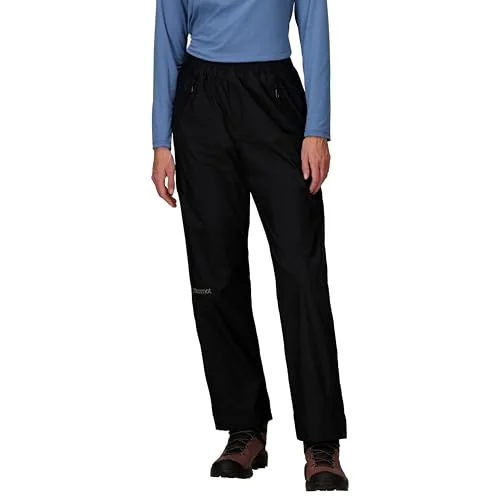
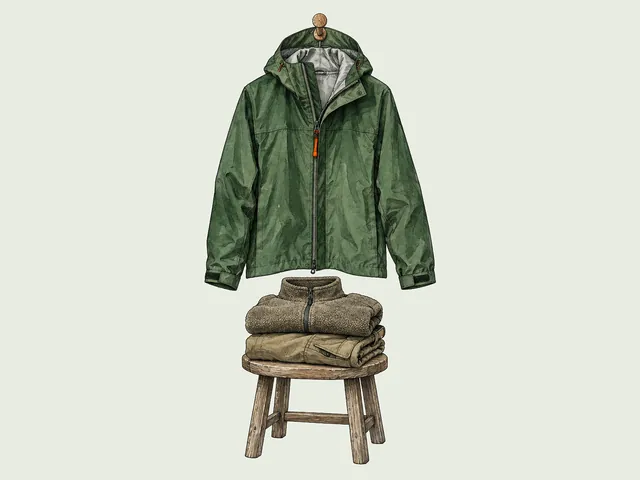
The Marmot Women’s PreCip Eco Full Zip Pant is the main pick for the days when a light pair isn’t enough. The full-length zip is the feature to look for in any rain pant, because it lets you step into them over the pants you already have on without wrestling a boot through a narrow leg. Pull them on at the first real drops, not after you’re already soaked.
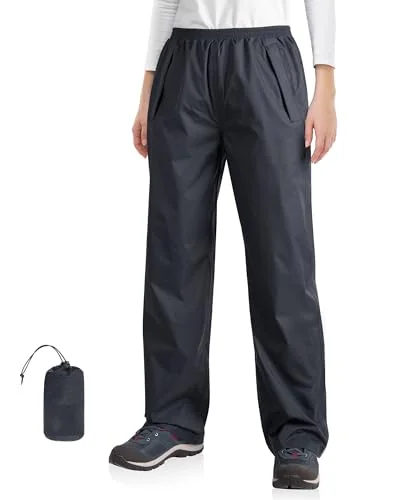
The 33,000ft Rain Pants for Women are the budget alternative next to the Marmot. They are packable and lightweight, which is the real advantage of a budget rain pant: a pair that weighs almost nothing gets carried, and a pair that gets carried gets used. If you hike mostly in fair weather and only need a backup, this is the sensible choice.
Check the Pair You Already Own, With the Pack On
The fit under a pack belt decides more than the label does. The rub is a cut, a seam and a damp-skin problem, and you can check all three in the store. The water repellent is a finish you maintain, not a membrane you own, and when the forecast turns a real rain layer beats hoping.
Before your next hike, run the squat and step-up check in the pair you wear now, with the pack buckled on. Note the first spot that pinches, slips or rubs. That spot is the first thing to look for in the next pair.
Frequently Asked Questions
01What should I look for in women’s hiking pants?
Look for a rise and waistband that sit comfortably under a pack belt, fabric that dries fast, stretch that moves without binding, and an inseam that clears your boot. Then check the pockets and seams, since those decide whether the pair lasts a season.
02Should I wear hiking pants or leggings on the trail?
Leggings work on easy, cool days, but pants protect better against brush, sun and ticks and stay cooler in most conditions. A stretch hiking pant gives you the freedom of leggings with more cover.
03How do I stop thigh chafing when I hike?
Keep the skin dry, wear a snug base layer or fitted shorts under your pants, and check the seams and gusset before you buy. Apply an anti-chafe cream before the rub starts, and change into dry under-layers at lunch.
04What are the best hiking pants for hot weather?
The best hot-weather hiking pants are light, fast-drying nylon stretch with a vented cut and a UPF label. Humidity matters more than the temperature number, so favor breathable cloth and a fit that does not cling.
05How do I restore water repellency on hiking pants?
Wash the pants, then tumble them on warm or gentle for about 20 minutes to reactivate the finish. If water still soaks in and darkens the cloth, re-treat with a new DWR product.
I've spent more than a decade researching hiking gear and trail technique. I read the specs, the forum threads and the long-term reviews, and every pick here comes with what it gets wrong.
End of the trail
You read every mile of this one. Here's where the trail goes next.