
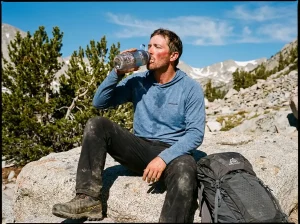
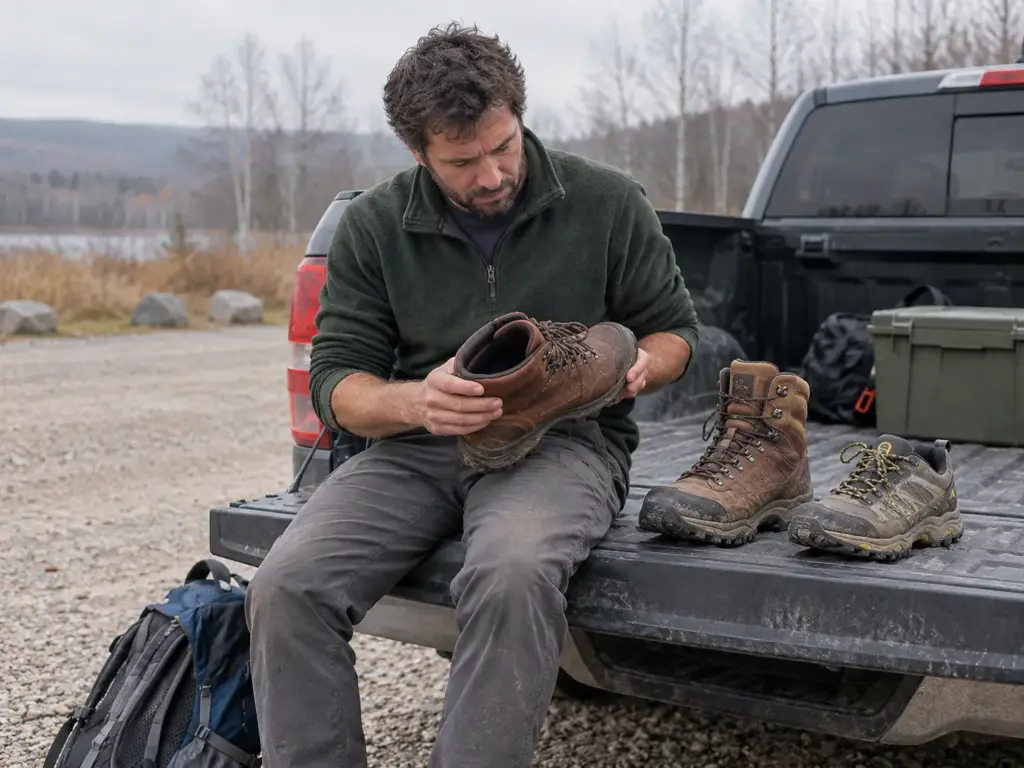
Two miles into a long descent, your heel starts sliding up and down inside the boot with every step. It felt fine in the shop. The Appalachian Mountain Club names that loose heel as the number one cause of blisters on the trail. So what to look for in hiking boots starts with how the boot holds your foot, long before waterproofing, weight, or the logo on the tongue. The advice below comes from fitters, the AMC’s footwear guide, and a long Reddit fit thread, and the full guide to choosing a hiking boot widens the picture.
What to Look for in Hiking Boots Starts With Fit
Fit is the criterion everything else depends on. A commenter who says they used to fit boots for a living (u/brusselspouts13, in that r/CampingandHiking thread) calls it “the number ONE most important feature.” Another, u/Daklight, boils it to three words: “Fit. Fit. Fit.”
The Appalachian Mountain Club’s hiking footwear guide says the same in plainer terms. A loose heel is the number one cause of blisters, and toes that slam into the front of the boot on descents are the number one cause of blackened toenails.
How Much Room Your Toes Need
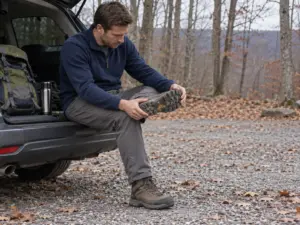
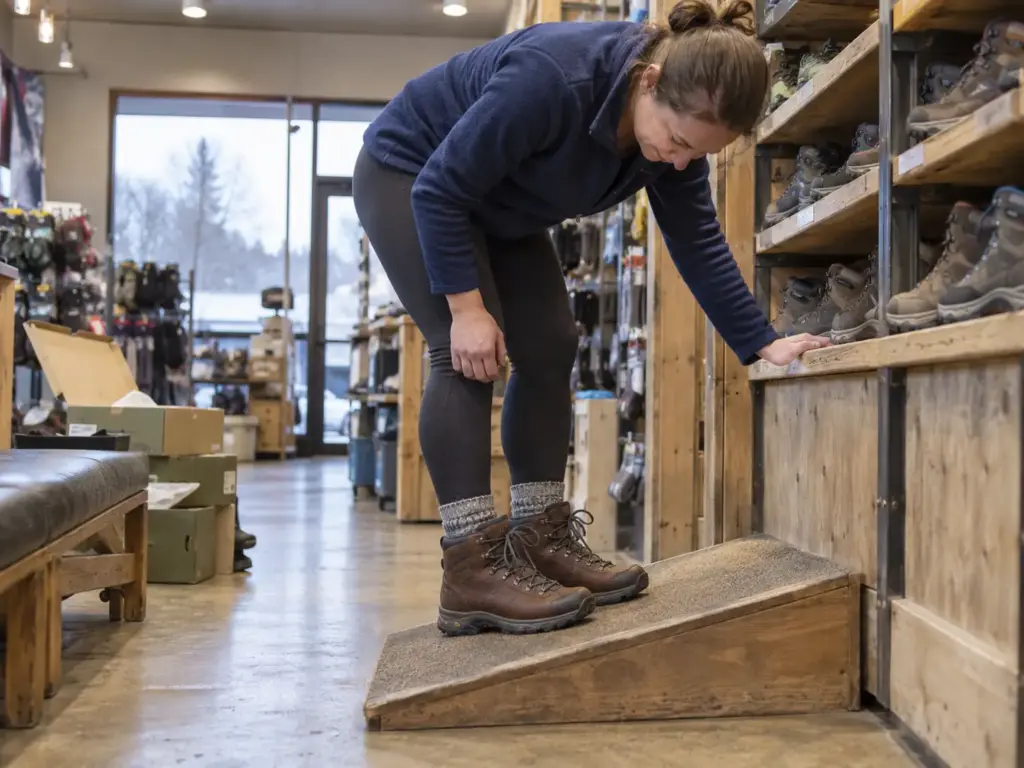
Find the slope in the shop and lean forward. If your toes touch the front of the boot, it is too short for you, because that is exactly what happens on every downhill.
The fitter’s rule of thumb is a finger’s width of space ahead of your longest toe and no more than a thumb’s width. The mistake that fitter saw most was people buying boots that were too short and wide, so expect your boot size to run bigger than your casual shoe size. Toe room is also where a wide forefoot shows up first, so if your forefoot is wide, start with a model built for that instead of a longer size.
Try Boots on Like You Will Hike
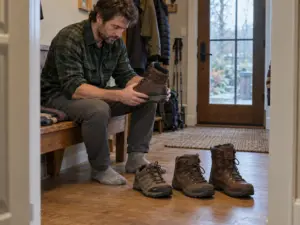
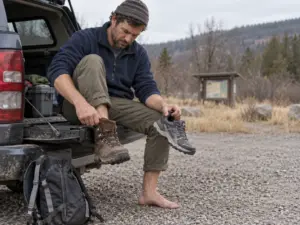
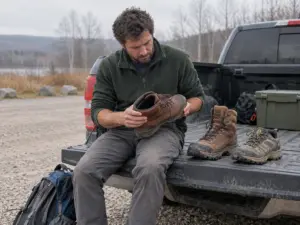
Feet swell over a day, so do your store fitting in the afternoon, in the socks you will actually hike in, and with your own insoles or custom orthotics if you use them. The AMC and a UK retailer’s fit guide (Alpkit) both make that point. One commenter whose custom orthotics have to fit the boot over a thick and a thin sock layer says to test the whole combination.
u/Daklight takes hiking socks to the store and spends two to three hours trying on boots. Walk the slope, the stairs and the flat floor. If a boot hurts or rubs anywhere, another commenter’s rule is blunt: move on.
Fit the Bigger Foot
Most people have one foot longer than the other, and the AMC says to always fit the larger one. The smaller foot can take a thicker sock. Brand sizing also moves around, and the same fitter says you might be a 12 in one brand and an 11 in another, so trust the fit rather than the number on the box.
Type the size you tried into your phone as you go, brand by brand. By the third pair of the afternoon you will not remember whether the snug one was the 11 or the 11.5, and that memory is the whole point of the trip.
Heel Lift Is Fixable Only Up to a Point
The heel is where a boot that looked right in the shop gets exposed. Alpkit’s guide calls heel slip the most common break-in blister, and the AMC traces the cause to too much volume in the heel and across the instep. You can fix a little of it. You cannot fix a lot.
What a Quarter Inch of Heel Lift Looks Like
Stand on your toes in the shop with the boot laced. The AMC’s line is that heel movement should be none, though a quarter inch or less is acceptable. More than that and the boot will not hold on the trail.
The instinct is to go up a size, but the problem lives in the heel and instep volume. A longer boot mostly adds toe room and leaves the heel exactly as loose, so you end up with a boot that is now too long and still slips.
Lacing Is the Second Fix, Not the First
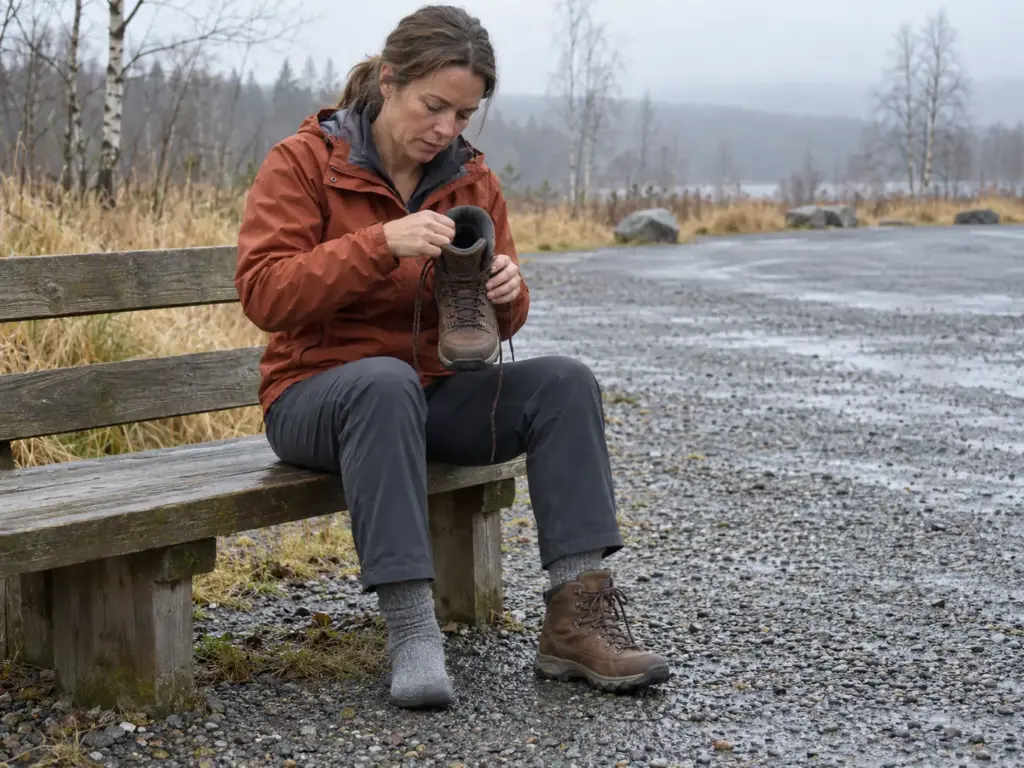
Lacing comes after you have confirmed the boot is close. Alpkit is careful here: heel slip cannot be reliably corrected by lacing alone, though heel lock lacing can help if the movement is minor. The Reddit fitter points to the runner’s knot, also called the Sherpa knot, and suggests a thicker sock or an added liner before you buy another size. The AMC adds an aftermarket footbed to take up volume.
This article won’t walk through the knot itself, because the lacing fix for downhill heel slip teaches the whole sequence properly.
What is worth doing before you pay is the test. Kick your heel back into the heel cup, lace from the toes up so the boot is snug through the instep, then walk down a slope or a flight of stairs, which is the method Alpkit describes. The heel should stay seated against the collar and your toes should stay off the front.
If you lace it as tight as you can stand and the heel still lifts, that boot has the wrong shape for your heel, and no knot will change that. Moving on to the next model costs a few minutes in the shop. Keeping it costs you every descent you hike in it.
Do the descent test twice: once laced the way you normally lace, once with the heel lock. If the second pass feels dramatically better, the boot is workable. If both passes feel the same, the lacing was never the problem.
Boots, Shoes or Trail Runners for Your Load
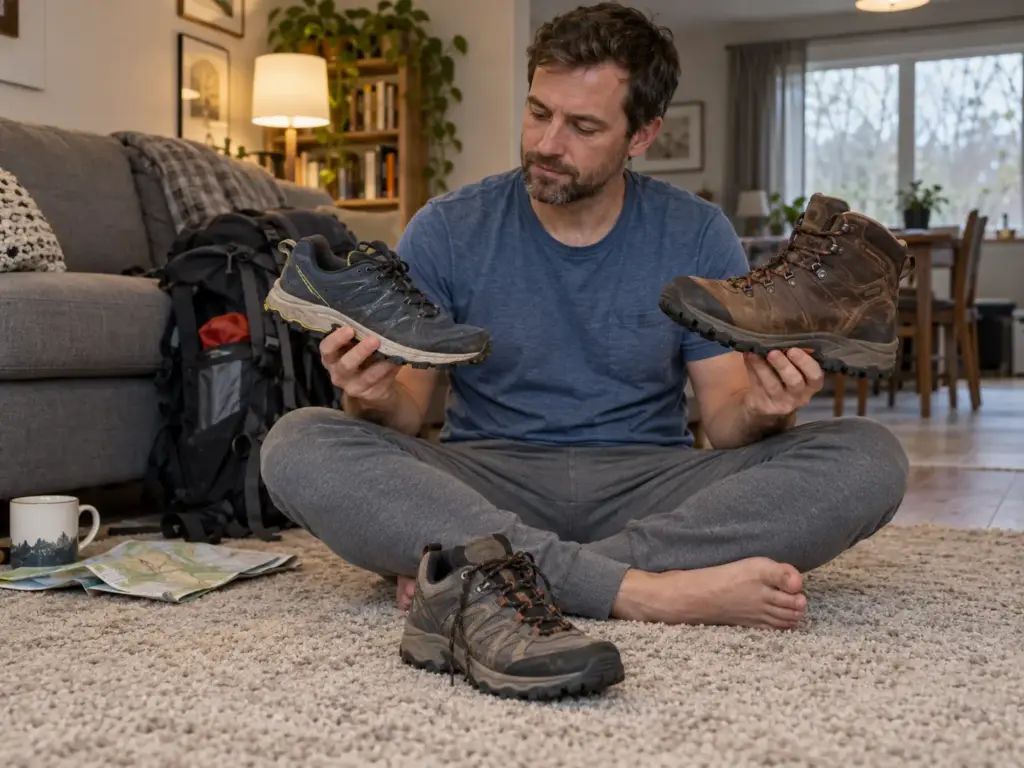
The Reddit thread splits hard on this one. A top commenter says 90 percent or more of trail users would do best in trail runners and rarely need more than gaiters. Another says they have never worn boots and wished for shoes, but have worn shoes and wished for boots. Both can be right, because they are describing different loads.
Pack Weight and Terrain Decide It
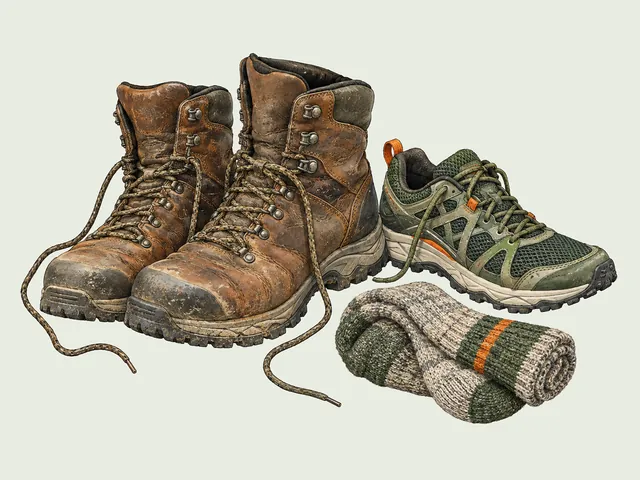
Trail-running shoes and low hiking shoes suit light loads, groomed trails, hot weather, and anyone who wants quick drying and almost no break-in, according to u/DestructablePinata’s list. Day hiking boots and backpacking boots earn their extra weight with heavier loads, off-trail travel, rocky terrain and bad weather. Some commenters like approach shoes as an all-rounder, and some hike easy trails in hiking sandals, so the category really is wider than boots against shoes.
One commenter, u/Camp_Arkham, puts a marker on it: with a 35-plus pound pack on rough terrain, they need a stiff-soled boot. Another cautions against stretching the trail-runner advice to off-trail hiking or a heavy pack. If you are on the fence, this breakdown of hiking shoes against boots shows where each one wins.
Trail-runner fans also bring up zero drop, meaning no height difference between heel and forefoot. Commenters who wear it say it took a little getting used to, so treat the drop as one more thing to try on rather than a rule.
Does a Taller Collar Protect Your Ankle
Boot marketing leans on the idea that a high collar protects the ankle. The evidence is thinner than you would expect. A 2014 study of high-top and low-top shoes on tilted landings had 13 male physical-education students land on a tilted surface in shoes whose collars differed by 6 cm, and it found no significant difference in how far the ankle rolled. The high tops did delay and reduce the activity of a muscle group that resists the roll just before landing, and the authors say uncertainty remains about the benefit for preventing an ankle sprain.
Two caveats matter. Those were basketball shoes, not hiking boots, and a small group of students is not a rocky trail. The fair reading is that a taller collar limits ankle motion without proving it prevents sprains, and the AMC makes the practical point that a higher collar is secondary to a stiff sole. For the hiking side of the question, see how cuff height changes what the boot does.
High Top or Low Top Quick Answer
Choose by load and ground, not by ankle fear. A light pack on a maintained trail is fine in a low cut. A heavy pack, loose ground, or sand and debris favors mid-height, and one commenter who lives near sand dunes wears mids for exactly that reason. The longer argument about whether you really need ankle support has its own guide.
Waterproof or Breathable Pick by Where It Gets Wet
Ask two people about GORE-TEX and you get two stories. A commenter in Australia, on a long overnight hike in heat above 30 degrees Celsius, says their feet were cooking and a non-breathable waterproof lining was the last thing they needed. Another, u/Bayside_Father, says waterproof boots keep water in as well as out: once it gets inside, it stays there.
What a Membrane Does Not Do
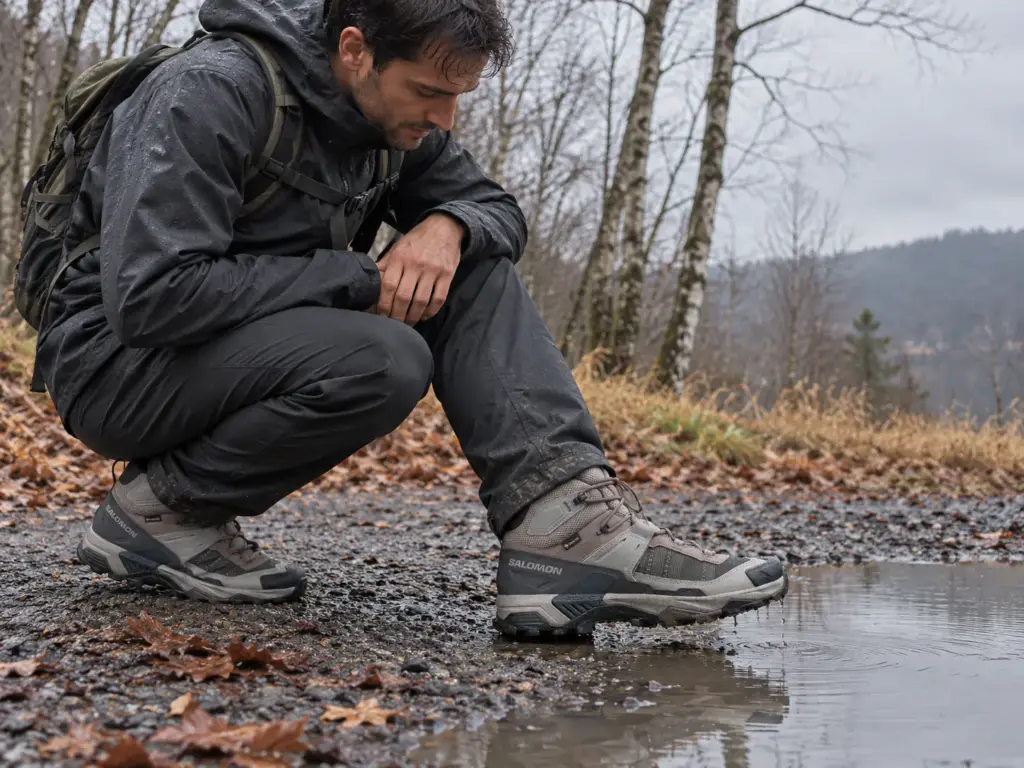
A waterproof membrane blocks water from outside and slows sweat from leaving. When a waterproof boot gets soaked, whether by a creek deeper than the cuff or rain running down your leg, several commenters say its drying time is longer than a breathable boot’s. Moisture feeds blisters, so a boot that keeps your feet wet is a problem you carry for miles.
The breathability cost of a Gore-Tex shoe is worth understanding before you pay for the membrane. No membrane stops water entering at the top either, which is why one commenter’s advice is to get gaiters sized to your boot and why u/DestructablePinata pairs waterproof boots with them.
When Waterproof Is Worth It
The commenters who like waterproofing place it in snow and constant cold rain. Hot weather and trails with many creek crossings tilt toward breathable, because wet feet in a waterproof boot dry slowly.
If you want a clean example of the waterproof mid-cut, the Salomon X Ultra 5 Mid GTX (men’s · women’s) is exactly that: a mid-height boot with a GORE-TEX membrane. Judge it the way you would any boot, by the heel and toe test above, not by the membrane.
Weight Versus Protection
Weight on your feet is felt on every step, which is why this trade-off gets argued so loudly.
Why Ounces on Your Feet Add Up
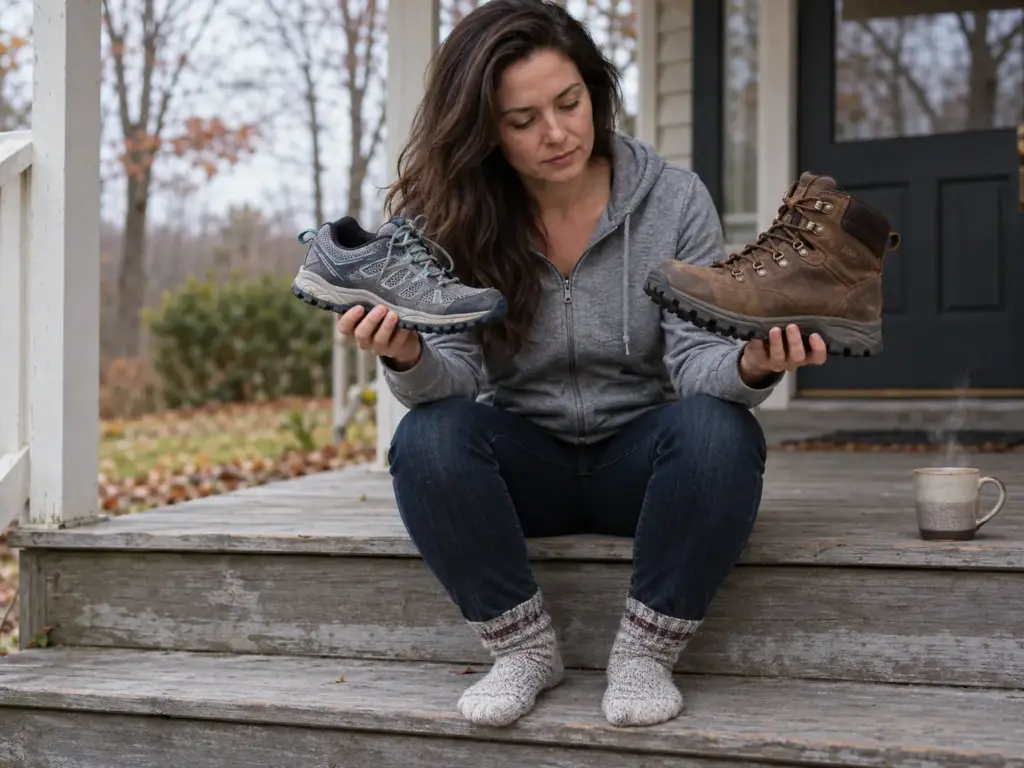
Lighter boots trade durability and structure. Heavier ones add protection and stiffness. One commenter describes a friend who found boots too heavy and tired out on climbs, and who hiked rough ground in sandals instead.
Against that, the Reddit fitter notes that a sturdy boot feels a lot softer and more bendy once you add pack weight. The boot that feels like a brick in the shop may feel normal at 30 pounds.
Two Pairs Beat One Compromise
Several commenters land in the same place: own two pairs, a light one for easy days and a stiff one for heavy ones. u/Atavacus is the useful warning here. A boot with a stiff shank left them “completely crippled” after three days, and they now move with 80 pounds in minimalist boots. That is one person’s feet, not a rule, but it shows that stiffer is not automatically better.
If you are still sorting categories, how to choose between boots, shoes and sandals covers the whole decision.
Upper Materials From Full-Grain Leather to Mesh
The upper decides how long the boot lasts and how it behaves when wet. The AMC says all-leather boots last longer and shape to your feet over time, though they cost more.
Leather
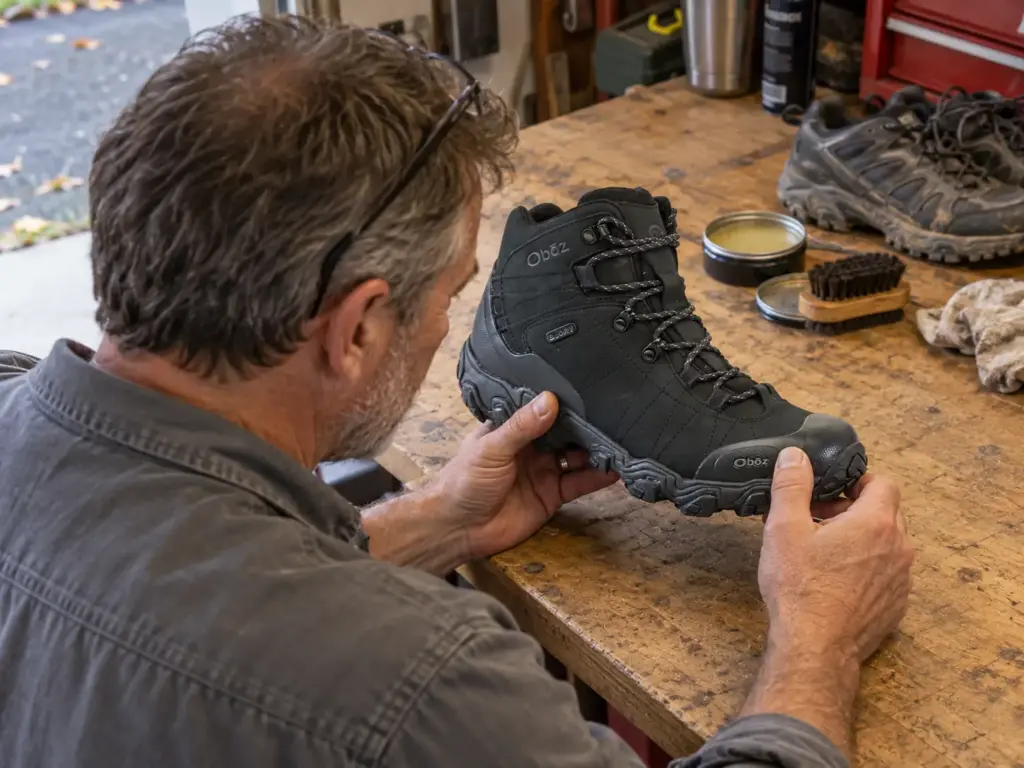
Full-grain leather keeps the hide’s outer surface intact, which is why it is the durable, naturally water-resistant option. One commenter wears full-grain leather boots with a GORE-TEX liner for all-weather use. Stitching deserves a look too: one commenter lists good stitching as a buying criterion, and an Oregon Hikers owner lists failed stitching among the places a boot died.
The Oboz Bridger Mid B-DRY (men’s · women’s) fits this slot: a leather mid with a waterproof B-DRY membrane. One Bridger Mid wearer in the Reddit thread calls the sole firm and supportive, and likes the mid height for keeping sand out.
Nubuck and Split-Grain
Nubuck is leather sanded to a velvety surface. Split-grain leather is cut from the lower layers of the hide and is usually paired with mesh panels to save weight and add breathability. Leather against synthetic by where it gets wet goes further on how each handles rain.
Synthetic and Mesh
Synthetic leather and nylon mesh uppers are lighter, dry faster and break in sooner, which suits warm weather and shorter days. The price is durability, so expect to inspect the seams and the toe cap sooner.
A Stiff Sole Does More Than a Tall Collar
Twist the empty boot in the shop. The one that wrings like a sock will not stop your ankle rolling on rock.
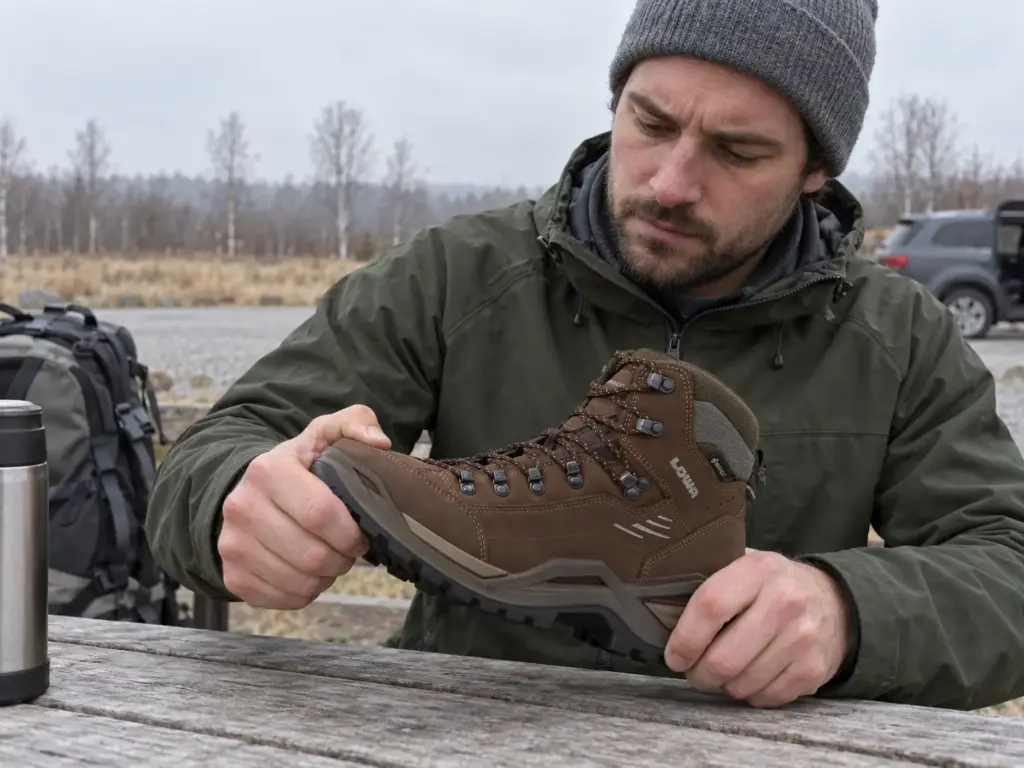
The Twist Test
Hold the boot by the heel and the toe and try to twist it. The AMC says a stiffer sole enhances stability over uneven ground and that collar height is secondary. The Reddit evidence agrees with a caveat: u/Camp_Arkham wants a stiff sole under a heavy pack on rough terrain, and the fitter notes a stiff boot feels softer once loaded.
Combined with u/Atavacus’s experience, the lesson is to match stiffness to your pack and your feet, which matching boot stiffness to terrain and pack load walks through in detail.
The Lowa Renegade EVO GTX Mid (men’s · women’s) is a mid-height GORE-TEX boot, and one Reddit commenter points to Lowa when the terrain turns rocky.
Wring every empty boot on the wall before you try any on. Your hands will tell you which stiffness you actually like long before your feet do, and you will stop wasting time on pairs that were never going to suit you.
Lugs and Traction
Look for decent lugs. One commenter, u/GrumpyBear1969, adds the part people forget: a sole that is too soft wears out fast, and one that is too hard slips on smooth rock. Neither extreme is a flaw, just a trade-off. Pick the one that matches your ground.
The Return Window Is Your Real Break-In Test
A store floor tells you about tightness and basic fit, and not much else. That is the point one Reddit commenter makes about boots bought at a big outdoor retailer: walking around the shop won’t cut it beyond that, so take them on a hike.
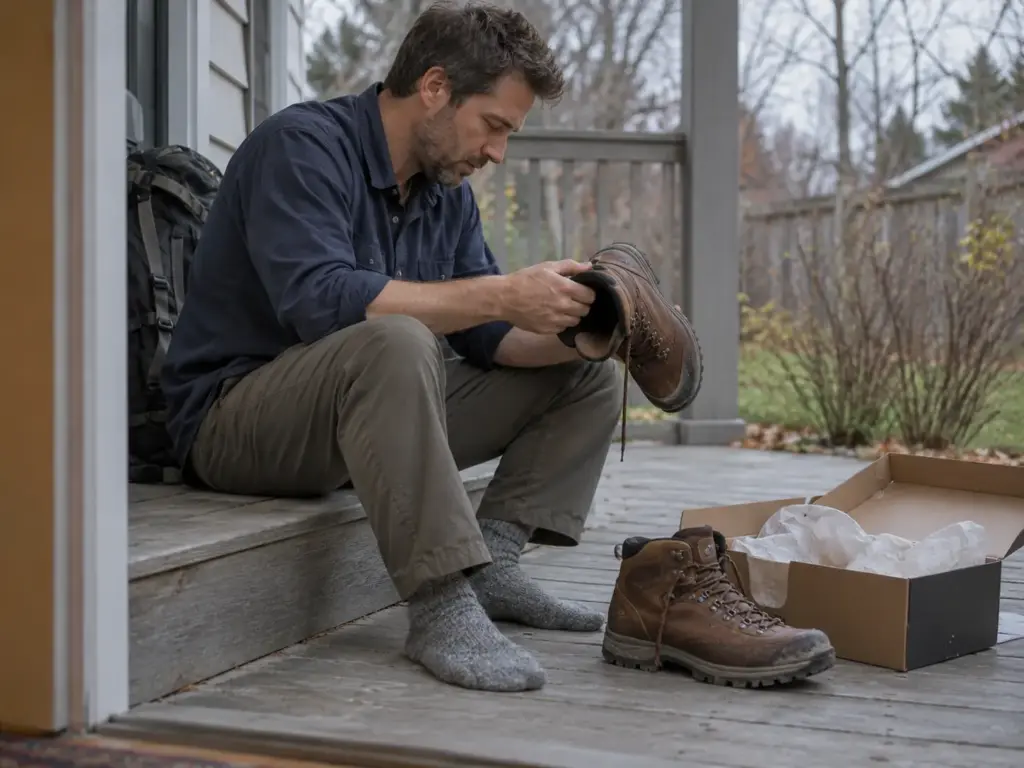
Why the Store Floor Is Not Enough
A carpeted aisle has no descent, no load and no wet socks. The things that ruin a hike, such as heel slip, toe jam and a pressure point under the arch, appear after an hour of real walking, not five minutes of pacing. Commenters also note that boots break in more slowly than shoes, so a leather pair is the one to test hardest.
One Loaded Hike Before the Window Closes
Buy where returns are allowed, then use the window as the test. Check the store’s return policy before you buy, because the length is disputed: one commenter claims a year, and another asks which store actually gives six months. Do not assume.
Then take the boots out on one loaded hike with your actual pack, on terrain close to what you plan to do, and pay attention to three things on the way down: the heel, the toes, and any pressure point. Alpkit’s finding that heel slip is the most common break-in blister tells you where to look first. If the hike was fine, keep them. If it wasn’t, you’ve found the answer while it is still free.
For what comes next, read how to break in hiking boots and know when to return them.
How Many Miles a Pair Actually Gives You
An Oregon Hikers poster bought his first pair of La Sportiva boots and watched them go from new to “failing” within months while his socks were fine. His conclusion was that boots should outlast socks. Not every pair does.
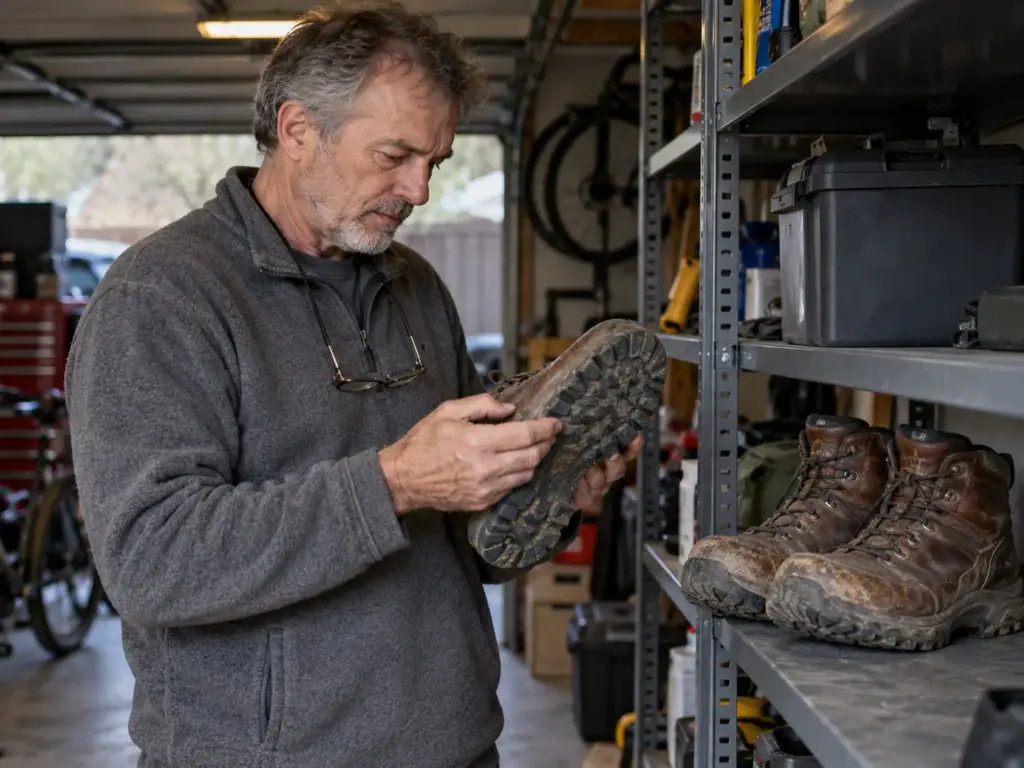
Lifespan Ranges From Long-Distance Walkers
Nobody publishes a clean mileage figure, so read these as forum ranges, not specs. On a Camino de Santiago forum, a Meindl owner reports about 3,000 km on one pair. A Merrell Moab user is past 1,000 km with the soles half worn. A Topo owner’s uppers tore away at about 1,300 km while the soles were fine.
A podiatrist’s advice, one poster says, is to replace boots after roughly 800 km. On Oregon Hikers, an off-trail user got 400 to 500 miles. Terrain and stride explain much of the spread.
Cost per mile is the right way to think about a boot, since a cheap pair that dies early costs more per trip than a pricey one that lasts. But because lifespan varies this widely, use the ranges as a guide rather than a calculation. Cheaper boots tend to be replaced more often, the fitter says, so check the midsole for compression if you buy on a budget. One commenter’s tip for shopping on a budget is to wait for previous year models to go on sale.
Keep a running tally of trail miles in a phone note from the first hike. A lifespan range only helps if you know where your own pair sits inside it.
Resoling and Two Pairs
Some boots can be resoled, which stretches a good pair a long way. The price is disputed between commenters and depends heavily on the country, so there is no figure here. For that, see what resoling a hiking boot costs and when it pays off.
One Camino walker keeps two pairs, so one can be resoled while the other is on the trail, which solves the problem of being without boots mid-trip.
Where Boots Fail First
A Lowa owner on Oregon Hikers lists what went on their boots: stitching, rand, midsole, lugs worn smooth and cracks. That is a useful checklist for before and after you buy.
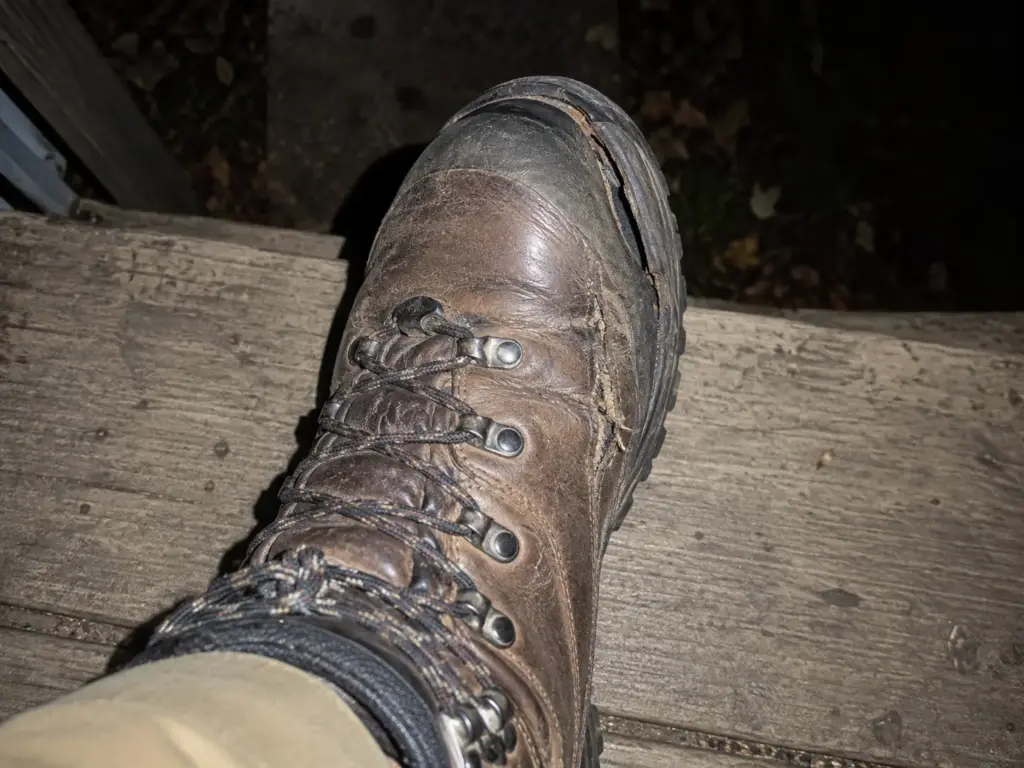
The Four Parts That Go First
The rand is the band of rubber or leather around the bottom edge of the upper, and when it peels, the boot is failing. Stitching and the midsole are the next suspects, followed by lugs worn smooth.
Off-trail use shortens life, according to Oregon Hikers, and the Camino threads show uppers can tear while the sole is still fine, or the other way around, with Merrell soles wearing first. The parts of a hiking boot and how each one fails maps each one.
A Two-Minute Check Before You Buy
Press your thumb into the midsole and look for compression. Run a finger along the stitching and the rand and look for gaps or lifting edges. If you are checking a pair you already own, how to tell when hiking shoes are worn out gives you the full inspection.
Take Two Pairs Home and Keep the One That Survives a Hill
Three things carry this whole article. Fit comes first, and the heel comes first within fit: a quarter inch of lift or less, toes off the front, the larger foot, the afternoon, your own socks. Then match the type to your load and terrain, and weigh waterproofing against breathability by where your trails actually get wet. Last, test under load before the return window closes.
Your next step is practical. Pick two pairs from the shop that pass the heel and twist tests, wear both at home, then take the one that survives a loaded hike up a real hill. Return the other.
Frequently Asked Questions
01What should you look for in a hiking boot?
Look for fit first: a secure heel, room ahead of your longest toe, and a size that suits your larger foot. Then match the type to your pack weight and terrain, twist-test the sole, choose waterproofing by climate, and test the pair on a loaded hike before the return window closes.
02Is it better to have loose or tight hiking boots?
Neither extreme works. You want a snug, secure heel and enough toe room for your toes to spread. The AMC calls a quarter inch of heel lift or less acceptable when you stand on your toes. A loose heel blisters, and a cramped toe box blackens toenails on descents.
03Which type of hiking boots are better, high or low top?
It depends on your load and terrain. Low cuts suit light packs and groomed trails, while mids suit heavier loads, rough ground, and sand or debris. A tall collar is not proven to prevent sprains, since one 2014 study of basketball shoes found no difference, and sole stiffness matters more.
04Which is better, Merrell or Hoka?
Neither brand wins on paper, because fit decides it. Sizing varies between brands, so a size that works in one may not in the other. Try both in the afternoon, wearing your hiking socks, and pick the pair that holds your heel and leaves your toes room.
05How do I know if I need a boot or a shoe?
Choose a boot for heavier packs, off-trail travel, rough ground, and cold or wet weather. Choose a shoe or trail runner for light loads, groomed trails, hot weather, and quick drying. One commenter’s marker is a 35-pound pack on rough terrain, which calls for a stiff-soled boot.
I've spent more than a decade researching hiking gear and trail technique. I read the specs, the forum threads and the long-term reviews, and every pick here comes with what it gets wrong.
End of the trail
You read every mile of this one. Here's where the trail goes next.