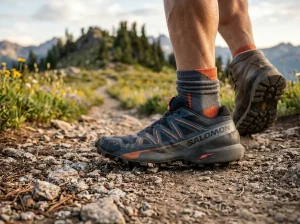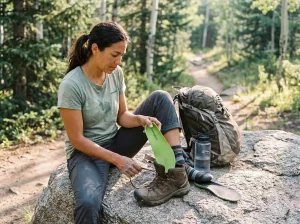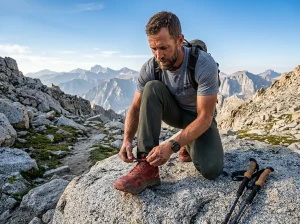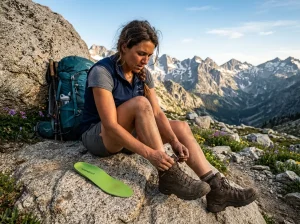
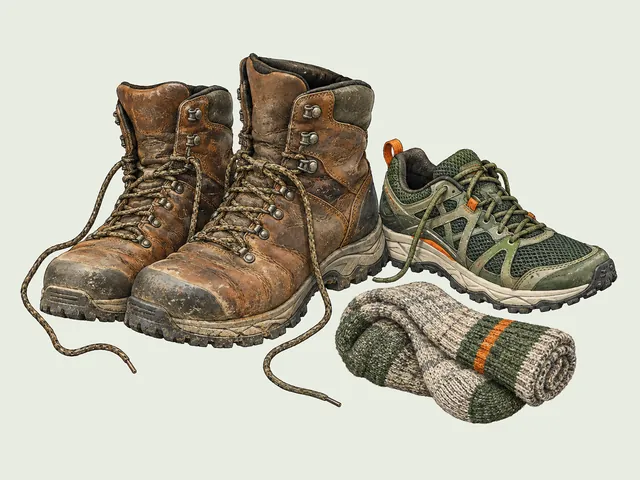
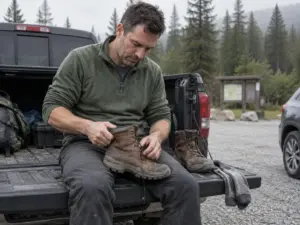
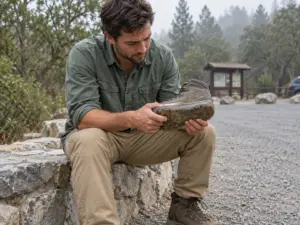
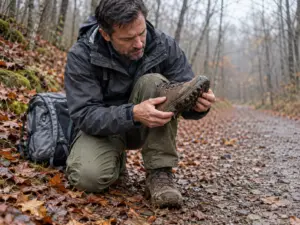

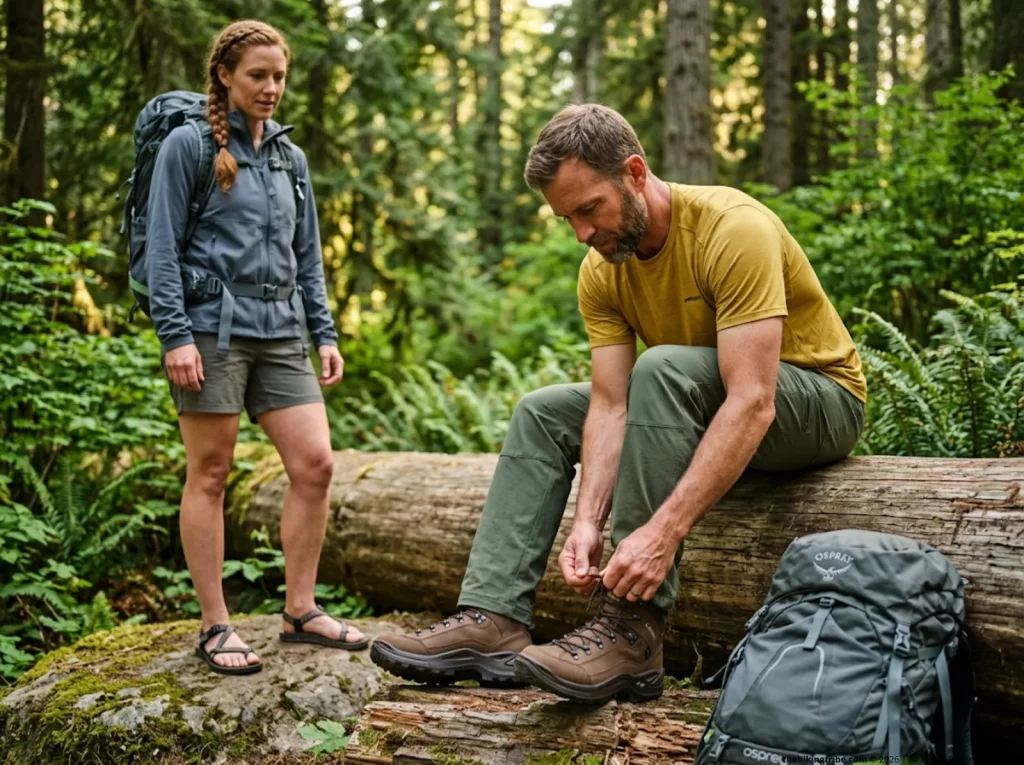
Five miles into the Zion Narrows, with water rushing over my calves, my heavy waterproof boots felt like concrete blocks strapped to my feet. While I was dragging an extra five pounds of water-logged leather with every step, a hiker in minimalist technical sandals glided past me, entirely unaffected. That moment shattered everything I thought I knew about mandatory trail footwear. After thousands of miles exploring remote backcountry routes, I’ve learned that the choice between boots, shoes, and sandals isn’t just personal preference. It is a calculated equation of your payload, your body mechanics, and the unforgiving reality of the trail. Here is exactly how to navigate the hiking footwear spectrum and equip yourself for your next objective without choice paralysis.
⚡ Quick Answer: You do not need heavy boots for every trail. Hiking shoes and trail runners offer massive energy savings and comfort for well-groomed paths and light packs. Backpacking boots are essential when carrying loads over 35 pounds or moving through off-trail hazards, while technical sandals excel in wet environments and desert heat if you build the necessary foot strength. Let the terrain, weather, and your pack weight dictate your footwear.
The Physics of Weight on Your Feet
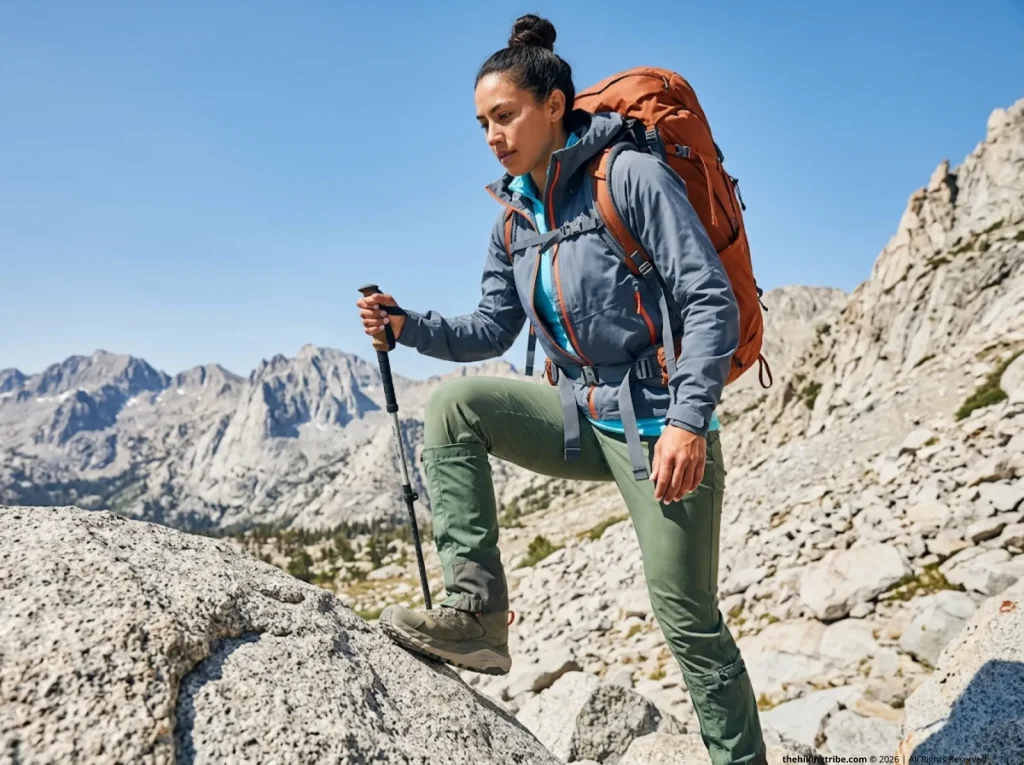
A massive misconception among beginners is that heavier footwear automatically equals better support. The truth is much harsher. Heavy boots exact a steep tax on your body with every step you take. Understanding the physical cost of weight on your feet is the first step to hiking longer miles with less pain.
The 1:5 Ratio: Math vs. Myth
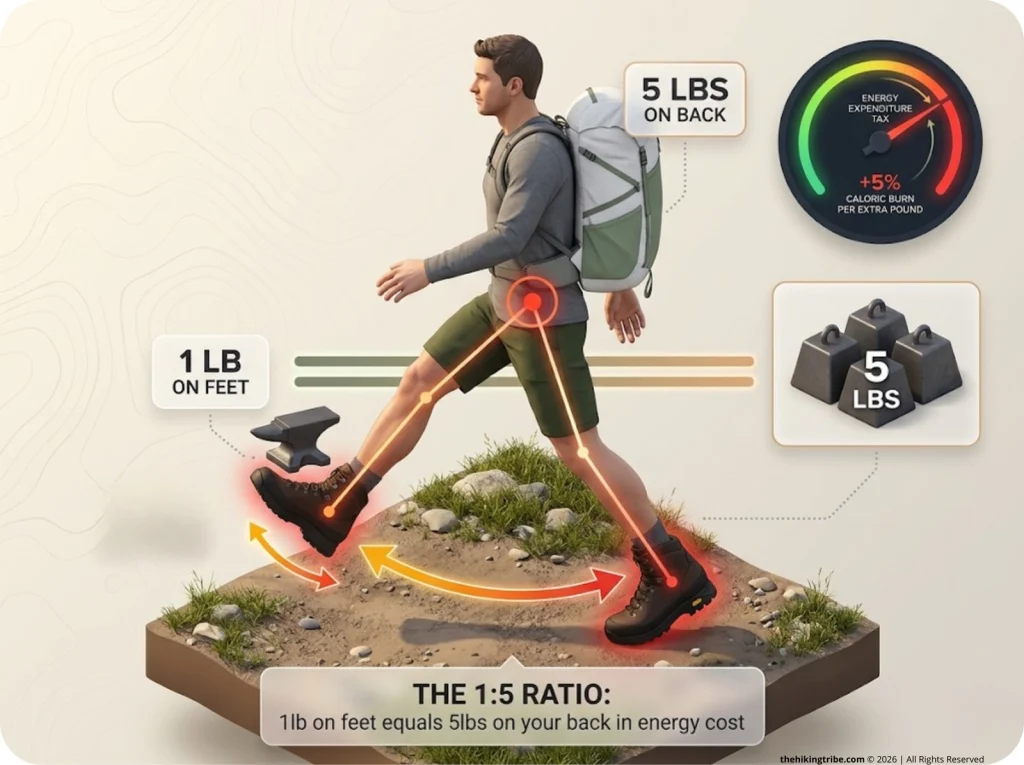
Every step you take requires you to lift and swing your footwear before planting it back down. This creates a pendulum effect. A common rule of thumb is the “1:5 ratio”—one pound on your feet requires the same energy burned as carrying about five pounds in your pack. While the exact numbers fluctuate, energy expenditure studies consistently prove that adding mass to the extreme ends of your legs ruins your stamina. You burn up to 5% more energy per extra pound carried on your feet.
Leg Fatigue and Tripping Hazards
Your leg acts as a lever, and your hip flexors do the heavy lifting to pull that lever forward. When you strap a three-pound stiff midsole boot to the end of that lever, you force those small hip muscles to work overtime. Over a ten-mile day, this constant micro-fatigue leads to a shorter stride. Your foot clearance drops, and you suddenly catch your toe on a root you easily would have cleared hours earlier. Heavy loads logically demand sturdier footwear, but running heavy boots with an ultralight daypack guarantees early exhaustion.
Sizing for the “20-Mile Swell”
Gravity and blood flow cause your feet and toes to expand dramatically over a long hike. By midafternoon, you might experience a full half-size increase in foot volume. You must buy boots sized to accommodate this “20-mile swell,” leaving enough room so your toes never hit the front of the toe box on steep descents. Managing this extra volume requires mastering proper foot swell management and using hiking boot lacing techniques to lock your heel firmly in place while allowing your toes to spread naturally.
Pro tip: Measuring your feet for new boots? Do it late in the afternoon or immediately after a brisk two-mile walk. You need to replicate mid-day blood flow so you can reliably perform the “finger test” at your heel before dropping your cash on a new pair.
Midsole Foam: EVA vs. Polyurethane
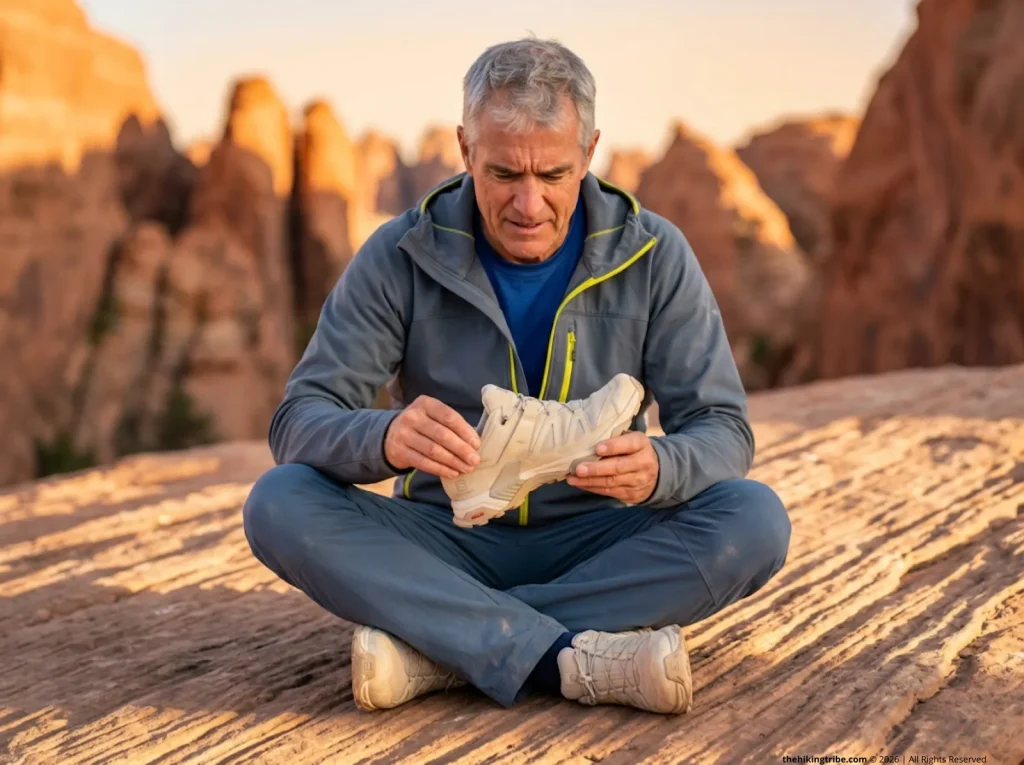
The foam sandwiched between your footbed and the rubber outsole controls both cushioning and stability. The outdoor industry leans on two primary foam types for midsoles, and picking the wrong one means replacing your shoes halfway through the hiking season.
The Anatomy of EVA Foam (Trail Runners)
EVA foam dominates the trail runners market. Brands like Hoka and Altra use thick slabs of EVA because it feels incredibly plush and “light as a feather” right out of the box. The problem is longevity. EVA foam compresses under body weight and pack loads, permanently losing its shock absorption. Most EVA midsoles pack out entirely after 300 to 500 miles. They might look structurally sound on the outside, but their internal rebound is dead, pushing shock stress directly into your knees.
High-Density Polyurethane (Traditional Boots)
Polyurethane (PU) is the heavy-duty engine found in traditional hiking boots. It is significantly denser and heavier than EVA, which contributes to overall boot weight. However, PU actively resists permanent compression. High-quality PU midsoles can easily handle 1,000 miles of heavy pack hauling without losing their structural integrity. Long-term wear testing shows that PU outlasts EVA dramatically under heavy physical stress. Understanding this difference is crucial for your price-to-longevity ratio. If you burn through trail shoes fast, rotating your hiking shoes gives the EVA cells time to rebound between trips.
Stiffness and Protective Shanks
Midsoles aren’t just about soft padding; they dictate stiffness (or torsional rigidity). You want a rigid sole that prevents the shoe from twisting side-to-side on uneven trails. Hard plastic or nylon shanks embedded in the midsole provide this rigidity, saving the small muscles of your feet from exhausting themselves trying to balance on jagged rocks. Day hikers get by with half-length shanks, while mountaineers need full-length plates to bear weight comfortably on small technical footholds.
Pro tip: Carrying a 50-pound pack? Skip EVA entirely. It feels like a dream on the showroom floor, but that foam will compress completely flat and feel totally “dead” by day three of a heavy backcountry trek.
Matching Armor to the Terrain
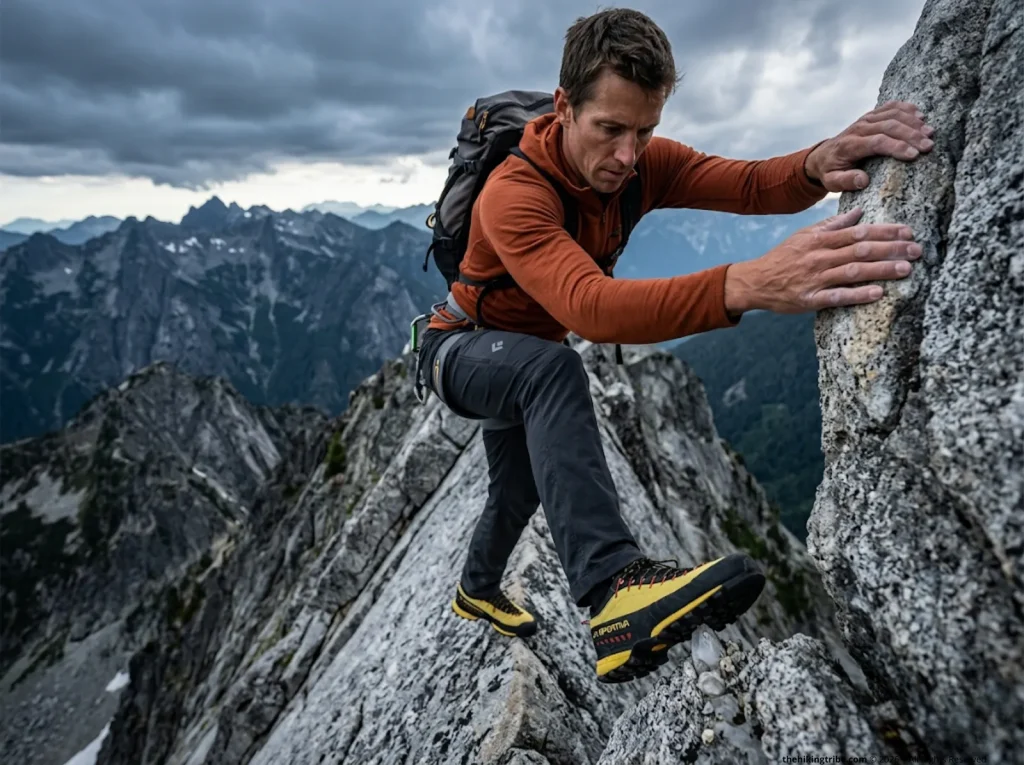
The trail beneath your feet determines exactly how much protection you need. Taking a minimal mesh shoe into an abrasive, off-trail environment invites injury, while bringing a bulletproof winter mountaineering boot to a humid summer walk guarantees miserable, sweaty feet.
Class 2-4 Scrambling: The Edging Factor
When you leave groomed trails and hit steep rock passes, the demands change. Scrambling up Yosemite Decimal System (YDS) Class 3 or Class 4 terrain requires a shoe that will not buckle when you place your weight on a tiny stone ledge. Brands like La Sportiva and Salomon build approach shoes and boots specifically tailored with stiff edges and specialized Vibram Megagrip rubber. If your shoe folds like a taco when you stand on its inside edge, you cannot scramble safely.
The Waterproofing Paradox: Gore-Tex vs. Drainage
Most beginners reach instinctively for waterproof membranes like Gore-Tex (GTX) for all conditions. This is the waterproofing paradox. A GTX membrane protects you in freezing snowy slush and cold rain, keeping hypothermia at bay. But these membranes fundamentally decrease breathability. In hot, dry environments, a waterproof shoe traps your own sweat, effectively boiling your feet and causing massive blister-inducing friction. If you face constant river crossings, a waterproof shoe will flood over the collar and stay saturated for days, inviting trench foot. In wet situations, prioritizing quick-dry capability and drainage holes in hiking shoes allows water to evacuate immediately.
High Brush, Snakes, and Abrasion Resistance
You must match the upper material of your footwear to the environmental hazards you plan to push through. Trekking through dense desert sagebrush or sharp scree fields shreds thin synthetic mesh in hours. Heavy canvas, tough synthetics, or traditional leather construction provide the necessary abrasion resistance. You also gain critical mechanical protection against snake strikes when navigating high grass in rattlesnake territory—always check local wilderness safety protocols before heading into venomous habitats.
Pro tip: If you know your route involves crossing waist-deep rivers on warm summer days, a non-waterproof mesh trail runner that drains immediately is far safer than a heavy waterproof boot that turns into a swampy bucket and never dries out.
The Minimalist Shift: Trail Runners and Sandals
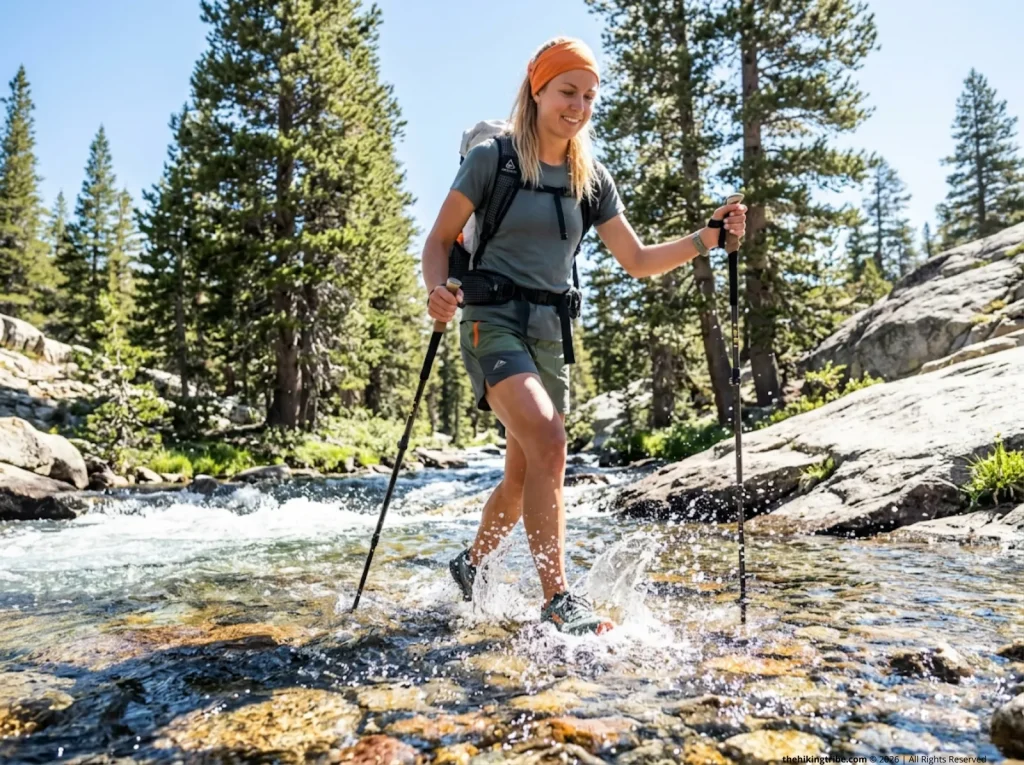
A growing number of long-distance hikers have completely abandoned ankle boots in favor of the minimalist sandal and zero-drop trail shoes. This isn’t just a rugged fashion statement—it’s a calculated shift in body mechanics toward natural foot function.
Zero-Drop Geometry and Toe Splay
Traditional boots elevate your heel above your forefoot, which alters your natural posture and encourages a heavy heel strike. Minimalist footwear embraces a “zero-drop” philosophy, meaning your heel and toes sit perfectly level. This geometry naturally nudges you toward a softer midfoot landing, reducing the pounding impact on your knees. Many zero-drop shoes feature a wide toe box width shaped like an actual human foot. When you combine zero drop hiking shoes with massive toe splay, your toes naturally grip the earth, improving balance and actively fighting the development of bunions.
Building Foot Strength in Hiking Sandals
Moving away from rigid, cast-like boots requires you to engage the muscles, tendons, and ligaments in your feet. When you hike in aggressively treaded sandals from brands like Bedrock, Chaco, or Teva, you strip away artificial support and force your body to adapt. Routine clinical evaluations of minimalist footwear show that habitual use of minimalist shoes can yield up to an 8% increase in native foot muscle volume. You essentially replace the boot’s mechanical support with your own building foot strength.
The 12-Week Achilles Transition Protocol
You cannot pull off traditional boots and tackle a 20-mile peak in zero-drop sandals the next day. Dropping your heel to a level geometry places immense new tension on your calves and Achilles tendons. Rushing the transition period almost always ends in severe Achilles tendonitis. You must condition your lower legs over a strict 12-week protocol.
Pro tip: Do not take new zero-drop shoes or hiking sandals on a multi-day trip right after buying them. Spend at least four weeks wearing them entirely on flat, 30-minute walks around your neighborhood before introducing them to the trail.
The Sock Variable (The Missing Link)
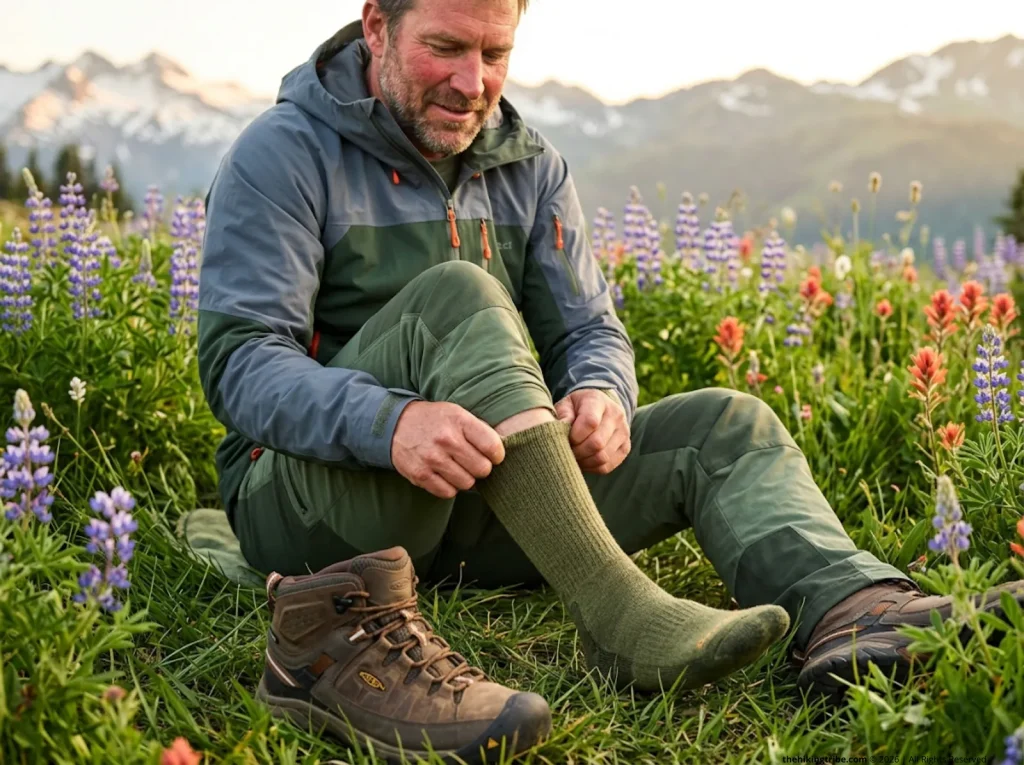
You can spend $300 on top-tier hiking boots and completely ruin the experience by wearing the wrong socks. Socks are not just fabric; they act as a volume-regulating shim, a moisture pump, and your primary defense against rubbing. The socks variable dictates whether you enjoy the woods or hobble out in agony.
Managing Internal Volume and “Slop”
Your shoe’s internal fit changes depending on the thickness of the sock you pull on. Heavyweight socks eat up dead space—perfect if you have a narrow foot inside a roomy boot. If your foot is wide, an ultra-thin sock reduces volume and stops your midfoot from feeling crushed. Relying heavily on socks & insoles prevents internal foot movement, also known as “slop,” which is the direct cause of black toenails on steep descents.
Friction and Blisters: Merino Wool vs. Synthetics
Cotton retains moisture, collapses flat when wet, and causes severe friction. It is a massive trail safety risk. You want fibers that manage sweat effectively. Merino wool can absorb up to 30% of its weight in moisture before it even begins to feel damp against your skin, and it retains insulating heat when wet. Synthetics excel at rapid wicked evaporation but offer varying degrees of insulation. Comparing the materials of merino wool vs synthetic proves that high-quality wool blends drastically reduce the friction that tears your skin.
The Cushion Factor: Sizing the System
A loops-cushioned sock acts as a secondary shock absorber underneath your heel and forefoot. You must treat your boots and your socks as a single integrated unit.
Pro tip: Bring the exact hiking socks you intend to wear on the trail when you visit the gear shop. Testing a heavy leather boot in those thin dress socks you wore to the office guarantees a terrible, sloppy fit. A mid-weight hiking sock can change your necessary boot size by a full half size.
The Decision Flowchart: Matching Tool to Terrain
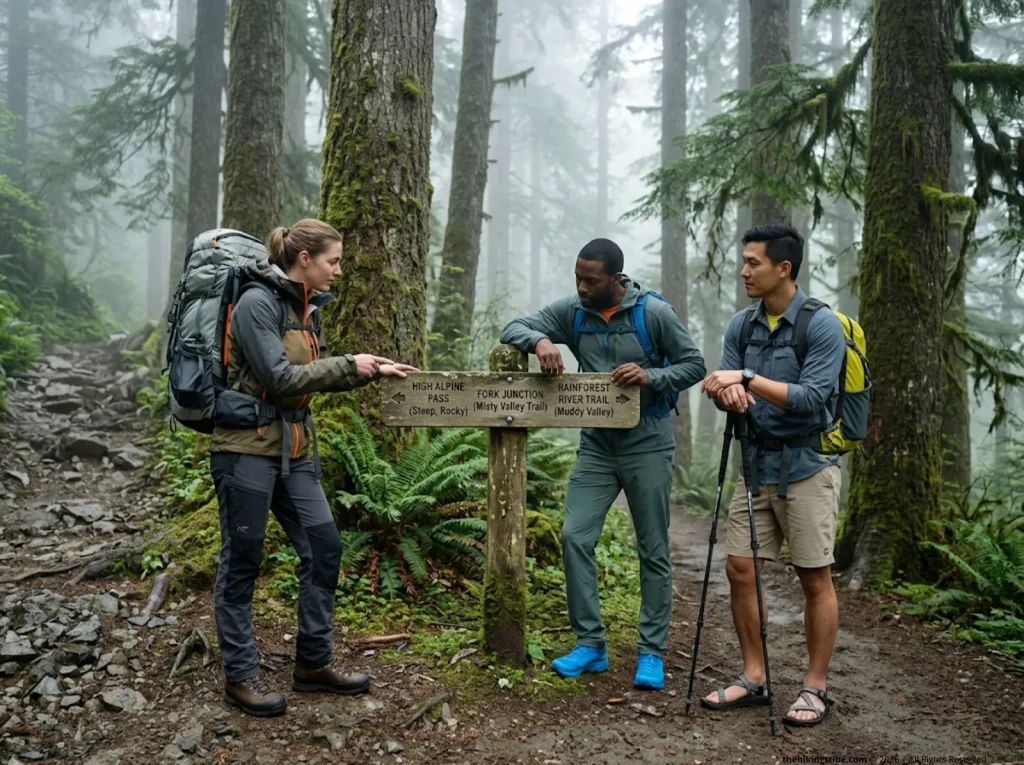
Instead of searching for a universal answer, look at the terrain-to-footwear matrix. Your specific goals mandate specific tools. Building a personal 3-question decision flowchart (Weight, Terrain, Weather) cuts through marketing noise.
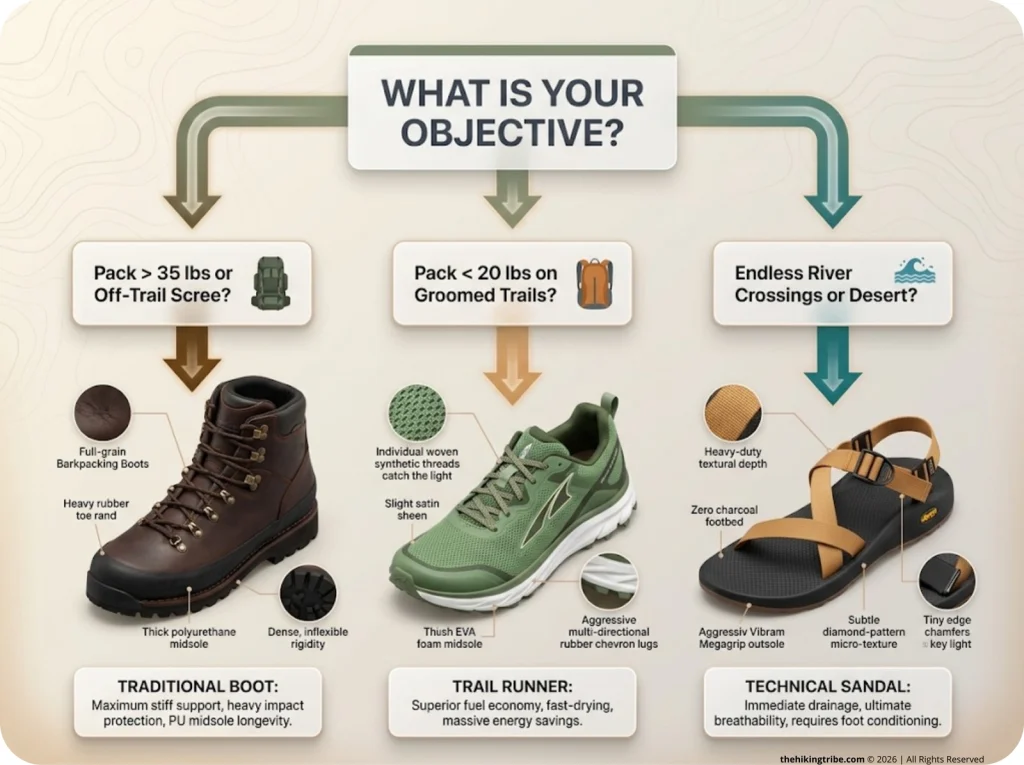
The Heavy-Load Objective (Backpacking Boots)
If you are carrying a 45-pound expedition pack for a week-long elk hunt or crossing vast scree fields full of ankle-busting loose rocks, you need a traditional mid-boot or heavy trekker. Thick PU leather boots provide the stiff mechanical advantage needed to support all that extra mass dynamically. They offer massive protection from heavy impact and sharp snags. If ankle swelling is a concern with these rigid options, review models that prioritize wide toe box hiking boots to accommodate long days.
The High-Mileage Thru-Hike (Trail Runners)
Thru-hikers pushing 25-mile days heavily favor trail runners. Once your pack base weight drops below the 15-pound mark through ultralight backpacking discipline, the massive ankle support and stiffness of a heavy boot provide diminishing returns. Trail runners optimize fuel economy, dry extremely fast when wet, and offer phenomenal grip on packed dirt. Expect to replace them frequently, as trail runners durability is their primary weakness.
The Amphibious Desert Trek (Technical Sandals)
If your objective requires endless water crossings—like hiking the Paria Canyon or the Narrows—waterproof boots are a dangerous liability. Technical hiking sandals with aggressive outsole lugs strap down tight and maintain massive specific terrain grip on wet rock and slick river stones.
Pro tip: Experienced hikers routinely pack two options. It adds base weight, but wearing heavy boots on the steep ascents and switching to feather-light sandals for flat valley floor walks and river crossings provides massive psychological relief at the end of a long day.
Conclusion
The dirt under your feet refuses to compromise for marketing hype or brand loyalty. Take responsibility for your gear. Dial in your sock system based on weather, demand rigid PU midsoles when carrying a brutal 50-pound load, and spend the necessary weeks adapting your tendons if you choose to drop down to a zero-drop shoe. Making smart, deliberate choices here ensures your footwear behaves like a precision tool, rather than an active hindrance.
FAQ
Are beginner hiking boots better than shoes?
Not necessarily. While boots offer mechanical protection from trail debris, they are significantly heavier and require more energy per step. Beginners sticking to well-groomed, flat trails often fare far better in comfortable hiking shoes, saving heavy boots for when they start carrying heavy multi-day packs or entering rugged, off-trail terrain.
Can you actually hike in sandals for serious miles?
Yes, many experienced thru-hikers log hundreds of miles in technical sandals. Modern options feature aggressive outsoles and secure strapping, making them excellent choices for wet routes or desert conditions, provided you have built up your foot strength properly.
Are ankle stability myths true?
Ankle support is not a myth for heavy loads, but it is often deeply overstated for fast day-hiking. A rigid boot shaft definitely prevents your ankle from rolling under the extreme lateral forces of a heavy pack. However, relying entirely on a stiff boot rather than building your own foot and calf strength over time can lead to chronic instability.
Do trail runners last as long as boots?
No, trail runners wear out significantly faster. A premium polyurethane hiking boot can withstand over 1,000 miles of abuse and can often be resoled by a cobbler. Trail shoes rely on soft EVA foam which permanently compresses and loses its shock absorption after 300 to 500 miles, requiring frequent replacement.
I have a wide toe box, should I size up my boots?
Sizing up your footwear solely to get extra width creates dangerous heel slip and instability on downhill sections. You need to seek out footwear built on a specifically wider last that accommodates your natural foot shape, completely separate from the total length of the shoe.

I've spent more than a decade researching hiking gear and trail technique. I read the specs, the forum threads and the long-term reviews, and every pick here comes with what it gets wrong.
End of the trail
You read every mile of this one. Here's where the trail goes next.