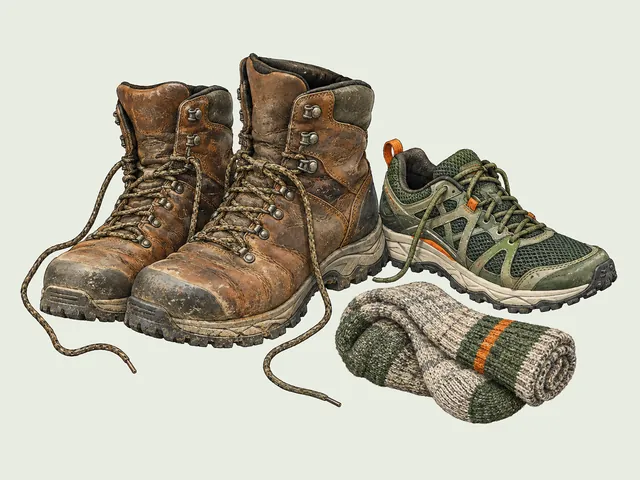
You buy the waterproof version because it seems like the safer choice, then you spend a hot August afternoon in the desert with feet swimming in your own sweat, which is the exact problem you thought you were preventing. That inversion is the whole Gore-Tex breathability trade-off, and it catches good hikers constantly because the marketing language quietly promises something the physics never agreed to. Look at what the community actually does over the long haul: the Altra Lone Peak, a non-waterproof trail runner, has been the most-worn shoe on the Appalachian Trail every year since 2017 according to annual thru-hiker surveys, on one of the wettest long trails in the country. This article breaks down how the membrane really works, when waterproof genuinely wins, how to map the choice to the climate where you actually hike, and the two-pair answer most hikers land on eventually.
What Breathable Actually Means Inside a Gore-Tex Shoe
Everyone who has ever complained that their expensive membrane shoes “don’t breathe” is half right. They do breathe. They just do not vent, and those two words describe completely different physical processes that happen to share a marketing vocabulary.
The Pore-Size Trick That Makes a Membrane Work
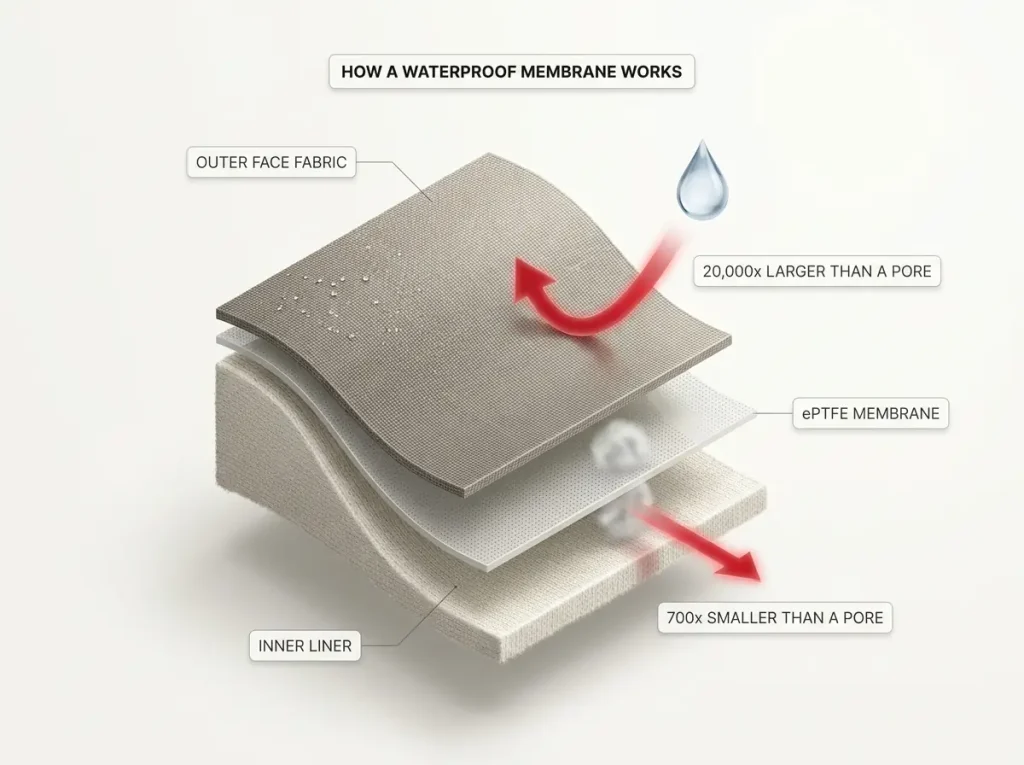
The ePTFE membrane at the center of a Gore-Tex shoe, short for expanded PTFE, carries roughly nine billion microscopic pores per square inch. Membrane pore size is the entire invention: each pore is about 20,000 times smaller than a raindrop and about 700 times larger than a single water vapor molecule. Liquid water arrives as a droplet held together by surface tension and cannot squeeze through; sweat that has already evaporated arrives as loose individual molecules and can.
Everything else in the shoe is built around protecting that thin sheet. In waterproof bootie construction, the outer face fabric shields it from abrasion, the inner liner keeps your sock from rubbing it raw, and the seams get taped so water cannot sneak around the edges. If you want the full picture of how the rest of the shoe’s construction layers work together, the membrane is only one layer in a stack that also has to handle cushioning, traction, and torsional support.
Breathability and Ventilation Are Not the Same Word
Waterproofness and breathability are measured by two entirely separate lab tests. Waterproofness is rated by hydrostatic head, the column of water in millimeters a fabric holds back over 24 hours. Breathability is rated by moisture vapor transmission rate, how much water vapor passes through a set area in a set time. A shoe can post excellent numbers on the first test and still feel swampy on your foot, because those numbers are not describing the same thing.
Ventilation is a third idea nobody puts on a spec sheet, and the honest name for it is air permeability. A mesh upper lets air physically move through the shoe, carrying heat and moisture with it. A membrane has none of it.
It transfers vapor slowly, one molecule at a time, in one direction. That transfer is real and useful, but it is orders of magnitude slower than a breeze passing through open mesh.
Why the Gradient Disappears on a Hot Climb
Here is the part the marketing skips. Vapor only moves outward when there is a difference in temperature and humidity across the membrane. Cool dry air outside, warm humid foot inside, and the system works well. Hot humid air outside, hot humid foot inside, and there is almost no vapor pressure differential left to push anything anywhere.
The membrane has not failed. The conditions simply removed its power source.
This is a category property, not a Gore-Tex defect. Newer PFC-free ePE membranes face the same physics, and so do eVent, FUTURELIGHT, Outdry, and KEEN.DRY. Any waterproof-breathable system depends on that gradient, which means every one of them gets quiet on a hot exposed climb at noon.
Why the Answer Is Different for Low-Cut Shoes Than for Boots
Most of the argument you find online about waterproof hiking shoes is secretly about hiking boots. That matters, because a low-cut shoe changes both halves of the equation: how water gets in, and how heat gets out. If you are still picking between low-cut shoes and boots in the first place, settle that question before you worry about membranes, because the answer flips depending on which you choose.
The Collar Height Changes Where Water Gets In
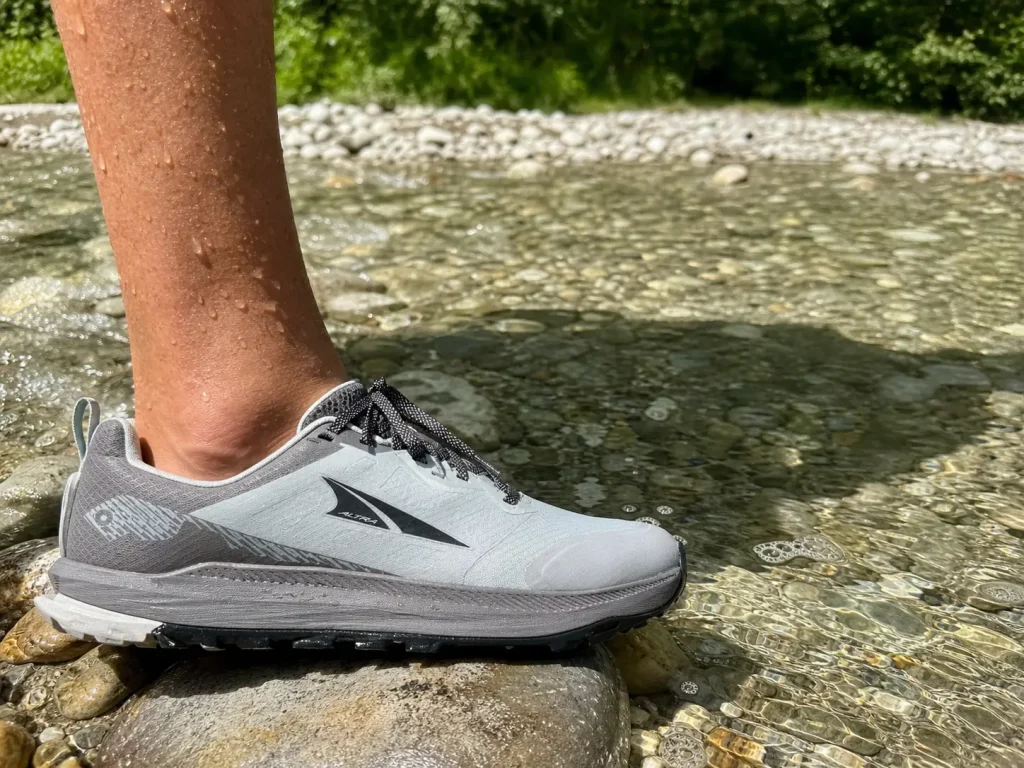
A low-cut collar sits below the ankle bone, which makes it a very short wall. Ankle-deep water tops it, so splash protection is really all you get, and full submersion defeats the shoe outright. Wet grass at calf height drips straight down into it.
A splash from a hasty rock hop goes right over the edge. And the moment water is inside a waterproof shoe, the membrane stops being your ally and starts being a container: the same barrier that kept water out now holds it in against your sock.
That is why the drainage argument carries so much weight in this category. On trails with repeated crossings, shoes built to drain instead of hold water often outperform a sealed shoe that fills once and stays full for the rest of the day.
Less Upper Means Less Room to Breathe
There is also simply less shoe. A low-cut upper has meaningfully less surface area than a mid or high boot, which means less membrane through which vapor can escape. The breathability ceiling of a low-cut waterproof shoe is lower than the same technology in boot form, even though the technology is identical.
What Boot-Based Advice Gets Wrong Here
People pick low-cut shoes for reasons that fight directly with a membrane. They want less weight, a faster foot, more miles per day, better ground feel. All of those things generate more sweat per hour than a slow, heavy, boot-paced hike does.
So the shoe with the least capacity to move moisture is handed the hardest sweat management job, and trapped heat is the result you feel first. Gaiters close part of this gap, which is why the sock and gaiter system later in this article matters more for a low-cut shoe than it ever would for a boot.
The DWR Layer Is What Actually Decides If Your Shoe Breathes
Almost every “my Gore-Tex stopped working” story is not a membrane story. It is a story about a treatment on the outside of the shoe wearing off, and the fix costs about as much as a sandwich.
The Beading Test You Can Run in the Driveway
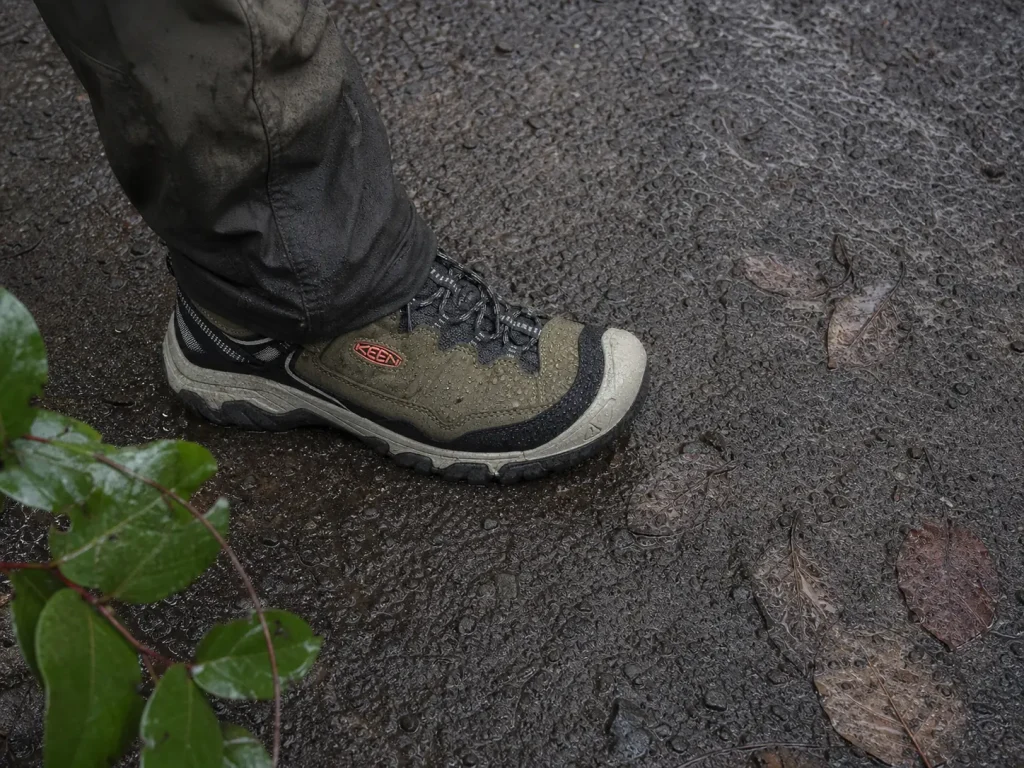
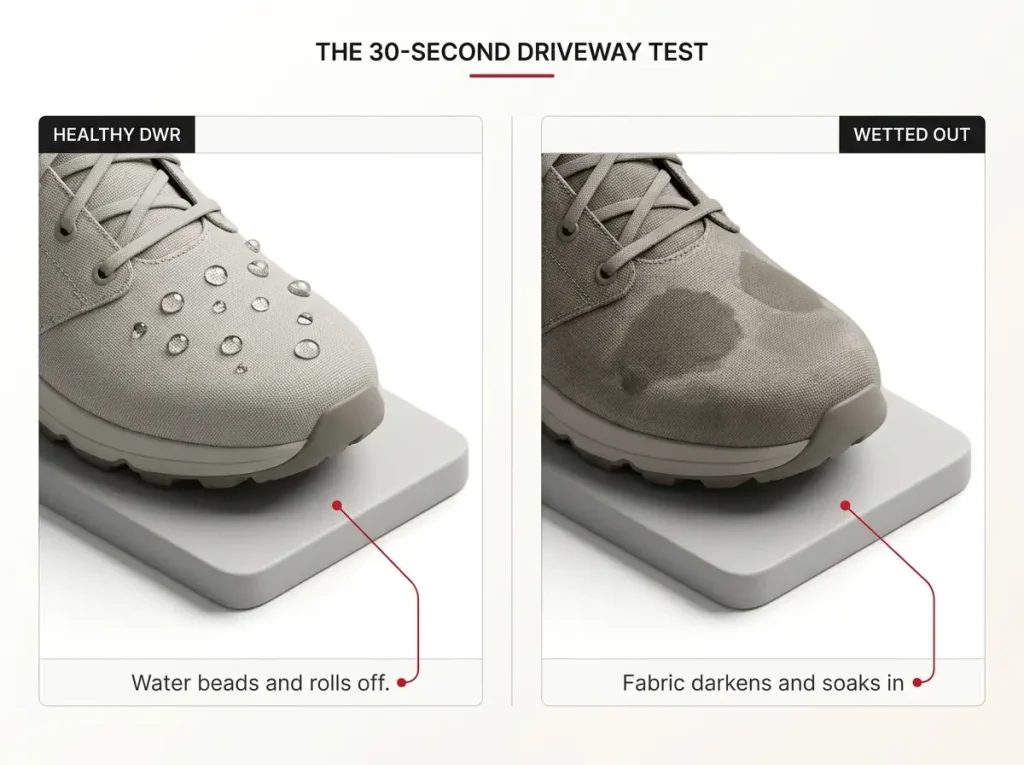
DWR, short for durable water repellent, is a finish applied to the outer face fabric. When it is healthy, water hits the shoe and pulls itself into tight beads that roll off. When it fails, water stops beading, spreads flat, and darkens the fabric as it soaks in. That visual change is the single most useful diagnostic in this whole topic, and you can run it at the kitchen sink in thirty seconds.
The important part is the timing. DWR failure shows up long before the shoe actually leaks. Your feet can still be dry while the breathability has already collapsed, which is exactly why so many hikers never connect the two events.
What Wetting Out Does to Breathability
Hikers call this wetting out. Once the face fabric saturates, the shoe gets heavier, loses insulating value, and stops transferring vapor, even though the membrane underneath is still blocking liquid water perfectly. The mechanism is simple: a soaked outer fabric erases the humidity gradient the membrane depends on.
The membrane is fine. The road out is flooded.
Run the beading test before a trip, not after. Rinse the shoe under a tap in the driveway and watch the toe box. Tight beads mean you are good. A dark spreading stain means your shoe already stopped breathing, and you have time to fix it tonight instead of finding out at mile six.
Reproofing Without Wrecking the Membrane
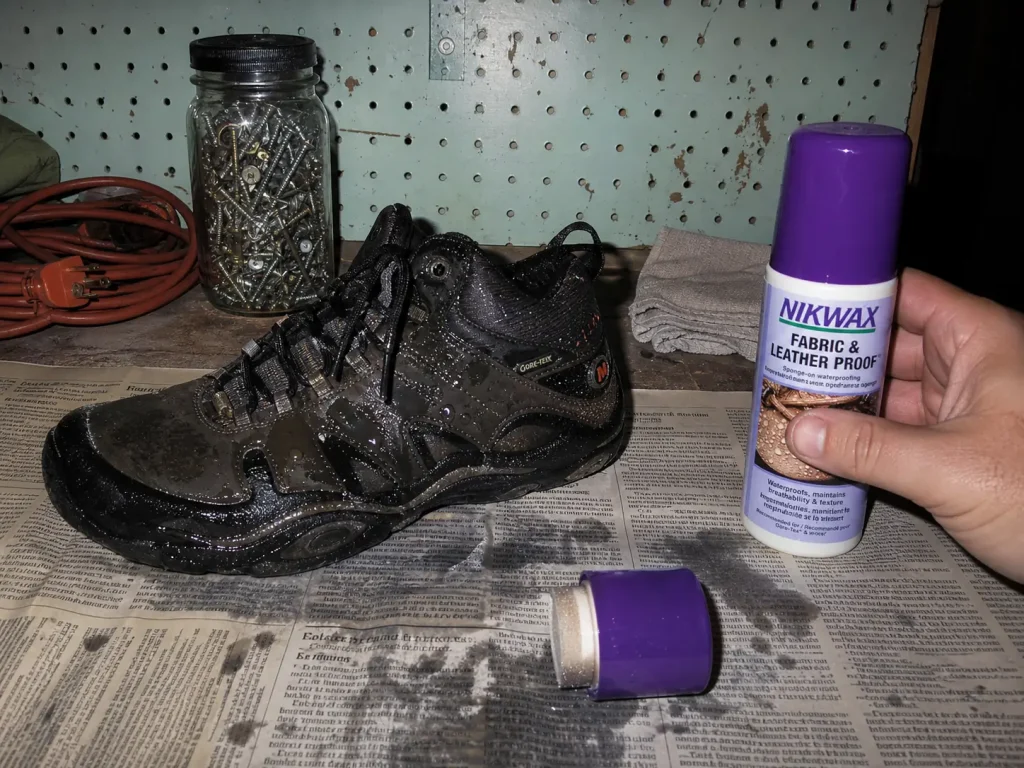
DWR reapplication restores the face fabric’s water shedding and, along with it, the breathability. Clean the shoe first, because dirt and skin oils block the treatment from bonding. Apply while the shoe is still damp if the product calls for it, work the treatment into the seams and the flex creases where wear concentrates, and let it dry per the label rather than parking the shoe next to a heater. Nikwax Fabric and Leather Proof handles mixed leather-and-mesh uppers, which is what most low-cut hiking shoes actually are, and it is a budget-friendly way to buy your current pair another season.
Worth knowing: the same laundry habits that strip DWR off a rain jacket do it to footwear too. Detergent residue is the usual culprit, and the washing habits that strip DWR off your gear faster than the trail does apply to every waterproof-breathable item you own.
Dry Time Is the Cost Nobody Puts on the Spec Sheet
Waterproof shoes rarely fail by leaking. They fail by getting wet from the top or from the inside, and then refusing to dry before you need them again.
What the Lab Numbers Actually Say
Lab testing published by Backpacker put real numbers on this. After full saturation, waterproof shoes took roughly four to six and a half hours to air-dry, about two hours longer than non-waterproof mesh shoes under the same conditions. Two hours does not sound like much until you understand where those hours land.
Why the Membrane Slows Drying Both Directions
A membrane is not directional in any way that helps you here. It restricts liquid crossing in either direction, so water trapped inside leaves the same slow way sweat vapor does. Add a saturated face fabric on the outside, which is what happens when a shoe gets fully soaked, and the exit path is choked from both sides at once. Mesh, by contrast, drains most of the water out immediately and then lets air move through the rest.
On a day hike, this is an inconvenience you forget by dinner. On a multi-day trip, it is a planning problem: shoes that do not dry overnight mean starting day two with wet feet, and wet feet are where blisters begin.
Camp Habits That Cut Dry Time
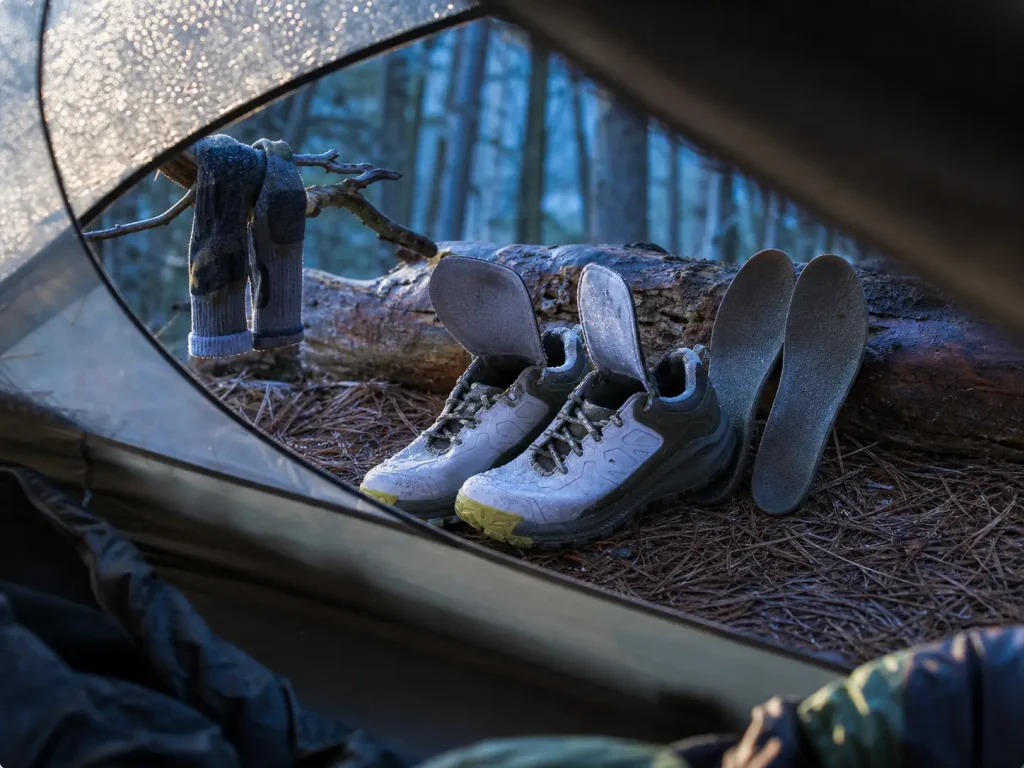
The fastest wins are mechanical, not technological. Pull the insoles completely and stand them separately so both faces get air. Open the tongue as wide as it goes, the same trailside venting habit that pays off at every rest stop. Point the shoes so any prevailing breeze runs into the opening rather than across it.
If there is sun in the morning, move them into it before you make coffee. Stuffing them with dry cloth pulls moisture out faster than airflow alone, and swapping that cloth once doubles the effect.
Do not wait for camp. At every lunch stop on a wet or hot day, loosen the laces to the second eyelet and pull each insole halfway out while you eat. Twenty minutes of that starts the drying process hours earlier, and it costs you nothing you were not already spending sitting down.
If your shoes come into camp genuinely soaked, the overnight drying methods that won’t cook the membrane matter, because the fastest-looking option, direct heat, is the one that delaminates a membrane and warps a midsole.
Waterproof or Breathable, What Your Actual Conditions Call For
Stop asking which shoe is better and start asking what the weather is doing on the days you actually hike. The framework is short, and it settles most of the argument in about a minute.
When the Membrane Earns Its Keep
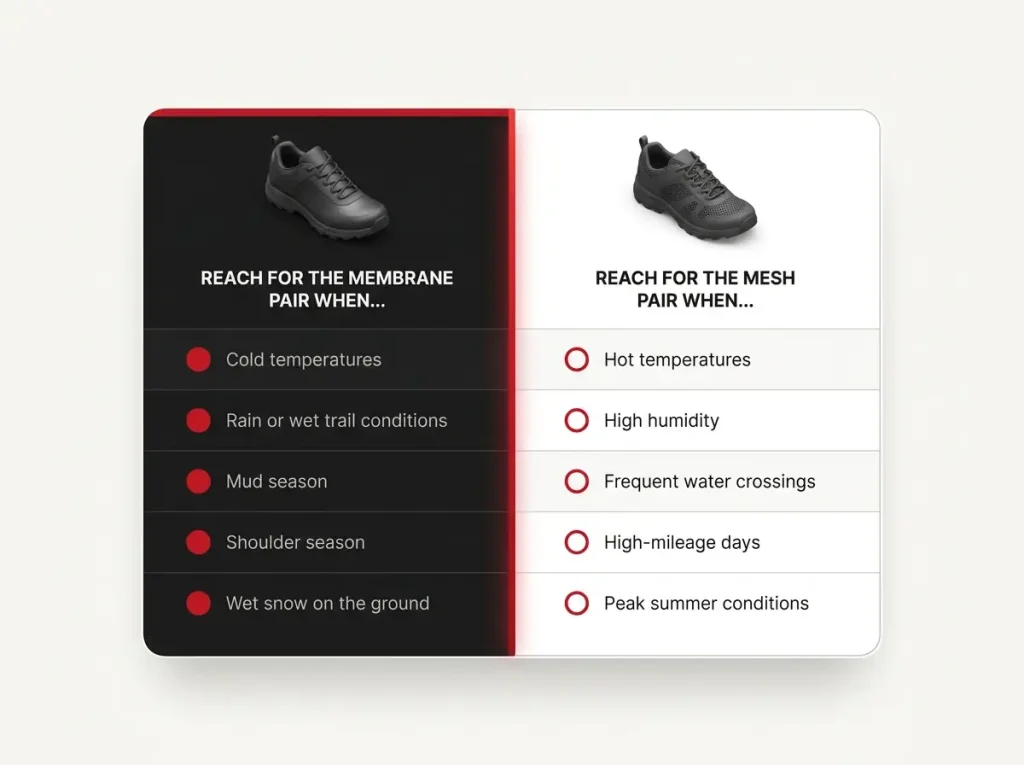
Waterproof wins in cold, wet, muddy trails, mud season, shoulder season, wet snow, and a rainy climate. The common thread is temperature. When it is cold enough that a soaked foot becomes a cold foot instead of just a damp one, keeping water out matters more than moving sweat out, because you are not generating that much sweat anyway. That is also the condition where the gradient is strongest, so the membrane is doing its best work exactly when you need it.
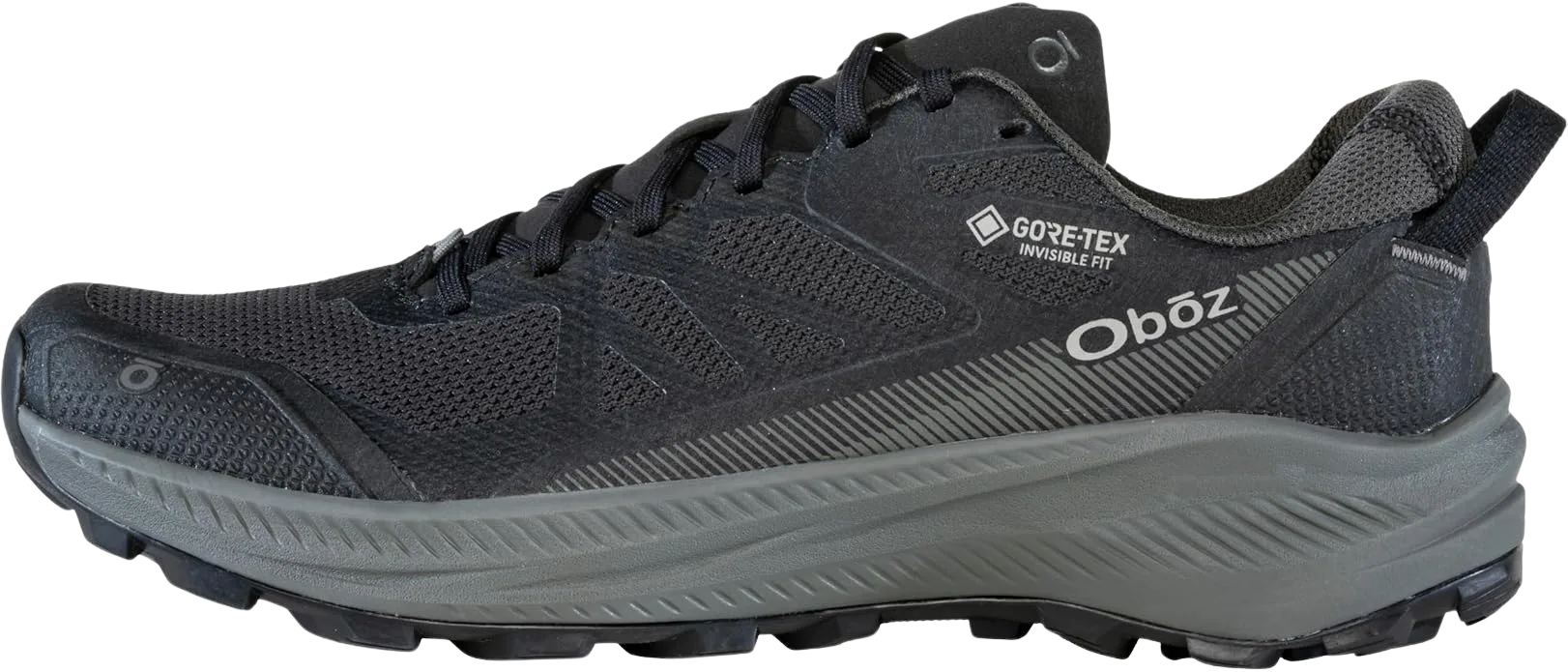
The Oboz Katabatic Low B-DRY is a useful reference point because it is unremarkable in the best way: a mid-priced, low-cut, membrane-equipped shoe of the kind most hikers actually end up owning. Nothing about it defeats the physics described above. It simply executes the waterproof side of the trade-off competently, which is all you should be asking a shoe to do. If you want a different brand’s last, the KEEN Targhee 4 Low WP (men’s · women’s) runs the proprietary KEEN.DRY membrane in a roomier toe box, which suits hikers whose feet spread out on long days.
For readers who have already decided the membrane is right for their conditions, there are more men’s low-cut waterproof options compared side by side and a separate roundup of the women’s waterproof low-cut picks. If you hike in the Pacific Northwest specifically, Washington Trails Association’s footwear guidance for PNW conditions is written by an organization that deals with sustained rain as the normal state of the world.
When Mesh Is the Faster, Drier Choice
Non-waterproof hiking shoes win in heat, in high humidity, at high exertion, on trails with frequent water crossings, and on long mileage days when sweat volume outruns anything a membrane can move. A synthetic upper with open mesh panels is the whole advantage. The tiebreaker is effort, not just air temperature. A hard 2,000-foot climb at 70°F produces more sweat than a flat walk at 85°F, and the shoe cannot tell the difference between sweat and rain. It only knows there is water it has to move.
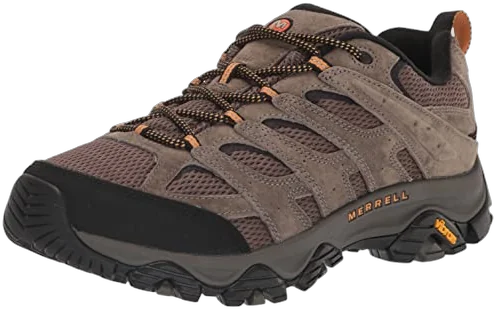
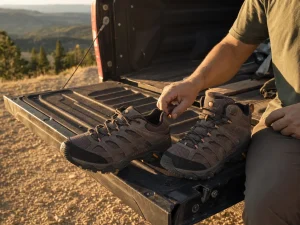
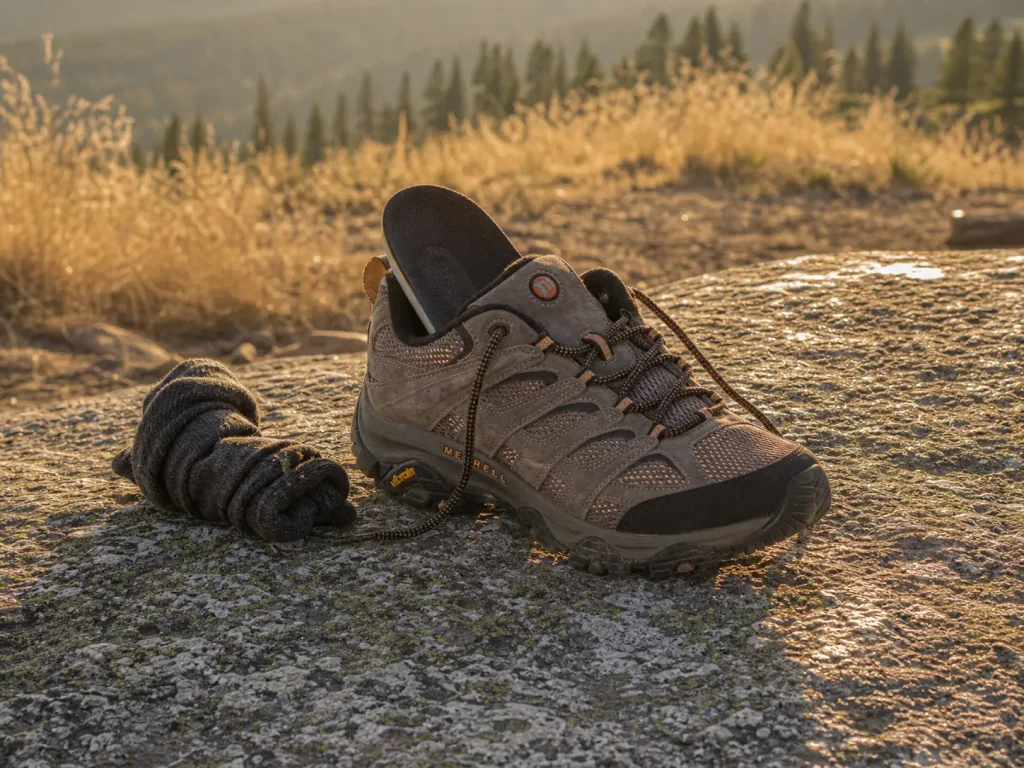
The Merrell Moab 3 is the control group in this experiment. It shares its silhouette, midsole, and outsole with the membrane version, so when you compare the two you are comparing exactly one variable: the upper. That is rarer than it sounds, and it is why this pairing explains the trade-off better than any spec sheet.
The Same Shoe With and Without a Membrane
If you want to see both sides of the same platform, the Merrell Moab 3 GTX Low-Cut is the Gore-Tex sibling of the mesh version above. Note that the live listing here is the women’s model; the men’s low-cut GTX version of this shoe is not currently available, so treat this as the women’s option rather than a pair. Holding both versions in your hands is genuinely instructive, because the difference is a single fabric layer that changes almost everything about how the shoe behaves after hour three.
Mapping the Trade-Off to Where You Actually Hike
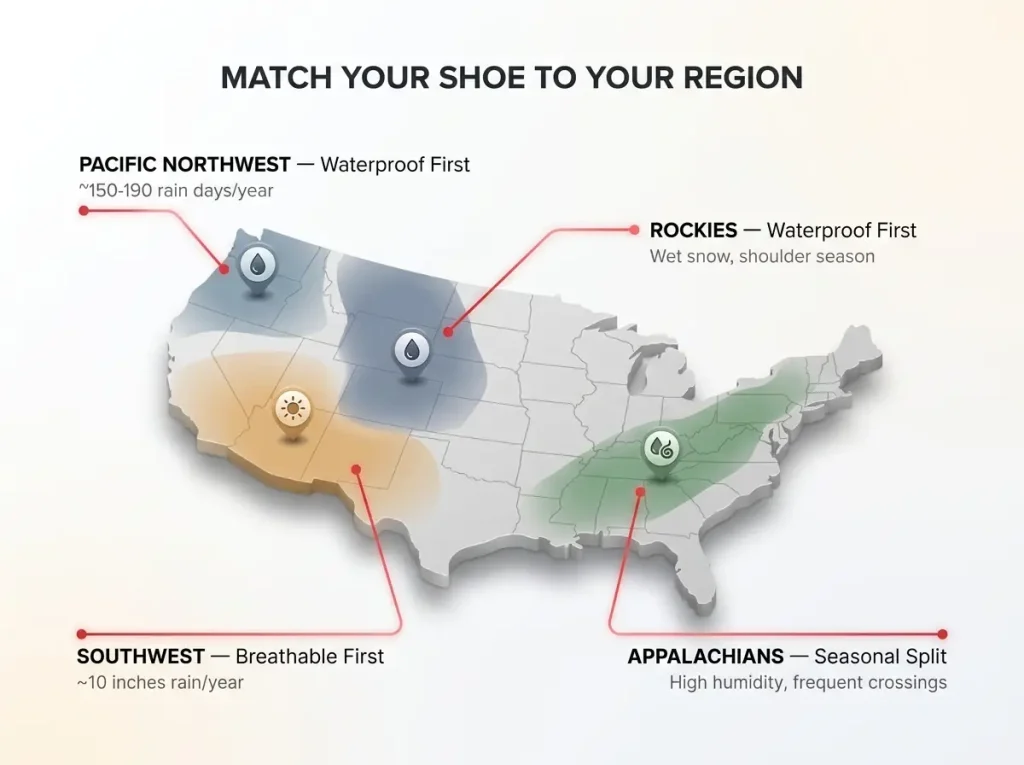
Generic advice says it depends on conditions. Fine, but you hike in a specific place, on most of your free weekends, in a fairly predictable climate. Start there instead of preparing for the trip you take once every four years.
Pacific Northwest and Sustained Rain
NOAA’s climate normals for the region put measurable rainfall on about 150 days a year in the interior valleys of the Pacific Northwest, and closer to 190 days in the mountains and along the coast. That is not a season of rain, that is a way of life. Waterproof is the sensible default here, and the dry-time penalty is worth paying, because the alternative is starting every hike with wet feet instead of ending some of them that way.
The catch is that PNW rain is usually cool. That works in your favor: the temperature gradient stays strong, so the membrane keeps transferring vapor rather than going quiet the way it does in heat.
Southwest Heat and Low Rainfall
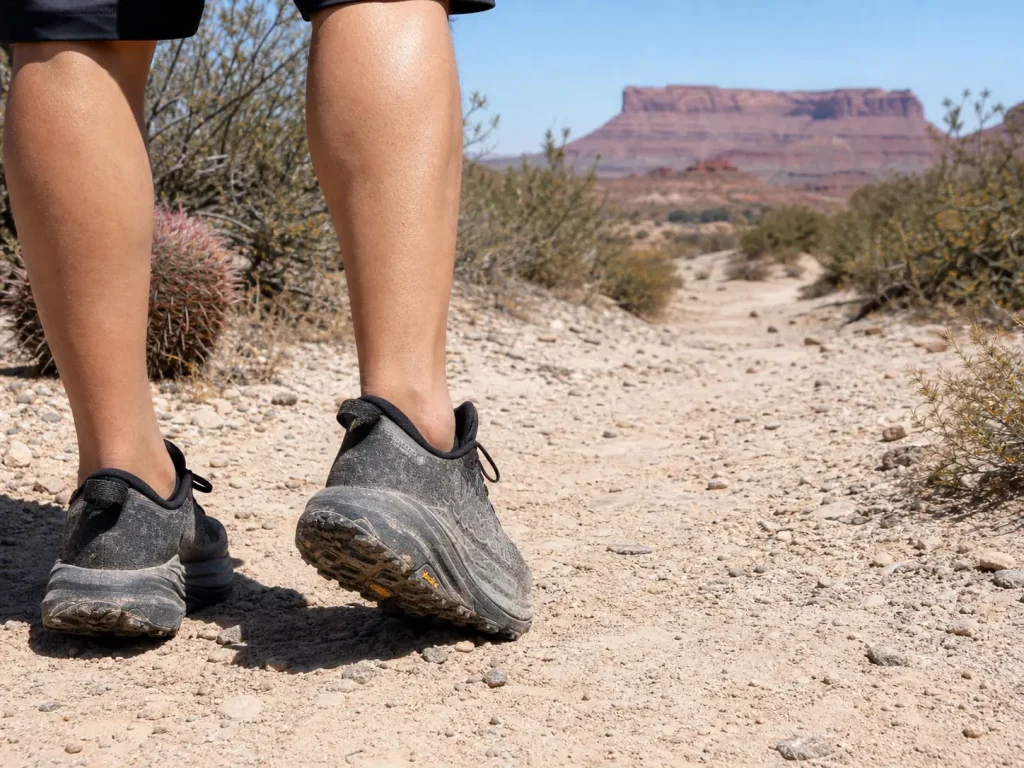
Southwest desert regions average roughly ten inches of rain a year or less. A membrane in that dry climate is solving a problem that mostly does not exist while adding heat you will absolutely feel, which is why desert hiking is the clearest case against one. The rain you might encounter comes in short monsoon bursts that soak you through the collar anyway, and then evaporates off a mesh shoe in an hour.
If you hike hot, dry, and long, a cushioned trail runner is the more honest tool. The HOKA Speedgoat 6 (men’s · women’s) is a premium option in that mold, with a breathable mesh upper and enough stack height to keep long desert miles from beating up your feet. There is no membrane in the way, so heat leaves the shoe as fast as your foot produces it.
Appalachian Humidity Where Everything Gets Wet
The Appalachians are the climate where the conventional wisdom breaks hardest. Humidity is high, rain is frequent, crossings are constant, and your feet are getting wet no matter what is on them. Once wet is inevitable, the question shifts from which shoe keeps water out to which shoe recovers fastest. That is a race a mesh shoe wins by roughly two hours, every time.
This is precisely why thru-hikers on the Appalachian Trail have drifted so decisively toward non-waterproof trail runners. It is not a fashion. It is thousands of people solving the same problem the same way over multiple seasons.
Rockies Shoulder Season and Wet Snow
Shoulder season in the Rocky Mountains is the strongest waterproof case in the country. Wet snow, slush, cold mud, and afternoon temperatures that swing thirty degrees mean your foot can go from sweaty to genuinely cold in the time it takes to reach a ridge. In that setting a soaked foot stops being a comfort complaint and starts being a real problem, and a membrane earns every gram it costs.
The Two-Pair Strategy Most Hikers Land On Eventually
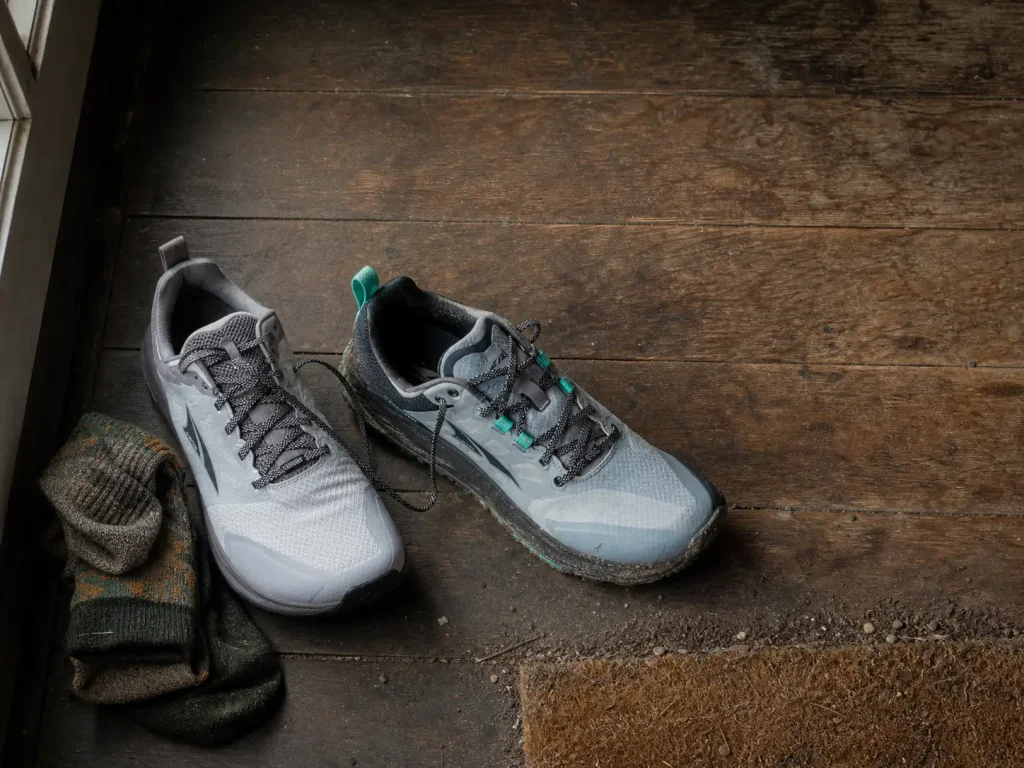
Every experienced hiker eventually stops hunting for the one shoe that handles everything and just owns two. The whole trick is knowing which one to buy first.
What Each Pair Is Actually For
The two-pair strategy is not a compromise, it is the correct answer for anyone who hikes across more than one season or region. One membrane pair covers cold, wet, mud, shoulder season, and snow. One breathable non-waterproof pair covers summer heat, humidity, high exertion, and trails with frequent crossings. You choose per trip based on the forecast and the terrain, not once per lifetime based on a product review.
There is a side benefit nobody mentions. Rotating two pairs extends the life of both, because midsole foam recovers between uses and neither shoe spends every single outing soaked and compressed. A second pair often ends up costing less over three years than replacing one over-used pair twice as often.
Which Pair to Buy First
Buy the pair that matches the majority of the days you actually hike in a normal year. Not your most dramatic trip, not the alpine traverse you are training for, the ordinary Saturday. Go back to the regional section above, count roughly how many of your hiking days fall into wet-and-cold versus hot-and-dry, and let the bigger number decide.
Then plan the second pair around the trips the first one handles worst. If you are already thinking in terms of multi-day trips, low-cut shoes chosen with a day-two wet-shoe plan in mind is the right frame, because a two-pair setup at home does nothing for you at a backcountry campsite.
When the forecast is genuinely ambiguous, default to the breathable pair and manage the water instead of the sweat. You can dry a mesh shoe at lunch and change socks. You cannot un-trap sweat inside a membrane once the day turns hot, and that is the failure mode that ends hikes.
The Same Model in Both Membranes
Plenty of popular models are sold in both versions, which makes building a two-pair setup easy. The Altra Lone Peak 9 is the non-waterproof original, a zero heel-to-toe drop, wide-toe-box trail runner that annual thru-hiker surveys have ranked as the most-worn shoe on the Appalachian Trail every year since 2017. The Altra Lone Peak 9 Waterproof Low is the same platform with a membrane added. Both membranes are made in men’s and women’s versions, though at the moment the live Amazon listings happen to be the men’s non-waterproof and the women’s waterproof, so check which variant you are looking at before you order.
Running the same model in both membranes means one fit, one break-in feel, one set of expectations. Your foot does not have to relearn a shoe just because the weather changed.
Field Tells That Your Shoe Has Stopped Breathing
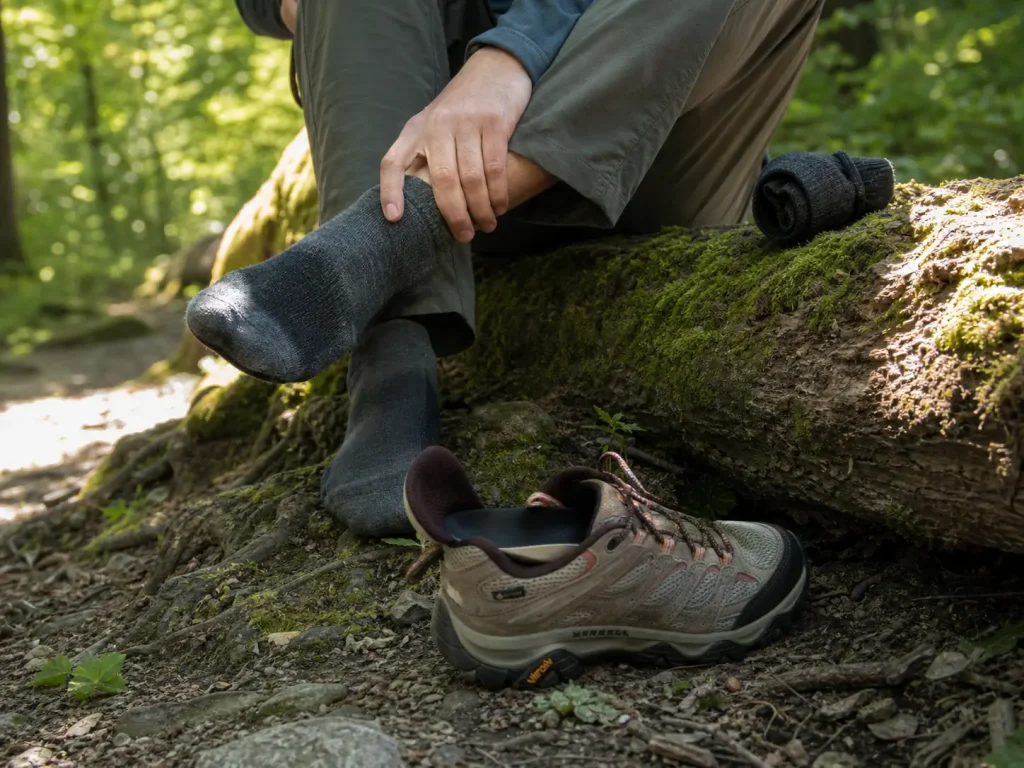
This is the part a hiking partner tells you at the lunch stop, not the part the spec sheet covers. Knowing it is going wrong while there is still time to act is worth more than any membrane rating.
Reading the Beading
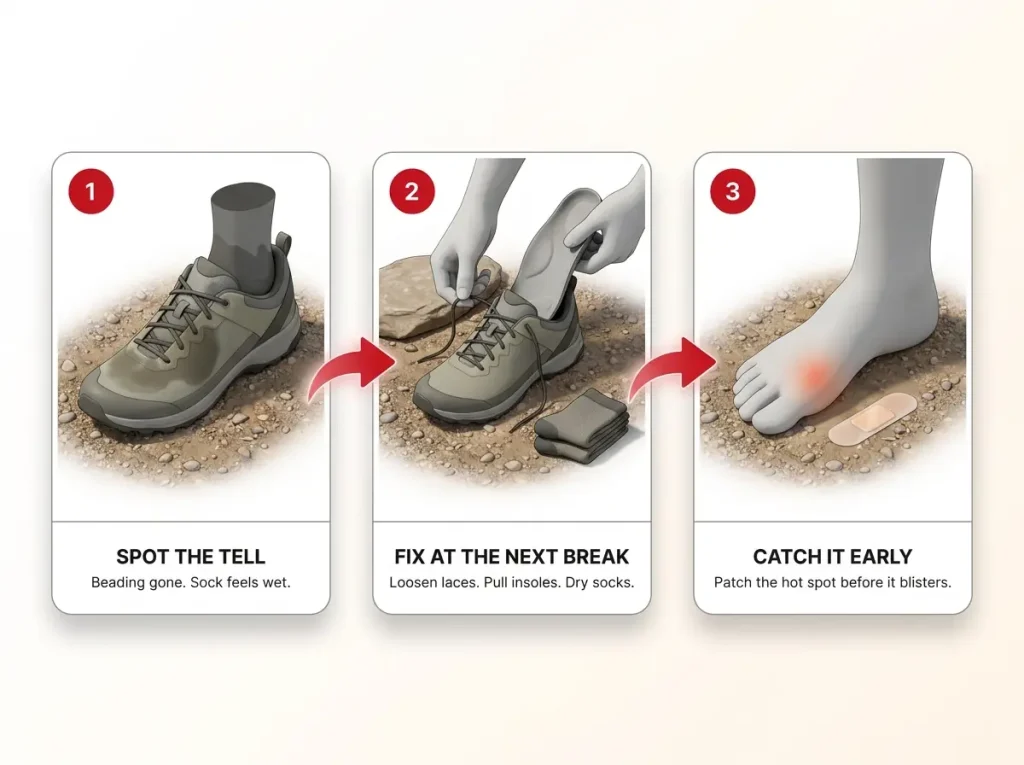
Tell number one is the beading test run in the field. Water stops sitting up in droplets and starts spreading and darkening the upper. The moment you see that, breathability is already gone, even though nothing has leaked yet. On a multi-day trip this is your cue to be aggressive about venting at every break, because the shoe is no longer helping.
Wet Socks on a Dry Day
Tell number two is simpler and people ignore it constantly. Peel your sock off at a break on a day with no rain and no crossings. If it is wet, that is sweat with nowhere to go.
Not humidity, not condensation from the grass, just your own moisture stuck inside a container. A mesh shoe on the same day would have moved most of it out.
Hot Spots and the False-Confidence Mistake
Tell number three is the one that actually ends trips. A warm, tender, reddish patch on your foot is a hot spot, and it is the stage before a blister. According to the American Hiking Society’s own blister-prevention guidance, wet socks and poorly fitted footwear are the leading causes of blisters, with the hot spot as the warning sign. Trapped sweat inside a waterproof shoe delivers both halves of that recipe at once: a permanently damp sock and a foot that swells and shifts inside the shoe as it heats.
The compounding problem is false confidence. Hikers push pace and add miles in a waterproof shoe on a hot exposed climb precisely because the shoe feels like it is handling everything. It is handling the rain. It is not handling the sweat, and by the time your foot tells you, the damage is already there.
What to Do at the Next Break
None of these tells are useful unless you act at the next stop instead of the next trailhead. Loosen the laces fully and pull each insole halfway out. Change into a dry pair of socks, which resets the entire moisture system in about ninety seconds.
Put a piece of tape or a blister patch on the hot spot while it is still just warm, not after. Stopping at the hot spot costs you five minutes; stopping at the blister can cost you the rest of the trip.
Socks, Gaiters, and Fit Do Half the Breathability Work
You can spend a lot on the shoe and undo all of it with the wrong socks. The cheapest breathability upgrade most hikers can make has nothing to do with the membrane.
Sock Material Is the Multiplier
Merino wool socks and technical synthetics are the moisture-wicking socks that move sweat away from skin and keep insulating when damp. Cotton socks do the opposite: they absorb sweat, hold it against your foot, and stay heavy and cold until they dry. Put a cotton sock inside a premium membrane shoe and you have effectively cancelled the shoe.
Rotation beats material quality on its own, though. A fresh pair at midday resets everything, which is why experienced hikers carry spares even on day hikes. Building a sock rotation that actually keeps up on multi-day trips is a small logistical habit with an outsized payoff. If your feet run hot regardless of what you wear, socks built specifically for feet that run hot use thinner knits and higher synthetic content to move moisture faster.
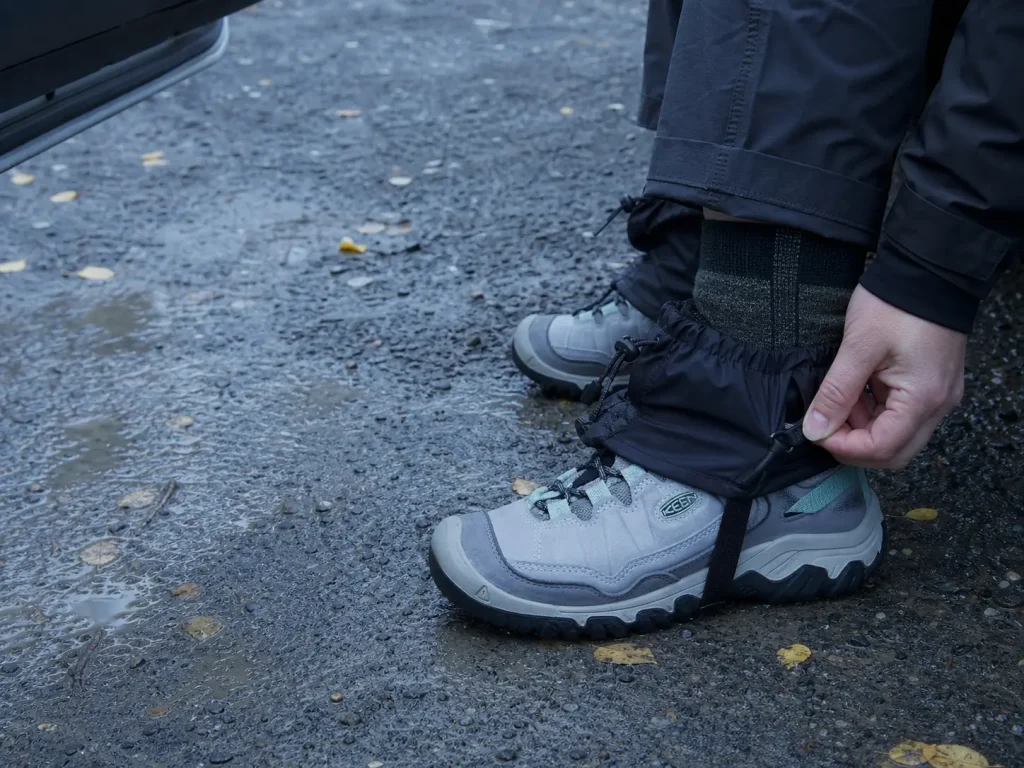
Gaiters Close the Low-Cut Gap
Gaiters matter more on a low-cut shoe than on a boot, because they close the exact gap the short collar leaves open. Wet grass, loose scree, dust, and splash all enter over the collar, and a low trail gaiter keeps the shoe’s interior dry so the membrane never has to fight water it should never have met in the first place. Since most gaiter sizing charts assume boots, sizing gaiters to a low-cut shoe rather than a boot is worth getting right before you buy.
Fit, Foot Swell, and Airflow
Fit is a breathability variable too, and it is the one hikers overlook. A shoe laced too tight compresses the sock, shuts down what little air movement exists around the foot, and traps heat against the skin. Foot swelling over a long day is real and noticeable, so a snug morning fit turns into a hot, blister-prone afternoon fit without you changing anything.
Lace for the morning, then loosen at the first break when your feet have expanded. It costs nothing and it prevents the exact condition that turns a warm foot into a hot spot.
Bringing It Together
A membrane blocks liquid water and passes vapor, but only while a gradient exists. On a hot, hard day that gradient disappears, breathability goes quiet, and you feel every bit of it.
Match the shoe to the days you actually hike, not to your worst-case trip. Regional climate settles this argument faster than any spec sheet, and for most people the honest count of wet-cold days versus hot-dry days points clearly one direction.
If you hike across seasons, own two pairs and choose per trip. That is the answer, not a compromise, and it costs less over time than wearing one pair into the ground twice as fast.
Before your next trip, run the beading test on the pair already in your closet. Thirty seconds at the kitchen sink tells you whether you need a new shoe or just a bottle of reproofing treatment, and the answer is usually the cheap one.
Frequently Asked Questions
01Does GORE-TEX make shoes less breathable?
Yes, compared with an open mesh upper a Gore-Tex shoe moves moisture far more slowly, because vapor transfer replaces actual airflow. The membrane is breathable by lab measurement, but that transfer depends on a temperature and humidity gradient, so in heat it slows to almost nothing.
02Do GORE-TEX shoes make your feet sweaty?
They do not create sweat, but they make it much harder to get rid of. In heat, high humidity, or hard climbing, sweat output beats the membrane’s vapor transmission rate and the moisture pools in your sock instead of leaving the shoe.
03Is it worth getting GORE-TEX hiking shoes?
It is worth it if you regularly hike in cold, wet, muddy, or shoulder-season conditions, and usually not if you hike mostly in heat or cross water often. Map it to the climate where you hike most weekends rather than your most extreme trip.
04How breathable is GORE-TEX really?
Breathable enough to matter in cool weather and nowhere near enough to feel like mesh in hot weather. Breathability here is measured as vapor transmission, not airflow, so a Gore-Tex shoe never vents. It passes moisture outward slowly when conditions allow.
I've spent more than a decade researching hiking gear and trail technique. I read the specs, the forum threads and the long-term reviews, and every pick here comes with what it gets wrong.
End of the trail
You read every mile of this one. Here's where the trail goes next.