










You are shopping for the best hiking boots for narrow feet, the salesperson says a pair “runs narrow,” and three miles later the heel is lifting on every climb. When a boot “runs narrow,” that usually describes only the forefoot. Unless the midfoot and rearfoot are narrow too, the fit can still end in blisters.
Fit comes down to zones of the foot more than brand names. So this guide starts with finding which part of your foot is narrow, then matches the models you can actually buy, then covers sizing, the size-up trap and the checks that save a return. Here are the three carded models in one glance.
| Model | Where it tends to fit narrow | Watch out for |
|---|---|---|
| La Sportiva Nucleo High II GTX | Narrow and small in fit, so it suits narrow feet | The regular Nucleo can feel too narrow for a wide toe |
| Salomon X Ultra 5 Mid GTX | Narrow and long in fit | Other Salomon models can feel narrow at the midfoot, so fit varies model by model, not brand-wide |
| LOWA Renegade EVO GTX Mid (men’s) | The Renegade can be genuinely narrow | The women’s listing was not a clean match on Amazon; check women’s sizing at the maker or a store |
These are the models with a buyable pair on Amazon today, not a ranking of every narrow boot that exists.
Which Part of Your Foot Is Actually Narrow?
You slip into a boot at the shop and it feels snug, so you call it a fit. Snug where? Standing on carpet, a snug heel, a snug midfoot and a snug toe box all feel the same. Three miles up a climb, they feel nothing alike.

The u/moik_KF thread is blunt about it. His point is that a narrow forefoot is the least useful kind of narrow, because the boot has to hold the midfoot and the heel or it is “nothing but blisters.” That makes the first job a diagnosis. The zone decides which boot, which lacing and which fix you reach for.
A wide label does not solve the problem either. Oboz wide models widen only the toe, and the heel stays narrow. A few lasts are built for exactly that foot, such as the Topo Trailventure 2, the Meindl Comfort Fit and the Altra Timp Hiker, though these are practical picks, not lab findings. The pattern still holds: foot width has three regions, and a label usually speaks for one of them.
Narrow Heel: When the Boot Lifts on Every Climb
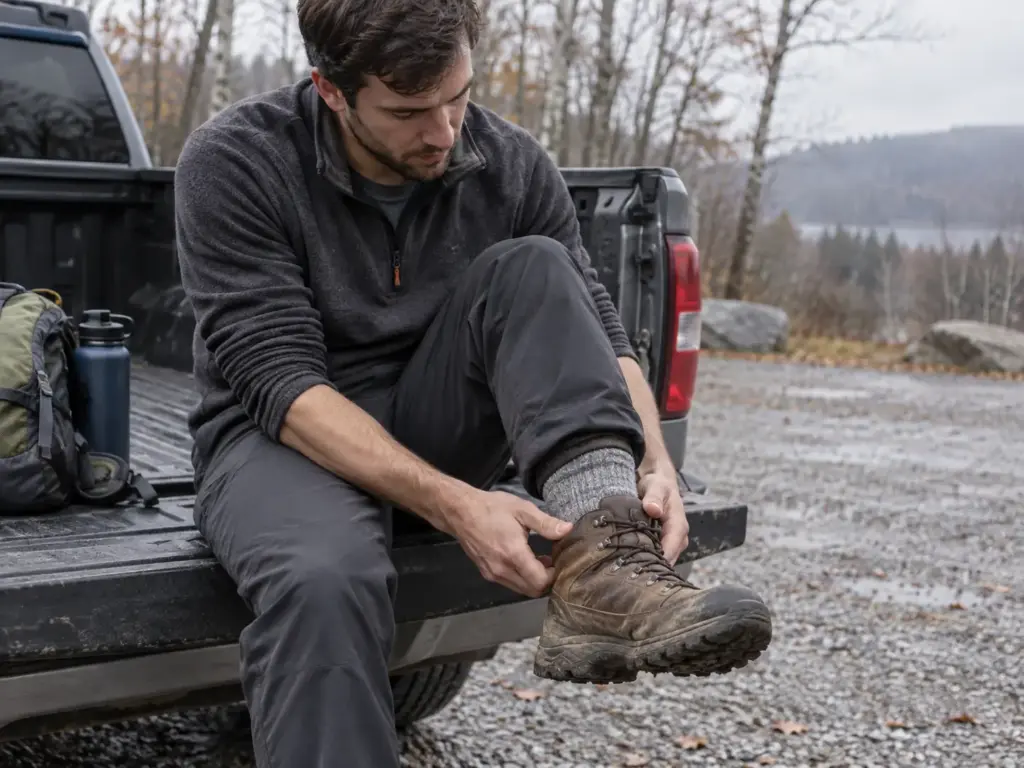
A narrow heel inside a boot cut for an average heel does two things. On every climb the heel lifts, and on every descent the whole foot slides forward until the toes meet the front of the boot. The first one is a blister. The second one is a bruised toenail, and both trace back to the same loose heel cup.
The pattern shows up again and again. Heel blisters can come from the wrong boot, the wrong size, or a combination of several things. The Oboz version of the split is familiar: a great fit across the toe box and feet that stop sliding forward, but a heel that slides up with each step. Same boot, two zones, two verdicts.
If a boot holds your toes and still lets the heel climb, you have a heel problem wearing a toe-box disguise. Fix it at the heel first, with lacing and then an insole, before you blame the length or reach for a bigger size.
Narrow Midfoot: When the Boot Squeezes or Lets You Slide Sideways
The midfoot is the quiet zone. Nothing complains at the shop. Then the trail tilts, and your foot either slides sideways in a boot that is too wide through the middle or goes numb across the instep in a boot that is too narrow there.
A boot that is too wide lets the foot slide to the side, especially on uneven terrain, and that is often blamed for the blisters. The opposite error happens too: within one brand, one model can feel very narrow at the midfoot while another runs wider. Even a brand with a narrow reputation changes shape from model to model.
Narrow Forefoot or Wide Toe: When the Toe Box Is the Problem
The forefoot is where “runs narrow” usually lives, and it is where narrow-footed hikers meet the opposite surprise: a boot that squeezes. Some B-width feet find a La Sportiva toe box too narrow. A very narrow heel with more average width up front is a low-volume foot, one of the feet that no single width label describes. For the reverse case, wide feet included, if your problem is a tight toe box instead of a loose heel, the wide toe box fit guide is the better starting point.
Too narrow is also the direction most shoe-fit errors run. A 2018 observational study of 67 women, published in the Journal of Foot and Ankle Research, found that in the 61-and-over group the shoes were significantly narrower than the feet inside them, and the width gap tracked with bunion deformity. That is podiatry-clinic data on everyday shoes, not hiking boots, so read it as a warning about forefoot pressure, not a boot test.
| Zone | What you feel | First thing to try |
|---|---|---|
| Heel | Heel lifts on climbs, foot slides forward on descents | Heel-lock lacing, then a heel-filling insole |
| Midfoot | Pressure across the instep, or the foot sliding sideways on uneven ground | Adjust lacing over the instep, add insole volume, then try another model |
| Forefoot | Toes jammed on descents, or pressure at the sides of the toe box | Check toe box shape before length; try a roomier forefoot last |
Narrow Hiking Boots by Zone: La Sportiva, Salomon and LOWA
Picture the wall of boots at the shop, every box promising a “performance fit.” On that wall, the brand name is not the answer. The model and the zone are.
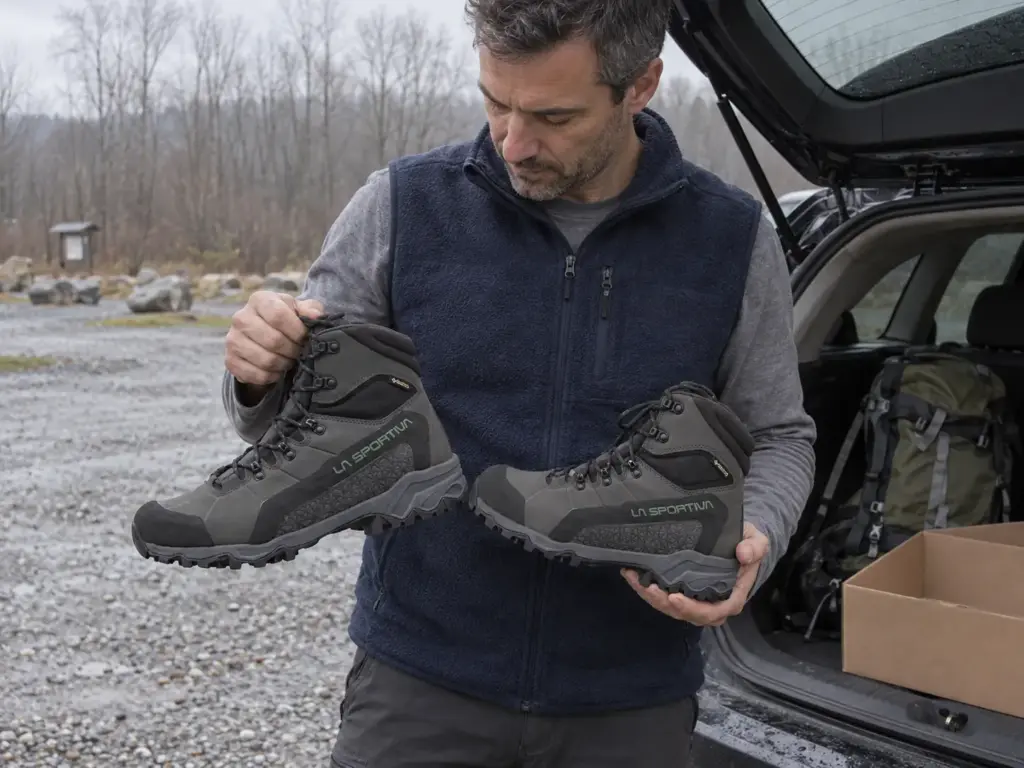
The brand reputations even disagree with each other. La Sportiva, Salomon and Oboz all have a reputation for running on the narrow side, and some models run snug. The regular Nucleo can be too narrow for a wide toe, and a La Sportiva toe box can feel too narrow to some hikers. Read every pick below as a starting point for a particular zone, not a promise.
La Sportiva Nucleo High II GTX
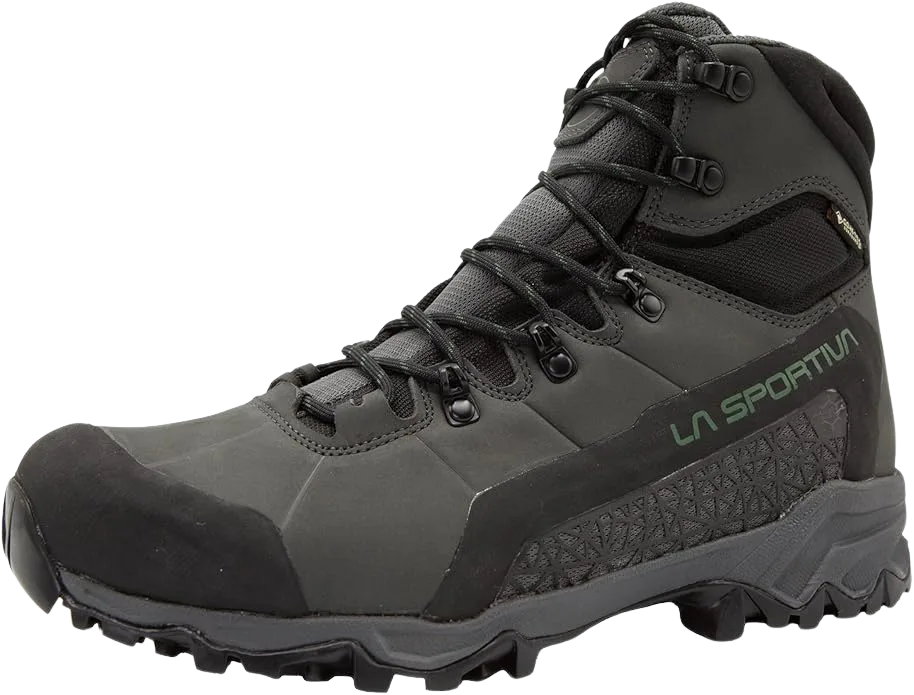
The La Sportiva Nucleo High II GTX (men’s · women’s) is the model hikers reach for when the forefoot and midfoot are the narrow zones. The boot runs narrow and small, and the “small” half matters for sizing, which comes up again in the sizing section below. Sliding forward means the toes take the punishment on every downhill, and a boot that holds the foot back keeps the toes off the front.
The caveat is the one already on the table. The regular Nucleo is too narrow for a wide toe, so this is a pick for a narrow forefoot, not for a narrow heel with a roomy front. If you are comparing the women’s version against other options, women’s hiking boots compared by fit and lifespan covers the heel-slip test side by side. Stock on this model moves fast, so if your size shows up, do not sit on it.
Salomon X Ultra 5 Mid GTX
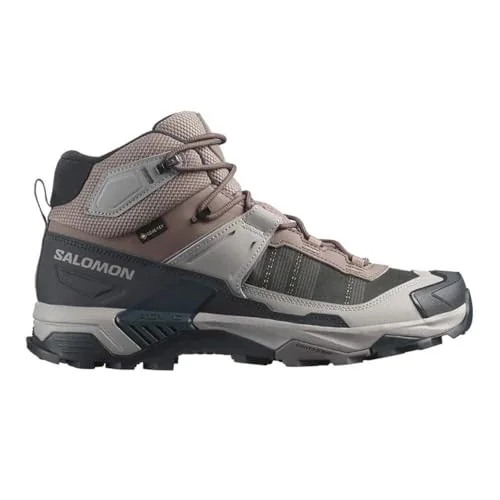
The Salomon X Ultra 5 Mid GTX (men’s · women’s) answers a different question from the Nucleo: what if the foot is narrow and long? The boot runs narrow and long, which is the combination that is hardest to find in a standard size run. Very narrow and quite long feet can end up in Salewa boots, so the need is real even if the exact boot differs.
Salomon’s narrow reputation comes with a catch. The Quest Prime GTX can feel narrow at the midfoot, while the Ultra 4 GTX runs wider. That is why the X Ultra 5 sits here as a model to try on, not a brand to trust. If the boot is long enough but loose at the heel, the fixes in the size-up section below come before any change of model.
LOWA Renegade EVO GTX Mid (Men’s)
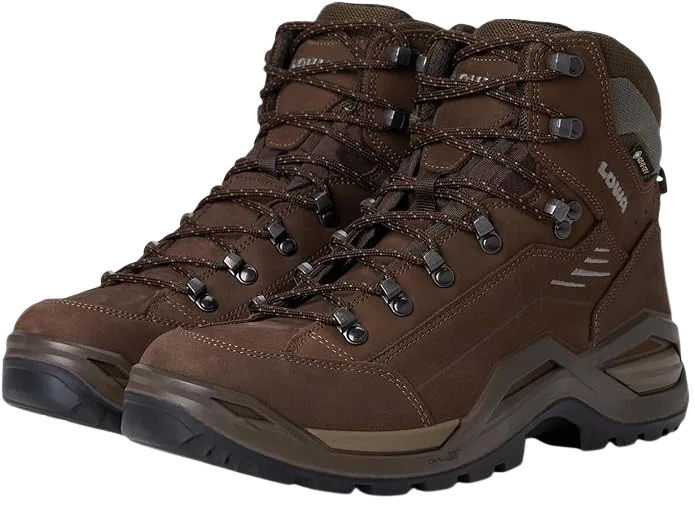
The LOWA Renegade EVO GTX Mid comes with the most colorful story and the weakest evidence, so take it as exactly that. u/moik_KF, the man behind the “nothing but blisters” line, reports that his search ended with a Renegade in size 12. He says an REI employee told him the Renegade runs “legit narrow,” not just in the toe box. That is one hiker’s account, a couple of years old, of what a store employee said, which makes it a lead worth following, not a fact to build a purchase on.
The women’s side needs a straight answer. The women’s Renegade EVO listing on Amazon was not a clean match for this boot, so this guide does not card it or link it. If you are a woman with narrow feet interested in LOWA, check the size and width at the maker or at a store before ordering anything.
Narrow-Fit Names We Are Not Carding Today
Several other makers come up for narrow feet, but this page does not link them, because none had a clean, buyable Amazon listing. Oboz (the Katabatic LT, Sapphire and Sybes mid get mentioned), Asolo, Zamberlan, Scarpa and Hanwag all come up for narrow feet. Even the Oboz reports split by zone: u/Chartwell101 credits the Oboz Sapphire for her narrow heel, while u/Cgirlgwynn finds the heel of her Oboz slides up with each step.
One more honest note: a “narrow” model is not a cure. A boot that fits your heel can still squeeze your toes, and a boot that spares your toes can still let the heel climb. Treat every name here as the start of a try-on, not the end of the search.
How Sizing and Width Letters Work for Narrow Feet
A 12 B foot may really be a 12 A or 12 AA, sizes that often do not exist. Women’s boots that come in narrow tend to stop short of a size 12. That is the sizing problem in short: width lives in a letter after the size, and the narrowest letters may simply not be made in the length you need, which is why narrow width hiking boots are scarce in long sizes.
Width Letters and What Your Size Actually Says
The letter after the size is the width. A B width sits at the opposite end of the scale from a wide width, and the two come from different lasts rather than the same boot with more padding.
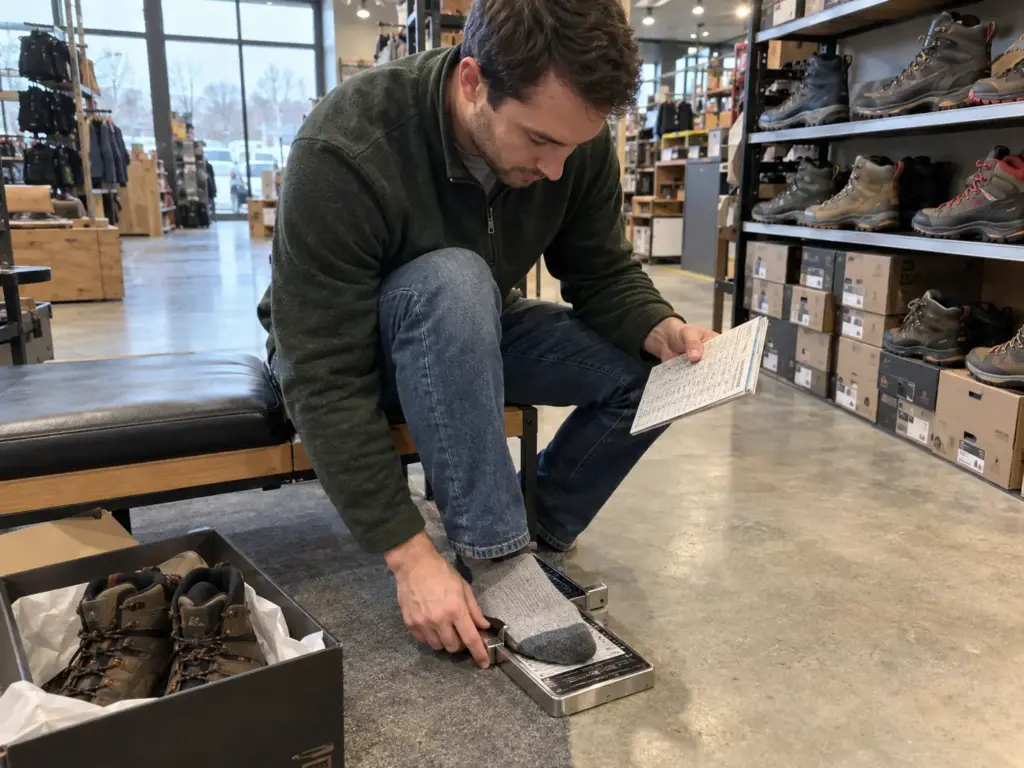
Reading the letter is easy, and a shop can measure both of your feet on a Brannock device before you trust any of them. Finding it in stock is the hard part, and the threads are full of hikers who give up on the exact letter and work around it. Treat any number-to-number conversion you read online with suspicion, including between men’s and women’s sizes, because the threads give accounts of what worked for one person, not a verified chart.
“Runs Narrow” Versus “Runs Small” Versus “Runs Long”
These are three different claims, and mixing them up sends people to the wrong size. The Nucleo runs narrow and small, so a narrow foot that is also long may need to go up in length to avoid pressure on the toes. The X Ultra 5 runs narrow and long, which carries the opposite risk: the length may already be generous while the width stays snug.
The rule of thumb is to trust pressure over the box. A University of Leicester review of footwear width for at-risk feet found footwear that was too narrow by one size or width fitting was common (31% to 78% across studies) while footwear that was too wide was rare. That is indirect evidence from at-risk feet, not hiking data, but the direction matches the threads: when a boot presses, the boot is usually the problem, not your tolerance.
When the Last Matters More Than the Size Chart
A last is the mold a boot is built around, and it decides shape more than the number on the tongue. u/Grizz1yAdm points out that many manufacturers’ websites describe the lasts they use and often say how narrow or wide they run, so look there before a size chart. Some makers sell the same style in several widths, and Kenetrek and Altberg are two examples, though neither is carded here.
Once you know what the last is doing, the next step is the wider decision about boot type. How a hiking boot is chosen by terrain, height and fit puts the last, the cut and the use together.
Size Up or Fix the Heel? A Decision Rule for Heel Slip
The toe feels a touch short on descents, so you size up. Now the heel rides up on every climb, and the problem you fixed in front has shown up behind. This is the trap in narrow-foot fitting: more length gives the heel more room to move.
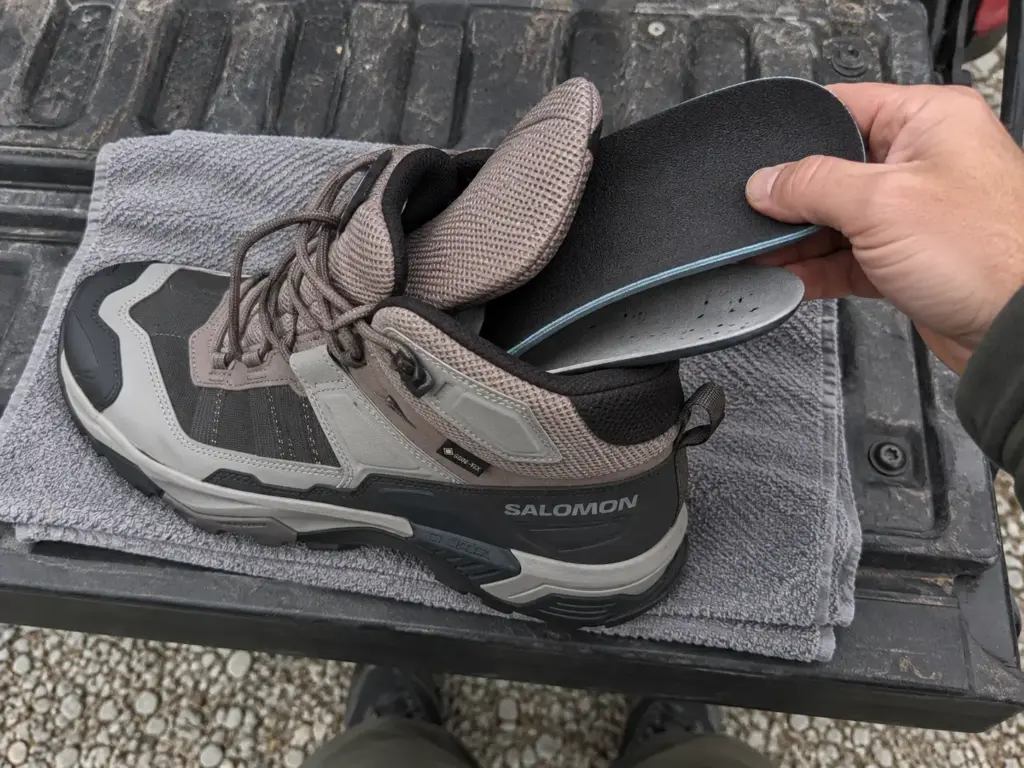
Here is the decision rule, stated once and plainly: lock the heel, fill the heel, change the model, and only then size up.
First, lock the heel with heel lock lacing. Second, fill the heel with an insole or custom orthotics. Third, change the model or last. Size up only if the toe is the problem and the heel already holds.
Diagnose before you reorder. If the heel slips, a bigger boot is the last thing to try, not the first. Lace it, pad it, and only then change the size.
When Sizing Up Makes a Narrow Heel Worse
Heel blisters are the cautionary tale here. Simply buying bigger misses the point: the cause is often the wrong boot, the wrong size or a combination, and the combination part is what a bigger boot ignores. A loose heel in a size that is already long is a heel problem, and adding length gives it more room to slide.
The cost shows up at the toes. u/T-Flexercise left her Keens over toes bruised by sliding to the front on downhills, which is the community pattern for a heel that lets the foot go. A loose heel does not only blister the back of your foot. It spends the front of it on every descent.
Lacing and Insoles Before a Bigger Size
Start with the lacing technique, because it is free. The lacing fix for downhill heel slippage walks through heel-lock lacing step by step. u/gleenglass adds that the laces on her boots run well down the midsole toward the toes, so the fit can be tuned along the length of the foot. That is worth checking before you buy: a boot with laces that run far down gives you more places to adjust.
Insoles come second. Some hikers pair La Sportiva boots with Powerstep green insoles, and the Oboz Sapphire can suit a narrow heel. If you want to know whether orthotics in hiking boots actually help, that page covers when a heel-filling footbed earns its place.
When Going Up a Half Size Is the Right Call
Sizing up is not wrong, it is just the fourth move, not the first. If your toes hit the front on a downhill even after the heel is locked and filled, length is the problem, and a half size is the right call. When to size up hiking footwear the right way lays out how to make that move without reopening the heel.
Matching a Narrow Boot to Your Hike
The boot that suits a Saturday day hike is not the boot you want under a full pack, and narrow feet add one wrinkle. The narrower the fit, the less room a swelling foot has by mile ten.
Day Hikes: Where a Lighter Narrow Boot Is Enough
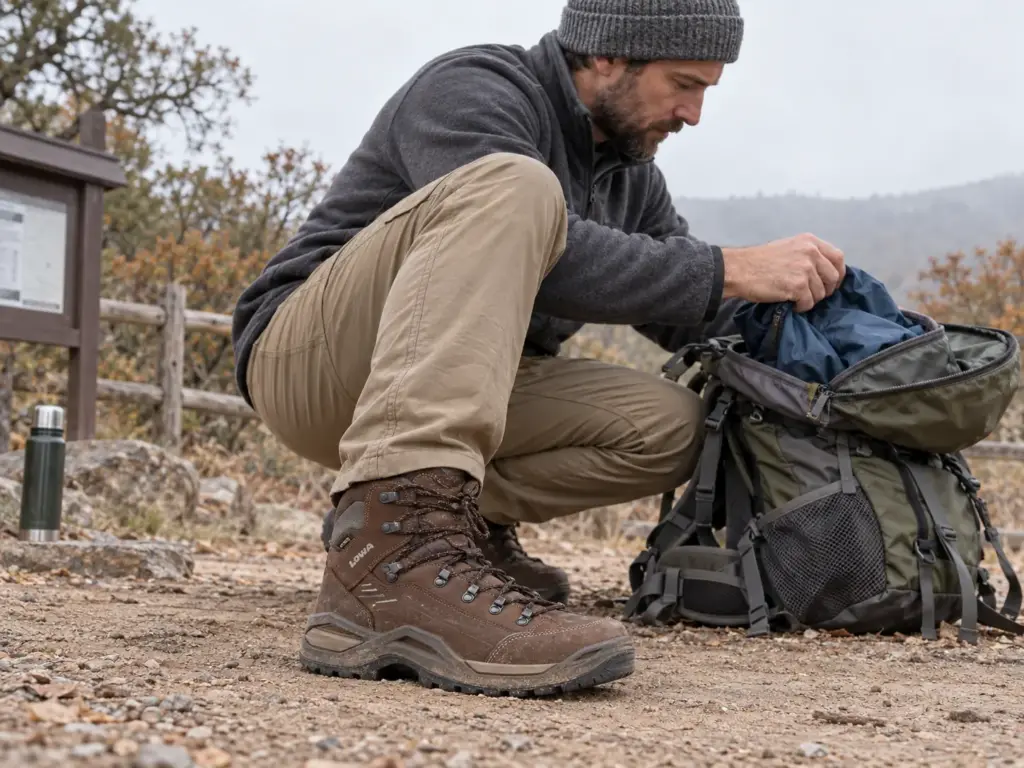
On a day hike with a light pack, lightweight hiking boots with a snug fit are usually enough, and the trade is simple: less support and stiffness for less weight per boot. Feet swell over a day, so a fit that felt perfect at the shop can be tight by afternoon. That is why narrow-fit buyers should try boots on late in the day, with the socks they will actually wear.
Loaded Packs and Rough Ground: Where the Fit Has to Hold
Under a loaded pack or during off-trail hiking, the fit has to hold the foot steady, because every loose millimeter becomes a hot spot after hours of descent. Support and stiffness matter more here, and collar height changes how the heel is held. Mid-cut versus ankle-high boots compares the two for exactly that reason. Descents are also where a loose heel costs the toes, so the heel rule above applies doubly under weight.
Waterproof lining against warm-weather ventilation is its own trade. A GORE-TEX lining keeps rain out and holds heat in, so for hot dry trails breathability may matter more than the lining, and for wet or cold ground the lining earns its keep.
Narrow Feet in Trail Shoes: What Hikers Say
Trail runners are the usual counter-suggestion. Some hikers argue trail runners are better than boots, and the reply is that this holds only if you are willing to risk sprained ankles.
Both sides have a point: trail shoes fit narrow feet more easily, and boots protect the ankle and keep the water out. Neither wins for everyone.
Narrow and Long, Narrow and Flat: The Hard-to-Size Feet
A 12 B can be hard to find. For narrow-footed hikers, availability can be the problem, not a size chart.
Narrow and Long: When Your Size Is Missing in Narrow
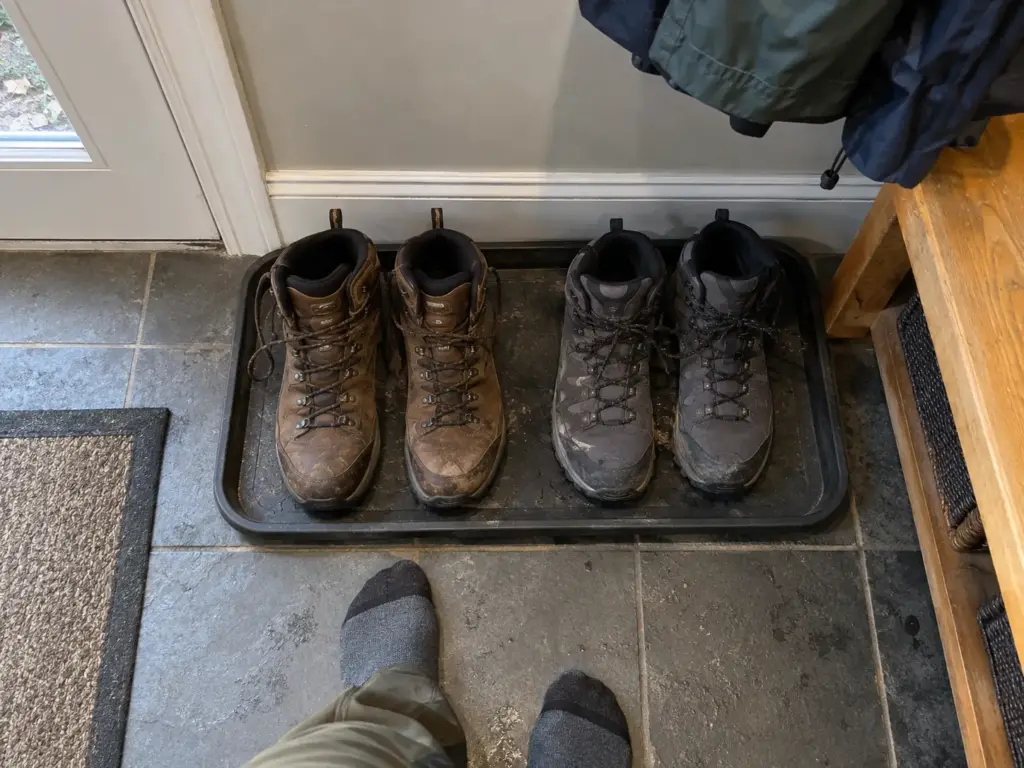
u/Party-Echidna8580 (11.5 B) says the Dunham narrow hiker is “short” and does not offer good support. u/bende99, with very narrow and quite long feet, wears Salewa. The Salomon X Ultra 5 gets a card here partly because boot reviewers call it narrow and long, which is the shape these hikers describe. When the exact size is missing, the practical routes are the maker’s narrow line, the crossover between men’s and women’s sizes, or a store with your size on the shelf.
Narrow and Flat: Insoles Versus the Boot
Flat feet or a low arch add a second problem on top of narrow width. An Oregon Hikers thread on flat feet splits between strengthening the arch and using arch-support insoles, and it gives no width data, which tells you where the fix lives: in the insole or the foot, not in the boot width. For the footwear side, hiking shoes for flat feet should be stiff, not soft explains why support beats cushioning. The opposite shape exists too: Salomon Quest boots can suit a narrow foot with a high arch.
Crossing Over Between Men’s and Women’s Sizes
Crossing over works in both directions. A man whose size is too big for women’s boots can look at men’s models, and a woman who cannot find a narrow women’s 11 can end up in the men’s La Sportiva Ultra Raptor II in EU 43, which can fit well with no toe smash on rugged terrain.
Those are individual accounts, and neither gives a size-conversion rule. If you cross over, check the heel hold first, because a men’s last can be roomier at the heel even when the length works.
Trying On, Breaking In and Returning a Narrow-Fit Boot
Here is the practical lesson: when a rep says a boot runs narrow, ask what that means for that exact model. Sometimes “runs narrow” only means a narrow toe box, and the same boot can still turn out to be genuinely narrow. The tip is the question, not the answer.
A Ten-Minute Try-On That Shows the Zone
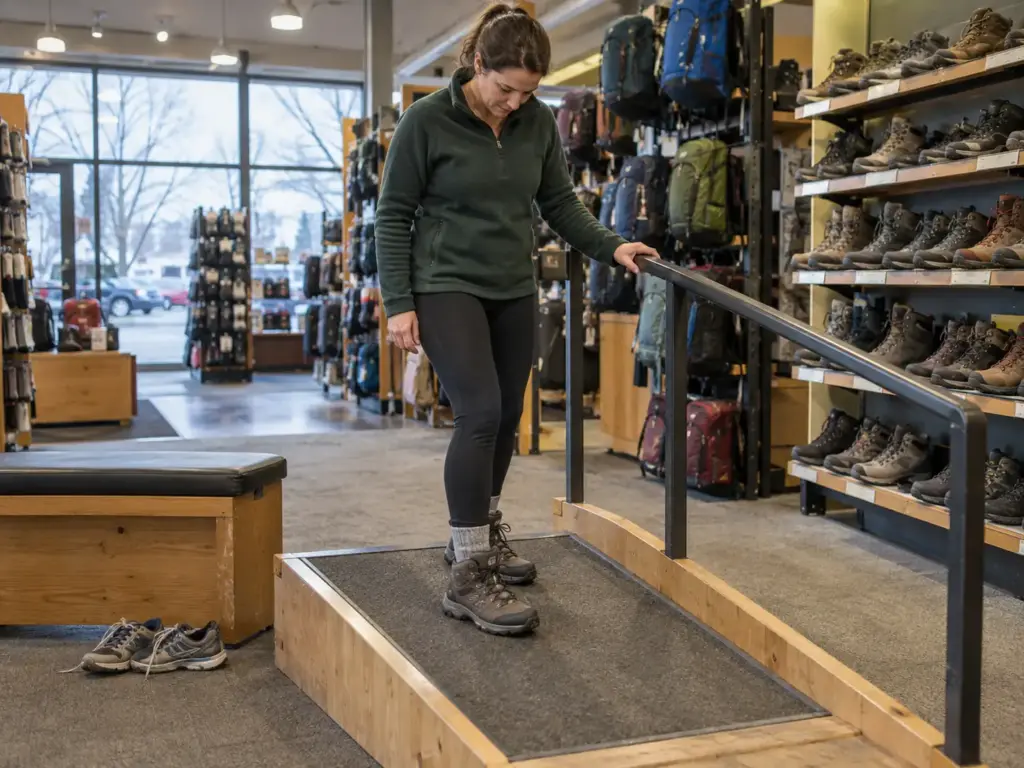
Try boots on late in the day, with the socks and insoles you will hike in. Walk a ramp or stairs if the store has one, because heel lift shows on an incline. Then run three checks: does the heel hold on the uphill, does the midfoot squeeze or let you slide, and do your toes stay off the front on a downhill ramp? Each question maps to a zone from the first section.
Ask the person fitting you what “runs narrow” means for the exact model in your hand, then test their answer on the ramp. A heel that lifts on the incline will tell you more than any size chart.
The First Two Weeks and When to Send Them Back
Heel slip, midfoot squeeze and toe contact all show up in the first week of wear at home. Walk the house, the block and a flight of stairs in them before you take them anywhere that matters. How to break in hiking boots and know when to return them covers the break-in and the return decision in detail.
Return policies change, so check the seller’s current policy before you buy, and keep the boots clean and the packaging until you are sure. If a boot fails one of the three checks after the break-in, it is not going to get better on a long hike.
Walk the Ramp Before You Trust the Box
Three things carry this whole guide. Find the zone first, because heel, midfoot and toe each fail differently. Model beats brand, since the threads contradict each other on every brand they name. And fix the heel before you size up, with lacing and then an insole, so a bigger boot is the fourth move, not the first.
Before you buy anything, walk the candidate boot up and down an incline and note which of the three zones complains first. That one complaint tells you what to fix, what to ask, and whether the boot goes back in the box.
Frequently Asked Questions
01What shoe brand is best for narrow feet?
No single brand wins, because fit changes model by model. La Sportiva, Salomon, Oboz and LOWA come up most for narrow feet, but the right pick depends on which zone of your foot is narrow.
02What are some good boots for slim feet?
Good starting points for slim feet are the La Sportiva Nucleo High II GTX, the Salomon X Ultra 5 Mid GTX and, for men, the LOWA Renegade EVO GTX Mid. Pair any of them with heel-lock lacing and an insole.
03What are the best trail shoes for narrow feet?
No trail shoe is carded here, but trail runners are often suggested for narrow feet. The trade is less ankle support and weaker wet-weather protection than a boot gives you.
04What does runs narrow actually mean in a hiking boot?
In a hiking boot, runs narrow usually describes the forefoot only, not the whole foot. The boot must also be narrow in the midfoot and heel, so check all three zones.
05Can a man with narrow feet wear women’s hiking boots?
Sometimes a man can wear women’s hiking boots, but only if his size is made. Sizes do not always cross over cleanly between men’s and women’s boots. Check the heel hold first.

I've spent more than a decade researching hiking gear and trail technique. I read the specs, the forum threads and the long-term reviews, and every pick here comes with what it gets wrong.
End of the trail
You read every mile of this one. Here's where the trail goes next.