


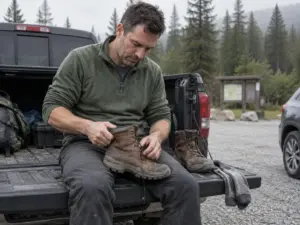















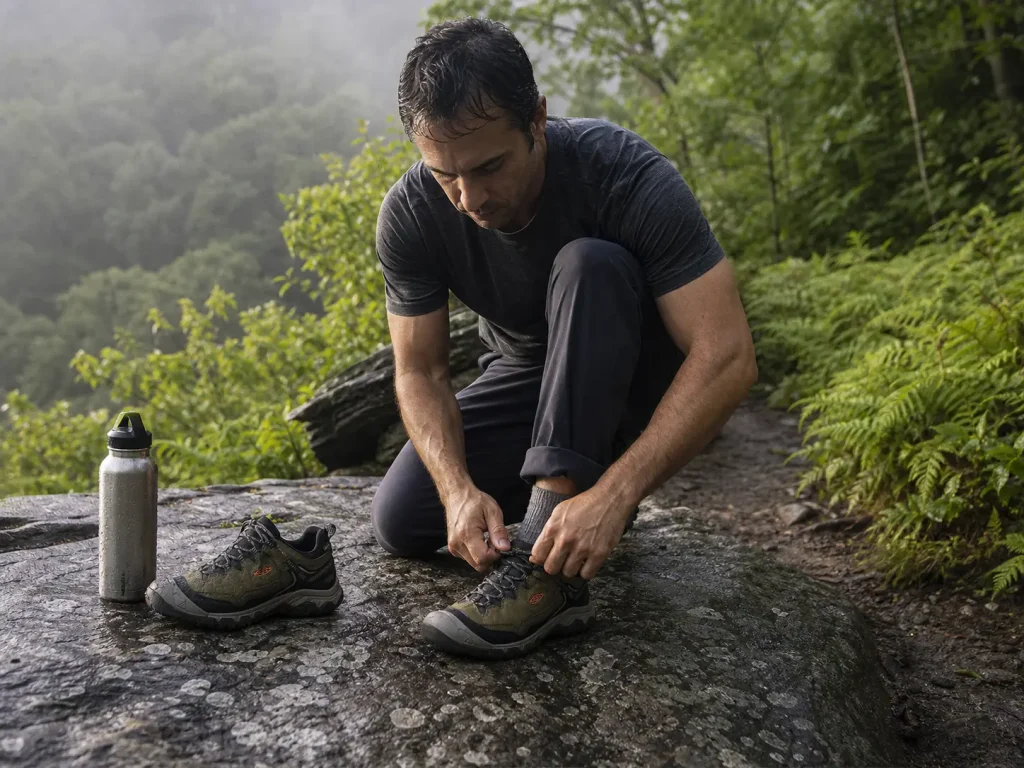
After a hike that leaves your arches aching, the instinct is almost universal: walk into the store and reach for the plushest, most cushioned shoe on the wall. That instinct is backwards. The podiatric criteria for a flat-foot shoe are structural rather than comfort-based, built around a heel counter that will not collapse, a midfoot that resists twisting, and a footbed you can pull out, and softness appears nowhere on that list. Below you will find how to tell what kind of flat foot you actually have, three five-second tests that separate a real support platform from a marketing footbed, the low-cut shoes that pass them, and the cheaper move most hikers should try first.
Here are the picks, and what each one is actually doing for a collapsing arch.
| Pick | Best For | What Makes It Work |
|---|---|---|
| La Sportiva Spire GTX Low-Cut | Best overall and loaded packs | Nylon shank through the midfoot, so it genuinely resists the twist test |
| Merrell Moab 3 Low | Best insole-swap base | Removable footbed with real internal volume for an orthotic |
| KEEN Targhee 4 Low WP | Best stable waterproof | Rigid TPU heel structure on a wide-toe-box-friendly last |
| Nortiv 8 Wide Toe Box Waterproof | Best budget, with a caveat | Advertises arch support, so test the claim yourself before trusting it |
| Superfeet Hike Support Insoles | Cheapest first move | Semi-rigid shell and deep heel cup inside a shoe you already own |
Flat Feet and Overpronation Are Not the Same Problem
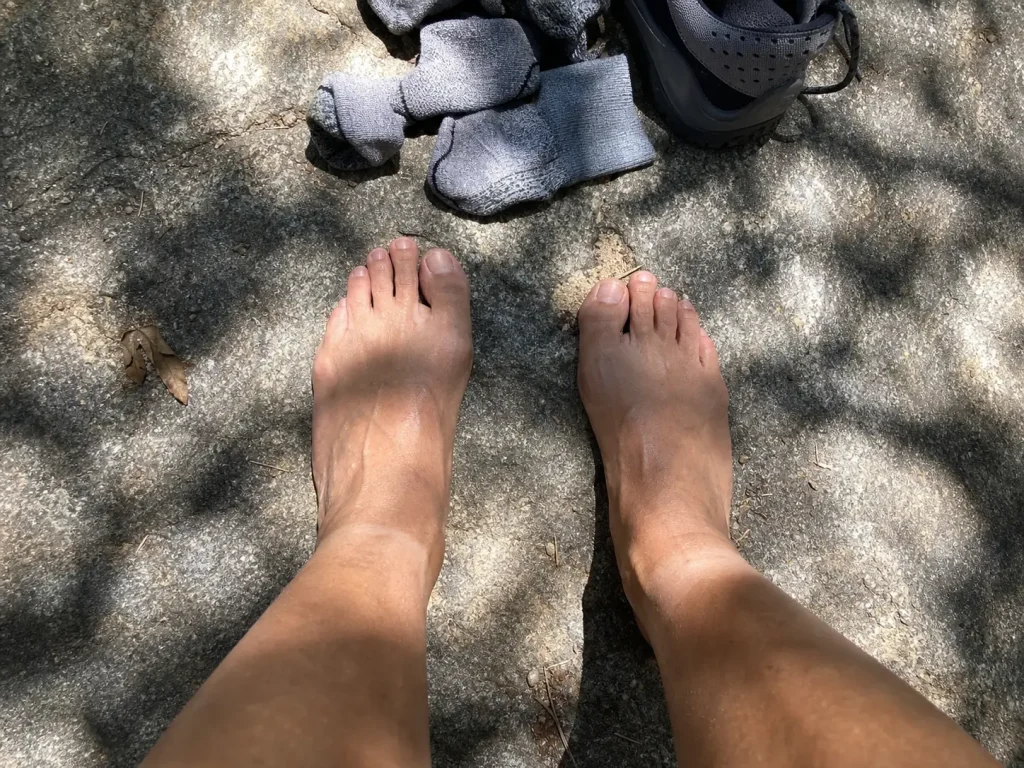
Most hikers get told these two words in the same breath, usually by a salesperson glancing at their ankles. They describe different things, and confusing them is how people end up in a maximum-correction shoe for a problem they do not have.
Fallen Arches, Pes Planus, and What They Describe
Flat feet, fallen arches and pes planus are three names for one static condition. The medial arch, the curve along the inside of your foot, sits low or fully flat when you stand on it. That is a shape. It says nothing yet about how your foot behaves while you walk, and it is not a defect so much as one end of a normal range.
Left unaddressed on long mileage, a collapsing arch does tend to pull other tissue into the problem, which is why so many hikers arrive at this topic through heel pain rather than arch pain. If you are already past that point, the same structural logic drives the footwear choices behind arch pain that shows up as plantar fasciitis, and the two problems share most of the same fixes.
Overpronation Is Motion, Not Shape
Overpronation is a description of movement. As your foot loads through midstance, it rolls inward past the neutral range, and the arch, the ankle and the knee all absorb some of that rotation. It is a verb where flat feet is a noun.
Flat feet make overpronation more likely. They do not make it certain. Plenty of hikers stand with a low arch and still track cleanly through a stride, and a smaller group with unremarkable arches roll inward badly under load. That is exactly why a proper gait assessment watches the foot moving rather than standing. The distinction matters commercially, because the American Podiatric Medical Association’s own footwear guidance for low arches prescribes a supportive shoe built for stability and motion control specifically, which is a different shoe from what a normal or high arch calls for.
Flexible vs Rigid Flat Foot
This is the split almost nobody explains, and it changes what you should spend money on.
A flexible flat foot means the arch reappears when the foot is unweighted. Sit down, lift your foot off the floor, and there it is. The arch exists, it just folds under body weight. This is the far more common version among hikers, and it usually responds well to a firmer platform underneath or a medium-arch insole rather than a rigid corrective device.
A rigid flat foot stays flat whether you are standing on it or not. That is a structural difference in the foot itself, and it is genuinely a different conversation, often a medical one. Nothing in this article is going to solve a rigid flat foot, and any article that claims a shoe purchase will is selling you something.
Two Home Tests That Tell You Which Flat Foot You Have
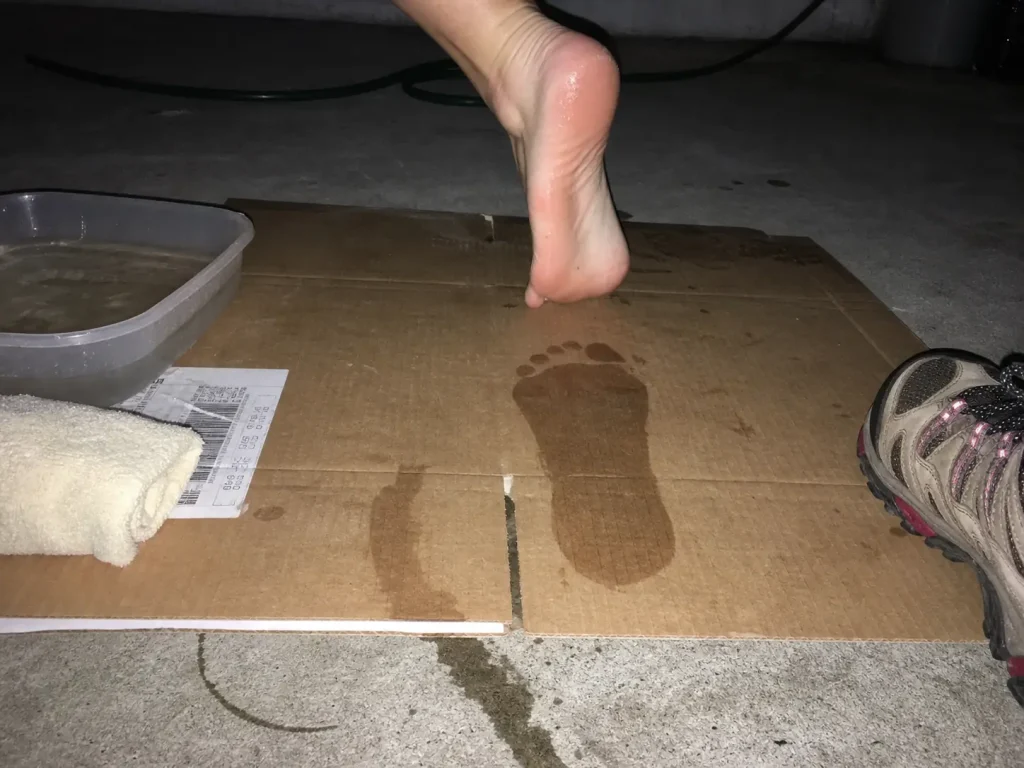
You do not need a clinic appointment to answer the first question. A wet foot, a piece of cardboard out of a shipping box, and thirty seconds on the garage floor settles it. The second test is even simpler. Both are free, and doing them before you shop makes you immune to a salesperson’s guess and to whatever the store’s arch scanner decides.
The Wet-Foot Test, Step by Step
Flatten a cardboard box or a paper grocery bag and set it on a hard floor. Wet the sole of one foot, either in a shallow tray of water or straight out of the shower, and shake off the excess so it is damp rather than dripping. Step onto the cardboard with your normal standing weight, hold for a second, and step off cleanly without sliding.
What you get is a footprint made under load, which is exactly the condition that matters. A visual inspection of your foot while it hangs in the air tells you very little about what happens when your full body weight plus a pack presses down on it.
Reading the Footprint You Just Made
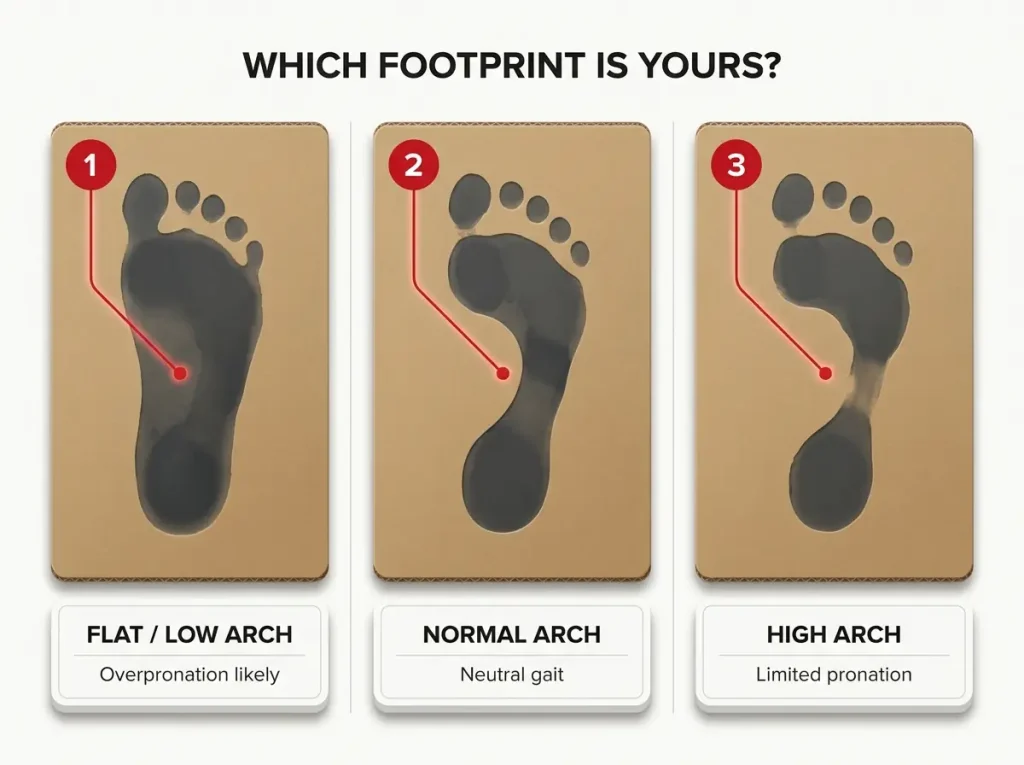
There are three outcomes and they are easy to tell apart.
- Flat or low arch: the print fills in almost completely, with little or no inward curve along the instep. Overpronation is likely, and this article is aimed at you.
- Normal arch: a clear but moderate inward curve along the inside edge, with the heel and forefoot connected by a band roughly half the width of the foot.
- High arch: heel, a thin outer band and the ball of the foot show up, with a large gap where the instep should be.
This is not a folk test. Footprint-based arch classification is the clinical method researchers use to classify arch height from a footprint, which is why it holds up better than the guess someone makes by looking at your ankles from across a shop floor.
While you are looking at the print, notice how wide the band across the ball of your foot is. That band is your forefoot width, and a low arch travels with a broad forefoot often enough that the same footprint answers a second buying question. If yours splays out at the front, or if you already have bunions pushing the joint outward, how wide the forefoot band of that print really is will matter as much as arch support when you pick a last.
The Sit-Down Check for a Flexible Arch
Now sit down and lift the foot off the floor. Look at the inside edge.
If an arch appears that was nowhere in your footprint, you have a flexible flat foot. The supporting structure is present, it simply gives way under body weight. That is good news, because a flexible arch is the version most likely to be corrected by a firmer platform or a medium-arch insole, which is a far cheaper path than chasing a maximum-control shoe.
If the foot looks flat in the air too, treat it as a rigid flat foot and get a real evaluation before spending money on footwear.
Do the wet-foot test at the end of a long day, not first thing in the morning. Feet swell and arches sag with hours of loading, and the afternoon print is much closer to what your foot is doing at mile eight than the version you make before breakfast.
Why the Softest Shoe on the Wall Is the Wrong Instinct
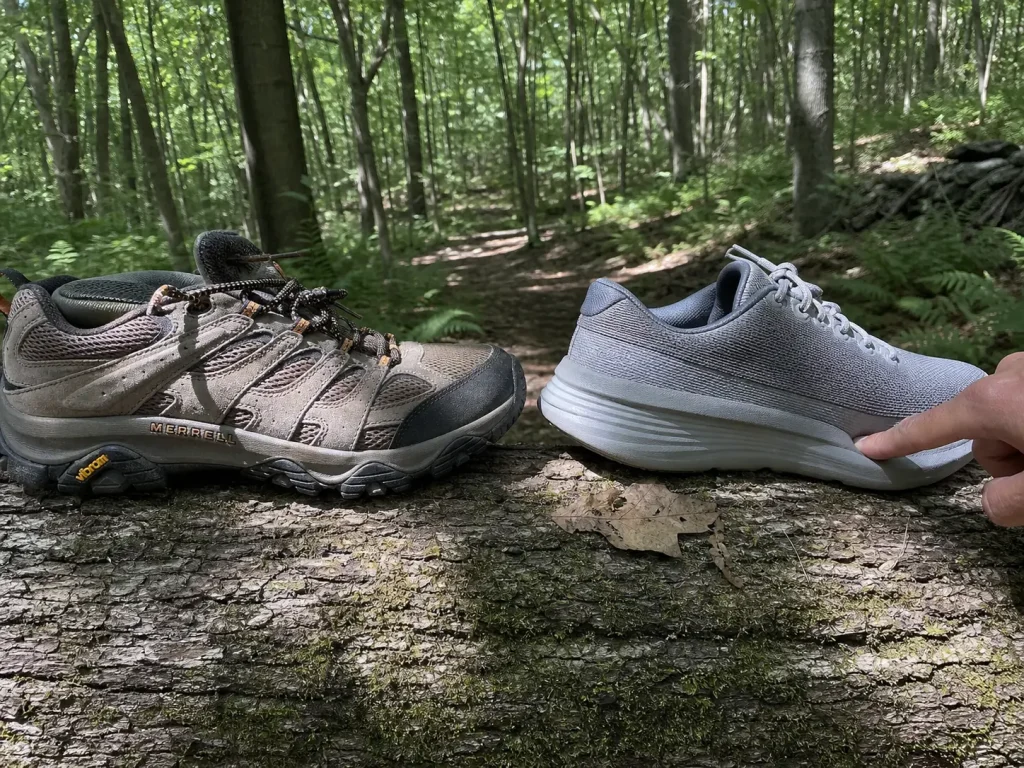
Standing on the store carpet, the plushest shoe wins every single time. That is exactly what it was engineered to do. The problem is that thirty seconds of standing still is the one condition under which cushioning and support feel identical, and it is the only test most buyers ever run.
Cushioning Absorbs Impact, It Doesn’t Resist Rotation
Cushioning and support are two different jobs done by two different properties. Soft foam handles shock absorption, the vertical impact of heel strike travelling up through the leg. A collapsing arch is not a vertical problem. It is a rotational one, the foot rolling inward through midstance, and soft foam does nothing to stop rotation.
Worse, it can make the rotation easier. Deep soft foam under the medial side gives a sinking arch somewhere to sink into. You are not adding support, you are adding room to collapse.
What a “Stability Shoe” Actually Means
The mechanism that actually resists inward roll has a name. A medial post is a section of denser foam built into the inner side of the midsole, and it works by being harder to compress than the foam beside it. As the foot tries to roll inward at midstance, the denser column pushes back.
That density difference, not overall plushness, is the real definition of a stability shoe. Midsole firmness is the spec that matters, and where a brand publishes it, shore A durometer is the number that quantifies it. A shoe can be simultaneously very soft and completely useless for a flat foot, which is a sentence that surprises most people the first time they read it.
Podiatric criteria back this up point for point. A structured heel counter, torsional rigidity through the midfoot, forefoot flex grooves at the metatarsal heads, and a removable insole. Cushioning is not on the list.
The 30-Second Store Test Is Rigged Against You
Every failure mode of a soft shoe for flat feet happens during motion, under load, on uneven ground. Standing still on flat carpet tests none of that. It tests plantar comfort under zero rotational stress, which is the one metric a soft shoe wins outright.
This is also why the box copy is such a poor guide. The word “support” costs a brand nothing to print, and the gap between what a shoe’s technology label promises and what the shoe does is wide enough to drive a truck through. The good news is that you can close that gap yourself, by hand, in under a minute.
Three Shelf Tests That Expose a Marketing Footbed
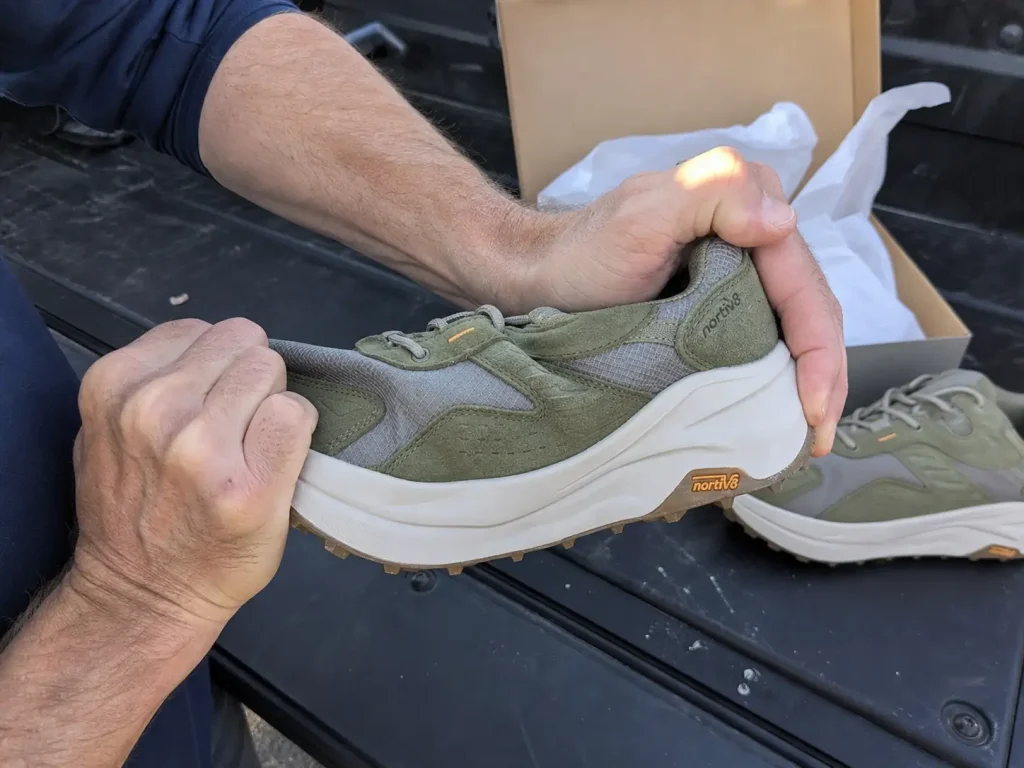
This is the section that pays for the whole article. Standing in an outfitter aisle with three shoes that all claim arch support, you can rank them by hand before you ever look at a price tag. Better still, these tests work on the shoe already sitting in your closet, which is how you find out whether you need a new one at all.
The Twist Test
Hold the heel in one hand and the toe in the other, and twist them in opposite directions like you are wringing out a towel.
A shoe with adequate torsional rigidity resists. It will give a little and then stop, somewhere around 20 degrees of twist, and pushing past that takes real effort. A shoe without it keeps going, folding through the midfoot until the sole is visibly corkscrewed. That midfoot is precisely where a flat arch needs the shoe to hold firm, so a shoe that wrings out like a dishcloth in your hands is going to do the same thing under your body weight on a side-sloped trail.
Run this on three shoes back to back and the ranking is obvious within seconds. The difference between one that resists and one that folds like a slipper is not subtle once you have felt both. It is also the fastest way to understand how much of a trail shoe’s real performance comes down to sole stiffness, which is a spec almost no product page bothers to state honestly.
The Heel Counter Squeeze
The heel counter is the stiffened cup wrapped around the back of your heel, and its job is holding the rearfoot vertical so the correction chain has somewhere to start. Squeeze the sides of the heel cup together with one hand.
A structured counter, usually reinforced with TPU, pushes back and barely deforms. A soft one collapses inward between your fingers with almost no resistance. If it folds under hand pressure, it is certainly folding under a loaded descent, and everything the midsole is trying to do below it gets undermined from above.
The Midsole Press
Push your thumb hard into the center of the midsole from the side, in the arch region between heel and forefoot.
If the material caves under thumb pressure, it is too soft to hold a platform under body weight, never mind body weight plus a pack and a downhill. A firm midsole resists your thumb the way a dense eraser does. This one takes two seconds and it is the most direct read on midsole firmness available without a lab.
What “Marketing Footbed” Means and How to Spot One
Hikers who have been burned by this have a name for it. A marketing footbed is a stock insole shaped with a visible arch bump so it looks supportive sitting on the shelf, but soft enough to flatten completely the moment real body weight lands on it. Support in name only.
The press test catches these immediately. Pull the stock insole out, set it on a hard surface, and press your thumb into the arch bump. If it squashes flat with no resistance, that contour is cosmetic. It is shaped like support without being made of support, and it is by far the most common way an inexpensive shoe earns the words “arch support” on its box.
Run all three tests in sequence and do not let a shoe pass on two out of three. Podiatrists flag a stable heel, a rigid midfoot and a firm footbed together for a reason, and no one of the three rescues the other two. The value of grading a shoe by hand is not academic either, since arch support that actually holds has been measured in a peer-reviewed gait study on arch-support insoles and flatfoot improving stance time, cadence and plantar pressure distribution. Real support produces measurable change. Cosmetic support produces a nice-looking cross-section.
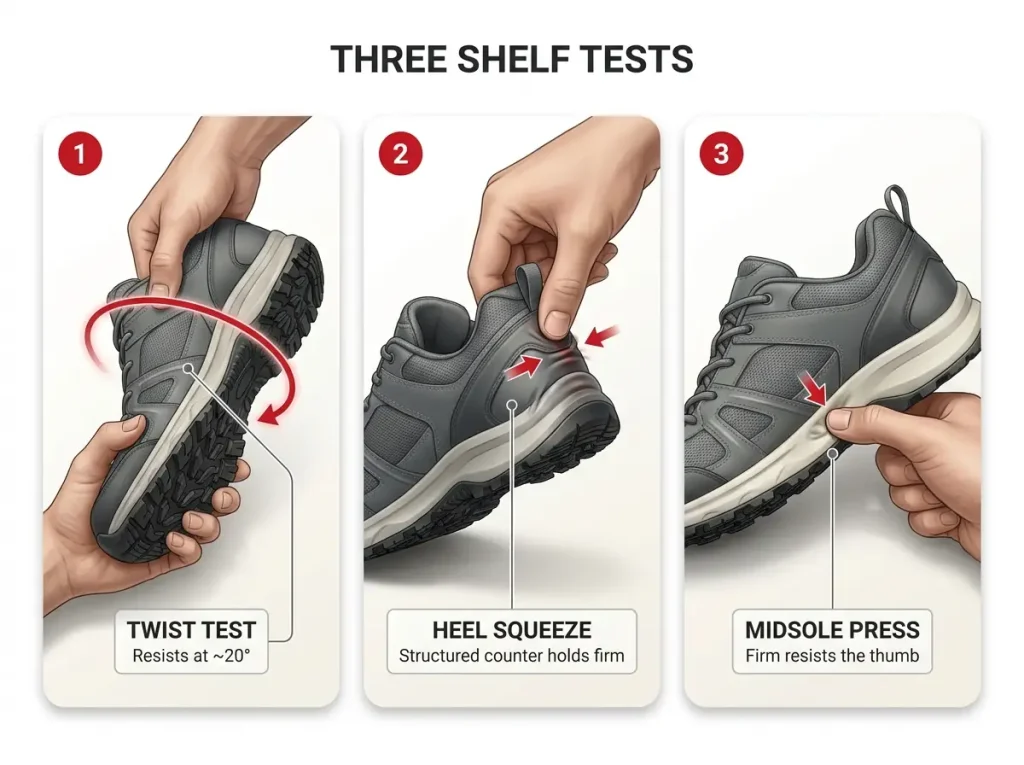
Run the twist test on the shoe you already own before you run it on anything in a store. If your current shoe passes, your problem is probably the footbed rather than the shoe, and you just saved yourself the price of a new pair.
What Actually Builds Support Into a Hiking Shoe
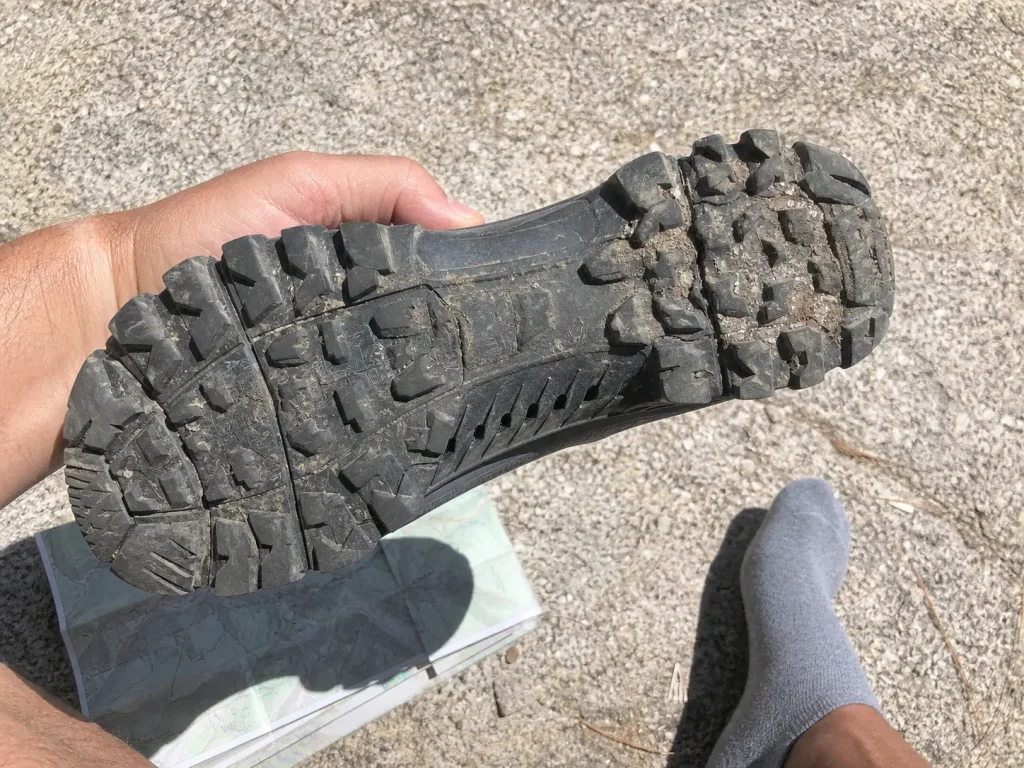
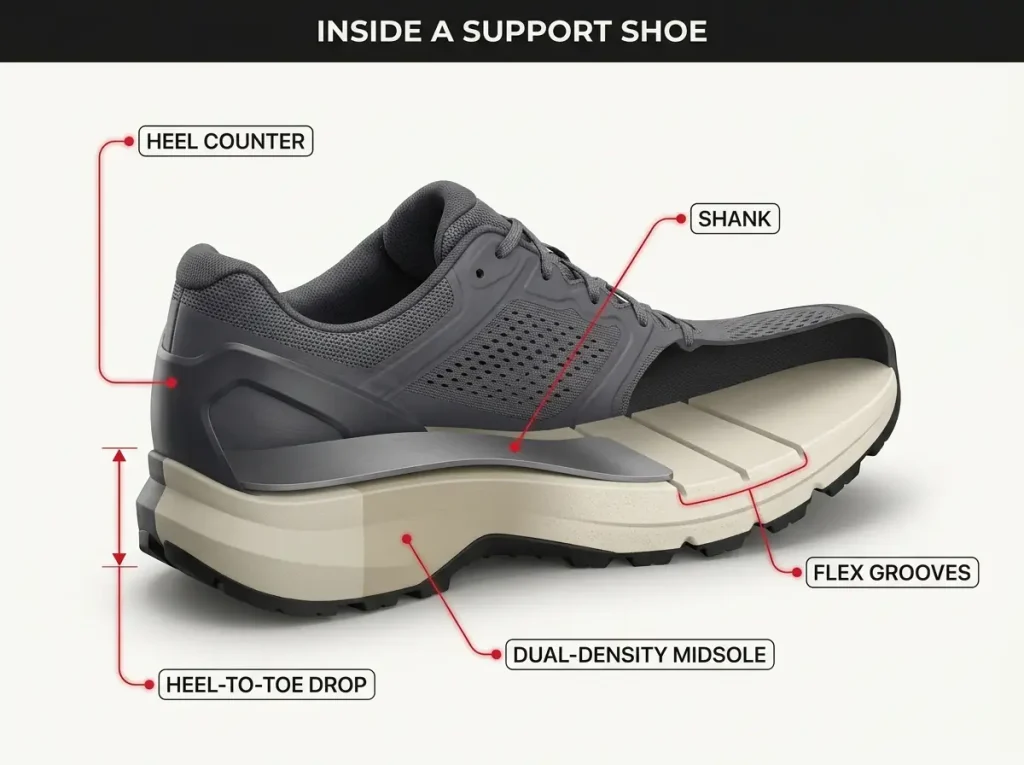
Once you know that firmer is better, the next question is what firmness is actually made of, so you can read a product page and translate it. Here is the shoe from back to front, part by part.
The Heel Counter and the Rearfoot
Everything starts at the back. The heel counter is the stiffened cup that holds your heel upright, and if it is reinforced with TPU or a molded internal shell, it keeps the rearfoot from tipping inward before the arch ever gets involved. A fabric-backed collapsible counter cannot do that job no matter what sits under the arch, which is why the squeeze test is worth running first.
Depth matters alongside stiffness. A deep counter cradles the fat pad under your heel and keeps it from splaying outward under impact, which is a quiet contributor to how stable the whole foot feels at mile ten.
Torsional Rigidity, Shanks, and Rock Plates
Torsional rigidity comes from structure spanning the midfoot, and it travels with longitudinal stiffness, which is how much the shoe resists bending along its length. Most commonly that structure is a nylon shank, a stiff plate laminated between the midsole layers, or an embedded chassis that ties the heel and forefoot together so they cannot rotate independently. Together they give you the rigid platform a low arch needs underneath it. Salomon’s ADV-C Chassis is a well-known execution of the idea, though the low-cut X Ultra 5 GTX has been hard to find in stock recently, so treat it as a watch-for-restock rather than a plan you can act on today.
Do not confuse this with underfoot protection. A rock plate stops sharp rock from bruising the sole and does very little against rotation, so if you are trying to work out whether a rock plate is doing anything for you, the answer for a flat foot is that it is a comfort feature rather than a support one.
Midsole Firmness, Dual Density, and the Medial Post
The dual-density midsole is the workhorse. Two foams of different hardness are laminated together, with the denser material placed on the medial side, and that density step is the entire mechanism behind pronation control. This is what the APMA means when it points low arches toward a supportive shoe designed for stability and motion control rather than toward whatever feels softest.
Some brands add a visible rollbar or a molded medial wedge on top of the density change. Others just publish nothing and let you find out with your thumb. The thumb is more reliable.
Heel-to-Toe Drop and the Removable Footbed
Stability shoes commonly run an 8 to 12mm heel-to-toe drop, and the reasoning is that a raised heel limits how far the ankle can roll inward compared with a low or zero-drop platform. Drop is not just a running-shoe number, and if you want the full picture on what heel-to-toe drop changes for your knees and ankles, it is worth understanding before you buy into minimalist footwear that fights your arch.
At the front, forefoot flex grooves cut across the sole at the metatarsal heads let your toes bend where they are supposed to while the midfoot stays locked. Stiff everywhere is not the goal. Stiff in the middle, flexible at the toes.
Last and most important: the footbed has to come out. Without a removable insole, the shoe can never accept an orthotic later, and you have bought a shoe whose support is fixed at whatever the factory decided.
Low-Cut Hiking Shoes for Flat Feet That Pass the Tests
Every pick below is framed by the tests above rather than by a star rating, and one of them is on this list specifically so you can practice those tests on it and decide for yourself. All four are low-cut on purpose, which is a position this site holds for reasons covered further down.
La Sportiva Spire GTX Low-Cut — Best Overall and Best Under a Loaded Pack
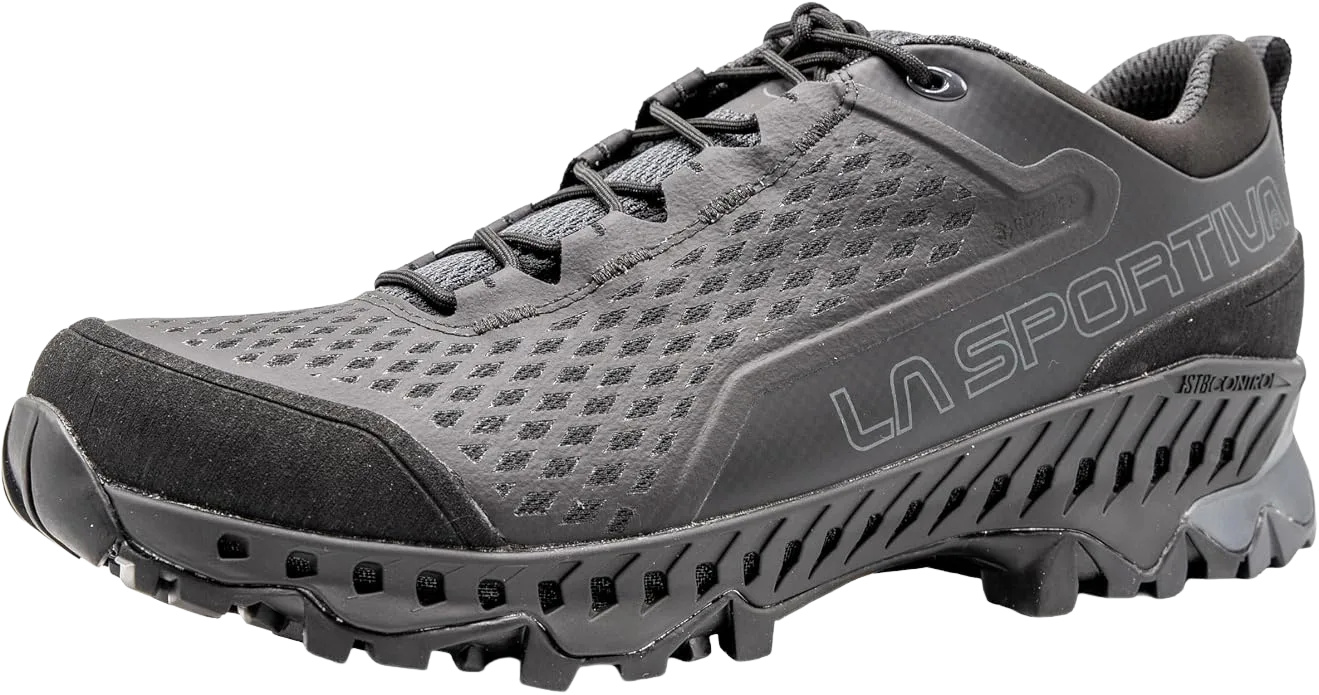
The La Sportiva Spire GTX Low-Cut (men’s · women’s) is the honest answer to the question this article asks. Put it in your hands and try to wring it out, and it barely moves. That comes from the nylon shank running through the midfoot rather than from any footbed contour, which means the support does not depend on foam that will pack out over a season.
The trade-off is real and worth naming. This is a stiff shoe, and if you have spent years in soft trail runners, the first few hikes feel unforgiving. It is also a premium pick. For a hiker carrying a multi-day pack whose arches give out under load, that stiffness is the entire point, but it is not the shoe to hand someone whose flat feet have never actually caused them a problem.
Merrell Moab 3 Low — Best Popular Pick and Best Insole-Swap Base
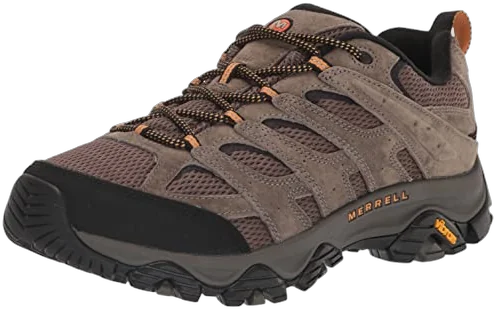
The Merrell Moab 3 Low (men’s · women’s) is the best-selling low-cut hiking shoe on the market, and for flat feet its interest is less about what it does out of the box and more about what it accommodates. The dual-density EVA midsole gives it a reasonable platform, and the twist test result is mid-pack rather than outstanding. What it has that the others do not is room.
This recommendation is deliberately the non-waterproof version. A membrane eats internal volume and breathability, and since what a waterproof membrane costs you in breathability is a real trade in a shoe you are about to stuff a thick orthotic into, the mesh version is the smarter base. Pair it with the insole discussed in the next section and you get a support platform that beats several shoes costing considerably more.
KEEN Targhee 4 Low WP — Best Stable Waterproof
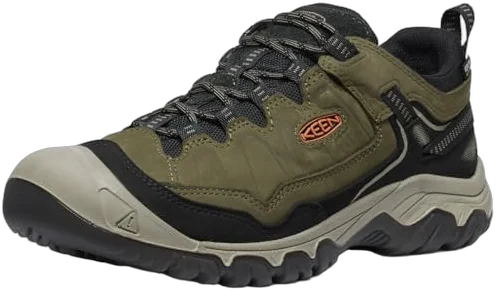
Waterproof shoes are where the soft-and-plush trap gets set most often, because a membrane makes a shoe feel snug and substantial without adding a gram of structure. The KEEN Targhee 4 Low WP (men’s · women’s) avoids that, mostly on the strength of its heel.
Squeeze the counter and it holds. KEEN builds the Targhee line around a rigid TPU heel structure, and combined with a firm platform underneath it means the rearfoot stays upright instead of tipping in on wet ground. The wide-friendly last is the other reason it lands here, since flat feet and broad forefeet travel together often enough that a narrow stability shoe just relocates the problem forward.
Nortiv 8 Wide Toe Box Waterproof — Best Budget, With a Caveat
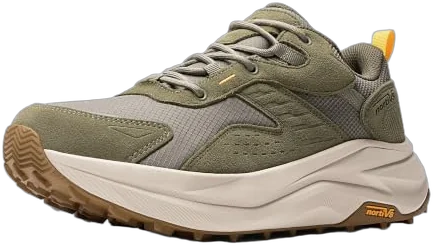
Here is the honest framing on the Nortiv 8 Wide Toe Box Waterproof (men’s · women’s). It is on this list because it is the cheapest option that markets arch support directly, and everything above has told you not to take that claim on faith. So do not.
When it arrives, pull the footbed out and press your thumb into the arch bump. Wring the shoe out and see where it stops. Squeeze the heel. If it holds up, you have a wide, waterproof hiking shoe with real structure for a fraction of what the Spire costs, which is an excellent outcome. If the footbed squashes flat, you now know exactly what the fix is, and the next section covers it. Either way you learned something from your own hands rather than from a product page.
One more name worth knowing: the HOKA Kaha 3 Low GTX comes up constantly in cushioned-stability discussions and has a genuinely firm dual-density platform under all that stack height. Stock has been erratic across sizes recently, so it is worth checking directly rather than counting on it being there.
Swap the Insole Before You Replace the Whole Shoe
This is the section that talks you out of a purchase, and it is probably the most useful one here. Before you replace a shoe, find out whether the shoe was ever the problem. The question of whether orthotics in hiking footwear are worth it at all has a clearer answer than most gear debates, and for flexible flat feet the answer is usually yes.
Check the Volume Before You Check Anything Else
Three conditions have to be met before an insole swap makes sense. The shoe has to pass the twist and heel-squeeze tests, because an insole cannot rescue a shoe that folds through the midfoot. The stock insole has to come out. And there has to be room.
That last one gets skipped constantly. A thick semi-rigid insole added to a shoe with no spare volume just jacks your foot upward, jams your toes into the front and puts pressure across the top of your instep. You will have traded arch pain for a hot spot and a numb toe. Pull the stock footbed, drop the new one in, put your foot in the shoe and check whether the laces still close comfortably before you take it anywhere.
Superfeet Hike Support Insoles
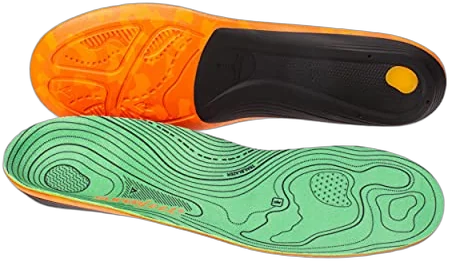
The Superfeet Hike Support Insoles do the one thing a stock footbed will not, which is stay in shape when you stand on them. The carbon-fiber-reinforced shell is what separates a real orthotic from a contoured piece of foam, and you can verify that with the same thumb press you have been using all article.
The clinical side holds up too. Arch-support insoles have been measured improving stance time, cadence and plantar pressure distribution in people with flatfoot, which means the change is happening in your gait and not just in how the first ten minutes feel. If you want the wider field, the full comparison of hiking insoles covers the alternatives, but this is the one to start with.
The economics are the argument. A quality aftermarket hiking insole generally runs $50 to $60, while a shoe marketed specifically for flat feet often runs $150 or more. Trying the cheaper experiment first is correct even in the cases where it eventually fails, because a failed insole swap still tells you the shoe itself is the problem.
Sizing Up for Orthotics, and When It’s Necessary
Hikers call this sizing up for orthotics: deliberately buying a hiking shoe a half size larger than usual specifically to leave room for an aftermarket insole. It works, and it is standard practice among people who have run orthotics for years.
The mistake is doing it speculatively. Fit and sizing only work as a pair here: if you size up and then never swap the footbed, you have bought a sloppy shoe, and a heel that slides inside a shoe undoes everything the heel counter was supposed to do. Buy your normal size unless you already know an orthotic is going in, and if you are unsure, the broader rules for when sizing up hiking footwear is the right call apply here without modification.
Trim a new insole using the stock footbed as a template, not the printed size guide. Lay the old one on top, trace the toe curve, and cut a hair outside the line. An insole cut a fraction too long buckles at the front and creates a ridge you will feel every step.
When a Mid-Cut Boot Is Worth the Weight Penalty
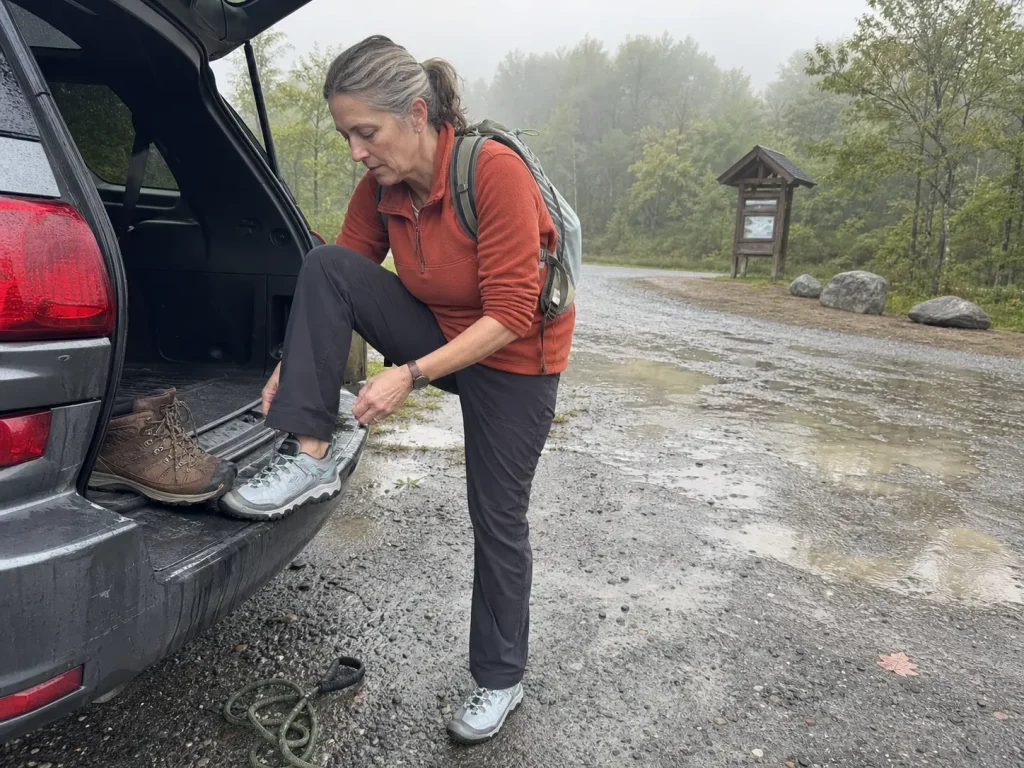
Tell anyone you have foot trouble on trail and the reflex advice arrives within seconds: get boots. It costs you weight, mobility and break-in time, and for flat feet specifically it often solves nothing at all.
Ankle Height Is Not Arch Support
A mid-cut collar wraps the ankle joint and limits how far it can roll laterally. Ankle support and lateral support at the collar are real benefits for a real problem, and it is not the problem you have. Arch collapse happens below the ankle, at the midfoot, and buying a taller hiking boot to fix a torsion issue is buying the wrong spec at a premium.
This site’s position on the broader question is on the record, and the reasoning behind why low-cut hiking shoes beat boots for most hikes applies with extra force to flat feet. What a collapsing arch needs is torsional rigidity through the middle of the shoe, and a stiff low-cut delivers that at meaningfully less weight and with far less break-in than a boot that adds ankle height you were not short of.
The Cases Where a Boot Genuinely Wins
There are real ones, and they are worth naming clearly rather than dismissing the whole category.
- Heavy multi-day pack loads, where the extra pack weight on your back amplifies every degree of ankle rolling
- Technical scrambling, where a foot placed sideways on rock is loading the collar directly
- Sustained scree and talus, where the ground shifts under you unpredictably
- Deep unstable terrain like soft snow or bog, where you also want the height for coverage
If you are in any of those, matching boot stiffness to the terrain you actually hike is a better framework than picking by ankle height, and it will land you on a boot whose midfoot is stiff too rather than one that is simply tall.
What You Give Up
Weight on your feet costs several times what the same weight costs in your pack, and you pay it on every step of every mile. Beyond that you get reduced ankle mobility on steep ground where you actually want articulation, a longer break-in period, more heat, and slower drying when things get wet.
None of that is a reason to never wear boots. It is a reason to make the boot earn its place rather than defaulting to it because your arches hurt.
Why Your Arch Hurts at Mile 6 and Not Mile 1
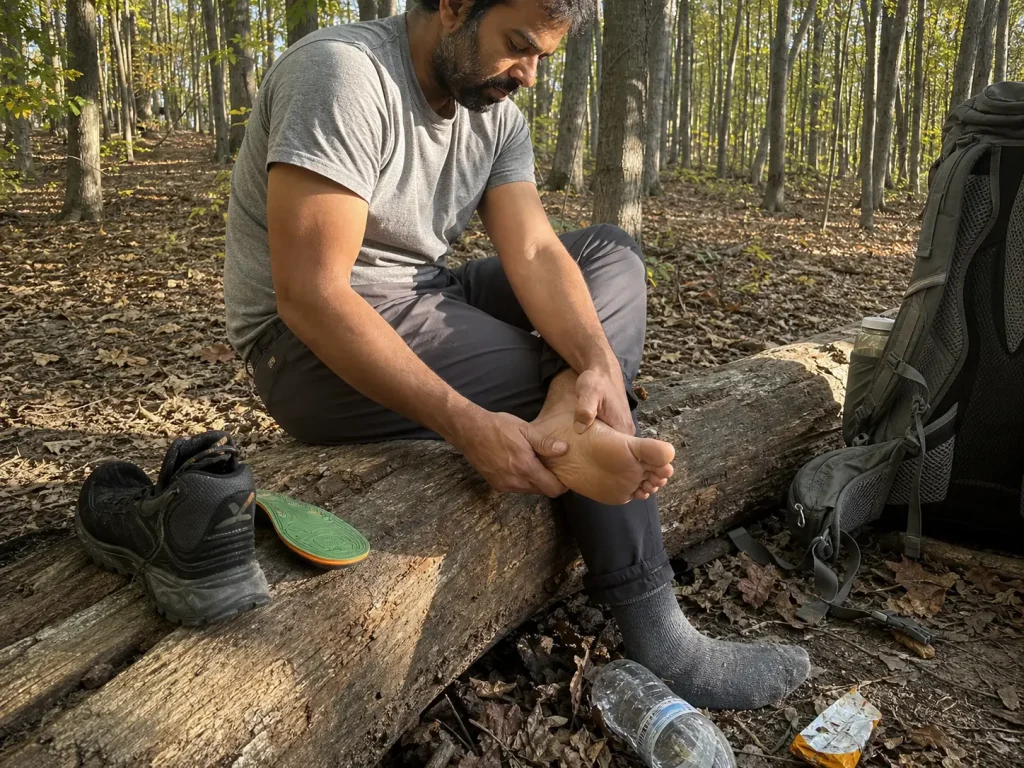
Here is the question most readers actually walked in with, even if they searched for shoes. The pain does not arrive at the trailhead. It shows up somewhere in the back half of the day, which feels like proof that the shoe failed. Usually it is not.
Posterior Tibial Tendon Fatigue, Explained Simply
Your arch has two kinds of support. There is the passive kind, bones and ligaments holding a shape, and there is the active kind, muscle pulling the arch up from above. The posterior tibial tendon is the main active support. It runs down the inside of your lower leg, passes behind the bony bump on the inside of your ankle, and attaches underneath your midfoot.
Because it is muscular, it fatigues. That is the entire explanation for the mile-6 timing. For the first few hours the tendon holds your arch where it belongs. Then it runs out, the arch drops further than it has all day, and pain appears under the midfoot right around where the tendon attaches.
Why Descents and Loaded Packs Trigger It
Two things drain that tendon faster than anything else. A loaded pack increases the force it has to resist on every step, and long descents load it eccentrically, meaning it is working hard while lengthening, which is the most fatiguing way a muscle can work.
That combination is why a hiker can feel fine on a long flat day and fall apart on a much shorter one with sustained descent and a heavy pack on their back. A shoe with genuine torsional rigidity reduces how much work the tendon has to do in the first place, which pushes the failure point later in the day. That is also the honest promise: not elimination, but delay, with less general foot fatigue along the way. If you consistently hit this wall under load, a backpacking shoe built to hold its structure deep into a loaded day matters more than any single arch feature.
What to Do on the Trail When It Starts
Stop before it gets bad, not after. Sit down, get the weight off, and give the tendon a few minutes with no load at all.
Then re-lace, and re-lace properly. Most hikers tighten the whole shoe uniformly when what they need is heel-lock lacing: snug through the upper eyelets to pin the heel back into the counter, slightly looser across the instep so the foot is not being crushed downward. A heel that has migrated forward over six miles is asking the arch to do work the shoe was built to do.
Check your load too. Water is the heaviest thing most people carry and the easiest to redistribute or drink down.
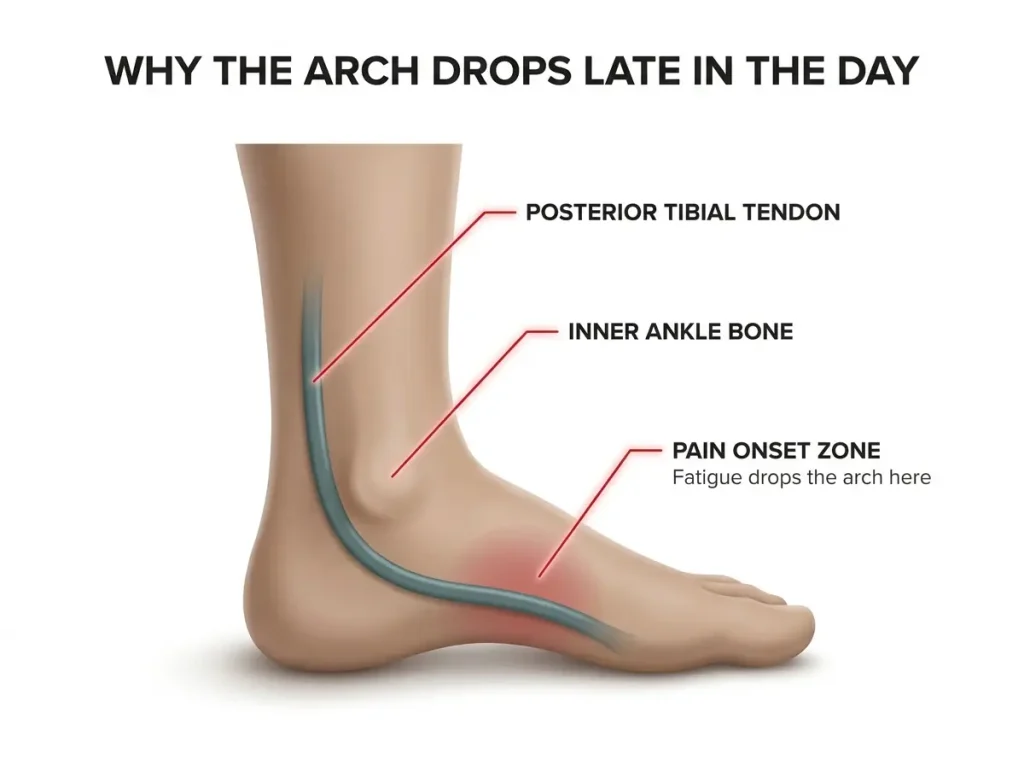
Track the mile marker where the pain starts, not just whether it starts. If a new shoe or insole moves onset from mile 4 to mile 9, that change is working even though the pain has not vanished. Onset timing is the metric that tells you whether you are on the right track.
The Short Version
Three things to take away.
Structure beats softness, every time. A collapsing arch is a rotational problem, and cushioning does nothing against rotation. The shoe that helps is the one that resists a twist, not the one that feels best standing still on carpet.
Test with your hands before you spend. The twist, the heel squeeze and the midsole press take five seconds each and they cut through every claim printed on a box. Run them on the shoe you already own first.
Try the cheap fix before the expensive one. If your current shoe passes the tests and has room, an insole swap is the correct first experiment. Save the new shoe for when you have proven you need one.
Start tonight with the wet-foot test, because everything else follows from knowing whether your arch is flexible or fixed. Then go find your hiking shoes and wring one out. If it folds like a dishcloth, you have your answer, and if it holds, pull the footbed and press your thumb into it. Somewhere in those two minutes is the reason your feet hurt at mile six.
Frequently Asked Questions
01What is the best hiking shoe for flat feet?
The La Sportiva Spire GTX Low-Cut is the strongest overall pick, because its nylon shank gives it real torsional rigidity through the midfoot. The KEEN Targhee 4 Low WP is the better waterproof option. The best shoe is whichever one resists the twist test in your own hands.
02Is hiking footwear good for flat feet?
Yes, but only the structurally stiff kind. Hiking shoes are generally built firmer than running or walking shoes, which helps a low arch, though the category label alone guarantees nothing. Check the heel counter and midfoot stiffness before assuming a hiking shoe is supportive.
03What shoes do podiatrists recommend for flat feet?
Stability and motion control builds with a structured heel counter, a rigid midfoot and a removable footbed. The APMA points low arches specifically toward stability designs rather than cushioned ones, and a medial post is the feature doing the actual work.
04Can people with flat feet hike?
Absolutely, and plenty of strong hikers do it every weekend. Flat feet describe a foot shape, not a limitation. With a torsionally rigid shoe and the right insole, most hikers with fallen arches cover the same mileage as anyone else.
05What does overpronation mean in shoes?
Overpronation is the foot rolling inward past neutral through midstance. An overpronation shoe is shorthand for a build that resists that roll, usually with a denser dual-density midsole on the inner side. It describes motion, not the shape of your arch.

I've spent more than a decade researching hiking gear and trail technique. I read the specs, the forum threads and the long-term reviews, and every pick here comes with what it gets wrong.
End of the trail
You read every mile of this one. Here's where the trail goes next.