In this article
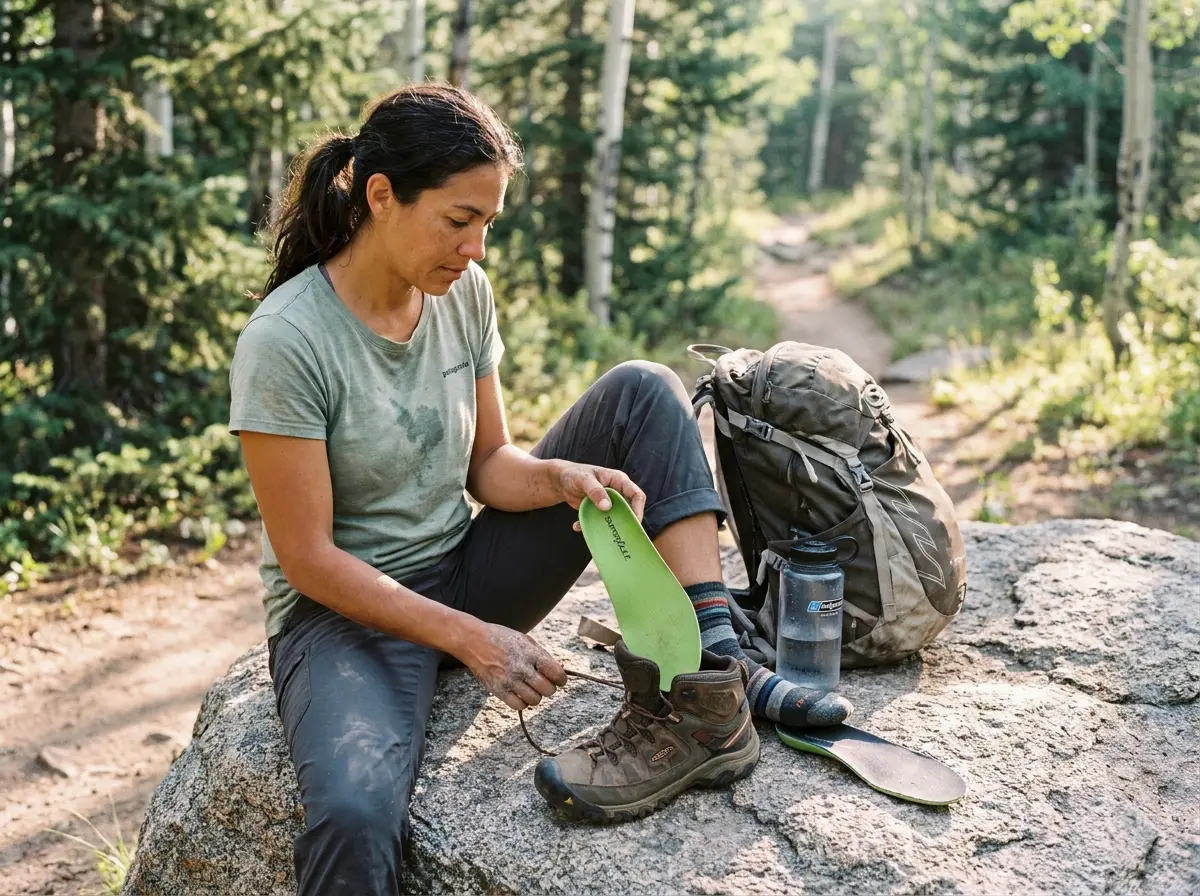
Six miles into a loaded backpacking trip, your arches start burning and your heels feel like they’re landing on concrete with every downhill step. I ignored that feeling for years — just powered through with stock insoles and paid for it with plantar pain that lasted weeks after every trip. After testing both custom and OTC orthotics across rocky alpine terrain, muddy forest trails, and desert hardpack, I can tell you exactly when they help, when they don’t, and how to avoid the mistakes that make foot pain worse.
Quick Answer: Yes, orthotics in hiking boots help most hikers by redistributing pressure from the heel to the arch, improving alignment under pack weight, and reducing fatigue on long days. Quality OTC insoles work for most people — custom orthotics are only necessary for chronic conditions or structural issues that don’t respond to prefabricated options.
What Orthotics Actually Do Inside a Hiking Boot
How Stock Insoles Fall Short on Trail
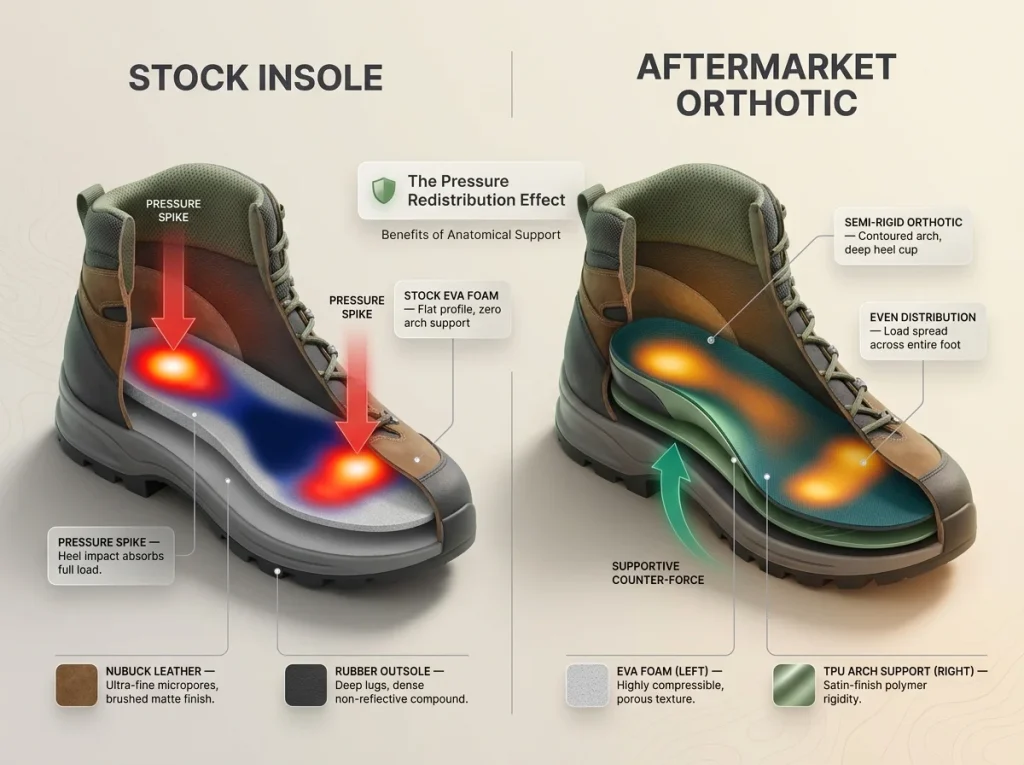
Pull the stock insole out of your hiking boot right now and look at it. It’s a flat piece of EVA foam — maybe 2 or 3 millimeters thick — with barely any arch contouring. Boot manufacturers include these because they need something in the boot for the store tryout. They’re not designed for a loaded 12-mile day on uneven terrain.
The problem compounds with distance. That thin foam compresses under your body weight plus pack weight, and by mile 6 or 7, you’re essentially walking on the boot’s rigid midsole with nothing between it and the bottom of your foot. You know your stock insoles are done when you can see the permanent impression of your heel pressed through the bottom of the foam.
The Pressure Redistribution Effect
The real value of aftermarket orthotics is what happens to pressure distribution. Research published in Clinical Biomechanics found that orthotics produce significant reductions in peak pressure at the rearfoot while increasing contact area through the midfoot. In plain trail terms: the pain moves away from where it hurts — your heel and the ball of your foot — to where the orthotic catches it across your arch.
This matters more when you’re carrying weight. A 30-lb backpack shifts your center of gravity forward, which increases forefoot loading with every step. An orthotic with proper arch support counteracts that shift by supporting the longitudinal arch and spreading the load across more surface area. Without it, the same few pressure points take all the punishment mile after mile.
Alignment and Gait Correction Under Load
Beyond cushioning, orthotics correct how your foot moves through each step. If you overpronate — your foot rolls inward too far at contact — that misalignment travels up through your ankle, knee, and hip. On flat ground with no pack, it’s minor. On a rocky descent with 30 pounds on your back, it’s the difference between a comfortable day and waking up the next morning with knee pain you can’t explain.
The American Academy of Orthopaedic Surgeons classifies orthotics into three functional categories: rigid (for structural correction), semi-rigid (for athletes and hikers needing both support and flex), and accommodative (soft, for pressure relief without correction). Most hikers do best with semi-rigid orthotics because trails demand both stability and the ability to flex over uneven surfaces.
If you’re wondering whether upgrading your hiking boot insoles is worth the investment, the short answer is yes — for almost everyone who hikes more than a few times a year.
Pro tip: Semi-rigid orthotics flex enough to absorb trail irregularities but won’t collapse under pack weight the way a soft foam insole does. If you’re choosing between “more cushion” and “more structure,” go structure every time for loaded hiking.
Signs You Actually Need Orthotics for Hiking
Pain Patterns That Point to an Orthotic Solution
Not every foot problem on trail means you need orthotics. But certain patterns point directly at the insole as the issue. Arch collapse pain that shows up consistently after mile 3 or 4 — not from the start, but building gradually — is the classic sign. Your foot’s intrinsic muscles are fatiguing because the stock insole isn’t supporting the arch, and the muscles are doing all the work alone.
Heel bruising on rocky trails is another red flag. If you feel like every rock under your foot punches straight through the sole, your insole’s shock absorption has either worn out or was never adequate. Recurring hot spots in the exact same location — always the same spot on the same foot — usually indicate a pressure point created by how your foot sits in the boot, not a sock or lacing problem.
Here’s the one most hikers miss: knee or hip pain that only appears on hike days. If your joints feel fine during regular daily activity but ache after 6 miles on trail, the issue is often gait misalignment under load. Your foot is doing something subtle — rolling, collapsing, shifting — that your body compensates for over distance until something starts hurting upstream.
The Shoe Wear Test You Can Do Right Now
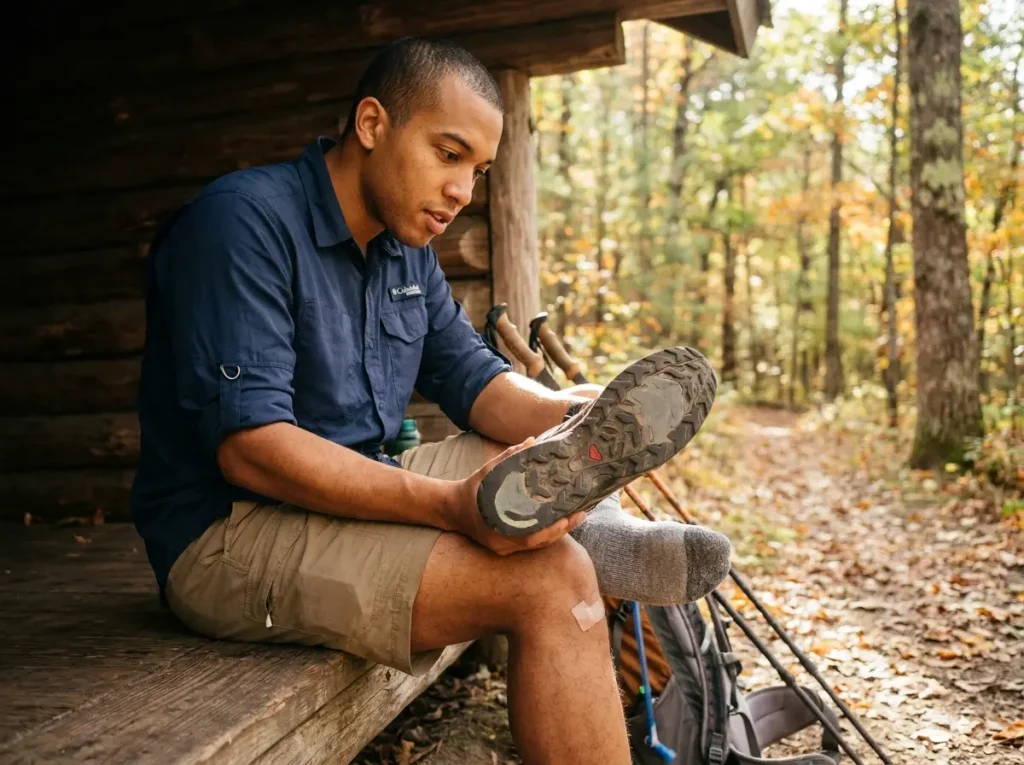
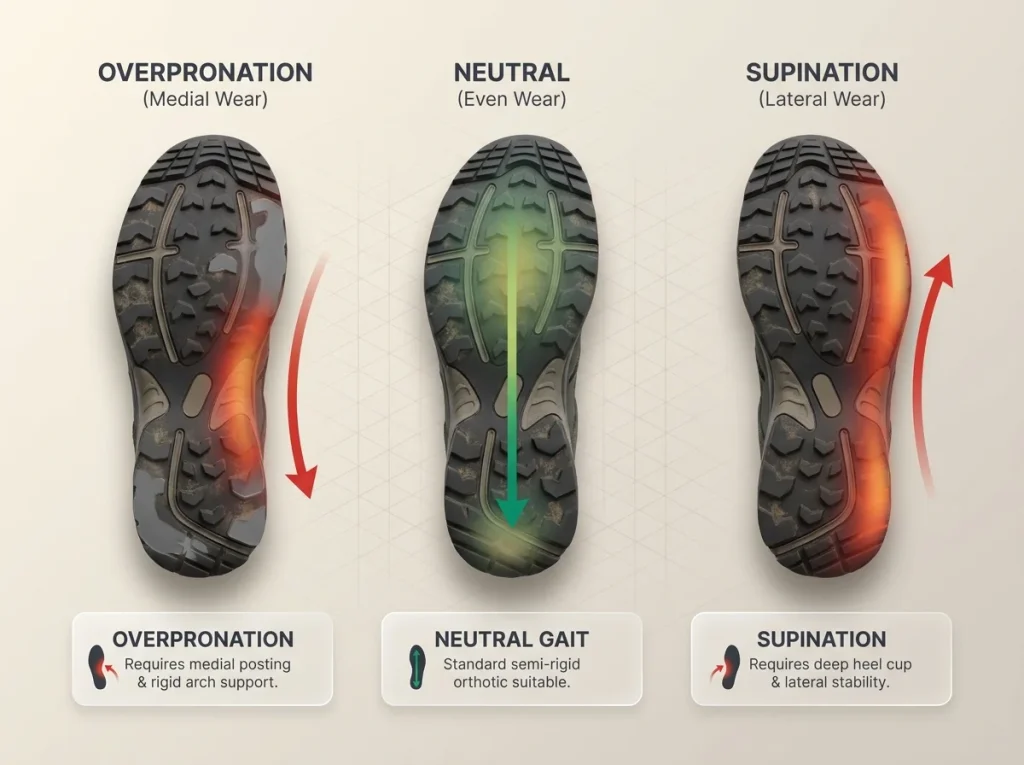
Flip your most-used hiking shoes over and look at the outsole. The wear pattern tells you what your foot is actually doing on every step. If the inside edge of the heel is worn down noticeably more than the outside, you’re overpronating — your foot rolls inward at contact and an orthotic with medial posting can correct this.
If the outside edge shows more wear, you’re supinating — rolling outward — which is less common but equally problematic on uneven ground. Even wear across the heel and forefoot is the neutral pattern, and if that’s you, a supportive insole without aggressive correction is probably sufficient.
When Your Feet Tell You the Boot Isn’t the Problem
The most common mistake I see in the hiking community: buying three different pairs of boots trying to fix foot pain that was never about the boot. A hiker spends $200 on new boots, gets the same arch pain at mile 5, buys another pair, same result. The boots weren’t the problem. The flat piece of foam under their foot was the problem the entire time.
That said, numbness in the forefoot — especially in the toes — is usually a boot width issue, not an insole issue. If your toes go numb or tingle after a couple miles, that warm spot on your heel is really telling you something about compression, but an orthotic alone won’t fix a boot that’s simply too narrow for your foot.
Custom Orthotics vs OTC Insoles for Hiking
What Custom Orthotics Actually Get You
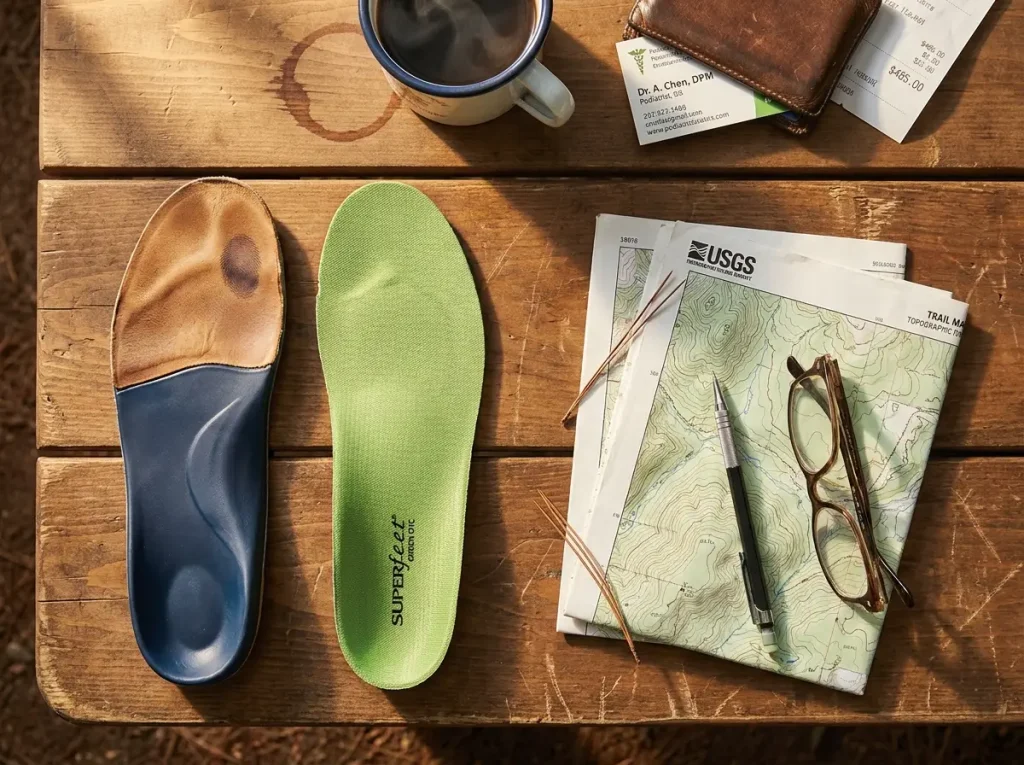
Custom orthotics start with a gait analysis — a podiatrist watches you walk, maps your pressure points, and takes a mold or 3D scan of your foot. The result is an insole built for your exact anatomy: your specific arch height, your heel angle, your metatarsal profile. They cost between $300 and $800 per pair and last 2 to 5 years depending on usage and material.
For hikers with diagnosed structural conditions — rigid flat feet, severe overpronation that hasn’t responded to OTC options, or post-surgical gait changes — customs are often the right call. They can address asymmetries between your left and right foot that no off-the-shelf product can match.
Quality OTC Insoles That Compete
Here’s what the podiatry industry doesn’t love hearing: multiple systematic reviews have found no significant difference in pain relief between custom orthotics and quality prefabricated insoles for most common foot conditions. A review by Dr. Ettore Vulcano highlighted this finding across randomized controlled trials — for the average recreational hiker with moderate arch pain or mild pronation issues, a well-designed OTC insole does the same functional job.
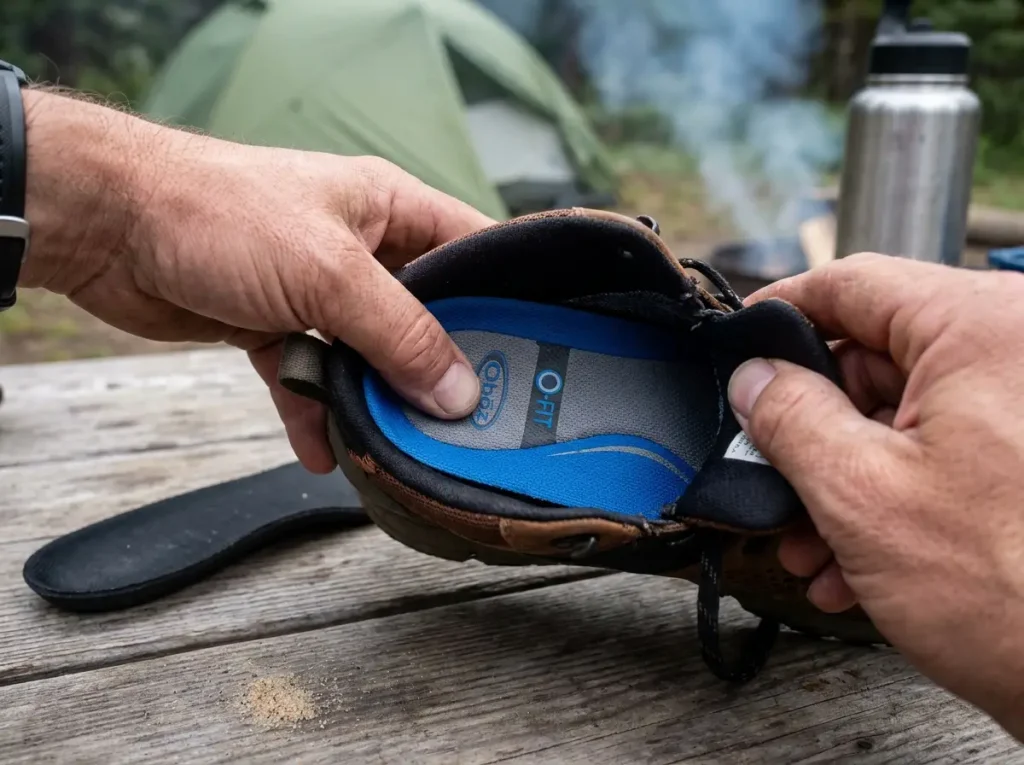
Products like the Superfeet Green, Oboz O-Fit, and Sole Active Medium provide structured arch support with a deep heel cup for around $25 to $60. They use population-based arch profiles rather than custom molds, which means they won’t address unusual anatomy, but they fit the majority of foot shapes adequately. For our field-tested comparison of the best hiking insoles, we ran these across multiple trail types to see which held up.
The Honest Cost-Per-Mile Math
Let’s do the math nobody talks about. A pair of custom orthotics at $500 lasts roughly 2,000 trail miles before the materials degrade beyond usefulness. That’s $0.25 per mile. A pair of Superfeet at $45 lasts about 500 miles under loaded hiking. That’s $0.09 per mile.
Custom orthotics cost nearly three times more per mile than quality OTC options. That price difference is worth it if you have a structural condition that OTC insoles can’t address — but for the majority of recreational hikers dealing with general fatigue, mild arch pain, or comfort issues, starting with OTC is the smarter move. If 2 to 4 weeks of consistent OTC use doesn’t improve your symptoms, that’s when a podiatrist visit makes sense.
Pro tip: If your podiatrist also manufactures and sells the custom orthotics they’re recommending, get a second opinion from an independent practitioner. The financial incentive to prescribe an expensive custom when an OTC would work is real.
How to Fit Orthotics Into Hiking Boots
The Volume Check Before You Buy
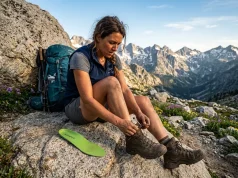
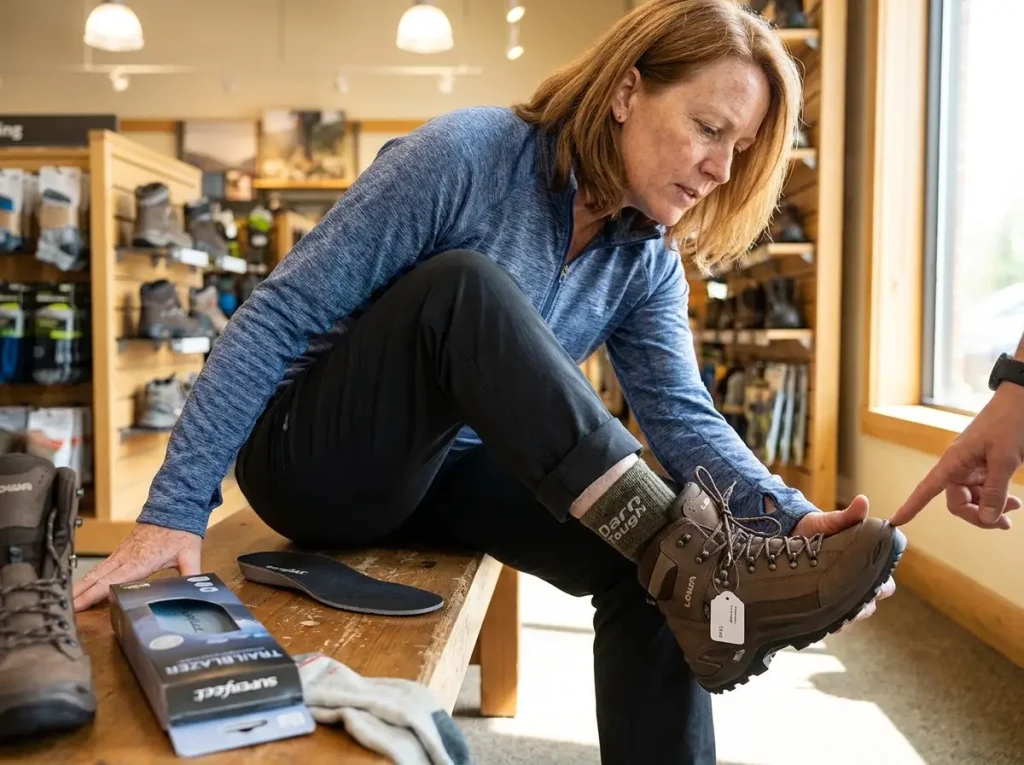
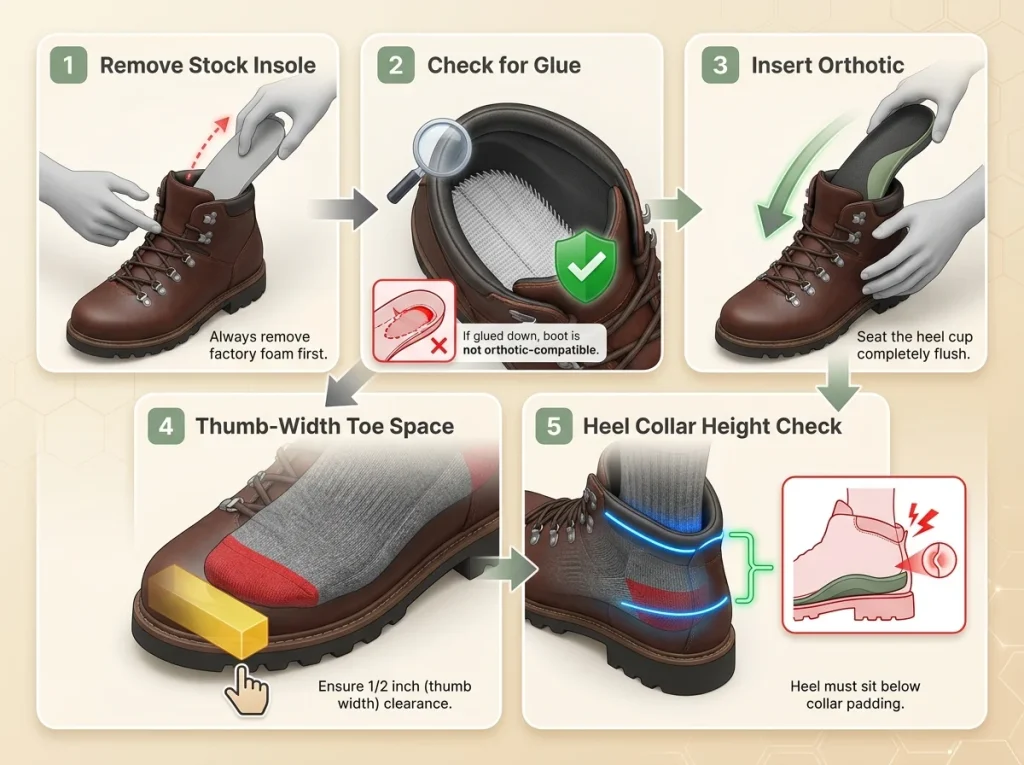
Step one is simple but overlooked: remove the stock insole from your hiking boot. If it’s glued in and doesn’t come out cleanly, that boot won’t work well with aftermarket orthotics. Most quality hiking boots from brands like Keen, LOWA, Danner, and Oboz have removable footbeds designed to be swapped.
With the stock insole out, drop your orthotic in and put your foot in the boot. You’re checking two things: thumb-width space between your longest toe and the front of the boot, and whether your heel sits at the right height relative to the boot collar. If the orthotic pushes your heel up so it sits above the collar padding, you’ll get heel slippage and blisters within the first mile.
Sizing Up — When and How Much
Vertical volume matters more than toe box width when accommodating orthotics. This is a point the Backpacking Light community has hammered home across dozens of forum threads: it’s not about getting a wider boot, it’s about getting a boot with more interior height so the orthotic doesn’t eat up your toe clearance.
If you’re buying boots specifically to use with aftermarket orthotics, go up a half size from your normal fit. But only if the heel cup still locks your heel in place — a larger boot that lets your heel slide is worse than a snug boot with a flat insole. Always test this on a decline if the store has a ramp.
The Sock-Orthotic-Boot Trinity
Your sock thickness changes the entire fit equation. A thick cushioned merino wool crew sock plus a structured orthotic plus a hiking boot is a fundamentally different fit than a thin liner sock with the same orthotic in the same boot. You need to test with the socks you’ll actually wear on trail.
After inserting your orthotic, always re-lace using the heel-lock lacing technique that prevents slippage. The orthotic changes where your heel sits inside the boot, and standard lacing may not hold it in place on steep descents.
Pro tip: Bring three pairs of socks to your boot fitting — thin, medium, and thick. Test the boot with your orthotic and each sock weight. You’ll know immediately which combination locks everything in place without pressure points.
Orthotic Materials and How They Perform on Trail
EVA Foam — Soft but Short-Lived
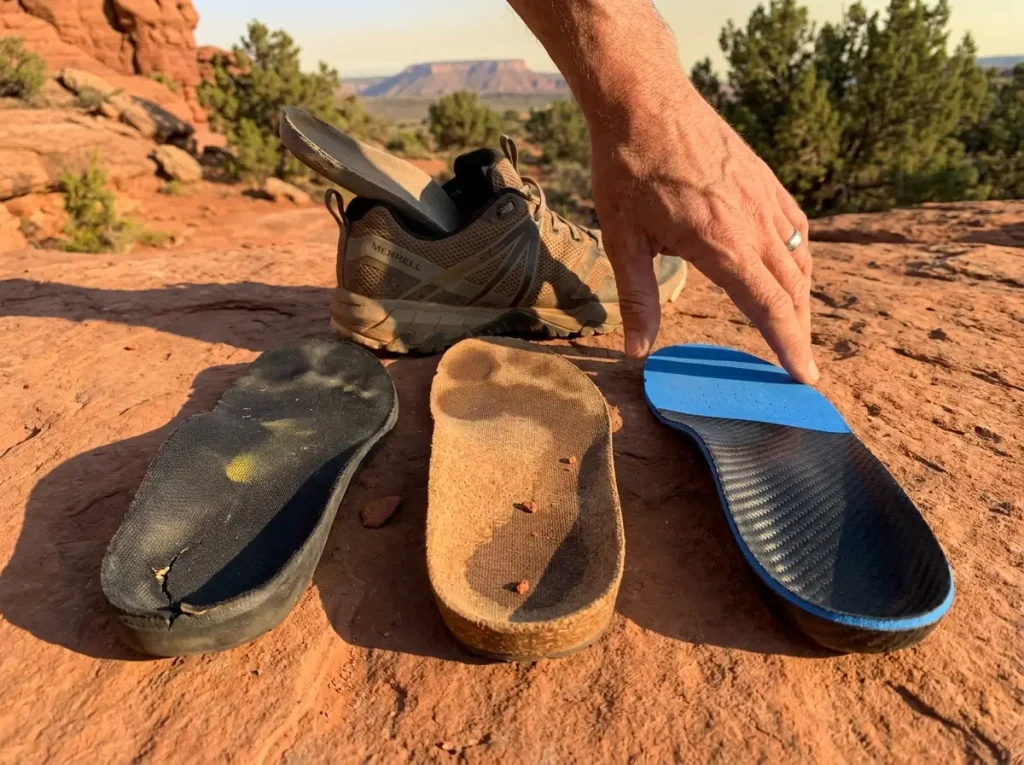
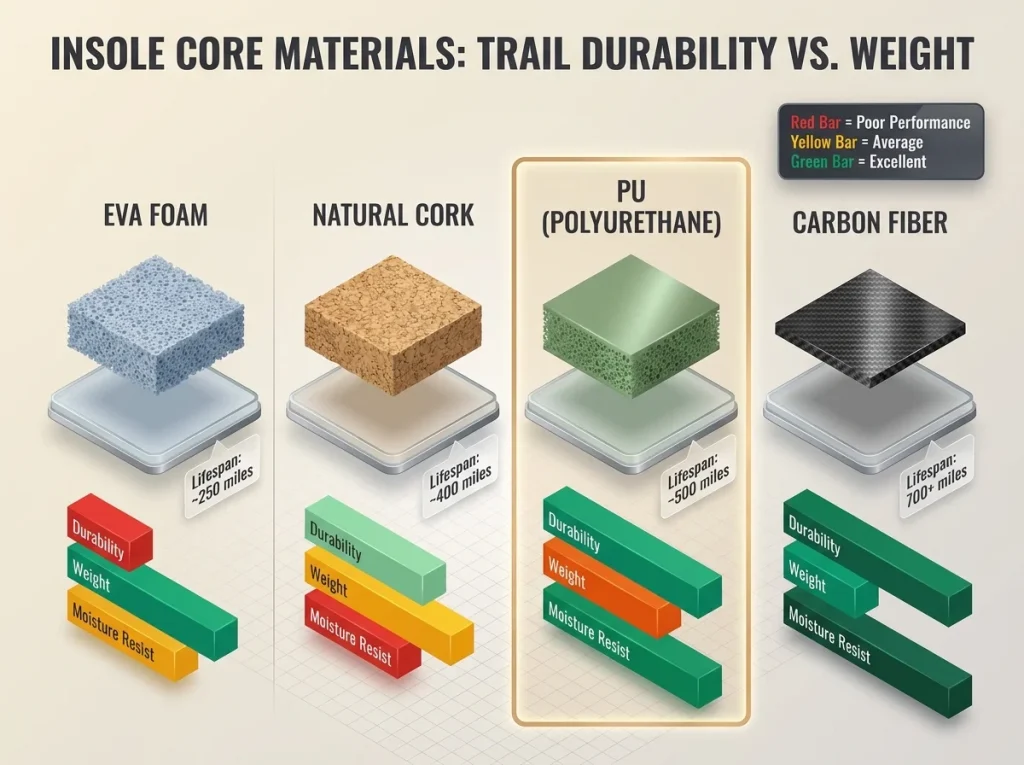
EVA foam is the most common insole material and what most stock insoles are made from. It’s lightweight, inexpensive, and provides decent initial cushioning. The problem: under loaded hiking conditions — your body weight plus a 25 to 35 pound pack — EVA shows visible compression set at 200 to 300 miles.
For weekend day hikers who put on maybe 200 miles a year, EVA is fine. It compresses gradually and you replace it once a season. For backpackers logging serious mileage or doing multi-day trips with heavy packs, EVA dies too fast. By the time it’s worn out, you’ve been hiking on compressed foam for miles without realizing the support is gone.
Cork — Natural Mold, Moisture Problem
Cork insoles have a compelling advantage: they gradually conform to your unique foot shape over time. Natural cork also inhibits bacteria and fungi, which means less odor — something your tent-mate will appreciate on a 5-day trip. The material feels firm but not rigid, and it provides good structural support once it molds.
The downside is moisture. Cork degrades when exposed to prolonged wet conditions without proper sealing. If you’re hiking creek crossings, navigating through rain, or dealing with shoulder-season mud, cork absorbs water and softens. Once waterlogged, its structural integrity drops and it takes hours to dry out. Great for dry Rocky Mountain trails. Not great for Pacific Northwest fall hiking.
Carbon Fiber and Rigid Composites
At the performance end of the spectrum, carbon fiber insoles offer the highest durability and energy return. The material is stiff, lightweight, and survives 500 to 700 miles before functional degradation — more than double what EVA manages. Most carbon fiber designs pair a rigid composite base with a softer EVA or PU top layer for comfort.
The trade-off is feel. Carbon fiber transmits more trail feedback through the boot, which means you feel rocks and roots more directly. On smooth trails this translates to a responsive, efficient stride. On technical rocky terrain, it can feel harsh. The sweet spot for most hikers is PU open-cell foam — a material that keeps its cushioning five times longer than EVA and breathes better, without the rigidity of carbon fiber.
Pro tip: If you hike across different terrain types through the season, consider owning two insoles — a semi-rigid PU-based insole for rocky trails and a firm cork or carbon fiber option for smooth paths and high-mileage days. Swapping insoles takes 30 seconds and changes how the boot feels entirely.
When Orthotics Don’t Help (and Can Make Things Worse)
Overcorrection and the Ankle Sprain Risk
More support doesn’t always mean better support. Orthotic overcorrection — using an insole with more arch height or more aggressive posting than your foot actually needs — is a real problem, and it’s more common than you’d think. Too much medial arch support can push your foot into a lateral position, increasing the risk of ankle sprains on uneven ground.
A narrative review published in PMC examining orthotic interventions for foot and ankle conditions confirms that improper orthotic selection can create new biomechanical issues rather than solving existing ones. The orthotic is supposed to guide your foot’s natural motion, not force it into a different pattern.
The Wrong Arch Height Problem
Arch types aren’t one-size-fits-all, and neither are orthotics. A high-arch orthotic under a flat foot creates pressure points along the arch that weren’t there before — you’ll feel a hard ridge pressing into the bottom of your foot that gets worse with every mile. Conversely, a minimal-arch insole under a high-arched foot provides zero support where it’s needed most, making the investment pointless.
The mistake happens when hikers buy orthotics based on a brand recommendation or online quiz without actually understanding their arch profile. Your arch height when standing still is different from your arch height under load while hiking downhill with a pack. A proper assessment measures your foot in both conditions.
When the Boot Is the Real Problem
Sometimes the boot itself is the issue and no orthotic will fix it. A boot that’s too narrow compresses the metatarsal heads and causes forefoot numbness regardless of what insole is inside. A boot with an aggressive rocker profile may conflict with a rigid orthotic’s support angle. A boot that’s simply the wrong shape for your foot creates friction and hot spots that insoles can only mask, not solve.
The Institute for Preventive Foot Health recommends consulting a foot health professional before investing in orthotics, and for good reason: a 10-minute assessment can determine whether your issue is the insole, the boot, or something else entirely. People have spent $600 on custom orthotics that ended up stored in a closet because the real problem was a boot that didn’t fit their foot shape.
Breaking In Orthotics for Hiking — The Timeline
The Indoor Phase (Days 1–5)
The biggest orthotic mistake in the hiking community: buying new insoles three days before a trip and expecting them to feel great on a 14-mile day with 3,000 feet of elevation gain. Orthotics change how your foot loads and how your muscles work. Your body needs time to adapt.
Start by wearing your orthotics at home for 2 to 4 hours the first day, then increase to a full day by day 5. Keep your hiking boots on — this is about breaking in the orthotic-boot combination, not just the insole. Walk around the house, run errands, do yard work. Pay attention to any pressure points that develop: mild discomfort that fades as your foot adapts is normal. Sharp, localized pain that gets worse is a sign the orthotic isn’t right.
Short Trail Tests (Week 2)
Once you’re comfortable wearing the orthotics all day for regular activities, take them to an easy 2 to 3 mile hike on mostly flat terrain. Wear the same socks you’ll use on your actual trip. This phase tests how the orthotic performs during the specific motion of hiking — the push-off, the descent impact, the lateral stability on uneven ground.
If everything feels solid on a short flat hike, add some moderate elevation gain — maybe 500 to 800 feet over a couple miles. Downhill is where most orthotic issues reveal themselves because the impact forces are higher and the foot slides forward in the boot.
Full Load Day (Week 3–4)
Before you trust your orthotics on a real trip, do at least one loaded day hike with your actual pack weight at a distance close to what you’ll be hiking. This is the final test. Leather boots with new orthotics take 3 to 4 weeks to fully break in because the leather needs to conform to the new interior shape. Synthetic boots adapt faster — usually 1 to 2 weeks.
Never soak your boots to speed up the process. Water breaks down the adhesives and materials in both the boot and the orthotic. If you want the full protocol for getting boots trail-ready without shortcuts, our complete boot break-in guide covers every step.
Pro tip: If the orthotic feels wrong at mile 1, it’s not going to magically feel right at mile 10. Carry your original stock insoles as a backup on your first few hikes with new orthotics — you can swap them trailside if something isn’t working.
Conclusion
Orthotics work for most hikers — but only when matched to the right foot, the right boot, and the right trail conditions. Start with quality OTC insoles before jumping to expensive customs, because the clinical evidence says they perform equally well for the majority of common foot issues. Always break in your orthotics before taking them on a real hike, and remember that more correction isn’t always better — overcorrection creates new problems that are harder to diagnose than the original pain.
Pick up a pair of structured OTC insoles, test the fit with your hiking boots and trail socks this weekend, and put them through the 3-week break-in protocol before your next big trip. Your feet at mile 12 will feel completely different.
Q1 Do orthotics really help with hiking?
Yes, orthotics reduce heel and forefoot pressure by redistributing load across the arch, which cuts fatigue and pain on long hikes. They’re most effective for hikers with mild to moderate arch collapse, heel pain, or overpronation — conditions that worsen under pack weight. OTC insoles handle this for most people without needing custom-molded options.
Q2 Can you put orthotics in hiking boots?
Most quality hiking boots have removable stock insoles designed to be swapped for aftermarket orthotics. Remove the stock footbed first, insert your orthotic, and check for adequate toe room and proper heel height. If the stock insole is glued in, that boot isn’t compatible without modification.
Q3 What kind of orthotics are best for hiking?
Semi-rigid orthotics with a structured arch and deep heel cup work best for most hikers. They provide enough support for loaded hiking without being so stiff that they fight the natural flex of uneven terrain. PU-based insoles last longer than EVA and offer better cushioning retention over high mileage.
Q4 Do I need custom orthotics or are over-the-counter insoles enough for hiking?
Start with OTC. Clinical reviews show no significant difference in pain relief between custom and quality prefabricated insoles for most foot conditions. Move to custom orthotics only if OTC insoles don’t resolve your symptoms after 2 to 4 weeks of consistent use, or if you have a diagnosed structural condition like rigid flat feet.
Q5 How do I know if my hiking boots have enough room for orthotics?
Remove the stock insole, insert your orthotic, and put your foot in. Check for a thumb’s width of space between your longest toe and the boot front. Your heel should sit at or below the boot collar padding — if the orthotic pushes your heel above the collar, you’ll get slippage and blisters. Try going up a half size if the fit is tight.
Risk Disclaimer: Hiking, trekking, backpacking, and all related outdoor activities involve inherent
risks which may result in serious injury, illness, or death. The information provided on The Hiking Tribe is for
educational and informational purposes only. While we strive for accuracy, information on trails, gear, techniques,
and safety is not a substitute for your own best judgment and thorough preparation. Trail conditions, weather, and
other environmental factors change rapidly and may differ from what is described on this site. Always check with
official sources like park services for the most current alerts and conditions. Never undertake a hike beyond your
abilities and always be prepared for the unexpected. By using this website, you agree that you are solely
responsible for your own safety. Any reliance you place on our content is strictly at your own risk, and you assume
all liability for your actions and decisions in the outdoors. The Hiking Tribe and its authors will not be held
liable for any injury, damage, or loss sustained in connection with the use of the information herein.
Affiliate Disclosure: We are a participant in the Amazon Services LLC Associates Program, an
affiliate advertising program designed to provide a means for us to earn advertising fees by advertising and linking
to Amazon.com. As an Amazon Associate, we earn from qualifying purchases. We are also an official affiliate partner
of Black Diamond Equipment via the AvantLink network. If you click on a Black Diamond affiliate link and make a
purchase, we may earn a commission at no additional cost to you. We also participate in other affiliate programs and
may receive a commission on products purchased through our links. Additional terms are found in the terms of
service.