




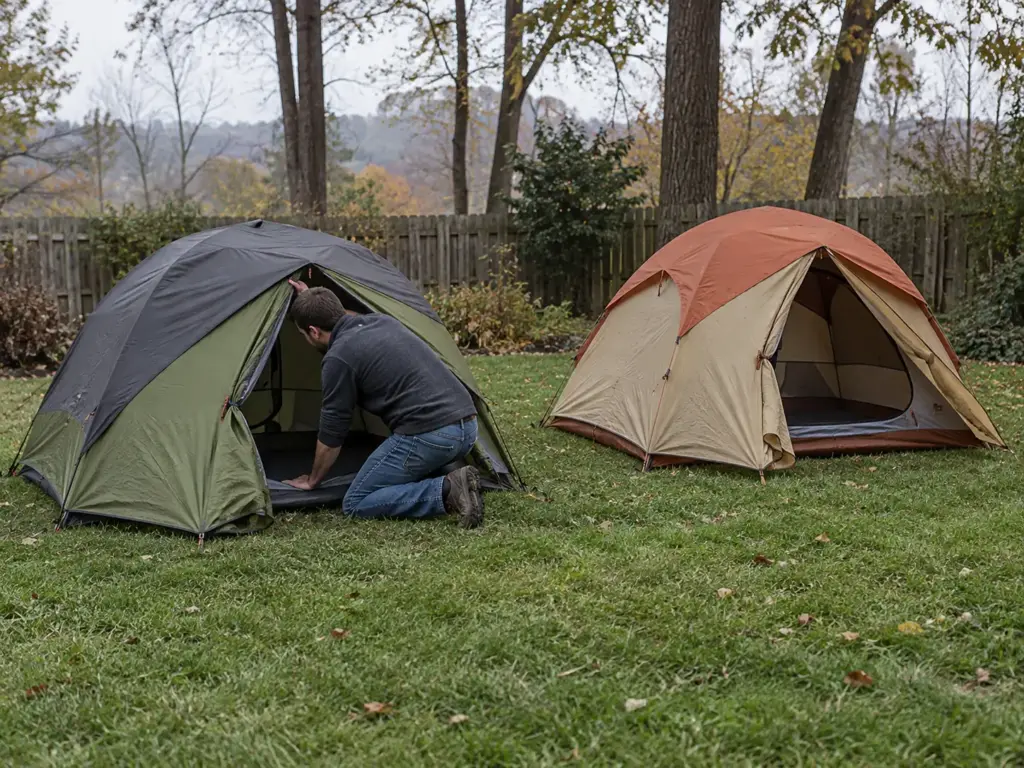
You have two tabs open, a Big Agnes and a Marmot, both three-season, both freestanding, both priced like a sensible weekend purchase, and the specs read almost the same. The Blacktail vs Tungsten tent question usually gets settled by something that is not in the product photo, like whether the floor protector comes in the box.
Camping forums keep circling the same three questions: is the Tungsten 3P really a 3 person tent, is the Tungsten 4P ceiling too low, and does the Blacktail come with its footprint. This article sets the two side by side at 2P, 3P and 4P, adds up what each box really contains, and ends with a rule for your height and your trip. Here is the short version.
| Question | Big Agnes Blacktail | Marmot Tungsten |
|---|---|---|
| Footprint in the box | Sold separately | Included |
| Headroom at 3P | About 44 in (retailer listings) | 46.1 in |
| Floor at 3P | About 44 sq ft (retailer listings) | 40.9 sq ft |
| Storage and vestibules | Smaller vestibules (retailer listings) | 18.3 sq ft at 3P, 37 sq ft at 4P |
| Best for | More floor per pound, shorter ceiling | Taller campers and car camping |
Blacktail vs Tungsten Tent Specs Side by Side at the Same Size
Compare the 3P to the 3P and the 2P to the 2P, and keep the 4P numbers at arm’s length until you have read the maker’s own page. Both lines are 3-season tent designs, a point Outdoor Crunch makes about the pair, and both are freestanding, double-wall designs with two doors and two poles. If wind and snow are on your trip plan, the 3-season versus 4-season tent breakdown will tell you when neither of these is the right shelter. Here is how they line up when capacity is held constant.
| Spec | Big Agnes Blacktail | Marmot Tungsten |
|---|---|---|
| 2P floor area | About 33 sq ft (another retailer says 29) | 30.1 sq ft |
| 2P peak height | 42 in | 42.1 in |
| 2P trail weight | 4 lb 8 oz | 4 lb 15.7 oz minimum |
| 3P floor area | 44 sq ft | 40.9 sq ft |
| 3P peak height | 44 in | 46.1 in |
| 3P weight | 5 lb 11 oz packed | 6 lb 0.3 oz minimum |
| 3P vestibules | Smaller per retailer listings | 18.3 sq ft total |
The Blacktail column comes from retailer listings, not from Big Agnes’s own page, and different sites measure weight in different ways. Treat every gap in that column as a rough one.
The 2P Pair
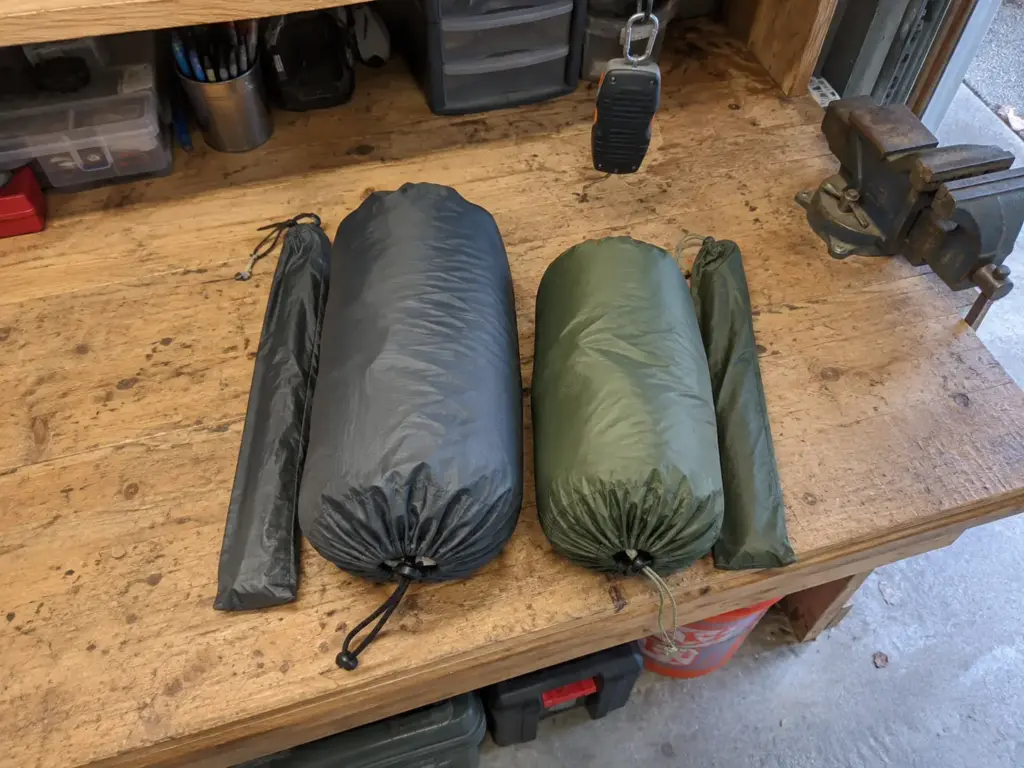
The Marmot Tungsten 2P has a 30.1 sq ft floor, a 42.1 in peak, a minimum trail weight of 4 lb 15.7 oz and a packaged weight of 5 lb 14.2 oz, according to the REI spec sheet. It also lists two doors, two poles and a footprint in the package. The Big Agnes Blacktail 2P, per retailer listings, has a floor of about 33 sq ft (one retailer says 29, with a 5 lb weight that includes the footprint), a 42 in head height, a 4 lb 8 oz trail weight and vestibules of about 9 sq ft each.
So the heights tie, the Blacktail gives a little more floor, and it comes in a few ounces lighter. The Tungsten sheet says “2 big vestibules” without giving an area, so vestibule size at 2P cannot be compared with real numbers.
Both of these are crossover tents, built for a car-camping weekend more than a long carry. If your trips are mostly miles on foot, the best 2 person backpacking tents sit a clear step lighter.
The 3P Pair
The 3P is the cleanest match, and the numbers split in an interesting way. The Big Agnes Blacktail 3P lists 44 sq ft of floor, 44 in of headroom and 5 lb 11 oz packed, again per retailer listings. The Marmot Tungsten 3P has 40.9 sq ft, 46.1 in and a 6 lb 0.3 oz minimum weight, with 18.3 sq ft of vestibule area across both doors, from the Trailspace spec block. Its packed size is 23.2 x 7.1 in.
The Blacktail wins on floor, the Tungsten wins on headroom and vestibule room.
Do not read much into the weight gap. A packed weight and a minimum trail weight are different measurements, and the tent weight comparison by category explains which one to trust for what. A Trailspace reviewer who put the Tungsten 3P on a scale makes the same point: Marmot lists 5 lb 15 oz for tent, fly and poles, and 6 lb 5 oz with the groundsheet, while the reviewer measured 6 lb 6 oz with everything including the stuff sack.
On the capacity label, the same reviewer called the Tungsten 3P “a spacious 2-person tent” and would not pick it as a primary multi-person backpacking shelter. That matches the floor math. Three adults on standard pads in 40.9 sq ft will be elbow to elbow.
Solo buyers should know the Blacktail has no 1P, while the Tungsten line runs from 1P to 4P, according to Switchback Travel. If one sleeper is your real case, start with the best ultralight one-person tents instead.
Why the 4P Numbers Do Not Line Up
The Marmot Tungsten 4P is the easy side here. Switchback Travel measured a 52.7 sq ft floor, a 52.8 in peak, a 37 sq ft vestibule and a trail weight of 7 lb 15 oz. Another listing gives a packaged weight of 9 lb 3.8 oz, which is more than a pound heavier, most likely because packaged weight counts items the trail weight leaves out.
The Big Agnes Blacktail 4P is the hard side. The sources disagree on its floor area, on its weight and on its vestibule size, and that disagreement is wide enough that publishing any single number would be a guess dressed up as a fact. Read Big Agnes’s own spec page for the 4P before you compare it to anything.
Headroom, Floor Space and Storage
Headroom is where the Tungsten pulls ahead at 3P and where it lets you down at 4P. Floor area and storage decide whether the tent feels like a room or a sleeping bag with walls.
Floor Area and Sleeping Pads
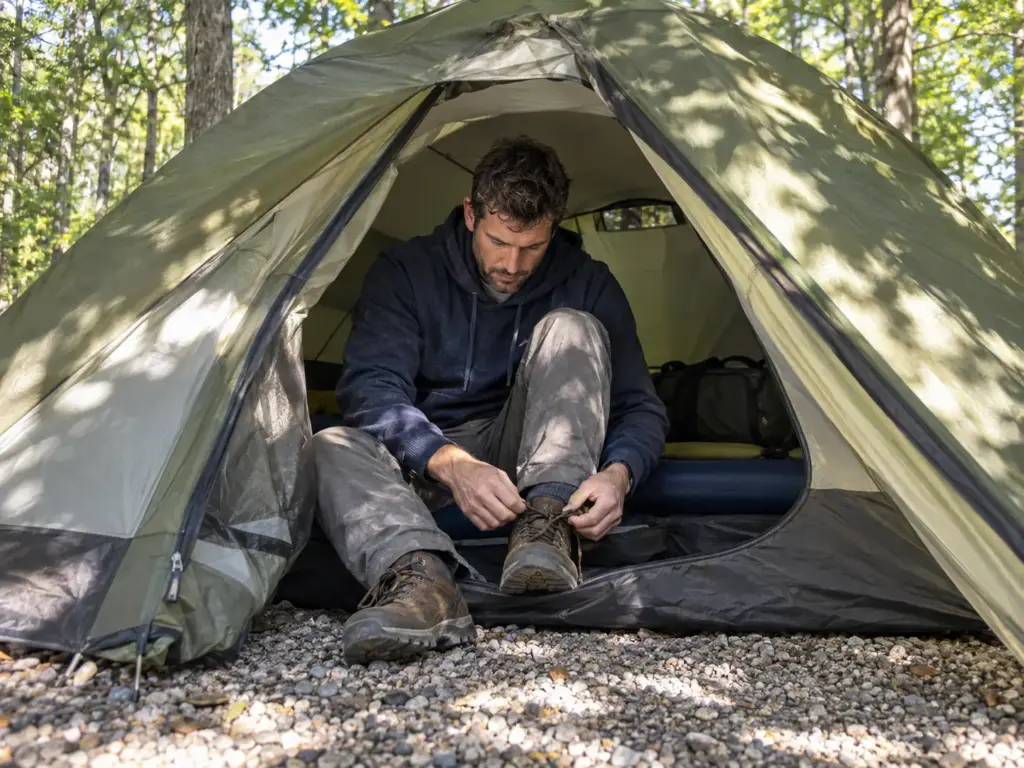
Floor area decides how many sleeping pads fit side by side. The Tungsten 2P floor is 88.2 in long and 53.9 in wide at the head end, so two standard sleeping pads fit with room left for a pack at the foot. At 3P the Blacktail gives about 3 sq ft more than the Tungsten per retailer listings, which sounds small until you try to fit a third pad.
A Trailspace reviewer wrote that the Tungsten 3P floor is “great for 2 people at over 40 sq. feet.” Believe that sentence. The same area is not great for three.
Peak Height and the Tall-Camper Test
Peak height decides whether you can change clothes sitting up. The Tungsten 3P peaks at 46.1 in, and a Trailspace reviewer who is 6 feet tall reported sitting upright through most of the tent, except near the door. The Blacktail 3P gives roughly 2 in less headroom per retailer listings.
At 4P the picture changes. The Tungsten 4P peaks at 52.8 in, and both Switchback Travel and CleverHiker say most adults end up ducking at the door. Switchback compares it to a dedicated car camping tent like the North Face Wawona, which stands at 68 in. If you picture yourself pulling on pants standing up, that is the number to weigh.
Vestibules, Pockets and Where the Boots Go
The Tungsten has interior pockets and a lampshade pocket for a headlamp, per the REI sheet, plus two big vestibules (18.3 sq ft total at 3P, 37 sq ft at 4P). The Blacktail’s vestibules are smaller per retailer listings, about 9 sq ft each at 2P.
Count vestibule floor per person, not per tent. A 37 sq ft vestibule split between four campers is about 9 sq ft each, which is the same room a 2P Blacktail gives a pair.
Pitching the Tents: Poles, Clips and Solo Setup
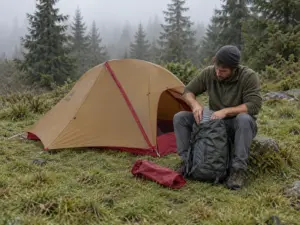
Picture the campsite scene where one person holds a pole and the other asks which clip goes where. Color coding saves ten minutes on the first night, and it is the main setup difference between these two tents.
Freestanding Design and What It Buys You
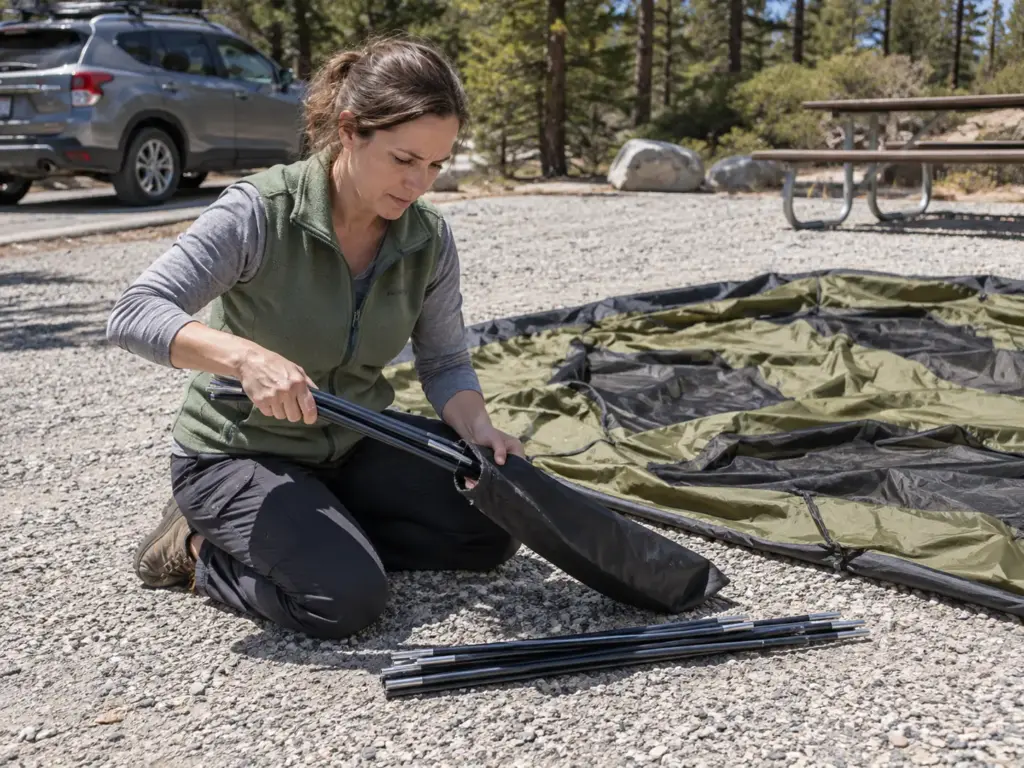
Both tents are freestanding, so the pole system holds the tent shape without stakes. You can pick the tent up and move it to a better patch of ground before you stake anything. The trade-offs are in the freestanding versus non-freestanding tents breakdown, but for this pair the point is simple: neither one needs a trekking pole or a tree to stand.
Color-Coded Clips and the First Pitch
The Tungsten uses color-coded “easy pitch” clips, poles and fly, according to the REI sheet, with two poles to sort out. A Trailspace reviewer notes the fly clips to the tent body and not to the poles, so a fly-and-footprint-only pitch is not possible. If you were planning to leave the inner tent at home on a hot night, that is the detail to know first.
For the Blacktail the setup details were not confirmed from Big Agnes’s own page, so this article says only what is known: it is freestanding and it uses two poles. Look at the maker’s pole and clip layout before you buy.
Setting Up Alone in the Rain
One Trailspace reviewer pitched the Tungsten alone in the rain and said it would have been difficult to stay dry without help. That is a fair warning for any double-wall tent, since the inner tent gets wet while you fumble with the fly.
Practise one full pitch in the backyard before the first trip. On dry grass you learn which pole sleeve goes where without rain on your neck, and the second pitch takes half the time of the first.
Ventilation, Condensation and Wind
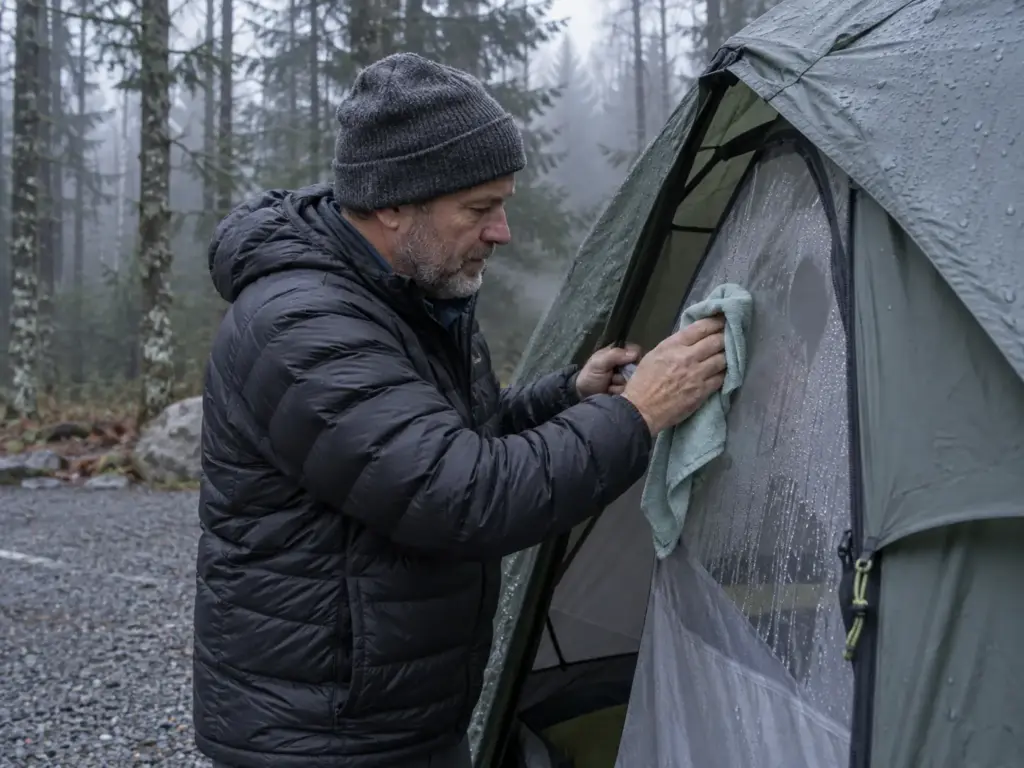
You wake with a damp sleeping bag and wonder if the tent leaked. It was probably condensation, which shows up most in shoulder season, when nights are cold and the air is damp. How well a tent breathes comes down to vent count and how the fly sits off the inner.
Vents, Mesh and Where the Moisture Goes
The Tungsten 3P has two roof vents and a gap between fly and tent, and a Trailspace reviewer reported no inside condensation through a day-long rain. The Tungsten 4P has a single vent in the fly, and Switchback Travel says a sealed fly in a storm slows airflow while the fabric billows.
For the Blacktail, no condensation reports turned up, so nothing here is claimed either way. Check its vent layout on the maker’s page. The condensation and ventilation tips most campers miss cover what to do about it in the field.
What One Reviewer Saw in Gusts
A 2017 Trailspace update on the Tungsten 3P reported that in gusts above 40 mph the bend in the pole can act as a pivot point, rotating toward the tent and letting the walls sag, even after the reviewer guyed it out. Read it as one reviewer’s report on one night, not a lab result. It still tells you where this design is weakest: sustained wind from the side, not a light breeze.
Guying Out Before the Wind Arrives
Stakes alone will not hold a tent in high wind. Guy out at the midpoint of each wall, and do it before the gusts arrive, not after. Switchback also recommends packing extra stakes if wind is forecast, and both Switchback and CleverHiker note the Tungsten 4P ships without enough stakes to guy out every line. Site choice is the cheapest wind protection there is, and how to pick a campsite that shields you from wind and rain is worth reading before the trip.
Re-tension the fly the morning after the first night out. Polyester stretches when it gets damp, and a fly that was drum-tight at dusk can sag by breakfast.
Build Quality, Fabric and Durability
Two tents that look identical on the shelf can part ways in the second season. Fabric weight matters less than the zipper, the floor and the stakes.
Fabric and Floor
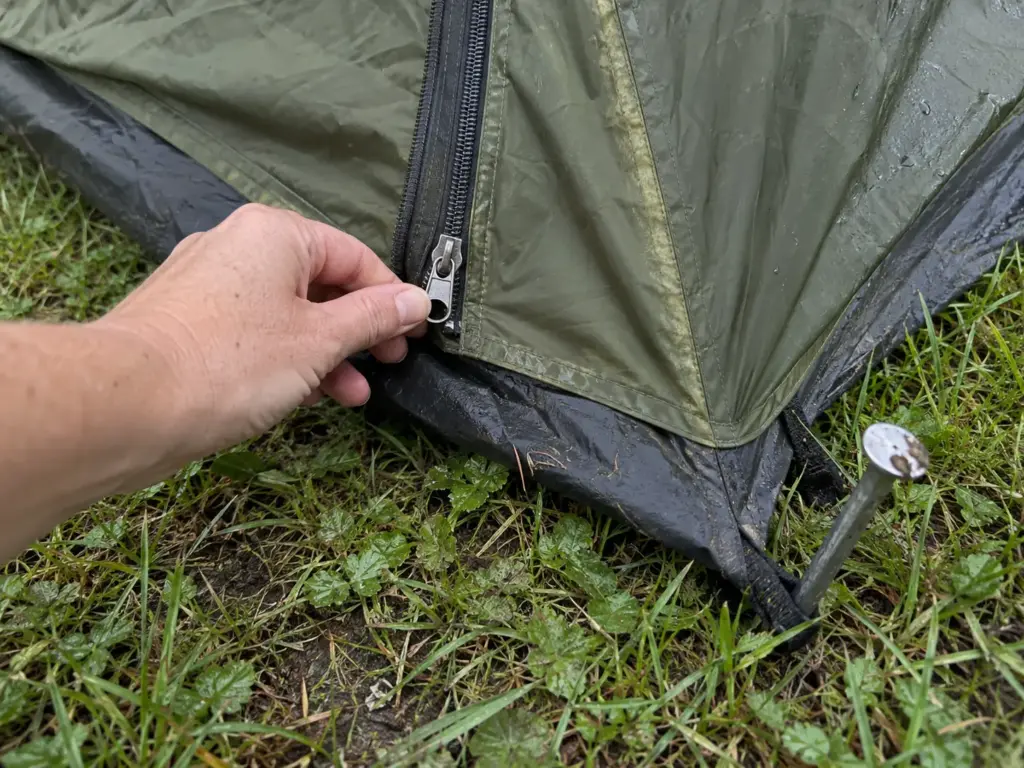
Outdoor Crunch lists the Marmot Limelight and the Tungsten in 68-denier polyester. The REI sheet gives the Tungsten 2P a polyester taffeta floor, and the Trailspace spec block for the 3P lists a polyester ripstop canopy and fly with a taffeta floor on Velocity HD aluminum poles. That is a heavier fabric than backpacking tents use, and it explains the weight. It is also the reason these tents are better at car camping than carrying.
If you want to know how far the lighter materials go, silnylon versus Dyneema covers the trade. Fabric specs for the Blacktail were not confirmed here, so check Big Agnes’s own page.
The Parts That Wear First
Stakes go first. A Trailspace reviewer wrote in 2024 that the stakes “take a beating on hard ground” and added more, and Switchback says the same about stake count at 4P. Switchback also warns that plastic rainfly buckles can crack if stepped on, a general care tip worth following on any tent: keep buckles out of the path where people walk.
What the Warranty Is Worth
Warranty and customer service come up often in camping threads, mostly about Marmot. Do not buy on a forum anecdote. Read each maker’s warranty page before checkout and decide from the terms.
What the Price Buys and What Is in the Box
You open the bag expecting a groundsheet and find none. Read the “what’s included” line before you compare prices, because the two tents do not sell the same package.
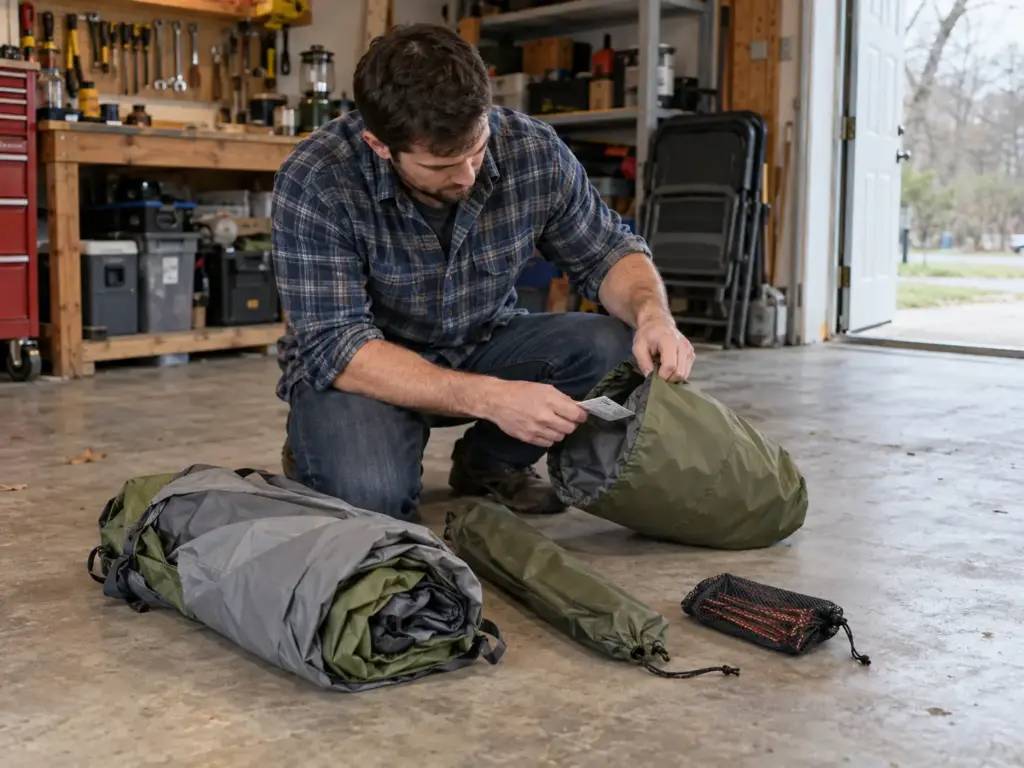
The direction is clear without a single figure. The Tungsten usually lists at the lower end of the pair and includes its footprint (the REI listing is literally named “Tungsten 2P Tent with Footprint”). The Blacktail lists higher and, per Switchback Travel, does not include one. The headline price is therefore comparing a tent with a floor protector to a tent without one.
Footprint: Included or Extra
The Tungsten includes its footprint, confirmed by both the REI sheet and a Trailspace review. The Blacktail sells it separately, and retailer listings put its weight at about 8 oz at 2P and 10 oz at 3P. That is a real number to add to your pack weight if you buy it.
The weight line on a Tungsten page needs care too. On the 2P, the minimum trail weight is 4 lb 15.7 oz and the packaged weight is 5 lb 14.2 oz, about 14.5 oz apart, because packaged weight counts items that minimum weight leaves out. At 3P the Trailspace reviewer found Marmot’s own numbers differ by 6 oz once the groundsheet is counted. When you compare a Tungsten weight to a Blacktail weight, first check which kind of weight each site is quoting.
Stakes, Guy Lines and the Stuff Sack
Both tents come with stakes, but the Tungsten 4P does not cover every guy line, according to Switchback and CleverHiker. On the 3P a Trailspace reviewer added more stakes. Think of the included stakes as enough to pitch the tent in calm weather and not much more.
Why the Cheaper Tent Is Not Always the Cheaper Tent
This is where the Tungsten’s lower sticker price starts to matter, and where the Blacktail’s extra purchase starts to bite. If the footprint is not in the box, the real price of a Blacktail is the tent plus a separate purchase, and that purchase is not small. Compare box contents line by line, not headline prices. A tent that includes a floor protector, stakes and a stuff sack has already paid for them.
The Real Total: Footprint, Stakes and the Cheaper Ground Sheet
Two shopping carts start close together and end somewhere very different. The discount you saw is gone once the footprint is in the cart, and a cheaper ground sheet is the way back.
The Blacktail Bill: Tent Plus Footprint
The Blacktail’s old pitch was a lower sticker price. That premise no longer holds. Big Agnes now lists the 2P and 3P above the Tungsten’s published price, and at 4P the two sticker prices sit about level. In every case the Blacktail’s footprint goes on top of that, so the cart that looked cheaper ends up as the more expensive one.
The Tungsten Bill: Included Footprint, Extra Stakes
The Tungsten’s bill is simpler: tent, footprint included, and extra stakes at 4P. A small bag of extra stakes is small money, but real, and you will want them for guy lines in wind. If you camp in sand or soft ground, staking a tent in sand or soft ground covers the methods standard stakes cannot handle. The Tungsten’s retail price has also swung widely over time, so the lower end of the pair moves with the season.
The Cheaper Ground Sheet Route
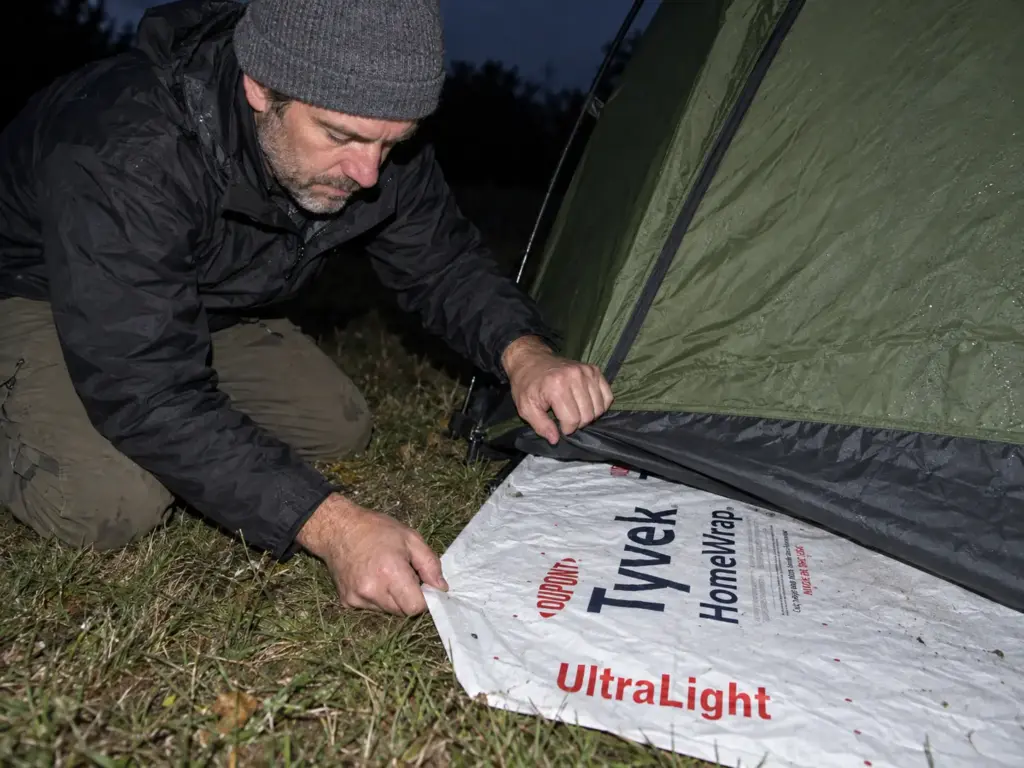
You do not have to buy the Big Agnes footprint to protect a Blacktail floor. A universal Tyvek ground sheet costs a fraction of it, and the question of whether you really need a tent footprint has its own answer, which depends on your floor fabric. If you decide you do, the Tyvek Ground Sheet & Tent Footprint is a budget-friendly stand-in that you cut to size.
Cut it so it sits inside the tent’s edges. A sheet that pokes out past the floor catches rain and funnels it under the tent, which is the opposite of what you bought it for. The trade-off is fit. A generic sheet is not shaped to the tent and it is not tied to the poles, so it will shift a little more than a purpose-cut footprint.
Pitch the tent on the sheet at home first, then trim an inch or two inside the floor edge with scissors. Keep the offcuts as patch material for a torn vestibule.
Which Tent Fits Which Height and Which Trip
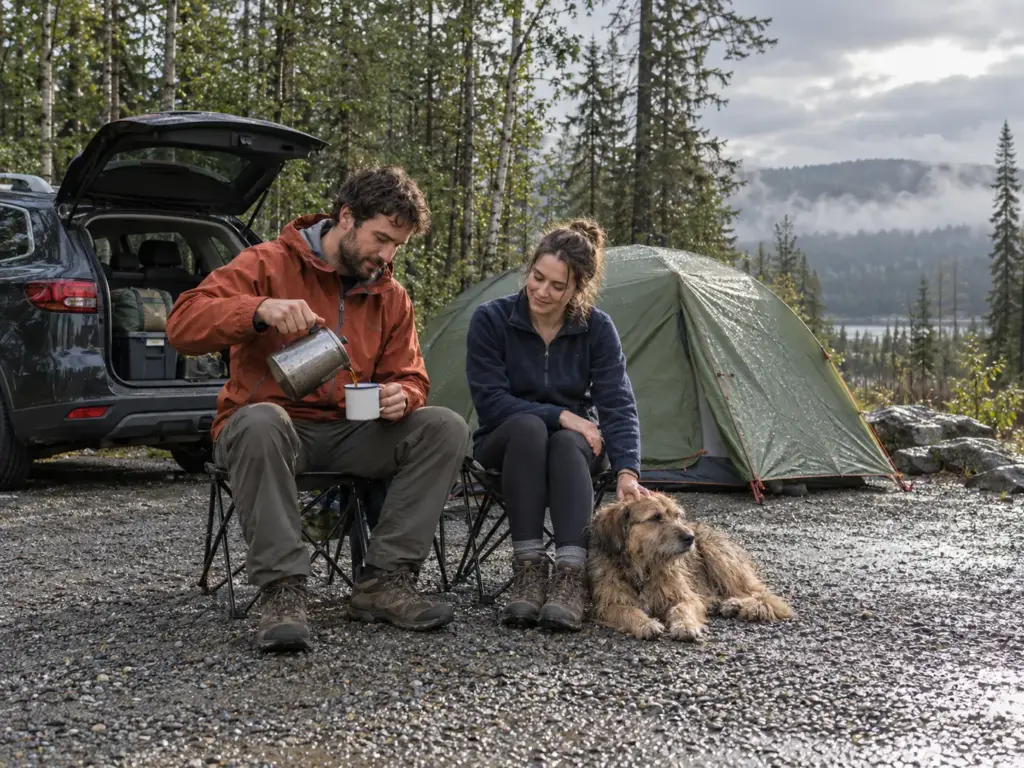
The forum question that never gets a straight answer goes like this: “I’m six-two, we have a toddler and a dog, which one?” The answer is a height-and-trip rule, not “it depends.”
If You Are Tall
Tall sleepers and car campers lean Tungsten. At 3P it gives 46.1 in of headroom against about 44 in for the Blacktail, and the Tungsten 2P floor is 88.2 in long, which leaves about a foot of spare length around a 6’2″ sleeper. Add the bigger vestibules and the included footprint, and the Tungsten is the safer pick for a long frame.
At 4P, remember the catch: 52.8 in of peak height means a duck at the door, no matter how tall you are.
If You Are Car Camping with Kids or a Dog
Two adults plus a child or dog is a size-up case. Camping threads give the same guidance again and again: go one size above the capacity on the label.
The Tungsten 3P is a roomy 2 person tent, not a three-adult tent, so two adults and a child want the 4P. The Tungsten 4P suits a car camper who does not need to stand inside; the low ceiling is the cost of that floor and vestibule. For the Blacktail 4P, check the maker’s spec page before you commit, since the numbers in circulation disagree.
If You Plan Short Backpacking Trips
At 3P these tents weigh in around 5 to 6 lb, so they are crossovers rather than lightweight backpacking tents. Floor space for less weight leans Blacktail at 2P and 3P, if you accept smaller vestibules and fewer pockets. For the pack-to-pitch basics, read going backpacking with a tent.
A tall backpacker in a camping thread usually wants two things: a floor longer than they are and a ceiling they can sit under. The Tungsten 2P answers the first (88.2 in of floor) but not the second (42.1 in of peak), and the 3P answers both better. For a toddler and a dog, floor area matters more than peak height, because kids sit and play and a dog takes a corner. That is the case where the Blacktail 3P’s extra floor earns its keep, as long as you accept the smaller vestibule for muddy shoes and a dog bed.
Neither tent is the right buy for a thru-hiker. If your plan is weeks on trail, shop in a lighter class and treat these two as camp-and-short-hike shelters.
Tape Out the Floor Before You Put Either in the Cart
Three things decide this match-up.
Compare at the same size. At 3P the Blacktail has the floor and the Tungsten has the headroom. At 4P the Tungsten ceiling is low and the Blacktail numbers need Big Agnes’s own page.
Read the box. The Tungsten includes its footprint and the Blacktail does not, so the bill is not what the headline price says.
Match the tent to your height and the trip. Tall and car camping lean Tungsten. Floor per pound at 2P and 3P leans Blacktail.
Before you buy, tape out the listed floor area on the living-room carpet, or lay a sleeping pad outline down at that size, and sit in it with your gear. A tent that feels tight on carpet will feel tighter on a rainy night.
Frequently Asked Questions
01Is the Marmot Tungsten a good tent?
For car camping and short trips, yes: it is roomy, comes with its footprint and has color-coded poles. The reasons to hesitate are weight for backpacking, a single fly vent at 4P and the low 4P ceiling.
02Which Marmot tent is better, the Limelight or the Tungsten?
Outdoor Crunch judges the Tungsten the better value of the two. Both are built from 68-denier polyester, and the Limelight 4P is not sold at major retailers, which narrows the choice at that size.
03Does the Big Agnes Blacktail come with a footprint?
No, the Blacktail footprint is sold separately, according to Switchback Travel. The Tungsten includes its own, and that difference changes the total bill once you add the extra purchase.
04Which is better for tall campers, the Blacktail or the Tungsten?
The Tungsten: 46.1 in of peak height at 3P against about 44 in for the Blacktail per retailer listings. At 4P the Tungsten’s 52.8 in is still a duck at the door.
05Is the Blacktail or the Tungsten better for backpacking?
Neither is a lightweight backpacking tent: at 3P they sit near 5 to 6 lb. For short trips with a car shuttle either works. For real distance, see these backpacking tents sized the way pros buy.

I've spent more than a decade researching hiking gear and trail technique. I read the specs, the forum threads and the long-term reviews, and every pick here comes with what it gets wrong.
End of the trail
You read every mile of this one. Here's where the trail goes next.