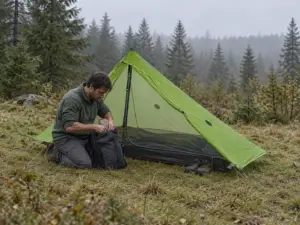
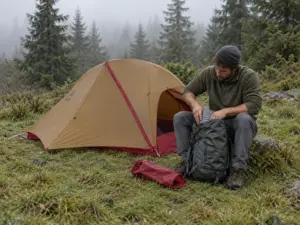













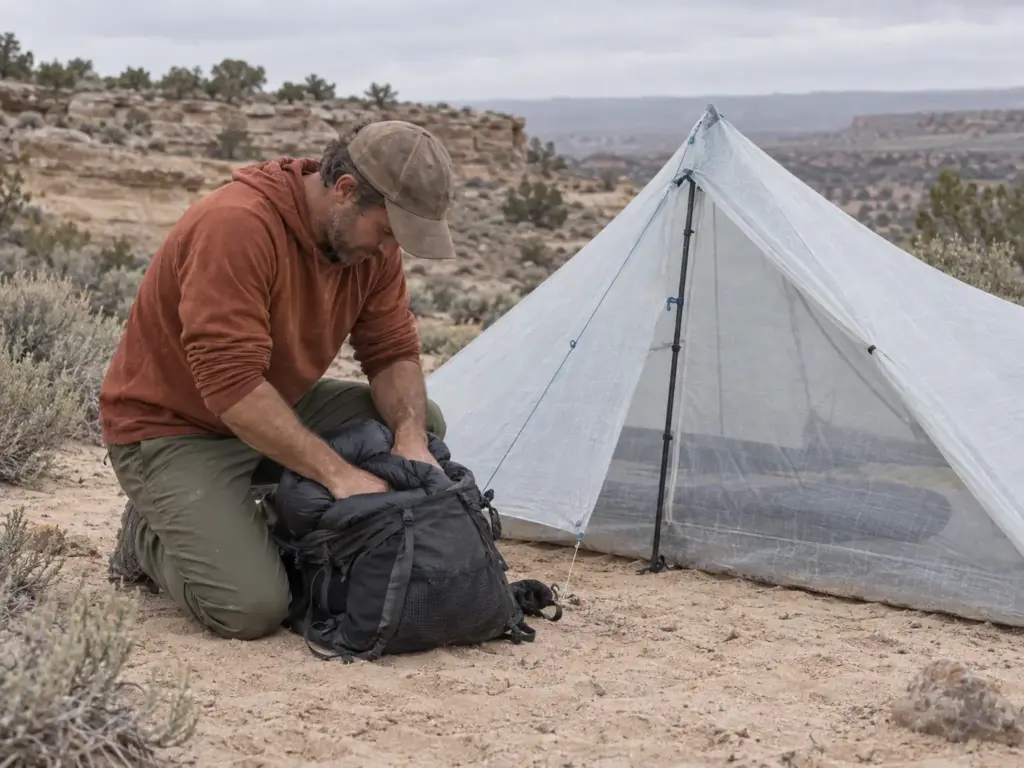
Two shelters sit side by side in your browser tabs, same shape, same trekking-pole pitch, and one of them costs roughly three times the other. You post the silnylon vs Dyneema (DCF) question the way hikers do every spring before a long trail (“Dyneema or silnylon for the PCT?”), and the replies split right down the middle, mostly arguing about ounces. The one real side-by-side record anybody has published, Ben Kilbourne’s desert nights in a DCF shelter next to a friend’s silnylon one, didn’t come out the way the weight numbers predict. This guide walks through weight, waterproofing, sag, what actually fails first, the silpoly option most comparisons skip, and which fabric fits your trip and budget. Here’s how the three shelter fabrics stack up at a glance:
| Attribute | Silnylon | Silpoly | DCF |
|---|---|---|---|
| Weight (fabric) | About 1.1 oz/yd² (30D) | Close to silnylon | 0.51 to 0.74 oz/yd² |
| Waterproofing | Silicone coating, fades with age | Coating, around 2,000mm | Laminate film, 15,000mm+ |
| Wet sag | Stretches, needs re-tensioning | Minimal | Near zero |
| Abrasion | Best of the three | Good | Weakest, prone to pinholes |
| Tension and tear strength | Strong for its weight | Slightly below silnylon | Best per ounce |
| UV aging | Ages fastest | Much better | Best |
| Wind noise | Quiet | Quiet | Loud and crinkly |
| Field repair | Silicone sealant or silnylon patch | Silicone sealant or silnylon patch | Tape patch |
| Rough cost | Budget-friendly | Budget-friendly | Premium, fabric costs 4 to 6x more |
Silnylon vs Dyneema (DCF): What You’re Actually Choosing Between
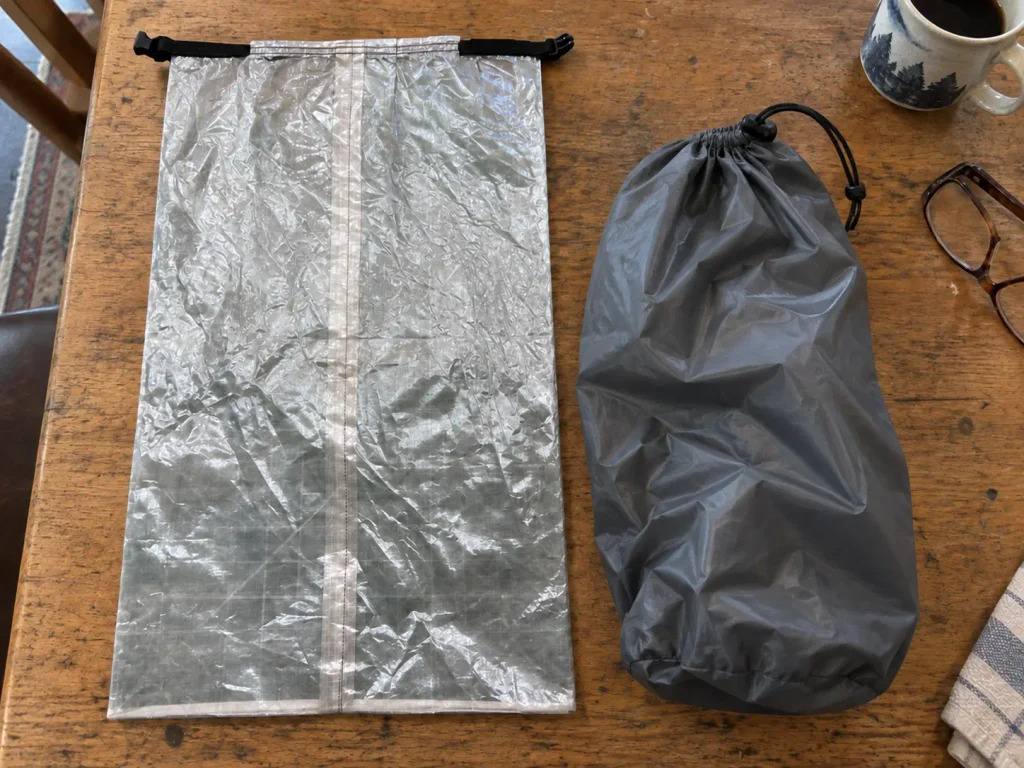
Pick up a stuff sack of each and you already know most of this article. Silnylon feels slippery and drapes like a rain jacket; leave it on a table and it slides off by itself. DCF feels like crinkly, cloudy paper and holds every crease you press into it. That difference in your hands is the whole story: one is woven cloth with a waterproof skin, the other is a laminate with no weave at all.
Silnylon — Woven Nylon With a Silicone Skin
Silnylon is silicone-coated nylon: ripstop, usually 30 denier in quality shelters and made from nylon 6 or nylon 6.6, with silicone worked into both sides. The weave carries the load and the silicone coating keeps the water out. That split matters later, because a coating can age while the weave underneath stays strong. It’s also why silnylon behaves like cloth: it stretches, drapes, and forgives a sloppy stake-out.
DCF — Laminated Fibers, Not a Weave
Dyneema Composite Fabric is a grid of UHMWPE (ultra-high-molecular-weight polyethylene) fibers sandwiched between thin layers of Mylar film (PET). Nothing is woven and nothing is coated, so the waterproofing comes from the film itself. The fibers give it enormous tensile strength for its weight and almost no stretch. The film gives it the crinkle, and its weak spot, which shows up in the failure section below.
Never handled the stuff? Don’t make a shelter your first DCF purchase. A small DCF dry bag like the Ultra Lightweight Dyneema Roll Top Bag lets you feel the crinkle, watch creases set, and see how the laminate takes a season of being crammed into a pack. It’s cut from 1.43 oz/yd² DCF, roughly twice the weight of a typical shelter canopy, so treat it as a feel test, not a weight preview.
Why You’ll Still See “Cuben Fiber” in Gear Threads
Cuben fiber is the old name for DCF, and older hikers and a few cottage gear brands still use it. Same material, older label.
Here’s the honest part most comparison pages skip: nearly every shelter and tarp in this debate comes from cottage brands like Zpacks, Hyperlite Mountain Gear, Mountain Laurel Designs, Durston, and Gossamer Gear, which sell direct rather than on Amazon. There’s also a third fabric, silpoly, that fixes silnylon’s worst habit at silnylon’s price. It gets its own section further down.
Weight: Where DCF’s Savings Are Real and Where They Shrink
The spec sheet says “half the weight.” Your pack scale says a few ounces. Both are telling the truth, and the gap between them is where most buying mistakes start.
The Fabric Numbers Side by Side
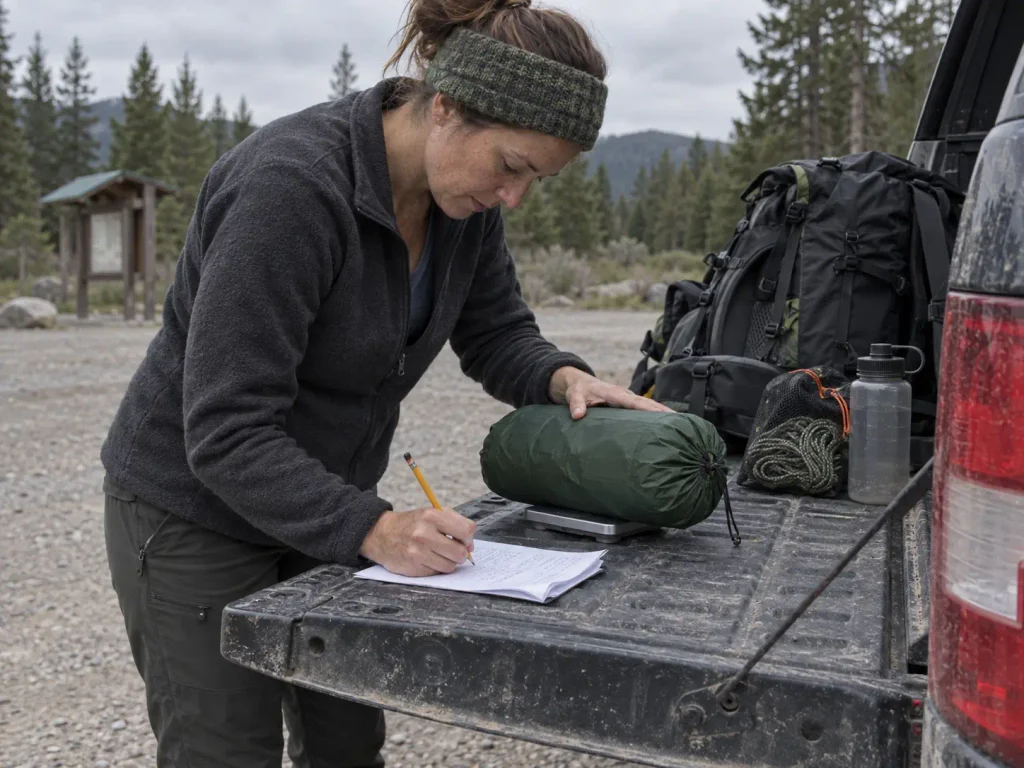
DCF canopy fabric commonly runs 0.51 to 0.74 oz/yd². Quality 30D silnylon sits around 1.1 oz/yd². Yard for yard, DCF really is close to half the weight, though Kilbourne’s Duomid used the heavier 0.74 grade, and floors usually get heavier DCF still.
What That Adds Up to on a Whole Shelter
On the same design, the weight savings from switching silnylon to DCF come to roughly 150 to 300 grams, about 5 to 10 ounces. That’s the weight of a smartphone, give or take. Real, but nowhere near half the shelter.
The reason is everything that isn’t canopy fabric. Stakes, zippers, guylines, mesh netting, and cord locks weigh the same whichever fabric you pick, which is exactly what tent weight specs leave out. Wet weight shifts the math a little too: silnylon absorbs a small amount of water, so a soaked fly packs heavier than it weighed dry, while DCF absorbs essentially none and sheds most of the wet with a hard shake.
Weekend Trip vs Thru-Hike Math
Your shelter is one of the Big Three (pack, shelter, sleep system), the first place anyone serious about ultralight backpacking looks to cut. The fabric is one lever inside that. If your pack weight is still high because of the pack and sleeping bag, cheaper grams live there.
Six ounces over a two-day loop is noise, less than a half-full water bottle. Over the 2,650 miles of the Pacific Crest Trail, you carry them every day for five months. You won’t feel five ounces on mile nine of a weekend loop. You may think about every one of them in month four.
Waterproofing: A Laminate Can’t Wear Off, a Coating Can
Both fabrics will keep you dry in any storm you’ll realistically hike through. The difference shows up in year three, and it shows up differently for each one.
Why DCF Has No Coating to Fail
DCF’s hydrostatic head rating can exceed 15,000mm because the waterproof layer is a film, not a coating. There’s nothing to hydrolyze, peel, or wear thin. Silpoly typically sits around 2,000mm, still more than any realistic storm needs, so DCF’s headline number is overkill rather than a practical edge. That’s worth knowing before you pay for it, and it’s the same lesson behind what hydrostatic head ratings really tell you on rain gear.
The mistake is hearing “waterproof forever” and thinking “indestructible.” Hikers report a heavily used DCF tent floor developing micro-perforations and slow leaks with no visible puncture. You wake up to a thin film of water under your sleeping pad, search the floor with a headlamp, and find nothing to point at.
How a Silnylon Coating Ages
Silnylon’s waterproofing lives entirely in its coating, and sun and age thin it slowly. Kilbourne’s friend’s Solomid XL is a fair picture: after around 150 nights it had likely lost some hydrostatic head to sun exposure, but it was still functionally waterproof. Silnylon fades over seasons, not overnight.
Seam Sealing Is Where the Two Split
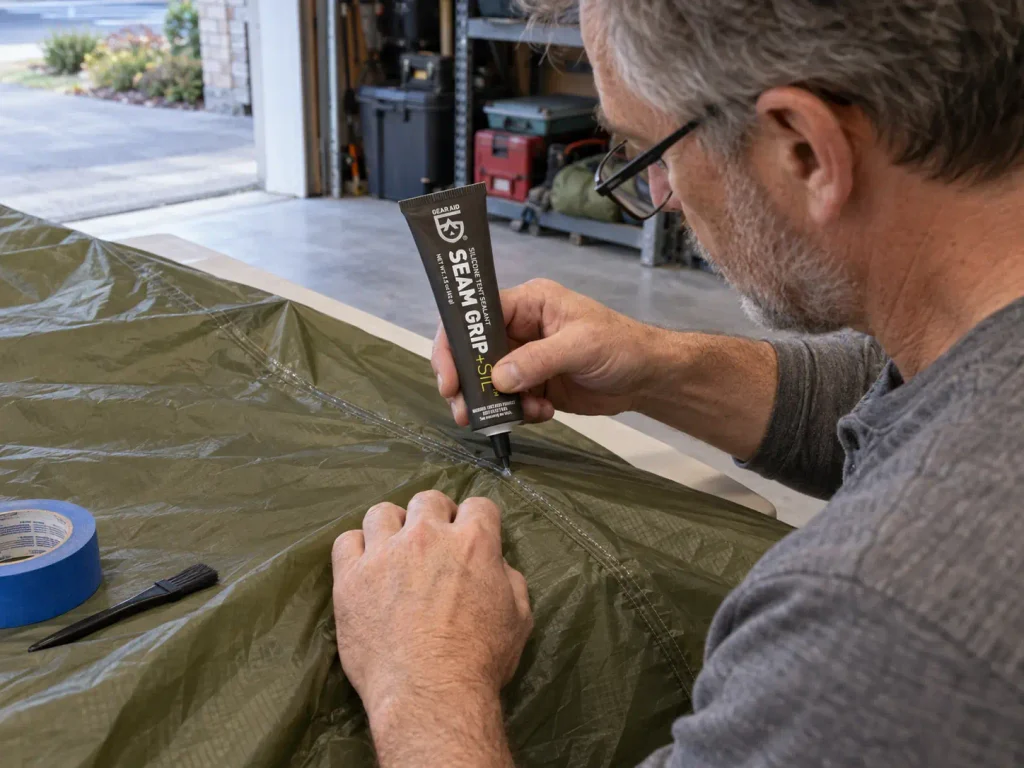
A sewn silnylon or silpoly shelter has thousands of stitch holes, and every one needs seam sealing before the first wet trip. The sealer has to be silicone-based, like GEAR AID Seam Grip SIL, because nothing else bonds properly to silicone-coated fabric. Use a urethane sealer like Seam Grip WP instead and it cures into a neat line that peels off in strips a few trips later. That’s the classic mistake, and it runs the other way too: Seam Grip SIL isn’t made for fabric with a polyurethane coating (a PU coating).
DCF shelters usually ship with bonded seams or factory seam taping, so there’s nothing to seal. For a silnylon or silpoly shelter, here’s a full walkthrough on sealing tent seams before your first rainy night.
Seal a silnylon shelter pitched and taut, on a dry afternoon at home, never the night before a trip. Tension opens the stitch holes so the sealer works into them. Then leave it standing until the silicone is fully cured, not just dry to the touch, or the seams glue themselves to the next fold in the stuff sack.
Sag, Stretch, and the 2 a.m. Re-Tension
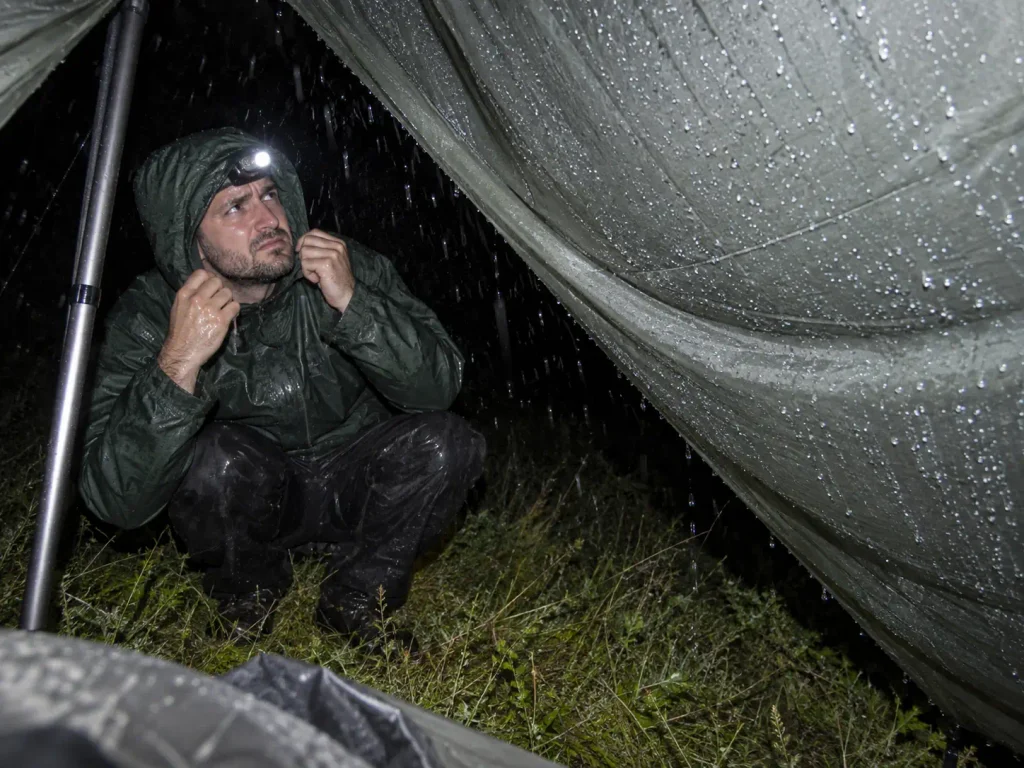
You pitch drum-tight at 6 p.m. It rains. By 2 a.m. the wet fly is slapping your face every time the wind gusts.
First-time silnylon owners assume something broke. It didn’t. Nylon grows when it gets wet.
Why Nylon Grows When It Gets Wet
Nylon fibers soak up a little water and get slightly longer, so a panel that was tight at dinner goes slack by midnight. Rain does it, heavy dew does it, and a cold, humid night can do it with no rain at all. Polyester barely absorbs water and DCF absorbs none, which is why those two hold their shape.
The fix is routine, not gear. Adjustable tensioners or a bit of elastic at the guy points take up some slack on their own, and on a mid shelter (a pyramid tent pitched on one trekking pole) you can often retension the whole thing by extending the center pole an inch instead of walking every guy line.
Make the tension walk part of your camp routine: pitch, cook, then circle the shelter once the dew is down and snug every line. Two minutes at 8 p.m. beats crawling out barefoot into sideways rain at 2 a.m.
What Zero Stretch Buys You in Wind
DCF has near-zero stretch, so the ridgeline tension you set at dusk is the tension you have at 3 a.m. In a real storm that counts for more than comfort. A slack silnylon panel catches wind like a sail, pumps against its tent stakes, and can fold down onto you or work a stake loose in soft ground. The flip side is that DCF gives nothing back: every gust goes straight into the stakes, seams, and zippers, which matters in the failure section.
Condensation Is a Ventilation Problem, Not a Fabric Win
You’ll read that silnylon “breathes” and condenses less. It doesn’t, not in any way you’d notice. Neither fabric passes meaningful air or vapor, and in a single-wall tent your breath condenses on cold fabric whichever one you chose.
A double-wall tent only moves that water one layer further from your face. Silnylon just takes on a little of that water and feels damp, while DCF beads it up so it shakes off.
The real fixes are ventilation and site choice (open the vents, crack a door, skip the low meadow beside the creek), and there’s more on how to cut down on condensation inside a tent if yours drips on you every morning.
What Fails First: Abrasion, Pinholes, and Zipper Sliders
This is where the spec sheets stop being useful. On paper DCF is the stronger fabric. In sand and grit, the one real paired comparison says it wore out first.
The 100-Night vs 150-Night Comparison
Ben Kilbourne put about 100 hard nights on a Mountain Laurel Designs Duomid in DCF, mostly in southern Utah: 30 mph wind, blowing sand, the whole desert package. Over those nights he replaced the zipper sliders about five times, and pinholes started showing near the sleeping area. His friend used a silnylon Solomid XL from the same maker in the same kind of terrain for around 150 nights. Zero slider replacements, and the fabric was still sound.
Two shelters aren’t a lab study. But it’s the only real paired data set out there for these two fabrics, and it cuts against the assumption most buyers bring to this decision. The fabric with the better tear strength didn’t last longer. It failed differently, and it failed in the places grit could reach.
Pinholes, Ground Grit, and Why DCF Hates Dragging
DCF shrugs off tension and resists tearing better than anything else here. Its weakness is the film on the outside, which is fragile against ground grit, pole tips, and being dragged across rock. It doesn’t fail with one big tear. It fails as pinholes, at stress points and on the parts of the floor where you kneel, sit, and slide your pad around.
Silnylon has better abrasion resistance and puncture resistance, and the long-running consensus on Backpacking Light matches what Kilbourne saw: if your trips involve scree, sandstone slabs, a dog’s claws, or bushwhacking, silnylon or silpoly is the more forgiving choice even at the weight penalty. With DCF the habits matter more than the fabric. Lift it, never drag it, and clear the tent site of grit before the floor goes down.
You can check for early damage without any tools. Pitch the shelter in bright sun and look up from inside, or aim a headlamp at the fabric from inside at night and look from outside. Pinholes show up as tiny points of light long before they show up as a wet sleeping bag.
Zipper Sliders Under Constant Tension
A tightly pitched DCF shelter is a high-tension shelter by design. It puts steady load on the door zipper, because the fabric around it never relaxes.
Add sand and every pull grinds grit through the slider like lapping compound. That zipper slider wear is gradual. The slider slowly spreads, and the classic symptom follows: the zipper closes, then splits open again behind the slider.
Long-term DCF users agree on the answer, and it isn’t a warranty claim. Treat sliders as a wear item, like shoe tread. Ease the door panels together with one hand before you zip so the slider isn’t fighting the pitch, and learn the basics of fixing a failing tent zipper on trail before you need to.
If you run DCF in sandy country, carry two spare sliders that match your door zipper. The size number is usually stamped on the back of the slider (commonly a 3 or a 5 on shelter doors), so check it at home and buy the match before the trip, not after the door stops closing.
Field Repair — Tape for DCF, Silicone for Silnylon
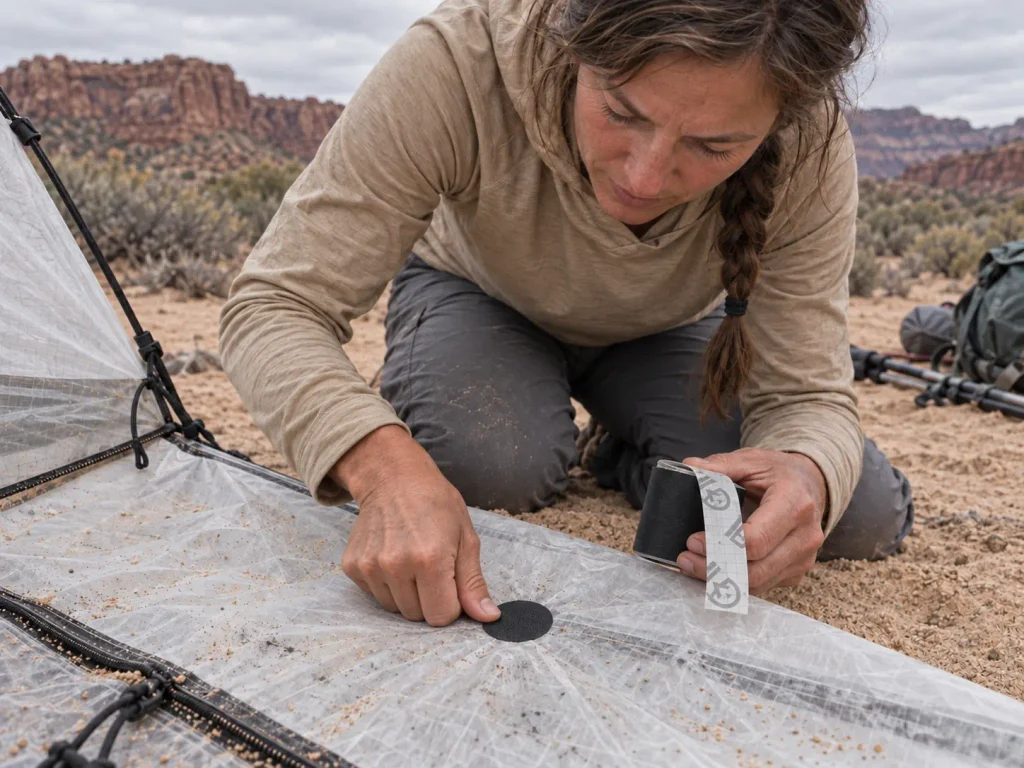
The two fabrics need different repair kits, and this is the detail most gear lists get wrong. Adhesive tape grips DCF laminate cleanly, so a DCF hole gets a tape patch: DCF-specific repair tape or GEAR AID Tenacious Tape, cut with rounded corners so the edges don’t lift, pressed down on clean, dry fabric and warmed with your hand. If you can reach both sides, patch both. Tenacious Tape also handles the PU-coated gear in your kit, like a torn rain jacket or pack pocket.
Here’s the honest caveat. Standard adhesive tapes, regular Tenacious Tape included, grip silicone-coated fabric poorly, so don’t count on that roll holding on silnylon or silpoly. Only silicone sticks well to silicone.
GEAR AID makes separate silnylon patches with a silicone adhesive for exactly this job, or you can dab Seam Grip SIL over a small hole and use it to glue a scrap of silnylon over a bigger one. The same tube you sealed your seams with does double duty, so carry a small one.
Timing matters for both. Tape won’t stick to wet fabric, so dry the spot with a bandana first, and silicone needs hours to cure, which means patching in the evening at camp, not mid-storm.
Wind Noise, UV, and the Hot-Tent Caveat
These differences don’t show up on a spec sheet or on your first trip. They show up at 3 a.m. in a gusty camp, after a summer above treeline, or next to a wood stove in January.
The Crinkle Factor in Wind
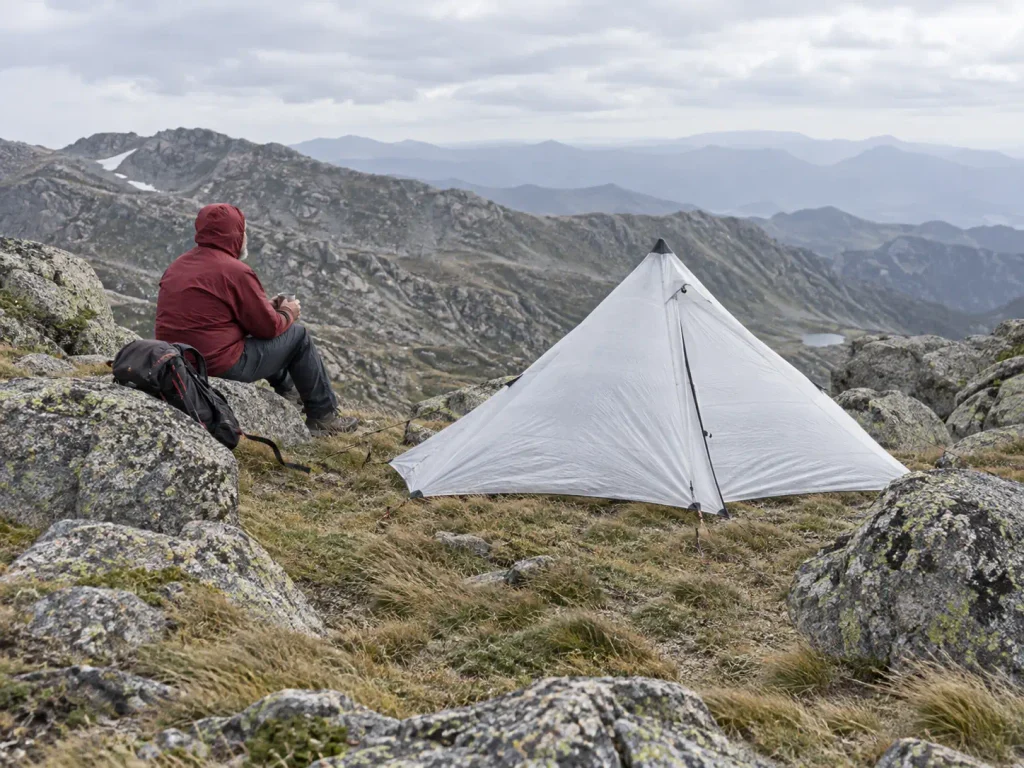
DCF in a gusty night sounds like someone crumpling a grocery bag next to your ear. Silnylon luffs more softly, a dull flutter instead of a crackle, and multiple sources rate it the quieter fabric.
At 9 p.m. it’s a small thing. At 3 a.m., with gusts coming every thirty seconds, light sleepers notice.
A tight pitch cuts flapping in wind on either fabric, which is one more reason DCF’s zero stretch helps. For the rest, foam earplugs weigh nothing and cost next to nothing.
Sun Exposure Ages Nylon Fastest
Nylon is the most UV-sensitive of the three. UV degradation hits silnylon hardest: it loses strength fastest under repeated sun, which makes the desert and high, open alpine camps its hardest environments. Silpoly is markedly more UV-stable, and DCF holds up best of all.
Most sun damage happens on layover days, not overnight. A shelter left standing from 9 a.m. to 6 p.m. while you day-hike to a lake takes more sun than several nights of dusk-to-dawn camping combined.
On a silnylon shelter, take it down or move it into shade on zero days, and pick your fabric by where the sun will be hardest on it.
Keep Embers Away From DCF
Most fabric comparisons file this under trivia. It’s a safety issue. DCF’s UHMWPE fibers melt at a far lower temperature than nylon or polyester, so embers that land on DCF burn ember holes fast. Each hole tends to be smaller than the one silpoly gets in the same situation, but it’s still a hole in an expensive shelter, and you’ll probably find it in the dark.
The reason it matters beyond the repair bill is where hot-tent embers land. They come out of the stovepipe cap and settle on the roof, the panels right above your sleeping bag, and a wind shift in the night is all it takes to put them there. A pinhole overhead is a drip. A cluster of them on a snowy night is a wet quilt, and a wet quilt in winter turns a comfortable camp into a cold one fast.
If you run a hot tent, use a proper stove jack rated for your stove, keep the stove pipe well clear of the fabric at every point, fit a spark arrestor on the pipe, and follow the stove maker’s clearance rules to the letter. A high price tag doesn’t make a fabric fire-safe. In a three-season shelter the same logic applies at a smaller scale: cook with the canister stove outside the vestibule, not under it, whatever your shelter is made of, and keep campfire sparks downwind of any DCF you’ve pitched nearby.
Silpoly: The Third Option Most Comparisons Skip
If silnylon’s sag is your first complaint and DCF’s price is your second, silpoly is the fabric aimed straight at you. It shows up in forum threads as “the comeback fabric,” and most comparison articles mention it in a single line. It deserves more than that.
What Silpoly Fixes
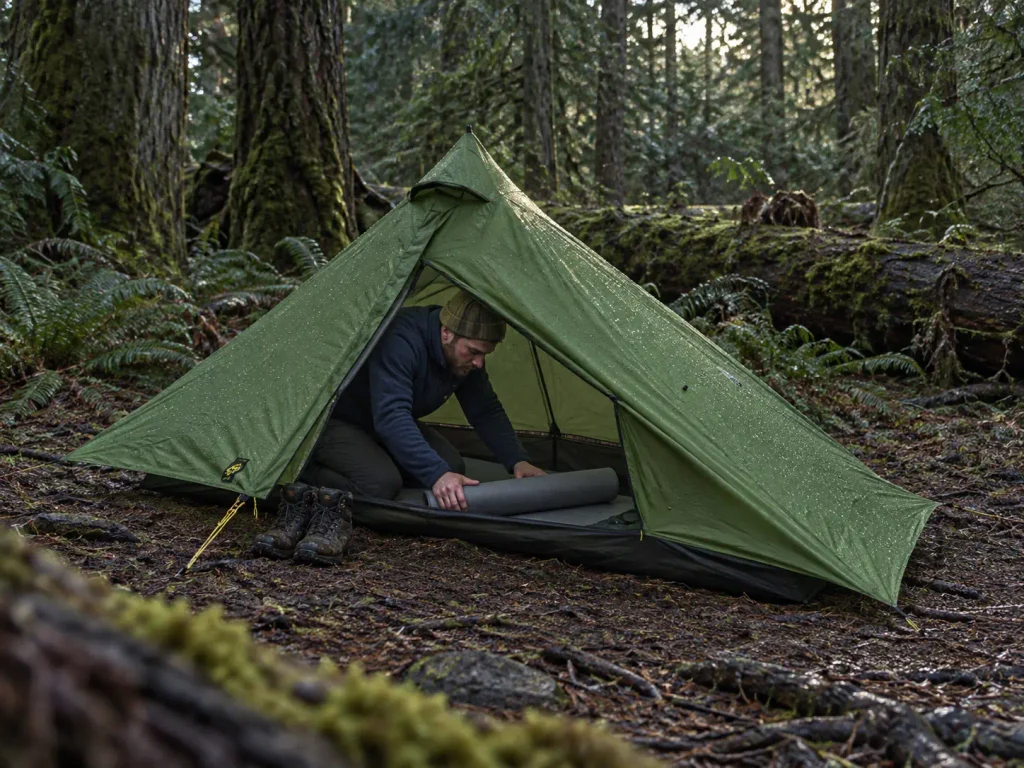
Silpoly is silicone-coated polyester. Polyester barely absorbs water, so it doesn’t grow when wet the way nylon does. That’s the “no-sag” label the silpoly market uses, and in the field it means the pitch you set at dusk mostly holds through a wet night without the 2 a.m. crawl.
It also handles sun much better than silnylon, at roughly the same price and weight. Its hydrostatic head of around 2,000mm is plenty for any storm, as the waterproofing section showed. Makers like Six Moon Designs, and Durston with its X-Mid line, build around it, which makes silpoly the easiest of the three to find ready-made.
The Six Moon Designs Lunar Solo is a good concrete example: a one-person trekking-pole shelter at 26 oz, with a 20D silpoly canopy and a 40D silpoly floor. That floor spec is the smart part. The heavier denier sits where grit does its work, and the light fabric goes overhead where nothing touches it but rain. You can buy one off the shelf without joining a cottage brand’s wait list.
Where It Still Falls Short of DCF
Silpoly has no weight edge. It weighs about what silnylon weighs, so if grams are the whole point, it won’t get you there. Its tear strength also runs slightly below good silnylon, which is why some gram-counters still prefer nylon for the lightest builds.
It’s still a coated fabric, too. The seams need the same silicone sealer as silnylon, and field repairs follow the silicone rules, not the tape rules. And while it resists sag far better than silnylon, it isn’t DCF-rigid; a long, cold, wet night can still leave a panel a touch softer than you pitched it.
So who should skip it? If your base weight is already dialed and the shelter is the last big item left, silpoly won’t move the number, and DCF is the honest answer. For everyone else, think of silpoly as a comfort and durability pick, not a gram-shaving one. If you’re weighing it against DCF for a solo setup, compare it against the one-person ultralight tents thru-hikers actually pick.
Price, Lifespan, and Which Fabric Fits Your Trip
Stop asking which fabric is better and ask “better for what?” The answer changes between a desert section hike and a wet Appalachian summer, and it changes again depending on how many nights you’ll actually sleep in the thing.
Cost per Night, Not Sticker Price
Start with wholesale fabric cost: DCF runs about $20 to $30 per yard, against roughly $5 per yard for quality silnylon, a 4 to 6x gap. That gap carries straight through to finished shelters: DCF models land around $500 to $650 and up, while comparable silnylon or silpoly shelters run roughly $180 to $280. You’re paying for the fabric, not just the logo.
Lifespan changes the math. One fabric guide estimates hard-use lifespans at roughly 300 to 500 nights for silpoly, 250 to 400 for silnylon, and 100 to 150 for DCF before pinholes and wear become a real concern. Treat those as rough estimates from a single source, not measured facts, though Kilbourne’s pair of shelters lines up with them.
Run rough numbers anyway. A DCF shelter at the low end of its price range, retired at 150 nights, costs you more than $3 a night. A silnylon shelter at the top of its range, run to 300 nights, costs under a dollar.
DCF wins on weight. Silnylon and silpoly usually win on cost per night.
Match the Fabric to the Trip
Use where you actually hike, not where you’d like to hike, to pick the fabric:
- For weekends and three-season trips, go silnylon or silpoly. The weight gap is noise over two nights; the price gap isn’t.
- On a long thru-hike with budget to spare and kind terrain, DCF earns its keep, because the ounces add up over months.
- In desert sand, slickrock, or scree, stick with silnylon or silpoly. Grit is hardest on DCF zippers and film.
- For high, sun-blasted alpine trips, pick DCF or silpoly. Silnylon ages fastest in hard UV.
- For winter hot-tent camping, keep DCF away from the stove, or pick a four-season tent built for stove use.
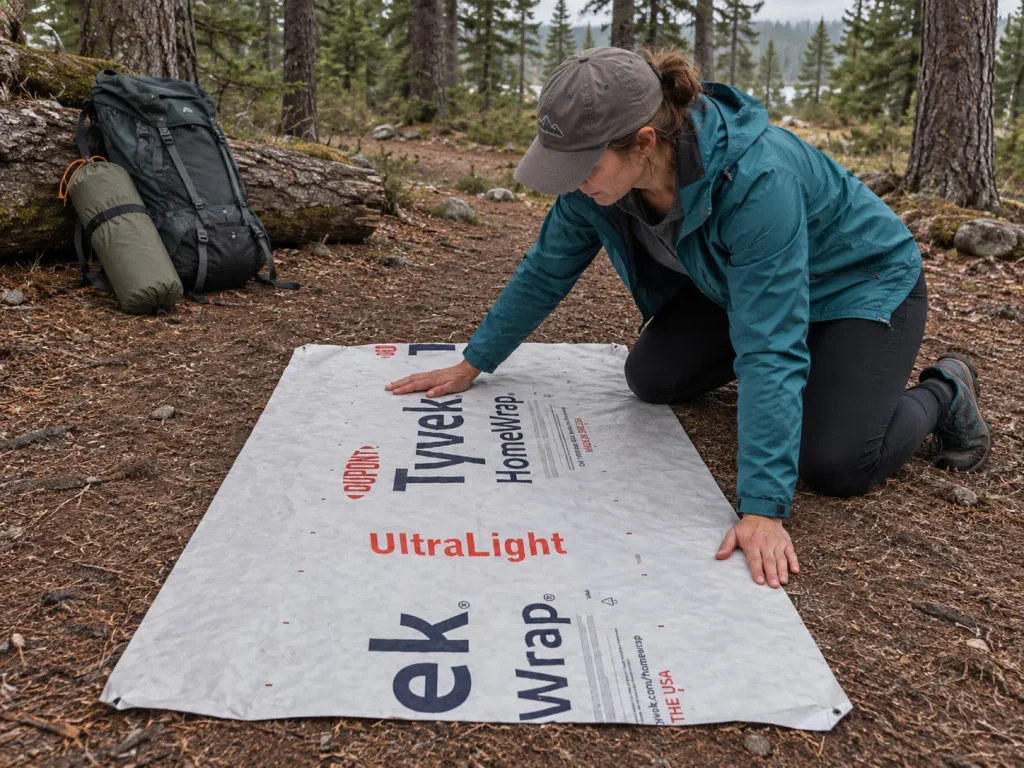
Whatever fabric you choose, a cheap groundsheet protects the floor, and it matters most under DCF, where grit is exactly what causes pinholes. A Tyvek Ground Sheet & Tent Footprint costs a fraction of a branded footprint and does the same job of keeping sand off the floor. If you’re on the fence about whether you need a footprint at all, a DCF floor is the strongest case for one.
Cut your Tyvek an inch or two smaller than the shelter floor on every side. A groundsheet that sticks out past the edge catches rain running off the fly and funnels it right under you. New Tyvek is stiff and loud, too; a cycle through the washer with no detergent softens it up.
A Sensible Upgrade Path
Start with silpoly or silnylon. Your first season teaches you what no spec sheet can: how you pitch, where you camp, how much condensation bothers you, and whether your trips run through sand or pine duff. Those answers decide the fabric question better than any forum thread.
If weight is still the thing bugging you after a full season, that’s when DCF makes sense, and you’ll buy the right design because you know what you need from it. Once the fabric is settled, the shape question comes next (a freestanding tent or a trekking-pole non-freestanding shelter), and if you hike with a partner, our picks for two-person backpacking tents worth sharing are the place to start.
Let Your Next Five Trips Pick the Fabric
DCF wins on weight and holds its pitch all night in wind and rain. Silnylon wins on abrasion, quiet, and price. Those two lines settle most of the argument before it starts.
What fails first depends on your terrain. In sand and grit, DCF’s zipper sliders and film surface give out first, just as they did in Kilbourne’s desert shelter. In hard sun, silnylon’s coating and fibers age fastest.
And silpoly is the underrated middle for most weekend hikers: no 2 a.m. sag, better UV resistance, and silnylon pricing. Before you buy anything, write down where your next five trips actually go (sand, sun, or long miles) and let that list pick the fabric for you.
Frequently Asked Questions
01Is silnylon waterproof?
Yes, silnylon is waterproof, because the silicone coating on both sides of the nylon keeps out any rain you will realistically hike through. The rating drops slowly with sun and age, and the sewn seams still need a silicone sealer before the first wet trip.
02What are the downsides of Dyneema tents?
The main downsides of Dyneema tents are a high price, weak abrasion resistance, and pinholes that form at stress points and on floors used over gritty ground. Zipper sliders also wear faster under high pitch tension, the fabric is loud in wind, and it melts easily near stoves and embers.
03Which is better for camping, silnylon or silpoly?
For most campers silpoly is the better choice, because it doesn’t sag when wet and handles sun better at roughly the same price and weight as silnylon. Silnylon keeps a small edge in tear strength for its weight, which matters mostly to gram-counting thru-hikers.
04Is DCF the same as Dyneema?
DCF stands for Dyneema Composite Fabric, the laminated shelter material built from Dyneema fibers sealed between thin films, and cuben fiber is its older name. On its own, Dyneema can also mean the raw fiber used in climbing slings, cord, and other gear.
05Silnylon vs Dyneema: which is the most durable material for tents?
The most durable tent material depends on the kind of wear: DCF resists tearing under tension and UV best, while silnylon resists abrasion and grit best. Silpoly splits the difference. In the silnylon vs Dyneema tradeoff, DCF lasts longer in sun and wind, and silnylon lasts longer on sand and rock.

I've spent more than a decade researching hiking gear and trail technique. I read the specs, the forum threads and the long-term reviews, and every pick here comes with what it gets wrong.
End of the trail
You read every mile of this one. Here's where the trail goes next.