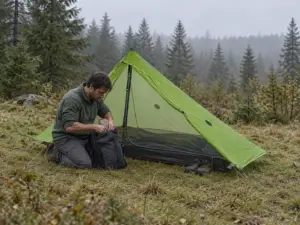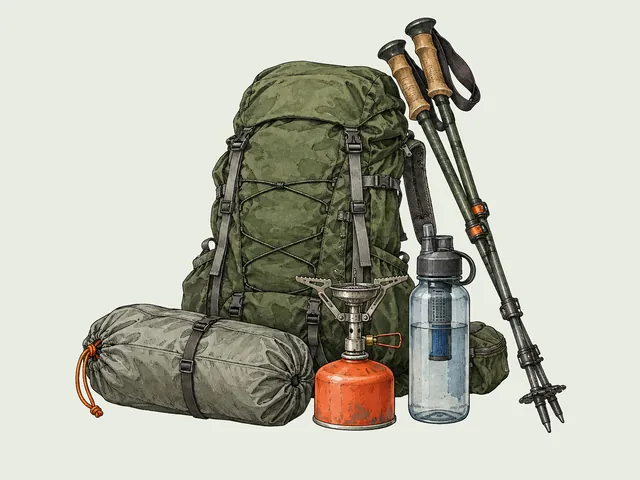
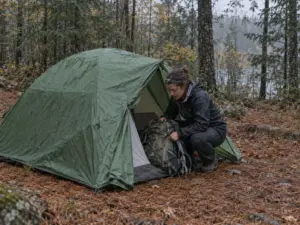
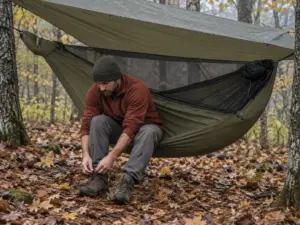
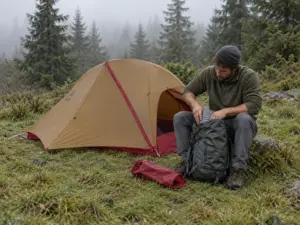


You skip the tent footprint, pitch on a flat, tempting patch of dirt, and around midnight your hip finds the pine cone and the gravel you never saw under the floor. So is a sheet of fabric between you and that ground smart insurance, or a few ounces you’ll resent on every climb? Ask in r/backpacking and the same two camps show up every time: one hiker points out that a cheap Tyvek sheet costs a sliver of what replacing the tent would, and the next fires back that if footprints were really needed, brands would just make the floors thicker. Both camps are right about something, and below you’ll get what a footprint actually protects, the one number that decides it (your floor’s denier), the ground that tips the answer, what to use instead of the brand version, and how to size it so it never pools water.
Do You Need a Tent Footprint? What One Actually Protects
Stand in a gear shop long enough and you’ll hear both answers within the hour. The tent brand’s hangtag says always buy the matching footprint. The guy in the next aisle says he’s never owned one and his tent is fine. Neither is lying, they’re just talking about different floors on different ground.
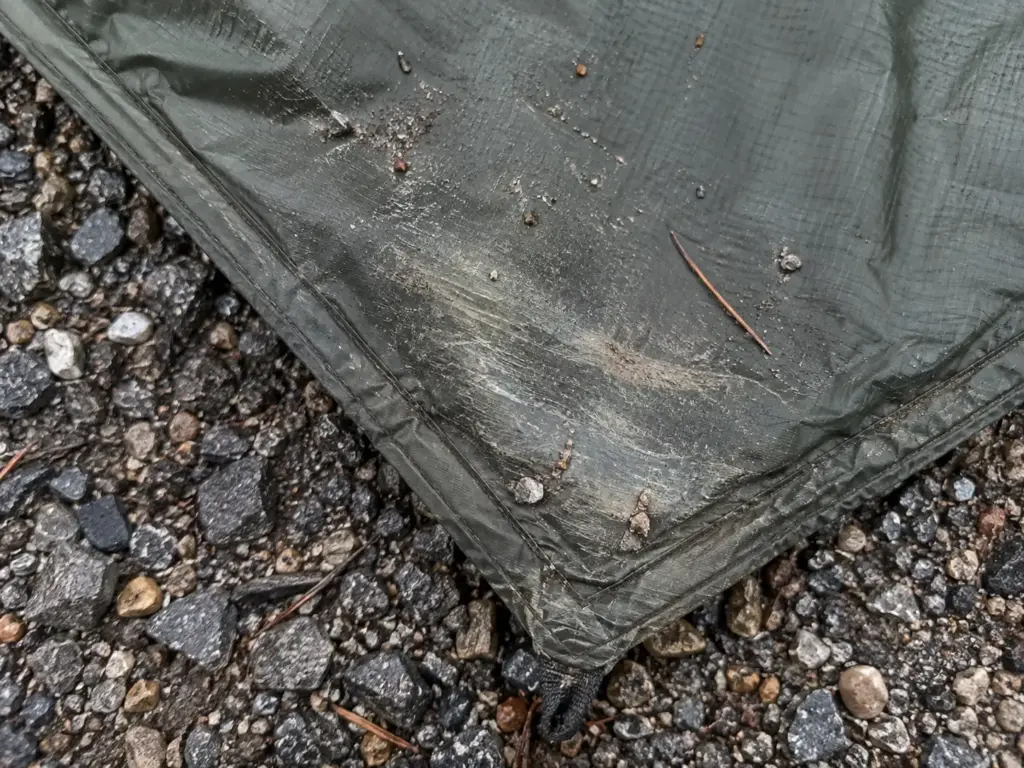
First, the names. Footprint, groundsheet and ground cloth (or groundcloth) all describe the same job: a floor-shaped layer between your tent and the dirt. The only real difference is fit. A footprint is cut to your tent’s exact shape and usually has grommets that clip into the pole ends, while a groundsheet is a generic sheet you cut, fold or tuck to size.
A Footprint Is a Sacrificial Layer
The point of a footprint is to get chewed up so your floor doesn’t. Every time you roll over on your sleeping pad, the floor grinds against whatever sits under it: grit, sand, twigs, the sharp edge of a buried rock. A footprint takes that abrasion, plus the pine sap and the mud, and it extends tent longevity in a boring, unglamorous way. You also get a cleaner pack-up, because the dirty layer rolls up on its own and your tent goes back in the stuff sack without a crust of wet dirt.
Here’s what it doesn’t do. Your bathtub floor is already waterproof, and that waterproofing comes from the floor’s coating plus taped seams and proper seam sealing, a job no footprint does for you. A footprint is a sacrificial layer against abrasion and dirt, not a second waterproof layer. Treat it like a doormat, not a rain jacket.
What a Footprint Won’t Stop
A footprint is not armor. One Sierra camper in an r/backpacking thread put it plainly: the one and only time they ever holed a tent floor, on rock near treeline, it “went easily through the Tyvek” first. A sharp point under your full weight can go through two thin layers about as easily as one. If the ground is bad enough to puncture a floor, the fix is moving the tent, not adding a sheet.
Another commenter in the same kind of thread made a point that sticks: “ember damage is a much bigger concern.” For some tents the floor isn’t the weak spot. The habits around the tent are.
Then there’s the incentive debate. One camp calls footprints “mostly an excuse to sell something to a captive market. If they were needed, they’d make the tents thicker.” The usual reply: if a floor tears, the tent gets bad reviews, so brands have every reason to build floors that hold up.
My read is that both are true. Light tents sell, so floors got thin, and the footprint is how a brand sells back the durability it cut to hit a weight number. It isn’t a scam, but it means the answer depends on how thin your floor is.
Your Tent’s Floor Denier Decides It
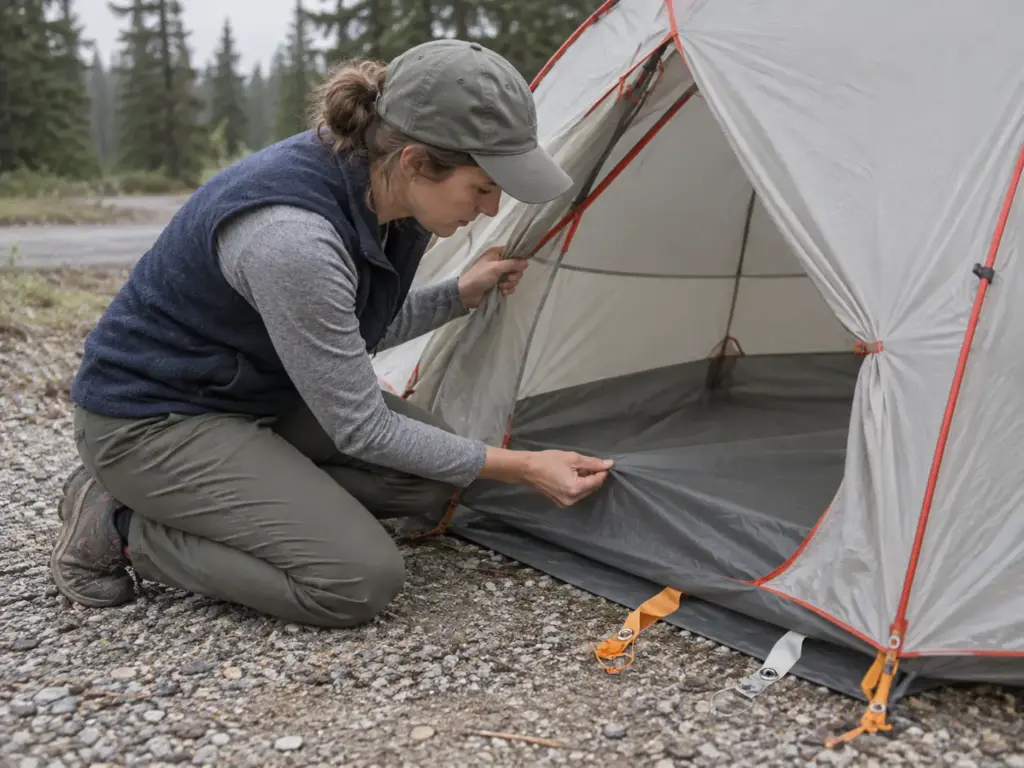
Pull up your tent’s spec sheet, or flip over the tag sewn inside the door. Somewhere it says something like “20D nylon floor” or “70D polyester floor.” That number is the one that matters. Denier measures how heavy the yarn in the fabric is, so a higher number means thicker thread and a floor that shrugs off more grit before it wears through.
The 30D Line
CleverHiker’s gear team works from a simple rule: they generally skip the footprint for tents with a floor of 30-denier or higher. Two of the most common 2-person tents land on either side of that line. The Big Agnes Copper Spur HV UL2 has a 20D floor, and the MSR Hubba Hubba NX 2 has a 30D floor, so if you’re shopping for a 2-person backpacking tent, the footprint question changes depending on which one you pick.
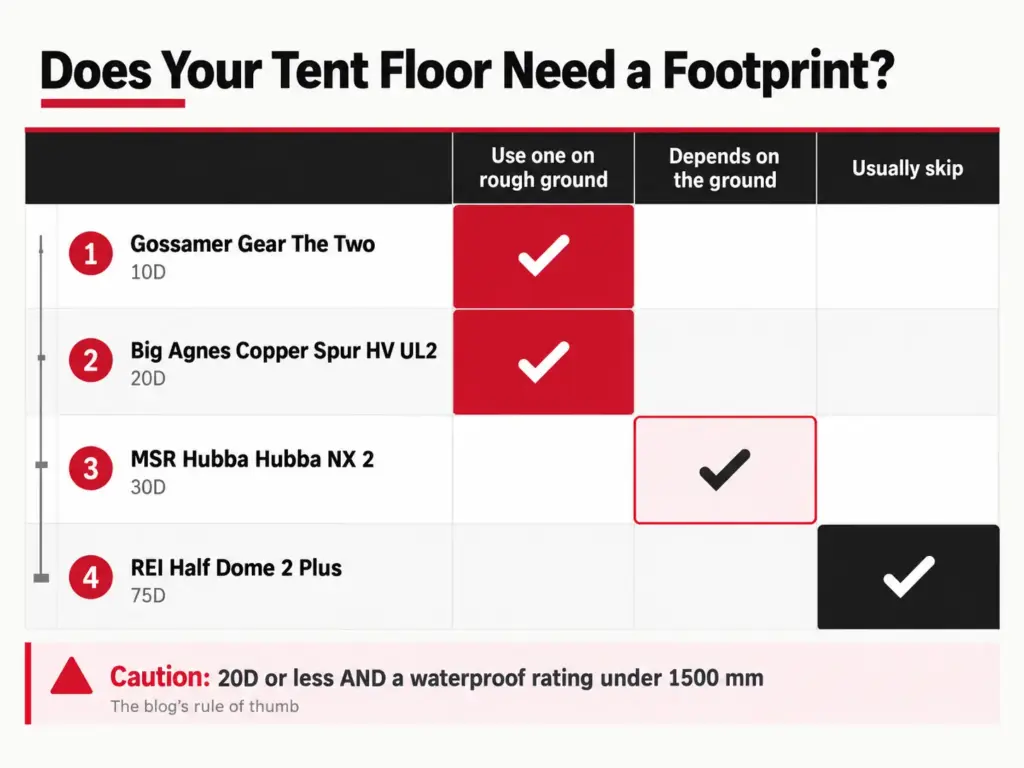
Denier isn’t the only number on that tag. Philip Werner at SectionHiker flags a second one: be extra careful when a floor is 20D or less AND its waterproof rating sits under 1500 mm. Thin fabric with a low water column is the case where a small scuff that wouldn’t matter on a tougher floor already lets ground moisture in under your pad.
The spread across real tents is huge, from the 10D floor on the Gossamer Gear The Two (rated 1800 mm) to the 75D floor on the REI Half Dome 2 Plus. Same product category, more than seven times the yarn weight.
Here’s the rule of thumb I’d work from, built on those numbers:
- 20D and below: use a footprint or a polycro sheet on anything rough.
- 30D to 40D: it depends on the ground (next section).
- 60D to 75D and up: usually skip it, unless you’re pitching on gravel night after night.
Can’t find the floor denier anywhere? Pinch the floor fabric and rub it between your thumb and finger. If it feels closer to a rain jacket shell than a duffel bag, treat it as a thin floor and protect it on rough ground.
Floors at 20D and Below
Ultralight tent floors run thin on purpose. Shaving a few ounces off the floor is one of the easiest ways for a brand to hit a headline weight, which is why so many ultralight one-person tents sit at 20D or thinner. Pinch one of those floors and it feels more like a windbreaker than a tent.
The threads are blunt about it. On the Copper Spur’s floor, one r/backpacking commenter called going without protection “a gamble, you’ll get a puncture eventually.” Another ultralight hiker summed up the whole logic in one line: “I use a footprint because my tent is too expensive not to.” A Nemo Dragonfly owner said the floor “feels so thin and would rip on a twig,” and had been carrying polycro under it from the start.
If you own a thin-floored Copper Spur and want the zero-fuss option, the matching Big Agnes Copper Spur UL footprint (2-person · 1-person) is cut to the floor’s shape and clips into the pole ends. Check that it matches your tent’s generation before you buy. If paying brand prices for a sheet of fabric bugs you, a DIY polycro sheet does the same job for a fraction of the weight (more on that below).
Floors at 60D and Up
At the other end, the REI Half Dome 2 Plus runs a 75D floor, and heavier floors like it take grit and twigs in stride. A footprint under them mostly keeps the floor clean, which is nice but not worth extra weight in a pack that’s already carrying a heavier tent. The exception is a tent that lives on gravel tent pads every weekend; even thick fabric wears through eventually when it’s sanded every Friday night.
Ground That Says Yes and Ground That Says Skip It
“I just pitch on whatever flat spot I find.” Fair enough, but the spec tag only tells you half of it. The other half is what’s under the tent tonight, and that changes from site to site on the same trip.
Ground That Argues for One
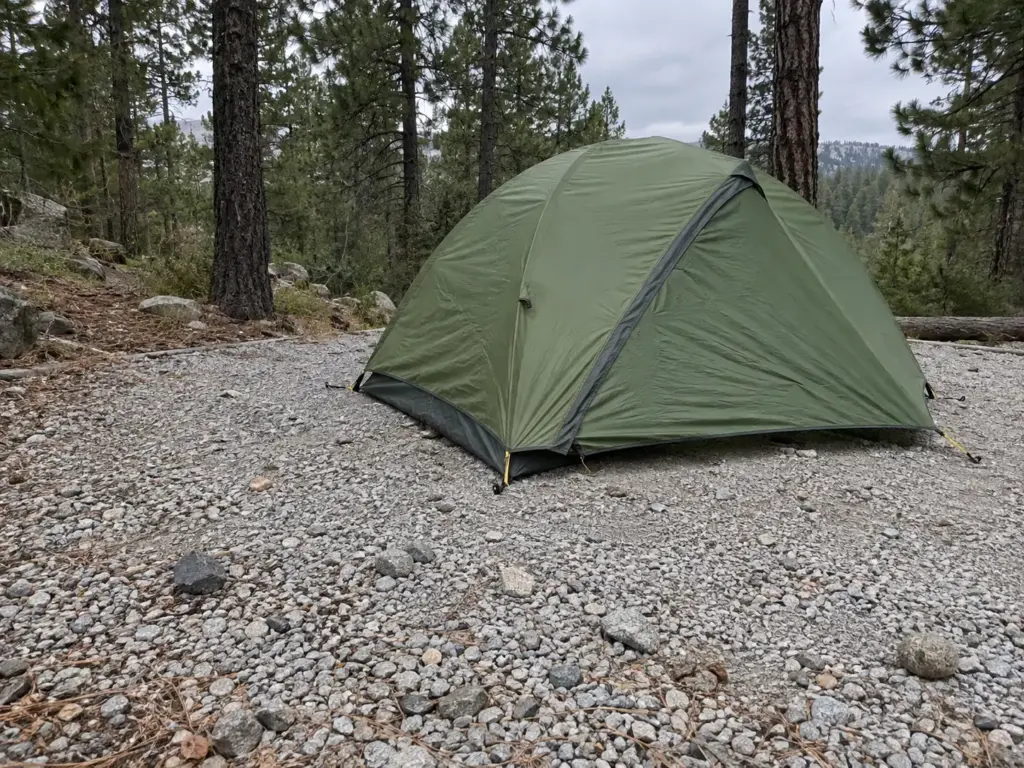
Rock slabs, gravel pads, decomposed granite and rocky ground of any kind are the obvious cases. Less obvious: heavily used campsites. Leave No Trace’s campsite guidance asks you to camp on durable surfaces at least 200 feet from water and trails, and to reuse sites that are already impacted, since a site’s damage levels off after about 15 days of use.
That’s the right call for the land. It’s also hard on your floor, because those packed, bare sites are basically sandpaper: compacted dirt with a layer of fine grit that works into the fabric every time you move.
That’s why campsite selection matters as much as anything you lay down, since the same choice decides where rain runs when the storm hits. Pitch on the flattest durable spot you can find, then decide on the sheet.
Ground you can’t see well is its own case. If you’re pitching at dusk, in fog or on a site full of leaf litter, you don’t know what’s hiding under there, and a sheet buys you some margin. Wet weather and mud argue for one too: the floor stays waterproof either way, but a sheet keeps wet grit and pine sap off it and saves you from packing a mud-caked tent.
Ground That Argues to Skip It
Dry duff under conifers, soft grass, clean sand: these are kind to a floor. So is a short trip to an established site with soft ground, especially when your floor is already 30D or heavier. In those conditions, the footprint is mostly a weight penalty with a cleaner pack-up as its only payoff.
The catch is what you don’t notice. The common story from the threads isn’t “I punctured my floor on bare rock,” it’s “I didn’t look, and there were pine cones, twigs and little stones under there the whole time.” Soft-looking ground often hides the stuff that does damage. That’s a clearing problem more than a footprint problem, and it gets its own section below.
A Verdict by Situation
Put the floor and the ground together and most cases sort themselves out:
- First overnight, soft ground, a cheap and sturdy tent: skip it. Spend the money on a better sleeping pad.
- Thin ultralight floor on rock or gravel: use one, every time.
- Car camping on a grass site: skip it, or use an old tarp you already own, folded smaller than the floor.
- Frequent trips to gravel tent pads: use one. This is where floors wear out fastest.
- An expensive tent you plan to keep for years: carry a polycro sheet as cheap insurance.
- Muddy shoulder-season trips: a light sheet saves you a long cleanup at home.
I’d add one more: if you can’t answer “what floor denier is my tent?”, default to carrying a cheap sheet until you find out. It’s the low-regret choice.
Before you pitch, kneel on the spot where your hips will go and shift your weight around. Your knee finds the pine cone or the buried rock your eyes skipped, and it takes ten seconds.
Tyvek vs Polycro vs Tarp vs Brand Footprint
If you’ve decided you want something under the floor, the next question is usually “do I really have to pay brand-footprint money for this?” No. Brand footprints generally run $40 to $100, while a DIY sheet of Tyvek or polycro usually stays under $20, a fair deal if you make your own: a DIY footprint is a classic MYOG project. Weight is the other cost: the NEMO Hornet 2P footprint weighs 6.9 oz, which adds about 15% to the tent it’s meant for.
Tyvek, the Cheap Tank
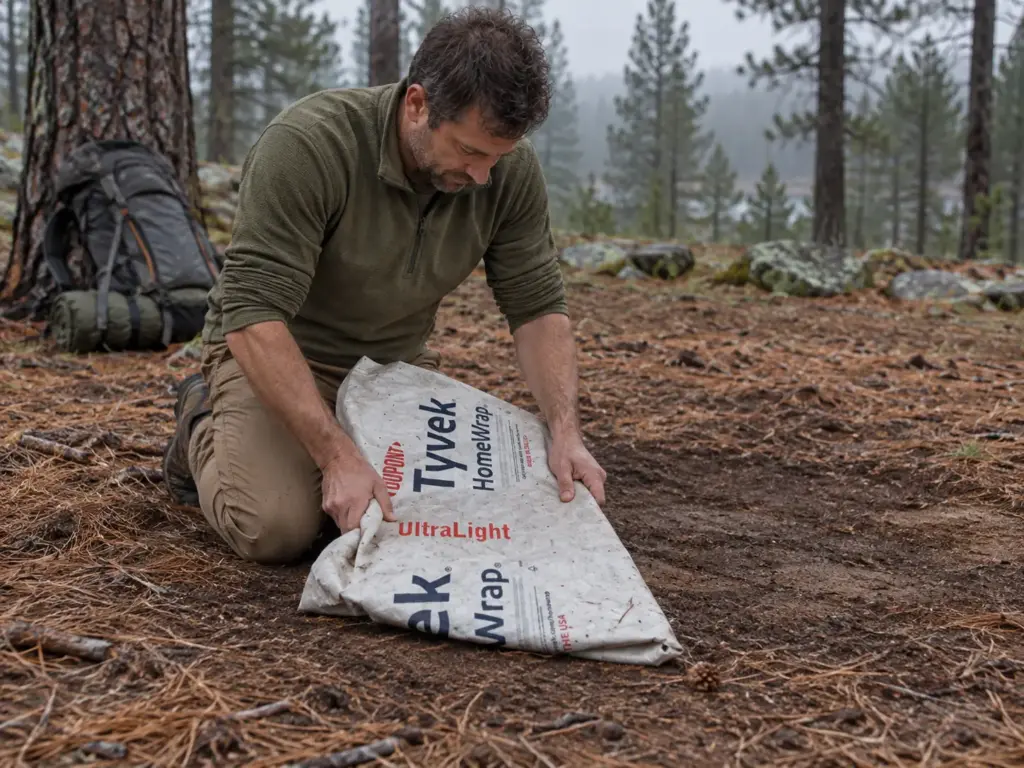
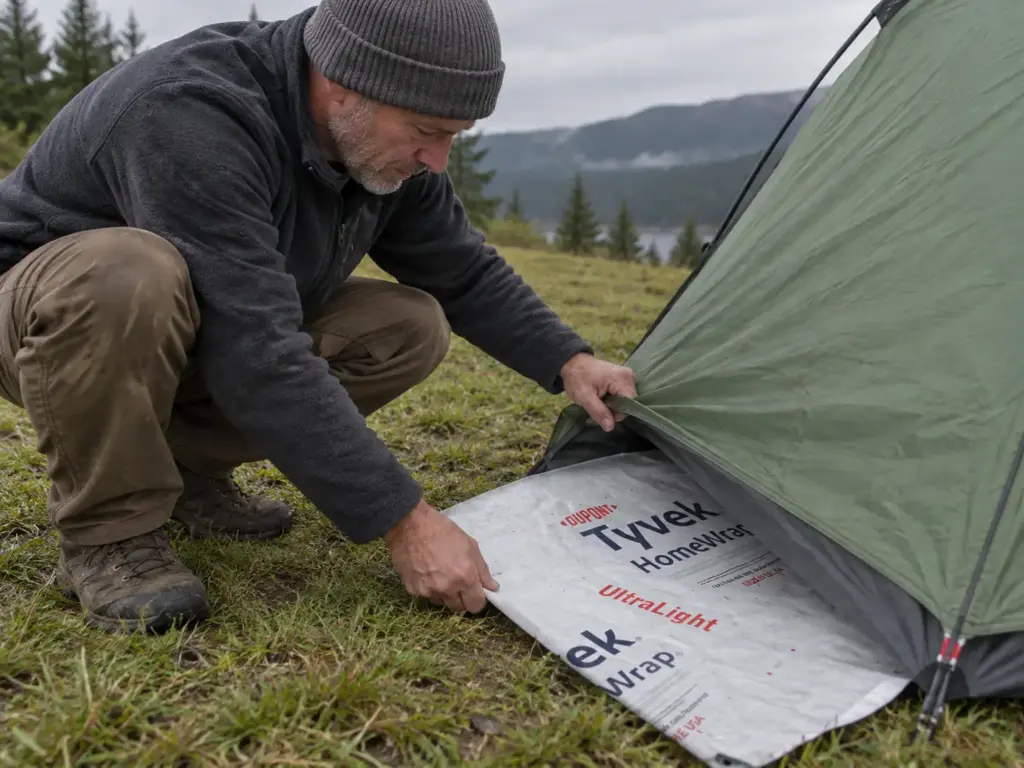
Tyvek is the house-wrap fabric builders staple onto new walls, and it makes a tough, cheap groundsheet. Get the right kind: Home Wrap is the type people use for footprints, not just any Tyvek you find. It’s very tough under a tent, and the sheet people keep for years.
It has real downsides. Fresh-cut Tyvek is loud, and one commenter warned you can “expect the crinkle sound to be heard from space.” It builds static, dirt clings to it, and its packability is worse than the weight suggests, since it stays bulky until it’s been washed. If you don’t want to cut a roll yourself, a pre-cut universal footprint like the Tyvek Ground Sheet & Tent Footprint comes in several sizes, around 4 to 7 oz and about 0.5 mm thick.
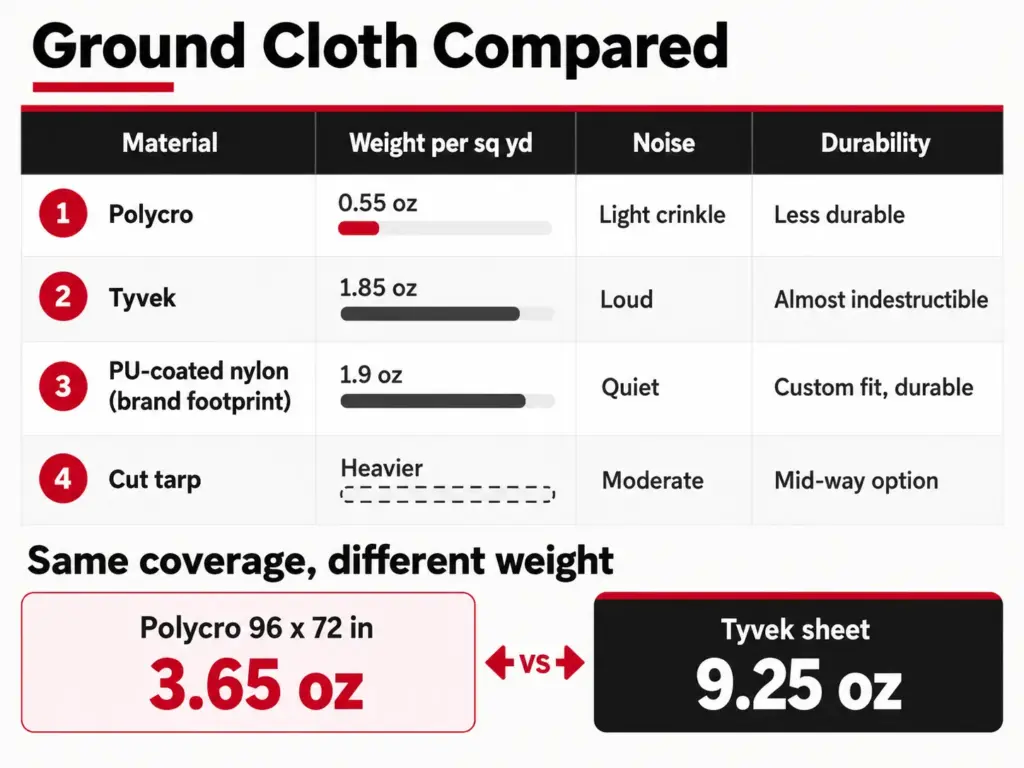
Now the weight math. Per square yard, polycro weighs about 0.55 oz, Tyvek about 1.85 oz and the PU-coated (polyurethane) nylon most brand footprints use about 1.9 oz. So Tyvek saves you almost nothing in weight over a brand footprint; it saves you money. Polycro is the one that saves weight: a 96 x 72 inch polycro sheet from Gossamer Gear weighs 3.65 oz, while a Zpacks Tyvek sheet for the same coverage comes in at 9.25 oz, roughly 7 oz more.
Polycro, the Featherweight
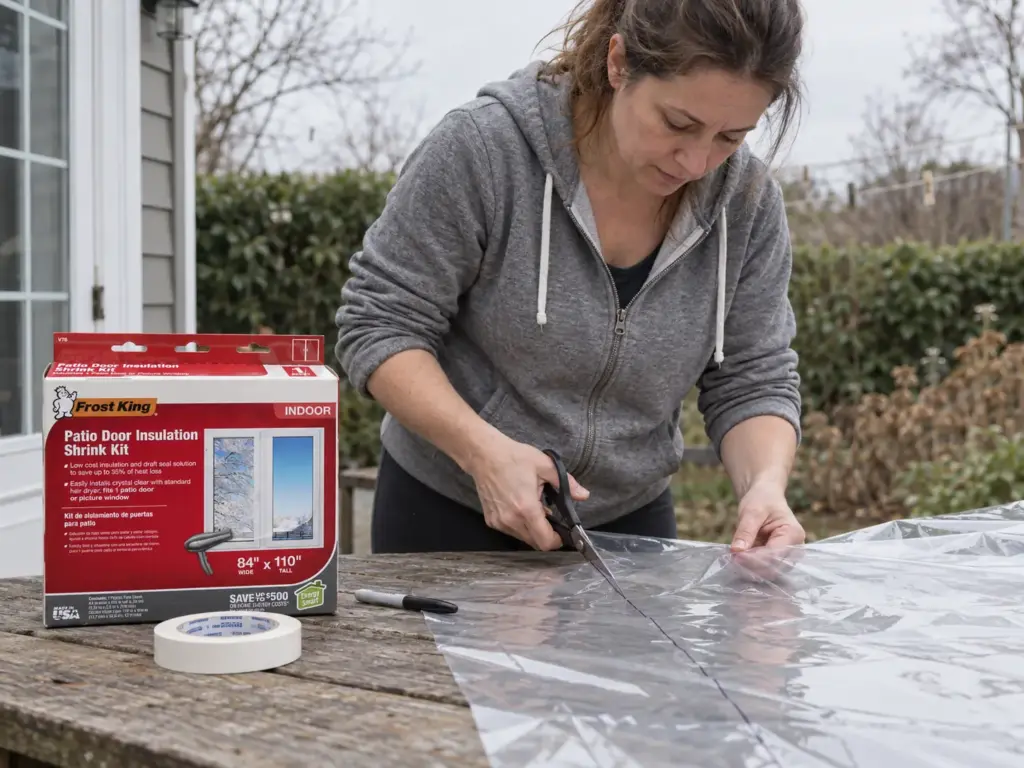
Polycro (also spelled polycryo) is cross-linked polyolefin, the same family of film as the shrink-wrap window insulation film sold in hardware stores under names like Duck and Frost King. It’s clear, thin and surprisingly tough for what it is. Philip Werner at SectionHiker has reused a single sheet “for a year or more,” and 1 to 2 oz of it covers a typical tent floor. The trade-off is durability: it’s less tough than Tyvek.
The cheapest route is the hardware-store film itself. The Frost King V76H Shrink Window Kit is an 84 x 110 inch sheet of that film, and it’s a window kit, not a ready-made footprint. You unfold it, trace your tent floor and cut it to size, and the kit gives you several sheets of roughly 1.5 to 3 oz each, plenty for one floor. On a tight budget, nothing else here gets as light for as little.
Tarps and Brand Footprints
In the footprint vs tarp question, a cut-down hardware-store tarp is the heavier middle option. Its upside is that a tarp you already own costs nothing, and a decent one can pull double duty as a roof if you know how to rig a tarp shelter. As a ground cloth alone, it’s the heavy option.
A matching footprint from the tent brand, the custom footprint option, is the priciest per ounce, but it’s the only option that fits perfectly out of the bag. The grommets line up with the pole fasteners, the shape follows the floor exactly, and on many tents it lets you pitch the fly without the inner tent (see the fast-fly section below). Some hikers split the difference: one r/backpacking hiker’s Tyvek sheet “doubles as a tarp” after they “punched grommets in the corners.”
Sizing and Laying a Footprint So It Doesn’t Pool Water
The trailhead lesson nobody wants to learn firsthand: one hiker laid the biggest sheet they had under their tent, the rain came, and in their words, “the tent and I were floating.” Size is the part of this that goes wrong most often, and the failure is a wet night, not a worn floor.
Cut It Smaller Than the Floor
The rule is to cut or choose a footprint slightly smaller than your floor, about 1 inch on every side. Rain runs off the fly and drips straight down. If your sheet sticks out past the floor, those drips land on it, and the sheet starts to funnel water inward until it’s trapped between the sheet and your floor. Your weight then presses that floor into a puddle all night, which is how a “waterproof” tent ends up with pooling water and a damp sleeping pad that people often blame on condensation.
One r/backpacking hiker described the result exactly: you don’t want it “hanging out from beneath to catch water and creating a lake under you.” Another thread suggests going “a few inches smaller” just to be safe. The cleanest way to get it right is to pitch your tent on top of the uncut sheet at home, trace the floor outline with a marker, unpitch, and cut about an inch inside the line. With polycro, cut slowly with sharp scissors; a ragged edge is where tears start.
After a rainy night, run your hand along the floor edge before you pack up. If it’s dry inside but the sheet underneath is soaked along one side, the sheet is sticking out there. Trim that edge or tuck it before the next storm.
If It’s Too Big, Tuck It Under
Already own an oversized sheet? Don’t cut it in the dark. Tuck under whatever hangs out, folding the extra beneath the tent floor so nothing sticks out past the edge.
There’s a real disagreement here worth knowing. Some hikers deliberately cut their Tyvek about 6 inches long so the extra sits under the vestibule as a gear mat. That works, but only if the extra stays fully under the vestibule fly, and you fold it back in when a storm rolls through. The safe default is still smaller than the floor wherever your weight is.
For a brand footprint, lay it down first, line up its grommets with the pole fasteners, and then pitch the tent on top. The rest is the same as pitching a backpacking tent without one: flat ground first, then stake.
Getting the Noise Out of Tyvek
New Tyvek sounds like you’re sleeping on a bag of chips. The fix from the threads: wash it with no detergent and hang it to dry, never in the dryer. It’ll still make some noise afterward, but it gets quieter.
Skip It and Carry a Patch Kit Instead
Plenty of ounce-counting hikers skip the footprint entirely and carry a strip of tape instead. It’s a perfectly good answer, as long as you pair it with two habits: clear the site, and know how to patch a hole fast.
Clear the Site First
Site prep is the first line of defense no matter what you lay down. CleverHiker’s advice is to “meticulously clear twigs, rocks and pinecones” (and any sharp sticks) before pitching, and that’s the habit that actually saves floors. Sweep the spot with the side of your boot, pick out anything sharp, and do the kneel test from earlier. In the morning, scatter what you moved back where it was so the site looks untouched.
Plan B Is a Roll of Tenacious Tape
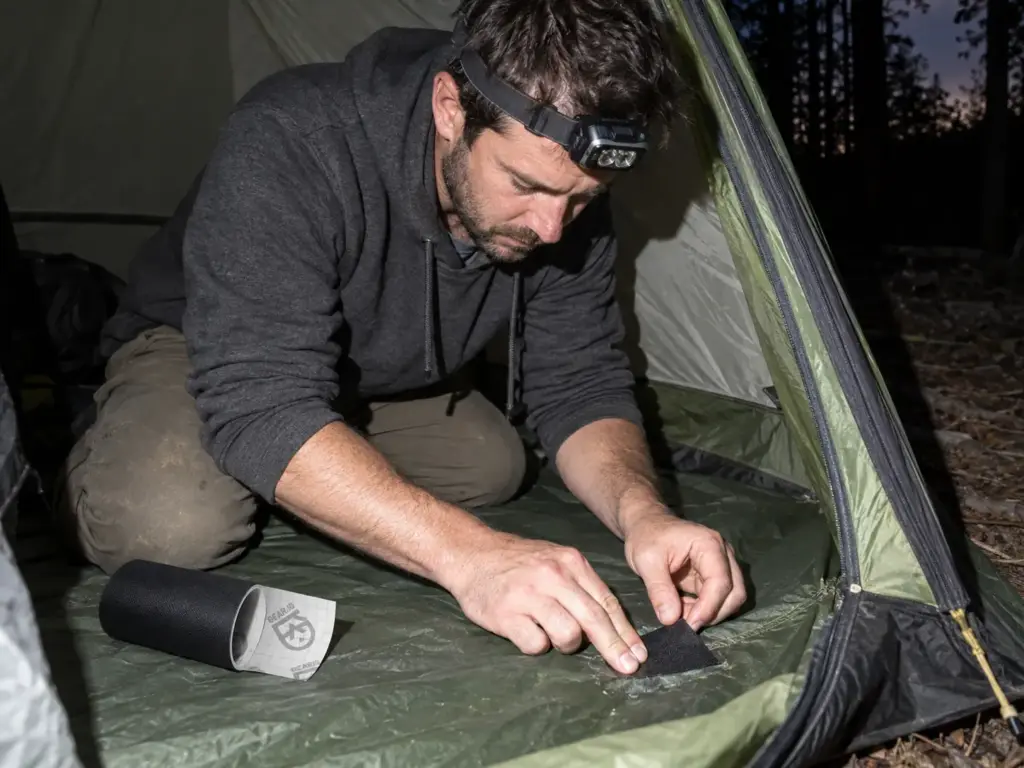
The most common line in footprint threads isn’t about footprints at all: “I carry tenacious tape which makes an easy repair in case it does happen.” A roll of GEAR AID Tenacious Tape weighs next to nothing and handles a floor puncture in the field. Clean and dry the spot first, then press the patch down hard.
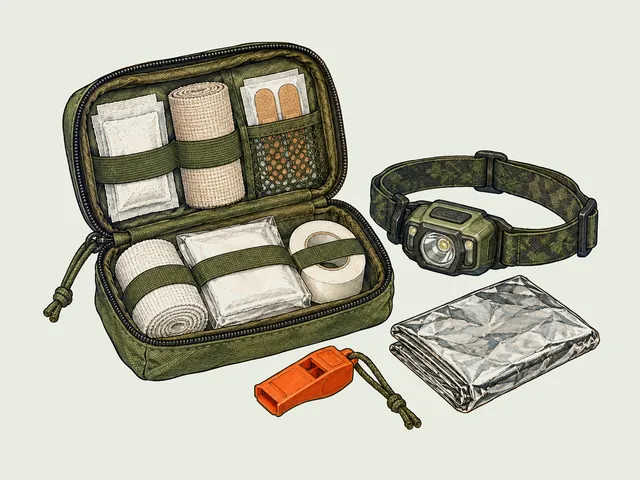
Tape is one piece of a small kit. A modular repair kit adds the other fixes a footprint never covers.
What a Footprint Never Fixes
Footprints protect against ground wear and nothing else. One thread reports a footprint and the tent above it both holed on very rocky ground. Embers from a campfire can do more damage to a tent than the ground ever does.
Floors also wear out on their own schedule. One hiker reported their Duplex floor started delaminating after 8 years of use with no groundsheet at all. That points to coating age more than abrasion, and an eight-year tent lifespan out of a lightweight floor is a decent run. Weigh that against what a replacement tent costs, and for a lot of people the tape-and-care route wins.
What a Footprint Can Do Besides Protect the Floor
If you’re going to carry a sheet anyway, it’s fair to ask what else it earns its place for. For some hikers, the side jobs are what tip the decision.
Tarp, Mat or Shade
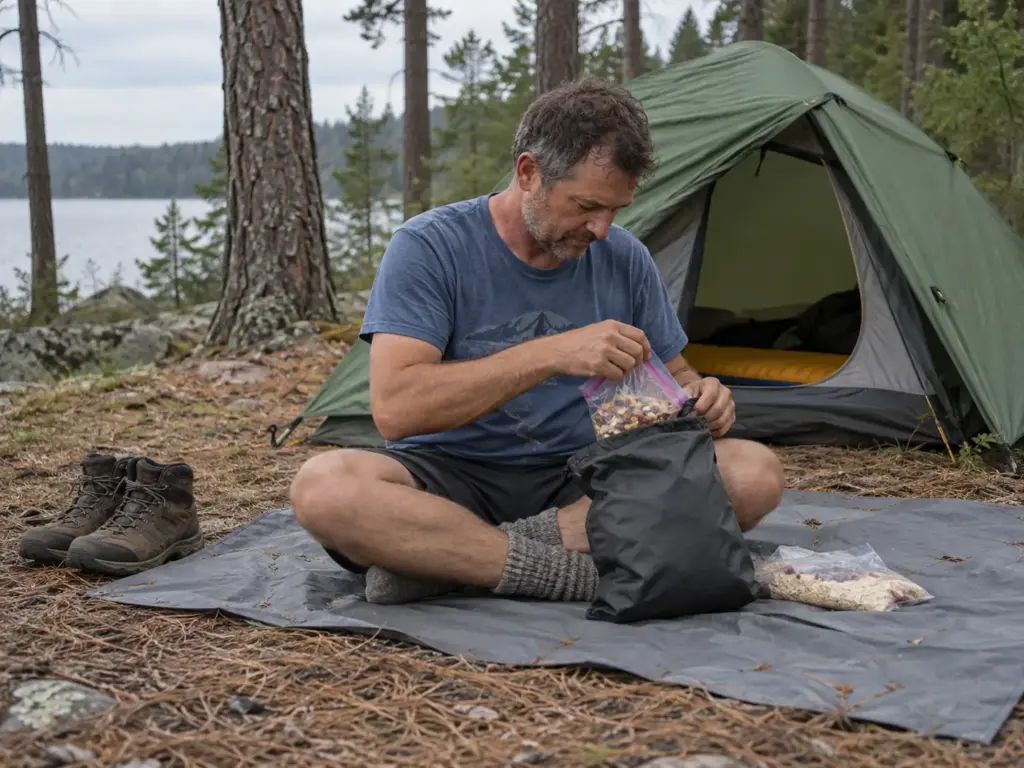
A Tyvek sheet with grommets punched in the corners doubles as a small tarp for rain or shade at a midday break, and as an emergency shelter for gear in a pinch. It’s a ground cloth for cowboy camping on clear nights when you don’t bother with the tent, or under a pad and quilt when you’re tarp camping. It’s a picnic blanket, a dry spot to sort gear, and a cover for your pack in a sudden shower. Car campers use one as a no-shoes walkway between tents so the dirt stays outside.
Going Fast Fly
Many tents with a matching footprint can be pitched as a “fast fly”: fly, poles and footprint, with the inner tent left at home. It’s lighter, and it gives you a roomy shelter for warm, dry trips. One REI Quarter Dome 2 owner likes the footprint for another reason: it lets them put up and take down the fly alone without ever wetting the tent floor.
When It Still Isn’t Worth Carrying
Be honest with yourself here. If you wouldn’t use the sheet for any of those side jobs, and your floor is 30D or heavier, and you mostly pitch on soft ground, leave it at home. It’s dead weight. If your floor is thin and replacing the tent would hurt, even a 1.5 oz polycro sheet makes sense, side jobs or not.
Read the Floor Tag, Then Look at the Dirt
Three things to take onto the trail:
- Check your floor’s denier first. 30D or heavier usually goes without; 20D and below wants protection on rough ground.
- The ground and the trip decide the rest, and no sheet stops a rock sharp enough to puncture a floor.
- Size it about an inch smaller than the floor, and carry Tenacious Tape whether or not you bring a footprint.
Next time you pitch, look at the ground under the tent and the tag inside the door before you decide. Then try one trip with a cheap sheet, and one without, and look at the floor afterward. Your own tent will tell you which camp you’re in.
Frequently Asked Questions
01Is a tent footprint really necessary?
Not always: a tent floor of 30D or thicker on soft ground usually does fine without one, while a thin 20D floor on rock or gravel needs protection. Check your floor denier and your campsite, then decide. If you skip it, carry repair tape.
02What can I use as a tent footprint?
You can use Tyvek house wrap, polycro window-insulation film, a cut-down tarp or the matching footprint from your tent brand. Polycro is lightest, Tyvek is toughest for the money, a tarp is heaviest, and the brand footprint fits best.
03Is a footprint or tarp better for a tent?
A footprint is better under the tent because it fits the floor and lines up with the poles, while a tarp is heavier but doubles as a shelter. If you use a tarp underneath, fold it smaller than the floor so it never catches rain.
04What is the difference between a tent footprint and a groundsheet?
They do the same job; a footprint is cut to your tent’s exact floor shape with grommets for the poles, while a groundsheet is a generic sheet you cut or fold to size. Both protect the floor from abrasion and dirt.
05How much smaller should a footprint be than the tent floor?
Make a footprint about 1 inch smaller than the tent floor on every side, so nothing sticks out past the edge. Any part that sticks out catches rain and funnels water under the floor, which leaves you sleeping in a puddle.
I've spent more than a decade researching hiking gear and trail technique. I read the specs, the forum threads and the long-term reviews, and every pick here comes with what it gets wrong.
End of the trail
You read every mile of this one. Here's where the trail goes next.