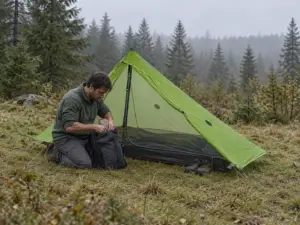
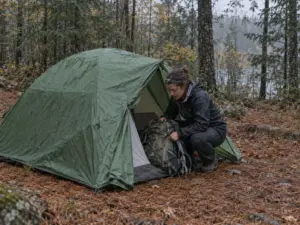
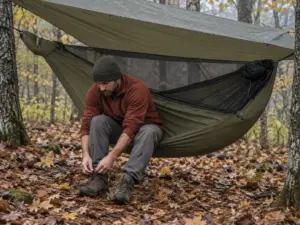
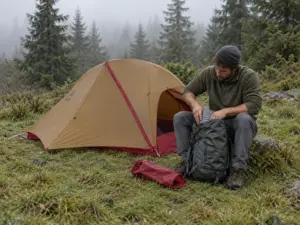





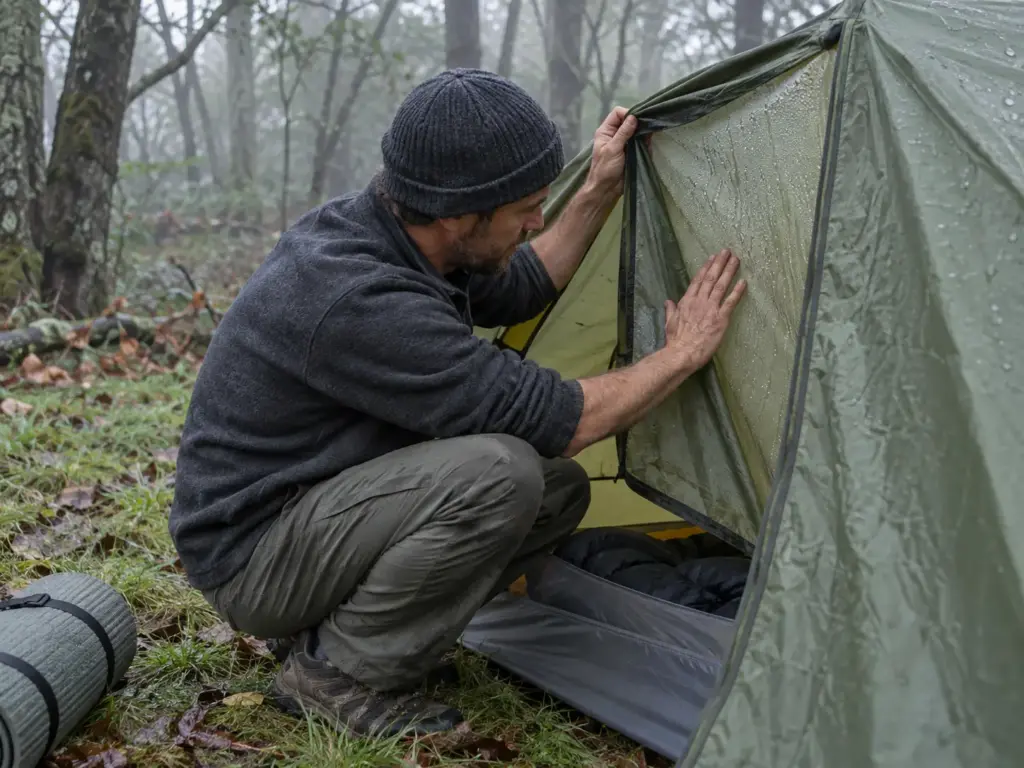
It’s 3 a.m., the fly is shivering in a light breeze, and a cold drop lands square on your forehead. Then another one hits the sleeping bag. Good tent condensation management starts with an honest admission: you will manage that water, not banish it, and the most repeated answer in r/camping’s cold-weather condensation thread is some version of “never found a solution.” Drawing on REI, Sea to Summit, Seek Outside, Section Hiker, Michigan State University Extension’s winter camping manual and what r/camping and r/Ultralight campers say actually works, here’s where the water comes from, where to pitch, how to vent, why the usual fixes backfire, what changes in frost, and which gear earns its weight.
Tent Condensation Management Starts With Where the Water Comes From
Warm Breath Meets a Cold Fly
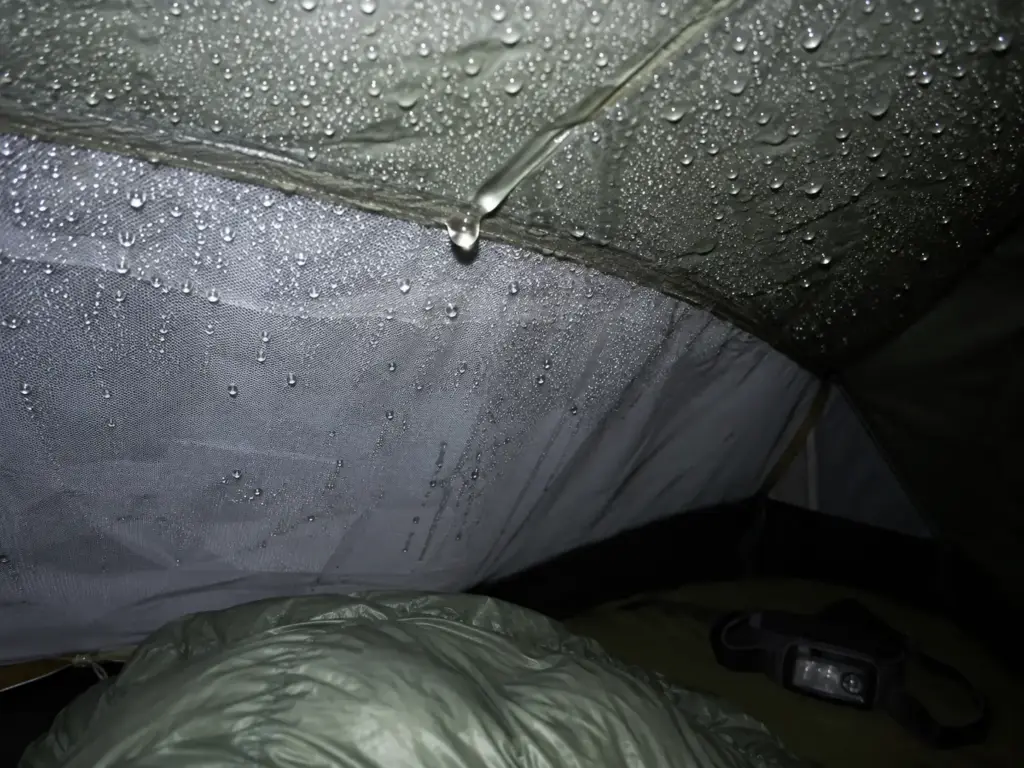
A cold drink sweats on a hot afternoon because warm moist air hits a cold surface and drops below its dew point. Your tent does the same thing all night, except the moist air is your breath and the cold surface is the rain fly. The heat you give off warms the inside air, while the fly faces the open night sky, loses heat fast and becomes the coldest surface around you.
Every exhale carries vapor up to it, and the vapor turns back into liquid on the underside. That is the whole mechanism. Nothing in the fabric is broken.
The Three Moisture Sources
REI names three sources of condensation in a tent: the humidity already in the air, every breath you take overnight, and anything wet you bring inside. Sea to Summit, which makes tents, puts a sleeper’s breath moisture at upwards of a liter a night. That’s the maker’s own figure, and lower estimates exist, but either way a lot of water goes into a small airspace.
A quick sorting test saves confusion. If the water is on the outside of the fly in the morning, that’s dew, and as one r/camping commenter put it, there’s nothing you can do about that. If it’s on the inside, it came from you: breath, sweat, damp clothes.
Manage It, Don’t Expect to Beat It
Once you’ve pitched, you can’t choose the humidity, and you can’t stop breathing (the standing joke answer in every condensation thread). What you control is the site, the airflow and what you carry in wet. That’s the frame for everything below.
One more check before you blame the weather. Drips that bead evenly on the underside of the fly on a clear night are condensation. Water that tracks along a seam during rain, or shows up at the same corner every storm, is a leak, and then it’s worth sealing the seams first before you rework your venting.
Where You Pitch Decides Half the Fight
Mid-Slope, Not the Creek Bottom
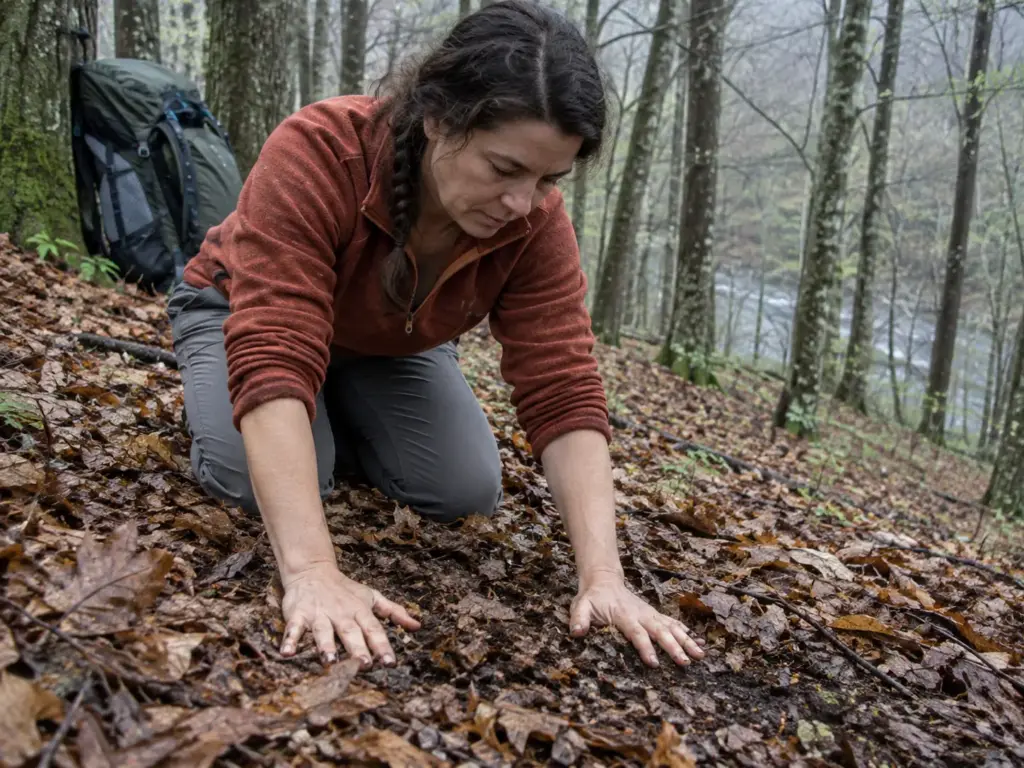
The pretty flat beside the creek is almost always the wettest spot in camp. Cold air pooling in dips does part of it, and the air gets more humid when you camp near water (Sea to Summit lists both). Seek Outside adds creek beds and valley bottoms to the worst-offender list.
One r/Ultralight camper described a cool, humid night in a river valley as sleeping inside a frozen cloud, and that was in a single-wall tent. Aim for mid-slope, a bit back from the water, on slightly higher ground where some air moves. It’s the same logic as choosing a campsite for wind and rain: a little elevation, a little breeze, nothing that turns into a drainage when it pours.
Trees Help, Dead Branches Don’t
The air under a canopy is usually warmer than open ground, and REI and Sea to Summit both point out that the overnight moisture collects on the leaves overhead instead of on your fly. Look up before you stake, though. A dead limb hanging over a tent (a widow-maker, in trail slang) is the one tree hazard that trumps every condensation gain.
Door Into the Breeze
REI’s advice is to point the door into a gentle breeze (the door orientation that matches the prevailing wind) so air flows through rather than around. A still, humid night is the hard case: one r/camping commenter notes that on those nights the grass and the car get soaked too. If the whole campsite is wet at dawn, your tent was never going to be the exception.
Ventilation Tips That Move Air Through the Tent
Open Opposing Vents First
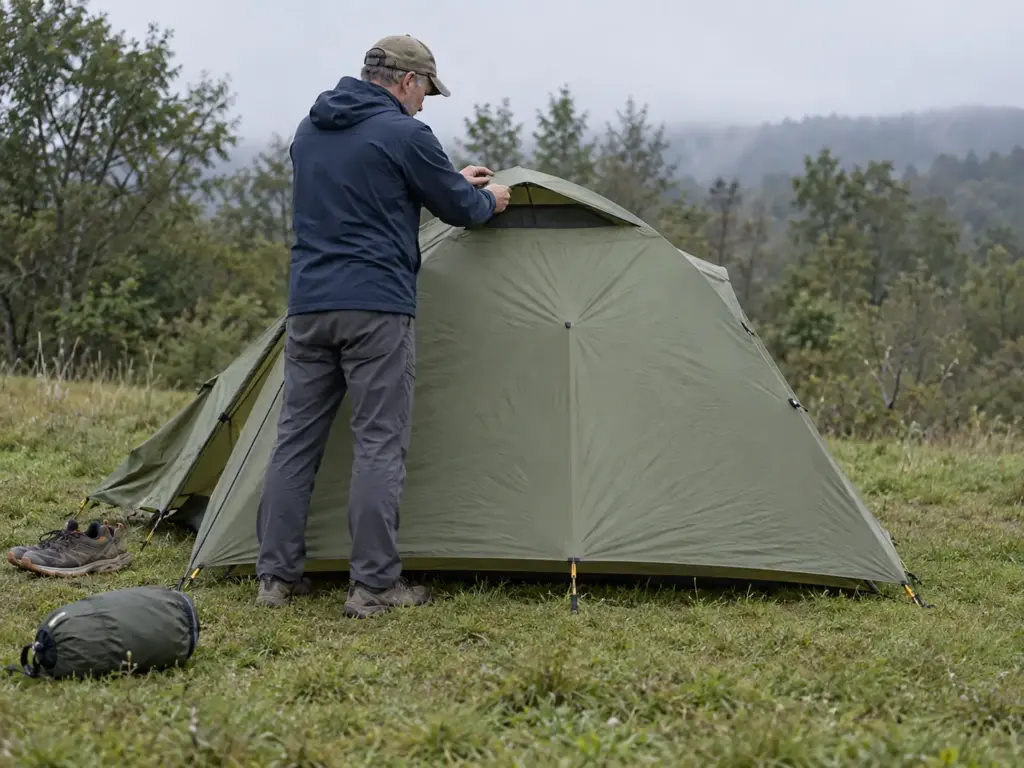
Air needs an entrance and an exit. One open vent mostly lets moist air sit there; two tent vents on opposite sides create cross ventilation, which does the work. If your tent has a low baseline vent and a high apex vent, or roof vents, use both ends. REI’s checklist for a typical three-season night: open the opposing fly vents, roll back the fly doors (deploy them only if rain starts), and open the mesh windows on the inner tent so the air inside can mix with the air under the fly.
If you want a number, Michigan State University Extension’s winter camping guide tells winter campers to keep vents open about 10 square inches per person, roughly a 3 by 3 inch opening for each sleeper. Two people means roughly double that, far more than the pinhole most of us leave open when it’s cold. On a mild night, treat it as the minimum.
Then there’s the bottom edge. Never pitch the fly flat to the ground. A couple of inches of gap lets cool, drier air in low, alongside any baseline vents, while the warm, wet air exits through the apex vent or other roof vents, which is the stack effect working for you.
Seek Outside reports from its own testing that a gap of a couple of inches cut condensation by about 80 percent on average compared with a tight tent skirt. That’s the vendor’s own test on its own shelters, but the direction matches everything else here. The trade is a draftier night.
Keep the Fly Off the Inner Tent
Pitch taut and tension the fly so it never rests on the inner wall. Sea to Summit’s warning is blunt: once the walls touch, condensation gets out of control, and fast. An r/camping regular’s rule of thumb is a fly staked a few inches off the mesh inner. The fly gets wet; the living space stays dry.
Fabric can loosen overnight, so a fly that was tight at dusk can be lying on the inner by midnight. Re-tension the guylines before bed. How much tension a fly holds depends on the design, which is where how pitch style changes tension and airflow comes in.
Mesh inners have their own failure mode. A gust shakes the fly and flings the beads on its underside through the mesh panels onto your face; one r/Ultralight camper got rained on that way in a tightly pitched double-wall tent. The fix is more space between the layers, not a tighter pitch.
Pitch, crawl in, lie down, then reach up and press the inner wall beside your head. If your hand meets the fly, so will your hood at 2 a.m. Go back out and tighten that side’s guyline before it gets dark.
What to Open in Rain, Still Air, Wind and Cold
The checklist above covers most three-season nights. The table covers the ones that don’t fit. These are field rules of thumb pulled together from REI, Section Hiker, MSU Extension and what experienced campers repeat, not measured results, so adjust them to your tent and your night.
| Condition | What to open first | What to watch |
|---|---|---|
| Steady rain | Vents facing away from the rain, door pitched out of the weather | Roll the fly door back only as far as the rain allows |
| Still, humid night | Both doors, opposing vents, and a lifted bottom edge of the fly | Everything outside gets damp too; this is the night a fan earns its keep |
| Windy | Door into a gentle breeze; in strong wind, guy out and open the lee side | If wind drives rain or snow in, block it with a tarp outside instead of closing vents |
| Cold and frosty | The full door with the screen closed, or both vestibules wide | A small opening is far less effective than a wide one |
Two rows deserve a note. In wind, the instinct is to zip everything shut, and MSU’s manual pushes back: if snow or wind blows through, string a tarp outside and keep the vents open. In frost, Section Hiker’s Philip Werner reports that venting through a small opening is far less effective than opening the full door or both vestibules.
Cracking the door an inch feels like a compromise. In practice it’s a closed door with a draft.
Moisture Control Inside and the Morning Routine
Wet Boots and Rain Gear Stay in the Vestibule
Your sleeping bag soaks up whatever the routine gets wrong, so this part is mostly habit. Wet boots and rain gear go in the vestibule, bagged, set in the middle and away from the door so the fly doesn’t drip on them every time you crawl out (an r/camping regular’s system for vestibule storage). REI and Sea to Summit both put drying clothes or a wet dog inside the tent on the do-not list, the same discipline as managing wet gear while you hike.
MSU’s winter manual adds two habits worth stealing year-round. Brush snow, mud or wet grass off clothes before you get in, and line spare clothing in stuff sacks along the tent wall, where the bags double as a spacer so your shoulder never presses the fabric.
Cooking stays outside. Steam from a pot adds water to the air, and Section Hiker and MSU both name cooking as a moisture source to keep out of the tent.
A Clothesline Beats Drying Gear Inside
Sea to Summit’s rule is simple: dry clothes outside the tent, on a line strung between two trees or under a tarp if it’s showering on and off. You probably already carry the cord; the spare guyline in your stake bag works. If you don’t have any, a hank of light reflective cord like the ThreeBulls 1.8mm reflective guyline cord covers a clothesline and replacement guylines.
The reflective strand matters more than it sounds when you’re stumbling to the bear hang in the dark past a line strung at shin height. Hang socks, base layers and the rain shell, and bring them in only once they’re dry enough to sleep near.
Wipe Down, Pack the Fly Separately, Dry at Lunch
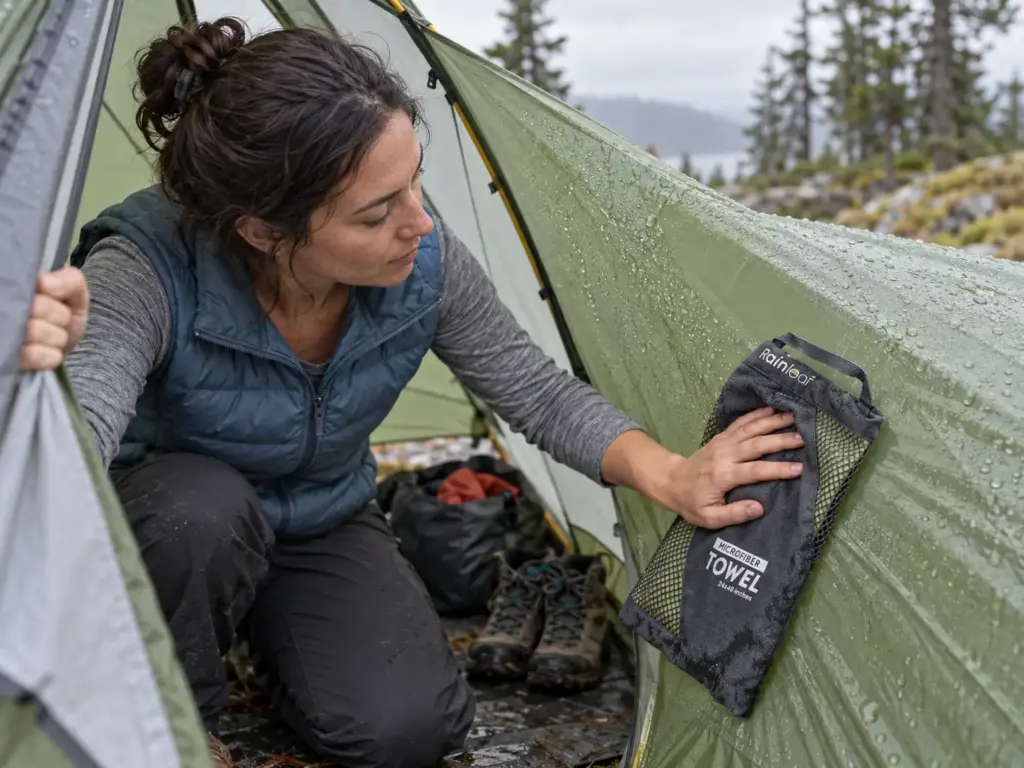
Some water will still be there at dawn. Wipe the inner walls and the underside of the fly before the drips fall, a step both Sea to Summit and Seek Outside recommend. A cheap, quick-dry towel such as the Rainleaf Microfiber Towel does the job quickly and wrings out easily. Several r/camping commenters carry their towels in freezer bags so at least one stays dry for the next morning.
Then pack the fly separately from the inner. The fly is the wetter piece, and one shared sack soaks the part you sleep in. Sea to Summit’s advice is to dry both at the lunch stop or the next camp, which fits the routine of packing and pitching a tent for backpacking. A winter kayak camper in the r/camping thread put the stakes fairly: one wet night in the sack is no disaster, but a tent stored wet for days is how mildew starts.
Pack the wet fly last so it rides at the top of your pack. At the first sunny break, you can pull it out and drape it over a bush or rock in under a minute without unpacking anything else.
Why the Usual Fixes Fail
Fly to the Ground, Fog on the Walls
The most common “fix” is to stake the fly hard to the dirt to keep weather out. It feels snug. It also seals you into a bag of your own breath: with no air entering low, the high vents have nothing pushing moist air out, and the walls fog by midnight.
Sea to Summit and Seek Outside both flag the sealed, ground-hugging pitch as a condensation maker, and r/camping commenters repeat it: leave a gap at the bottom. A loose fly lying on the inner is the same mistake from the other direction. Both remove the airspace that lets moisture move, and they often show up together, because people clamp the bottom edge and forget the guylines that hold the walls apart.
A Tarp or Groundsheet That Traps Moisture
Draping a tarp over the tent sounds like double protection, and on a calm night it backfires. One r/camping commenter explains why: ground condensation rises, wets the tarp, and the tarp holds that damp air right over your vents.
A tarp pitched well clear of the tent, angled to break wind, is fine. A tarp wrapped over the vents is not, and pitching a tarp so rain runs off instead of trapping moisture is its own skill.
The groundsheet is the sneakier one, and the right answer changes with the surface:
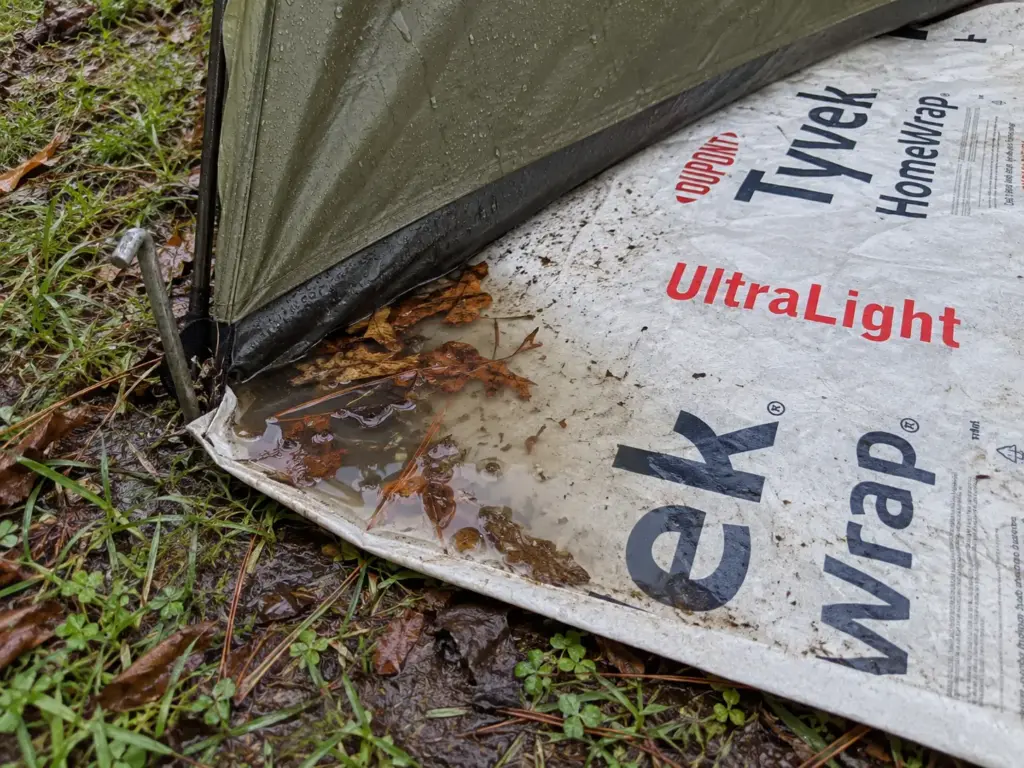
- Rain on dirt or grass: keep the sheet no wider than the tent floor. An edge that sticks out catches rain and channels it underneath, where it pools and feeds moisture up into the tent. r/camping regulars add that running the sheet under the vestibule keeps ground moisture down there too.
- Snow: MSU’s manual says the ground cloth works better outside, under the tent, because snow melted by your warmth otherwise wets the tent’s underside and freezes into the fabric.
A Tyvek ground sheet is easy to get right because scissors trim it to sit just inside the floor edge; one r/Ultralight regular cuts theirs to roughly the size of the missing bathtub floor for a fly-only pitch. Whether you need one at all is a separate question, and the physics of do you really need a footprint covers it.
Four-Season Tents and Double Walls Aren’t a Cure
Plenty of campers try to buy a dry tent, and two upgrades disappoint most. The first is the 4-season tent. Above freezing it’s worse: an r/camping regular points out it condenses more than a three-season in mild weather, and a Hilleberg owner in the same thread admits four-season tents just don’t breathe well.
The second is the double-wall tent bought to stop condensation. An r/Ultralight camper who owns both designs says they collect condensation at the same rate. The mesh inner keeps the drips off you, which is useful, but it doesn’t make less water.
Size matters too. Seek Outside notes that smaller tents with more people in them condense more than larger tents with fewer: twice the breath, same airspace. That’s a solid argument for a two-person backpacking tent sized for sharing with real headroom over the lightest two-person shelter you can find. A few extra ounces buys a lot of air between your faces and the fly.
Condensation in Cold Weather and Frost
Frost Is Condensation That Froze
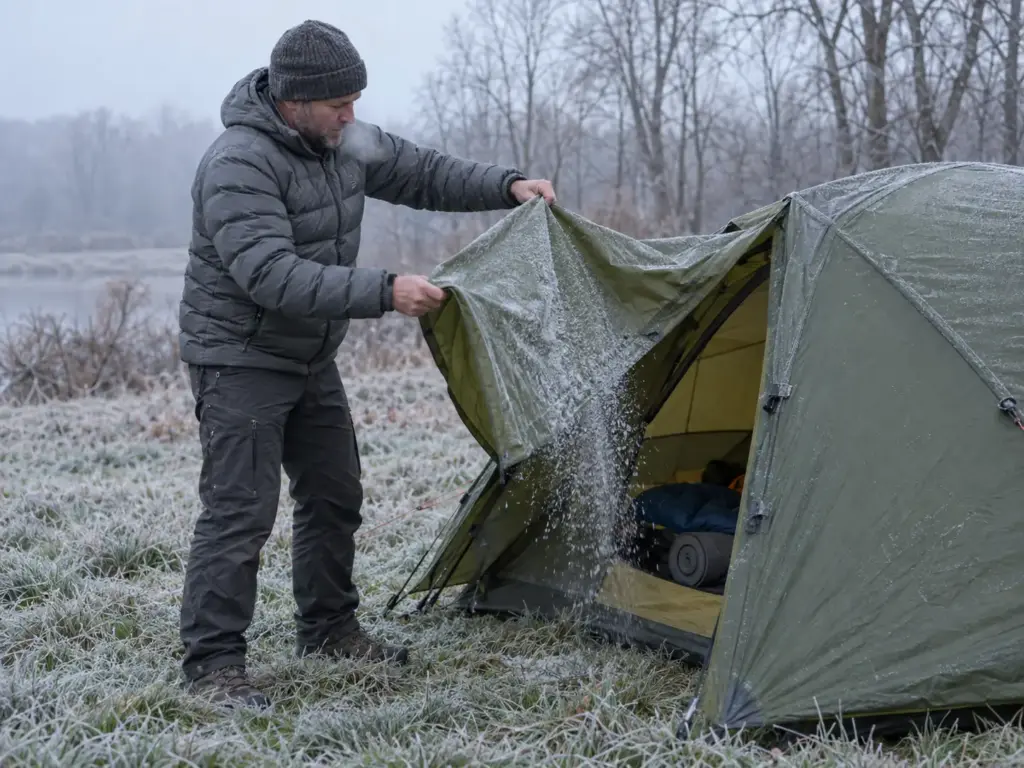
In the r/camping cold-weather thread, one camper describes waking warm and comfortable, then brushing the ceiling with the top of his head and setting off a small avalanche of ice down his back. Another, sleeping unheated at minus 10 °C, woke to frozen walls. Below freezing, condensation doesn’t drip. It builds up as frost on the inside of the fly, and every bump, gust or zipper pull shakes it loose onto your bag.
MSU’s manual has a line worth remembering: a tent blocks wind and snow but provides little insulation. The warmth is in your clothes, bag and pad, not the walls. The same manual says most three-season tents serve fine in winter if they have a full fly, plenty of breathable inner material, windows for ventilation and a slope steep enough to shed snow.
That’s the four-season paradox from the other side. Less mesh holds more heat, and the heat it holds is wet. If you’re weighing what separates three-season and four-season tents, let wind and snow load decide it, not condensation.
Open the Whole Door, Not a Crack
Here’s the honest trade-off of cold weather camping, and r/camping commenters put it plainly: if you want the tent much warmer than the outside, nobody has found a way to keep it dry too. A warm interior means condensation; more airflow means a colder night. One camper sums up the workable version: if your bag is warm enough for the outside temperature, open one door, or better two, and the inside stays largely dry.
So in frost, commit. Section Hiker recommends the full door open with the bug screen zipped (it keeps blowing snow out), or both vestibules wide. Brush snow off boots, clothes and pack first, because every flake you carry in becomes water.
And keep your face out of the sleeping bag. Section Hiker and MSU agree on this independently: breathing into the bag loads the insulation with moisture, and in the cold, moisture means ice. If you’re new to sleeping out in snow, winter camping basics covers the rest of the system.
Section Hiker’s winter trick: keep tomorrow’s damp clothes in a stuff sack inside your sleeping bag overnight. Your own warmth keeps them from freezing solid, and you won’t spend the first ten minutes of the morning pulling on a frozen layer.
Keep the Sleeping Bag Dry When the Walls Aren’t
The drips are annoying. Wet insulation is the real cost: down that soaks up frost night after night loses loft, and the bag gets colder every day of the trip. One r/camping regular’s fix is the cheapest idea here. Make the outermost layer of your sleep system synthetic: a synthetic bag over a down one in hard cold, a cheap fleece blanket over the quilt in milder cold.
The frost lands on the synthetic insulation, which shrugs off moisture, instead of the down. For the footbox, where the bag tends to touch the wall, an r/Ultralight trick is to drape your rain jacket over the foot end. A pack liner around the footbox seems smarter but traps your own vapor inside the bag.
Section Hiker adds the follow-through: a damp sleeping bag carried back into the tent makes more condensation and holds less heat, so lay it on top of the tent in the morning sun. Damp insulation on a multi-day trip is how a bad night turns into a medical one, so know how to treat hypothermia on the trail before you need it.
Gear That Earns Its Weight and the Hack to Skip
A Fan Is a Luxury for Still, Humid Nights
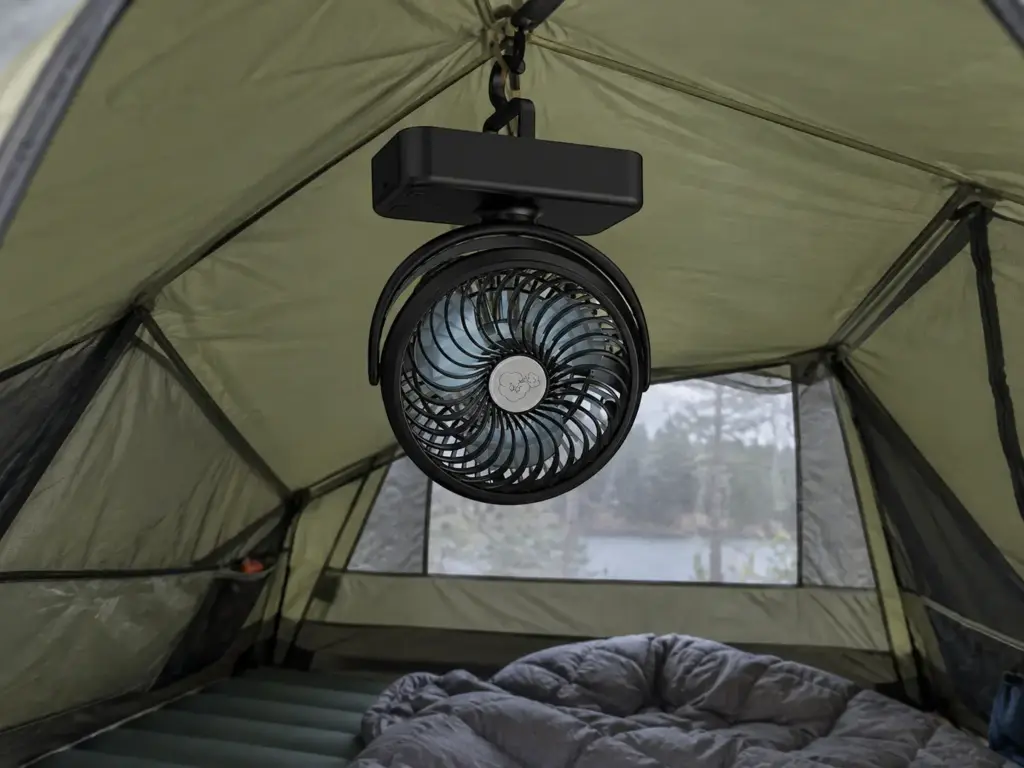
A fan is the clearest piece of gear that earns its weight, on the right trip. On a still, humid, above-freezing night with no breeze to drive cross ventilation, a small battery fan makes its own. Two r/camping commenters swear by one running overnight, one of them on oscillate, and one of the two calls it a luxury.
A hanging fan like the REENUO Portable Camping Fan hooks to the ceiling loop and pushes air across the top of the tent, where the wet air collects. It belongs in a car-camping bin or a basecamp tent, not an ultralight pack, where its weight is better spent on a warmer layer. Before you buy one, try the free version: open both doors wider.
Liners, Stoves and Absorbers
Seek Outside sells a tent liner that turns a single-wall shelter into a double wall, catching drips and steering them to the floor, plus small tent stoves that warm the air so it holds more moisture and dries the fabric.
A moisture absorber like DampRid is the other common question. The evidence is thin: in a long r/camping thread on cold-weather condensation, exactly one camper recommended it and nobody else mentioned it. An absorber holds a limited volume against a whole night of breath. My call is to skip it and put the effort into airflow.
The Hack to Skip: Flames in a Tent
The “dry the tent with a candle or stove” hack is the one with fatalities on the federal record. The CDC’s report on six camping deaths in Georgia covers two incidents from March 1999, one with a burning propane stove in a tent and one with a charcoal grill, both brought inside for warmth. The CDC’s conclusion was flat: camp stoves, heaters and lanterns should never be used inside a tent, and opening flaps, doors or windows was not enough to prevent carbon monoxide build-up. Venting does not make a flame safe.
The Consumer Product Safety Commission says never to use portable heaters or lanterns while sleeping in a tent, and notes that the risk is higher at altitude. The symptoms (headache, dizziness, nausea, sleepiness, confusion) can pass for a cold, the flu or a bad night at elevation, and a sleeping camper won’t notice them at all.
The popular version is a UCO candle lantern, often loaded with a beeswax candle, burning through the night. Campers argue about it: some swear by theirs, while another in the r/camping thread warns about the fire risk of an open flame in a nylon shelter. A split thread is not proof, and the CDC and CPSC rule says no flames.
The hack fails on moisture too. As one camper points out, burning propane releases a considerable amount of water vapor, adding to the water you were trying to remove. The CDC’s alternative is boring and effective: warmer bedding and clothing, and more food and water, instead of fuel-burning heat. Cook outside the tent and outside a closed vestibule, every time.
Air In Low, Out High, and a Dry Bag at Dawn
Three things carry most of the load. You manage condensation; you don’t eliminate it, because you breathe and your gear gets wet. Site and airflow do most of the work, and the gap at the bottom of the fly plus the space between fly and inner matter more than any accessory. Keep the sleeping bag dry and keep flames out of the tent, no exceptions.
On your next trip, pitch so the door faces a gentle breeze, stake the bottom edge with a couple of inches of daylight under it, and check that the fly can’t touch the inner anywhere. Then run your hand across the walls at dawn and compare it with the last soggy morning.
Frequently Asked Questions
01How do you minimize condensation in a tent?
Pitch mid-slope away from water, keep the fly taut and off the inner tent, open opposing vents and keep wet gear bagged outside the sleeping space. That covers most of tent condensation management. A morning wipe-down with a microfiber towel handles what is left.
02How do you properly vent a tent?
Open opposing fly vents plus the inner windows for cross ventilation, point the door into a gentle breeze, and leave a couple of inches between the fly and the ground. In winter, Michigan State University Extension advises about 10 square inches of open vent per person.
03Does DampRid work in a tent?
The evidence that DampRid or any moisture absorber works in a backpacking tent is thin, with a single camper recommending it in a long r/camping thread. Absorbers hold a limited volume against a whole night of breath. Our take: skip it and spend the effort on airflow.
04Can you stop tent condensation completely?
No, you can only manage tent condensation, because your breath and any wet gear keep adding moisture all night. Veteran campers aim for less water inside, not none. Wiping the walls each morning and keeping the sleeping bag dry cover most of the damage.
05Is it safe to dry a tent with a candle or stove?
No, the CDC and the Consumer Product Safety Commission both say never to use stoves, heaters or lanterns inside a tent because of carbon monoxide. Open vents do not make it safe. A fan, wider vents and a morning wipe-down dry the tent without the risk.

I've spent more than a decade researching hiking gear and trail technique. I read the specs, the forum threads and the long-term reviews, and every pick here comes with what it gets wrong.
End of the trail
You read every mile of this one. Here's where the trail goes next.