
It’s 2 a.m., your breath has been feeding the fabric six inches from your face for hours, and a cold drop lands on your cheek. That moment is why the bivy sack vs tent argument never dies in Backpacking Light, Oregon Hikers and Rokslide threads, and why the regulars keep landing on the same point: once you add the tarp, stakes, ground sheet and bug net, the weight a bivy saves you is a lot smaller than the number on the listing. Below is the honest weight math, the condensation problem, how each shelter handles wind and rain, what it’s like to live inside each one, and how to choose by trip length and budget. Short version first: a light tent is the default for most hikers, and a bivy earns its place on short, dry, solo trips and on sites too small for anything else.
| Factor | Bivy Sack | Tent |
|---|---|---|
| Weight | About 15.8 oz for a waterproof hooped bivy alone; about 1.1 to 1.25 lb for a cottage tarp-and-bivy pair | About 1.6 to 1.9 lb for a production solo tent |
| Weather protection | Low and wind-shedding, but wants a tarp in a downpour | Full coverage and room to wait out a storm |
| Condensation | The worst of the two: your breath is inches away, and it gets bad below about 35°F in still air | Easier to ventilate; the same problem in a milder form |
| Setup and space | Seconds, on a patch about 6 ft by 2 ft; you lie flat with your face near the mesh | A few minutes and a bigger flat spot; you sit up, store gear and stay bug-proof |
| Best for | 1 to 2 dry nights, solo, tight sites, backup layer | 3+ nights, wet or cold, two people, bug season |
Bivy Sack vs Tent and What You Are Really Choosing Between
Two hikers at a trailhead say “bivy” and mean two different things. One is picturing the foil bag rattling around in a first-aid kit. The other means a waterproof hooped shelter that works as a real nightly bed. Before anyone argues about ounces, you have to know which bivy is on the table, because comparing a 5 oz survival bag with a 3-pound tent tells you nothing.
The trade itself is easy to say out loud. A Rokslide regular summed it up back in 2012: the pros of a bivy are “weight, ability to setup camp anywhere you can laydown,” and the cons are “everything else.” That’s blunt, and it’s closer to the truth than most spec lists.
Bivy Sacks, Hooped Bivies and Emergency Bags
A plain bivy sack (the bivouac sack of older guidebooks) is a waterproof, breathable cover that goes over your sleeping bag. Nothing holds it off your face, so on a calm night the fabric settles right onto your nose. The classic version is light: MSR lists its Pro Bivy at 10 oz minimum, a loaf of bread’s worth of shelter that is really a jacket for your bag.
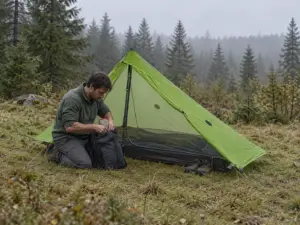
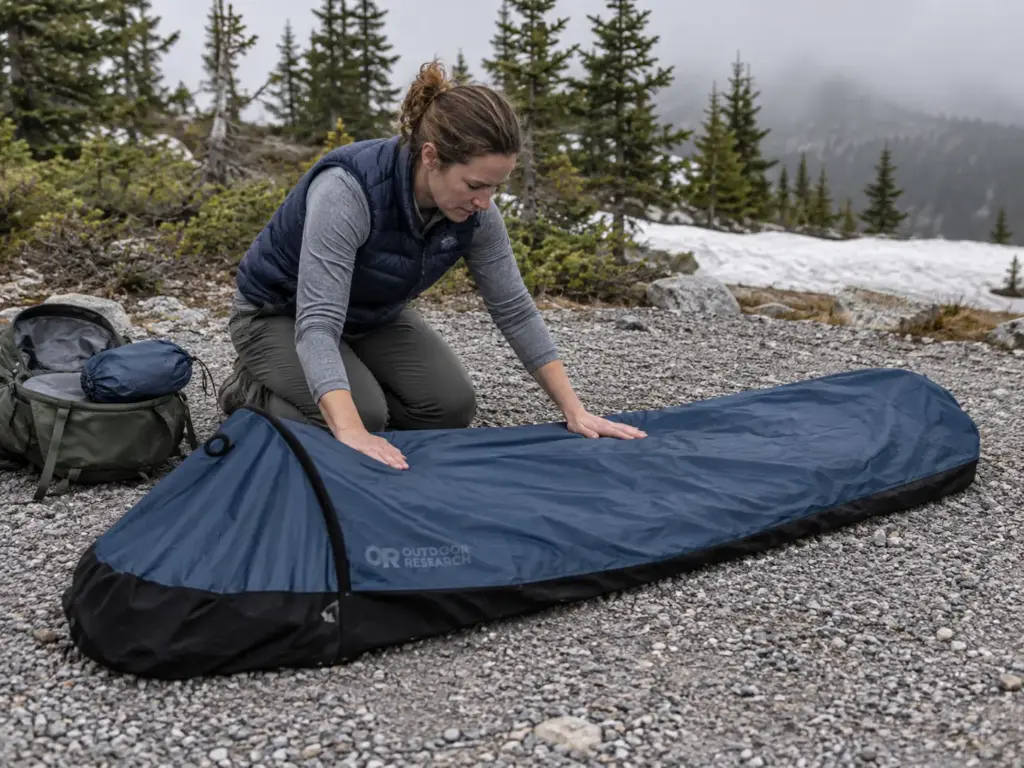
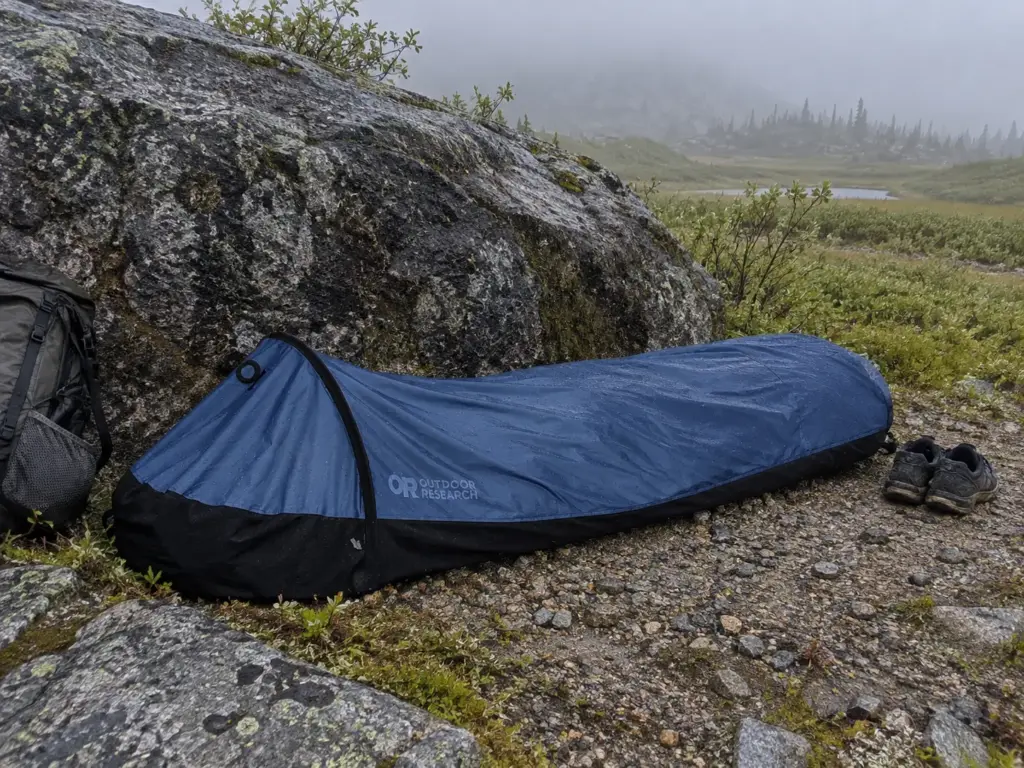
A hooped bivy adds a short pole at the head so you aren’t wearing the fabric. The Outdoor Research Helium Bivy is the reference point here: about 15.8 oz with its pole, built from Pertex Shield Diamond Fuse 2.5L, a waterproof-breathable laminate. It’s a three-season piece, and it’s the benchmark for what a real waterproof bivy weighs before anything else goes in the pack.
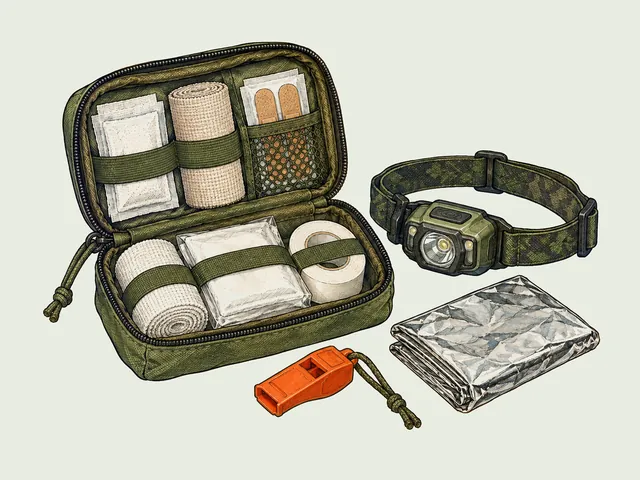
An emergency bivy is a different animal. At 5 to 8 oz, it’s a reflective, water-resistant bag you pull out when something has gone wrong: a twisted ankle above treeline, a night you didn’t plan for. It is a backup shelter, not a bed. Treat it as a nightly shelter and it will remind you of the difference by about 3 a.m.
What a Tent Adds
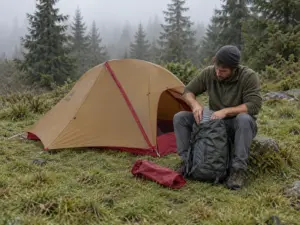
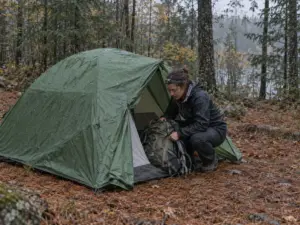
A tent is a room. You get real headroom: you sit up, change out of wet layers without wrestling inside your bag, keep your pack dry beside you, and zip the bugs outside. That room is exactly what the extra weight pays for.
It also changes the math the moment a second person joins. A bivy is a one-person answer by design, and if two of you share a night, a two-person tent is the practical answer because one shelter shared between two is simpler than two bivies and two tarps.
Where a Tarp Fits In
There’s a middle path that both camps describe: a tarp for rain and gear, a bivy for the bag. It gets its own treatment in the trip-length section below, because it’s where a lot of hikers who start out on one side quietly end up.
The Honest Weight Math Behind a Bivy Sack vs Tent
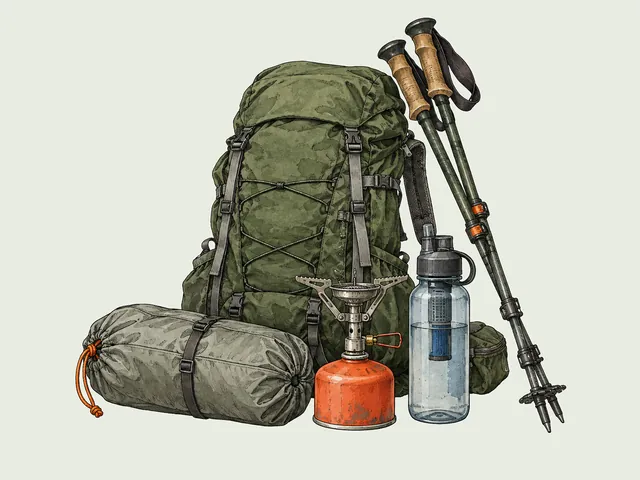
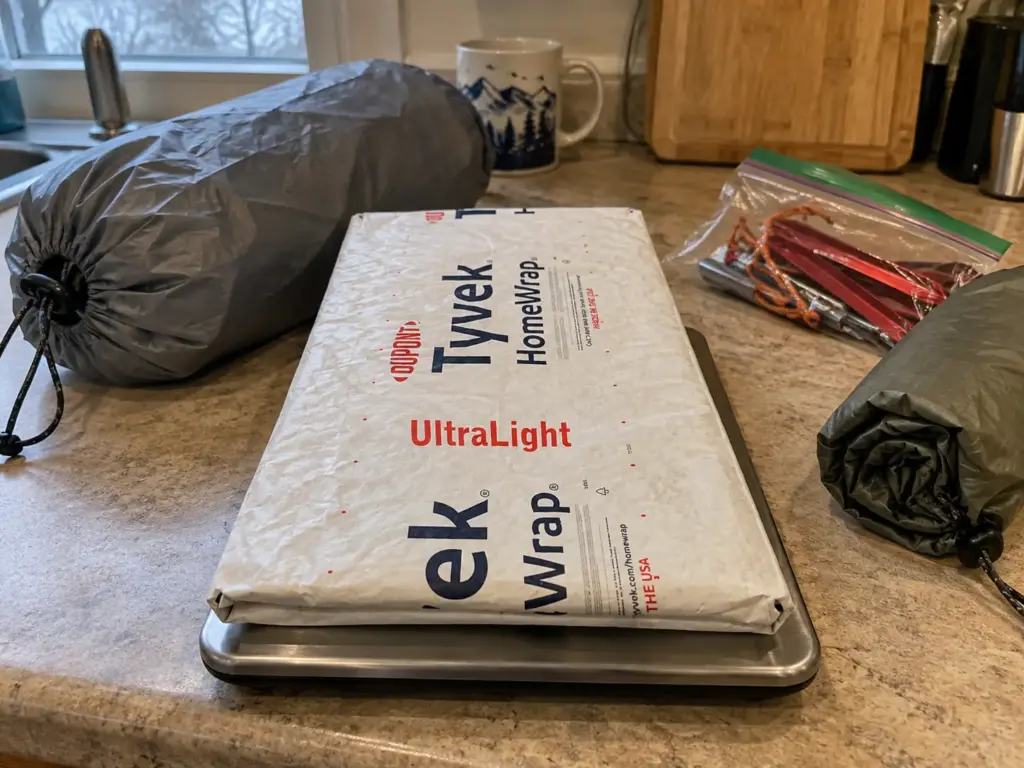
Put everything on the kitchen scale. Not the bivy alone, the bivy plus whatever it needs to keep you dry on a bad night: the tarp, the stakes, the guyline, the ground sheet, the bug net. The number that comes back is rarely the one you had in your head, and that gap is the whole argument of this section. Pack weight, packed size and packability all look different once the whole system is on the scale.
Counting the Bivy System, Not Just the Bivy
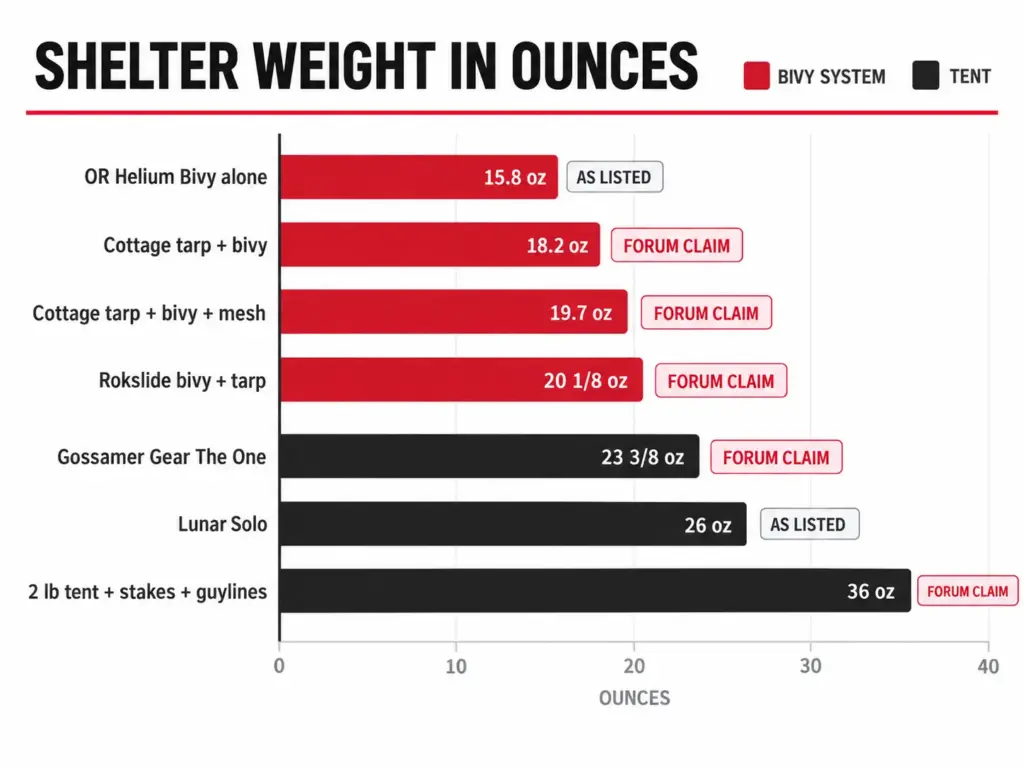
Start with the best case. A Backpacking Light thread laid out a cottage setup: a 9.8 oz tarp (with stakes, stuff sack and line) plus an 8.4 oz bivy comes to 18.2 oz, or 19.7 oz once the face-mesh wire goes in. That’s a featherweight shelter system, and it’s built from small-batch cottage gear, not anything you’ll find hanging in a big-box store.
Now the production side. The OR Helium Bivy alone is about 15.8 oz, and that’s before a single ounce of tarp. Add a 9.8 oz cottage tarp and you’re at about 25 oz before a ground sheet or a bug net. If you want to see how tent classes break down by weight, what the tent weight specs hide covers that ground in detail, including the gap between packaged and trail weight.
The numbers tell the same story. In one weighing, a bivy plus a 5×8 tarp, 12 stakes and 2 mm cord came in at 20 1/8 oz, next to a Gossamer Gear “The One” with ground cloth and stakes at 23 3/8 oz. Those are his own figures for gear of that era, not lab data. Still, the gap he found was about 3 oz.
Weigh the stuff sack, the stakes and the cord separately and write the totals on a strip of tape inside your gear bin. Listings rarely include them, and they add up faster than you expect.
Counting the Tent Honestly
Fair is fair, so the tent side gets the same treatment. A 2 lb tent plus stakes and guylines brings the weight to 36 oz. That’s real, and it’s why a heavy tent still loses this fight. A tally the other way shows that a bivy plus tarp plus ground sheet plus bug net can come out heavier than a 25.6 oz Tarptent.
Modern solo tents have closed most of the distance. The MSR FreeLite 1 (V3) is listed at about 740 g, or roughly 1.6 lb, as a double-wall, freestanding-style 1-person tent. The Six Moon Designs Lunar Solo is a single-wall tent listed at 26 oz trail weight that pitches on trekking poles you’re probably carrying already, so its pole weight is effectively zero. If you want to see which ones long-distance hikers actually carry, here’s what thru-hikers pick for one-person ultralight tents.
Put the ranges side by side and they nearly touch. A cottage tarp-and-bivy pair lands around 1.1 to 1.25 lb. A good production solo tent sits around 1.6 to 1.9 lb. Half a pound is real on a long climb, but it’s a long way from the “bivy weighs nothing” story.
The Ground Sheet Question
Here the bivy gets a quiet point back. Its floor is already a waterproof bottom, so a bivy needs a separate groundsheet less often than a tent does, unless the ground is sharp.
A tent floor is thinner and you’re far more likely to want something under it, especially on rough ground. A Tyvek Ground Sheet & Tent Footprint is the light, cheap fix, and it doubles as a dry patch to unpack on. Whether you need one at all depends on the floor and the dirt, and the physics answer on whether you need a footprint walks through that call.
What the Math Says
Same weight band, different jobs. A bivy wins on weight when you use it alone, in dry weather, on a night or two where you’d happily cowboy camp anyway. The moment you add the tarp, the stakes and the bug net to make it a real shelter, a good solo tent is within a few ounces and gives you a room in exchange.
Condensation Is the Real Deal-Breaker
The forecast said dry. The sky was clear all night, full of stars. And your sleeping bag is damp anyway, the outer shell clammy to the touch.
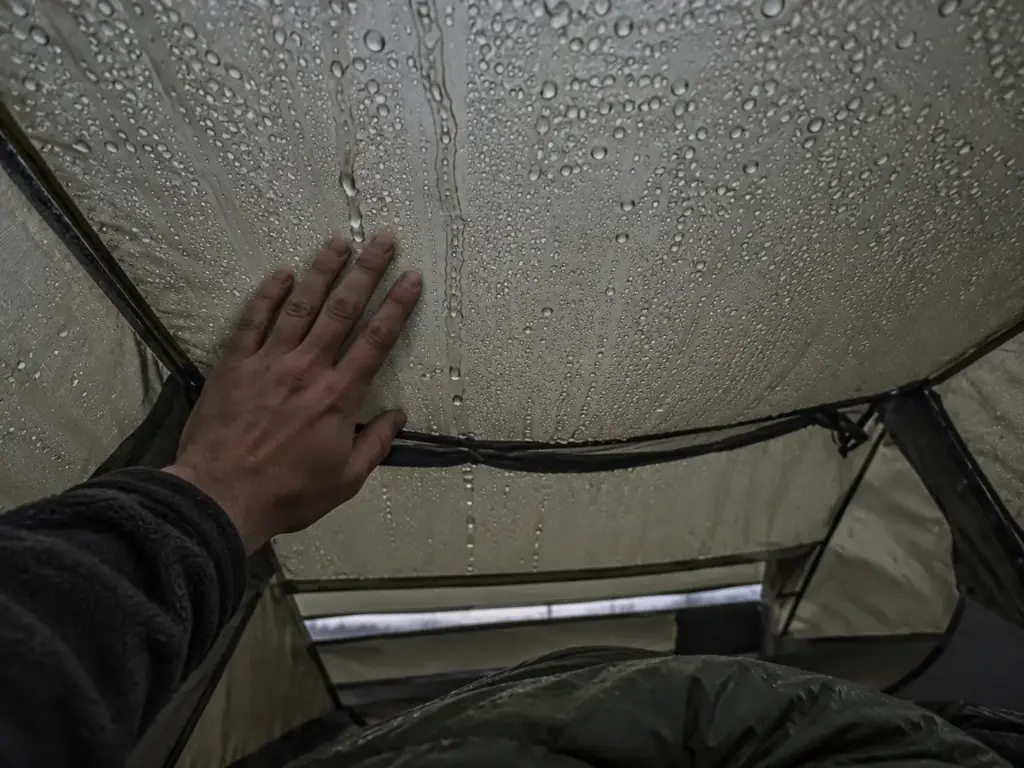
That damp sleeping bag wasn’t a leak. That was you.
If weight is the reason people buy a bivy, condensation is the reason a lot of them sell it. It decides more bivy-vs-tent arguments than ounces ever do, and it’s simple physics once you see where the water comes from.
Where the Moisture Comes From
You are a small humidifier. All night, your breath and your skin keep adding water vapor to whatever space surrounds you, and a clinical review of insensible water loss splits it roughly 60% skin and 40% breath. You never notice it at home because a bedroom is huge and the air moves.
A bivy is not huge. That same vapor goes into a space barely bigger than your bag, and it has to pass through the fabric to escape. Wet gear stored inside makes it worse. When the outer face of that fabric is colder than the dew point of the air inside, the vapor turns back into water right there, on the inside of the shell and in the outer layers of your insulation.
A tent has the same source. The difference is volume and airflow: the vapor spreads through a much bigger space, and vents and a gap at the fly let a lot of it out before it settles.
When It Gets Worst
Cold, still, clear nights are the worst case. Condensation is a risk with any shelter, especially with a bivy at temperatures below about 35 deg F. Clear skies pull heat off the outer fabric fast, so it runs colder than the air, and with no breeze there’s nothing to carry the moisture away from the outside.
Wind, oddly, helps here. Moving air keeps the vapor pressure outside the fabric low, so there’s a better gradient pushing moisture out through a breathable membrane. That’s why the same bivy can feel dry on a breezy ridge and soaked in a sheltered hollow on the same trip.
No fabric solves this for you. Many hikers report condensation in all bivies, whatever the label says about waterproof-breathable performance. An eVent bivy can breathe very well, while a Gore-Tex bivy can have condensation problems in certain conditions. Fabric shifts the odds; it doesn’t cancel the physics.
And then there’s the bag. Down hates moisture, and a down bag in a bivy on a cold, still night is the exact combination that worried an Oregon Hikers poster planning a Wonderland Trail trip. He set his bivy up in the basement, thought about his down bag at overnight lows in the 30s and 40s, and walked away with a tent instead. That test night saved him from learning it on the trail.
What Actually Helps
The fixes that come up again and again are simple, and none of them involve buying anything:
- Sleep with your head out of the bivy, or under the mesh with the hood open. Most of the vapor near your face is your breath.
- Never zip it fully shut and breathe into it. Backpacking Light regulars say exactly that, and Oregon Hikers posters echo it with “sleep with your head out.”
- Leave a gap at the opening even when it rains, and pitch a tarp over the top so the gap stays dry.
- Pick a spot with a little air movement on cold, clear nights instead of the stillest hollow you can find.
A tent has the same problem in a milder form, and the fixes there are mostly about venting and pitch. If you’re fighting a wet ceiling in a tent, the physics-based fix for a wet tent covers it.
If you wake up and the inside of the bivy is wet, flip it inside out over a bush the moment the sun hits camp, before you make coffee. Morning sun on the wet side dries it far better than stuffing it damp into your pack.
Wind, Rain and Cold Where Each Shelter Holds Up
It’s 3 a.m. and a gust slams across camp. You’d assume the low bivy rides it out while the tall tent is the one in trouble. Backpacking Light’s regulars say the truth is more mixed than that, and the mix is worth knowing before you choose.
Wind: Why the Tent Can Be Warmer
Here’s the counterintuitive part. Ryan Jordan wrote that “a fully enclosed tent will almost always be warmer than a bivy in high winds, because wind compresses dead air space in the bivy, and a bellows effect results in a bit of heat loss.” Each gust squashes the fabric against your bag, pushes warm air out, and pulls cold air in when it lets go. A tent keeps a pocket of still air around you, and still air is warm air.
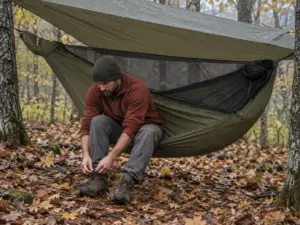
The bivy has one real wind advantage: it’s low. You can tuck a bivy behind a low rock or bush where a taller tent gets no help at all. Another put it more dryly: tents can be knocked down by wind, and a bivy is “already knocked down.” Use the stake loops at the corners, so the foot end doesn’t flap all night.
What a bivy doesn’t give you is a place to do anything. It shelters your bag from the wind; it doesn’t give you room to cook, change or wait. Where you pitch matters more than which shelter you carry, and how to pick a campsite that blocks wind and rain is the skill that makes either one work.
Rain: Why a Bivy Wants a Tarp
A bivy without a tarp in a downpour is miserable. The fabric may be waterproof, but you still need a gap to breathe, and in steady rain that gap is a funnel. You end up choosing between a wet face and a closed bivy full of your own breath.
That’s why the honest rain answer is a tarp over the top. It lets you crack the opening, sit up under cover for five minutes, and keep the pack out of the puddle. Without one, a long wet night in a bivy is type II fun at best.
Even the tarp-and-bivy pair has limits. A night at treeline can bring rain that comes down like a hail of bullets, flood the clearing, and blow a tarp away entirely. Nobody slept, and they ended up hiking to a boarded-up lean-to just to dry everything out.
Exposed sites in a real storm are where a full tent earns its weight.
Cold and Wet: Where Hypothermia Comes In
Cold plus wet is the real failure mode, and it doesn’t need a blizzard. The National Park Service notes that hypothermia can set in at 30 to 60°F when wind or rain is involved, and recommends wrapping sleeping bags in plastic bags to keep them dry. That’s the context for a damp bag in a bivy: a nuisance in July, a serious problem on a 38°F night with two more days to walk.
A down bag in a bivy just below freezing, with no way to dry it out, is one of the worst setups. That’s the combination to avoid: a bag that loses loft night after night while the temperature sits right where hypothermia lives. A synthetic bag forgives more, which is why bivies suit very cold, dry conditions with synthetic insulation.
Snow load is a separate job for a four-season tent, and a three-season bivy isn’t built for it either. If the cold side ever goes wrong for someone in your group, know what to do if someone gets hypothermia on the trail before you need it.
Setup, Space and Bugs Living Inside Each One
It’s 9 p.m. and the light is going. You still have to get out of your sweaty shirt, brush your teeth, hang the food and lie down.
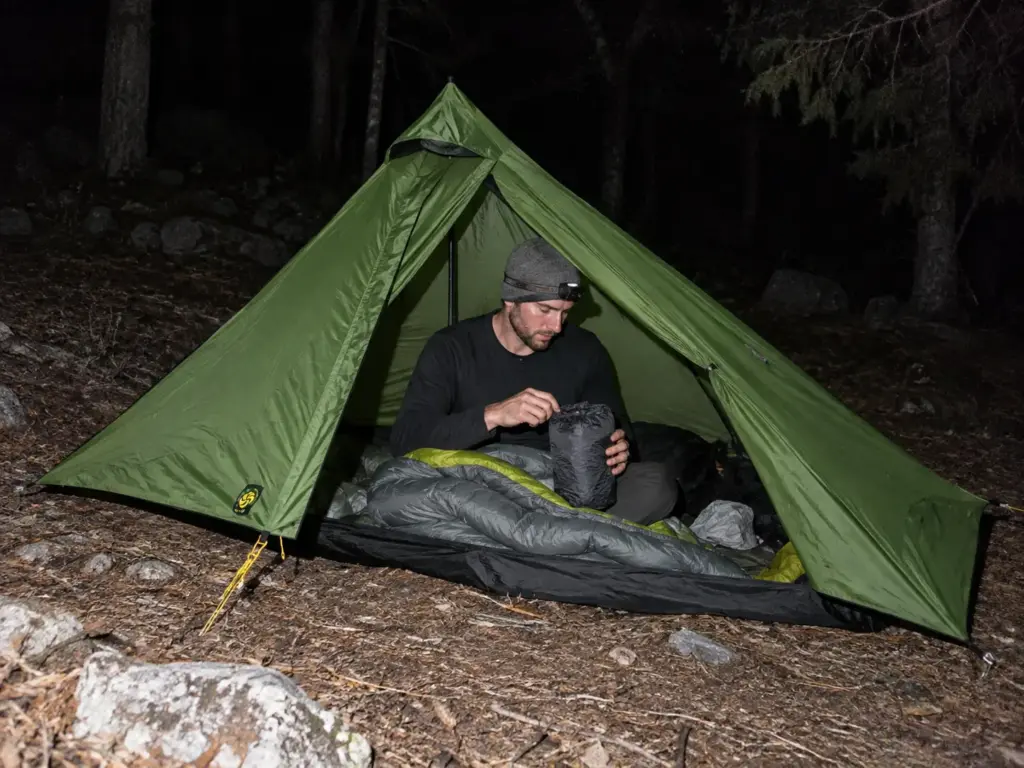
One shelter lets you do all that sitting up. The other asks you to do it flat on your back.
Setup Speed and a Tiny Footprint
A bivy has almost no setup time. Unroll it, slide the sleeping pad and bag in, stake two corners if it’s breezy. It needs a patch about 6 ft by 2 ft, so ledges, steep slopes, the gap between two boulders and the strip of flat ground on a crowded ridge all become backcountry campsites. A tent needs a few minutes and a bigger flat spot, and on some terrain that spot just doesn’t exist.
That tiny footprint is also a quiet Leave No Trace win, since you can sleep on rock or gravel without flattening a new patch of plants. The standard rules still apply, though: camp at least 200 feet from lakes and streams, on durable surfaces, no matter how small your shelter is.
Space, Gear and Claustrophobia
Is a bivy comfortable? For some people, yes, the same way a mummy bag is comfortable. You lie flat, you change clothes inside your bag, and your gear lives outside or down by your feet. Most bivies don’t let you sit up at all, and claustrophobia is a common complaint.
A tent gives you sit-up room and a vestibule for gear storage.
Rainy afternoon, you read. Wet socks, you hang them from the ceiling. Your pack stays dry beside you instead of under a trash bag outside the door. You only notice how much of camp life happens sitting up when you can’t do it.
The multi-day gap is where it really shows. One Codidact answer points out that in a bivy on a wet trip, you need to dry out every 2 to 3 days, in a bothy or a hostel. A tent gives you enough room to dry things a little each night, which is how you get to day five without everything feeling damp.
Bugs and Humid Nights
A bivy with a mesh panel keeps mosquitoes off you, technically. But your face sits right under that mesh, an inch or two away, and on a buggy night that’s a long night of whining in your ear. On buggy nights the tent wins, as one Codidact answer notes, and the wheretheroadforks writer goes further: skip the bivy in humid summer and peak bug season entirely.
Picking a bivy for bugs is a mistake; picking it around them is a skill. A bivy can be the right choice for a specific trip: when you expect to keep moving, hard-to-find pitch spots, and no mosquitoes. That’s the right way to make this trade.
Which One to Carry by Trip Length and Budget
Two shelters on the gear-room floor, one trip on the calendar. If you asked a friend who’s carried both, they’d ask two questions before anything else: how many nights, and how likely is it to rain?
A Simple Rule by Trip Length
The rule fits in five lines, and it holds up for most three-season trips:
- 1 to 2 nights, mild and dry: a bivy, or a tarp plus a bivy.
- 3 or more nights: a tent, or a tarp with full coverage.
- Wet or cold forecast, including shoulder season: a tent, or a tarp with full coverage.
- Humid summer or peak bug season: a tent.
- Two people sharing: a two-person tent.
Notice what decides it: not how light you want to go, but how long you’ll have to live with a damp bag if the weather turns. Short and dry forgives almost anything. Long and wet punishes the bivy every single night.
The Middle Path: Tarp Plus Bivy
The tarp-plus-bivy pair is where both camps meet. The tarp handles rain and gives you a dry place to sit, cook and keep your pack. The bivy handles splash, drafts and the ground, and keeps your bag clean. Together they come close to a tent on weight with a lot more flexibility in how and where you pitch.
The trade is skill. A tarp has to be pitched well to keep blowing rain off you, and a bad pitch in a storm is worse than no tarp at all. If you’re new to it, learn how to set up a tarp shelter for hiking without trees at home before you rely on it.
The Backup Layer and the Budget Pick
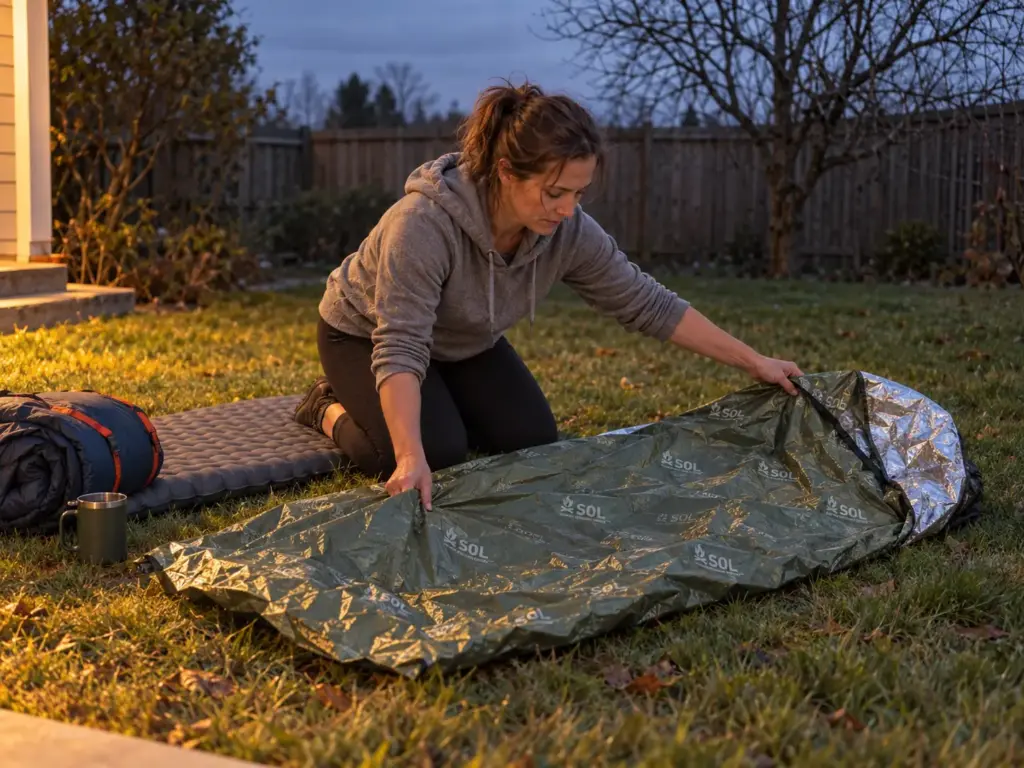
The cheapest honest way into this world is an emergency bivy. The SOL Escape Bivvy with Hood is listed at 8 oz, water resistant and breathable, and reflects up to 70% of your own heat back at you. That makes it a backup layer, not a primary shelter. An XL emergency bivy works as a safety measure, without signing up for the nightly condensation fight.
If you already own a tarp and a bag, a tarp plus an emergency bivy is the cheap test before you buy anything bigger. It tells you whether you like sleeping that low and that close to the ground. For the rest of the kit, the same logic of building a hiking kit without overspending applies: try the cheap version, then upgrade the piece you actually use.
If you want a real bivy shelter without the premium price, the onewind Ultralight One Person Bivy Tent is a budget-friendly hooped bivy tent in silnylon, with an interior listed at 210 x 100 x 100 cm. That’s a lot more room around your head than a sack, and it closes some of the gap with a tent on comfort while still pitching small.
An emergency bivy only helps if it’s in the pack on the day things go wrong. Keep it in the same stuff sack as your first-aid kit, so it never gets left on the shelf when you go light for a day hike that runs long.
Try It in the Backyard First
The single most useful thing you can do is the test night. Set the shelter up in the backyard, or in the basement, with the exact bag and pad you plan to carry, on a night as cold as your trip will be. You’ll learn more about condensation, claustrophobia and your own sleep in eight hours than from any spec sheet.
It’s also the cheapest way to avoid the common bivy disappointment. Better to find that out a mile from your bed than ten miles from the trailhead. And if your test needs dew-point charts and a barometer to work, take the hint. Making a bivy behave takes more forecasting than most people want to do.
For the bigger version of this habit, here’s how to test gear before a long trip, so the first real night isn’t the first night at all.
One Backyard Night Settles the Bivy Question
Three things to take with you:
- The weight savings shrink. Once you add the tarp, stakes, ground sheet and bug net, a bivy system lands in the same band as a good solo tent.
- Condensation decides it, not weight. Your breath in a small space is the problem, and a tent has it in a milder form.
- Pick by trip length and weather. A bivy or a tarp plus bivy for 1 to 2 dry nights; a tent for 3 or more nights, wet or cold weather, bug season or two people.
Before your next trip, spend one night in your backyard in whichever shelter you’re leaning toward, with the bag you plan to carry. If you wake up dry and rested, pack it. If you wake up to a drip on your cheek, you’ve just saved yourself a long night on the trail.
Frequently Asked Questions
01Is it comfortable to sleep in a bivy sack?
A bivy sack is comfortable if you are fine lying flat in a snug space, with little room to sit up, change clothes or keep gear beside you. Many people find it claustrophobic at first. Sleeping with your head out, or choosing a hooped bivy, gives your face more room.
02What are the disadvantages of a bivvy tent?
Condensation is the biggest disadvantage of a bivvy tent, followed by no sit-up room, slow drying after wet nights, and your face sitting right under the bug mesh. In a real downpour, most bivies also want a tarp pitched over the top.
03Why use a bivy sack?
Hikers use a bivy sack to save weight on short, dry trips, to sleep on a patch too small for a tent, and as an emergency backup layer. It also sets up in seconds and tucks behind a low rock out of the wind.
04Can you use a bivvy as a tent?
Yes, a bivvy can replace a tent for a solo night or two in mild, dry weather. For several nights, steady rain, cold or bug season, a tent or a tarp with full coverage is the better shelter.
05Do you need a tarp with a bivy sack?
You do not need a tarp on a clear, dry night, but in real rain most bivy users want one overhead so they can leave the opening cracked to breathe.
I've spent more than a decade researching hiking gear and trail technique. I read the specs, the forum threads and the long-term reviews, and every pick here comes with what it gets wrong.
End of the trail
You read every mile of this one. Here's where the trail goes next.