


It’s 2 a.m., the wind has swung around to the open end, your tarp is cracking like a sail, and one corner stake just popped out of the dirt. Threads from hikers learning to set up a tarp shelter on r/Ultralight and Backpacking Light keep telling that same story: the pitch that looked perfect in the yard came apart at camp because the ground, the trees or the wind were not what you practiced on. The fix is rarely a better tarp, it’s a taut roof, the right order of operations and a pitch picked for the night you actually have. Below: the real kit weight, where to pitch, three pitches worth learning, why they fail, and what a tarp can’t do.
What You Need Before You Set Up a Tarp Shelter
What a Tarp Shelter Is (and the Extras It Needs)
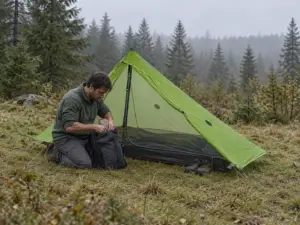
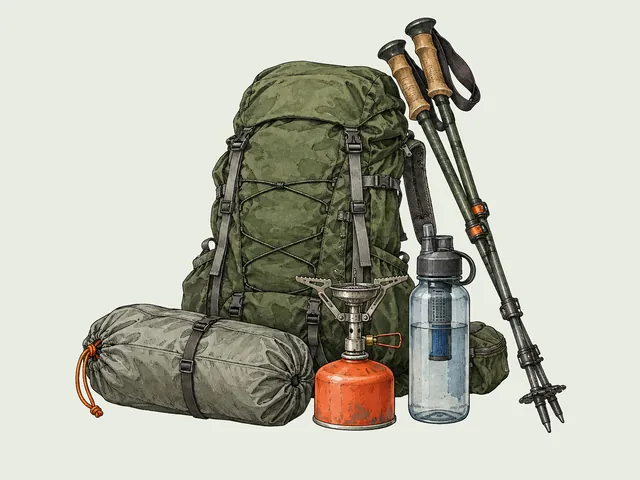
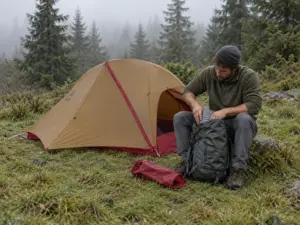
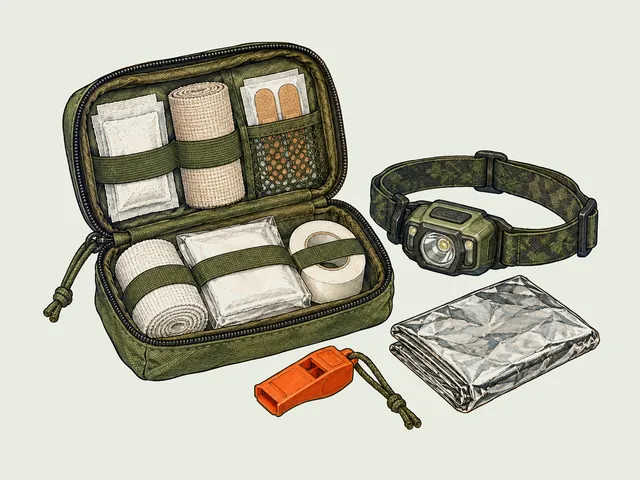
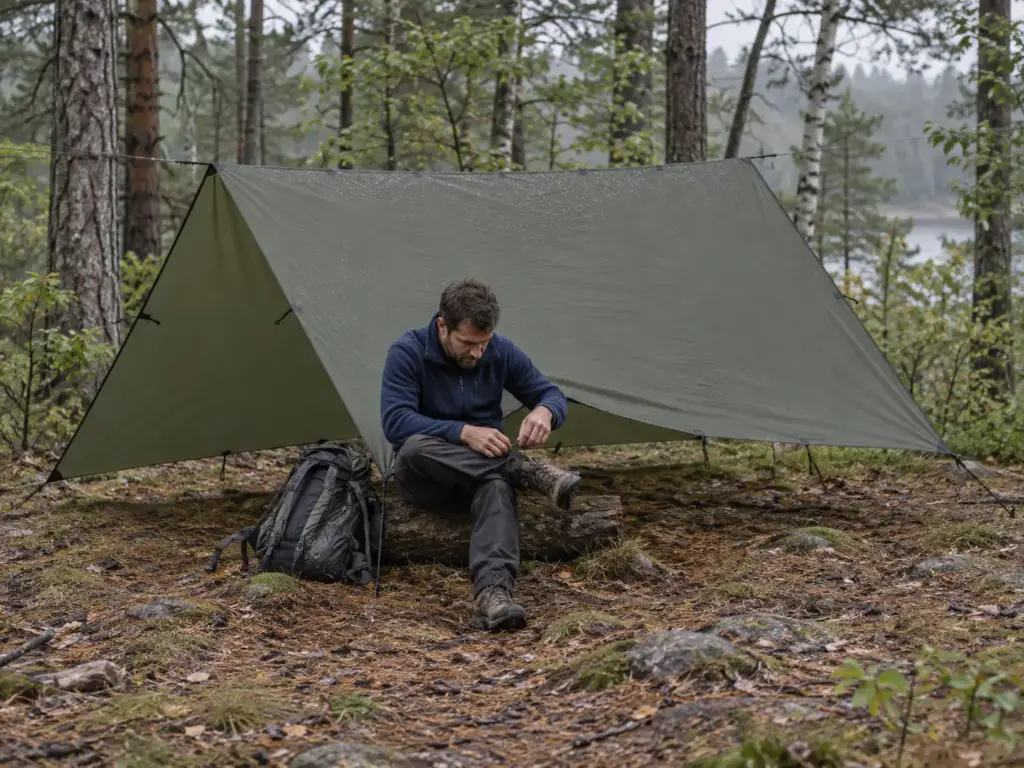
Lay the whole kit out on the living-room floor before your first trip and it looks almost too simple: a sheet of waterproof fabric, a ridgeline or a pair of trekking poles to lift it, a handful of guylines, some stakes, and a ground sheet if you want one. That’s a backpacking tarp shelter: a roof with no floor and no walls, held up by tension instead of tent poles.
The part beginners overlook is the tie-outs, the loops sewn along the edges and at the four corner loops. They decide which pitches your tarp can do at all. Hikers on r/Ultralight want about five per side (two corners, one in the middle, two in between) and call three per side the minimum, and a cheap tarp with corner grommets only will hold you to the most basic shapes.
Pick a Size and a Fabric
Size first, because it matters more than brand. An 8×10 tarp plus one pole already gives you four distinct pitches in Backpacker’s list, from the one-tree diamond to the no-tree Holden, so you don’t need a huge sheet to have options. For a solo beginner, hikers on r/Ultralight point to 9×7 or 8×10 and warn against under-buying coverage on the first tarp. A 10×10 gives two people room for every pitch in this guide, and the Onewind 10×10 ft Ultralight Silnylon Camping Tarp is a sensible way into that size: 20D silnylon at about 1.6 lb, 16 side tie-outs plus 3 on the ridgeline, and it ships with stakes and reflective cord, so you can pitch it straight out of the bag.
Be honest about the split, though. Open sides feel a lot smaller with someone else’s wet boots at your head, and if two of you share a night, a two-person tent is the practical answer for most pairs who don’t both love tarp life.
Fabric comes down to a few families. Cheap poly tarps, usually polyester or blue polyethylene, are crinkly and heavy, fine for the yard. Silnylon is the usual fabric for an ultralight tarp, light and small in the pack, and it’s what most hikers on r/Ultralight start with. If you’re weighing it against silpoly or Dyneema for the long run, it’s worth reading what fails first on trail with silnylon and Dyneema before you spend the money.
What the Whole Kit Weighs
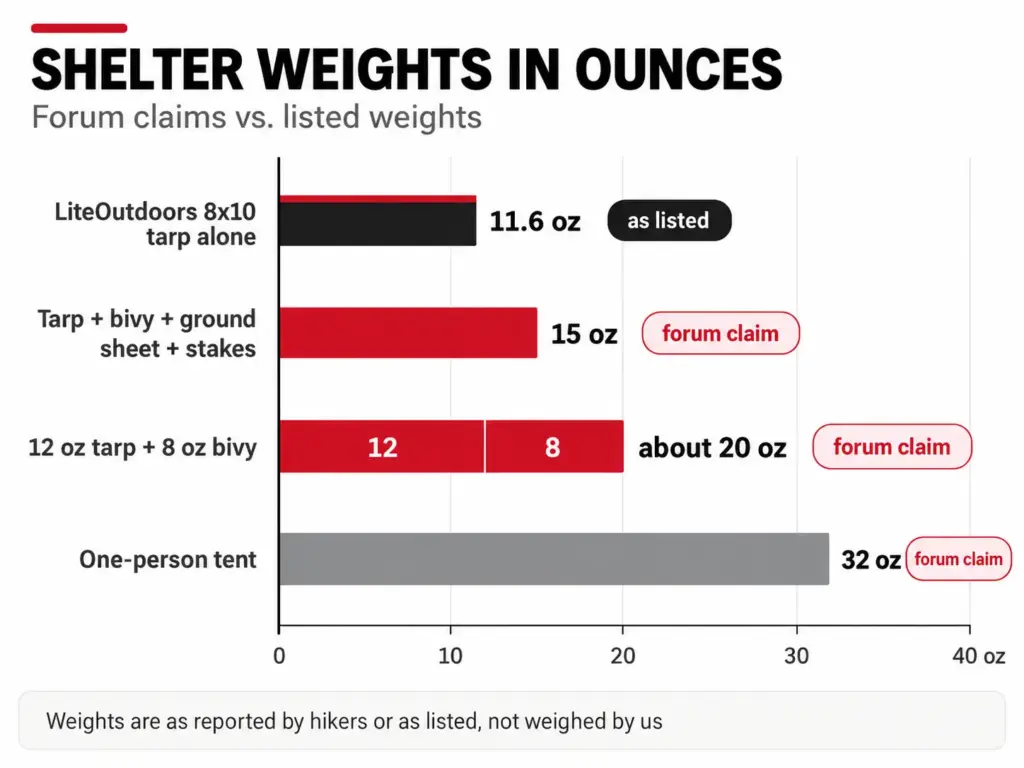
The spec sheet only weighs the tarp. Your pack weighs everything else too. One r/Ultralight commenter tallied a full setup at 15 oz: a 6 oz tarp, a 6 oz bivy, a 1 oz ground sheet and 2 oz of stakes, and noted that real kits land between 15 and 20 oz once cord and line-locks join the pile.
Another compared both options against an older heavy tent: a new lightweight tent saves roughly 20 oz, a tarp plus bug netting roughly 25, so the tarp’s real edge is about 5 oz. A third pointed at single-wall tents like the Tarptent Protrail, which the commenter put at 26 oz with stakes, cords and stuff sack included.
If you want the tarp itself to be the light part, the LiteOutdoors Silnylon Tarp 8×10 ft is listed at 11.6 oz, right in line with the 12 oz tarp in the Backpacking Light math below. It’s the premium pick, and it makes more sense once you’ve practiced on something cheaper and know you’ll keep tarping.
That Backpacking Light thread put a 12 oz 8×10 tarp plus an 8 oz bivy, about 20 oz together, against 32 oz for a one-person trekking-pole tent. Twelve ounces saved is real, but only if you accept the exposure that comes with it. SectionHiker makes the same warning from the other side: every stake, guyline, ground sheet, bug net or bivy you add eats into a tarp’s weight and cost advantage, and it eats fast. A tarp is light only if you stay minimal.
Practice Cheap First
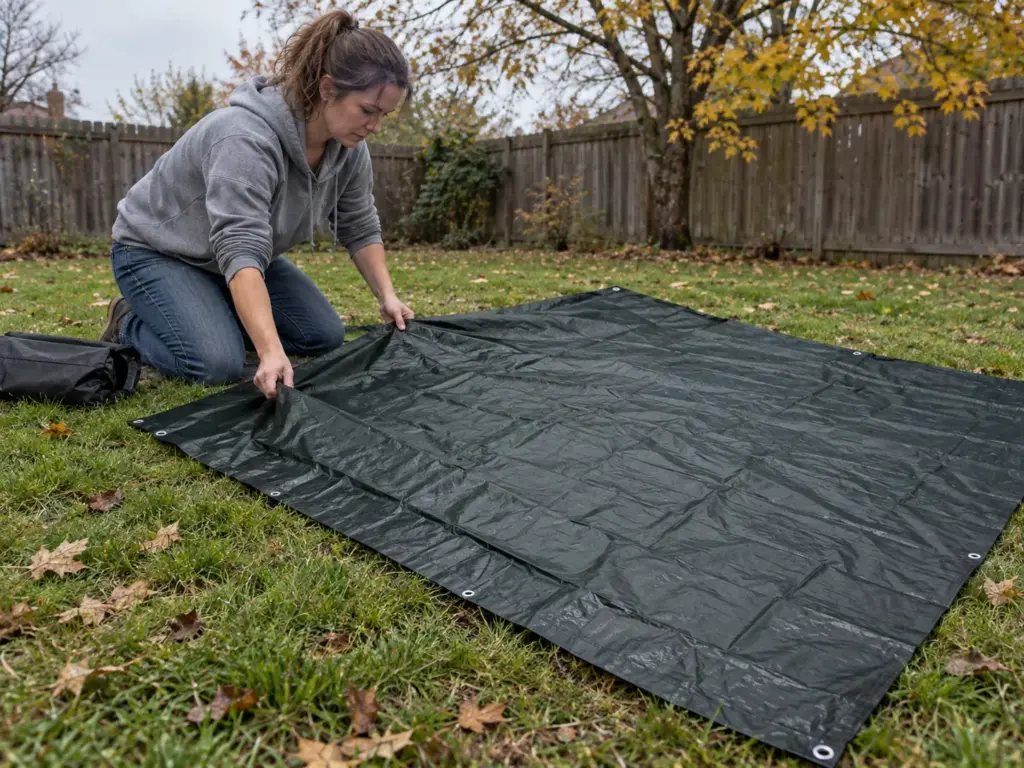
The advice that repeats most on r/Ultralight costs almost nothing: buy a cheap 8×10 blue poly tarp and learn the pitches on it before you buy silnylon. The Amazon Basics Waterproof Multipurpose Camping Tarp 7.5 ft x 9.5 ft fits that job. It’s heavier and more plasticky than anything you’d carry on a long trip, but the corners are reinforced, the grommets hold a guyline, and a mistake on it costs you nothing but ten minutes.
No backyard? One apartment-dwelling hiker on r/Ultralight took a new shelter to a city park to practice and admitted to getting some looks. Worth it.
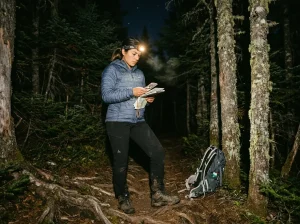
Do your last practice pitch at dusk with only a headlamp, then turn on a garden hose and spray the roof. Darkness tells you whether you really know the order, and the hose tells you where water pools before a real storm does it for you at 2 a.m.
Pick the Spot Before You Pull Out the Tarp
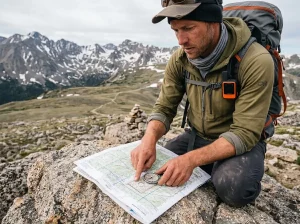
That patch of ground looked flat at 5 p.m. By midnight it’s the lowest point for fifty feet and the rain is finding it. A perfect pitch on a bad spot still fails, so spend two minutes walking the site before the tarp leaves the sack.
Back to the Wind, Low Ground Is the Enemy
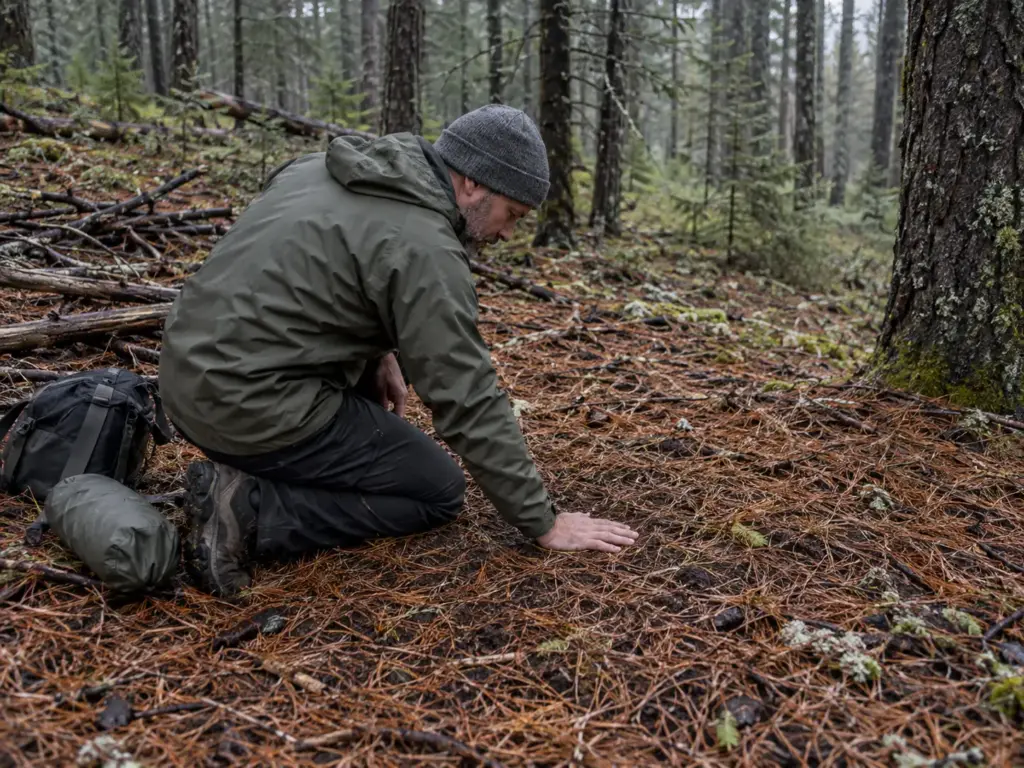
Alpkit’s rule is the one to memorize: pitch away from the wind. The closed or low end of the tarp faces the weather and the open side faces leeward, downwind, so gusts slide over the roof instead of filling it from underneath. Check which way the prevailing wind is blowing before you stake anything, and if you want the full checklist beyond a tarp, this guide on how to choose a campsite for wind and rain covers it.
Then look down. A tarp has no floor, so it can’t stop water that rises out of the ground. A commenter on r/Ultralight with 22 years of military tarp use put site choice first, which meant “not making stupid choices like setting up in a dip.” Pick a slight crown of ground, not a hollow.
One hiker on r/Ultralight takes it further when heavy rain is forecast: if the site has a picnic table, they pitch the tarp over it and sleep on the table like a cot. Others carry a Tyvek ground cloth for the same reason.
Trees, Ridges and Lightning
Trees solve problems for a tarp, but pick them carefully. If the forecast has any thunder in it, stay off ridges, hilltops and open fields, and never camp under the tallest lone tree around, per National Park Service lightning guidance. A lower stand of similar-height trees is the better bet. Look up before you look down, too: a dead limb hanging over your ridgeline is the kind of hazard you only notice once the wind starts.
A Spot That Passes Leave No Trace
Leave No Trace asks for three things that line up nicely with a good tarp site. Camp at least 200 ft from water, set up on durable surfaces like packed dirt, gravel or dry grass, and use living trees for anchors, never dead ones. The LNT line that fits tarp camping best is short: “good campsites are found, not made.” If you have to dig a trench or clear brush to make a pitch work, it’s the wrong spot.
The A-Frame Pitch With Trekking Poles
Spread the tarp on the grass on a dry afternoon, poles beside it, and learn this one first. The order is what matters, more than any knot.
Why the A-Frame Is the Default
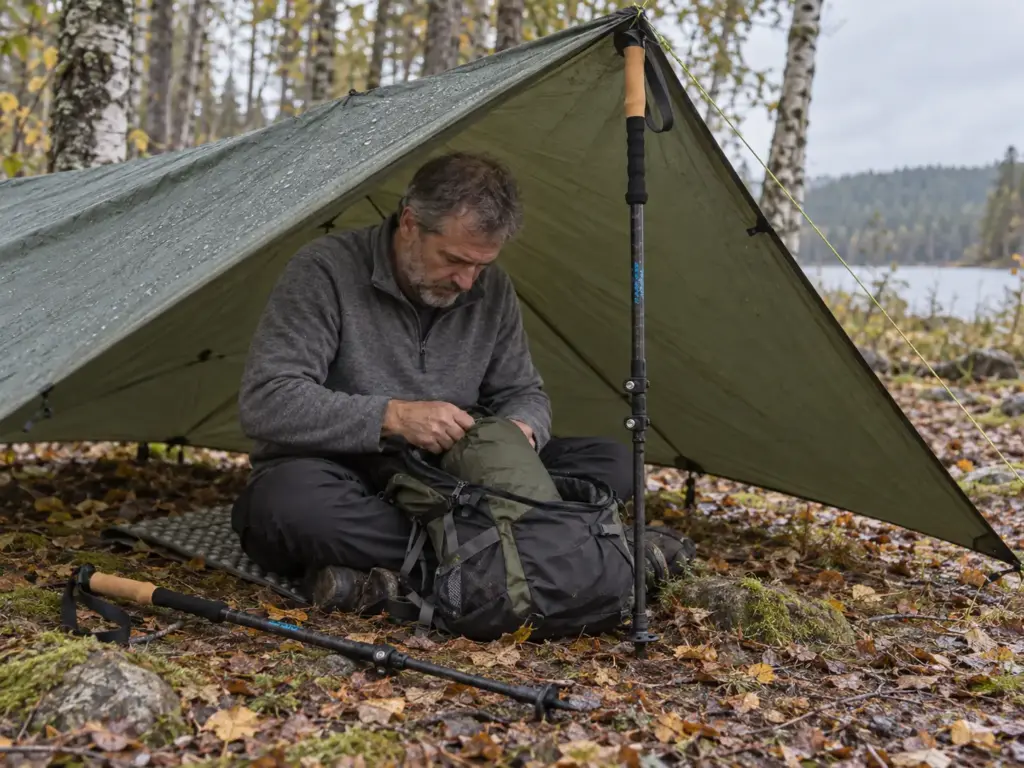
Hikers on r/Ultralight say they pitch a flat tarp as an A-frame somewhere between 75% and 95% of the time. It sheds rain on both sides, it’s easy to tension evenly, and it works on poles or trees. Most of them learned on a 10×10 or an 8×10, which gives enough overhang to forgive a sloppy first pitch. Every other shape on this page is a variation you can try once the A-frame feels boring.
The Order That Works
One r/Ultralight hiker who pitches some version of the A-frame every night shared the sequence, and it matches what the rest of the thread describes:
- Stake the two rear corners, roughly where they’ll end up.
- Raise the front of the ridge on a pole and guy out the front line.
- Stake the two front corners.
- Raise the rear of the ridge on the second pole and guy out the rear line.
- Go back and readjust the rear corners.
That same hiker says it takes under 5 minutes with a bit of practice. The corners set the footprint, the ridge sets the slope, and the last pass takes out the slack. Skip it and the sag lands right where your head goes.
Trekking Poles Do the Heavy Lifting
With a pole at each end of the ridge the tarp needs no trees at all, and the poles aren’t extra weight because you were carrying them anyway. The Cascade Trekking Poles (Ultra Light 100% Carbon Fiber) are a light carbon pair that handles hiking duty by day and tarp duty by night. The idea of pitching with trekking poles instead of tent poles carries over directly from non-freestanding tents, so if you already own one, you already know half of this.
No poles? Backpacker’s tarp pitches note that “a sturdy, waist-high stick will also work.” Either way, the pole or stick is what holds the ridge up, so give it solid footing on firm ground.
High for Breeze, Low for Weather
Pitch height is your weather dial. A high pitch gives you airflow, headroom and a view, which is perfect on a dry, bug-free summer night. A low pitch, with the edges close to the dirt, keeps wind and blown rain out at the cost of room to sit up.
When rain is unlikely, hikers on r/Ultralight prop one long side up on trekking poles for what they call porch mode, basically an awning over your sleeping pad. On a dry night plenty of hikers skip even that and go cowboy camping, with the tarp as backup.
When it turns nasty, close the end that faces the wind and you have a closed-end A-frame. One hiker on r/Ultralight closes an end with a rain jacket as a makeshift door and says it gets them through bad weather above treeline, though not hurricane-level wind. A hard-night trick, not a hurricane plan.
Set your trekking poles a few inches shorter than you think before you raise the ridge. You can always lengthen a pole under tension, but shortening one means slacking the whole pitch and starting the tension over. Tarp hikers call that time spent adjusting the fiddle factor, and it drops fast once your poles have a default tarp height you don’t have to think about.
A Ridgeline Pitch Between Two Trees
This is the pitch that gives you the most headroom and the only one with a part that’s hard to improvise in the dark: the ridgeline itself. Rig it on the porch the night before, so at camp you only clip and slide.
When Two Trees Beat Trekking Poles
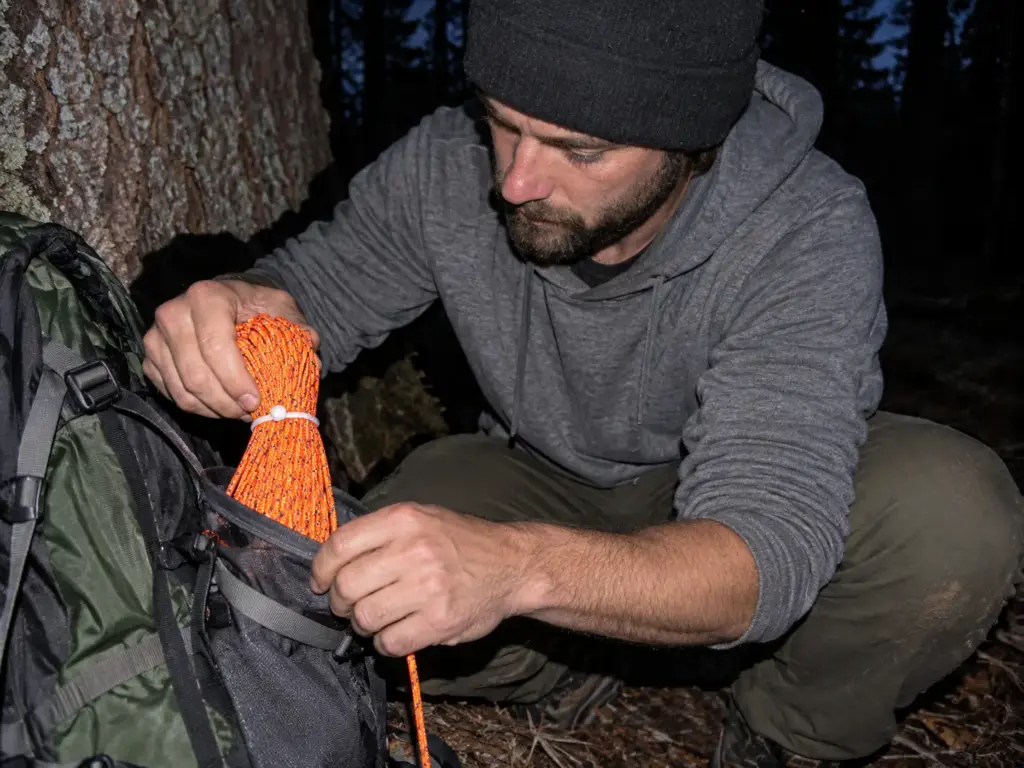
A continuous ridgeline strung between two trees lifts the whole roof from above, so there’s no pole in the doorway and you can sit up anywhere under the peak. It’s the natural move in forest camps, and the limit is obvious: you need two healthy trees at a workable distance. You practice with two trees fifteen feet apart, the roof is drum-tight, and at camp the only usable pair is twenty-five feet apart. The cheap fix is to carry more cord than your yard ever needed, and a few feet of spare line weighs almost nothing.
Rig the Ridgeline at Home
Alpkit’s prep is the smartest thing you can do before a tarp trip. Run the line through the tarp’s ridgeline loops, put a clip on one end, add a sliding prusik knot about halfway along with a second clip, and pack it that way. At camp you wrap one tree, clip, walk to the second tree, wrap and clip, then slide the prusik to bring the line to tension.
For the ridgeline cord itself, ThreeBulls 1.8mm Fluorescent Reflective Guyline Tent Rope Camping Cord is a good match, and the reflective cord matters more than it sounds: a ridgeline and four guylines are a real tripping hazard when you get up at night, and a headlamp beam picks it out instantly. For setups you can borrow, look at how hammock campers handle ridgelines and tree straps.
Cord does have a limit. A commenter on r/Survival points out that a gust can put a huge load on a rope ridgeline and snap it, and prefers a rigid ridge pole.
That makes sense for a base camp you’ll stay at for a week. For backpacking, nobody’s carrying a pole that long, so cord stays the default. Just give it a little stretch room instead of cranking it bar-tight.
Three Knots, Named Not Taught
Three knots cover almost every tarp pitch. A bowline makes a fixed loop that won’t slip. A trucker’s hitch works like a pulley to cinch a line tight. The prusik slides along the ridgeline when it’s slack and grips when it’s loaded, which makes it your tension adjuster.
Learn all three from a knots guide at home, because squinting at a diagram by headlamp is a poor way to start.
Wrap the Trees, Don’t Wound Them
Thin cord wrapped hard around a tree saws through bark as the wind works the tarp all night. Use flat webbing straps where the line meets the tree, and follow Leave No Trace’s tree-strap guidance: straps at least an inch wide, wrapped once, with no knots cinched into the bark. The same guidelines ask for living trees about 6 inches or more in diameter. Clip the ridgeline to the strap and the tree barely knows you were there.
Pick Your Pitch When There Are No Trees or the Wind Is Up
You top out above the trees, or you roll into a beach camp at sunset, and the pitch you practiced has two trees in it that don’t exist here. This is where a list of pitch names stops helping and a menu by conditions starts.
A Short Menu by Conditions
Match what you see at the site to the pitch below, then read the column on the right before you commit:
| Conditions | Pitch | What to watch |
|---|---|---|
| No trees | Holden or plough point on one pole | Long staked edge or flat corners go to windward |
| One tree | Diamond | 20 ft of cord, staked 14+ ft out into the wind |
| Two trees | Continuous ridgeline or A-frame | Wide straps on the trees, no sag in the line |
| Storm | Low, wide A-frame, back to the weather | Less room to sit up; close the windward end |
| Sand or snow | Any low pitch on deadman anchors | Fine for mild wind, weak in high winds |
| One hiker, fast | A-frame on trekking poles | Rear corners first, readjust them last |
With no trees, two pitches carry the load. Backpacker’s Holden stakes the long windward edge of the tarp flat to the ground and props the opposite long edge on one trekking pole or a waist-high stick, making a sloped wind shed that goes up in minutes. Alpkit’s plough point (the UK brand calls stakes pegs) pegs three corners flat and lifts the fourth on a pole, a tighter, lower shape that faces its back to the wind. Either one works on an open bench above treeline where an A-frame would catch every gust broadside.
One tree gets you the diamond: about 20 ft of paracord around the trunk at waist height, the free end staked at least 14 ft from the trunk into the wind, and the tarp draped diagonally over that line with three stakes holding it out. The closed point faces the weather and the tree does the job of a pole. Two trees, and you’re back to the ridgeline or a tree-anchored A-frame from the sections above.
Wind, Storm and the Low Wide Pitch
When a real storm is coming, the instinct is to make the shelter taller and roomier. Do the opposite. A Backpacking Light moderator’s storm advice for an 8×10 flat tarp was to spread the foot end very wide and very low, and with that shape “you don’t have to worry much about splash.”
The price is livable room, since a low wide pitch leaves little space to sit up or cook under. Take that trade every time the wind is building.
The extreme version is a full pyramid with every edge staked to the dirt. It sheds wind from any direction, but a Backpacking Light poster pointed out that it leaves very little room for a tall sleeper, around 6 ft 2 in.
If the tarp is billowing even after you’ve tightened everything, run a second line diagonally from a corner stake up to the opposite peak. Backpacking Light advice says that one extra line calms the billowing, and it’s the difference between a tarp that breathes and one that flaps you awake every few minutes.
If the forecast says wind, pitch low before dark even if it’s calm when you arrive. Re-pitching a tarp lower at midnight, in the rain, with one stake already gone, is the most miserable fifteen minutes in backpacking.
When the Ground Won’t Hold a Stake
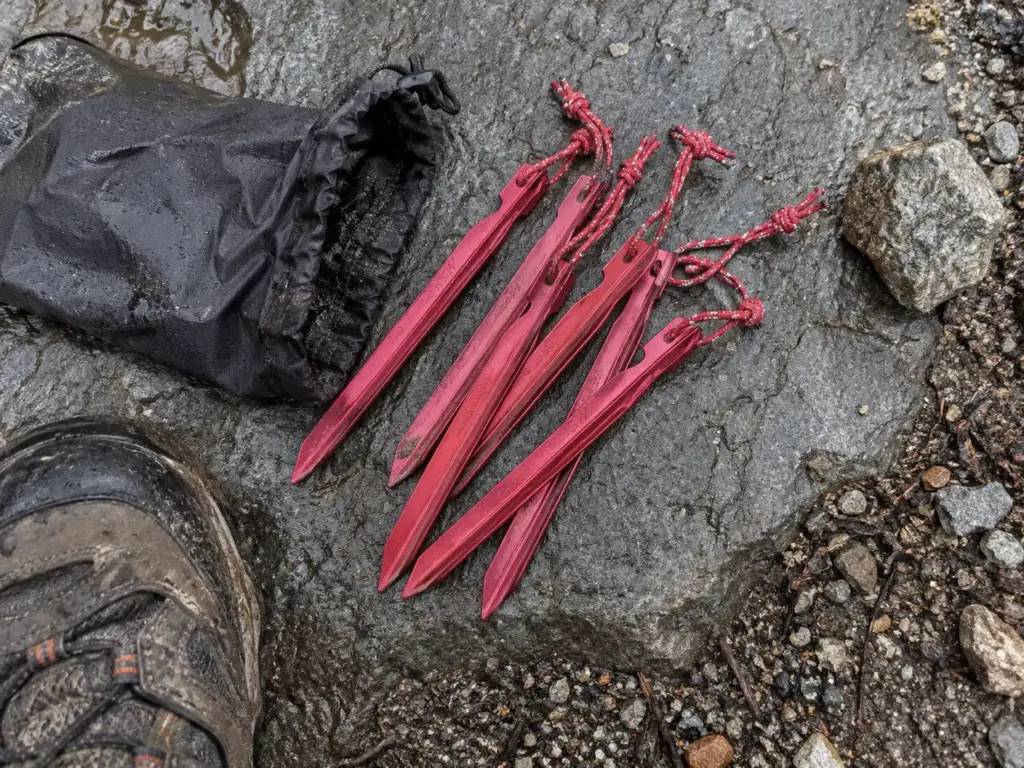
Tarp corners take more load than tent corners, because there’s no pole frame sharing the work. In firm, mixed soil, a Y-beam stake like the MSR Groundhog Tent Stake Kit 6-Pack Regular 7.5 inch bites well. Drive each one at an angle leaning away from the tarp, so the pull on the guyline keeps it seated instead of lifting it.
In loose sand or snow, stakes just pull through. Alpkit’s answer is to bury a deadman: fill a dry bag with sand, or use a stick, tie it to the tie-out and bury it. They’re candid that it’s “not the best for high winds,” so treat a sand pitch as a fair-weather pitch. For the full technique, here’s how to bury a deadman anchor in sand without wrecking your stuff sacks.
Why Tarp Pitches Fail and How to Fix Them
A tarp roof can look perfect right up until the rain starts, and then you find out what you actually built. Almost every failure traces back to one of five things: pooling, sag, flapping, splashback or wind-driven rain. Each one has a fix, and most of the fixes are about order and tension, not more gear.
The Roof Is Holding Water
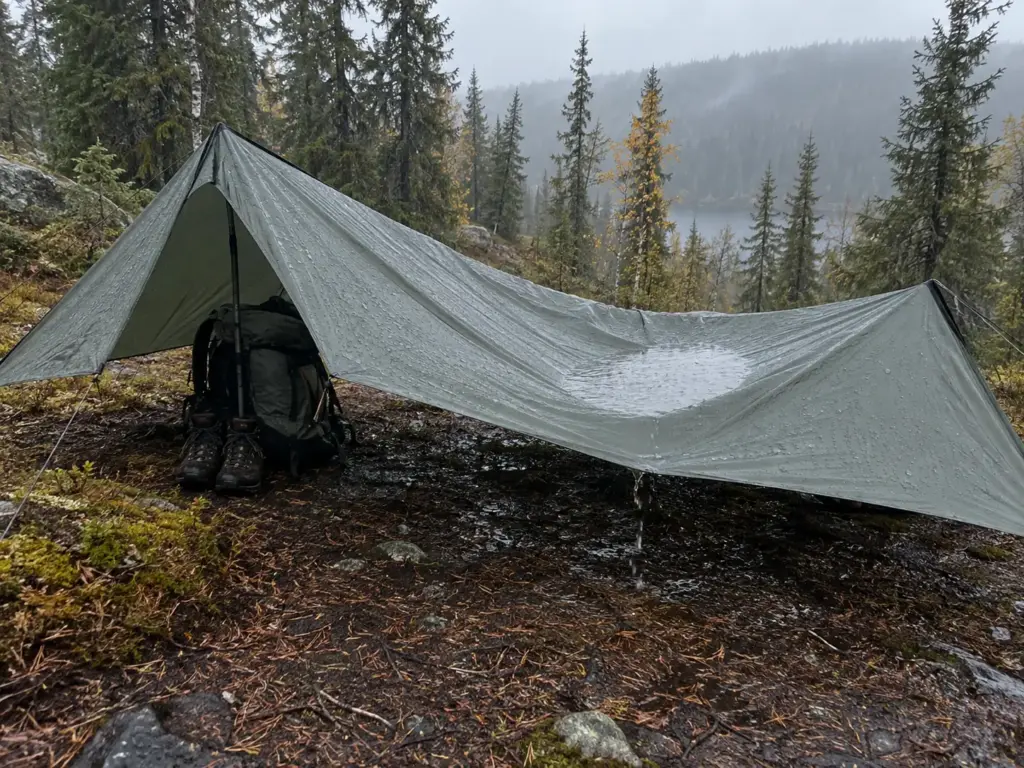
Alpkit puts it plainly: water collects wherever a tarp sags, and a taut pitch stops it. The most common way to build a sag in is to tension things in the wrong order. Tighten the side guylines first and you lock in a flat roof before the ridge has any slope, and that flat panel becomes a pond the first time it rains. The fix is the sides-last rule: set the ridge and corners so the roof slopes, then cinch the sides.
Water should always have somewhere to go. Make sure one corner or one end sits lower than the rest so it acts as a drainage point, and check that no panel between the ridge and the edge is flat.
If you see a puddle forming in the night, push it off from underneath, then tighten the nearest guyline. A puddle gets heavier, which stretches the fabric, which makes a bigger puddle. It doesn’t fix itself.
Sagging and Flapping
A sagging ridgeline turns the whole roof into a scoop, and it’s worse than any single slack panel because the water runs straight down to the low point and stays there. Silnylon makes this harder. One hiker on r/Ultralight living in a humid area says silnylon sags too much for them and prefers Dyneema, and another heard that silpoly doesn’t sag the same way. Whatever your fabric, check the ridge again before you fall asleep and whenever the weather changes.
Flapping usually means loose corners or a foot end pitched too tall for the wind. Guy out your lines at roughly 45 degrees from the tarp, not straight down and not straight out, so they pull both outward and down.
That 2 a.m. scene from the top of this page, the corner stake popping out of the dirt, almost always starts with one corner a little loose and the wind working it back and forth for hours. Backpacking Light posters add a small but smart refinement: put a loop or a line-lock partway up the ridgeline so you can fine-tune tension without walking around to the trees or poles.
Splash and Sideways Rain
Splashback is rain bouncing off the ground and up under the edge of the tarp, and SectionHiker calls it one of the real tarp problems. On wet, hard ground, pitch lower and wider so the drip line sits farther from your pad, and consider a ground sheet to keep both splash and ground moisture off your gear. Whether that extra layer earns its weight is its own question, and here’s the physics answer on whether a ground sheet is worth carrying.
Wind-driven rain is the failure you can only partly fix. The military-tarp veteran on r/Ultralight was blunt that tarps leave “a lot of gaps,” and when rain comes in sideways or groundwater starts rising there’s not much you can do except lower the sides.
A bigger tarp isn’t the answer. Choosing the site and the pitch by conditions, the way the two sections above lay out, is. If you’re getting wet under a tarp, the cause is usually something you chose before the first stake went in.
A Two-Minute Check Before You Sleep
Walk around the tarp once with a headlamp. The roof should slope from the ridge to the edges with no flat panel and no sag in the line, every corner stake should lean away from the tarp, and the guylines should run out at about 45 degrees. If you can answer yes to all three, you’ve fixed most of what takes tarp pitches down in the night.
Sleeping Under a Tarp Means Living With Bugs, Storms and Limits
A tarp is a roof, not a room. The open sides are the whole point and the whole problem, and being straight about that is what keeps your first tarp night from being your last.
Bugs, Ticks and Things That Crawl Under the Edge
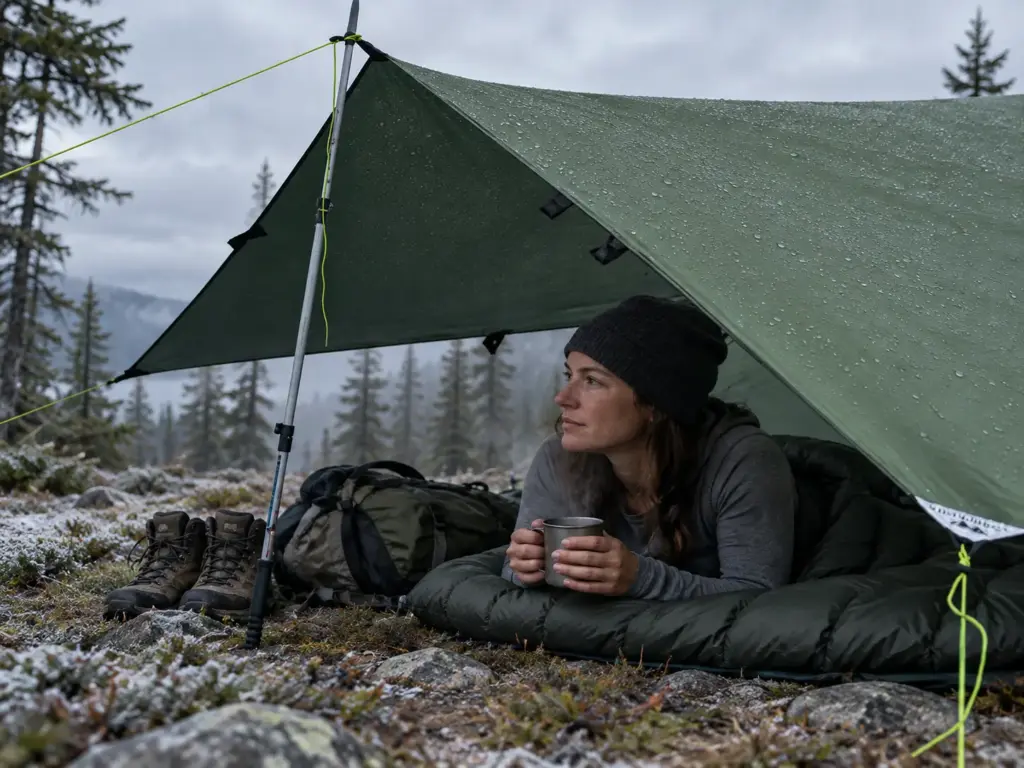
Bugs are the main objection to tarp camping, per SectionHiker, and the fixes are a bug bivy, a separate net tent, or a tarp with a mesh skirt sewn along the edges. On r/Ultralight, ticks come up more than mosquitoes. Several hikers say ticks are the reason they keep a tent, and going netless in tick or mosquito season is one of the more common regrets in those threads. One hiker treats a 10-inch border of a Tyvek ground cloth with permethrin to discourage crawlers from coming aboard.
Bigger visitors are mostly a nuisance. Hikers on r/Ultralight report a mouse chewing food stored at a sleeper’s head and a frog hopping past someone’s face in the dark. The lesson is simple: keep food away from where you sleep, because under a tarp there’s no wall between your snack bag and the mice.
Condensation and the Bivy Question
Condensation shows up more often under a tarp than inside a tent, according to SectionHiker, which surprises people because a tarp is so open. Picture the first cold, still night: you wake up and a drop rolls off the underside of the fabric right onto your quilt. Cold, still nights tend to be the worst for it. Pitch with the ends open for airflow, and read the physics-based fix for a wet tent, because the same principles apply under a tarp.
Adding a bivy under the tarp usually makes condensation worse, not better. One Oregon Hikers poster’s advice was to sleep with your head out of the bivy, which tells you how common the problem is. The bivy also adds weight back into the kit, and this breakdown of where the weight savings of a bivy shrink shows how quickly that adds up.
Lightning Is Not a Tarp Problem, It Is a Site Problem
Ask tarp hikers why they love it and someone always mentions storms. On r/Ultralight, one hiker calls watching lightning through the open end of a tarp in Texas a favorite camping memory, and another describes a storm “right on top of” the tarp, with the flashes visible through the fabric even with eyes closed.
It sounds wonderful. It’s also exposure, not shelter. A tarp gives you zero protection from a strike, and the National Weather Service says no tent or tarp is a safe place in a lightning storm.
Per the NWS, the only safe places are a substantial enclosed building or a vehicle, and you should wait 30 minutes after the last thunder before heading back out. In the backcountry that means your real defense is the site you picked hours earlier: off ridges and hilltops, away from lone tall trees, in a lower stand of forest. If a storm catches you anyway, here’s what to do when lightning hits an open ridge.
Stoves, Fire and Closed Tarps
Never run a stove under a closed or low-pitched tarp. Silnylon burns, and a stove in a pocket of still air produces carbon monoxide you won’t smell.
Cook in the open, downwind of the tarp, or under the high open side of a porch-mode pitch with plenty of space between flame and fabric. The same logic is spelled out in the carbon monoxide rule for stoves under shelter, and it applies even more to a tarp, where the pitch you dropped low for wind is exactly the one that traps fumes. Keep campfires well away from the tarp, too, since sparks drift farther than they look like they will.
Before you pack up, walk the site once. Unwrap the straps, pull every stake, and fluff any flattened ground so the next person finds the spot the way you did.
Pitch It Once Before the Night You Need It
Three things to carry out of this:
- Count the whole kit. A tarp is light only if you stay minimal, so add up the stakes, cord, ground sheet and net before you trust the spec sheet.
- Learn the A-frame first, then the ridgeline, and always set the roof slope before you cinch the sides. That one habit is what keeps rain from pooling.
- Pick the pitch and the spot by conditions, and remember what a tarp can’t do: keep ticks out on its own or protect you from lightning.
This week, pitch it once in the backyard or a city park, then do it again on a windy afternoon and watch what the wind does to every corner. That second pitch will teach you more than any diagram.
Frequently Asked Questions
01How do you set up a tarp shelter without trees?
Use trekking poles or a sturdy waist-high stick as the posts instead of trees. The Holden stakes one long edge on the windward side and props the opposite edge on one pole, while the plough point raises one corner on a pole and stakes the other three flat.
02How big should a tarp shelter be?
An 8×10 ft tarp gives one hiker enough coverage for at least four different pitches. Hikers on r/Ultralight suggest 9×7 or 8×10 for a solo beginner, and a 10×10 gives two people room for most pitches.
03How do you keep a tarp down on the ground?
Drive stakes into firm soil at an angle leaning away from the tarp, with guylines out at about 45 degrees. In loose sand or snow, bury a dry bag of sand or a stick as a deadman anchor, which holds in mild wind but not in high winds.
04Are you supposed to put a tarp underneath a tent?
Many hikers use a tarp under a tent as a footprint, but it should be a little smaller than the tent floor so rain can’t run in underneath. A tarp shelter has no floor at all, so a ground sheet under it is a separate choice.
05Can a tarp shelter keep you safe in a thunderstorm?
No, a tarp gives no protection from a lightning strike. The National Weather Service says the only safe places are an enclosed building or a vehicle, so pick a low, sheltered site well before storms arrive and stay off ridges.
I've spent more than a decade researching hiking gear and trail technique. I read the specs, the forum threads and the long-term reviews, and every pick here comes with what it gets wrong.
End of the trail
You read every mile of this one. Here's where the trail goes next.