In this article
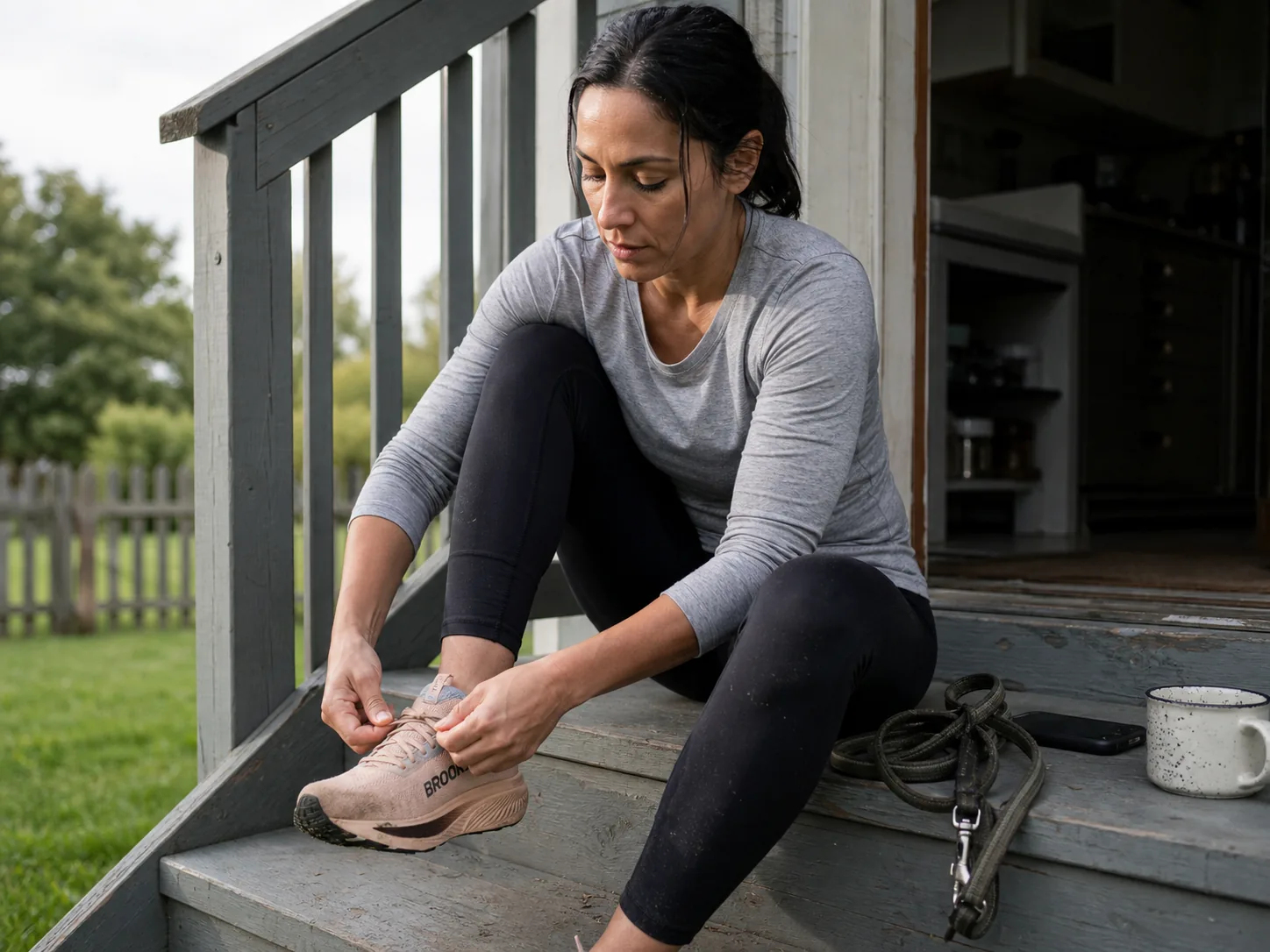
Your feet handled eight miles of rocky singletrack on Saturday without a single complaint. Tuesday, three blocks into a flat sidewalk loop with the dog, something starts rubbing right behind your little toe. That contradiction trips up more hikers than anyone admits, and it isn’t a fitness problem or a toughness problem: pavement loads your foot in a way trail never does, and the shoe that carries you between hikes has a different job than the one that carries you on them. This guide covers what a walking shoe actually does differently, why a women’s-specific pair isn’t a marketing upcharge, and ten picks for walking footwear for women sorted by the problem each one solves.
What Separates a Walking Shoe From a Running Shoe
Almost nobody buys walking shoes on purpose. You own running shoes, they’re right there by the door, and they seem close enough. Most of the time they are. Sometimes they’re quietly wrong, and you find out at mile three.
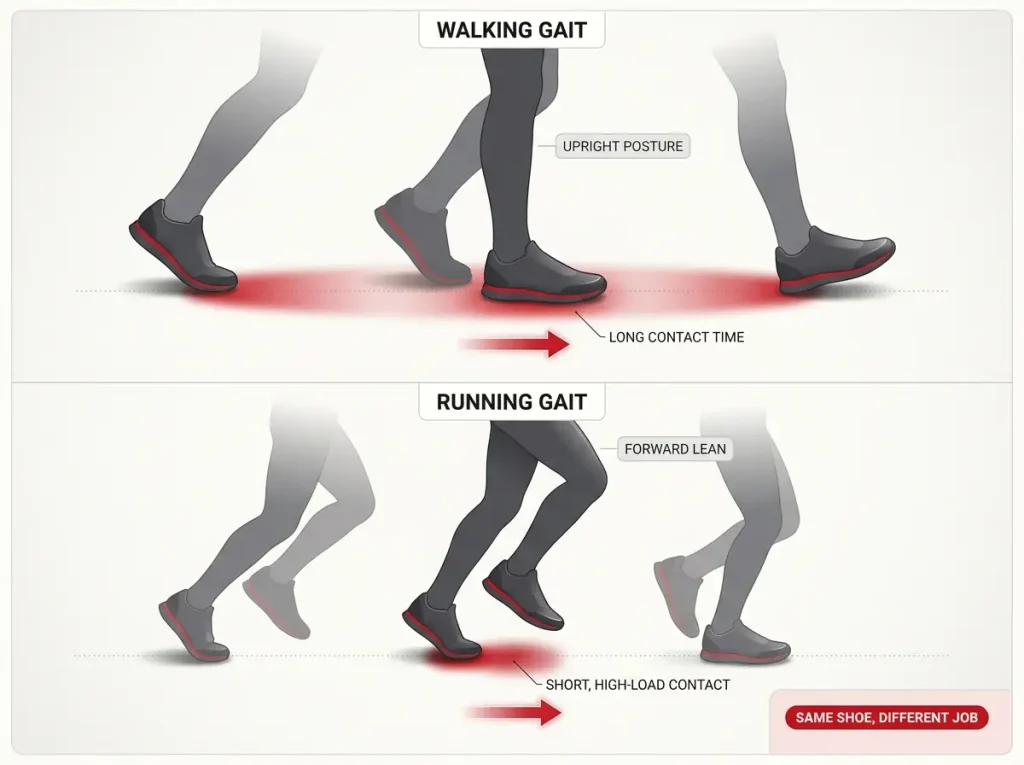
The difference starts with gait. Running drives you forward in a series of short, high-load contacts with a distinct forward lean. Walking gait is slower, more upright, and keeps your foot on the ground much longer per step. Pressure spreads across the foot differently, rolls through the midfoot differently, and asks the shoe for support over a long contact rather than energy return off a quick one.
That’s why a running shoe built for speed can feel fine for a mile and irritating by mile four. It’s doing its job. Its job just isn’t this one.
The most common mistake here is treating the two categories as interchangeable and grabbing whatever’s in the closet. The result is rarely dramatic. It’s a hot spot behind the toes, a sore arch by evening, a nagging ache that you blame on the walk instead of the shoe. Small, repeatable, and completely avoidable.
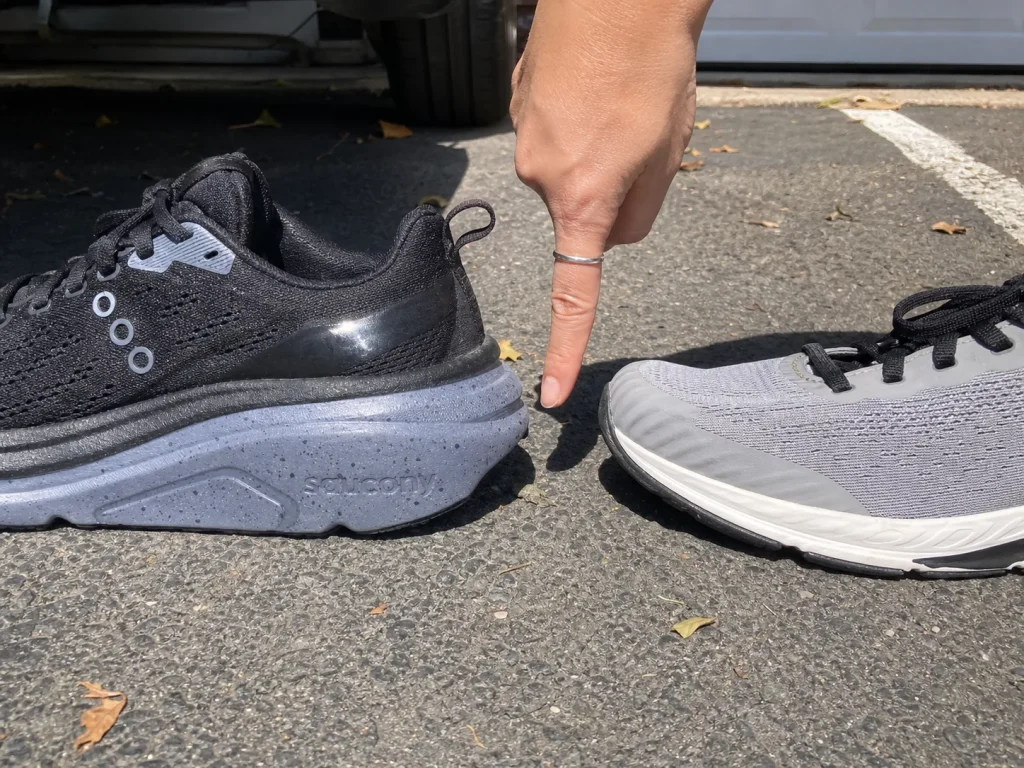
Rocker sole geometry is one of the clearest design splits. Shoes in the Brooks Ghost and HOKA Bondi families are built with a curved sole profile that helps roll your weight forward through the stride, so your calf and forefoot do less of the pushing on each step. Whether that adds up to a measurable difference over a day is the kind of claim that gets oversold, but the mechanism is real and you can feel it inside a few blocks. Foot fatigue on pavement is mostly an accumulation problem, and anything that shaves effort off a step you take ten thousand times adds up in the honest direction.
Here’s the honest overlap, because there is one: a neutral cushioned daily trainer is a perfectly good walking shoe. Nobody needs to buy a second category of footwear to walk around the neighborhood. What doesn’t work is a race-oriented trainer, and that distinction matters more than the walking-versus-running label on the box. The same logic plays out on dirt, where trail runners and hiking shoes split along the same cushioning-and-stack lines rather than along their category names.
Why Women’s Walking Shoes Aren’t Just Smaller Men’s Shoes
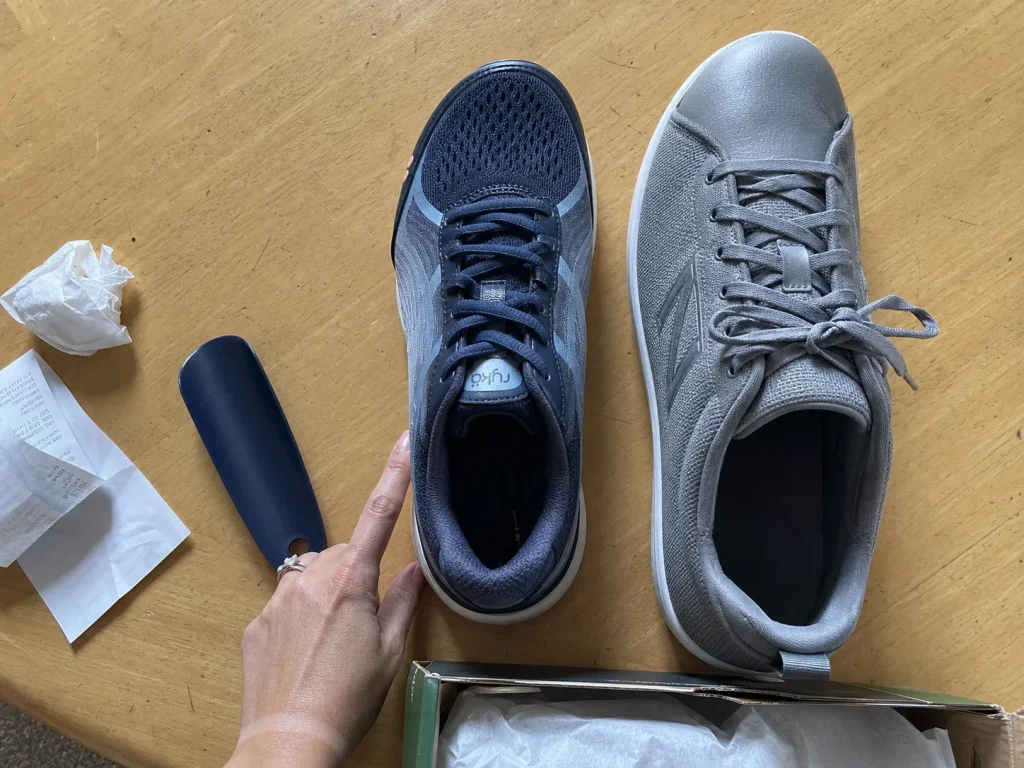
Every woman who has worn a unisex shoe knows this feeling and most assume it’s their own fault: the toes are cramped and the heel slips. Both. At the same time. It feels like a sizing failure, so the natural response is to try a different size, which fixes neither.
It isn’t a sizing failure. It’s a shape mismatch, and naming it is the thing nobody bothers to do.
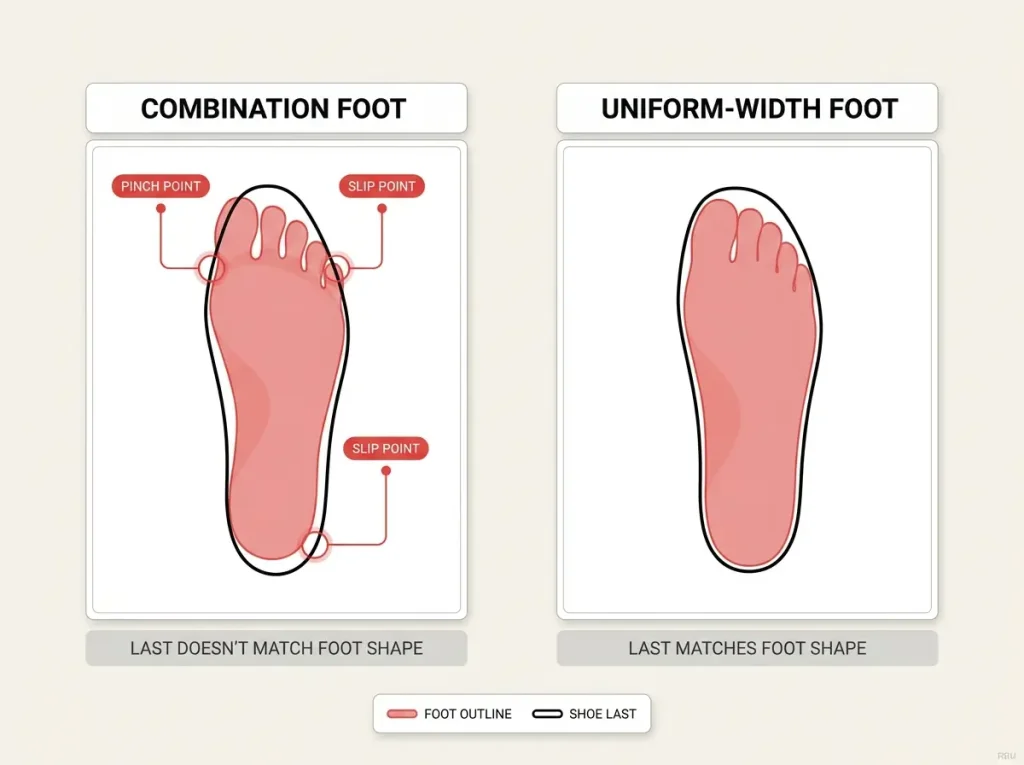
Every shoe is built around a last, the foot-shaped form that determines the shoe’s internal geometry. Women’s feet, on average, run relatively wider through the forefoot and narrower through the heel. Men’s feet run closer to uniform width from heel to toe. The proportion shows up in the metatarsal spread across the ball of the foot and in how much heel there is to hold behind it, and a last either accounts for that difference or it doesn’t. No amount of going up or down half a size changes a proportion.
So when a shoe is a men’s design offered in smaller sizes with different colors, the whole foot gets scaled down together. The forefoot ends up too tight for the width your toes need, and the heel ends up too roomy for the narrower heel you actually have. Pinch and slip, simultaneously, which is exactly the diagnostic that tells you the shoe was never built for your foot shape.
There’s a name for the shape this hits hardest. Combination foot: narrow heel, wide forefoot. It’s the shape that fits neither a straight narrow shoe nor a straight wide one, and knowing the term matters because it’s the difference between searching “shoes too tight” forever and searching for the thing you actually have.
The combination foot is also why the standard advice fails in both directions. Buy the wide version and the heel gets worse, because width grading widens the whole shoe including the part that was already too loose. Buy the narrow version and your forefoot is back in a vise. There’s no size in that shoe that works, which is exactly the experience people describe when they say they’ve “tried everything” in a brand. They have. In that shoe, everything was the wrong answer.
The practical consequence is that closure matters more for this foot shape than for most. A lace-up lets you tension the heel independently of the forefoot, which is the only mechanism that solves both problems at once in a conventionally-shaped shoe. A fixed slip-on physically cannot: whatever heel hold it has is built in, and you get what you get. That’s a real constraint to weigh against the convenience, and it’s why the slip-on picks further down come with that caveat attached rather than a blanket recommendation.
A few brands build only on a women’s last rather than grading down a men’s form. Ryka is the clearest example, and it’s worth knowing about not because the brand is magic but because it’s a concrete thing you can go verify on a spec page instead of taking anyone’s word for it. The same last-shape problem shows up on dirt too, which is why wide-footed women hunting for hiking shoes run into the same wall from a different direction.
Now the part that keeps this from turning into a sales pitch: a women’s-specific shoe is not automatically better for every woman. Plenty of women have relatively uniform-width feet and do just fine in unisex sizing. Shape is the variable. Gender is a proxy for shape, and it’s a decent proxy, but it’s not the thing itself. If unisex shoes have always felt fine on you, they probably are fine. Believe your feet over the marketing on either side.
If a shoe pinches your forefoot and slips at your heel in the same try-on, stop adjusting the size. That combination is the last telling you it was built around a different foot shape. Put it back and go find one built on a women’s last, or one with a naturally wide toe box.
Arch Type, Pronation, and Cushioning in Plain Language
These three words are on every shoe box and in every buying guide, and almost nobody explains them in a way you can actually use without a gait lab and an appointment. You can get most of the way there with a shoe you already own and about thirty seconds.
Pronation is just how much your foot rolls inward when it hits the ground. Everyone pronates. It’s how the foot absorbs impact. Neutral means an average amount, overpronation means more than average, and supination means less. None of these is a defect. They’re descriptions of amount, not diagnoses, and the fitness industry has spent two decades making them sound scarier than they are.
Arch height is related but not the same thing, and the two get treated as interchangeable constantly. Flat feet tend toward overpronation and high arches tend toward supination, but the correlation is loose enough that your foot type on paper doesn’t reliably predict how you actually roll. That’s why the wear test below beats the wet-footprint test you’ve probably seen.
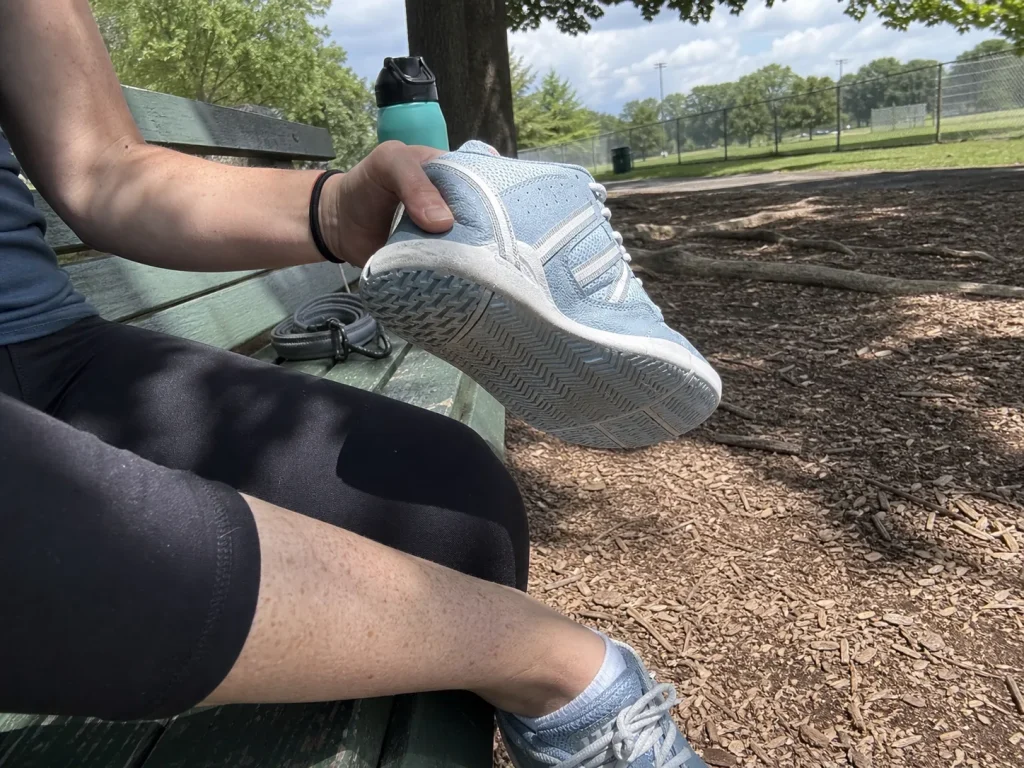
The read-your-own-outsole test tells you more in half a minute than a treadmill in a store will. Flip over a shoe you’ve already put real miles on and look at the wear. Even wear with a little extra on the outer heel is the neutral pattern. Heavy wear along the inner edge, especially under the ball of the foot, points to overpronation. Heavy wear along the outer edge points to supination. That’s the read. It isn’t precise, and it doesn’t have to be.
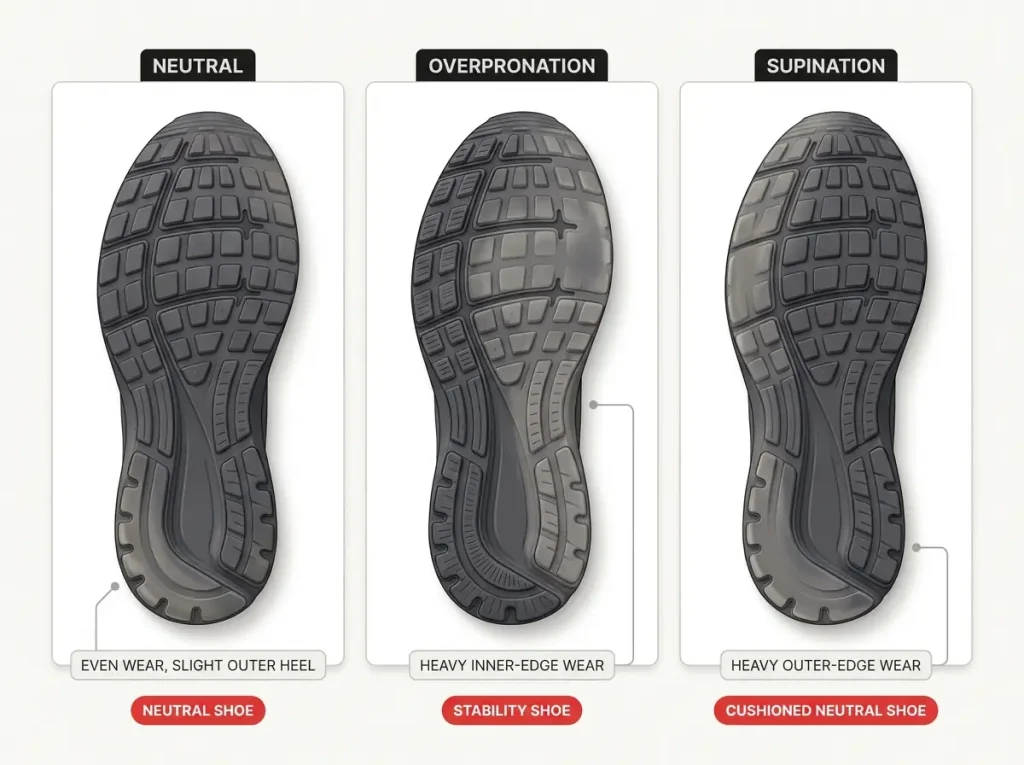
The three shoe categories map directly onto that. A neutral shoe lets your foot do what it does. A stability shoe resists inward roll with a wider base and structural elements under the arch. A motion-control shoe resists it harder, with a stiffer build throughout. The Saucony Hurricane 25 is a clean example of what “stability build” concretely means: a broader platform under the foot plus a guidance system that pushes back on the roll, rather than just more foam.
Here’s the part that gets conflated constantly, and it’s the single most useful thing in this section. Cushioning firmness and support are two separate axes. Softer is not more supportive. Frequently it’s less. A very soft midsole, usually some form of EVA foam or a brand’s proprietary version of it, compresses more under load, which means your foot can roll further into it, which is the opposite of what an overpronating foot needs. The shoe that feels best in the first ten steps in a store is often the one that feels worst at hour six, and that’s not a coincidence. It’s the same foam doing the same thing. Harvard Health’s guide to choosing walking shoes flags reduced cushioning as an invisible failure point for exactly this reason: what you can feel underfoot and what’s actually supporting you are not the same measurement.
The same math runs on trail, which is why flat-footed hikers looking at arch support options end up in the same stability-versus-cushion conversation with a pack on.
Rotate two pairs instead of wearing one every day. Midsole foam needs time to fully decompress between wears, and giving it a day off keeps the cushioning supportive noticeably longer. This matters double if you’re stacking dog-walk mileage on top of real hikes, because that foam never gets a break otherwise.
Width and Sizing, Where Most Women Get It Wrong
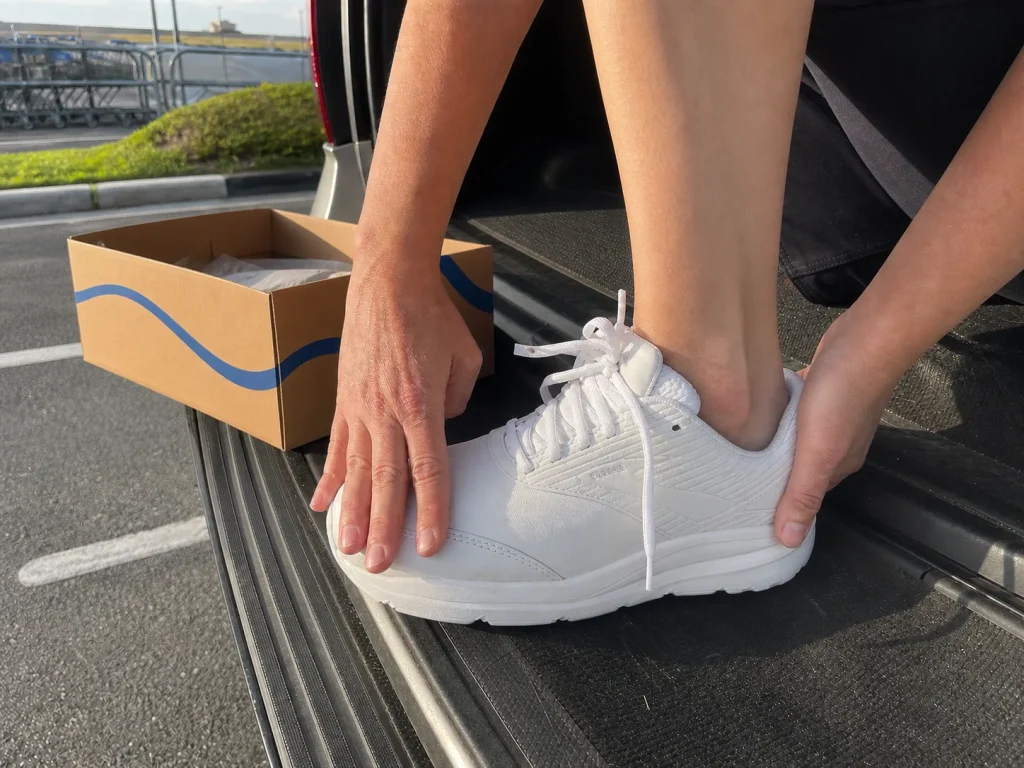
When a shoe pinches, the instinct is to buy the next size up. It’s the wrong lever, it’s the single most common mistake in this whole category, and it deserves to be said flatly before anything else: length and width are different problems with different fixes.
Sizing up does nothing about forefoot pinch. Your foot’s widest point is still the same width, and the shoe’s widest point moved forward and got only slightly wider along the way. What you gain is dead space at the toe, and that space causes its own trouble. Your foot slides forward on downhills, your toes hit the front, and you’ve traded a pinch for toe box trauma. There are situations where sizing up hiking footwear is exactly right, but a forefoot that’s too tight is not one of them.
The fix is width, and women’s width sizing is genuinely confusing because it collides with men’s sizing. Standard women’s width is B. A D width, which is standard medium for a man, is already a full wide step for a woman’s foot, roughly 0.4 inch or about a centimeter broader at a given length. 2E is extra wide from there. So a woman being told to “just get the men’s version” is being handed a shoe that’s wide and wrongly proportioned, which solves half the problem and creates another.
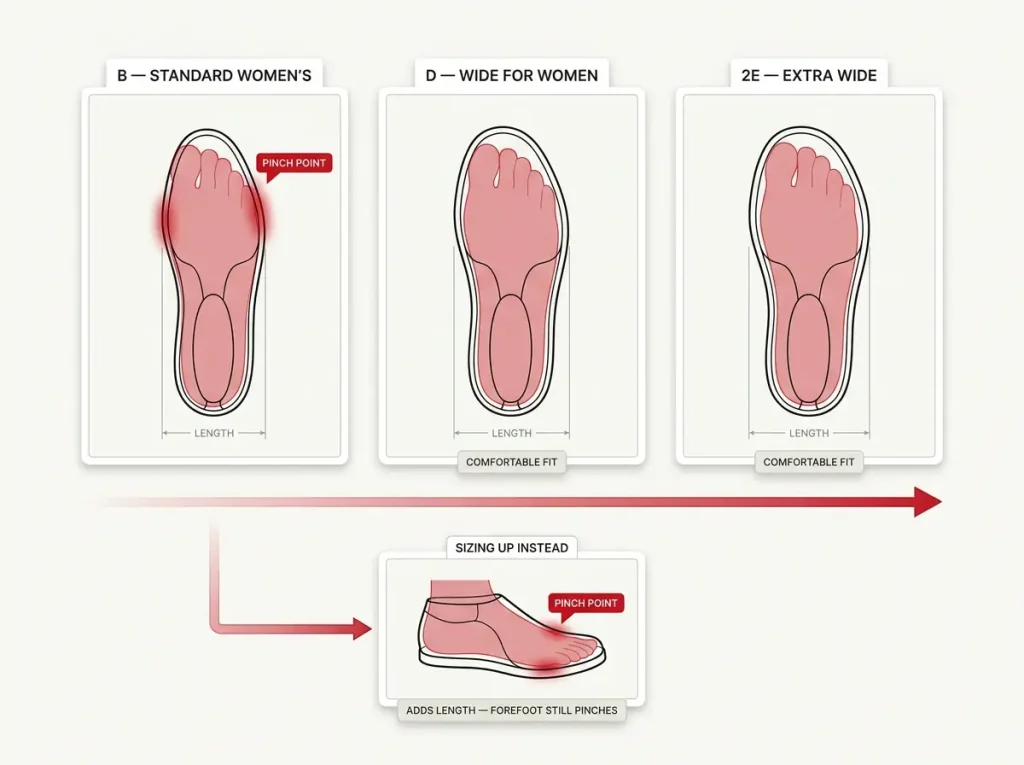
Learn to tell a specification from a sales phrase. “Roomy toe box” is marketing language and means whatever the brand wants it to mean. “D” and “2E” are widths with definitions behind them. If a listing offers only one width and describes it as generous, that’s a shoe with one width.
There’s a third path worth knowing about. Barefoot and wide-toe-box shoes, sometimes sold as a minimalist shoe, solve forefoot splay through shape rather than through width grading. Instead of making the same tapered shoe wider, they’re built foot-shaped from the start, with a toe box that stays wide all the way to the end so your toes spread naturally. If insoles never fixed your forefoot pain, the problem may have been the shoe’s shape rather than its footbed, and that’s a different aisle entirely.
One more thing about the thumb-width rule, the old standby where you press your thumb between your longest toe and the end of the shoe. It’s a decent length check. It says nothing at all about width, and a shoe can pass it cleanly while strangling your forefoot. Check both or you’ve only checked half.
The Everyday Picks
Four shoes, four different problems. Nobody needs all four, and reading these by brand instead of by problem is how people end up with an expensive shoe that doesn’t fit their foot.
Before the picks, one honest call. The Nike Pegasus 41 is the shoe almost everyone lands on, because it’s the shoe almost everyone recommends. It’s a good shoe. It’s also a race-oriented daily trainer, tuned for tempo work, and the cushioning and geometry choices that make it good at speed make it unremarkable for slow all-day pavement mileage. That’s not a knock on the shoe. It’s a mismatch between the shoe’s design brief and your actual use, and for this job the Ghost or the Hurricane below will serve you better.
Best Overall
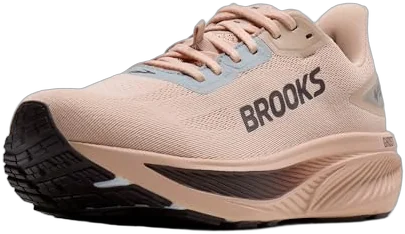
If you have no specific foot problem to solve and you want to stop researching, this is where to stop. The Brooks Ghost 18 GTX is neutral, which suits the majority of feet, and it’s cushioned without being mushy, which is the balance most cushioned shoes miss in one direction or the other.
The waterproof membrane is the reason it’s the overall pick here rather than a generic recommendation. Wet grass at 7am soaks a mesh shoe in about four minutes, and a soaked shoe is the whole ballgame for hot spots. The trade-off is real and worth stating: a Gore-Tex upper breathes worse than mesh, so this is a shoe you’ll like less in August heat than in November drizzle.
Skip it if you overpronate meaningfully. It’s a neutral shoe and it won’t fight the roll. That’s the next pick’s job.
Best for Arch Support and Stability
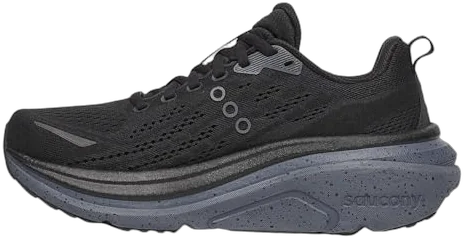
If your outsole showed heavy inner-edge wear, or a shoe fitter has ever said the word overpronation at you, the Saucony Hurricane 25 is the pick. The support here is structural rather than a marketing claim: a broader base under the foot gives the roll less room to develop in the first place, which is a better approach than trying to block it after it starts.
It’s a substantial shoe and it feels like one. If you’ve been walking in something light and flexible, this will feel like a lot underfoot for the first week. That’s the build doing its job, and it’s also why the break-in note in the foot-problems section below applies here too.
If you’re neutral, you don’t need this. Stability features on a neutral foot aren’t harmful, but you’re paying weight and stiffness for a correction you don’t require.
Best for Travel and Slip-On Days
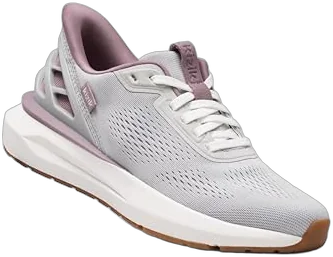
The Kizik Athens 2 earns its slot on the entry mechanism, and it’s worth being precise about why that’s more than a convenience feature. A normal slip-on gets easy to put on by being loose, which means it can’t hold your heel. This one uses a structured spring in the heel that flattens under your foot and pops back, so it stays a real shoe with a real heel counter while still going on hands-free.
For a combination foot, that’s a meaningful distinction, because a loose slip-on is the worst possible answer to a narrow heel. This isn’t a lace-up and it won’t dial in like one, but it holds far better than the category usually does.
It’s a travel and errands shoe. It’s not the one for your longest walking days.
Best Barefoot and Zero-Drop
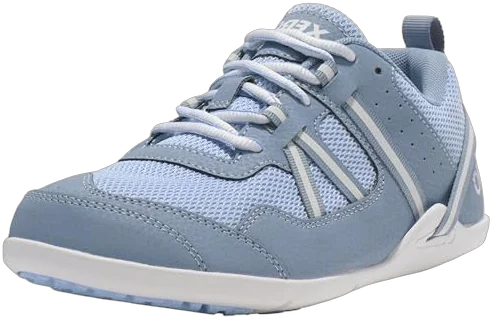
The Xero Shoes Prio is here because it answers the shape question from the other side. Everything else on this list adds width to a fundamentally tapered form. This one isn’t tapered.
Now the caveat, and it’s a real one. Zero-drop means the heel-to-toe drop is nothing: your heel and forefoot sit at the same height, where a conventional cushioned shoe lifts the heel meaningfully above the forefoot. If you’re coming from raised-heel shoes, your calves and Achilles have spent years at a shorter working length. Switching overnight is how people end up with Achilles pain and decide barefoot shoes are nonsense. Transition over weeks, not days. Start with short walks, keep your old shoes in rotation, and add mileage slowly.
If that sounds like more project than you want, that’s a completely reasonable read. Skip it and take the wide-width pick below instead. Same problem, less homework.
Picks for Specific Foot Problems
There’s a real line between “my feet get sore” and a diagnosed condition, and the shoe advice on either side of it is different. Most guides blur that line because blurring it sells more shoes.
Three problems drive most of the searching here, and they don’t all want the same shoe. Plantar fasciitis wants the arch supported and the heel held. Bunions want room and a soft, seamless upper over the joint, because pressure on that spot is the whole complaint and a stiff overlay right across it will undo an otherwise good shoe. Flat feet and overpronation want structure underneath. A shoe that nails one can actively aggravate another, which is why “best for foot problems” as a single category is close to meaningless.
Plantar fasciitis is common enough that asking about it isn’t an edge case. Roughly one in ten people develop it at some point, and more than two million people in the U.S. are treated for it every year. If it’s your first question walking into this article, that’s a completely normal first question.
Two certifications are worth knowing by name, because they’re verifiable rather than atmospheric. The APMA Seal of Acceptance means a panel of podiatrists reviewed the shoe’s design, support, and effect on foot health. It isn’t a badge a brand can buy: shoes carrying the APMA Seal of Acceptance have been reviewed by a panel of podiatrists through an actual program with actual criteria. PDAC A5500 is a U.S. Medicare certification for a diabetic shoe or therapeutic build, held to documented standards for depth, width, and seam construction. Both are checkable on a listing in about ten seconds, which makes them worth more than “podiatrist recommended” printed on a box, and they’re the honest way to tell a genuine orthopedic shoe from one that just looks sturdy.
Don’t wear a genuinely structured shoe for a full 8-hour day on day one. Motion-control builds and certified therapeutic walkers need a real break-in: an hour or two a day for the first week, then build up. Blisters on day one usually mean you rushed the ramp, not that the shoe is wrong for your foot.
Before the picks, the honest limit. A shoe manages symptoms. It does not treat a diagnosed condition. If your first step out of bed hurts every single morning, the shoe is one input and not the whole answer, and the right move is to go see someone rather than to keep buying footwear.
Best for Wide Feet
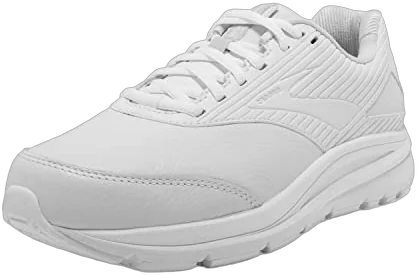
The Brooks Addiction Walker 2 in X-Wide is what a wide shoe looks like when it’s engineered as one instead of stretched into one. The certifications matter here beyond the credential: PDAC A5500 sets documented requirements for depth and seam construction, which is why this shoe has room over the top of the foot and not just across it. If your instep is high as well as your forefoot wide, that vertical room is the part you’ve been missing.
It’s a leather shoe with structure, so it’s heavier and stiffer than the mesh options above, and the break-in note applies fully. It’s also the least trendy shoe on this list by some distance, which is worth saying plainly. It’s here because it works, not because it’s pretty.
Best for Plantar Fasciitis
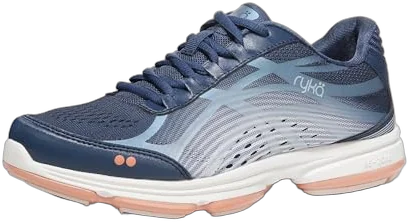
The counterintuitive part of plantar fasciitis footwear is that the softest shoe is rarely the one that helps. An irritated fascia wants the arch supported and the heel held still, and a very soft midsole does the opposite of both: it lets the arch collapse further and lets the heel move. The Ryka Devotion Plus 3 gets this right by being supportive rather than plush, and the women’s last means the heel actually gets held rather than approximately held.
The removable footbed is worth calling out if you already have custom orthotics. A shoe with a glued-in footbed forces you to choose between the shoe’s support and your orthotic’s; this one doesn’t.
If your walking miles are turning into hiking miles with a pack, the calculus shifts, and the plantar fasciitis conversation for hiking boots covers what changes once there’s load on your back.
And if insoles have never helped your forefoot specifically, reread the width section. That’s a shape problem wearing a support-problem costume.
The Budget Ladder Nobody Else Builds
“Best budget” as a single badge on a single shoe is close to useless, because budget isn’t one place. It’s a range, and the honest recommendation changes depending on which rung you’re standing on. Every roundup on this topic hands out one budget award and moves on, which serves a reader who happens to be at exactly that price point and nobody else.
So here’s the ladder, including the rung nobody puts on it.
Rung zero: buy nothing. If you already own a neutral cushioned trainer and the midsole still springs back when you press it, that is your walking shoe. It’s done. You can close this article. The gear industry has a real interest in you not hearing that sentence, and it’s true anyway. Go press your thumb into the shoe you’ve been wearing before you spend anything.
Rung zero has a variation worth knowing, too. If the shoe fits and the foam is still alive but the support was never right for your arch, an insole is a fraction of a new shoe and fixes the specific thing that’s wrong. That doesn’t work in reverse: an insole cannot fix a shoe that’s too narrow, and it cannot revive dead foam. It only solves support in a shoe whose shape already works. Know which of the three problems you actually have before you spend on the wrong one.
If rung zero doesn’t apply, the two rungs below are where the honest options live. And the thing to understand before you pick a rung is what a cheaper shoe actually costs you, because it isn’t what most people assume.
It isn’t comfort. Budget shoes have gotten genuinely comfortable, and a soft foam shoe feels great in the store at any price. What you give up is midsole life and structure, and both are invisible at the moment of purchase. Cheaper foam formulations take a compression set faster, which means the shoe that felt identical to the expensive one on day one is measurably flatter three months in while the upper and the tread still look new. You don’t notice the day it dies. You notice a month later when your feet ache on a route that never used to bother you.
That reframes the tiers. The rungs aren’t really “good shoe” versus “worse shoe.” They’re closer to how many months of live cushioning you’re buying and how much structure comes with it, which is why the honest recommendation depends less on the number and more on your mileage. Someone doing a short daily loop can ride the bottom rung for a long time. Someone stacking real volume will burn through it and end up buying twice, which is the expensive way to save money.
The Solid, No-Regrets Rung
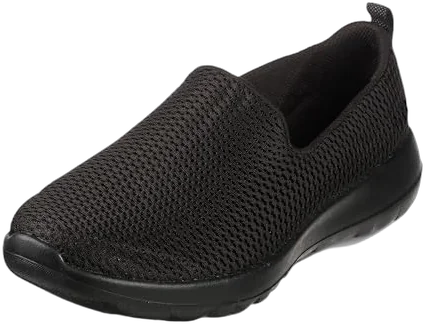
The Skechers GO WALK Joy is the shoe to buy if you want to spend less and not think about it. Be clear about the trade, though, because it’s specific and it isn’t comfort: what you’re giving up is structure. There’s not much here fighting an inward roll, and the heel hold is a slip-on’s heel hold. If you overpronate, this is the wrong rung and the Hurricane is worth the stretch.
For a neutral foot doing errands and dog loops, it’s genuinely hard to argue with.
The Rock-Bottom Rung
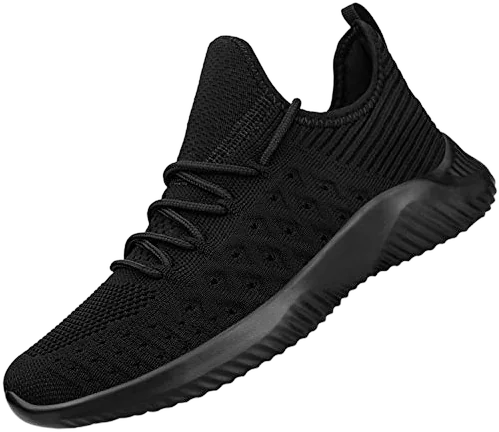
The Feethit slip-on exists on this list because pretending the bottom rung doesn’t exist doesn’t help anyone standing on it. Sometimes the situation is that your shoes are done, your feet hurt now, and the budget is the budget. This shoe walks, it breathes, and it’s comfortable out of the box.
What you’re paying for elsewhere shows up in the one place you can’t see: foam. Budget midsoles compress faster and stay compressed. The upper and the tread will look fine long after the cushioning is finished, which brings us to the thing that ends every shoe on this list.
Footing When the Pavement Ends
Every walking shoe guide talks about traction. All of them mean slip resistance on tile and polished hardwood, because they’re written for retail floors and hospital shifts. That’s a real use case and it’s not yours.
Yours is the dog park entrance that’s gravel until it rains and then turns to slick clay for about fifteen feet. It’s the wet leaves plastered across the sidewalk in October. It’s the painted crosswalk line that’s a skating rink for exactly one step. It’s the uneven terrain of a heaved sidewalk slab or a curb cut that isn’t where your foot expected it. These aren’t dramatic hazards. They’re the small, boring traction failures that a shoe reviewed on a lab floor will never surface, and the transition is what catches people, not the terrain itself.
The mechanism is worth understanding because it tells you what to look for. Road-shoe outsoles run shallow tread, and that’s correct for pavement: on a hard surface, grip comes from rubber compound making contact, and deep tread just reduces contact area and wears faster. The moment the surface goes soft, the rules flip. On mud or loose gravel, grip comes from tread digging in and interlocking with a surface that deforms. Shallow lugs have nothing to interlock with, so they sit on top and slide. It’s not that the shoe is bad. It’s that the surface changed and the shoe didn’t. Lug depth is the whole mechanism behind traction in mud, and it’s the same physics whether you’re on a trail or in a park entrance.
Wet leaves deserve their own sentence. They’re slick for a different reason: a thin layer of water and organic material acts as a slip layer between your outsole and the pavement, and no tread pattern reliably cuts through it. Neither does a compound. The answer there is your feet, not your shoes, which means shortening your stride and putting your foot down flatter.
A waterproof membrane like Outdry or Gore-Tex is a real answer for wet-season walking, with an honest trade-off attached: it breathes worse than mesh. That makes it a seasonal choice rather than a strict upgrade. Buy it if your walking months are wet ones. Don’t buy it because the box says waterproof and waterproof sounds better.
Best for Off-Pavement and Wet Traction
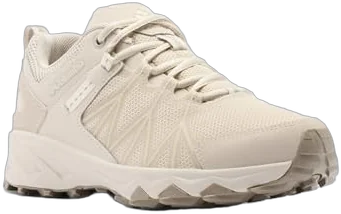
The Columbia Peakfreak II Outdry sits deliberately at the edge of this category. It’s the most trail-flavored shoe on the list, and if your walking is strictly sidewalks it’s more shoe than you need. If your route includes a park, a gravel path, or a canal trail, it’s the one that won’t surprise you.
The wide sizing matters too, and it’s not a coincidence that it shows up on this pick: shoes with real outsoles are more likely to be built on hiking lasts, which tend to run more generous through the forefoot than road shoes do.
Now the safety beat that has no product attached, because forcing one here would be dishonest. If you walk early or late, you’re on roads in poor light, and the reflective bits on a shoe are decoration. They’re low to the ground, they’re small, and a driver’s headlights find them late. Low-light visibility comes from a reflective band, a clip-on light, or picking a route with sidewalks. The shoe is not the plan.
Neighborhood Miles as Cross-Training Between Hikes
Nobody trains for a hike by hiking every day. The miles that actually keep you trail-ready are the boring ones: the dog loop, the after-dinner walk, the far end of the parking lot at work. Those miles get zero respect and they’re doing most of the work, and the shoe you do them in matters more than it gets credit for.
Start with the contradiction from the top of this article, because it has a real mechanism behind it. A trail-conditioned foot does not automatically transfer to pavement. Eight miles of singletrack, fine. Three blocks of flat sidewalk in the wrong shoe, hot spot. That isn’t your foot being fragile.
Trail is relentlessly varied. Every step lands on a slightly different angle, a different rock, a different root, and your foot strikes in a slightly different place with a slightly different pressure map every single time. That variation spreads the load around. It’s why trail feels harder and produces fewer repetitive complaints.
Pavement is the opposite. It’s flat, uniform, and identical for thousands of consecutive steps, which means the same tissue takes the same load in the same spot over and over with nothing breaking up the pattern. Uniform repetition is exactly what produces overuse. So the shoe has to do the varying that the surface refuses to do, which is the actual reason cushioning and fit matter more on pavement than most hikers expect.
Stop walking the dog in your hiking shoes. Road miles grind lugs flat and compress midsoles fast, and you will show up at the trailhead on a dead pair without ever having hiked them down. Keeping a separate walking shoe isn’t gear obsession. It’s the cheaper path, because you’re spending the inexpensive shoe instead of the expensive one.
The two-pair rotation from earlier does double duty here. Your walking shoe absorbs the daily volume, which is most of your total mileage, and your trail shoe stays fresh for the days that actually need it. Most hikers have this backwards and burn their good shoes on asphalt.
Best for Dog-Walk and Cross-Training Miles
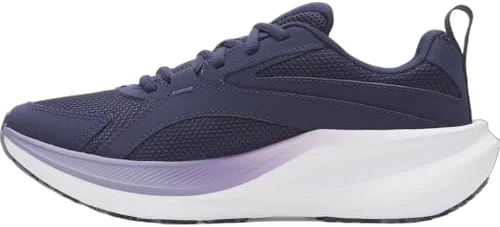
The Under Armour Charged Assert 11 is the pick for the shoe that lives by the back door. It has enough structure to handle real repetitive mileage without the weight or the price of a dedicated training shoe, and the outsole survives sidewalk abrasion better than the soft foam-heavy options above.
It’s a cross-training shoe doing walking duty, which is precisely the right tool for miles that are quietly conditioning you for Saturday. It’s not the plushest thing here and it’s not trying to be.
Now the honest scope, and it runs the other direction too. Everything on this list is a walking shoe. Not one of them is a hiking shoe, including the Columbia, which is the closest and still isn’t one. Don’t take these up a real trail with any real distance on it. When the miles are actual trail miles, low-cut hiking shoes are the pair you want, and that’s a different purchase with a different set of trade-offs.
Two shoes for two jobs. It sounds like the gear industry talking, right up until you notice you were already buying two shoes and just wearing the wrong one for half of it.
When to Replace Them and How to Make Them Last
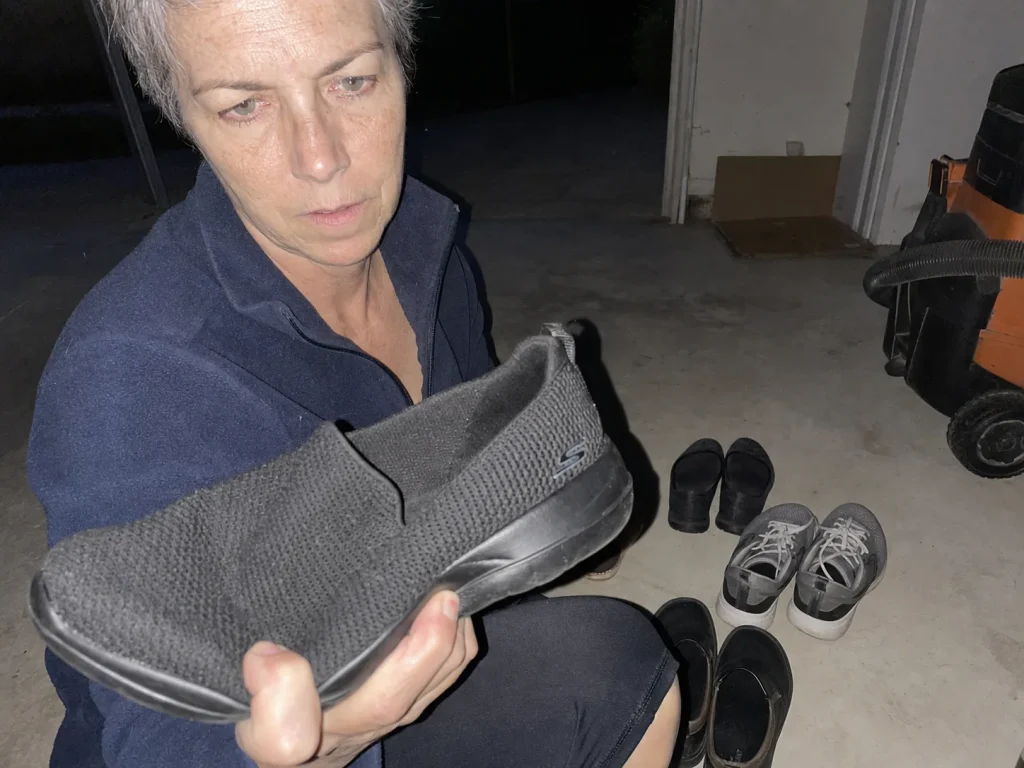
The tread looks fine, so the shoe must be fine. That’s the trap, and it catches nearly everyone.
Foam dies silently, and it dies long before rubber does. The outsole is the part you can see and the part built to survive abrasion. The midsole is the part doing the actual work, and it fails invisibly, by compressing and staying compressed. So you keep walking on a shoe that looks new and stopped working months ago, and the first thing that tells you is your knees.
The real window is roughly 300 to 500 miles, which works out to about 6 to 12 months for someone walking briskly 30 minutes a day, 5 days a week. Podiatric sports medicine guidance puts the real mileage window at 300 to 500 miles rather than the once-a-year rule of thumb that gets repeated everywhere. And if you’re stacking dog-walk mileage on top of actual hikes, you’re burning through that budget considerably faster than the calendar suggests. Track miles, not months.
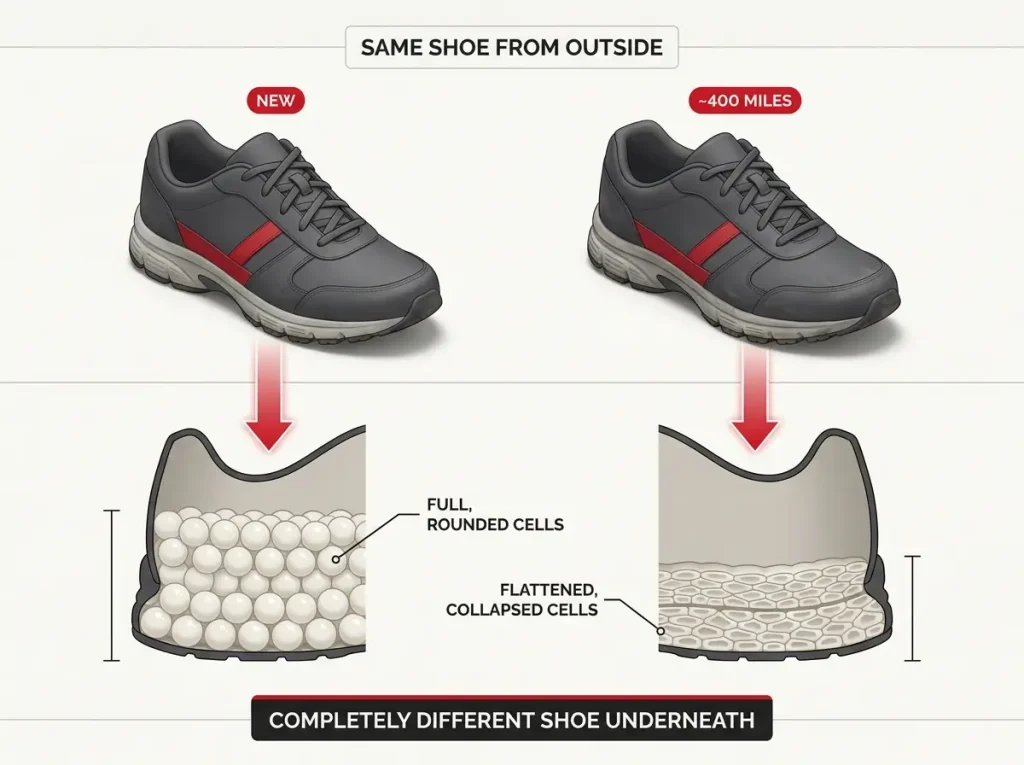
There’s a term for the failure mode worth knowing, because naming it makes it visible: dead cushioning. Midsole foam that’s lost its rebound while the tread still looks perfectly healthy. Once you know the phrase, you start catching it early instead of after your shins do.
The signs that actually mean something:
- A midsole that looks flattened or creased along its length
- Uneven wear at the heel, especially if one shoe is worse than the other
- Cushioning that visibly compresses under your weight and doesn’t come back
- New foot, knee, or back pain on your usual route that wasn’t there a month ago
That last one is the real signal and the most commonly ignored. New aches on a walk you’ve done a hundred times are rarely about the walk.
The press test takes five seconds and beats guessing. Push your thumb hard into the midsole just behind the heel. Springs back at you, the foam is alive. Stays dented, or feels dense and dry like a cracker, it’s done, and it doesn’t matter what the tread looks like.
Making them last is mostly one habit and one non-habit. The habit is rotation: two pairs, alternating days, letting the foam fully decompress between wears. The non-habit is heat. Don’t dry wet shoes on a radiator or leave them in a hot car, because heat accelerates the foam’s compression set and cooks the adhesives holding the shoe together.
When it is time to replace them, be careful what you replace them with. A lot of what’s marketed for walking and light trail is a road shoe with outdoorsy graphics, and most walking sneakers sold for hiking are road shoes wearing trail marketing. Read the outsole, not the copy.
The Short Version
Shape beats gender, and size fixes nothing. If your forefoot pinches while your heel slips, that’s a last-shape mismatch: go wider or go foot-shaped, and stop trying different sizes of the same wrong geometry.
The tread lies. The midsole is what dies, it dies invisibly somewhere around 300 to 500 miles, and new aches on your usual loop are the signal that it already happened.
The everyday shoe is what keeps you trail-ready. Don’t spend your hiking shoes on pavement, and don’t take these picks up a trail. Two shoes, two jobs, and the boring one is carrying most of your mileage.
Go pull the shoes you’ve been walking in and press a thumb into the midsole behind the heel. If it doesn’t spring back, you already have your answer, and now you know what to look for instead.
Frequently Asked Questions
01How often should women replace their walking shoes?
Roughly every 300 to 500 miles, which is about 6 to 12 months at 30 brisk minutes a day, 5 days a week. If you add dog-walk mileage on top of hikes, you will hit that sooner than the calendar suggests. Track miles rather than months.
02Can I just use my running shoes for walking?
A neutral cushioned daily trainer works fine as a walking shoe. A race-oriented trainer does not, because it is built for propulsion at speed and that tuning is wasted at a slow, upright walking gait over long ground-contact times.
03My toes feel cramped, should I size up?
No. Sizing up changes length, and forefoot pinch is a width problem. Go to a true wide width, D or 2E in women’s sizing, instead. Sizing up just adds dead space at the toe and lets your foot slide forward on downhills.
04What does the APMA Seal of Acceptance actually mean?
It means a panel of podiatrists reviewed the shoe’s design, support, and effect on foot health. It is a real third-party vetting step, not a badge a brand buys, which makes it worth checking on the listing instead of trusting podiatrist recommended in ad copy.
05Do supportive walking shoes need a break-in period?
A genuinely structured shoe does, including motion-control builds and certified therapeutic walkers. Ease in over about a week rather than wearing it for a full 8-hour day right away. Blisters on day one usually mean you rushed the ramp, not that the shoe is wrong.
Risk Disclaimer: Hiking, trekking, backpacking, and all related outdoor activities involve inherent
risks which may result in serious injury, illness, or death. The information provided on The Hiking Tribe is for
educational and informational purposes only. While we strive for accuracy, information on trails, gear, techniques,
and safety is not a substitute for your own best judgment and thorough preparation. Trail conditions, weather, and
other environmental factors change rapidly and may differ from what is described on this site. Always check with
official sources like park services for the most current alerts and conditions. Never undertake a hike beyond your
abilities and always be prepared for the unexpected. By using this website, you agree that you are solely
responsible for your own safety. Any reliance you place on our content is strictly at your own risk, and you assume
all liability for your actions and decisions in the outdoors. The Hiking Tribe and its authors will not be held
liable for any injury, damage, or loss sustained in connection with the use of the information herein.
Affiliate Disclosure: We are a participant in the Amazon Services LLC Associates Program, an
affiliate advertising program designed to provide a means for us to earn advertising fees by advertising and linking
to Amazon.com. As an Amazon Associate, we earn from qualifying purchases. We are also an official affiliate partner
of Black Diamond Equipment via the AvantLink network. If you click on a Black Diamond affiliate link and make a
purchase, we may earn a commission at no additional cost to you. We also participate in other affiliate programs and
may receive a commission on products purchased through our links. Additional terms are found in the terms of
service.