In this article
Plantar fasciitis turns every step on the trail into a negotiation with your own feet. The plantar fascia — that thick band of tissue running from your heel bone to your toes — bears the full force of every footfall, and when it’s inflamed, standard hiking boots with their flat insoles and minimal heel cushioning make things worse, not better. The wrong boot doesn’t just fail to help; it actively aggravates the condition by allowing the arch to collapse under load and sending unmitigated shock straight into the calcaneus with every heel strike.
Finding the right hiking boot for plantar fasciitis means prioritizing a specific set of features that most boot reviews ignore: adequate heel-to-toe drop (8-12mm) to relieve tension on the Achilles tendon and fascia, genuine arch support rather than a token contour, shock-absorbing midsole foam that actually dampens impact, and a removable insole for those who rely on custom orthotics. This list was built by cross-referencing shock absorption data, editorial assessments from sources like RunRepeat and Switchback Travel, verified user reviews from plantar fasciitis sufferers, and the technical specifications that matter most for this condition.
Below are six hiking boots ranked across five PF-specific criteria: Cushioning, Arch Support, Stability, Weight, and Value. Each product includes an honest assessment of its weaknesses — because no boot is right for every foot, and knowing where a boot falls short matters as much as knowing where it excels.
The 6 Best Hiking Boots for Plantar Fasciitis 2026
Each boot below is rated on five criteria chosen specifically for plantar fasciitis management. Cushioning measures how effectively the midsole absorbs heel-strike impact — the primary source of PF pain on the trail. Arch Support evaluates how well the boot’s insole and midsole architecture prevent the plantar fascia from over-stretching. Stability rates the boot’s ability to control pronation and prevent the midfoot from collapsing under load. Weight is straightforward: lighter boots reduce fatigue, but heavy boots often deliver more support. Value weighs performance against price, accounting for whether stock insoles are sufficient or aftermarket insoles add hidden cost.
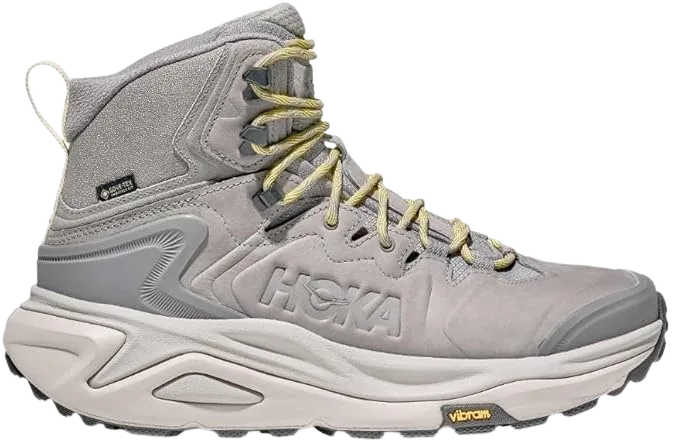
🏆 Best Overall: Hoka Kaha 3 GTX
The Hoka Kaha 3 GTX sits at the top of this list for a simple reason: it absorbs more heel-strike energy than almost any other hiking boot on the market. RunRepeat’s lab testing recorded a shock absorption score of 120 SA — significantly above average — thanks to a dual-density sugarcane EVA midsole that stacks 41.9mm of foam under the heel. For plantar fasciitis sufferers whose pain centers on that first brutal impact with every step, this level of cushioning translates directly to more miles with less agony. The Achilles-friendly heel collar reduces pressure on the back of the foot, and verified user reviews from PF sufferers consistently cite the Kaha 3 as one of the few boots that let them hike without flare-ups.
The GORE-TEX Invisible Fit membrane handles waterproofing without adding the stiffness that traditional GTX liners impose, and the Vibram Megagrip outsole delivers reliable traction on wet rock and loose terrain. The dual-density foam isn’t just thick — it’s engineered with a softer layer for impact absorption and a firmer layer for support, which means arches get structural backing even as heels get cushioning. The 8mm official drop (measured closer to 11.5mm by independent labs) provides moderate Achilles relief.
The tradeoffs are significant and worth acknowledging. At 20 ounces per shoe — 2 pounds 2 ounces per pair — the Kaha 3 is the heaviest boot on this list alongside the Oboz. The chunky platform aesthetic reads more trail-runner than traditional hiking boot, which won’t bother most PF sufferers but may put off traditionalists. More importantly, the thick midsole creates a noticeable disconnect from the terrain. Experienced hikers who rely on ground feel to navigate technical trail sections will find the Kaha 3 insulating them from exactly the feedback they want. And at $220, it demands a real financial commitment.
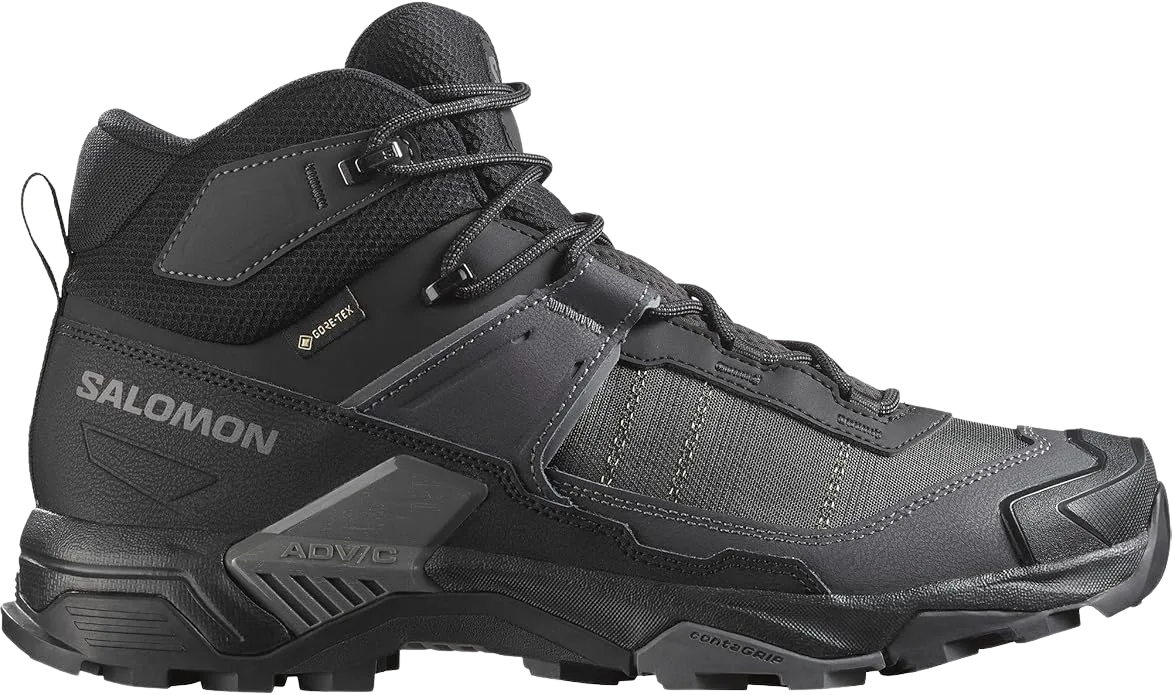
🎯 Best Lightweight: Salomon X Ultra 5 Mid GTX
Weight matters when your feet are already fighting inflammation. Every extra ounce compounds fatigue, and fatigue changes your gait, and changed gait aggravates plantar fasciitis — it’s a vicious cycle. The Salomon X Ultra 5 Mid GTX breaks that cycle at 15.5 ounces per shoe, making it the lightest mid-cut option on this list by a full ounce and a half. The Advanced Chassis — a TPU shank sandwiched between the midsole and outsole — locks the heel into place with a precision that heavier boots struggle to match. Heel slippage is a silent PF aggravator: when the heel lifts and re-seats with every step, it tugs the plantar fascia in ways that compound inflammation. The X Ultra 5 eliminates that problem.
The 11mm drop tilts the foot forward enough to reduce tension on the Achilles tendon and plantar fascia, and the OrthoLite sockliner adds moderate cushioning with decent moisture management. The Matryx upper — reinforced with Kevlar yarn — delivers surprising durability for a boot this light, and the PFC-free GORE-TEX membrane keeps water out without the environmental baggage of older waterproofing treatments. Salomon offers a Wide version, which is worth noting since PF sufferers often need extra forefoot room to accommodate swelling.
The honest downside: cushioning. The EnergyCell EVA midsole is thinner and firmer than the Hoka Kaha 3 or the Oboz Sawtooth X. On a 3-mile day hike, this won’t matter. On a 12-mile rocky descent, PF sufferers who need maximum padding under the heel will feel the difference. The Contagrip MA outsole handles most terrain well but loses ground to Vibram Megagrip on wet rock — a consideration if your trails involve stream crossings or rain-slicked granite. The standard width runs narrow, so sizing up or ordering Wide is often necessary. If you’re unsure about fit, check this guide on when to size up hiking footwear.
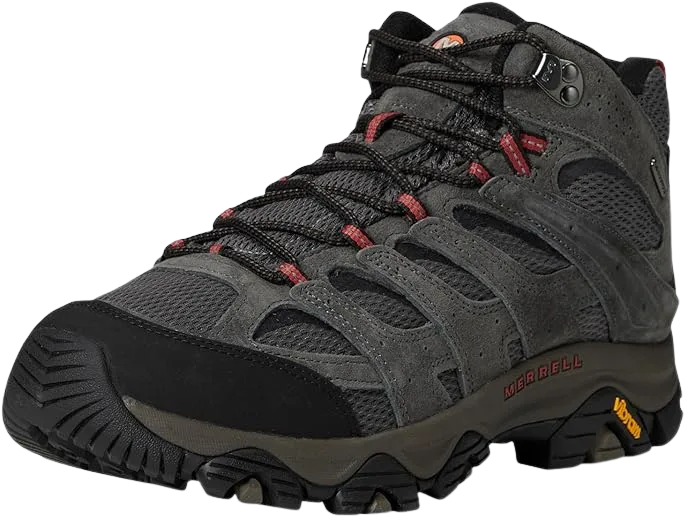
💰 Best Value: Merrell Moab 3 Mid Waterproof
The Merrell Moab 3 has sold more units than any hiking boot in the last decade, and that kind of volume doesn’t happen by accident. For PF sufferers watching their budget, it offers a compelling set of features at $145: a Merrell Air Cushion embedded in the heel for targeted shock absorption, an 11.5mm drop that ranks among the highest on this list for Achilles and fascia tension relief, and — most importantly — a fully removable insole that accommodates custom orthotics without modification. That last point matters more than any spec on the box. If a podiatrist has fitted you with custom orthotics for your plantar fasciitis, the Moab 3 accepts them cleanly, making it the most practical boot on this list for anyone with a prescribed orthotic solution. For more on whether a hiking boot insole upgrade is worth the investment, that guide breaks down the decision.
The Vibram TC5+ outsole provides solid traction that holds up across varied terrain, and the pig suede leather combined with breathable mesh upper delivers a comfortable, broken-in feel faster than most competitors. Available in Wide, the Moab 3 accommodates broader feet and the forefoot swelling that often accompanies PF throughout a long day on trail.
The limitations are straightforward. Arch support from the stock Moab 3 insole is moderate — it provides a gentle contour rather than the aggressive arch shaping found in the Oboz O-Fit insole. PF sufferers with flat feet or significant overpronation will likely need aftermarket insoles, which adds $30-40 to the effective price. The waterproof membrane is Merrell’s proprietary system, not GORE-TEX, and breathability suffers noticeably in summer heat. The suede and mesh upper also shows wear faster than the nubuck leather found on the Quest 4 or Sawtooth X, particularly on abrasive rocky terrain.
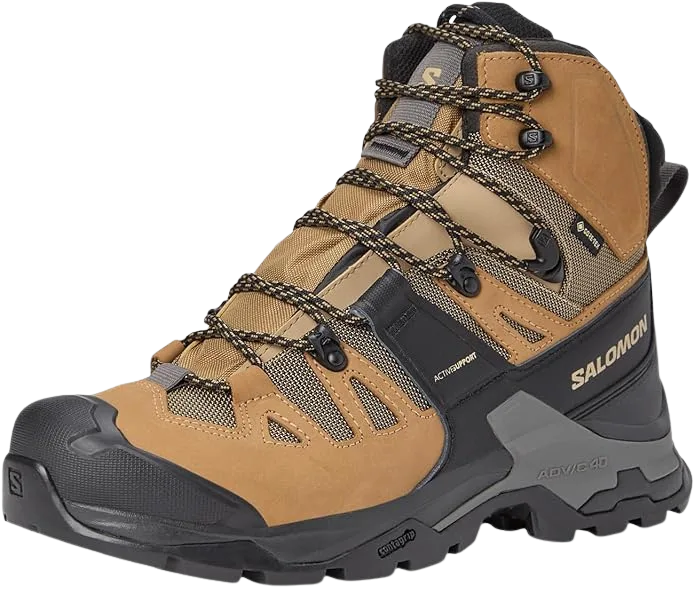
⬆️ Premium Upgrade: Salomon Quest 4 GTX
The Salomon Quest 4 GTX is built for a different kind of PF problem. Where the Hoka Kaha 3 addresses heel-strike pain with maximum cushioning, the Quest 4 addresses midfoot collapse with maximum structural support. Its TPU chassis and injected shank create a rigid platform between the midsole and outsole that physically prevents the midfoot from flattening under load — the exact mechanical failure that pulls the plantar fascia taut and triggers inflammation. If your PF flares when carrying a heavy pack rather than on unloaded day hikes, this distinction matters enormously.
The 12mm drop is the highest on this list, providing the most aggressive forward tilt for Achilles and fascia tension relief. The OrthoLite sockliner features an EVA-shaped footbed with a deep heel cup that stabilizes the calcaneus — the bone where the plantar fascia originates and where most PF pain concentrates. The nubuck leather and textile upper, paired with full GORE-TEX waterproofing, delivers the kind of durability and weather protection that multi-day backpackers demand. The dual-compound Contagrip outsole (MA for grip, MD for durability) handles everything from muddy switchbacks to rocky scrambles. If you’re planning extended trips, the foot care on a thru hike guide covers how to manage PF across consecutive high-mileage days.
The drawbacks are significant for casual hikers. At $230, the Quest 4 is the most expensive boot on this list — $85 more than the Moab 3 for capabilities that day hikers may never need. The nubuck leather requires 15-20 miles of break-in before it softens enough for comfort; wearing it straight out of the box on a long hike is a recipe for hot spots and blisters. (The break in hiking boots guide covers the proper process.) At 21 ounces per shoe, it’s the heaviest boot here, and the rigidity that makes it so supportive under heavy loads makes it feel stiff and overkill for a light daypack. It also lacks a Wide option, which excludes a segment of PF sufferers who need extra forefoot room.
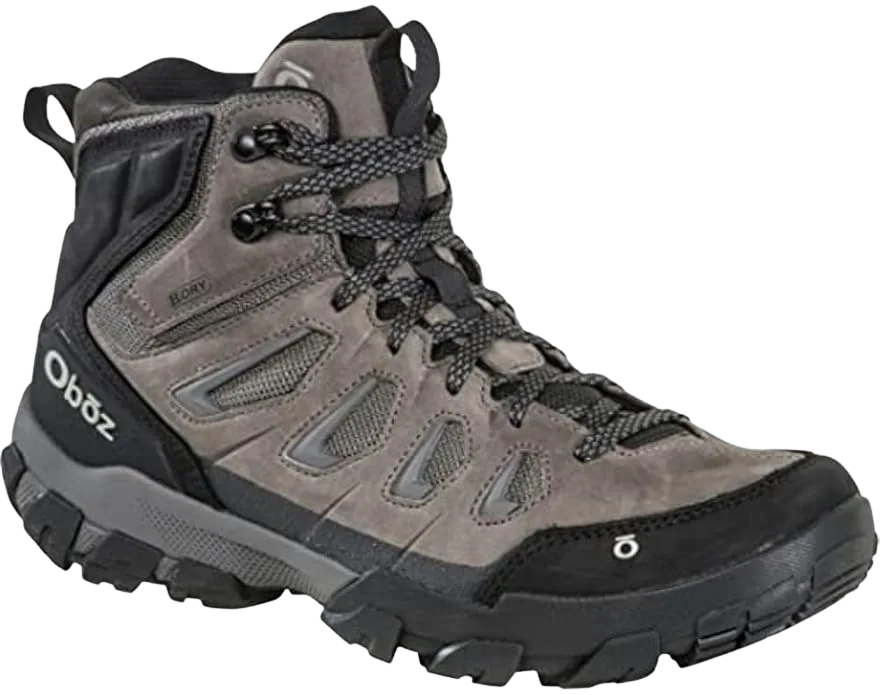
🎯 Best Arch Support: Oboz Sawtooth X Mid B-Dry
Most hiking boot manufacturers treat the insole as an afterthought — a flat piece of foam stamped into generic shape. Oboz takes the opposite approach. The O-Fit insole that ships inside the Sawtooth X Mid provides more aggressive arch support than any other stock insole in this lineup, with a medium-to-high arch contour and a deep heel cup that cradles the calcaneus. For PF sufferers whose condition stems from flat feet or fallen arches rather than pure heel-strike impact, this is a meaningful distinction. Verified user reviews consistently note that the O-Fit insole is good enough that many PF sufferers skip aftermarket insoles entirely — a claim no other boot on this list can make. For a deeper comparison of stock versus aftermarket options, see the best insoles for hiking boots guide.
The triple-density EVA midsole distributes pressure across the entire foot rather than concentrating it at the heel or forefoot, which reduces the localized loading that aggravates the plantar fascia. The oiled nubuck leather and CORDURA mesh upper provides a durable build that ages well on abrasive terrain, and the boot is available in Wide — a welcome option given that Oboz’s standard fit already runs slightly wider than Salomon’s. The removable O-Fit insole also means you can swap in custom orthotics if the stock support isn’t sufficient, though many users report it is.
The honest downsides: Oboz’s B-DRY waterproof membrane is not GORE-TEX, and the difference shows in both durability and breathability. In sustained rain, B-DRY keeps water out adequately, but feet run warmer than in GORE-TEX-equipped boots — a problem in summer conditions. The Trail Tread outsole handles dry and moderately wet terrain well but loses traction on wet rock and loose gravel compared to Vibram Megagrip or even Salomon’s Contagrip. At 20 ounces per shoe, the Sawtooth X matches the Hoka’s weight without matching the Hoka’s cushioning advantage. And the 8mm drop — while adequate — provides less Achilles relief than the 11-12mm drops found on the Salomon and Merrell options.
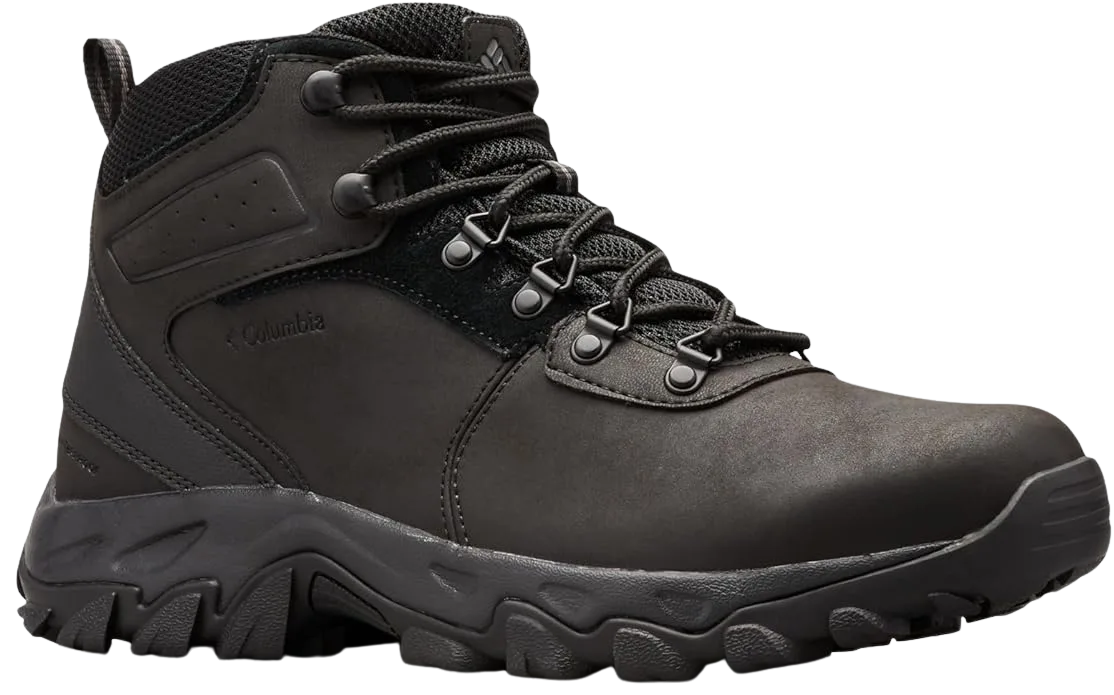
🎖️ Honorable Mention: Columbia Newton Ridge Plus II Waterproof
The Columbia Newton Ridge Plus II fills a specific gap: it’s the entry point for PF sufferers who aren’t ready to spend $180+ on a hiking boot but still need a functional platform for custom orthotics. At $75-100, it comes with a TECHLITE cushioned midsole for basic heel shock absorption, a removable insole that accepts aftermarket orthotics cleanly, and Omni-Tech seam-sealed waterproofing that handles light rain. Available in Wide. The catch — and it’s a real one — is that this is entry-level build quality. The PU-coated leather and mesh upper won’t last as long as the nubuck found on the Oboz or Quest 4. The Omni-Grip outsole loses traction on wet rock compared to any Vibram-equipped competitor. And the stock insole provides minimal arch support, meaning you should budget an extra $30-40 for aftermarket insoles like Superfeet Green or Powerstep Pinnacle. Even with that added cost, the total ($105-140) still undercuts every other boot on this list except the Moab 3.
How to Choose the Right Hiking Boot for Plantar Fasciitis
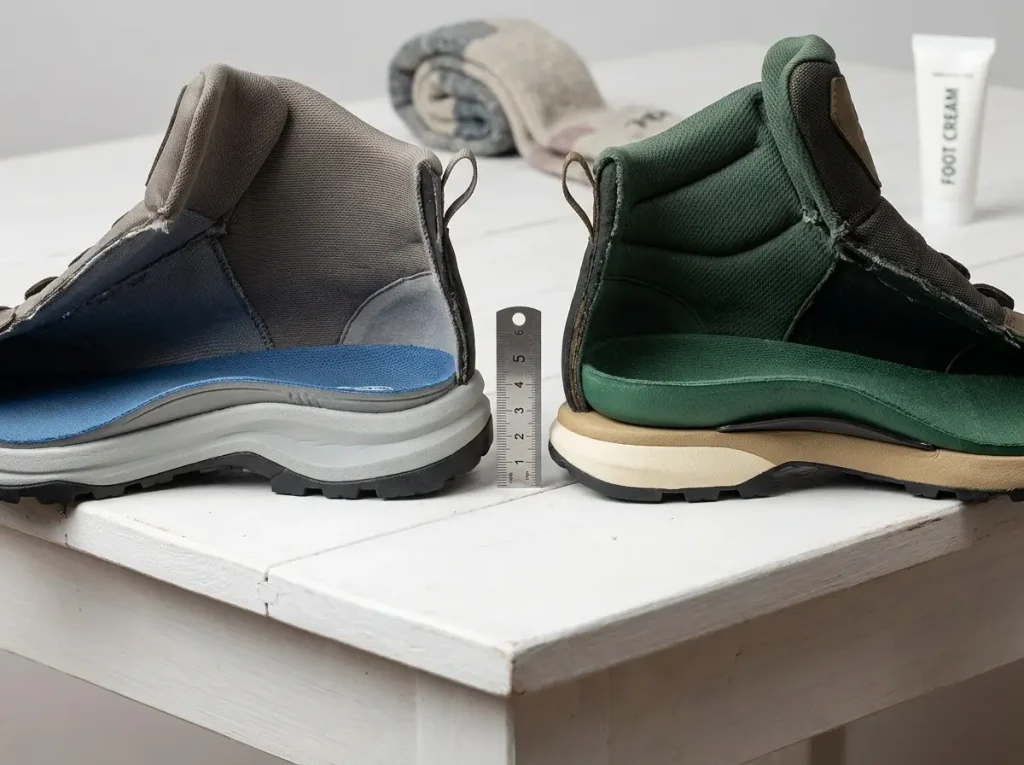
Plantar fasciitis manifests differently from person to person, and the right boot depends on which specific mechanical factors trigger your pain. Understanding these five variables will narrow your search faster than any recommendation list.
Heel cushioning and shock absorption are the first consideration for most PF sufferers. Each time the heel strikes the ground, force transmits directly through the calcaneus into the plantar fascia. Boots with thick, dual-density or triple-density EVA midsoles absorb a significant portion of that impact before it reaches inflamed tissue. If your PF pain is worst during the first steps of a hike or spikes on rocky downhills, prioritize cushioning above all else — the Hoka Kaha 3 leads this category by a wide margin. Lab-measured shock absorption scores (available through RunRepeat’s testing methodology) provide an objective basis for comparison when manufacturer claims get vague.
Arch support type matters as much as arch support quantity. A boot with a high arch contour can be wrong for a foot with a low arch — it creates pressure points on the medial midfoot rather than distributing load across the plantar fascia. PF sufferers with flat feet or severe overpronation need aggressive arch support (the Oboz Sawtooth X leads here), while those with neutral or high arches may find that a moderately contoured insole paired with adequate cushioning works better. The removable insole question is directly related: if a podiatrist has prescribed custom orthotics tailored to your specific arch profile, every boot on this list except the Salomon X Ultra 5 accommodates them — but the Merrell Moab 3 and Columbia Newton Ridge accept them most cleanly due to their deeper insole beds.
Heel-to-toe drop — the height difference between the heel stack and the forefoot stack — directly affects tension on the Achilles tendon and plantar fascia. A higher drop (10-12mm) tilts the foot forward, shortening the calf-Achilles chain and reducing the pull on the fascia at its calcaneal attachment point. Every boot on this list ranges from 8mm to 12mm, which falls within the therapeutic window that podiatrists generally recommend for PF management. The Salomon Quest 4 at 12mm provides the most aggressive relief; the Hoka Kaha 3 and Oboz Sawtooth X at 8mm provide the least (though their cushioning and arch support compensate through different mechanisms).
Fit, width, and toe room are non-negotiable. A boot that’s too tight in the forefoot forces the toes together, altering gait mechanics and increasing stress on the plantar fascia. PF-related swelling compounds this problem — feet often expand a half-size over the course of a long hike. Four of the six boots on this list (Salomon X Ultra 5, Merrell Moab 3, Oboz Sawtooth X, and Columbia Newton Ridge) offer dedicated Wide versions. For those in standard width, consider when to size up hiking footwear to accommodate swelling without sacrificing heel lockdown.
Break-in period is a practical concern that interacts with PF in ways hikers don’t always anticipate. A stiff, un-broken-in boot forces the foot to work harder with each step, increasing the load on already-inflamed fascia. Boots with EVA-dominant construction (Hoka, Merrell, Oboz) typically require minimal break-in. Leather-heavy boots like the Salomon Quest 4 need 15-20 miles before the upper softens enough for comfortable all-day wear. Planning that break-in period — short walks, gradually increasing distance — prevents a new boot from triggering a PF flare-up during what should have been a recovery phase.
Conclusion
For most plantar fasciitis sufferers, the Hoka Kaha 3 GTX is the strongest all-around choice. Its shock absorption score leads the field, the dual-density midsole addresses heel-strike pain directly, and the Achilles-friendly collar avoids compounding the problem. The weight and price are real costs, but for a condition where every step matters, the Kaha 3 earns its position.
That said, PF is not a single condition with a single solution. If your pain stems from arch collapse rather than heel impact, the Oboz Sawtooth X Mid B-Dry and its O-Fit insole provide better targeted support. If you need a lightweight boot for fast hiking, the Salomon X Ultra 5 Mid GTX cuts weight without sacrificing heel lockdown. If you already use custom orthotics and want a proven, affordable shell for them, the Merrell Moab 3 Mid Waterproof is the practical choice. If you carry heavy packs and need a boot that prevents your entire foot structure from collapsing under load, the Salomon Quest 4 GTX is worth the investment and the break-in. And if budget is the primary constraint, the Columbia Newton Ridge Plus II paired with aftermarket insoles gets the job done at half the price. Match the boot to your specific PF triggers, not to a generic “best” label, and your feet will thank you on the trail.
Risk Disclaimer: Hiking, trekking, backpacking, and all related outdoor activities involve inherent
risks which may result in serious injury, illness, or death. The information provided on The Hiking Tribe is for
educational and informational purposes only. While we strive for accuracy, information on trails, gear, techniques,
and safety is not a substitute for your own best judgment and thorough preparation. Trail conditions, weather, and
other environmental factors change rapidly and may differ from what is described on this site. Always check with
official sources like park services for the most current alerts and conditions. Never undertake a hike beyond your
abilities and always be prepared for the unexpected. By using this website, you agree that you are solely
responsible for your own safety. Any reliance you place on our content is strictly at your own risk, and you assume
all liability for your actions and decisions in the outdoors. The Hiking Tribe and its authors will not be held
liable for any injury, damage, or loss sustained in connection with the use of the information herein.
Affiliate Disclosure: We are a participant in the Amazon Services LLC Associates Program, an
affiliate advertising program designed to provide a means for us to earn advertising fees by advertising and linking
to Amazon.com. As an Amazon Associate, we earn from qualifying purchases. We are also an official affiliate partner
of Black Diamond Equipment via the AvantLink network. If you click on a Black Diamond affiliate link and make a
purchase, we may earn a commission at no additional cost to you. We also participate in other affiliate programs and
may receive a commission on products purchased through our links. Additional terms are found in the terms of
service.