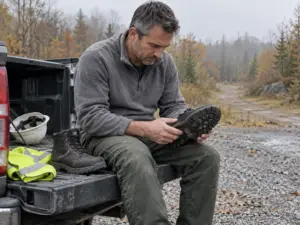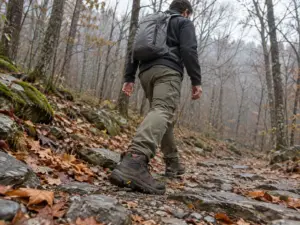
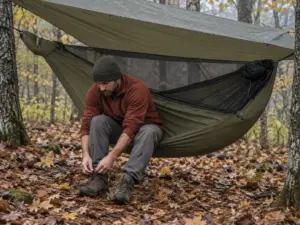
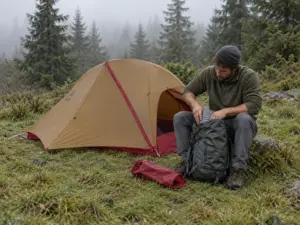
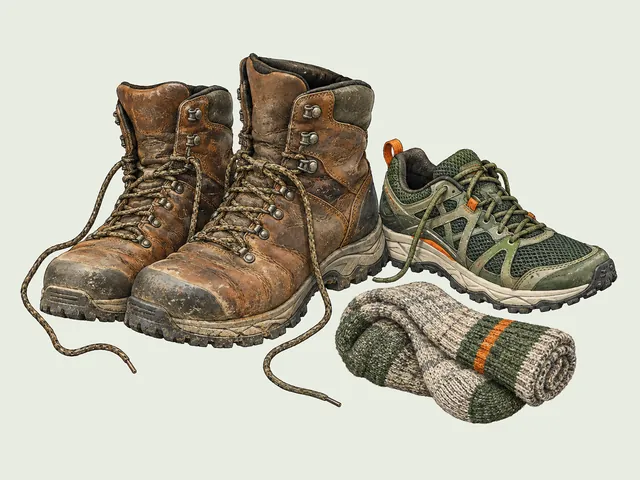
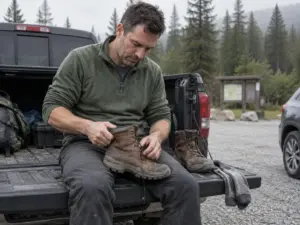











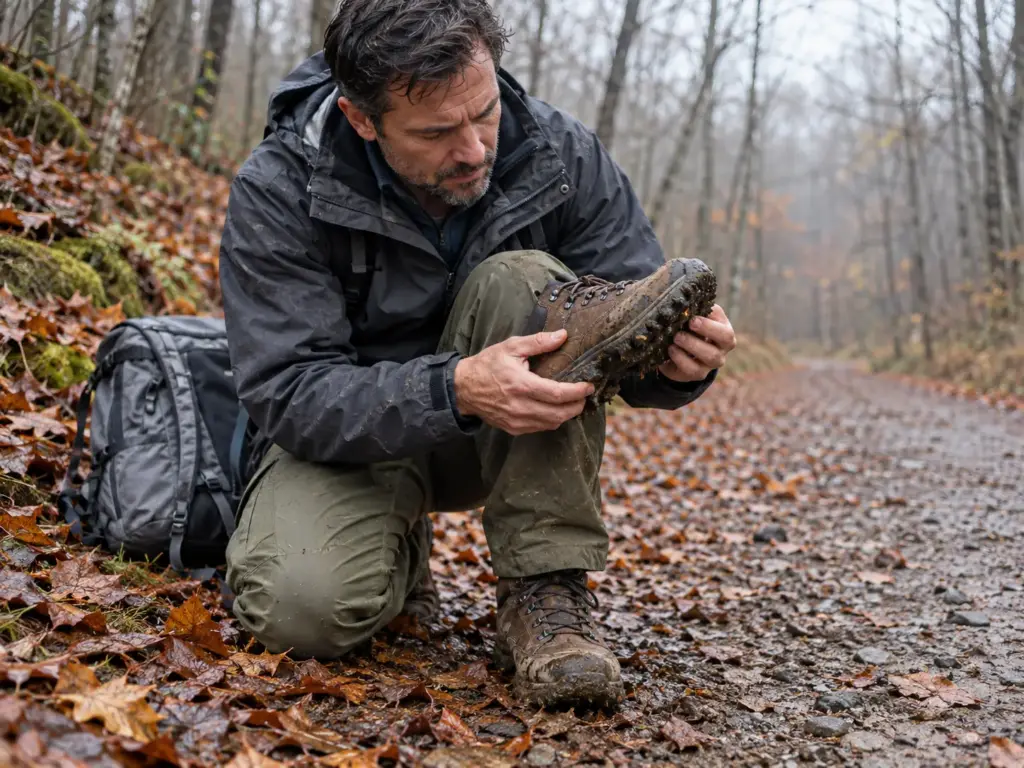
You are six miles into a wet trail when the toe of your sole starts to flap on every step, and the mud has decided it wants the rest. One r/Boots commenter, jeebus2002, describes the same kind of week: “3 boots died in a week having their soles ripped off in sucking mud.” He moved to welted soles after that and says he keeps cemented pairs for light use, never off carpet. Boot forums keep having this argument, and Goodyear welt vs cemented matters more on a trail than it ever does in a shoe shop.
Below: how each sole is attached, what resoling really buys, where water gets in (the people who argue about it do not agree), what mud does to each, and how to check a boot before you pay.
Here is the short version before the detail.
| Question | Goodyear welt | Cemented |
|---|---|---|
| How the sole attaches | Outsole stitched to a welt strip, never to the upper | Sole bonded with adhesive, no stitching |
| When the sole wears out | A cobbler can swap the outsole and keep the upper | Usually the end of the boot once the bond separates |
| Out of the box | Heavier and stiffer; one maker puts break-in at 2 to 4 weeks | Lighter and more flexible |
| Water | Disputed (see the water section below) | Depends on the glue line; no independent test found |
| Best for | Boots you plan to resole and keep for years | Lighter weight and a shorter service life |
Goodyear Welt vs Cemented Boots: How Each Sole Stays On
Start from the one thing you can picture: what holds the sole on. A salesperson says “Goodyear welted,” a forum says “cemented,” and neither tells you what it looks like from the inside.
A Welt Stitches the Sole to a Strip, Not to the Boot
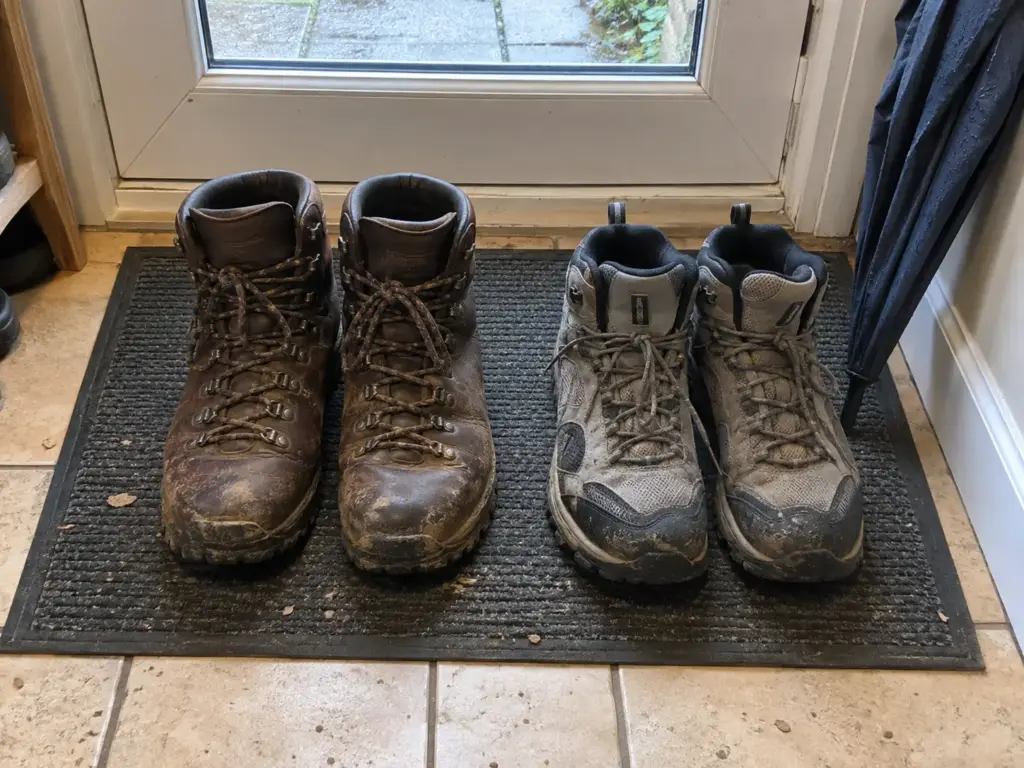
In a Goodyear welt boot, a strip of material (the welt) runs around the edge of the upper, and the outsole is stitched to that strip. The outsole never gets sewn to the upper itself. Milwaukee Boot Company, a boot maker, also describes a cork footbed inside that molds to your foot over time, held in place by inseam stitching. Forums shorten the whole thing to “GYW” and call a sole a cobbler can replace “resolable.”
That detail is the whole point. Because the sole hangs off the welt and not the upper, it can be taken off without taking the boot apart. If you want the full picture of the layers above and below that stitch line, here is how the rest of the sole stack fits together.
Cemented Means Glue and Nothing Else
A cemented boot has its sole bonded on with industrial adhesive. No stitching. That cemented construction is why so many boots are light and soft the day you open the box. One r/Boots user, patina_and_progress, sums up the trade: cemented is “lighter, more flexible out of the box, and can feel more ‘sporty’,” while welted is “heavier and stiffer at first, but it holds up way longer and can be resoled multiple times.”
For a hiker the label matters less than what happens when the sole wears out, or lets go. The next two sections take those one at a time.
What a Goodyear Welt Buys You: Resoling and Years of Wear
Picture a muddy season that grinds your lugs flat. On a welted boot the fix is a new outsole. On a cemented boot the fix is often a new boot. That is the entire sales pitch, and it deserves a straight look at what you pay for it.
The Outsole Swaps, the Upper Stays
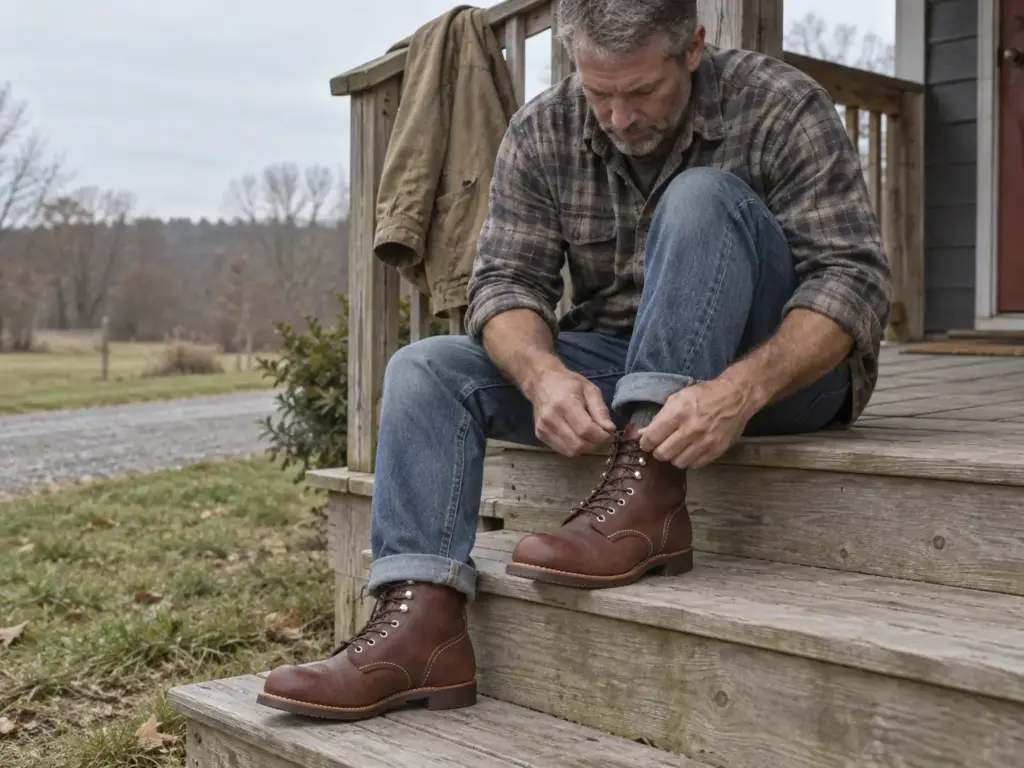
Since the outsole is stitched to the welt, a cobbler can cut the old one off and fit a new one while the leather upper stays put. The same maker says a welted boot “can be resoled 3 to 5 times and worn for 20+ years.” That is brand copy, not a measurement, so treat it as the ceiling for a well-kept boot rather than a promise on lifespan.
To see what a welted boot looks like in practice, take the Red Wing Heritage Iron Ranger 8111 (men’s · women’s). Be clear on what this is: a heritage work boot, not a hiking boot, and it is here only as an example of the construction, not as a trail recommendation. According to the Amazon listing text, the men’s version is Goodyear welted, with a Vibram 430 Mini-Lug outsole and full-grain leather. The women’s boot is sold as a separate listing whose own page does not confirm the welt, so the welt claim here is for the men’s boot only.
Whether a welted sole is worth the extra cost over its life is its own math, covered in what resoling a hiking boot actually costs.
The Trade-Off Is Weight and a Slow Break-In
A welted boot arrives heavier and stiffer. Milwaukee Boot Company puts the break-in period for a Goodyear welt at 2 to 4 weeks, against cemented boots that feel comfortable sooner. Again, that is the maker’s own number. Your feet will have their own opinion.
Do not save a new welted boot for the big trip. If the maker’s break-in range is 2 to 4 weeks, you want those weeks on short walks and errands, not on mile eight of a long day with a pack on.
There is a second catch, and a commenter named warmfridge raises it: on work boots, the leather upper often wears through in a year or two, before the sole does. Resoling does not rescue a dead upper. A welt buys you a replaceable sole, not an immortal boot.
Cemented Boots: Light and Flexible Until the Glue Lets Go
Name the mistake first: a cheap cemented boot on the wettest 12 miles of your season. Then be fair about why people keep buying cemented boots anyway.

Why Cemented Boots Feel Better Out of the Box
They are lighter, they have more flexibility from day one, and you do not spend a month negotiating with them. Those are real advantages on a long day, not marketing. BooksBootsBikesBeer, in the same r/Boots thread, says he owns about 20 pairs of Goodyear-welted boots and shoes and still wears cemented boots “for certain kinds of hiking.” A person with that many welted pairs picking cemented for some trips tells you the choice depends on the trip, not on a winner.
When the Bond Fails, the Boot Usually Goes With It
Here is the cost. Milwaukee Boot Company says cemented boots “are often discarded when the sole separates.” Once the glue lets go there is nothing to restitch, so sole separation usually ends the boot.
That is what makes the jeebus2002 story land: three boots in a week, soles ripped off in sucking mud. One detail to keep straight, because he does not give it: the thread never says what construction those three boots had. He says they failed, and that he moved to welted afterward. That is all anyone can say.
The failure may also belong to the glue and not to the method. Gooseenthusiast56 says “a lot of companies use cheap cementing that doesn’t hold up.” A bond is only as good as the maker’s process, which is why asking the maker how the bond is made is worth more than reading the word “cemented” on a tag.
There is also a counterpoint, and it comes from a single commenter. DestructablePinata says his cemented Asolo 520s are resolable and “easy to treat,” which cuts against the flat line that a cemented boot cannot be resoled. Take it as one report, not a rule.
Now the honest gap. No source says whether a local cobbler will take a cemented boot, and none offers an on-trail fix for a sole that separates mid-hike. There is no tidy answer to give you, and inventing one would be worse than leaving it open. What you can do is catch the problem early, and the press test for worn-out hiking shoes is a good place to start.
Stitchdown, Blake and Fused Soles: The Third Option on Trail Boots
Welt versus cement is not the whole menu. Boot forums list at least three more methods, and hiking brands use some of them.
Stitchdown Turns the Boot’s Own Flange Into a Storm Welt
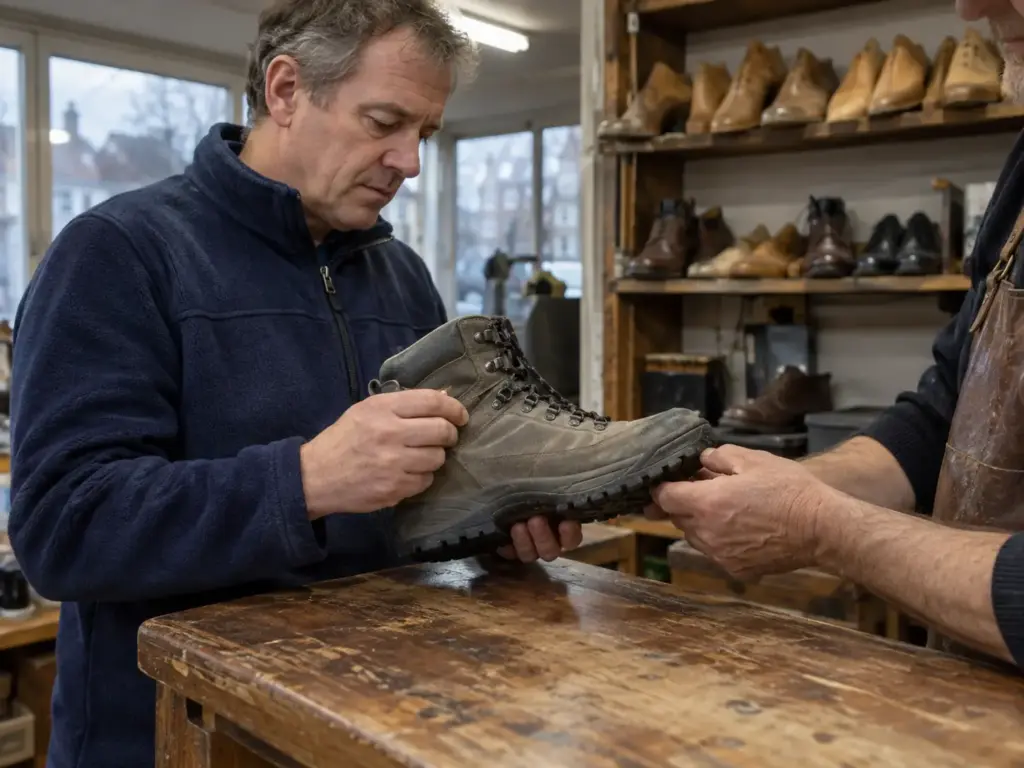
In a stitchdown boot, the upper is flared outward and stitched straight down to a lip of the insole, called the runner. The Footwear Edge, a footwear-construction site, says that flange “acts like a natural storm welt,” so the boot’s own leather forms the barrier at the sole edge and no separate welt strip is needed. The same page names Red Wing, Tricker’s and Viberg as makers using it for work and hiking boots.
On r/Boots, hellcat1592 says Jim Green boots are stitchdown and Russell moc toes are McKay/Blake, and that both are lighter and more flexible than welted but allow fewer resoles. If you want to see what resoleable leather hiking boots look like before you decide, resoleable leather hiking boots is where to browse.
Blake, McKay and Fused Soles: Lighter, With Fewer Resoles
Blake stitch sews the sole through to the insole with a single line of stitching. It makes a slimmer, lighter boot. Milwaukee Boot Company says resoling “is possible but requires a specialist,” and the Stridewise and Feit guides say it needs a specific machine. The practical rule is simple: ask a cobbler before you buy a Blake boot. No source explains how to locate one, so that part is legwork.
Then there are fused or molded soles. This fused construction is also sold as injection molding or a direct-attach sole. KEEN describes its own method, KEEN.FUSION, as a heat-and-pressure bond on its FAQ page. That is brand copy, and worth reading as such.
One r/Boots commenter, SikeShay, argues a molded bond “should necessarily be watertight compared to any stitched method.” That is an opinion, not a test. It may be right. Nobody has shown it.
Where Water Gets Into a Boot: Welt Holes, the Sole Edge or the Glue Line
Everyone repeats that a welt is waterproof. The people who actually argue about boot construction do not agree, and no one has settled it. So here is the argument, laid out, followed by what to do about it.
The Claim That Stitch Holes Let Water In
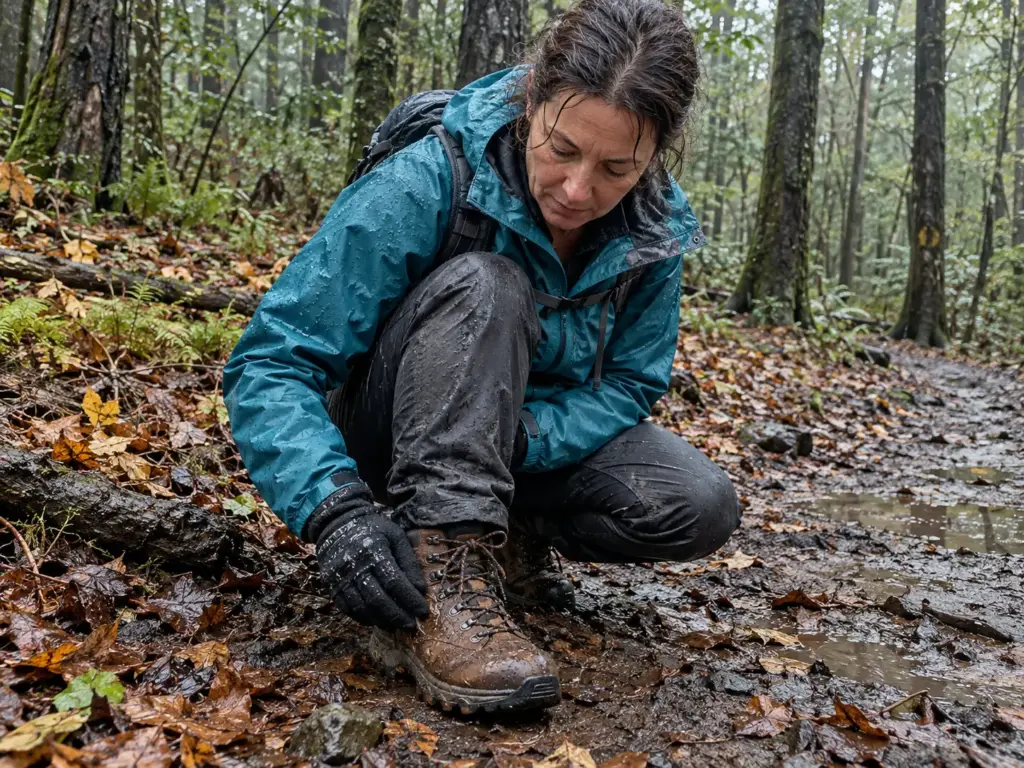
Wyvern_Industrious says the holes under a welted sole let water in more easily, which is why he says hiking boots use stitchdown or cemented soles. Voeld123 replies with a complication: some welted shoes stitch only the midsole and cement the outsole, so “welted” on the tag does not tell you what is actually stitched to what.
The Counter-Claim: Water Comes From the Sole Edge and the Upper
Shoegazing, a shoe blog, says the opposite. On a welted shoe, the sole stitch goes through the outsole and into the welt, on the outside of the shoe, so it does not open a path into the boot. Water gets in through the sides, between the sole edge and the upper, which a storm welt is built to prevent. Most of the water, the blog says, comes in through the upper.
Milwaukee Boot Company adds a third angle. It calls a Blake boot’s single stitch line a potential entry point in heavy rain, and says a cemented boot depends on its glue line. Three sources, three different weak points: the sole edge, the stitch channel, the glue line.
Here is the part I will not fudge: no independent test of welted against cemented water entry turned up in the research. Luxpreliator, in the r/Boots thread, says he “can’t find any reference that agrees with plain cemented being generally more water resistant” than welted. That is an absence of evidence, not a result.
What a Waterproof Test Actually Measures
SATRA, the footwear testing lab, tests a boot as a whole in a flex tank. Its bulletin says whole-boot water resistance depends on membranes (Gore-Tex is the familiar one), seam sealing and avoiding wicking paths from the outside to the lining. “Waterproof” is a result for the entire boot, not a property of the sole alone.
When a seller says a boot is waterproof, ask which part of the boot that applies to. The honest answer names the membrane and the seam sealing. If all you get is the sole construction, you have learned how it is attached, not how it keeps water out.
My read, as opinion: for a wet trail, the membrane, the leather treatment and the condition of the sole edge matter more than whether the label says welted or cemented. If you rely on leather and treatment to keep water out, how wax and spray waterproofing compare is the next thing to read.
How Each Construction Behaves in Mud and on a Long Trail Day
Be clear about what this section is. There is no test data here on how each construction behaves on a long, muddy descent with a pack on. What follows is the pattern boot-forum veterans repeat, plus flat craft judgment.

Mud and Wet Approaches Test the Bond First
Mud pulls hardest at the edge of the sole. Go back to jeebus2002 and his three boots. Yet BooksBootsBikesBeer, with about 20 welted pairs, still wears cemented boots for some hiking, so mud is not an automatic verdict on cemented soles.
A good bond holds. A cheap one does not, and you often cannot tell which you have until the trail tells you.
My rule, and it is an opinion: before a wet, muddy trip, check the sole edge of any cemented boot for gaps or lifting. A bond that has started to open will not close itself on the trail.
Run a fingertip slowly around the full edge of the sole, toe to heel, the night before a wet trip. A gap you can feel at home is a gap that will be wider after six miles of mud.
Stiffness, Pack Weight and the Sole You Actually Need
Construction changes how a sole feels. A welted boot is heavier and stiffer at first, which helps under a loaded pack and costs you on a light day. DestructablePinata calls his cemented Asolo 520 “lighter” than a stitchdown boot, with better shock absorption. Weight and cushioning are the cemented case for long days, and a fair one.
Grip is a separate question. The outsole rubber grips wet rock, not the way the sole is attached. And remember warmfridge’s warning: a welted sole can outlast a thin upper on abrasive rock, so the upper may decide the boot’s life. The loaded-pack question belongs with terrain, and how much boot stiffness your terrain calls for answers it.
How to Tell Which Construction Your Boots Have
The hang tag rarely says. A veteran asks the maker and looks at the sole edge.
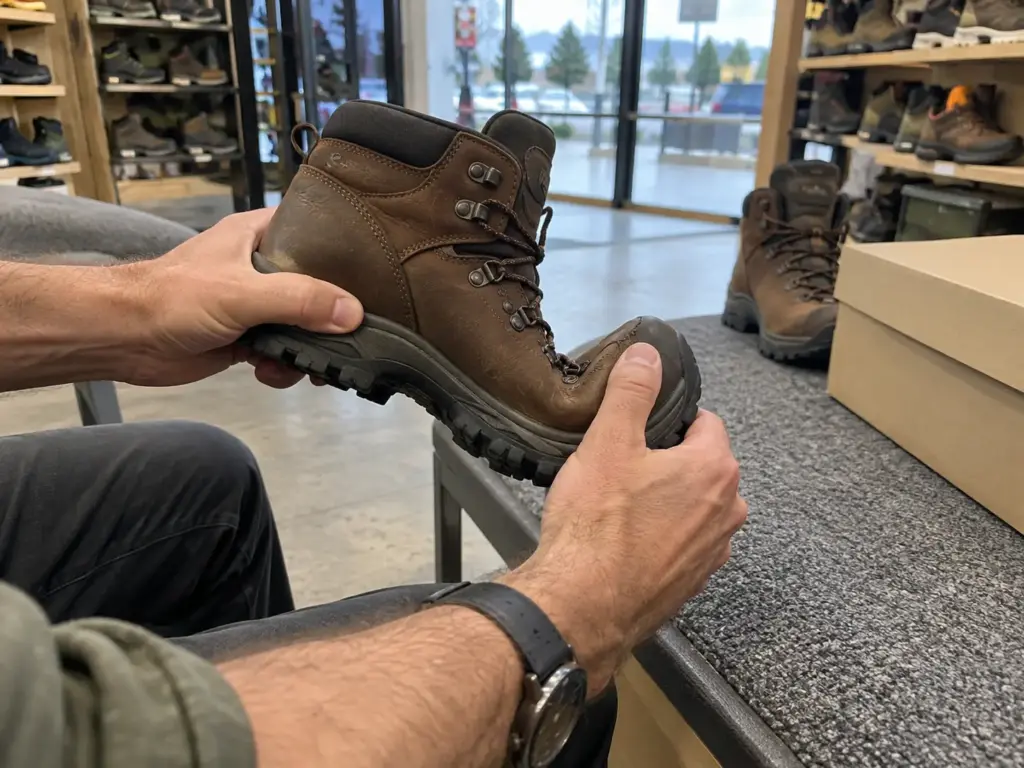
Start with the edge. On a welted shoe, the sole stitch goes through the outsole into the welt, on the outside of the shoe, so a visible stitch row is the cue. But cobbler guides warn that some makers sew decorative stitching onto a glued sole (fake stitching), so a stitch row alone is not proof.
The reliable answer is the maker’s spec sheet, or a direct question: is the outsole stitched or glued, and can it be resoled? Brands that resole will say so.
Ask a local cobbler whether they will take the boot before you buy it, and ask twice if it is a Blake boot, which needs a specialist. A cobbler who shrugs at the question just answered it for you.
One limit worth stating: this article cannot tell you what is inside your specific boot, and it makes no claim about how any particular hiking boot you own is built. The maker can.
Welt or Cemented: Match the Boot to Your Trail
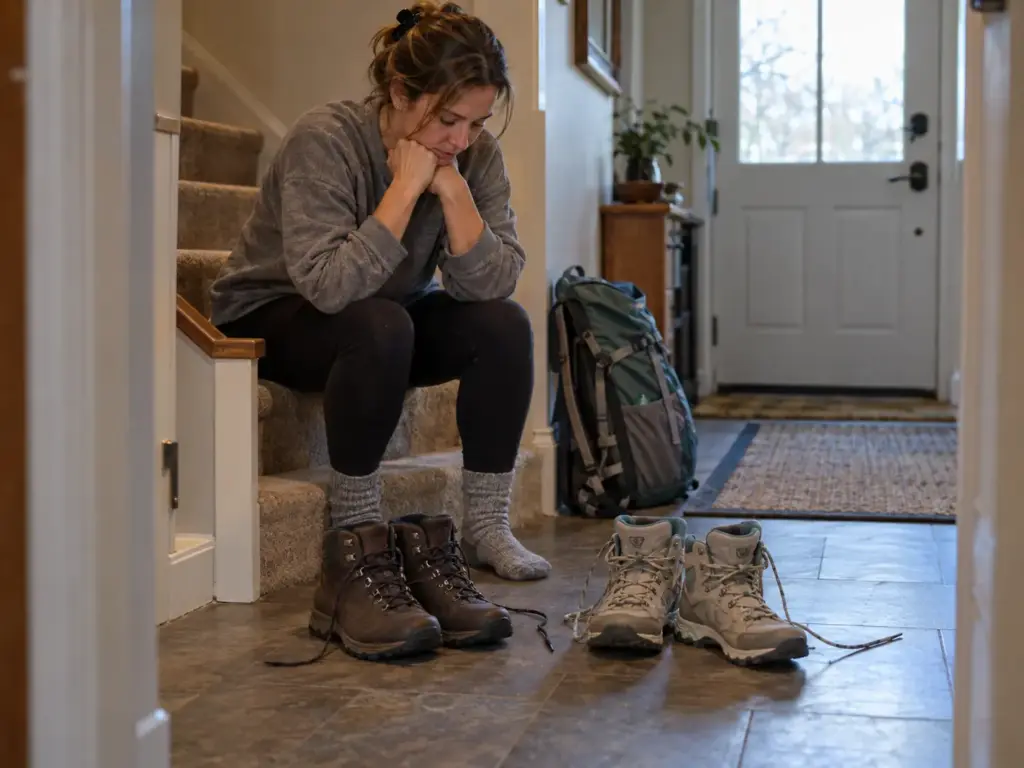
If you plan to resole, buy welted. If you want light and soft, buy cemented and accept the shelf life. If you cannot decide, ask the maker and the cobbler.
When Cemented Is the Smarter Buy
Cemented fits lighter, shorter-lived use, and anyone who wants a boot that is soft on day one. Accept the deal: once the bond fails, the boot is usually done.
That is not a flaw to be angry about later. It is the price of the weight savings. Deciding when a boot has crossed that line, and when it is worth repairing instead, is covered in when to replace hiking gear instead of repairing it.
When a Welted Boot Pays Off
Welted fits anyone who wants to keep one pair for years and is willing to carry the weight and sit through the break-in. Remember the catch: the upper may wear out first. And if you like the idea of a storm-welt design without a separate welt strip, stitchdown is worth asking about. Whichever way you lean, the pick still starts with terrain and fit, which is what how to choose a hiking boot by terrain, height and fit walks through.
Check the Sole Edge Before Your Next Muddy Trip
Three things to carry out of this:
- A welt means a cobbler can swap the outsole. Cemented means the bond decides the boot’s life.
- Nobody has shown that one construction keeps water out better, so judge the boot as a whole.
- Ask the maker how the sole is attached, and whether a cobbler will take it, before you pay.
Before your next muddy trip, run a finger around the sole edge of the boots you already own and look for gaps. Write down how each pair is attached while you are at it. That note will make your next purchase a much shorter conversation.
Frequently Asked Questions
01Should I get welted or cemented boots?
Get welted if you want to resole one pair for years and can live with a stiffer, heavier boot at first. Get cemented if you want a lighter, softer boot and accept that it is usually done once the sole separates. On a muddy trail, check the sole edge of either one first.
02How do you tell if a boot has a Goodyear welt?
Look for a stitch row running through the outsole at the sole edge, then confirm with the maker’s spec sheet. Some glued soles carry decorative stitching, so a stitch row alone is not proof. Ask whether the outsole is stitched or glued and whether it can be resoled.
03What is the main difference between Blake stitch and Goodyear welt?
Blake sews the sole straight through to the insole with a single stitch line, which keeps the boot lighter and slimmer. Goodyear welt adds a welt strip, so the outsole is stitched to the strip and is easier to swap. Resoling a Blake boot needs a specialist.
04Can cemented boots be resoled?
Often not, and a separated sole usually ends the boot. One r/Boots commenter reports his cemented Asolo 520s are resolable, so ask the maker before you assume either way. A local cobbler can tell you whether your pair is worth the attempt.
05Are welted boots more waterproof than cemented ones?
The people who argue about it disagree, and no independent test was found. Waterproofing depends on the whole boot (membrane, seam sealing, sole edge), not on how the sole is attached alone. Judge the boot as a unit.

I've spent more than a decade researching hiking gear and trail technique. I read the specs, the forum threads and the long-term reviews, and every pick here comes with what it gets wrong.
End of the trail
You read every mile of this one. Here's where the trail goes next.