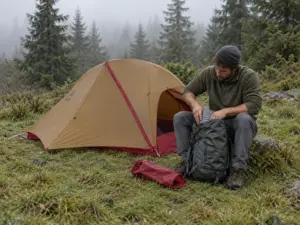









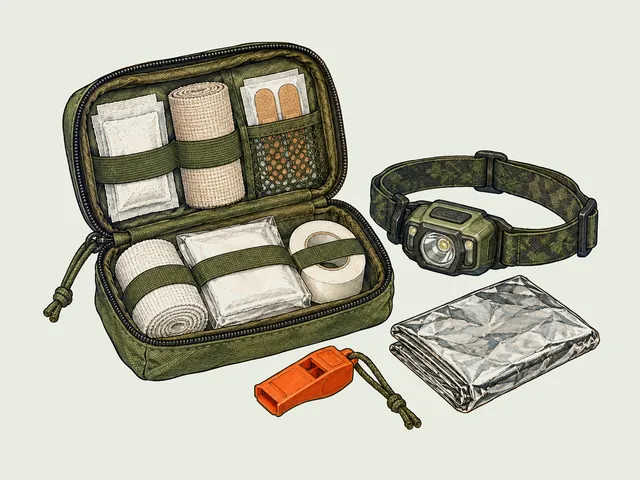



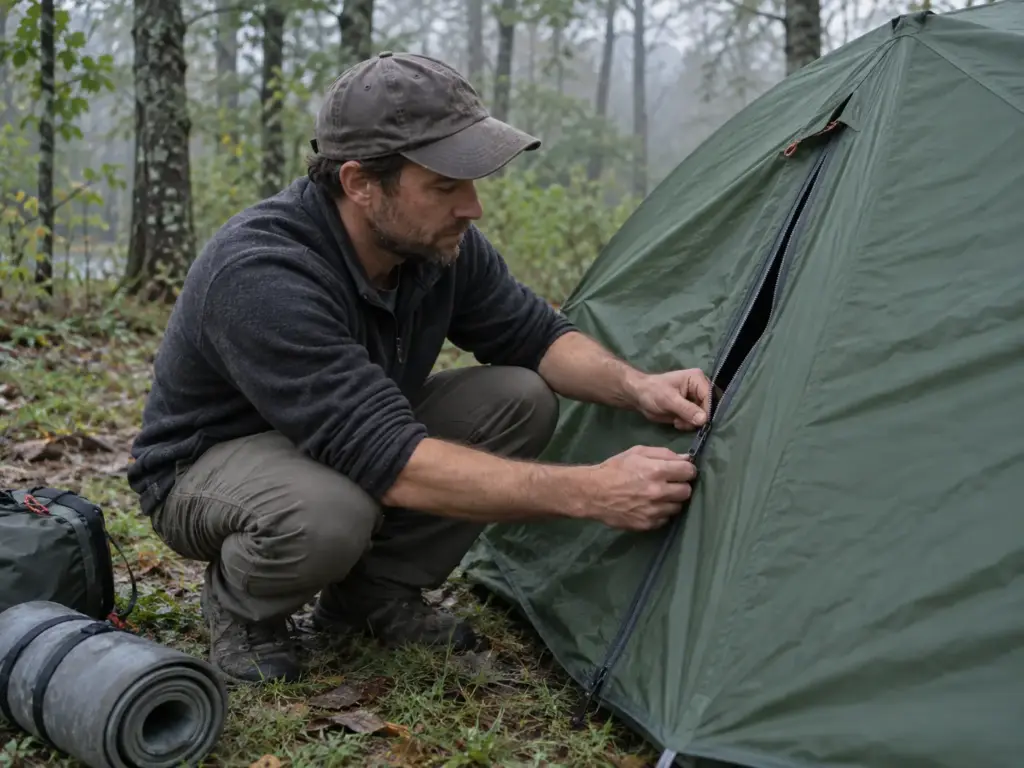
It’s 9 p.m., the first drops are tapping the fly, and your tent door closes for a few inches behind the slider, then peels open again while the mosquitoes file in. Before you repair a tent zipper, you need to know which of three things it’s doing, because a worn slider, a gritty track and a snagged door each want a different fix. What follows pulls from NOLS and the Washington Trails Association, from the tent makers’ own repair notes, and from what campers on r/CampingGear, BackpackingLight and Mountain Project say actually holds. You’ll get a 60-second diagnosis, then the fixes in the order you can do them (pliers at camp tonight, clean and lube, a slider replacement at home), what to do if nothing holds before dark, and how to keep it from happening again.
How to Repair a Tent Zipper Starts With Finding the Real Problem
Here’s where people go wrong: they scrub and lube a zipper whose slider is simply worn out, then wonder why it splits again ten minutes later. A clean track won’t save a tired slider, and a new slider won’t fix a door with mesh caught in the teeth. Spend one minute watching what the zipper does before you reach for anything.
Closes in Front, Splits Behind
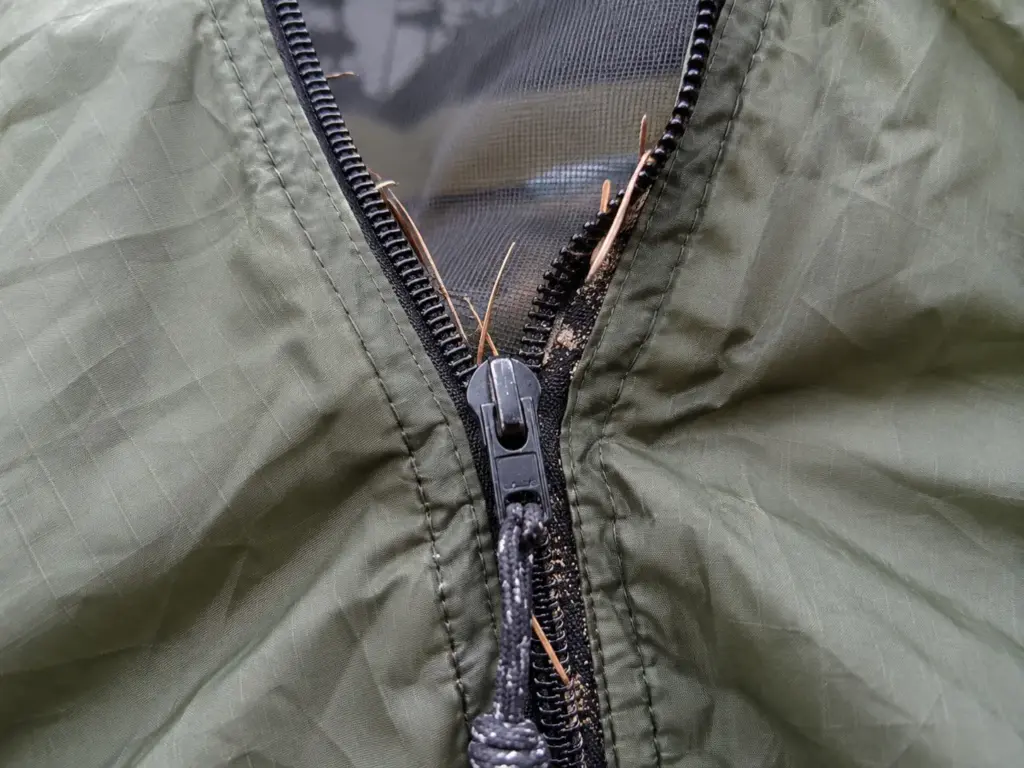
This is the classic failure, and it’s almost never the teeth. The zipper slider works like a pair of jaws that press the two rows of teeth together as it travels. NOLS and the Washington Trails Association both point to the same culprit: with use, those jaws open up until the slider can no longer compress the interlocking zipper teeth. When a zipper separates behind the pull like this, it looks closed in front of the slider and gapes open behind it.
The tell is in your fingers. A spread slider runs too easily, almost loose, with none of the faint resistance you feel when the teeth properly mesh. Cleaning will not fix it. Tension will.
Sticky or Stuck Usually Means Grit or Snagged Fabric
A zipper that drags, catches or needs two hands is usually telling you about dirt, not wear. NEMO and Rugged Thread both trace a sticky zipper to grit and old residue packed into the zipper track. That’s a cleaning job.
A pull that stops dead is a different story.
Usually the door fabric or the no-see-um mesh has folded into the teeth. REI’s advice is simply not to force it, and one r/CampingGear commenter put the common mistake well: people yank the tab like they’re starting a lawn mower. Back the slider off a quarter inch, tease the fabric out with a fingernail, and try again slowly. Yanking is how a snag turns into a tear.
Bent Teeth and Torn Stitching
If the pull moves but the two sides simply refuse to mesh, look closer at the teeth. On a nylon zipper coil (what most tents use), a kinked section can sometimes be coaxed straight with your fingers. A damaged coil with missing teeth is a bigger job, and that usually means a shop or a new zipper.
The sneakiest failure isn’t the zipper at all. In one r/CampingGear thread, the “broken zipper” turned out to be the seam between the mesh and the zipper tape ripping open beside a perfectly healthy zipper. Check that seam before you blame the slider.
| What the zipper does | Most likely cause | First fix to try |
|---|---|---|
| Closes, then splits open behind the slider | Worn slider, jaws spread | Pliers squeeze (temporary), then replace the slider |
| Sticks or drags | Grit, dried lube or snagged fabric | Clean the track, free the fabric, lube lightly |
| Pull moves but teeth don’t meet | Bent or missing teeth | Realign the track gently; if teeth are gone, send it to a pro |
| Open seam beside the zipper tape | Stitching failed, not the zipper | Patch or restitch the seam |
Clean and Lube the Track Without Making It Worse
The stub of candle that frees your zipper tonight is often the thing that gums it up by next month. Lube helps, but only on a clean track, and only in a thin film. Get the order right and a sticky door goes back to running like new.
Brush the Track Clean First
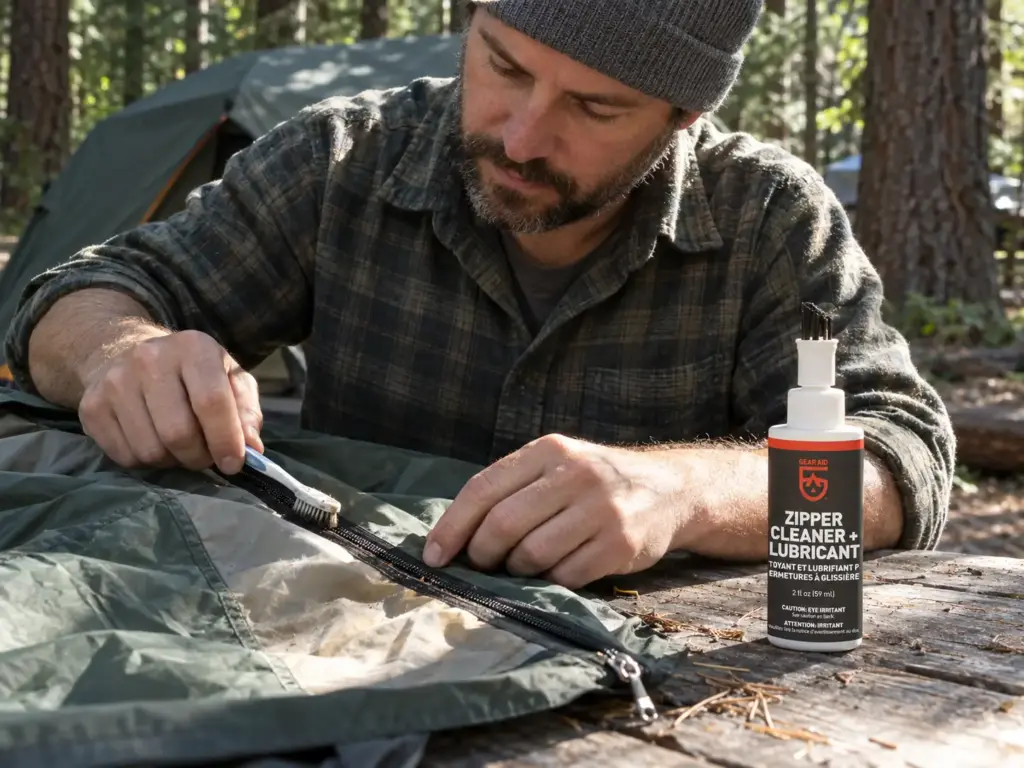
Open the zipper all the way so both rows of teeth are exposed. Scrub each side with a stiff toothbrush dipped in warm, soapy water, working along the teeth and into the gap where the coil is stitched to the tape. Run the slider up and down a few times while it’s wet to flush grit out of its jaws, then rinse with clean water and let the whole door dry before you pack it.
NEMO recommends the same stiff-toothed brush, followed by a dedicated zipper cleaner or a silicone spray once the track is clean. Two pieces of our own advice that you won’t find in a manufacturer’s manual: after a beach or desert trip, rinse the track with fresh water before the sand and salt crystals set like sandpaper, and if you hit a frozen zipper on a cold morning, warm the slider in your closed hand for a minute instead of forcing it.
Wax, Soap, Silicone or a Dedicated Cleaner
In the field you’ve got three free options: an unscented candle (just a candle stub), a sliver of bar soap, or a lump of beeswax. Rub it along both sides of the teeth, work the pull back and forth a handful of times, and wipe off whatever builds up. REI’s tent-repair advice adds that candle wax should be cleaned off once you’re home, which tells you how its makers think about it: a trail fix, not a maintenance plan.
At home, the cleaner choices are a silicone spray or a cleaner-lube made for the job. Here’s how they stack up, qualitatively, since nobody has put them through a lab comparison:
- Candle wax or beeswax: the best glide per gram you carry, but it holds onto grit and builds up in the slider.
- Bar soap: decent glide, washes out easily, wears off fast in rain.
- Silicone spray: slick and long-lasting; spray it onto a brush or rag, never straight onto the tent fabric.
- Dedicated cleaner-lube: cleans and lubes in one pass, and leaves the least residue.
The GEAR AID Zipper Cleaner and Lubricant is the dedicated option NEMO points to, and the little 2 fl oz bottle lives happily in a repair kit. If you’d rather have a can in the garage for tents, packs and sleeping bags, the WD-40 Specialist Silicone Lubricant with the Smart Straw is the budget-friendly silicone route. Spray a short burst onto an old toothbrush and work it into the teeth, so you’re not misting silicone across your fly.
The Lube Trap Nobody Mentions
Wax, beeswax, candle and lip balm all make a zipper glide. They also all attract dirt. Blissful Hiker calls heavy waxing a big mistake for exactly that reason, and the pattern shows up again and again among campers: the zipper runs beautifully for a weekend, then the sticky film picks up trail dust, the dust packs into the slider, and the door drags worse than before you touched it. Chapstick is the worst offender because it’s soft and greasy, and it stays that way.
None of that makes wax wrong. It makes thick wax wrong. Wipe the teeth after every application until they feel dry to the touch, and the glide stays without the grime. r/CampingGear regulars swear by bar soap for the same reason, and several re-wax yearly rather than every trip.
One BackpackingLight member reports that a Teflon dry lube outlasted graphite, wax and zipper-specific compounds without collecting dirt, but that was on heavy #10 coil zippers on a bike frame bag, and he wasn’t sure about small tent coils himself. Treat it as one interesting data point, nothing more. My rule: wax or soap in the field, wiped thin, then a proper clean and a silicone or dedicated lube when you get home.
After waxing, run the zipper open and closed five or six times, then pinch the teeth between a clean rag and drag it down the full length. If the rag comes away with a smear, you left too much on, and that smear is what grabs the next layer of dust.
Squeeze the Slider Back Into Shape With Pliers
This is the two-minute fix that gets you through the weekend. It works because it reverses the exact wear that causes the split: you’re pushing the slider’s jaws back together so they grip the teeth again. Be honest with yourself about what it is, though. It buys time.
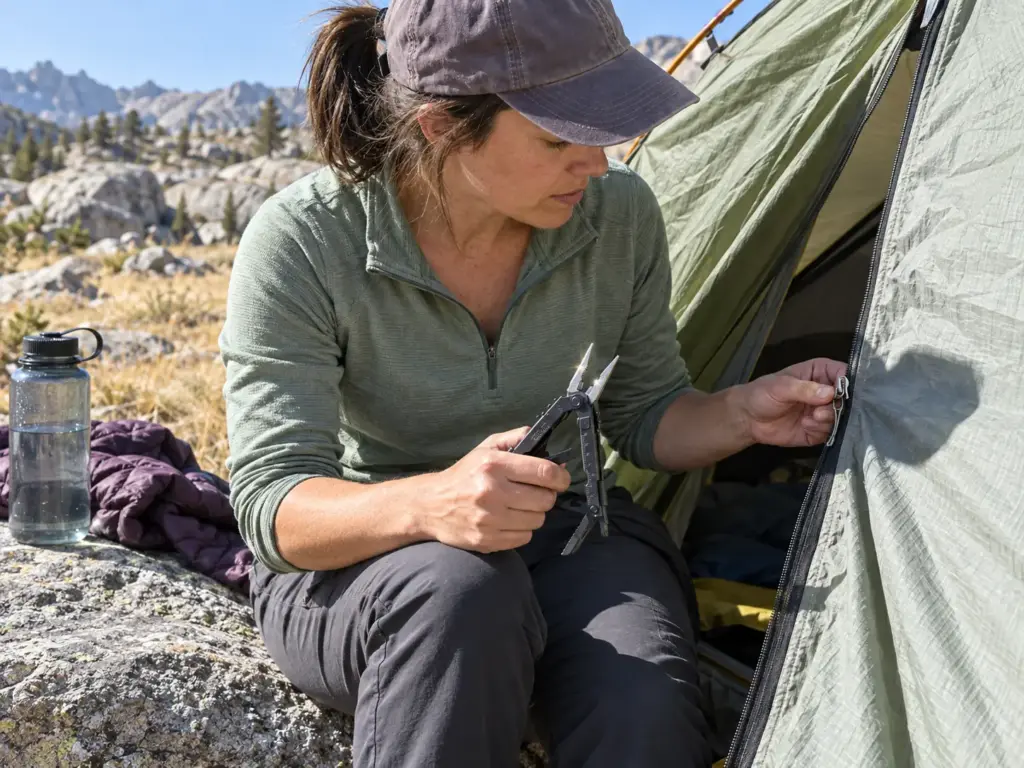
Squeeze One Side at a Time
Back the zipper all the way open, right down to the end stop, so the slider sits free of any meshed teeth. Then take needle-nose pliers and crimp the slider by squeezing it gently, one side at a time, with equal pressure on each side. Test the zipper between every squeeze. That’s the sequence in the Washington Trails Association’s gear-repair excerpt, taken from Backpacker’s gear-repair guide, and it calls the result what it is: a temporary fix.
You don’t need to carry a dedicated pair of pliers for this. A multitool with needle-nose jaws does the job, and the Gerber Multi-Plier 600 Needlenose has the needle-nose jaws this squeeze calls for, while the budget-friendly WORKPRO 6-piece Mini Pliers Set gives you a needle-nose for the home repair bench. The same jaws handle a lot of other camp fixes, which is the whole case for using multitool pliers for gear repair: one tool, a dozen jobs.
One r/CampingGear routine is worth copying in full: work the pull all the way back to the stopper, give the slider its gentle squeeze, then rub beeswax along both sides of the teeth and run the zipper open and closed a handful of times. Squeeze, wax, cycle. On a mildly spread slider, that combination often feels like a new zipper.
If the Track Is Out of Line
Sometimes one side of the track gets pulled ahead of the other, and the slider keeps closing the teeth out of step. Another camper in the same thread describes the fix: gently tug the tight side through the slider until the two tracks line up again, then back the pull all the way to the start and close it from there. Go slowly; you’re coaxing fabric, not winning an argument.
When a Squeeze Won’t Hold
Over-squeezing is the real risk here. NEMO warns against squeezing too much, because you can cinch the slider onto the teeth or crack the metal outright. One r/CampingGear commenter says to pinch “very gently,” or an easy fix becomes a difficult, expensive one. I’d squeeze a hair, test, and squeeze again, rather than chase it in one hard grip.
If the zipper starts splitting again within a dozen cycles, or the slider won’t tighten any further without binding, stop. The Washington Trails Association is blunt about it: eventually that slider will need to be replaced. Get through the trip, then order the right size.
Wrap the plier jaws in a strip of tape before you squeeze. It spreads the pressure, keeps the jaws from biting into the slider’s finish, and makes it a lot harder to crush the thing in one overenthusiastic grip.
Emergency Closes When the Zipper Won’t Hold Tonight
Back to the 9 p.m. scenario. The zipper won’t stay closed, the squeeze didn’t take, the rain is building and the bugs are already inside. This is a field repair problem, not a shopping one.
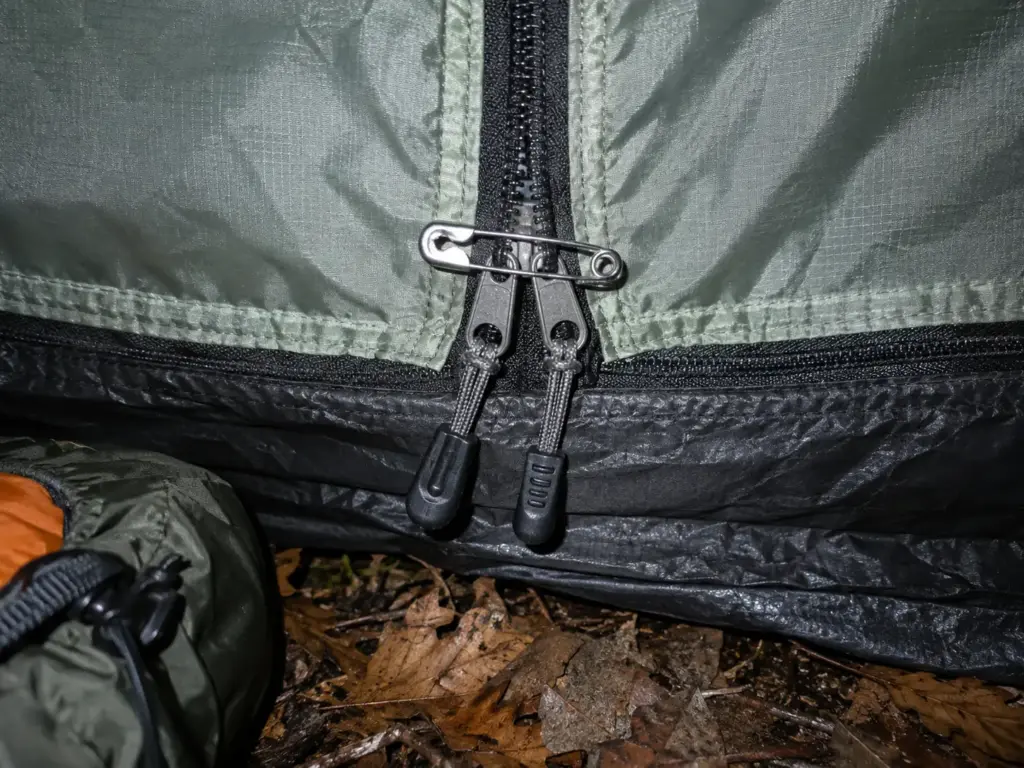
You don’t need a permanent repair right now. You need a closed door until morning, and that’s a different, easier problem.
Pin the Door Shut for the Night
A safety pin is the cheapest door lock in the backcountry. If you have a double-pull zipper, close it as far as it will go and pin the two pull tabs together (a double pull tab is made for it) so neither can creep back. If the split runs behind a single slider, pin straight through the fabric on both sides of the gap, every few inches, so the door holds closed whether the teeth do or not.
There’s a reason this gets recommended. One BackpackingLight poster with a failed #5 coil on his sleeping bag squeezed the pull with pliers, which worked, but at 45°F he was losing heat through the gap because the pull alone was holding the zip, and he wondered aloud about carrying safety pins. A tent door is the same problem at a bigger scale.
No pins? Our own suggestion, not a sourced one: thread a length of cord or a small carabiner through both zipper pulls and the door’s tie-back loop, then tension it so the slider can’t drift open. It looks ugly. It holds.
If it’s the mesh door that won’t close, pull the fly over the gap and zip the fly door instead, so the bugs are stuck in the vestibule rather than in your sleeping bag. A head net over your face buys you the rest of the night if the inner door is wide open.
Tape the Seam Instead of Blaming the Zipper
When the problem is a ripped seam beside the zipper rather than the zipper itself, tape it. GEAR AID Tenacious Tape is the better field fix, and it doubles as a mesh patch for a small tear in the screen: it sticks to nylon and mesh, flexes with the door, and peels off cleaner when you make the permanent repair. Round the corners of the patch so they don’t lift, and press it onto clean, dry fabric on both sides of the rip.
Duct tape works in a pinch for a few nights, and one r/CampingGear thread has campers taping a seam rip between the screen and the zipper. NOLS points out the catch: duct tape damages fabric and leaves a gooey mess when it comes off. Once you’re home, a proper patch and some seam work are in order, and it’s worth avoiding the five seam sealing mistakes that leave tents leaking while you’re at it.
Carry the Fix So Tonight Isn’t a Crisis
Everything in this section fits in a sandwich bag. Pack pliers or your multitool, a candle stub or a bit of beeswax, three or four safety pins, a strip of repair tape, and, if you know your size, a spare slider. Add it to a modular repair kit for hiking gear and a door failure becomes a ten-minute chore instead of a night of slapping mosquitoes.
How much you’ll lean on that kit depends partly on how you treat the door. One car-camping regular on r/CampingGear says zipper failure has been the end of every tent he’s owned, high-end Big Agnes included. Another replies that he’s never had one fail in hundreds of nights. Same parts, different habits, and the last section of this article is about those habits.
Replace the Slider and Get the Size Right
A new slider is the permanent fix for a zipper that splits, and it’s a pliers-and-patience job far more often than a sewing job. The part people trip on is the size. A #5 slider will not run on a #8 coil, and the number you need is stamped somewhere tiny.
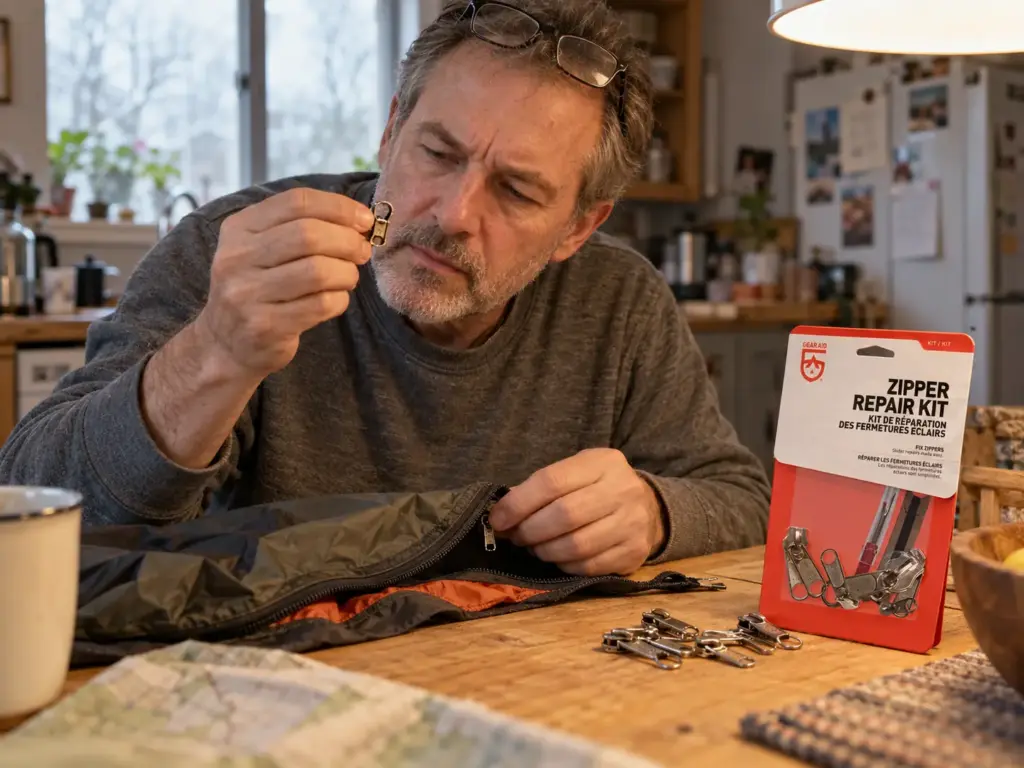
Read the Number Stamped on the Slider
Flip the old slider over and look at the back, or the inside of the pull tab. You’ll find a small stamped number, often next to the YKK mark: 3, 5, 8, 8C, 10. That number roughly tracks the width of the closed chain in millimeters, so a #5 coil measures about 5 mm across when zipped. Use a magnifier or your phone camera zoomed all the way in, because the stamp is small and often worn.
Size isn’t the only match. Check whether your zipper is a nylon coil or molded plastic teeth (YKK calls the molded kind Vislon), and whether the door has a single or double pull. Don’t assume a tent means a #5 zipper, either. Some tents, Big Agnes among them, use a #3, while bigger family tents often run a #8 zipper or a #10 zipper.
If you can’t read the stamp at all, a kit takes the guessing out of it. The GEAR AID Zipper Repair Kit with Multiple Zipper Sliders carries six: a #3 coil single, three #5s (coil single, coil double and a Vislon single), a #8 coil double and a #10 coil single, plus a seam ripper, two needles, thread and ten top stops. Try each one on the coil until one rides snug. A replacement slider or a kit like this runs roughly $10 to $15, and the swap takes about 20 minutes.
Pull the Stopper, Swap the Slider
NOLS lays out the basic swap, and all it needs is a pair of pliers:
- Remove the fabric or metal stopper at the bottom of the zipper.
- Slide the broken slider off the end of the track.
- Slide on a new slider that matches the zipper chain size.
- Replace the stopper, crimping a metal one closed with pliers.
If the stopper is buried in stitching and won’t come off cleanly, one r/CampingGear member’s approach works: unpick a little of the stitching at the base of the track with a seam ripper, feed the new slider on, then hand stitch it closed again. A few tight stitches are enough to stop the slider from running off the end.
The Sew-Free Weave for #3 Tents
This is the trick that makes a no-sew swap possible, and it comes straight from Big Agnes’s own repair instructions for its #3 YKK tents. Cut the old slider off with pliers. Then, by hand, weave the first quarter inch or so of teeth together, pressing the two coils into each other so they mesh. Snap the new slider onto that meshed section, thread the pull tab back on, and zip.
Why it works: a slider can only start on teeth that are already meshed or properly seated at the stopper. Hand-weaving that first short run gives it something to bite. If the old slider can’t come off at all, Big Agnes’s fallback is to run it to the very end of the coil, weave the teeth closed ahead of it, set the new slider, and cut the old one off afterward.
These instructions are written for that brand’s #3 zippers. The principle carries over to other small coils, but go slowly on anything heavier, and stop if the coil starts to deform.
Photograph the stamp on the old slider before you cut it off, then photograph which way the pull faces. Once the old slider is in pieces on the table, you’ll want both answers, and you won’t get them back.
Skip the Sewing, or Send It In Without Overpaying
The honest cost call comes down to a cheap slider and an evening versus a mail-in that takes your tent away for weeks. Most zipper problems land firmly on the DIY side. A few don’t.
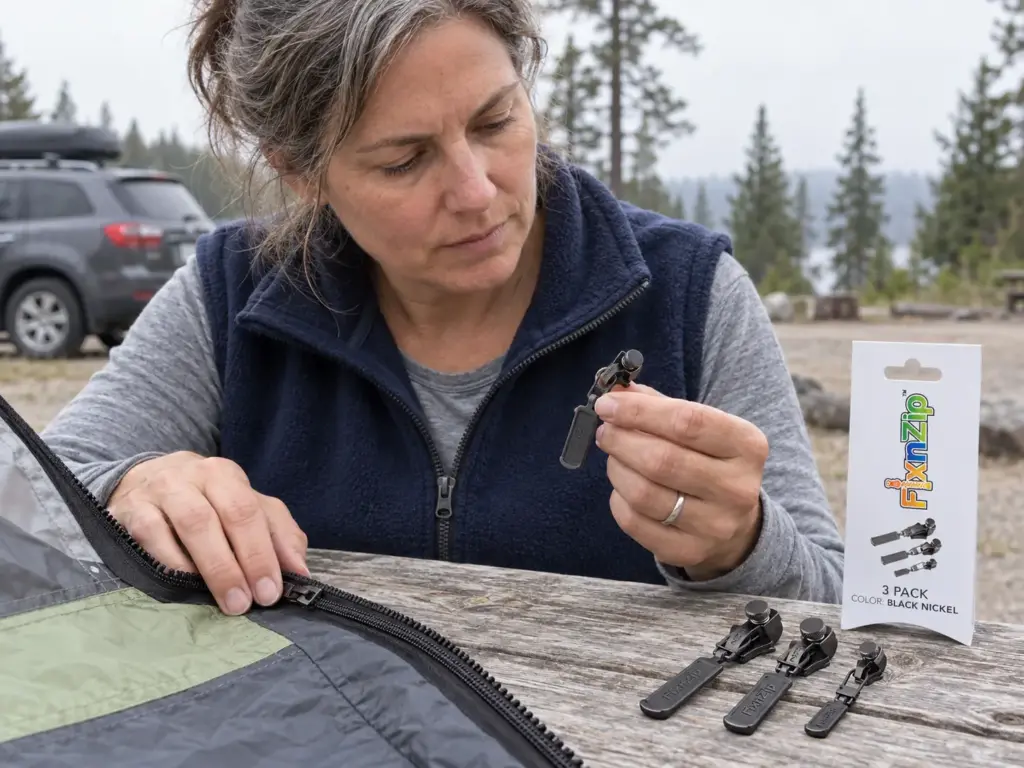
Slide-On Kits Skip the Sewing
If the stopper won’t budge and you don’t want to touch a needle, a slide-on kit clamps onto the existing coil without removing any stitching. The FixnZip Universal Zipper Repair Kit comes as a three-pack in small, medium and large, so you can match it to your coil without knowing the exact number. One Mountain Project poster went this route rather than mailing his tent off, and it’s an easy kit to leave in the car for the next failure.
On r/CampingGear the favorite is ZlideOn, which one camper says worked well on a NatureHike 1-person tent. It’s sold direct rather than on Amazon. Either way, I’d treat a clamp-on slider as a solid get-home repair and keep a proper slider swap in mind for the long run.
Shops, Tailors and Mail-In Repair
You might not need to mail anything. Campers on r/CampingGear have had sliders swapped by dry cleaners, luggage repair shops and tailors, though one Mountain Project poster found a tailor who flatly refused tent zippers. Call first and ask specifically about a coil zipper on a tent.
Costs vary widely, and they come from individual customer reports, so treat them as rough. Expect somewhere around $8 for a simple shop slider swap and up to about $60 for a full zipper replacement. NEMO says its own zipper repairs typically take up to three weeks, so plan the next trip around that.
Before you pay anyone, look into manufacturer repair. A Mountain Project regular made the point that a failed zipper on a newer tent may be a warranty repair, and filing a warranty claim the way that works can turn a paid job into a free one.
When It’s Time to Replace the Tent
A full zipper replacement on an old tent can eat a good share of what a new one costs. That’s fine if the rest of the tent is sound. It’s money down the drain if the floor coating is peeling, the fly has gone sticky or the mesh is brittle. Look at the whole shelter, not just the door, and run it against a checklist for when to replace hiking gear before you pay for a big repair.
If the answer is a new shelter, size it for how you actually camp. If you share a tent most trips, start with a two-person backpacking tent sized for sharing, and check the zippers in the store like you mean it: run every door, both directions, and feel how much effort the curves take.
Keep the Zipper From Failing Again
Most tent-zipper failures come down to tension and grit, not age. That means the fix is mostly in how you close the door, and how you put the tent away.
Clip the Door Before You Zip
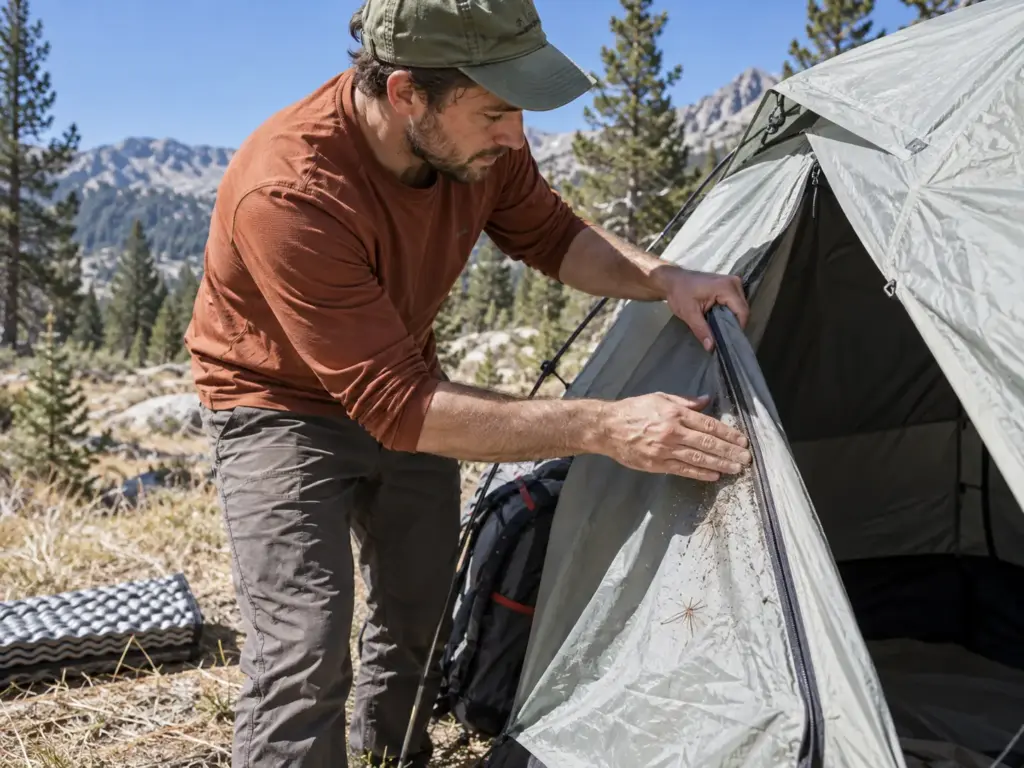
NOLS instructors suggest clipping the door buckle before you zip, so the buckle takes the strain instead of the slider. When you open the door, reverse it: unzip first, then unclip. Zip slowly, and use your free hand to guide the fabric around the curves.
The setup matters too. An r/CampingGear regular summed it up in one line, paraphrased: lube it, and don’t put it under stress when you pitch it. A fly or door pitched drum-tight puts the zipper under constant pull, and every closing cycle on a stressed door spreads the slider a little more. Leave a little slack at the door and tighten the guylines instead.
Shake It Out and Store It Dry
Before you roll the tent, shake the debris out of the zipper tracks. NOLS recommends it, and sand left in the teeth gets ground in on the next trip. Every so often, wash the track with a washcloth and soapy water, and give it a thin coat of wax or lube once a year, wiping off the excess.
Then put it away dry. Storing hiking gear so it doesn’t mold or delaminate matters for zippers as much as for the fabric: a damp tent stuffed in a sack for a month gives you mildew in the tape and corrosion on any metal stopper.
Test It Before the Trip
NEMO’s own zipper article opens with a familiar moment: setting the tent up in the living room before a trip and finding the zipper won’t move an inch. That’s the best possible time to find it. A backyard test before any long trip catches a spread slider while there’s still time to order the right size.
Pitch it, run every zipper twice in both directions, and close the doors under the same tension they’ll have on a windy night. It’s the same logic behind how to test gear before a thru-hike: find the limit at home, not at mile 40.
During the backyard test, close each door and tug the fabric on both sides of the closed zipper. A healthy slider holds. A spread one lets the teeth pop apart behind it with a light pull, which tells you it’s time for a new slider before the trip, not during it.
Squeeze Tonight, Swap the Slider at Home
A zipper that closes and then splits behind the slider has a worn slider, not a dirty track. Squeeze it gently with pliers to get through the trip, then replace it with the size stamped on the old one.
Clean and lube lightly. Wax fixes tonight and clogs next month unless you wipe it thin.
Clip the door before you zip, pitch it without strain on the zipper, and test the tent before every big trip. This week, set it up in the yard, run each zipper twice, and drop a safety pin and a candle stub into your repair kit.
Frequently Asked Questions
01How do you fix a tent zipper that separates?
Back the zipper fully open, then squeeze the slider gently with needle-nose pliers, one side at a time, testing between squeezes. If it keeps splitting, the slider is worn out and needs replacing with a new one of the same size.
02Can tent zippers be repaired, or do I need a new tent?
You can almost always repair a tent zipper: clean and lube it for sticking, squeeze or replace the slider for splitting, or use a slide-on kit if you won’t sew. A new tent only makes sense when the fabric and seams are worn out too.
03How do I reattach a zipper to the track?
Back the pull to the start, gently tug the tight side through the slider until both tracks line up, then close it again. If the slider has come off the end, remove the stopper, feed the slider back on, and replace the stopper.
04Can I use candle wax or silicone spray on a tent zipper?
Yes, lightly: candle wax or beeswax helps the zipper glide in a pinch, but wax attracts dirt. Wipe off the excess, and for long-term care use silicone spray on a brush or a dedicated zipper lubricant instead.
05How much does it cost to have a tent zipper repaired?
Expect roughly $8 for a shop slider swap and up to about $60 for a full zipper replacement, though reports vary. Manufacturer mail-in repairs can take up to three weeks, so a DIY slider at about $10 to $15 is usually the faster, cheaper route.

I've spent more than a decade researching hiking gear and trail technique. I read the specs, the forum threads and the long-term reviews, and every pick here comes with what it gets wrong.
End of the trail
You read every mile of this one. Here's where the trail goes next.