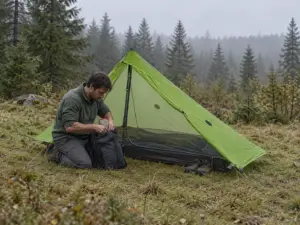
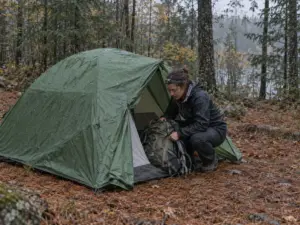
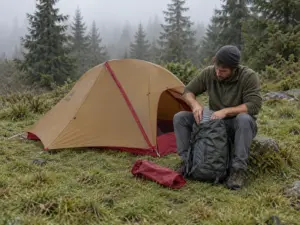












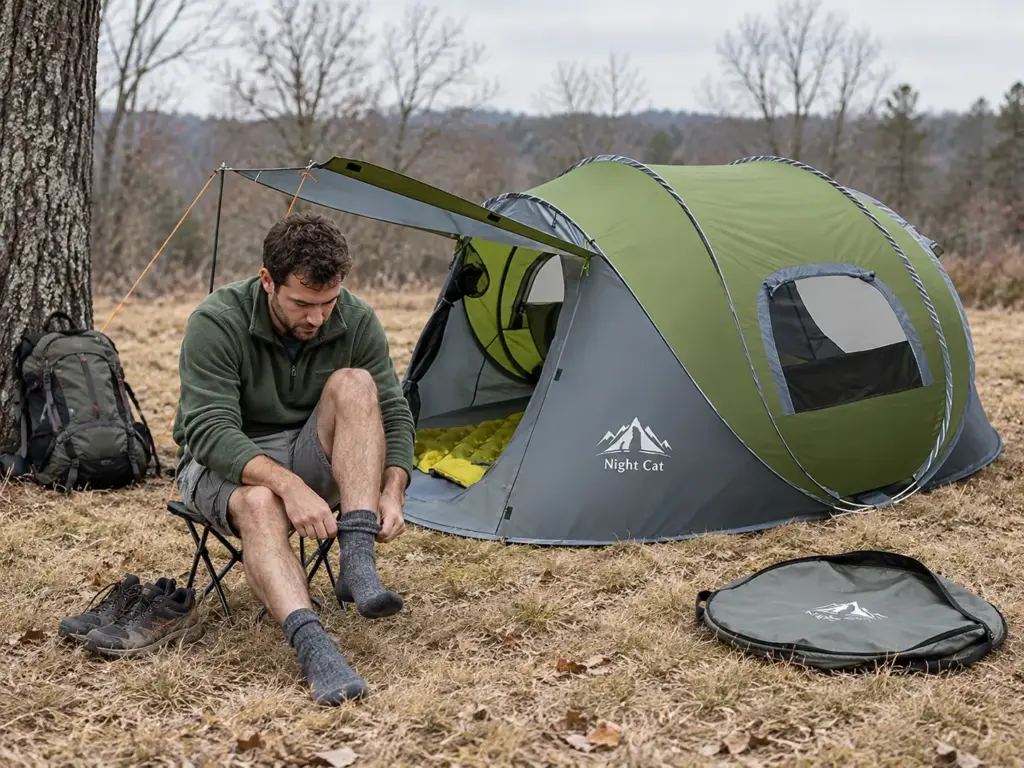
You unzip the bag, let go, and a pop-out tent springs open on the grass in about two seconds. It feels like the whole camping problem just got solved. Then comes the scene that keeps turning up in pop-up tent reviews: the same tent cartwheeling across a festival field in a gust while its owner chases it. Here’s what a pop-out tent is, what it costs you in pounds, where it fails, which ones are worth buying for which trip, and why a hiker should usually carry something else.
What a Pop-Out Tent Really Is, and How It Differs From Instant Tents
The box says “instant.” The review says “pop-up.” You typed “pop out tent,” and the photos on your screen show three completely different tents. The mechanism decides the weight, the packed shape and how the tent behaves when the weather turns, so it’s worth sorting out first.
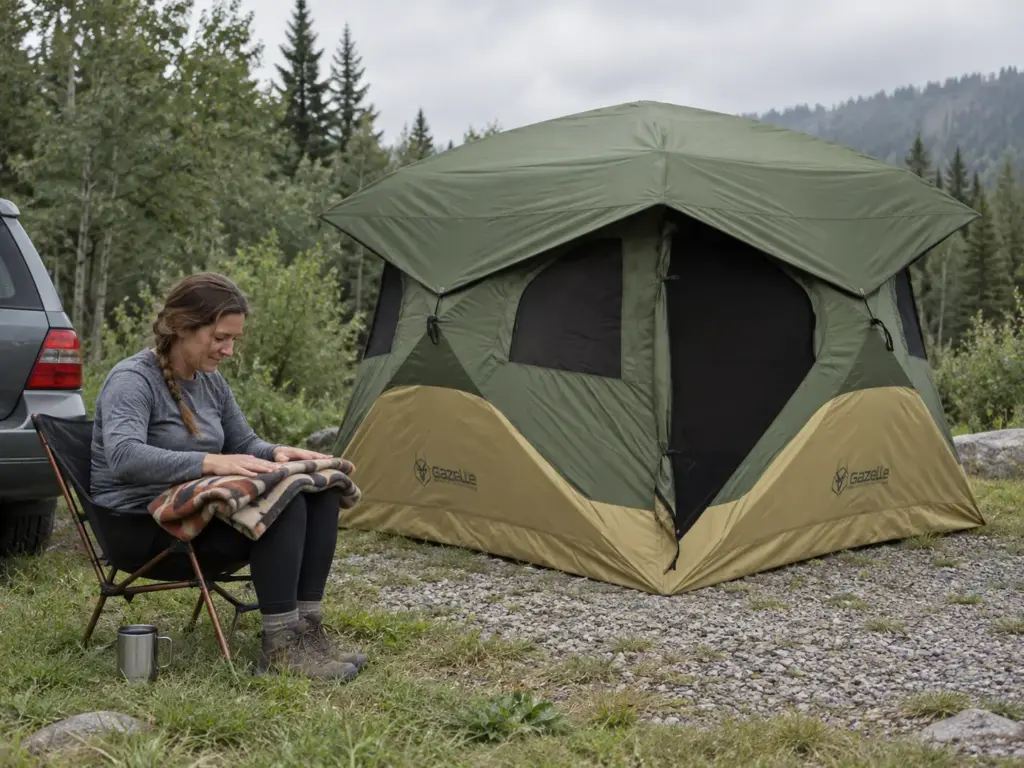
Buyers use pop-out tent, pop-up tent and instant tent as one word. People who pitch them every weekend split them into two families: tents that spring open on their own, and tents with poles already attached that you extend and lock. One top r/camping comment put it bluntly: most pop-up tents are total junk, and modern clip-pole tents are not hard to set up.
Outdoor Life frames even the best instant tents as gear for beginners, car campers and families. Notice who is missing from that list. Hikers.
The Coil Pop-Up: Seconds to Open, Minutes to Fold
This is the true pop-out. A spring-loaded frame, a coiled fiberglass frame sewn into the fabric, throws the tent open when you release the strap, so you can pitch in seconds with nothing to assemble. Marketing calls it the “2 second tent” trick, and the claim is nearly literal.
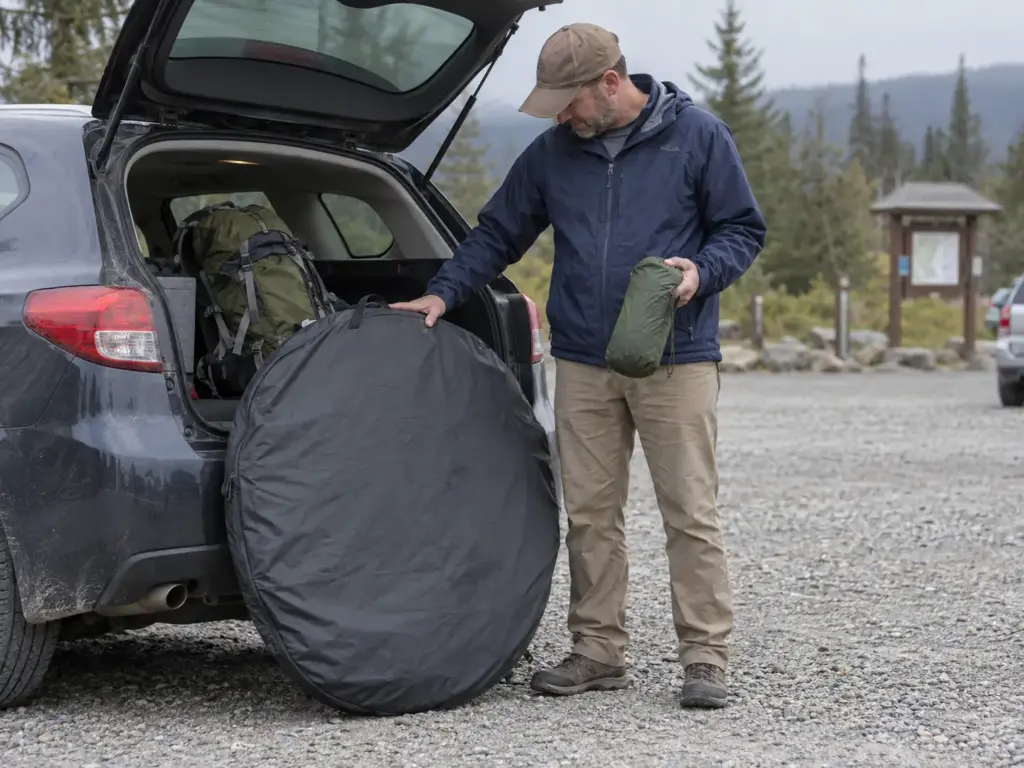
The catch comes at the end of the trip. To pack it, you wind that tension back into a flat round disc, usually about two feet across. Keep that disc in mind, because it shows up again when we talk about carrying it and about folding it.
The Instant Cabin and Hub Tent: Fast, Roomy, Heavy
Instant tents don’t pop. Their pre-attached poles stay connected to the fabric, and setup means unfolding the bundle and extending telescoping poles until they click, or pushing out the hub pole system on each wall. A hub tent snaps its walls nearly vertical, which is why the inside feels like a small room, while a cabin-style instant tent does the same job with steel poles.
Expect a minute or two to pitch, real standing height, a proper rainfly on the better models, and a packed bag that weighs as much as a large dog. For a family at a drive-in campsite, that trade of speed for space often makes sense.
Canopies Are Not Tents
A pop-up canopy is the open shade structure you see at farmers markets and soccer games: no floor, no walls, no place to sleep. Some campers clip a small tent under a 10×10 canopy as a shade-and-rain combo, which works, but on its own a canopy is an event shelter.
The Weight Math: What Instant Setup Costs You in Pounds
Most of us carry a mental rule about extra weight: a few pounds more is fine if it buys comfort. With pop-out and instant tents that rule breaks. Portability here means more than the number on the scale, because packability, the shape and size a tent folds into, is where this category loses hardest.
What the Published Weights Say
Start with the lightest credible option. The Decathlon Quechua 2 Second, a two-person coil pop-up, weighs 9.6 pounds in Outdoor Life’s measurements and peaks at 3 feet 6 inches, so you’re kneeling inside. It isn’t sold on Amazon in the US, but it’s the right yardstick: if the best-known light pop-up starts near 10 pounds, budget versions won’t do better.
Instant tents jump from there. Outdoor Life weighed the Gazelle T4 four-person hub tent at 31.8 pounds, packed into a bag 67 by 11.5 inches. A nine-person instant cabin came in at 37 pounds, packed to 48 by 11 by 11 inches. An eight-person cabin with telescoping poles weighed around 30 pounds, and the tester’s verdict on its setup was blunt: not instant.
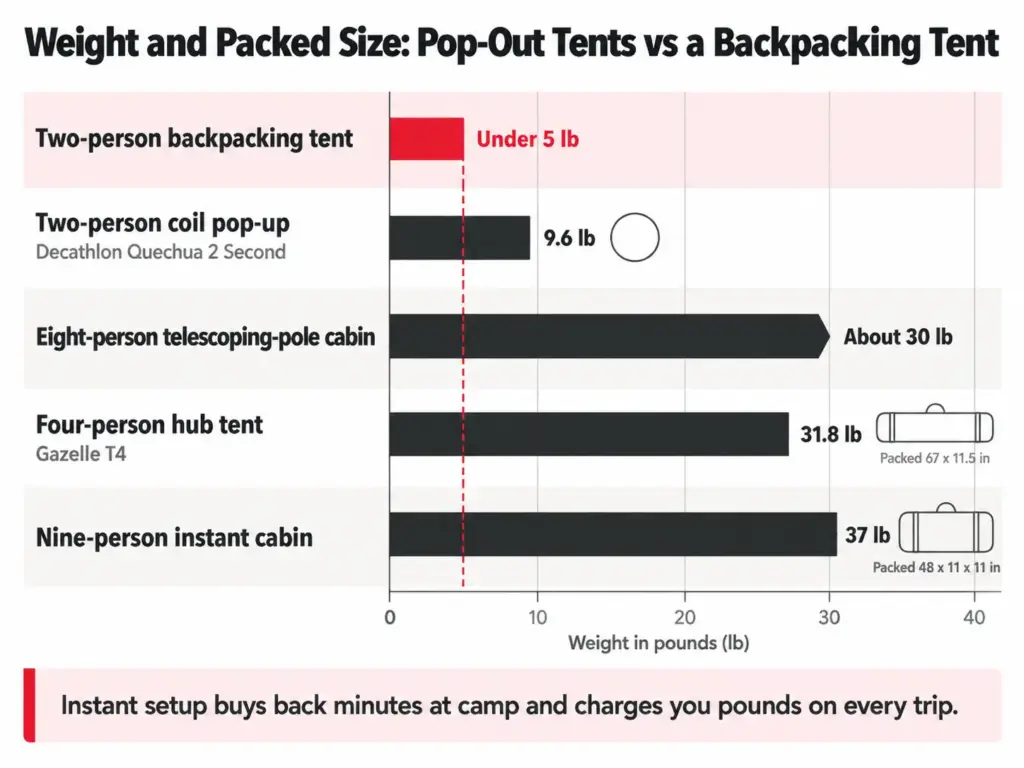
Set all of that against a conventional freestanding two-person backpacking tent, which lands under about 5 pounds. The lightest pop-up is roughly double that, and the roomy instant tents run six times heavier or more. For the full picture across every shelter type, here’s how tent weight really breaks down by category.
Why a 27-Inch Disc Will Not Strap to a Pack
Weight is only half the problem. Mom Goes Camping, which reviews pop-ups for family campers, puts the typical folded coil tent at about 27 inches across. That disc slides into a trunk fine. On a backpack it’s a manhole cover that catches every branch, and strapped high it acts like a sail on an exposed ridge.
Instant tents swap the disc for a long tube. Gazelle T4 owners warn that the packed bag runs 4 to 5 feet long and ends up on the roof rack. A tent that needs a roof rack to travel is telling you where it belongs: within a few steps of the vehicle.
Where Speed Still Wins
The setup speed you’re paying all those pounds for is smaller than it looks. A cheap conventional dome takes around ten minutes to pitch, a coil pop-up takes seconds, and an instant cabin takes a minute or two. That’s roughly eight minutes saved per campsite. A r/camping commenter summed up instant tents in one line: heavy, but they go up super quick.
Speed still earns its keep in three situations. You car camp at the trailhead before a big first-light hike, your kid wants a backyard campout on a school night, or you run a base camp beside the car for a long weekend of day hikes, where a roomy instant tent with standing height makes rainy evenings far nicer. In every case the tent never travels more than a few dozen steps from the vehicle, and that’s the deal you’re signing up for.
Rain, Wind and Condensation: Where Pop-Out Tents Fail
The festival tumbleweed and the puddle on the floor at dawn aren’t bad luck. They’re what a springy frame, a tall wall and a single layer of fabric do on a rough night. Each failure has a cause you can see before you buy, and a cheap fix.
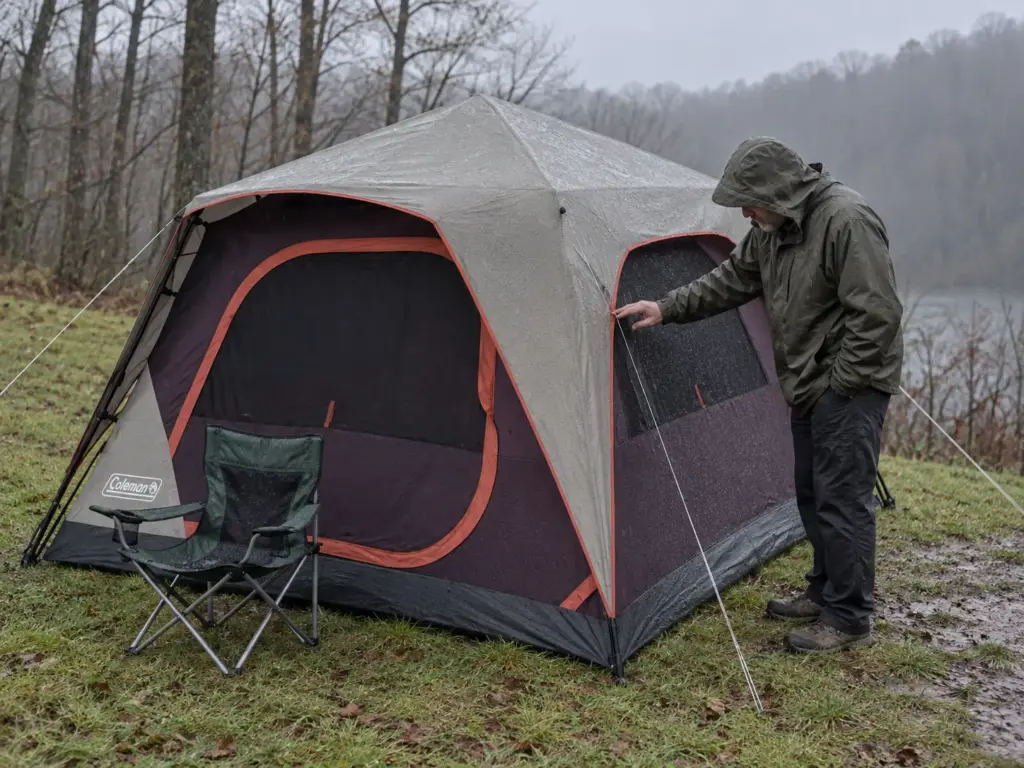
Rain: What the Waterproof Number Does and Does Not Tell You
The figure on the box is the hydrostatic head, or HH, measured in millimeters: the height of a water column the fabric holds back before it seeps through. The Great Outdoors magazine puts a typical pop-up at roughly 1,000 to 1,500 mm, and its rule of thumb breaks down like this:
- Under 1,000 mm: light rain only
- 1,000 to 2,000 mm: summer showers
- 2,000 to 3,000 mm: most three-season camping
- Over 3,000 mm: harsh weather
So a cheap pop-up is a light-shower tent. That’s fine for a festival with a passing cloud and wrong for a night of steady rain. The label won’t save you anyway, because seams, zippers and vents leak regardless of the number, and a tent with a 3,000 mm waterproof rating and untaped seams can still drip onto your sleeping bag at 2 a.m.
Look for a bathtub floor, where the floor fabric wraps a few inches up the walls, because it keeps ground water out even when the seams are mediocre. Then there’s the cheap-tent lottery. One r/camping commenter bought a second copy of a budget dome they’d used for years, and the new one leaked from day one, which is why I’d never trust a cheap tent on its first night out.
The fix costs a garden hose. Pitch the tent in the yard, stake it properly, and run the hose over the roof and every seam for ten minutes. Then go inside with a dry hand and feel the corners, floor seams and zipper tracks.
Damp spots show you exactly where to work. Mark them, let the tent dry, and do some seam sealing before the trip; here’s how to seal tent seams properly.
Wind: Why a Tall Instant Tent Behaves Like a Sail
The coil that makes a pop-up spring open is the same flexibility that lets it fold flat in a gust. Poor wind resistance is the price of that design. Push it with a strong crosswind and the frame bows in, and if the stakes are weak, the whole thing lifts. That’s the festival tumbleweed.
Instant tents fail differently. Their frames are stiffer, but the walls are taller and closer to vertical, and a near-vertical wall is a sail. Outdoor Life notes the Gazelle T4 catches a lot of wind because of its height and shape, and doesn’t recommend it when high winds are forecast. If the fast, roomy, well-made tent in the category does that, a cheaper cabin with the same profile does worse.
My walk-away line is 25 mph sustained wind. That’s our rule of thumb, not a manufacturer spec, but above it a pop-out tent stops being shelter and becomes a project.
Below that line, how you stake makes most of the difference. Wilderness Times recommends staking the upwind side first, weighing the tent down with your pack while you work, and driving stakes at an angle away from the tent. Swap the thin pegs in the bag for real tent stakes and run out every guyline the tent has, even the ones that look decorative.
Then think one step earlier, about choosing a campsite that blocks wind and rain: a line of trees or the lee of your car does more than any extra stake.
Pitch a pop-up with its narrow end, not its broad side, facing the wind. The door usually belongs downwind too, so a gust can’t funnel in and balloon the tent from inside. If the wind shifts overnight, re-stake the windward side before you go back to sleep, not after the first big gust.
Condensation: The Puddle You Wake Up To
Most coil pop-ups are single wall designs: one layer of fabric between you and the night. A conventional tent is double wall, with a breathable inner tent and a separate fly, so moisture passes through the inner and condenses on the fly where it can’t reach you. A single-skin pop-up has nowhere for that moisture to go.
Mom Goes Camping calls pop-ups notorious for trapping moisture, and The Great Outdoors makes the same point. One UK camper reported waking to a puddle while a traditional tent stayed dry. Two people breathing all night put a surprising amount of water into the air, and it hits the cold fabric, condenses and runs down the walls.
The instinct when you’re cold is to zip every vent shut, and that makes it worse because warm, wet air has no exit. Leave the vents open, crack the top of the door if there’s no rain, and keep wet jackets and boots outside the sleeping area. If you want the deeper explanation, read up on the physics behind a wet tent.
One thing coil pop-ups do surprisingly well: Outdoor Life left a Coleman pop-up set up for two months, snow included, and it popped right back open undamaged. That springy frame is hard to crush. Just don’t confuse crush-proof with storm-proof, because surviving a slow snow load is a different job from holding its shape in a hard gust.
How We Chose These Tents
You’ve probably read enough tent reviews that sound like ads to be suspicious of the next one, so here’s exactly what this list is. It’s a research roundup, not a field test. We read manufacturer specs, the measured weights and wind, rain and snow results Outdoor Life publishes, and long owner threads on r/camping, then kept the tents that hold up across all three and are for sale on Amazon US today.
Four questions decided each pick: how heavy it is and what shape it packs into, how it handles wind and rain, how fast it goes up and comes down, and who it’s really for.
We also checked live stock, and one popular instant cabin tent was dropped because every listing showed no offer.
Some picks carry a “you probably don’t need this” note, on purpose. When you buy through the links below, we may earn a commission at no extra cost to you. It doesn’t decide what makes the list or what we say about it.
Best Pop-Out Tents by Use: Festival, Car Camping and Premium
Before suggesting anything, a friend would ask where you’re actually sleeping: a festival field, a campground pad next to the car, or a long weekend with the whole family. Each calls for a different tent.
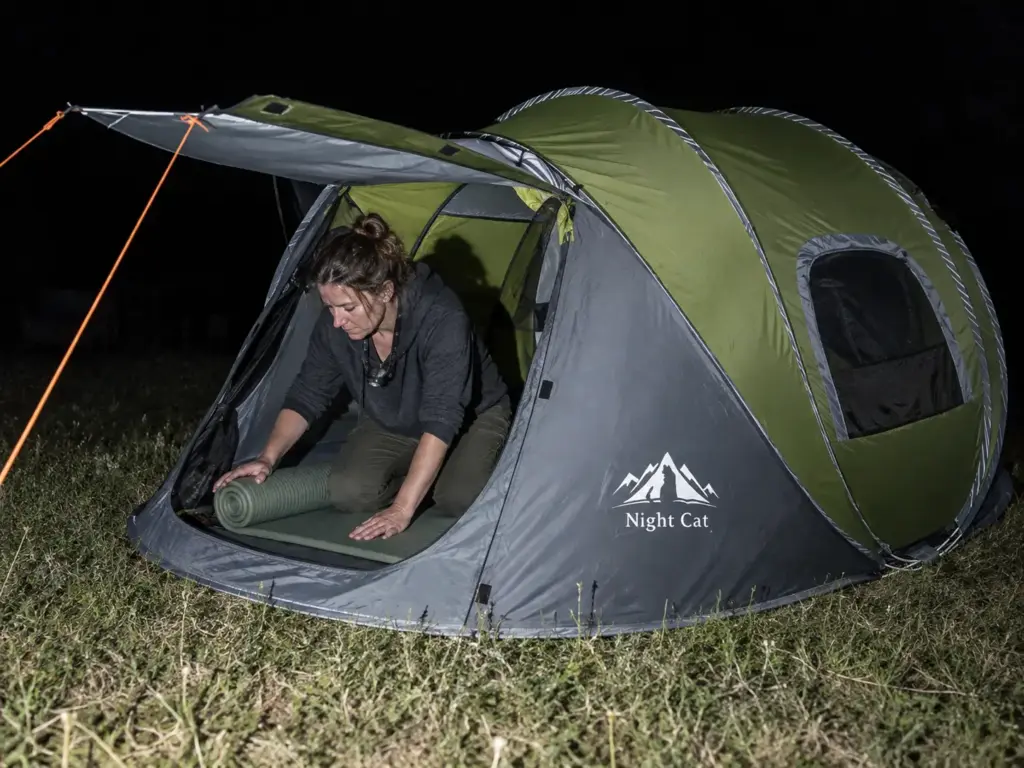
The short version: a basic coil pop-up for the backyard, beach tent duty or festival camping; an instant cabin for regular car camping; a hub family tent for people who want standing room and will pay for it. Expect roughly $50 to $100 for a basic pop-up, $100 to $250 for an instant cabin, and $350 and up for a premium hub tent.
Buying for a big group? One r/camping regular’s advice is worth repeating: the bigger the tent, the harder it is to set up, so two four-person tents often beat one giant one.
Best for Festivals, Beaches and the Backyard
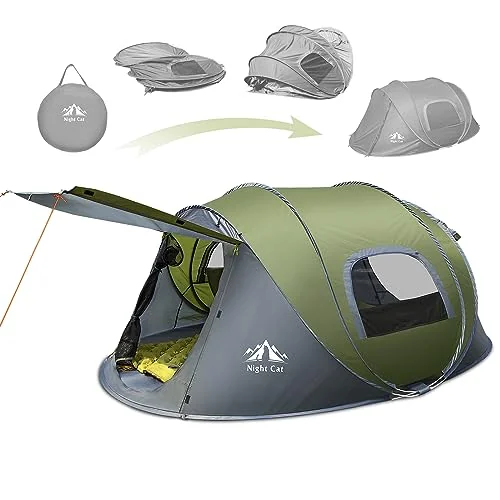
The Night Cat is the tent for a backyard sleepover, a beach afternoon or a two-night festival in July. The coil frame does all the work, so a kid can help and nobody argues over which pole goes where.
Be honest about its limits, though. Like most budget pop-ups it’s a light-shower tent, and the frame bends in a stiff breeze. Stake every loop, run the guylines, and do the hose test at home before a festival where you can’t retreat to a car.
Best for Car Camping
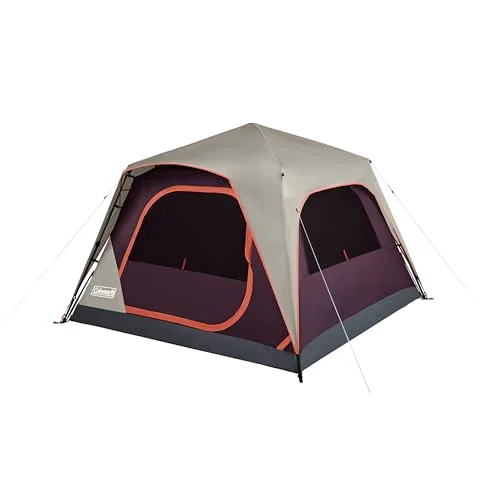
For a family that drives to a campground a few times a summer, an instant cabin is the sweet spot. The Skylodge pitches in a fraction of the time a traditional cabin tent takes, and the separate rainfly makes it a better bet in a storm than any single-wall coil pop-up.
The trade-off is the usual one: it’s heavy and bulky, and its tall walls catch wind, so pitch it in a sheltered spot with real stakes. If you only camp a couple of nights a year in fair weather, the Night Cat does the job for less.
Best Premium Instant Tent for Families
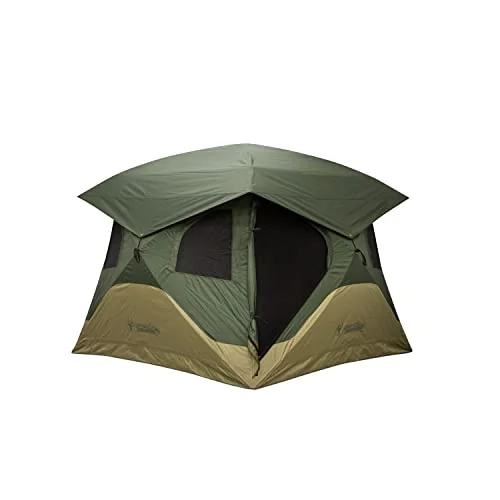
The T4 is what an instant tent looks like when nobody cut corners. Outdoor Life’s testers pitched it in 1 minute 50 seconds without the fly or stakes and repacked it in under three, and the 90-by-90-inch floor area with 6 feet 4 inches of center height means you can change clothes standing up. For a family base camp on a week of day hikes, that’s a real upgrade.
Now the “you probably don’t need this” note. It’s a 32-pound tent in a bag four to five feet long, and Outdoor Life doesn’t recommend it when high winds are forecast. The small windows also make it toasty on a warm afternoon, so pair it with a camping fan.
Owners add that the triangular door sits a few inches off the ground, which is hard going for anyone with limited mobility. And if you camp twice a year, the Skylodge covers you for far less.
The sleeps-4 number on any tent assumes four people lying shoulder to shoulder with no gear inside. Plan on one fewer adult than the label says, or one size up if you’re bringing a dog, duffels or a kid who sleeps like a starfish.
The Hiker’s Verdict: When a Backpacking Tent Beats a Pop-Out
Picture the trailhead conversation. Someone just watched a pop-up open in two seconds and asks, half joking, whether they could take one on the Appalachian Trail. The kindest answer is a short no and a better idea. For anything you carry on your back, a pop-out tent loses on weight, packed shape, wind and breathability, and the answer is almost always a conventional freestanding backpacking tent.
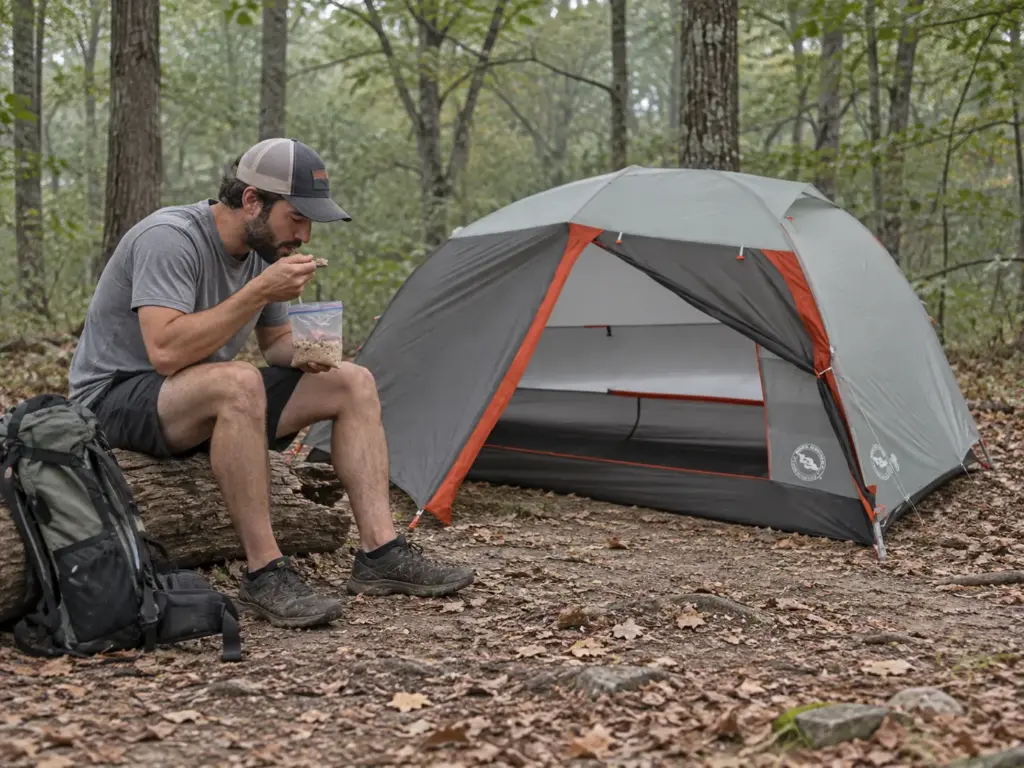
Why a Pop-Out Tent Is the Wrong Tool for the Trail
Take the lightest pop-up from the weight math, about 10 pounds, and carry it through a day of real climbing. That’s roughly double a two-person backpacking tent, before you count a disc you can’t strap down. Add a breezy saddle where the frame flexes and a single wall that soaks your bag with condensation by morning, and you’ve paid in miles, shoulders and sleep for shaving a few minutes off setup.
Hikers have a different relationship with time at camp. You arrive tired with daylight to burn, and pitching is part of the routine, like filtering water. Saving minutes there buys almost nothing, while saving pounds pays you back on every climb.
The Cheap Conventional Tent That Beats a Cheap Pop-Up
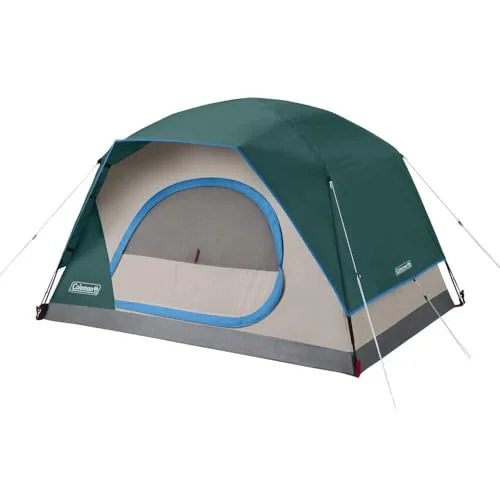
Here’s the anti-sell. If your budget sits at the bottom of the market, a cheap conventional dome usually beats a cheap pop-up. You give up the two-second trick and get a separate rainfly, a frame that flexes less in wind and a tent that packs into a slim cylinder instead of a disc.
Coleman’s conventional domes are also what r/camping commenters suggest most often when someone asks which pop-up to buy. Setup takes around ten minutes the first time and less once you’ve done it twice. One commenter in their sixties described pitching a clip-pole four-person dome alone in under ten minutes, which is the honest benchmark.
The Quick-Pitch Backpacking Benchmark
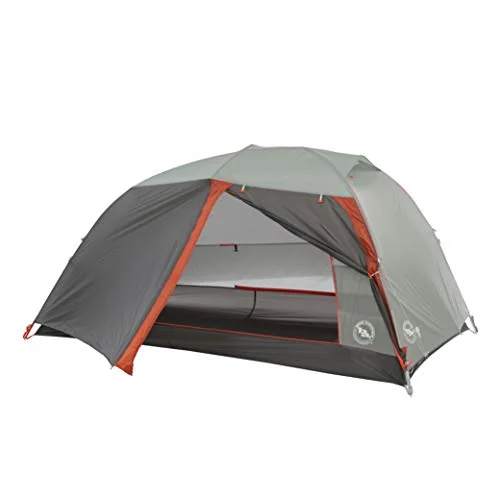
If fussing with poles drives you nuts, the real answer is a quick-pitch tent with a freestanding, hubbed frame. All the poles are shock-corded into one piece joined at a central hub, so you unfold it, clip the inner tent on and throw the fly over. Once you’ve done it a few times it takes a couple of minutes, close enough to a pop-up that the difference stops mattering.
If you’re fuzzy on why that matters, the breakdown of freestanding versus non-freestanding tents explains how each frame type pitches and where each one wins.
The Copper Spur sits in the under-5-pound class, packs small enough to ride inside your pack, and has the double wall construction that keeps condensation off your sleeping bag. It’s a premium purchase, and not every hiker needs one. For the whole range, from budget to ultralight tent options, start with our guide to two-person backpacking tents for sharing.
Other Fast Shelters and When to Leave a Pop-Out at Home
A pop-out tent isn’t the only shortcut to a fast camp. Air-beam tents swap poles for inflatable tubes you pump up in a few minutes. They’re heavy and bulky like the rest of this category, but they shrug off wind better than a coil frame, so compare inflatable tents for car camping before you commit.
For light packers, a simple tarp strung between two trees or trekking poles goes up in minutes and weighs next to nothing. At a festival, a pop-up canopy with a small tent clipped underneath gives shade and a dry spot with no poles to fuss over.
Then there are the nights when a pop-out tent should stay in the garage, whatever trip you’re on:
- High wind: anything forecast above our 25 mph line. The frame bends and the tall walls catch air.
- Multi-day rain: a light-shower tent will eventually let water in through seams and zippers, and a single wall won’t dry out between storms.
- Snow load: a coil pop-up can survive being crushed, but you don’t want to be inside when it happens.
- Midsummer heat: small windows and no mesh roof turn many pop-ups and cabins into a greenhouse by 8 a.m. A camping fan helps, and a blackout tent with dark fabric stays cooler and darker if you plan to sleep past sunrise.
If the real reason you want a pop-up is that tent poles intimidate you, pitch a hubbed backpacking tent in your living room three times in one evening. By the third round you’ll be faster than you think, and you’ll never look at a 10-pound pop-up the same way again.
How to Fold and Care for a Pop-Out Tent
Setup took two seconds. Takedown takes twenty minutes and a few words you wouldn’t say in front of the kids. Almost everyone loses this fight the first time, and it’s the most common reason a pop-up ends up stuffed loose in the trunk.
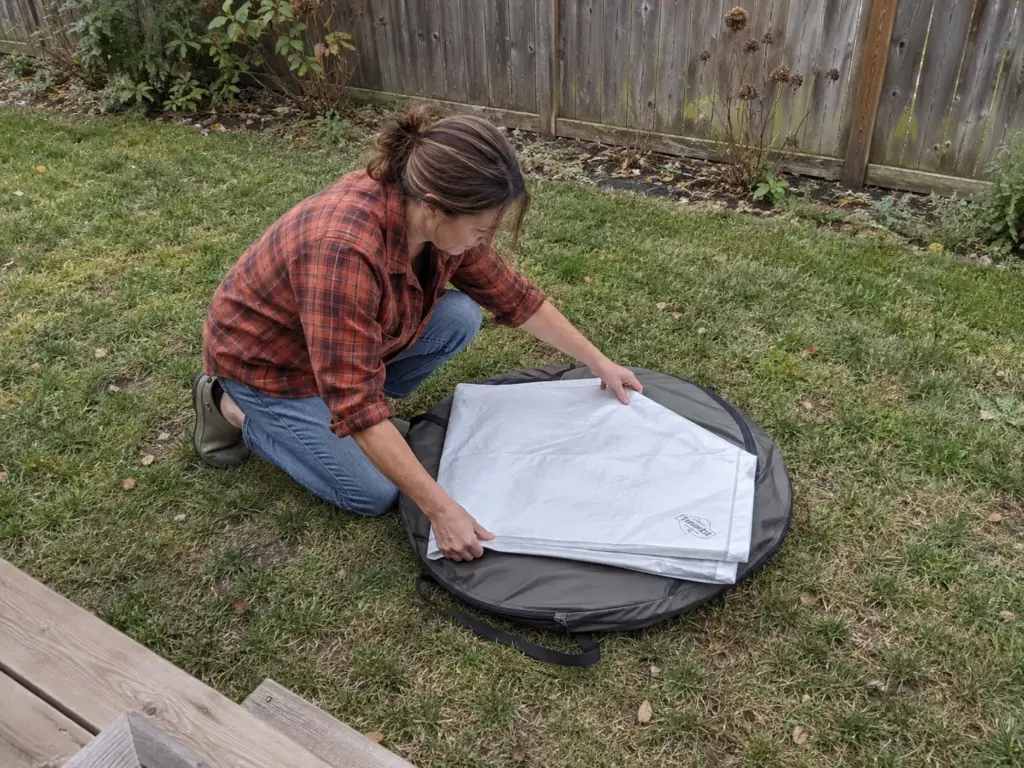
If you’re searching for how to fold a pop-up tent, the trick is that the instinct to flatten it first is exactly what jams it.
The Twist Fold, Step by Step
Mom Goes Camping suggests budgeting at least 15 minutes for your first fold, and that’s realistic. Do it in the yard, with nobody waiting on you. The method below follows Regatta’s manufacturer steps, with the twist described the way it feels in your hands:
- Let the air out. Unzip the door and leave it open, because a sealed tent fights you like a balloon.
- Pull the stakes and clear the tent of gear.
- Fold the rear base pole up to meet the roof pole, then do the same with the front pole.
- Stand the tent on its side.
- Pull the top down toward your feet.
- Twist. Hold the tent at the two top sides, turn one hand toward you and the other away, and the frame collapses into loops. Most people fail here by trying to fold it flat before twisting.
- Slide one ring under the other so you’re holding two overlapping circles, then strap it and slip it into the bag.
The first attempt often ends with the tent springing open in your face. That’s normal. Do it twice more the same evening and the motion sticks.
Drying, Cleaning and Storing Between Trips
Never store a pop-up wet. Even a light dew left in the bag can turn into mildew, so if you had to pack it damp, open it in the yard or garage when you get home and let it dry fully.
Fiberglass poles wear over time and can pick up small splinters and hairline cracks where they flex hardest. Wipe the packed hoops with a cloth and check them each season for fraying. Some owners seal small splits with a dab of resin or clear nail polish, but a fraying frame is a frame on its way out, so replace the tent before it fails mid-trip.
The floor on a budget pop-up is often thin. A cheap groundsheet under it protects it from sharp gravel and helps against wet ground, and a Tyvek Ground Sheet & Tent Footprint cut to size does the job and folds tiny. If you’re unsure, here’s a look at whether you really need a tent footprint. Tuck the edges under the tent so rain doesn’t collect on the sheet and run underneath you.
Pitch It Where It Belongs
A cabin-sized instant tent leaves a big footprint, so where you put it matters. Leave No Trace’s guidance on camping on durable surfaces asks you to use established campsites and durable surfaces like gravel, rock, dry grass or snow, keep camps small, and set up at least 200 feet, roughly 70 adult steps, from lakes and streams. Good campsites are found, not made.
Pitch It, Hose It and Fold It Before the Trip
Three things to take away:
- A pop-out tent trades pounds and packed bulk for seconds of setup. That’s a good deal next to the car and a bad one on a trail.
- Its failures are predictable: light-shower waterproofing, a flexible tall frame in wind, and condensation on a single wall. The fixes are cheap: real stakes, open vents, sealed seams and a backyard hose test.
- For anything you carry on your back, a freestanding backpacking tent is the honest answer.
The next move is simple. The night before your trip, set the tent up in the yard, hose the roof and seams for ten minutes, and fold it twice. The first time you meet its quirks should be on your own lawn, not at the festival gate with a line of cars behind you.
Frequently Asked Questions
01What are the downsides of pop-up tents?
Pop-up tents are heavy and bulky for their size, usually rated only for light showers, and their flexible frames bend in wind. Most are single wall, so condensation builds inside overnight. The fold back into the bag is also tricky the first few times.
02Are pop-up tents worth it?
Pop-up tents are worth it for car camping, festivals, beach days and backyard campouts with kids. They are not worth it for backpacking or forecasts with strong wind or days of rain, where a conventional double-wall tent does far better.
03What is the best affordable pop-up tent?
The Night Cat Pop-up Camping Tent is a solid budget-friendly coil pop-up for festivals and backyards. Treat it as a light-shower tent. If you want better rain protection for the same money, a conventional dome like the Coleman Skydome is the smarter buy.
04Can you backpack with a pop-out tent?
Not realistically. A pop-out tent folds into a disc about 27 inches across that won’t strap to a pack, and even the lightest weighs around double a two-person backpacking tent. A freestanding backpacking tent pitches nearly as fast and carries far better.
05How do you fold a pop-up tent?
Open the door to let the air out, fold the base poles up to the roof pole, stand the tent on its side and twist the frame into two loops. Slide one loop under the other, strap it and bag it. Practice once at home first.

I've spent more than a decade researching hiking gear and trail technique. I read the specs, the forum threads and the long-term reviews, and every pick here comes with what it gets wrong.
End of the trail
You read every mile of this one. Here's where the trail goes next.