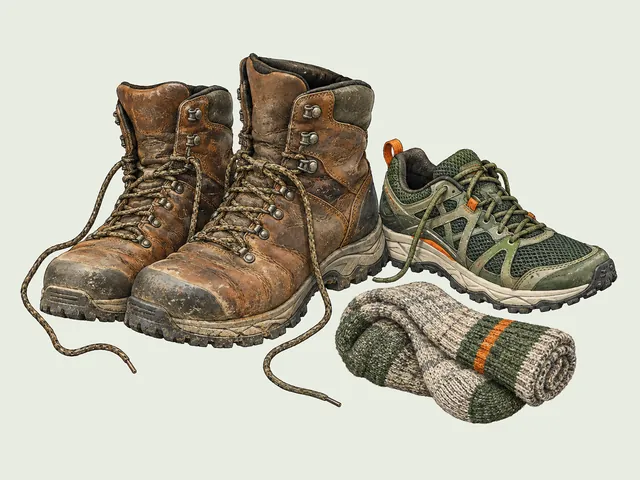

The shoe that photographs best in the lineup is usually the one that lets you down on loose scree. That gap between “looks good on the shelf” and “still works when the trail turns technical” is the whole problem with shopping for stylish hiking shoes, and almost nobody selling them will say it out loud. So this is the honest version: what actually makes a shoe read as good-looking, which pairs earn the look across every price tier, and exactly where a sleek silhouette costs you when the ground gets mean.
| Shoe | Best For | Why It Looks Good | Key Spec |
|---|---|---|---|
| Arc’teryx Kragg | Clean minimalist look | Low branding, sharp lines | Low-profile technical upper |
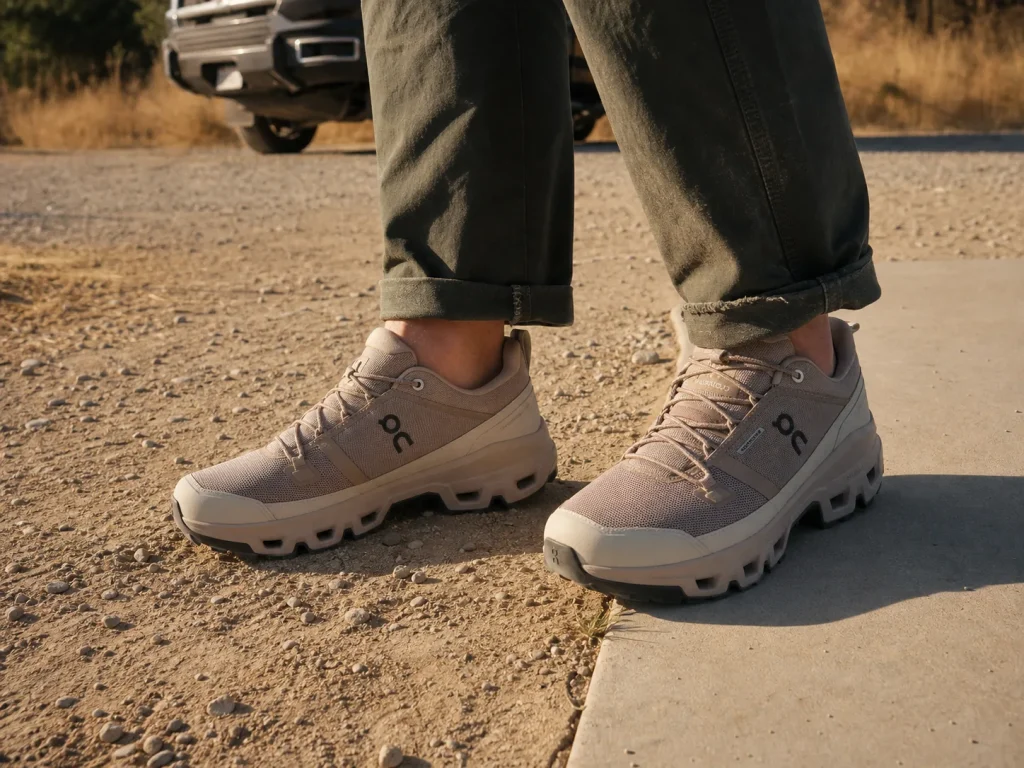
| On Cloudrock Low | Trail-to-town wear | Sleek silhouette, sealed upper | Waterproof, boot-like stability |
| Danner Trail 2650 GTX | Heritage suede style | Suede upper, muted colorways | Vibram Megagrip, GORE-TEX |
| Oboz Katabatic Low | Earth-tone plus protection | Muted tones, minimal logos | ESS rock plate, B-DRY membrane |
| HOKA Speedgoat 6 | Max-cushion dad-shoe look | Bold stack, modern profile | Max-stack cushion, Vibram |
| Saucony Peregrine 16 | Budget trail-runner style | Road-shoe lines, low branding | Vibram Megagrip, PWRRUN foam |
| Merrell Moab 3 Low | Best value stylish pick | Understated, neutral colorways | GORE-TEX, Vibram outsole |
| La Sportiva Spire GTX | Sleek plus real performance | Slim technical last | GORE-TEX, sticky rubber |
What Makes a Hiking Shoe Actually Look Good
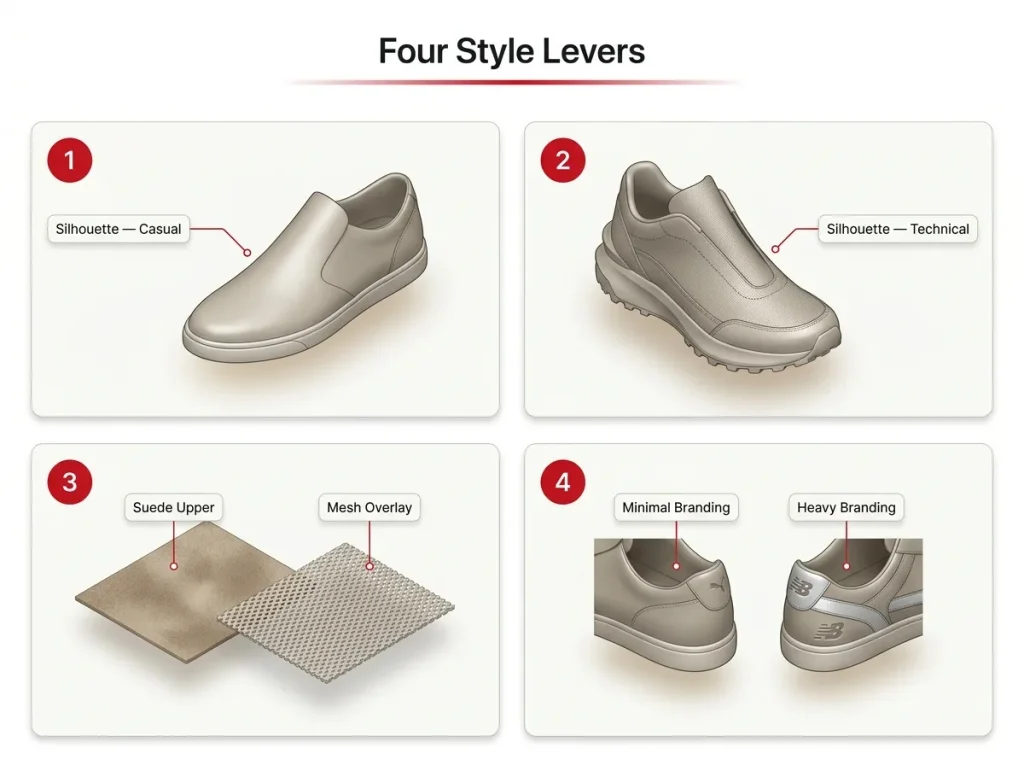
Every gear roundup says a shoe “looks modern” or has a “clean aesthetic” and then moves on, which is useless if you are staring at a shoe you have never seen in person. The truth is your eye reacts to four specific things, and once you can name them, you stop trusting the marketing copy and start judging for yourself. These four levers separate a shoe that reads casual from one that screams trail gear, and they work whether you are hunting for cool hiking shoes or fashionable hiking shoes online or holding a pair in the shop.
The Silhouette Test
Silhouette height is the single biggest signal. A low-profile, street-shaped shoe that wraps just below the ankle reads casual, close to a regular sneaker. A tall, chunky stack with an aggressive heel flare reads technical, no matter what color it is. This is why two shoes with identical uppers can feel completely different on your foot in front of a mirror. If you want a shoe that disappears into everyday clothes, start with the shape and worry about everything else second. It draws the line between a true trail shoe and an everyday sneaker you would wear anyway, a difference worth understanding before you buy something that only looks right at the trailhead.
Material and Color Cues
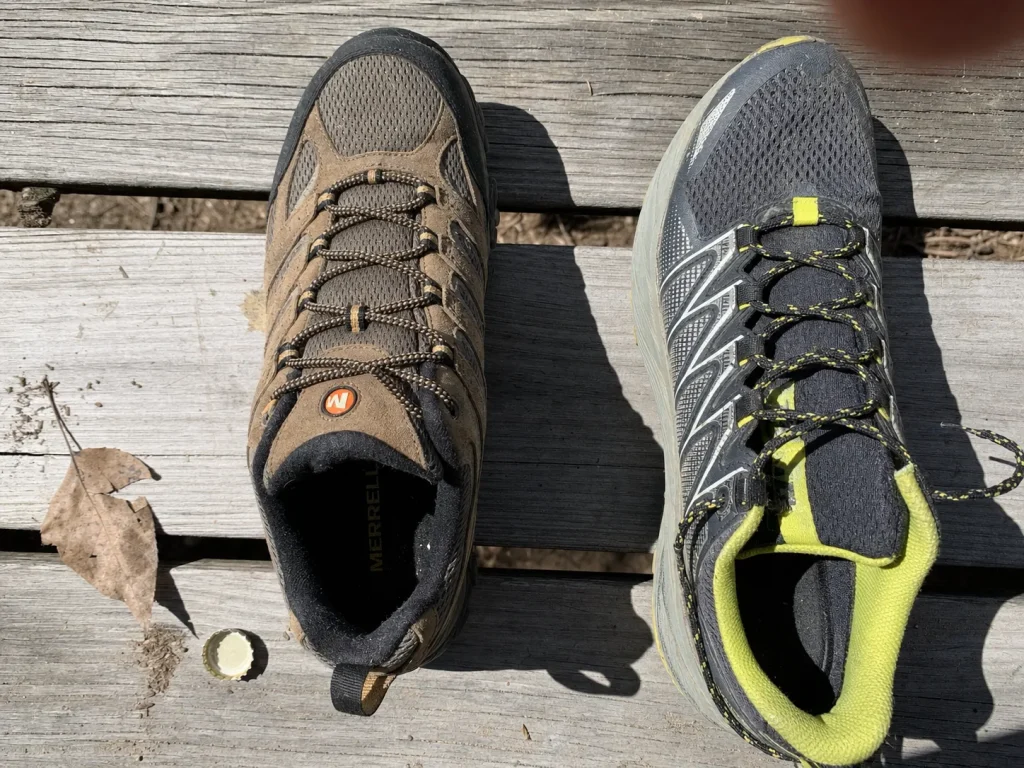
Upper material does the next chunk of the work. Suede and nubuck paired with a bit of abrasion-resistant mesh reads as outdoor lifestyle, the kind of shoe that looks at home with jeans. Full technical mesh with welded synthetic overlays reads as performance gear. Then there is colorway: muted earth tones, tans, olives and grays look intentional and wearable, while loud blue-and-orange trail colors mark a shoe as pure equipment. Neither is wrong, but they send opposite messages.
How Much Branding Is Too Much
The last lever is branding density. A small logo on the heel and a clean toe reads confident and understated. Big logos slapped across the side panel, reflective hits and busy graphics all push a shoe toward “athletic gear” and away from “shoe you would wear to lunch.” Minimal branding almost always looks more expensive than it is, which is handy when you are shopping the budget end.
Here is the part nobody tells you: stylish is not one look. The slim minimalist silhouette and the chunky max-cushion dad-shoe are both legitimately in style right now, just pointing in opposite directions. Pick the lane that matches how you dress, not the one a reviewer told you was “the” aesthetic.
The Style-vs-Performance Trade-Off Nobody Admits
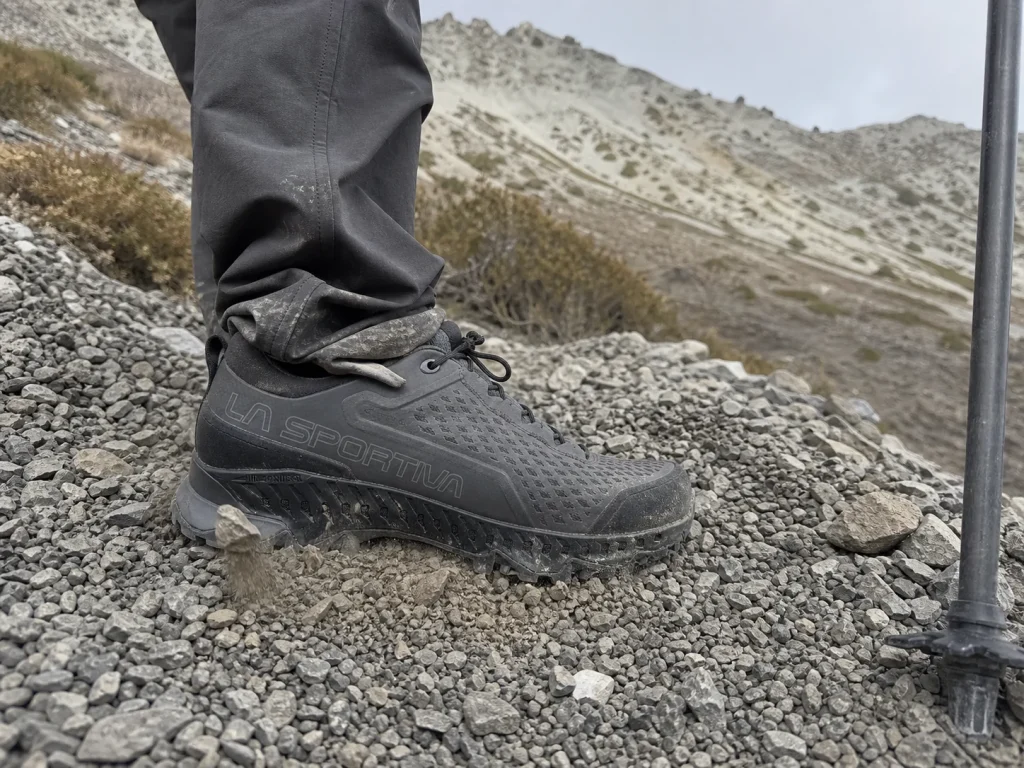
Step onto a patch of loose scree in a slim, street-leaning shoe and you feel it immediately: the missing underfoot protection a chunkier trail runner would have given you. That is the moment the style-versus-grip trade-off stops being an abstract idea and starts being the rock you can feel through your arch. Most roundups either ignore this or wave at it vaguely, so here is the mechanical reason it happens and when it actually matters.
Why Sleek Usually Means Less Protection
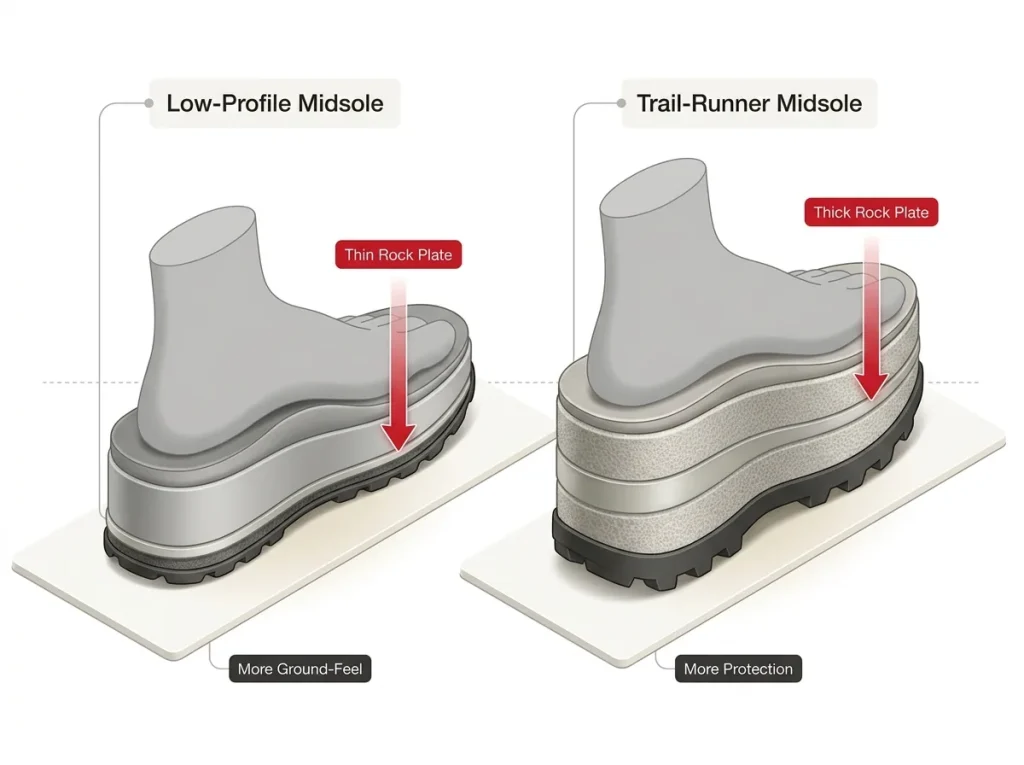
The rock plate is where the trade-off lives. A rock plate is the stiff layer between your foot and the ground that stops sharp rocks from bruising your sole. The catch is thickness: a TPU or nylon plate has to be roughly four to five times thicker than a carbon-fiber plate to reach the same rigidity, and all that thickness is added weight and lost ground-feel. To keep a shoe looking slim and low, designers often thin the plate out or skip it entirely. That is why the sleekest low-cut hiking shoe in a lineup frequently has the least protection underfoot, and it is worth knowing exactly how much a rock plate really changes the ride before you fall for a profile alone.
The Danner Trail 2650 is the clearest example. It is arguably the best-looking suede shoe in this whole guide, and reviewers consistently flag it as running narrow with a stiff underfoot feel and some heel slippage on technical terrain. None of that makes it a bad shoe. It makes it a groomed-trail-and-town shoe wearing the costume of a backcountry workhorse.
When the Trade-Off Actually Bites
The good news is the trade-off only bites in specific places. On packed dirt, gravel paths, and the walk from trailhead to coffee shop, a slim protection-light shoe is completely fine and often more comfortable. Where it turns into a liability is loose scree, wet rock, steep off-camber sections, and any day you are carrying a heavy pack that drives your feet harder into the ground. The traction compound matters just as much as the plate here, and it is worth knowing which outsole grip compounds actually hold on wet rock before you trust a good-looking sole on a slick descent.
The most common mistake is buying the best-looking shoe in the shop and then taking it somewhere it was never built for. As the American Hiking Society puts it, footwear has to be supportive as well as protective, not just comfortable in the first ten steps. Match the shoe to your actual terrain, and the looks become a free bonus instead of a hidden cost.
If you only own one pair and it leans stylish, save it for your groomed and mixed days and keep an old rugged shoe for scree and heavy-pack trips. A good-looking shoe worn on the wrong terrain looks a lot worse after one turned ankle than it ever did in the box.
The Sleek and Minimalist Picks
If your idea of a good-looking shoe is one that vanishes into street clothes, this is your lane. Clean lines, low stacks, and minimal logos, the kind of shoe nobody clocks as hiking gear until you tell them.
Arc’teryx Kragg, Clean Technical Lines
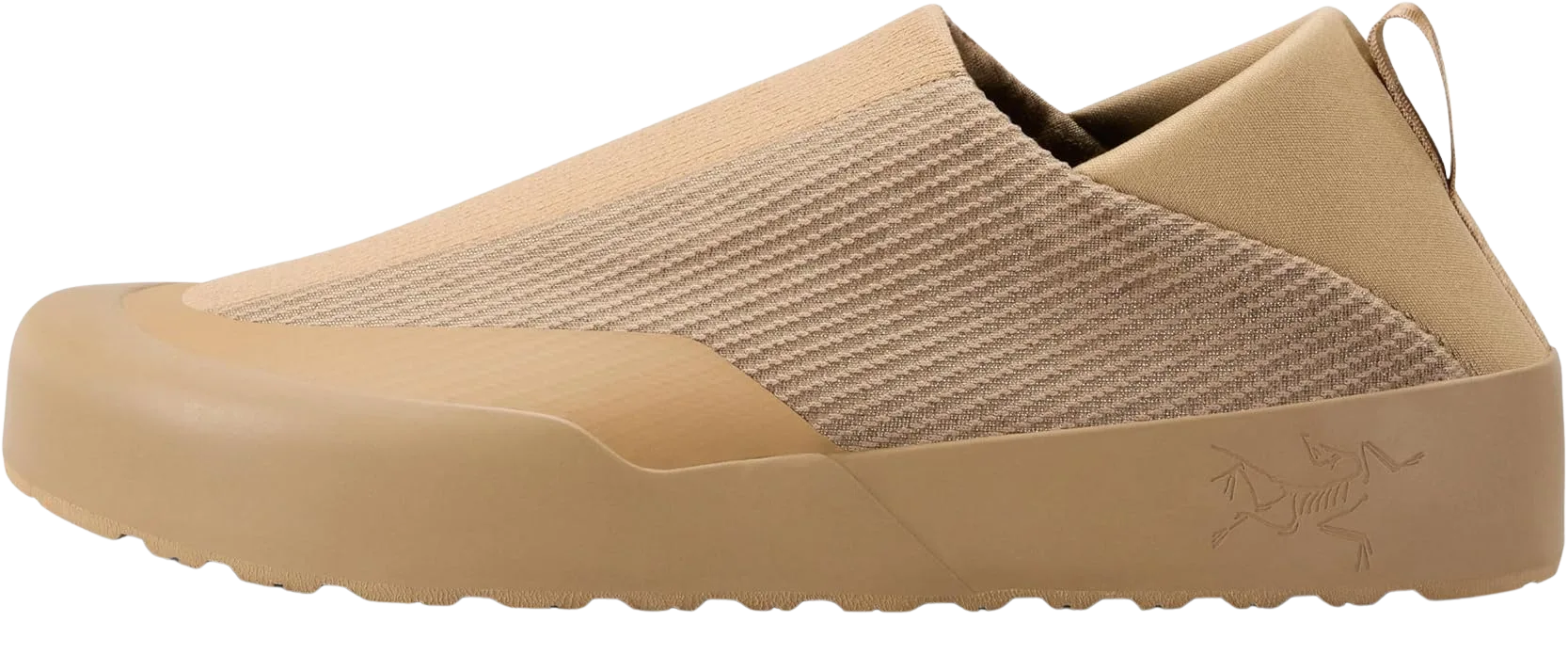
The Kragg sits at the premium end, and you are paying for the restraint as much as the build. It is a low-profile shoe with a technical upper that keeps branding almost invisible, which is exactly why it looks expensive and intentional. As a lane, it is the opposite of a loud trail runner: this is the shoe for someone who wants people to notice the outfit, not the footwear. On performance, treat it like the sleek shoes above, best on groomed trail and town use rather than gnarly technical days.
On Cloudrock Low Waterproof, Sharp Silhouette, Real Stability
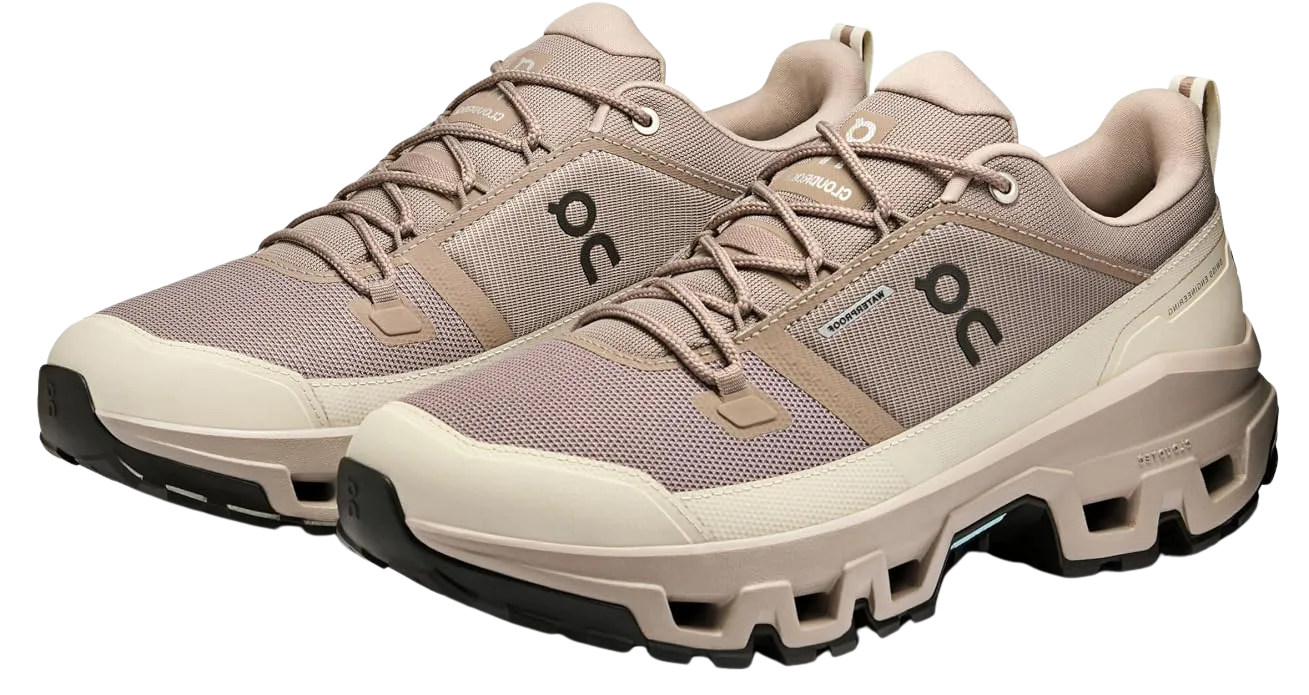
The Cloudrock Low is the shoe reviewers keep reaching for when they need to explain what a sleek hiking shoe looks like, because it nails the sharp silhouette without looking fragile. The waterproof membrane and low-cut stability make it a genuine dual-use shoe for cooler, wetter months, when you want dry feet on the trail and a shoe you would not change out of for lunch. It pairs naturally with the kind of everyday wear that blurs the line between a walking shoe and a light trail shoe, which is exactly the point. Just remember the membrane runs warmer in summer heat, a trade-off worth planning around.
The Heritage and Earth-Tone Picks
This is the suede-and-muted-tones lane, the outdoor lifestyle look. These read “I hike” without shouting it, and they are the shoes most likely to get a compliment off the trail.
Danner Trail 2650 GTX, The Heritage Standout
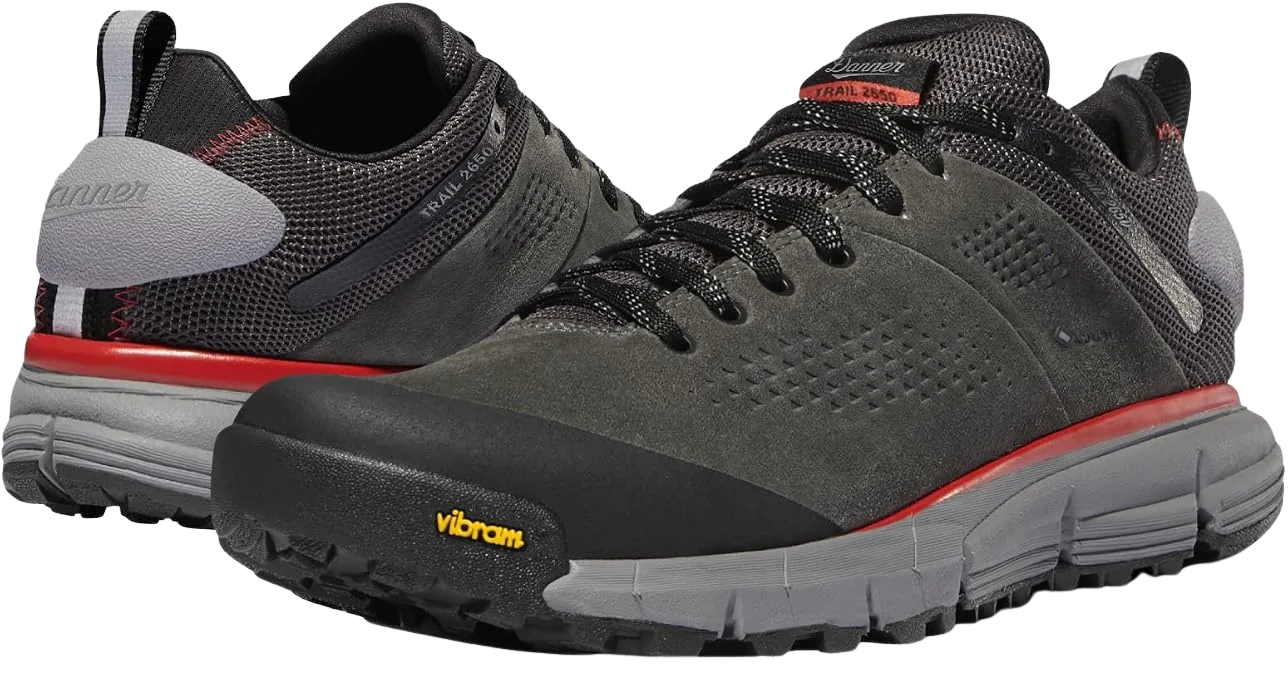
Nobody is arguing about how the Trail 2650 looks, and the suede upper is a big reason why: it reads as an outdoor-lifestyle shoe you would happily wear to dinner. The Vibram Megagrip outsole is genuinely good, so the grip is not the compromise here. The fit is. It runs narrow with a stiffer underfoot feel than the numbers suggest, so if you have wider feet or you are eyeing rough terrain, try before you commit. A suede-and-leather upper like this also takes real time to soften up, so plan for how long a leather upper takes to break in before a big day out.
Oboz Katabatic Low B-DRY, Earth Tones With a Rock Plate
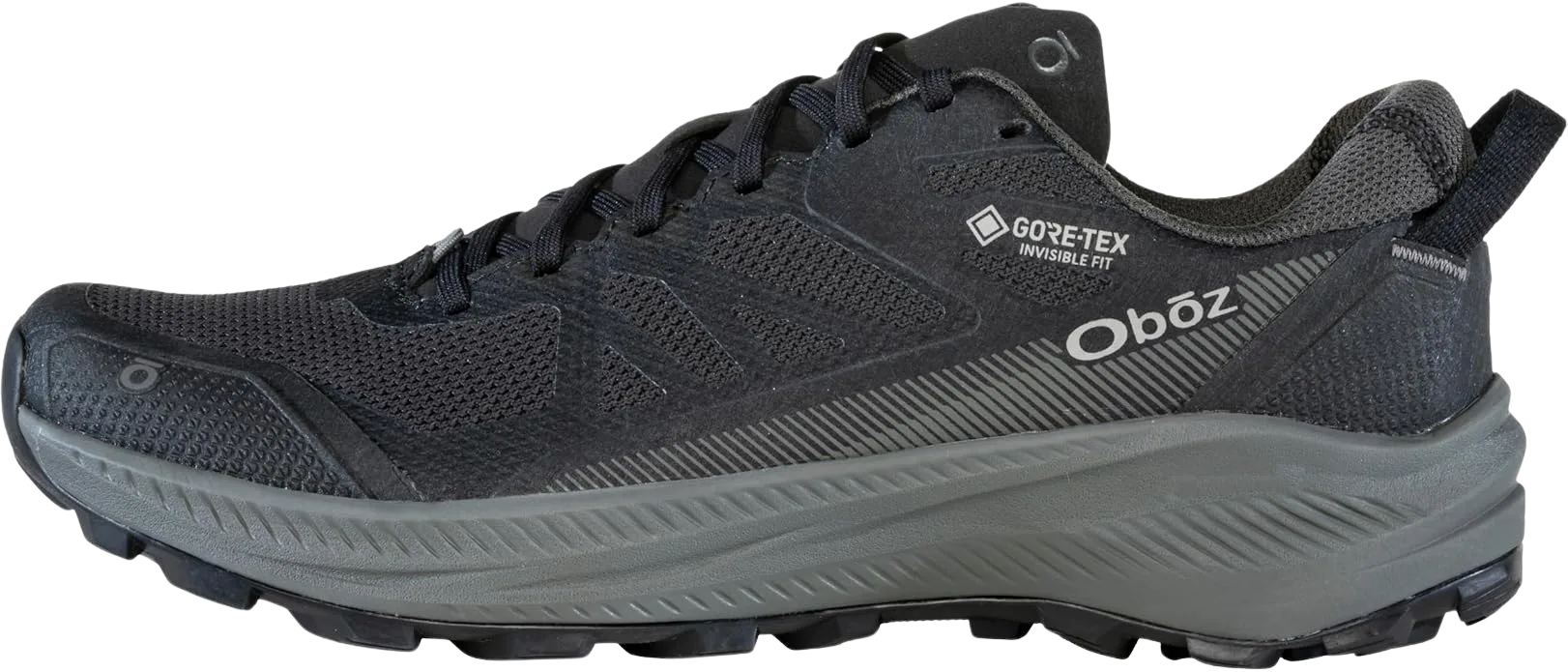
The Katabatic Low is the answer to the whole trade-off problem: it keeps the muted, minimal-branding look that reads stylish, but it actually has an ESS rock plate doing real work underfoot. That is the honest middle ground a lot of good-looking shoes skip. You get earth-tone colorways that wear well off the trail and genuine protection when you point it at rockier ground, which is a rare combination in this category. If you want one shoe that splits the difference between looks and grip, this is the most sensible pick in the guide.
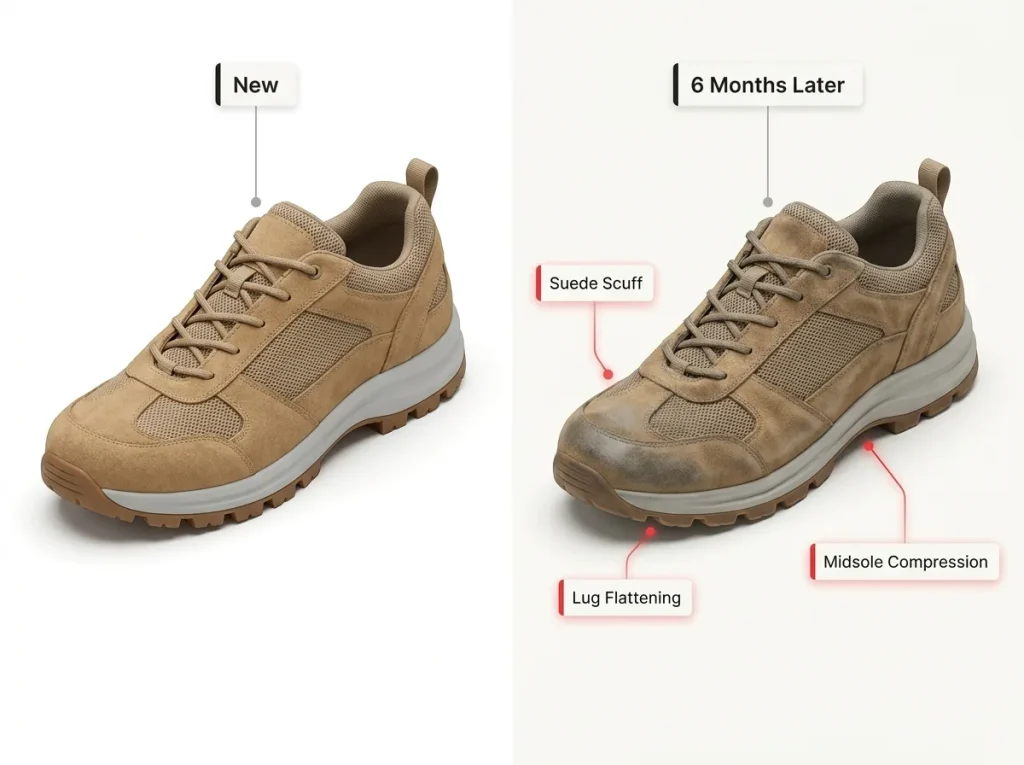
Earth-tone suede looks great and hides trail dust, but it shows city scuffs fast. A cheap suede brush and a protector spray, used before the first wear, buys you months of that fresh look. Skip it and the toe box starts looking tired weeks sooner than the sole ever wears out.
The Cushioned Trail-Runner Picks
Style is not only slim. The chunky, high-stack trail-runner look is its own aesthetic now, the so-called dad-shoe lane, built on a tall stack height and a cushioned low heel-to-toe drop that rides soft enough to wear all day off the trail. Trail runners have quietly become some of the most stylish and versatile options over traditional hiking shoes, and these two lead the pack.
HOKA Speedgoat 6, The Max-Cushion Look
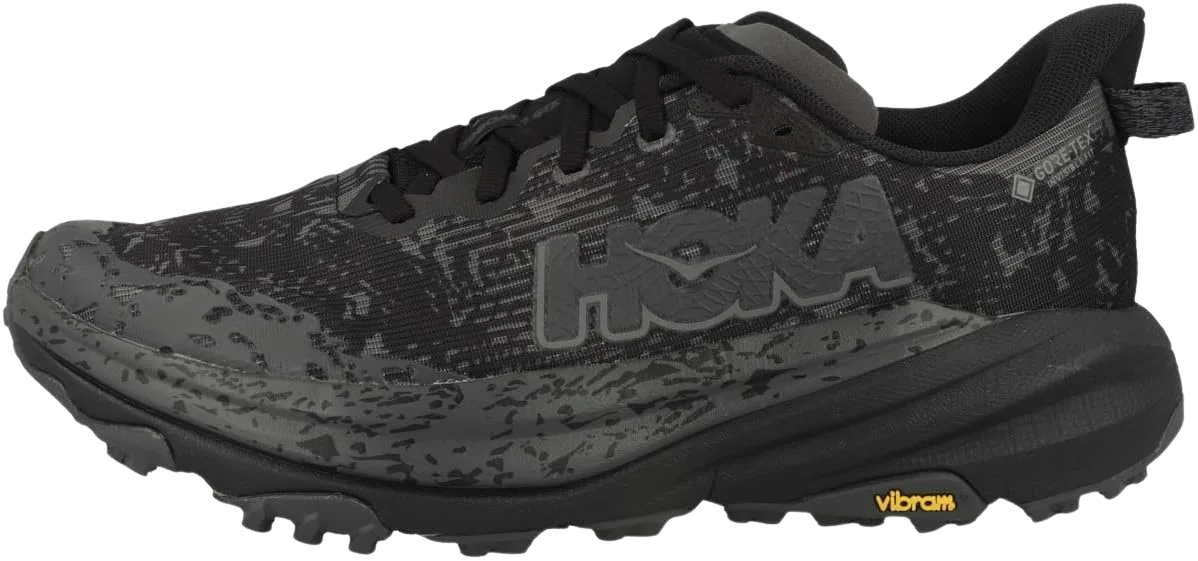
The Speedgoat is the shoe that made the max-cushion look mainstream, and the sixth version keeps the tall, unmistakable stack that either you love or you do not. Underneath the aesthetic it is a legitimately good trail runner, soft over long miles and grippy on dirt and moderate rock. Because the max-stack cushion rides so comfortably, plenty of people wear it as a pure street shoe and never take it near a trailhead, which is the whole appeal of this lane. If the dad-shoe look is your thing, this is the definitive version of it.
Saucony Peregrine 16, Budget Trail-Runner Style
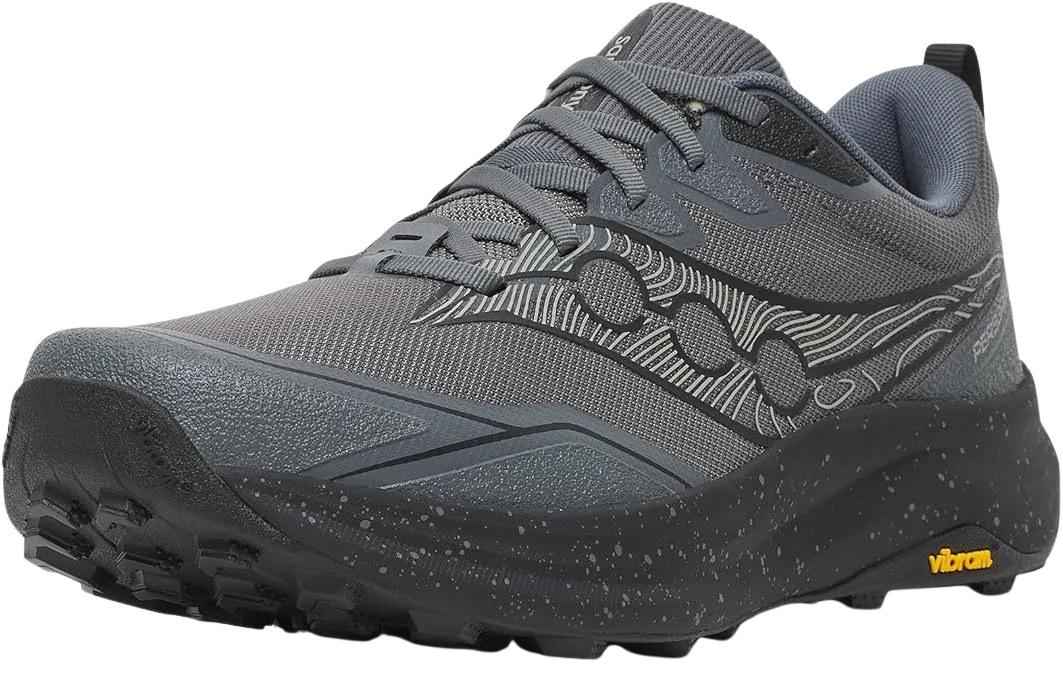
The Peregrine is the smart-money version of the trail-runner look. It costs a fraction of the premium picks, keeps branding low-key with a road-shoe-adjacent profile, and grips hard thanks to a Vibram Megagrip outsole. The PWRRUN foam is firmer than the HOKA’s plush stack, which some people prefer for ground-feel, and it doubles happily as an everyday shoe. If you like the trail-runner aesthetic but not the premium price, this is where to start.
The Budget-Stylish and No-Compromise Picks
Two picks that break the usual rules. One proves a good-looking shoe does not need a premium price, and the other proves a sleek profile does not have to mean soft on rock.
Merrell Moab 3 Low GORE-TEX, The Value Pick Nobody Names
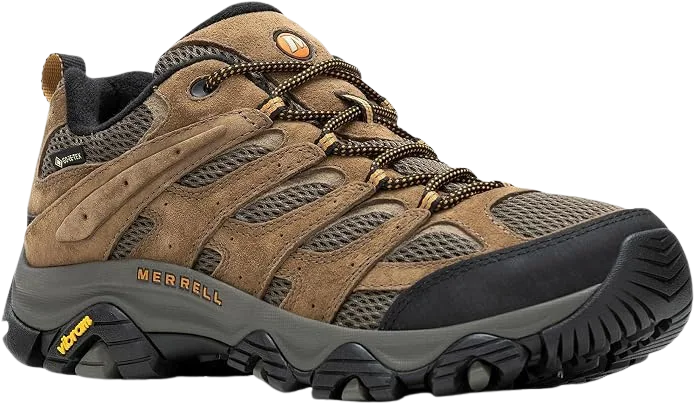
Here is the gap every other guide leaves open: they all name premium stylish shoes and stop there, as if looking good requires spending big. The Moab 3 Low proves otherwise. Its understated silhouette and neutral colorways read clean and casual, the GORE-TEX keeps your feet dry, and it is one of the most forgiving out-of-the-box shoes you can buy, which is why it is such an easy call for beginners. It is not trying to be a fashion statement, and that restraint is exactly why it works as a budget hiking shoe that still looks the part.
La Sportiva Spire GTX, Sleek That Refuses to Compromise
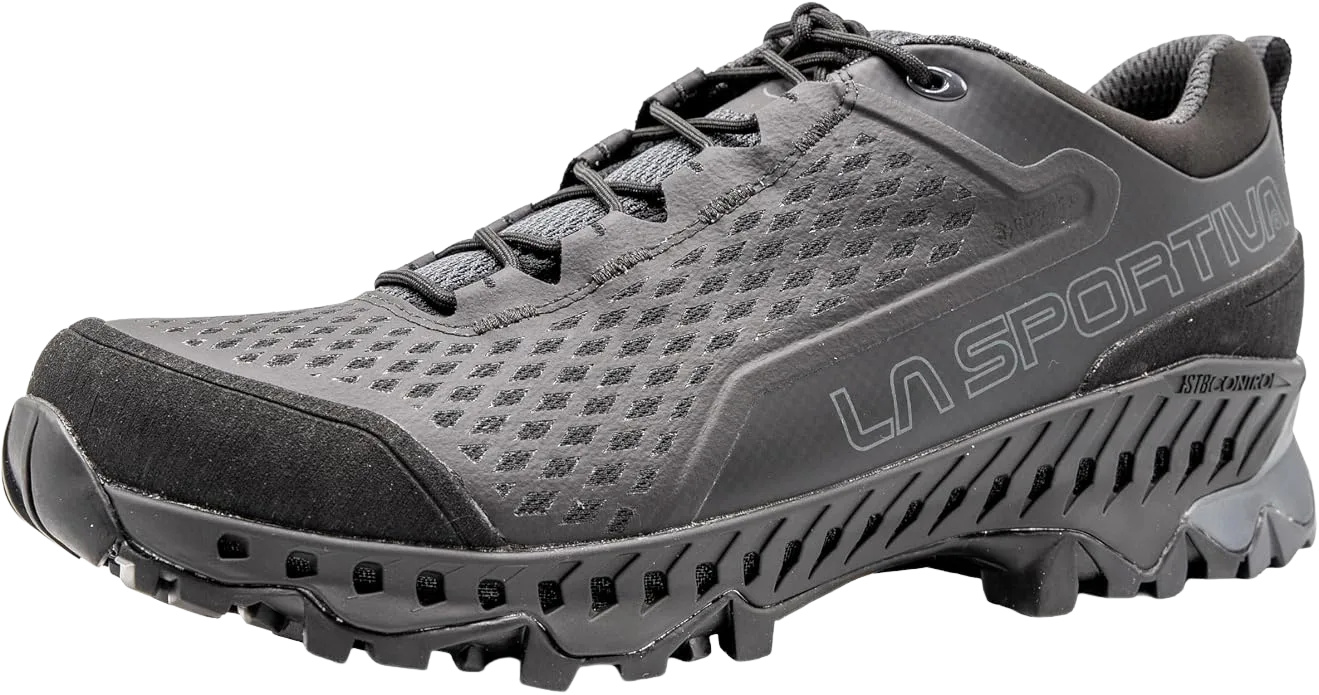
Remember the trade-off from earlier, where sleek usually means less protection? The Spire GTX is the shoe that refuses to play along. It has a slim, sharp technical last that genuinely looks good, but underneath it carries real trail performance with sticky rubber and a GORE-TEX membrane. This is the pick for someone who wants the low-profile look and plans to point it at actual technical ground. Because it has more structure and torsional rigidity than a soft trail runner, it also tends to suit hikers who want stability, including those looking at options with more arch support for flatter feet.
Waterproof or Breathable Which Look Fits Your Hikes
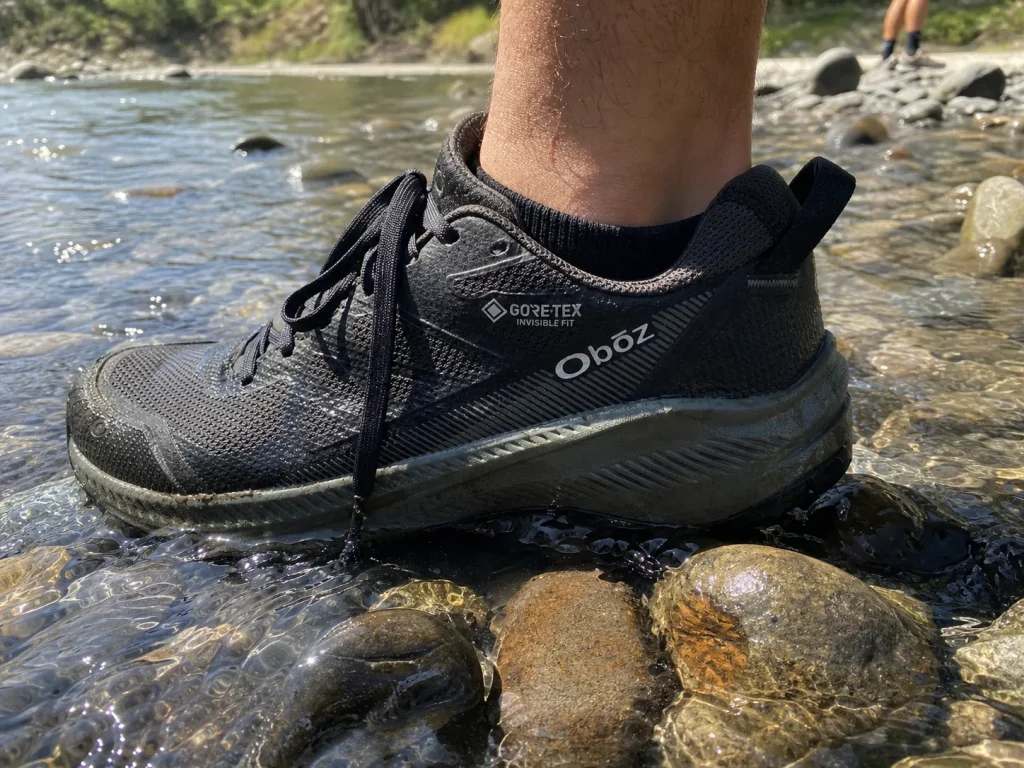
A waterproof membrane looks the same on the shelf, but it changes how a shoe wears in July heat, and most of these picks come in both a waterproof hiking shoe version and a breathable one. Choosing wrong is one of the most common mistakes people make, so match the build to your real hikes, not to a default assumption that waterproof is always better.
When a Membrane Earns Its Keep
A GORE-TEX or B-DRY membrane keeps your feet dry in cold, wet, and shoulder-season conditions, and most of the sleeker style picks here, including the Danner, On, Oboz, Moab, and Spire, are membrane shoes. That is partly aesthetic: a sealed upper looks smoother and more finished than open mesh. If your hikes involve dewy mornings, snowmelt, mud, or genuine cold-weather days, the membrane earns its keep as a cold-weather hiking shoe and keeps the shoe looking clean longer. The real breathability cost of a Gore-Tex shoe is worth understanding before you assume waterproof is the safe default.
When Mesh Wins
For hot, dry hiking, a breathable mesh upper wins easily. It runs cooler, dries in minutes after a water crossing, and never turns into the swampy sauna a membrane shoe becomes at high temperatures. Non-waterproof mesh also reads more athletic and technical, which suits the trail-runner lane. A non-waterproof mesh build is usually the more lightweight hiking shoe too, which helps on long hot days. The rule of thumb is simple: if your feet are more likely to get hot than wet, skip the membrane. A quick-drying shoe you can splash through and forget beats a waterproof one that traps sweat all afternoon.
How These Shoes Hold Up as Daily Drivers
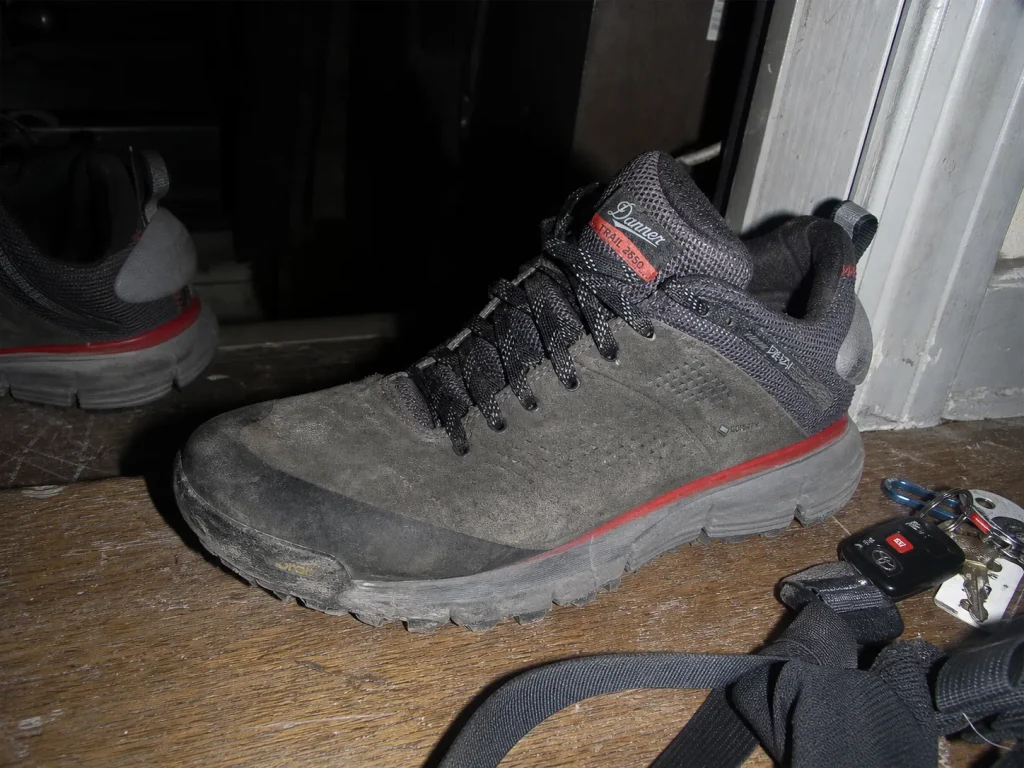
There is a specific moment that exposes the trail-to-tavern, one-shoe plan: you show up somewhere nice, glance down, and realize your do-it-all pair still has trail scuff on the toe and a faint dust line nobody at the table missed. Wearing a hiking shoe for both trail miles and everyday urban wear changes how it ages, and no other guide talks about it, so here is what actually happens after months of dual use.
How Dual-Use Wear Ages a Shoe
Urban concrete is far harder on an outsole than dirt is. The aggressive lug pattern that grips mud gets ground down noticeably faster on sidewalks and parking lots, so the traction you paid for fades exactly where you were not watching for it. It is worth knowing why lug depth matters more than it looks, because the shoe can look fine up top while the grip quietly disappears underneath. Suede and leather age differently too, picking up city scuffs and stains that trail mud never leaves, which is why an earth-tone lifestyle shoe can start looking tired long before the sole is done.
Making a Stylish Pair Last
The fix is mostly habit. If you can, rotate two pairs so no single shoe eats all your pavement miles, and reserve the good-looking pair for days that mix trail and town rather than pure city grind. Brush suede regularly and treat it before the first wear, air-dry membranes instead of throwing them in a hot dryer, and knock the trail dust off before it works into the seams. None of it is complicated, and it is the difference between a shoe that looks sharp for years and one that looks rough by fall.
How to Pick the Right Pair for You
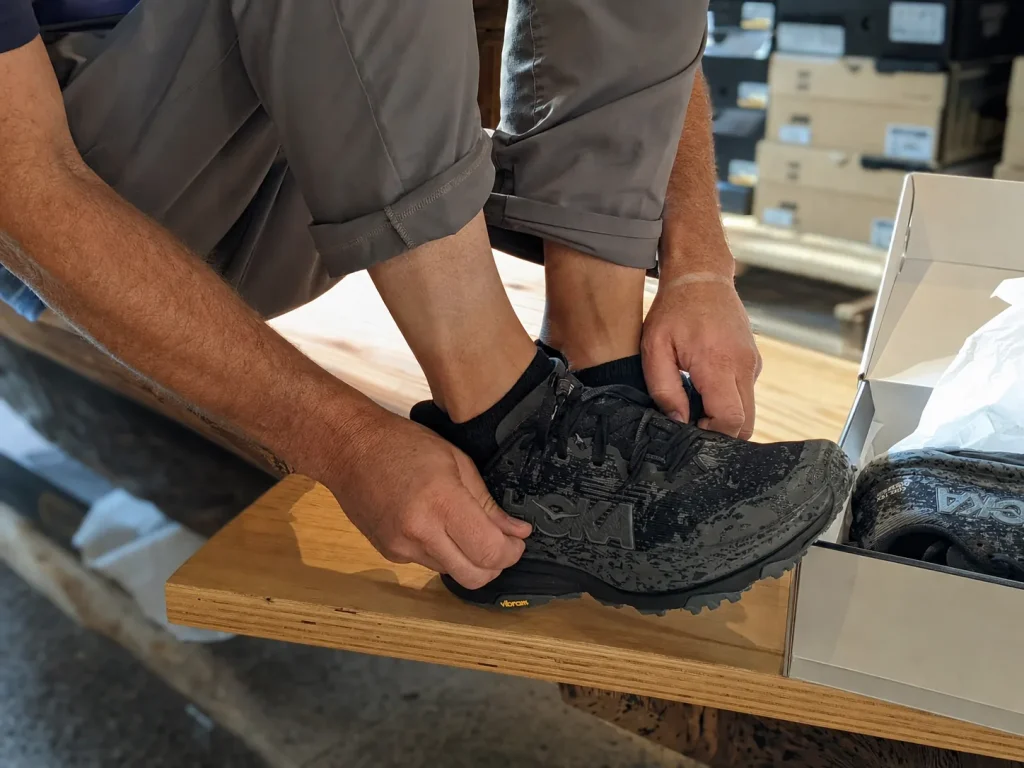
What a hiking buddy would actually tell you at the shop: get the fit right first, because a great-looking shoe that does not fit is just an expensive mistake you will wear twice. Everything about style is secondary to a pair that matches your foot and your terrain.
Getting the Fit Right
The fit rules do not relax just because a shoe looks good, and getting them right is your first line of blister prevention. Leave about a thumb’s width of space between your longest toe and the end of the shoe, and try shoes on toward the end of the day when your feet are naturally at their most swollen. The most common sizing mistake with stylish pairs is treating them like sneakers and buying your street size, then wondering why your toes hit the front on the first descent. If you have wider feet, pay extra attention here and look at the fit tweaks that matter for wider feet before committing to a narrow-running model like the Danner.
Shoe, Boot, or Trail Runner for Your Hikes
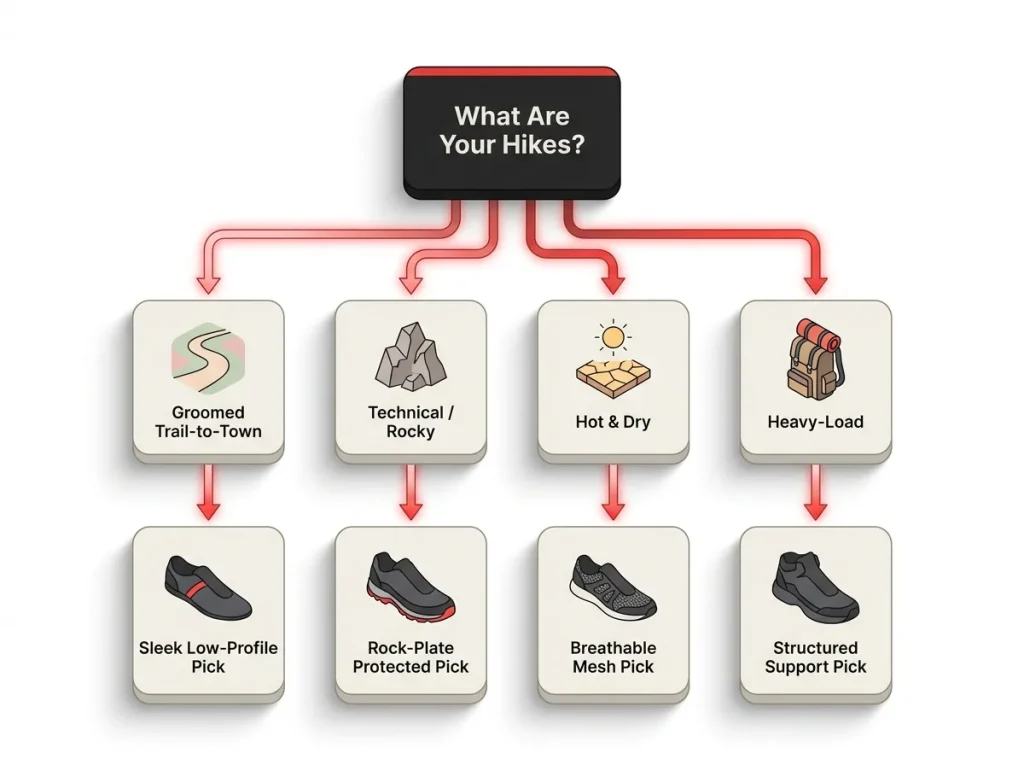
The last decision is category. A low-cut hiking shoe is the right call for the vast majority of trail-to-town use, giving you freedom and a casual look without the bulk of a boot. Reach for a mid-cut boot only when you are hauling heavy loads or want more ankle coverage on rough ground, and go trail runner when speed and all-day comfort matter most. If you are still deciding between shoe and boot, it is worth reading why low-cut hiking shoes beat boots for most hikes, because the ankle-support argument for boots does not hold up as often as people think. Match the category to your terrain and honest use, and the good looks take care of themselves.
Try shoes on with the socks you actually hike in, not the thin ones you wore to the store. Half a sock’s worth of thickness is enough to turn a perfect fit into a blister factory on mile eight. It sounds obvious, and it is still the thing most people skip.
Conclusion
Judge a shoe by the four visual levers, silhouette, material, colorway, and branding, not by the marketing adjective stapled to it. Accept that a sleek profile usually trades away some underfoot protection, and know that the trade-off only bites on scree, wet rock, and heavy-pack days. And remember there is a good-looking pick at every price and in every lane, so fit and terrain should make the final call, not the photo that caught your eye.
Pick the lane that matches how you actually dress and hike, nail the fit with the socks you really wear, and the looks stop being a compromise. Then go put some honest trail dust on them.
Frequently Asked Questions
01Can you wear hiking shoes casually, off the trail?
Yes, low-cut hiking shoes with muted colorways and minimal branding work well as everyday wear. The catch is uneven wear, since pavement grinds down aggressive lugs faster than dirt does, so rotate pairs if you can.
02Do stylish hiking shoes perform as well as rugged ones?
Often there is a small trade-off, since slim silhouettes tend to thin or skip the rock plate. But picks like the Oboz Katabatic and La Sportiva Spire keep real protection and traction in a sharp-looking package.
03What hiking shoes look good with jeans?
Low-profile suede or leather shoes in earth tones pair best with jeans, like the Danner Trail 2650 or Merrell Moab 3 Low. Look for a street silhouette and minimal logos rather than a chunky technical stack.
04Are trail runners more stylish than traditional hiking shoes?
They are a different look, not a better one. Trail runners like the HOKA Speedgoat lead the chunky max-cushion dad-shoe lane, while sleek low-cut shoes lead the minimalist lane. Both are genuinely in style right now.
05How do I keep suede hiking shoes looking good?
Treat suede with a protector spray before the first wear, brush it regularly to lift dust, and air-dry it rather than using heat. Rotating pairs also helps, since city scuffs show on suede faster than trail mud ever does.

I've spent more than a decade researching hiking gear and trail technique. I read the specs, the forum threads and the long-term reviews, and every pick here comes with what it gets wrong.
End of the trail
You read every mile of this one. Here's where the trail goes next.