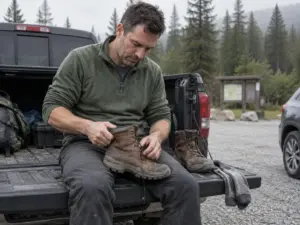
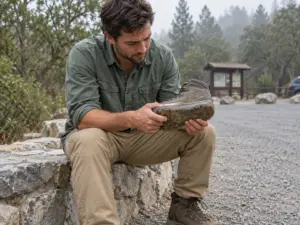
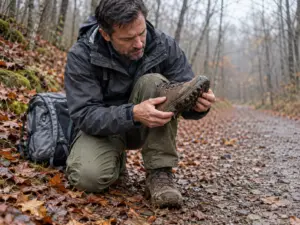

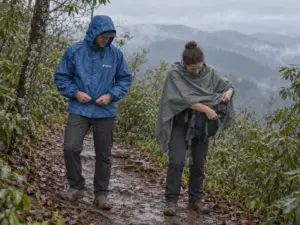
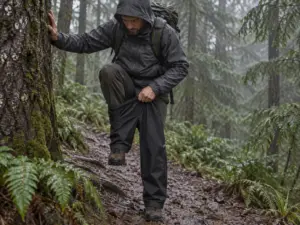
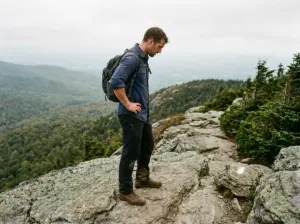
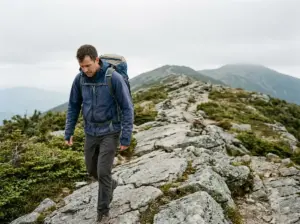

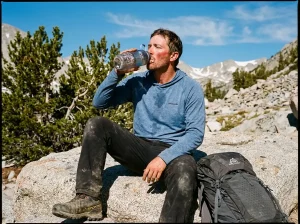
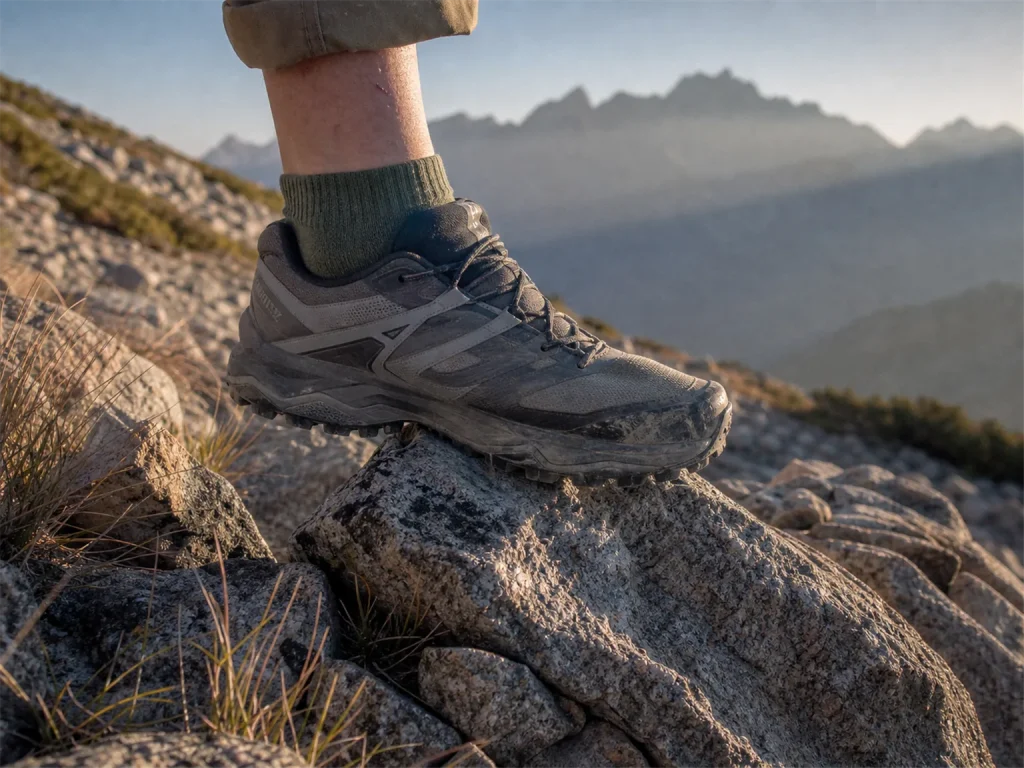
You’re three miles into a rocky stretch, the trail has turned to broken stone and pointed rock, and every step telegraphs straight up through your soles. By hour eight the balls of your feet are begging for mercy. That feeling, or the word rock plate buried in a shoe’s spec sheet, is what sends most hikers looking this term up. Here’s the honest part nobody leads with: the answer to whether you need one depends on your trail and your feet, and plenty of the advice out there is really written for trail runners, not hikers under a loaded pack. This walks through what a rock plate actually is, what it does, and whether yours is worth the trade.
What a Rock Plate Actually Is (and What It Does)
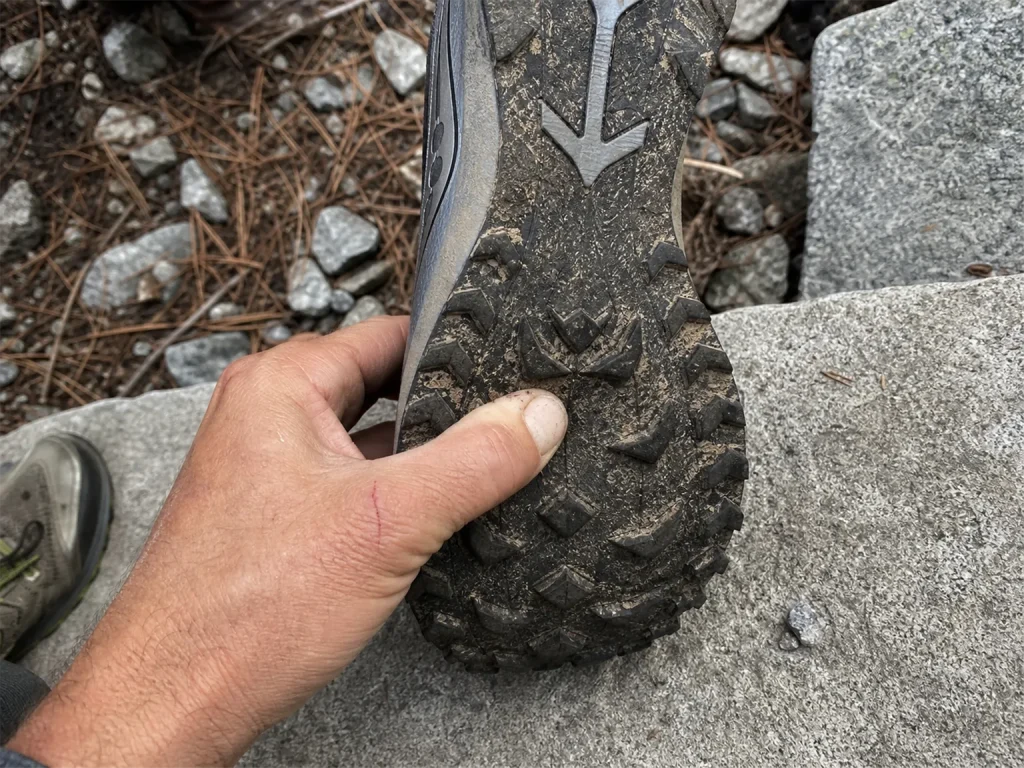
Strip away the spec-sheet mystique and a rock plate is just a thin sliver of stiff material tucked into the sole. In the carbon versions it’s barely thicker than a credit card. It isn’t some high-tech slab, and understanding where it sits tells you most of what you need to know about the low-cut hiking shoes and trail runners that carry one, which the pillar guide on which low-cut hiking shoes actually earn a place on most trails walks through in full.
Where the plate sits and what it’s made of
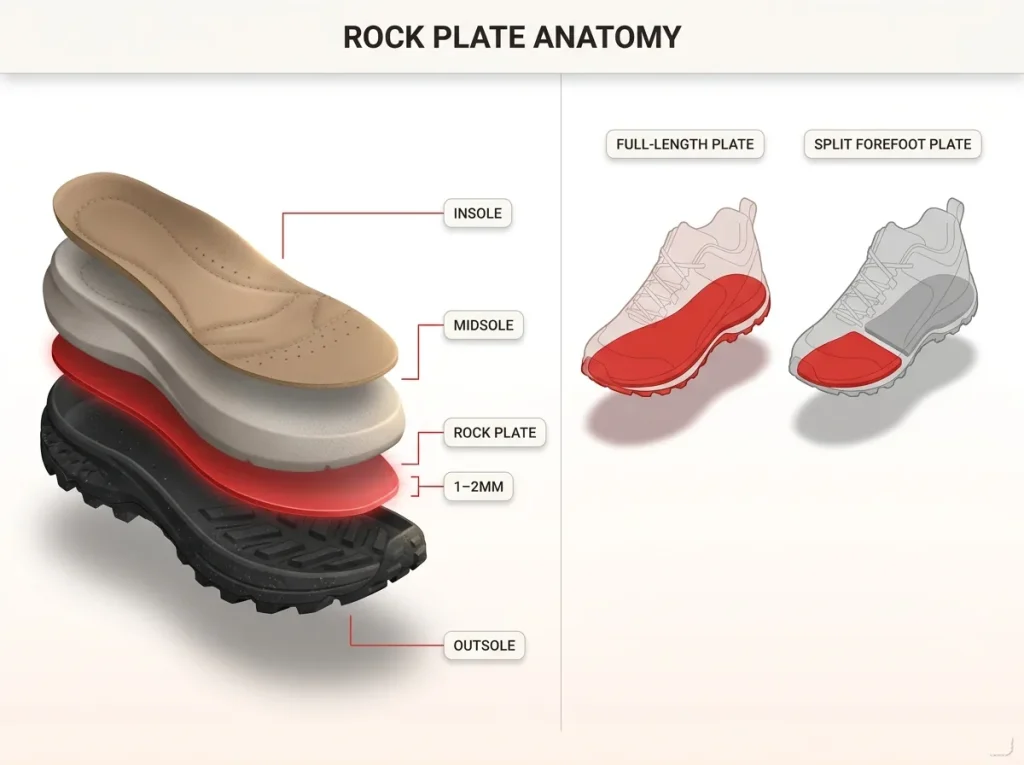
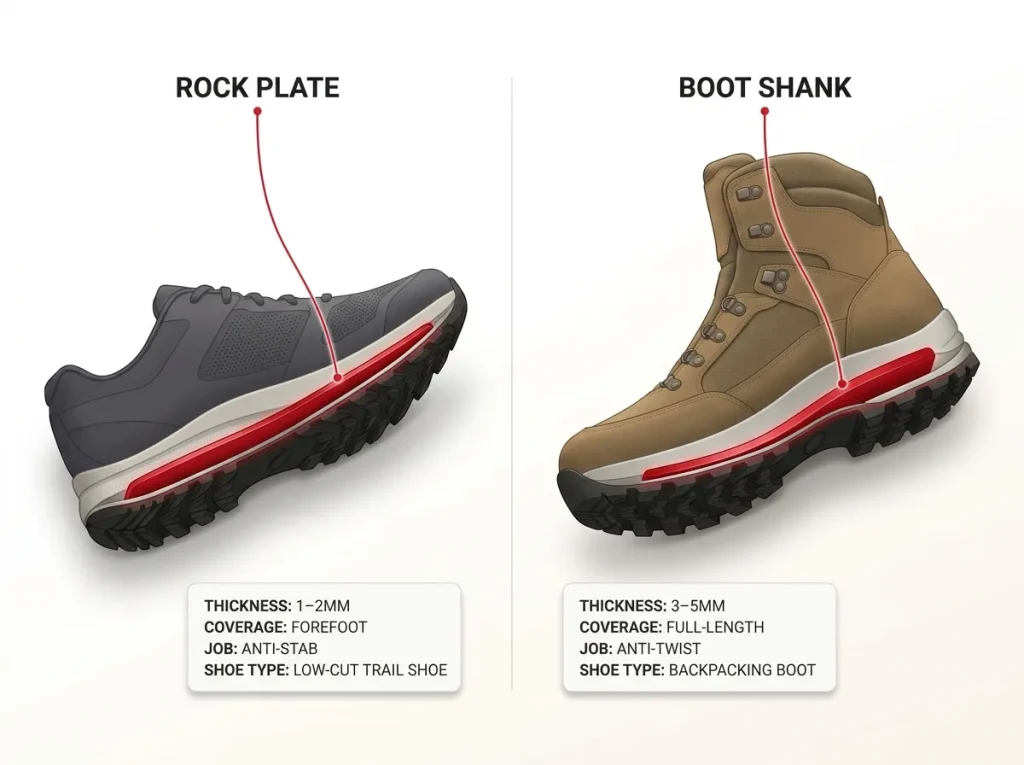
The plate is a firm layer between the midsole and the outsole, sometimes worked into the insole instead. It comes full-length or as a split rock plate covering just the forefoot or heel. Most plates run 1 to 2mm thick. Materials break down simply: TPU (thermoplastic polyurethane) and nylon flex more and cost less, while carbon fiber is lighter and stiffer for the same protection but pricier. The gap is bigger than it sounds. A TPU or nylon plate has to be four to five times thicker than a carbon plate to match the same rigidity, which is worth knowing before you pay up for the rest of the tech packed into a modern hiking shoe.
The three jobs a rock plate does
A plate does three things. It protects, blunting the impact of a sharp rock or root before it reaches your foot. It adds a little torsional stability, resisting some of the twist your foot takes on uneven ground. And it adds durability, stopping trail debris from working its way through to your sole over time. A shoe that carries a built-in full-length plate is the Saucony Peregrine 16 (men’s · women’s), a trail-running-derived hiking shoe with a grippy PWRTRAC outsole that shows what “has a rock plate” looks like in practice.
Here’s your first gut-check, and it’s a good one: a rock plate is functionally exclusive to trail shoes. A road shoe never carries one, because a rigid insert turns painful on pavement within minutes. If your shoe is rated for the gym or the sidewalk, it doesn’t have a plate.
Do You Actually Need One? Match It to Your Trail and Your Pack
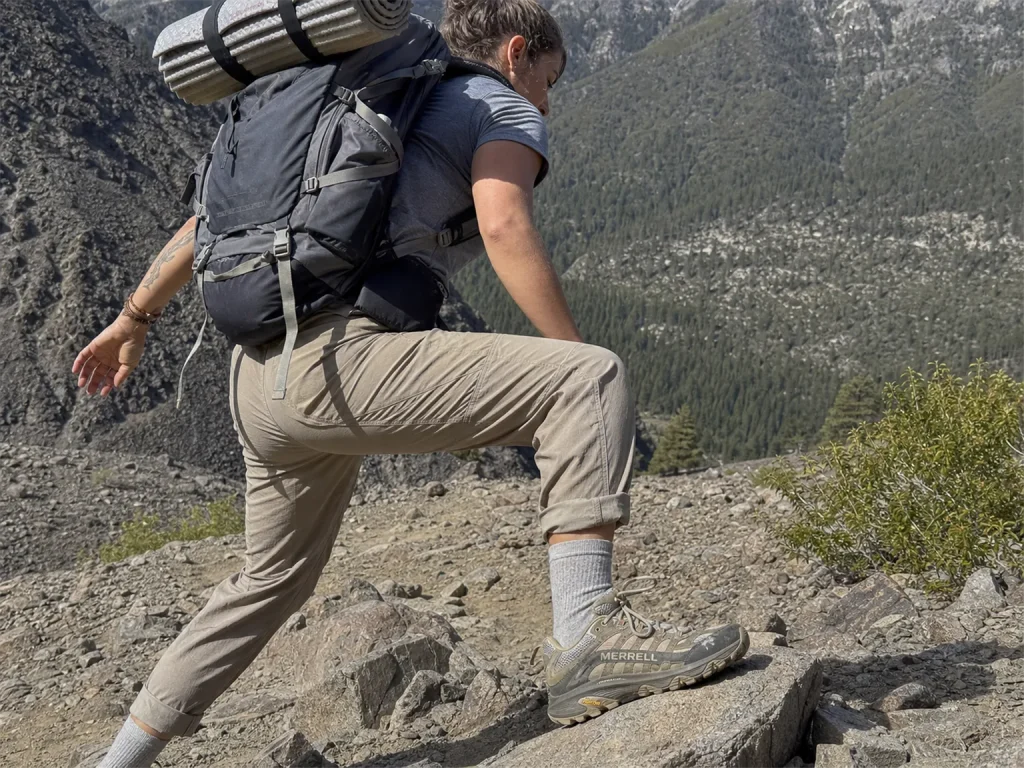
This is where hiking splits from trail running, and where most of the advice online falls apart. A day hiker in trail runners and a backpacker or thru-hiker under a full pack press their feet into rock in genuinely different ways, and almost nobody writing about rock plates makes that distinction.
Terrain: where a plate earns its keep
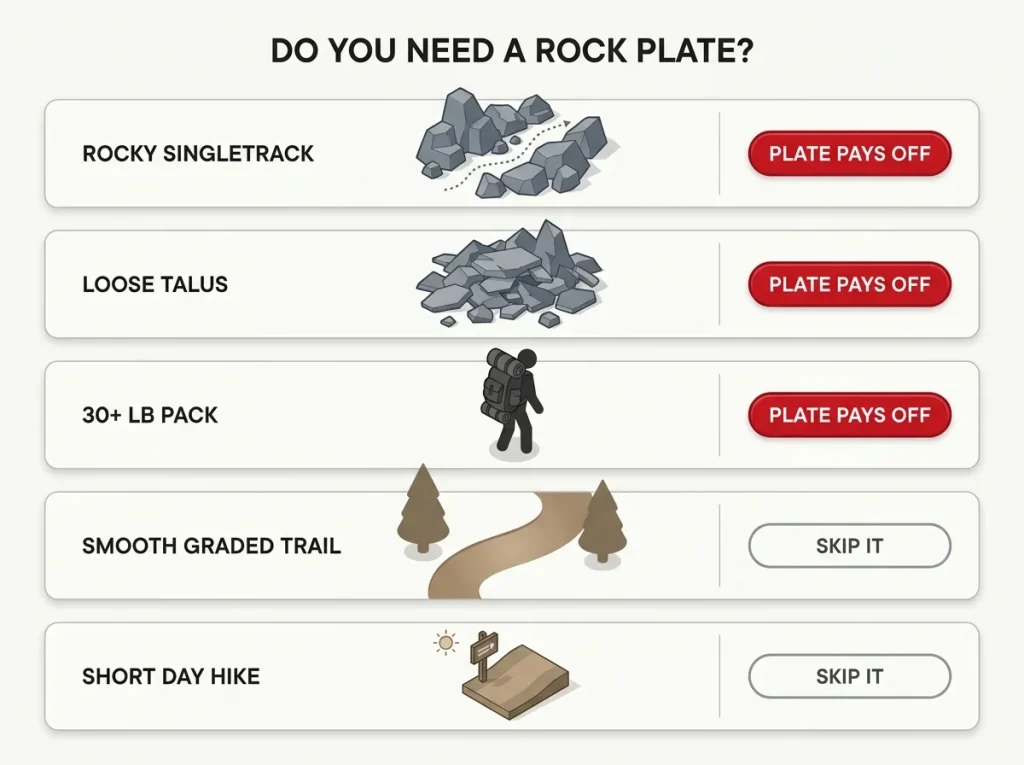
Start with the ground. Rocky, technical, rooty, or off-camber trail is where a plate pays off. Smooth maintained trail, packed dirt, or a deliberate minimalist approach is where you can skip it. That’s really the whole decision, and it’s the same terrain-first logic behind picking a shoe by the terrain instead of the label. If you spend your miles on groomed rail-trails and gentle forest paths, a plate mostly adds weight and stiffness you don’t need.
Pack weight changes the math
Here’s the part the running-focused articles miss entirely. A 20 to 40-plus pound pack presses your foot down into every rock harder and for longer than an unloaded runner’s foot ever does, at a slower cadence with more time under load on each step. More weight riding on top means more reason to want protection underneath. Once you factor in what your loaded pack actually weighs, the calculus shifts: a shoe that felt fine on unloaded day hikes can start letting rocks through once you’re carrying overnight gear.
That’s why a hiking-first shoe beats a repurposed racer here. The Merrell Moab Speed (men’s) and Moab Speed 2 (women’s) pair a full-length rock plate with an integrated toe cap and a Vibram outsole, built for hikers rather than podium chasers.
One warning worth taking seriously: don’t assume a thick, heavily cushioned shoe already has you covered. Cushioning softens impact, but a soft midsole still lets a sharp point drive through. Puncture protection and cushioning are two different jobs, and plenty of max-stack shoes do one without the other.
Match the shoe to the terrain and the pack, not the other way around. Thin-outsole shoes on sharp rock are exactly where hikers wish they’d had a plate. A smooth, graded trail with a light daypack doesn’t need one, no matter what the shoe box brags about.
The Trade-Offs Nobody Mentions Upfront
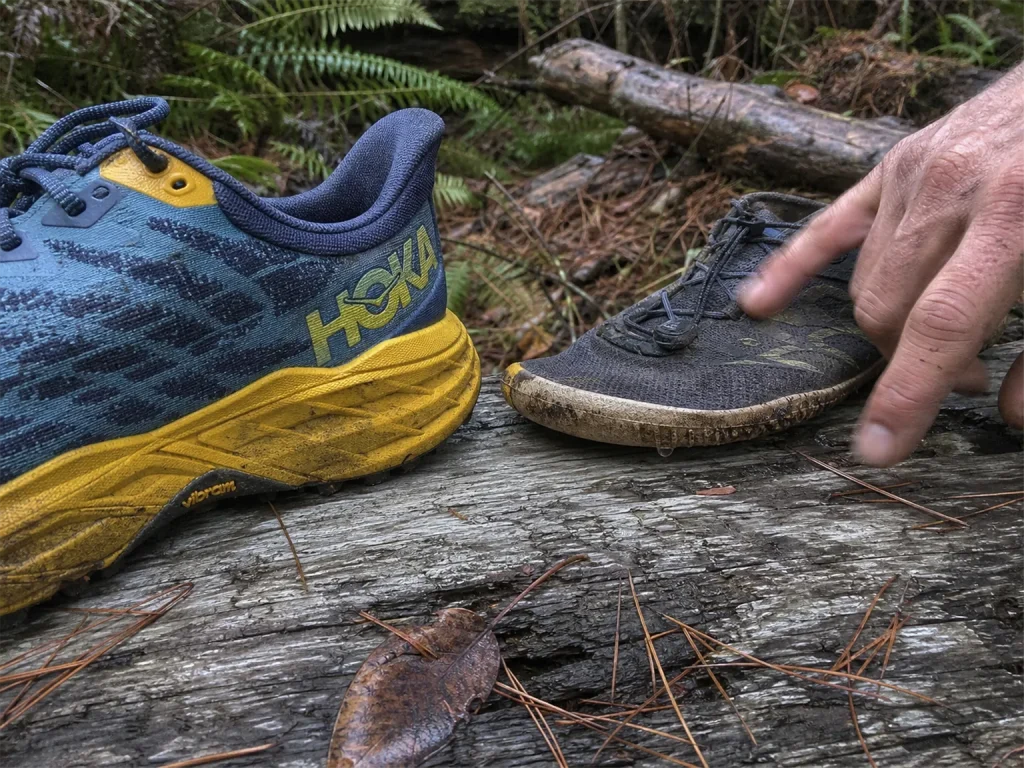
A plate isn’t free. You trade some ground feel and a little weight for protection, and the flashy “carbon equals free speed” story from road running doesn’t survive contact with an uphill trail.
Ground feel, weight, and stack height
The first cost is ground feel. A plate dulls proprioception, so you sense less of the trail underfoot. For some hikers that’s exactly the point. For anyone who likes a connected, nimble step, it’s a downside, which is why some hikers go the other direction toward minimalist, low-stack shoes that skip the plate on purpose. The second cost is weight, roughly a couple ounces per shoe. The often-cited number from the University of Colorado Locomotion Laboratory is that about 100 grams of added shoe weight raises metabolic cost by roughly one percent. Real, but small: you’ll notice it on a long day, not a short one. A plate can also raise the shoe’s stack height, which changes how your foot sits, and it adds to the price.
The carbon-plate hype (and why it doesn’t climb)
The carbon story deserves a hard look. A 2025 review of plated shoes found carbon plates gave no metabolic benefit on flat ground and actually cost about two percent MORE energy going uphill compared to non-plated shoes. The road-running dream of free propulsion simply doesn’t transfer to climbing a trail with a plate underfoot, and a 2025 systematic review of plated shoes found the energy cost of extra weight and stiffness swings sharply by terrain. Translation: don’t pay the carbon premium expecting a speed boost on your hikes. Buy the plate for protection, not propulsion.
There’s a comfort trade-off too. For some feet a rigid plate rubs wrong past the 10-mile mark, which is why experienced hikers sometimes keep two pairs, one plated for technical sections and one unplated for smooth miles, and swap by terrain.
Rock Plate vs. Boot Shank (They’re Not the Same Thing)
People swap these two terms like they mean the same thing. They don’t. A rock plate stops a sharp point from stabbing through your sole. A boot shank stops your whole foot from twisting on uneven ground. Sorting out what a boot shank is and when you actually need one clears up most of the confusion in one shot.
What each one actually does
A rock plate is thin, 1 to 2mm, sits underfoot, blunts sharp-point impact, and does not add real torsional rigidity. It lives in low-cut trail running shoes and hiking shoes. A shank is longer and stiffer, 3 to 5mm, runs most of the boot’s length, resists twist, and is sometimes crampon-rated. You find shanks in mid and high-cut hiking boots and backpacking boots. The plain-language split: a shank is anti-twist for the whole foot, a plate is anti-stab for one point.
Which one your pack weight calls for
Weight decides which job matters more. Once your pack pushes past roughly 30 to 35 pounds on mixed terrain, you’re in shank territory, because a low-cut shoe with a thin plate isn’t built for the torque a loaded frame puts through your foot. That’s a real threshold worth respecting. Light and fast on moderate trail leans toward a plate; heavy and rugged leans toward a shank.
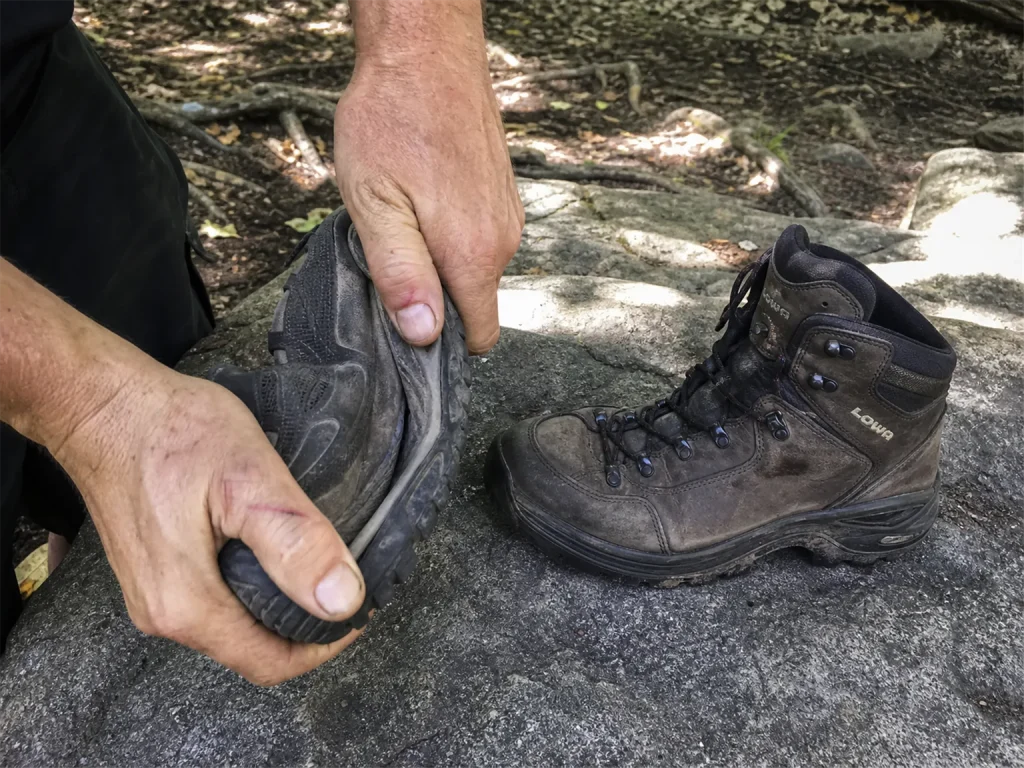
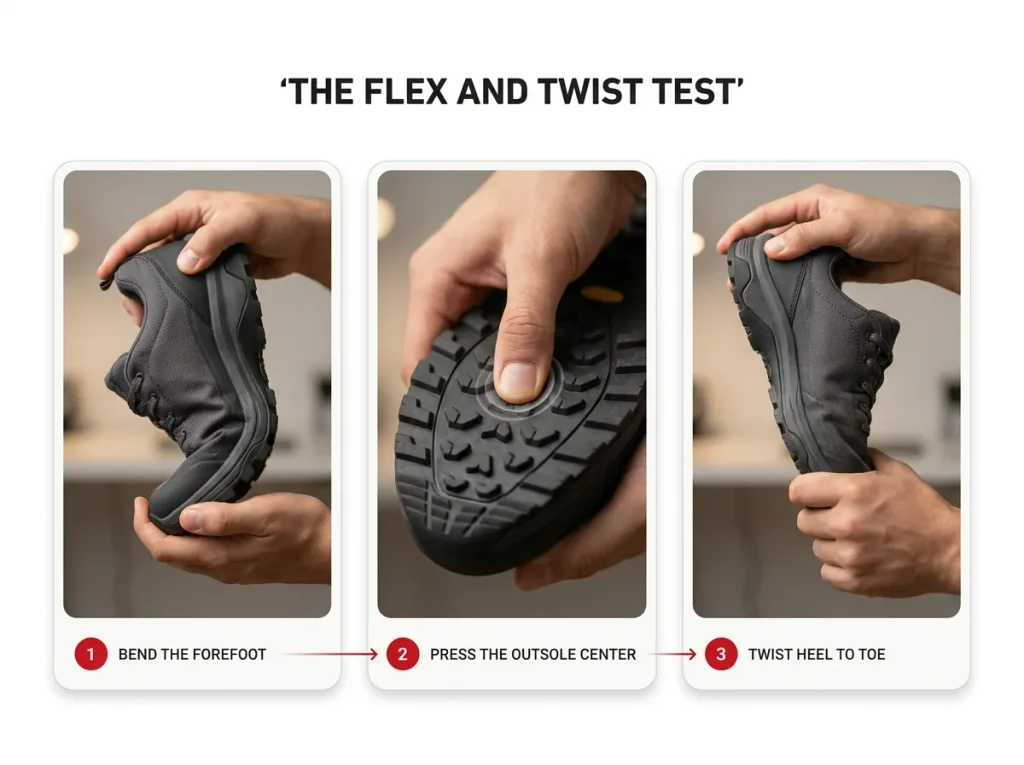
Try the twist test. Grab a shoe by the heel and toe and wring it like a dish towel. If it barely twists, you’ve got a shank-stiff boot. If it twists but won’t fold sharply at the ball of the foot, that’s a flexible plated shoe. Ten seconds tells you which job the shoe was built for.
How to Tell If Your Shoes Have One (and What to Do If They Don’t)
You don’t need the spec sheet to figure this out. And if your shoes don’t have a plate, here’s the honest range of options, including the one nobody wants to admit.
The three-second checks
Three quick checks tell you most of what you need. Look at the outsole rim for a visible plate edge. Do the flex test: a plated forefoot won’t fold sharply over your fingers the way an unplated one does. And when in doubt, check the manufacturer’s spec sheet, which usually names the plate if there is one. The road-shoe gut-check from earlier still applies too, because a shoe rated for pavement almost never hides a plate.
If your shoes don’t have one
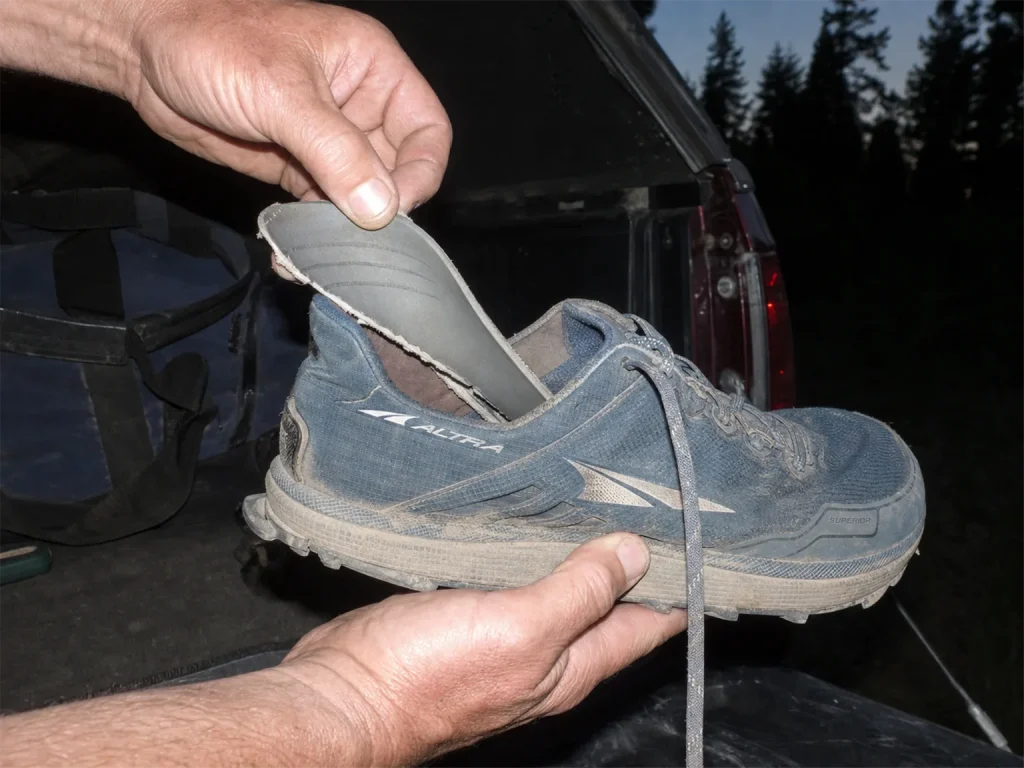
If your current shoes lack a plate, your cleanest option is a shoe designed with a removable rock plate. The Altra Superior is the standard example, with a StoneGuard plate that pulls out by hand from under the insole, so you can run it plated on rock and pull it for smooth miles. It’s the rare shoe that lets you choose per trip.
For everything else, the honest answer is that you mostly can’t retrofit a rigid plate into a shoe that wasn’t built for one. Any insert reduces the internal volume of the shoe, and forum consensus is that a thicker insert can cost up to a half-size of fit, turning a snug shoe too tight. Understanding how much room you’re giving up starts with swapping the insole that came with your shoes. Some hikers have gone fully DIY, cutting a piece of HDPE from a milk jug (about half a millimeter, often doubled up) and slipping it under the insole. It’s crude, and it mostly tells you how real the problem is rather than serving as a fix. Aftermarket insert brands like Sole Armor have come and gone over the years, but availability is inconsistent enough that it’s not something to count on.
Whose Feet Actually Need a Rock Plate Most

The abstract “prevents bruising” line everyone writes doesn’t tell you whether it means you. Here’s who genuinely feels the difference.
Plantar fasciitis, stone bruising, and sensitive feet
If you deal with plantar fasciitis or sensitive arches, a stiff layer of underfoot protection cuts down the sharp point-loads that set off a flare on rocky ground. It’s one more layer of margin, not a cure, but the hikers who swear by plates in fit threads are almost always the ones managing a foot condition. The same goes for anyone with a history of stone bruising, that deep ache in the heel or ball after a rocky day. If you’ve felt it once, a plate is the cheapest insurance against the next one, and it pairs well with the kind of supportive sole found in boots built around a plantar-fasciitis-friendly sole. Flat-footed hikers who already lean on stability shoes tend to notice the added protection too.
Weight and age
More weight on your frame, and less natural fat-pad cushioning as we age, means every rock lands harder, adding to foot fatigue over a long day. The plate’s protection scales with the load pressing down, so heavier and older hikers often feel the biggest difference. Worth keeping in perspective: most people already hike in footwear that fails basic foot-protection marks before they ever reach a rocky trail. A peer-reviewed footwear study found most people don’t even wear shoes that meet basic foot-health criteria, with only about 17 percent hitting the recommended standard. A rock plate is added margin, not a substitute for a shoe that actually fits.
If your feet have a bruising or plantar fasciitis history, treat a plate as cheap insurance rather than a luxury. The hikers who regret skipping it are almost always the ones who already know that deep-ache feeling after a rocky day. Match the tool to your own feet, not to the loudest review.
Conclusion
A rock plate is anti-stab protection, not the anti-twist support that a shank gives, so don’t expect one to do the other’s job. Whether you actually need one is a terrain-plus-pack call, not a universal yes: rocky ground and a heavy load say buy it, smooth trail and a light daypack say skip it. And if your feet carry a bruising or plantar fasciitis history, it’s cheap insurance worth having.
Before your next rocky trip, do the flex-and-twist test on the shoes you already own. In ten seconds you’ll know exactly what protection you’re walking on, and whether your trail is about to remind you it’s missing.
Frequently Asked Questions
01Do all hiking shoes have a rock plate?
No, plenty of hiking shoes skip it. Minimalist and lightweight models often go without one, and most road-leaning shoes never had a plate at all. Check the outsole edge, flex the forefoot, or read the spec sheet to know for sure.
02Can you feel a rock plate when you walk?
On smooth ground, barely, beyond a firmer and less bendy forefoot. On sharp rock you feel it working, turning pointed impacts into general pressure instead of a stab. Some hikers love that protection, while ground-feel fans find it numbing.
03How thick is a rock plate?
Usually 1 to 2mm. Carbon fiber plates run thinner for the same stiffness, while TPU and nylon plates are four to five times thicker to match a carbon plate’s rigidity. Either way, it’s a thin layer, not a slab.
04Are rock plates worth it for easy day hikes?
Often not. On smooth, maintained trails without a heavy pack, a plate mostly costs you ground feel and a little weight for protection you rarely need. Save it for rocky, technical, or loaded-pack days where sharp rock actually reaches your foot.
05Can you remove a rock plate from a shoe?
Only if it was designed to come out, like a few shoes with a plate you pull from under the insole. In a standard shoe the plate is bonded into the sole, so you can’t remove it, and forcing a rigid insert into a shoe that lacks one usually ruins the fit.

I've spent more than a decade researching hiking gear and trail technique. I read the specs, the forum threads and the long-term reviews, and every pick here comes with what it gets wrong.
End of the trail
You read every mile of this one. Here's where the trail goes next.