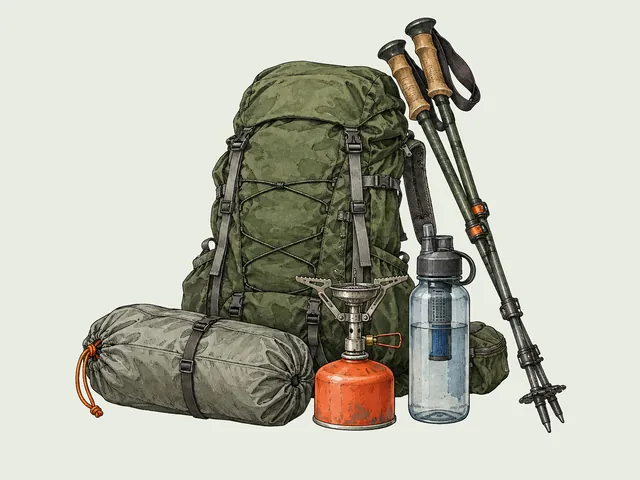
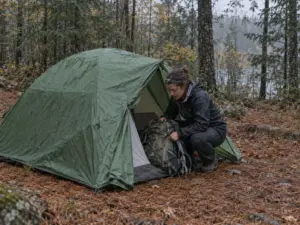
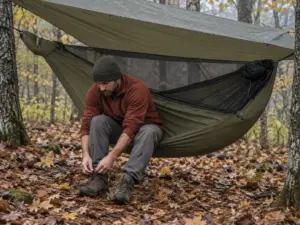
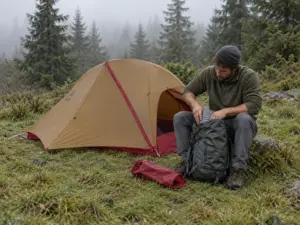








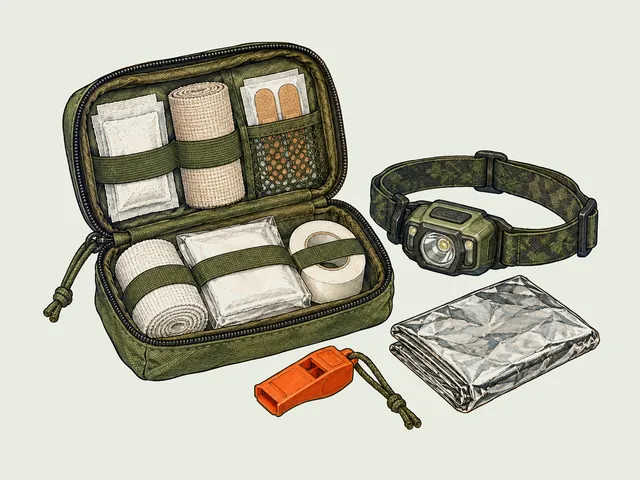

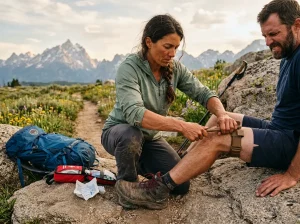

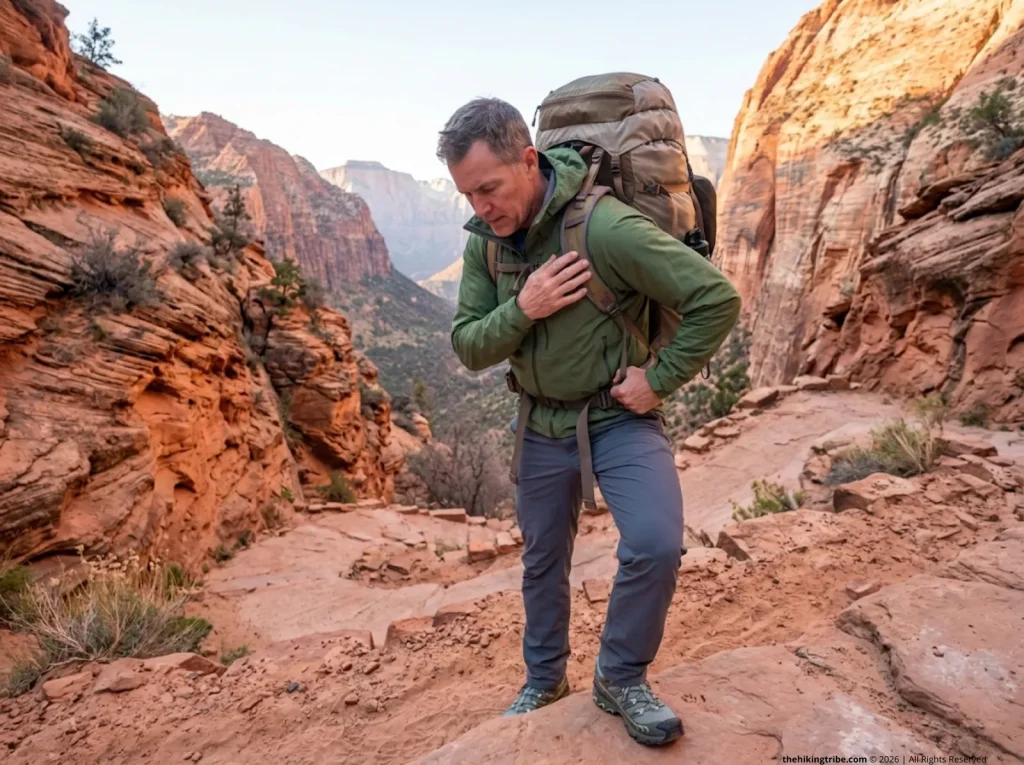
Mile 22 of a 4-day loop through Zion’s backcountry, and my knees were done. Not sore — done. Every downhill step felt like someone driving a nail into my kneecap. My pack “only” weighed 14 pounds at the start of that morning. But that was my base weight. By the time I added three liters of water, two days of food, and a full fuel canister, the actual load on my back was closer to 28 pounds.
I’d been measuring the wrong number for years.
After hundreds of miles testing gear and tracking every ounce across multi-day trips, I’ve watched dozens of hikers make the same calculation mistake. They obsess over one number while ignoring the one that actually determines whether their knees survive the trail. Here’s exactly how to calculate both — and why getting it wrong costs you more than you think.
⚡ Quick Answer: Base weight is everything in your pack except food, water, and fuel. Pack weight is your base weight plus those consumables — the actual load on your back at any given moment. Most hikers confuse the two, which leads to inaccurate comparisons and poor gear decisions. To calculate yours, weigh every non-consumable item individually, log it in LighterPack, and compare against the 20% body-weight threshold for total pack weight.
The Definitions That Trip Everyone Up
What Base Weight Actually Means (And the Items People Miscategorize)
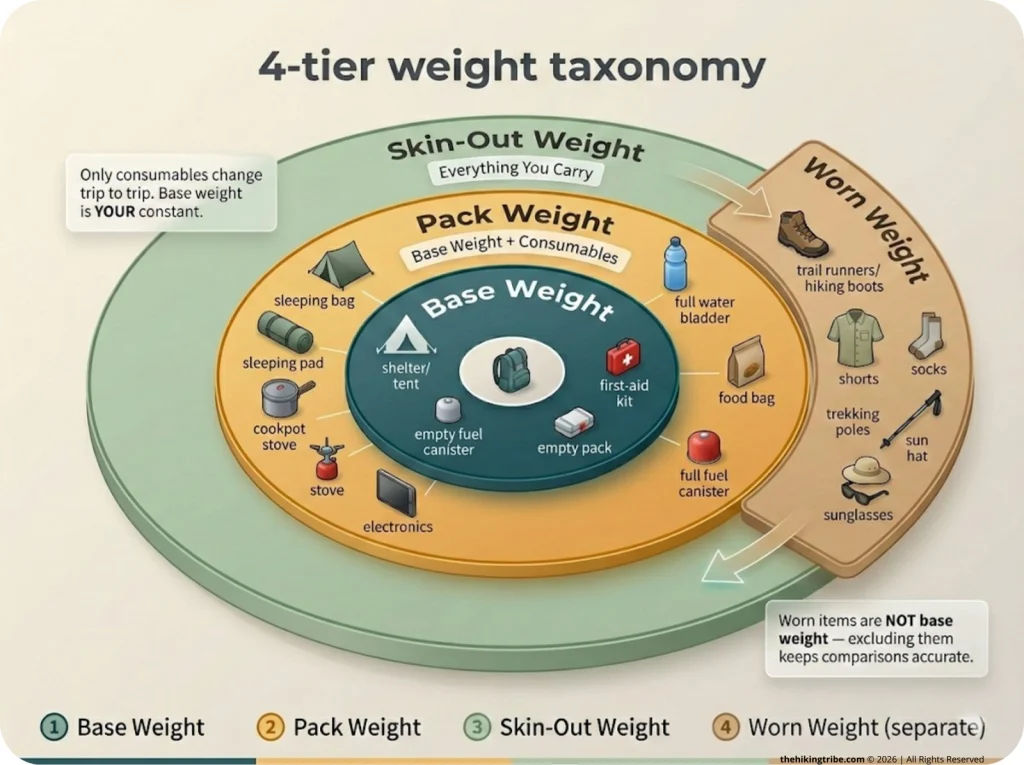
Your base weight is the total weight of everything in or attached to your pack, minus consumables — food, water, and fuel. That’s it. If it stays the same weight from the trailhead to the finish, it’s base weight. If it gets lighter as you go, it’s a consumable.
Simple enough, right? Except most hikers get tripped up by the edge cases. Your shelter system, sleep system, extra clothing, hygiene kit, first-aid kit, cookware, and electronics all count. So does the pack itself. And here’s the one that catches people — empty fuel canisters (about 3.5 ounces for a standard 8-oz canister) stay in your base weight. Only the fuel inside counts as a consumable.
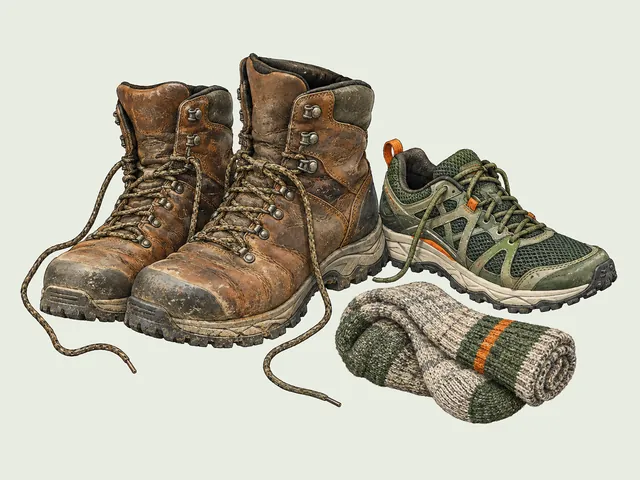
What doesn’t count? Anything you’re wearing. Your hiking shirt, shorts, socks, shoes, and trekking poles — that’s worn weight, a separate category entirely. Including worn items in your base weight inflates your number by 2 to 5 pounds and makes every comparison meaningless.
Pro tip: Empty water bladders and empty bear canisters count as base weight too. Only the stuff that gets consumed during the trip is excluded.
Pack Weight, Skin-Out Weight, and the Full Taxonomy
Pack weight is the number your knees actually feel. It’s your base weight plus every consumable you’re carrying — and it changes every day as you eat food, drink water, and burn fuel. Day 1 of a 5-day trip? That’s your heaviest moment. By day 4, your pack weight may be 8 to 10 pounds lighter.
Beyond pack weight, there’s skin-out weight — base weight plus worn weight plus consumables. It’s the total of everything you carry, period. Some ultralight purists track this number because it captures the real picture, including those heavy trail runners and the base layer shirt under your pack straps.
REI’s pack-fit experts recommend your total pack weight stay below 20% of your body weight. For a 150-pound hiker, that ceiling is about 30 pounds loaded. Blow past it, and you’re stacking the odds toward knee strain, ankle issues, and a miserable time on the trail.
Why Base Weight Is the Only Number You Can Control
Here’s the thing — consumables vary by trip length, season, and resupply strategy. A 2-day overnighter and a 7-day section hike need very different amounts of food and water. But your base weight stays constant. That’s why it matters. It’s the one lever you can actually pull.
Comparing base weights levels the playing field. Two backpackers can size each other up regardless of trip length, and you can track your own progress from trip to trip without the noise of variable consumable loads muddying the picture. When you see someone post their historical origins of ultralight backpacking techniques on a hiking forum, they’re always talking about base weight — never pack weight.
Where You Actually Stand — The 4 Hiker Categories
Conventional (Over 20 lb)
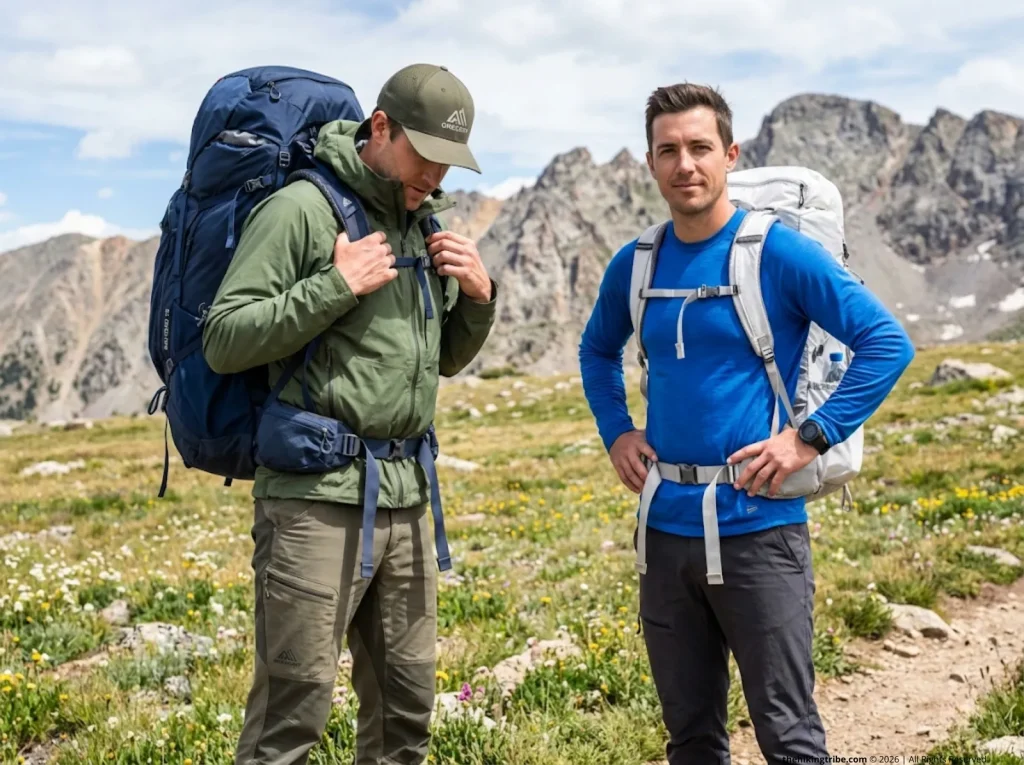
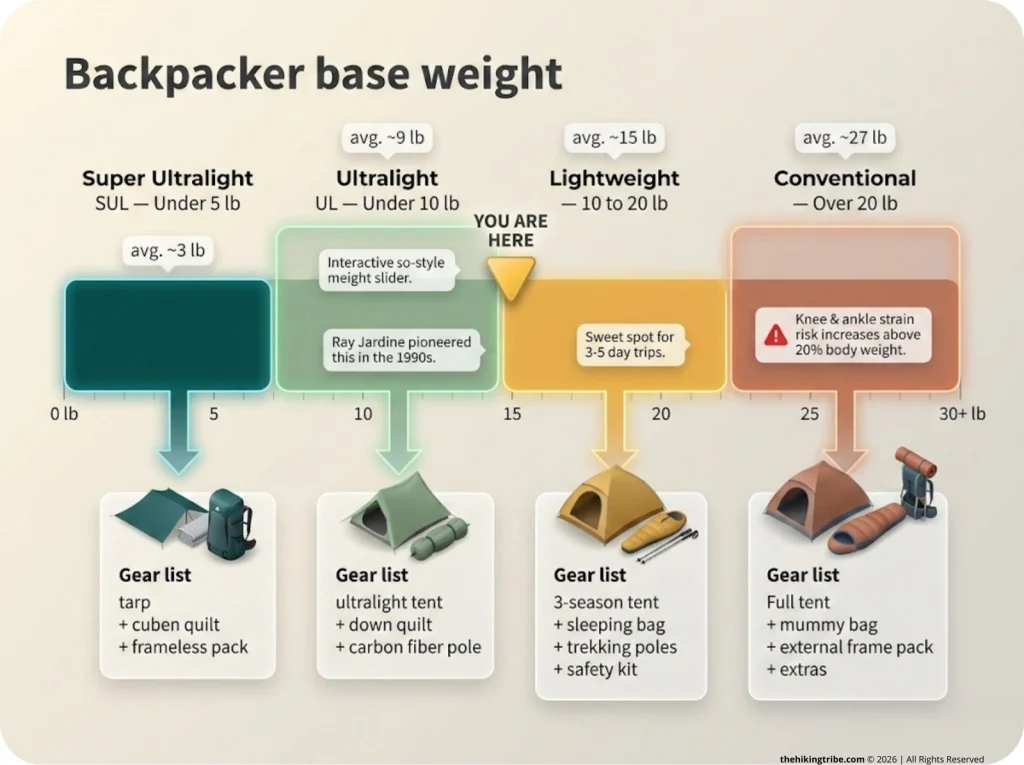
If your base weight lands above twenty pounds, you’re in the conventional backpacker category. Most beginners start here, especially hikers using older gear or cobbling together a kit from borrowed stuff. A typical range is 25 to 30 pounds of non-consumable gear.
This isn’t a judgment call. Plenty of hikers carry conventional loads and have a great time. But every extra pound adds up across miles, and on multi-day hiking trips the cumulative stress on your joints grows fast. If you’re regularly ending days with sore knees or cutting trips short, your base weight is the first place to look.
Lightweight (10-20 lb)
The lightweight range is the sweet spot for most dedicated hikers doing 3- to 5-day national park trips. You don’t need exotic gear to get here — swapping out a few heavy items and running a post-trip audit often drops you into this zone without spending a dime.
An average of about 15 lbs gives you enough margin for safety essentials, comfort items, and a sleeping bag or quilt that actually lets you rest. The 2013 Embry-Riddle study on pack weight and hiker endurance found that lighter pack loads correlated directly with fewer reports of knee, ankle, and soft-tissue injuries on the Appalachian Trail.
Ultralight (Under 10 lb) and Super Ultralight (Under 5 lb)
Ultralight backpacking started with Ray Jardine, who pushed his PCT thru-hiking base weight below ten pounds back in the 1990s using homemade gear. Today, an average UL base sits around 9 pounds. The extreme end — super ultralight — dips below 5 pounds, but demands serious gear knowledge and deliberate tradeoffs.
Getting here means choosing a quilt over a mummy bag, a tarp or ultralight bivy vs tent weight-protection tradeoffs over a full tent, and possibly a frameless pack that only works when your total weight stays under 20 pounds. Andrew Skurka, one of the most accomplished long-distance hikers alive, warns against going “stupid light” — dropping weight past the point where your skill level, weather conditions, and terrain can safely support the tradeoff. Hike your own hike applies here more than anywhere.
The 5-Step Base Weight Calculation Formula
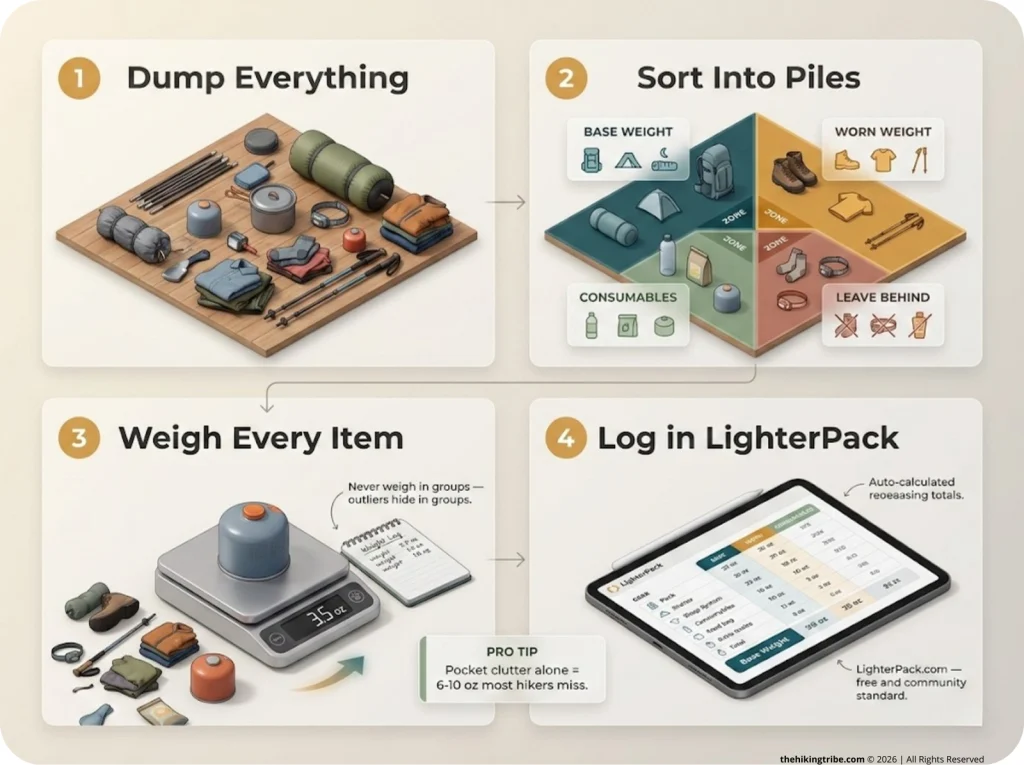
Step 1 — Dump Everything and Sort Into Piles
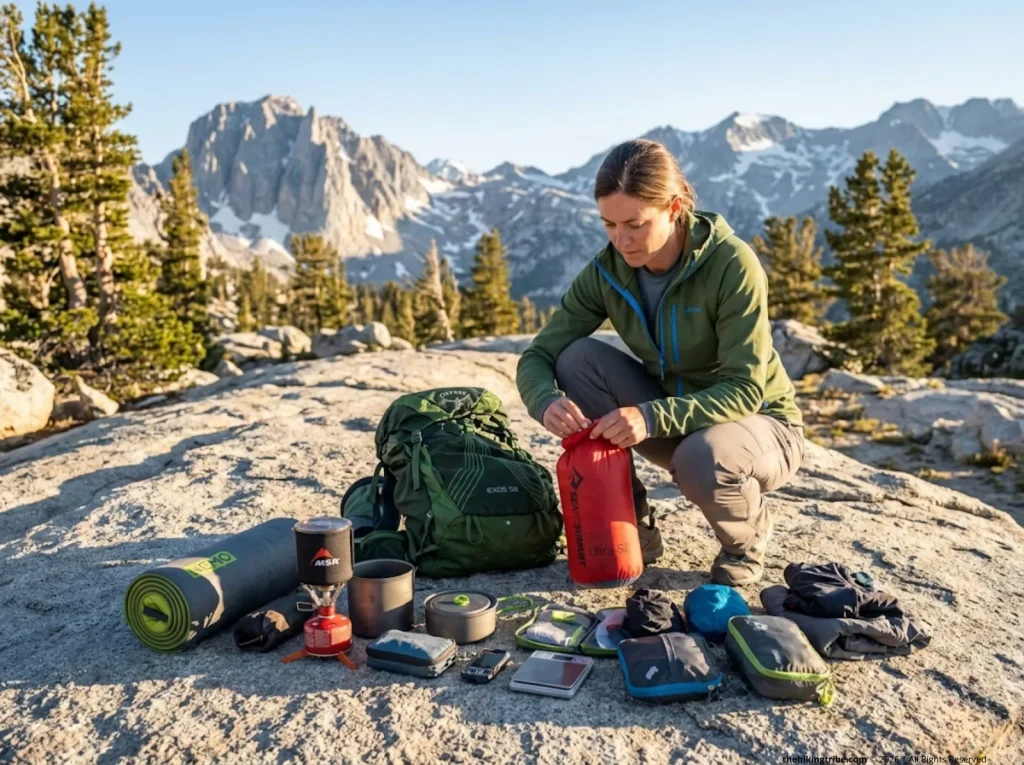
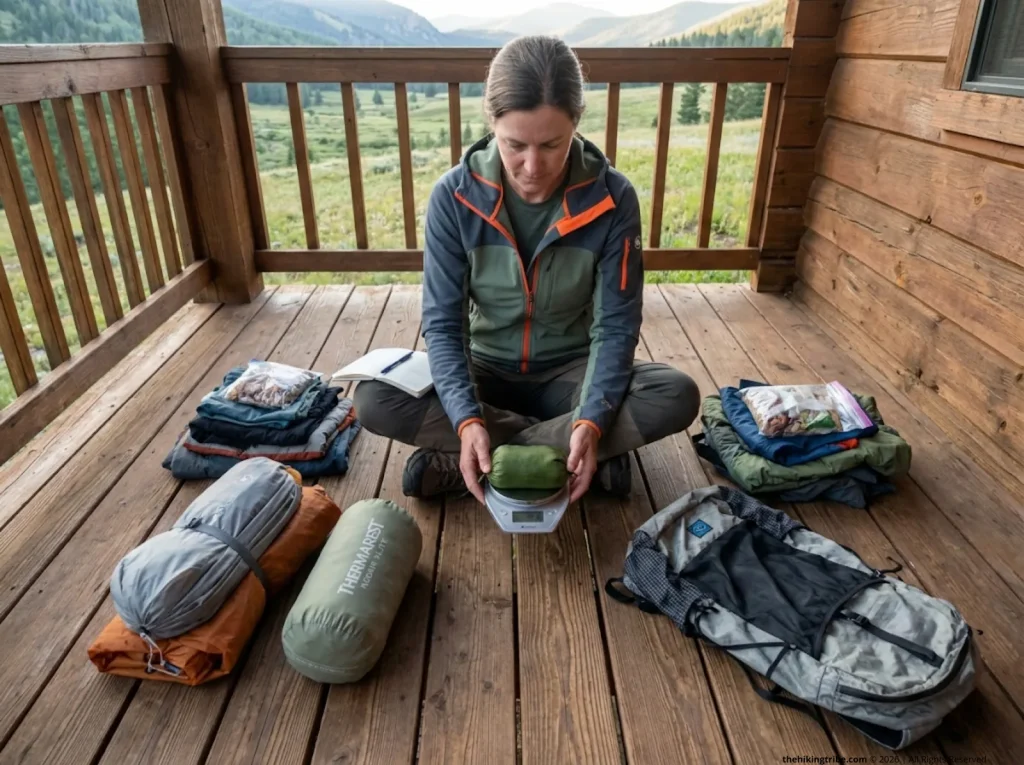
Lay out every piece of gear you’d bring on a 3-day trip. All of it — on the floor, the bed, the garage workbench. Then sort everything into four piles: IN PACK (base weight), WORN ON BODY (worn weight), CONSUMABLES (food, water, fuel), and LEAVE BEHIND.
That fourth pile is where the real savings happen. Be ruthless. That third pair of socks? The backup headlamp when your primary has fresh batteries? The full-size bottle of sunscreen when you’re hiking under tree cover for 90% of the trail? Leave it.
Don’t forget items hiding in pockets — lip balm, a lighter, a Swiss army knife, a phone charger cable. They all count toward something, and most hikers overlook 6 to 10 ounces of pocket clutter.
Step 2 — Weigh Every Item to the Ounce
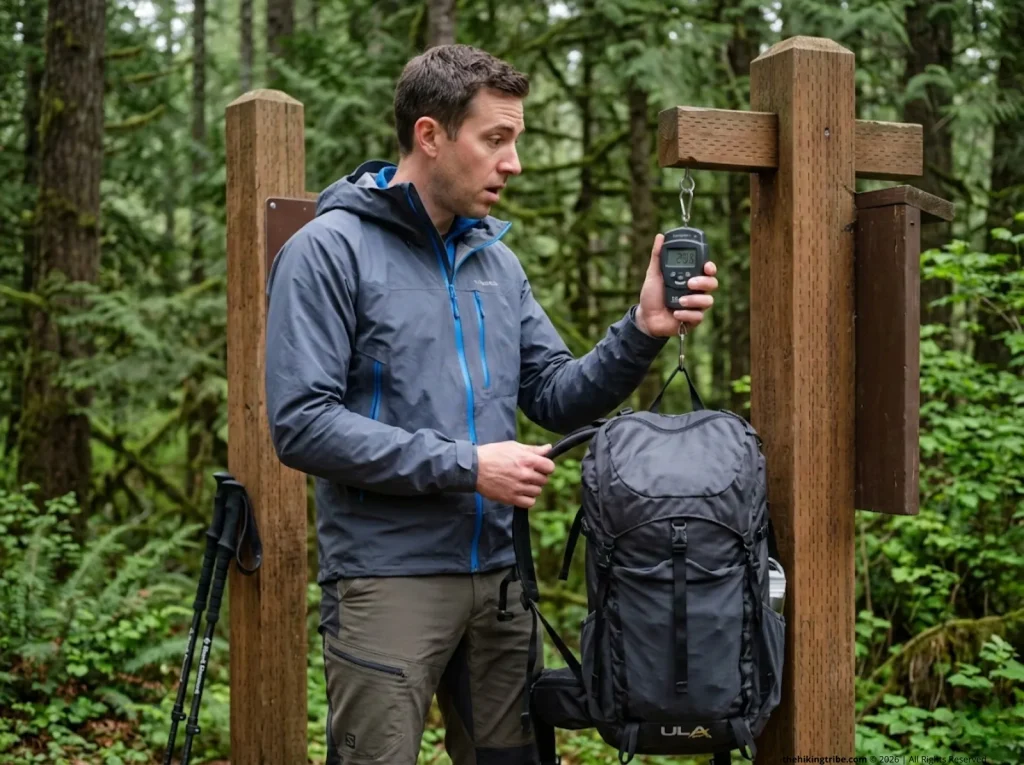
Grab a digital kitchen scale with 0.1-ounce resolution. A luggage scale works for bulky items like your pack or shelter. Weigh everything individually — never in groups. Grouping masks the heavy outliers, and those outliers are exactly what you need to find.
Record weights in consistent units. Ounces throughout, then convert to pounds at the end. You’ll be surprised — stuff sacks alone can add 8 to 12 ounces across a full pack. That’s half a pound of nylon bags doing nothing but holding other bags.
Pro tip: Ditch the stuff sacks completely. Roll your clothes, use your pack’s compression straps, and save yourself a free half-pound.
Step 3 — Log It in a Gear Spreadsheet or LighterPack
LighterPack.com is the community standard — free, shareable, and it auto-calculates weight by category. Create a gear list, tag each item as “base,” “worn,” or “consumable,” and the math handles itself. It’s the best backpack weight calculator most hikers never use.
Categorize your gear into the Big Three (pack, shelter, sleep system), clothing system, cooking, hygiene and first-aid, electronics, and miscellaneous. The Big Three typically represent 50 to 70 percent of total base weight. That’s where the biggest drops happen, and it’s where your attention should go first.
Step 4 — Run the Numbers and Evaluate
Your base weight calculation formula is the total of everything tagged as non-consumable gear. Your pack weight calculation adds food, water, and fuel on top of that.
Cross-reference your base weight against the four backpacking categories above. Then check your total pack weight against the 20% body-weight guideline — if you weigh 160 pounds, your loaded backpacking pack shouldn’t exceed about 32 pounds on day 1.
If you’re over, don’t panic. Just knowing the real numbers puts you ahead of most hikers who’ve never weighed a single item.
Once you know your base weight, choosing the right pack volume for overnight trips gets a lot easier — a lighter pack lets you downsize from a 65-liter pack to a 45.
The Counting Mistakes That Inflate (or Deflate) Your Number
Mistake #1 — Counting Worn Clothes as Base Weight
This is the most common error on Reddit pack shakedown requests. If you’re wearing it on your body — shirt, shorts, socks, shoes, poles — it’s worn weight, not base weight. Including worn items inflates your number by 2 to 5 lbs, depending on your footwear.
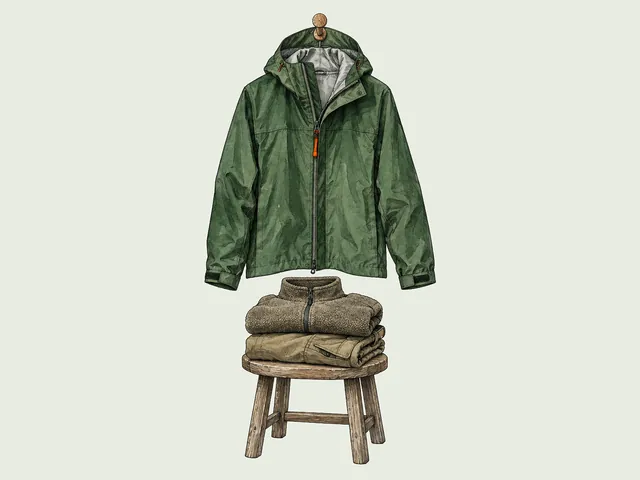
The exception: extra camp clothing packed inside the pack IS base weight. Your puffy jacket in a stuff sack? Base weight. The hiking shirt on your back? Worn weight.
Mistake #2 — Ignoring Empty Containers
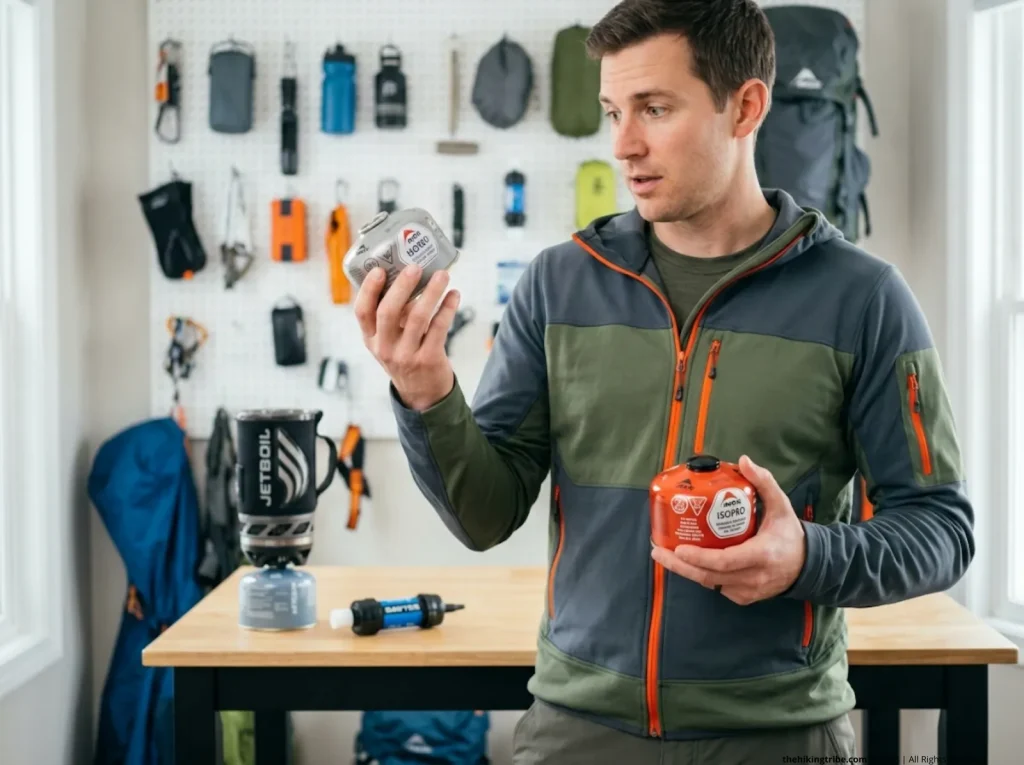
That empty MSR IsoPro canister weighs about 3.5 ounces. Empty water bladders and bottles add a few more ounces. All of them count as base weight — only the consumable substance inside gets excluded.
Some backpackers quietly drop these from their gear list to hit a lower number. Then they wonder why their pack feels heavier than their gear spreadsheet claims. The empty container stays on your back whether you count it or not.
Mistake #3 — Forgetting the Pack Itself
Your backpack is base weight. It’s also often the single heaviest item — 3 to 5 pounds for most packs, under 2 pounds for ultralight backpacks today. Swapping a 4.5-pound pack for a 1.8-pound frameless option creates significant weight reductions — 2.7 pounds overnight.
But there’s a catch. Frameless packs only work when your total weight stays light enough to carry comfortably without a frame. If you’re hauling a 30-pound loaded pack in a frameless bag, your back will let you know. Understanding the framed vs frameless backpack decision matrix matters here — the frame question is really a total pack weight question.
Don’t forget to weigh the frame, permanent rain cover, and hip belt pockets too. They’re part of the pack.
Pro tip: Weigh your pack empty and loaded. If the pack itself is more than 15% of your base weight, it’s worth looking at lightweight options.
How to Actually Drop Your Base Weight (Without Going Stupid Light)
Start With the Big Three
Your pack, shelter, and sleep system eat up 50 to 70 percent of your base weight. That’s where the biggest returns live. A modern DCF or silnylon tent weighs 1.5 to 2.5 pounds versus 4 to 6 for a traditional 3-season tent. Quilts save 8 to 16 ounces over comparable mummy bags by eliminating the compressed insulation underneath you.
The math is simple. If your Big Three currently totals 12 pounds, switching to lightweight versions can cut that to 6. That’s a 6-pound drop from three gear changes.
The Repackage-and-Audit Method
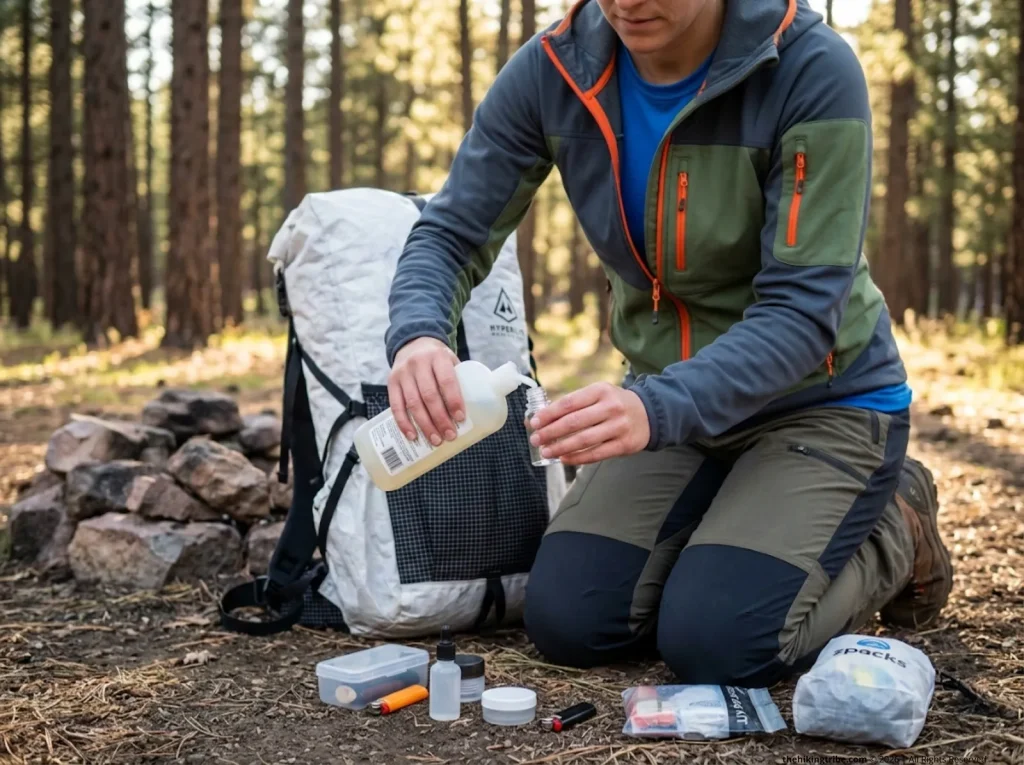
You don’t need to buy anything to start losing weight. Transfer toiletries into lightweight plastic bags and 0.5-ounce dropper bottles. Ditch the full-size sunscreen. Repackaging everything cuts ounces faster than buying new gear. Consider stoveless meal planning for backpacking — ditching your stove, pot, and fuel drops 12 to 20 ounces instantly.
The real trick is the post-trip item audit. After every trip, lay out everything you brought but never used. Next trip, leave it home. Three cycles of this typically saves 3 to 5 pounds of base weight with zero cost.
Pro tip: Group load-sharing on park trips with your hiking partners works wonders. Splitting one stove between two people drops 8 to 12 ounces off each person’s base weight.
The Leave No Trace Weight Bonus
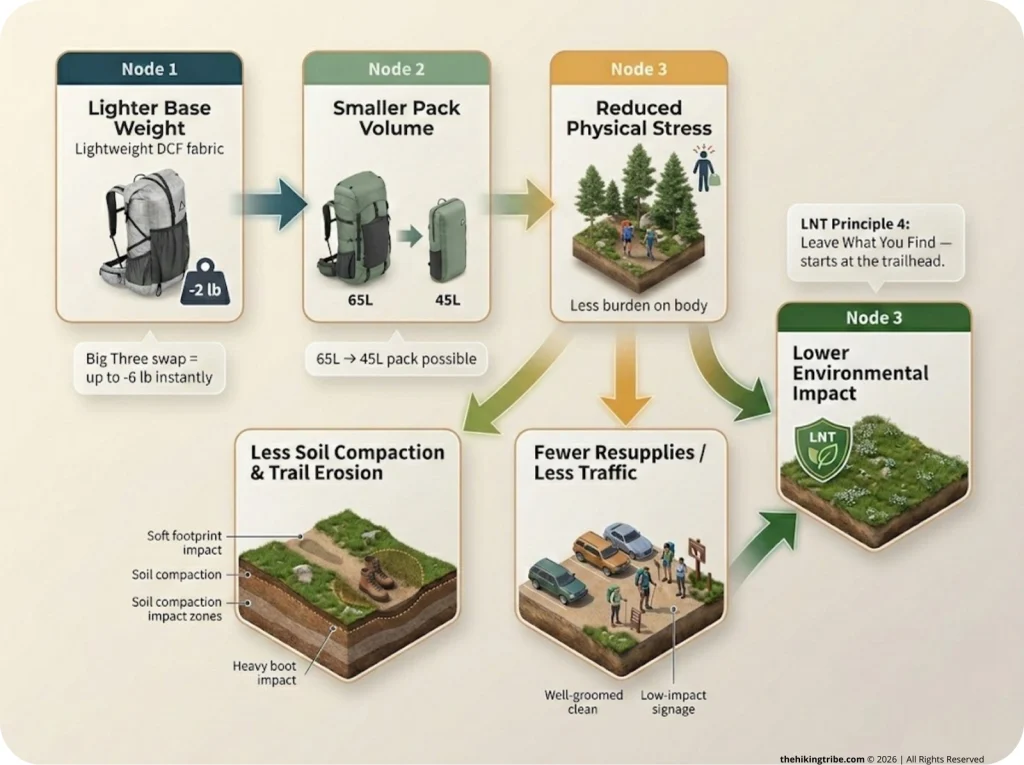
Here’s something no one else talks about — lighter packs tie directly into Leave No Trace principles. A lighter base weight means a small pack, which reduces trail impact through less soil compaction on narrow trails. Fewer resupplies needed means less traffic at trailheads and resupply points.
LNT Principle 4, “Leave What You Find,” starts before you even hit the trail. Leave the excess gear at home, and you’re already practicing lighter-impact hiking. Lighter hikers also move faster through sensitive terrain, spending less time in fragile alpine and desert zones.
When Pack Weight Matters More Than Base Weight
The 20% Body Weight Threshold
Your base weight is the optimization lever. But your pack weight is the number your body actually carries — and it’s the number your knees feel on every downhill step.
The 20% body-weight guideline applies to total pack weight. A 140-pound hiker maxes at about 28 pounds. A 180-pound hiker gets roughly 36. The 2018 JMT survey of over 700 hikers confirmed what most experienced backpackers already suspected — higher loaded pack weights correlated with more injury prevention failures on the trail.
On day 1 of a 5-day trip, your pack weight peaks. Average food weight runs 1.5 to 2.5 pounds per person per day (calories add up fast), which means a 5-day carry adds 7.5 to 12.5 pounds on top of your base weight. That first morning is when most strain injuries happen.
Planning for Trip Length and Resupply
A 12-pound base weight plus 5 days of food (10 pounds) plus 2 liters of water weight (4.4 pounds) puts you at 26.4 pounds on day 1. That same base weight with a 2-day carry and a resupply drops to 16.8 pounds. Completely different experience on the trail.
Thru-hikers obsess over base weight because their carry lengths are fixed by resupply spacing. Weekend hikers should think more about total pack weight for the specific trip they’re planning. And shoulder-season adds weight no matter what — a warmer sleep system, an extra insulation layer, possibly microspikes.
The lighter your base weight, the longer you can carry food without blowing past the 20% threshold. That’s the real payoff. It’s not about bragging rights — it’s about dialing in your load lifter straps on a pack that your body can actually handle for 8 hours a day.
Conclusion
Three things determine whether your knees survive a multi-day trip. First, know the difference — base weight excludes consumables, and getting it wrong makes every downstream decision unreliable. Second, weigh everything individually, log it in LighterPack, and audit after every trip. Three rounds of this drops most dedicated hikers into the lightweight category without spending a dollar. Third, your pack weight on day 1 is what your body carries — use the 20% threshold as your hard ceiling, not your base weight number in isolation.
Dump your pack on the floor tonight. Weigh every item. You’ll find 3 to 5 pounds of gear you’ve been hauling for trips and never once pulled out. Your knees will notice the difference on the next trail.
FAQ
What is base weight in backpacking?
Base weight is the total weight of everything in or attached to your pack, excluding consumables like food, water, and fuel. It includes your shelter, sleep system, backpack, extra clothing, first-aid kit, and electronics. Empty containers like fuel canisters and water bladders count as base weight — only the consumable substance inside is excluded.
How do you calculate base weight?
Weigh every non-consumable item individually using a kitchen scale, log each item in a gear spreadsheet or LighterPack.com, and total the weight of everything that goes in your pack. Exclude food, water, fuel, and anything worn on your body like hiking clothes, shoes, and trekking poles.
What is a good base weight for backpacking?
Under 20 pounds is lightweight, under 10 pounds is ultralight. For dedicated hikers doing 3- to 5-day park trips, 12 to 15 pounds is a practical sweet spot — light enough to prevent joint strain but heavy enough to carry safety essentials without extreme tradeoffs.
What is the difference between base weight and total pack weight?
Base weight is your fixed load — it stays the same regardless of trip length. Total pack weight equals base weight plus consumables (food, water, fuel), which is your variable load. Pack weight changes daily as you eat and drink. A 12-pound base weight becomes a 26-pound pack weight on day 1 of a 5-day trip.
How much should my backpack weigh for a multi-day hike?
Your total loaded backpacking pack shouldn’t exceed 20% of your body weight. For a 160-pound hiker, that’s about 32 pounds max. On multi-day trips, plan for 1.5 to 2.5 pounds of food per day plus 2 to 4 pounds of water. The lighter your base weight, the more food days you can carry without exceeding the threshold.

I've spent more than a decade researching hiking gear and trail technique. I read the specs, the forum threads and the long-term reviews, and every pick here comes with what it gets wrong.
End of the trail
You read every mile of this one. Here's where the trail goes next.