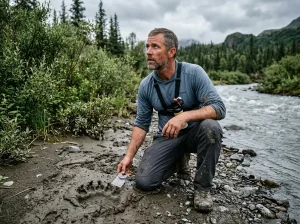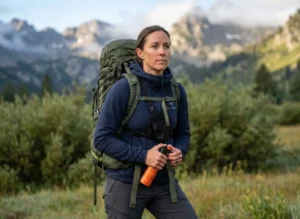
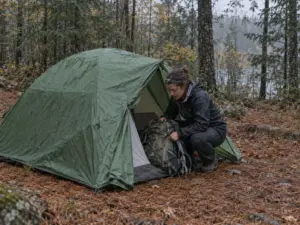
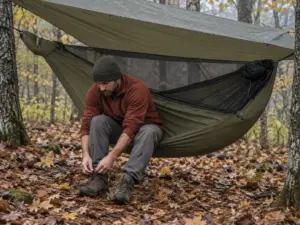
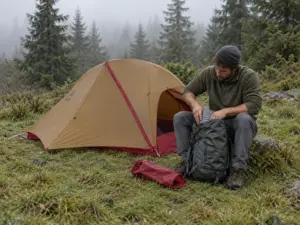


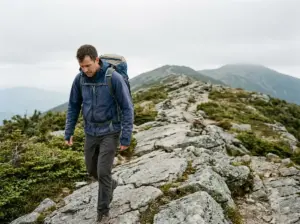
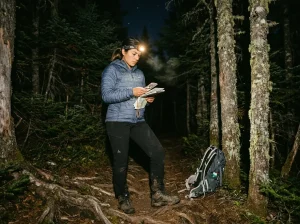
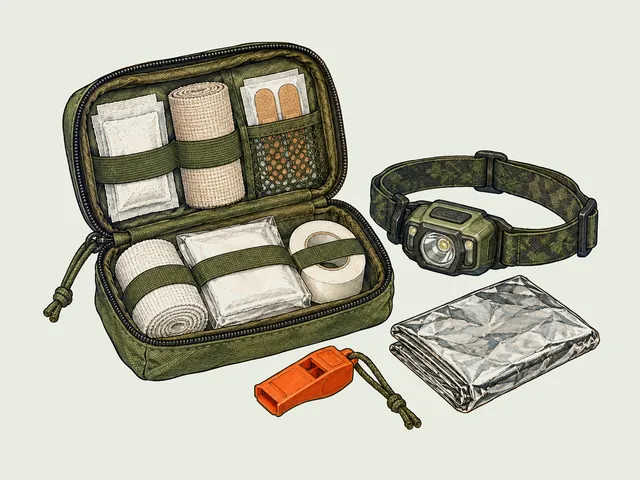

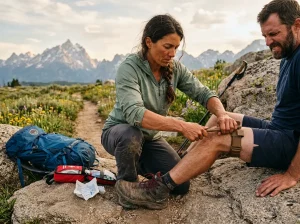
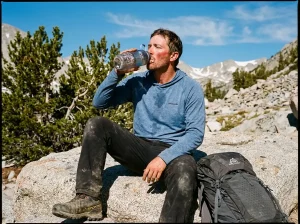
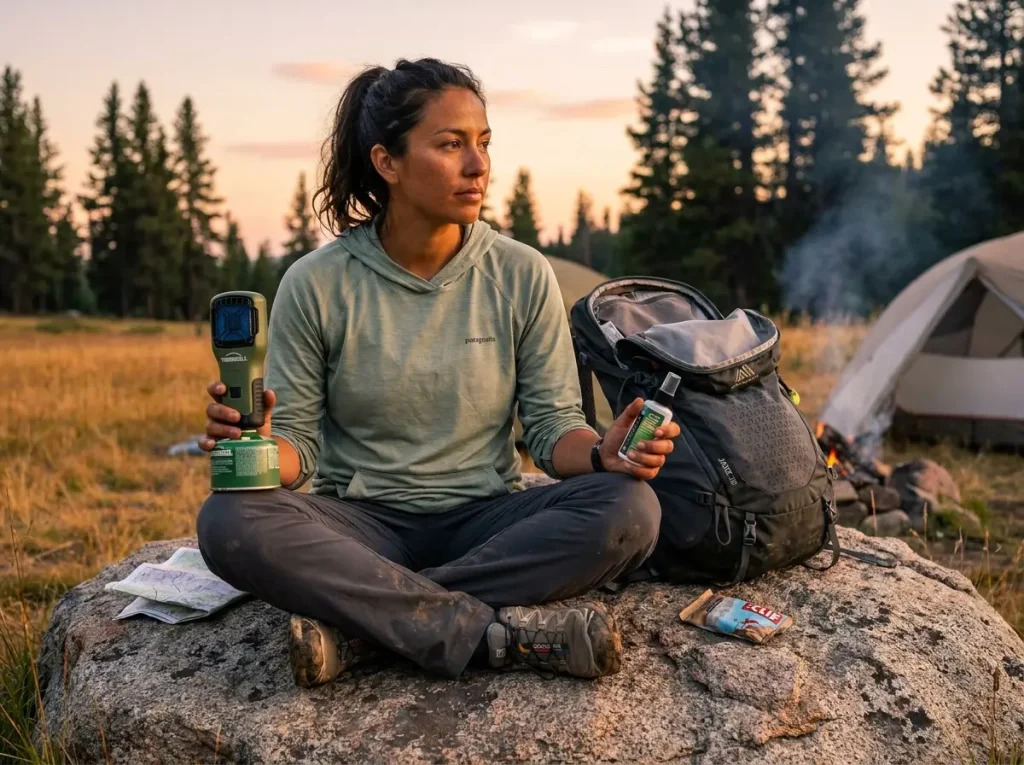
Last summer I carried a Thermacell Backpacker on a five-day loop through the Cascades. Night one, calm lake camp, zero mosquitoes by the time I finished cooking. Night three, an exposed ridge with a steady breeze — I could have used that Thermacell as a paperweight for all the good it did.
The bug spray I’d been too lazy to reapply? That worked fine in the wind. Most hikers frame this as Thermacell OR bug spray. The better question is when to use each one.
Here’s how the two options compare at a glance:
| Thermacell Backpacker vs. Bug Spray: Head-to-Head Comparison | ||
|---|---|---|
| Factor | Thermacell Backpacker | Bug Spray (DEET/Picaridin) |
| Works while hiking | No — stationary only | Yes — applied to skin |
| Protection zone | 15-foot radius | Wherever you go |
| Setup time | 10–15 minutes | Immediate |
| Bugs repelled | Mosquitoes only | Mosquitoes, ticks, biting flies |
| Weight | 4 oz (+ fuel canister) | 3 oz (travel bottle) |
| Cost per hour | ~$0.65 | ~$0.20 per application |
| Gear damage risk | None | DEET melts plastics |
How Thermacell and Bug Spray Actually Work
The Spatial Zone — How Thermacell Repels Without Touching Skin
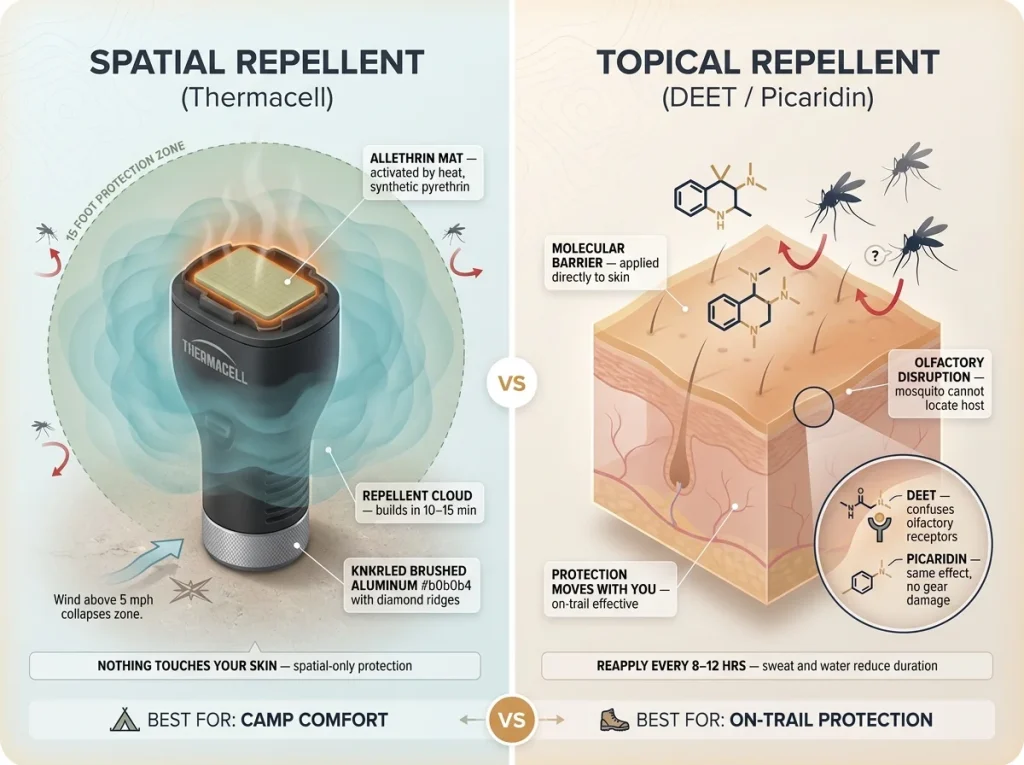
Thermacell heats a small mat soaked in allethrin (fuel-powered models) or metofluthrin (rechargeable models) to create an invisible cloud of repellent that fills a roughly 15-foot radius around the device. Nothing touches your skin. Nothing smells. You set it down, wait 10 to 15 minutes for the zone to build, and mosquitoes clear out.
The active ingredients are synthetic versions of pyrethrin, a compound found naturally in chrysanthemum flowers. Both are EPA-registered for non-skin, spatial use. The catch: the zone only exists while the air is relatively still. Move the device, add wind, and the zone collapses.
The Skin Barrier — How DEET, Picaridin, and Permethrin Stop Bites
Traditional bug spray puts a chemical barrier directly on your skin. DEET at 20–30% concentration confuses mosquitoes’ scent receptors so they can’t locate you — and it’s been the CDC’s gold standard since the 1950s. Picaridin at 20% does the same job with up to 12 hours of protection from a spray or 14 hours from a lotion, without the greasy feel or the chemical smell.
Then there’s permethrin, which doesn’t go on skin at all. You spray it on clothing and gear at home, let it dry, and it stays effective through multiple washes. When an insect lands on treated fabric, permethrin’s “hot-foot effect” repels or neutralizes it on contact. If you’re hiking in tick country, how permethrin-treated hiking pants provide 65% tick protection is worth reading before your next trip.
According to EPA’s breakdown of skin-applied repellent ingredients, both DEET and picaridin present no health concern when used as directed — including on children.
Why the Active Ingredients Matter More Than the Brand
A $6 bottle of 20% picaridin from a store brand works just as well as a $14 bottle with a fancy label. The concentration and active ingredient determine how long protection lasts. Everything else is packaging. Match the concentration to your trip length and skip the brand loyalty.
Pro tip: Check the active ingredient percentage on the back label, not the front claims. A “maximum strength” label on a 15% DEET spray means less protection than an unmarked 30% bottle.
Thermacell on the Trail — Where It Works and Where It Doesn’t
The 15-Foot Zone Reality Check
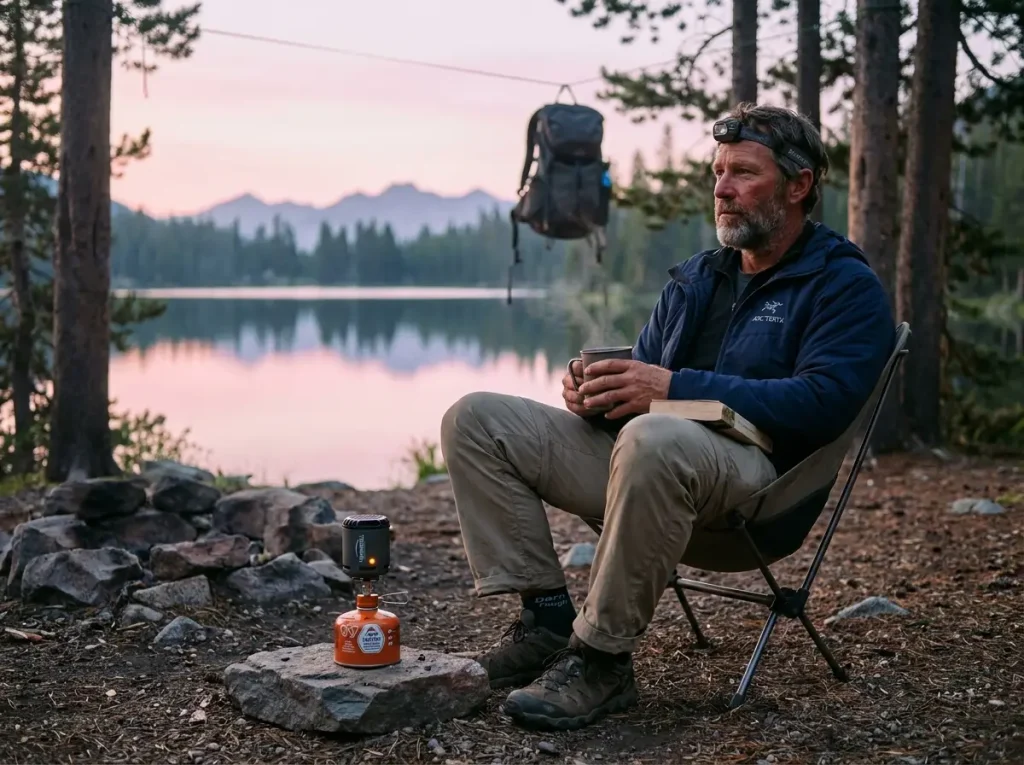
Thermacell’s marketed 15-foot protection zone is real — in calm conditions. On a sheltered lakeshore camp with no wind, I’ve watched mosquitoes approach the edge of the zone, change direction, and leave. A PCT thru-hiker on a trail forum described it clearing “90%+ of the bugs within a couple minutes” at campsite stops during a 230-mile section.
The zone takes 10 to 15 minutes to fully establish. You can’t turn it on and expect instant results. Start it before you need it — light it while you’re setting up your tent, and by the time you’re ready to sit down, the zone is working.
But here’s what the reviews gloss over: the zone only works when you’re sitting still. Clip a Thermacell to your pack and hike? The allethrin disperses behind you as you walk.
You’re essentially leaving a trail of repellent in the air that does nothing for the mosquitoes flying at your face. Thermacell is a camp tool, not a trail tool.
Wind, Rain, and the Weather Problem
Wind is Thermacell’s weakness and nobody talks about it enough. Any sustained breeze above roughly 5 mph shreds the protection zone. The allethrin cloud gets carried downwind before it can build density. Forum users are unanimous on this — one breeze and the advertised zone becomes wishful thinking.
The workaround is positioning. Place the unit upwind so the breeze carries the repellent toward you. In a sheltered camp — behind a boulder, in a tree pocket, below a ridge — this can work.
On an exposed ridgeline or a breezy lakeshore? Forget it.
Rain itself doesn’t bother the fuel-powered models much. The Backpacker runs off your stove canister, which is weather-resistant. The mat stays protected under the device housing. But rain usually brings wind, and wind is the real problem.
Pro tip: Position your Thermacell upwind and below shoulder height. Heat rises, and the repellent cloud builds best when the device sits on a rock or stump rather than hanging from a branch.
Bug Spray on the Trail — Strengths, Drawbacks, and the DEET Damage Problem
DEET vs Picaridin — The Gear Compatibility Factor
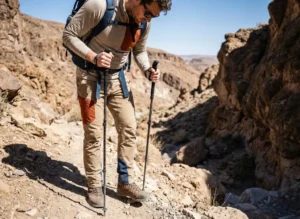
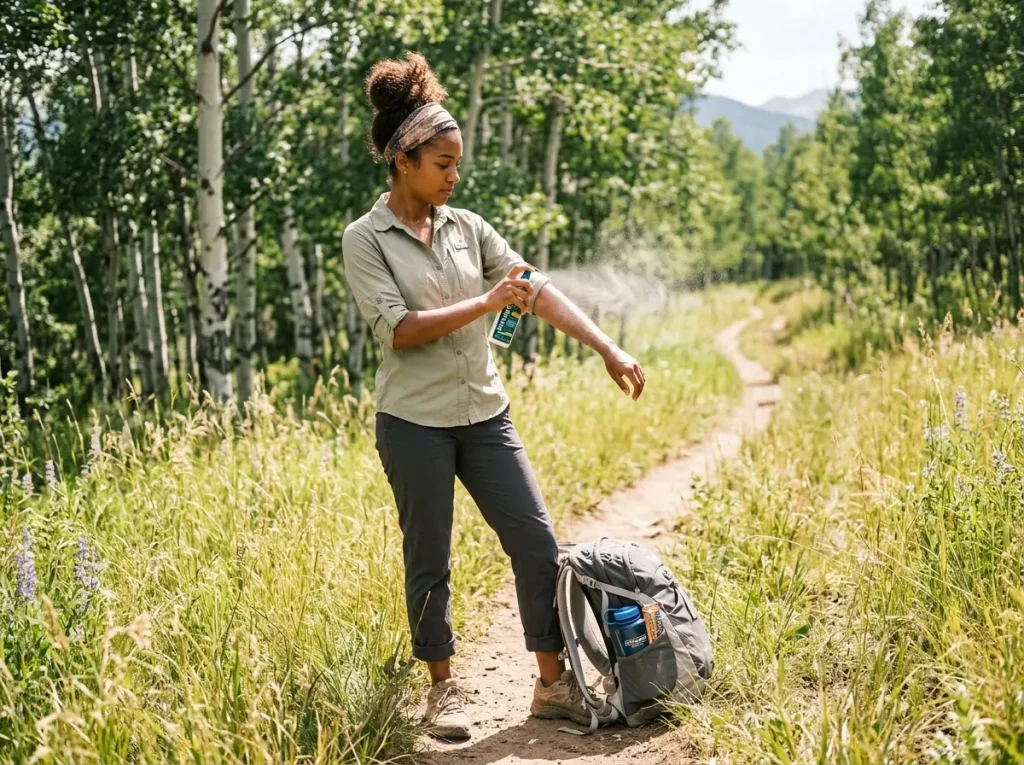
DEET melts plastic. This isn’t a footnote — it’s the single biggest reason experienced hikers have switched to picaridin. DEET dissolves synthetic fabrics, softens trekking pole grips, clouds sunglass lenses, and leaves sticky residue on everything it touches. Apply it to your hands, then adjust your sunglasses, and you’ve just ruined the coating.
Picaridin does none of this. It goes on clean, dries without residue, doesn’t damage gear, and provides comparable protection — up to 12 hours at 20% concentration. The EPA rates it alongside DEET for effectiveness against both mosquitoes and ticks. If you’re only going to carry one spray, picaridin is the gear-safe choice.
Both repel a wider spectrum of insects than Thermacell. DEET and picaridin work on mosquitoes, ticks, biting flies, gnats, and no-see-ums. Thermacell only handles mosquitoes. If the 3-stage tick defense system is on your radar, topical repellent is non-negotiable.
How Long Each Spray Actually Lasts
Duration depends entirely on concentration, not brand:
- DEET 20–30%: 5–8 hours before reapplication
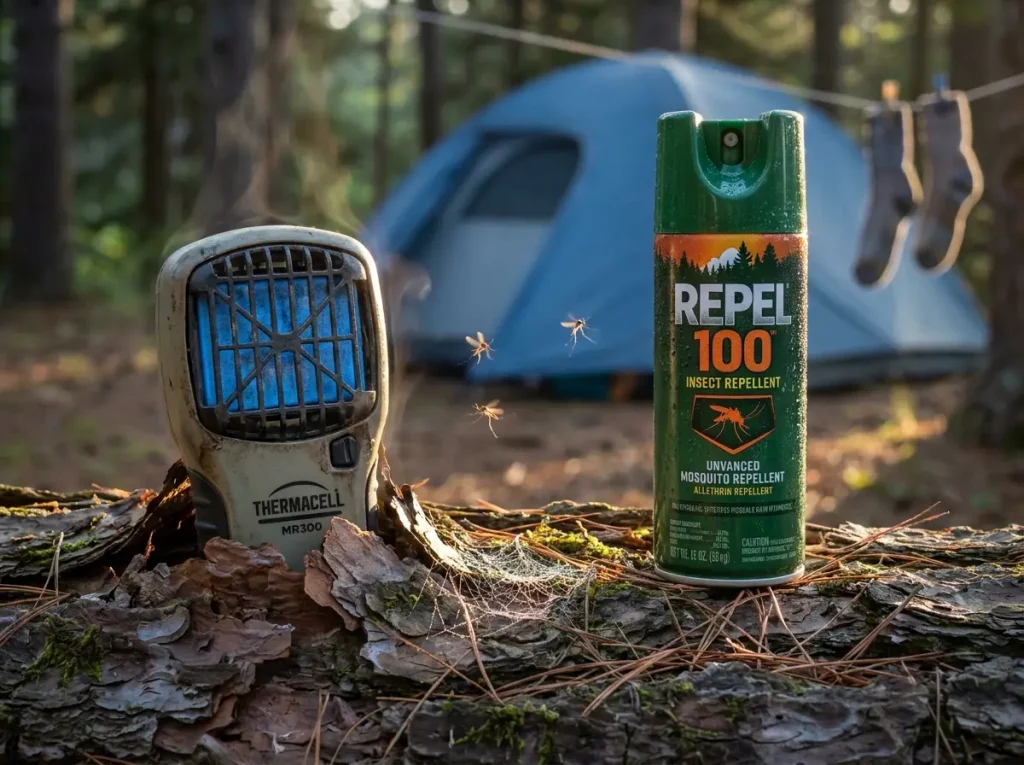
- DEET 100% (Repel 100): Up to 10–12 hours, but the greasy residue is severe
- Picaridin 20%: 8–12 hours spray, up to 14 hours lotion
- Oil of Lemon Eucalyptus 30%: About 6 hours, the strongest plant-based option
On a hot, sweaty day with stream crossings, knock 20–30% off those numbers. Sweat and water dilute skin-applied repellents faster than lab conditions suggest. Carry enough for at least one midday reapplication on long summer days.
Pro tip: Apply bug spray to the backs of your hands, your neck, and your ankles — the spots mosquitoes target most. You don’t need to coat every square inch. A few strategic spots do 90% of the work.
The Side-by-Side Comparison — Weight, Cost, Coverage, and Comfort
What Each Option Weighs in Your Pack
Every ounce matters on a multi-day trip. Here’s how the options stack up:
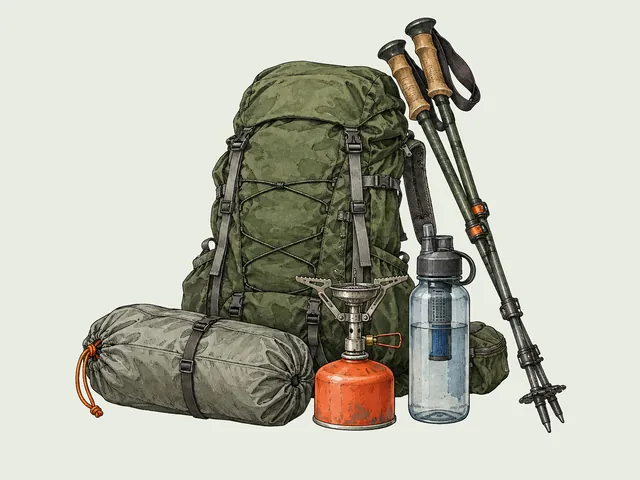
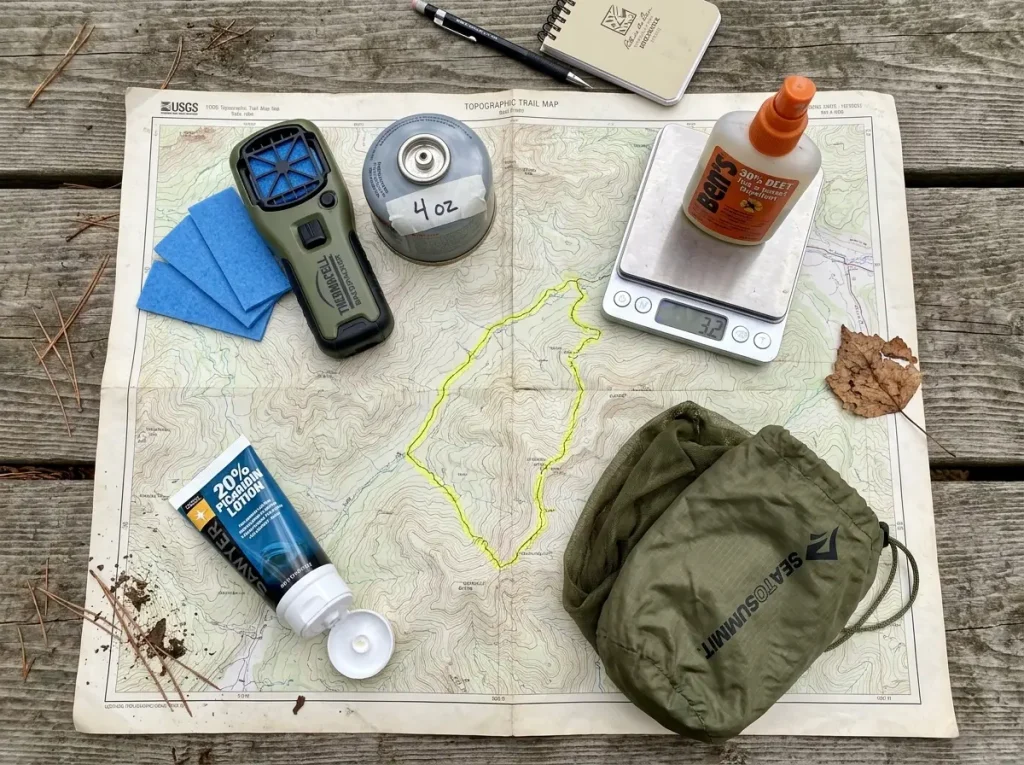
- Thermacell Backpacker: 4 oz for the device + 4 mats (negligible weight). Uses your existing stove fuel canister — runs 90 hours on a 4oz canister, so no extra fuel weight for most trips
- Bug spray (3oz travel bottle): 3 oz total, pocket-sized
- Permethrin: 0 oz carried — you treat clothing at home before the trip
- Head net: Under 1 oz, packs to the size of a golf ball
Carrying both Thermacell and a small spray bottle adds roughly 7 oz to your pack. For the comfort it buys you at camp, most backpackers call that weight well spent during bug season.
The Cost-Per-Hour Math Nobody Does
This is where the comparison gets interesting and nobody else runs the numbers:
Thermacell Backpacker: Device costs $25–35. Each allethrin mat lasts 4 hours. A 12-pack of mats runs about $8. That’s roughly $0.17 per hour of camp protection, plus whatever fuel your stove canister costs anyway.
The device is the upfront investment; ongoing costs are low.
DEET spray (6oz can): About $8 for roughly 40 applications. At two applications per hiking day, one can covers 20 days. That’s under $0.40 per day.
Picaridin spray (3oz travel bottle): About $10 for roughly 20 applications. Similar per-day cost if you’re applying twice. Slightly more expensive than DEET, but your gear thanks you.
Permethrin (24oz treatment bottle): About $15, treats 4–5 complete outfits, lasts through 6 washes or 6 weeks of sun exposure. The best cost-per-use ratio by far — pennies per trip.
The Dual-Layer Strategy — Why Smart Hikers Carry Both
Spray for the Miles, Thermacell for the Camp
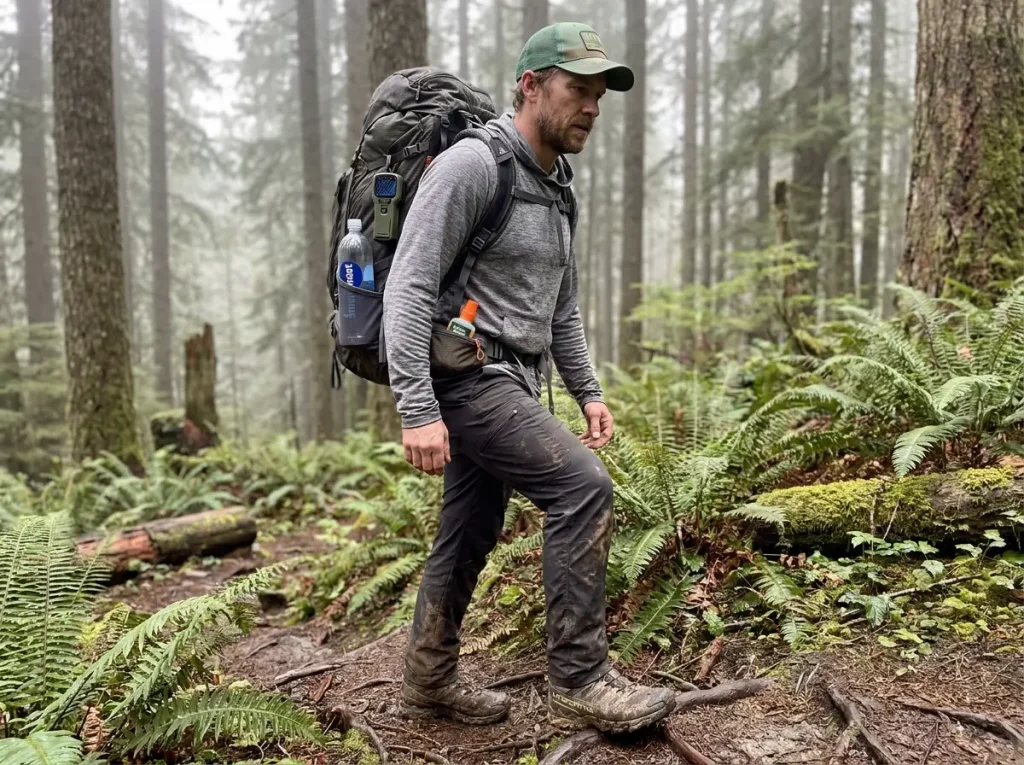
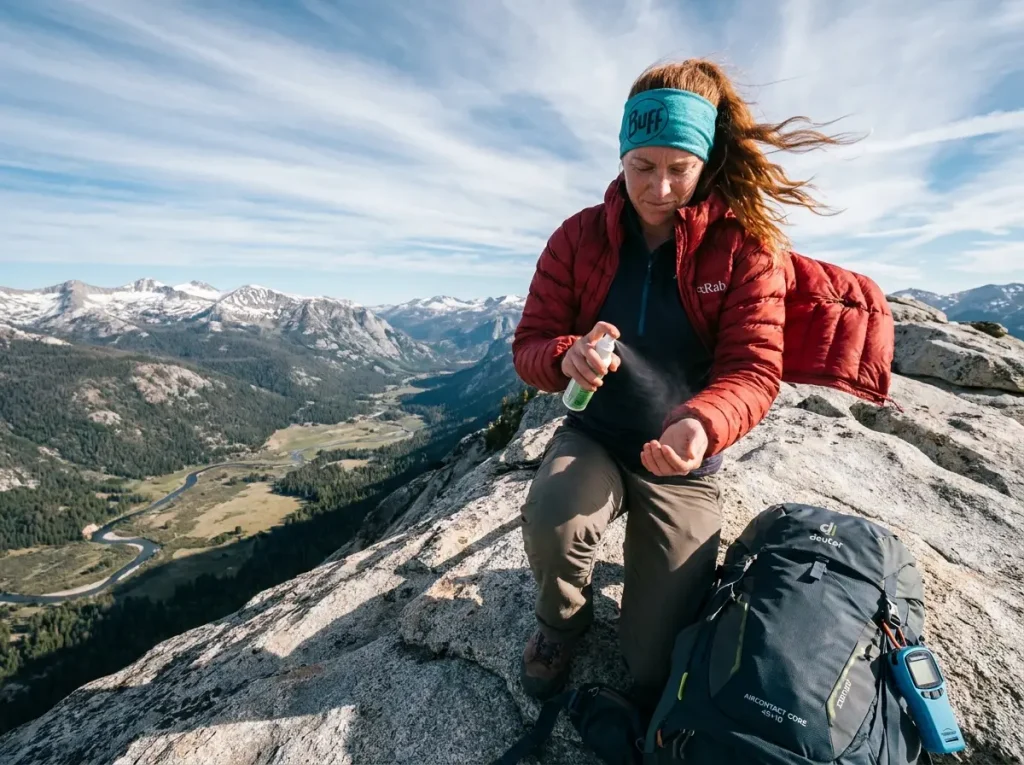
The real answer to “Thermacell or bug spray” is both — used at different times. On the trail, topical repellent is the only option that moves with you. At camp, Thermacell transforms the evening from a mosquito battle into an actual relaxing experience.
Here’s how the day breaks down for a backpacker in mosquito season: apply picaridin in the morning before you start hiking. Reapply at lunch if you’re sweating hard. When you reach camp, set up the Thermacell while you pitch your tent. By the time you’re cooking dinner, the 15-foot zone is established and you don’t need to keep reapplying spray to your hands and face while you eat.
A thru-hiker on a trail forum summed it up: Thermacell is “the difference between being driven into the tent at 7pm and actually enjoying the evening.” That’s not hyperbole. In peak skeeter season, camp comfort is the whole game.
The Permethrin Base Layer Most Hikers Skip
The third layer that nobody talks about in Thermacell-vs-spray debates is permethrin-treated clothing. Treat your hiking pants, socks, and shirt before the trip. The treatment lasts through six washes. Insects that land on treated fabric get repelled or neutralized on contact.
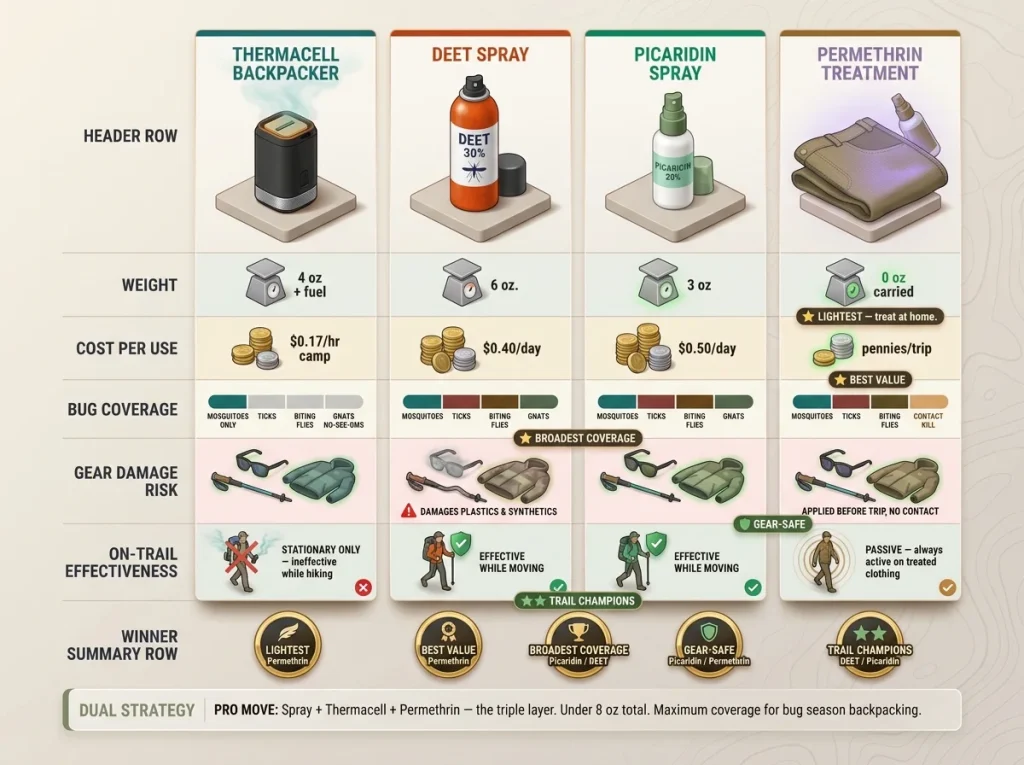
This means you have three concentric layers of protection: permethrin on your clothing (passive, always on), topical spray on exposed skin (active, needs reapplication), and a Thermacell zone at camp (stationary, requires calm air). Total weight of carrying all three: under 8 oz including the spray bottle.
If you’re hiking in an area where ticks are a concern alongside mosquitoes, why roll-up hiking pants beat shorts in mosquito country explains why keeping your legs covered matters more than most hikers realize.
Pro tip: Treat your socks and gaiters with permethrin even if you skip treating your shirt. Ticks climb from the ground up, and your ankles are the front line.
Picking the Right Thermacell Model for Hiking
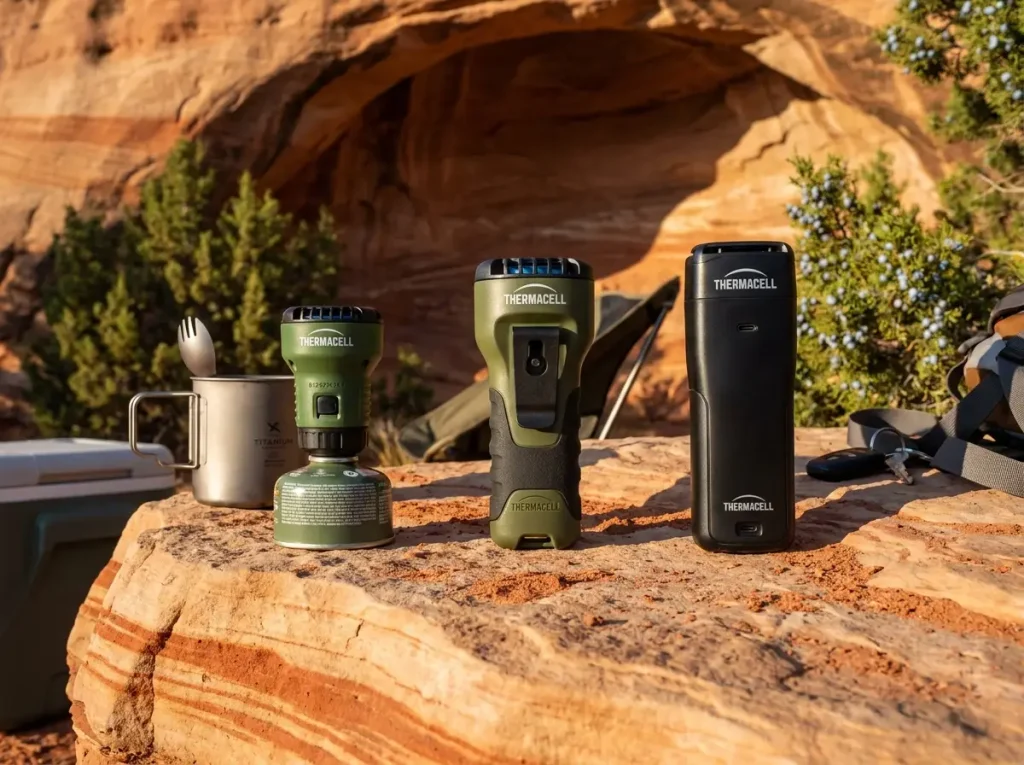
Backpacker vs MR450 vs Rechargeable — Which Fits Your Trip
Not all Thermacells belong on a trail. Here’s the quick breakdown:
Thermacell Backpacker ($25–35, 4 oz): The only model designed for backpackers. Attaches directly to your isobutane stove fuel canister — no batteries, no separate butane cartridge, no extra fuel weight. If you already carry a canister stove, this is the obvious choice.
Thermacell MR450 Armored ($30–40, 8.5 oz): Rubberized, belt-clippable, runs on its own butane cartridge. Better for car camping or day hikes where weight doesn’t matter. The separate fuel adds bulk and weight that backpackers won’t tolerate.
Thermacell E55 Rechargeable ($45–55, 7.5 oz): Battery-powered, USB-C charging, uses metofluthrin cartridges instead of allethrin mats. Good for day trips near a charger. Not practical for multi-day backcountry trips unless you’re carrying a power bank anyway.
For backpacking, the choice is simple: Backpacker model. Everything else is car-camping gear pretending to be trail-worthy.
Fuel and Refill Logistics on Multi-Day Trips
One Backpacker allethrin mat lasts 4 hours. A 5-day trip with 3 hours of camp time each evening needs about 4 mats. The device comes with 4 mats and you can buy 12-packs for about $8.
The Backpacker shares your stove’s fuel canister. This is efficient — you’re not carrying a separate fuel source. But there’s a catch most reviews skip: you cannot cook and run the Thermacell at the same time. They share the canister. Light the Thermacell first, let it build the zone while you organize camp, then detach it, cook dinner, and reattach it after eating.
A 4oz isobutane canister runs the Backpacker for about 90 hours, which is far more than most trips require. Fuel consumption from the repeller is minimal compared to boiling water.
When Thermacell Alone Is Enough (and When It’s Not)
Camp-Only Trips and Base Camp Setups
If your trip is mostly stationary — a base camp setup, a car camping weekend, a fishing spot where you sit for hours — Thermacell alone can handle mosquito duty. The zone builds reliably in sheltered locations, and you’re not moving through terrain where on-trail protection matters.
Car campers who park at a developed campsite and spend the evening around a picnic table: a Thermacell MR450 or E55 on the table is the simplest mosquito solution. No spray, no reapplication, no sticky skin. Just set it and forget it.
High-Movement Days and Windy Ridgelines
Any trip with significant trail miles needs topical repellent. Period. Thermacell does nothing while you walk. And if your campsites are exposed — above treeline, on a ridgeline, on a lake with afternoon wind — the Thermacell zone won’t hold.
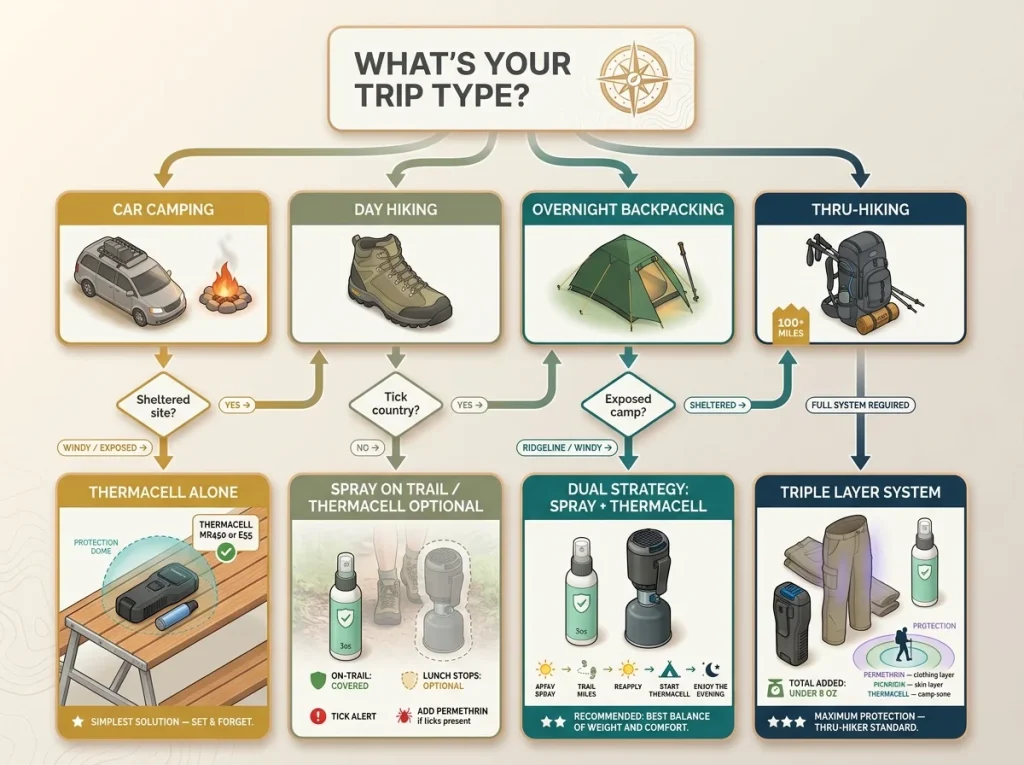
Here’s the rough decision framework:
- Car camping in sheltered sites: Thermacell alone works
- Day hikes, returning to a car: Spray on trail, Thermacell optional at lunch stops
- Overnight backpacking, sheltered camps: Spray on trail + Thermacell at camp — the dual strategy
- Thru-hiking or high-exposure camps: Spray mandatory + permethrin-treated clothing + Thermacell if you have the weight budget
- Shoulder season with ticks: Spray (picaridin or DEET) + permethrin — Thermacell doesn’t repel ticks at all
The scenario where Thermacell is genuinely useless: a windy ridgeline at 10,000 feet where mosquitoes somehow still exist. You’ll reach for the spray every time.
Conclusion
Thermacell and bug spray aren’t competing products — they solve different problems at different times. Thermacell owns the campsite. Bug spray owns the trail. Trying to use one where the other belongs is how hikers end up frustrated and bitten.
The practitioner answer is the dual-layer strategy: picaridin spray for on-trail protection, Thermacell Backpacker for camp comfort, and permethrin-treated clothing as the passive always-on base layer. Total added weight is under 8 oz. Total comfort gain in mosquito season is massive.
Before your next trip into bug country, treat your hiking pants and socks with permethrin, toss a 3oz picaridin bottle in your hip belt, and clip a Thermacell Backpacker to your pack. Then stop thinking about mosquitoes and start thinking about the trail.
Q1 Does Thermacell work while hiking or only at camp?
Thermacell only works when you’re stationary. The device creates a 15-foot zone of allethrin that takes 10–15 minutes to build and collapses the moment you move. It’s a camp tool — use topical spray for on-trail protection while hiking.
Q2 Is DEET or picaridin better for hiking?
Picaridin is the better choice for most hikers. It provides comparable protection to DEET for up to 12 hours, doesn’t damage plastics or synthetic gear, and dries without a greasy residue. DEET remains effective but can cloud sunglasses and soften trekking pole grips.
Q3 Can you use Thermacell and bug spray at the same time?
Yes, and that’s the recommended approach. Apply bug spray to exposed skin for trail protection, then run a Thermacell at camp for an insect-free zone. The active ingredients work through completely different mechanisms and don’t interfere with each other.
Q4 How long does a Thermacell refill last on the trail?
Each allethrin mat provides 4 hours of protection. The Backpacker model comes with 4 mats for 16 total hours. A typical backpacking trip needs 3–4 hours of camp protection per evening, so one mat per night covers most trips.
Q5 What is the best natural mosquito repellent for hiking?
Oil of Lemon Eucalyptus (OLE) at 30% concentration provides about 6 hours of protection — the strongest plant-based option the EPA recommends. It works on mosquitoes and ticks but requires more frequent reapplication than DEET or picaridin.
I've spent more than a decade researching hiking gear and trail technique. I read the specs, the forum threads and the long-term reviews, and every pick here comes with what it gets wrong.
End of the trail
You read every mile of this one. Here's where the trail goes next.