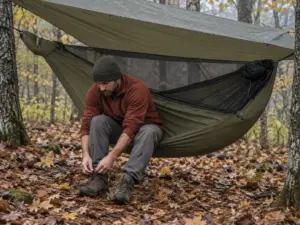
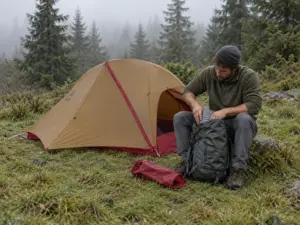






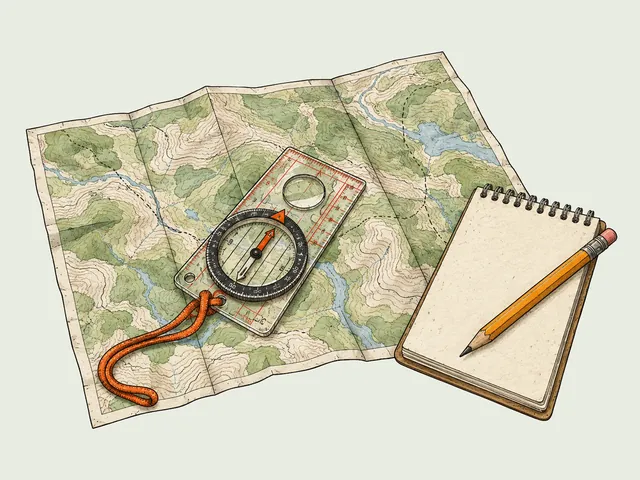






The tent smelled like vinegar. Not the faint kind — sharp, acrid, hitting me full force when I unrolled a fly that spent two summers in a humid garage. I pitched it anyway in the Cascades. By 2 a.m., water was pooling on my sleeping bag, streaming along every seam. The polyurethane coating had turned to paste. That shelter was three years old. But PU doesn’t care about calendar time — it cares about chemistry.
After years of field testing gear and guiding hikers through multi-week alpine traverses, I’ve watched equipment fail silently more times than I can count. The boot with zero rebound left in the midsole. The filter that flows faster after freezing — meaning it’s broken. The first aid kit baking in a car trunk for six months.
This article is a performance audit for every critical piece in your kit — the specific failure signatures that tell you when gear has crossed from “worn” to “hazardous,” and the diagnostic tests that catch invisible failures before they catch you.
⚡ Quick Answer: Most hiking gear fails through invisible chemical and mechanical processes — not visible wear. Run the midsole press test on your boots, the sticky-smell check on your tent, and the backflush flow-rate test on your water filter before every season. If any piece fails its diagnostic, retire it. Calendar age alone is not a reliable indicator; storage conditions and cumulative stress matter more.
The Science of Gear Failure: Why “It Looks Fine” Can Send You to the ER
The failures that send people to the ER aren’t the ones you can see. They’re molecular — happening inside the material while the gear sits on a shelf looking brand new.
How UV Radiation, Moisture, and Compression Destroy Materials
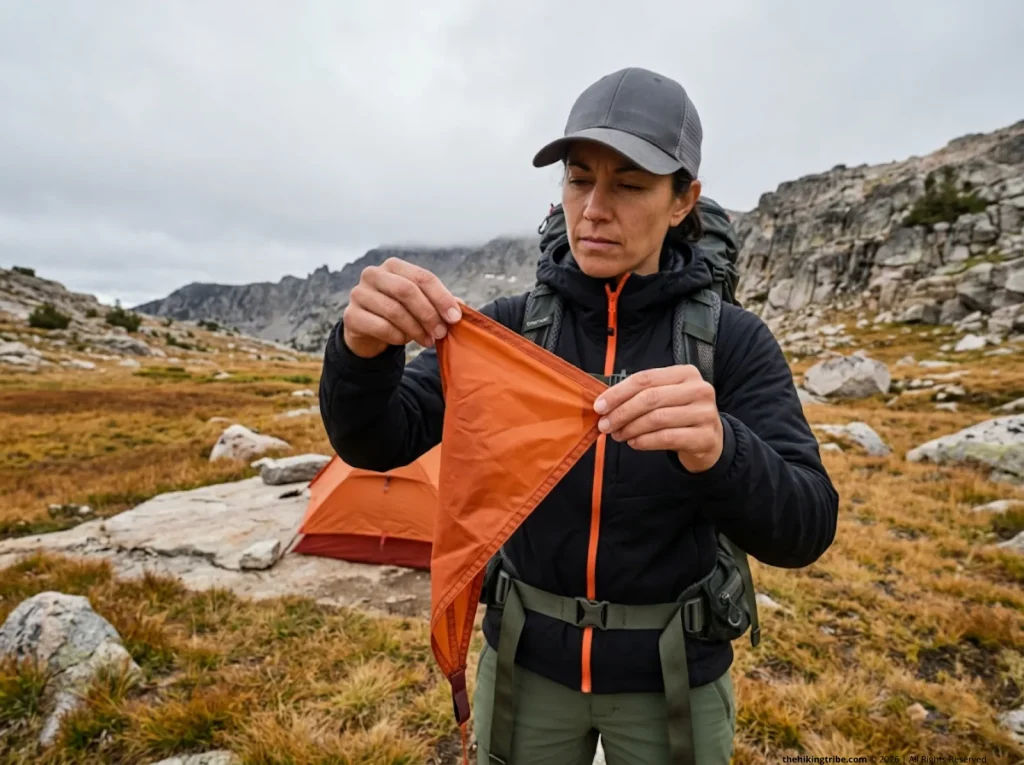
UV degradation triggers photo-oxidation in nylon and polyester tent fabrics, breaking apart the polymer chains. At high altitude, a lightweight tent can lose half its tear strength in a single season. The fabric looks the same — but grab a seam and pull, and it rips like tissue paper.
Moisture breaks the ester bonds in polyurethane coatings through hydrolysis — the reason your tent fly turns tacky, develops that sour vinegar smell, and eventually flakes. Once flaking starts, the fabric’s hydrostatic head drops to zero.
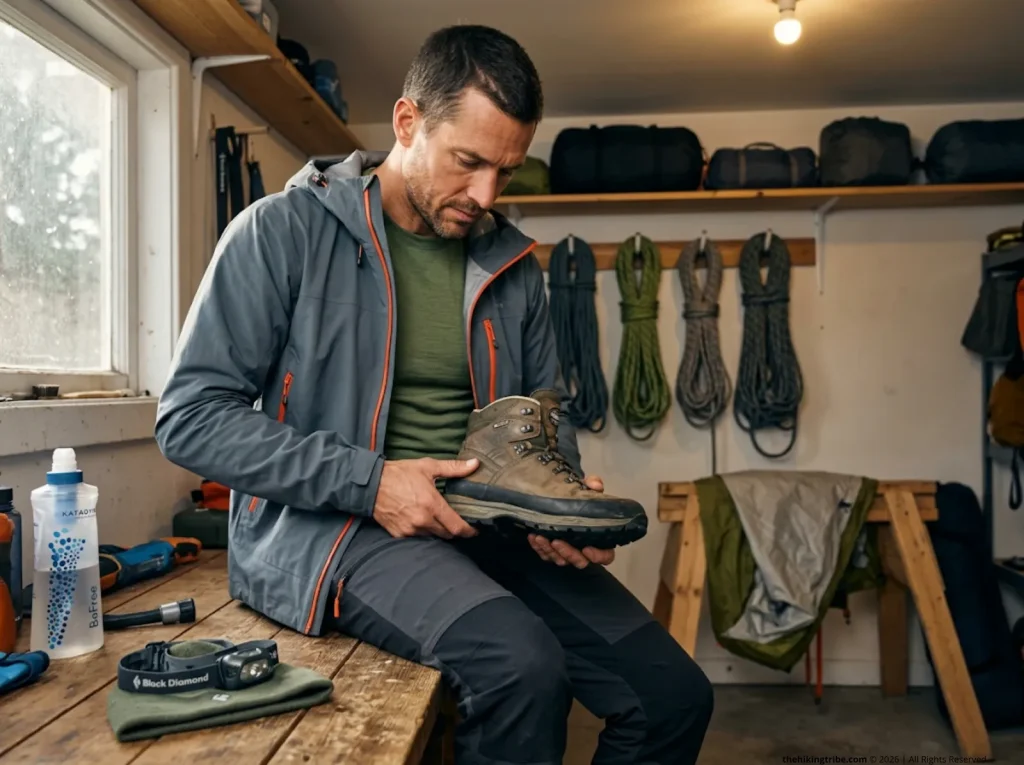
EVA foam midsoles fail through compression set — repeated loading fractures the closed-cell walls, permanently crushing the cushion. Your knees and lower back absorb the difference over every mile of rocky descent. PU midsoles fail through that same hydrolysis. Boots stored in humid garages degrade faster than boots actually worn on trail.
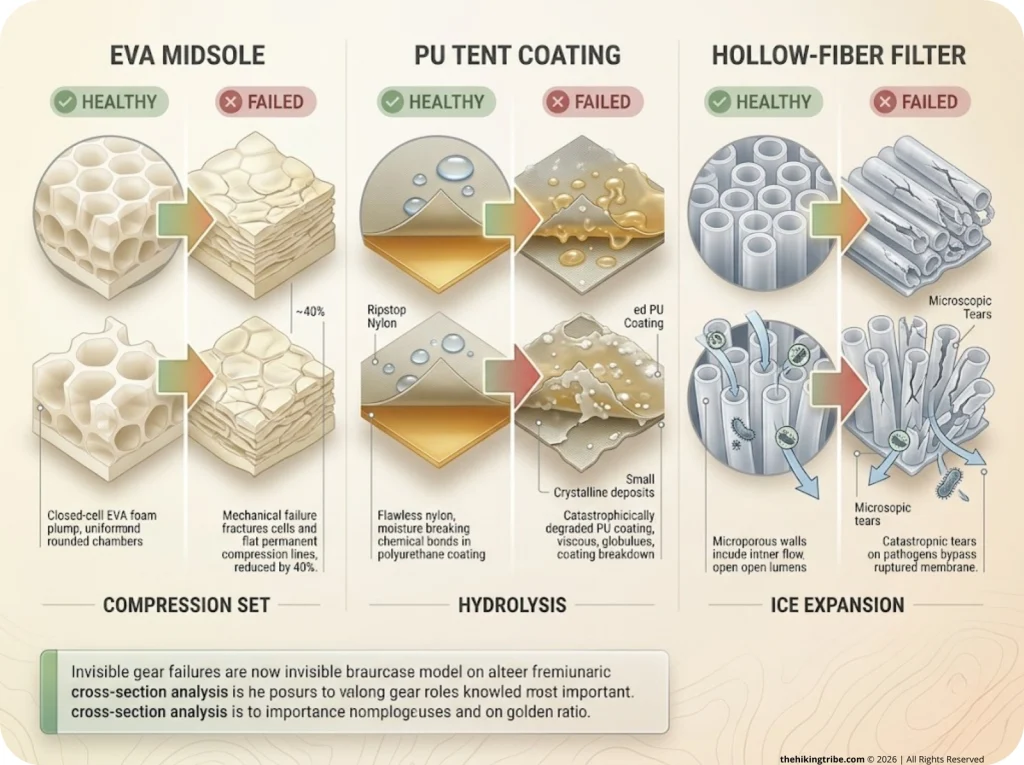
Pro tip: The most critical failures are the ones you can’t see. A midsole with 30% cushioning loss looks identical to a fresh one — but your joints pay for every missing fraction of rebound on technical terrain.
The “Margin of Safety” Problem: Day Hike vs. Alpine Expedition
Gear that’s “okay” for a weekend loop becomes hazardous on a 10-day alpine expedition. The advanced trekker’s margin of safety depends on three factors: distance from help, severity of weather, and duration of exposure. A rain jacket with 80% DWR at a trailhead 20 minutes from your car is fine. That same jacket at 12,000 feet in a sustained storm is a hypothermia risk.
The UIAA dynamic-rope aging and safety standards mandate a 10-year absolute maximum shelf life for climbing ropes regardless of use — polymer degradation follows predictable chemical timelines. Understanding proper gear storage to prevent mold and delamination is the first step in controlling those timelines.
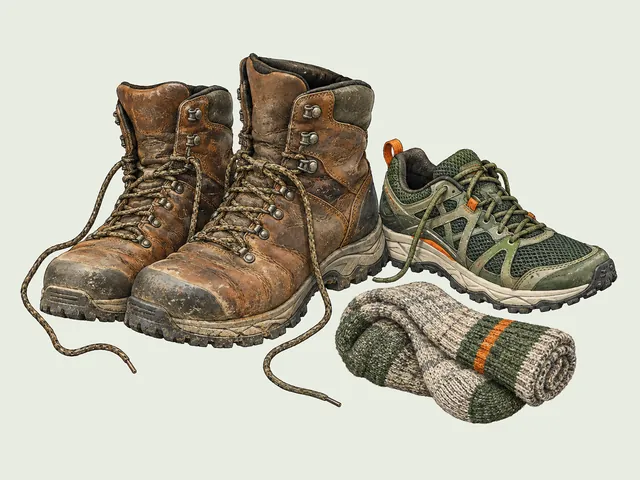
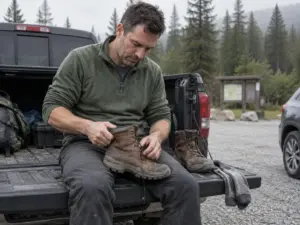
Footwear: The Midsole Press Test and Tread Audit
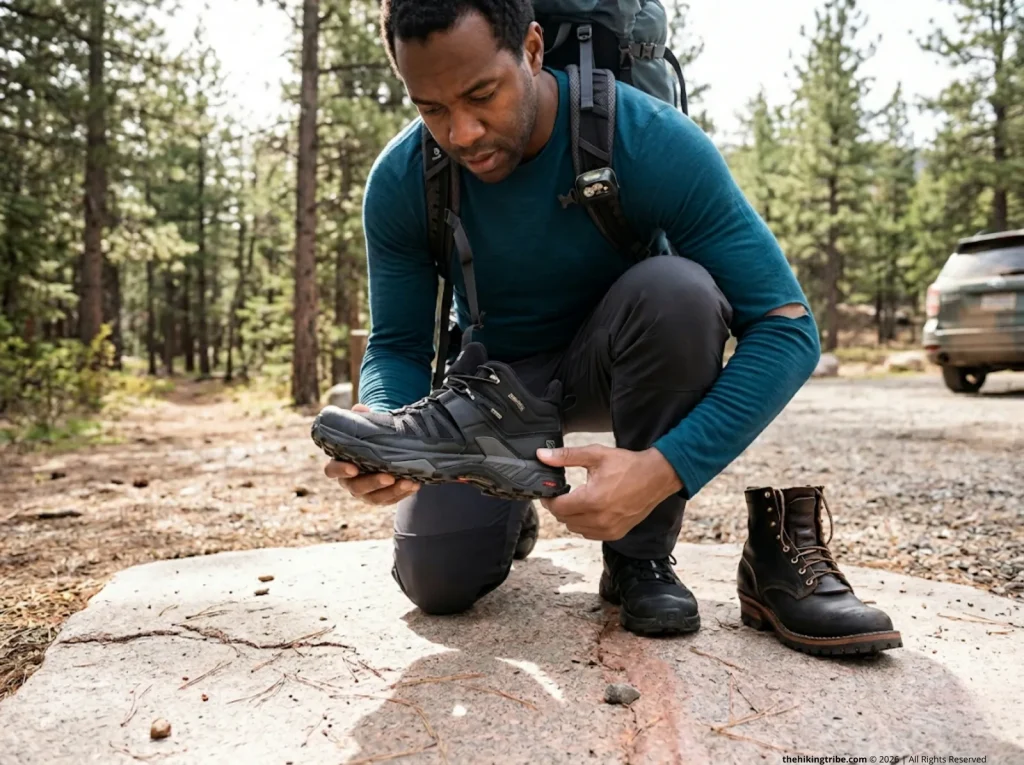
Your boots are the single most important piece of safety equipment on the trail. When footwear biomechanics break down, everything else follows — ankle rolls, knee pain, falls on wet rock.
The Home Stress Tests: Press, Twist, and Immersion
Before every season, run these three tests. They take five minutes.
The Midsole Press Test. Press your thumb firmly into the midsole. If the foam doesn’t spring back within 2-3 seconds, or if compression lines exceed 3mm, the midsole fatigue has crossed the line. This catches failures that are invisible during a visual inspection.
The Twist Test. Hold the boot at toe and heel, then twist. If it torques easily, the twist test for boot shanks tells you the internal support has degraded. That boot will roll your ankle on Class 3 terrain.
The Water-Immersion Test. Fill the boot and check for leaks after 30 minutes. DWR failure is fixable. If the waterproof membrane has delaminated, replace the boot.
Tread depth below 2mm is a critical traction failure. A hiker carrying 40 pounds on technical terrain accelerates midsole compression testing failures by up to 40%. The 300-to-500-mile window for trail runners applies to average conditions only.
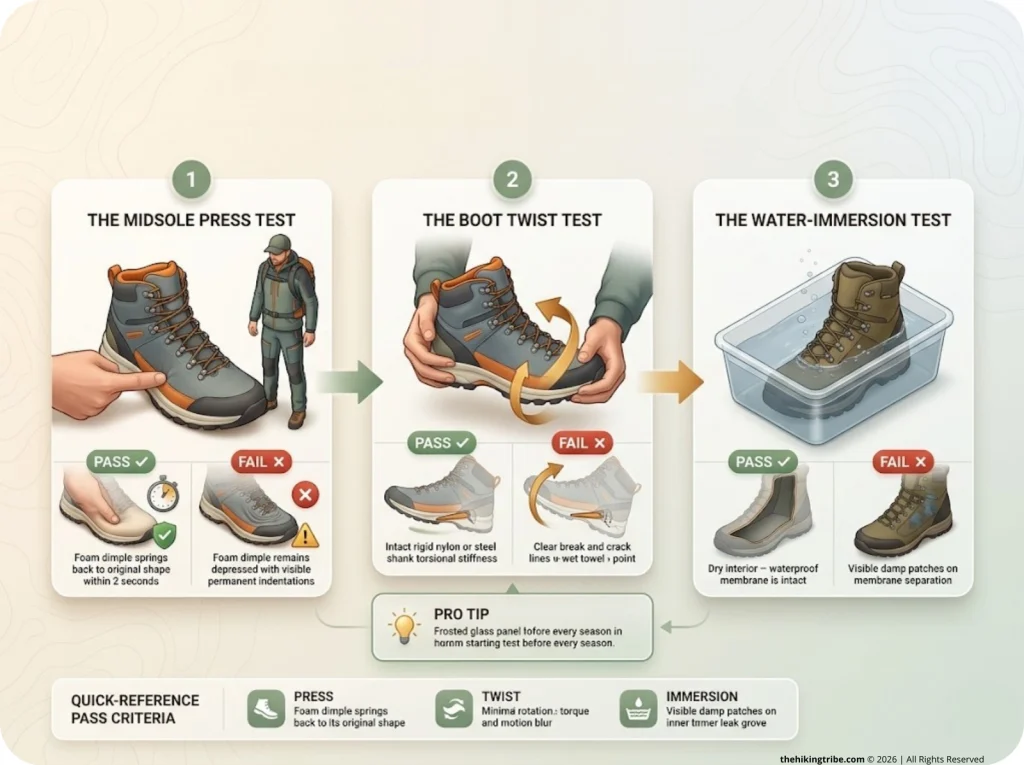
Pro tip: The press test alone has saved me from taking worn-out boots on multi-day trips — boots that felt “fine” in my kitchen but had zero rebound left.
Sole Separation and When Resoling Beats Replacement
Sole separation means the adhesive has deteriorated or stitching has worn through. Goodyear-welted boots can be resoled for $75-$200; cemented constructions usually can’t be economically repaired.
My rule: if resoling costs exceed 50% of a comparable new boot, replacement wins. If the PU midsole shows PU breakdown — crumbling, white powdery residue — resoling is off the table. The substrate is compromised. Check our full resoling cost-value analysis for a breakdown by construction type.
Shelter and Sleep Systems: The Smell Test and Loft Audit
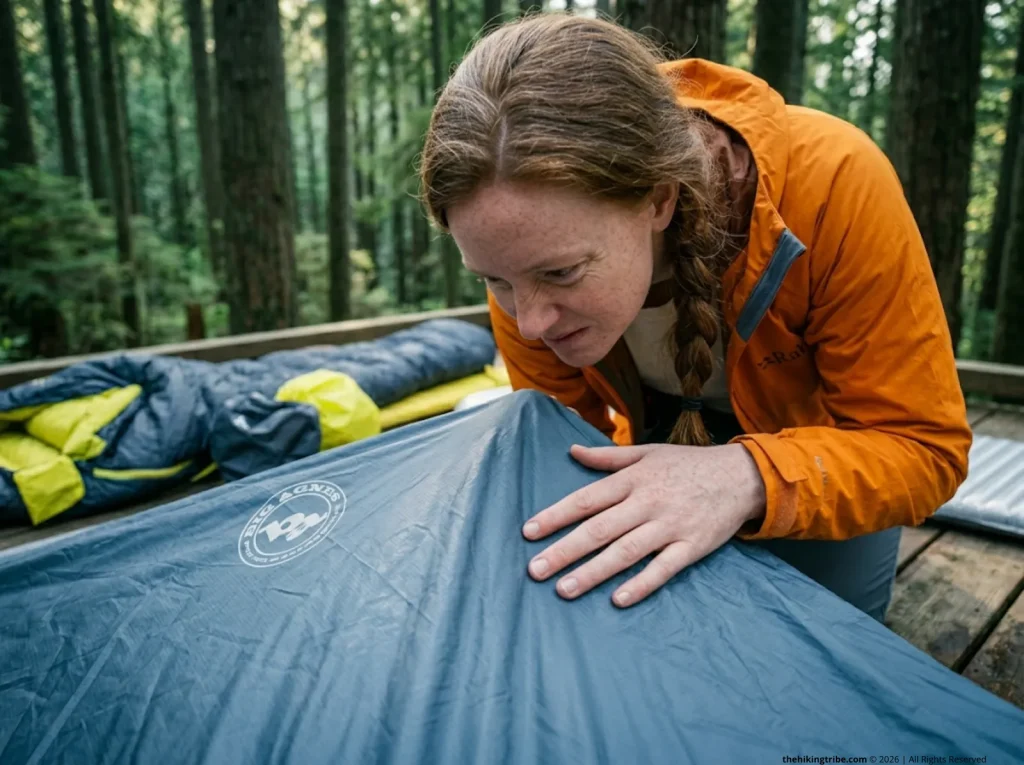
Your tent, sleeping bag, and sleeping pad form the system that keeps you alive through the night. When one fails in the backcountry, the consequences escalate fast.
Tent Fly: Hydrolysis, UV Damage, and the Sticky Smell
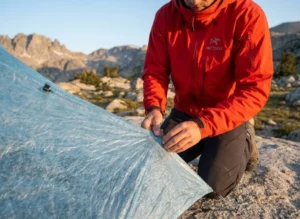
The “sticky smell” is your most reliable diagnostic for polyurethane coating hydrolysis. When PU breaks down, the surface turns tacky, develops that acidic odor, and flakes. Once flaking starts, the hydrostatic head is zero — you no longer have a waterproof shelter.
UV brittleness is cumulative and irreversible. Pinch the fabric and flex it — if it cracks or feels papery, tensile strength is compromised. Watch for seam tape peeling at stress points. That’s your early warning of broader coating failure within one to two seasons.
Pro tip: Toss those “Do Not Eat” silica packets into your gear bins. They absorb moisture and slow hydrolysis. Cost: zero. Payoff: potentially years of extra tent life.
Sleeping Bags: Loft Loss, Cold Spots, and the Clumping Test
Down insulation fails through oil and moisture clumping that mats the plumes, reducing sleeping bag loft. This is often reversible with professional cleaning. Test loft by laying the bag flat and measuring height at center — less than 70% of the original rating signals retirement. The American Hiking Society’s guide to backcountry sleep system thermal requirements provides useful benchmarks for three-season use.
Synthetic insulation is permanent. Polyester filaments develop loft loss from repeated compression. Every stuff-sack cycle introduces microscopic fractures that cannot be reversed.
The Cold Spot Test: lay the bag flat and run your hands over the surface. Thin spots where you feel temperature through the baffles mean filament fracture or permanent clumping. A 10% loft loss translates to a 5-10°F reduction in the lower-limit safety rating.
This same physics of cellular breakdown applies to all foam-based gear — understanding how EVA foam degrades even when boots sit idle reinforces the principle.
Sleeping Pads: Baffle Delamination and the Slow Leak Protocol
Internal baffle delamination shows up as asymmetric “bubbles” in inflatable pads — spots where the structure balloons unevenly. This isn’t a puncture you can patch. It’s a structural failure.
The slow leak protocol is simple: inflate fully, sleep on it, and measure air-pressure loss over 8 hours. More than 20% loss means micro-leaks or valve failure. R-value doesn’t chemically degrade in foam pads, but physical damage from compression and punctures reduces effective thermal efficiency over time.
Water Filtration and Stoves: The Invisible Life-Safety Failures
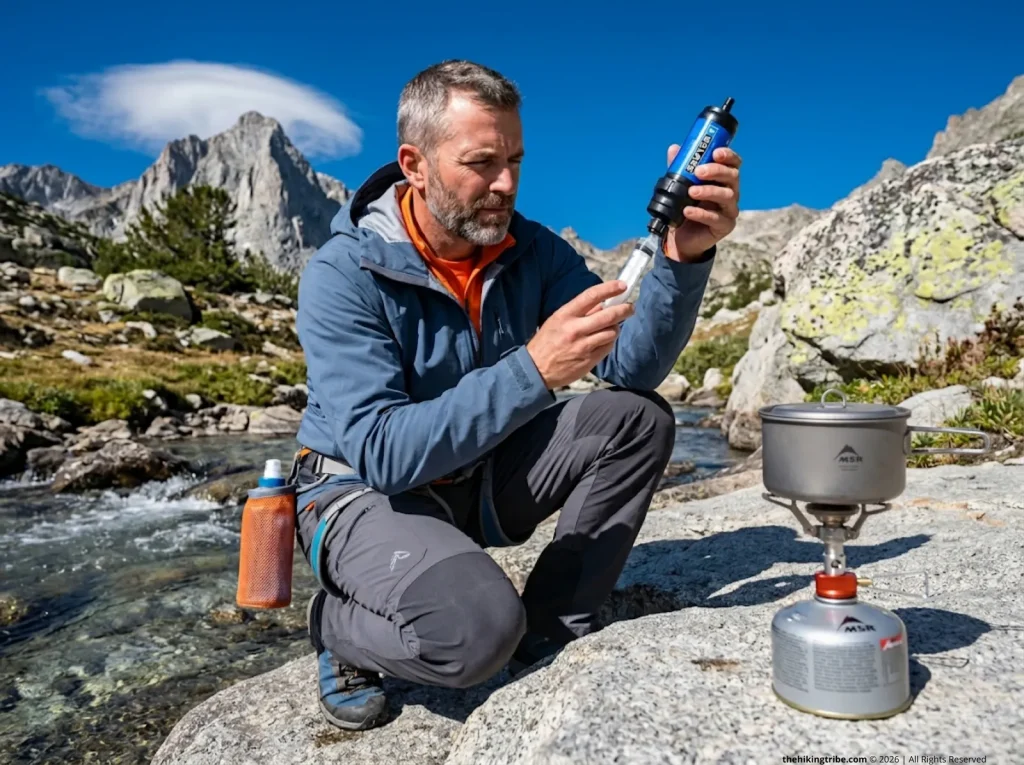
These two pieces of gear share something in common: when they fail, the consequences are immediate and potentially severe. A failed filter means pathogens in your water. A failed stove means a fuel leak at altitude.
Water Filters: The Backflush Test and Freeze Rupture Rule
Hollow-fiber filters like the Sawyer and Katadyn BeFree fail through pore clogging from mineral deposits and fiber rupture from freezing. Both are invisible externally.
The backflush test is your diagnostic. After a thorough backflush, if the water filter flow rate stays below 0.25 liters per minute, the filter is done.
The Freeze Rupture Rule is non-negotiable. Any filter exposed to sub-freezing temperatures while wet must be treated as failed. Frozen water ruptures hollow fibers at the micron level. The filter will actually flow faster after freezing — which hikers misinterpret as “working fine” — but pathogens now bypass the ruptured membrane. Faster flow after freezing equals a broken filter.
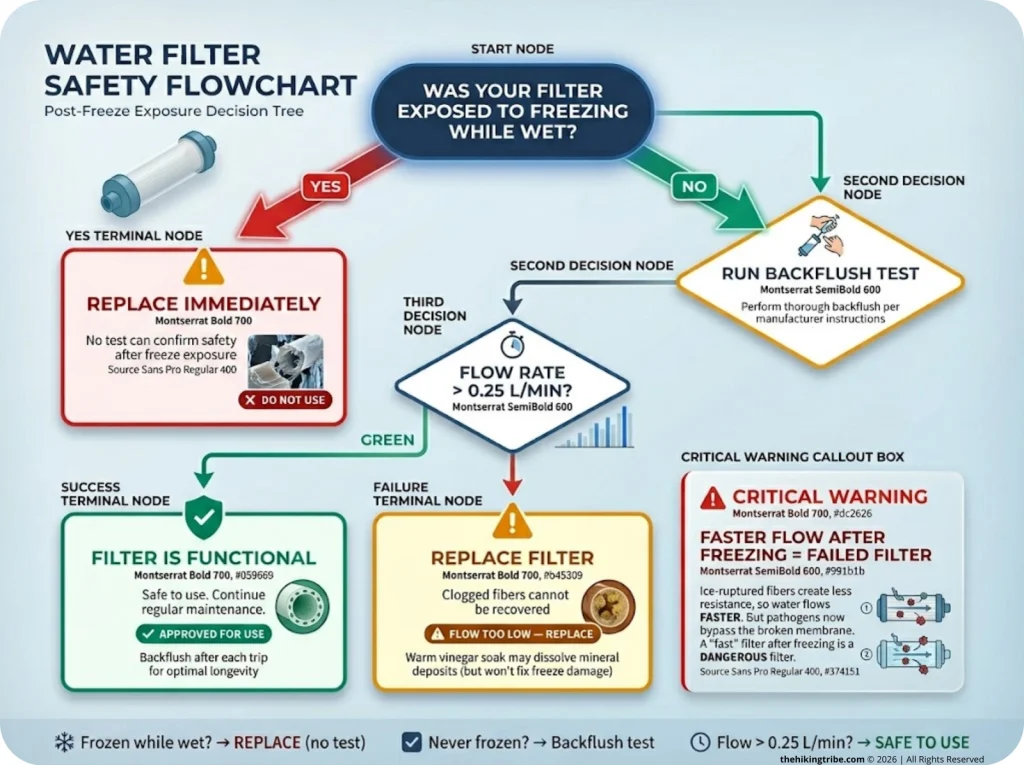
Pro tip: A warm vinegar soak dissolves mineral deposits in hollow-fiber filters after high-alkaline water sources. This extends usable life — but will not fix freeze damage.
For real-world trail data, check what thru-hikers actually report about Sawyer filter longevity.
Stove O-Rings and Fuel System Integrity
Stove o-ring inspection takes 30 seconds. Look for cracking, “o-ring dry rot,” or flattened cross-sections. Below freezing, compromised O-rings can fail entirely, causing fuel leaks at the canister interface.
The Audible Hiss Test: connect stove to canister in a quiet room. Any hiss at the connection during a static test means gas is escaping — a serious fire hazard.
Don’t over-tighten canisters or force control valves. This strips threads or crushes O-rings and causes immediate failure. Carry replacement O-rings in your repair kit — they weigh nothing.
Electronics and First Aid: The Gear Nobody Audits
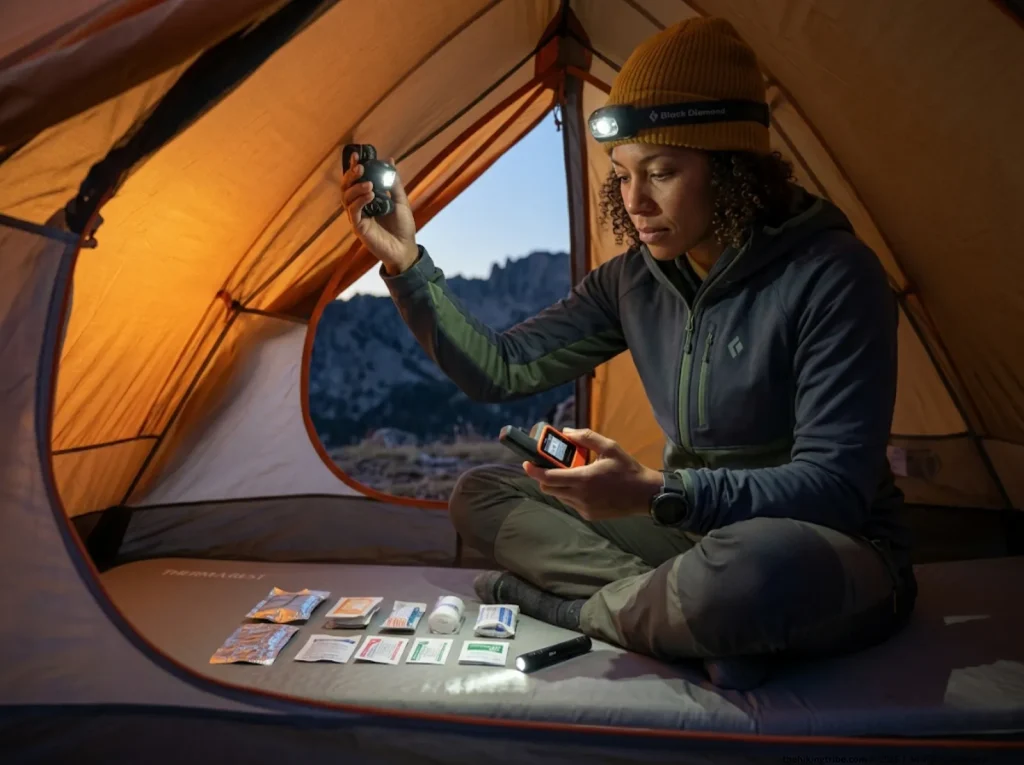
These are the categories hikers tend to ignore until something goes wrong. By then, it’s too late.
Headlamps, GPS Units, and Battery Cycle Degradation
Lithium battery degradation follows a predictable curve. After 300-500 charge cycles, expect less than 70% of original runtime. For a power bank charging your satellite communicator, that’s an emergency communication failure.
Cold amplifies everything. Batteries lose significant capacity below 32°F and can drop by half at sub-zero. A headlamp that runs 8 hours in your living room may quit in 4 hours at altitude in winter. My benchmark: if it can’t hold high-beam through a 4-hour night scramble, it’s a liability. Sleep with electronics in your sleeping bag to maintain charge.
First Aid Kits: Expiration Dates and the Adhesive Test
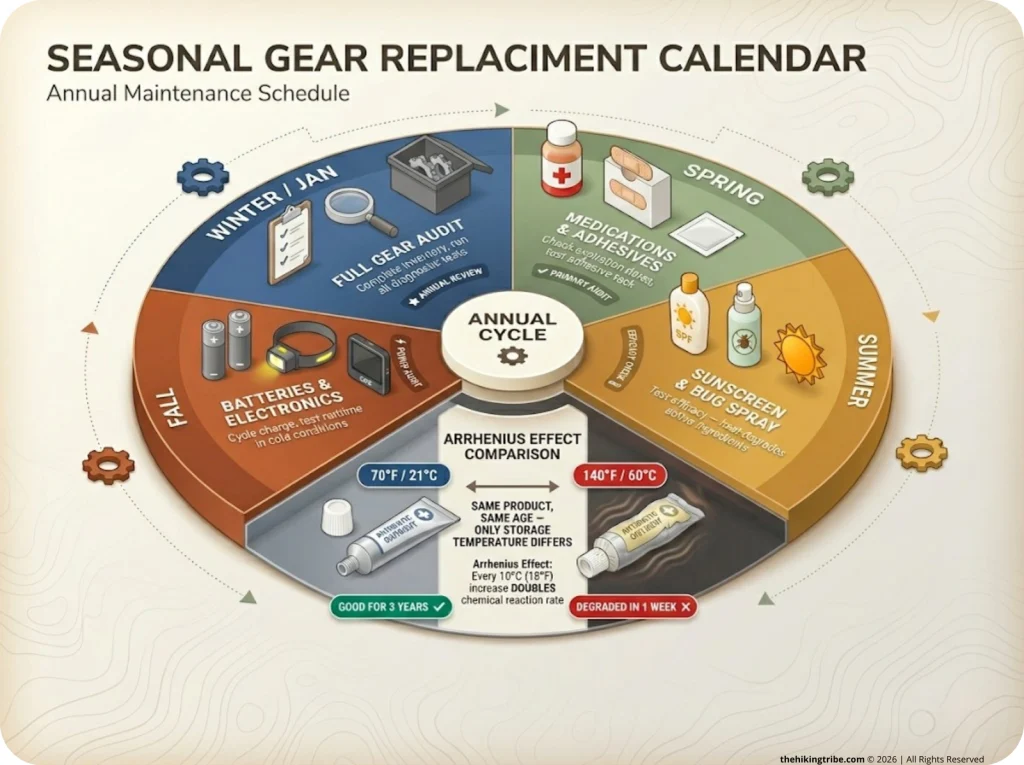
Everyone checks expiration dates. Almost nobody checks storage history. The Arrhenius Effect means one week in a 140°F car trunk degrades an antibiotic ointment more than three years in a cool closet.
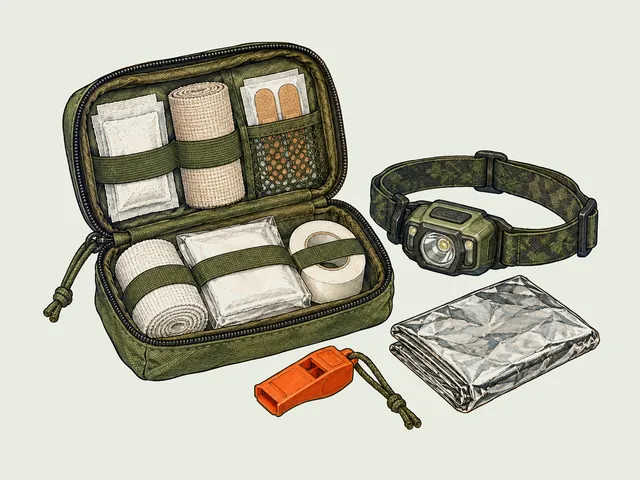
First aid kit expiration goes beyond medications. Test adhesive on bandages before every trip — if they peel immediately, they’re expired regardless of the printed date. Antiseptic wipes dry out too; if the wipe is stiff, toss it.
The Red Cross guidelines on first aid kit expiration confirm that storage environment matters more than printed dates. Build a “Replace by Season” calendar: medications in spring, batteries in fall, full audit every January. If you’re building a customized hiker’s first aid kit, include this schedule from day one.
The Repair-vs-Replace Decision: When Fixing Costs More Than Safety
This is where the emotional attachment to gear runs headfirst into cold math and risk management.
The “Ship of Theseus” Rule for Hiking Gear
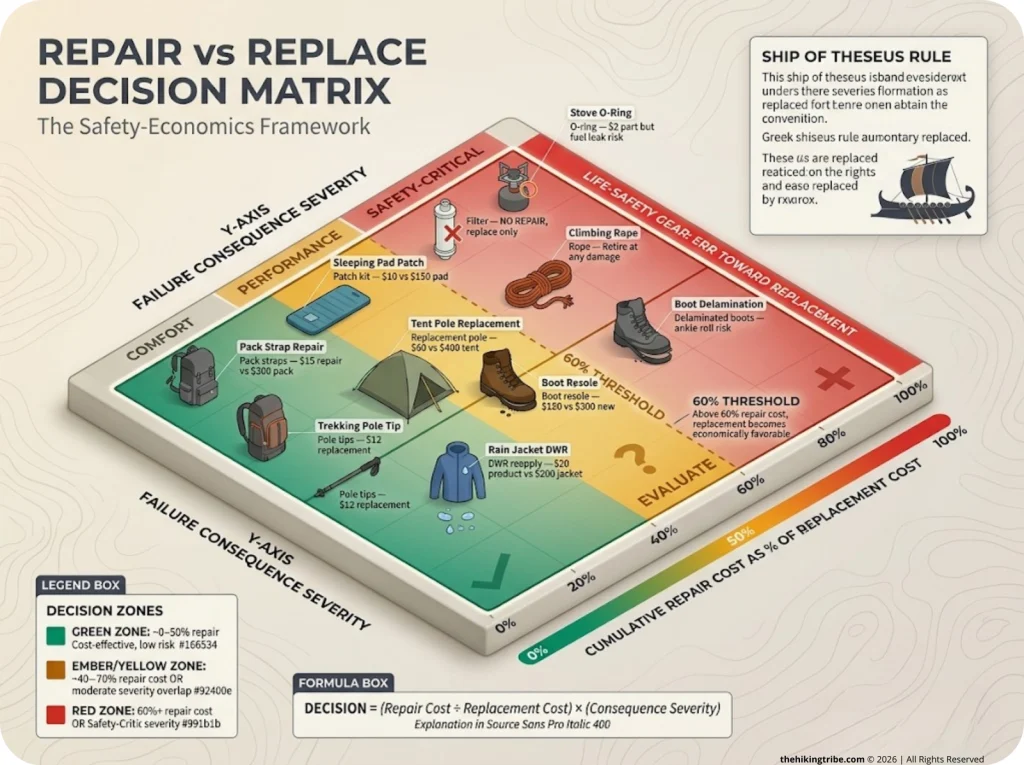
At what point is a tent with three replaced poles, a patched fly, and re-taped seams no longer the original shelter? The Ship of Theseus repair philosophy has a practical answer: when cumulative repair costs exceed 60% of replacement cost, or when the component is life-safety gear, replacement is the only answer.
The $400 you spent three years ago is gone. The question is whether $80 in repairs buys equivalent safety to a new $300 shelter. Repair-first is the ethical default for comfort gear — packs, clothing. For life-safety gear — filters, stoves, ropes — err toward replacement. When modern gear offers significant weight-to-value ROI improvements (think DCF tents), factor performance gains alongside safety.
When it’s time to retire gear, explore responsible recycling and donation options for retired hiking gear so it doesn’t end up in a landfill.
Building a Seasonal Gear Audit Protocol
The pre-season gear audit takes an afternoon. Organize by risk tier: Tier 1 (Life-Safety) — filter, stove, rope, first aid, communicator. Tier 2 (Performance) — boots, tent, sleeping system. Tier 3 (Comfort) — pack, clothing, accessories.
Document condition with dated photos — tracking degradation over time reveals patterns invisible in a single inspection. Spread replacements across seasons to avoid the $1,500 “replace everything at once” shock.
Conclusion
Three things will keep your gear from failing when it matters most.
Test, don’t guess. The press test, the backflush test, the sticky-smell check — these 60-second diagnostics catch silent failures that look fine to the naked eye. Run them every season, no exceptions.
Chemistry doesn’t negotiate. UV oxidation, PU hydrolysis, and compression set fatigue follow predictable timelines. Proper storage in cool, dry spaces extends gear life. Garage storage accelerates every failure mechanism. Understand the material science and you control the outcome.
Gear replacement is risk management, not shopping. Frame every retirement decision through the Safety Matrix: distance from help × severity of conditions × duration of exposure. A marginal rain jacket 30 minutes from your car is acceptable. That same jacket 3 days into an alpine traverse is not.
Pull your Big Three out of storage this weekend. Run the press test on your boots, the sticky-smell check on your tent, and the backflush test on your filter. You’ll either confirm your kit is trail-ready — or catch a failure that would have found you at the worst possible moment.
FAQ
How many miles do hiking boots actually last?
Most trail runners last 300 to 500 miles. Full-grain leather boots can reach 1,000 to 1,500 miles with proper care. But hiking boots 300 to 500 miles is a rough benchmark, not a guarantee — a hiker carrying 40 pounds on technical terrain accelerates midsole decay by up to 40%. Run the press test rather than relying on odometer estimates.
Can you fix a delaminated rain jacket?
If the DWR coating has failed but the membrane is intact, yes — heat reactivation or aftermarket DWR spray can restore performance. If the waterproof membrane itself is delaminating, with peeling layers visible at seams or high-wear areas, the jacket cannot be reliably repaired. Replace it.
Is 10-year-old hiking gear still safe to use?
It depends entirely on the gear category and storage conditions. A well-maintained down sleeping bag can last 20 years. A synthetic bag stored compressed in a garage is likely finished after 5. Climbing ropes carry a 10-year absolute maximum regardless of use or condition. Run the diagnostic tests in this guide rather than using age alone as the criterion.
Do sleeping bags lose their warmth over time?
Down bags lose warmth primarily through oil and moisture clumping, which is often reversible with professional cleaning. Synthetic bags lose warmth permanently through filament fracture — every compression cycle cracks the fibers a little more. A 10% loft loss translates to roughly a 5-10°F reduction in the bag’s lower-limit safety rating.
How do I know if my water filter is still safe after freezing?
You don’t — and that’s the problem. Freeze damage in hollow-fiber filters is internal and microscopic. The counterintuitive sign is that the filter flows faster than normal, because ice-ruptured fibers no longer create the resistance that filtered out pathogens. If your filter was wet and exposed to sub-freezing temperatures, replace it. No exceptions.

I've spent more than a decade researching hiking gear and trail technique. I read the specs, the forum threads and the long-term reviews, and every pick here comes with what it gets wrong.
End of the trail
You read every mile of this one. Here's where the trail goes next.