In this article
Picture two trail shoes on the shelf in front of you. One has a slab of foam under it thick enough to pass for a max-cushion road shoe. The other is thin enough that you feel a pebble through the sole. Both spec sheets say 0mm, and that math does not add up for most buyers.
Podiatrists and experienced trail runners keep landing on the same explanation: the drop measurement describes exactly one thing, and almost nobody reads it correctly. This guide covers zero-drop trail shoes for running specifically, so if you came looking for zero-drop hiking shoes for backpacking and loaded trail walking, that’s the article you want. Here you’ll get what the number measures, what it does to a running stride on technical ground, who it helps, who it hurts, and how to switch without spending a season injured.
What Zero-Drop Actually Measures
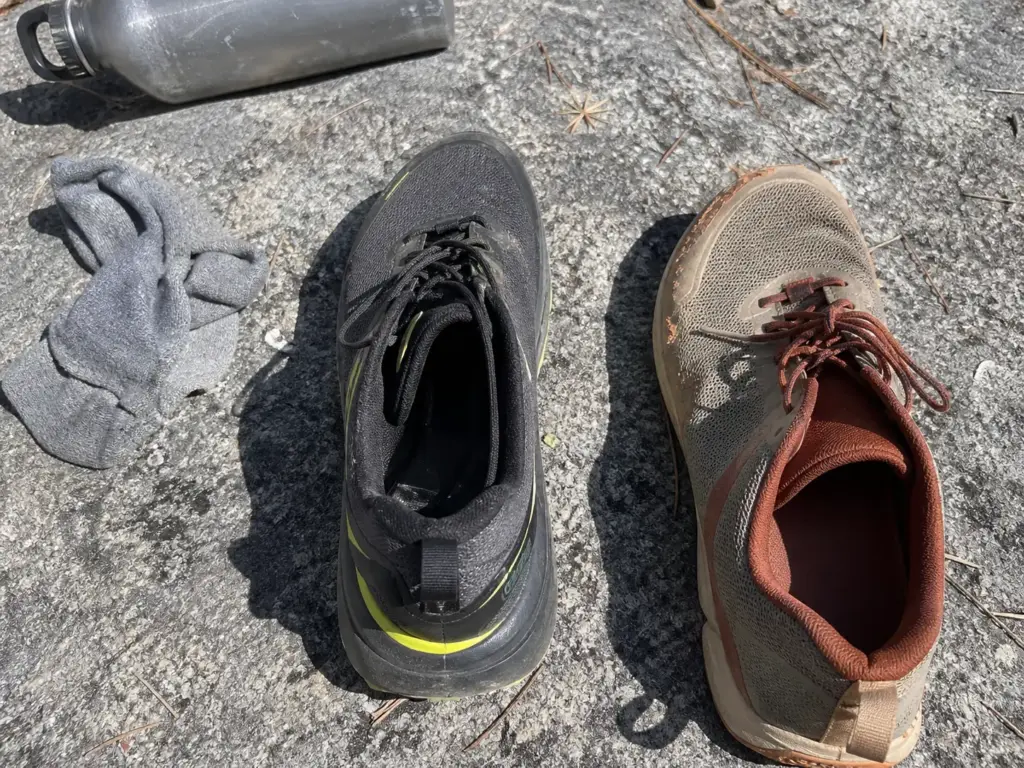
The number on the spec sheet tells you the slope of the platform your foot sits on. That’s the whole job it does. Most buyers read it as a cushioning rating instead, and that single misreading sits underneath nearly every regretted zero-drop purchase. It takes one sentence to fix, and the rest of this article depends on you having it straight.
Drop in Millimeters, and What the Number Describes
Drop, also written as heel-to-toe offset, is the height difference between the material under your heel and the material under your forefoot. A shoe with 30mm of stack at the heel and 22mm at the forefoot has an 8mm drop. Zero-drop means those two match: your heel and forefoot sit on the same level plane, the way they do when you stand barefoot on a flat floor.
That geometry does real work. Changing the angle of the platform changes the angle of your ankle at footstrike, which changes which structures absorb the landing. There’s a peer-reviewed study on the immediate and long-term biomechanical effects of zero-drop running shoes if you want the measurements rather than a brand’s word for it.
What drop does not tell you is how much material is under you. That’s stack height, and it’s worth knowing how stack height is measured on a trail running shoe before you shop, because the two numbers get printed side by side and mean completely different things.
How Zero-Drop Compares to Standard and Low-Drop Trail Shoes
Most trail runners on the wall sit between 8mm and 12mm of drop. That standard-drop shoe is the default, and it’s what your legs are calibrated to if you’ve been running in normal trainers.
Low-drop shoe usually means around 4mm, the middle ground where a lot of runners end up and stay. Lems’ Mountain-to-Town line sits at that 4mm mark and works as a reference point for the midpoint. Zero is the end of that spectrum, not a different scale.
The practical read: going from a 10mm trainer to a 0mm trail shoe changes your ankle angle at every single footstrike, repeated a few thousand times per run. Framed that way, the transition timelines later stop sounding cautious.
Zero-Drop vs Minimalist Shoe, Two Different Words
Minimalist and barefoot describe a thin, flexible sole that lets your foot bend and twist. Those shoes are almost always zero-drop, which is how the words got welded together in people’s heads. The relationship only runs one direction though. Every barefoot shoe is zero-drop; plenty of zero-drop shoes are nothing like barefoot shoes.
The mistake shows up constantly in gear threads: someone orders a 25mm-stack Altra expecting a barefoot experience, gets a genuinely cushioned shoe, and assumes the listing was wrong. The listing was fine. The vocabulary was the problem.
Trail Running Shoes vs Hiking Shoes, and Why This Distinction Matters
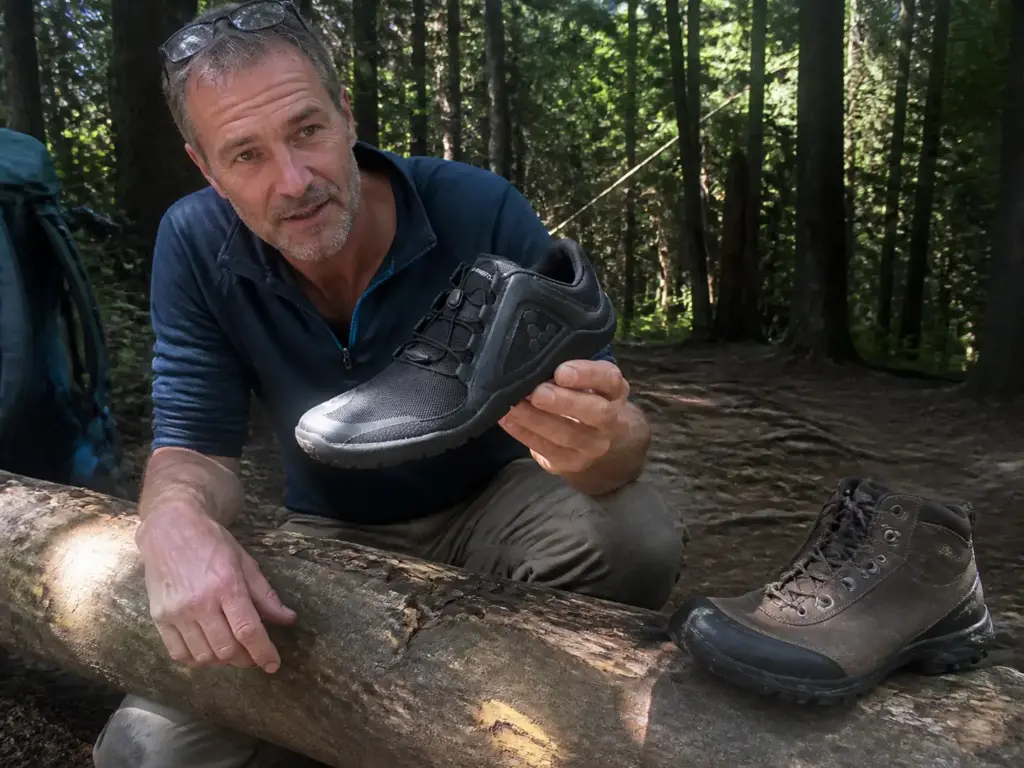
Two people can buy the identical 0mm platform and walk away with opposite opinions of it, because a running gait and a loaded walking gait ask completely different things of the same piece of foam. Search results blur these together constantly. The difference is not academic, and it decides whether the advice you’re reading applies to you.
Running Gait vs Hiking Gait Under the Same 0mm Platform
Running lands harder and lands more often. Impact forces per step run well above walking, and your feet hit the ground with far greater frequency across the same hour of moving. Take a level platform that shifts load toward your calves and Achilles, then multiply that shift by running cadence, and you get a very different adaptation demand than the same shoe under a hiking pace.
Backpacking loads the shoe differently. It adds sustained weight and slower ground contact, which stresses the underfoot structures and the arch more than it stresses the Achilles. Trail running adds repetition, speed, and reactive foot placement where your foot lands somewhere your brain picked about a third of a second earlier. Same shoe geometry, two separate problems.
What Changes in the Shoe Itself: Weight, Flex, Lugs, Protection
The categories are built to different briefs. Trail runners come in lighter, with more flexible midsoles and aggressive lug patterns that shed mud and bite loose dirt. Hiking shoes prioritize underfoot protection and torsional stiffness, because a stiff platform saves your arch when you’re standing on a sharp rock with forty pounds on your back. If you want the full breakdown of how trail runners and hiking boots actually differ under load, it goes deeper than the drop conversation.
A zero-drop trail runner and a zero-drop hiking shoe share a spec and not much else. Treat them as one category and you’ll pick the wrong tool.
Why Adapting to One Does Not Mean You Have Adapted to the Other
Here’s the part that catches people. Transition experience does not transfer cleanly across disciplines. Walking your dog in zero-drop for three months builds tolerance for walking in zero-drop. It builds a little tolerance for running, and less than you’d hope.
The pattern shows up in community threads with some regularity: a hiker who’d been happy in zero-drop for months finally runs in them, does fine on flat fire road, then gets absolutely smoked by Achilles soreness the first time they run a steep, root-covered descent. Nothing about their hiking adaptation was fake. It just wasn’t the adaptation that descent required.
How Zero-Drop Changes Your Stride on Trail
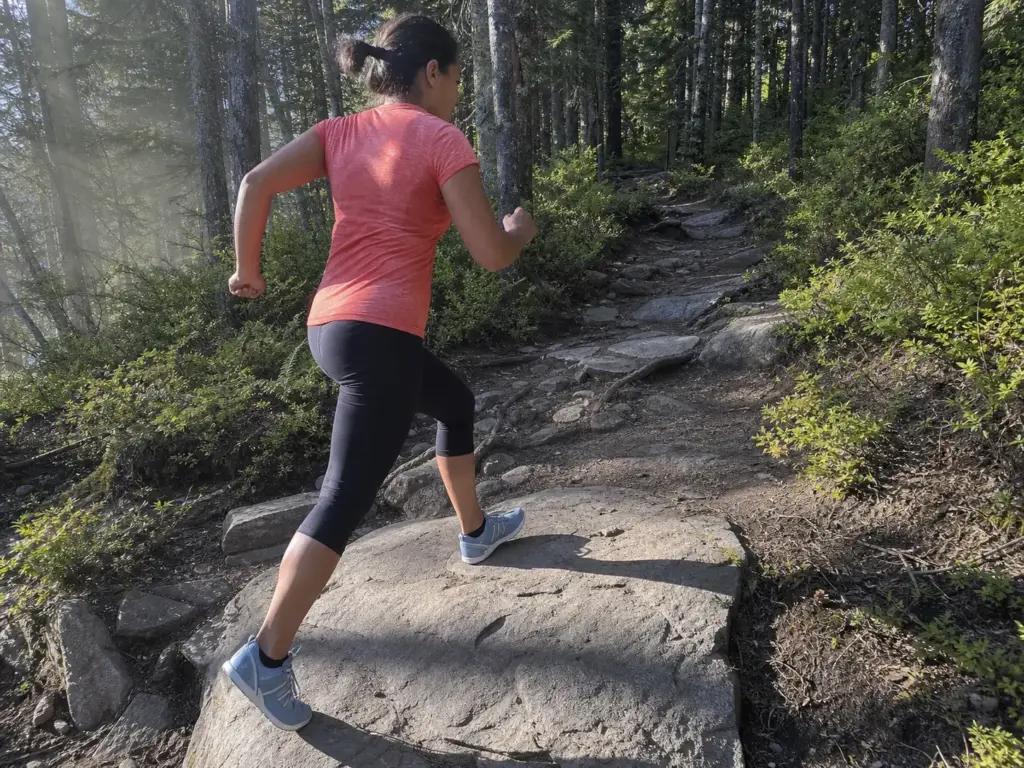
Nobody consciously changes their foot strike. The shoe does it for you, quietly, over the first few runs. And the first place you notice is not your feet.
Where the Load Moves: Knees Out, Calves and Achilles In
Dropping the heel tends to pull your landing toward a midfoot strike or a forefoot landing and away from a pronounced heel strike. Your foot strike pattern varies by runner and the change isn’t automatic, but that’s the general direction of travel, and a gait analysis at a running shop will tell you where you’re starting from if you’d rather not guess. What follows is more consistent: load migrates off your knees and quads and onto your calves, Achilles tendon, and the small intrinsic muscles inside your foot. Runners call that group the posterior chain.
Zero to 4mm of drop loads those structures about as hard as footwear can, while higher-drop shoes keep them more relaxed by propping the heel up. That’s the trade, not a defect. If you’re coming to trail running from a hiking background, the same logic runs through moving from hiking into trail running without wrecking your knees.
Ground Feel and Proprioception on Technical Terrain
A lower, level platform improves proprioception, the sense of where your foot is and what it’s standing on. On rock-hopping terrain and loose scree, you feel the placement instead of guessing at it through a wedge of foam, and you correct faster because the information arrives sooner. That’s also where a forefoot strike stops being a running-form debate and starts being how you actually move over rock. Anyone who runs technical singletrack regularly will tell you the difference is obvious within ten minutes.
The extreme end of that argument is the Vivobarefoot Primus Trail II FG (men’s · women’s), a thin, flexible, lugged sole that puts almost nothing between you and the trail. It makes the ground-feel case about as concretely as a shoe can. It is also emphatically not a transition shoe: running technical trail in that sole with unprepared calves is how people end up sidelined, and the premium price makes it an expensive way to learn that. Earn it first.
The Uphill Demand Nobody Warns You About: Ankle Dorsiflexion
Everyone frets about descents. The climbs get you first. On a steep uphill grade, a level platform demands more ankle dorsiflexion range than a raised heel does, because there’s no wedge helping your shin close the angle toward your foot. Tight calves or stiff ankles turn that into a grind, and it shows up as climbs that feel harder than your fitness says they should.
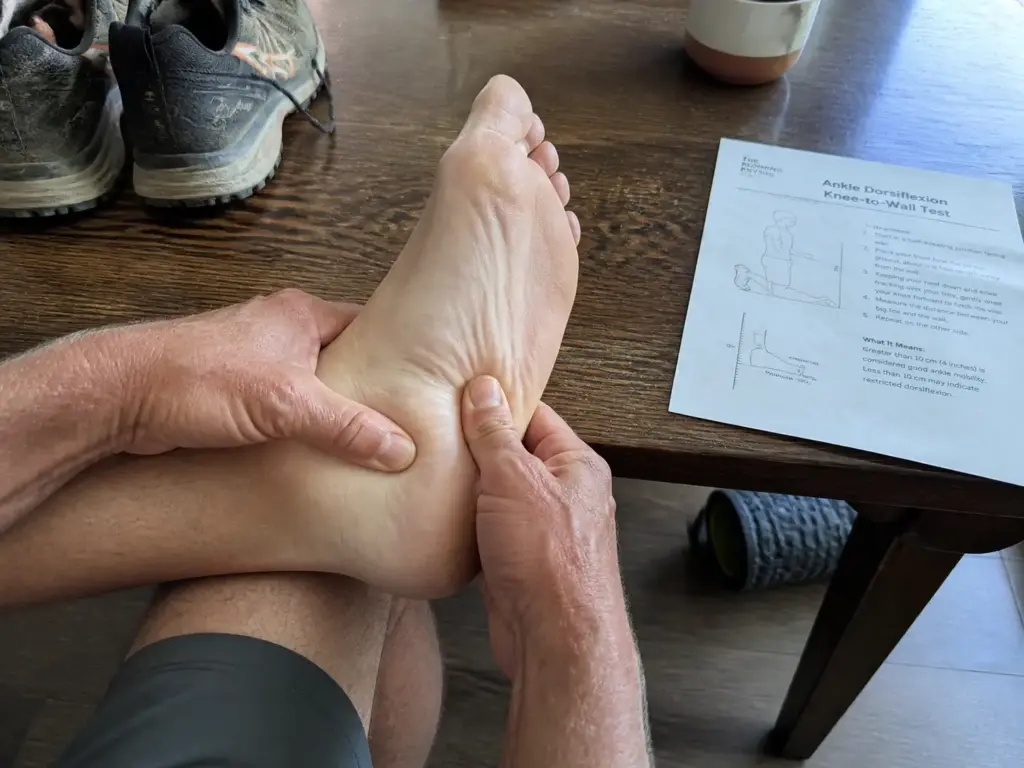
Check your ankle dorsiflexion before you buy anything. Kneel with one foot flat, toes about four inches from a wall, and drive that knee forward toward the wall while your heel stays down. Touch it and your mobility is fine. Can’t get close, and you’ve found the bottleneck most runners never test for. Fix that before the shoe, not after.
What Zero-Drop Does Well

The category earned its following for real reasons. Strip out the barefoot-revolution evangelism and there’s a solid, narrow argument left standing. Worth stating plainly before the drawbacks land.
Foot Alignment and the Level-Platform Argument
Standing barefoot, your heel and forefoot are on the same plane. A zero-drop shoe keeps them there. That’s the natural foot alignment case for the category in one sentence, and it’s a reasonable one: your foot and ankle work close to the position they’re built around, rather than in a permanently mild toe-down posture, and your natural stride gets to happen without a wedge editing it.
It pairs with a broader idea that runs through a lot of gear conversations, which is that the more a shoe does for your foot, the less your foot does for itself. The same reasoning explains why stiff ankle support is not the protection it is sold as.
Ground Feel Where It Actually Counts, on Technical Terrain
On smooth graded trail, ground feel is a nice-to-have. On rock-strewn, root-tangled ground it changes how you move. You place a foot, feel the edge you’re on, and adjust before the weight fully commits. Runners who spend their time on technical ground consistently report this as the benefit that keeps them in the category, above anything about alignment or foot strength.
The Strength Payoff, and What Gates It
Consistent use genuinely strengthens the calves, Achilles, and intrinsic foot muscles over time. That’s the long-term reward. Note the gate though: it shows up in runners who staged the change properly, not in runners who switched cold and spent the next two months managing an injury. The benefit and the transition protocol are the same purchase.
Wide toe boxes commonly ride along with zero-drop designs, and toe splay on descents is a real comfort win. But that’s a separate design choice that happens to travel with the category, not something the 0mm number causes.
Who Should Skip Zero-Drop
This is the section the marketing pages don’t write. Some feet should not be in these shoes right now, and one of those cases is common enough that it deserves a flat sentence rather than a hedge buried in a bullet list.
Active Plantar Fasciitis and Achilles Trouble: Heal First
If you have active plantar fasciitis or achilles tendinitis, zero-drop is not the fix. It’s the opposite of the fix.
The level platform increases ankle dorsiflexion and adds load to exactly the fascia and tendon that are already inflamed. Podiatrists are direct about what zero-drop does to an already-inflamed plantar fascia, and there’s no clever workaround. Heal, then transition.
In the meantime there’s a whole category of footwear built for plantar fasciitis instead of against it, and getting the tissue calm is the prerequisite for everything else here.
Tight Calves and Limited Ankle Mobility
A tight, shortened posterior chain is the single biggest predictor of a rough transition, and it’s the one you can test in thirty seconds using the wall check above. Most desk-bound adults fail it the first time and have no idea. That’s not a reason to give up on the category, it’s a reason to spend six weeks on mobility work before you order anything.
Orthotics, Prescribed Support, and Mid-Season Timing
If you run in prescribed orthotics, the shoe’s geometry interacts with the device, and that’s a conversation with whoever prescribed it rather than a decision to make off a blog post. Understanding how orthotics change what a shoe’s geometry is doing helps you have that conversation, but it doesn’t replace it.
Pronounced heel strikers running high weekly mileage face the largest change, so the timeline stretches for them specifically. And if you have a race on the calendar, check the date before you check the shoe. Starting a months-long transition six weeks out is choosing to run that race on sore legs.
Stage the change in your off-season, when weekly mileage and terrain difficulty are both already low. The whole point is making the shoe the only variable that changed. Swap platforms during a build cycle and you’ll never know whether the calf soreness came from the shoe, the volume, or the hills.
Descents, Where Zero-Drop Gets Hard
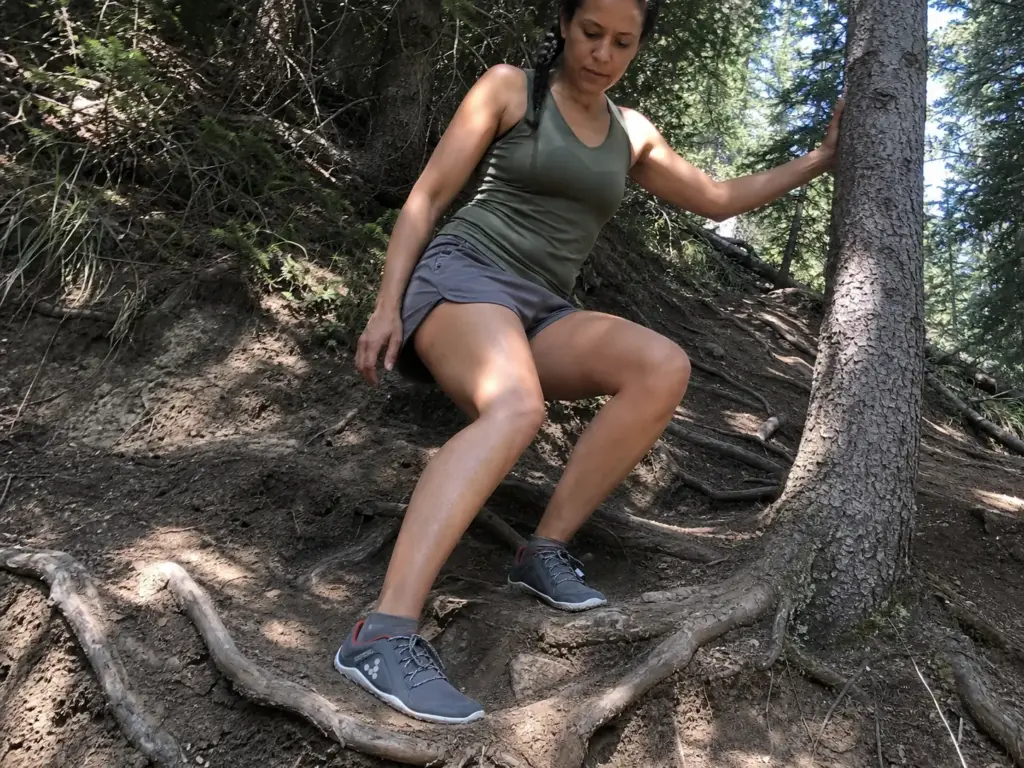
Flat tempo runs will lie to you about zero-drop. Everything feels fine, the legs handle it, you decide you’ve adapted. Then the bill arrives on the first long descent, and it arrives in your calves.
Why the Calf Does All the Braking Without an Elevated Heel
Running downhill is braking work, and the calf and Achilles do most of it at every footstrike. In a higher-drop shoe, the elevated heel meets the ground earlier and absorbs a share of that deceleration before it reaches the tendon. Take the wedge away and there’s nothing above those structures taking the first bite. Every step of the descent goes straight into the same two structures, eccentrically, hundreds of times per mile.
That’s the mechanic in one paragraph, and it’s why downhill running is the real test of zero-drop readiness rather than total weekly mileage. The same calf-loading pattern turns up in walking too, and the same descent mechanic shows up in barefoot-style hiking shoes if you want it explained from the hiking side.
Technical Descents vs Smooth Grade, Not the Same Test
A smooth graded downhill is predictable. Your foot lands where you expect, at the angle you expect, and the loading is rhythmic.
Rocky, root-covered technical terrain removes that predictability. Every landing is slightly different, some of them are off-camber, and your calf absorbs load it didn’t get to pre-tension for. Unplanned eccentric loading stacks on top of braking load, and it compounds fast.
This is why flat-ground adaptation proves so little. A runner can be perfectly comfortable at a solid weekly volume on rolling terrain and still be badly under-prepared for one steep technical descent. Terrain readiness and mileage readiness are separate accounts, and the same distinction sorts out where speed hiking shoes and trail runners diverge on terrain.
Honest counter-case, since it’s earned: on long grinding descents, higher-drop and higher-cushion shoes hold a genuine advantage. More material means more impact absorbed before it reaches you, and over an hour of sustained downhill that adds up. If your goal races are descent-heavy ultras, the zero-drop argument gets meaningfully weaker.
Toe-Bang Is a Fit Problem, Not a Drop Problem
Toe-bang is what runners call the toes jamming into the front of the shoe on steep descents, and it produces black toenails and a lot of complaining. It gets blamed on zero-drop constantly. It isn’t a drop issue. It’s fit and sizing: your foot is sliding forward, which means the shoe is too short, the lacing isn’t locking your heel, or the toe box shape doesn’t match your foot.
The fix is a heel-lock lacing pattern and usually a half size up, not a different drop. Worth separating cleanly, because plenty of people abandon the category over a problem the category didn’t cause.
How to Transition Without Getting Hurt
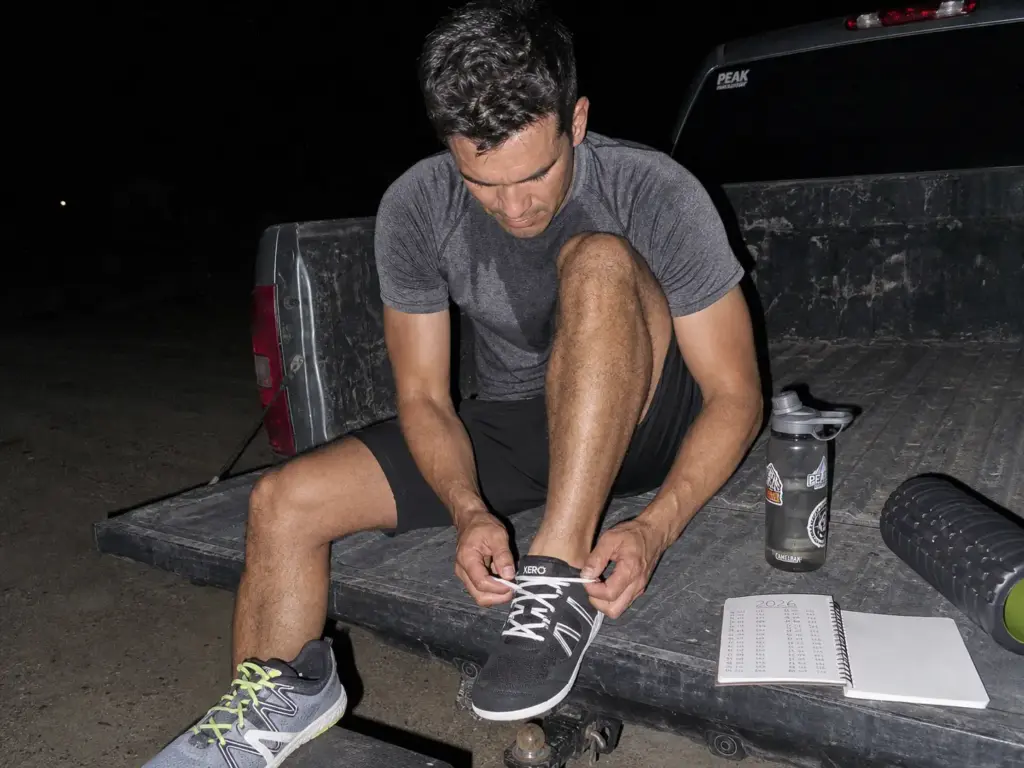
Everyone publishes the checklist. Almost nobody explains why people who follow the checklist still get hurt, and the answer is unglamorous: most of those timelines were written for walking, and readers applied them to running.
The Staged Drop-Down Protocol: 2mm at a Time, Six Weeks Each
The gradual transition that holds up in practice moves about 2mm of drop at a time, with a minimum of roughly six weeks of running at each step before the next reduction. Going from an 8mm trainer down to 4mm properly takes about 12 weeks across two steps. From a 10mm daily trainer to true zero, you’re planning a good chunk of a year. Treat that transition period as the product you’re buying, not as an inconvenience attached to the shoe.
Worth naming the difference here, because the words get swapped around: a break-in protocol is about softening a shoe’s materials over a few runs. This is the opposite direction. The shoe is fine out of the box; your tendons are the thing being remodeled, and tissue works on a much slower clock than foam does.
That sounds excessive until you check what the medical side says. Podiatrists recommend staging the transition over months, not weeks: roughly 8 to 12 weeks for casual walking adaptation, and 16 to 20 weeks before using zero-drop for running or prolonged standing. The walk-before-you-run rule is doubled here. Plan a season, not a month.
Hikers running both disciplines will recognize the shape of this, since the same staged approach applied to minimalist hiking shoes follows the identical logic at walking pace and a shorter clock.
If you want to find out whether the category suits you before committing to a trail-specific model, the Xero Shoes Prio (men’s · women’s) is the budget-friendly way to do it. It’s a lightweight barefoot-style shoe at around 5.5mm of stack, which makes it a category sampler for walking and easy ground rather than a technical trail shoe. Use it to find out how your calves feel about a level platform. Don’t take it down a rocky descent expecting protection it was never built to give.
Why the Transition Fails: The Posterior Chain Nobody Prepped
Here’s the root cause. Tight, shortened posterior chains, which describes most adults who sit for a living, cannot remodel as fast as shoe marketing implies. Tendon adapts slower than muscle, and slower than your enthusiasm.
The failure mode is specific, and naming it matters because you can catch it early. It’s Achilles tendinopathy or a plantar fascia flare, not vague calf strain. Achilles tendinopathy announces itself as stiffness and pain in the tendon during the first steps of the morning that eases as you warm up, which is the exact symptom people talk themselves out of worrying about. A plantar flare does the same thing under the heel.
Normal adaptation soreness sits in the calf muscle, spreads across the muscle belly, and behaves like ordinary training soreness. Pain that’s sharp, localized on the tendon, and worst first thing in the morning is a stop sign, not a milestone.
None of this is theoretical. The barefoot-running boom produced a documented spike in Achilles, calf, knee, and foot injuries tied directly to rushed transitions. It already happened once at scale, which is why the go-slow advice isn’t liability language.
The Prehab Work That Makes It Survivable
Do the strength work before the switch, not after symptoms appear. That ordering is the whole trick, and it’s the step nearly everyone skips.
- Straight-leg calf raises, 2–3 times per week, targeting the gastrocnemius. Build toward sets you can control slowly on the way down.
- Bent-knee calf raises, same frequency, which shift the work to the soleus. Both matter, and most people only ever train the straight-leg version.
- Post-run calf and Achilles stretching, consistently, starting weeks before the first drop reduction.
- Single-leg balance work, 30 seconds a side, to wake up the intrinsic foot muscles that are about to get promoted.
One more piece, tying back to the descent section: do not run the entire transition on flat, easy ground. Work technical descents in gradually and deliberately, at short distances first. The runners who get blindsided are almost always the ones who adapted on smooth trail and then treated a steep rocky downhill as just more of the same mileage.
Judge terrain readiness separately from mileage readiness. Technical, rocky, root-tangled trail multiplies calf and Achilles load compared with the same distance on smooth singletrack, so keep two separate progressions in your head: how far you can go, and how rough the ground can get. They advance at different speeds.
Zero-Drop Does Not Mean Minimal Cushioning
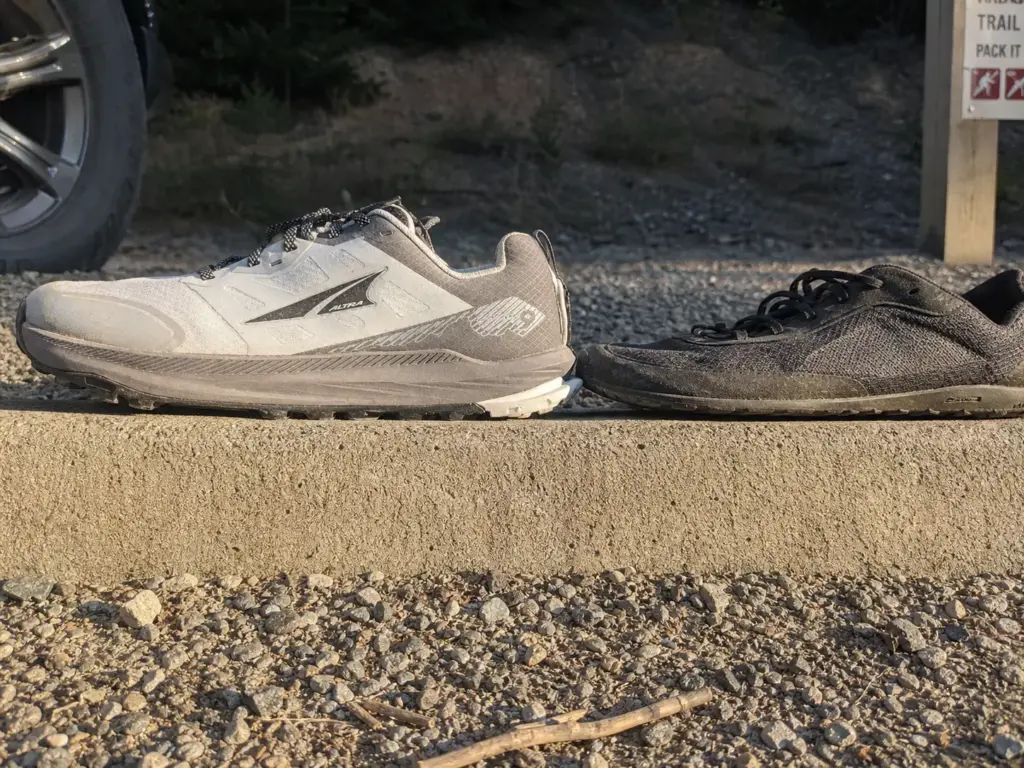
This is the one that costs people money. A buyer decides zero-drop means barefoot-thin, orders accordingly, and opens the box to find a 25mm slab of foam. Two numbers, two meanings, printed separately on the spec sheet for a reason.
Two Numbers That Describe Different Things
Drop tells you the platform is level. Stack height tells you how much material sits between your foot and the ground. They’re independent, and a shoe can pair any drop with any stack.
The cleanest proof is Altra’s own catalog. The Altra Lone Peak 9 (men’s · women’s) runs a 25mm stack at 0mm drop, with a FootShape wide toe box and a MaxTrac outsole. Cushioned and level at the same time. It’s the shoe most people should be looking at when they say they want to try zero-drop for trail running, and it’s the single best answer to the myth, because it resolves the myth just by existing.
Max-Cushion Zero-Drop Is a Real Category, and a Popular One
Go further up Altra’s line and the numbers get more extreme. The Olympus, Paradigm, and Via Olympus models run stack heights in the 30 to 37mm range while staying at zero drop. That’s maximalist cushioning sitting on a level platform, two to three times the foam of a minimalist zero-drop shoe, and it’s the combination most buyers don’t believe exists until they’re holding one.
At the other end, a barefoot-style zero-drop shoe can sit at around 5mm of stack. Same drop number on the box, roughly a seventh of the material underfoot. If you needed one fact to prove that drop and cushioning are unrelated, that’s it.
The Lone Peak’s popularity beyond running makes the point again from a different direction. There’s a reason the Lone Peak keeps showing up on thru-hikers’ feet, and it has more to do with the wide toe box and the cushioning than with the drop number that gets all the attention.
Reading a Trail Shoe Spec Sheet Without Getting Fooled
Three numbers, three separate questions, and never let one answer another:
- Drop tells you the angle of the platform. That’s your calf and Achilles load, and your transition timeline.
- Stack height tells you the cushioning. That’s your comfort on long descents and hard-packed ground.
- Lug depth tells you the traction. That’s mud, wet rock, and loose dirt.
Read them in that order and the category stops being confusing. Once you’re reading specs properly, it’s worth having the rest of the anatomy of a trail running shoe straight too, because rock plates, upper construction, and midsole geometry all change the shoe as much as any of these three figures.
Conclusion
Three things to carry out of here.
Zero-drop describes the slope of the platform, not the amount of foam. Check drop and stack height as two separate numbers, every single time you shop.
Running in zero-drop moves the work to your calves and Achilles, and technical descents are where that bill comes due. Flat ground will not tell you whether you’re ready.
The transition runs in months. Podiatrists put running readiness at 16 to 20 weeks, and the runners who get hurt are the ones who treated that number as a suggestion.
Before you order anything, do two things. Run the ankle dorsiflexion wall check on yourself, and count the weeks between today and your next race or big objective. Those two answers tell you whether zero-drop is this off-season’s project or next year’s.
Frequently Asked Questions
01What do podiatrists think of zero drop shoes?
Opinions are genuinely mixed and depend on the individual foot. Podiatrists broadly accept the natural-alignment argument but agree on two points: zero-drop is not a fix for existing foot problems, and the transition needs months, not weeks. For an actively inflamed plantar fascia or Achilles, most advise healing first.
02What are the disadvantages of zero drop shoes?
The main one is increased load on the calf, Achilles, and plantar fascia, especially on descents where those structures brake without an elevated heel helping. Add a long adaptation period, real injury risk if you rush it, and less cushioning benefit on long grinding downhills than a higher-drop shoe gives you.
03Who should wear a zero drop shoe?
Runners with reasonable ankle mobility and calf flexibility, no active heel or Achilles trouble, and enough runway to stage the change across a few months, ideally in the off-season. It suits people running technical terrain who want ground feel. It does not suit anyone mid-season, injured, or in prescribed orthotics without checking first.
04Is zero drop bad for the knees?
Generally the opposite. Zero-drop tends to move load away from the knees and quads and toward the calves and Achilles. That is a redistribution rather than a free upgrade: your knees may thank you while your lower legs carry more work than they are used to handling.
05Why do people say zero drop shoes are bad?
Most of that reputation traces back to the barefoot-running boom, which produced a documented spike in Achilles, calf, and foot injuries when people switched too fast. The shoes were not really the problem. The timeline was, which is why the staged transition matters more than the model you pick.
Risk Disclaimer: Hiking, trekking, backpacking, and all related outdoor activities involve inherent
risks which may result in serious injury, illness, or death. The information provided on The Hiking Tribe is for
educational and informational purposes only. While we strive for accuracy, information on trails, gear, techniques,
and safety is not a substitute for your own best judgment and thorough preparation. Trail conditions, weather, and
other environmental factors change rapidly and may differ from what is described on this site. Always check with
official sources like park services for the most current alerts and conditions. Never undertake a hike beyond your
abilities and always be prepared for the unexpected. By using this website, you agree that you are solely
responsible for your own safety. Any reliance you place on our content is strictly at your own risk, and you assume
all liability for your actions and decisions in the outdoors. The Hiking Tribe and its authors will not be held
liable for any injury, damage, or loss sustained in connection with the use of the information herein.
Affiliate Disclosure: We are a participant in the Amazon Services LLC Associates Program, an
affiliate advertising program designed to provide a means for us to earn advertising fees by advertising and linking
to Amazon.com. As an Amazon Associate, we earn from qualifying purchases. We are also an official affiliate partner
of Black Diamond Equipment via the AvantLink network. If you click on a Black Diamond affiliate link and make a
purchase, we may earn a commission at no additional cost to you. We also participate in other affiliate programs and
may receive a commission on products purchased through our links. Additional terms are found in the terms of
service.