In this article
Most people buy the hiking backpack first, then go shopping for gear to stuff inside it. That is backwards, and it is the quiet reason so many hikers limp back to the car with sore hips and aching shoulders. The size of the pack you pull off the wall decides how much you haul up the mountain, not the other way around. Ask anyone who has logged serious miles and they will tell you the same thing: they obsess over fit and pack weight, not over who owns the biggest bag. This guide walks the whole decision the way a hiking buddy would at the trailhead, from what type of pack you need and how many liters your trip calls for, to getting it to sit right on you and knowing which features are worth paying for.
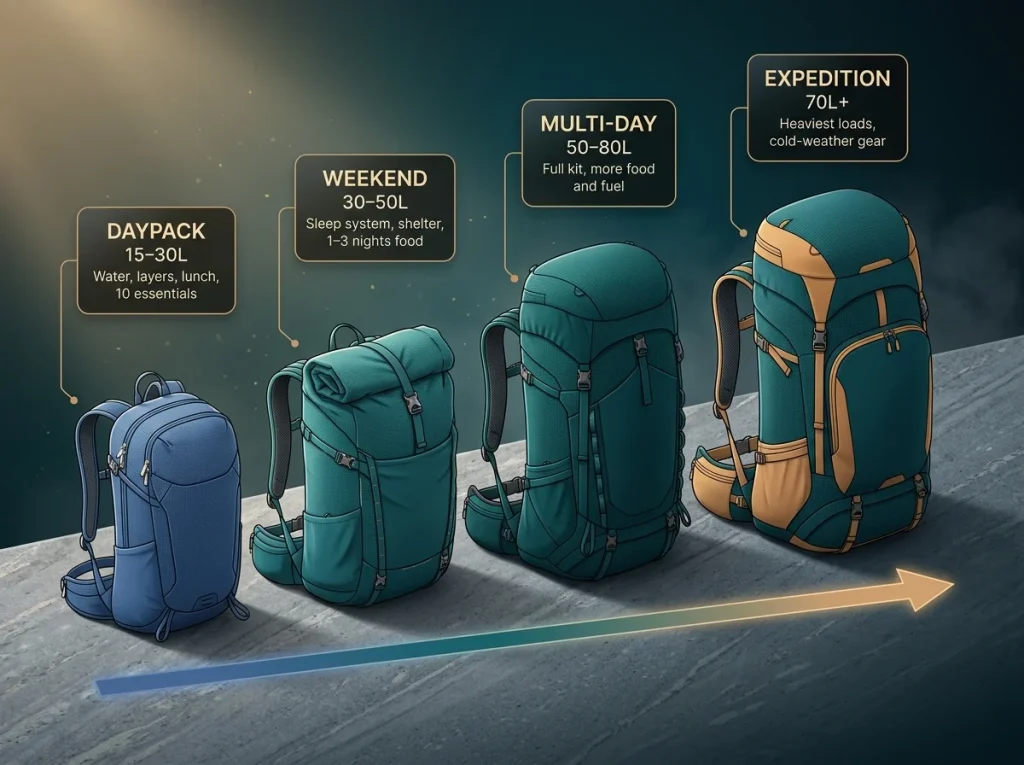
Here is the fast version, matching trip length to the capacity most hikers actually need.
| Trip Length | Pack Capacity | Typical Load |
|---|---|---|
| Day hike | 15–30L | Water, layers, lunch, the 10 essentials |
| Overnight or weekend (1–3 nights) | 30–50L | Sleep system, shelter, a couple days of food |
| Multi-day (3–5 nights) | 50–80L | Full kit plus more food and fuel |
| Extended or expedition (5+ nights) | 70L+ | Heaviest loads, extra food, cold-weather gear |
Which Type of Hiking Backpack Do You Actually Need?
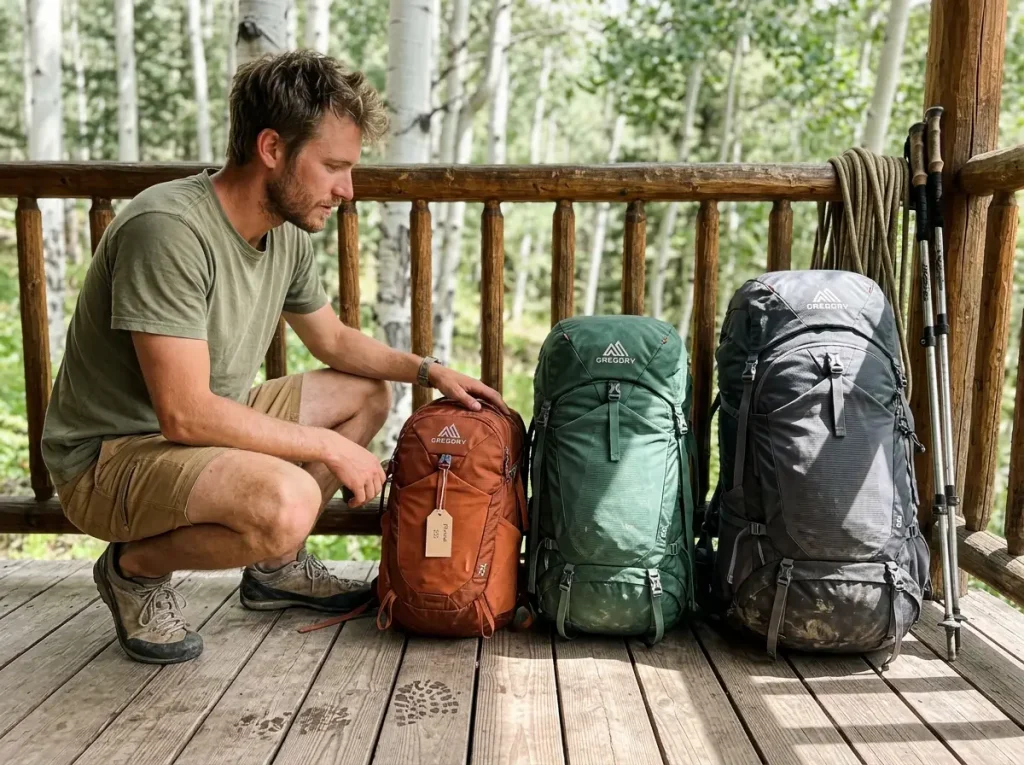
Before any spec talk, answer one question: how do you actually hike? Afternoon loops, the occasional weekend, or week-long trips into the backcountry. That single answer rules out most of the wall of packs at the store, because pack categories are built around trip length, not around looking rugged.
Daypacks for Short Trips
A daypack runs roughly 15 to 35 liters and carries what a day on the trail demands: water, layers, lunch, and the ten essentials. The good ones still have a real hipbelt and a bit of torso adjustment, which is what separates a hiking daypack from the school bag in your closet. The Osprey Talon 22 (men’s) and its women’s-cut sibling the Tempest 20 (women’s) are the daypack reference for that reason, with a hipbelt that actually moves weight off your shoulders on a long day.
If you want something cheap and packable for casual walks or a stuffable summit bag, the ZOMAKE 25L (packable daypack) does the job, as long as you accept the trade. No frame and no hipbelt means it rides fine empty or lightly loaded, and poorly once you cram it full. For a deeper look at this whole category, our daypack guide goes deeper on day-hike rucksacks.
Weekend and Multi-Day Packs
Once you carry a sleep system and a shelter, you move into 40 to 70 liter territory, and this is where frame and fit start to matter a lot. A weekend pack in the 40 to 50 liter range covers one to three nights for most people. Step up to 50 to 70 liters when the trips get longer or your gear is bulky. If you are still deciding between a big daypack and a true backpacking pack, the full breakdown of day packs versus backpacking packs sorts it out.
Ultralight and Frameless Packs
Ultralight and frameless packs run light and lean, often 35 to 55 liters with little or no internal structure. They reward hikers who have already trimmed their kit. Load one past its comfort range and it folds onto your shoulders, which is exactly why a frameless pack is a poor first pack for most beginners.
The Specialty Packs Worth Knowing
A few minor types are worth naming. Lumbar and hydration packs handle short, fast outings. For trail running and fast day hikes, a vest-style pack often beats a daypack, and our piece on how a running vest can beat a daypack for fast, light days covers when to make the switch.
Match the pack to the trips you actually take, not the trip you imagine taking someday. The hikers who buy a 65-liter pack for day hikes and weekends almost always end up overpacking it, because empty space is an invitation to fill it.
How Many Liters Do You Really Need?
The number one question at the trailhead is always some version of how big should it be. The honest answer is that liters track nights out, not how impressive the pack looks on the wall. Capacity gets measured in liters, or in cubic inches on some older American packs, but the rule is the same.
A bag that is too big does not make you safer. It just gives you room to carry things you will wish you had left home.
Day Hikes and Overnighters
For day hikes, 15 to 30 liters is plenty. For an overnight or a weekend, most people land between 30 and 50 liters, and efficient packers can do a full weekend in the low end of that range. Our deep dive on how pack volume in liters breaks down for overnight versus weekend trips gets specific about where the line falls.
Multi-Day and Extended Trips
Three to five nights pushes you into 50 to 80 liters, and anything past five nights or into cold weather climbs from there. If multi-day is your main goal, our skill guide to choosing a backpacking backpack covers the multi-day decision in more depth.
Why Season Changes the Number
The same trip needs more volume in winter. A warmer sleeping bag, an insulated jacket, and extra layers eat space fast, so a route that fits a 45-liter pack in July might demand 60 liters in shoulder season. Plan capacity around your coldest expected conditions, not your warmest.
Buy Your Pack Last (Size It to the Gear You Own)
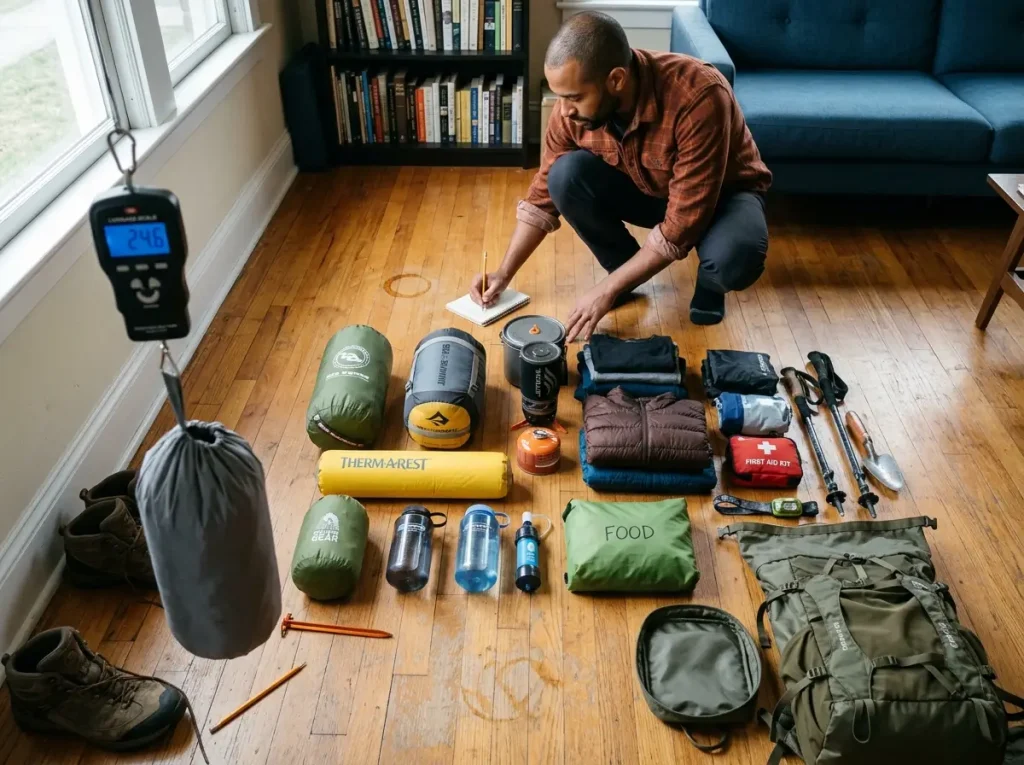
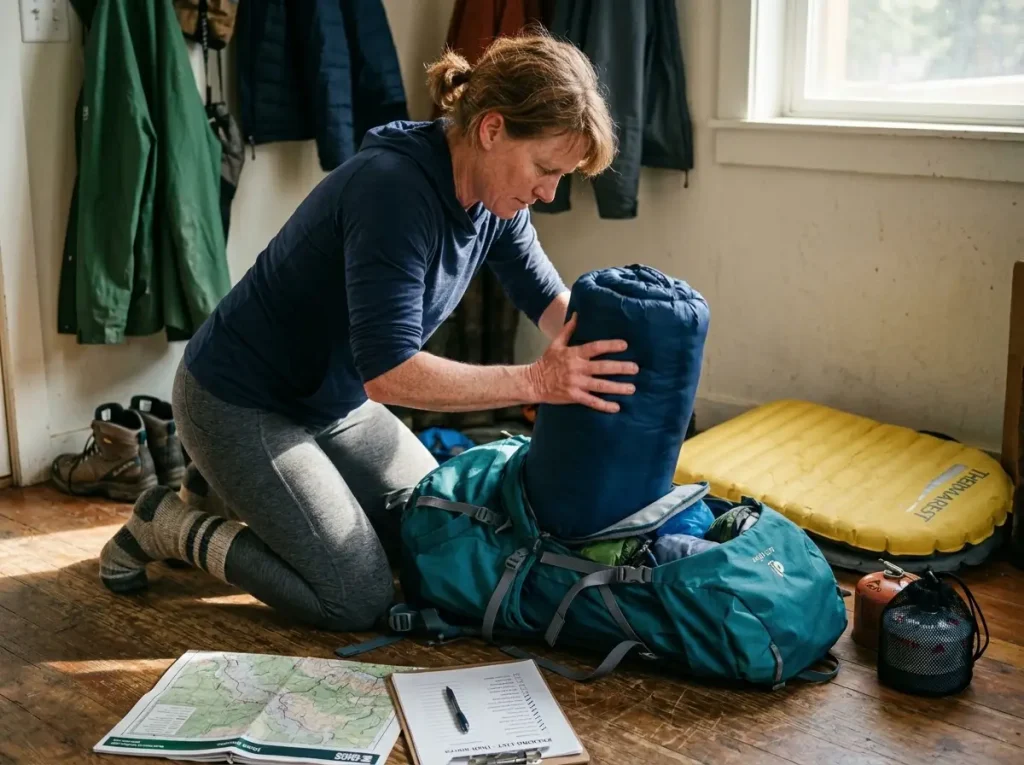
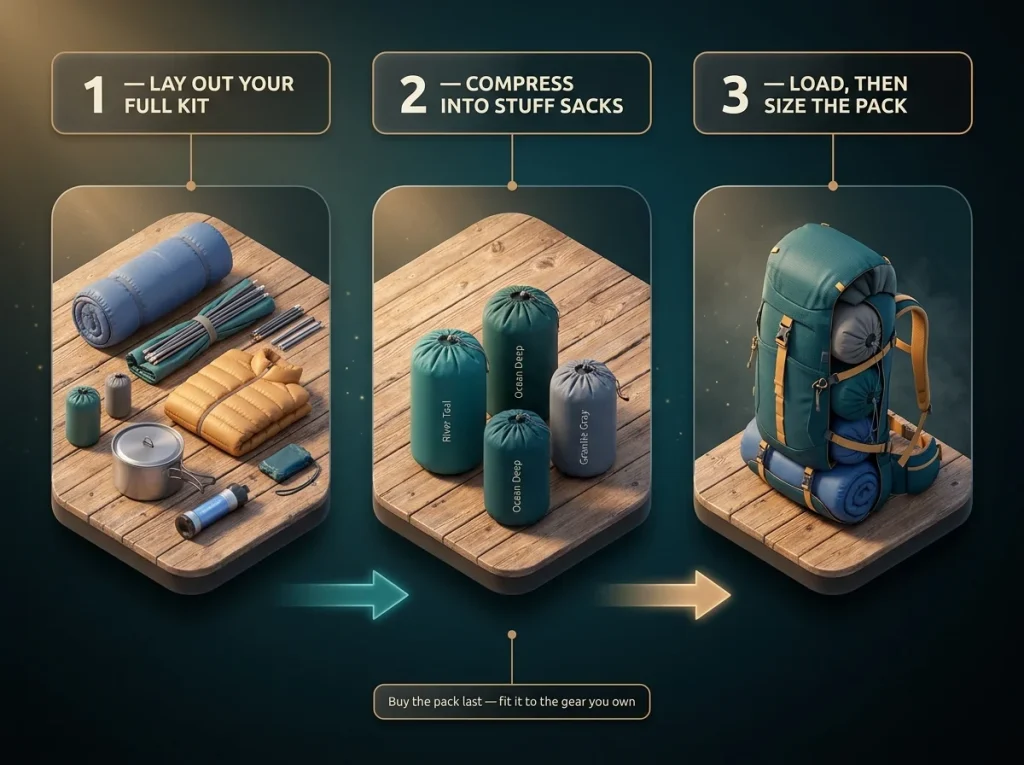
Here is the single best piece of advice nobody leads with: lay your whole kit on the floor first, then buy the pack. The pack is the last purchase, not the first, because it has to fit what you own. Get this backwards and you will spend money twice.
Why Buying the Pack First Makes You Overpack
When you buy the bag first, you fill the empty space because it is there. The pack you buy quietly determines how much you bring. There is a story that comes up again and again in hiker forums: the new backpacker who bought a 65-liter pack so they would never run out of room, filled every cubic inch, and limped out of a weekend trip with bruised hips, the raw hip-pointer an overloaded belt grinds into the bone. The pack created the exact problem it was supposed to solve.
Lay Out and Weigh Your Kit First
Spread your sleep system, shelter, and layers on the floor. Weigh them, then roughly judge their volume. The ten essentials and a beginner’s hiking kit make a good starting checklist if you are building from scratch, and a beginner’s backpacking gear list covers the overnight additions.
Then Pick Your Liters
Learn two numbers. Your base weight is everything in the pack minus food, water, and fuel, the figure thru-hikers obsess over. Your Big Three are the shelter, sleep system, and pack, which are usually the heaviest items.
Shrink those and your liters shrink with them. A dialed kit often drops a beginner from a 65-liter pack down to a 50, and that smaller pack carries better because there is nothing rattling around inside it.
This is where a lighter pack earns its place. The Granite Gear Crown3 60 (lightweight backpacking pack) weighs around 2.4 pounds with a removable lid and framesheet, which proves you do not need a 4.5-pound pack once your base weight comes down. It is the honest step toward lighter gear without jumping straight to expensive cottage brands like Hyperlite Mountain Gear, Zpacks, or Gossamer Gear. If you want to go further, our roundup of ultralight packs under two pounds shows what is possible once your kit is truly trimmed.
Hang your loaded stuff sacks from a cheap luggage scale before you ever set foot in a gear shop. Knowing your real base weight turns pack shopping from a guessing game into simple math, and it usually talks you out of buying more pack than you need.
Internal, External, or Frameless — Which Frame Wins?
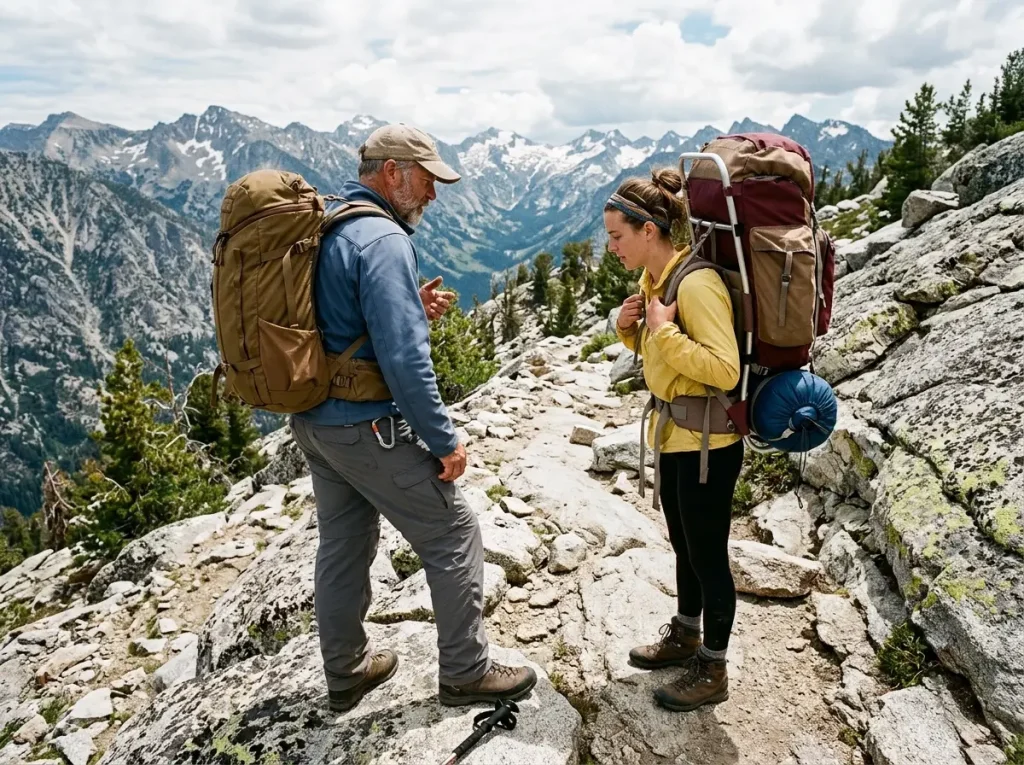
The frame question sounds technical, but it comes down to where and how you hike. Each frame type is genuinely good at something, and bad at something else. Match it to your terrain and load instead of to whatever looks toughest on the rack.
Internal Frame, the Modern Default
An internal frame, usually built around an aluminum stay or a carbon-fiber framesheet, hides its structure inside the back panel, rides close to your back, and stays stable when you are scrambling or moving off-trail. This is what most hikers should buy, and it is what the vast majority of packs on the wall are these days.
External Frame for Heavy, Bulky Loads
An external frame sits the load higher and farther off your back, which means excellent ventilation and an easy time hauling heavy or oddly shaped loads on maintained trails. The trade is clumsiness on technical ground, where that high, offset load wants to tip you around.
Frameless for the Trimmed Kit
A frameless pack is the lightest option going, but it only carries well once your base weight is low. Overload it and the whole thing collapses onto your shoulders. A common beginner mistake is jumping straight to a frameless ultralight pack, then suffering because the load was never light enough to make it work. If you are torn, our framed-versus-frameless decision matrix walks through exactly when each one wins.
Getting the Fit Right — Torso Length, Not Your Height
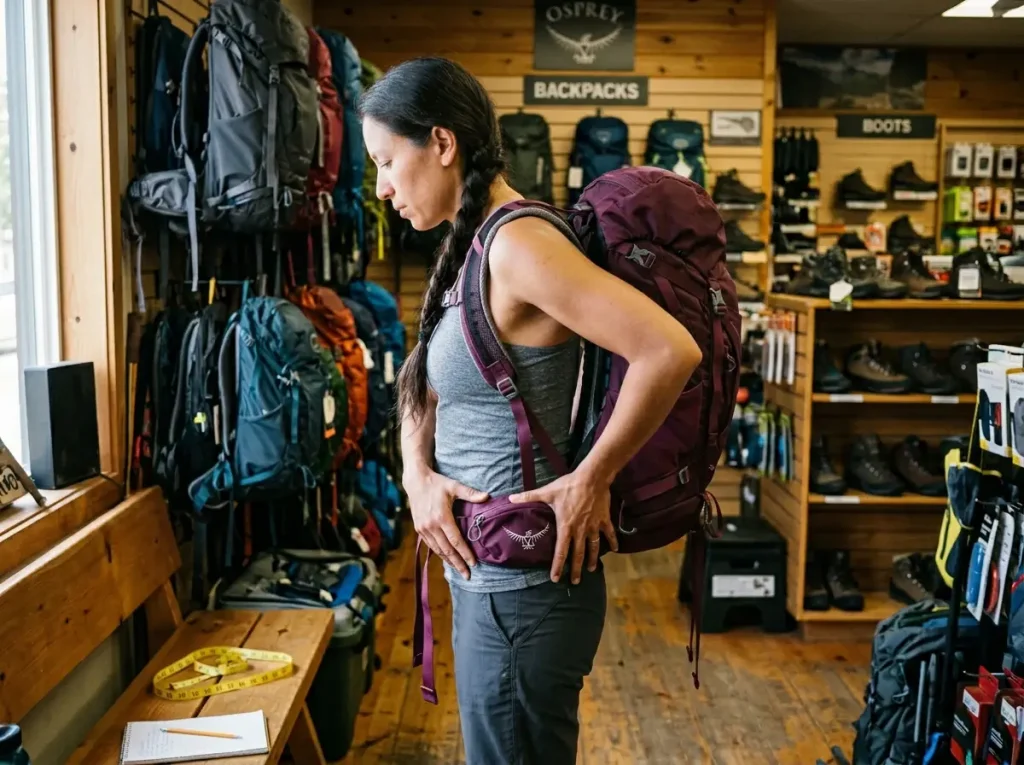
A pack sized to your height instead of your torso length ruins more hikes than any gear flaw. A tall person can have a short torso, and a shorter person can have a long one. Here is how to find your real number and check the fit yourself, no friend required.
Measure Your Torso
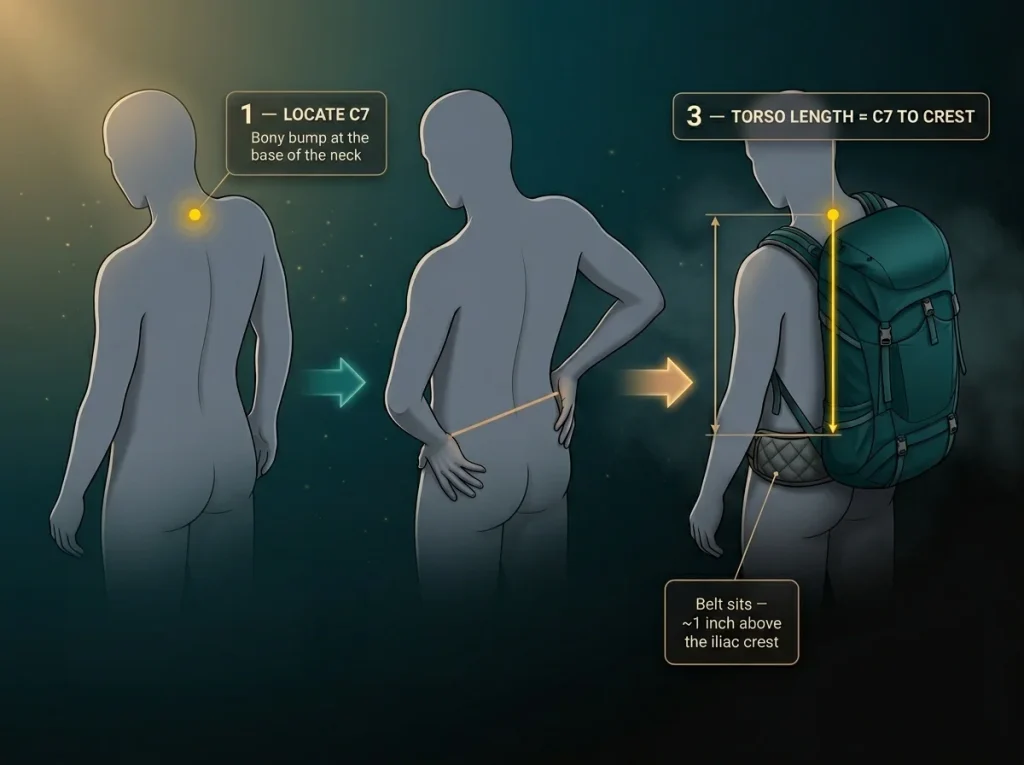
Your torso length is the distance from the C7 vertebra, the bony bump at the base of your neck when you tilt your head forward, straight down your spine to the imaginary line between your thumbs when your hands rest on your iliac crest, the top of your hip bones. That single measurement, not your height, sizes the pack. The solo hiker’s guide to measuring torso length walks through doing it alone.
Set the Hipbelt on Your Hip Shelf
The upper edge of the hipbelt should sit about an inch above your iliac crest, with the bony hip knob centered in the belt padding. That puts the weight on the shelf of your hips, where your legs can carry it. Some packs let you reshape the belt for a closer fit, and our guide on how to mold a hip belt for a custom, pressure-free fit covers that step.
Adjustable-suspension packs fit a range of torsos, which makes them forgiving for a first pack or a torso that falls between sizes. Sized packs in small, medium, and large fit a narrower band more precisely once you know your number.
The Solo Fit Self-Check
You do not need a partner in the store. Load the pack with 20 to 30 pounds, buckle the hipbelt on your hip shelf, and snug the shoulder straps so they wrap without a gap where they meet the pack.
Then run the lift test: with everything buckled, loosen the shoulder straps for a second. The pack should stay put on your hips. If it sags onto your shoulders, the hipbelt is not carrying the load and the fit is wrong. For the full routine, our backpack fit guide for adjusting it pain-free lays out every step.
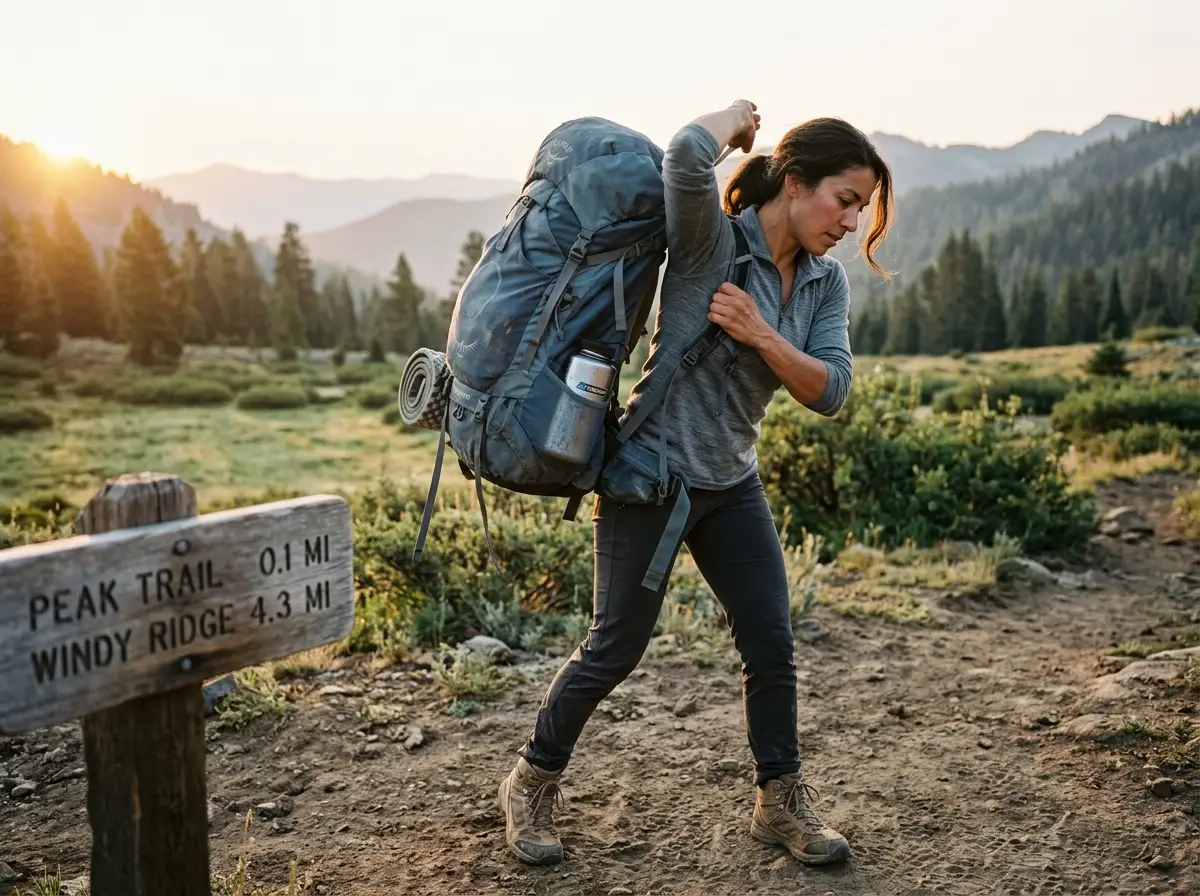
The order you tighten things matters, and it is far clearer watched than read.
Never judge a pack empty. An unloaded pack tells you nothing about how it carries, so throw 20 to 30 pounds in it (a few jugs of water work fine at home) before you decide it fits. The pack that feels great empty often digs in the moment it has real weight in it.
Where the Weight Should Sit (Suspension & Load Transfer)
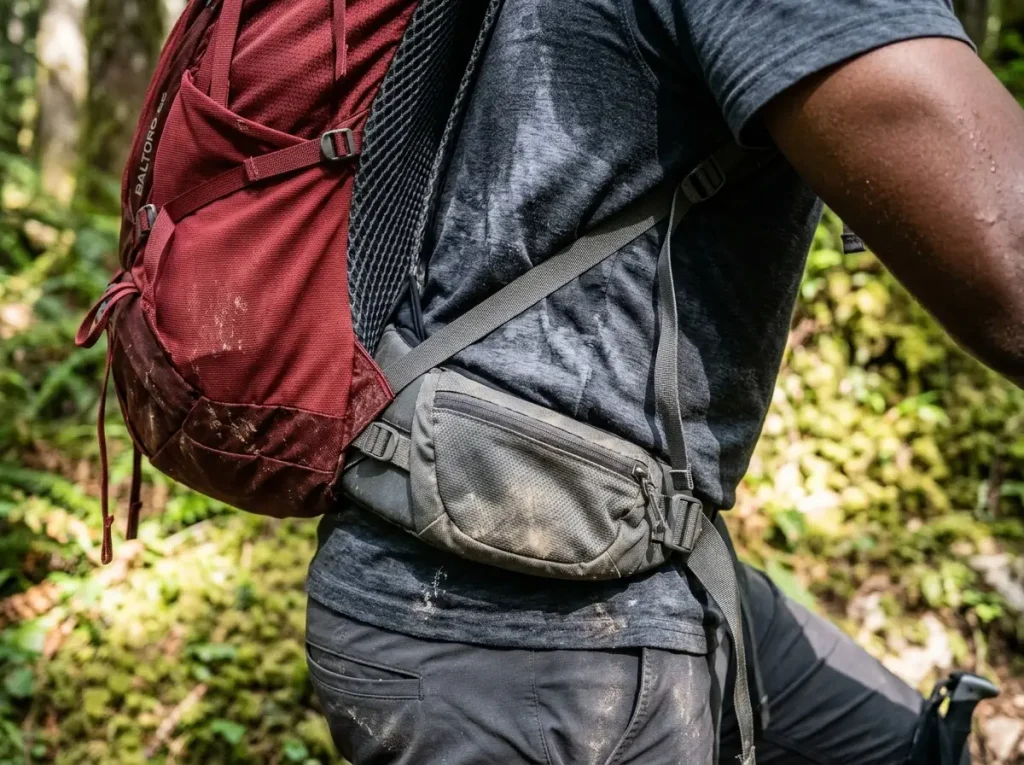
Two people can carry the exact same weight, and one is miserable while the other barely notices. The difference is where the load sits. Done right, your legs carry the pack through your hips. Done wrong, it hangs off your shoulders all day.
The Hipbelt Does the Heavy Lifting
A properly fitted pack puts roughly 80 percent of the weight on your hips, about 20 percent on the front of your shoulders, and essentially nothing on top of them. That figure is backed up by the Appalachian Mountain Club’s guide to carrying a pack in comfort. If your shoulders are screaming, the load is in the wrong place, and the fix is almost always the hipbelt, not the straps.
Load Lifters and the 45-Degree Rule
Load lifters are the small straps running from the top of the shoulder harness back to the top of the pack. Set right, they angle back at roughly 45 degrees. Flat or vertical means your torso is sized wrong, and no amount of cranking will fix it. Our walkthrough of the load-lifter strap adjustment technique shows the exact angle to aim for.
Sternum Strap and Ventilation
The sternum strap stabilizes the shoulder straps so they do not slide outward. It is a fine-tune, not a load-bearer, and setting its height right keeps it off your throat and out of the way, which our guide to sternum strap height covers.
Suspended trampoline-mesh back panels fight the sweaty-back problem by holding the packbag a few inches off your spine. The trade is that the load sits slightly farther out, so you get a cooler back and marginally less stability on technical ground. The various backpack suspension systems explained piece breaks down each design.
The Osprey Atmos AG 65 (men’s) and the women’s Aura AG 65 (women’s) are the suspended-mesh reference the whole category gets measured against. Their Anti-Gravity suspension floats the load on a tensioned mesh panel, and the adjustable torso makes either one a forgiving first big pack. They are a premium pick, not a beginner’s only option, but they show what dialed suspension feels like.
There is a story every experienced hiker recognizes: the friend whose shoulders are killing them, whose pack turns out to be fine. The hipbelt was just two inches too high, riding the soft waist instead of the hip shelf. One adjustment fixed a whole trip’s worth of pain.
Features That Matter vs Marketing Fluff
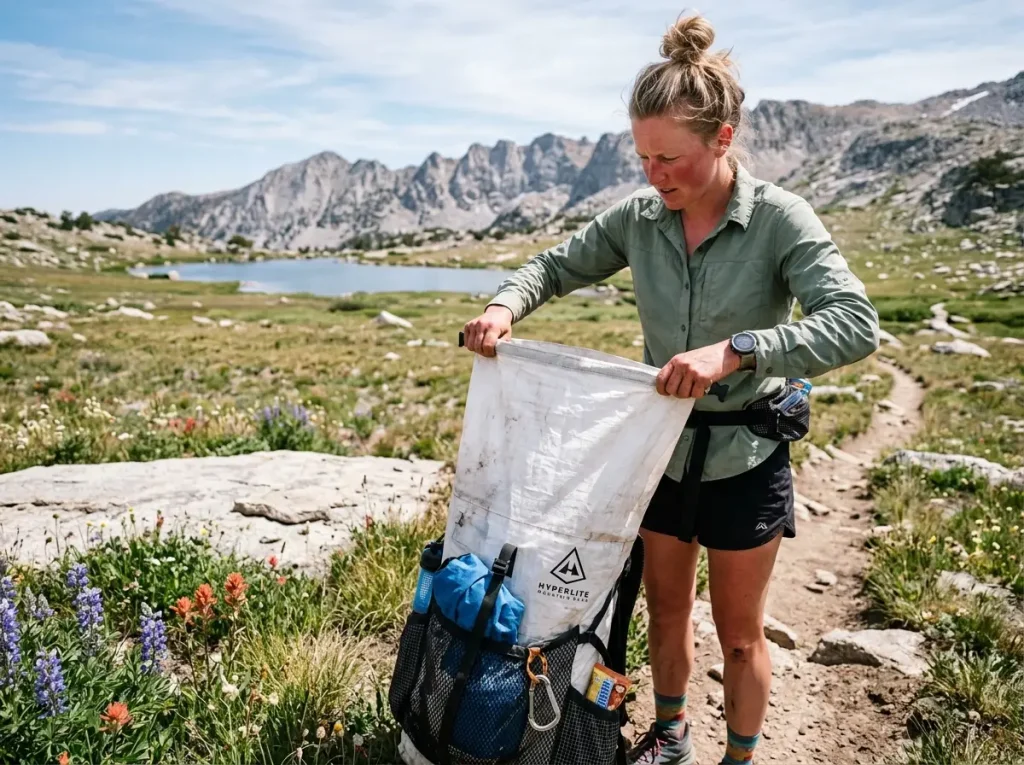
Walk the wall of packs and every tag screams features. Most of them do not change your day on the trail. Here is the short list that does, plus the one number on the tag you should stop trusting.
Access That Fits How You Pack
Top-loading packs are lighter and simpler, but you dig from the top to reach the bottom. Panel-zip, front-loading, and roll-top designs trade a little weight for faster access to your gear. Neither is better in the abstract, so pick by how you like to pack, and the rundown on brain-lid versus roll-top closures, with the pros and cons lays out the trade.
Pockets, Compression, and Attachment Points
Compression straps pull a half-empty pack tight so the load stays close and stable. Hipbelt pockets keep snacks and a phone in reach, and a hydration sleeve holds a water bladder so you can sip without stopping. External attachment points like daisy chains and ice axe loops earn their keep for a tent or a foam pad, and our guide on how to attach gear to the outside of your pack covers doing it without turning your pack into a yard sale. Gimmick pockets you will never use are just weight.
Materials, Weight, and Durability
Ripstop nylon is the workhorse fabric, while Dyneema (the ultralight material once sold as Cuben fiber) runs lighter and pricier. Higher denier numbers last longer but weigh more, so you are buying a trade either way. A raincover or a liner keeps the inside dry, and our piece on how to waterproof your hiking backpack compares the options. When a pack finally wears out, the signs it is time to replace it are worth knowing so you retire it before it fails on trail.
The Liters Myth
Here is the gap nobody talks about: stated pack volumes are not standardized between brands. The measuring standard, ASTM F2153, is voluntary, and brands differ on whether they count lid and side pockets. Independent testing has found packs ranging from 10 percent under to 39 percent over their claimed volume, with every pack at least 10 percent off.
One brand’s 50 liters can carry like another’s 45. Do not cross-shop liters as if the numbers are identical. Pack your actual gear to confirm the fit, because the number on the tag is marketing, not a guarantee.
Before you commit to any pack, load it with the gear you actually own, not the store’s beanbag weights. Two packs labeled 50 liters can swallow noticeably different amounts of gear, and the only way to know is to pack yours and watch where it runs out of room.
Fit for Women, Smaller Frames, and Tighter Budgets

Most guides cram this into a single line, which does readers a disservice. What women’s-specific packs actually change, why torso length still matters more than the label, and where your money buys real comfort versus where it buys a logo, all deserve more than a footnote.
What Women’s-Specific Really Changes
Women’s-specific packs use shorter torso ranges, a narrower shoulder S-curve, and a hipbelt shaped for different hip geometry. Those are real structural differences, not just colorways. For a closer look, our picks for the best women’s hiking packs get into which models do it well.
Torso Length Matters More Than Gender
Here is the honest line most brands will not say out loud: torso length, not gender, drives fit. A short-torso man may fit a women’s pack better, and a tall woman may carry a men’s pack more comfortably. Frame the women’s version as often the better fit for shorter torsos and narrower shoulders, rather than a pack that is only for women.
Smaller-frame and youth hikers should prioritize adjustable suspension and a lighter loaded weight over raw capacity. Our roundup of men’s hiking bags rated for comfort covers the counterpart side of that fit question.
Budget vs Premium, Honestly
A budget-friendly pack can be perfectly fine for occasional weekends. What premium money buys is better suspension, better ventilation, and tougher fabric, and those things pay off on long, heavy, frequent trips. They are not worth it for everyone.
Do not pay for top-tier suspension if you hike twice a year, but do not cheap out on the hipbelt if you regularly carry 30 pounds or more. Spend where the weight rides.
If you are between a men’s and women’s pack, ignore the label and fit both to your torso. The right pack is the one that puts the hipbelt on your hip shelf and wraps your shoulders without a gap, whatever color it comes in.
The Bottom Line on Choosing a Pack
Three things carry more weight than anything else when you pick a pack. Buy your pack last, sizing the liters to the kit you own instead of the trip you are afraid of. Fit beats every feature, so chase torso length over height and get 80 percent of the load onto your hips. Trust your gear over the tag, because liters are not standardized and the only honest test is packing it yourself.
Before your next trip, lay your whole kit on the floor, weigh it, and only then decide how many liters you actually need. You will carry less, spend smarter, and enjoy the walk a lot more.
Frequently Asked Questions
01Is a 65L backpack too big for a beginner?
For most beginners doing day hikes and weekends, yes. A 65L pack invites overpacking because you fill the empty space. Size the pack to your actual kit instead, and many new hikers are well served by a 45 to 55 liter pack once their gear is dialed.
02Why do my shoulders hurt when I wear my hiking backpack?
Almost always because the load is not sitting on your hips. The hipbelt is likely riding too high. It should sit about an inch above your hip bones so they carry roughly 80 percent of the weight. Re-center the belt and tighten it before the shoulder straps.
03Why does my pack hold less than a friend’s with the same liters?
Because stated volumes are not standardized between brands. The measuring standard is voluntary, and brands count lid and side pockets differently. Independent testing found packs ranging from 10 percent under to 39 percent over their claimed liters, so never cross-shop volume as if it is identical.
04Do I need a women’s-specific hiking backpack?
Not necessarily. What matters is torso length, not gender. Women’s-specific packs use shorter torsos, a narrower shoulder curve, and a differently shaped hipbelt, which often fits shorter torsos and narrower frames better. If a unisex pack fits your torso, it is fine.
05How do I measure my torso length without help?
You can do it solo. Tilt your head forward to find the C7 bump at the base of your neck, then put your hands on your hip bones with thumbs pointing back. The line between your thumbs is the iliac crest, and the distance from C7 to that line is your torso length.
Risk Disclaimer: Hiking, trekking, backpacking, and all related outdoor activities involve inherent
risks which may result in serious injury, illness, or death. The information provided on The Hiking Tribe is for
educational and informational purposes only. While we strive for accuracy, information on trails, gear, techniques,
and safety is not a substitute for your own best judgment and thorough preparation. Trail conditions, weather, and
other environmental factors change rapidly and may differ from what is described on this site. Always check with
official sources like park services for the most current alerts and conditions. Never undertake a hike beyond your
abilities and always be prepared for the unexpected. By using this website, you agree that you are solely
responsible for your own safety. Any reliance you place on our content is strictly at your own risk, and you assume
all liability for your actions and decisions in the outdoors. The Hiking Tribe and its authors will not be held
liable for any injury, damage, or loss sustained in connection with the use of the information herein.
Affiliate Disclosure: We are a participant in the Amazon Services LLC Associates Program, an
affiliate advertising program designed to provide a means for us to earn advertising fees by advertising and linking
to Amazon.com. As an Amazon Associate, we earn from qualifying purchases. We are also an official affiliate partner
of Black Diamond Equipment via the AvantLink network. If you click on a Black Diamond affiliate link and make a
purchase, we may earn a commission at no additional cost to you. We also participate in other affiliate programs and
may receive a commission on products purchased through our links. Additional terms are found in the terms of
service.