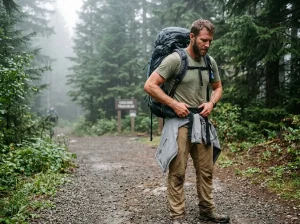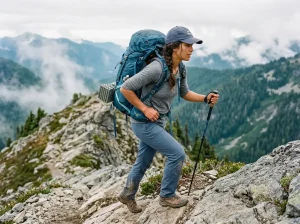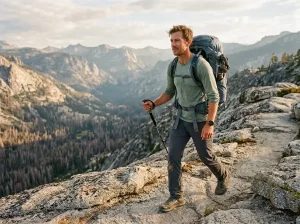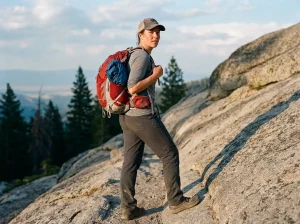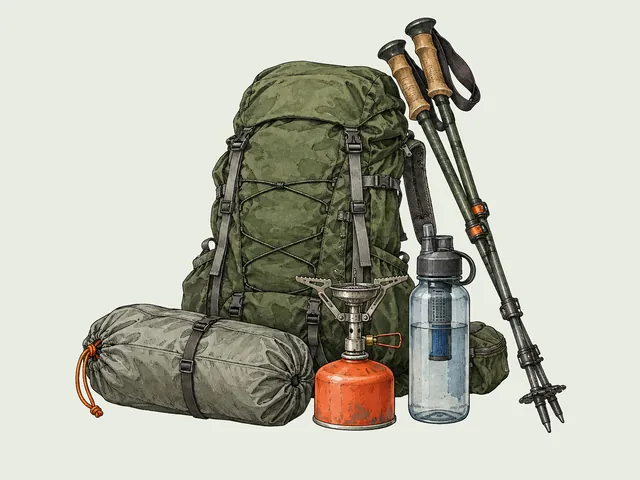
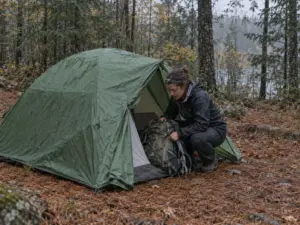
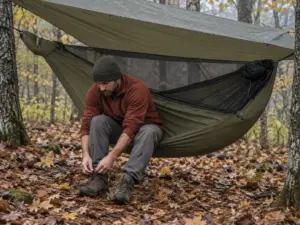
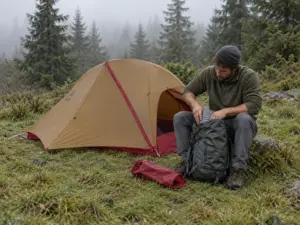


You’d think a three-night weekend demands a noticeably bigger pack than a single night out. It doesn’t, and the reason is just arithmetic. Ask anyone who’s packed both trips out of the same bag: the tent, the sleeping bag, and the pad fill most of the space, and those never change whether you sleep out once or three times. What changes is a couple of food bags. This guide gives you the real liters by trip type, the overnight-versus-weekend math nobody spells out, and the one-pack answer that saves you from buying twice.
Here’s how backpack volume breaks down by trip length, so you can find your row before we get into why the overnight and weekend rows sit so close together.
| Trip Type | Liter Range | What It Carries |
|---|---|---|
| Day hike | 15–25L | Water, snacks, a layer, the Ten Essentials |
| Overnight (ultralight) | 25–35L | Quilt, light pad, tarp or bivy, one night of food |
| Overnight (traditional) | 30–50L | Tent, bag, pad, one night of food |
| Weekend (1–3 nights) | 40–50L | Same base kit plus 2–3 days of food and fuel |
| Multi-day (3–5 nights) | 50–70L+ | Bigger food carry, extra fuel, cold-weather bulk |
What Pack Volume in Liters Actually Measures
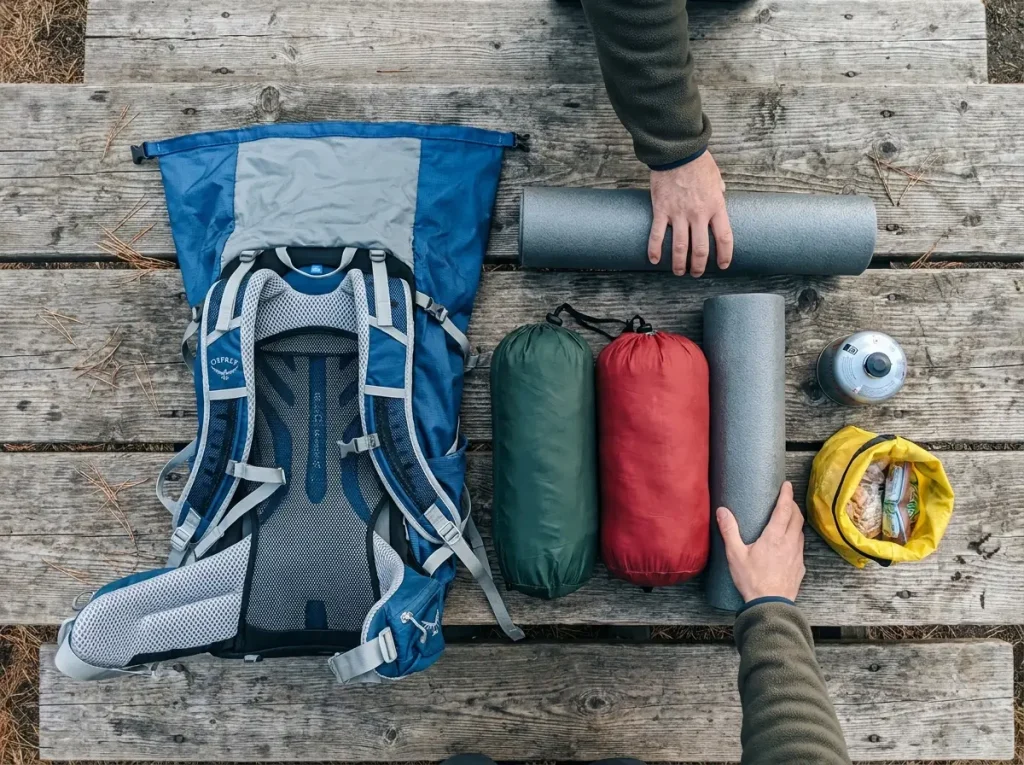
Most people read the number on the tag and assume bigger means more capable. The number is just total enclosed space, and most of that space is spoken for before a single snack goes in.
Liters Versus Cubic Inches
Pack volume is the total enclosed space of the bag, measured in liters (the US still shows cubic inches on some tags, where 1L is about 61 cubic inches). That figure rolls together the main pack body, the lid, and every pocket. It tells you how much fits. It says nothing about how the load carries, whether the suspension transfers weight, or if the thing fits your back at all.
Why Two 50L Packs Aren’t the Same
Manufacturers measure capacity differently. One brand counts every pocket and the lid’s overflow; another counts only the main compartment. So two packs both stamped “50L” can swallow noticeably different loads. Treat the number as a ballpark, not a guarantee, and learn the difference between a daypack and a backpacking pack in our guide on where a daypack ends and a backpacking pack begins.
The Big Three Claim Their Corner First
Before food, before water, your shelter, sleep system, and the pack itself fill the bag. Hikers call these the Big Three, and on any overnight-capable load they eat roughly 25 to 35 liters of space. Whatever liters you land on, the rest of the Ten Essentials still have to fit too, the same checklist the National Park Service uses for any backcountry trip. The number you actually live with isn’t the one on the tag. It’s what’s left after the tent, bag, and pad claim their corner.
Pack Liters by Trip Length, Day to Multi-Day
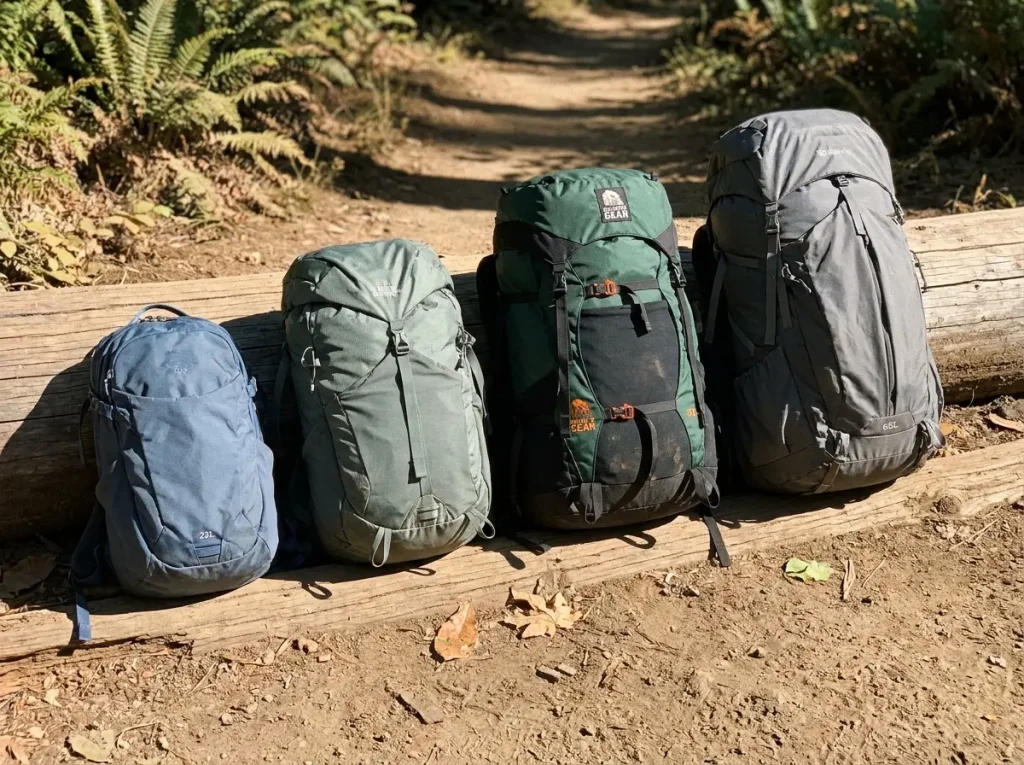
The trailhead question is always the same: what number do I buy? Here’s the honest range for each trip, and where the lines blur enough to trip people up.
Day Hikes (15–25L)
A day hike lives in 15 to 25 liters. That holds water, snacks, an extra layer, and the Ten Essentials with room to spare, the checklist the American Hiking Society treats as non-negotiable whatever liters you carry. Go under 10L if you hike fast-and-light and trust your legs more than your gear. For most people, a 20-ish-liter pack is the daily driver. The proven reference here is the Osprey Talon 22 (men’s · women’s Tempest 20), which carries a day’s load on a real hip belt instead of just shoulder straps. If you want to spend almost nothing and stuff the pack away when you don’t need it, the packable ZOMAKE 25L folds down to the size of a water bottle. The deeper 20L versus 30L call lives in our day-hiking rucksack breakdown.
Overnight (25–50L)
A single night runs 30 to 50 liters traditional, or 25 to 35 if you go ultralight with a quilt, a light pad, and a tarp or bivy instead of a tent. That spread is wide because it depends entirely on what your Big Three look like. A compact down setup fits a 35L bag; a roomy two-person tent and a synthetic bag need 50.
Weekend and Beyond (40–70L+)
A weekend trip of one to three nights settles at 40 to 50 liters for most hikers. Past that, multi-day trips of three to five nights climb into 50 to 70L, and only past five days do you truly need 70L or more. Notice the overlap: the top of the overnight range and the bottom of the weekend range are the same number. That’s not sloppy advice. That’s the whole point, and the next section explains why.
The Overnight-Versus-Weekend Math Nobody Spells Out
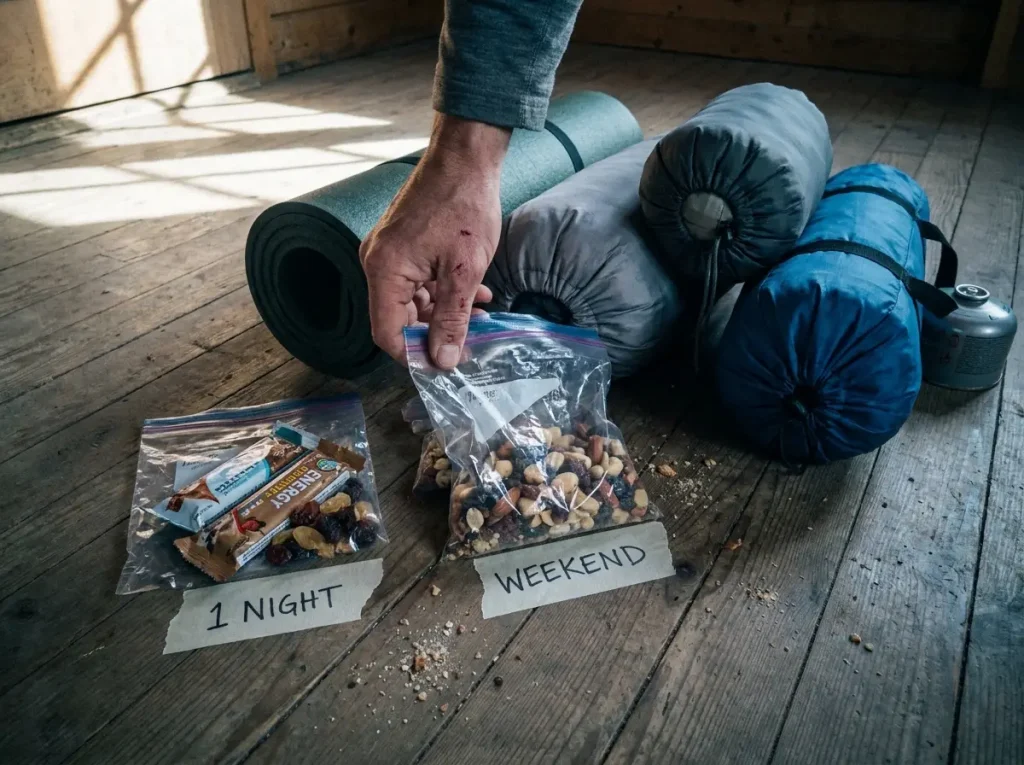
This is the section that reframes the whole question. You expect a weekend to demand a jump in pack size. The math says otherwise, and once you see it you stop shopping for two packs.
The Big Three Never Change
Your shelter, your sleep system, and your pack are identical whether you sleep out one night or three. Same tent. Same sleeping bag. Same sleeping pad.
The bulkiest, most space-hungry gear you carry doesn’t grow by a single liter when you add nights. The Big Three make up 55 to 70 percent of your base weight and that fixed 25 to 35 liters of volume, and they sit there unchanged across both trips.
Food and Fuel Add About 1.5L a Day
The only thing that grows is food per day, at roughly 1.5 liters of pack space, plus maybe an extra half-liter for a second fuel canister to feed your stove. The average hiker carries 1.5 to 2 pounds of food a day. So going from one night to three adds about 3 to 5 liters total. That’s a stuff sack of ramen and a fuel canister, not a category change.
Plan your volume around your base kit, not your nights out. Lay the Big Three in the empty pack, see how much room is left, then add three to five liters of headroom for a weekend’s food. If the leftover space already swallows a few food bags, you’re done shopping.
Why 3 to 5 Liters Isn’t a Pack Size
Here’s where people get fooled. The weekend bag looks fuller, so it feels like you needed more pack. But you didn’t add a second tent. You added a handful of food.
A 45L pack that fit your overnight kit with room to spare still fits the weekend kit, because the difference is a few liters and that pack had a few liters of slack. The bag looking “more packed” is your eyes, not your capacity running out. Trimming the Big Three down with lighter gear shrinks the whole equation, which is the project we tackle in the best ultralight backpacks under 2 pounds.
The Weekend Sweet Spot Most Hikers Should Buy
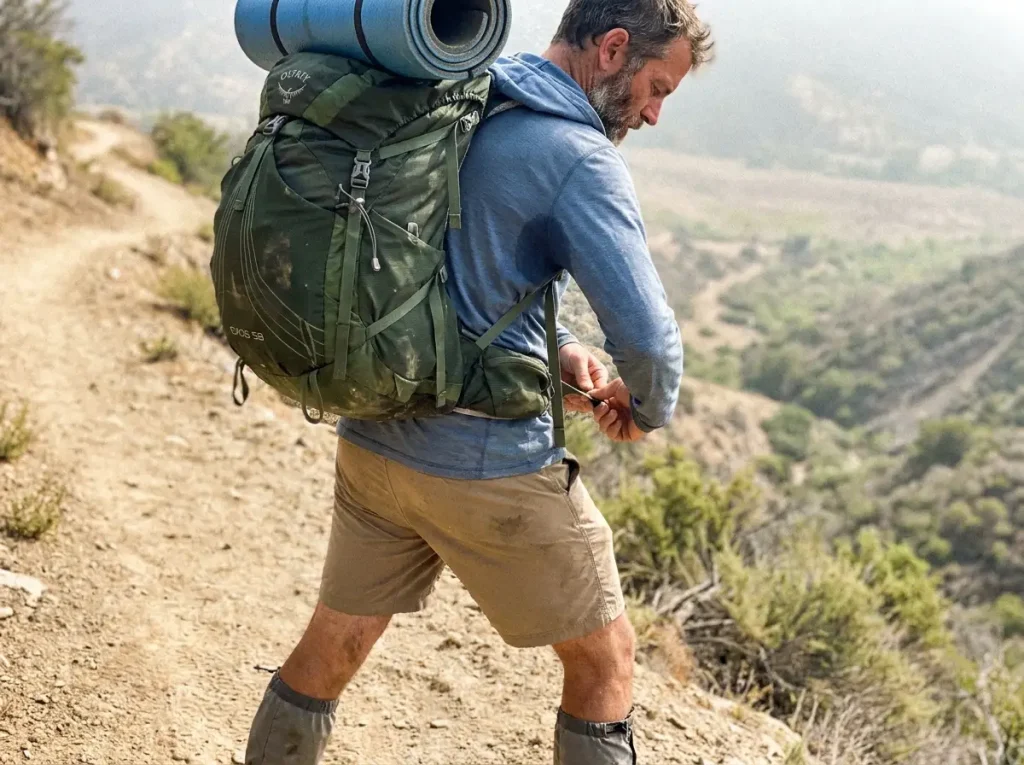
If you buy one pack for most of your trips, 40 to 50 liters is the number. It forgives the gear you actually own instead of the gear an ultralight forum says you should own.
Why 40–50L Is Forgiving
A 40 to 50L pack stays comfortable even with a bulkier budget sleeping bag or a two-person tent. It handles a weekend trip with margin and still cinches down for an overnight. Buy smaller and you force yourself into ultralight discipline before you’re ready for it. Buy bigger and you invite overpacking. The sweet spot is the pack you grow into, not out of.
A Framed Weekend Workhorse
At this size a light internal frame earns its keep, because a weekend load of total trip weight lands around 25 to 30 pounds with food and water. The Osprey Exos 58 (women’s Eja 58) is the kind of light framed pack that carries that load without making you choose between low weight and real suspension. Whether a frame is worth it at your load is the exact question we settle in framed versus frameless backpacks.
Match It to Your Kit
The honest move is to pack your real gear and see what it needs. A hiker with a compact down kit might live in the bottom of this range; a hiker with a thick synthetic bag and a car-camping tent rides the top. The pack doesn’t decide. Your kit does.
When you’re between two sizes, size to your bulkiest realistic trip, not your average one, but only if that bulkiest trip is still a weekend. Don’t buy a 65L because you might thru-hike someday. Buy for the trips you actually take this year.
One Pack That Covers Both Trips
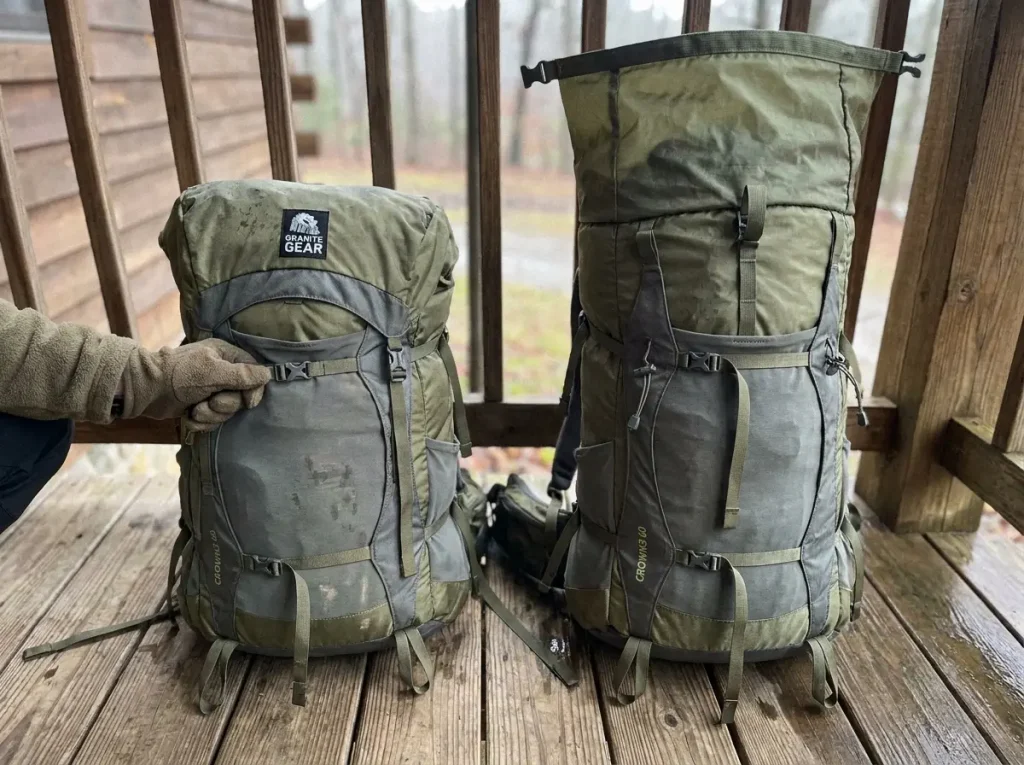
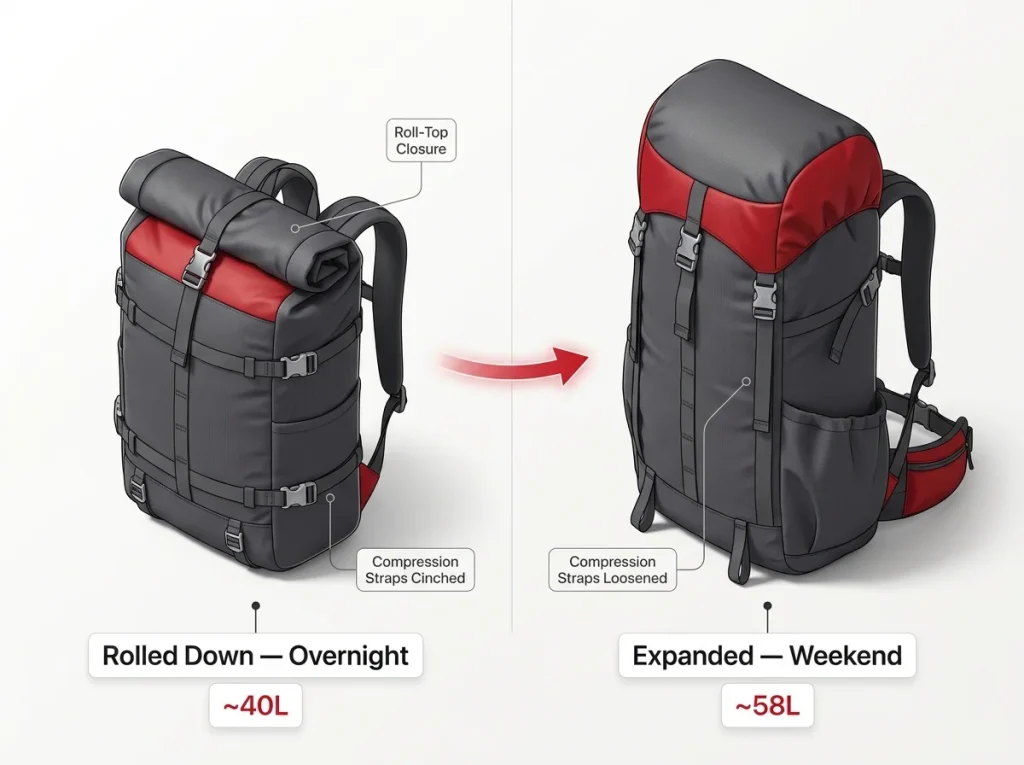
The reason one pack can do an overnight and a weekend isn’t magic. It’s a roll-top closure and compression straps changing the bag’s effective size.
The Roll-Top Compression Trick
A 45 to 50L roll-top cinches down small for an overnight and rolls open tall for a weekend. Compression straps pull a half-load tight against the frame so it rides like a smaller pack instead of a sloppy sack. The closure rolls down to seal out weather and shrink the volume, then unrolls when you need the room. That roll-top-versus-brain-lid trade-off is worth understanding before you buy, and we lay it out in the roll-top versus brain-lid breakdown.
A Pack That Cinches and Breathes
The Granite Gear Crown3 60 is the clean example: a light roll-top that rolls down to overnight size and opens to swallow a weekend, with a removable frame and a hip belt that carries real weight. Watching one compress on someone’s back makes the point faster than any liter number.
When Two Packs Make Sense
For most weekenders, two packs is wasted money. The exception is the hiker who runs true ultralight overnights and also does five-plus-day hauls; those two extremes pull the volume far enough apart that one pack compromises both. For the rest of us, one versatile bag wins.
Why a Too-Big Pack Quietly Wrecks Your Hike
Buying the bigger pack “just in case” feels safe in the store and fails on the trail. Here’s the failure mode nobody warns you about.
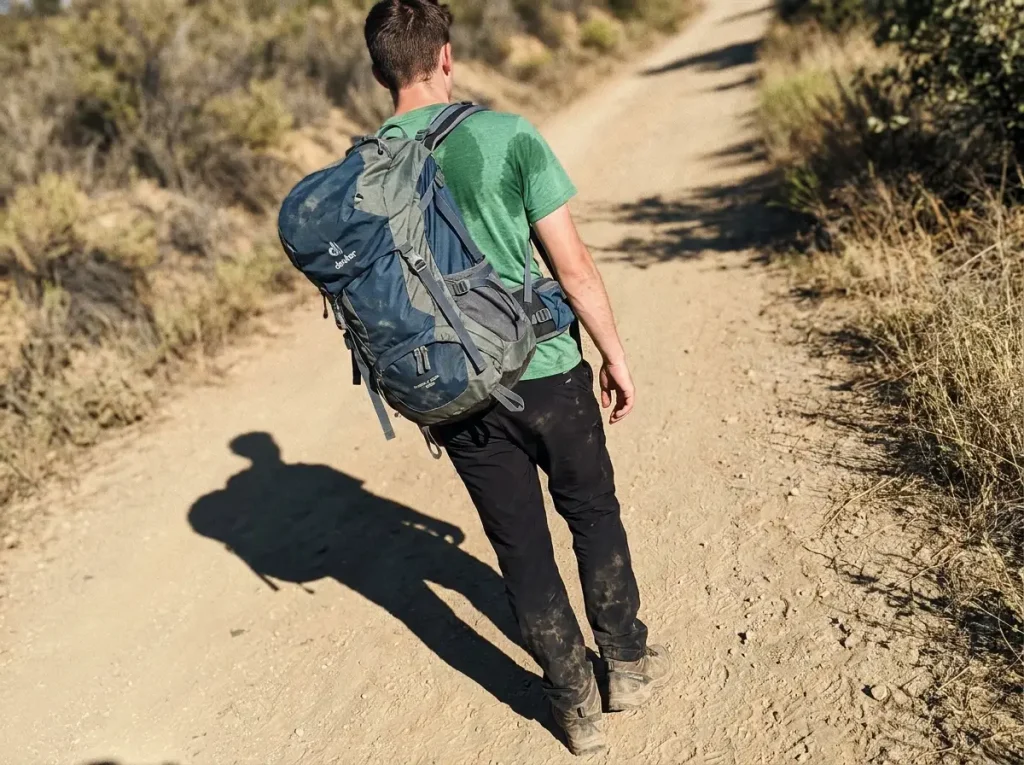
Half-Empty Packs Sway
A pack that’s only half full lets the load shift and sway with every step. Instead of sitting tight against your back, the gear rolls around, and that motion pulls on your shoulders. The hip belt can’t do its job when the load isn’t packed firm against the frame. By mile six, the swaying half-empty bag, not the trail, is what’s wrecking your shoulders. When the ache shows up, it’s often a pack-size problem dressed up as a strap problem.
The Overpacking Invitation
Empty space is an open invitation. When the room is there, you fill it “because it’s there,” and a weekend kit quietly becomes 30 pounds of stuff you won’t touch. A right-sized pack imposes a useful limit. The bag tells you when you’ve packed enough.
If you already own a too-big pack, don’t rush to replace it. Pack it firm, cinch every compression strap hard, and stuff a soft layer or two into the dead space so the load can’t shift. It won’t carry like a right-sized bag, but it’ll stop swaying.
Packing Style Beats Duration
Here’s the truth that undoes most pack-size panic: what you own changes the liters you need far more than one night versus three does. A 40L of light gear beats a 65L of budget synthetics every time. Your packing style, ultralight or traditional, shifts the math more than your trip length ever will.
When Cold Weather Breaks the Liter Chart
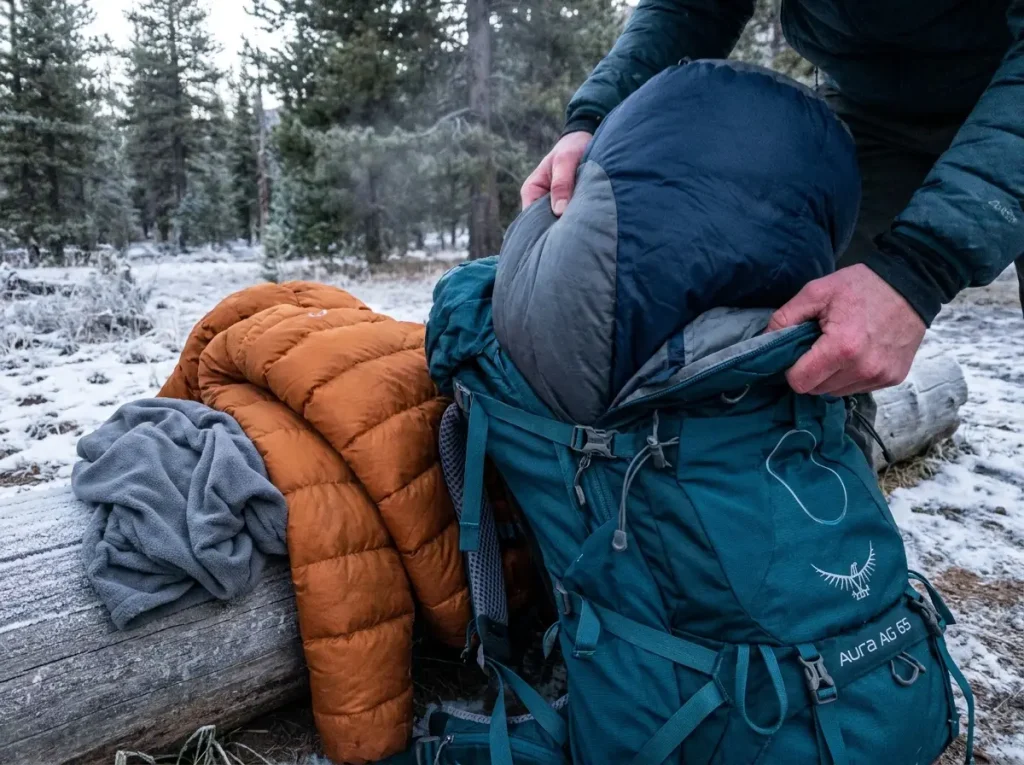
Every neat liter chart quietly assumes summer. A shoulder season overnight can need weekend-sized volume the moment a down jacket and a warmer bag go in.
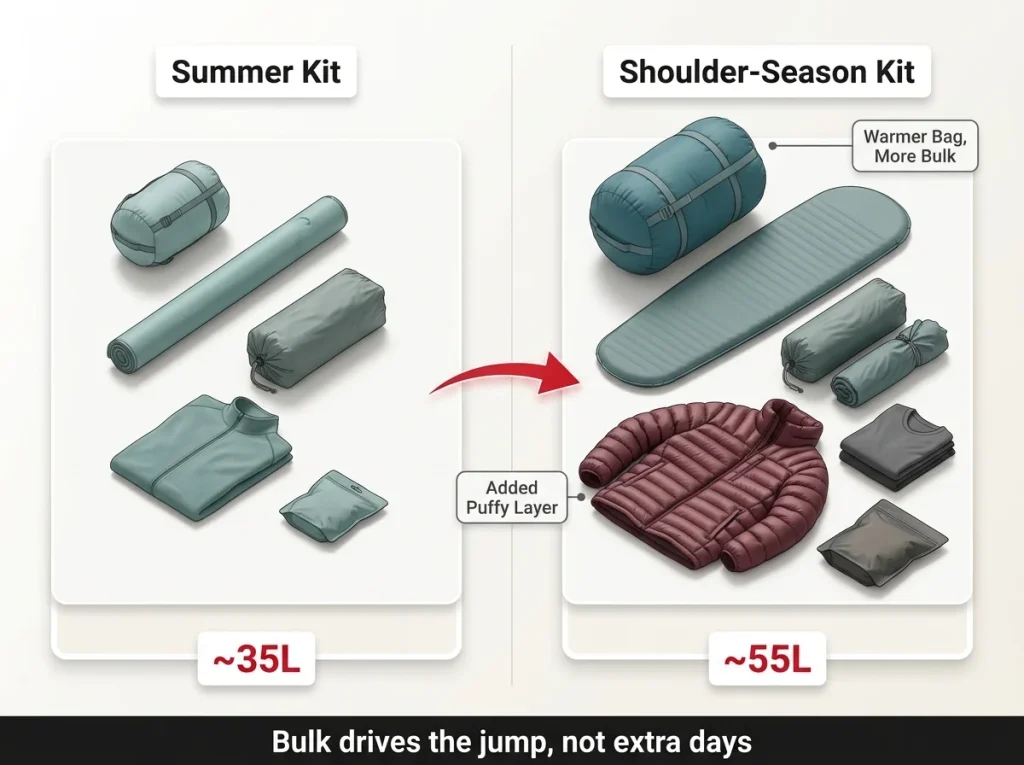
Bulky Bags and Layers Eat Volume
A warmer sleeping bag is a bulkier sleeping bag, even with good fill power down. Add a thick puffy, extra insulation layers, and warmer sleep clothes, and your fixed Big Three suddenly aren’t so fixed. Cold weather inflates the one part of your kit you thought was locked. It’s not more days driving the volume up. It’s bulk.
A Shoulder-Season Overnight Needs Weekend Liters
This is the surprise that catches people out. Gear that fit a summer overnight in a 35L bag won’t close the lid once a 15-degree bag and a down jacket join it. That “simple overnight” now needs 50 to 65 liters, the same as a summer weekend. The chart didn’t lie. The season just changed the inputs.
Sizing Up Without Overbuying
This is when stepping up to a 60 to 70L pack is justified, not oversizing. A suspension-rich pack like the Osprey Atmos AG 65 (women’s Osprey Aura AG 65) carries the cold-season bulk on a hip belt built for it, and it’s the kind of volume worth owning if you hike year-round. If your hiking is mostly warm-weather weekends, you don’t need it, and the 60 to 70L packs built for bigger loads are a deliberate step up, not a default.
Fit Decides Comfort More Than Liters
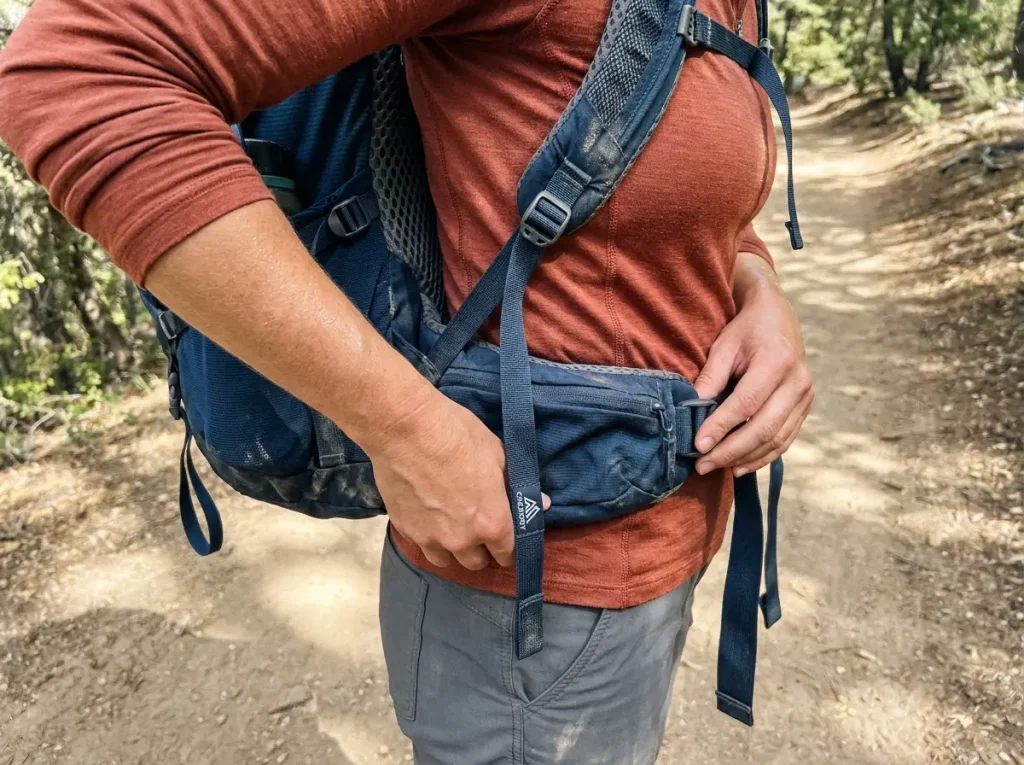
Two hikers with the same 50L pack can have completely different days, because torso length and hip belt fit, not liters, decide whether the load rides right. If you only get one thing right, get this, and our complete guide to choosing a hiking backpack walks the full buying decision from here.
Torso Length, Not Height
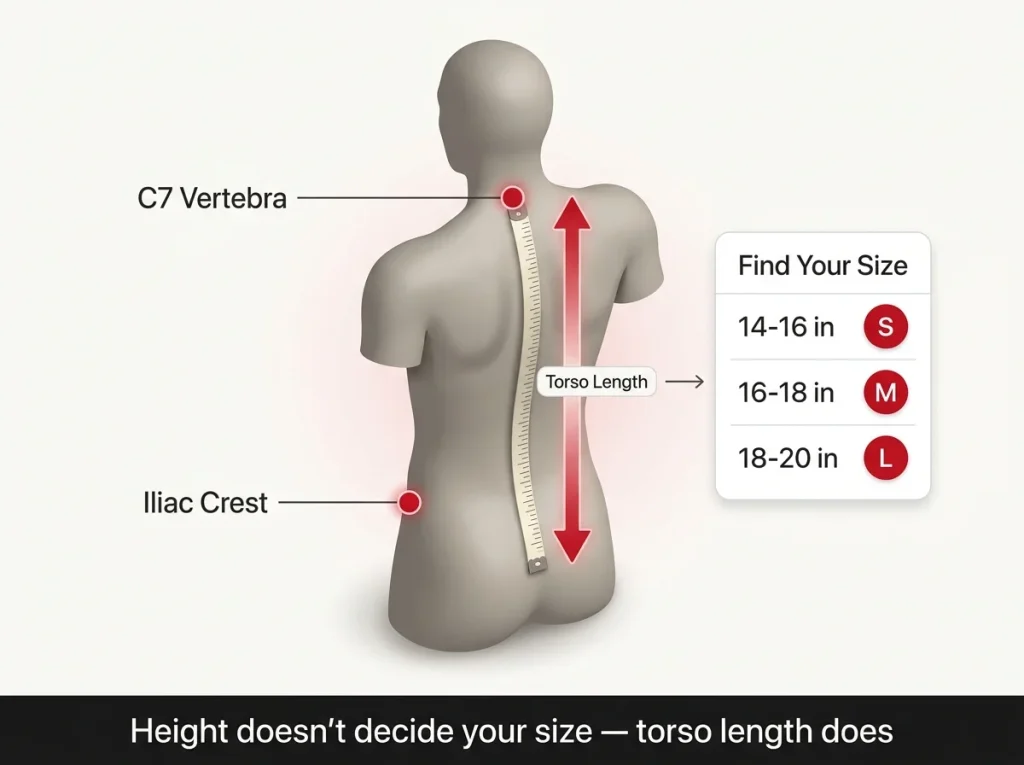
A pack is sized to your torso length, the distance from your C7 vertebra (the bump at the base of your neck) to your iliac crest (the top of your hip bones), not to your height. A tall person can have a short torso and need a smaller frame size. Here’s how to measure your torso from the C7 vertebra to the iliac crest with a flexible tape and map the inches to a pack size.
The Hip Belt Carries 80 Percent
On a properly fitted pack, the hip belt carries 80 percent or more of the load, and the weight distribution rides your hips, not your shoulders. The load lifter straps fine-tune how the pack pulls into your back, but that load transfer starts at the belt. If your shoulders ache, the belt isn’t doing its job, and no amount of liters will fix that. Getting the load onto the belt matters more than the number on the tag.
Women’s and Short-Torso Fit
The same liters ride differently on different builds. Women’s fit packs use SL or slender sizing with a shorter torso, narrower shoulder straps, and a hip belt shaped for a different stance. That’s a fit issue, not a size issue, and it’s why the Gregory Zulu 55 (women’s Gregory Jade 53 · men’s) uses an adjustable torso to tie the liter choice to a real fit. The full women’s-specific picture, including SL sizing, lives in our women’s hiking backpack guide.
Do a loaded fit check before you trust any pack. Put 25 to 30 pounds in it, walk for ten minutes, and feel where the weight sits. A pack that fits empty in the store can fail at real trail weight, and you only find out once it’s too late to return it.
Conclusion
Stop shopping for two packs. An overnight and a weekend sit a few liters apart, not a pack size, because the Big Three never change and only food and fuel grow, about a liter and a half a day. A single 40 to 50L roll-top with compression straps cinches down for the one-nighter and breathes for the three-nighter, so one bag covers both. And whatever number you land on, fit beats liters every time.
Before you spend a dollar on capacity, measure your torso length and do a loaded fit check with your real gear inside. The right pack isn’t the biggest one or the smallest one. It’s the one that fits your back and holds your kit with a few liters to spare.
Frequently Asked Questions
01How many liters do you need for an overnight backpacking trip?
Most overnight trips fit a 30 to 50L pack, or 25 to 35L if you run an ultralight quilt, light pad, and tarp. The range is wide because your Big Three, the tent, bag, and pad, decide far more than the single night does.
02Is 40L enough for a weekend hiking trip?
Usually, yes. A 40L pack handles a one-to-three-night weekend if your gear is reasonably compact, since a weekend only adds 3 to 5 liters of food and fuel over an overnight. With a bulky synthetic bag or a big tent, step up to 50L.
03Can one backpack work for both overnight and weekend trips?
Yes, and it should. A 45 to 50L roll-top with compression straps cinches down for an overnight and expands for a weekend. Because the two trips differ by only a few liters of food, one versatile pack covers both and saves you buying twice.
04Is a 50L pack too big for a weekend?
No, 50L sits right at the top of the weekend sweet spot and gives useful margin for bulkier gear or cold-weather layers. Just cinch the compression straps when it’s not full, so a partial load rides tight instead of swaying on your shoulders.
05Does pack volume change much between 1 night and 3 nights?
Barely. Food adds about 1.5 liters a day, so three nights versus one is roughly 3 to 5 liters total. The Big Three stay identical, which is why the same pack handles both and you don’t need a separate bag for each.
I've spent more than a decade researching hiking gear and trail technique. I read the specs, the forum threads and the long-term reviews, and every pick here comes with what it gets wrong.
End of the trail
You read every mile of this one. Here's where the trail goes next.