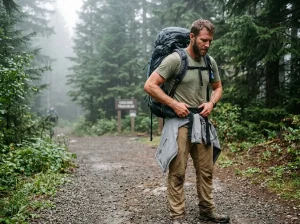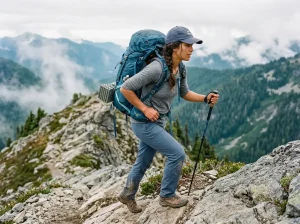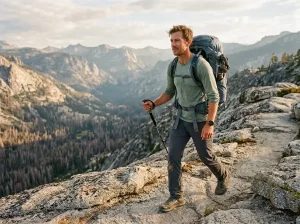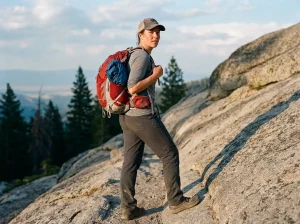



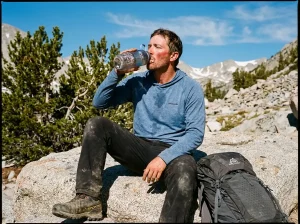
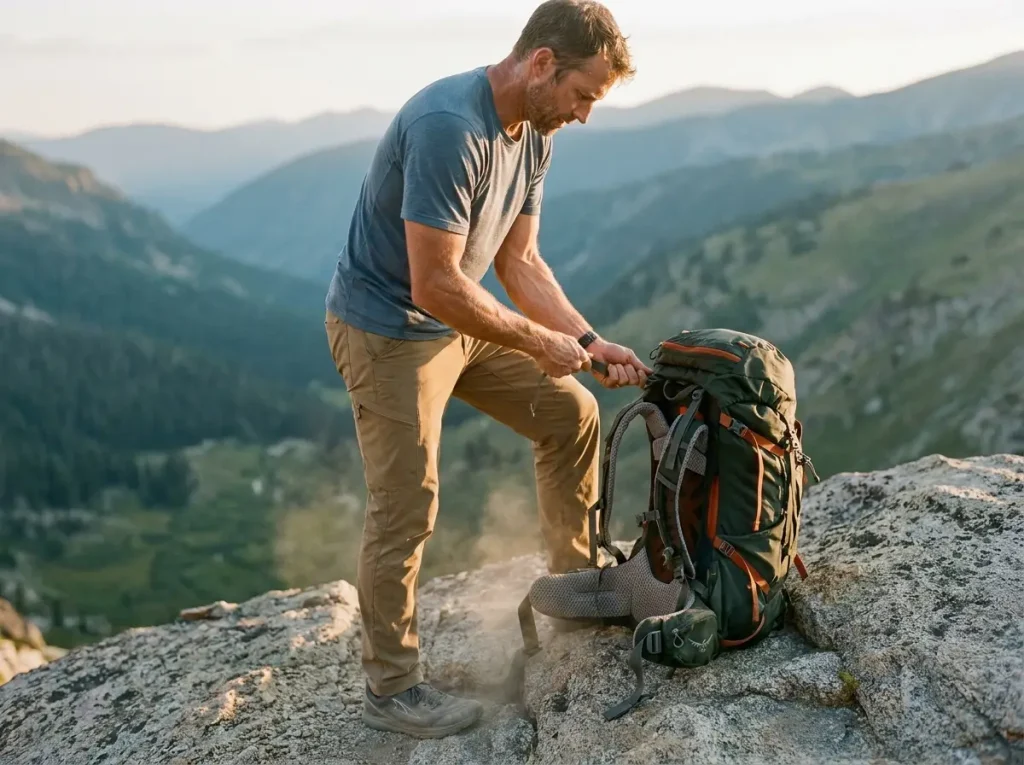
Most hikers treat a moldable hip belt like a premium upgrade they’d be foolish to skip. The people who fit packs for a living are oddly quiet about it. Ask around a gear shop and a fair number of Osprey-trained staff will tell you the belt shapes itself to you with normal use, and that the heat appointment is a nice-to-have rather than the thing that makes the pack fit. This breaks down what a moldable hip belt actually is, how the process works, and the honest line on when it’s worth a trip to the store and when standard fit plus a few hikes does the same job.
What Is a Moldable Hip Belt?
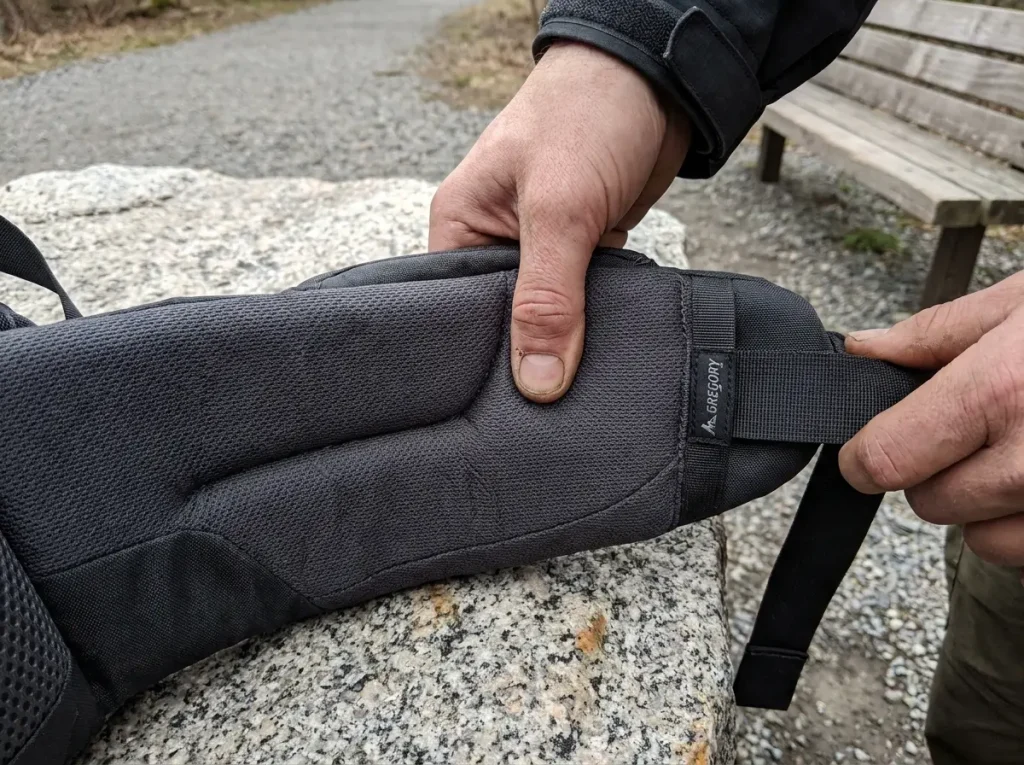
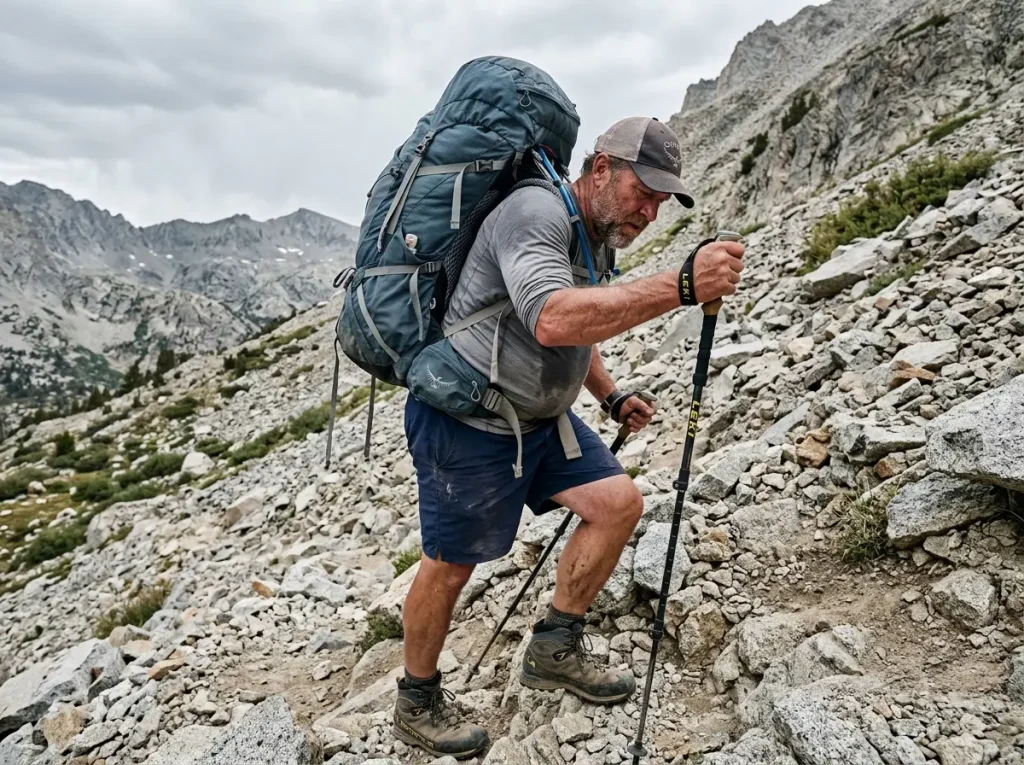
Your hip belt is the hardest-working strap on the pack, and the one most people understand least. On a properly fitted backpacking pack, the hip belt carries 80 to 90 percent of the load. Get it wrong and you’re hauling the whole thing on your shoulders, which is why shoulder pain after two hours almost always traces back to the belt, not the straps.
A standard belt uses fixed-curve EVA foam that conforms to you slowly, through pressure and time. A moldable hip belt swaps in a thermoplastic, dual-density foam core, sometimes called thermoformable foam, that softens with heat and takes a custom set. EVA starts to soften somewhere around 158 to 194°F, but the moldable core is built to hold its shape well above the temperatures you’d hit on a normal day. Osprey brands its version IsoForm CM, short for Custom Molding.
Here’s the part that reframes the whole topic: most belt discomfort isn’t a “the foam isn’t soft enough” problem. Roughly three out of four chafing cases come from lateral instability, the belt sliding side to side because it isn’t hugging the bone. Softer or custom-shaped foam doesn’t fix a belt that’s sitting in the wrong place. The belt is one piece of a pack’s whole suspension system, and good load transfer only works when the weight actually moves from your shoulders to your hips the way it’s designed to.
How the Molding Process Works
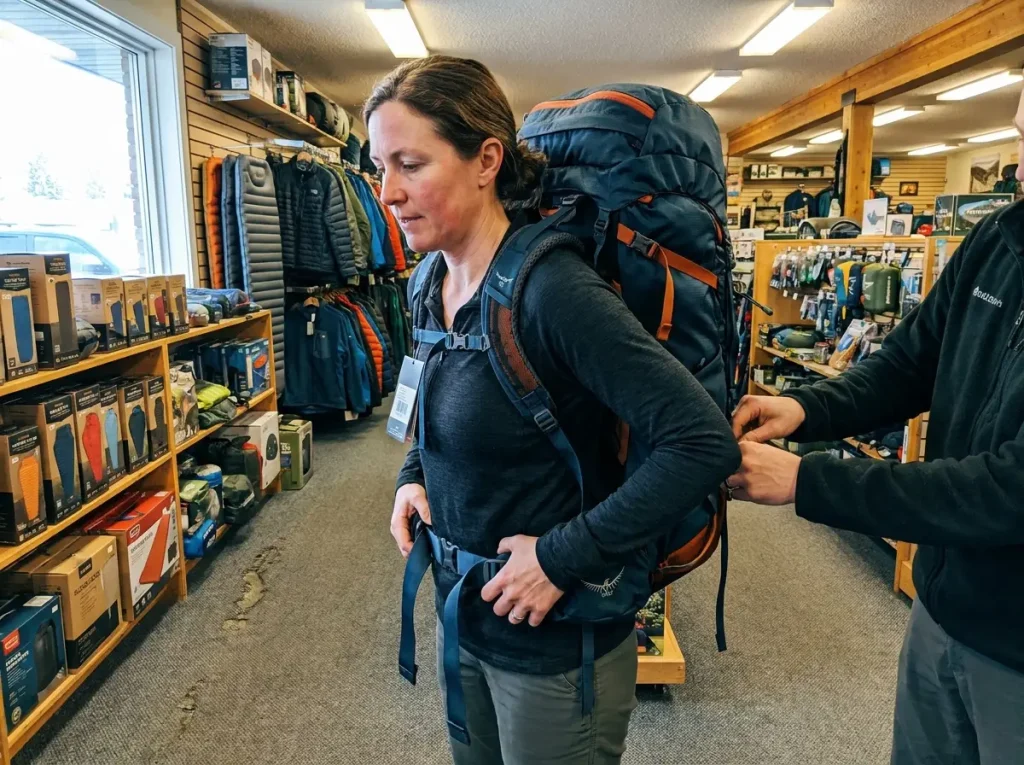
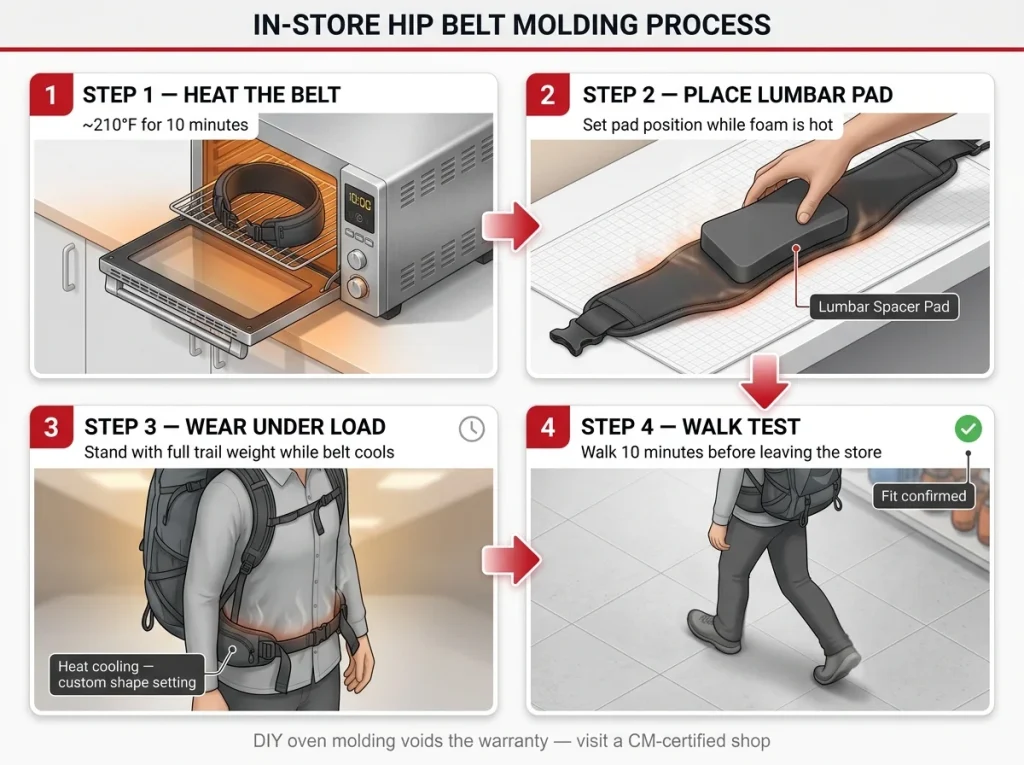
People picture something high-tech. It’s a foam belt, a low oven, and ten minutes of standing around in a loaded pack while it cools. At an Osprey CM-certified shop, the belt gets heated to roughly 210°F for about ten minutes, then you wear it under load while it sets to your shape. The thermoplastic foam core is engineered to set at around that temperature, which is why it holds the custom shape afterward instead of relaxing back to flat.
The step almost everyone skips at home is the lumbar spacer pad. A good fitter places it first, then tightens the belt while it’s still hot so the lumbar gap sets correctly. Miss that and the foam can harden into a shape that fights your lower back, even if the wings seat fine.
You don’t have to heat anything at all, though. Body-heat break-in is free and works: three to five full-day hikes at trail weight let the foam compress and orient to your specific hips. The catch is consistency, you need real load and real miles, not a couple of short walks.
So what about doing the heat version in your kitchen oven? This is where it goes sideways. A standard, non-convection oven has hot spots, so one side of the belt sets while the other stays soft, and an asymmetric belt is worse than the stock one you started with. Push the temperature past 210°F or leave it in too long and you risk warping the buckles or deforming the nylon shell. Osprey won’t publish home temps or times, and DIY molding voids the warranty, so if it goes wrong, you own it. Heat cuts both ways, too: a belt baking in a hot car trunk all summer can soften and lose some of its set, so store the pack somewhere cool.
Before you book any molding, load the pack to its real trail weight and break the belt in on a few full days first. Plenty of belts that felt “wrong” in the store feel right after 30 trail miles, and you can’t un-mold a belt you shaped too early around a half-empty pack.
Getting the Iliac Crest Position Right First
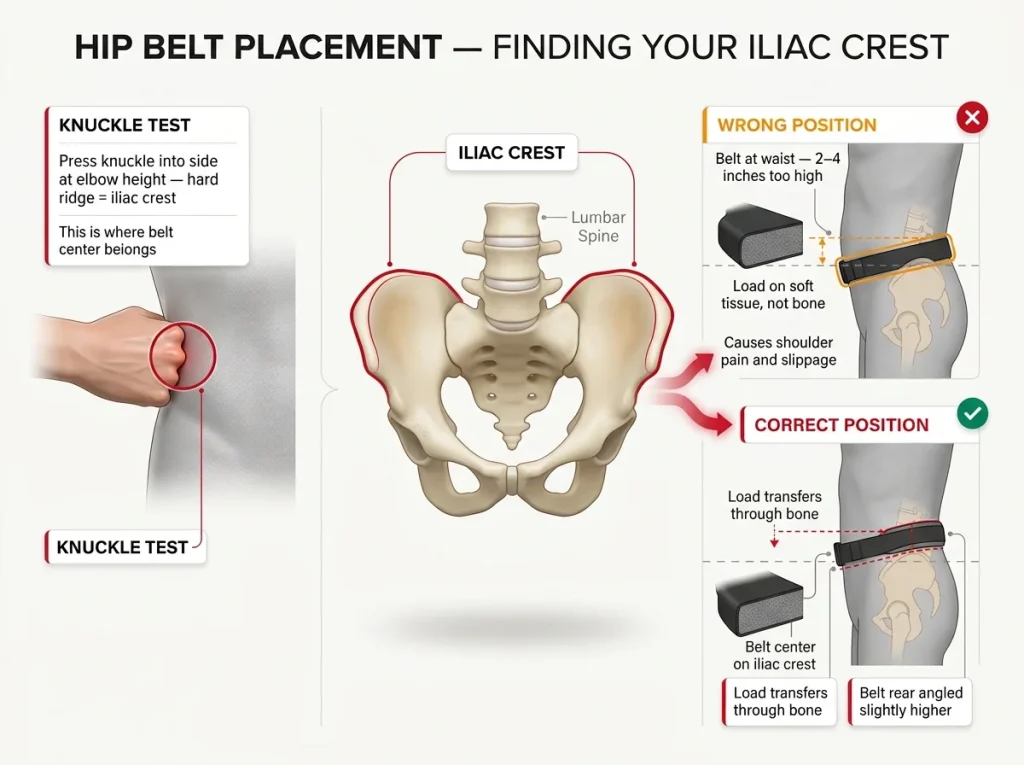
Before anyone spends a dime on a fitting, this is the free fix that solves most “my belt doesn’t fit” complaints. It’s a bone-finding exercise, not a gear purchase. The iliac crest is the hard ridge at the top of your hipbone, and the padded center of the belt should sit so it straddles that ridge, with the rear of the belt angled slightly higher than the front to follow the bone’s natural shape.
Finding it takes two seconds. Dig a knuckle into your side at about elbow height, and the hard ridge you hit is the crest. That’s where the belt center belongs, not where it happens to feel comfortable. The most common mistake is fitting the belt at the waist, which sits two to four inches higher and dumps the load onto soft abdomen instead of bone. To pick the right belt size, measure your hip circumference right across the crest with a soft tape measure, not at your waistline, since those two numbers can be inches apart.
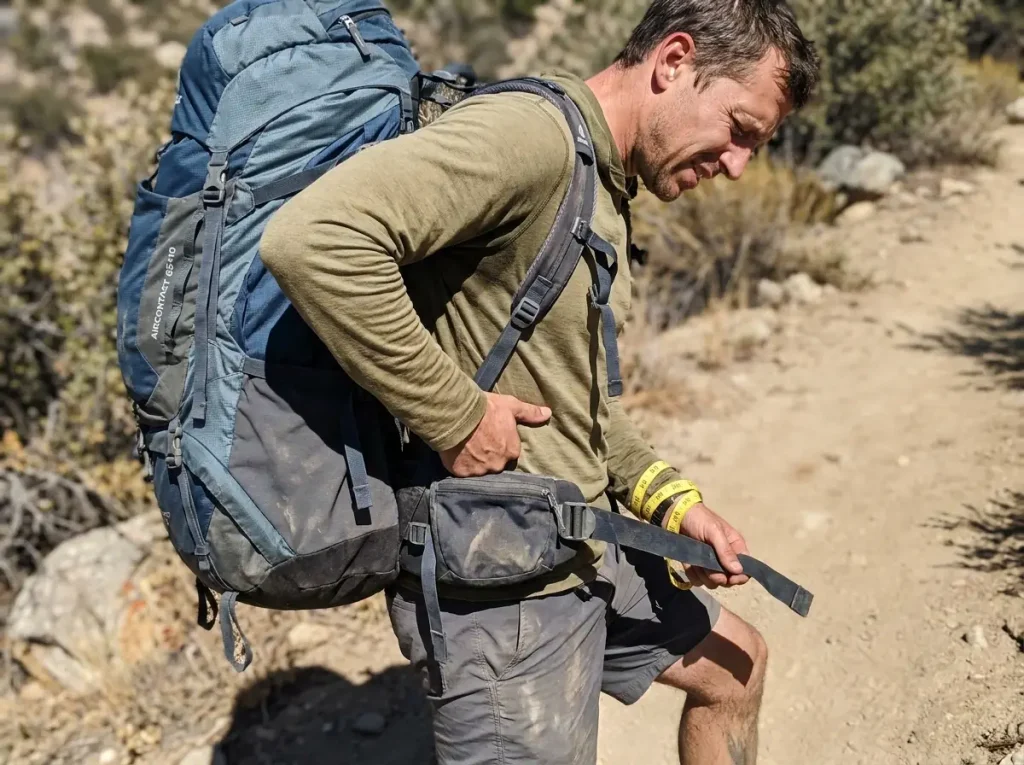
There’s a clean diagnostic for slip, too. If you loosen your shoulder straps and the shoulder pain doesn’t ease, the belt isn’t carrying the load, which means it’s off the crest. And if the belt leaves a red mark below the crest on the soft flank, it’s riding too low, not too tight, so the fix is to lift it onto the bone rather than crank it harder. Working through the full backpack fit sequence on a loaded pack is worth it before you blame any one strap, and it’s the same logic behind measuring your torso length when you size a pack in the first place. People reach for the load lifter straps when their shoulders hurt, but the cause is usually a belt that slid off the crest. For the official version, Osprey’s own fitting and sizing instructions walk through the same positioning.
After any fitting or molding, walk the store floor with the loaded pack for a solid ten minutes before you leave. The foam shifts a little as it finishes cooling, and the micro-adjustments are far easier to make at the counter than from a switchback two days in.
Which Backpacks Have Moldable Hip Belts?
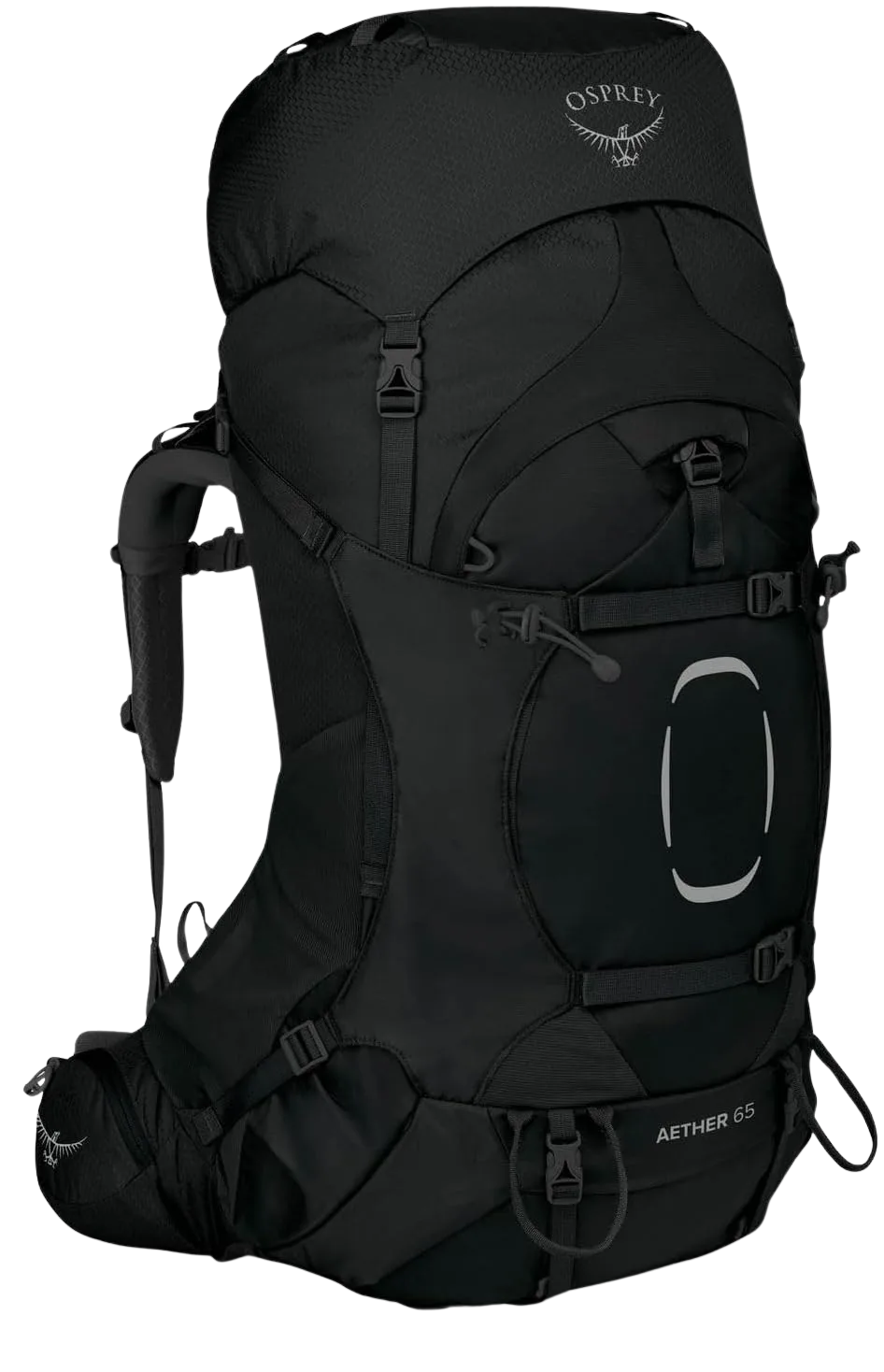
This is where buyers get misled. Half the packs people are told are “moldable” don’t actually heat-mold at all, they adapt or flex, which is a different thing. The real heat-moldable benchmark is Osprey’s IsoForm CM belt, and you’ll find it on the Osprey Aether (men’s) and Osprey Ariel (women’s). Those are the packs the whole molding conversation is built around.
Now the part that saves you from a bad buy. Osprey’s Atmos AG and Aura AG use a system called fit-on-the-fly, which is adjustable while you wear it but does not heat-mold. They’re excellent packs, just not moldable ones, and we’ll get into where that matters next. The Gregory Baltoro is another pack people miscategorize: its FreeFloat hip belt flexes dynamically with your movement, but it doesn’t take a permanent heat set, so calling it heat-moldable is simply wrong. If you’re weighing brands, Gregory’s FreeFloat suspension is worth understanding on its own terms. One more option for people who already own an Osprey: standalone IsoForm and BioForm replacement belts exist through REI, so you can add the moldable belt without buying a new pack.
When Molding Actually Matters (and When It Doesn’t)
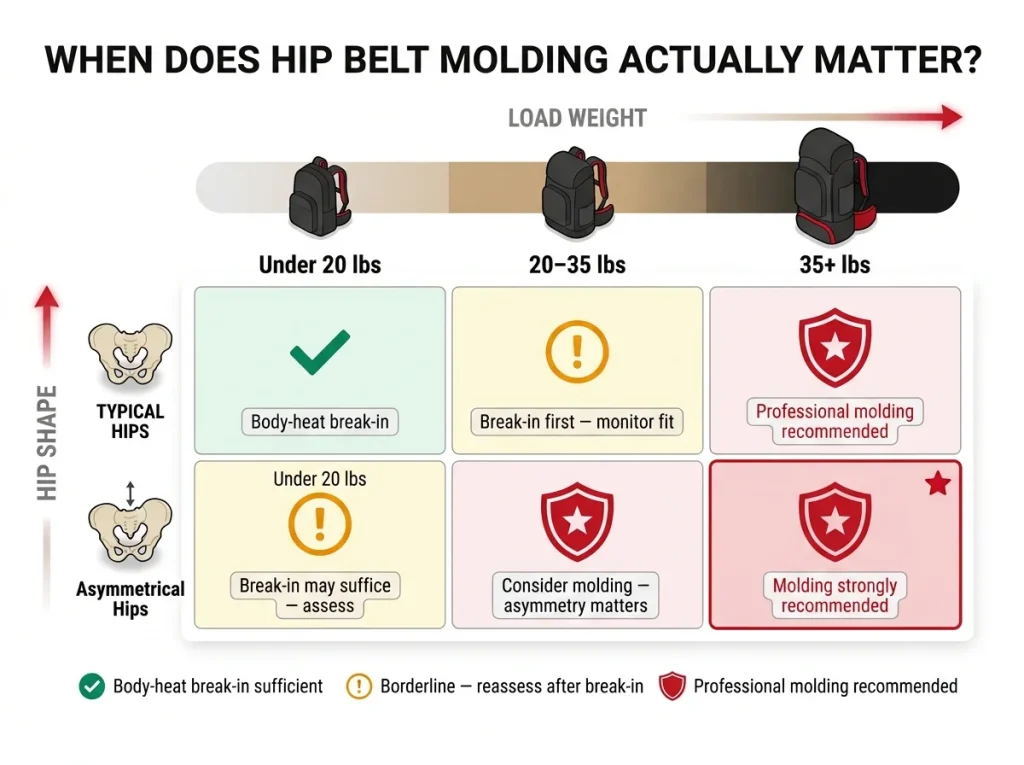
Here’s the verdict the title promised. Body-heat break-in handles loads up to roughly 30 pounds on typical hips without any heat appointment at all. Once you’re regularly carrying 35 to 40-plus pounds, or you have an unusual crest shape, professional molding starts to make a difference you can actually feel.
The field evidence runs both ways, and that’s the honest part. One hiker loaded 27 pounds and walked 50 miles with no molding and reported the belt felt perfect the whole time. Another carried 38 to 42 pounds and fought hip belt slip for 50 miles until a store molding finally locked it in place, after which the belt stayed put regardless of how the pack shifted. Same brand, different load, opposite outcomes. The weight is the variable that decides it.
Then there’s the case nobody covers: asymmetrical hips or pelvic tilt. Standard foam sets to a symmetric curve, so if one side of your pelvis rides higher, one wing contacts the crest while the other floats. This is exactly where molding earns its keep, because the heat-set foam takes the actual shape of each side independently instead of forcing a false symmetry. If that’s you and you want the Osprey fit without the appointment, the Osprey Atmos AG 65 (men’s) and Aura AG 65 (women’s) adjust on the move, though they trade away the custom set. The load-weight math here is the same threshold that decides whether you even need an internal frame. And it’s worth saying plainly: a loose belt under a heavy load shoves your center of gravity up onto your shoulders, which raises your fall risk on technical ground, so fit matters most exactly when the pack is heaviest.
If your hips are uneven, don’t tighten the belt evenly. Snug the higher-crest side first, then gently bring in the lower side. Cranking both sides equally forces a false symmetry that transfers the load to one hip and leaves the other carrying nothing, which is the slow road to a sore back.
Swappable Belts vs. Moldable Belts
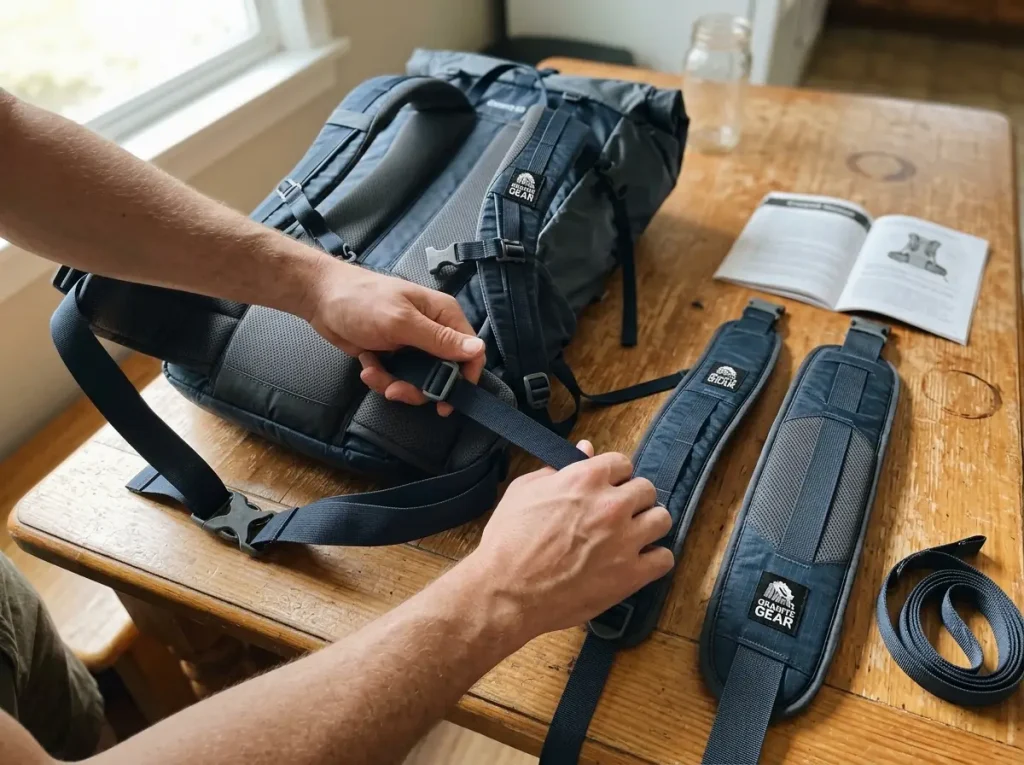
Molding isn’t the only road to a custom fit. A whole category of packs lets you swap hip belt sizes instead of heat-shaping one, and for some hikers that’s the smarter play. The decision comes down to whether your build and your needs hold still or keep moving.
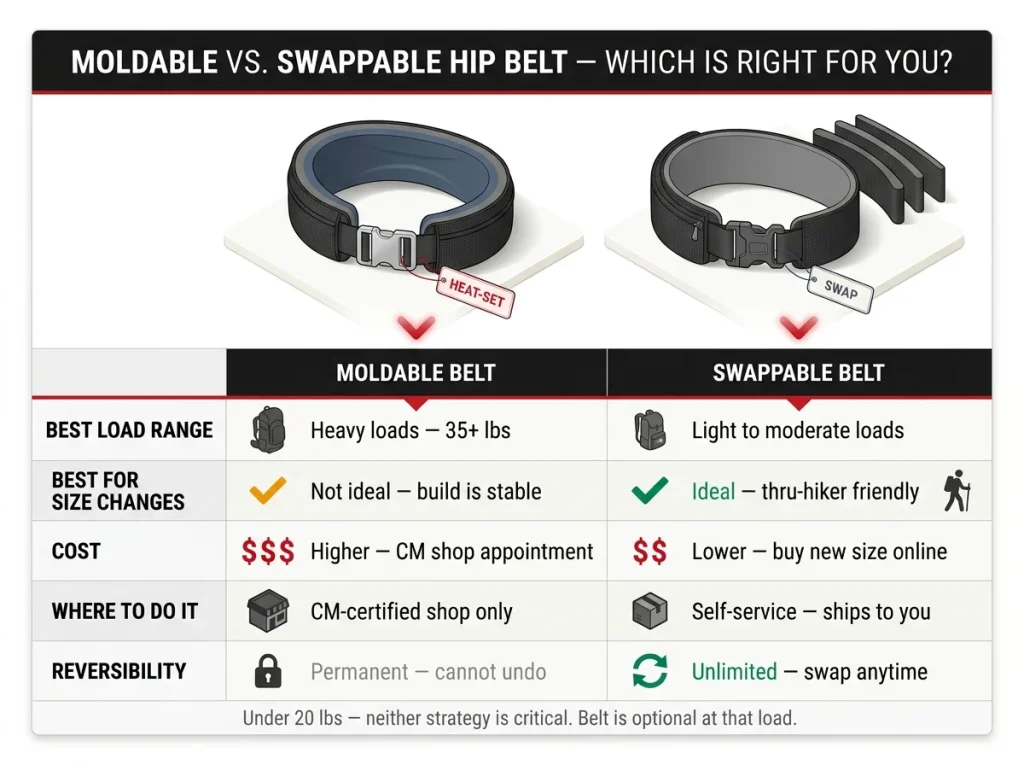
Molding wins when your build is stable, your loads are heavy, your anatomy is asymmetrical, and you’re willing to visit a CM-certified store. Swapping wins when you’re thru-hiking and your frame will change over months, when you want to try different belt widths without buying a new pack, or when you’re upgrading an existing pack on a budget. That thru-hiking point is the one people underestimate: drop enough mass over a long trail and you can need a smaller belt, and molded foam can’t un-mold to follow you down.
The cleanest Amazon-available example of the swap approach is the Granite Gear Crown3 60, whose Re-Fit interchangeable belt sizes independently of the pack and comes in over two pounds lighter than the Aether. Cottage builders pioneered swappable belts, and the ULA Circuit is the pack most thru-hikers point to, but those sell direct rather than through Amazon, so the concept matters more than any single pack there. If weight is your priority, it’s worth seeing how lighter frameless and framed packs that size the belt separately stack up. One honest caveat closes the loop: under about 20 pounds, neither strategy matters much, because at that weight the hip belt is optional rather than load-critical.
Conclusion
Get the free stuff right before you pay for anything. Position the belt on your iliac crest first, because that single adjustment solves most “bad fit” complaints. Lean on body-heat break-in for loads under about 30 pounds, and save professional molding for the cases that actually call for it: 35-plus pounds or asymmetrical hips. And if your frame is going to change a lot, like on a thru-hike, a swappable belt beats a molded one every time.
So before you book a fitting, do the cheap test first. Load your pack to trail weight, find your crest with the knuckle test, and walk a few real miles. You’ll know fast whether molding is worth the trip, and most of the time you’ll find out you were already there.
Frequently Asked Questions
01Can I mold my hip belt at home?
You can, but it is risky and voids the warranty. A standard oven heats unevenly, so the foam can set asymmetrically or the nylon shell can warp. Body-heat break-in over a few hikes is the safer free alternative.
02Is a moldable hip belt worth it for hiking?
For most hikers carrying under about 30 pounds, no. Standard fit plus a few hikes does the job. It earns its keep for heavy loads above 35 pounds or asymmetrical hips, where the custom set makes a real difference.
03Which Osprey packs have a heat-moldable hip belt?
The Osprey Aether for men and the Ariel for women use the IsoForm CM heat-moldable belt. The Atmos and Aura use fit-on-the-fly, which adjusts on the move but does not heat-mold.
04Why does my hip belt keep slipping down?
Slip almost always means the belt is sitting above or below the iliac crest, riding on a small contact patch instead of wrapping the bone. Reposition it on the crest and re-tighten before assuming you need molding.
05How do I know if my hip belt fits correctly?
With a loaded pack, the padded center should sit on your iliac crest with one to three inches of webbing gap at the buckle. If loosening the shoulder straps does not ease shoulder pain, the belt is not carrying the load.
I've spent more than a decade researching hiking gear and trail technique. I read the specs, the forum threads and the long-term reviews, and every pick here comes with what it gets wrong.
End of the trail
You read every mile of this one. Here's where the trail goes next.