In this article
Thirty miles into a backcountry traverse, my heel was raw meat. The brand-new full-grain Asolos I’d bought three days before departure had turned against me—each step grinding fresh skin against unyielding leather. I could feel the fluid pooling under the blister, and the nearest trailhead was still two days away. That night, cutting moleskin by headlamp, I swore I’d never skip the break-in again.
After years of guiding trips through the Cascades and Sierra Nevada, I’ve watched this story repeat itself dozens of times. Good hikers, expensive boots, but zero patience for the process that turns a rigid piece of leather into something that moves with your foot. Here’s the protocol that separates a custom-fit boot from a blister factory, broken down by material, phase, and the biology most guides ignore completely.
⚡ Quick Answer: Full-grain leather hiking boots need 80 to 100 hours of phased wear across three to four weeks before they’re trail-ready. Synthetics settle in 10 to 20 hours. The key is progressive loading—starting indoors, moving to pavement, then adding pack weight on trails. Skipping phases doesn’t save time; it creates blisters that can cascade into gait problems and secondary injuries.
Why Boot Break-In Is a Biological Negotiation, Not Just “Wearing Them Around”

Most people think breaking in boots means wearing them until they stop hurting. That’s only half the story. What’s actually happening involves two parallel processes—the boot adapting to your foot, and your foot adapting to the boot.
How Leather Actually “Learns” Your Foot
Leather is a network of collagen fiber bundles that behave differently than any synthetic material. In a new boot, these fibers are tightly packed and randomly oriented from the tanning process. They don’t just bend when you walk. They relax over time under repeated strain.
Between 10 and 30 hours of wear, those collagen fibers begin reorienting themselves along your gait’s primary flex lines at the ball of the foot and ankle collar. This reorientation lowers the stiffness at flex points while keeping structural integrity exactly where you need it—the heel counter and midfoot. The fibers align into parallel planes and the leather actually gets stronger as it conforms. That’s why a properly broken-in full-grain leather boot can outlast three pairs of synthetics.
Pro tip: If the leather is pinching at a specific spot, walk through dewy grass in the morning. The light moisture softens the fibers without stripping the natural oils the way soaking does. Lukas Meindl from Meindl Boots swears by this approach.
Your Feet Are Breaking In Too
While the boot softens, your foot undergoes its own adaptation. Cells sense the mechanical friction and respond by growing new tissue. That’s why progressive short wear sessions—30 to 60 minutes at first—stimulate callus growth without reaching the blister threshold.
Friction blisters are the main risk during the first 40 hours. Shear forces cause cell separation between the outer and inner layers of skin, and fluid fills the gap. Military research shows that recruits with blisters were 44–50% more likely to experience musculoskeletal injuries due to gait alterations. That’s not a minor inconvenience. That’s a cascading injury risk.
During weight-bearing, skin thins by up to 28 percent over pressure points before rebounding with protective calluses. This is why the first two weeks matter so much. Short sessions let your skin build up without breaking down.
⚠️ Safety Warning: A blister showing redness extending up the leg is a sign of cellulitis. This requires immediate emergency care, not more moleskin.
Why Synthetics Skip the Queue (But Pay Later)
Synthetic hiking boots made from polyester or nylon mesh don’t have collagen fibers to reorient. Their “break-in” is limited to midsole compression and footbed settling, which is why they feel comfortable in 10 to 20 hours.
The trade-off is real. Synthetics “settle” while leather “synchronizes.” A synthetic boot will never develop the custom-molded fit that leather achieves over a lifetime. If you’re weighing the true cost difference between leather and synthetic hiking boots, the break-in timeline is one of the biggest factors most buyers overlook.
The 5-Phase Break-In Protocol: Hours 0 to 80+
Here’s the phased progression I’ve used with every pair of leather boots I’ve owned—and the one I recommend to every client before a guided trip.
Phase 1: Indoor Reconnaissance (Hours 0-5)
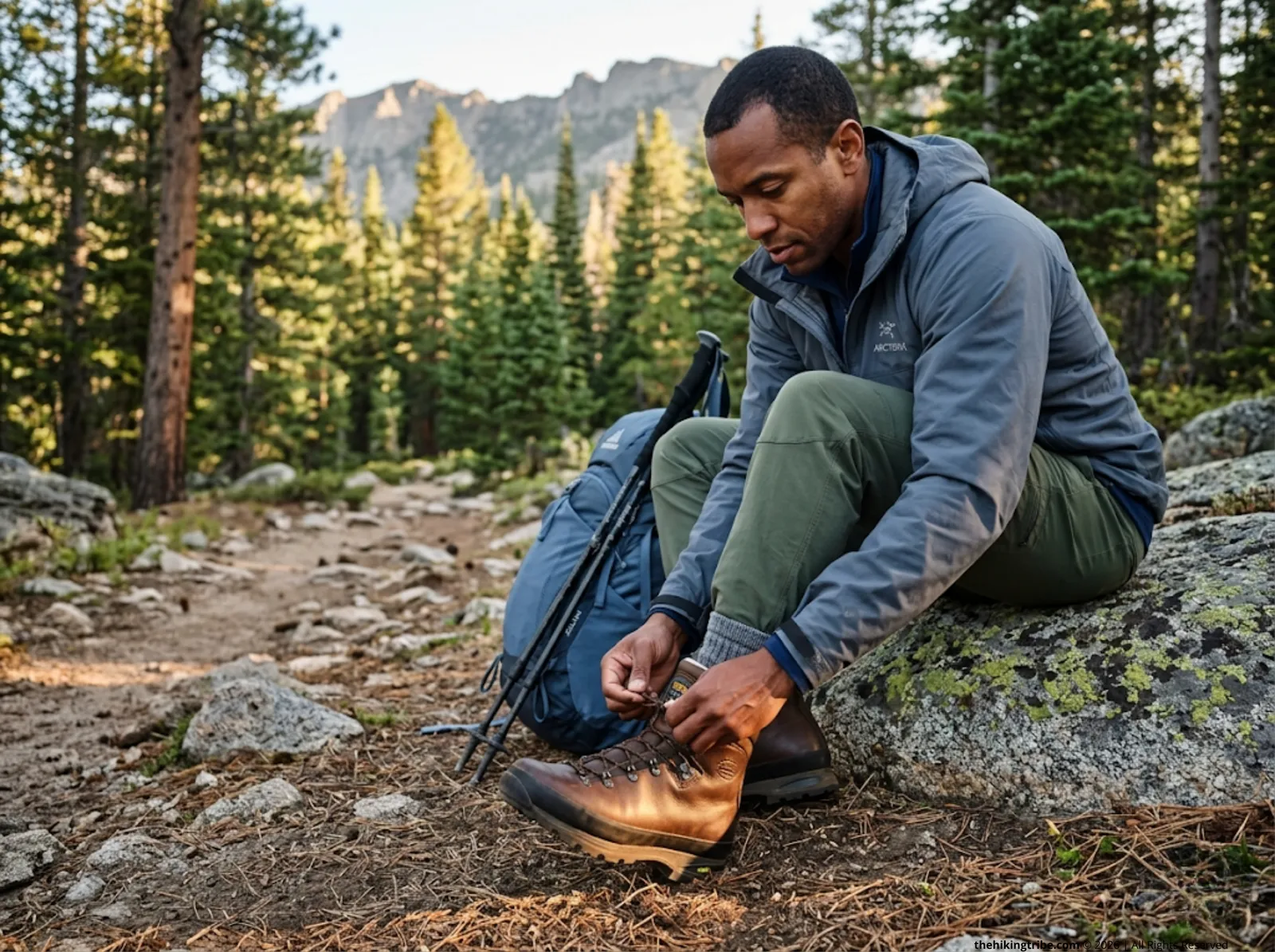
Wear your new boots on clean indoor surfaces for 30 to 60 minute sessions over three to five days. The goal here isn’t mileage. It’s intelligence gathering. You’re looking for hot spots, tongue positioning problems, and fit errors before committing to pavement.
Lukas Meindl warns that the tongue position matters from day one: “The tongue must not slide to the side from the start, otherwise it will never return to the correct position.” Check for a gap of one-third to one-half inch between your longest toe and the boot end. The warmth from your feet starts the initial fiber relaxation in leather uppers.
Pro tip: Wear your new boots during low-stakes activities like washing dishes or walking the dog. You’ll find hot spots fast without being miles from anywhere when one develops.
Phase 2: Urban Kinetics (Hours 5-15)
Move to hard surfaces—sidewalks, grocery stores, neighborhood walks. Flexion of the ball of the foot on concrete forms permanent creases at your gait’s flex lines. Start with one to two hour sessions and progress to three to four hours by the end of this phase.
Monitor for hot spots developing at the Achilles, ball of foot, and outer ankle. If any point causes sharp pain rather than dull pressure, stop. You may have a sizing problem, not a break-in problem.
Phase 3: Loaded Urban to Easy Trail (Hours 15-40)
Introduce a 10 to 15 pound daypack for midsole compression and footbed molding. Begin on groomed trails and progress to moderate terrain with elevation changes. Sessions of two to four hours, increasing to half-day outings by hour 30.
This phase is where most heel slippage shows up. Use the heel lock lacing technique to secure your heel into the pocket. The added pack weight accelerates footbed molding, but jumping from zero to 30 pounds skips phases and invites injury.
Phase 4: Full Trail Integration (Hours 40-80+)
Progress to full pack weight of 30 to 50 pounds on varied terrain. Uneven surfaces train the ankle collar to flex with your natural range of motion. By hour 60 to 80, the boot should feel like an extension of your body, not something strapped to the outside of it.
At this stage, leather boots have achieved full alignment—the collagen fibers are oriented in parallel planes at the flex points. Your feet have built the calluses they need. The mechanical synchronization of footwear and foot is complete.
For the full procedural walkthrough with troubleshooting at each stage, check out our complete step-by-step zero-blister break-in guide.
Pro tip: Treat the boot break-in as part of your physical training. Your feet need calluses just as much as the leather needs flex. Dr. Dobrusin, a podiatric consultant, puts it bluntly: “Don’t decide to hike the Grand Canyon with a new pair of boots. Help your feet develop protective calluses by gradually building up months ahead of time.”
The Midsole Beneath Your Feet: PU vs. EVA and What It Means for Break-In
 Scarpa Kinesis Pro versus EVA Salomon X Ultra 4 midsole compression” class=”wp-image-14539″/>
The midsole is the part of the boot you never see but feel with every step. The material it’s made from changes how the break-in feels and how long the boot lasts.
EVA: The Fast Fade
EVA (Ethylene-Vinyl Acetate) consists of gas-filled cells that give you that instant cushioned comfort out of the box. It’s lighter and cheaper, which is why most boots under $200 use it.
The problem is lifespan. After 300 to 500 miles, those gas bubbles permanently collapse under your weight—a process called compression set. Once that happens, the cushioning is gone for good. The boot starts feeling flat, and rocky trails become punishing on joints. EVA-soled boots feel comfortable in 10 to 20 hours but may need replacing in one to two years of regular use.
PU: The Long Game
Polyurethane midsoles are denser, heavier, and found in premium boots like the Lowa Camino or Scarpa Kinesis. PU doesn’t hold a memory—it rebounds to its original shape after every step, maintaining support for 1,000 to 2,000 miles.
A PU-soled boot may feel stiff for the first 50 hours. That stiffness IS the support. Don’t mistake it for a fit problem.
Here’s the counterintuitive part: PU’s main failure mode is hydrolysis—chemical breakdown from trapped moisture. But active use actually prevents it. Walking forces water out of the foam structure. A boot sitting in a closet for five years is more likely to crumble than one hiked in regularly. If you’re wondering whether resoling your broken-in boots is worth the $75-200 investment, the answer for PU-soled boots with good uppers is almost always yes.
How to Tell Which You Have
Press your thumb firmly into the midsole. EVA compresses easily and rebounds slowly. PU feels dense and springs back immediately. Check the manufacturer’s specs if you’re unsure—most boots above $200 use PU or PU/EVA hybrids. Factor midsole type into your break-in expectations. PU requires more patience but rewards with years of stable support.
The Gore-Tex Factor: Why Waterproof Boots Fight the Break-In
If you bought Gore-Tex lined boots, add 10 to 20 percent more time to every phase of the protocol above.
The Bootie-Within-a-Boot Problem
Gore-Tex membranes aren’t a simple coating. They’re built as a “bootie” behind the lining—multiple layers of fabric, padding, and adhesives forming a composite construction. This composite resists the natural flex of leather fibers, adding a layer of non-stretching ePTFE membrane that the leather must work against. The membrane itself does not stretch or conform. Only the leather outer can adapt.
The Thermal Microclimate Trap
Gore-Tex relies on the temperature difference between your foot and the outside air to push moisture out as vapor. In warm weather or during high-exertion Phase 3 hikes, this system can fail. Humidity climbs to 100 percent inside the boot, creating soggy skin that’s far more vulnerable to shear-induced blisters.
Your feet contain over 410,000 sweat glands, with the top of the foot accounting for 60 to 67 percent of sweat production. Water conducts heat 23 times faster than air, so once the boot is wet inside, cold-weather problems compound fast. If the outer material “wets out,” breathability fails entirely.
For a deeper look at how different waterproof membranes compare, read our performance data analysis comparing Gore-Tex and eVent membranes.
Pro tip: During break-in, choose cool, dry days for Gore-Tex boots. Save hot-weather sessions for unlined models. Your skin stays drier, your blister risk drops, and the leather gets a fair chance to flex without fighting moisture from both sides.
Lacing Strategies That Fix Break-In Problems Before They Start
The right lacing technique during break-in can prevent the most common comfort complaints before they become blisters.
The Heel Lock (Runner’s Loop): Solving the #1 Break-In Complaint
Heel slippage is the most reported problem during boot break-in. It causes Achilles friction that accounts for the majority of backcountry blisters. The heel lock creates a pulley system using the top eyelets, pulling the heel down and back into the pocket without over-tightening the entire boot.
During break-in, the boot’s internal volume shifts as padding compresses and leather stretches. Standard lacing can’t compensate. The heel lock can. Arthur from LOWA’s Service Department notes that modern laces have a water-repellent coating that makes them slippery when new—another reason to re-tie frequently during the first weeks.
For the full walkthrough on this technique plus four others, see the full lacing guide that prevents downhill heel slippage.
The Surgeon’s Knot: Creating Tension Zones
The Surgeon’s Knot locks lace tension at specific points along the foot, creating isolated tension zones. Use it below and above the instep to prevent top-of-foot pressure while maintaining forefoot security. It’s especially useful for hikers with high-volume feet or bunions who need different tensions across the boot. During break-in, re-tie every 30 to 45 minutes as materials shift.
Window Lacing for Pressure Point Relief
Also called box lacing, this technique skips one set of eyelets over high-pressure areas like high insteps, creating a pressure-free “window.” It works best in Phase 1 and 2 when the boot is at maximum stiffness and pressure points are most acute. Don’t use window lacing on the ankle—that area needs consistent tension for stability. Reserve it for the midfoot only.
Myths That Wreck Boots (And the Science Behind Why)
Every hiking forum is full of “hacks” that promise to speed up break-in. Most of them will cost you a pair of boots.
The Water-Soaking Myth
Submerging boots in water was standard practice 50 years ago when leather was thicker and less processed. Modern chrome-tanned leather with adhesive constructions suffers severe damage from full immersion: sole delamination, adhesive failure, and accelerated hydrolysis. Water strips the natural oils from leather, making it brittle once it dries. That’s the exact opposite of what you want.
Leather can stretch 20 to 30 percent when steamed on a mechanical last, but that’s a controlled industrial process with precise temperature and tension. Your bathtub is not a cobbler’s workshop.
⚠️ Never soak boots in water or apply direct high heat from hair dryers. It strips natural oils and compromises sole adhesives.
The Urine Myth: From Military History to Material Failure
Soldiers historically used urine to soften leather in the field when no other conditioner was available. The mineral content—urea, ammonia, salts—actually renders leather brittle and speeds up material decay. Andreas Settele, Head of R&D at HANWAG, confirms that your feet produce all the warmth and moisture needed: “Breaking in new boots essentially means customising the fit… the material gets softer and more supple. This is accelerated by the warmth from your feet and the moisture produced as you walk.”
The “Wear Them in the Shower” Shortcut
A variation of the soaking myth. Hot water degrades adhesives, can warp thermoplastic heel counters, and overrides the gradual collagen realignment process. The result: a boot that feels “softer” for a day but has lost its structural support. As Harvard’s First-Year Outdoor Program notes, full-grain leather uppers will in general last the longest—but only if you don’t wreck them with shortcuts.
The correct moisture approach: walk through dewy grass or use a lightly damp cloth on specific tight spots. Never full saturation. If your boots do get soaked on trail, here’s how to dry wet footwear overnight without melting the glue.
Conclusion
Three things to remember from all of this:
The 80-hour rule is a material science threshold, not a suggestion. Full-grain leather needs 80 to 100 hours of phased wear for collagen fibers to align with your foot shape. Synthetics settle in 10 to 20, but they never achieve true custom fit.
Your feet are adapting too. Progressive short wear sessions build protective calluses. Skipping phases doesn’t save time—it creates blisters that cascade into secondary injuries affecting your knees, hips, and back.
Gore-Tex, midsole type, and lacing geometry all shift the timeline. Factor these variables into your schedule and start three weeks before your trip, not three days.
Lace up your new boots tonight for a 30-minute session around the house. Feel for hot spots. Adjust the lacing. Mark the calendar with your trip date and work backward through the phases. The 80-hour investment protects every mile that follows.
FAQ
Can I break in hiking boots in a day?
No. Even synthetic boots need 10 to 20 hours across multiple sessions for the midsole to compress and your foot to adapt. Cramming break-in into one day creates the shear forces that cause blisters—the exact problem you’re trying to avoid. Plan at least a week for synthetics and three weeks for full-grain leather.
How many miles does it take to break in hiking boots?
Full-grain leather needs approximately 40 to 60 miles spread over 80 to 100 hours. The critical metric is hours, not miles, because house and urban wear at low speeds still contributes to collagen realignment. A two-mile walk around your neighborhood at hour 10 is more valuable than a 10-mile trail push at hour 5.
Should I soak my hiking boots in water to break them in faster?
Never. Soaking strips natural oils, degrades adhesives, and can trigger hydrolysis in PU midsoles. Modern chrome-tanned leather with bonded constructions suffers permanent damage from immersion. Use the natural warmth and moisture from your feet instead—the process HANWAG’s R&D chief calls customising the fit.
What if my boots still hurt after 80 hours of break-in?
Persistent pain after a full break-in cycle signals a fit issue, not a break-in failure. Check for a sizing problem—your longest toe should have one-third to one-half inch of space from the boot’s end. If fit is confirmed, consult a podiatrist about custom insoles. Some foot shapes simply don’t work with certain lasts.
How does Gore-Tex affect hiking boot break-in time?
Gore-Tex adds a non-stretching membrane layer inside the boot that resists leather conforming. Expect 10 to 20 percent longer break-in for lined boots. The membrane also creates a warmer microclimate that can soften skin and increase blister risk during high-exertion break-in sessions. Choose cool, dry conditions for early phases.
Risk Disclaimer: Hiking, trekking, backpacking, and all related outdoor activities involve inherent
risks which may result in serious injury, illness, or death. The information provided on The Hiking Tribe is for
educational and informational purposes only. While we strive for accuracy, information on trails, gear, techniques,
and safety is not a substitute for your own best judgment and thorough preparation. Trail conditions, weather, and
other environmental factors change rapidly and may differ from what is described on this site. Always check with
official sources like park services for the most current alerts and conditions. Never undertake a hike beyond your
abilities and always be prepared for the unexpected. By using this website, you agree that you are solely
responsible for your own safety. Any reliance you place on our content is strictly at your own risk, and you assume
all liability for your actions and decisions in the outdoors. The Hiking Tribe and its authors will not be held
liable for any injury, damage, or loss sustained in connection with the use of the information herein.
Affiliate Disclosure: We are a participant in the Amazon Services LLC Associates Program, an
affiliate advertising program designed to provide a means for us to earn advertising fees by advertising and linking
to Amazon.com. As an Amazon Associate, we earn from qualifying purchases. We are also an official affiliate partner
of Black Diamond Equipment via the AvantLink network. If you click on a Black Diamond affiliate link and make a
purchase, we may earn a commission at no additional cost to you. We also participate in other affiliate programs and
may receive a commission on products purchased through our links. Additional terms are found in the terms of
service.