
The 80% dropout rate. That’s the brutal statistic waiting for most hikers who step onto a 2,000-mile trail. They get broken by the unforgiving reality of pack weight, foot friction, and sheer mental exhaustion. The modern technical gear that keeps us moving—the 17-ounce dyneema packs, the dial-in layering systems, the aerodynamic trekking poles—didn’t emerge from a sterile laboratory. Those innovations were forged in the backcountry by desperate people enduring massive physical strain. After twenty years of testing gear on high-stakes routes, I’ve seen firsthand that understanding the physics of gear separates successful thru-hikers from those who go home in the first week. If you want to survive out there, look past the typical thru-hiking stories. This guide deconstructs the methods of the 10 most famous hikers of all time, showing you how their hard-won field breakthroughs can fundamentally upgrade your modern backpacking setup.
⚡ Quick Answer: The history of long-distance hiking is defined by technical breakthroughs that solved physical failure. Pioneers like Ray Jardine and Emma Gatewood proved that dropping base weight through a backpacking quilt or sneaker footwear dramatically lowers how hard your body works. Modern icons like Andrew Skurka and Heather Anderson shifted the focus to modular layering systems and the mental resilience required to maintain 18-hour movement windows, proving that strategy always beats raw adrenaline.
The Geotechnic Architects: Infrastructure and Ethics
Benton MacKaye and the Origin of the Path
Before anyone obsessed over dyneema fabric or hollow fiber filtration, someone had to figure out how to keep human expansion from swallowing the wilderness entirely. Benton MacKaye proposed the Appalachian Trail in 1921. He approached the project as an exercise in “geotechnics”—the hard science of balancing human occupancy with ecological preservation. MacKaye saw modern industrialization eating the backcountry.
His vision ignored political lines in favor of an uninterrupted ecological corridor. That regional planning foresight laid the groundwork for the 2,190-mile continuous greenway we rely on today. Without MacKaye’s initial structural blueprint, those famous trails would have been segmented by highways and private development long ago. He was one of our first social architects.
John Muir’s Intrinsic Preservation
Before you can argue about how much backpacking gear has changed, you need a trail that hasn’t been wrecked by heavy foot traffic. John Muir handled that end. Through his early 1,000-mile walking studies, he helped establish the legal and cultural framework for modern wilderness management. Muir fought for Muir’s philosophy of intrinsic environmental value, arguing that nature holds worth independent of human use.
His founding of the Sierra Club in 1892 created the first technical routes through the High Sierra. This shifted long-distance travel from sheer survivalism to a dedicated discipline. The routes we hike today on the John Muir Trail and the PCT exist because he pushed for preservation rules over extraction rights.
The Birth of the Technical Route
These pioneers built the foundation of thru-hiking culture. They provided the physical dirt and the no-fluff ethics required to walk it.
Pro-Tip: Treat trails not as a tourist highway, but as fragile ecosystems demanding strict stewardship. If you don’t know how to safely navigate fragile ecosystems, you will start braiding trails and destroying the biocrust that keeps everything from washing away in the next storm.
Surviving the Weight Penalty: The Load-Bearing Pioneers
Earl Shaffer: The Military Surplus Baseline
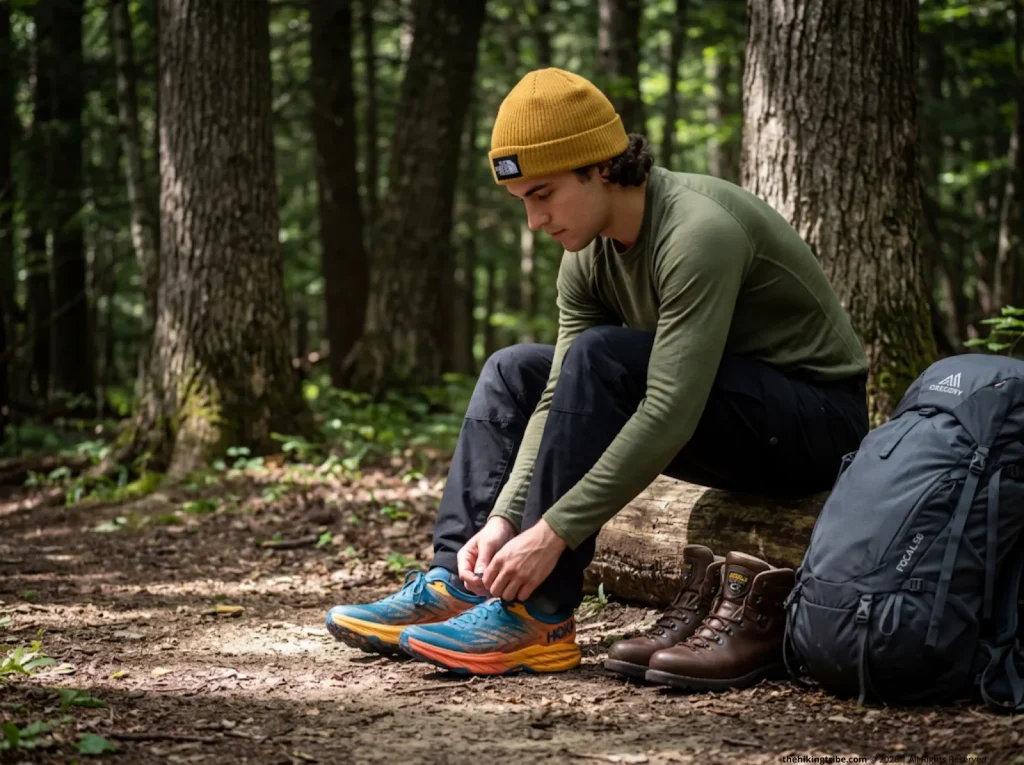
If you want to understand the failure data of early hiking, look at Earl Shaffer. In 1948, Shaffer completed the first thru-hike of the AT to walk the war out of his system. He dragged Shaffer’s post-war military surplus equipment across all 2,000 miles, utilizing an external-frame Mountain Troop Rucksack and heavy 9-inch leather boots.
Shaffer proved that continuous movement was possible, but he paid a massive metabolic cost. The sheer weight penalty of WWII-era canvas packs and heavy leather boots captured incredible amounts of heat and crushed his joints. Shaffer survived on sheer grit, establishing a tough baseline that future hikers would desperately try to engineer their way out of.
Grandma Gatewood and Accidental Minimalism
In 1955, Emma “Grandma” Gatewood broke every rule of the professional hiking narrative. She walked the entire AT carrying a homemade denim sack with a 17-pound base weight, wearing a pair of standard Keds sneakers.
By ditching the rigid external frames and stiff hiking boots, Gatewood altered her center of gravity and aggressively reduced her energy expenditure. She didn’t know she was pioneering the ultralight movement, but she proved that shedding footwear weight pays immediate dividends on the trail.
The Unforgiving 1:5 Boot Rule
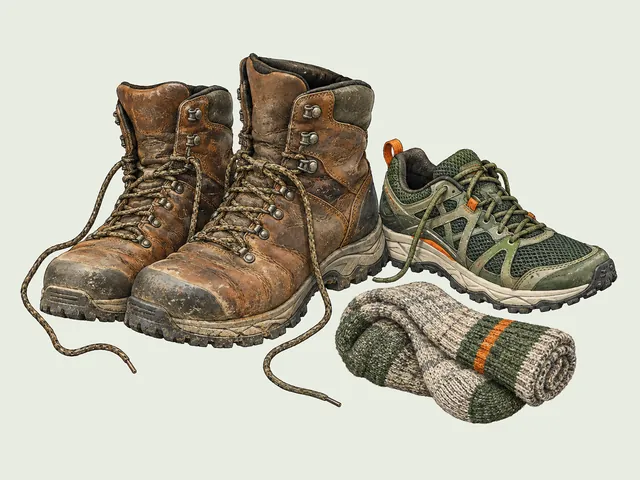
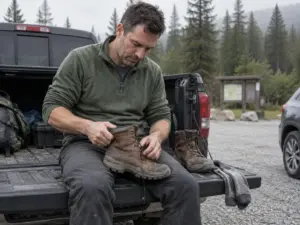
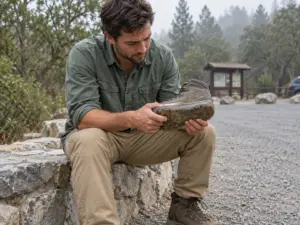
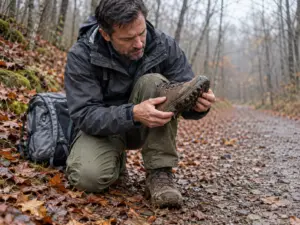
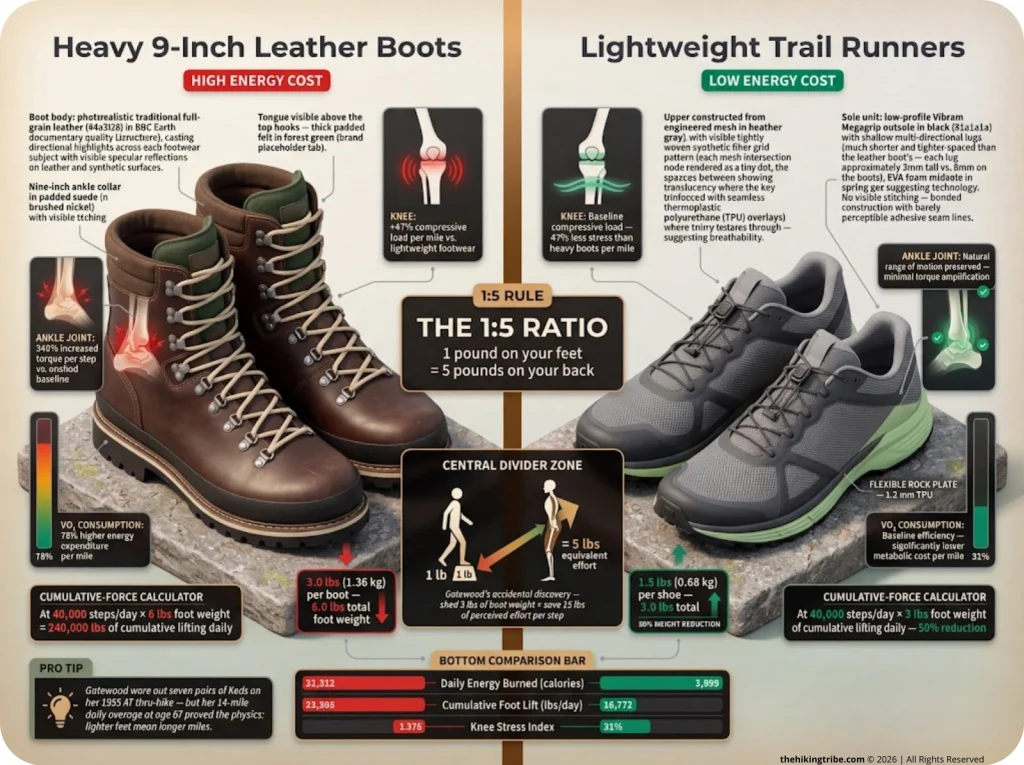
Gatewood’s hike accidentally exploited one of the most brutal biological laws of the backcountry: the 1:5 ratio. One pound on the feet equals five pounds on the back. Every extra ounce of boot weight forces your body to burn more energy. It is just simple physics.
When you choose between heavy boots and lightweight shoes, you are deciding how much dead weight your hip flexors will swing 40,000 times a day. Swapping three-pound boots for 1.5-pound trail runners saves thousands of pounds of cumulative lifting per week. Gatewood wore out seven pairs of Keds, but her lower daily energy burn allowed a 67-year-old to hold a 14-mile-per-day average.
The Mechanics of Ultralight Engineering
Ray Jardine and the Quilt Hack
In the 1990s, the failure rate for long-distance hikers sat near 80%. Ray Jardine looked at that metric and recognized that people were not failing mentally; they were collapsing under the weight of their own gear. He stripped his pack, shelter, and sleep system down to their absolute minimums, revolutionizing ultralight gear engineering.
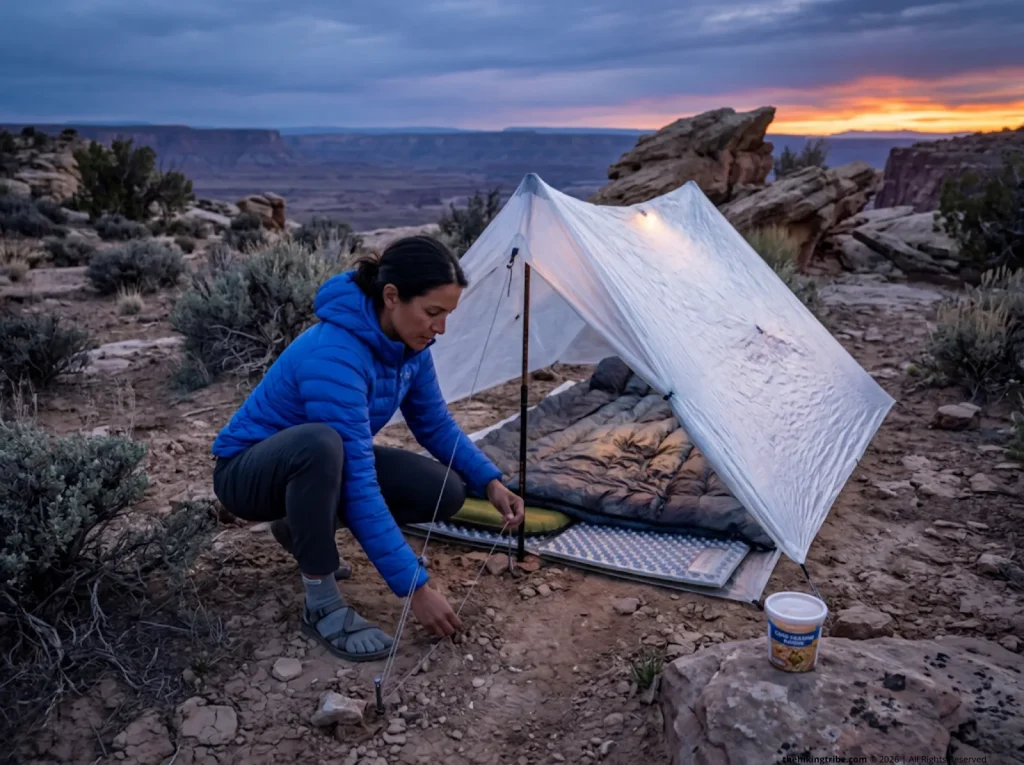
Jardine’s greatest contribution was the backpacking quilt. Traditional sleeping bags lose their heat-trapping ability underneath you because your body weight compresses the down insulation, reducing the protection to nothing. Jardine realized that pulling the bottom layer of the bag out completely saves dramatic weight while still trapping top heat against your sleeping pad.
The Frameless Pack Geometry Shift
Jardine didn’t stop with sleep systems. He replaced heavy external frames with low-profile, frameless packs. This lowered the hiker’s center of gravity and placed the load closer to the spine, stopping the fatigue-induced falls that ended hundreds of hikes.
He also preferred tarp tenting over double-wall enclosures. By prioritizing ventilation, he reduced condensation buildup, a massive issue when relying on down insulation in wet environments.
Pro-Tip: Stop buying equipment for your fears. Packing “just in case” items ruins your spine. If you know how to set up a minimalist tarp shelter, you can drop two pounds of tent poles without sacrificing bad-weather safety. Focus entirely on your gear’s weight-to-performance efficiency.
Scott Williamson and Cold-Soak Efficiency
The push for lower pack weights eventually created entirely new trail disciplines. Scott Williamson mastered the Yo-Yo—hiking the entire PCT in one direction and immediately turning around to hike back. In 2004, he accomplished this brutal feat out of a seven-pound homemade frameless pack, pioneering extreme minimalism.
To hit those numbers, Williamson deleted his cooking system entirely. He relied on a “cold-soak” diet, rehydrating starches with cold water in a plastic jar while he walked. By cutting the hours of setup, boiling, and cleaning involved with camp stoves, Williamson reclaimed that time to push his daily trail mileage. He walked farther because he spent less time standing around camp.
The Physics of FKT Endurance Records
Jennifer Pharr Davis: The Trekking Pole Engine
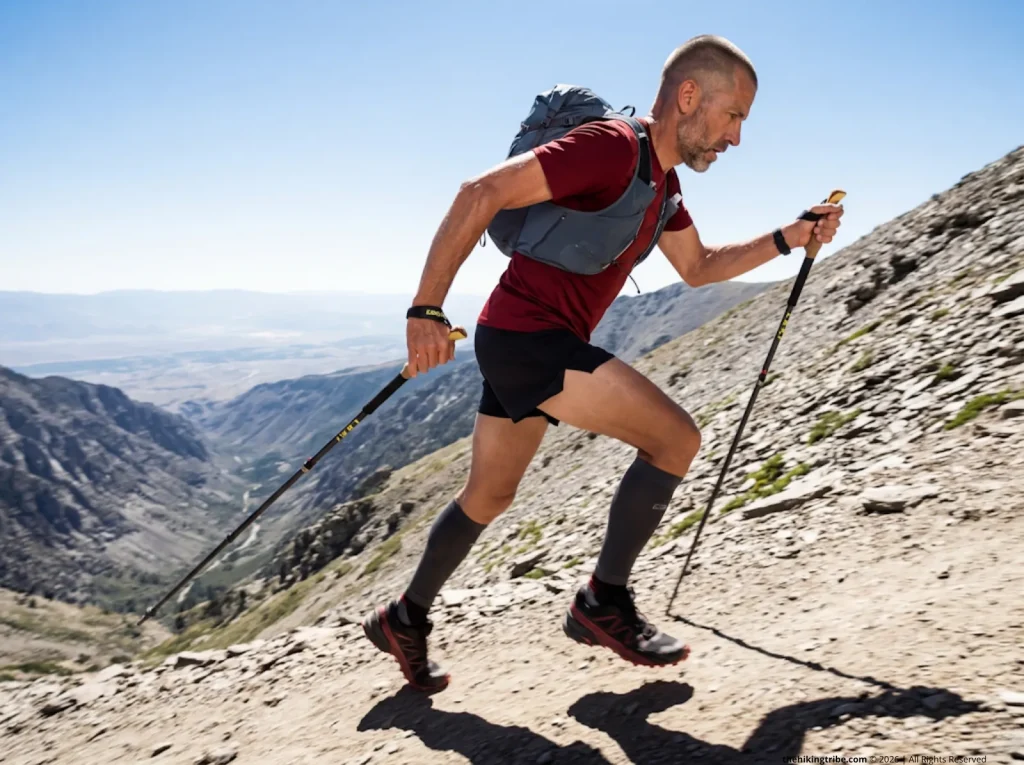
The Fastest Known Time (FKT) community changed how we view distance, and the FKT evolution pushed physical limits to the breaking point. When Jennifer Pharr Davis secured her 2011 AT speed record, she did it without running. She achieved 47-mile daily averages by applying the “tortoise beats the hare” approach and gripping her trekking poles with absolute purpose.
According to research on the energy expenditure and impact distribution of trekking poles, shifting the load off the knees and directing it into the arms and shoulders turns hiking into a full-body engine. Pharr Davis used her upper body to mechanically assist every step up the steepest pitches. By using trekking poles on brutal downhill gradients, she saved her lower joints from the impact forces that normally destroy speed attempts.
Heather Anderson: The 18-Hour Movement Window
Heather Anish Anderson established the modern standard for “self-supported” verification during her 54-day AT record. She refused vehicle assistance, walked every step, and mailed her own resupply boxes.
Anderson operated under an 18-hour daily movement window. For weeks on end, she moved from before dawn until well after dark. Anderson proved that foot speed means nothing if you don’t maximize your moving time. The math is simple: at 3.0 MPH, skipping a standard 30-minute sit-down yields a free 1.5 miles of progress.
The Psychological Threshold of the FKT
Both Pharr Davis and Anderson operated past physical exhaustion into pure psychological endurance. Once a hiker hits the 40-mile-per-day mark, the primary challenge becomes dealing with the demons of extreme caloric deficits and sleep deprivation. They cemented the reality that long-distance hiking at this level is a game of mental calculus, far beyond standard athletic ability.
Systems Over Slogging: The Professional Matrix
Andrew Skurka’s Core 13 System
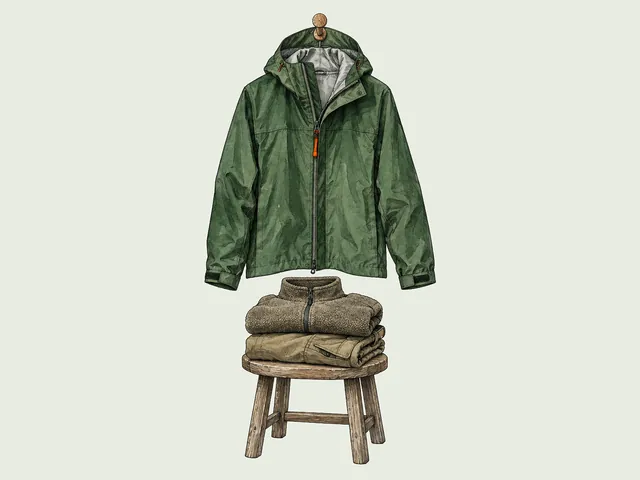
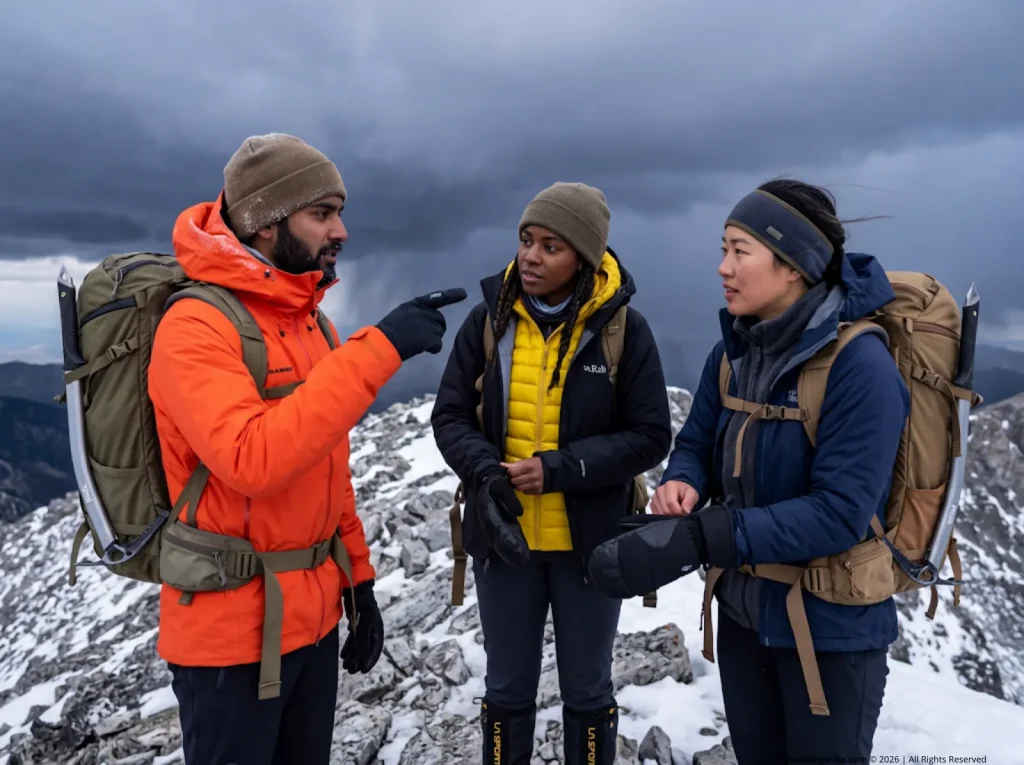
We have moved past haphazard gear hoarding into an era of gear ancestry. Andrew Skurka shifted the conversation from single pieces of equipment to holistic field systems. He built the Core 13 clothing system, categorizing three-season gear strictly by function: go, stop, storm, and sleep.
Skurka abandoned heavy parkas for compartmentalized modular layers. This system improves your temperature control, allowing you to vent sweat on intense climbs and trap heat when the wind rips across the ridgeline. Skurka correctly identified that sweat management dictates survival during massive altitude shifts.
Warren Doyle and the Circle Concept
While Skurka solved the physical layers, Warren Doyle attacked the 80% failure rate by targeting group psychology. Doyle recognized that quitting is almost always a social and mental failure, not a physical one.
He built the Circle Concept for his group hikes, demanding strict group accountability and a unified vow to survive the pain of the trail together. By treating the group as one unbroken unit, Doyle bypassed the solitary mental breakdown that ends most hikes. His groups saw completion rates jump from 25% to a staggering 75% for ATI graduates.
If you want to survive a six-month trek, look into structured hiking mentorship and group accountability. The group keeps you moving when your personal motivation runs dry.
The “Between The Ears” Philosophy
Skurka and Doyle both prioritize what happens “between the ears.” They recognize that high-stakes field decisions, route assessment, and psychological safety will save you long before a new raincoat will. Unlike casual celebrity hikers like Bill Bryson or Cheryl Strayed, these professionals teach that you have to actively build your mental toolkit exactly as you piece together your gear list. You can read Outside Online or Backpacker magazine all day, but nothing prepares you like actual field time.
Pro-Tip: Hiking a long trail isn’t a vacation; it’s a six-month physical labor job with zero days off. Treat your layering system and your mindset with absolute discipline. Respect the elements, fix your sore spots early, and don’t stop moving.
Conclusion
The pioneers of long-distance hiking didn’t just walk further; they planned smarter and calculated better. From Ray Jardine’s quilt revolution to Grandma Gatewood’s ruthless elimination of heavy boots, the footprints of legends prove that applying smart systems to your gear will always outlast raw muscle. Warren Doyle and Andrew Skurka taught us that true endurance is engineered systematically through mental toughness and modular layers.
- Ditch the dead weight. One pound on your feet costs you five on your back. Switch to trail runners when the terrain allows it.
- Systematize your layers. Build a modular clothing system designed to manage sweat, not just block the cold.
- Master the mental game. Endurance is determined between the ears. Join a seasoned group to learn real pacing.
Next time you hit the trailhead, don’t rely purely on adrenaline and heavy leather—take a critical inventory of your pack, drop the excess, and let their field-tested engineering pull you to the finish line.
FAQ
Who was the first person to thru-hike the Appalachian Trail?
Earl Shaffer became the first to successfully complete an uninterrupted thru-hike of the AT in 1948. He dragged heavy WWII military surplus gear the entire way to walk off the mental strain of his war experience.
How did Ray Jardine change hiking gear?
Ray Jardine reinvented the ultralight movement by cutting off the compressed, useless bottom insulation of sleeping bags, giving us the modern backpacking quilt. He also pushed frameless packs to lower your center of gravity and keep you on your feet longer.
What is a Yo-Yo in thru-hiking?
A Yo-Yo is the brutal endurance feat of completing a long-distance trail in one direction and immediately turning around to hike it all the way back. Scott Williamson achieved this on the Pacific Crest Trail by using extreme ultralight minimalism and cold-soaking his meals.
What gear did Grandma Gatewood use on her first hike?
Emma Gatewood tackled the Appalachian Trail with a shockingly low 17-pound base weight, carrying a homemade denim sack and wearing Keds sneakers instead of heavy boots. She accidentally proved that heavy footwear destroys your daily mileage potential.
What is the success rate for hiking the Appalachian Trail?
Historically, only 20 to 25 percent of typical hikers who attempt an unguided Appalachian Trail thru-hike actually finish. The crushing mental toll and injury rate from lugging excessive pack weight forces the vast majority to quit in the first few weeks.
I've spent more than a decade researching hiking gear and trail technique. I read the specs, the forum threads and the long-term reviews, and every pick here comes with what it gets wrong.
End of the trail
You read every mile of this one. Here's where the trail goes next.