






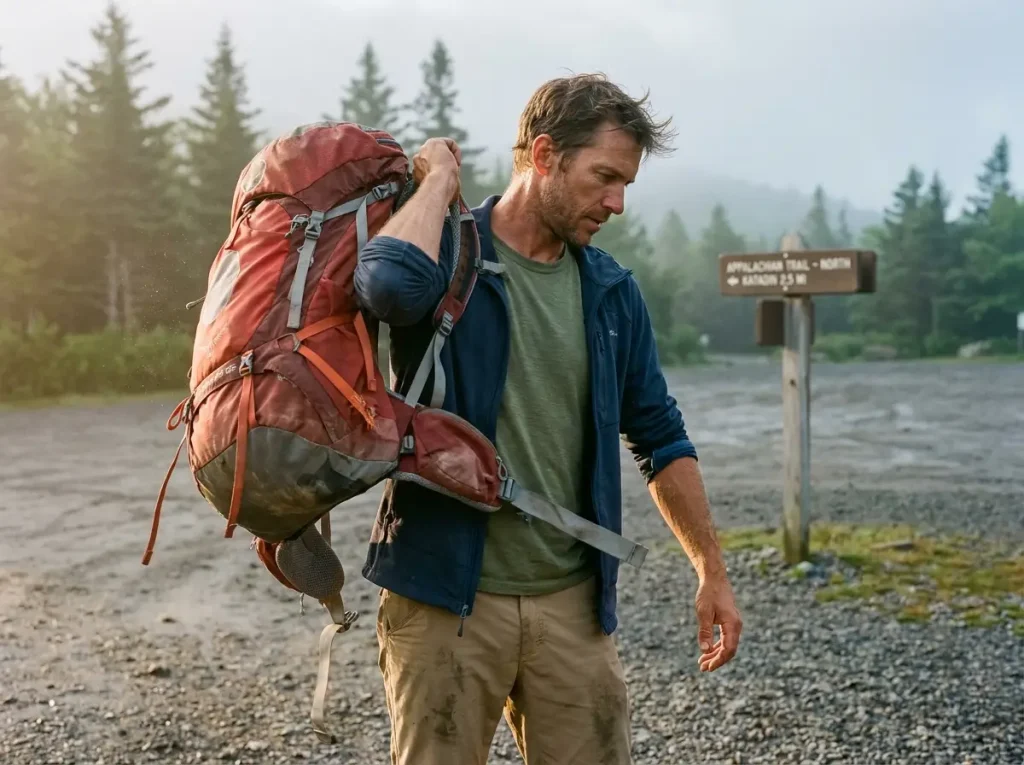
You pull the pack off the garage shelf in spring, unzip the main compartment, and a sour-milk smell hits you before your hand does. The inside is tacky, and pale flakes come off on your fingers. That is not dirt, and no amount of washing fixes it. Ask anyone who has stored a pack through a humid winter: the failures that actually retire a hiking backpack are rarely the ones the checklists lead with. Before you spend money replacing it, it helps to understand everything that goes into a hiking backpack and which parts are worth saving, so here is the honest version of when to replace your hiking backpack, including the silent killers nobody warns you about and the fixes that cost the price of a coffee.
How Long a Hiking Backpack Should Actually Last
“It’s old” is the worst reason to buy a new pack. A quality pack built from good fabric should give you close to ten years of regular use if you treat it right. A bargain-bin pack was living on borrowed time from the first trip. So before you judge yours by the calendar, judge it by what it’s made of.
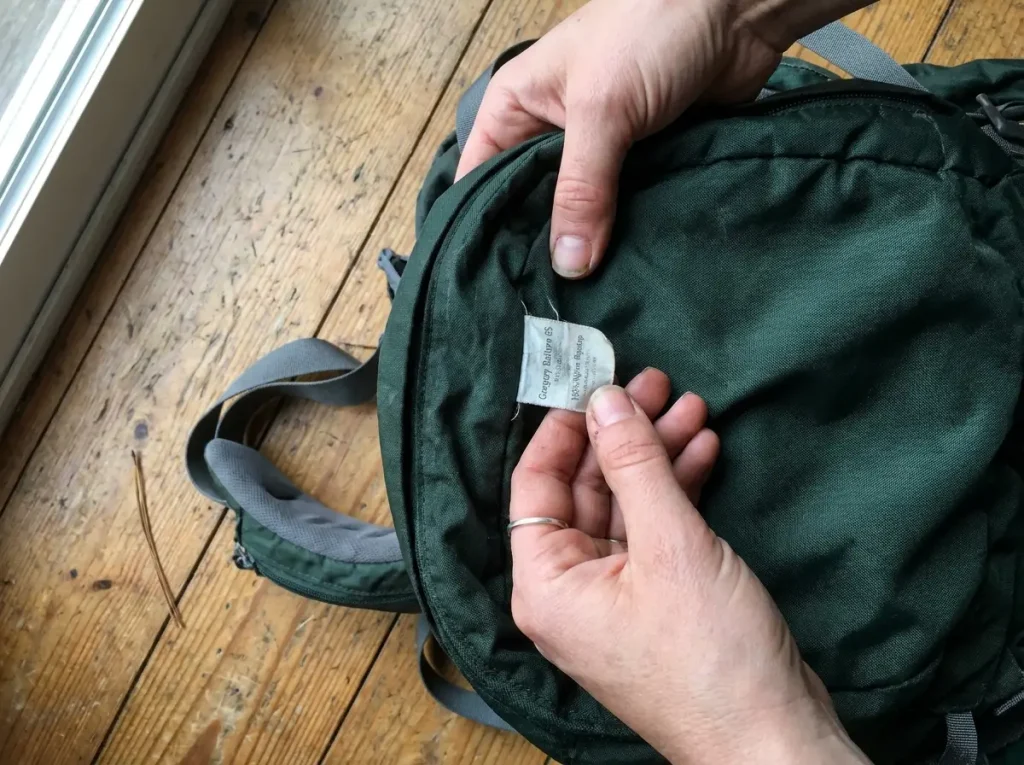
Material sets the clock. Nylon packs, especially tougher ripstop nylon and burly Cordura builds, generally run three to five years of normal use, and a well-kept one can push toward ten. Polyester tends to land in the two-to-four-year range before you start patching it. Nylon also shrugs off abrasion better, taking more than 50,000 rub cycles in fabric testing versus polyester’s 30,000 to 45,000, which is exactly why the hip belt and the pack bottom wear through first on cheaper builds. Check the fabric tag before you assume yours is finished.
Here is where people get it wrong: they retire a faded, ugly pack that is structurally perfect, and they trust a clean-looking pack whose straps are quietly shot. Looks and age are not the test. Function is. A pack worth keeping is one that still carries weight the way it should and is still sized right for the trips you actually do. For the rest of this guide, stop counting birthdays and start counting failures, because most of them are fixable.
Worn Straps and Flattened Foam
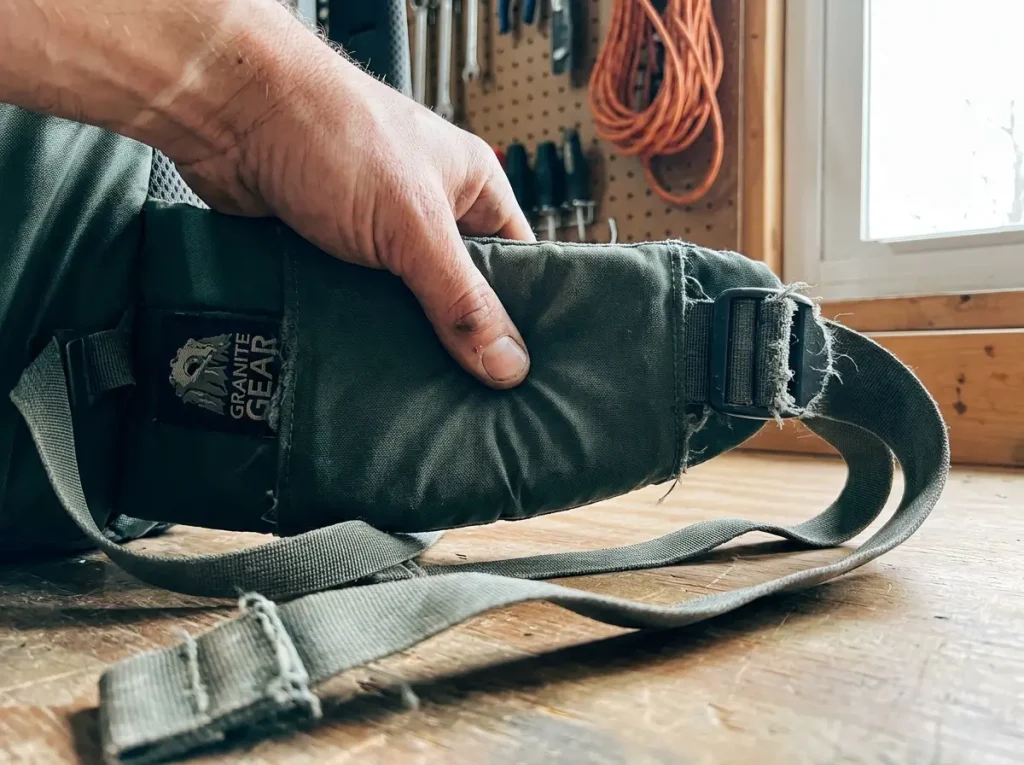
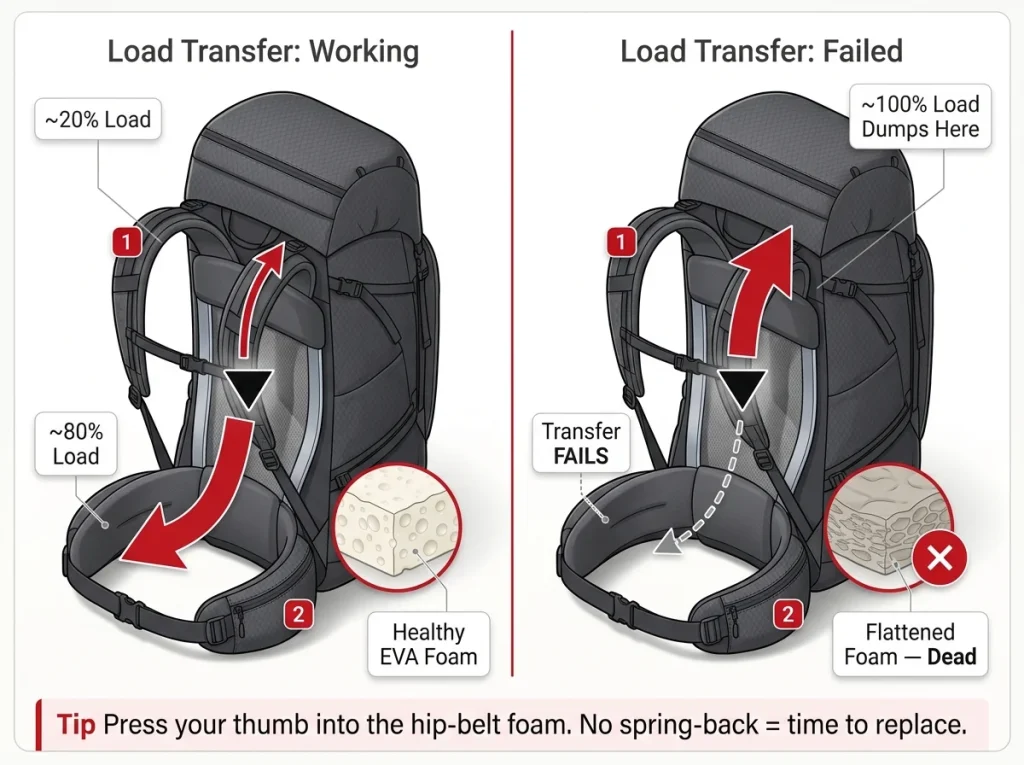
A good pack drops most of the weight onto your hips, not your shoulders. The hip belt and shoulder padding are what make that transfer happen. When the foam packs out, goes thin, and stops springing back, the whole system quits doing its job, and your shoulders and lower back cover the difference on every mile of descent. Most folks blame their legs. It’s usually the belt.
Test it with your thumb. Press into the hip-belt padding. If the EVA foam stays dented and feels boardy instead of bouncing back, it is done carrying load. Frayed or torn webbing at the strap anchors is the other red flag, because that is a load-bearing part fuzzing apart at a stress point. New pressure points and numb shoulders that showed up out of nowhere usually trace back to flattened foam, not to your fitness. Before you blame the straps entirely, rule out setup by dialing in your load lifters first.
Here’s the part the checklists skip: a flattened belt is not always a dead pack.
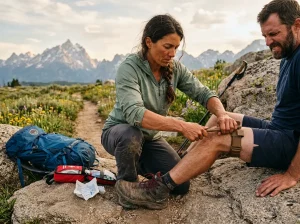
On a lot of packs the hip belt comes off. Backpackers who didn’t want to scrap an otherwise-fine pack have seam-ripped the lumbar pad, had a cobbler bar-tack the corners for a few bucks, and slid in a replacement padded belt. You get factory-quality load transfer back for a fraction of a new pack, and a belt that’s molded to your hips carries even better.
If the belt is the only thing gone, that is a repair, not a funeral. The same goes for a belt you can swap for a hip belt that’s molded to your hips.
Dead Zippers, Snapped Buckles, and Split Seams
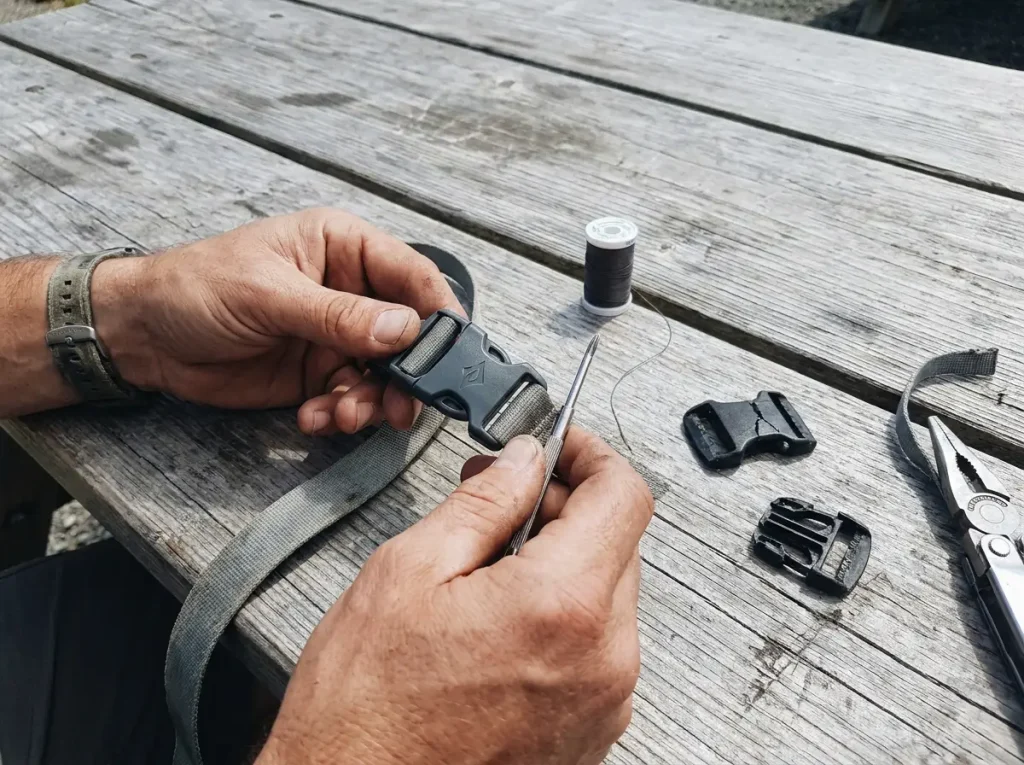
A blown buckle on day two doesn’t have to end your trip, and it definitely doesn’t have to end your pack. This is the category where people toss a perfectly good pack over a part that costs less than lunch. The trick is knowing which of these is a five-minute fix and which one lets water and your gear escape.
Repeatedly failing zippers, snapped side-release buckles (the sternum strap and hip-belt clips are the usual victims), and split seams all show up on every replace-it list. The thing is, almost all of them are single-component failures, and a single-component failure is a repair. A snapped buckle is the most common trail failure there is, and also one of the easiest to handle in the field.
The Sea to Summit Field Repair Buckle clamps onto your existing webbing with nothing but a small screwdriver, no sewing required, so you swap the broken part and keep the pack. The GEAR AID Snap Bar Buckle is an even cheaper no-sew option if you want a spare in the lid.
Zippers are trickier than buckles, and how your pack closes changes how it fails, whether it rides on a brain lid or a roll-top. A split seam that lets water in is more serious than a cosmetic one, though even that can often be re-sealed (more on that two sections down). The rule to hold onto here: one failed part means you fix it. The pack only earns retirement when several systems quit at once.
A Sagging Back Panel or Broken Frame
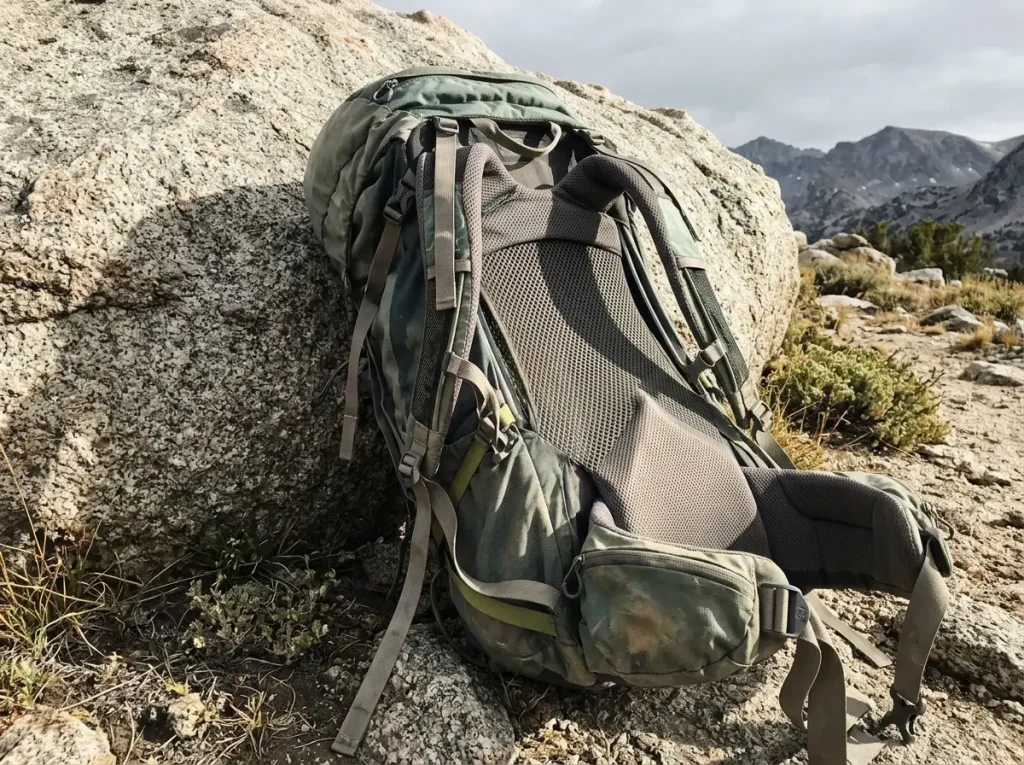
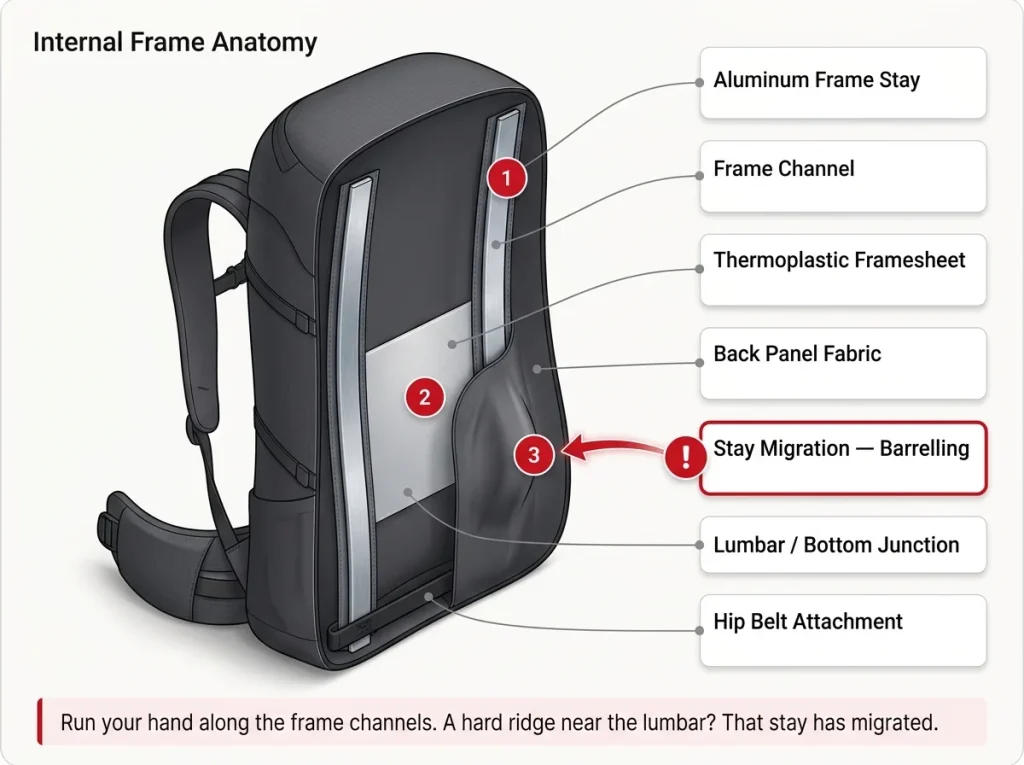
The failure nobody warns you about is an aluminum frame stay punching through the bottom of your pack halfway up a climb with a heavy load. Once the skeleton goes, the pack can’t carry weight safely no matter how clean the fabric looks. This is the structural stuff most guides gloss right over, and it’s where the repair-or-replace math finally tips toward replace.
A sagging back panel and fresh aches that weren’t there before often mean the suspension has lost its shape, not that you suddenly got weaker. To judge it, you have to know how a pack’s suspension is supposed to work in the first place. The two failure modes to look for are a cracked thermoplastic framesheet and a stay that has migrated and started “barrelling,” poking a hard ridge into the lower fabric near the lumbar pad. Run your hand along the frame channels and feel for a stay that’s wandered out of place.
Load it to roughly twenty or twenty-five pounds and watch what the back panel does. If it holds its shape, you’re fine. If it collapses or folds inward, the frame has given up. Unlike a buckle or a strap, this one is usually terminal, or at least not worth what the repair would cost. A frame is the one part where “replace” is often the honest answer.
The Sticky, Sour-Smelling Lining Nobody Warns You About
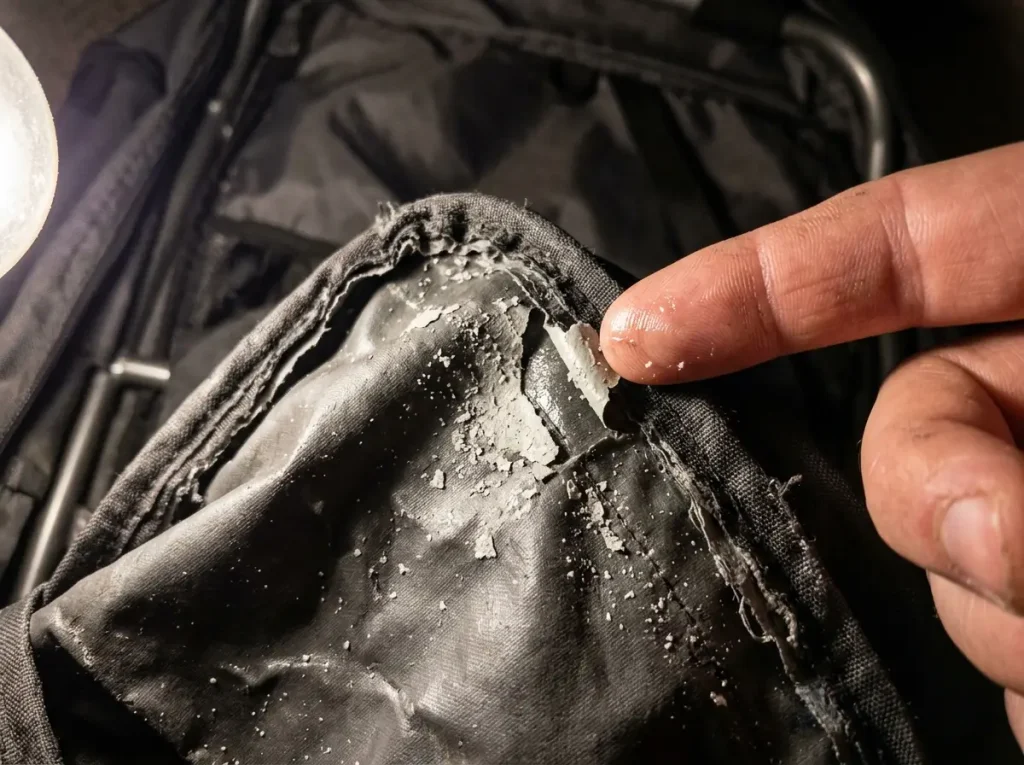
This is the one that fools people. The pack looks fine from the outside, then you open it and it reeks of sour milk while the inside feels tacky and sheds pale flakes like snow. That smell and that stickiness are the waterproof coating chemically falling apart, and unlike a buckle, there is nothing to fix. This is the single most useful thing to understand about pack failure, and almost nobody explains it.
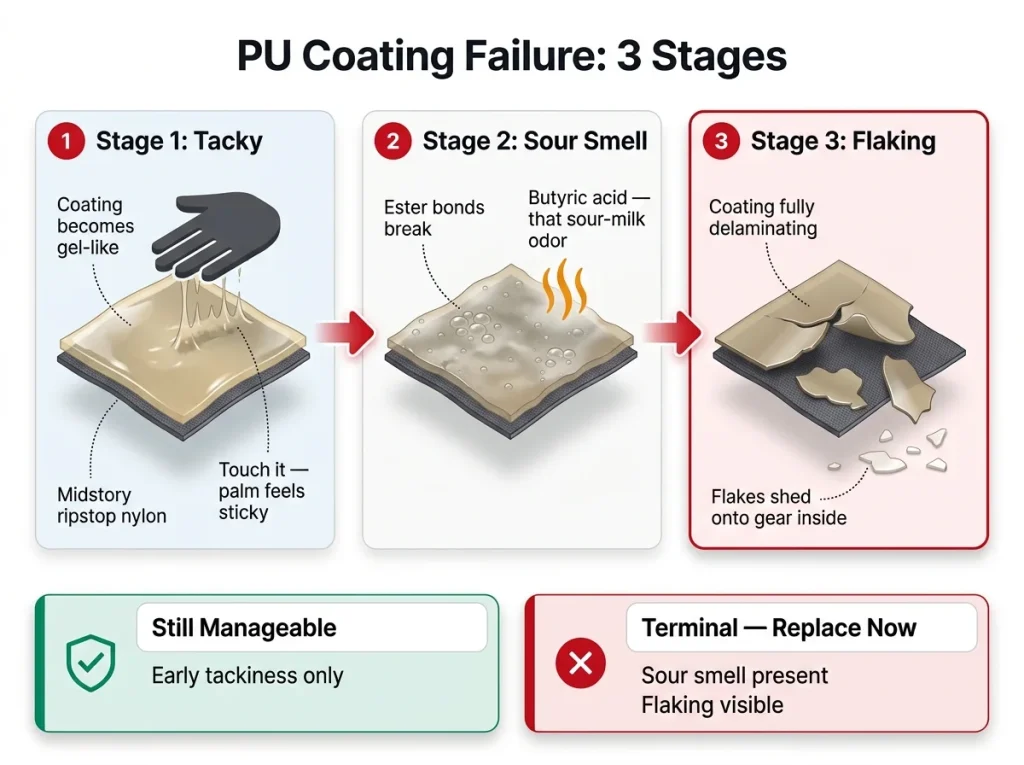
The waterproof layer is usually a PU coating (polyurethane, sometimes TPU), and it has a typical life of just two to five years. It gives the pack its inner water resistance, and that layer expires long before the outer fabric does. It fails through hydrolysis, an irreversible breakdown triggered by humidity and heat while the pack sits in storage, not by miles on the trail. A pack with five hard trips on it can have a dead coating if it spent a summer damp in a hot tote, while a ten-year-old pack stored well can be perfectly intact.
It runs in three phases. First the inner fabric turns tacky. Then broken ester bonds release butyric acid, which is the sour-milk reek. Last, the coating flakes off onto your gear. Sticky plus sour equals terminal.
Do the sniff-and-touch test before any long trip. Run a dry hand along the inner lining and give it a sniff. If your palm comes away tacky or it smells like sour milk, the coating is going and it will only get worse. Better to learn that at home than to find your sleeping bag coated in flakes at camp.
There’s a quieter twin to this: UV degradation. Sun rots fabric and webbing from the outside, and it’s invisible until something tears. Nylon webbing loses roughly half its strength after about three years of sun exposure, with noticeable weakening starting around the one-year mark. In fabric-lab testing, some fabrics lost over half their strength in 100 days of sun. Thin, low-denier fabric (under about 40D) and pale webbing go first. That is how a strap that “looks fine” at the trailhead lets go on day two. A split seam or a small peeling spot can sometimes be re-sealed or have its DWR refreshed, which ties into re-waterproofing a pack whose coating is fading, but full sticky-and-flaking hydrolysis is the end of the road.
The Storage Mistakes That Wreck Packs Faster Than Miles Do
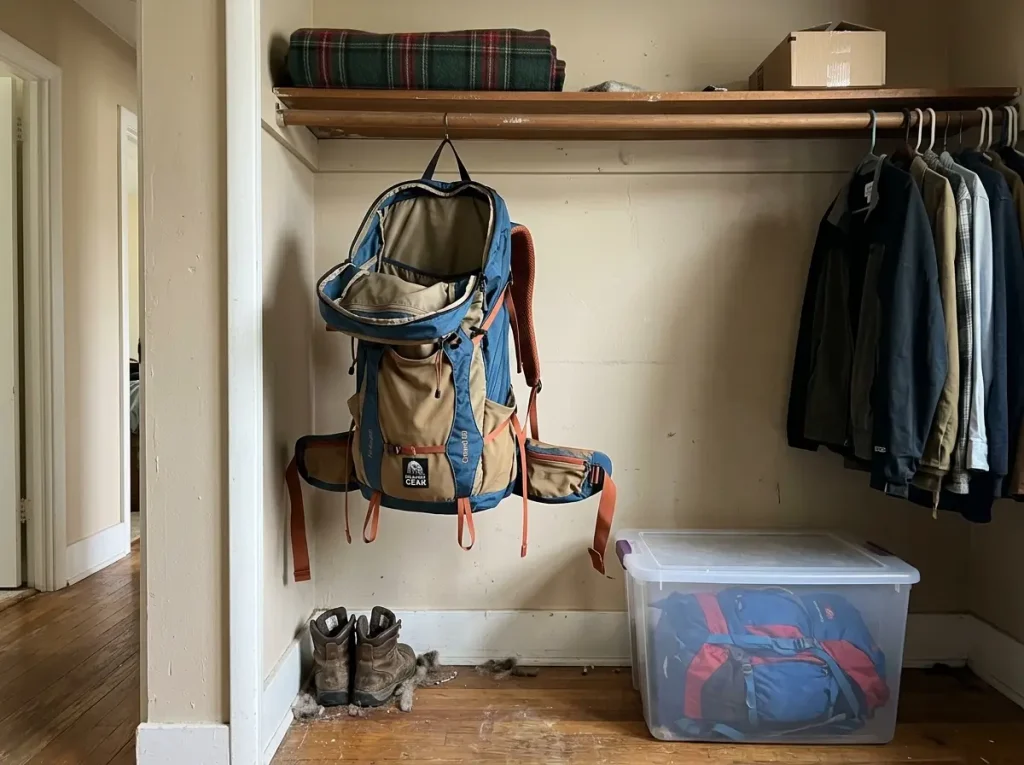
Here’s the part that flips the whole topic on its head. The trail isn’t what finishes most packs. The garage is. How you store a pack between trips matters more than the miles you put on it, and almost every early retirement traces back to one of two storage mistakes.
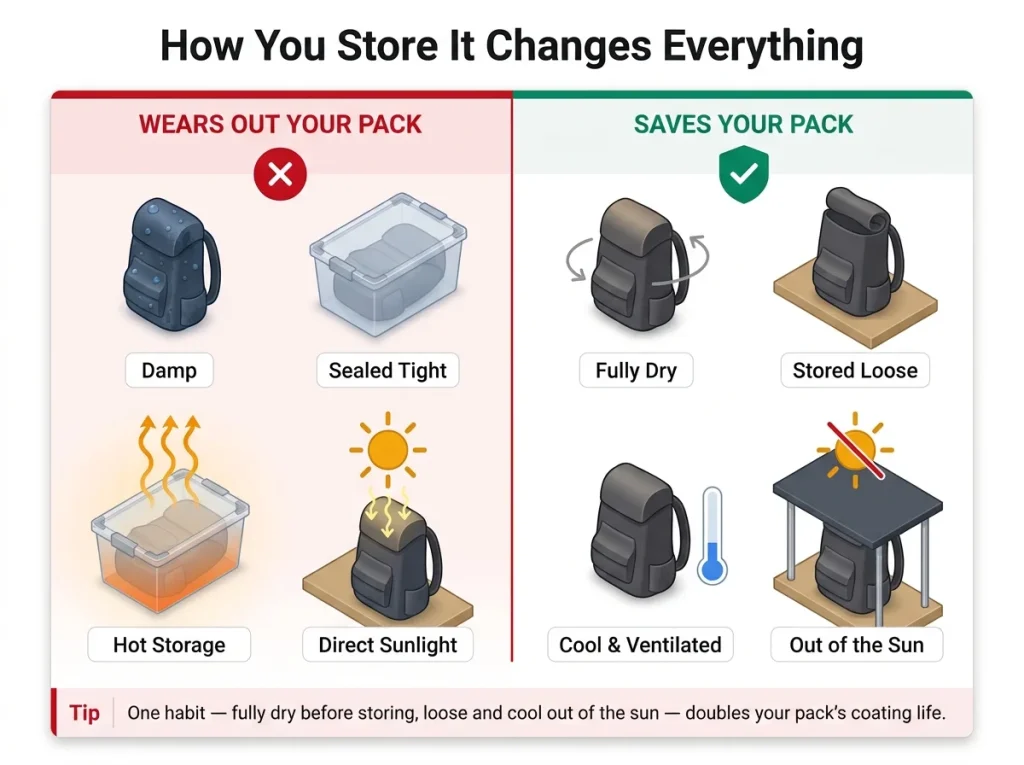
The first is sealing a still-damp pack inside a plastic tote in a hot garage over winter. That is a hydrolysis factory, and it’s the number-one way people end up with a sticky, sour-smelling pack in spring. The second is leaving a pack on a sunny shelf, a car dashboard, or a garage hook for months, where UV slowly rots the fabric so it tears with no warning even though it still looks new. One mistake destroys the coating from the inside, the other destroys the fabric from the outside.
The fix is almost embarrassingly simple. Air-dry the pack completely before it goes away, then store it cool, dry, loose, and out of the sun. Don’t compress it, don’t seal it, don’t bake it. One more small edge: darker straps survive the sun better than light or neon ones, so a black-webbing pack ages slower on a bright shelf than a pale-gray one. The same habits that prevent mold and delamination apply to the whole kit, which is covered in storing your gear so it doesn’t mold or delaminate.
Repair It, Send It Back, or Replace It
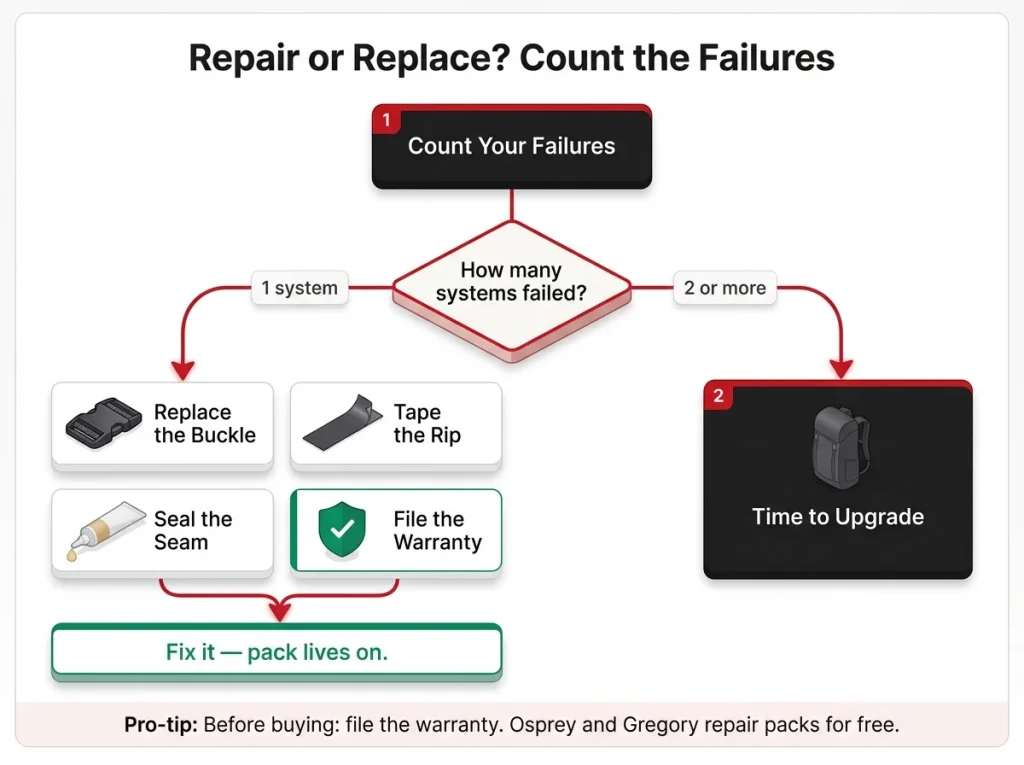
We’re not salespeople here, so the honest order of operations is simple: the cheapest fix that works is the right one. Before you buy anything, count your failures. One thing broken means you fix it or mail it back. Several systems gone at once means we can finally talk about a new pack, and only then.
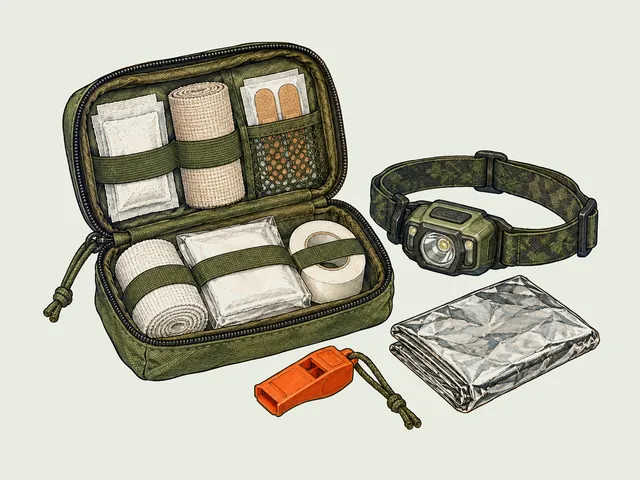
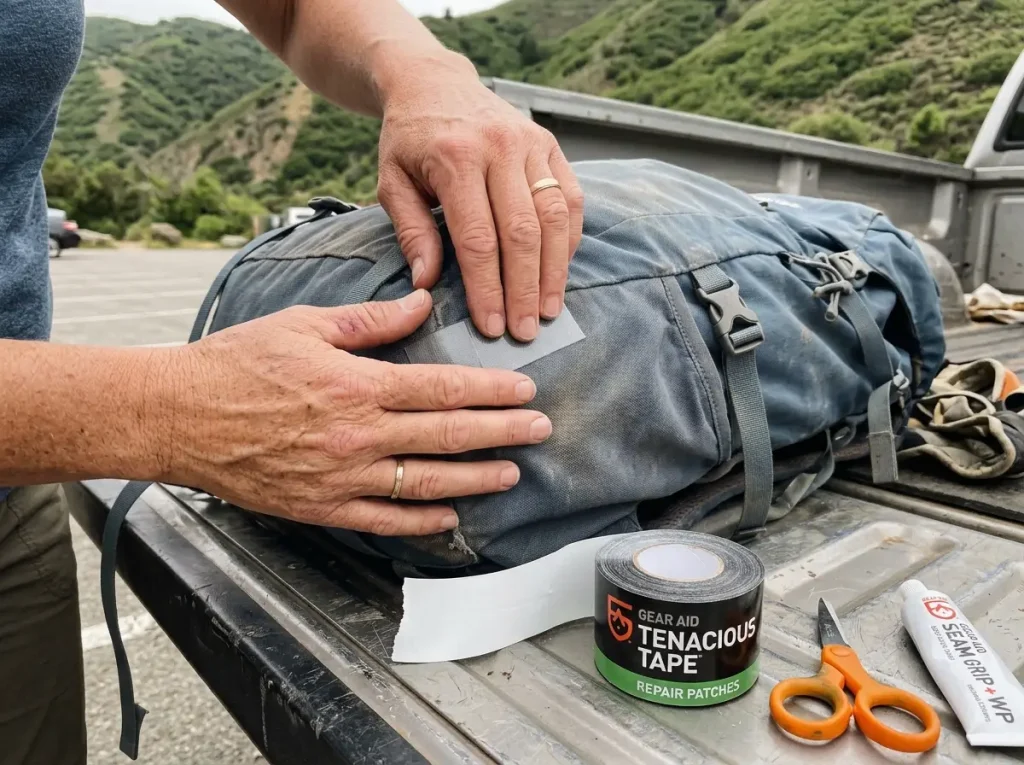
Start with field repairs, because they handle most of what goes wrong. GEAR AID Tenacious Tape patches rips in nylon with no sewing and no heat, though you want to give it a full day to cure before you wash it or load it hard. GEAR AID Seam Grip WP is a seam sealant that re-seals split seams and touches up small peeling spots. On any multiday trip, a spare side-release buckle and a strip of Tenacious Tape in the lid cover the two parts most likely to fail on you.
Before you buy a new pack, mail the old one in. Osprey and Gregory both repair packs for free under their guarantees, and a lot of hikers don’t realize a real failure qualifies. The catch is that storage rot you caused is on you, which is one more reason to dry it before it goes on the shelf.
Then check the warranty before your wallet. Osprey’s All Mighty Guarantee will repair or replace a failed pack from any era, free, though it won’t cover cosmetic aging that still works fine. Gregory’s Lifetime Guarantee covers normal wear, accidents, even animal damage, but not storage abuse. Knowing how to actually file a gear warranty claim can save you the cost of a new pack entirely.
If it really is done, with multiple systems failed at once, then it’s upgrade time. For a multiday hauler with a lifetime warranty behind it, the Osprey Atmos AG 65 (men’s · women’s, Aura AG 65) and the Gregory Baltoro 65 (men’s · women’s, Deva 70) are both built to be repaired rather than tossed. If your old pack weighs more than its contents, the lighter, near-ultralight Granite Gear Crown3 60 is the value move, and it’s worth seeing what a lighter pack that weighs less than its load can do for your back.
And if you’re retiring a worn-out daypack rather than a big pack, the Osprey Talon 22 (men’s · women’s, Tempest 20) covers that. Whatever you move up to, get the torso length and pack fit right before the first big trip, because even the best suspension carries badly on the wrong size. The best outcome is still the one where you don’t buy anything, because a four-dollar buckle or a free warranty repair beats a new pack every time.
The Bottom Line
Count failures, not birthdays. One fixable part, a snapped buckle or a flattened belt, is a repair and not a dead pack. The killers you can’t see, hydrolysis, UV rot, and bad storage, retire more packs than trail miles ever will, so learn to spot the sticky lining and the sun-weakened strap. And before you ever reach for your wallet, fix it or mail it back, because the manufacturers will often handle it for free.
Next time you put your pack away, dry it all the way through and store it loose and cool, out of the sun. That one habit will outlast any upgrade you could buy.
Frequently Asked Questions
01How long does a hiking backpack last?
A quality pack can last close to ten years with good care, while budget packs last anywhere from a few months to a few years. Material matters most: nylon outlasts polyester, and how you store it counts more than the miles.
02How do you know when it’s time to replace your backpack?
Replace it when several systems fail at once: flattened hip-belt foam, repeated zipper or buckle failures, a sagging frame, or a sticky, peeling coating. A single isolated failure is almost always a repair, not a reason to replace the whole pack.
03Why is the inside of my backpack sticky and peeling?
That is PU-coating hydrolysis, the waterproof inner layer breaking down from humidity and heat in storage. The sour-milk smell is the giveaway, and it’s irreversible. Once it’s sticky and flaking, the coating is finished.
04Can a hiking backpack be repaired instead of replaced?
Often yes. Buckles, straps, hip belts, small rips, and split seams are all fixable, and many packs carry lifetime warranties that cover repairs for free. Replace the pack only when multiple systems fail together.
05How should I store a backpack so it lasts longer?
Air-dry it completely, then store it loose, cool, dry, and out of the sun. Damp and sealed in a hot space triggers hydrolysis, while a sunny shelf causes UV degradation. Proper storage is the single best thing you can do for a pack.

I've spent more than a decade researching hiking gear and trail technique. I read the specs, the forum threads and the long-term reviews, and every pick here comes with what it gets wrong.
End of the trail
You read every mile of this one. Here's where the trail goes next.