In this article
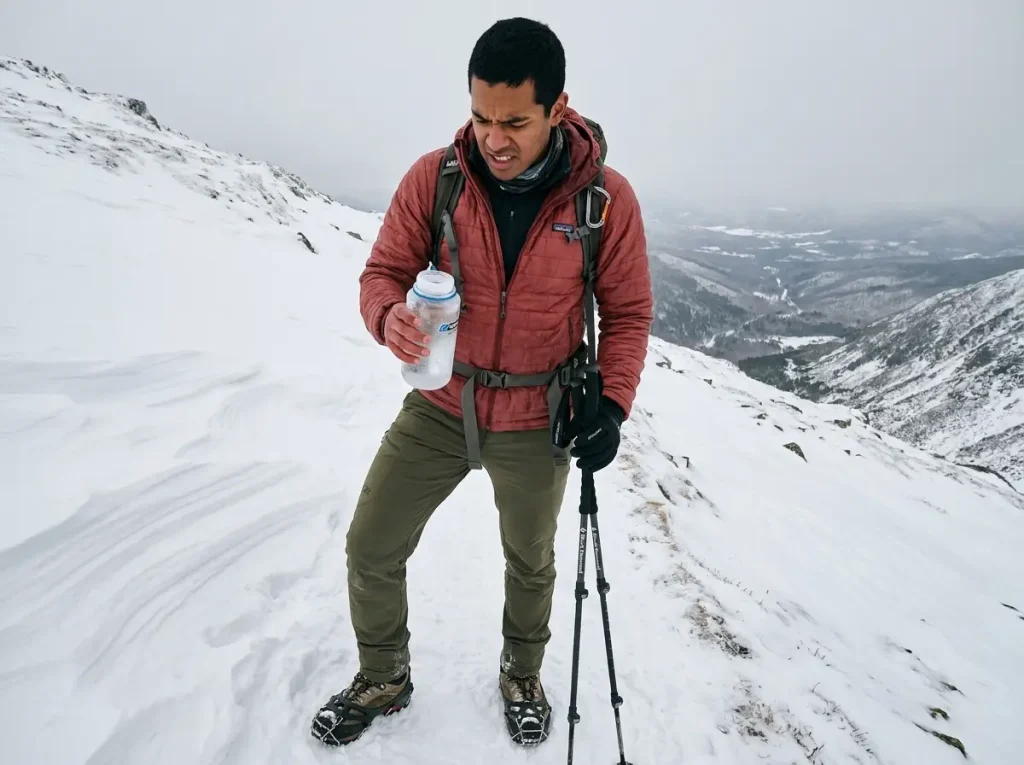
I stood at a trailhead in January with a frozen water bottle, a cotton shirt soaked in sweat, and about two hours of daylight left. That was the hike that taught me my three-season gear had an expiration date — and it was November. If you’ve been day hiking for a while and you’re wondering whether you can handle a winter overnight, you can. But not with your summer setup, and not without understanding what changes when the temperature drops.
Here’s what you need to know to make that jump from warm-weather day hikes to your first winter camp, from someone who learned most of this the hard way.
Quick Answer: Winter camping as a day hiker starts with three upgrades: a proper layering system (merino or synthetic, never cotton), insulated boots with traction devices, and a sleep system rated 15–20°F below the coldest temperature you expect. Add extra food, switch from hydration bladders to wide-mouth bottles, and carry an emergency bivy. The rest is learning when to push forward and when to turn around.
Why Winter Changes Everything for Day Hikers
Your Summer Gear Has a Temperature Limit
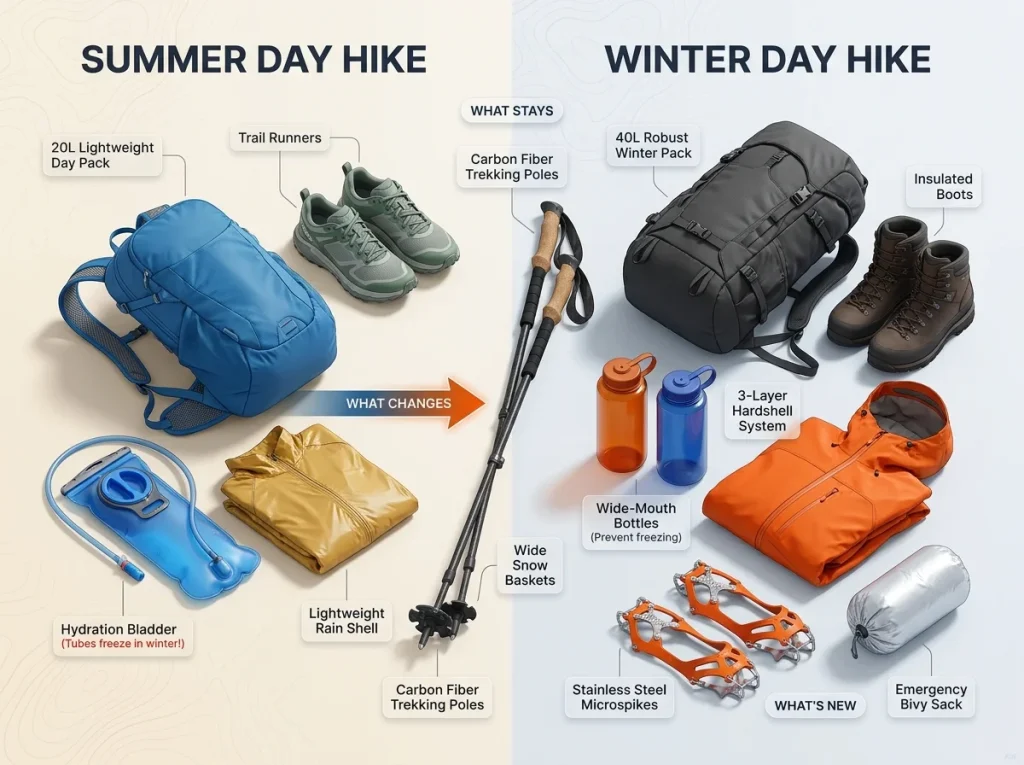
Your favorite trail runners, that breathable rain jacket, and the hydration bladder you love — they all have a temperature floor. Below about 25°F, trail runners let cold seep through thin soles. Rain jackets designed for breathability become wind tunnels. And hydration bladder tubes freeze solid in about two hours.
The gear that keeps you comfortable from April to October wasn’t built for what winter throws at you. That doesn’t mean you need to replace everything. Your day pack, trekking poles, and headlamp carry over just fine. Your water system, clothing, and footwear probably don’t.
The Real Equation: Wet + Wind + Time
Cold alone isn’t what gets people in trouble. The combination of moisture, wind, and exposure time is what pushes a bad day into a rescue. Cotton absorbs up to 27 times its own weight in water. When your cotton shirt gets soaked with sweat, your body’s heat loss through conduction jumps from about 2% to 10–15%. That’s a 5–7x increase in how fast you’re losing body heat — just from your shirt.
Here’s the part that catches day hikers off guard: hypothermia can begin at temperatures as high as 60°F if your clothing is wet and there’s wind. You don’t need sub-zero conditions. You need wet cotton and a breeze. According to CDC’s guidelines for preventing hypothermia, the combination of wet clothing and cold is the primary driver of outdoor hypothermia cases, not extreme temperatures alone.
What Carries Over and What Doesn’t
If you’ve been day hiking for a few seasons, you already own some winter-capable gear. Here’s the honest breakdown:
Carries over: Day pack (40L+ for winter), trekking poles (add snow baskets), headlamp (bring extra batteries — cold drains lithium fast), navigation tools, first aid kit, multi-tool.
Needs upgrading: Base layers (cotton → merino or synthetic), pants (jeans → softshell or hardshell), jacket system (single rain layer → 3-layer system), boots (trail runners → insulated winter boots), water bottles (bladder → wide-mouth Nalgene bottles), gloves (single pair → liner + insulated system).
New gear for winter: Traction devices (microspikes or crampons), gaiters, emergency bivy, 4-season tent, sleeping bag (rated to 10–15°F), sleeping pads (stacked for R-value), white gas stove.
If you’re coming from a solid shoulder season layering system, you’re closer than you think. The jump from fall hiking to winter camping is smaller than the jump from summer to fall.
The Layering System That Keeps You Warm (and Alive)
Base Layer: The Anti-Cotton Rule
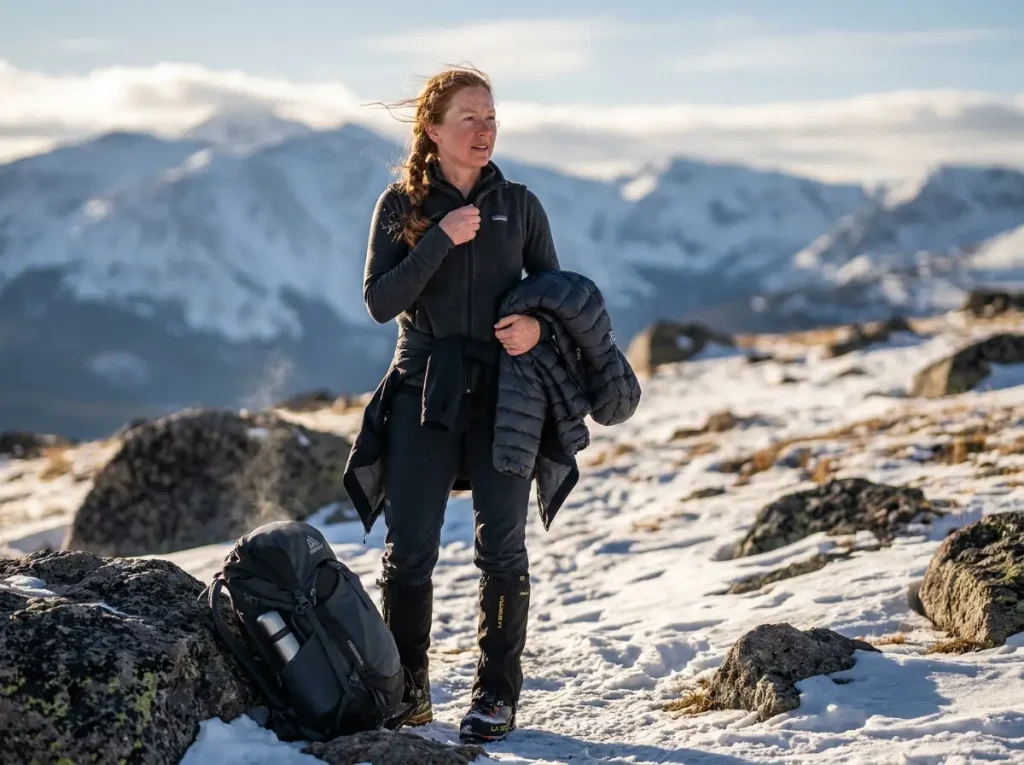
This is where “cotton kills” comes from, and it’s not just a catchy phrase. Cotton is hydrophilic — it loves water. When you hike, you sweat. Cotton soaks that sweat up like a sponge and holds it against your skin. In summer, that wet feeling is annoying. In winter, it’s the first step toward hypothermia.
Merino wool and synthetic base layers do the opposite. They wick moisture away from your skin and continue insulating even when damp. A 200-weight merino base layer handles most winter hiking conditions. Go heavier (250-weight) if you run cold or you’re camping above treeline.
The fit matters too. Your base layer should sit snug against your skin — not compression-tight, but close enough that there’s no air gap for sweat to pool. If you can pinch more than a half-inch of fabric, it’s too loose to wick properly. For specific recommendations, check our guide to the best base layers for cold-weather hiking.
Mid Layer: Trapping Dead Air
Your mid layer is your furnace. It works by trapping dead air — pockets of still air that your body heats up. More loft means more dead air means more warmth.
Fleece is the workhorse: it dries fast, insulates when wet, and handles a wide temperature range. A 200-weight fleece is enough for active hiking. For stops and camp, add a down or synthetic puffy jacket. Down packs smaller and weighs less but fails when wet. Synthetic insulation is heavier but keeps working in damp conditions.
For the stop-and-go rhythm of winter hiking — sweating on uphills, freezing at rest stops — an active insulation jacket with high breathability handles both extremes better than a standard puffy.
Shell Layer: Wind and Water Armor
Your outer layer has one job: block wind and water. In dry cold (Rocky Mountain winter, high desert), a softshell with wind resistance works and breathes better. In wet cold (Pacific Northwest, Northeast), you need a full hardshell with sealed seams and a waterproof membrane.
The difference between softshell and hardshell pants for winter hiking matters more than most beginners realize. Softshells move with you and breathe. Hardshells block everything but trap moisture inside. Pick based on your conditions, not just the price tag.
The Golden Rule — Start Cold
If you’re warm at the trailhead, you’re overdressed. This is the hardest habit for day hikers to learn. You should feel slightly chilly for the first 10 minutes of walking. Your body generates enough heat during movement to warm up quickly — but sweat from overdressing is almost impossible to manage once it starts.
Pro tip: Keep a dry base layer in a waterproof stuff sack at the bottom of your pack. If you soak through your primary layer from sweat or weather, changing into a dry base layer can stop the heat-loss spiral before it becomes a problem.
Winter Footwear and Traction
Insulated Boots vs. Your Regular Hikers
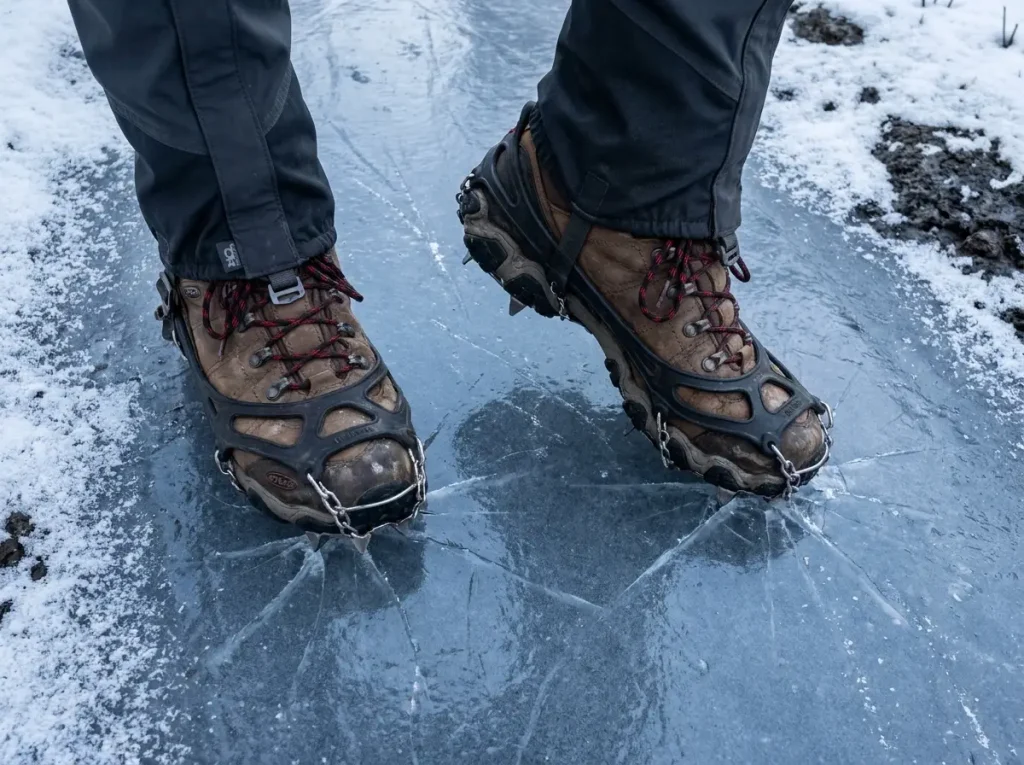
Your 3-season hiking boots lack two things winter demands: insulation and a stiff sole. Insulated winter boots rated to 0°F handle most low-elevation winter trails. If you’re heading above treeline or into sustained sub-zero conditions, look for boots rated to -20°F or colder with crampon-compatible welts.
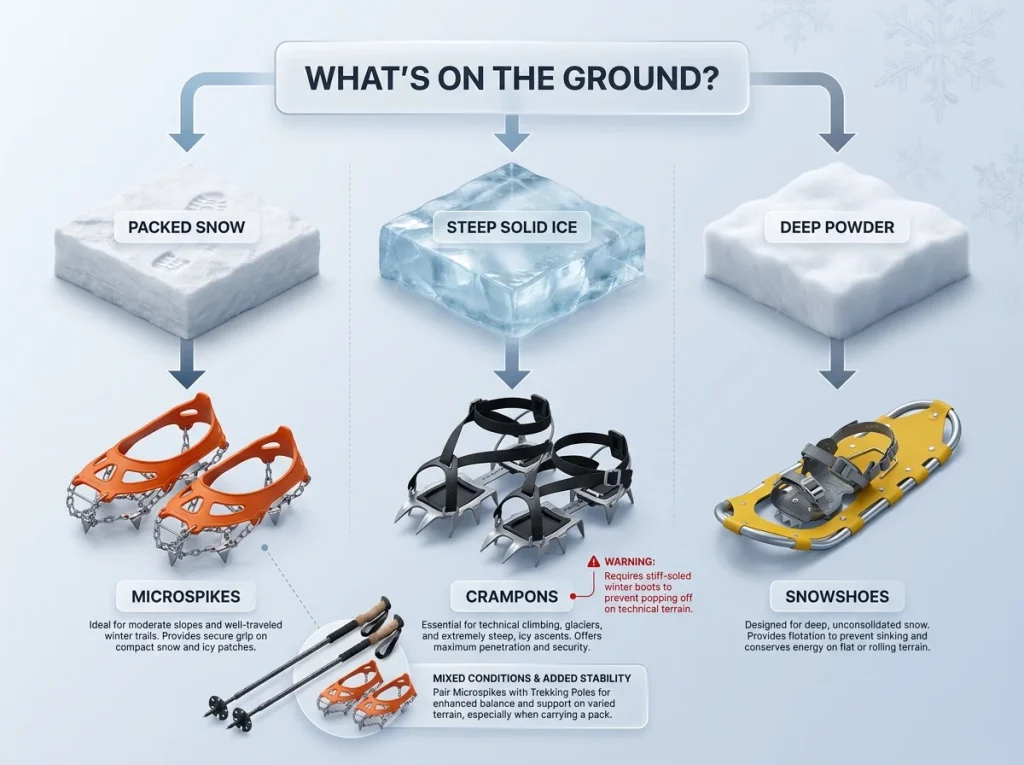
The sole stiffness matters for traction devices. Microspikes and crampons need a rigid platform to grip — a flexible trail runner bends and pops them off. For the full breakdown on what boot works with what traction system, see our boot-crampon compatibility guide.
Microspikes, Crampons, and Snowshoes
The ground changes in winter, and you need to change with it. Microspikes (like the Kahtoola MICROspikes) handle packed snow and moderate ice — the conditions you’ll hit on most winter day hikes. Strap-on crampons are for steeper ice and harder terrain. Snowshoes keep you on top of deep powder instead of postholing to your thighs.
The honest answer is that most day hikers getting into winter need microspikes first. They weigh under a pound, fit over almost any boot, and turn a terrifying icy descent into a controlled walk. If you’re choosing between brands, the Yaktrax vs. Kahtoola comparison tells you which one actually grips on real ice.
Pro tip: Carry your traction devices in your pack even if the trailhead looks clear. Conditions change with elevation and aspect — a south-facing approach can be bare dirt while the north-facing summit is sheet ice.
Gaiters Keep Snow Out of Your Boots
Every step through snow deeper than your boot tops pushes snow down into the gap between your pants and your boots. Within half a mile, you have wet socks. Within two miles, you have cold feet. Within five miles, you’re done hiking.
Gaiters solve this completely. Full-length gaiters for deep snow, ankle gaiters for packed trails. The fit between your gaiters and boot type matters — our gaiter sizing guide covers the specifics so you don’t buy a pair that won’t stay attached to your boot.
Food, Water, and the Calorie Math
Why You Need to Eat Twice as Much
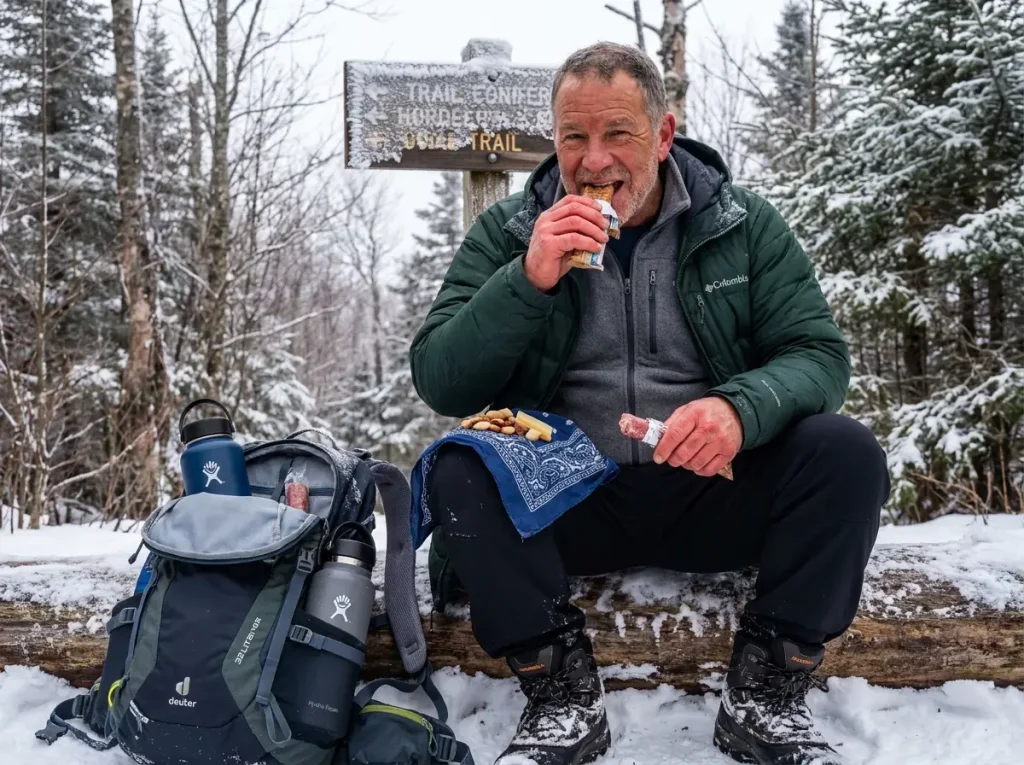
Your body burns significantly more energy in cold weather. A University at Albany study led by anthropologist Cara Ocobock found that hikers burn 34% more calories in temperatures between 15–23°F compared to mid-50s weather. The study tracked participants through National Outdoor Leadership School courses in Wyoming — men burned an average of 4,787 calories per day in winter versus 3,822 in spring. For women, it was 3,880 versus 3,081.
That 34% jump means your usual trail snack stash won’t cut it. Plan for 2,500–3,500 calories per day for winter camping. Focus on calorie-dense foods: nuts, cheese, salami, chocolate, peanut butter. Hot meals at camp aren’t just comfort — they warm you from the inside.
If you’re adding snowshoeing or trail breaking to the mix, the calorie demand roughly doubles from normal hiking pace. Breaking trail through fresh powder is genuinely exhausting work.
Keeping Water Liquid Below Freezing
Your hydration bladder was perfect in July. In January, the tube freezes solid within two hours and you’re carrying a decorative ice block. Switch to wide-mouth Nalgene bottles or insulated Hydro Flask bottles.
Pro tip: Store your water bottles upside down in your pack. Ice forms at the surface — which is now the bottom. When you flip the bottle to drink, the nozzle is clear. Simple physics, and it buys you an extra hour or two before the bottle freezes through.
Insulated bottle sleeves help, but they don’t prevent freezing — they delay it. In sustained sub-zero conditions, keep a bottle inside your jacket, against your body. Your body heat is the best anti-freeze system you own.
Your Sleep System for Winter Camping
Sleeping Bag Ratings and What They Actually Mean
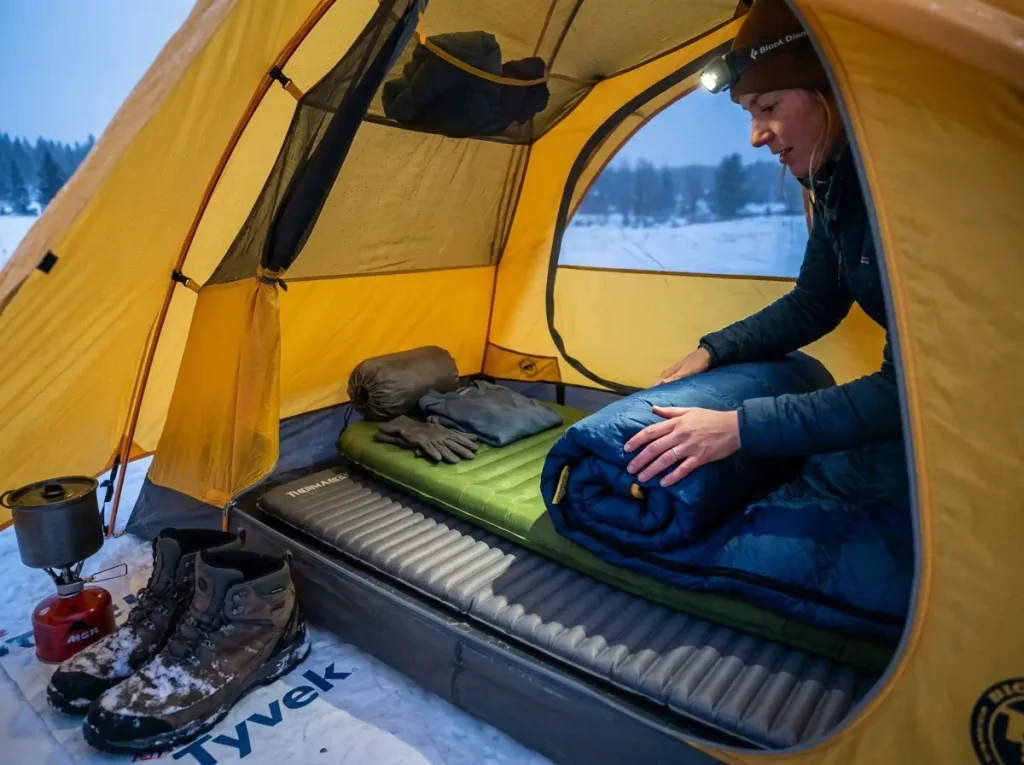
If you own a 35°F summer sleeping bag, you own a winter blanket. Sleeping bags rated for winter camping typically fall in the 10–15°F range for most conditions and 0°F for extreme cold. Temperature ratings assume you’re wearing a base layer and sleeping on an insulated pad — without the pad, the rating means nothing.
Down bags are lighter and pack smaller. Synthetic bags handle moisture better and cost less. For a first winter bag, synthetic is the safer bet — condensation inside your tent is unavoidable, and a wet down bag is about as useful as a cotton sheet.
The R-Value Stack Trick
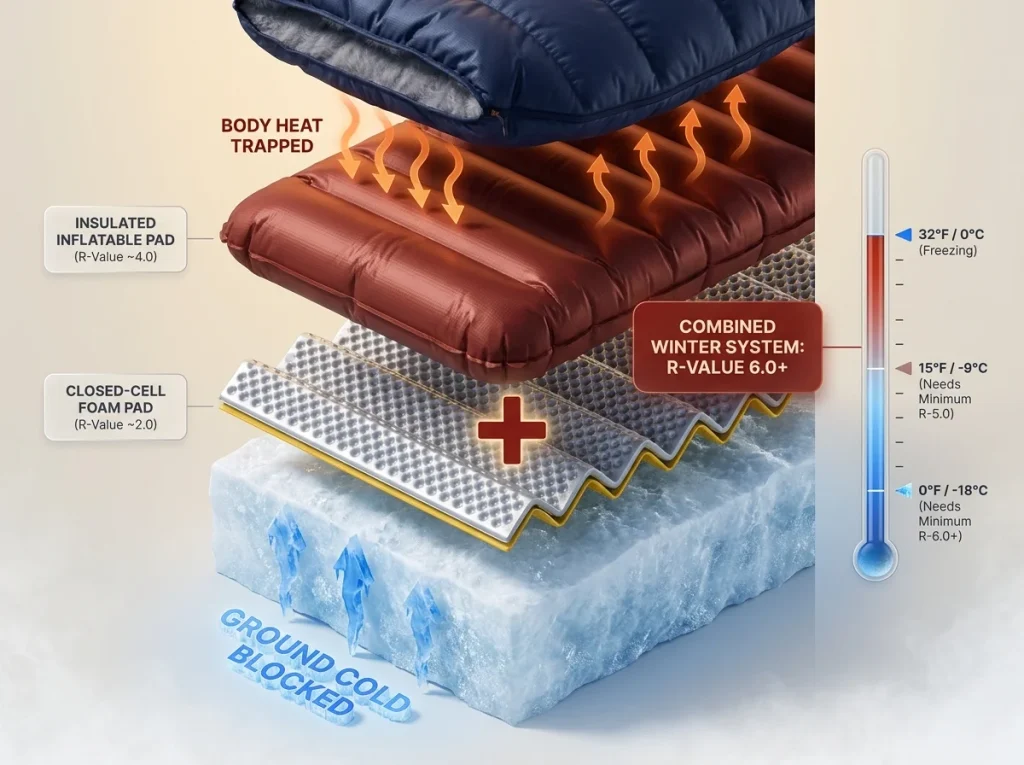
Your sleeping pad’s R-value is the number that separates a warm night from a miserable one. R-value 5.0 is the minimum for below-freezing camping. Below 10°F, aim for R-value 6.0 to 7.0.
Here’s the trick that experienced winter campers use: stack two pads. A closed-cell foam pad (R-value ~2.0) underneath an insulated inflatable pad (R-value ~4.0) gives you a combined R-value of 6.0. Two reasonably priced pads outperform one expensive one, and the foam pad doubles as a sit pad during breaks.
Women should add +1.0 R-value to whatever recommendation they see. Metabolic differences and generally lower body mass mean women lose ground heat faster. Budget for the warmer pad.
Campsite Selection Matters More Than Your Gear
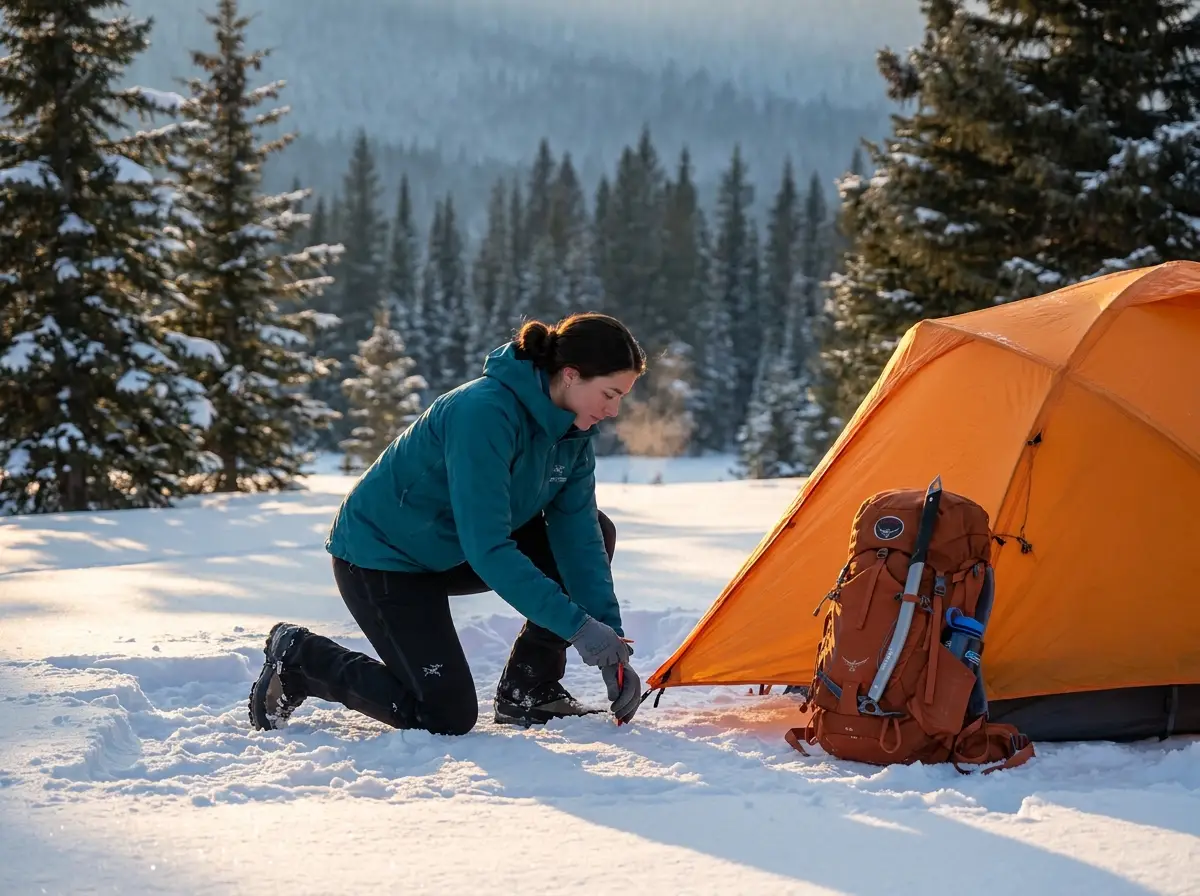
The best sleep system in the world won’t save you from a bad campsite. Pick a spot that’s sheltered from wind — the lee side of a ridge, a stand of dense trees, or a natural depression. Avoid valley bottoms where cold air pools overnight (cold air sinks, warm air rises — the valley floor is always the coldest spot).
Stomp down a tent platform in the snow at least 30 minutes before setting up. This gives the snow time to set up and harden. A platform that hasn’t set will develop body-shaped depressions overnight as your weight melts and compresses the snow.
For cooking, use a white gas stove. They work reliably below 20°F. Canister stoves that run on propane-butane blends lose pressure below about 25°F and can fail completely in the teens. Your summer JetBoil is not a winter stove.
Pro tip: Put tomorrow morning’s base layer inside your sleeping bag before you fall asleep. When you wake up to 15°F air, sliding into a pre-warmed base layer instead of frozen fabric changes everything about your morning.
When to Turn Around (The Skill Nobody Teaches)
Daylight Math: Count Backward from Sunset
Nobody writes about this, and it’s the skill that separates experienced winter hikers from the ones who end up stumbling down a trail in the dark. Winter daylight is short — 8 to 10 hours in December depending on your latitude. Trails take 1.5 to 2 times longer in winter due to snow, heavier packs, and shorter stride length on slippery surfaces.
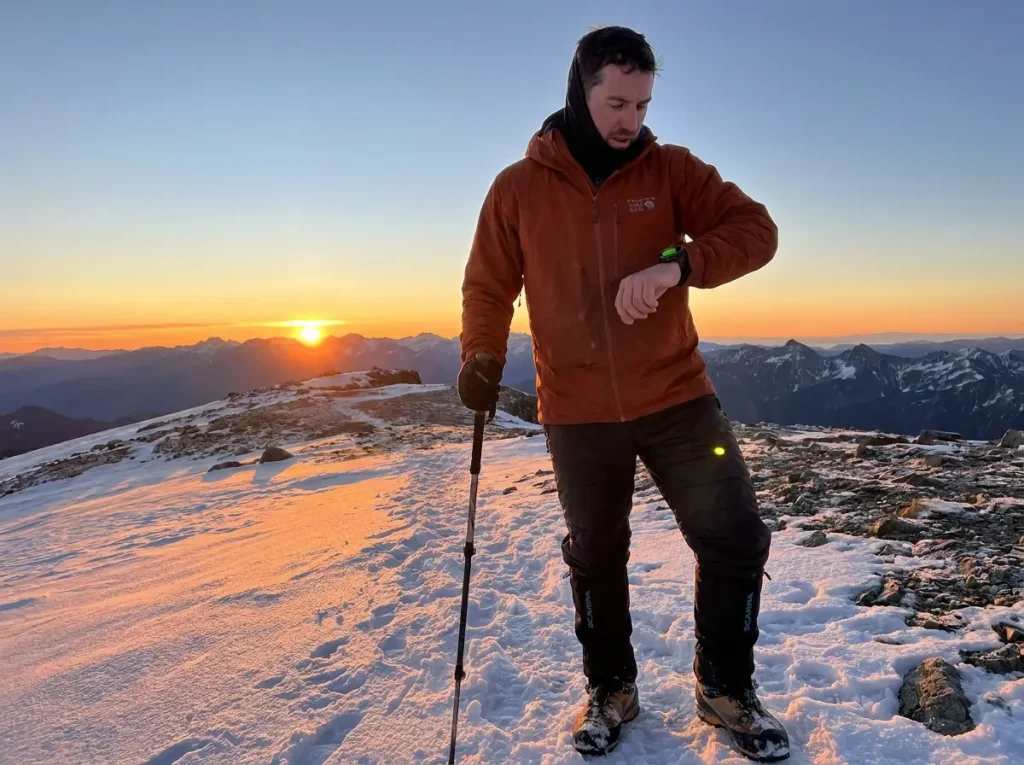
The math is simple: look up your sunset time. Subtract 1.5 hours for a safety buffer (you want to be at your car or camp before dark, not at the summit). That’s your hard turnaround regardless of how close you are to the top. If sunset is at 4:30 PM, you turn around at 3:00 PM. No negotiation.
For seasonal start-time planning and how daylight windows change month to month, our guide to best start time by season breaks down the numbers.
The Umbles Checklist
“The umbles” is a field method for spotting hypothermia before it becomes an emergency. Watch for mumbles (slurred speech), stumbles (loss of coordination), and grumbles (unusual irritability or confusion). If your hiking partner starts tripping on flat ground and snapping at you for no reason, they’re not being difficult. They’re hypothermic.
The scary part is that hypothermia impairs your own judgment — you can’t reliably self-diagnose. That’s why this checklist matters most when you’re hiking with others. Check in verbally every 30 minutes in cold conditions. According to the U.S. Forest Service’s hypothermia awareness page, body temperature below 95°F constitutes a medical emergency that requires immediate action.
Set a Hard Turnaround Time Before You Leave
Set your turnaround time at the car, not on the trail. Here’s why: decision-making deteriorates with cold, fatigue, and proximity to a goal. Standing 0.3 miles from the summit at 2:45 PM in December, you will convince yourself you have time. You probably don’t.
Write the turnaround time on a piece of tape on your trekking pole. Set an alarm on your watch. Tell your hiking partner. Do whatever it takes to make the decision before your judgment gets compromised by summit fever and cold.
Winter hiking isn’t about getting to the top. It’s about getting back to the car. Summit fever has hurt more winter hikers than cold temperatures ever have.
Emergency Bivy: Your 3-Ounce Insurance Policy
What an Emergency Bivy Does (and Doesn’t Do)
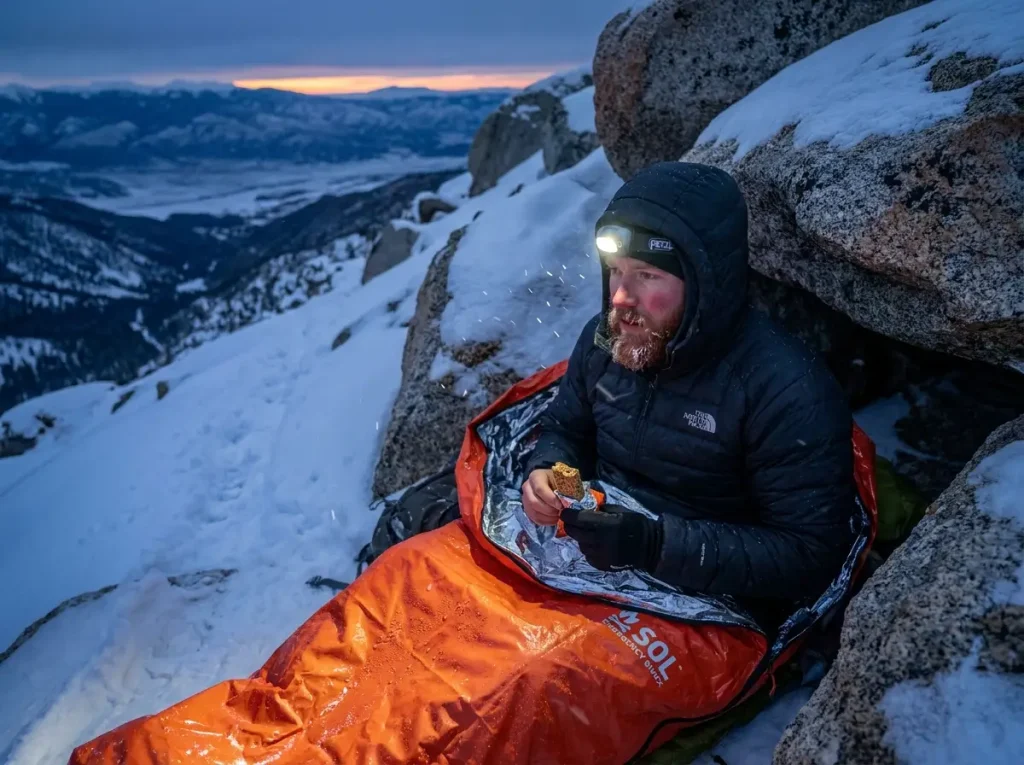
An emergency bivy is the cheapest, lightest piece of gear that might save your life. The SOL Emergency Bivy weighs 3.8 ounces, costs about $15, and fits in your jacket pocket. It adds roughly 5–10°F to your effective temperature, blocks wind completely, and is waterproof.
What it doesn’t do: breathe. Condensation builds up inside within an hour. By morning, your clothes will be damp from your own body moisture. That’s the tradeoff — wet but alive beats dry but hypothermic.
This isn’t a sleeping system. It’s insurance for the situation you never plan for: a twisted ankle three miles from the trailhead at 3 PM in December with temperatures dropping and darkness closing in.
How to Use One If You’re Stuck
If you need to deploy your emergency bivy, do it before you’re desperate. Early deployment — before you’re shivering hard — gives you the best chance of maintaining core temperature.
Find or build a windbreak. Natural features work: a cluster of boulders, a dense stand of trees, a snow bank you can dig into on the lee side. Get off the cold ground — sit on your pack, a foam pad, or a pile of branches. Eat whatever food you have left. Calories are heat.
Crawl inside the bivy and seal it around you as best you can. Tuck your hands into your armpits or between your thighs. Keep your balaclava or hat on. Move your toes and fingers periodically to maintain circulation.
The goal isn’t comfort. The goal is core temperature maintenance until daylight when you can safely move again. Prevention is always better — start early, know your route, carry a headlamp with fresh batteries, and check our winter day hike planning checklist before every trip. If you know about frostbite warning signs, you’ll catch problems before they become emergencies.
Pro tip: Test your emergency bivy at home before you need it for real. Set it up in your backyard on a cold night. Get inside. Feel how the condensation builds. Understand the experience so it doesn’t surprise you when it matters.
Conclusion
Winter camping as a day hiker comes down to three things. First, upgrade your clothing system — merino or synthetic base layers, proper insulation, and a windproof shell. Cotton has no place on a winter trail. Second, respect the math — shorter daylight, higher calorie burn, and trails that take twice as long as summer. Third, carry the insurance — an emergency bivy, extra food, and the willingness to turn around before you’re in trouble.
Your next step is straightforward. Pick a trail you already know well from summer hiking. Go there on a clear winter day with the right layers and microspikes. Hike for two hours, turn around, and see how your system performs. That single test run will teach you more about winter hiking than any article, including this one.
Q1 What gear do I need for winter day hiking?
At minimum, you need a merino or synthetic layering system, insulated boots, microspikes or similar traction devices, gaiters, a headlamp with extra batteries, wide-mouth water bottles, high-calorie food, an emergency bivy, and navigation tools. Start with microspikes and proper layers — those cover 80% of winter day hike conditions.
Q2 Is winter camping safe for beginners?
Yes, with preparation. Start with winter day hikes to learn your layering system and cold-weather pacing. Then try a single-night campout at a drive-up site where your car is nearby. Build skills gradually — your first winter camp shouldn’t be a remote backcountry trip.
Q3 How do you stay warm hiking in cold weather?
Layer with moisture-wicking base layers, insulating mid layers, and a windproof shell. Start slightly cold at the trailhead so you don’t overheat and sweat. Eat frequently — your body burns 34% more calories in winter. Keep moving at a steady pace and adjust layers before you start sweating.
Q4 What temperature is too cold for camping?
There’s no universal cutoff — it depends on your gear and experience. Most beginners with proper equipment can camp comfortably down to about 15°F. Below 0°F requires specialized gear and training. The real limit is your sleep system: if your sleeping bag and pad R-value match the overnight low, you’ll be warm.
Q5 How many calories do you burn winter hiking?
Research from the University at Albany shows winter hiking burns about 34% more calories than warm-weather hiking. For men, that averaged 4,787 calories per day in winter conditions. For women, 3,880 calories per day. Plan for 2,500–3,500 calories per day when winter camping.
Risk Disclaimer: Hiking, trekking, backpacking, and all related outdoor activities involve inherent
risks which may result in serious injury, illness, or death. The information provided on The Hiking Tribe is for
educational and informational purposes only. While we strive for accuracy, information on trails, gear, techniques,
and safety is not a substitute for your own best judgment and thorough preparation. Trail conditions, weather, and
other environmental factors change rapidly and may differ from what is described on this site. Always check with
official sources like park services for the most current alerts and conditions. Never undertake a hike beyond your
abilities and always be prepared for the unexpected. By using this website, you agree that you are solely
responsible for your own safety. Any reliance you place on our content is strictly at your own risk, and you assume
all liability for your actions and decisions in the outdoors. The Hiking Tribe and its authors will not be held
liable for any injury, damage, or loss sustained in connection with the use of the information herein.
Affiliate Disclosure: We are a participant in the Amazon Services LLC Associates Program, an
affiliate advertising program designed to provide a means for us to earn advertising fees by advertising and linking
to Amazon.com. As an Amazon Associate, we earn from qualifying purchases. We are also an official affiliate partner
of Black Diamond Equipment via the AvantLink network. If you click on a Black Diamond affiliate link and make a
purchase, we may earn a commission at no additional cost to you. We also participate in other affiliate programs and
may receive a commission on products purchased through our links. Additional terms are found in the terms of
service.